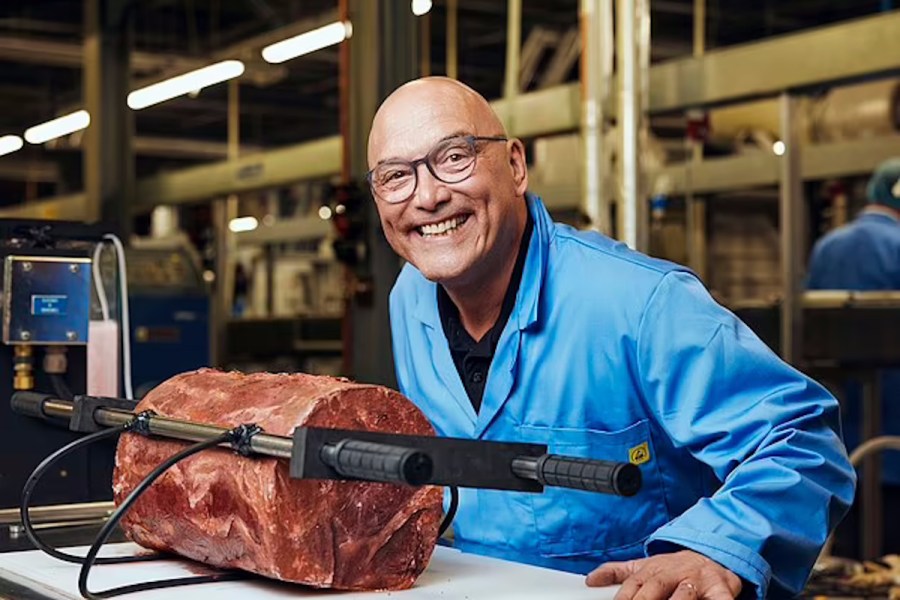
Gregg Wallace is arousing the fury of the Internet for hosting a show in which human meat is grown for human consumption. Yes, engineered cannibalism.
If you haven’t heard of Gregg Wallace (I plead guilty), he is a host of the UK version of MasterChef, a reality show where people have to cook flesh in a way that – I don’t really know, I don’t watch it.
This show is called The British Miracle Meat, and is quite obviously a satirical documentary, set in a factory which purportedly manufactures ‘engineered human meat’.

Following its debut, 408 people complained to the broadcasting regulator. The majority of complainants objected to the theme being the consumption of human meat. Which is, IMHO, pretty rich coming from people who tuned in to a show about meat.
It seems to have been inspired by a work written in 1729 by Jonathan Swift (the author of Gulliver’s Travels), which was called:
A Modest Proposal For preventing the Children of Poor People From being a Burthen to Their Parents or Country, and For making them Beneficial to the Publick
Swift suggested that the Irish could be relieved of their destitute states by selling their children to the Landlords who “have already devoured most of the parents”:
A young healthy Child, well nursed, is at a Year old, a most delicious, nourishing, and wholesome Food; whether Stewed, Roasted, Baked or Boiled; and I make no doubt, that it will equally serve in a Fricasie, or Ragout
Since the British Empire was sucking the Irish populace dry and leaving them to starve, why not eat them as well? Satire has remained a popular form of political action ever since, and is used extensively, particularly in American politics (watch any late-night show).

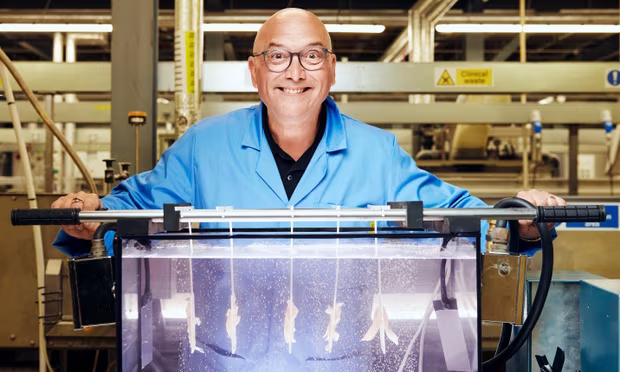
Wallace is shown visiting a heavily guarded processing plant in Lincolnshire, which houses a production line and clinical facilities. He is told that, for the last eight months, they have been producing meat made from human cells. Line manager Mick Ross explains that it is a relatively new process. “Under EU law we couldn’t possibly operate machines like this.”

We see little shavings of flesh hanging in a nutrient-rich vat and quickly developing into huge slabs of meat. Wallace interviews ‘donors’ who sell their flesh to fictional firm ‘Good Harvest’ as a solution for cash-strapped families. One 67-year-old retired receptionist said she had agreed to have flesh taken from her buttock and thigh in order to fund two weeks’ energy bills. The flesh is then shown growing in labs into larger slabs of meat – which can be used to make steaks, burgers and sausages.

These can yield up to one hundred steaks, which— according to taste tests carried out with men and women in the street by co-presenter Michelle Ackerley—are remarkably fine substitutes for beef, and at a fraction of the price. Is this the answer to the cost of living crisis?

“Why human meat, why not animal meat?” asks Wallace, and Ross explains that we know more about humans, we have centuries of medical and scientific knowledge, so can more easily manipulate it.
Good Harvest’s chief executive revealed the firm’s premium range comes from the flesh of children aged six and below – with a promotional video which billed the womb as ‘nature’s oven’. Well, we already know from watching Snowpiercer that babies taste best. And Gregg – let’s try to remember that humans ARE animals, yes?

But apparently many of the British viewing public did not get Gregg Wallace’s joke. The show gave no warning ahead or during the broadcast to indicate that it was fictional. That was supposed to be, in British parlance, bleedin’ obvious. Interviewed after the show aired, Wallace said:
It’s satire – so I suppose that was the point. Everybody was an actor. I was acting. None of it was real… While it was a complete fantasy, we wanted to raise important questions about the nation’s relationship with food and what those struggling with the cost of living are being asked to do in order to stay afloat.
A Channel 4 spokesman said:
This “mockumentary” is a witty yet thought-provoking commentary on the extreme measures many people are being forced to take to stay afloat in our society during the cost-of-living crisis. Channel 4 has a long and rich history of satire and has often used humour as an accessible way to highlight society’s most important issues.
The problem was, it was not clear what the point was. Lab meat can be grown from any animal cell. Find a readable chain of DNA and it may be possible to try whale, dodo or dinosaur flesh. Of course, the easiest cells to source are human ones – we routinely hand them to pathologists and crime scene investigators. When clean meat becomes commercially viable, there is no reason (other than administrative) to assume we could not grow human steaks, livers or sweetbreads. The eating of lab-grown flesh from celebrities is the starting point of the film Antiviral. Eating human meat grown in a lab would technically be cannibalism, but it would not, as with traditional cannibalism, involve cruelty, murder or despoiling of corpses.
The show concentrates on the cost of living crisis, and clearly cheaper food prices would help. Would people sell their own flesh, and would other people eat steaks grown from it? A better point might have been to point out that humans currently breed and slaughter some eighty billion (that’s 80,000,000,000) land animals every year to eat their flesh, not counting sea animals, whose numbers can only be estimated but might be about three trillion. Although most people prefer not to see the appalling conditions of the factory farms or the brutal deaths in the abattoirs, they tune in by the millions to watch cooking shows like MasterChef which treat the consumption of this flesh as unremarkable, and often the butt of crude humour.
So why not add one more animal to the conveyor belt?
As Herbert M. Shelton said in his book Superior Nutrition:
The cannibal goes out and hunts, pursues and kills another man and proceeds to cook and eat him precisely as he would any other game. There is not a single argument nor a single fact that can be offered in favor of flesh eating that cannot be offered with equal strength, in favor of cannibalism.
I wonder if Jonathan Swift would have recognised the plagiarism of his book? His brand of satire is usually called “Menippean” and is characterised by attacking mental attitudes and beliefs.
The joke is not that Wallace pretended to visit a factory that pretended to pay willing donors for flesh. The real belly laugh is that over 400 people complained about that, while probably tucking in to the corpse of an animal who really did not want to die.
 The Cannibal Guy