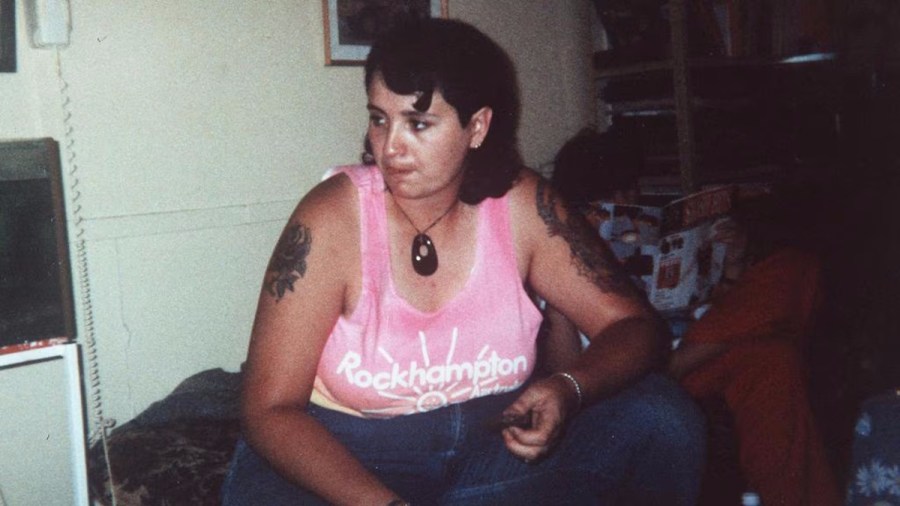
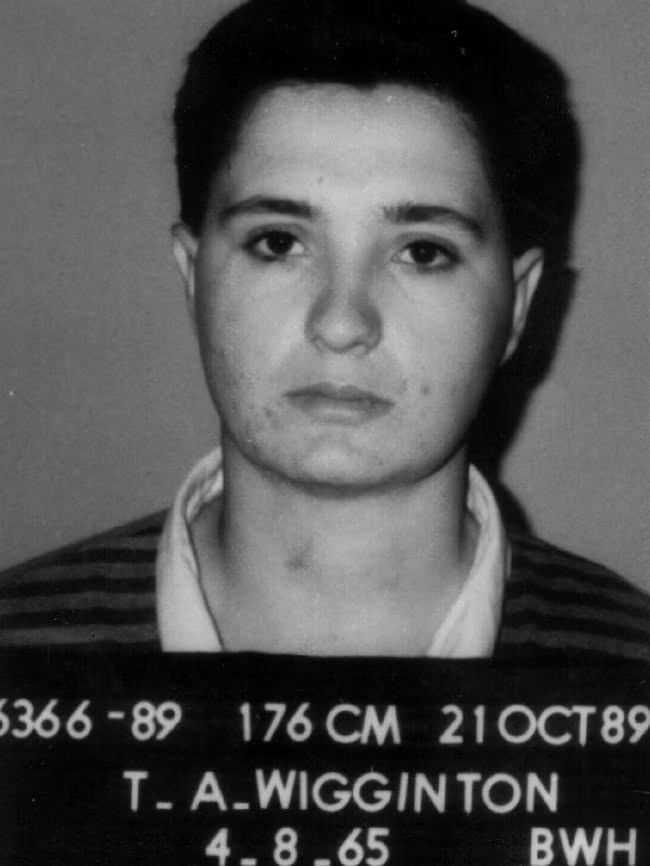
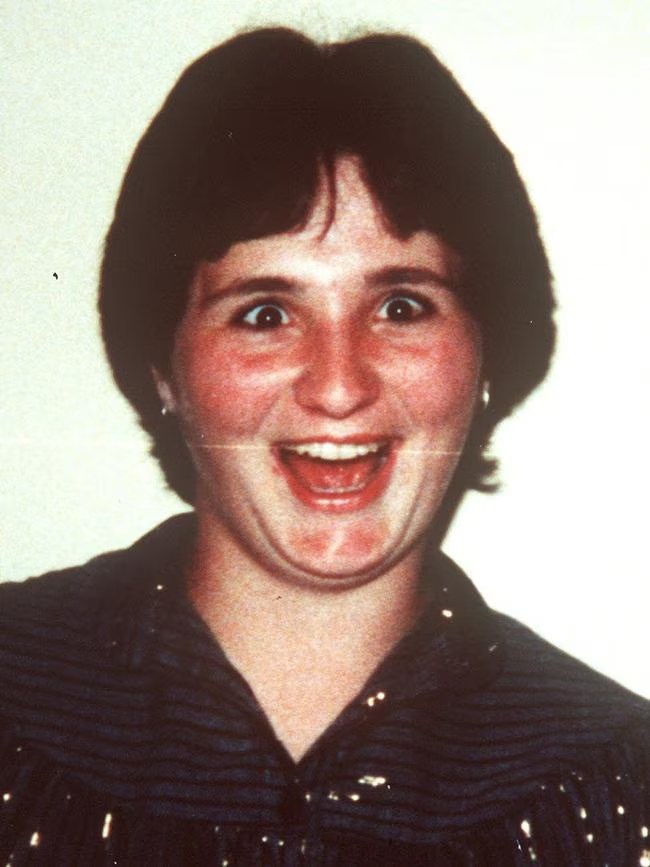
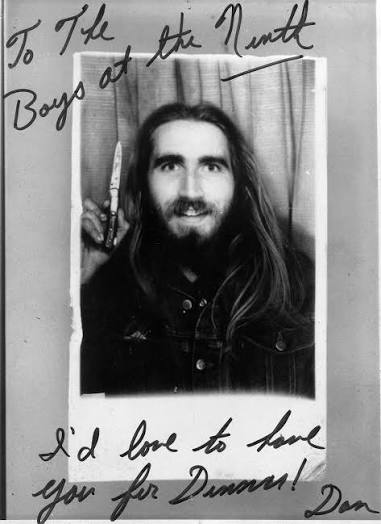
Tracey Wigginton, dubbed Australia’s Lesbian Vampire Killer, was jailed for life after pleading guilty to the murder of 47-year-old council worker Edward Baldock on Friday, October 20 1989.
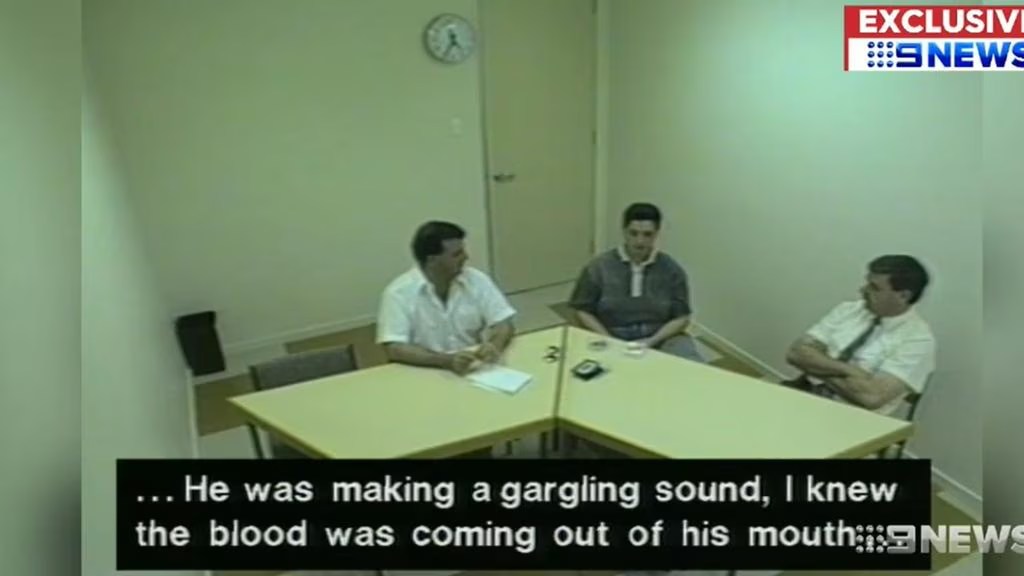
She and three other women offered a lift to a heavily intoxicated Baldock at Brisbane’s Kangaroo Point. They drove him to Orleigh Park in the suburb of West End where Wigginton stabbed him 27 times, then buried her face in his neck and drank his blood.
Wigginton was reportedly involved in the “Swampies” group—a Gothic subculture influenced by and devil worship, and frequently watched horror videos, often in slow motion to capture every slash. Baldock was just interested in drinking far more alcohol than was good for him, particularly that night at the Caledonian Club. Wigginton claimed to possess vampiric tendencies and told police she needed to consume human blood to survive and maintain “witchery” capabilities.
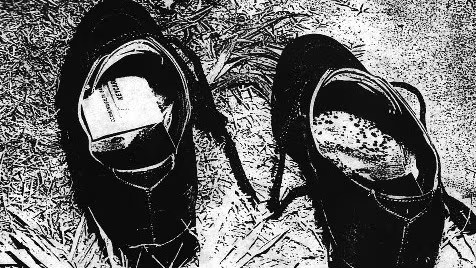
Baldock somehow found Wigginton’s Commonwealth bank keycard and managed to slip it into his shoe before he died. Police discovered it during the investigation, leading to Wigginton’s arrest within 24 hours.
The night before the murder she watched repeatedly a slow-motion sequence of a man’s head exploding when he was shot, according to Wigginton’s girlfriend, Donna Staib.
Wigginton’s co-accused pleaded not guilty, claiming they were terrified of her. Her Defence team argued that she had suffered abandonment and physical and sexual abuse as a child which had left her with a multiple personality disorder.
However, the Queensland Mental Health Tribunal found that she was not legally insane, knew the difference between right and wrong and understood the consequences of what she had done.
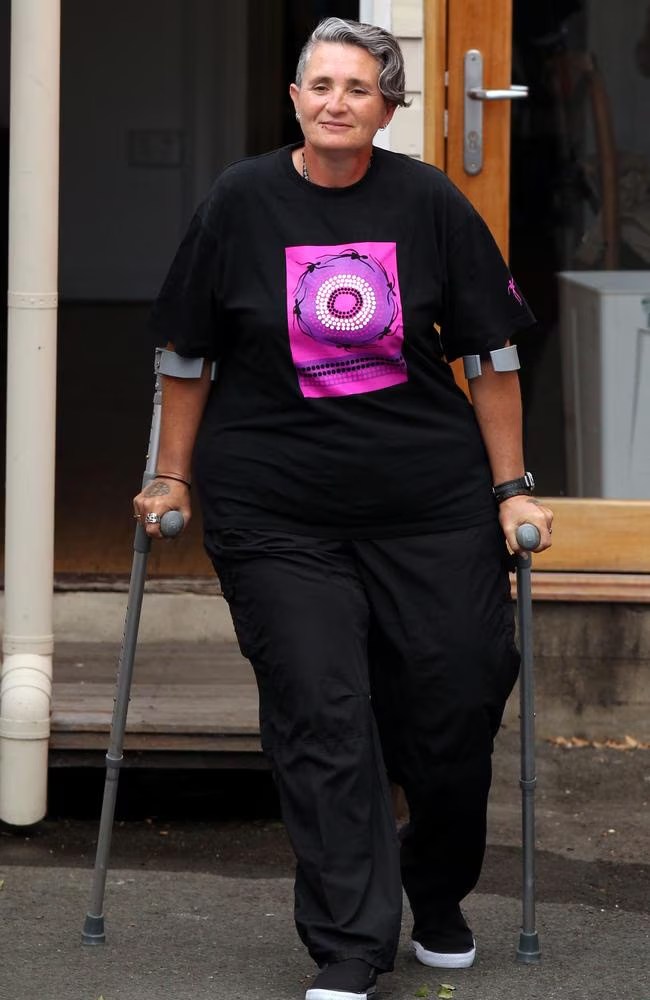
Wigginton pleaded guilty in January 1991 and was given a life sentence, to be served in the Boggo Road women’s prison in Brisbane. She was eligible for parole in 2002 but until 2012 every application was denied. She was finally released on licence in 2012 on lifetime parole, suffering from diabetes and walking with crutches, initially staying in supported accommodation and a women’s shelter in the Southport area. Media tracking in recent years located her living in Tamborine, a rural locality northwest of the Gold Coast.
In 2019, investigators discovered she was posting dark images of vampires, skeletons, and human remains on Facebook under the alias “Oberon Fairchild”, causing significant distress to the Baldock family. One meme read:
Now panic because I’m back fuckers!
There were also drawings of a demon with sharp teeth, skeletons sitting in a graveyard, and photos of real human remains and burial sites.
Australian cannibalism cases are less common than other countries (particularly those that have higher populations) but make up for the scarcity in the sensationalism of the occurrences. Several involve women, which apparently makes them even more newsworthy. Consider the women who has been charged with murdering her four-year-old child in Wyong, NSW and is being investigated for consuming some of his body. Or Katherine Knight, who was charged with murdering her husband and cooking his body, hoping to feed the meat to his children. Or Jessica Camilleri, who killed her mother and decapitated her. The judge sentencing her said she had “engaged in “acts of decapitation and cannibalism”.
Wigginton was certainly a lesbian, and it appears that she believed she was a vampire, needing blood to survive. But it is clear that the coincidence of these two identities are what made the media frenzy so heated. Someone who eats human flesh or drinks human blood is worth a headline; after that, the media depends on a circus of ‘experts’ to explain why they did that. Vampirism did not make her a lesbian, nor did her sexual preferences relate to her obsession with the occult. But both identities are closely identified as outsiders (particularly back then), and her doubled outsider status made her irresistible to the mass media, worldwide. Had she not been a lesbian, fascinated by blood, she would not have been such a big story.
Wigginton demanded blood, just as most of the population demands flesh. Australians are famous for enjoying their meat. But like everyone else, we sometimes forget that humans are animals, and are just as sanguinous, just as vulnerable, and just as edible, as any other.
For a rather long true-crime vodcast about the case and its background, you might enjoy this:
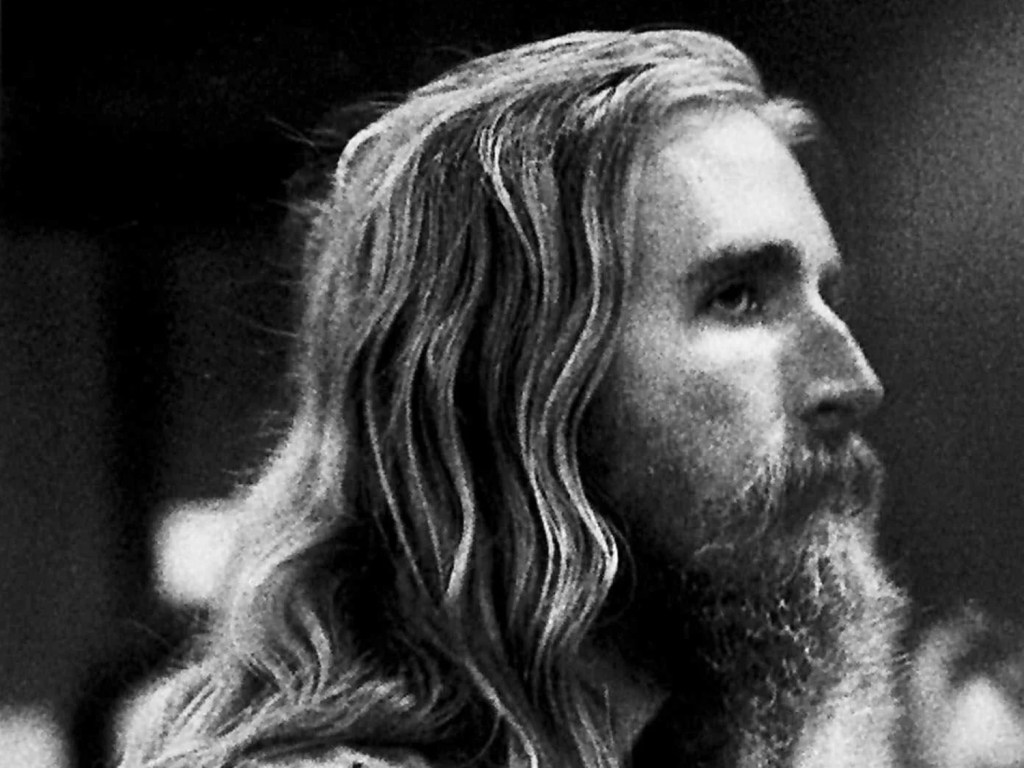
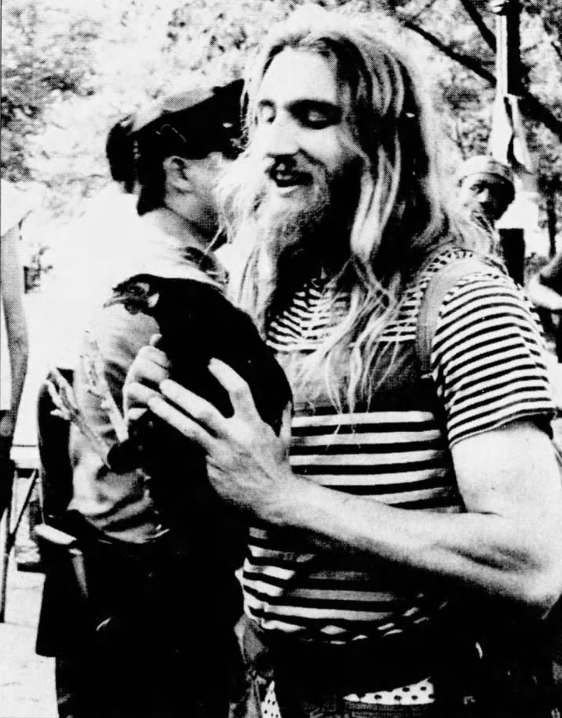
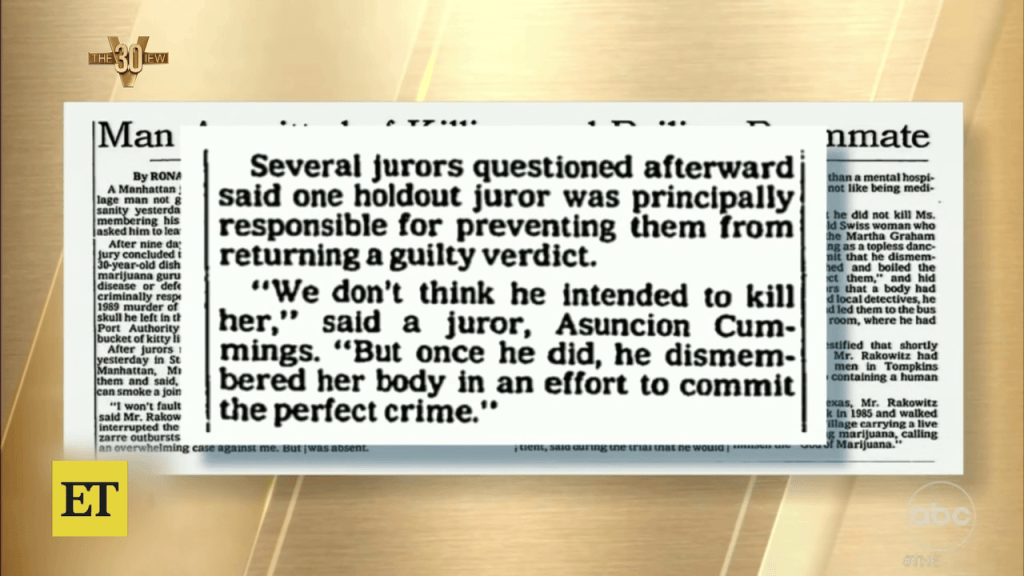
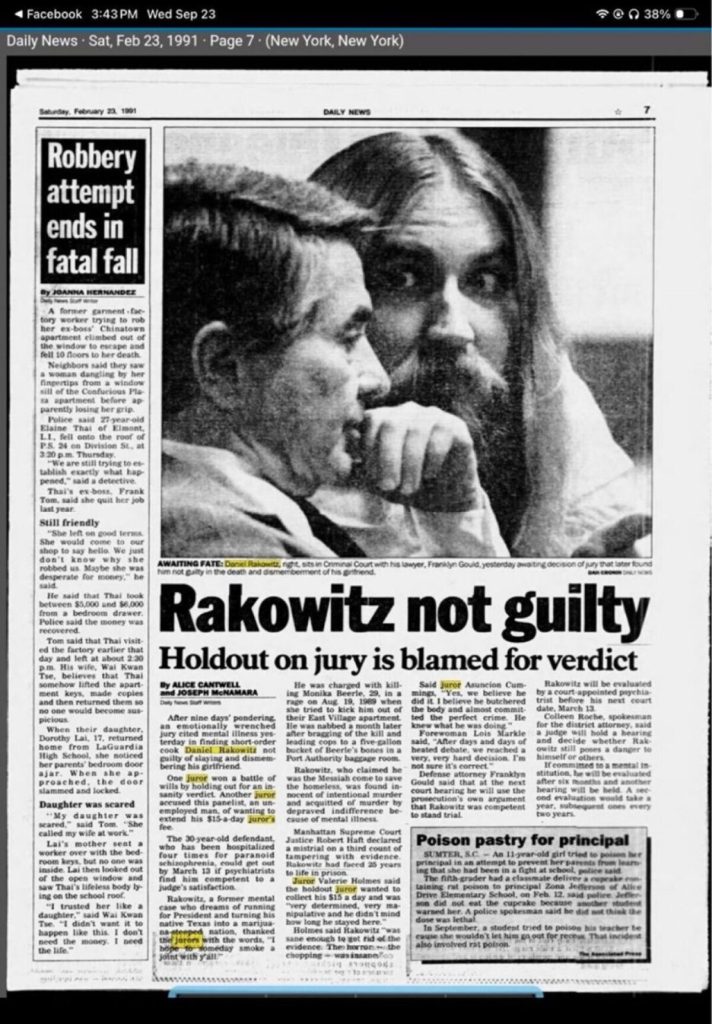
Those of you who watch The View on ABC (that’s the American Broadcasting Company), and it seems someone does because it’s in its thirtieth season, may have seen Sunny Hostin, one of the co-hosts, reveal on air on 22 September 2026 that she was the “holdout” juror during the 1991 trial of Daniel Rakowitz, who became known as the “Butcher of Tompkins Square Park“. However, her assertion of single-handedly driving the acquittal, on the grounds of his apparent insanity, has since been challenged by articles published at the time.
The View panel was discussing the case of Lindsay Clancy, a 36-year-old nurse, who fatally strangled her three young children—Cora (5), Dawson (3), and Callan (8 months)—at their home in Duxbury, Massachusetts in 2023. The case has divided America (doesn’t everything?) because one juror held out against the other eleven, who had wanted to find her not guilty of murder. That juror had argued that Clancywas insane when she killed her children and so should be sent to an asylum rather than prison. The deadlock ending in a mistrial.
The Rakowitz case was the opposite, with most jurors wanting to find him guilty, but a holdout refusing on the grounds that he was insane, and eventually persuading the others.
Hostin shared that she related to the pressure the man on the Clancy case felt at being a holdout juror. Long before attending law school or becoming a federal prosecutor, she had sat on the Rakowitz jury, under her maiden name, Asuncion Cummings.
Daniel Rakowitz was tried for the 1989 killing and dismemberment of his 26-year-old roommate, Swiss dance student Monika Beerle, in the New York East Village. Rakowitz was a local marijuana dealer known for walking around Tompkins Square Park with a Bible and a live rooster. On August 19, 1989, Beerle ordered Rakowitz to move out of the apartment after a heated argument. Rakowitz punched Beerle in the throat, causing her to die by suffocation. He then dragged Beerle’s body into a claw-foot bathtub and, over several days, used a 15-inch carving knife to dismember her corpse. He bleached and boiled her bones to “disinfect” them, flushed the remaining flesh down the toilet, and sealed her skull and bones inside a five-gallon bucket filled with cat litter.
After his arrest, Rakowitz confessed to police that he had boiled Beerle’s head, made a soup from her brain, and tasted it. During his 1991 trial, a prosecution witness testified that Rakowitz subsequently ladled out a homemade soup containing human remains to unhoused people in Tompkins Square Park. One witness testified that there was a human finger in the soup.
Hostin recounted that tensions ran so high during deliberations that another juror threw a chair at her, but she ultimately persuaded her fellow jurors one by one to vote not guilty by reason of insanity. The jury ultimately handed down that verdict, sending Rakowitz to a psychiatric facility rather than a standard prison. Currently he is held at the Manhattan Psychiatric Center on Wards Island, where he continues to receive long-term treatment.
Hostin certainly shocked her co-panelists, with one, Alyssa Farah Griffin, clasping her hand to her chest and asking,
“you were on that jury? And you got this guy off?”
But a New York Post Report that examined coverage from the Associated Press, Newsday, and the Daily News from that time quoted other jurors stating that the primary holdout was actually an unemployed man who wanted to prolong the trial to continue receiving court payments and free meals, casting doubt on Hostin’s recollection of being the hero (or villain depending on your point of view) of the Rakowitz case.
Whether Rakowitz served brain soup to the homeless, from a strictly legal standpoint, did not matter for the final verdict, as the state only needed to prove that he intentionally killed and dismembered Monika Beerle to secure a conviction for murder.
But from a psychological, cultural, and institutional perspective, the cannibalism allegations profoundly shaped the case. While cannibalism is not a distinct crime under New York state law (or in 48 other states), the reflexive abjection of the allegations certainly influenced the jury’s final decision and were crucial to the prosecution’s case. The defence, on the other hand, used the grotesque details of Rakowitz’s confessions—cooking his roommate’s brain and feeding the soup to the homeless—as primary evidence that he was completely detached from reality, and this ultimately helped secure his verdict of not guilty by reason of insanity. It painted a picture of a man suffering from severe schizophrenia who could not understand the morality of his actions.
The cannibalism narrative directly explains why Rakowitz remains locked up today, almost 40 years later, despite the fact that he apparently did not intend to kill her, unlike other intentional killers who are eventually paroled.
True or not, the cannibal “soup” story transformed a tragic homicide into enduring New York City folklore. It capitalised on the late-80s panic surrounding Tompkins Square Park, which was then a flashpoint for riots, homelessness, and drug crimes. The narrative cemented Rakowitz as a symbol of an era when the East Village felt dangerously out of control, giving him a lasting infamy that a standard homicide case would not have generated. Without the allegations of cannibalism, he would probably long since be back in the community, smoking dope (now legally) and feeding the homeless, with his pet rooster by his side (or perhaps in the pot).
The curious thing is that the eating of the corpse after the killing became a much bigger story than the actual homicide of that victim. And the eating of that dead, no-longer-sentient cadaver is widely considered a much greater offence than eating a sentient nonhuman who yearns to cling to life. A cow, pig, sheep or rooster being killed, intentionally and inculpably, might reasonably argue that human ethics make no sense.
More words have been written about The Odyssey than most movies, because it has the attraction of being both a grandiose blockbuster told with the complexity and brilliance that is the signature of Christopher Nolan (Dark Knight trilogy, Oppenheimer, and many more), as well as a reinterpretation of one of the most important classics of Western civilisation. Most critics seem to love it, some hate it, and others nitpick over issues like the use of modern slang and obscenities, while ignoring the fact that the characters are speaking modern English instead of ancient Greek. Or the fact that the Wooden Horse was not mentioned in Homer’s telling of the Trojan war (The Iliad) and mentioned only briefly in The Odyssey; most of the detail came from Vergil’s The Aeneid, which was written some 700 years after Homer.
Luckily, writing a blog on cannibalism means never having to worry about stuff like that – all that matters is who gets eaten, by whom, and what it means, which is pretty subjective (like everything else in literature). Mythology is full of cannibals, and the Greeks had more than their fair share, for example the revenge cannibalism of Thyestes unknowingly eating the flesh of his sons served to him by his brother Atreus. Cannibalism is an unmatched method of revenge because not only is the victim killed, but is then reborn as excrement, the ultimate degradation. Shakespeare used revenge cannibalism with gusto in his play Titus Andronicus.
In the case of The Odyssey, there are two narratives of cannibalism, only one of which Nolan bothers to show us.
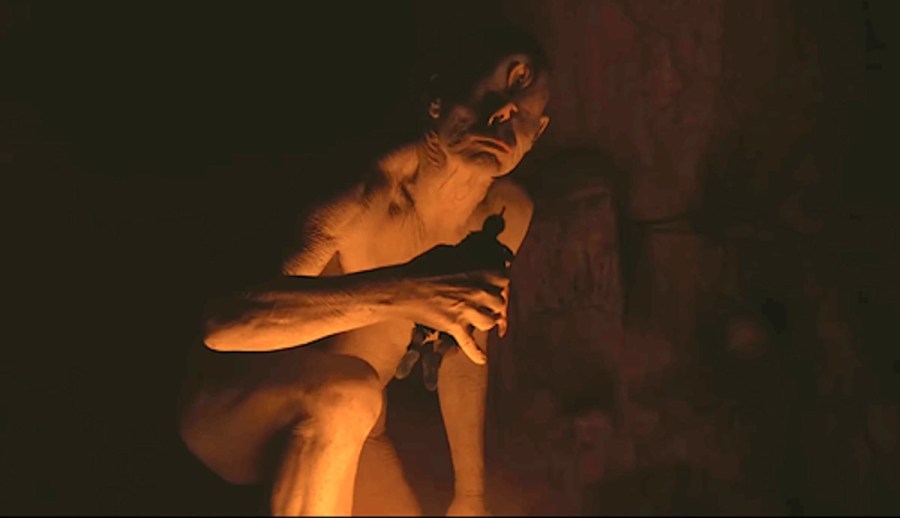
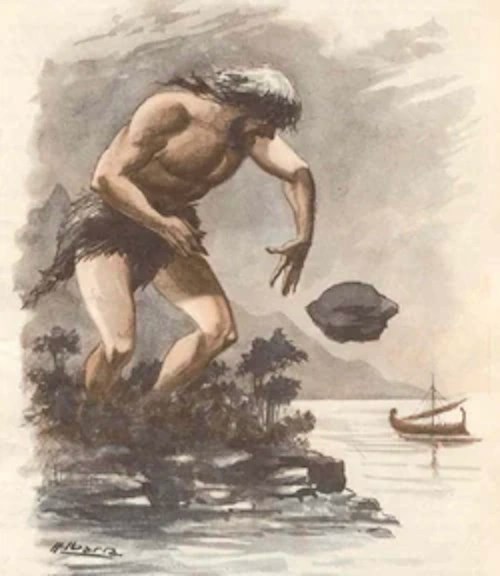
Odysseus, the King of Ithica, is trying to get home from the destruction of the great city of Troy, an orgy of destruction, rape and slaughter that has left him racked with guilt. Not so easy in a sailboat travelling through largely uncharted seas. He and his army land on an island populated by the cyclopes, literally “round eyes”, shepherd giants with one large eye in the middle of their foreheads. The cave the Greeks blunder into seeking provisions is the home of the cyclops Polyphemus, who is a son of the sea god Poseidon and Thoösa, the sea nymph daughter of the primordial sea god Phorcys, neither of whom are gods you want to upset if you’re trying to sail home without a good GPS. Polyphemus likes the Greeks a lot; he eats them with gusto, as Homer puts it:
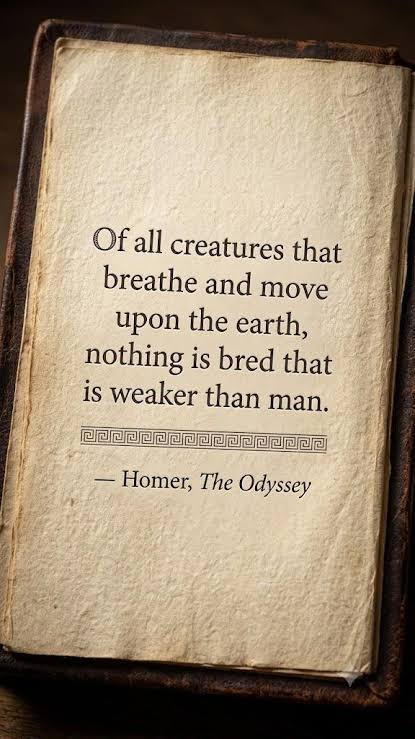
He dashed their heads against the floor as though they had been puppies. Their brains ran out on the ground and soaked the earth. Limb by limb he tore them to pieces to make his meal, which he devoured like a mountain lion, never pausing till entrails and flesh, marrow and bones, were all consumed.
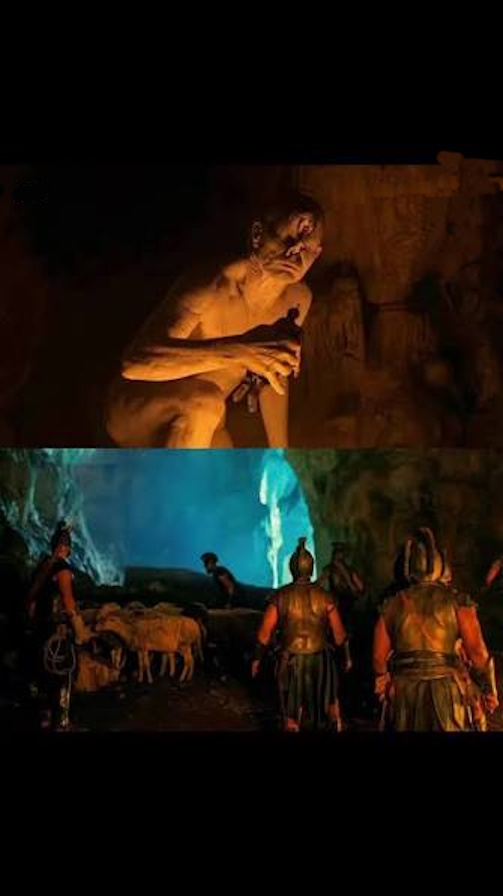
Nolan, who seems to avoid computer graphics, used a 60-foot animatronic puppet, forced-perspective framing, and full-body performance capture to show Polyphemus and, IMHO, it’s one of the highlights of the film. Odysseus and his men blind the cyclops (which admittedly is half as hard as blinding a giant with two eyes) and the distraught Polyphemus, after hurling rocks at the departing boats, prays to his father Poseidon to avenge him, meaning that this voyage is going to be much more difficult and take a lot longer than even the three-hour film makes it seem.
The Greeks land on another island; this time inhabited not by solitary sheepherders like Polyphemus but a race of giants called the Laestrygonians, who are not nearly so pleased to see them. In Homer’s original version, Odysseus sends three scouts, one of whom is rapidly digested before the giants head to the hills where they keep a handy supply of boulders, which they hurl down until they have destroyed all the Greek ships except that of Odysseus, proceeding to spear the Greek soldiers like fish before having a beach barbecue.
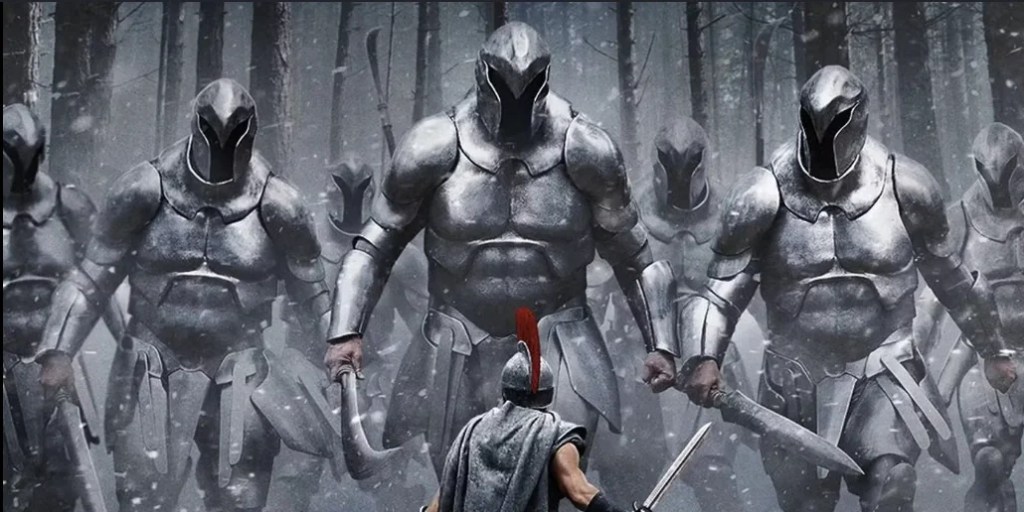
In the film, the Laestrygonians are presented as giants (but not as big as Polyphemus apparently) and mysteriously clad in mediaeval armour. Alas, Nolan does not show us the fate of the slaughtered Greeks, but those of us who read Homer or glance at the internet know that they are certainly on the menu.
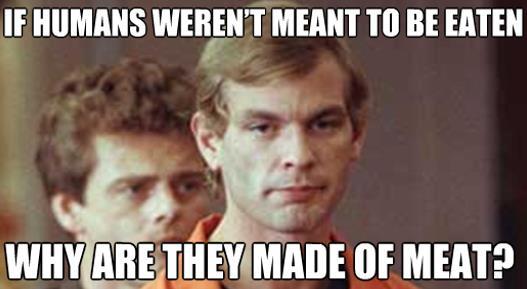
Various other sea monsters eat crew members as the voyage continues interminably, but we’ll concentrate on the incidents above, as the cannibals depicted are at least humanoid, if somewhat larger than life. What the cyclopes and Laestrygonians have in common is their size. Very few depictions of cannibals show small, meek perps, although in reality many cannibals have been quite diminutive, making up in ruthlessness for their meagre size. Think of Ottis Toole or Issei Sagawa. It is perhaps difficult to persuade people to be scared of pint-sized villains, especially in the relatively short time allowed a movie, so monsters are almost always large and intimidating. One of the main precepts of Greek civilisation, as we are told several times in the film, is hospitality to the stranger (xenia or Zeus’s Law), and both Polyphemus and the shiny knights are entirely lacking in that virtue. I guess the men and boys who sought comfort in the home of Jeffrey Dahmer might agree that lack of hospitality seems basic to cannibalism.
The differences between Homer’s cannibals are more interesting though. The cyclopes are isolated outsiders, pastoralists who herd sheep and eat them (and any people that wander by), and do not seem to engage in poetry or philosophy or young boys the way the ancient Greeks did, and therefore, from the point of view of the Greeks, they are uncivilised. In fact, it is debateable whether the cyclops is technically a cannibal (defined as a human who eats other humans), as he appeared to be some other species (a giant with a single eye), but he speaks good Greek (at least in Homer’s version) and so at very least seems to possess what Aristotle called the “rational principle”, as well as a powerful appreciation of carnivorous virility – domination through consumption. Like most cannibals, they are depicted as outsiders who threaten the assumed boundaries of social and symbolic orders. The classical “anthropophagus” (the word “cannibal” had to wait for the Spanish to adapt it from the Antilles in the sixteenth century) was, like Polyphemus, a hybrid human/animal monster—a warning against the dangers of straying from the sovereign and the church. The cyclops has one eye because he has no perspective – social, cultural or ethical.
The Laestrygonians, on the other hand, are a highly organised community, able to buckle on their armour at a moment’s notice (unless perhaps they sit around in it, waiting for scrumptious strangers to appear). In their anonymity and well-drilled efficiency, they are the picture of totalitarian society – identical, disciplined, totally intolerant of outsiders (except for dinner). They appear to be a fascist league, armed and violent.
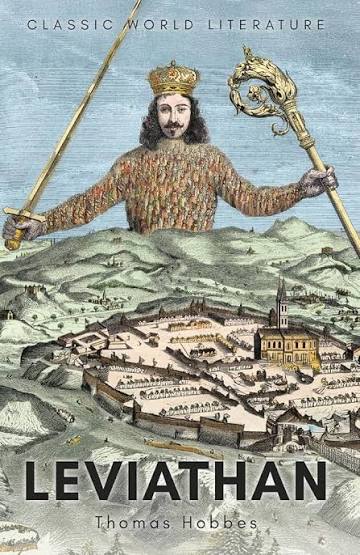
Thomas Hobbes in his famous work Leviathan warned against rejection of the social order. Without civilisation and a strong central authority, a sovereign, we would live in what he called a “state of nature”, which he described as a “war of all against all”. The human response is to declare war on nature and try to dominate it, overcoming our biological weakness and vulnerability by banding together like Laestrygonians. As Odysseus warns the freeloading suitors in his house, foretelling their sudden change of fortune and mortal existence,
In Hobbes’ state of nature, there would be no culture, no industry, no buildings, no science, no arts, and:
“which is worst of all, continual fear, and danger of violent death; and the life of man, solitary, poor, nasty, brutish, and short.”
This is an accurate portrait of the cyclops, lonely, violent and brutish, in his cave reeking of death. But the Laestrygonians go to the opposite extreme, where there is no room for difference or dissent. They, like us trying to control the environment, use technology and strategic cooperation to enforce their wills. They do not ask who the Greeks are, what they need, or whether they come as a threat – they slaughter them and eat them just for the crime of being on their land, the way the Nazis killed Jews and Roma for daring to exist. The absolute sovereignty of Hobbes’ Leviathan may be no more civilised than that of the ant colony that attacks any prey within its reach. Their cannibalism is simply the resolution of difference.
Cannibal stories from Homer onward reveal as much about the victims as the perpetrators. They demonstrate that we are all flesh, at our most physical and animalistic at the time of death and consumption, be that consumption by worms, cyclopes, Laestrygonians or the seemingly innocuous cannibal next door. We can be slaughtered like puppies, consumed as if by a lion, and our integrity and transcendence is contradicted by being split and ruptured—our brains gush, our entrails, flesh and bones and marrow are revealed as common comestibles. Like all animals, we eat and try to avoid being eaten. But unlike nature, which as Tennyson said is “red in tooth and claw”, we can elect to make ethical choices.
If you like reading about cannibalism (“like” might be too strong, maybe “enjoy challenging fundamental foundations of anthropocentrism and carnivorous virility”), you can buy me a coffee (or tea) and share your thoughts 🎉☕ HERE
Quick question: have you ever thought about changing your life – what you do, where you go, with whom you interact? Most people have.
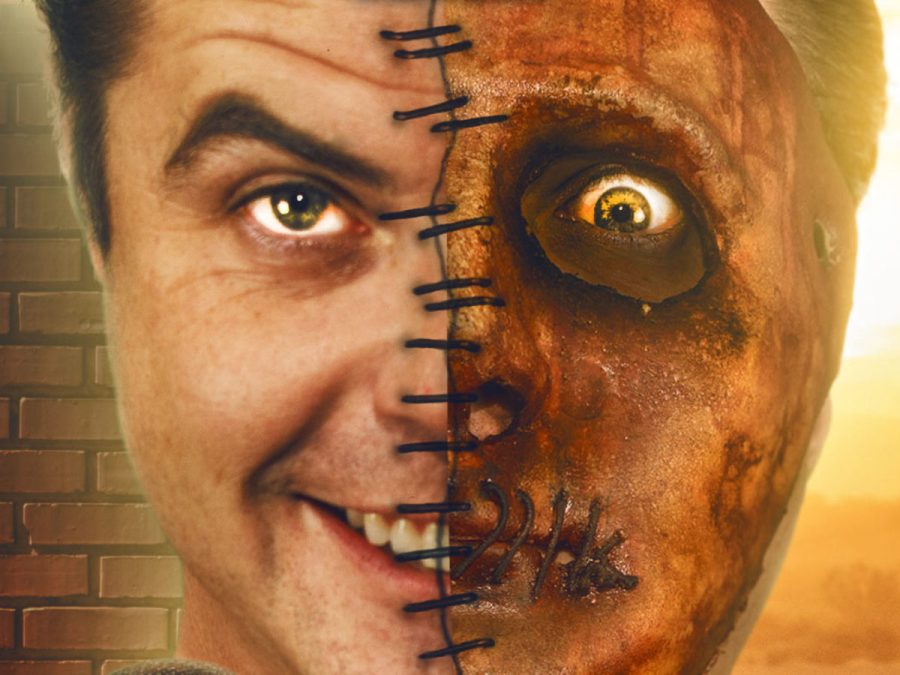
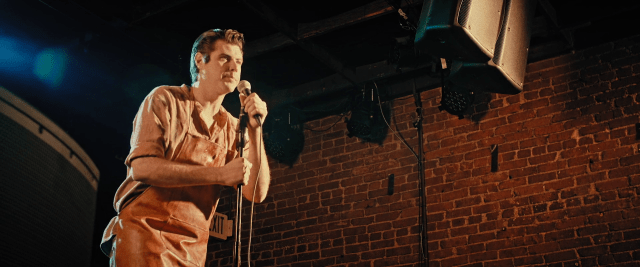
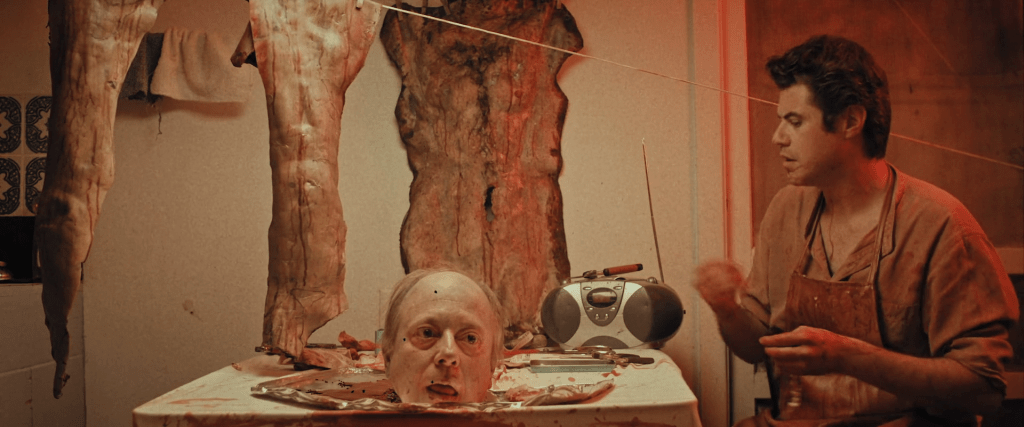
This film, Cannibal Comedian, is both a comedy and a gorefest, but it asks a serious question: are we confined by who we are, what we do, what we eat? Just stating an identity can get you into all sorts of trouble: try saying “I’m a vegan” in a butcher shop, or “I’m a liberal” in Wyoming, or “I’m a Zionist” on a trendy college campus.
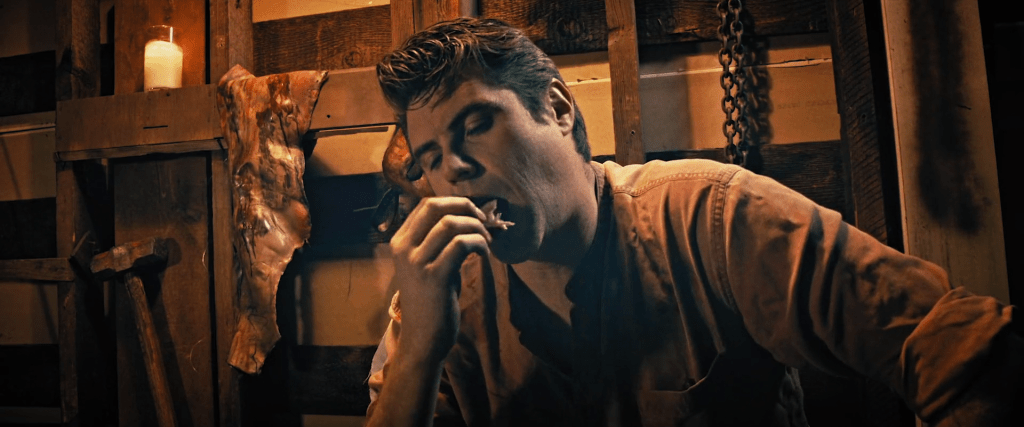
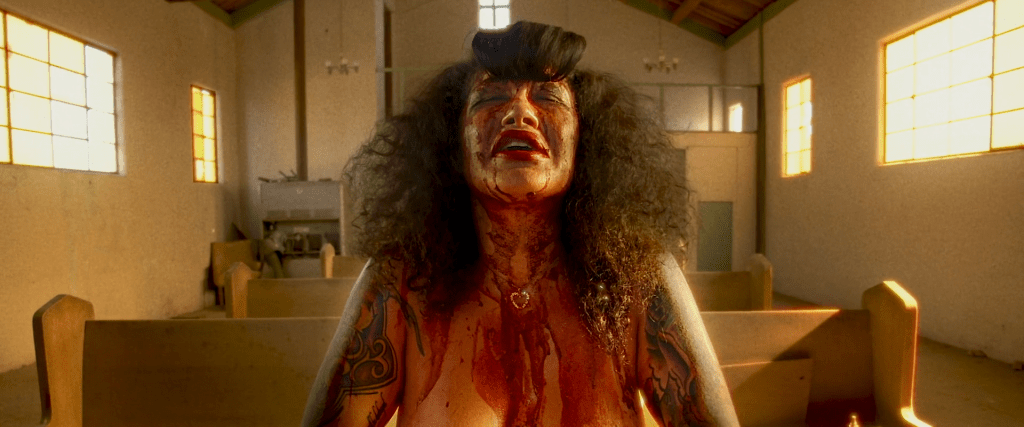
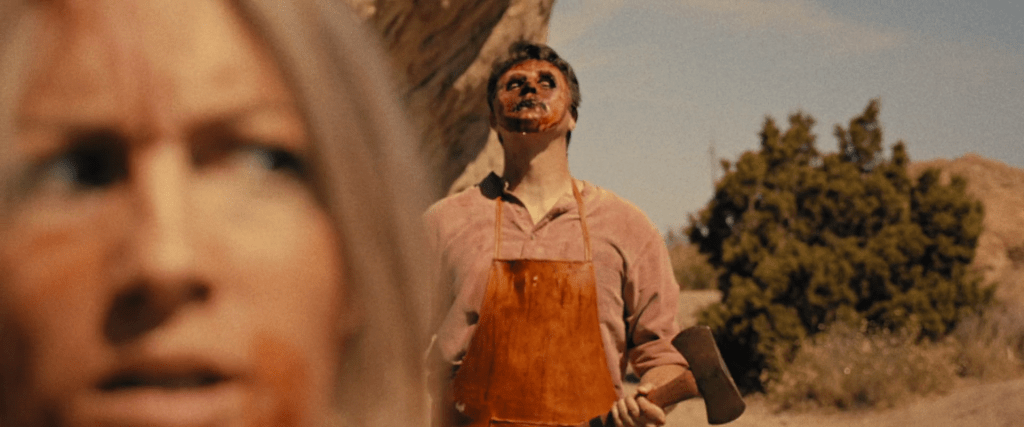
Charlie (AaronPrager) is a desert-based cannibal, charming in a Ted Bundy sort of way, who chops up his victims and sells them as meatballs on the roadside, often killing and grinding up his customers to make the next batch of subs, cheered on by his very strange meatball-loving customer Eleanor (Mis Sadistic).
The desert cannibal is a trope explored originally in The Texas Chain Saw Massacre andThe Hills Have Eyes. A half-hearted attempt to tie it into cannibal mythology makes for some absurd opening cards.
In the desert, morality is optional and belonging to your community is everything – the Sheriff and Eleanor know exactly what Charlie is doing, and eagerly await his mince, but outsiders are fair game (there’s a pun for you, Charlie!)
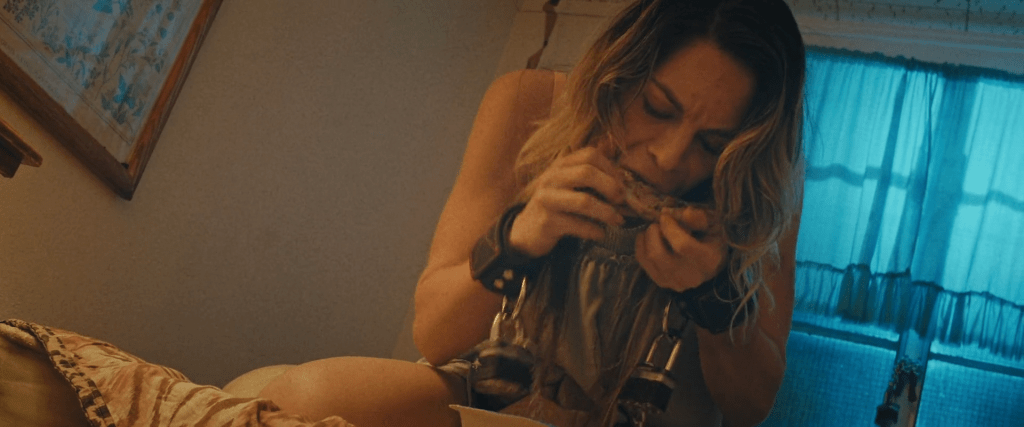
But Charlie wants to break out of being restricted to one identity and become what we all sometimes daydream about: a standup comedian. It makes sense – there is a lot of comedy in cannibal films – think of Hannibal’s line “I’m having an old friend for dinner”. Or Auntie Lee’s Meat Pies, where a seductive succubus named Coral leads a horny guy to bed, saying “I can’t wait to have you inside me”. Or the wonderful TV series The Horror of Delores Roach, in which the strong eating the weak is defined as “That’s just like Darwin and shit, man”. When Charlie captures carefree hippie singer Chrystal (Austin Judd), she becomes his audience and his muse, since she is a real entertainer. She encourages him to follow his dream, hoping he won’t be eating her as the after-show supper.
Charlie overcomes his nervousness and finally (halfway through the film!) appears on stage at a standup club called the Funny Pit, in front of the mandatory brick wall, dressed in his butcher apron and covered in blood from a couple of stoners who had tried to rob his house. The audience like the outfit and the cannibal jokes, and his career takes off. Some examples of his dad/cannibal jokes:
“What do you get when you put a sixty-year-old woman in a motorised wheelchair?” “Fast food.”
“She was starting to get a little moody and I asked her ‘what’s eating ya?’and she said ‘You are!’”
“Beauty only runs skin deep… it’s what’s on the inside that counts.”
“When I put him through the meat grinder, that’s when I knew he was a well grounded individual.”
“I started to eat plant-based – I only eat vegans now. Which tastes like annoying.”
But Charlie soon finds that hecklers can disrupt his whole routine. Any weakness and the predator becomes the prey. But Charlie has his own method of dealing with hecklers.
When Charlie finds out that the owner of the Funny Pit, Carrey (Robert Dunne), is not letting him perform because he wants to steal Charlie’s act for himself, the shit (and various other bodily fluids) really hits the fan. When Carrey asks if Charlie is planning to eat him, Charlie replies:
“I don’t eat rotten people”
And when Carrey asks Charlie to PLEASE stop with the cannibal jokes, Charlie replies:
“You know, being a cannibal, you think it’s a joke? You know, this is my life!”
There are a few intertextual references to cannibal films such as Charlie dressing like Leatherface from The Texas Chain Saw Massacre.
There are no major plot twists, in fact there isn’t much of a plot (or a budget apparently). So when his long-suffering captive and audience Chrystal finally knocks him down and escapes, she tells him:
“We both share that hunger for the spotlight.”
Chrystal is also a cannibal now, since human meat is all Charlie fed her, and she has kept herself alive by encouraging Charlie to workshop his act instead of eating her. She thus becomes both a cannibal and a comedian, sating her hunger for the spotlight, just as he did.
The most interesting question from the film is Charlie’s status as a cannibal. How did he decide to eat people? Is it the spirit of the wild places, the shortage of other food sources in rural areas, or was he born that way? When he shouts, “this is my life!” he implies there was no other choice for him. Chrystal is forced into cannibalism by hunger, but seems to see nothing particularly wrong with it, as long as it does not apply to her own body. Neither she nor Charlie seem to see anything particularly wrong with eating humans, as opposed to other animals.
Police sources have confirmed that cannibalism will form part of an investigation into the death of a four-year-old boy in NSW Australia.
Police forensic experts are taking samples from a mother’s fingernails and mouth for evidence of cannibalism after she allegedly claimed to have consumed part of her son, who was found dead in their home on the NSW Central Coast in eastern Australia.
A 32-year-old woman entered the Wyong Police Station about 4:40pm on Saturday July 4 and, as a result of the conversation, police ordered a welfare check. Officers searched a unit on Byron Street at Wyong where they found the body of a four-year-old child.
The woman allegedly told police she had eaten part of her son.
Police found the body of her son with significant arm injuries. The woman was charged with domestic violence murder and refused bail. Police are investigating whether the boy had been dead since the Wednesday before the alarm was raised.
Police were granted approval to carry out a forensic procedure on the woman over the weekend that will allow them to carry out a buccal swab, a sample of her blood, nail clippings and matter under her fingernails,
“to examine the internal mouth contents and forensic material of the suspect”
Curiously, the order notes it was not to obtain the woman’s DNA, which is the usual purpose of such procedures.
The NSW Department of Communities and Justice said it had previously been in contact with the family. A department spokesperson said,
“Given the matter remains the subject of an active NSW Police investigation, it would not be appropriate to comment further at this stage”
The Minister responsible for child welfare has admitted that the department is chronically understaffed.
Sources with knowledge of the investigation say it’s suspected that the mother had a combination of mental health and drug addiction problems. The mother and child had moved into the rental house earlier this year, a neighbour said, allegedly following domestic violence between the woman and an ex-partner.
At a press conference on Sunday, Superintendent Chad Gillies from the Tuggerah Lakes District said police were calling for information about the woman and child.
“It was an extremely confronting scene. It’s been confirmed the child had injuries. I am not going to speculate further on what those injuries are”
The woman has not been identified, but police confirmed she was known to them.
Superintendent Gillies said,
“There is a domestic relationship to the child … the 32-year-old female and the four-year-old child lived at the unit together, and as I understand it, nobody else lived at that unit”
The matter will return to court at Wyong on September 1.
Wyong is a small town (population around 4,500) on the holiday coast of NSW, about 90km north of Sydney.
Australia has a history of cannibalism, not to the level of the USA or Russia, but still a part of its mythology. Australian Indigenous people, who comprise the oldest surviving civilisation on the planet, were labelled cannibals as a prelude to the expropriation of their land and the attempted annihilation of their culture and genocide of their people. Such reports are heavily contested by historians and anthropologists and, where they did perhaps occur, are usually put down to mortuary rites, survival in drought or sometimes revenge killings. Reports were largely based on hearsay.
Earliest reports from the British colonies were mostly of convicts escaping and resorting to cannibalism or bushranging, or sometimes both. The most famous was Alexander Pearce, who escaped twice in Tasmania in 1822 and 1823 and each time sampled some flesh from his accomplices while trekking to imagined freedom. His story was adapted in the famous 1874 novel “For the Term of His Natural Life” which was made into a film in 1927 and was incorporated into Australian mythology, which sometimes assumes he bred a family of cannibals in the wilderness of western Tasmania.
Others included Thomas Jeffrey in 1826 and Edward Broughton in 1830, and probably a lot more whose cases were hushed up by colonial administrators. What’s the point of accusing First Nations people of savagery if your own fellow countrymen are chowing down on each other?
In more recent times, there was the case of Tracey Wigginton (called the “Lesbian Vampire Killer“) who, with some friends, picked up a drunk man in Brisbane in 1989 and drove him to a park, where Wigginton stabbed him 27 times and drank his blood. The friends said that she was a vampire and had previously drunk the blood of other animals.
The Snowtown bodies in the barrels case was revealed to have an element of cannibalism in the final murder, but this was very much an afterthought to the killings and not even mentioned in the film of the events. Several people thought to be somehow socially undesirable (or witnesses to earlier murders) were killed and stuffed into barrels, which were later stored in a building in the small town of Snowtown in South Australia. In the final case, according to reports which surfaced years later, the killers sliced off a sliver of flesh from the right thigh of a man who wouldn’t quite fit in the barrel, then heated a frying pan, cooked the flesh, and handed it around.
Katherine Knight was a slaughterhouse worker who in 2000 had passionate sex with her partner, John Price, then stabbed him 37 times, professionally skinned him, hung his hide on a meat hook over the lounge room door, decapitated him, butchered his corpse and cooked some of his flesh. She served up his meat with baked potato, carrot, pumpkin, beetroot, zucchini, cabbage, squash and gravy in neat settings at the dinner table, putting beside each plate placenames for Price’s children. Another meal was tossed into the backyard; it appears she intended to eat it but decided against it. However, police arrived before the kids, so no one got eaten.
David Kevin Loader, 43, murdered 64-year-old George Martin at Mandorah, near Darwin, on July 5, 2001 after a heavy drinking session. He later told a cellmate that he had cooked and eaten the man’s leg and penis. He said it tasted like chicken.
In 2019, Jessica Camilleri killed her mother and decapitated her. The judge sentencing her said she had “engaged in “acts of decapitation and cannibalism”.
In 2021, Cecil Mabb abducted a five-year-old girl from a campground in Tasmania, not because he was planning any sexual molestation but, as he told prison staff, because he wanted to eat her, and that he had wanted to eat people since he was a child.
In the Australian state of NSW, cannibalism is not mentioned in any legislation, but section 81C of the Crimes Act 1900 proscribes “Misconduct With Regard to Corpses” which involves “indecently” or “improperly” interfering with a human body or offering any “indignity” to it, and provides for maximum imprisonment of two years.
In fact, in most countries around the world, cannibalism is not listed as an offence. Killing people is certainly against the law, and there are a range of motivations that may elevate it from manslaughter to murder, but what happens if the killer uses the flesh thereafter is a bit of an afterthought. Our assumptions about human inviolability are based on Biblical claims about being made in “the image of God” (whatever that may mean), but the subsequent insistence on that sacred being having an immortal soul creates a contradiction – if the soul has left the body, are the remains “just meat”? If so, why have rumours of cannibalism elevated this story from a tragic murder to sensationalist clickbait? And why are we not equally repelled by the idea of eating a baby of other species?
News and social media, particularly in the UK, are making a meal of a new report on the grooming and rape of young girls. But this problem goes back a few decades, and has been said to include cannibalism as well, which brings it to the attention of this blog.
Several government reviews have reported failures by British institutions in preventing, identifying and prosecuting the widespread cases of gang-based child sexual abuse and exploitation that mostly occurred between the 1990s and 2010s. Allegations of governmental and institutional failures to respond to the problem or to downplay or cover up the issue have been described as the grooming gangs scandal.
Media coverage of these crimes has particularly focused on the ethnic and religious background of perpetrators in high-profile cases, most of whom were Muslim men of Pakistani descent, and whether this prevented proper investigation.
Data in Greater Manchester, South Yorkshire and West Yorkshire shows that, in the 2020s, men of an Asian ethnic background are disproportionately represented among perpetrators in those areas.
On 16 June 2026, MP for Great Yarmouth and leader of Restore Britain, Rupert Lowe, published The Rape Gang Inquiry Report. Headed by Sammy Woodhouse, a child sexual abuse activist, the report primarily investigates child sexual abuse beginning from the 1950’s onwards. It claims that at least 250,000 white girls were subjected to “repeated rape, gang rape, trafficking, torture, pregnancy, forced Islamic conversion and lifelong trauma”.
British anti-trans campaigner Kellie-Jay Keen-Minshull — who also goes by the name of Posie Parker — has made a series of videos about “Grooming Gangs” – claiming that a young girl in England was killed and eaten as kebab meat. These claims are used in conspiracy theories, saying that the botched police investigation was in fact a cover-up by paedophile elites who, they say, control everything. Keen-Minshull says:
“What we know is that there’s grooming gangs in Telford. A young woman that never actually really made it to mainstream news, wasn’t a big story, was cut up and I think she was put into meat that was sold for human consumption. We know that there are vast numbers of men involved in these grooming gangs, and we know that there’s weird cover-up stuff going on, that only makes sense if the other people in power are also raping children.”
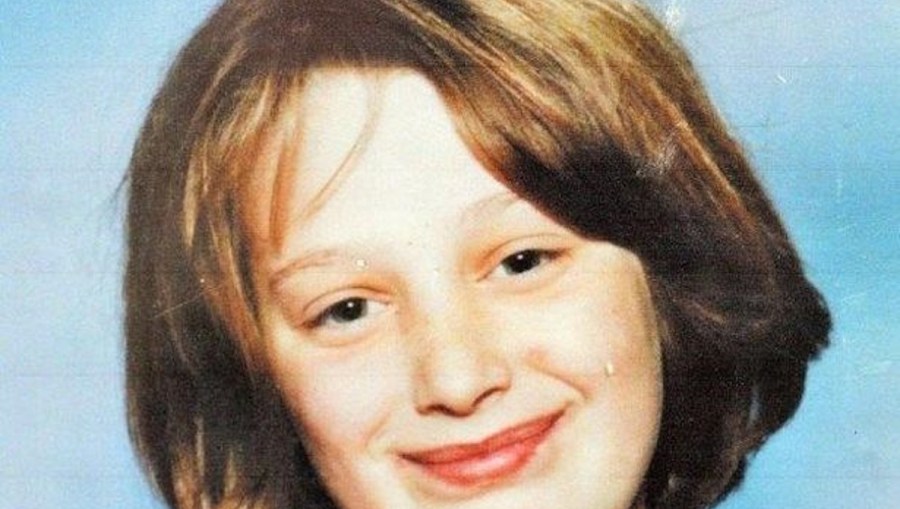
The case she is referring to seems to be the disappearance of 14-year-old Charlene Downes, who went missing in Blackpool in north-west England in November 2003. Accusations were made of a child-grooming ring, which induced young girls into having sex in return for cigarettes, food and alcohol. At least one newspaper was quick to claim that investigations had been “hampered by political correctness”, because the girls were white and the perpetrators non-white.
Two men, Ilyad Albattikh and Mohammed Reveshi, were tried in May 2007—the first for Downes’ murder, the other for helping dispose of the body—but the jury failed to reach a verdict, among allegations of jury tampering. A re-trial was scheduled, but in April 2008 the accused were released (with very large payouts) because of concerns about serious errors in the evidence compiled by Lancashire Constabulary, who were chastised for their inept handling of the case.
The prosecution had claimed Charlene had been raped, murdered, cut up and minced into kebabs in a Blackpool takeaway called “Funny Boys”.
At the time of the trial, the court was told the police had recordings of the fast food shop owner, who had “joked” that a young girl had been chopped up and put into kebabs that were sold to the public. The tapes did not mention Charlene Downes’ name, but police, who had been investigating her case as a missing persons incident, thought this the most likely solution.
There is considerable racism involved in this story. White children being raped by men of colour is stated or implied in many of the reports, although it is possible that white offenders may have also been involved. Many actual cases of the cannibalism of children indicate the opposite – that white men like Jeffrey Dahmer and Albert Fish prey on children of colour, because such missing children are less likely to be investigated by white detectives. Meanwhile, the Indian current affairs website OpIndia did not mince its words:
Groomed by Muslim gangs, minced into pieces, fed as kebabs
Of course, Ms Keen-Minshull did not invent the idea of using cannibalism as a weapon of dehumanisation (Christopher Columbus did that very successfully) or even as a part of the culture wars – recall the hate and scorn aimed at the New York Times when it suggested the “cannibalism has a time and a place… and others suggest that that time is now”.
Classical mythologies told of savage gods who ate their own children, and paranormal entities such as witches, who used body parts for their rituals. Such usages were not exclusively supernatural, with “blood libel” accusations that Jews were killing Christian children to use their blood for religious rituals and cannibalism dating back to the twelfth century, and being revived with nauseating regularity up to the present day.
QAnon very successful recruited members in the US, partly based on accusations that everyone from Hillary Clinton to a pizza shop owner were killing and eating children. The accusations are meant to dehumanise the alleged perpetrators, but usually end up doing the same to the victim. Poor little Charlene is now almost unknown, except as the “kebab meat girl”. The same process of objectification, slaughter and consumption suffered by every being that transitions into our voracious gullets.
Lots more details of the Charlene Downes case are available on YouTube investigations such as the one below, some of them are quite lurid.
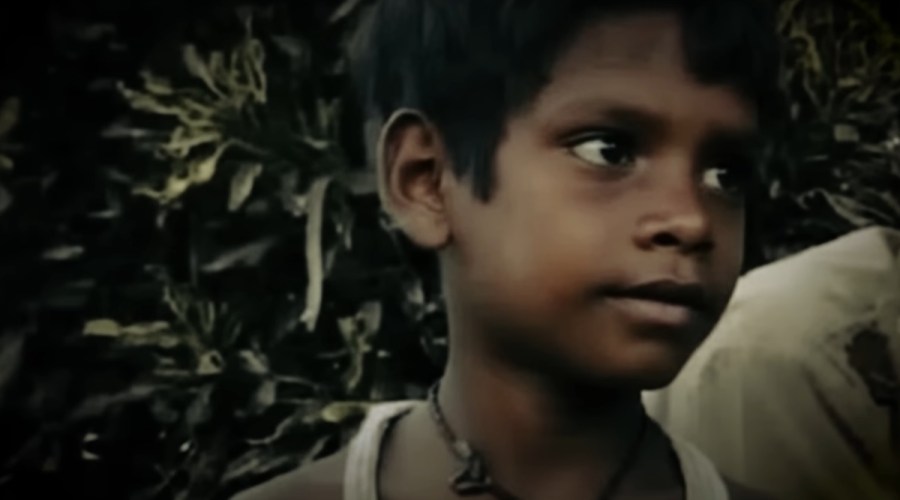
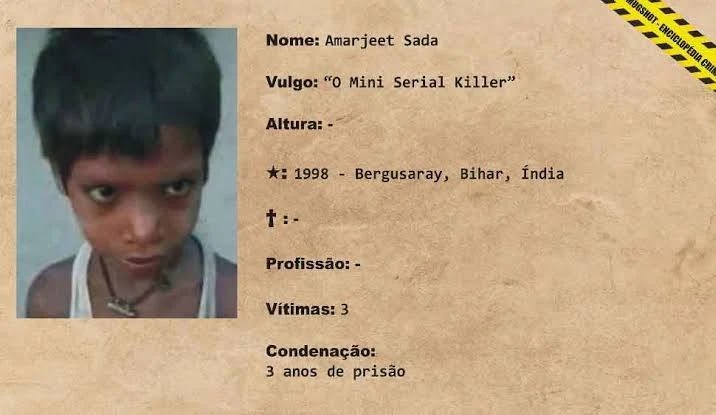
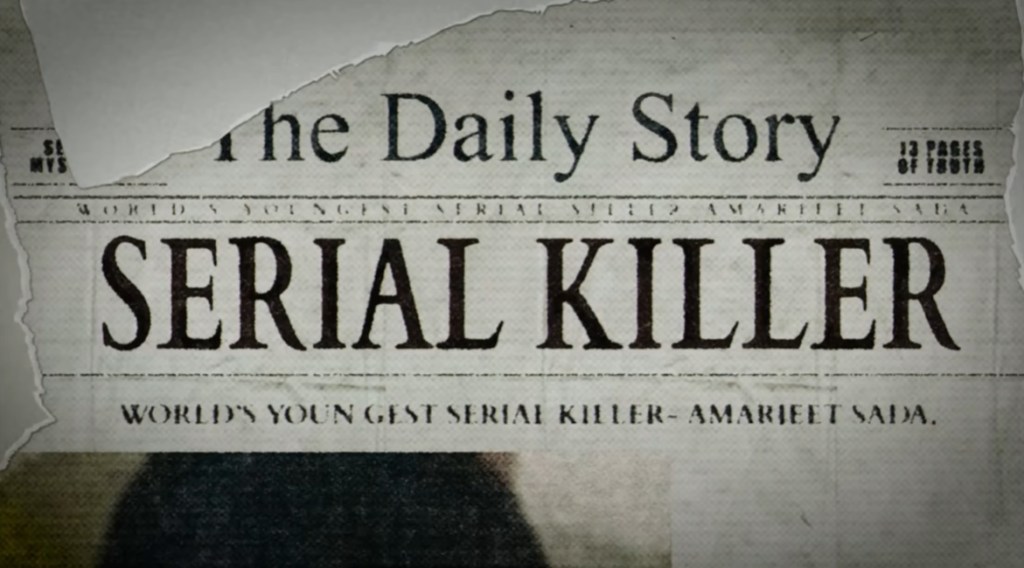
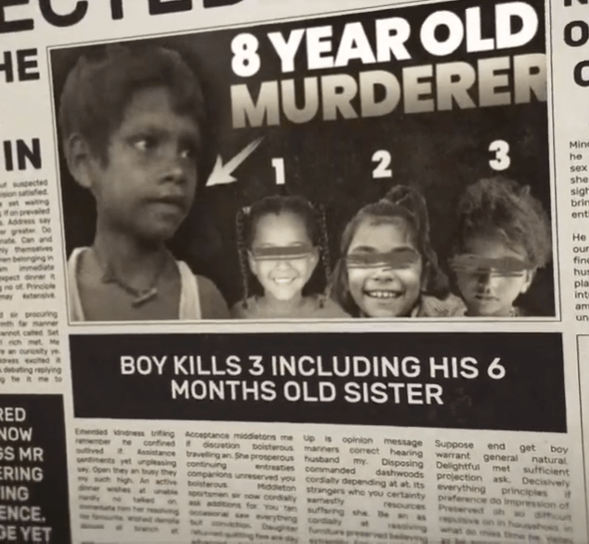
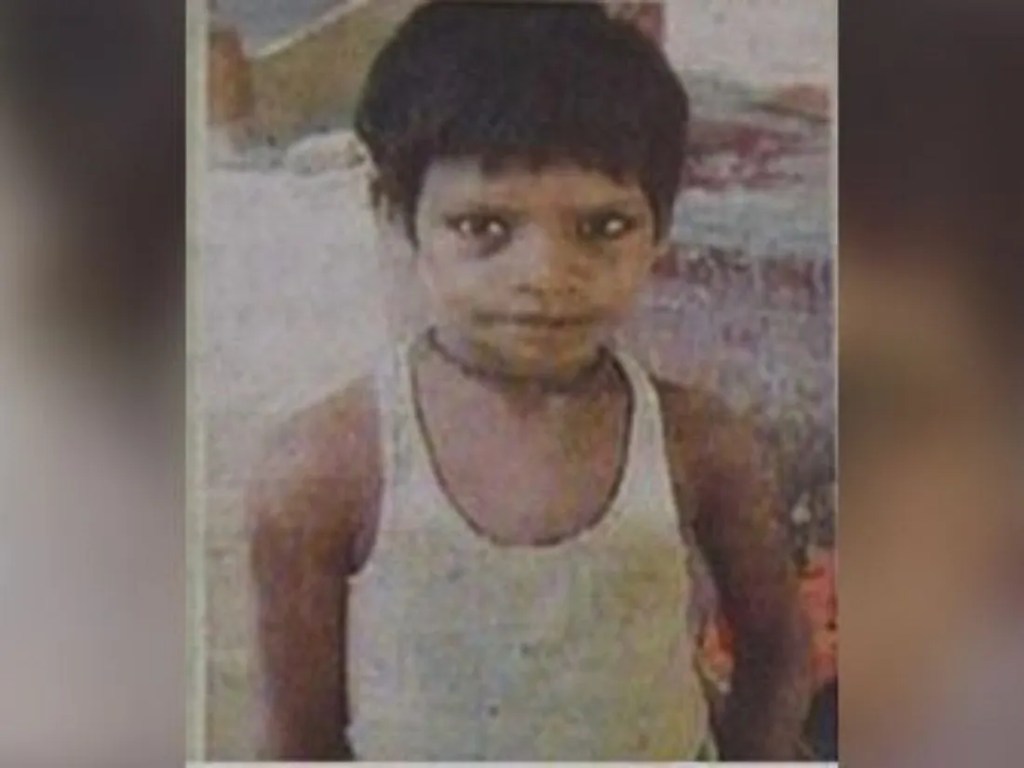
Amarjeet Sada, an 8-year-old boy from Bihar, India, gained international notoriety as the “world’s youngest serial killer” after confessing to the murders of three infants in 2006 and 2007.
The victims were all under the age of one: his 6-month-old cousin, his 8-month-old sister, and a 6-month-old neighbour named Khushboo.
After each murder, Sada calmly confessed to the killings, but the family covered up the first two occurrences, believing that his predilections were a private family matter, and hoping he would stop doing it. He was ultimately arrested in 2007 after the disappearance of a neighbour’s infant. The police interview showed his first words as:
“First give me a packet of biscuits, and then I will tell you everything.”
Chomping on his biscuits, he then told the police what happened to the baby:
“She was sleeping in the school. I took her a little away and killed her with a stone and buried her.”
Officers noted that the 8-year-old showed absolutely no fear or remorse. He was observed happily swinging his legs from his chair and smiling or laughing whenever the investigators asked him details about how he killed the infants.
He told officers that this was not the first killing he had performed, a fact of which his family was well aware. He had killed his cousin and buried her body, and later strangled his baby sister as she slept in their parents’ bed. The parents had chosen to conceal the crime.
The internet loved this story, and it was not long before posts declared that he had not only killed the children but also indulged in their flesh. There is not much evidence of this, and it may be that his case was conflated with that of Tsutomu Miyazaki, the Japanese serial killer who ate parts of his child victims.
Sada was born into the marginalised community called Musahar, a derogatory name that literally means “rat-eaters” (another link to Miyazaki, who was known as “Rat Man”). Apparently, the name Musahar derived from the days when this Dalit (“Untouchable”) community was so poor they caught rats to eat. While they may prefer lentils now (and who doesn’t?), the Musahar remain a community that suffers abject poverty, an almost total lack of social resources such as doctors and schools, and social standing at the bottom of the ladder. When Sada killed his first two victims, his relatives, there was no support, no social workers, no nurses to whom the family could refer him. All they had was hope that it might not happen again.
Mental health professionals diagnosed Sada with severe conduct disorder and sadism, noting he was incapable of distinguishing right from wrong and appeared to derive pleasure from taking life. However, under Indian law, a minor cannot face adult prison sentences or the death penalty. Sada was placed in juvenile detention, from which he was released when he turned 18. Given a new identity for his protection and rehabilitation, his current whereabouts and identity remain unknown.
Various theories have been advanced for his actions including psychopathy, hormonal imbalance, and XXY or Klinefelter syndrome, in which the male is born with an extra X chromosome. Or perhaps when people are put in a position where life appears to have no value, it is not surprising that they act accordingly.
The silence of the lambs is celebrating its 35th anniversary this year. It was released on Valentine’s Day 1991 (I swear I didn’t make that up). As a birthday treat, the film was re-released to cinemas in April 2026. It was also, not surprisingly perhaps, the subject of the very first blog I uploaded to this site some eight years ago.
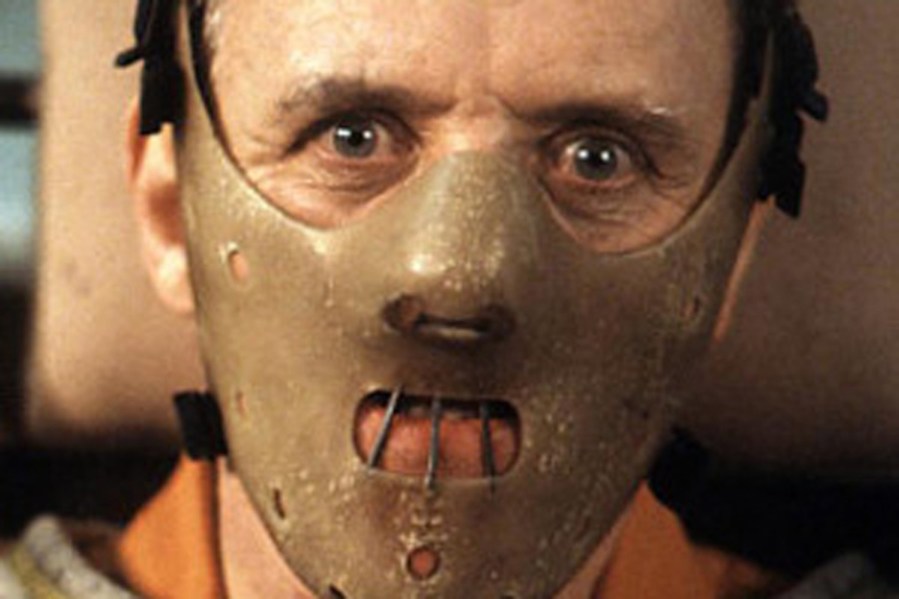
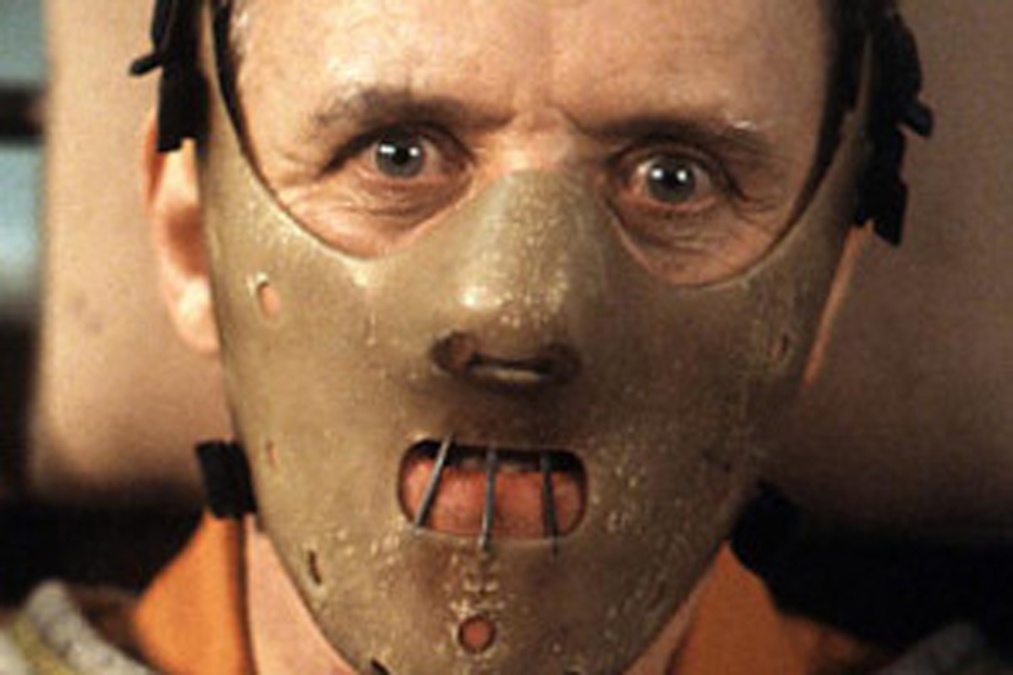
The film is, almost without exception, the movie that people first mention when I talk to them about cannibalism (yes I do, which is probably why I don’t have many friends). This is actually a little surprising as, although the male lead, Hannibal Lecter (Anthony Hopkins), is a cannibal, for most of the film he is incarcerated, and even on the loose he is not seen actually eating anyone (although he certainly discusses the idea with some gusto). In the sequel, Hannibal (Scott 2001), he is indeed shown serving human flesh – the brain of Clarice’s nemesis – to its owner. In a later prequel, Hannibal rising (Webber 2008), an attempt is made to trace Lecter’s psychopathy to childhood trauma: the cannibalism of his sister during the war, much to the displeasure of many of his fans, who complained of the loss of the nuance and the mystery.
The silence of the lambs has become something of a cinematic classic, while the sequels and prequels have largely faded from memory. Robert Butler in the Chicago Tribune credited the film with legitimising cannibalism in the movies, with its star cast and its haul of all five major Academy Awards – best picture, best actor, best actress, best director and best adapted screenplay. Before this, Butler claimed, cannibalism was limited to exploitation films. No doubt directors from Luis Buñuel to Peter Greenaway might demur.
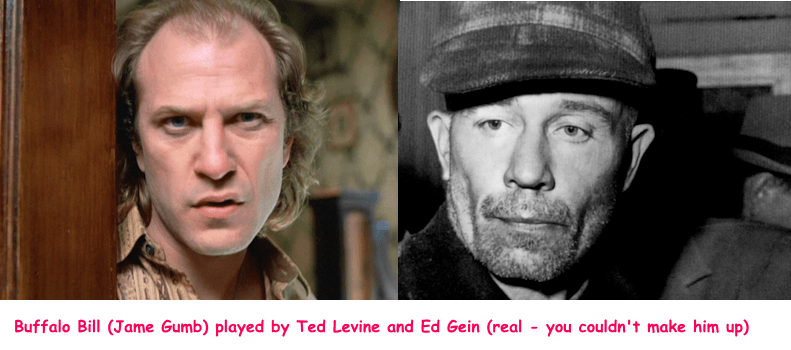
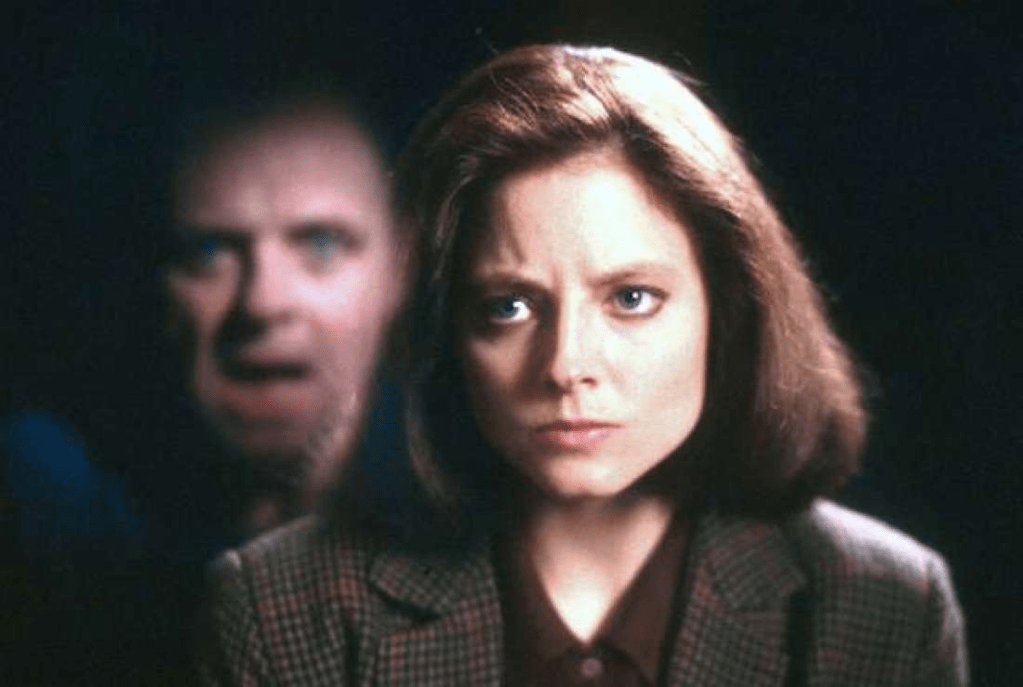
The film is a psychological thriller with Hannibal Lecter, presented as an evil genius, trading insights into the most private neuroses of FBI trainee Clarice Starling (Jodie Foster) in exchange for his profiling of the serial killer, called by the police and media Buffalo Bill, whose epithet is designed to animalise him. Bill is killing and skinning women to make a woman suit. He is pure monster, closer to the gender-challenged Leatherface of The Texas chain saw massacre than the urbane, sophisticated, civilised psychiatrist Lecter, who remains a mystery. Bill and Leatherface are in fact both based on the real-life murderer and grave robber Ed Gein (as was Norman Bates from Psycho), who was very keen on making things out of human bodies, although whether he was a cannibal is still uncertain (and he’s not telling).
Lecter’s jailer, Dr Chilton, comes closest to attempting a diagnosis, saying:
“Oh, he’s a monster. A pure psychopath. So rare to capture one alive”
Starling, asked by a young policeman if Lecter is a vampire, simply replies
“they don’t have a name for what he is”
Maggie Kilgour, who wrote an excellent book on cannibalism as a “metaphor of incorporation”, wrote that Hannibal is defined by “rhyming logic” – anyone named “Hannibal” must end up a “cannibal”. That is good enough for the viewers – the man is presented as pure evil, but deliciously, he is not a monster in the sense of Leatherface or even Sweeney Todd: we appreciate his style and wit, we even like him in contrast to the other psychopaths we meet in the film: Buffalo Bill, and Multiple Miggs, who ejaculates on Starling on her way out of the asylum, a dastardly act that the chivalrous Lecter abhors, and because of which he chooses to assist her (or perhaps it’s love at first bite).
The psychological or legal techniques of modern society are useless against his brilliance and primitive, raw power; Staring is sent to interview him like the lamb of the title being led to slaughter. Buffalo Bill has captured his latest victim, Catherine Martin, daughter of a powerful US Senator, and there are only days or hours before he kills and skins her to make his “woman suit”.
The opening of the film finds Starling running in the woods, small and alone like Red Riding Hood, yet we soon find that she is on an FBI obstacle course in Quantico, running past the motto “hurt, agony, pain – love it”. Starling is not one of the screaming victims that we find in Texas chain saw massacre: Starling is still a victim, though, of chauvinism from her colleagues, mental probing from Lecter and stalking in the dark by Bill, but she is smart, well trained, strong and sassy, standing up to her boss when he uses the chauvinist card: she is the perfect example of the prey woman becoming the avenging hero.
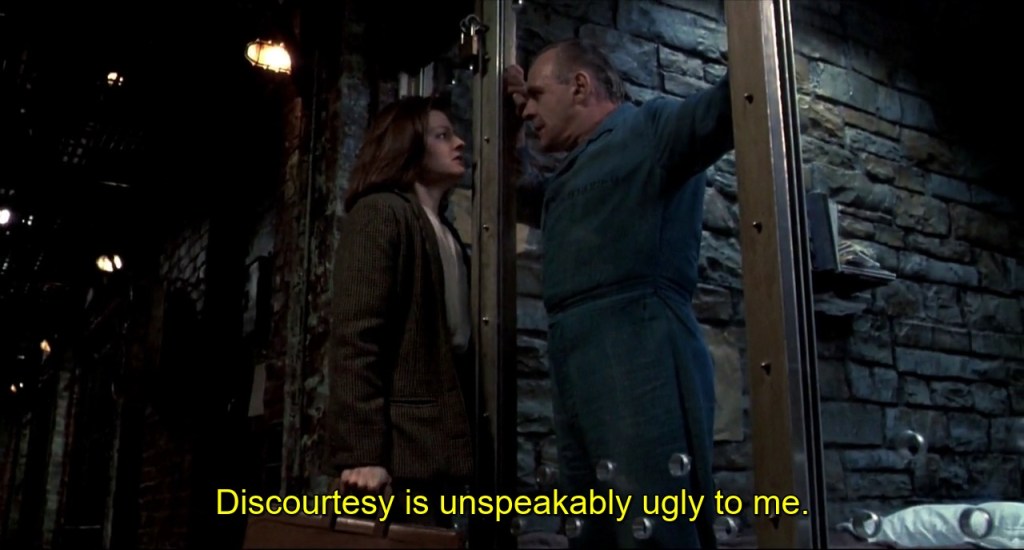
‘Slasher’ films like Texas chain saw massacre routinely pit the redneck monster against the civilised hero. The silence of the lambs turns the ‘slasher’ order on its head: Lecter is the city sophisticate, Starling the West Virginia redneck – he skewers her with the observation “you’re not more than one generation from poor, white trash, are you Agent Starling?” Yet when the psycho in the neighbouring cell splashes her with his semen, Lecter tells her that “discourtesy is unspeakably ugly to me”.
Lecter is a pastiche of classical monsters: Dracula’s hunger for blood (amid exaggerated courtesy), Dr Frankenstein scientific insight, Dr Jekyll’s secret identity; his power to terrify is precisely his amiable, civilised charm: we should be scared of cannibals who wear leather masks and grunt than those who eat us with fava beans and a nice chianti, but we’re not.
Clarice Starling has to overcome not just the mind games of Lecter, who psychoanalyses her through the bars of his cage, but also the political ineptitude of the men around her, in order to blow away the antagonist, psycho-sexual killer Buffalo Bill, who is not a cannibal, at least not in gustatory terms. Bill is a depraved cannibal in the sense that he incorporates human skin into his persona, but it is Hannibal, the deprived cannibal in the asylum, who becomes the protagonist in partnership with the unwilling Clarice.
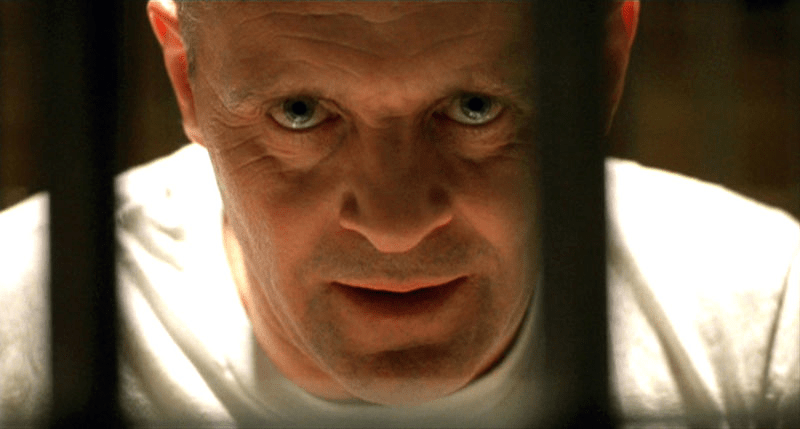
The silence of the lambs trades in close-ups: Starling usually pensive, Bill leering and imagining a valid sexuality, Lecter directly threatening, staring, unblinking, in extreme close up, straight into the audience’s eyes. It is us that he is addressing, analysing, threatening. Under the menace is a keen humour, often rare in the genre. Besides Lecter’s pun about “having an old friend for dinner”, he also reflects on Starling’s offer that, in return for helping catch Bill, he will be allowed to use a beach (under SWAT surveillance of course) where there are terns. Terns – the word suggests to him that he and Starling should have “turns” at sharing information. Starling’s turn will not relate to the case, but to her life, her childhood traumas. Despite her boss’ instruction to tell him nothing personal – “you don’t want Hannibal Lecter inside your head” – she describes her worst memory: the death of her father, a town marshal gunned down while on duty, and her subsequent life on an relative’s ranch, where she found the truth of animal agriculture, being awoken one night by the screaming of the spring lambs as they were slaughtered. She tried to free the lambs, took one and ran, but was caught and sent to an orphanage. Since then, Starling has been struggling with the contradictory messages given to children that harming animals is wrong, but eating them is fine. Lecter’s speculative diagnosis is that she believes that if she saves Catherine, the lambs will stop screaming in her dreams. She has made the lambs subjects, while Bill makes his human victims objects. As Starling tears up under the intense and massively magnified gaze of Hannibal Lecter, she gives a glimpse into the abyss of what Carol Adams calls the “absent referent”, the process that objectifies animals (and women) who are the victims of violence.
Starling’s lambs are not the only part of modern civilisation scrutinised and turned inside out by The silence of the lambs. The social order is very commonly defined in film by showing not examples of it but characters or events that transgress it. The strength of Lecter’s character is his ability not just to offend the social order but to be an extreme example of it: like modern liberal society, he is educated, rational, even enlightened, yet, also like modern society, there is an undercurrent of voracious appetite and extreme violence. Similarly, Starling transgresses social boundaries with her challenge to masculine power structures and her role as the rescuing hero rather than the hero-victim.
Cary Wolfe believes that the most important discourse in this film is that of species. While cross-gender conflicts are examined through the minor character of Bill and to some extent Starling, and class issues in the clash of the civilised Lecter with the often inept and backward authority figures, at the heart of the film (reflected in its title) is the struggle of Starling to come to terms with the objectification of the innocents – the lambs of her childhood or the women Bill is skinning. Objectification is seen throughout: Bill speaks to Catherine in the third person: “it rubs the lotion on its skin; it does this whenever it’s told”; Lecter speaks of his victims by function: “A census taker once tried to test me. I ate his liver with some fava beans and a nice chianti”.
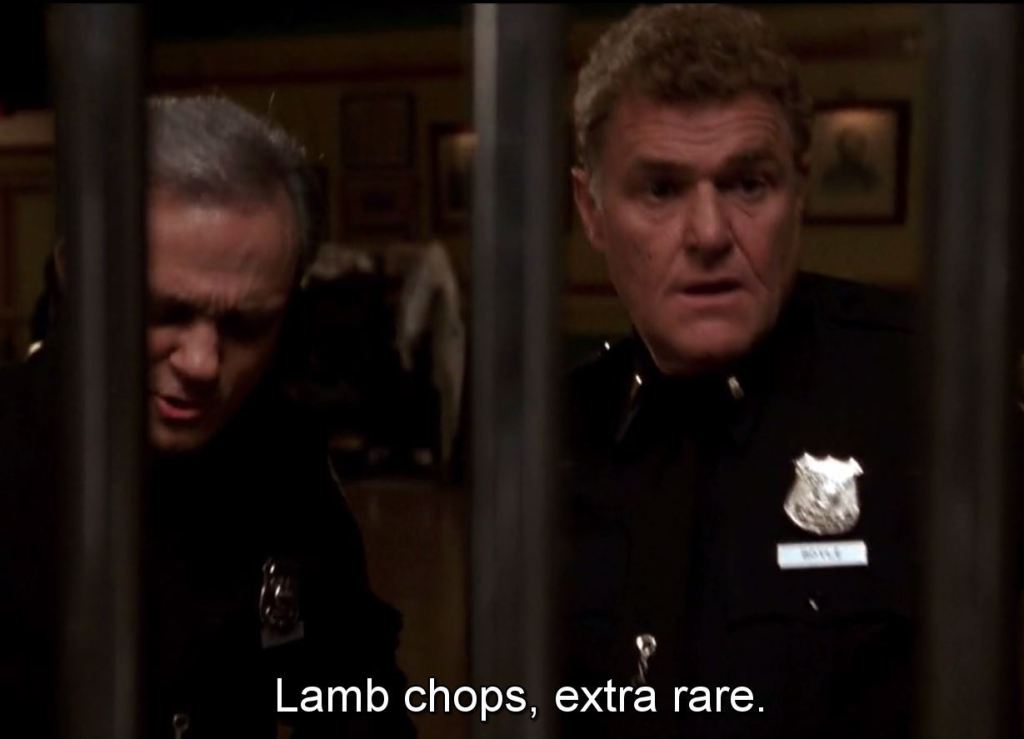
One critic went so far as to say that Hopkin’s brilliance in the role makes Lecter “the cannibal we all want to be”. Lecter does not resist humanist symbology, he takes it to its logical extreme: he orders rare lamb chops, (a reference to Starling’s trauma), in his cell before he slaughters his jailers and escapes, as if to say that he does not eat animals instead of humans: he eats animals, so why not eat humans?
Lecter represents consumerism and carnivorous virility taken to their logical conclusion – uncontrolled, voracious hunger, only controlled by extreme measures. As Maggie Kilgour summarised, the film demonstrates the continuing power of primal appetites: “man-eating is a reality – it is civilisation that is the myth”. The thin veneer of cultural sophistication is just a hockey mask covering a terrifying appetite.
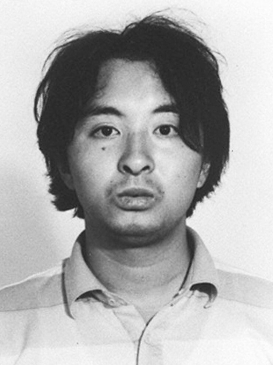
This is the range of identities that the Japanese serial killer Tsutomu Miyazaki moved through in his short life, going from a loner who spent his time alone in his room to a man who murdered young girls in Tokyo and Saitama Prefecture between August 1988 and June 1989. All four little girls were murdered and then raped; the last one was also cannibalised. He kept body parts as souvenirs, and liked to send clues to the girls’ parents to taunt them.
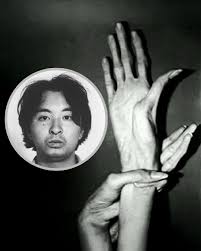
Miyazaki was born in 1962 to a well-off family in Itsukaichi, a town in the Nishitama district of Tokyo. He was born premature with a rare birth defect, radioulnar synostosis, that caused his hand joints to be fused together, making him unable to bend his wrists upwards. Many sensationalist reports about his case show the image below, which is a different condition and is taken from a medical textbook. There was apparently nothing obviously wrong with his hands, but his disability led to him being bullied at school, which some say led to his mental decline, and eventually isolated him in his room watching endless video tapes, some of which he made himself.
Of course, many people get bullied at school, but most of them do not end up killing and eating tender-age children. He was also ignored by his parents, who led busy lives, and his sisters, with the only person interested in him being his grandfather, the only person who showed him kindness. In May 1988, his grandfather died, greatly increasing his depression and isolation. He reportedly ate some of his grandfather’s ashes, to “retain something from him.” He was later caught watching his sisters in the shower and attacked them and then his mother when told to leave.
Between August 1988 and June 1989, Miyazaki murdered and mutilated four girls between the ages of 4 and 7 and sexually molested their corpses. He drank the blood of one victim and ate a part of her hand.
These crimes—which prior to his apprehension were named the “Little Girl Murders” and later the Tokyo/Saitama Serial Kidnapping Murders of Little Girls (東京・埼玉連続幼女誘拐殺人事件) were particularly shocking in the Saitama Prefecture, which rarely saw crimes against children.
On 22 August 1988, one day after Miyazaki’s 26th birthday, Miyazaki saw Mari Konno, aged 4, who had gone to play at a friend’s house. Miyazaki led Konno to his black car, then drove west of Tokyo and parked under a bridge in a wooded area. He sat alongside Konno for half an hour before murdering her and molesting her corpse. He dumped her body in the hills near his home, departing with her clothes, then allowed the body to decompose before returning to remove her hands and feet, which he kept in his closet. Miyazaki burned Konno’s remaining bones in his furnace, ground them into powder, and sent them to her family in a box along with several of her teeth, photos of her clothes, and a postcard which read,
Konno’s hands and feet were found in Miyazaki’s closet after his arrest almost a year later.
On 3 October 1988, Miyazaki abducted Masami Yoshizawa, aged 7, walking along a rural road. He drove her to the same place he had killed Konno and killed her, raped her corpse, and left with her clothes. Two months later, on 12 December 1988, he abducted Erika Namba, aged 4, as she was returning home from a friend’s house. Miyazaki drove to a parking lot in Naguri, where he forced her to remove her clothes in the back seat and began to take pictures of her. He killed her, covered her with a bedsheet, and placed her body in his car’s trunk. He disposed of her clothes in a wooded area and left her body in the adjoining parking lot, where it was discovered three days later. On 20 December, Namba’s family received a postcard sent by Miyazaki with a message assembled using words cut out of magazines:
On 6 June 1989, Miyazaki convinced Ayako Nomoto, aged 5, to allow him to take pictures of her. He then led Nomoto into his car and murdered her. Miyazaki took the corpse into his apartment and spent the next two days engaging in sexual acts with her body and masturbating, taking photos and videos of the remains in various positions. When Nomoto’s corpse began to decompose, Miyazaki dismembered it, scattering body parts around Tokyo, including in a cemetery, a public toilet and nearby woods and leaving her head in the nearby hills. He kept her hands, drinking blood from them and chewing on them. Fearing that the police would find Nomoto’s body parts, Miyazaki returned to the cemetery and the hills two weeks later and carried the remains back to his apartment, where he hid them in his closet.
On 23 July 1989, Miyazaki saw two sisters playing in a park in Hachiōji and managed to separate them. He was taking photographs of the younger one, whom he had convinced to strip nude, when he was caught by their father, who attacked Miyazaki but was unable to restrain him. Miyazaki later returned to the park to retrieve his car but was arrested by police who were responding to a call by the child’s father. A search of his two-room bungalow produced 5,763 videotapes, some containing anime and slasher films (later used as rationale for his crimes). Interspersed among them was video footage and photos of his victims. Miyazaki, who maintained a calm and demeanour during his trial, appeared indifferent to his capture.
The trial began in March 1990 and took seven years. It focused on Miyazaki’s mental state at the time of the murders. Under Japanese law, people of unsound minds are not subject to punishment, and people having cognitive disability are entitled to reduced sentences. Three teams of court-appointed expert psychiatrists came to differing conclusions about Miyazaki’s ability to tell right from wrong: one team determined Miyazaki to have a cognitive disability, another team thought him either schizophrenic or as having dissociative personality disorder, and the third team found that although Miyazaki definitely had at least one personality disorder, he was still capable of taking responsibility for his actions. He was sentenced to death, a verdict that was upheld by the High Court in 2001 and the Supreme Court in 2006. He was hanged on 17 June 2008, almost twenty years after he had started his murderous rampage.
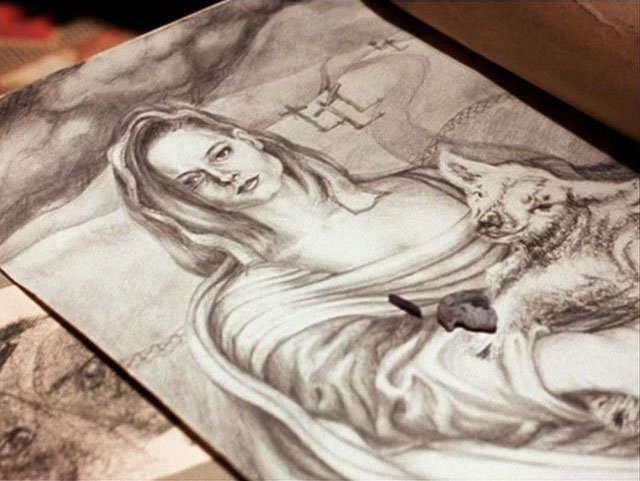
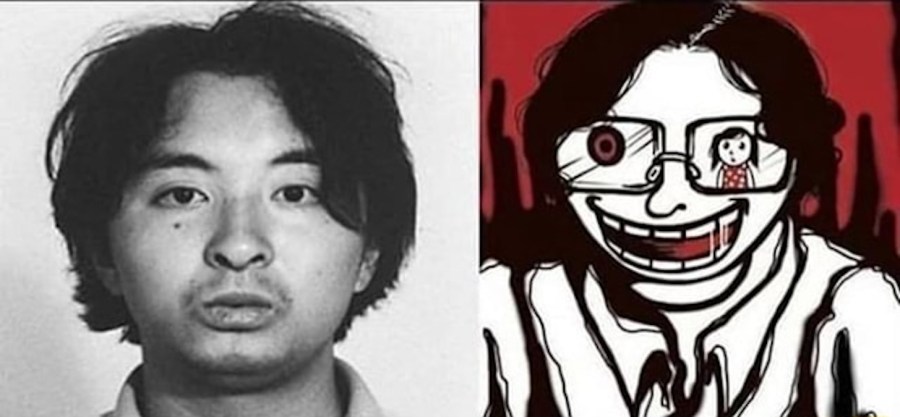
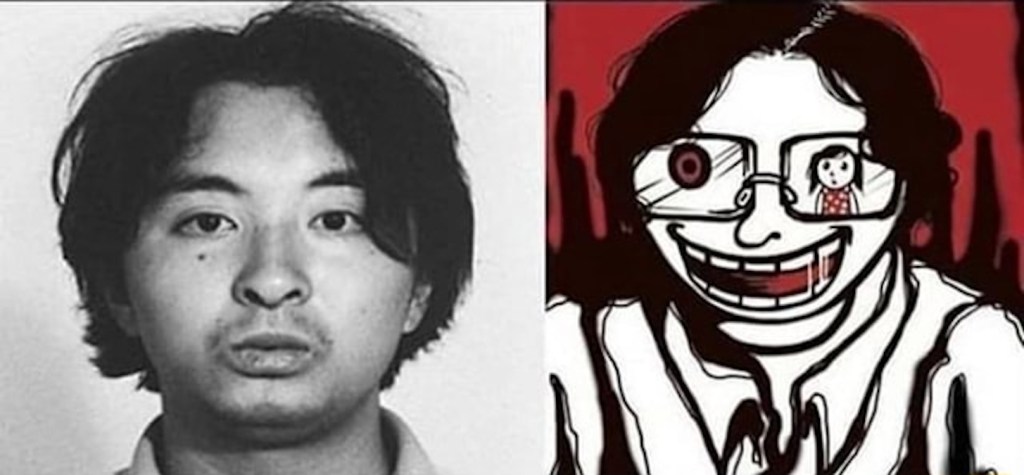
Miyazaki claimed that he was not responsible for the murders but was compelled by an alternative personality called “Rat Man”. He sketched Rat Man while sitting in court awaiting sentence.
Throughout the trial, Miyazaki refused to apologise to the parents of the girls and described his serial murders as an “act of benevolence”. The press called him “Dracula” (because he had drank the blood of Ayako Nomoto) and “Little Girl Murderer”. He was the first serial killer to be linked to the “Otaku“, or nerd, cult in Japan.
Although the nerd cult is mainly associated with relatively harmless manga, Japanese cartoons and films, the public fear of the Otaku cult has never abated since Miyazaki’s crimes, and was reignited when Tomohiro Kato, a 25-year-old loner, went on a knife rampage in Tokyo’s Otaku district of Akihabara in 2008, killing seven people and injuring 10 others.
Does manga, graphic art which often shows depictions of violence and rape, encourage actual acts like murder, rape and cannibalism? Enthusiasts reject the claim, pointing out that its parallel argument about video games promoting gun violence have never been proven. A better question is why manga and other incendiary art forms have become so central to social outcasts, men like Miyazaki and the earlier Japanese cannibal Issei Sagawa (who drew his own manga), men (usually) whose identity is so steeped in anger, isolation, inferiority and inability to form relationships that they see other humans, especially vulnerable little ones, as just prey animals, a way to bolster their damaged egos, to make them feel powerful. And doesn’t this mentality exactly replicate human treatment of other animals, killing and eating them to make us feel like gods?