
The Hunger Games began as trilogy of novels by American author Suzanne Collins (2008-2010). The prequel, The Ballad of Songbirds and Snakes, was released in 2020. The first three were adapted into four films (annually from 2012-15), all of which set various box office records. The first film, The Hunger Games (2012), recorded for biggest opening day and biggest opening weekend for an original IP. In 2023, the prequel to the trilogy, titled The Ballad of Songbirds and Snakes, was released as a film.

The Hunger Games is a post-apocalyptic dystopia set in Panem, a North American country consisting of the wealthy Capitol and 13 districts in varying states of poverty, punished for rebelling against the Capitol. Every year, children from the first 12 districts are selected via lottery to participate in a compulsory, televised battle to the death called The Hunger Games. The name Panem derives from the Latin phrase Panem et circenses, which literally translates into “bread and circuses”, the ideology used by the Roman emperors to distract the citizens from their daily struggles and the obscene indulgence of the elites. One of the highlights of the Roman circuses was the gladiators, who would fight to the death, as a popular form of entertainment.
There are not really any rules to the Hunger Games (except kill everyone else) but cannibalism is frowned on, as the audience find it a bit gross. Compared to just, you know, chopping people up. Titus (named after one of the crazier Roman Emperors) kills combatants in the 66th Games by tearing out their throats and eating their organs; he is killed in an avalanche, presumably created by the organisers because of his threat to their ratings. Like many cannibals, he is dismissed as just plumb crazy.
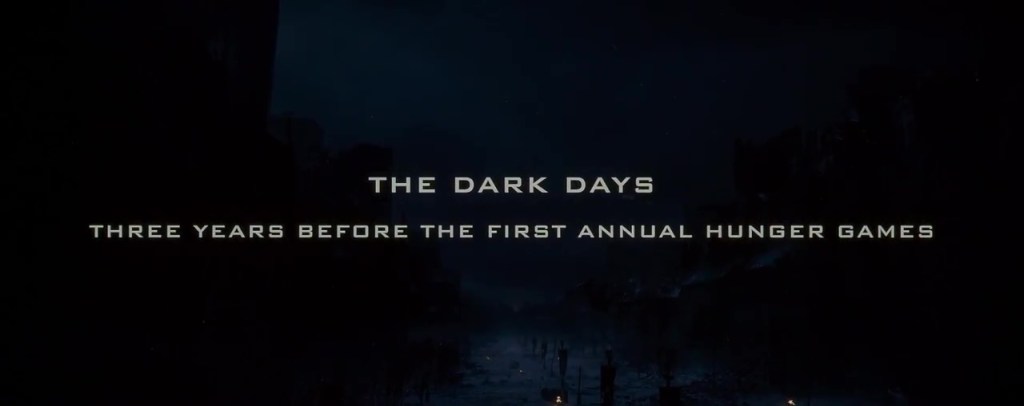
The Ballad of Songbirds and Snakes is a prequel, starting 64 years before the Hunger Games, during the ‘Dark Days’ which led up to the failed rebellion in Panem. How, it wonders, did we get this way? Well, cannibalism of course is part of the answer. In the novel, the narrator says:
“…the siege had reduced the Capitol to cannibalism and despair.”
But this is a movie, and you know the golden rule: show don’t tell. So the opening reveals two children, a young Coriolanus and his cousin Tigris, running through the snowy streets of the Capitol during the rebellion, hunting for food. A man appears with a cleaver and chops the arm from the corpse of a woman.

“Why is doing that?” asks the boy. Tigris replies simply:
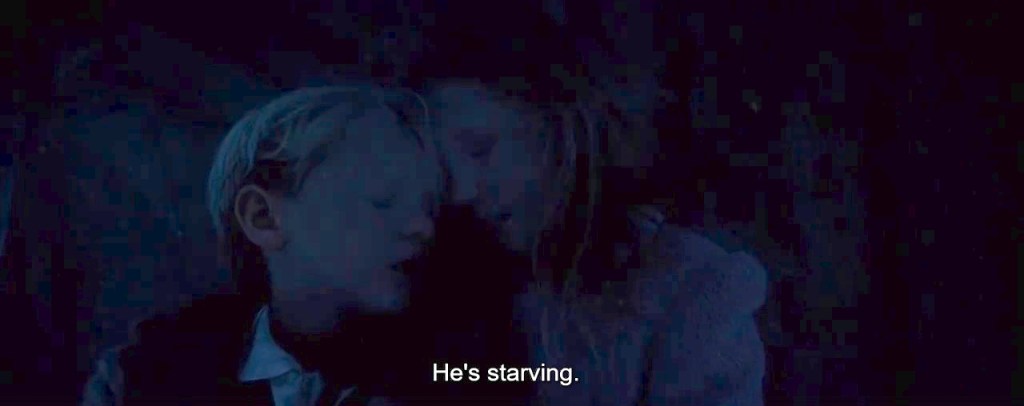
So, the scene is set for the rise of Coriolanus Snow, who eventually becomes the ruthless President of Panem (played by Tom Blyth in this film, and later the incomparable Donald Sutherland). To him, the ends justifies the means, and what ends are more important than staying alive, even if it requires killing and sometimes eating people? It’s the human condition, particularly in post-apocalyptic dystopias. That’s entertainment!
“See how quickly we become predator? See how quickly civilisation disappears?”

 The Cannibal Guy
Pingback: Stalin’s workers’ paradise: CANNIBAL ISLAND – The Cannibal Guy