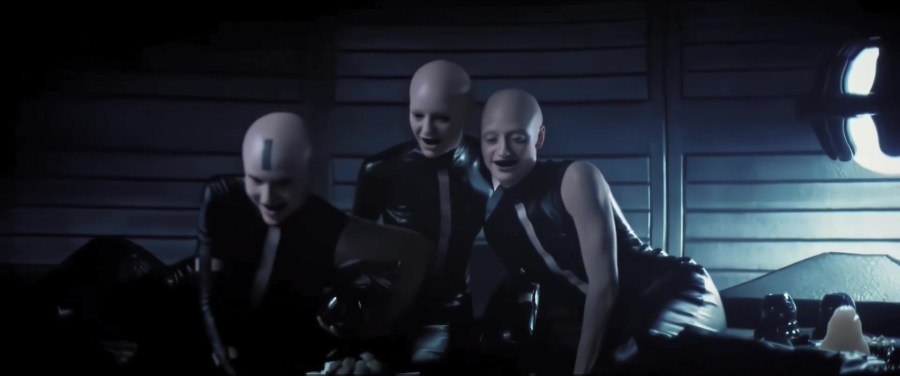
Are the Harkonnens cannibals In Dune 2? Not exactly, but the harem of women maintained by Feyd-Rautha do eat people. Sadly, the film is surprisingly coy about it.
Canadian director Denis Villeneuve’s film Dune: Part Two was the second-biggest earner of (at least the first half of) 2024, taking in $711 million so far worldwide. It is a direct continuation of 2021’s Dune, and if you haven’t seen that yet, I suspect this one will make little sense, unless you’ve read Frank Herbert’s 1965 novel on which both are based.
Dune established a historical mythology set eight thousand years in the future, in which an interstellar alliance is ruled by ‘Great Houses’ who are nominally beholden to the Emperor (played by Christopher Walken), but are often at war with him or each other. Human civilisation has abandoned computers (fear of AI) and must use Melange or “Spice”, a highly addictive hallucinogen, to enable pilots to navigate through “folded space”. The Spice comes from a planet called Arrakis, which is therefore much in demand by imperial powers.

In the first movie, the Atreides were made rulers of the planet, but then were invaded and butchered by the wonderfully evil House of Harkonnen. However, the Atreides heir Paul Atreides (Timothée Chalamet, who is not unacquainted with cannibal movies) and his mother escape the destruction and join the local desert people, the Fremen. These guys are tough nuts, able to bring down even the Emperor’s most vicious special forces, and they ride around the planet on “worms” – huge underground creatures that can swallow anyone and anything they find. The worms are attracted by anything that is making regular sounds. Oh, and they produce the spice as their shit.
Dune 2 delves deeper into the culture of the House of Harkonnen, who believe they have killed off all the Atreides. Like the simplest monsters, they are portrayed as ruthless and devoid of morality, and most are more than a little psychotic.
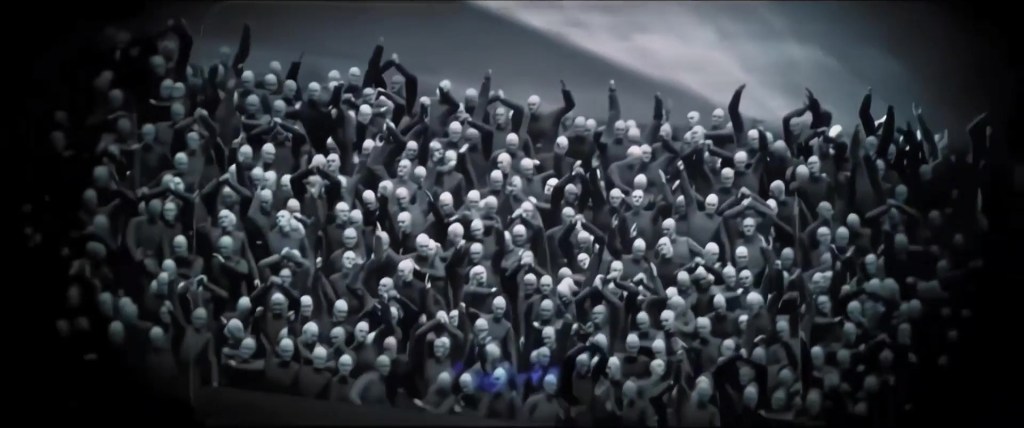
They are all bald for some reason, but their main motivations are cruelty and torture. Particularly the nephew of Baron Harkonnen (Stellan Skarsgård), Feyd-Rautha (Austin Butler, but nothing like Elvis in this movie), who keeps the harem of hungry cannibal women.
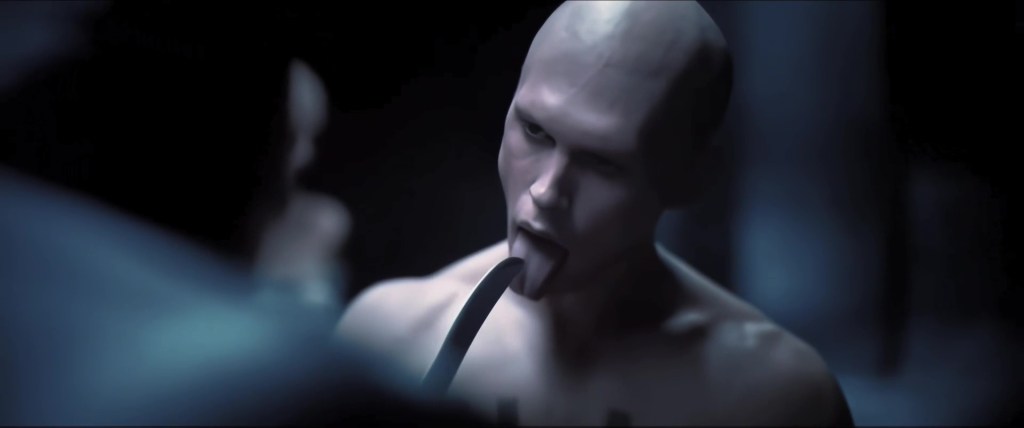
The Harkonnens kill capriciously and indulge in brutal pleasures, like making slaves fight to the death in the arena; they are hundredth century Roman emperors. We learn that Feyd-Rautha murdered his mother and now is the favourite of his uncle, the Baron. The ‘uncle and nephew’ thing is honestly a bit of a worn homophobic trope.
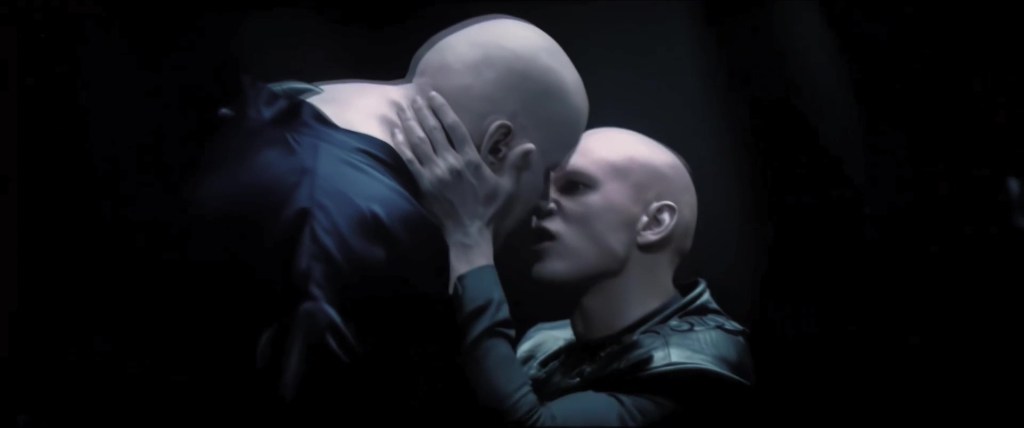
But the bit that interests us about him (in this cannibalism blog) is his harem of cannibalistic women. The film is a critique (intentionally or not) of white colonialism (particularly the evil Harkonnens, but also the Atreides and the Emperor) and the way it controls its subjects through the mythology of religion, in this case, messianic tales spread by an exclusive sisterhood called the Bene Gesserit, who use mind control techniques to persuade the colonised (the fierce, warrior race of Fremen) that their leader is coming, a white saviour from beyond their world. Paul does not believe any of this, but he lets his fundamentalist supporters fall for it.
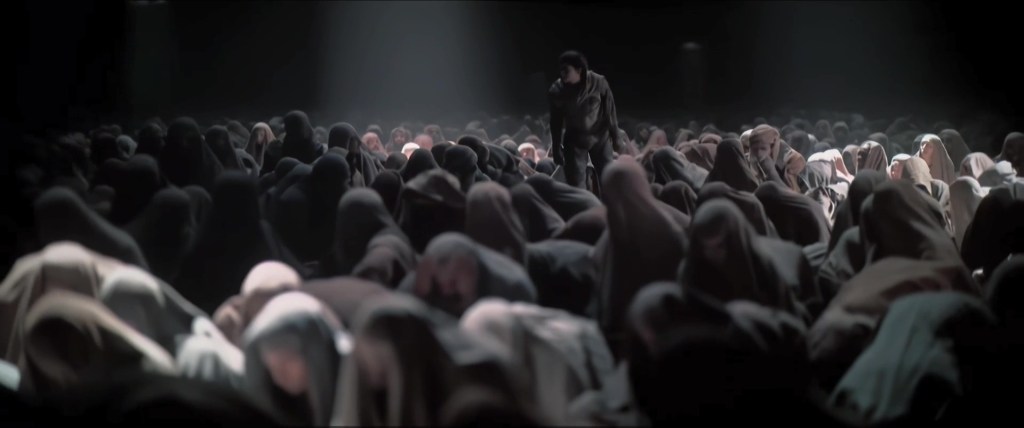
Cannibalism has long been used as an ideological tool both by colonists (the savages accused of being subhuman cannibals like the Troglodytes in Bone Tomahawk) and the colonised, who see the invaders as predators appropriating the land, resources and bodies of the native peoples. Disappointingly, considering the pains the director goes to paint the Harkonnens as irredeemable psychopaths, we never understand them to be indulging in human flesh themselves, although it would have been an ideal metaphor for the way they rape and pillage the planets they control. Maybe Villeneuve felt the ghost of Frank Herbert would come and haunt him.
Feyd-Rautha seems to keep his women more like pets than concubines, calling them his “darlings” and killing various unfortunate slaves to feed them, as well as a flunky on the starship because, you know, they hadn’t been fed on the voyage.
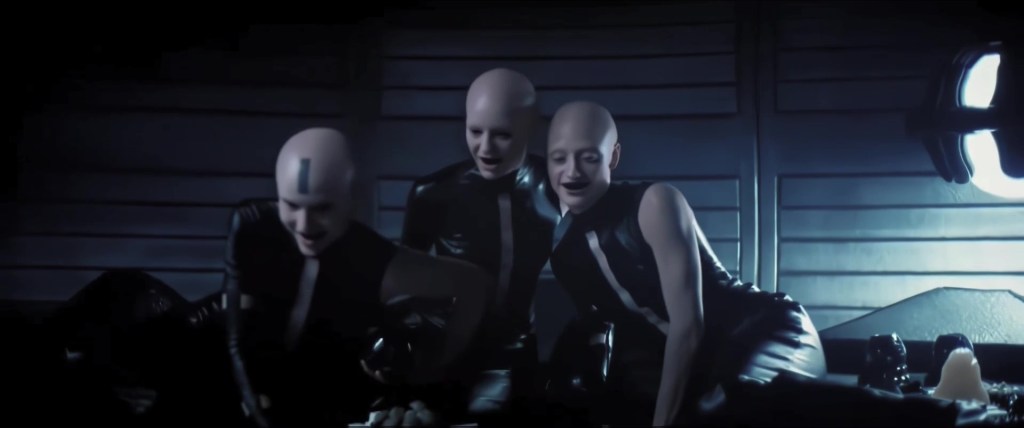
Frank Herbert’s treatment of his characters was rather more nuanced in the books, in which he did not include any cannibalism, sadly. The inclusion of Feyd-Rautha’s harem of cannibals in Dune: Part Two seems a bit of an afterthought, or perhaps the script writers had some grand ideas which ended up being cut. They appear in one scene and for a few seconds, with no backstory. The end result is that the cannibals seem to be there just to enhance our perception of the dynasty’s barbarity.

Despite the rather superficial appearance of cannibal women, there is plenty here to entertain students of anthropocentrism; questions about what it is to be human, to be animal, to be civilised. The animal symbolism is everywhere; the worms, for example, are representations of nature—indifferent, insentient predators of immeasurable power who can, however, be tamed by humans, although their exploitation remains perilous. The bad guys with their bald heads and degenerate ways are depicted in animal forms—the Baron is bloated and presented as porcine, bathing in mud for much of the film, while Feyd-Rautha is reptilian—smooth, slimy and lethal.

The cannibal women are somewhere between aliens from X-Files and characters from pre-woke films like Freaks. Are they human? We never find out.

The film scores 92% fresh on the tomatometer, meaning most critics loved it. The visual effects are spectacular and should really be seen on the big screen, the acting ranges from brilliant to adequate, the battles are spectacular, and Hans Zimmer couldn’t write a bad score if he was paid to do so. But the trivialisation of the cannibalism left me hungry for more.

 The Cannibal Guy