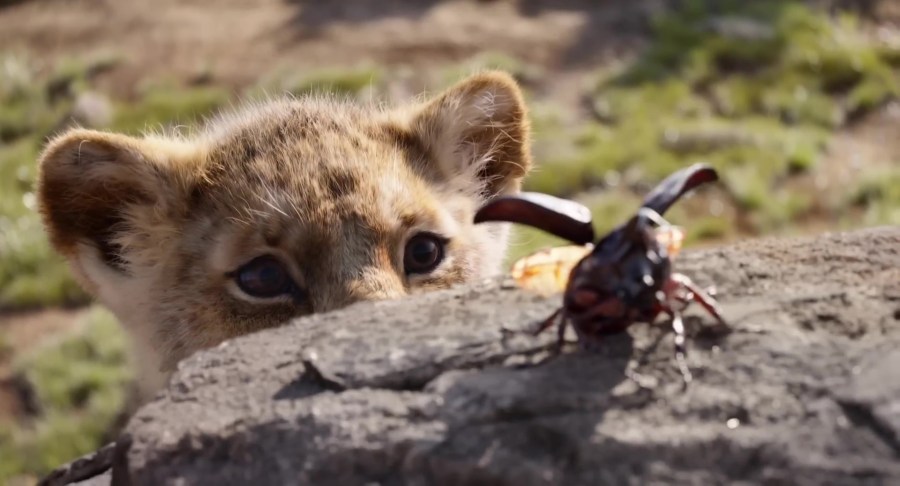
With the release of another Lion King franchise film, Mufasa, this one a prequel to the earlier story, it is perhaps worth considering the subject of talking animals, and particularly whom they feel OK about eating.
The first film was released in 1994, and was a glorious animation, with music by Elton John and Tim Rice, but was clearly a cartoon, one that has earned almost a billion dollars since its release.
Although we can get into the plot and the emotions of the film, we don’t really feel obliged to believe in the anthropomorphic veracity of cartoon characters. Do we really care if a cartoon duck eats other birds? No, not if he wears clothes and speaks (a form of) English. It is clearly a line drawing that moves, and requires no ethical work.
But in 2019, the film was remade as a photorealistic animation. With a small dose of suspension of disbelief, the animals looked like they were real, roared like lions, but somehow spoke English, some of them, strangely, with an eastern European accent. It was a sensation, so far earning over 1.6 billion dollars.
This blog will appear around Christmas, so I guess it is not unreasonable to unleash my inner Grinch, at least when it comes to anthropomorphic representations of carnivorous virility. As far as we are aware, lions can’t talk, except in movies. They can certainly communicate though, and that communication, particularly the roar that can be heard miles away, is featured prominently in all versions of the Lion King.
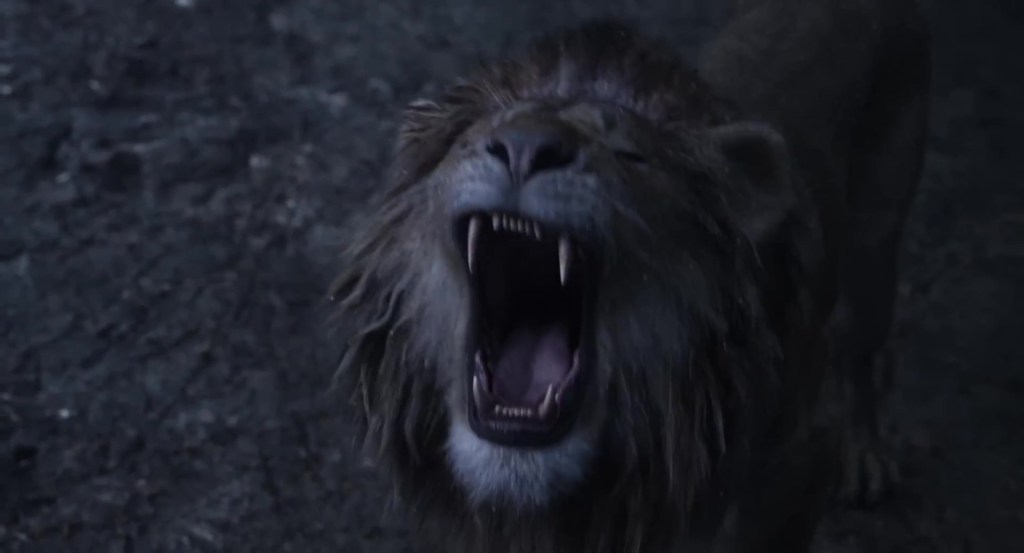
If they could talk, would they say and do the things shown in the film? Would they, for example, let a mandrill take their cub and hold him, Michael Jackson-like, over a cliff for the other animals to worship and celebrate? I’m even less sure of how celebratory the prey animals would be about the birth of yet another predator, no matter how cute.

But the main thing that bothered me throughout the film was the food, and it wasn’t (just) because I watched it at lunchtime. We are shown a happy monarchy (the “pride land”) where the devoted subjects are summarily executed and eaten by the king and his family. This is later turned into a blasted desert filled with the bones of the prey animals by a usurper king lion, an evil uncle lifted from Hamlet and made leonine.

Those not privileged to live in the pride-land inhabit a shadow terrain, the “elephants’ graveyard”, where (dark-skinned) hyenas skulk, with little evidence of anything to eat and, we are assured, always hungry. We have the “circle of life” followed by a circle of hell.

Even further away, in a wildness to which the exiled lion cub Simba flees from his evil and murderous uncle, we have a sort of Garden of Eden II. Here, mammals take a pledge not to eat each other, an expanded ring of utopian privilege, which excludes only insects and their pupal forms, who clearly would have to exist in immense numbers to feed a growing lion, let alone his friends.
Listen kid: if you live with us, you’re gonna have to eat like us.
This looks like a good spot to rustle up some grub.
A grub. What’s it look like?
Tastes like chicken.
What is the ecology here, and the ethic behind the food choices?
Simba, the cub and heir apparent, wonders about this too. He and his future wife (lions get married?) are the only ones to connect with all these environments, and Simba the only one to question the implicit ethos of each one. Early in the piece, as he surveys the kingdom where “the light touches” (as opposed to the darkness of the hyena shadowlands), he asks his father why they eat their loyal subjects, the zebras, antelopes and presumably anyone else slower than them. It’s a question most parents dread as they feed lumps of animal flesh to their children, and then read them books about happy animals. It’s the circle of life, says Simba’s Dad, clearing his throat for us all to join a singalong. We eat them, then when we die, our bodies feed the grass, and future victims eat the grass.
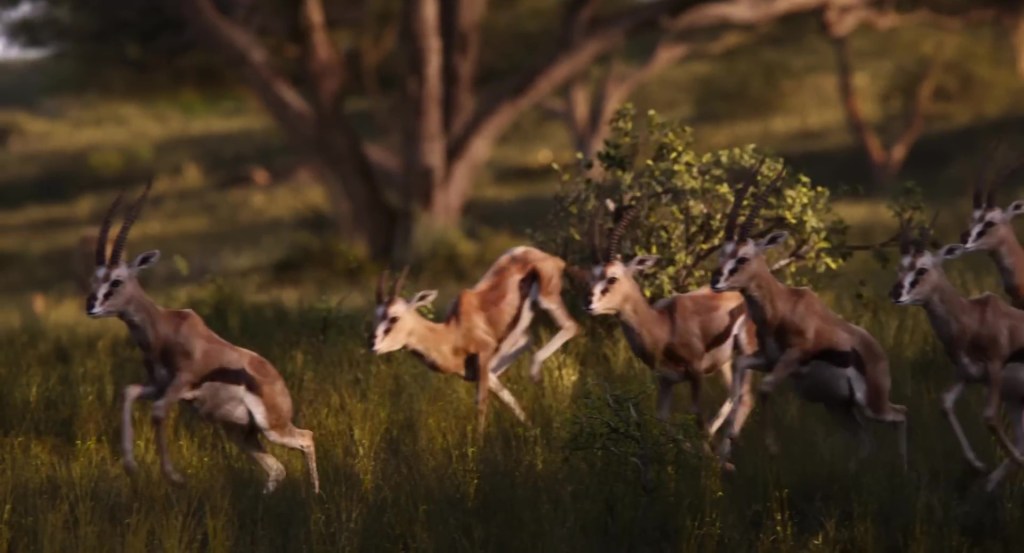
Now this is just absurd. I’m not sure how much grass the average antelope eats, but it would need an awful lot of dead lions buried underneath it to make it fecund. Photosynthesis, which combines carbon dioxide and water into carbohydrate and oxygen, is what makes the grass grow. Lion corpses (and presumably lion shit, now enriched with zebra fat) might add some trace elements, but they are hardly necessary. What lions actually do for the environment is thin out the number of herbivores so that they don’t eat all the vegetation and turn the area into desert, which is what inexplicably happens when the bad lion, Scar, and his army of hyenas, eat all the herbivores. Where does all the grass go? It should be a jungle without all those antelopes and giraffes.
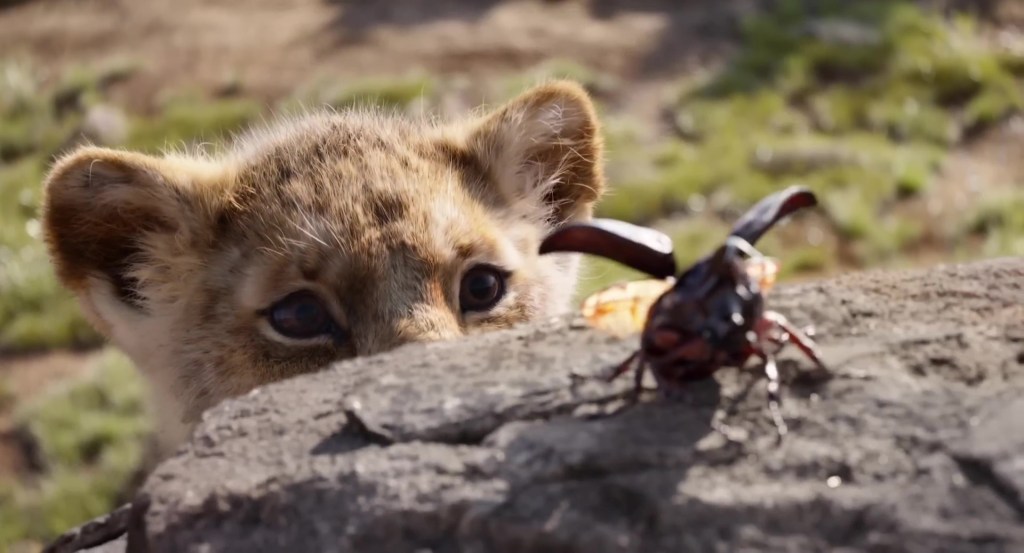
Then we have the entemo-vegetarians of the land beyond the shadows where, you know, hakuna matata, there are no worries, unless of course you are an insect. If you search the internet, you will find learned articles on how many hours a day a lion would need to be chewing pupae (it’s a lot more than 24) in order to sustain his life, let alone progress from cub through puberty to full sized adult male. And why can the various mammals and birds talk, but the insects can’t? Jiminy Cricket could talk in the early days of Disney – when did he fall out of the circle of privilege?
It’s all absurd, of course, but it’s what we teach kids, and not just by taking them to see Lion King. When they ask questions like “I love animals, so why are we eating them?” talk of feeding grass with our bones doesn’t cut it, which is probably why so many young people go vegan. The correct answer, which won’t satisfy anyone, is “because we want to, and because we can”. We have the appetite, and we have the power. We arbitrarily decide who is within our circle of privilege.
In the film, lions and all mammals, and some other odd creatures, live without being eaten in a hippie paradise. In the pride-land, under good king Mustafa (Simba’s dad) certain animals are part of the elite and don’t get eaten, while the anonymous proletariat animals seemingly go willingly to their just deserts (or desserts). Contrast this with the hyena shadow land, where, according to a Disney comic book, the hyenas enthusiastically engage in cannibalism, as well as presumably eating the dead elephants who come to the elephant graveyard to die (which, BTW, elephants don’t really do). The human circle of life is less well defined, depending on the culture: in the West, humans consider chickens, pigs and cows outside the elite of the inedible, while dogs, cats and dolphins are inside, and we express moral outrage when these capricious lines are crossed. In other parts of the world, dogs and cats may be delicacies, or cows or pigs may be forbidden. And this blog has brought you many films in which humans are the preferred repast.
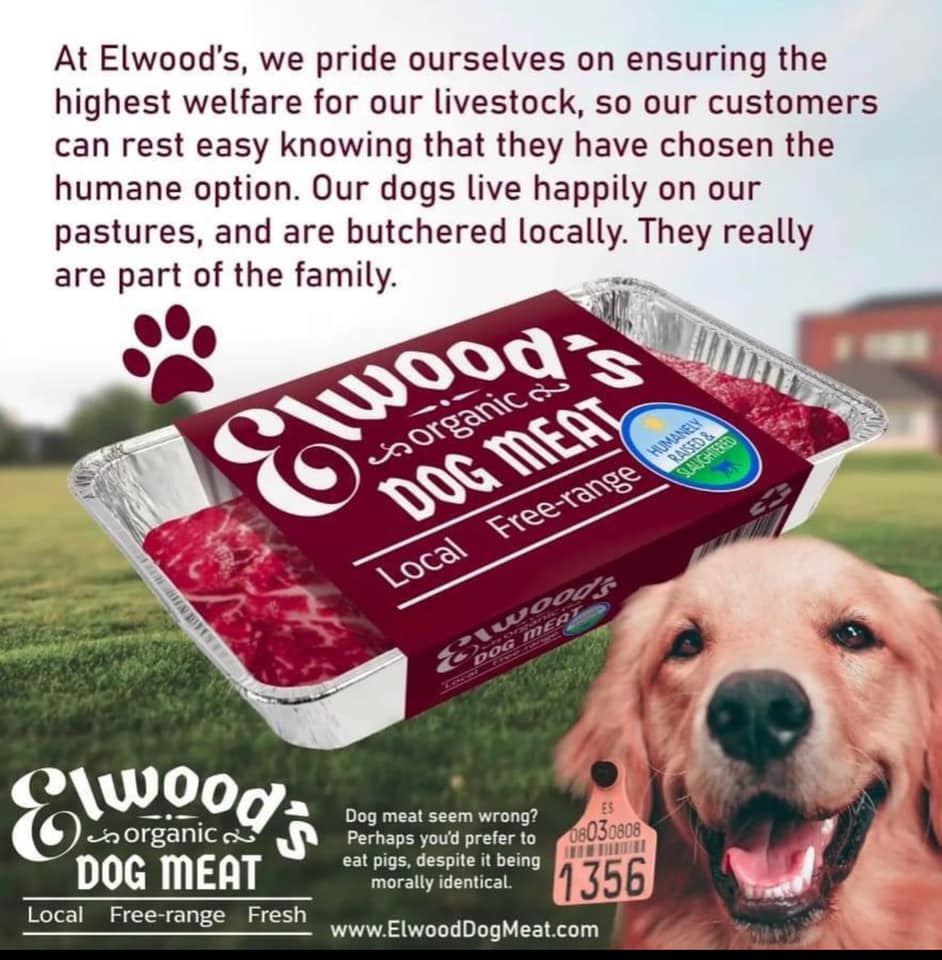
Animal activists are often accused of anthropocentrism, having the nerve, for example, to suggest that fish feel pain or dogs feel love. But truly toxic anthropomorphism appears in narratives of talking animals, where we offer temporary anthropomorphic capacities to other species, so that we can push ideological or commercial messages like a “circle of life” to an audience of minors, while pleading disingenuously that these are just cartoons. This cartoon lies to kids about the nature of nature, to promote the acceptability of carnivorous virility.
We don’t do our society any favours by lying to our kids. Lions don’t think about dying or the benefits their carcasses will bestow on the grass. They hunt because they are obligate predators and will starve otherwise, regardless of the available insect population. Humans, on the other hand, are closer to hyenas – scavengers who are never satiated. We don’t keep herbivore numbers in check by eating them; the opposite is the case – we deliberately breed them by the billions, often in appalling conditions, then slaughter them, in terror and agony, in industrial killing centres, polluting the land, degrading the water and filling the air with methane.
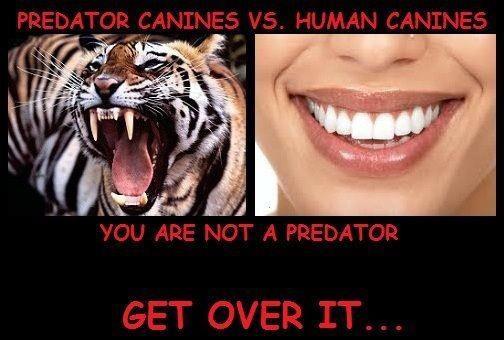
It’s not clear if Simba will impose insectivarianism on his kingdom after the credits roll – he may have to, insofar as the flocks seem to have been decimated. But Simba, if he really could talk, would be appalled by the way humans cynically misappropriate the role of predator in order to feed our insatiable appetites. I think perhaps even the hyenas would agree with him.
 The Cannibal Guy