

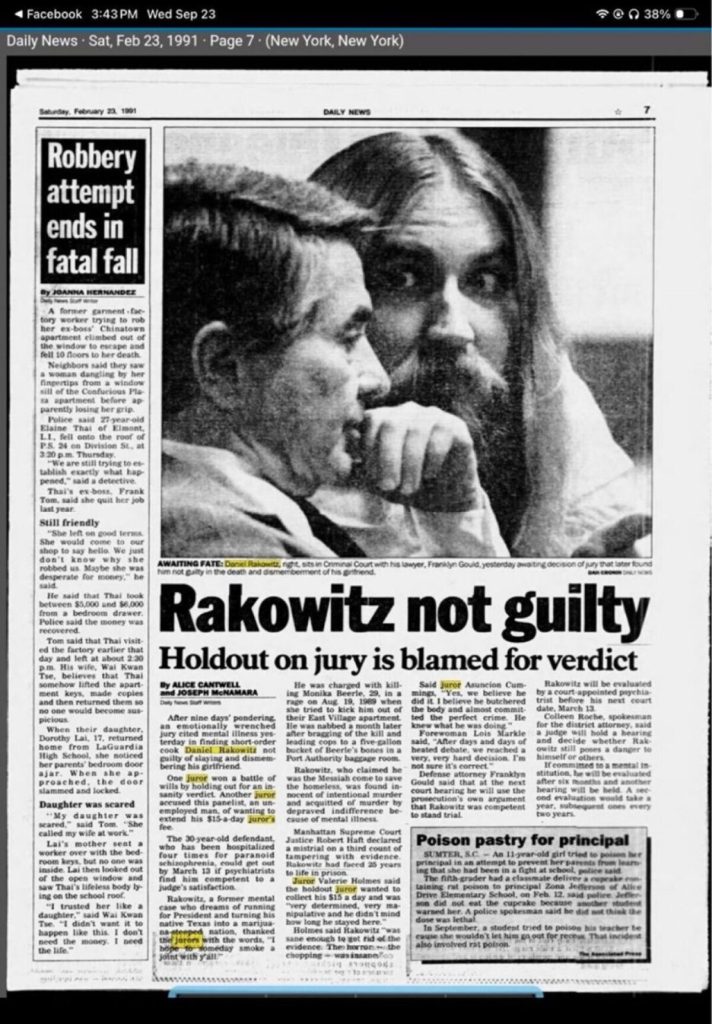
Those of you who watch The View on ABC (that’s the American Broadcasting Company), and it seems someone does because it’s in its thirtieth season, may have seen Sunny Hostin, one of the co-hosts, reveal on air on 22 September 2026 that she was the “holdout” juror during the 1991 trial of Daniel Rakowitz, who became known as the “Butcher of Tompkins Square Park“. However, her assertion of single-handedly driving the acquittal, on the grounds of his apparent insanity, has since been challenged by articles published at the time.

The View panel was discussing the case of Lindsay Clancy, a 36-year-old nurse, who fatally strangled her three young children—Cora (5), Dawson (3), and Callan (8 months)—at their home in Duxbury, Massachusetts in 2023. The case has divided America (doesn’t everything?) because one juror held out against the other eleven, who had wanted to find her not guilty of murder. That juror had argued that Clancywas insane when she killed her children and so should be sent to an asylum rather than prison. The deadlock ending in a mistrial.
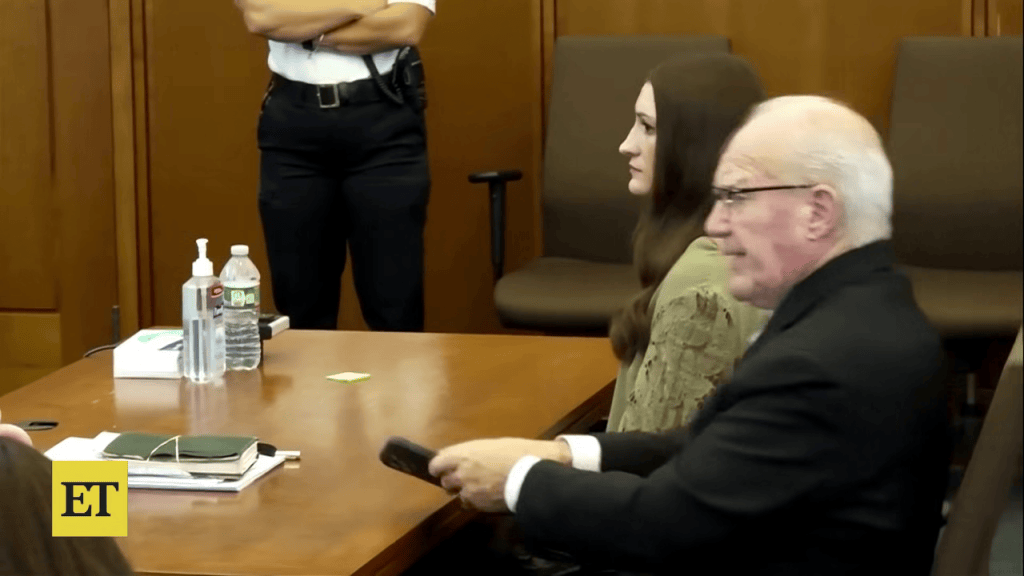
The Rakowitz case was the opposite, with most jurors wanting to find him guilty, but a holdout refusing on the grounds that he was insane, and eventually persuading the others.
Hostin shared that she related to the pressure the man on the Clancy case felt at being a holdout juror. Long before attending law school or becoming a federal prosecutor, she had sat on the Rakowitz jury, under her maiden name, Asuncion Cummings.
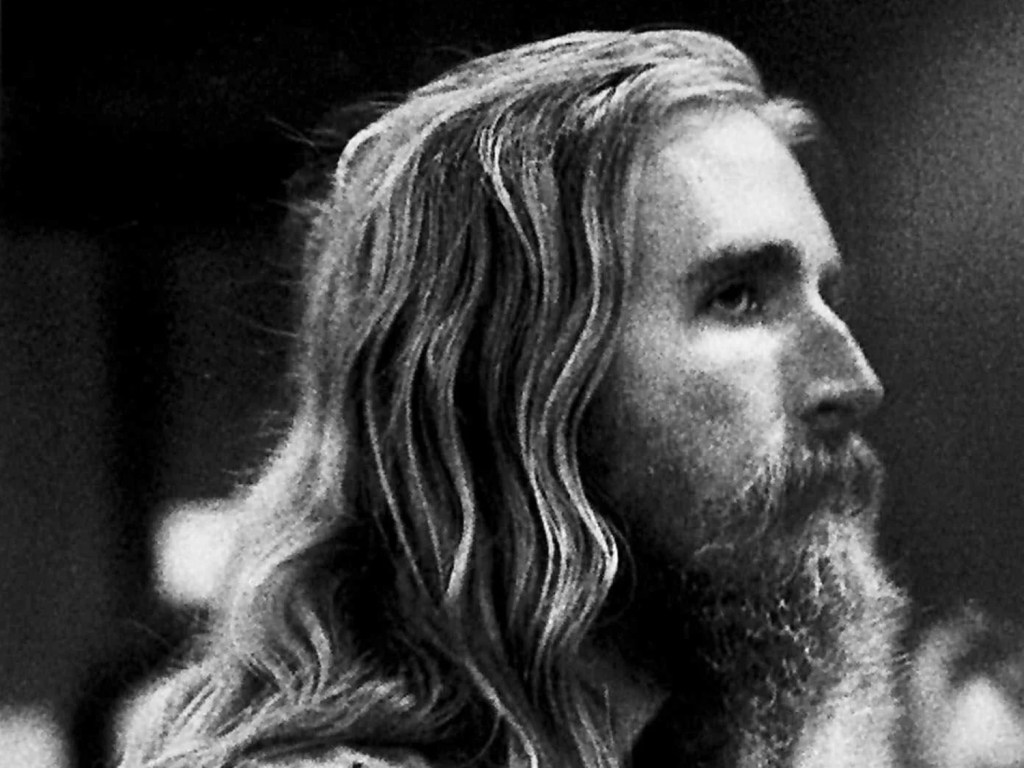
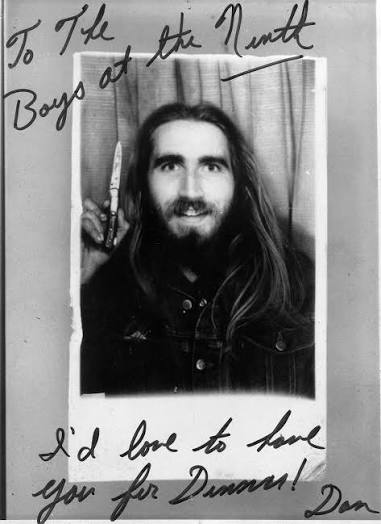
Daniel Rakowitz was tried for the 1989 killing and dismemberment of his 26-year-old roommate, Swiss dance student Monika Beerle, in the New York East Village. Rakowitz was a local marijuana dealer known for walking around Tompkins Square Park with a Bible and a live rooster. On August 19, 1989, Beerle ordered Rakowitz to move out of the apartment after a heated argument. Rakowitz punched Beerle in the throat, causing her to die by suffocation. He then dragged Beerle’s body into a claw-foot bathtub and, over several days, used a 15-inch carving knife to dismember her corpse. He bleached and boiled her bones to “disinfect” them, flushed the remaining flesh down the toilet, and sealed her skull and bones inside a five-gallon bucket filled with cat litter.
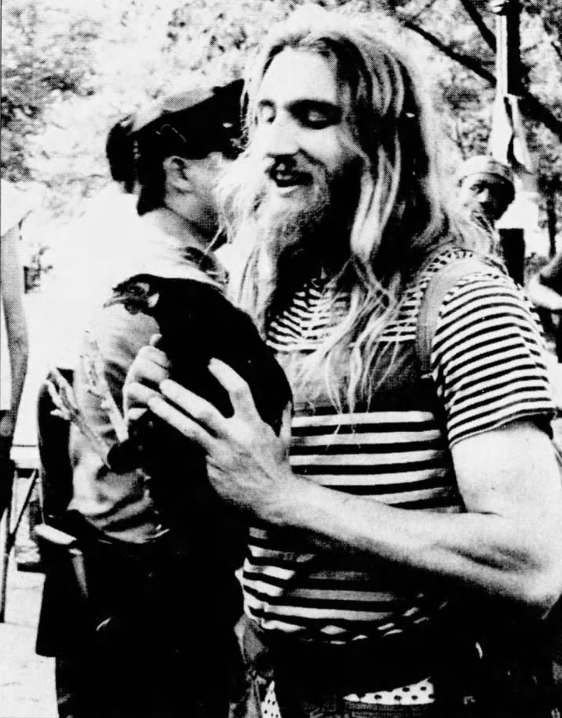
After his arrest, Rakowitz confessed to police that he had boiled Beerle’s head, made a soup from her brain, and tasted it. During his 1991 trial, a prosecution witness testified that Rakowitz subsequently ladled out a homemade soup containing human remains to unhoused people in Tompkins Square Park. One witness testified that there was a human finger in the soup.
Hostin recounted that tensions ran so high during deliberations that another juror threw a chair at her, but she ultimately persuaded her fellow jurors one by one to vote not guilty by reason of insanity. The jury ultimately handed down that verdict, sending Rakowitz to a psychiatric facility rather than a standard prison. Currently he is held at the Manhattan Psychiatric Center on Wards Island, where he continues to receive long-term treatment.
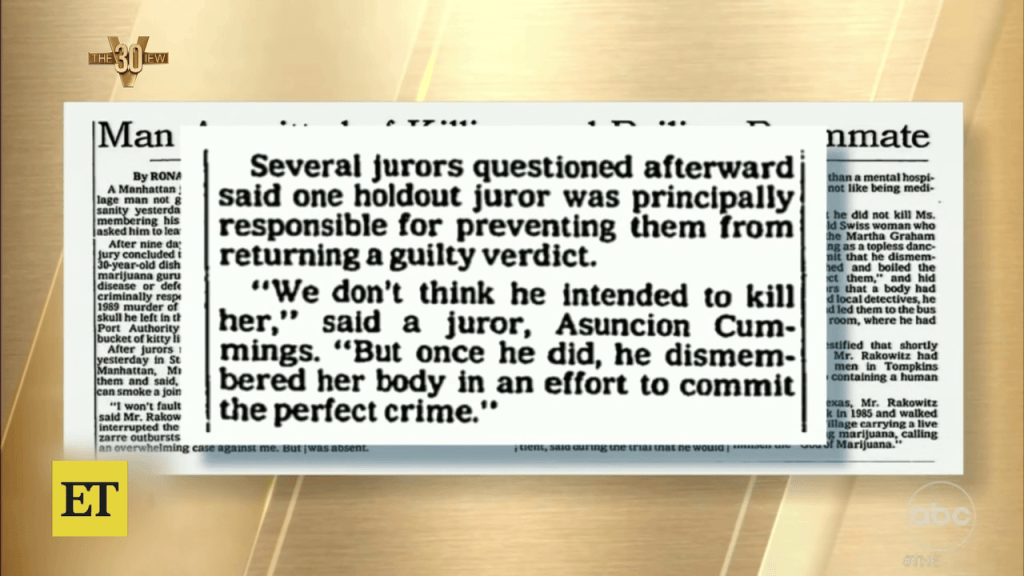
Hostin certainly shocked her co-panelists, with one, Alyssa Farah Griffin, clasping her hand to her chest and asking,
“you were on that jury? And you got this guy off?”
But a New York Post Report that examined coverage from the Associated Press, Newsday, and the Daily News from that time quoted other jurors stating that the primary holdout was actually an unemployed man who wanted to prolong the trial to continue receiving court payments and free meals, casting doubt on Hostin’s recollection of being the hero (or villain depending on your point of view) of the Rakowitz case.
Whether Rakowitz served brain soup to the homeless, from a strictly legal standpoint, did not matter for the final verdict, as the state only needed to prove that he intentionally killed and dismembered Monika Beerle to secure a conviction for murder.
But from a psychological, cultural, and institutional perspective, the cannibalism allegations profoundly shaped the case. While cannibalism is not a distinct crime under New York state law (or in 48 other states), the reflexive abjection of the allegations certainly influenced the jury’s final decision and were crucial to the prosecution’s case. The defence, on the other hand, used the grotesque details of Rakowitz’s confessions—cooking his roommate’s brain and feeding the soup to the homeless—as primary evidence that he was completely detached from reality, and this ultimately helped secure his verdict of not guilty by reason of insanity. It painted a picture of a man suffering from severe schizophrenia who could not understand the morality of his actions.
The cannibalism narrative directly explains why Rakowitz remains locked up today, almost 40 years later, despite the fact that he apparently did not intend to kill her, unlike other intentional killers who are eventually paroled.
True or not, the cannibal “soup” story transformed a tragic homicide into enduring New York City folklore. It capitalised on the late-80s panic surrounding Tompkins Square Park, which was then a flashpoint for riots, homelessness, and drug crimes. The narrative cemented Rakowitz as a symbol of an era when the East Village felt dangerously out of control, giving him a lasting infamy that a standard homicide case would not have generated. Without the allegations of cannibalism, he would probably long since be back in the community, smoking dope (now legally) and feeding the homeless, with his pet rooster by his side (or perhaps in the pot).
The curious thing is that the eating of the corpse after the killing became a much bigger story than the actual homicide of that victim. And the eating of that dead, no-longer-sentient cadaver is widely considered a much greater offence than eating a sentient nonhuman who yearns to cling to life. A cow, pig, sheep or rooster being killed, intentionally and inculpably, might reasonably argue that human ethics make no sense.

