Cannibal influencer arrested in Brazil

If you by any chance have watched any of the videos of the influencer Israel dos Santos Assis, better known online as Pinguim (Penguin), you may not have guessed that anything controversial was being shown. The Brazilian, from São Francisco do Conde, a city in the metropolitan area of ​​Salvador in Bahiahad, had been gaining more and more followers on social media over the months before his arrest on July 23 2024, when he was apprehended after being caught desecrating graves in the cemetery of San Francisco the Count, in the Salvador Metropolitan Region, and stealing human bones.

Not just bones. The 22-year-old influencer used human flesh from the corpses to cook his most popular dish: feijoada, a bean stew usually involved simmering beans with beef or pork. Both of which have been reported as tasting very similar to human flesh.
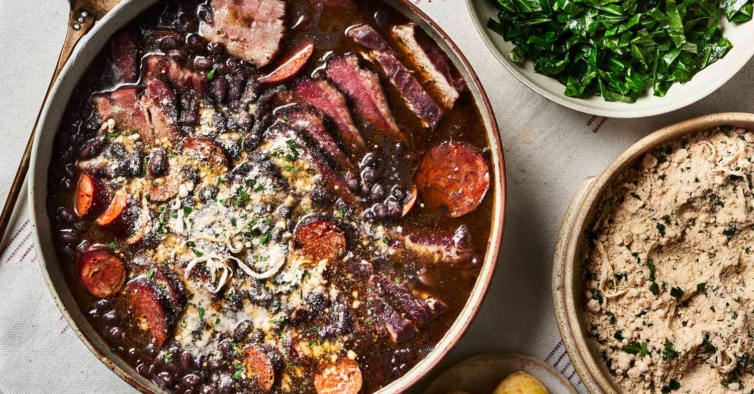
One of Pinguim’s videos, which went viral on social media, explained the secrets of adding meat to beans — and how to get the most out of the final dish.

“Treat and throw it in the beans. But you can’t eat it, no, you just chew it and then throw it away. You don’t swallow it, you just chew it and throw it away, you just taste it, it’s sweet.”

The remains were not only for use in his recipes. After being arrested, Israel led the local police to a mangrove swamp where he had hidden numerous bags of bones. He had been sending these to Salvador, the state capital, to be used in satanic rituals.

The suspect was caught after families of buried people reported that graves had been violated and several bones had been stolen.

Pinguim made a video confession to police which was later released to the media. He reported that he had spent hours at the cemetery to see which graves were the most recent; those with the freshest human flesh. He told police he had fried a piece of a person’s leg and seasoned it with lemon and vinegar before chewing on it.

Local reports say he told police that he stole the body parts to order, in exchange for a payment equivalent to about $US50 from three people who wanted to use the bones as part of a black magic ceremony. He used the money to buy shoes and sandwiches, as well as getting his hair cut.

Surprisingly, Pinguim was released on bail pending an ongoing investigation into charges of desecrating a tomb. His lawyer, Luan Santos, told local media his client suffered from mental health issues and was taking anti-depressants. He added that he would be demanding psychiatric tests to ascertain whether the accused was fully aware of what he was doing.

Pinguim’s social media accounts have been deleted.

Brazil has always been a fascinating area for students of cannibalism. One of the most famous tribes was the Tupinamba, who captured a German soldier and explorer named Hans Staden in the sixteenth century. He claimed to have witnessed their cannibalistic rituals and did very nicely from his subsequent writings, illustrated by the graphic woodcuts of Theodor de Bry. As a result, the Portuguese came to save the ‘savages’ from their sins, and through enslavement, assimilation, extermination and the introduction of Smallpox, managed to wipe them out completely.

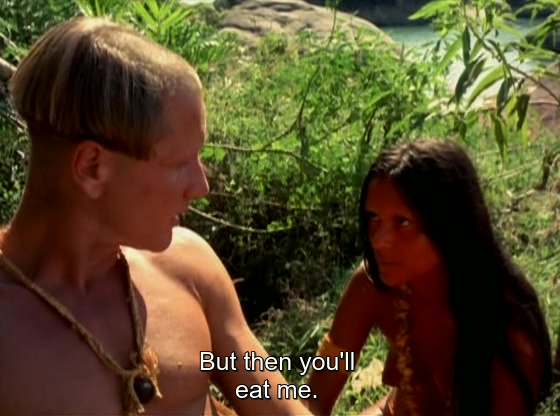
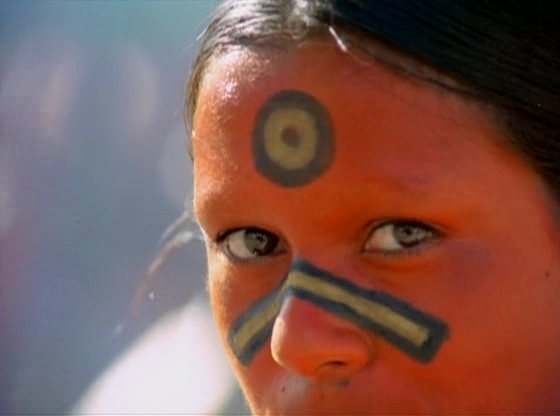
The classic cannibalism film How Tasty Was My Little Frenchman (Como Era Gostoso o Meu Francês) is set in this period of imperial invasion, and tries to give a new perspective on the way colonialism used cannibalism as its pretext.

More recently, modern Brazilians have been involved in some of the more interesting cannibalism stories that have graced our news cycles, including the “Cartel” who sold pastries made from human flesh to unwitting customers, and the Brazilian who was arrested in Lisbon for eating a man who had tried to help him. Like most cannibalism films, the ones set in Brazil vary between seeing it as something savages naturally do, such as Emanuelle and the Cannibals, and those that see it as typifying the exploitation of the poor by the rich, such as The Cannibal Club.

The Brazilian anthropologist Eduardo Viveiros de Castro proposed a ‘post-structural anthropology’ in his book Cannibal Metaphysics. De Castro sought to ‘decolonise’ anthropology by challenging the increasingly familiar view that it was ‘exoticist and primitivist from birth’, denying that cannibalism even existed, and so transferred the conquered peoples from the cannibalistic villains of the West into mere fictions of colonialism. This alternative view of Amerindian culture rejects the automatic assumption of the repugnance of cannibalism, which serves to either confront it or deny its existence. Accepting those parts of colonial culture that are useful (they speak Portuguese for example) can be seen as a form of reverse, cultural cannibalism.

But Pinguim demonstrates that even Brazilians have not fully embraced this philosophy, particularly when it involves digging up their relatives.

There is a video showing Pinguim confessing to cooking human bodies. More interesting if you speak Portuguese though.

Eat the imperialists: HOW TASTY WAS MY LITTLE FRENCHMAN (Como Era Gostoso o Meu Francês) – Nelson Pereira dos Santos, 1971

Let’s get this out of the way – there is nudity. Lots of it and throughout the movie. Well, it’s set in pre-colonial Brazil, and the Indigenous peoples did not bother with a lot of clothes, so it’s historically accurate. To ensure authenticity, the actors and the crew were all naked, so that nudity would become natural. If that bothers you, please read the blog but skip the movie.

While it was refreshingly authentic, the nudity was also a problem. First, because the authenticity is somewhat diminished, as The New York Times critic pointed out, by the fact that the natives are “middle-class white Brazilians… stripped down and reddened up for the occasion”. Secondly, the film was refused entry to the Cannes Film Festival because of all the swinging dicks. In Brazil, the censors were eventually persuaded that the natives indeed did walk around naked, but remained vehemently opposed to the nude Frenchman, a telling comment on the racist distinction that the film was intending to expose.

So, the plot in a nutshell: the French and the Portuguese are fighting to control the rich lands of South America. Each has allied with local tribes who are at constant war with each other, often involving (so the European narrative goes) capturing and eating each other’s warriors.  The Tupinambás are allied with the French, while the Tupiniquins are allied with the Portuguese. The Frenchman of the title escapes his own command, is captured by the Portuguese, and is then captured by the Tupinambás, who are allies of the French, but believe him to be Portuguese, so intend to eat him. Got all that? – there will be a test.

Tupi custom involved bringing the captive into the community, feeding and homing him, and even finding him a wife, then eventually killing him in a ceremony that will allow them to capture his essence, bravery, speed, and so on.

This wide-spread belief about the Tupi comes from a European who was captured but then escaped in 1554, came back to Europe and wrote a book. His name was Hans Staden, and he was actually a German who was trying to get to India. But since it was the French who were invading South America at the time, the director changed his nationality.

De Bry’s engravings of Tupi cannibalism were “eaten up” by the Europeans.

Tupi cannibalism has a whole literature explaining it or denying it – William Arens claimed the ‘evidence’ was mostly based on Staden’s account, which contained several contradictions, and had been continually retold as if it had happened to new re-tellers. Other anthropologists such as Rene Girard explained Tupi cannibalism as a seamless explanation for the way culture and religion have evolved. The universal violence of the human species is redirected toward the outsider, who is taken into the tribe, but remains foreign enough to be killed as a scapegoat, to release the social pressure that would lead to endless internal revenge feuds. For many, Jesus became the ultimate scapegoat under this theory, even to the extent of insisting that his followers eat and drink wine and bread transubstantiated into his “blood and body” in the Eucharist ritual.

For my flesh is meat indeed, and my blood is drink indeed.

John 6:55

The Brazilian anthropologist Eduardo Viveiros de Castro proposed a ‘post-structural anthropology’ in his book Cannibal Metaphysics. De Castro sought to ‘decolonise’ anthropology by challenging the increasingly familiar view that it was ‘exoticist and primitivist from birth’, denying that cannibalism even existed, and so transferred the conquered peoples from the cannibalistic villains of the West into mere fictions of colonialism. Arguing that the ‘Other’ is just like us is to deny any separate identity and to return the focus of anthropology to that which interests us: ourselves. Rather than deny the existence of cannibalism, which allows a reclassification of the Amerindian peoples as like the colonialists, de Castro examines the details of Tupinamba cannibalism, which was ‘a very elaborate system for the capture, execution, and ceremonial consumption of their enemies’. This alternative view of Amerindian culture rejects the automatic assumption of the repugnance of cannibalism, which serves to either confront it or deny its existence.

Well, that’s pretty much where this film planned to go. Pereira dos Santos challenges the Eurocentric perspective which insists on a superior civilisation overcoming a primitive one. It is true that Tupi civilisation was destroyed by the slavery, smallpox and slaughter of the Portuguese who, the film tells us at the end, also wiped out their allies the Tupiniquins. The Tupi peoples are now a remnant, confined to small areas and currently being decimated by COVID-19.

But the chief, in the killing ceremony which promises the Frenchman’s body parts to his relatives (his wife will get his neck), tells the story as a mirror image:

“I am here to kill you. Because your people have killed many of ours, and eaten them.”

So the film asks: who were/are the cannibals? It does not fully succeed in telling this story, because the audience gets involved with the Frenchman’s story, instead of his captors. Pereira dos Santos lamented that the public:

“…identified with the French, with the coloniser. All spectators lamented the death of the hero. They did not understand that the hero was the indigenous, not the white, so much were they influenced by the adventures of John Wayne.”

Nonetheless, the binary of the colonised and the powerless occupied victims is so deeply embedded in our cultural stories that it is refreshing to see this mirror image version, where the indigenous win the battle, if not the war.