Weaker than man: “The Odyssey” (Nolan, 2026)

More words have been written about The Odyssey than most movies, because it has the attraction of being both a grandiose blockbuster told with the complexity and brilliance that is the signature of Christopher Nolan (Dark Knight trilogy, Oppenheimer, and many more), as well as a reinterpretation of one of the most important classics of Western civilisation. Most critics seem to love it, some hate it, and others nitpick over issues like the use of modern slang and obscenities, while ignoring the fact that the characters are speaking modern English instead of ancient Greek. Or the fact that the Wooden Horse was not mentioned in Homer’s telling of the Trojan war (The Iliad) and mentioned only briefly in The Odyssey; most of the detail came from Vergil’s The Aeneid, which was written some 700 years after Homer.

Luckily, writing a blog on cannibalism means never having to worry about stuff like that – all that matters is who gets eaten, by whom, and what it means, which is pretty subjective (like everything else in literature). Mythology is full of cannibals, and the Greeks had more than their fair share, for example the revenge cannibalism of Thyestes unknowingly eating the flesh of his sons served to him by his brother Atreus. Cannibalism is an unmatched method of revenge because not only is the victim killed, but is then reborn as excrement, the ultimate degradation. Shakespeare used revenge cannibalism with gusto in his play Titus Andronicus.

In the case of The Odyssey, there are two narratives of cannibalism, only one of which Nolan bothers to show us.

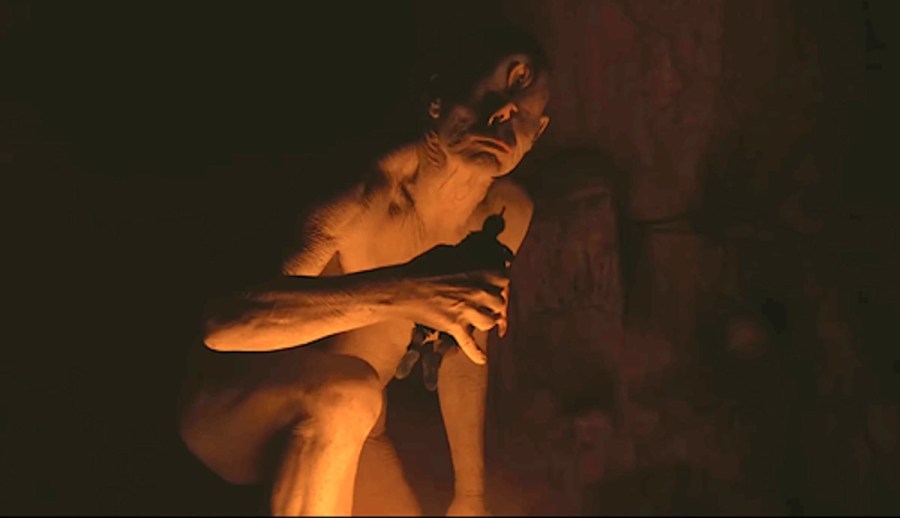
Odysseus, the King of Ithica, is trying to get home from the destruction of the great city of Troy, an orgy of destruction, rape and slaughter that has left him racked with guilt. Not so easy in a sailboat travelling through largely uncharted seas. He and his army land on an island populated by the cyclopes, literally “round eyes”, shepherd giants with one large eye in the middle of their foreheads. The cave the Greeks blunder into seeking provisions is the home of the cyclops Polyphemus, who is a son of the sea god Poseidon and Thoösa, the sea nymph daughter of the primordial sea god Phorcys, neither of whom are gods you want to upset if you’re trying to sail home without a good GPS. Polyphemus likes the Greeks a lot; he eats them with gusto, as Homer puts it:

He dashed their heads against the floor as though they had been puppies. Their brains ran out on the ground and soaked the earth. Limb by limb he tore them to pieces to make his meal, which he devoured like a mountain lion, never pausing till entrails and flesh, marrow and bones, were all consumed.

Nolan, who seems to avoid computer graphics, used a 60-foot animatronic puppet, forced-perspective framing, and full-body performance capture to show Polyphemus and, IMHO, it’s one of the highlights of the film. Odysseus and his men blind the cyclops (which admittedly is half as hard as blinding a giant with two eyes) and the distraught Polyphemus, after hurling rocks at the departing boats, prays to his father Poseidon to avenge him, meaning that this voyage is going to be much more difficult and take a lot longer than even the three-hour film makes it seem.
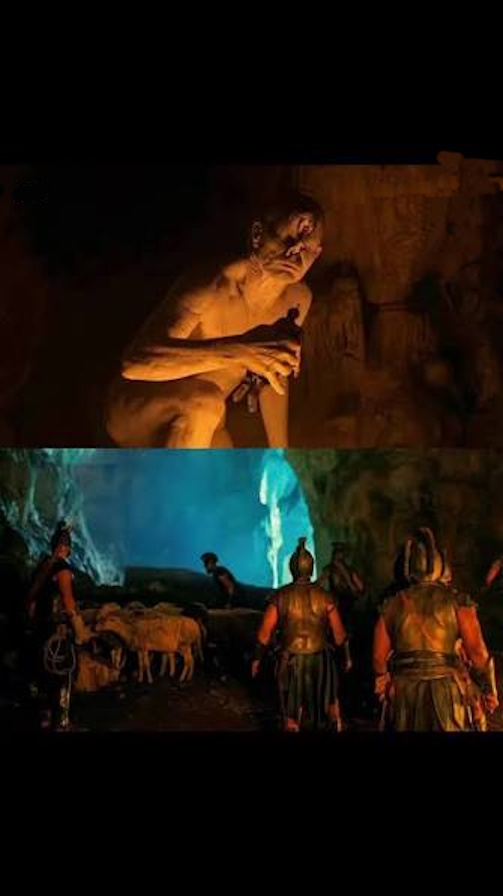
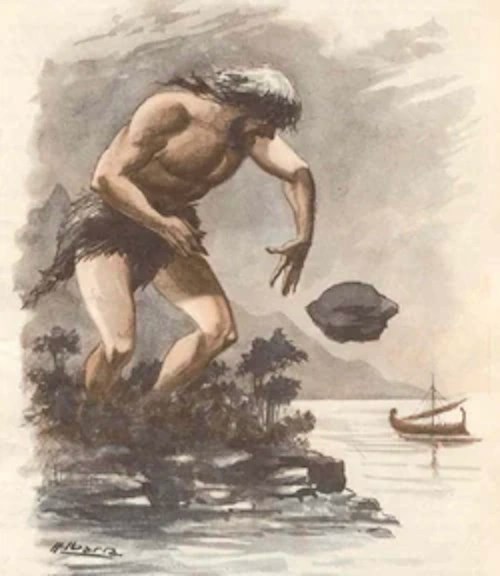
The Greeks land on another island; this time inhabited not by solitary sheepherders like Polyphemus but a race of giants called the Laestrygonians, who are not nearly so pleased to see them. In Homer’s original version, Odysseus sends three scouts, one of whom is rapidly digested before the giants head to the hills where they keep a handy supply of boulders, which they hurl down until they have destroyed all the Greek ships except that of Odysseus, proceeding to spear the Greek soldiers like fish before having a beach barbecue.
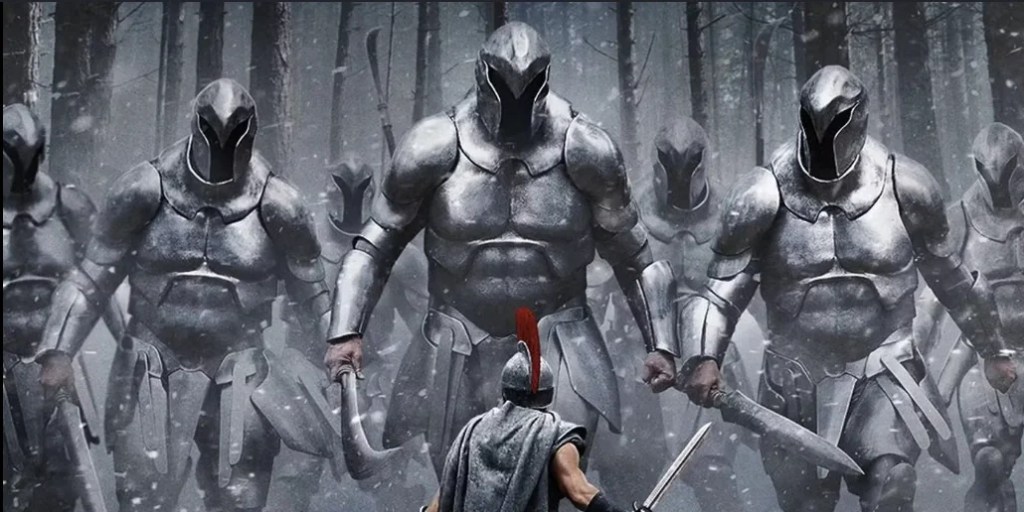
In the film, the Laestrygonians are presented as giants (but not as big as Polyphemus apparently) and mysteriously clad in mediaeval armour. Alas, Nolan does not show us the fate of the slaughtered Greeks, but those of us who read Homer or glance at the internet know that they are certainly on the menu.
Various other sea monsters eat crew members as the voyage continues interminably, but we’ll concentrate on the incidents above, as the cannibals depicted are at least humanoid, if somewhat larger than life. What the cyclopes and Laestrygonians have in common is their size. Very few depictions of cannibals show small, meek perps, although in reality many cannibals have been quite diminutive, making up in ruthlessness for their meagre size. Think of Ottis Toole or Issei Sagawa. It is perhaps difficult to persuade people to be scared of pint-sized villains, especially in the relatively short time allowed a movie, so monsters are almost always large and intimidating. One of the main precepts of Greek civilisation, as we are told several times in the film, is hospitality to the stranger (xenia or Zeus’s Law), and both Polyphemus and the shiny knights are entirely lacking in that virtue. I guess the men and boys who sought comfort in the home of Jeffrey Dahmer might agree that lack of hospitality seems basic to cannibalism.

The differences between Homer’s cannibals are more interesting though. The cyclopes are isolated outsiders, pastoralists who herd sheep and eat them (and any people that wander by), and do not seem to engage in poetry or philosophy or young boys the way the ancient Greeks did, and therefore, from the point of view of the Greeks, they are uncivilised. In fact, it is debateable whether the cyclops is technically a cannibal (defined as a human who eats other humans), as he appeared to be some other species (a giant with a single eye), but he speaks good Greek (at least in Homer’s version) and so at very least seems to possess what Aristotle called the “rational principle”, as well as a powerful appreciation of carnivorous virility – domination through consumption. Like most cannibals, they are depicted as outsiders who threaten the assumed boundaries of social and symbolic orders. The classical “anthropophagus” (the word “cannibal” had to wait for the Spanish to adapt it from the Antilles in the sixteenth century) was, like Polyphemus, a hybrid human/animal monster—a warning against the dangers of straying from the sovereign and the church. The cyclops has one eye because he has no perspective – social, cultural or ethical.

The Laestrygonians, on the other hand, are a highly organised community, able to buckle on their armour at a moment’s notice (unless perhaps they sit around in it, waiting for scrumptious strangers to appear). In their anonymity and well-drilled efficiency, they are the picture of totalitarian society – identical, disciplined, totally intolerant of outsiders (except for dinner). They appear to be a fascist league, armed and violent.
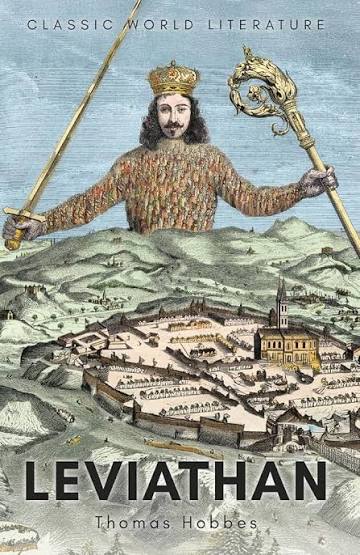
Thomas Hobbes in his famous work Leviathan warned against rejection of the social order. Without civilisation and a strong central authority, a sovereign, we would live in what he called a “state of nature”, which he described as a “war of all against all”. The human response is to declare war on nature and try to dominate it, overcoming our biological weakness and vulnerability by banding together like Laestrygonians. As Odysseus warns the freeloading suitors in his house, foretelling their sudden change of fortune and mortal existence,
In Hobbes’ state of nature, there would be no culture, no industry, no buildings, no science, no arts, and:

“which is worst of all, continual fear, and danger of violent death; and the life of man, solitary, poor, nasty, brutish, and short.”

This is an accurate portrait of the cyclops, lonely, violent and brutish, in his cave reeking of death. But the Laestrygonians go to the opposite extreme, where there is no room for difference or dissent. They, like us trying to control the environment, use technology and strategic cooperation to enforce their wills. They do not ask who the Greeks are, what they need, or whether they come as a threat – they slaughter them and eat them just for the crime of being on their land, the way the Nazis killed Jews and Roma for daring to exist. The absolute sovereignty of Hobbes’ Leviathan may be no more civilised than that of the ant colony that attacks any prey within its reach. Their cannibalism is simply the resolution of difference.

Cannibal stories from Homer onward reveal as much about the victims as the perpetrators. They demonstrate that we are all flesh, at our most physical and animalistic at the time of death and consumption, be that consumption by worms, cyclopes, Laestrygonians or the seemingly innocuous cannibal next door. We can be slaughtered like puppies, consumed as if by a lion, and our integrity and transcendence is contradicted by being split and ruptured—our brains gush, our entrails, flesh and bones and marrow are revealed as common comestibles. Like all animals, we eat and try to avoid being eaten. But unlike nature, which as Tennyson said is “red in tooth and claw”, we can elect to make ethical choices.
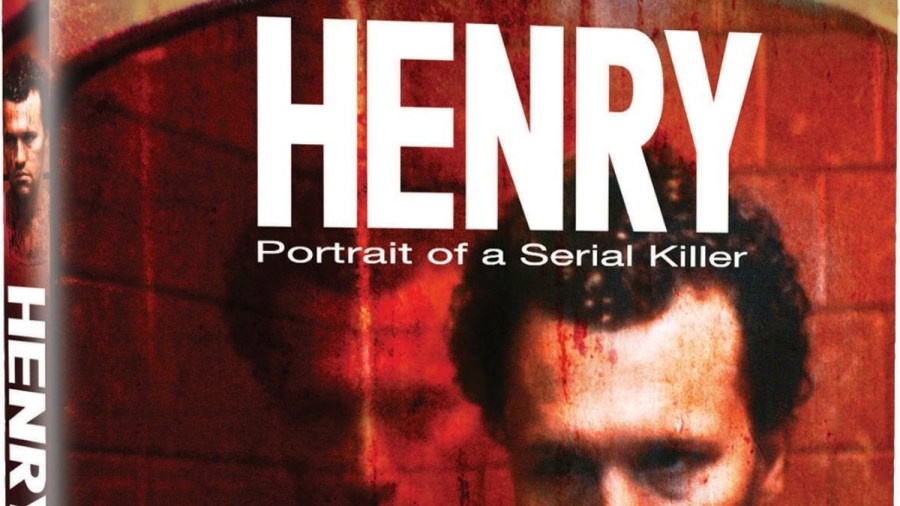
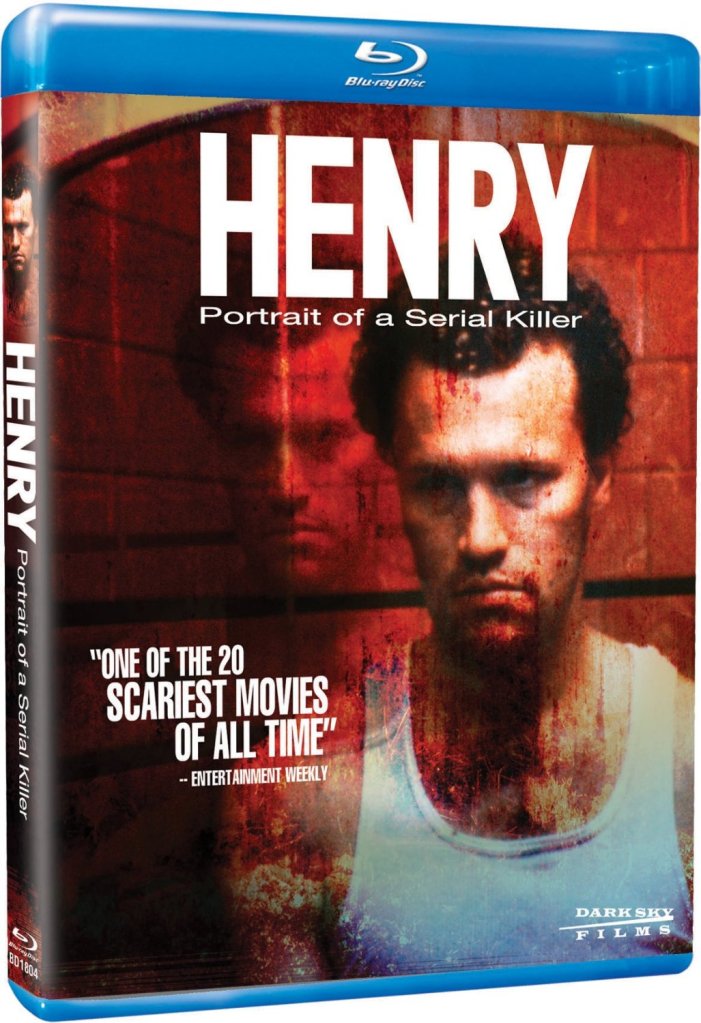
Henry: Portrait of a Serial Killer (1986)

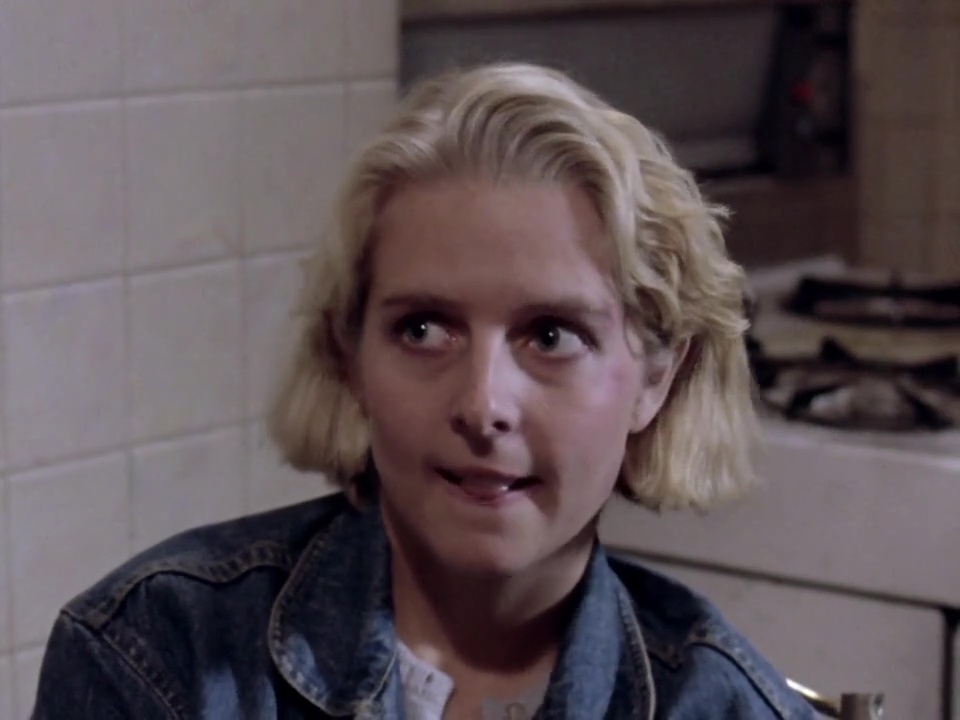
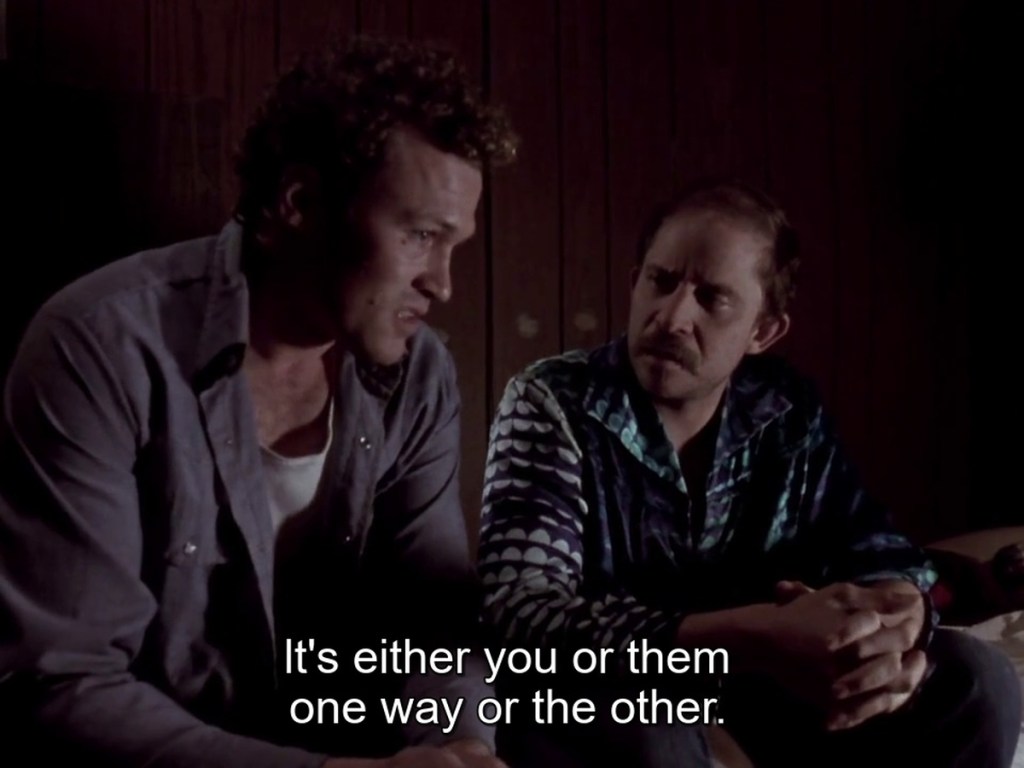
Henry: Portrait of a Serial Killer is an American psychological crime film directed and co-written by John McNaughton that depicts a random crime spree by Henry and his protégé Otis, who torture and kill with impunity. Michael Rooker in his debut film plays the nomadic killer Henry, Tom Towles plays Otis, a prison ‘friend’ who lives with Henry, and Tracy Arnold is Becky, Otis’s sister.

The characters of Henry and Otis are loosely based on convicted real life serial killers Henry Lee Lucas and Ottis Toole, who was famous for his claims to have cannibalised many of their victims, claiming that they also supplied women and children for human sacrifice to a cult called “The Hand of Death”.

Henry confessed to over 600 murders, which supposedly were committed between his release from prison in 1975 to his arrest in 1983, a pace that would have required a murder every week. A detailed investigation by the Texas attorney general’s office ruled out Lucas as a suspect in most of his confessions by comparing his known whereabouts to the dates of the murders to which he had confessed. It appears that the police would bring any cold case to his attention, feed him information about it, and then let him take responsibility. He had nothing to lose, and global fame and notoriety to gain. He was convicted of 11 murders and sentenced to death for the murder of an unidentified female victim known only as “Orange Socks.” His death sentence was commuted to life in prison by Texas Governor George W. Bush in 1998 due to evidence that Lucas was in Florida at the time “Orange Socks” was killed in Texas. Lucas later recanted all his confessions except for the murder of his mother, and died in prison of heart failure on March 13, 2001.

The film involves a lot of scenes of Henry driving his battered old Chevy Impala around the grey streets of Chicago, finding people to kill. Images of bloody mayhem are offered for their shock value and become repetitive, and rather fake, but then the film was made on a tiny budget.

Some narratives in the film run parallel to what we know of the real serial killers. Henry did meet Ottis, but in a soup kitchen in Jacksonville, Florida, not in prison. Henry’s father really did lose both of his legs after being struck by a freight train, leaving Henry at his mother’s mercy. But the film largely omits the long-term homosexual relationship between them (shyly hinting at it when they share the last can of beer) and, sadly, totally omits Ottis’ predilection for cannibalism.

Henry did sexually abuse Ottis’ 12-year-old niece Frieda Powell, who lived with them for many years. As in the film, Powell preferred to be addressed as Becky rather than Frieda. However, in the film Becky is Otis’s younger sister, and is presented as a considerably older single mother, not the real 12-year-old Powell.

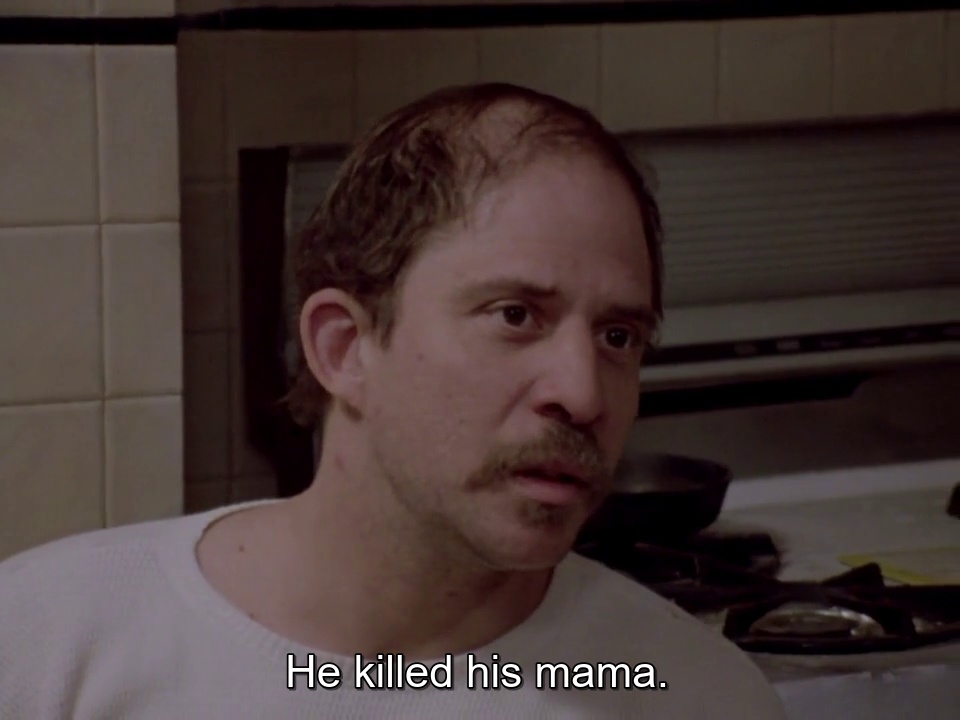
Sexual neurosis is presented as the root cause of the violent tendencies of both men. Otis, who is shown attempting to sexually abuse his sister, tells her that Henry killed his own mother, and when Becky asks Henry about it, he tells her his mother was a sadist and a “whore”, who forced him to watch her having sex with clients, sometimes making him wear girls’ clothing for further humiliation.

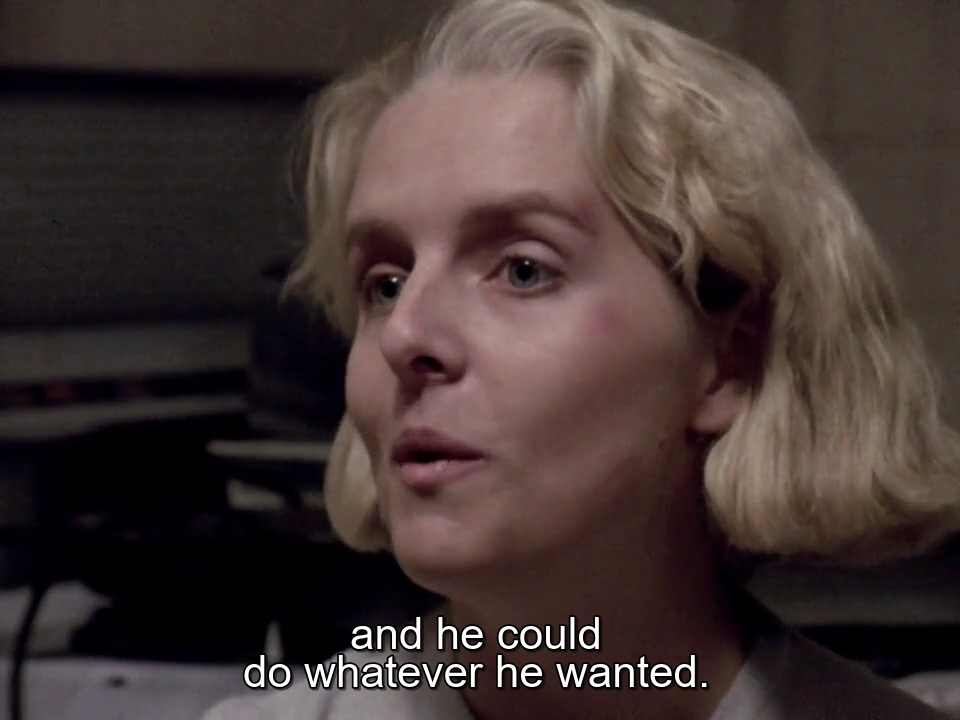
Becky in response tells Henry of her childhood, in which she was regularly raped by her father, with her mother claiming not to believe her.

“He told me he had a right, because he was my daddy and I was his daughter, and he fed me and let me live in his house, and he could do whatever he wanted. And he did… I didn’t fight him, because when I did he just hit me.”

Henry introduces Otis to his world of serial killing when they pick up two sex workers and Henry snaps their necks during sex, suggesting that he is revenging his mother’s abuse. To Henry, the world is against him, and murder is “always the same, and it’s always different.”

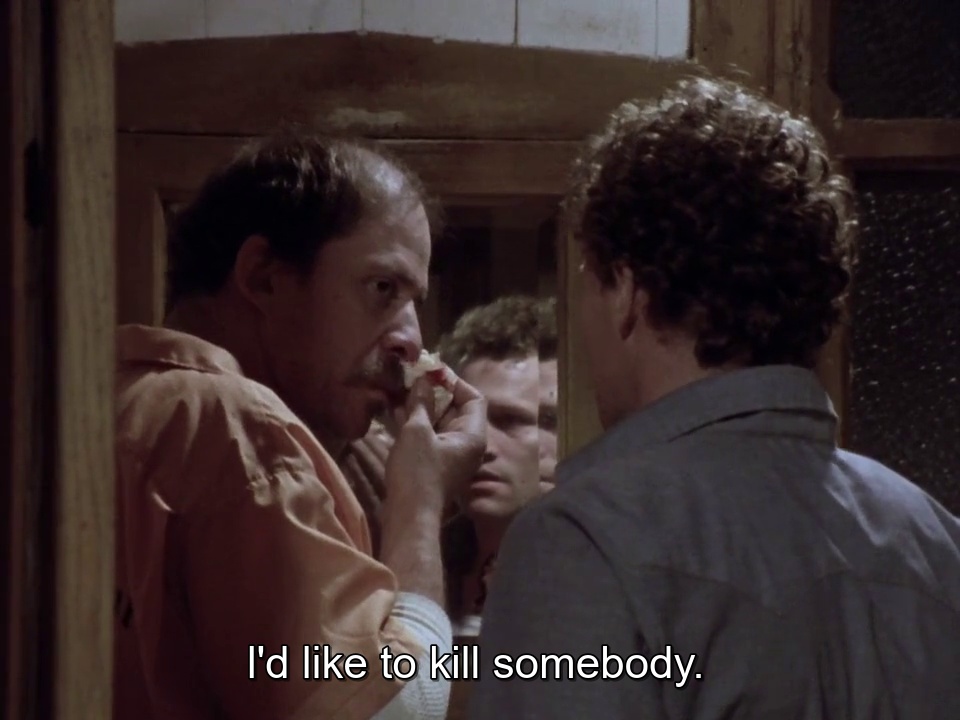
Otis gets a taste for murder when they kill a fence who mocks them when they try to buy a television from him, and then actively seeks out opportunities when a high school boy he comes on to punches him in the mouth. Henry says it would be a mistake to kill the boy, since they’ve been seen together, but Henry wants to kill someone. It’s the world being against them, again.

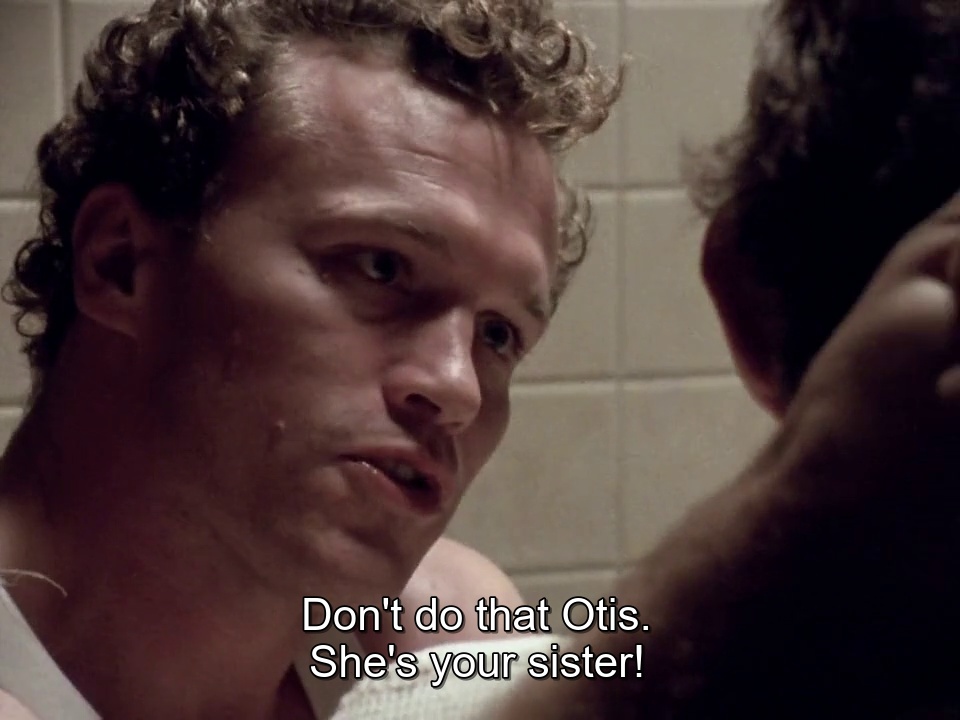
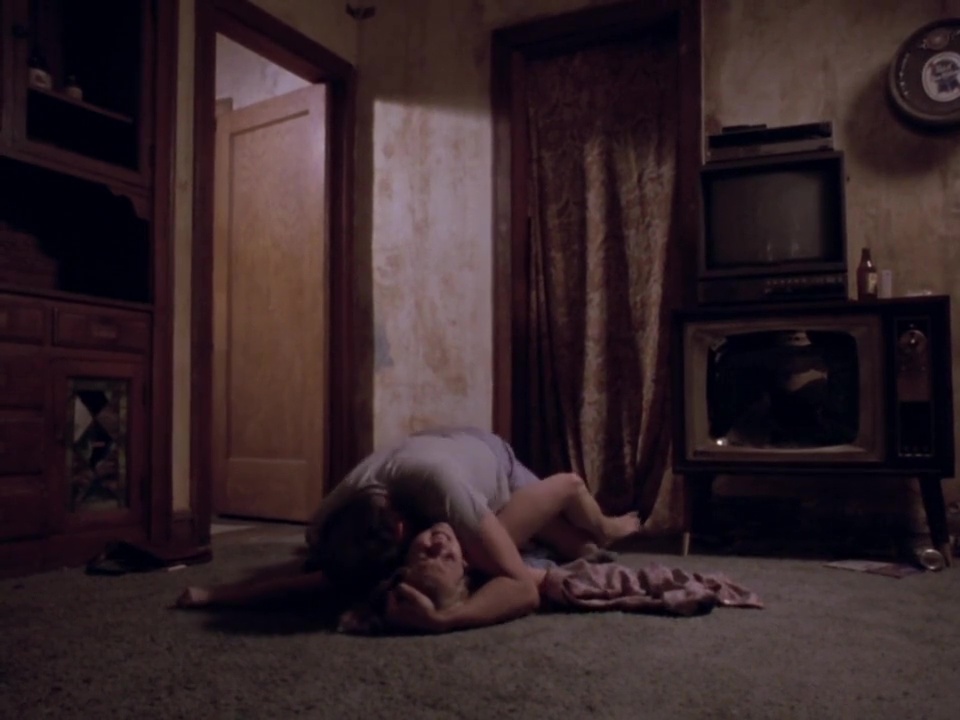
Henry schools Otis to make sure every murder is different – that way there can be no M.O. for the police to follow. A particularly brutal scene of the murder of a family is videotaped by the pair (on a camera stolen from the dead fence) and Otis enjoys re-watching himself molesting the screaming woman, breaking her neck and then attempting necrophilia, until Henry orders him to stop, just as he forced him to desist from molesting Becky when she arrived. When Henry finds Otis raping his own sister, he fights him and with Becky’s help, kills him.

Henry has his own moral code, in which murder is fine, but incest, family violence and necrophilia are forbidden. The real Henry’s paedophilic involvement with twelve-year-old Becky, and the real Ottis’ interest in eating people, are never mentioned.

Incest, murder and cannibalism are the three great taboos of our civilisation according to Freud, the driving forces behind the creation of laws and morals, which stop us destroying our communities by doing those things. The movie sadly concentrates on the murders and has references to incest, but totally ignores the cannibalism.

Unlike the film, the real Henry did not kill Ottis – both men died in separate prisons, Ottis in Florida State Prison in 1996 and Henry in Ellis Unit, Huntsville, Texas in 2001.

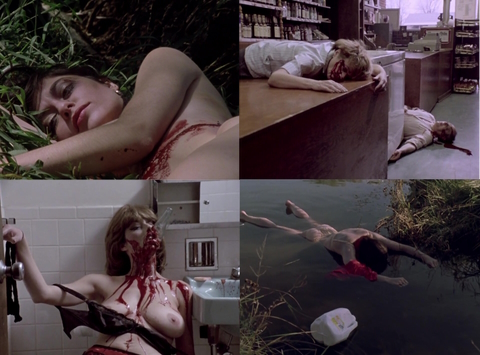
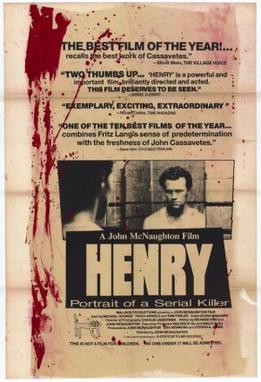
Due to the violent imagery, the film was censored in many markets and the original poster (above) was banned. The controversy brought it some very valuable publicity. The reviews were also mostly positive – it has an 89% “Fresh” rating on Rotten Tomatoes, with Roger Ebert observing that the film does not “sugar-coat” or trivialise violence as most slashers tend to do, and calling it:

“a very good film, a low-budget tour de force that provides an unforgettable portrait of the pathology of a man for whom killing is not a crime but simply a way of passing time and relieving boredom.”

It’s well made (considering the miniscule budget), the cast are terrific (in both senses of the word) and the plot, if somewhat out of step with the reality of the case, is well presented and never dull. But why should it stick to the “facts” of the case, when clearly neither Henry nor Ottis were too sure what was real and what simply bravado?

A sequel, Henry: Portrait of a Serial Killer Part II, was released in 1996, but without any of the cast or crew from the original.

Ladies that lunch: CANNIBAL GIRLS (Ivan Reitman, 1973)

Mention cannibalism in conversation (sorry, yes, I often do), and you will usually (in my experience) be met with either humour or revulsion and very often both at once. Ivan Reitman has wrestled with that paradox in this early movie – he went on to direct Meatballs, Stripes, Ghostbusters I and II, Twins, Kindergarten Cop, Dave and Junior. Great comedy classics, but none of them involved cannibalism, unfortunately.

This Canadian film employs the classic horror trope of the young couple lost or having car problems or, in this case, both at once. The couple are Clifford and Gloria, played with gusto by the very young and almost unrecognisable Eugene Levy (American Pie, Schitt’s Creek, most Christopher Guest movies) and Andrea Martin (My Big Fat Greek Wedding).

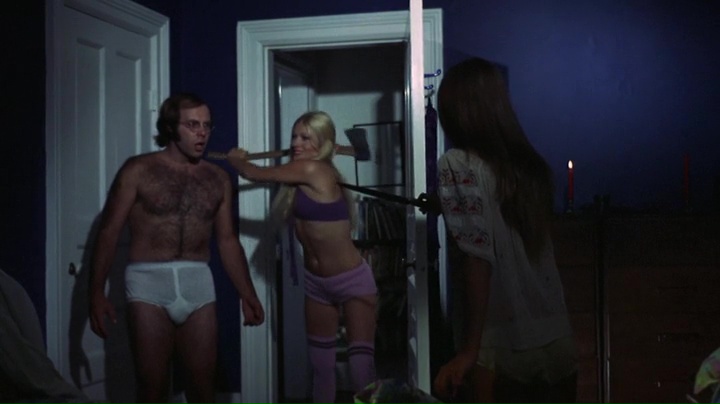
There’s the creepy gas station person, the corrupt cop, and a particularly unctuous reverend. When shown in the cinemas, there was apparently a bell that rang immediately preceding the gore to warn the squeamish to close their eyes. This was omitted in the version I watched, and with good reason – if you don’t know what to expect when a guy starts pulling on his clothes and a woman reaches for a sharp implement, then you are probably watching the wrong channel.

Then there’s the hotel of horrors, where the motel proprietor tells them the “legend of the three beautiful girls”, who lure men to their farmhouse, take them to bed, and then kill and eat them.

“Food can be a marvellous appetiser” one of them tells her chosen victim. The girls have a ritual – a dab of blood between the breasts and the incantation:

“Within me and without me, I honour this blood, which gives me life.”

There’s the wink to the audience as the butcher holds up a piece of meat and tells a customer: “Mrs Wilson, if it was any fresher, it would get up and tell you itself”.

And then, there are the cannibal girls of the title. Turns out they are, I dunno, maybe succubi? Anyway, they eat human flesh, drink blood, and live forever. And, we are told, they never get sick. They feed the reverend, who seems to be in charge of all this hocus pocus, on their blood, as they chant:

“We shall drink the blood of life, of life eternal, and we shall live forever.”

The problem here is that the film is trying to be a horror story and a comedy at the same time, and does OK at both, but brilliantly at neither. It was made on a low budget, not uncommon in cannibal movies, but, to make a long story short, the less the money, the greater the tendency to make a short story long. It drags a bit, and although there’s lots of blood and meat, there’s not much terror or humour.

But it does get to the point of cannibal stories – humans are edible, under the skin we are just another large mammal, and probably taste, as several cannibals report, somewhere between veal and pork. The movie reminds us of that sad truth with subtle hints like cows grazing beside the road, and a meat truck carrying some sort of mammal flesh to the local butcher.

Hard to build a whole horror show on that, so of course there has to be a supernatural element, based on traditional beliefs about capturing the strength, wisdom, skill or even soul of the one being eaten. You can trace this belief, or hope, in contested stories of cannibalism, such as the Fore tribe of PNG who ate their ancestors and acquired not strength or skill but a nasty shaking disease called Kuru. A popular version is the myth of the Wendigo, a spirit that inhabits humans and gives them an insatiable desire for human flesh, which makes them immortal and invulnerable – a topic covered rather nicely in the movie Ravenous.

These cannibal girls are not Wendigos – they are not particularly strong, just well armed, and are under the thrall of the reverend, who lives off their life forces and can hypnotise anyone with just a glance. Maybe he is some sort of evil spirit.

But real life cannibals do not gain strength from their meals, and they do not live forever. Jeffrey Dahmer hoped only to keep his boyfriends with him as zombie sex slaves, and eventually was beaten to death in prison. Ottis Toole died of cirrhosis of the liver, also in prison. In the final analysis, what cannibals eat is just meat, it has no magical powers, and usually results in legal trouble rather than invulnerability.

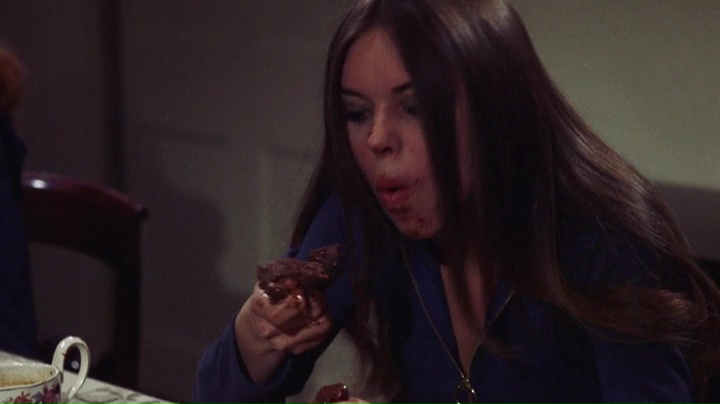
But it’s an entertaining enough movie, and after all the movies we have reviewed, it is a refreshing change to see some women tucking in to a bit of man-flesh.

That’s a carrot she’s peeling. Behave yourselves.