2025: The Year in Cannibalism

Then every thing includes itself in power,
Power into will, will into appetite;
And appetite, an universal wolf,
So doubly seconded with will and power,
Must make perforce an universal prey,
And last eat up himself.
    — Shakespeare – Troilus and Cressida Act 1, Scene 3

January

Violence in the Highlands of Papua New Guinea marred celebrations of the country’s 25th anniversary of independence. Armed men were shown in videos holding body parts and saying “this is our meat.” The story brought back memories of former US President Joe Biden claiming his uncle’s body was never found during the Second World War as he had been eaten in PNG, stating that “there were a lot of cannibals, for real, in that part of New Guinea”.

Sean ‘Diddy’ Combs, already in hot water for sex trafficking and racketeering charges, has been accused of cannibalism now. In the Peacock documentary Diddy: The Making of a Bad Boy – which covers the rise and dramatic fall of Combs, 55 – former Making the Band 2 contestant Sara Rivers revealed what she and others experienced when cameras weren’t rolling. When Diddy got angry, she says, he threatened her band member:

“You make me so mad I want to eat your flesh!”

In the North West Province of South Africa, one of a group of illegal miners (zama zamas, or “those who take a chance” inZulu) in the Stilfontein mine (which closed in 2013) has disclosed that he and his fellow miners turned to cannibalism when they ran out of food 2km (1.25 miles) underground. The police had cut off food supplies the previous August to ‘smoke out’ the illegal miners.

February

Two artists put on a show in Scotland where they made and cooked “black pudding” sausages from their own blood. Although they did not eat the sausages after this show due to legal considerations, they have done so in the past, although one of the artists has since become a vegetarian and has said he will not be eating them in the future.
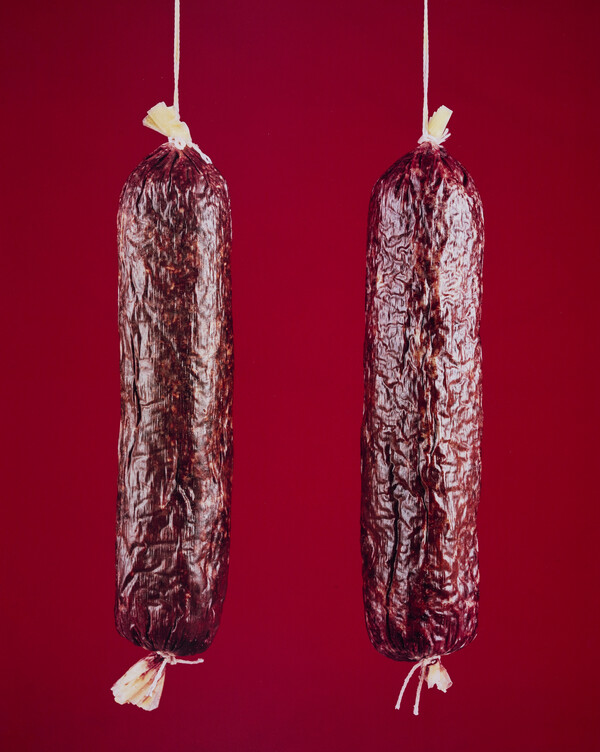
John Beagles and Graham Ramsay

Tyree Smith, the “Connecticut Cannibal”, was given conditional release by the Nutmeg State’s Psychiatric Security Review Board from the mental facility to which he was incarcerated. Smith was handed sixty years in 2013 for killing a homeless man and eating his brain and eyeball in a cemetery, washed down with sake. Doctors who have been treating Smith said he’s been fully rehabilitated, thanks to medications that quelled the voices in his head. Others, including the family of the man he killed and ate, are less optimistic about his future plans. Mr Gonzalez’s sister-in-law, Talitha Frazier, asked the review board “How do we know he’s not going to do this again?” Republican state Senator Paul Cicarella said “Murder and cannibalism and release in the same sentence … that’s a problem”.

What’s with all the eyeballs? A “preppy” Princeton grad was charged with murdering his brother at their luxury Princeton apartment, after which he ripped out the victim’s eyeball and ate it. He also reportedly set the family’s cat on fire. Even the Duke of Cornwall in King Lear would have blushed at that transgression.

March

A woman in Brazil barbecued and ate her victim’s heart and penis. Josefa Lima de Sousa, 65, left a blood-stained sign by the mutilated corpse with a message, using her street name, saying: “Gringa got rapist.” She told police the victim had been a child abuser.

A Texas embalmer with the wonderful name Amber Ludermilk was charged with the felony “abuse of a corpse” after cutting off the penis of a deceased sex offender and jamming it into his mouth. An arresting constable stated that “No matter what one thinks of his life, the law requires that he be treated with dignity in death.” In a world where thousands of humans die of starvation every day, and we casually torment, kill and then mutilate the corpses of billions of other animals every year for food, medical experiments, clothing or entertainment, are we expected to weep for this sex offender’s insentient corpse?

A South Carolina mental health facility was sued by family of a victim of murder and cannibalism. The lawsuit alleged that the killer, another inmate, had killed two men and eaten both the victims’ ears, as well as drinking their blood so he could “gain their power.”

In Rwanda, a minister said that persecution and cannibalism of Tutsi people are still “commonplace.” Readers may remember that just over thirty years ago, almost one million ethnic Tutsis in that country, some 75% of the Tutsi population, were slaughtered in the space of just 100 days. Although the word genocide has come to mean ‘anything done by someone you don’t like’, that one was a real genocide.

June

A young woman who calls herself pterodactylhunny disclosed on TikTok that her doctors had given her one her ribs which had been surgically removed. She took it home, boiled it to remove the meat, then ate the meat to see what it tasted like. Spoiler: the formaldehyde in which it had been soaked made it taste pretty bad. The cannibalism of eating her own flesh, however, she described as “cool” and “not that weird”. Viewers responses ranged from shocked to approving, pointing out that eating one’s own meat could be considered vegan, since the animal from which it came had given her consent.

July

16 men were arrested in the West Pokot region of Kenya after human remains were found including the bodies of several children. One boy was found in a maize field with his organs removed. Police say the suspects have confessed to killing and eating eight people.
Relatives of the victims of a mass-murderer in Idaho were outraged to find that he had taken a plea deal for the stabbing of four students in 2022, thus avoiding the death penalty. No indication of him eating his victims, but a forensic psychologist reported that he had become a strict vegan before that, because:

He was afraid that if he let himself go to taste meat once, he would become addicted to it—like he had become to heroin—and start killing and eating people.”

In Kenya, a man recently released from prison for killing his wife, murdered his second wife, cooked her flesh and fed it to his children. Irate members of the community lynched him and set him on fire. The incident elicited sharp debate among Kenyans over the old claims of cannibalism among members of the community. Samuel Bosire Angwenyi, the Secretary General of Abagusii Council of Elders, dismissed the claims saying it was a myth which some people blindly believed. “If there is a person who can eat a fellow human being, then that must be Satan.”

August

An Australian boxer whose nickname is “the Butcher” told fans he had “become a cannibal”. What he meant was that, as part of his training for a big fight, he had taken advantage of the birth of his child by eating his wife’s placenta, in tablet form, washing it down with a little breast milk. He said:

“I’ve technically become a cannibal. It’s actually like a superpower”

In Cuba, a man arrested for murder was found to have a jar filled with human fat, jars of fried meat, and a bag of ribs in his refrigerators. Cannibalism was suspected but never officially confirmed. Meanwhile, other residents of Santiago de Cuba, seeing an unusual level of police activity in September, fear that the case may be linked to the disappearance of other residents from the Abel Santamaría neighbourhood.

In Zimbabwe, a woman allegedly poisoned her four-year-old granddaughter, Tawanayasha Kadhene, before mutilating her body in Shurugwi on 26 August. Police said: “The suspect gave the victim a maheu drink laced with a maize pesticide pill. The child collapsed and died instantly. The suspect then cut flesh from the victim’s cheek, mixed it with herbs prescribed by a sangoma, cooked it and ate the mixture.” The ritual killing allegedly happened following the woman’s consultation of a traditional healer.

September

In an unusual case of auto-cannibalism, a patient at the University of California Los Angeles (UCLA) David Geffen School of Medicine received intravenous lorazepam to treat anxiety and claustrophobia in order to facilitate an MRI. He subsequently developed acute psychosis, performed self-inflicted digital enucleation of his left eye, and then ingested it. Lorazepam is a benzodiazepine that has been FDA-approved as a fast-acting anxiolytic and sedative. It is one of the most commonly used medications for these indications. The studies of the case claim that it is an “extremely rare paradoxical reactions to benzodiazepines.” Worth keeping an eye on though.

October

A thirteen-year-old boy in Egypt was arrested after reports he had murdered his classmate, sawed his body into pieces and ate them “out of curiosity”. He told the police that he that he found human flesh was “similar to breaded chicken”.

November

The strange case of Gabriela Rico Jiménez, a 21-year-old model from Mexico who disappeared in 2009 after raging against alleged cannibalistic captors while outside a fancy hotel in Monterrey Nuevo Leon, has been rediscovered by TikTok posters. Didn’t know this was happening until my blog on the story suddenly started to take wings recently.

@hfnkw1

She warned us… and then vanished. The Gabriela Rico Jimenez case gets DARK.#scary #scarystories #horrortok #fyp

♬ original sound – hfnkw1

In New Zealand, a mortuary technician lost his licence due to posting online talks ‘promoting cannibalism. He offered to obtain human tissue to interested readers, and added “When we have burn victims…. They smell so good sometimes”. The man also engaged in online conversations about rape and sexualising children, his own alleged drug use and ways of making explosives.

December

We closed the year with allegations from the Ukrainian government that Russian troops trying to occupy Zaporizhzhia in eastern Ukraine have run out of food and are killing and eating each other. The Ukrainian spy service GUR reported that:

“Due to a lack of food, the occupiers are sharpening their knives and preparing to eat their younger comrades”

Intercepted radio messages apparently include soldiers saying “We’ll eat each other, it’s all fucked up here. We’re already looking for someone younger” and “I’ve sharpened my knives. I don’t give a shit who I have to cut up. I just want to eat. Fuck everyone else”.

Around this time last year, this blog reported on several convicted Russian murderers who had admitted to cannibalism but been offered pardons if they agreed to serve in the Russian forces in Ukraine for six months. Later reports have noted that the pardons and repatriations may not ever have happened.

Back in Russia, “Perm cannibal” Mikhail Malyshev died at the age of 65 in a clinic, while waiting for a doctor. Malyshev was arrested in 2000 for two proven murders, although a polygraph test claims that he was involved in at least eight: he killed, dismembered and partially ate a man and a woman. Malyshev reportedly used the soft tissue to fry cutlets and threw away the rest. He often made kebabs out of stray dogs. He was sentenced to 25 years and served his sentence in the Perm region, undergoing mandatory psychiatric treatment. He was released from prison in October 2022. Some reports stated that after his release from prison, Malyshev had found work at a shelter for homeless animals. That part may be the most disturbing aspect of the 2025 story!

New cannibalism movies

A veritable swathe of new releases this year, showing again that cannibalism is the flavour of the month (sorry about the pun) or the year, or indeed the whole damn century:

Know Me: A True-Life DramaStory of the “Causeway Cannibal” and media response
DevourAll female metal band called “The Virginia Bitches” come across a town full of cannibals
Human Hibachi 3: The Last SupperCult of devout followers eat human sacrifices in a “last supper”
Cannibal ComedianCannibal takes a stab at stand-up
Cannibal MukbangShe makes vodcasts of voracious eating – mixed with cannibalism of bad men
DeliciousYoung working people work for, then eat, the rich
The WagerTrue story of a mutiny in the British Royal Navy in 1741 and the events that followed for those who survived
Red Night at Skye’sZombie meth cannibals led by a mad scientist
40 AcresDescendants of African American farmers fight roving cannibal gangs
Forgive Us AllNZ film – survivors flee through cannibal infested forest
River of BloodFour kayakers take wrong river into jungle of a cannibal tribe
No Tears in HellMother and son kill and eat poor people – based on Alexander Spesivtsev
Lone SamuraiSamurai battles cannibal tribe on island
StephenSerial killer’s victims are eaten by mysterious person
The BoatyardAtrociously acted ripoff of Hills Have Eyes
The Priest-Thanksgiving MassacreDepraved priest from earliest European settlement comes back to life to kill and eat people
The Weed EatersNZ film – new strain of marijuana turns users into cannibals
Quarantine CannibalWorking man fired from job cannot control cannibalism urges in quarantine

What a year. Can’t wait to see what 2026 is going to bring!
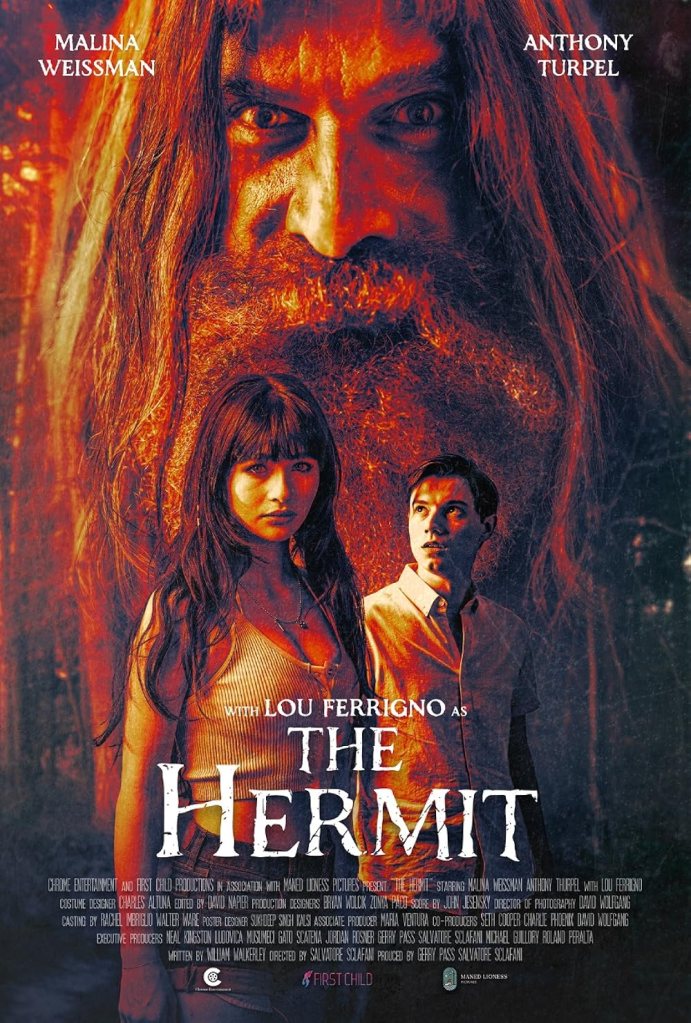
Harvesting hitchhikers: UNDER THE SKIN (Book: Michel Faber, 2000) (Film: Jonathan Glazer, 2013)

“We’re all the same under the skin.”

The philosopher Thomas Nagel claimed that we are unable to understand the point of view of another being, giving as examples the difficulty imagining what it’s like for a human to imagine being a bat, or for a blind person to imagine being sighted. J.M. Coetzee in the guise of his character Elizabeth Costello thought differently – it’s about being, seeking, feeling, and of course eating. We all do those sort of things. We can sympathise, no matter how alien that other may be.

The movie and the book of Under the Skin feature a ‘real’ alien – a being from another planet, disguised as a human woman, here to harvest human flesh for food. They both ask – what’s it like to be an alien? In the book, the aliens are quadrupeds, looking something between a horse and a sheep apparently, except for the protagonist, Isserley, who has been surgically mutilated to make her look like a ‘human’ of earth. I say ‘human’ in inverted commas because her people, like many clans interviewed in the reports of anthropologists, believe that they are the humans, and so everyone else must be aliens or subhumans. To Isserley’s people, the denizens of Earth are “vodsels” (Dutch for “food” – the author Michel Faber is originally Dutch) – dumb animals that can be captured, castrated, fattened up and then slaughtered for meat, which is exported back to the home planet.

Isserley is a hunter. Her weapon in the book is a small car which has anaesthetic needles in the passenger seat. In the movie, it’s her appearance – she looks like (because she is played by) Scarlett Johansson (identified in the credits as “The Female”).

Men get in her car and eagerly accept the offer to come home with her, but at home, they disappear into a pool of black ectoplasm.

She stalks her prey, driving around the roads of Scotland and picking up hitchhikers, asking them questions to draw out whether they will be missed and, if they are loners, losers, tranquilising them with a drug called icpathua and taking them back to be processed. The film took an audacious decision to use real men, not actors (most of them), many of whom were offered a lift by Johansson, and recorded by secret cameras in her van. They don’t recognise Johansson as a movie star, just as their unwitting “characters” don’t recognise her as an alien hunter. In the book, Isserley is not portrayed as any kind of Scarlett Johansson, but does have huge breasts, the prototype for the surgery being based on some questionable magazines sent back to the home planet by the advance crew.

The story in both media is not just about being alien (which she is in several ways: as a woman, as an alien, and as a hunter) but about how difficult it can be to sympathise with the other, the stranger, the prey, and how dangerous it can be when one finally does so. In the book, Isserley is purely interested in whether they will be missed, and is unconcerned about what is done to them, which is described in graphic detail: they are shaved, castrated, tongues removed and fattened up. In the film, she will go to any lengths to capture her prey, at one point dragging away a man who had tried to save a drowning couple, leaving their baby crying on the beach.

But what happens when the hunter starts to identify or at least sympathise with the prey? Isserley is made to think through the implications when she needs to convince the aristocratic scion of the ruling family of her planet that the vodsels are just dumb animals, and their feeble attempts to beg for mercy by scratching in the sand of their cages are just gibberish (he is unaware they can speak, as their tongues have been cut out). He is a believer in animal rights, and frees some of the captives, whom Isserley then has to hunt once again, this time with a shotgun. Isserley never really challenges the morality of hunting, mutilating, fattening and slaughtering the stupid vodsels (us) although she is horrified at the suggestion of eating sheep, serene animals who look like the children of her species, unlike the “brutish cunning of the vodsels”. Her morality, like so much of ours, is based on similarity. Her challenge comes when she picks up a man who (we know, although she doesn’t) is a serial killer, sedates him, then realises she has left his dog to starve in his van. She heads back to where she picked him up, frees the dog, and decides to quit, try to make a life as an Earthling, even though she cannot even eat our food.

The Female of the film has a different challenge. She picks up a man with severe facial deformity, who admits that not only will no one miss him, but that there has never been anyone who might have.

She takes him back to the black pond, but rescues him at the last moment, and then flees. Then she ceases to be the hunter, and becomes the hunted. Both the film and the book have a vicious rape scene when the prey, the desperate from among men she collects, turn on her.

The story may be interpreted according to many discourses of our times. It can be interpreted as the struggle of immigrants against the racism and resentment of those whose territory they enter. It is more widely interpreted as a feminist narrative, in which the standard horror trope of the sexually active female being stalked by the monster is turned on its head – the males walking alone at night are the prey, the woman is the molester and murderer. It is also a comment on economic class distinctions: the men she picks up are the strays, the unemployed who are exiled, isolated and vulnerable. She is culling those whom society has expelled, like a lion preying on the old and weak of a herd of antelopes. They are the aliens from this planet. 

The book in particular is a metaphoric condemnation of modern factory farming. The vodsels (that’s you and I) are considered “vegetables on legs”.

“The thing about vodsels was, people who knew nothing whatsoever about them were apt to misunderstand them terribly.  There was always the tendency to anthropomorphise. A vodsel might do something which resembled a human action; it might make a sound analogous with human distress, or make a gesture analogous with human supplication, and that made the ignorant observer jump to conclusions. In the end, though, vodsels couldn’t do any of the things that really defined a human being. They couldn’t siuwil, they couldn’t mesnishtil, they had no concept of slan.”

Aren’t these the same arguments thrown at vegans on social media every day? “Humans” are intellectually superior, and therefore the only ones worthy of moral consideration. And to these aliens, we are not the humans. Isserley and her crew are the embodiment of John Harris’ famous quote (usually misattributed to George Bernard Shaw):

Suppose that tomorrow a group of beings from another planet were to land on Earth, beings who considered themselves as superior to you as you feel yourself to be to other animals. Would they have the right to treat you as you treat the animals you breed, keep and kill for food?

The film is less distinct in its message. Glazer said in an interview that he wanted

“to make a film representing, as purely as possible, an alien view of our world.”

How do we step into another’s consciousness, be it a man or woman or bat, be it a predator or prey? How is it to be an outsider, an alien, a stranger in a strange land? It is difficult to comprehend, and yet sometimes it is easy, because we have all felt like aliens at one time or another. Think of your first day at a new school.

The brilliance of this story is that we see humanity (us, that is) through the eyes of an alien. In the book it’s Isserley’s thoughts and feelings about the vodsels, Earthlings, to whom she feels both contempt and grudging admiration. In the film, it’s images – the dark streets of Glasgow, the crowds jostling and threatening, the shopping mall that suddenly seems like an alien landscape.

In other words, we get to feel how it is to be an alien, proving the truth of Coetzee’s Elizabeth Costello when she says: “there are no bounds to the sympathetic imagination”. But this insight is not accessed through rational contemplation, which tells us we can do whatever we want if we have the power and the will, but rather from the heart, “the seat of a faculty, sympathy, that allows us to share at times the being of another.” We sympathise with this alien, as she begins to sympathise with us.

Matt Zoller Seitz, the critic from RogerEbert.com, interprets the story’s message as saying:

“Here is an experience that’s nothing like yours, and here are some images and sounds and situations that capture the essence of what the experience felt like; watch the movie for a couple of hours, and when it’s over, go home and think about what you saw and what it did to you.”

The film earned a very respectable 84% on Rotten Tomatoes, The Guardian called it a masterpiece, but it was a box office flop. Let’s hope it, and the book, continue to ascend into the realms of cult texts. They are both highly recommended for your consideration.

“Anyone can eat human flesh” – SAWNEY, FLESH OF MAN (Ricky Wood, 2012)

It is often difficult to impossible to determine the truth of cannibal stories. Was there a Sweeney Todd? Did Ottis Toole eat up to 600 people in the US? How important to Jeffrey Dahmer was the cannibalism component of his murders? So it is for the older myths, such as that of Sawney Bean.

According to the mythology, Sawney was a Scotsman who, in the fifteenth or sixteenth century, moved into a cave in Bennane Head on the west coast of Scotland with his wife “Black Agnes” Douglas. They had eight sons, six daughters, 18 grandsons and 14 granddaughters, the grandchildren all being products of incest, since no outsider was found in the cave. Alive. Freud said that humanity’s “original” taboos were cannibalism and incest. Sawney won the daily double.

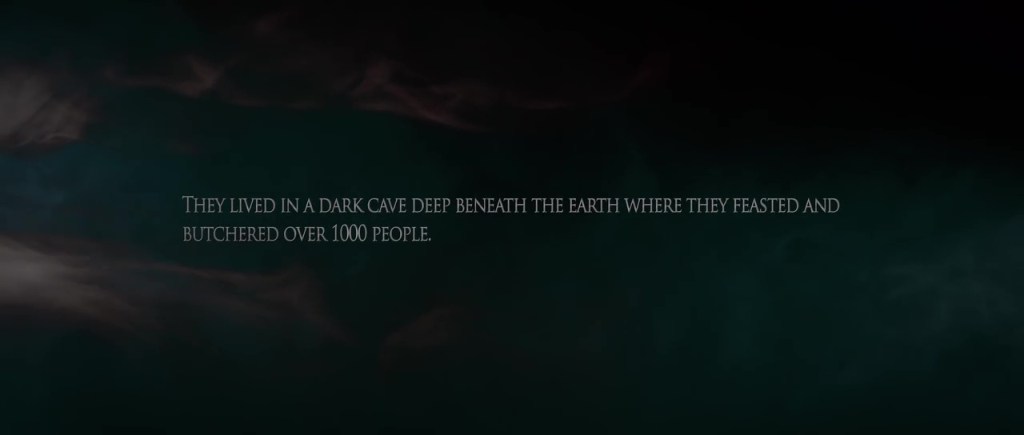
The Bean clan would ambush unwary travellers on the sparsely populated coast, but killing the victims and stealing their riches wasn’t enough to feed hungry, inbred mouths, because there were not a lot of pawn shops in the area, and eBay hadn’t been invented yet. Sawney’s revolutionary idea, a forerunner of modern serial cannibals, was take the bodies back to the cave and eat them, or preserve the flesh by pickling. The story goes that up to one thousand victims were so handled, making him, if real, the first and most prolific serial killer ever caught.

The reign of terror ended when a prospective victim escaped the Beans (although his wife did not) and alerted authorities. The king (possibly James VI) led a heavily armed party to capture the clan. Sawney and the men were condemned without trial and had their genitalia cut off and thrown into the fires, their hands and feet severed, and were left to bleed to death. After watching the men die, the women and children were tied to stakes and burned alive. By such methods is civilisation restored. Wes Craven based his film The Hills Have Eyes on the legend of Sawney Bean, it also makes a point about the vengeance of the civilised being as bad as the savage.

But, so the story goes, Sawney’s dying words were:

“It isn’t over, it will never be over.”

That’s where this film starts.

A descendant of the original Mr Bean now lives in Sawney’s cave, presented as the very image of a voracious mouth. The landscape here is a devourer, much like the peaks of the Andes, which looked like teeth in the movie Alive. Nature seeks to eat us up, from the bacteria and mosquito to the great white shark. We tend to see ourselves as outsiders to nature, at war with the natural world, but the cannibal reminds us that we are animals too, so he is, like nature, red in tooth and claw. Nature, like Sawney Bean, is indifferent to our pretensions of civilisation, merciless in killing and eating us (and this new Sawney likes a bit of rape too).

Lots of ultraviolence and growls and screams from Sawney’s hoodie-wearing kids.

Look, it’s a video nasty, which seeks to challenge the viewer with plenty of gore, shocks and carnage, and it succeeds to some extent. The plot has some annoying loose ends and is a bit thin, with sombre music announcing (as if we couldn’t guess) the forthcoming demise of anyone silly enough to wander around Scotland solo (which almost everyone in the film does at some stage). The acting is pretty great, particularly David Hayman, who has a ripsnorting and hilarious time as Sawney, spicing his cruelty with evil laughter. Like Sawney’s clan, the production seems to be a family affair, with direction by Ricky Wood, screenplay by his father Rick Wood and cinematography by his brother Ranald Wood. The cinematography is splendid, taking full advantage of the stunning scenery around Aberdeen and western Scotland.

The most scary image is Sawney’s mode of transport – a big, black British taxi. Those things terrified me when I was in London, and I can now see why. You get into one of those, and you might come out ready for Uber Eats.

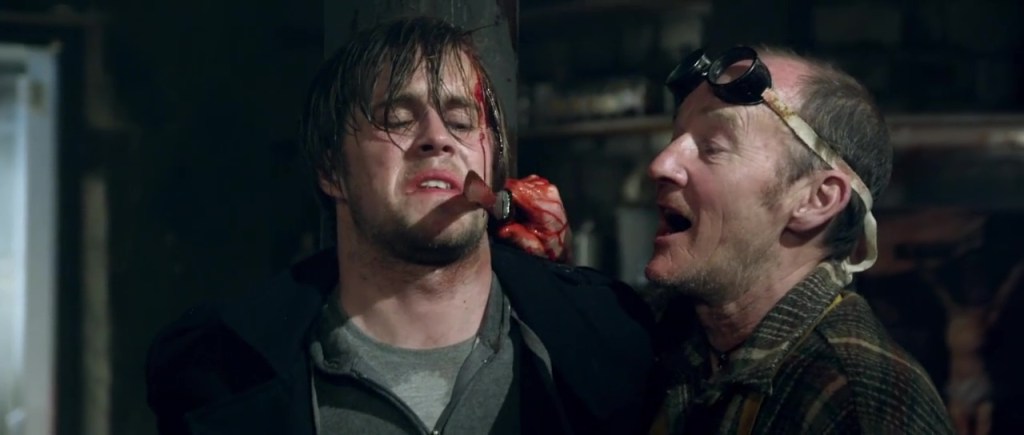
Sawney also has a creature chained up at the back of the cave, and prepares tender morsels of brains, limbs, fingers and intestines, covered with “gravy” (fresh blood).

He hands the delicacy to his son, saying “give this to mother”. We eventually get to meet mother, and it doesn’t go well. How they made babies is hard to imagine. Maybe he slipped a roofie in her evening gore.

Sawney also tends to quote scripture and, like most who do that, picks the bits that suit him.

“Jesus said: unless you eat the flesh of man, and drink his blood, you have no life in you.”

The avenging hero is Hamish (Samuel Feeney), an investigative journalist with the requisite three-day stubble, an English accent and a Scottish capacity for alcohol. He goes to visit the Druid sacrificial site where the latest body was found, his girlfriend’s sister, or rather her head and someone else’s arms, all showing human tooth marks. He tells his recording device:

“Predatory killers often do far more than commit murder. Some have sexual desires, humiliation. They create gruesome rituals, as much for pleasure as for any other reason. This killer is not merely deranged, but evil.”

Well, maybe so, although the Bible-wielding Sawney would disagree. He feels that those he captures are fair game, prey for his hunters, and if he adds rape to cannibalism and murder, well, isn’t that pretty much what factory farms do, with their artificial insemination and culling?

No thriller would be complete without the bad guy spilling the beans to the hero, secure in the belief that he will soon be killing (and eating) the listener. Sawney tells the captive Hamish:

“You have to go back over 500 years and follow my bloodline. To the time when food was scarce, life was cheap, and only the ferocious survived.”

Then he’s back in the Bible, this time John 6:51.

“Any man who eats of this bread will have everlasting life on the bread that I give. This will be my flesh for the life of the world.”

And then verse 65:

My flesh is meat indeed, and my blood is drink indeed.”

Yes, a favourite verse among Cannibal Studies scholars, and one that Sawney takes literally. He tells Hamish, as a slaughterhouse worker or a supermarket shopper might tell a pig,

“You’re just food, you’re a gift from God, which is who we are… You see, anyone can eat human flesh, you just have to make sure you wash it and garnish it well to avoid disease. Now, I particularly like the thighs and the calves… I prefer the taste of women to men, and I never eat hands or feet or testicles.”

Sawney would have been a hit as a judge on a cooking reality show.