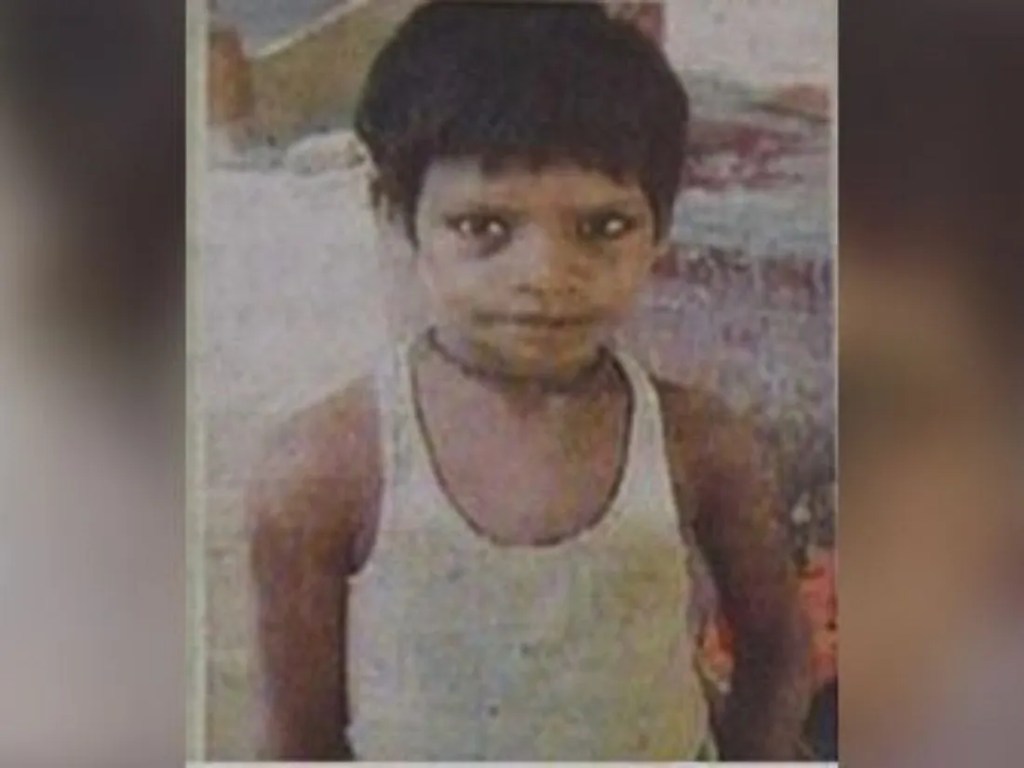
Amarjeet Sada, an 8-year-old boy from Bihar, India, gained international notoriety as the “world’s youngest serial killer” after confessing to the murders of three infants in 2006 and 2007.
The victims were all under the age of one: his 6-month-old cousin, his 8-month-old sister, and a 6-month-old neighbour named Khushboo.
After each murder, Sada calmly confessed to the killings, but the family covered up the first two occurrences, believing that his predilections were a private family matter, and hoping he would stop doing it. He was ultimately arrested in 2007 after the disappearance of a neighbour’s infant. The police interview showed his first words as:
“First give me a packet of biscuits, and then I will tell you everything.”
Chomping on his biscuits, he then told the police what happened to the baby:
“She was sleeping in the school. I took her a little away and killed her with a stone and buried her.”
Officers noted that the 8-year-old showed absolutely no fear or remorse. He was observed happily swinging his legs from his chair and smiling or laughing whenever the investigators asked him details about how he killed the infants.
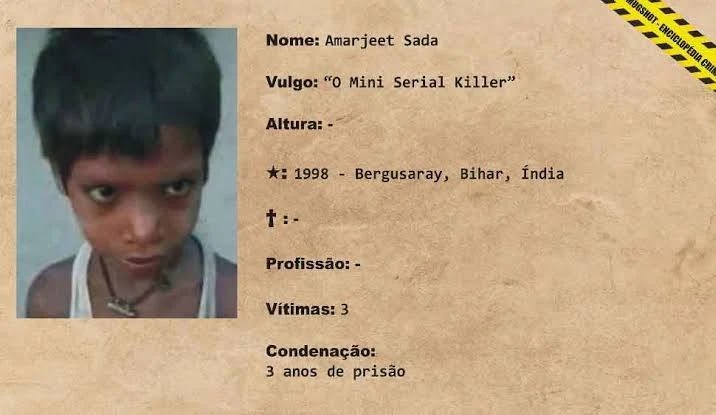
He told officers that this was not the first killing he had performed, a fact of which his family was well aware. He had killed his cousin and buried her body, and later strangled his baby sister as she slept in their parents’ bed. The parents had chosen to conceal the crime.

The internet loved this story, and it was not long before posts declared that he had not only killed the children but also indulged in their flesh. There is not much evidence of this, and it may be that his case was conflated with that of Tsutomu Miyazaki, the Japanese serial killer who ate parts of his child victims.
Sada was born into the marginalised community called Musahar, a derogatory name that literally means “rat-eaters” (another link to Miyazaki, who was known as “Rat Man”). Apparently, the name Musahar derived from the days when this Dalit (“Untouchable”) community was so poor they caught rats to eat. While they may prefer lentils now (and who doesn’t?), the Musahar remain a community that suffers abject poverty, an almost total lack of social resources such as doctors and schools, and social standing at the bottom of the ladder. When Sada killed his first two victims, his relatives, there was no support, no social workers, no nurses to whom the family could refer him. All they had was hope that it might not happen again.

Mental health professionals diagnosed Sada with severe conduct disorder and sadism, noting he was incapable of distinguishing right from wrong and appeared to derive pleasure from taking life. However, under Indian law, a minor cannot face adult prison sentences or the death penalty. Sada was placed in juvenile detention, from which he was released when he turned 18. Given a new identity for his protection and rehabilitation, his current whereabouts and identity remain unknown.
Various theories have been advanced for his actions including psychopathy, hormonal imbalance, and XXY or Klinefelter syndrome, in which the male is born with an extra X chromosome. Or perhaps when people are put in a position where life appears to have no value, it is not surprising that they act accordingly.