
Consuming Passions is a black-comedy film directed by Giles Foster (Hotel du Lac). The film is based on the stage play Secrets by two of the Monty Python greats, Michael Palin and Terry Jones, which was filmed and shown on the BBC in 1973.
This is what I call entrepreneurial cannibalism, with a subgroup of accidental or fortuitous circumstances. A chocolate factory is preparing to launch a new luxury range, Passionelles. However, during production, the new management trainee causes three of the workers to fall into the giant vat of chocolate, where their flesh is mixed into the first batch.

The horrified boss tries to recall the chocolates, but they have already gone on sale. They prove a huge hit with the public. Market feedback says:
“Pleasantly nutty
subtle and delicious
addictive, compulsive
tasted full of goodness…”
They try to replicate the taste with meat from other animals, including a horrific scene where the guileless protagonist, Ian, orders a mountain of meat from the local butcher, including:
“three young porkers, with heads, ears and trotters”

But this bombs – only human flesh will give the chocolate that something special. As the secretary of the company (played by the wonderful Prunella Scales) says:
“People don’t want to eat chocolates with cows and pigs in them. People want to eat chocolates with people in them.”

They contemplate various ways to obtain dead bodies to use in their chocolate, including murder and/or chucking unemployed people in the vat. The new boss, played by the wonderful actor Jonathan Pryce (Brazil, The Two Popes, and many more) states the ultimate in neolib rationalisation:
“Think of all those millions and millions of unemployed school-leavers, yeah? A tragic, tragic situation. But we can give them a chance to do their bit for society yeah… think how it will shorten the dole queues.”
This seems to be based on Jonathan Swift’s 1729 pamphlet A Modest Proposal, in which he satirically suggested that the Irish, who were already being devoured economically by the landlords, should now sell the oppressors their children to make “a most delicious, nourishing, and wholesome Food; whether Stewed, Roasted, Baked or Boiled.”
In fact, the whole film is a commentary on the neoliberal ideologies that were dominating political policy at the time under Reagan and Thatcher. This toxic reasoning, which is still rampant, aspired to free up corporations while crippling any resistance from workers. Profit became the only determinant of policy – here the new owner of the company rejects the idea of putting real chocolate in the product, preferring artificial flavours and colours. When the market demands human bodies, that’s what they must have. Ian has to trawl morgues, hospitals, funeral parlours and medical schools. When his girlfriend, the quality control chemist, discovers there is human flesh in the chocolates, he assumes she will leave him, but she tells him,
“doesn’t hurt them if they’re dead. They’d probably be glad to know they’re being useful, like!”
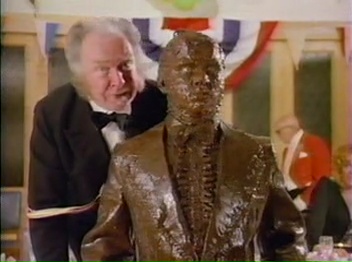
By the end of the film, Ian is chocolate man of the year, knighted by the Queen, and made chairman of the company. He is no longer disgusted by cannibalism, but in fact is appraising everyone he meets, including his fiancée, for their weight, fat content and likely edibility. In an extreme example of what Marx called commodity fetishism, we have all become comestible commodities. Nancy Fraser writes and speaks convincingly about the way Cannibal Capitalism systematically destroys and consumes the sectors of society on which its own survival depends. In order to sell more commodities to the public, corporations will consume any resource, including the air we breathe, and our bodies too.
The Danes used a similar plot device later with The Green Butchers, starring Mads Mikkelsen (yep, it’s Hannibal, but not as we know him) as a butcher who accidentally locks the electrician in the freezer overnight and finds his customers love the resulting offcuts. The French tried it more recently with Some Like it Rare, in which a couple who own a butcher store accidentally run over and kill a vegan who has been protesting against their store for selling the flesh of animals. They too find their customers love human flesh, but only if it is uncontaminated by eating the meat of other animals – they only kill and cook vegans, a consummation (or consumption) of which Annie Potts and Jovian Parry have found, on social media, many carnists dream.
Talking about human body parts in chocolates, do you remember choc fingers? I used to scoff them down as a child. I was somewhat surprised to see they were still available, and were subject of a scandal in the UK in 2015 – Cadbury had reduced the size of the packet by two biscuits!
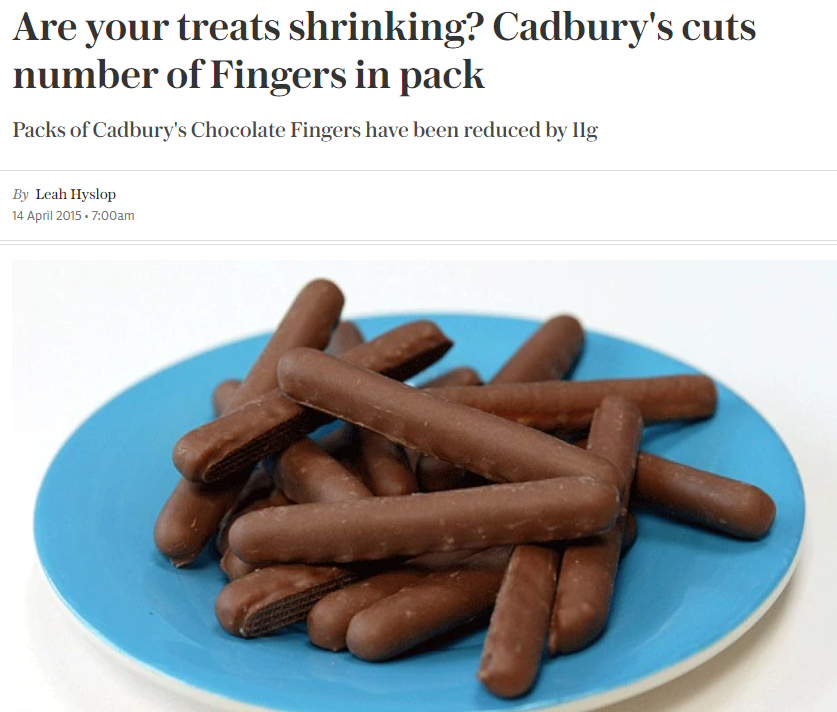
The headline is somewhat unfortunate, and that’s not what this movie is about. But I’d forgotten their very existence, until a recent ‘news’ report that a Sri Lankan woman bit into a chocolate and found the inside rather hard. Thinking it was a ‘fruit and nut’ variety, she persevered, but when the nut still did not crack she decided to check it out by holding the piece of chocolate under tap water.
In case her tweet has been removed, here is the photo:

It was a bit of a finger, and it reminded me of this long-forgotten (perhaps deservedly) movie. That news, story, like the film, reminds us that, like the ouroboros, our society is busy eating its own tail, it’s workers.
For me, the only really repulsive bit was the dead piglets being dropped into the vat. I’m going to assume they were very realistic models, perhaps made of marzipan, but I’m aware that in a world that kills 1.3 billion pigs a year, buying real corpses would be a lot cheaper for a low-budget movie.

Consuming Passions received a 20% rotten rating on Rotten Tomatoes. It’s a nice idea, but they play it as farce, hanging the comedy on the assumption that we will all be so disgusted by the thought of eating human flesh that we will ignore the often silly dialogue and the occasionally appalling acting, particularly Vanessa Redgrave who, totally unnecessarily, flounces through the film proclaiming herself a “loose woman” and butchering a Maltese accent.
But there are some interesting ideas about masculinist theories of meat-eating, with one woman saying she was going to buy those chocs for her husband to “put the lead back in his pencil”. The idea that men somehow need meat for virility is a basic plank of meat marketing, despite the clear links to heart disease, colon cancer, environmental crises, and of course appalling animal cruelty. And the film’s basic principle, that we are all edible in our consumerist culture, is apposite and well argued, as more and more bodies are sucked into that vat of delicious brown ooze.
 The Cannibal Guy
Pingback: “It’s a mouthful of daddy”: DELORES ROACH episode 4 – The Cannibal Guy
Pingback: “He bit my thigh!”: THE HORROR OF DELORES ROACH, episode 5 – The Cannibal Guy