John Beagles and Graham Ramsay are artists who play with the concept of human exceptionality. They also add a new flavour to the old saying “Art is always a matter of personal taste.”
For two decades, the artists and performers have been making, cooking and sometimes eating black puddings made from their own blood. Ramsay says:
“There is a tang. And it is quite salty too.”
The pair have been collaborating since 1996 and making their “cannibal” sausages since 2004. They call their performance and exhibition a “black pudding self-portrait” or Sanguis Gratia Artis.
John Beagles and Graham Ramsay
They are staging the show again this year. Their meat products are on display in a fridge at the Scottish National Portrait Gallery, and they will be cooking them for a live audience on February 13.
Ramsay, who says he likes a good black pudding, stresses: “We do not usually eat them ourselves, but we have tried them.” He adds that his partner will not be sampling them:
“One of us has quite recently become a vegetarian, and it is not me.”
There are no plans to eat the sausages in Edinburgh. Previous performances have involved some harmless light cannibalism and have attracted some bizarre audiences.
In London back in 2007, Ramsay says, word got out that they would be eating the puddings.
“The performance got a bit of attention in advance; people knew it was happening. So there was a queue of quite gothic people — vampiric characters — outside the gallery and it was a bit weird. There was a kind of feeding frenzy then. As part of the performance, we put slices of the puddings on a silver platter and paraded them through the audience, just to show them, but people started grabbing them. The performance involves us in costume, in the gallery, and we’re basically chopping and frying the pudding, with audience watching.”
The sausages are made with a pint of blood from each man, combined to symbolise nearly thirty years of collaboration.
The process of getting the blood is not easy. They have had to convince nurses to extract small quantities — no more than a syringe at a time — over a long period, and then freeze it. The kind of equipment used by blood transfusion services is tightly controlled, so the artists have to endure sometimes painful extractions, over and over again.
Why do it? Beagles and Ramsay are both respected art academics, teaching at Edinburgh University and Glasgow Art School respectively. Heavily influenced by feminist criticism, they are challenging the old idea of the artist, especially the male artist, as a lone genius separate from the world. They are playing with the idea of self in self-portrait. Their mixed blood represents their joint work.
“We fuse ourselves, but we also use a daft form to present ourselves in. It’s not heroic. We have picked a mundane modest foodstuff to represent us.”
The performance feels different now than it did when they first had their blood extracted. Both men are in their fifties now, and aware of their mortality. “Age starts to creep up on you, waistlines expand, and you become more aware of death and people’s health around you,” Ramsay says.
The artists may not see themselves as heroes, but there is an edginess to their idea, even legally. They debuted their sausages in New York in 2004. Back then there was a lot of angst in America about meat products, mad cow disease and foot and mouth. They had to send their puddings in the post with fake customs descriptions, one batch wrongly labelled as second-hand books.
One the night of their big performance, officials became antsy about health and safety, and security was brought in to stop punters eating the human sausages. Beagles and Ramsay, in a diary of their escapades, called them “anti-cannibalism guards”.
Will they have to find a way to keep their puddings safe from the Edinburgh audience? Perhaps. People are fascinated by cannibalism, even as they claim to be repelled. A few months ago, we reported on a vegan writer and photographer who finally gave in to the demands of his relatives to eat animal products by making meringues from his own blood.
In the North West Province of South Africa, one of a group of illegal miners (zama zamas, or “those who take a chance” inZulu) in the Stilfontein mine (which closed in 2013) has disclosed that he and his fellow miners turned to cannibalism when they ran out of food 2km (1.25 miles) underground.
There are thousands of abandoned mine shafts where miners can search for a tiny remnants of the gold that made South Africa rich. While it is no longer profitable for mining multinationals, traces of gold remain. The miners were digging in the abandoned gold mine when, in August 2024, the police decided to “smoke them out” by cutting off their food, water and medical supplies as part of Operation “Vala Umgodi,” or “close the hole.”
Speaking to SABC, one of the miners told a news station that from the second week of August 2024, his fellow miners had to resort to eating flies, cockroaches and other insects. As their situation worsened, more drastic measures were taken. Video from the rescuers showed the emaciated condition of the miners.
He said the idea of eating human flesh started as a joke but proved prophetic.
“One man was told that he was going to be eaten as a joke, and it ended up happening … we did not think it would ever get to the extent where would eat dead bodies or corpses. It really happened. People were eaten.”
On 10 January 2025, more than two months after news of the crisis at Stilfontein had emerged, the Pretoria High Court ordered the government to launch a rescue operation. “We do not want a situation where this will be marked as the darkest point in our history,” the Judge said in his ruling. Allegations that the miners resorted to eating human flesh in order to survive were also made by other miners who were rescued in December, in statements submitted to the High Court.
This news comes as the world watches on. South Africa’s sanctimonious posturing in the International Court of Justice in the Hague does not conceal its abhorrent domestic maltreatment of immigrants and citizens. Activist groups claim that there were gross human rights abuses and State-sanctioned murder at Stilfontein.
It seems that the fact that most of the zama zamas are Mozambicans and Zimbabweans has been a major factor in the government’s hard-line approach. Many ordinary South Africans have been unmoved by their plight, with countless comments on social media platforms saying they should be left to die. In South Africa, it seems that Black Lives don’t Matter.
The South African Federation of Trade Unions (SAFTU) stated that the deaths of the Stilfontein illegal miners bear similarities to the Marikina massacre in 2012, where 34 miners were shot in a premeditated act of state violence. The SAFTU general secretary, Zwelinzima Vavi, said:
“In Stilfontein, hunger has been used as a weapon to achieve the same deadly outcome”
The operation to retrieve the zama zamas ended up with 78 people declared dead and with 246 rescued. Some civic groups are calling for a commission of inquiry or even for murder charges to be brought against the state, but the police have vowed Operation Vala Umgodi will continue.
Specialized machinery was needed to lower a cage down to bring up the men and the bodies. No police or rescue workers would go down, saying the risks were too high, so it was left to volunteers from the local township to undertake the devastating task.
As the cage reached a depth of 1,280 meters, rescuers Mandla Charles and Mzwandile Mkwayi were confronted with scenes that, they say, will haunt them forever. Hundreds of emaciated miners, some near death, lay together with dozens of dead bodies. Mkwayi said that the men he rescued were so frail that the rescue cage, only meant to carry seven healthy adults, could take 13 of them.
As Mkwayi was lowered into the South African mine, the first thing that struck him was the smell. Charles said:
“The smell of death was everywhere”
When he got home later that day, he told his wife he could not eat the meat she had cooked.
“It’s because when I spoke to the miners, they told me some of them had to eat other [people] inside the mine because there was no way they could find food. And they were also eating cockroaches”
Another reminder, if we needed one, that humans are made of the same flesh as other mammals. If you starve us, do we not die? If we die, do we not rot? And if you’re hungry, are we not meat?
“He got shot down in New Guinea, and they never found the body because there used to be — there were a lot of cannibals, for real, in that part of New Guinea.”
This anecdote aroused plenty of outrage from PNG politicians who proclaimed that there was never, not much, or hardly any cannibalism in the good old days.
But now the story has once again raised its well-chewed head. 2025 is the 50th anniversary of independence for PNG, a year which was expected to be a celebration. Instead, the news is full of stories about nine people being killed in shootouts in Enga Province over that New Year period, as violence escalates in the highlands, a region that was hit by a catastrophic landslide last May.
That news was overshadowed by a video that soon went viral of armed gang members holding mutilated body parts in Central Province, 60 miles (100 km) from the capital.
Voices in the Tok Pisin language on the video said they planned to eat the victim, with one man making licking motions as they displayed a severed foot, saying,
“this is our meat, we will cook it and eat it”
There was an immediate furore over the claims of cannibalism. Police said the deceased was killed in a dispute in the remote Goilala mountains in the province, but there are conflicting accounts of when the video was made.
Prime Minister James Marape called for calm, and stated,
“Such acts of inhumanity are intolerable and represent a significant challenge to our shared humanity”
Marape had objected to Biden’s claims about cannibalism during the war, saying that PNG did not deserve to be labelled as a nation of cannibals.
Community leader Matilda Koma from Auga Dilava added,
“We do not eat people. Goilala people are not cannibals”
Fane’s Catholic priest Francis Pirit said that the video of the killing and youths pretending to eat human remains was a show of bravado, boasting because they had won a battle.
“There are no cannibals in the Goilala area. I sleep, eat and live amongst them. They do not eat human beings”
Despite the boast by the men, there is no footage of flesh being eaten in the gruesome video.
Cannibalism in PNG was largely a ritual practice by a small number of tribes and largely ceased by the 1960s after being banned by the colonial power, Australia. The suspicion that colonised peoples are inevitably cannibals has never completely disappeared; when the Australian soldiers of the 7th Division AIF began to find mutilated and cannibalised bodies in New Guinea in late 1942, they were not sure whether to blame the Japanese or local tribesmen. After a lengthy commission of enquiry, the Australian government in 1945 finally added cannibalism to the War Crimes Act 1945, the only nation to do so.
As recently as 2012, 29 members of a “cannibal cult” were arrested in Madang province on PNG’s northeast coast. Forensic reports and statements made by the accused led police to believe parts of the victims had been eaten.
One of the more persuasive substantiations of PNG cannibalism was Kuru, a rare, incurable neurodegenerative prion disorder that was found in the Fore people of Papua New Guinea in the middle of the last century. Kuru is a form of transmissible spongiform encephalopathy, related to the “mad cow” disease that cured people from eating beef for many years, and appears to have been spread by funerary cannibalism. It is often touted as a reason not to be a cannibal, appearing unexpectedly in films like Jim Mickle’s We Are What We Are and many films about wendigos.
So, cannibalism remains a sensitive topic in PNG. President of the PNG Law Society Hubert Namani sparked outrage when his comments condemning the “barbaric killing, mutilation and cannibalism” over the festive season were reported by the Post Courier newspaper.
Meanwhile, Goilala’s local member of parliament, Casmiro Aio, pointed out this week that there had been no regular police presence in his electorate for 10 years.
The questions remain – did any of the dead people get eaten? And more interestingly, why would that be so much more appalling than the fact that nine people were killed?
‘There will be cannibalism, and rumours of cannibalism”
Yes, I paraphrased the Book of Matthew. Although not all that many people got eaten, the media was full of cannibal stories, and here are a few of them, sorted by their places of occurrence.
Australia
One of the men imprisoned for the so-called Snowtown murders (which mostly did not take place in the little town of Snowtown) was released. Mark Haydon was charged with assisting the men who did the actual killing and who ate part of one victim’s leg some 25 years earlier.
Brazil
Influencer Israel dos Santos Assis, better known online as Pinguim (Penguin) was arrested for desecrating graves in the cemetery of San Francisco the Count in the Salvador Metropolitan Region, stealing human bones, and using human flesh from the corpses to cook his most popular dish: feijoada, a bean stew usually involved simmering beans with beef or pork. Seems rotting human is a good substitute for pork.
Canada
Robert Pickton, the pig farmer convicted of six counts of second-degree murder (although he was charged with at least twenty others), was attacked by another inmate in prison and died a few weeks later. Pickton allegedly “processed” the meat of his rape and murder victims by feeding them to his pigs and, police said, possibly mixing them up with pork products he sold to his neighbours for their personal consumption.
China
Netflix released a new version of the classic science fiction book 3 Body Problem and ran into a storm of criticism from China for its depictions of the extreme violence of the Cultural Revolution. Although most of the victims of the purges were killed by shooting, live burial, drowning, boiling alive, and disembowelling, there is evidence that several hundred had been cannibalised, as the ultimate in humiliation.
The General who presided over a Cultural Revolution massacre that included cannibalism of those deemed “enemies of the people”, Wei Guoqing, was reburied (or at least his ashes were) with full honours in Beijing’s Babaoshan Revolutionary Cemetery – the resting place of China’s high-ranking leaders and revolutionary heroes. Wei’s name is most strongly linked in the public mind with cannibalism during the massacre period in Guangxi’s Wuxuan and Wuming counties and Nanning city. Researchers have found that at least 137 people were eaten, with thousands participating. “Paying tribute to a legendary gourmet,” wrote one wag on social media.
Cuba
Stories began circulating this year that the extreme food shortages in Cuba were leading to the danger, or actual occurrence, of cannibalism. This was bolstered by reports from 2022 of two hospital workers who had been stealing hearts and fat from human bodies and selling them as mince.
Haiti
Rumours circulated that the natural disasters and gang violence in Haiti was leading to starvation cannibalism. Jimmy Cherizier, a gang leader called Barbecue (“Babekyou” in the local parlance) was known for his penchant for burning people alive, and there was at least one video on Twitter/X of one gang member supposedly “tearing flesh from the leg of a burning corpse and eating it.” Such stories cannot be selfishly maintained by one little country, so of course it was not long before Bill and Hillary Clinton were accused of joining the cannibal feast. To add to the hilarity, Elon Musk posted on his own site, X, that a picture of a man near a fire was evidence of cannibalism, only to have the post removed by his own team for violating community standards. The fact-checking website Snopes pointed out that videos of bodies in Haiti being roasted on spits had previously appeared as accusations against a Nigerian restaurant, and were in fact from a Halloween prank in China in 2018. Still, you know, voodoo and all. Meanwhile, Trump ally Laura Loomer supplied conclusive proof that Haitians were cannibals: apparently, if you Google it, you will see a lot of results. The Prosecution rests its case.
India
India’s top court put a temporary stay on the execution of a man convicted of killing his mother and eating her remains in what is being deemed as the “rarest of rare” cases of cannibalism. Sunil Rama Kuchkoravi of western Maharashtra state’s Kolhapur district was handed a death penalty by a lower court in 2021 for killing his 63-year-old mother in 2017. The High Court in October this year upheld the death sentence against Kuchkoravi, stating that the convict possibly has a “syndrome of pathological cannibalism”. The execution has been delayed until the case is reheard in April 2025.
Israel (and around there)
Francesca Albanese, the U.N. special rapporteur for Palestinian rights, has been condemned for antisemitic rhetoric by the governments of the U.S., France and Germany among others. Albanese, known for accusing Israel of genocide (an odd charge seeing that the population of Gaza has increased in the last twelve months), wrote that the Israeli army was “rotten to the core”. A follower immediately introduced the classic blood libel: “Jews are capable of eating human flesh”, to which Albanese replied along the lines of “not all Jews”. Reassuring to note that a person paid by the taxpayers of the West, who finance the UN, can admit that some Jews are not cannibals!
A Yazidi woman was rescued from Gaza by Israeli troops. She revealed that, after being captured by ISIS in 2014 and forced to be sex slaves, the women were starved and finally fed meat which, they later told her, was from the bodies of a beheaded Yazidi baby, the child of one of the women. They told her:
‘We cooked your one-year-old son that we took from you, and this is what you just ate’.
Indonesia
Police investigated a suspected cannibalism case in West Java Province. The Head of the Criminal Investigation Unit confirmed that a video on social media showed the alleged perpetrator consuming a small portion of the victim’s flesh. He said that police had found 12 body parts of the victim at the crime scene.
Italy
An inmate in the notorious Poggioreale Prison in Naples tore the finger off another inmate and ate it. The Campania Guarantor, Samuele Ciambriello, observed that “it is now clear that the Poggioreale prison needs a structure suitable for hosting inmates suffering from mental disorders.” Seems like a good idea.
Mexico
A podcast called Mexico Unexplained revisited this year the story of Gabriela Rico Jiménez, a 21-year-old model from Mexico who disappeared some 15 years ago, after raging against the machine outside a fancy hotel in Monterrey Nuevo Leon. Ranting about the elites, including oddly the Queens of England and Germany (which is a Republic), she had shouted that “They ate humans! Disgusting!… They smell like human flesh!”
Nigeria
A man accused of being a sorcerer was blamed by villagers of the small town of Kirikiri for the disappearance of several children and elderly people. He was supposed to be “feeding on the flesh of the innocent.” Several claimed to have located the individual on the edge of a forest, wearing clothes “stained with blood” and mumbling mysterious incantations. A group of villagers beat the man and left him for dead.
Russia
Erkinzhon Abdurakhmanov, 47, intended to cure his own heart problems ‘after making a pact with the devil’, he told police. He killed a 65-year-old male pensioner in the Kuyurgazinsky district of Russian region Bashkortostan by striking him three times with an axe, according to reports. He then then cut out the heart and ‘ate the meal’ as he waited at a bus stop. He gave the uneaten remains to a woman also waiting for a bus ‘and asked her to bury it’. He was not arrested, however, until he headed into a liquor store and tried to steal some drinks. Cannibalism is not against the law in Russia, but murder and stealing alcohol is.
Vladimar Putin’s policy of giving pardons to criminals who agreed to fight in Ukraine in lieu of serving their sentences, was honoured in a pardon to a charmer named Denis Gorin, who had been convicted of at least four murders, and had eaten the flesh of his victims.
Another pardon involved Dmitri Malyshev. Malyshev was sentenced to 25 years in prison in 2015 for multiple criminal offences. Ten years ago, he murdered an acquaintance, a Tajik native, and then filmed himself cutting the heart out of the victim and roasting it in a frying pan and eating it. Neighbours seemed uneasy about his imminent return home.
South Africa
On December 26, 2024, eight illegal miners known as zama zamas emerged from Shaft 10 of a mine near Stilfontein, located in Northwest South Africa. They were taken by police, who confirmed that twelve bodies remained trapped beneath the ground, with miners reportedly resorting to eating human flesh due to severe food shortages.
[GRAPHIC CONTENT] Illegal miners have started eating human flesh. That's according to SANCO North West Spokesperson, Mzukisi Jam. The claims were made in Christmas Eve letters sent to the surface claiming that more miners have died. #DStv403#eNCApic.twitter.com/vqDodTXgmZ
Novosibirsk Archpriest Alexander Novopashin became notorious for claiming that Ukrainians are “cannibals”. Although conspiracy theories about cannibals are becoming more common, this particular Archpriest is taken seriously in Russia, and regularly lectures Russian security forces and soldiers.
UK
Marius Gustavson, who called himself “the eunuch maker”, offered a service where he charged men to destroy or remove their testicles, and then charged subscribers to his website to see him perform the operations. The court heard that that there was “clear evidence” of cannibalism and that Gustavson had “cooked testicles for lunch in an artfully arranged salad platter”.
Meanwhile, a candidate from a party called Reform UK was suspended for saying that meat-eaters should “eat other humans” and said humanity should be “obliterated”. Just saying what many are thinking, perhaps.
USA
The cannibal story of the year was the President, Joe Biden, claiming that his uncle had been eaten by cannibals in New Guinea. The leaders of PNG took exception to the stereotyping of their people as cannibals. Apparently, only some of them had been.
Speaking of Presidents, Donald Trump embellished his rhetoric on immigration by pointing out that some of the undocumented people pouring over the border were from insane asylums, and called that “Silence of the Lambs stuff”. Trump had previously claimed that Hannibal Lecter had endorsed his candidacy, which is a bit odd since Hannibal is a fictional character, but by far not the oddest claim in the 2024 election.
In March, a homeless man in Kern County was arrested for picking up the leg of a person who had been killed in a train accident and chowing down on it. California has no laws against cannibalism, but he was charged with “mutilating the body” which is a bit odd, since the train had already done that.
In Utah, which also has no law against cannibalism (Idaho is the only state that does), a law was passed to criminalise the ‘ritual abuse of a child’, which apparently regularly includes making the little ones eat “organic substance or material” (i.e. bits of people) before they are allowed to have their desserts. This in addition to claims that such rituals would sometimes involve eating the children instead.
A keen-eyed traveller pointed out that the road once taken by the Donner Party, which ended up in them getting lost and eating each other, was now signposted with a sign indicating dining was available. Much hilarity ensued on social media.
Conservative political commentator Candace Owens managed to link transexuals, Native Americans and cannibals, all in one sentence. No wonder she is so widely admired.
Much to the relief of the good people of Idaho (the only State in the Union with laws against cannibalism), the law was amended to ensure that giving someone else human flesh to eat was also prohibited. This led, on its long road to farce, to the accusation that bodies were being turned into compost which could be used to grow food for humans to consume. Rather than DNA test all compost, the law confined itself to banning the act of deliberately giving human flesh to another person. The legislator who introduced the bill cited a disturbing case on the show TruTV, which she admitted might have been a prank (it was) in which diners were told they had been eating human flesh, just to whet their appetites perhaps.
Ariana Grande raised some eyebrows when she was asked on a podcast whom she would most like to dine, and named Jeffrey Dahmer. Not sure Dahmer would have agreed – he was more into man-flesh, and there’s not much meat on Ariana anyway.
In April, a man was arrested in Las Vegas for eating a victim’s eyeballs and ears. The victim was pronounced dead. What happens in Vegas stays – internal.
Talking of ears, Mike Tyson, famous for biting the ear of Evander Holyfield in a fight in (where else) las Vegas in 1997, released a line of marijuana gummies shaped like nibbled ears.
Allegations were raised that Gilgo Beach ‘serial killer’ Rex Heuermann’s family was involved in the murders, which took place near the remote beach town of Gilgo in Suffolk County, New York from the 1990s to 2011. His daughter, who likes to paint the odd Satanic scene including body parts and cannibal feasts, was accused of being involved in his depredations. Homicide experts said that was insane, a word that gets tossed around a lot in cannibal stories. Heuermann was charged with a seventh murder last week.
On October 9, a woman in Kentucky, Torilena May Fields, was arrested after a dismembered body was found behind a home in Northern Kentucky and cooked human body parts were found in the oven. The body, and its parts, turned out to have been her mother. She was also charged with cruelty in that she “intentionally tortured and killed a domestic dog.”. A contractor found the dismembered body of the mother, and told police the perp had been “casting spells.” Her bail was set at $1.5 million. Her next court appearance is set for March 10, 2025 in Robertson County. Some people just give cannibalism a bad name.
Another Kentucky woman, a former youth counsellor, was arrested for allegedly discussing cannibalism and other hobbies with a convicted murderer.
In Oklahoma, Kevin Ray Underwood was executed by lethal injection in December (on his 45th birthday, the press gleefully informed us) for killing a ten-year-old girl in a “cannibalistic fantasy.” The man admitted to luring the girl into his apartment and beating her over the head with a cutting board before suffocating and sexually assaulting her. He told investigators that he nearly beheaded her in his bathtub before abandoning his plans to eat her. So not really a cannibalism story, but near enough.
International
Citizen of the world, Donald Duck, appeared on the interview show Hot Ones on the Internet (which is global), where guests eat chicken wings with hot sauce. Turns out Donald is a vegan though, preferring cauliflower, and since ducks aren’t chickens, the controversy that ensued over whether he was (or would have been) a cannibal by partaking of chicken was just silly.
HAPPY NEW YEAR, and may your worst problems be mild gastro-oesophageal reflux.
An eastern Kentucky woman was arrested in November on charges relating to human trafficking. A Morgan County grand jury has now indicted Elena Sparenberg on charges of conspiracy to human trafficking, solicitation to murder and sexual abuse and distribution of obscene matter.
The West Liberty Police Department said in a press release on December 11 2024 that they first detected the alleged crimes in September, after receiving an investigation referral from the Kentucky Department of Corrections Internal Affairs regarding conversations between an inmate and a visitor.
Sparenberg, a former youth counsellor from Illinois, was identified as the visitor, talking with a Harlan County man who had been in jail for murder and other charges since 2021.
While investigating, police searched Sparenberg’s home in Illinois and took electronic devices. They allege that Sparenberg and the inmate had shared images, videos, electronic messages, letters and calls.
Their conversations referenced minors and adults regarding sexual abuse, rape, kidnapping, murder, mutilation, torture, satanic rituals, cannibalism, human trafficking, abuse of a corpse, collecting human remains for sexual purposes and more.
Police say images they found showed children from a sporting organisation. Their coaches and parents were notified, along with others who are thought to be in danger as future victims.
A friend on TikTok, where Sparenberg posts charming videos of her baby, asked:
Sparenberg’s LinkedIn account, which lists her position as counsellor in Illinois, ironically states:
“…until then, I believe in starting at the bottom. By doing this, I am able to work my way up.”
Not clear if the alleged cannibalism planned to follow the same progression?
Sparenberg was extradited from Illinois to Kentucky on a Morgan County warrant.
She is being held at the Rowan County Detention Center.
With the release of another Lion King franchise film, Mufasa, this one a prequel to the earlier story, it is perhaps worth considering the subject of talking animals, and particularly whom they feel OK about eating.
The first film was released in 1994, and was a glorious animation, with music by Elton John and Tim Rice, but was clearly a cartoon, one that has earned almost a billion dollars since its release.
Although we can get into the plot and the emotions of the film, we don’t really feel obliged to believe in the anthropomorphic veracity of cartoon characters. Do we really care if a cartoon duck eats other birds? No, not if he wears clothes and speaks (a form of) English. It is clearly a line drawing that moves, and requires no ethical work.
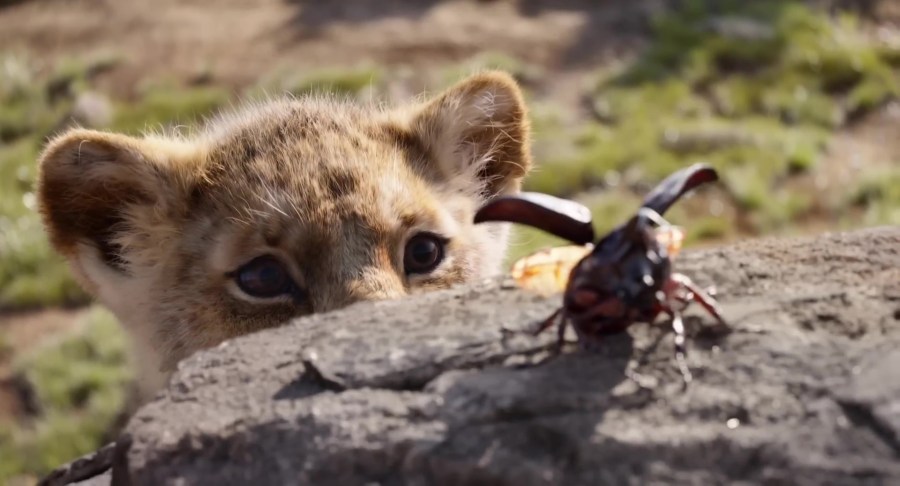
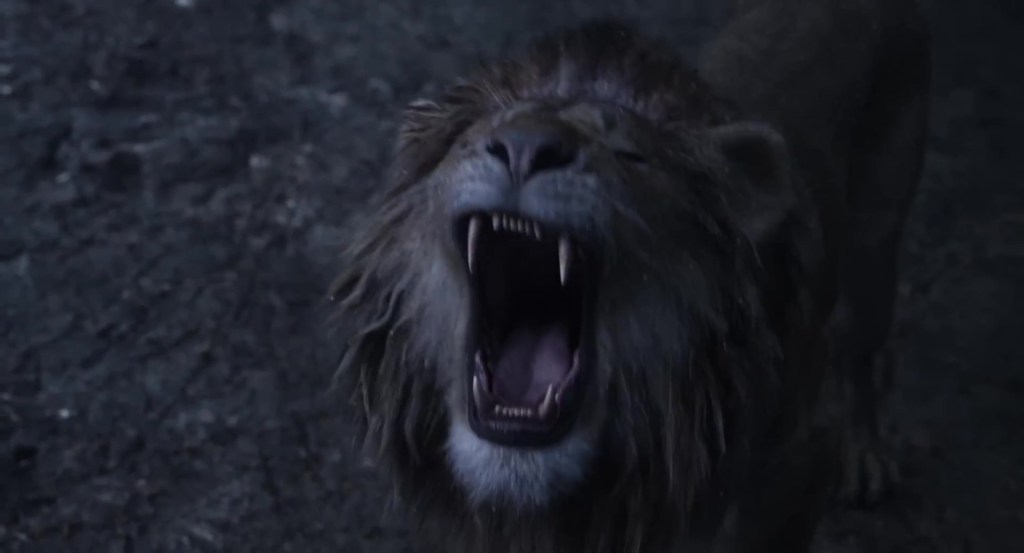
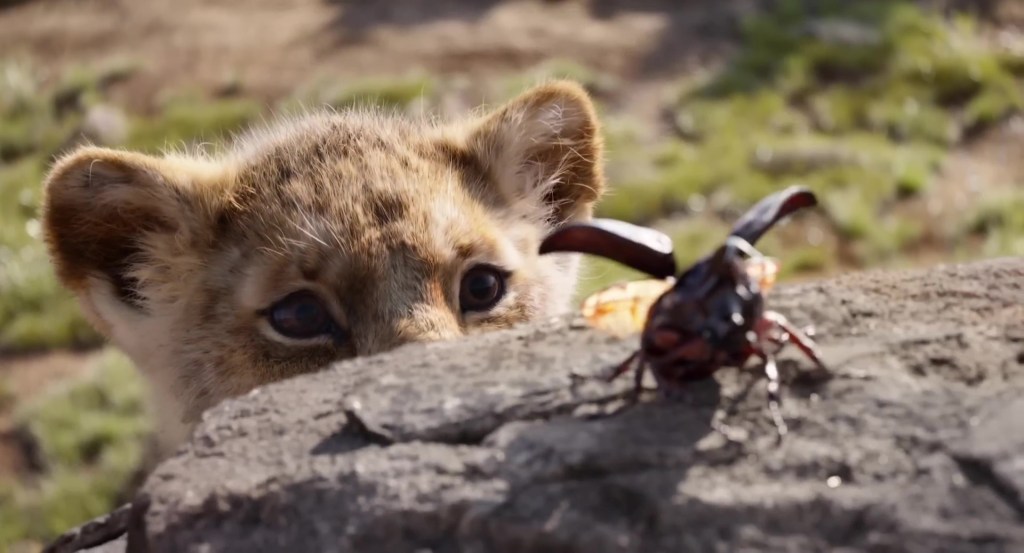
But in 2019, the film was remade as a photorealistic animation. With a small dose of suspension of disbelief, the animals looked like they were real, roared like lions, but somehow spoke English, some of them, strangely, with an eastern European accent. It was a sensation, so far earning over 1.6 billion dollars.
This blog will appear around Christmas, so I guess it is not unreasonable to unleash my inner Grinch, at least when it comes to anthropomorphic representations of carnivorous virility. As far as we are aware, lions can’t talk, except in movies. They can certainly communicate though, and that communication, particularly the roar that can be heard miles away, is featured prominently in all versions of the Lion King.
If they could talk, would they say and do the things shown in the film? Would they, for example, let a mandrill take their cub and hold him, Michael Jackson-like, over a cliff for the other animals to worship and celebrate? I’m even less sure of how celebratory the prey animals would be about the birth of yet another predator, no matter how cute.
But the main thing that bothered me throughout the film was the food, and it wasn’t (just) because I watched it at lunchtime. We are shown a happy monarchy (the “pride land”) where the devoted subjects are summarily executed and eaten by the king and his family. This is later turned into a blasted desert filled with the bones of the prey animals by a usurper king lion, an evil uncle lifted from Hamlet and made leonine.
Those not privileged to live in the pride-land inhabit a shadow terrain, the “elephants’ graveyard”, where (dark-skinned) hyenas skulk, with little evidence of anything to eat and, we are assured, always hungry. We have the “circle of life” followed by a circle of hell.
Even further away, in a wildness to which the exiled lion cub Simba flees from his evil and murderous uncle, we have a sort of Garden of Eden II. Here, mammals take a pledge not to eat each other, an expanded ring of utopian privilege, which excludes only insects and their pupal forms, who clearly would have to exist in immense numbers to feed a growing lion, let alone his friends.
Listen kid: if you live with us, you’re gonna have to eat like us. This looks like a good spot to rustle up some grub. A grub. What’s it look like? Tastes like chicken.
What is the ecology here, and the ethic behind the food choices?
Simba, the cub and heir apparent, wonders about this too. He and his future wife (lions get married?) are the only ones to connect with all these environments, and Simba the only one to question the implicit ethos of each one. Early in the piece, as he surveys the kingdom where “the light touches” (as opposed to the darkness of the hyena shadowlands), he asks his father why they eat their loyal subjects, the zebras, antelopes and presumably anyone else slower than them. It’s a question most parents dread as they feed lumps of animal flesh to their children, and then read them books about happy animals. It’s the circle of life, says Simba’s Dad, clearing his throat for us all to join a singalong. We eat them, then when we die, our bodies feed the grass, and future victims eat the grass.
Now this is just absurd. I’m not sure how much grass the average antelope eats, but it would need an awful lot of dead lions buried underneath it to make it fecund. Photosynthesis, which combines carbon dioxide and water into carbohydrate and oxygen, is what makes the grass grow. Lion corpses (and presumably lion shit, now enriched with zebra fat) might add some trace elements, but they are hardly necessary. What lions actually do for the environment is thin out the number of herbivores so that they don’t eat all the vegetation and turn the area into desert, which is what inexplicably happens when the bad lion, Scar, and his army of hyenas, eat all the herbivores. Where does all the grass go? It should be a jungle without all those antelopes and giraffes.
Then we have the entemo-vegetarians of the land beyond the shadows where, you know, hakuna matata, there are no worries, unless of course you are an insect. If you search the internet, you will find learned articles on how many hours a day a lion would need to be chewing pupae (it’s a lot more than 24) in order to sustain his life, let alone progress from cub through puberty to full sized adult male. And why can the various mammals and birds talk, but the insects can’t? Jiminy Cricket could talk in the early days of Disney – when did he fall out of the circle of privilege?
It’s all absurd, of course, but it’s what we teach kids, and not just by taking them to see Lion King. When they ask questions like “I love animals, so why are we eating them?” talk of feeding grass with our bones doesn’t cut it, which is probably why so many young people go vegan. The correct answer, which won’t satisfy anyone, is “because we want to, and because we can”. We have the appetite, and we have the power. We arbitrarily decide who is within our circle of privilege.
In the film, lions and all mammals, and some other odd creatures, live without being eaten in a hippie paradise. In the pride-land, under good king Mustafa (Simba’s dad) certain animals are part of the elite and don’t get eaten, while the anonymous proletariat animals seemingly go willingly to their just deserts (or desserts). Contrast this with the hyena shadow land, where, according to a Disney comic book, the hyenas enthusiastically engage in cannibalism, as well as presumably eating the dead elephants who come to the elephant graveyard to die (which, BTW, elephants don’t really do). The human circle of life is less well defined, depending on the culture: in the West, humans consider chickens, pigs and cows outside the elite of the inedible, while dogs, cats and dolphins are inside, and we express moral outrage when these capricious lines are crossed. In other parts of the world, dogs and cats may be delicacies, or cows or pigs may be forbidden. And this blog has brought you many films in which humans are the preferred repast.
Animal activists are often accused of anthropocentrism, having the nerve, for example, to suggest that fish feel pain or dogs feel love. But truly toxic anthropomorphism appears in narratives of talking animals, where we offer temporary anthropomorphic capacities to other species, so that we can push ideological or commercial messages like a “circle of life” to an audience of minors, while pleading disingenuously that these are just cartoons. This cartoon lies to kids about the nature of nature, to promote the acceptability of carnivorous virility.
We don’t do our society any favours by lying to our kids. Lions don’t think about dying or the benefits their carcasses will bestow on the grass. They hunt because they are obligate predators and will starve otherwise, regardless of the available insect population. Humans, on the other hand, are closer to hyenas – scavengers who are never satiated. We don’t keep herbivore numbers in check by eating them; the opposite is the case – we deliberately breed them by the billions, often in appalling conditions, then slaughter them, in terror and agony, in industrial killing centres, polluting the land, degrading the water and filling the air with methane.
It’s not clear if Simba will impose insectivarianism on his kingdom after the credits roll – he may have to, insofar as the flocks seem to have been decimated. But Simba, if he really could talk, would be appalled by the way humans cynically misappropriate the role of predator in order to feed our insatiable appetites. I think perhaps even the hyenas would agree with him.
December 1, the date on which I am writing this blog, is the birthday of perhaps the most famous living cannibal, the German named Armin Meiwes. He became famous around the globe when he was arrested in December 2002 for killing and eating a willing volunteer he had met on the Internet in 2001, a man named Bernd-Jürgen Brandes, who had helped sever and cook his own penis before being finished off and filleted by Meiwes. Movies have been made based on the events, from reenactments like Dora’s Cannibal to fantasies like Weisz’s Grimm Love. Songs have been written about him and sensationalised retellings haunt our documentaries, often inexplicably comparing him to Hannibal Lecter.
Meiwes was born in Essen in 1961, and was raised by his stern and controlling mother after his father and half-brother moved out, not unlike the story of Ed Gein, who tried to resurrect his severe and hard-hearted mother by killing and eating the genitals of local women in Plainfield Wisconsin. Armin Meiwes, hopelessly devoted to his late mother as he brooded in his thirty-room house, sometimes dressing in her clothes and impersonating her voice, was not dissimilar to Norman Bates in Hitchcock’s film Psycho, which was based on the Gein murders. Many have tried to pin his later conduct on his childhood feelings of abandonment and helplessness although, if that were the case, we would expect millions of similar cases around the world. Maybe there are, but they don’t get caught?
At any rate, young Meiwes developed a taste for cannibalism (sometimes called vorarephilia) from reading fairy tales, particularly the Grimm Brothers’ Hansel and Gretel, in which abandoned children almost get eaten by a witch. The witch, we might note, was the only adult to show them any affection, even though her ulterior motives were clear, at least to the children who were reading the story. The Grimms wrote their fairy tales near Rotenburg, where Meiwes killed and butchered his friend. You may also remember (at least, Fannibals will) that Hannibal Lecter referred to this fairy-tale when he was serving up dinner to Abel Gideon; Gideon’s own leg, smoked in candy apples and thyme, glazed, and served on a sugar cane quill.
Meiwes fantasy of eating and incorporating a brother culminated in 2001 in him advertising on a fetish website called The Cannibal Café for “a well-built 18 to 30-year-old to be slaughtered and then consumed”. The only reply that seemed sincere, indeed eager, was from Brandes, who was not really well-built or 18-30, but fitted the bill because he was determined to be eaten.
They got together and, after getting to know each other (which included slicing off Brandes’ penis and cooking it), Meiwes left his friend to bleed out in the bath, and then proceeded to butcher his carcass and eat the meat, in a variety of cuts, over several months.
In case there are still a few psychologists and journalists who haven’t yet pontificated on Meiwes and Brandes, this week we consider a 2023 UK Channel 5 documentary called The Cannibal Next Door, directed by Calum Farmer. This is quite a good reenactment of the events, although like many others, it relies too heavily on brooding, portentous music and opinions from experts, all of whom are universally repulsed by the cannibalism, a repulsion that Meiwes and many of his correspondents clearly did not share.
“It had broken humanity’s last great taboo.”
Trigger warning: the real Meiwes (seeing it’s his birthday): This website claims it has actual leaked stills from Meiwes’ video. If you don’t like pictures of chopped up humans, maybe skip the link. They look fake to me, but this Reddit reader swears they are real.
Meiwes is still in jail in Germany, not for cannibalism, which is still not a crime, but for murder, which is absurd since Brandes wanted to die, and was in fact obsessed with being slaughtered and eaten. If anything, Meiwes is guilty of assisting a suicide. There was no law in Germany against eating a human.
We know so much about the case because Meiwes was very open in describing what happened, even videotaping the whole process of slaughtering and butchering. The jury in his case watched this video, and reportedly turned quite green, but it seems likely that they would have also done so had they been made to watch some of the horror clips of cruelty and killing in abattoirs that are abundant on YouTube. His lawyer argued:
“We say it is neither murder or manslaughter, but killing on demand. My client is not a monster.”
As it was clearly not murder and there was no law against eating a corpse, Meiwes was sentenced for manslaughter and given an 8½ year sentence. Public outrage resulted in a retrial which then found him guilty of murder, on the devious premise that Brandes had been mentally incapacitated by depression, and therefore open for manipulation by his killer. He was sentenced to life, which in Germany requires a minimum of fifteen years imprisonment. Meiwes has already served more than that.
Meiwes believed that he did nothing wrong. It seems that the only thing he can see as a moral failing is not the fact that he ate human meat, but that he ate any meat; he subsequently became an environmentalist and a vegetarian, both of which would obviate eating any flesh, including human. His simple claim in his defence was that, unlike pigs, sheep, cows, chickens and other animals, here was a willing victim who consented to, indeed demanded, his own slaughter and consumption. Is it not clearly more ethical to eat an animal who wants to be eaten, whatever the species, than one who does not?
Cannibalism is defined by our good friends at Wikipedia as:
“the act of consuming another individual of the same species as food.”
Most dictionaries like to put “human” in there somewhere, but that is just another manifestation of anthropocentrism, a species-wide narcissism that believes everything is just about us. The same ideology also insists that human flesh is somehow different to that of other animals, and human suffering somehow more intense, or at least more important.
Now, we know that corn cobs cannot grow arms and legs and barbecue each other or indeed anyone of another species. As far as we know, they also cannot suffer, as pain is an evolutionary response to danger, and only useful to animals, who can seek to avoid that danger. The concept of corn cobs tormenting and killing other vegetables is absurd.
But that is exactly what humans do, confining, tormenting and slaughtering some eighty billion sentient land animals every year, and several trillion sea animals. We draw the line, usually at other humans, sometimes at dogs and cats in Ohio, but that line is arbitrary and can shift without much impetus.
If corn cobs could eat each other, they probably would. The objectification of the other, human or nonhuman, and the intensity of the slaughterhouse we have built in this world, sees that line between carnivore and cannibal increasingly porous, as we have seen in the hundreds of examples in this blog.
“…as long as human beings will go on shedding the blood of animals, there will never be any peace. There is only one little step from killing animals to creating gas chambers a la Hitler and concentration camps a la Stalin . . . all such deeds are done in the name of ‘social justice’. There will be no justice as long as man will stand with a knife or with a gun and destroy those who are weaker than he is.” Isaac Bashevis Singer, foreword to ‘Vegetarianism, a Way of Life’, by Dudley Giehl
For the Term of His Natural Life is a 1927 Australian film directed, produced and co-written by Norman Dawn. It is based on the 1874 novel by Marcus Clarke, and was the most expensive Australian silent film ever made. It remains one of the most famous Australian films of the silent era. John Laws, in the trailer above, calls it “the grandest of them all, the climax of Australia’s silent cinema.” Amazingly, it was the third attempt to film the story, starting in 1908 with the film version of a stage play of the book, and then in 1911 another filmed stage adaptation, The Life of Rufus Dawes.
It’s the story of a gentleman (in the traditional sense of that obsolete term) who is wrongly convicted and transported to Australia for “the term of his natural life.” This was a fairly common trope in Victorian novels (no one wanted to read about real criminals), and was recreated by Tim Burton when he made Sweeney Todd into a returned convict in his version of the Demon Barber of Fleet Street. As a convict, he changes his name to Rufus Dawes, and the rest of the story tells of the brutality of life as a convict at Macquarie Harbour in Tasmania and his eventual escape to claim his innocence. And, in the American version of the film, a happy ending (the book and the British version saw the hero and his true love come to a watery end).
The bit that interests devotees of Cannibal Studies in this story is the escape of a group of men led by a particularly evil-looking convict named Matt Gabbett (played by Arthur McLaglen in the 1927 film).
Being a silent movie, even the narrator gets an intertitle card:
After nine days with no food, Gabbett points out that there are only two choices— starvation, or eating one of the followers, who has fortuitously become lame. We see him taking an axe to a fellow escapee, while the others cringe, as we suppose semi-civilised folk would.
Gabbett tells them:
The cannibalism subplot was one of the most controversial aspects of the film. Gabbett is based on the true story of Alexander Pearce, who escaped from Macquarie Harbour in 1822 with seven other prisoners. Once recaptured, Pearce confessed that he had eaten his companions, but the magistrate in Hobart refused to believe him. A year later, Pearce escaped again and this time he was recaptured with the flesh of another man still in his pockets. He was taken to Hobart and hanged.
The story languished somewhat until revived in a six hour mini-series in 1983. In 2008-09, a number of Australian films were made that referenced Pearce – The Last Confession of Alexander Pearce (2008), directed by Michael James Rowland; Dying Breed (2008 – about his supposed offspring who are still eating people in the 21st century), directed by Jody Dwyer; and Van Dieman’s Land (2009), directed by Jonathan auf der Heide, which cut the crap and concentrated on the cannibalism story. We’ll get to revue this one, dear reader, one of these days.
The controversy over Norman Dawn’s 1927 version was driven partly by Tasmanian sensitivities about the unwholesome revelation of the island’s history. Marcus Clarke’s book was one thing; a big international motion picture, intended for a mass audience overseas, was quite another. Certainly, the film does sensationalise the cannibalism, shifting the focus away from the book’s message, which was to advocate prison reform. Prisoners like Gabbett (played by the brother of well-known British actor Victor McLaglen) seemed more likely to offer justification of capital punishment.
Australia is sorely lacking in cannibal stories, so even though Alexander Pearce was Irish (as were a large percentage of convicts), we claim him as our own. He did, after all, eat people and get hanged here, and if he hadn’t, no one would even remember he ever existed.
Two hundred years ago (July 19 1824), Alexander Pearce was hanged in Hobart, Tasmania, and his body dissected for research. He was a cannibal.
Australia has a bit of a dearth of cannibal stories (compared to places like the USA and Russia). Ask Aussies about cannibalism and they will often make a joke about state or federal politicians. Then they may search their memories and come up with Katherine Knight, a slaughterhouse worker who in 2000 had passionate sex with her partner John Price, then stabbed him 37 times, professionally skinned him, hung his hide on a meat hook over the lounge room door, decapitated him, butchered his corpse and cooked some of his flesh. She served up his meat with baked potato, carrot, pumpkin, beetroot, zucchini, cabbage, squash and gravy in neat settings at the dinner table, putting beside each plate placenames for Price’s children. Another meal was tossed into the backyard; it appears she intended to eat it but decided against it. So, no points on that one I’m afraid – no one got eaten, so no cannibals. More recently, the Snowtown bodies in the barrels case was revealed to have an element of cannibalism in the final murder, but this was very much an afterthought to the killings, and not even mentioned in the film of the events.
Most of the real cannibals in Australian history were in fact convicts sent to the worst penal settlements the British could devise (and they were very good at that) then escaping, only to eat their comrades when other food sources were exhausted. Edward Broughton did just that in 1830, as did Thomas Jeffrey, who became a murderous bushranger, in 1836. But before them, a cannibalistic pioneer one might say, there was Alexander Pearce.
Pearce escaped the brutal penal colony only to eat his companions, not once but twice (he confessed when recaptured the first time, but the authorities didn’t believe him). He is shown very briefly in this movie as a historical flashback before the opening title, an escapee who is cornered by a very angry soldier whose gun misfires. Pearce tears the man’s throat out, swallows some and throws a bit to a thylacine (Tamanian Tiger) who is stalking him, to allow him time to escape.
The thylacine was a carnivorous marsupial who was endemic only to Tasmania, until wiped out by European colonists, the last one dying in Hobart zoo in 1936. There is no evidence of them eating humans. Thylacines were not the only targets of white settlers: Tasmanian Indigenous peoples were also rounded up and subjected to genocide in the first half of the nineteenth century.
Anyhow, the plot of this movie revolves around a biologist named Nina and her friends, who are trying to find proof that the thylacine is not extinct – her sister found a paw print, but was killed mysteriously near the Pieman River on the west coast. The film and other sources often claim that Alexander Pearce was known as the pieman due to his love of the meat of a wide variety of animals, although in fact it seems it was named after a pastry cook named Thomas Kent.
They get a punt across the river, driven by a cranky old man with a small girl who is playing with bones and reciting bloodthirsty rhymes. She bites the boyfriend.
They get to the town, where the locals are killing puppies and who knows who else.
Long story short, as they say, these are a cannibal family descended from Alexander Pearce, who they call the Pieman. The city slickers, mocking the locals as they depart, head down the river where, at the midpoint of the film (where the really good or really bad stuff happens) Nina finally but briefly sights a thylacine!
Of course, she doesn’t have her camera, so she grabs it and they go look for the animal, splitting up to search, proving without a doubt that none of them has ever watched a horror film before. You don’t split up! The other girl meets the creepy child from the punt, then is grabbed from behind and killed, and we get to watch her tongue torn out and eaten. The others find her strung up on a meat hook and butchered like any prey animal.
There’s plenty of gore and somewhat predictable jump scares (or maybe I’ve just seen too many of these types of movies) but the plot is interesting, the acting great, the direction and photography first-rate, and the scenery is spectacular, although the depiction of the Deliverance-like locals may reduce the usefulness of this film for promoting Tasmanian tourism.
“What did you hope to find? We’ve been here a long time. Almost as long as the nation. We have a life to protect, a tradition. You tourists have no tradition.”
The cannibals in this film capture tourists and either eat them or breed them, not that different to what humans do to other animals. When modern twenty-first century humans eat others they are often referred to as degenerate cannibals – they are accused of devolving into the cannibalistic savages that early humans are portrayed as, even though there is little evidence that earlier cultures were into cannibalism or that modern ones have outgrown it.
Humans often turn to cannibalism when food runs out. The Biblical story of the siege of Samaria in Israel some 3,000 years ago (2 Kings 6) relates that, unable to afford asses’ heads and doves’ dung, two women agreed to boil their babies for sustenance. But after they’d eaten the first one, his mother found that the second woman had hidden her child, a shocking breach of contract. Such starvation cannibalism became common in the day of sailing ships, but even on land, Sawney Bean in fifteenth or sixteenth century Scotland is supposed to have stopped tourists as they passed through his wild lands and taken them home for dinner. Some of these stories seem to stray from cannibalism into something like an aversion to getting a job, which is how the modern versions like Texas Chain Saw Massacre and Hills Have Eyes are sometimes framed. We eat flesh because we need to or want to, and because we can. That still applies in the meat section of every supermarket. We don’t degenerate to cannibalism, we simply objectify the prey, be it human or any other animal. This objectification is at the heart of all politics.
The moral of these stories (they all have one, even the most basic slasher), is that there are other worlds out there, away from what we are used to in our own little niche. There are people outside our ways of understanding life and morality, whose daily existence may be inconceivable to those looking in. Coetzee said that the “upper intelligentsia” (Nina is a scientist) live lives irrelevant to most people, who may be “devoted to brawling and guzzling and fucking”. That’s whom we meet in the unexplored wilderness of Deliverance or Sawney’s Scotland or the Texas of the forgotten, and in this film; they fight, they kill, they eat and they reproduce. They survive and breed: the basis of all evolution. It’s what animals do, and a good cannibal film like this reminds us that we are, beneath our veneer of civilisation, just another brawling, guzzling, fucking animal.


























 The Cannibal Guy