Nerd. Rapist. Cannibal.
This is the range of identities that the Japanese serial killer Tsutomu Miyazaki moved through in his short life, going from a loner who spent his time alone in his room to a man who murdered young girls in Tokyo and Saitama Prefecture between August 1988 and June 1989. All four little girls were murdered and then raped; the last one was also cannibalised. He kept body parts as souvenirs, and liked to send clues to the girls’ parents to taunt them.
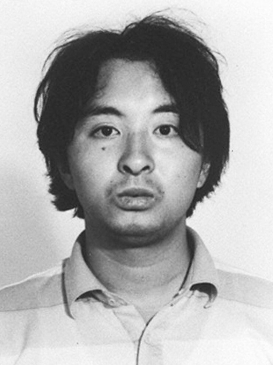
Miyazaki was born in 1962 to a well-off family in Itsukaichi, a town in the Nishitama district of Tokyo. He was born premature with a rare birth defect, radioulnar synostosis, that caused his hand joints to be fused together, making him unable to bend his wrists upwards. Many sensationalist reports about his case show the image below, which is a different condition and is taken from a medical textbook. There was apparently nothing obviously wrong with his hands, but his disability led to him being bullied at school, which some say led to his mental decline, and eventually isolated him in his room watching endless video tapes, some of which he made himself.
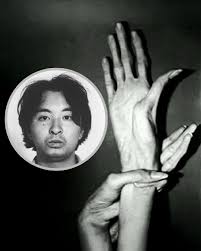
Of course, many people get bullied at school, but most of them do not end up killing and eating tender-age children. He was also ignored by his parents, who led busy lives, and his sisters, with the only person interested in him being his grandfather, the only person who showed him kindness. In May 1988, his grandfather died, greatly increasing his depression and isolation. He reportedly ate some of his grandfather’s ashes, to “retain something from him.” He was later caught watching his sisters in the shower and attacked them and then his mother when told to leave.
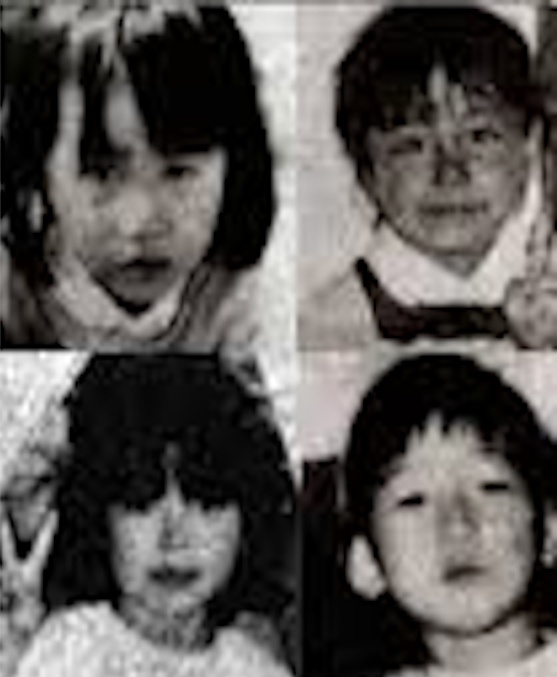
Between August 1988 and June 1989, Miyazaki murdered and mutilated four girls between the ages of 4 and 7 and sexually molested their corpses. He drank the blood of one victim and ate a part of her hand.
These crimes—which prior to his apprehension were named the “Little Girl Murders” and later the Tokyo/Saitama Serial Kidnapping Murders of Little Girls (東京・埼玉連続幼女誘拐殺人事件) were particularly shocking in the Saitama Prefecture, which rarely saw crimes against children.
On 22 August 1988, one day after Miyazaki’s 26th birthday, Miyazaki saw Mari Konno, aged 4, who had gone to play at a friend’s house. Miyazaki led Konno to his black car, then drove west of Tokyo and parked under a bridge in a wooded area. He sat alongside Konno for half an hour before murdering her and molesting her corpse. He dumped her body in the hills near his home, departing with her clothes, then allowed the body to decompose before returning to remove her hands and feet, which he kept in his closet. Miyazaki burned Konno’s remaining bones in his furnace, ground them into powder, and sent them to her family in a box along with several of her teeth, photos of her clothes, and a postcard which read,
「真理さん、骨、火葬、調査して、証明して」
(“Mari. Bones. Cremated. Investigate. Prove.”)
Konno’s hands and feet were found in Miyazaki’s closet after his arrest almost a year later.
On 3 October 1988, Miyazaki abducted Masami Yoshizawa, aged 7, walking along a rural road. He drove her to the same place he had killed Konno and killed her, raped her corpse, and left with her clothes. Two months later, on 12 December 1988, he abducted Erika Namba, aged 4, as she was returning home from a friend’s house. Miyazaki drove to a parking lot in Naguri, where he forced her to remove her clothes in the back seat and began to take pictures of her. He killed her, covered her with a bedsheet, and placed her body in his car’s trunk. He disposed of her clothes in a wooded area and left her body in the adjoining parking lot, where it was discovered three days later. On 20 December, Namba’s family received a postcard sent by Miyazaki with a message assembled using words cut out of magazines:
「絵梨香、かぜ、せき、のど、楽、死 」
(“Erika. Cold. Cough. Throat. Rest. Death.”)
On 6 June 1989, Miyazaki convinced Ayako Nomoto, aged 5, to allow him to take pictures of her. He then led Nomoto into his car and murdered her. Miyazaki took the corpse into his apartment and spent the next two days engaging in sexual acts with her body and masturbating, taking photos and videos of the remains in various positions. When Nomoto’s corpse began to decompose, Miyazaki dismembered it, scattering body parts around Tokyo, including in a cemetery, a public toilet and nearby woods and leaving her head in the nearby hills. He kept her hands, drinking blood from them and chewing on them. Fearing that the police would find Nomoto’s body parts, Miyazaki returned to the cemetery and the hills two weeks later and carried the remains back to his apartment, where he hid them in his closet.
On 23 July 1989, Miyazaki saw two sisters playing in a park in Hachiōji and managed to separate them. He was taking photographs of the younger one, whom he had convinced to strip nude, when he was caught by their father, who attacked Miyazaki but was unable to restrain him. Miyazaki later returned to the park to retrieve his car but was arrested by police who were responding to a call by the child’s father. A search of his two-room bungalow produced 5,763 videotapes, some containing anime and slasher films (later used as rationale for his crimes). Interspersed among them was video footage and photos of his victims. Miyazaki, who maintained a calm and demeanour during his trial, appeared indifferent to his capture.
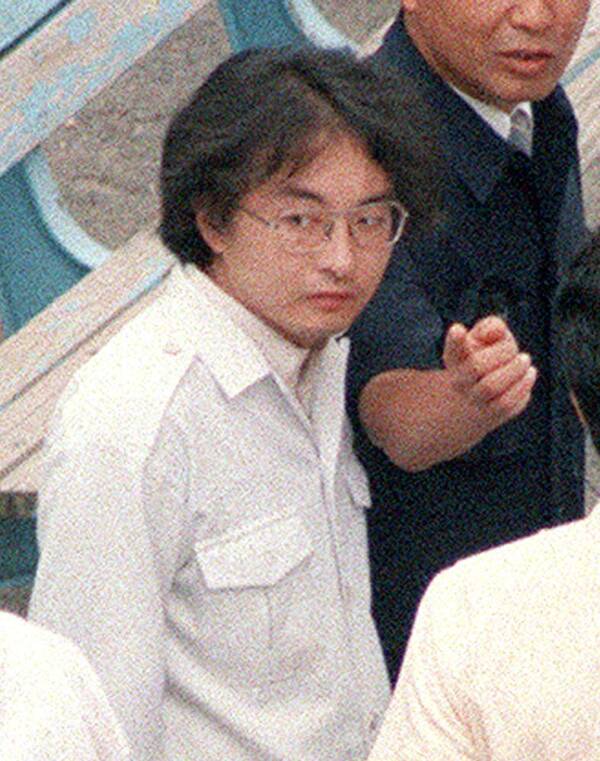
The trial began in March 1990 and took seven years. It focused on Miyazaki’s mental state at the time of the murders. Under Japanese law, people of unsound minds are not subject to punishment, and people having cognitive disability are entitled to reduced sentences. Three teams of court-appointed expert psychiatrists came to differing conclusions about Miyazaki’s ability to tell right from wrong: one team determined Miyazaki to have a cognitive disability, another team thought him either schizophrenic or as having dissociative personality disorder, and the third team found that although Miyazaki definitely had at least one personality disorder, he was still capable of taking responsibility for his actions. He was sentenced to death, a verdict that was upheld by the High Court in 2001 and the Supreme Court in 2006. He was hanged on 17 June 2008, almost twenty years after he had started his murderous rampage.
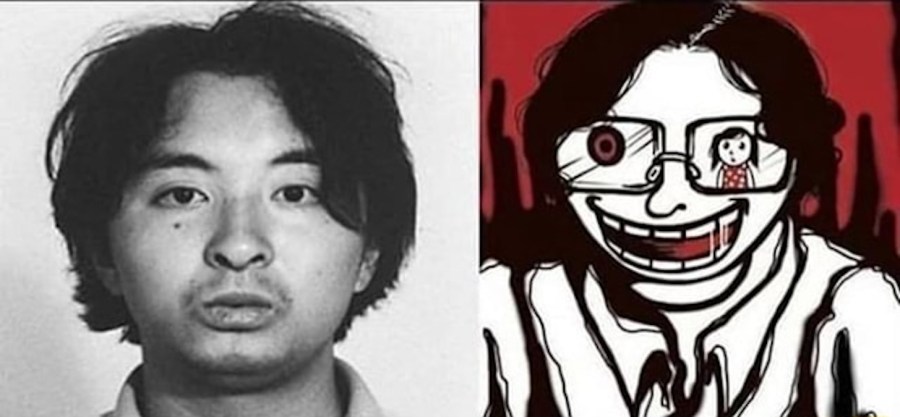
Miyazaki claimed that he was not responsible for the murders but was compelled by an alternative personality called “Rat Man”. He sketched Rat Man while sitting in court awaiting sentence.
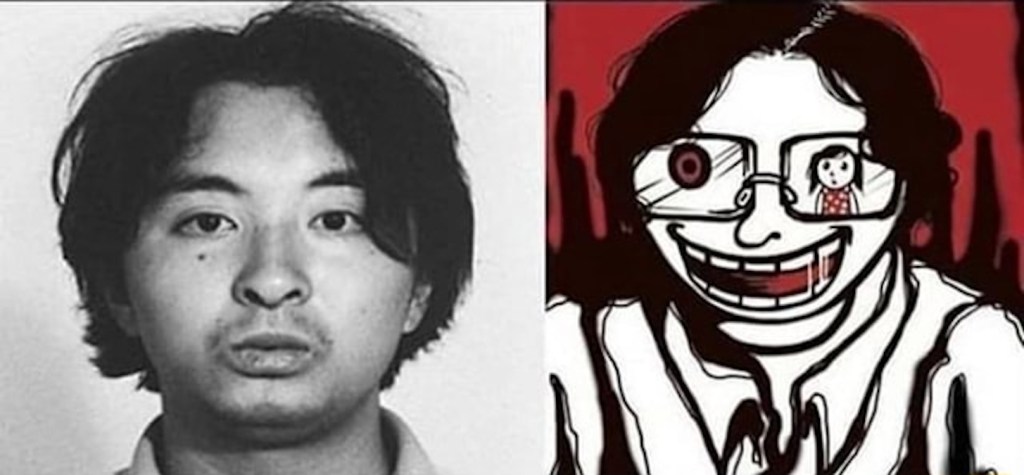
Throughout the trial, Miyazaki refused to apologise to the parents of the girls and described his serial murders as an “act of benevolence”. The press called him “Dracula” (because he had drank the blood of Ayako Nomoto) and “Little Girl Murderer”. He was the first serial killer to be linked to the “Otaku“, or nerd, cult in Japan.
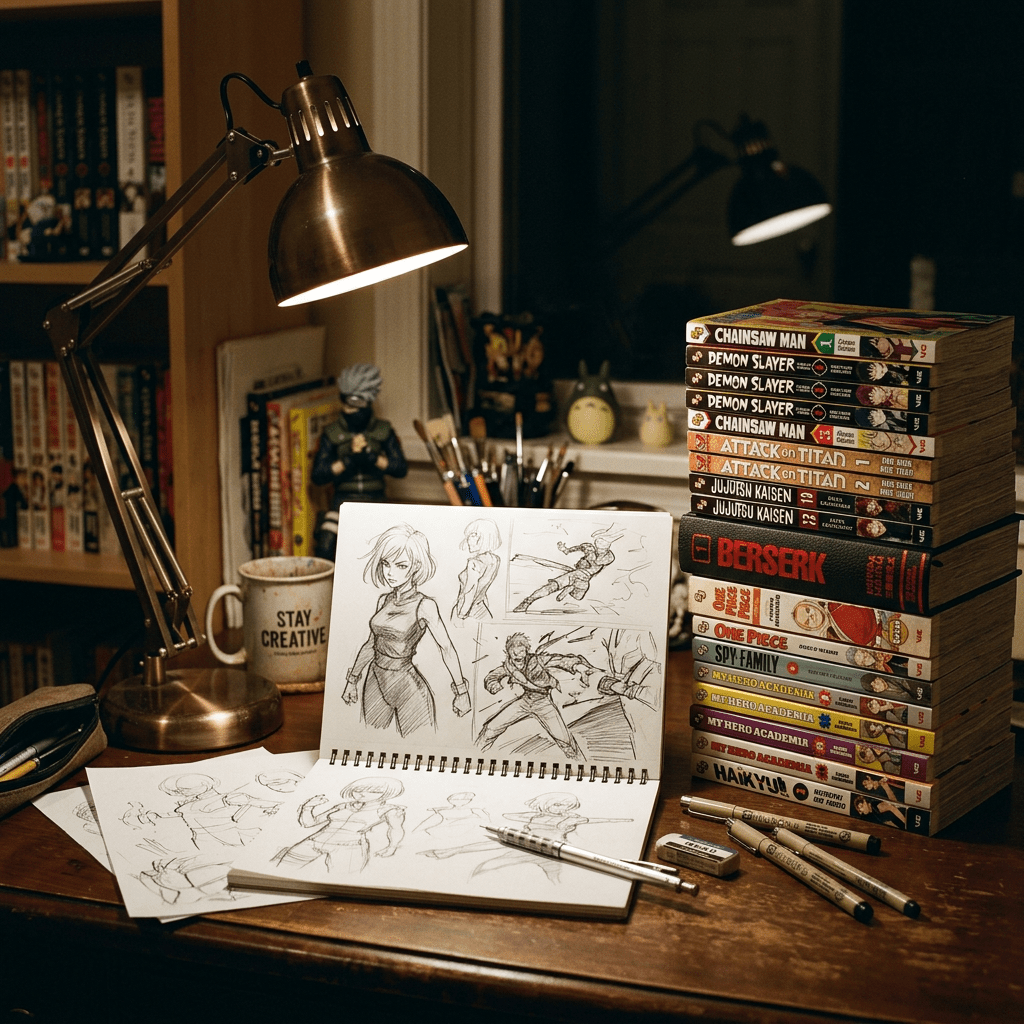
Although the nerd cult is mainly associated with relatively harmless manga, Japanese cartoons and films, the public fear of the Otaku cult has never abated since Miyazaki’s crimes, and was reignited when Tomohiro Kato, a 25-year-old loner, went on a knife rampage in Tokyo’s Otaku district of Akihabara in 2008, killing seven people and injuring 10 others.
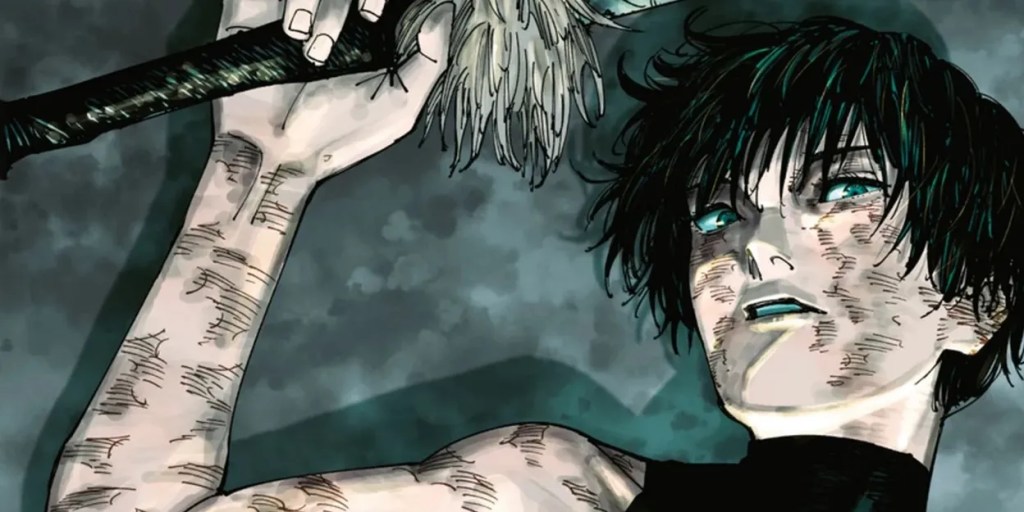
Does manga, graphic art which often shows depictions of violence and rape, encourage actual acts like murder, rape and cannibalism? Enthusiasts reject the claim, pointing out that its parallel argument about video games promoting gun violence have never been proven. A better question is why manga and other incendiary art forms have become so central to social outcasts, men like Miyazaki and the earlier Japanese cannibal Issei Sagawa (who drew his own manga), men (usually) whose identity is so steeped in anger, isolation, inferiority and inability to form relationships that they see other humans, especially vulnerable little ones, as just prey animals, a way to bolster their damaged egos, to make them feel powerful. And doesn’t this mentality exactly replicate human treatment of other animals, killing and eating them to make us feel like gods?