Hobbit cannibals: THE CANNIBAL IN THE JUNGLE (Simon George, 2015)

As a general rule, I am not a big fan of “mockumentaries” – if you’re making stuff up, then why not just describe it as fiction? And if you are a channel like Animal Planet which makes factual documentaries about (real) fauna and flora for its seventy million viewers, it seems at least deceptive if not actively fraudulent to start showing made up stuff as if it is a “documentary”. This is not the first time they’ve done it; they had previously tried to make us believe they had found evidence of dragons and mermaids. So an untrue ‘true-crime’ documentary about a fake cannibal locked up for supposed cannibalism which was actually carried out by an extinct species of hobbits seemed pretty tame to the Ethics Department of Animal Planet I guess.

I should concede that some of the classics of cannibal texts are mockumentaries or “found footage” inventions. Many of the Italian ‘cannibal boom” films attempted to appear as factual records, particularly the classic Cannibal Holocaust, for which the director, Ruggero Deodata, secreted away the actors to make it appear they had been killed, then had to produce them in court to avoid facing  homicide charges. More recently, District Nine, Ghoul and Long Pigs have all made somewhat desultory attempts to persuade us that we were watching the actual killing and eating of humans by humans.

In this week’s offering, The Cannibal in The Jungle, the director Simon George presents a feature-length ‘true-crime’ special about an American scientist accused of murdering and consuming the remains of his fellow explorers while on an expedition in 1970s Indonesia. The murder/cannibalism case is told through interviews with an Australian anthropologist Richard Hoernboeck (played by Scottish actor Jim Sturgeon with a broad Australian accent), who says he found evidence of a tribe of very small hominids which he calls hobbits, and subsequently chose to investigate the murder/cannibalism case, 25 years after it happened. He tells us that in 1977, an American ornithologist was convicted of killing and cannibalising two colleagues in the jungles of Indonesia while on a quest to study eagles, as well as hoping to find a supposedly extinct owl. Instead, Dr Timothy Darrow, branded ‘The American Cannibal’ by the press during his trial for murder and cannibalism, claimed in his (unsuccessful) defence that they had been attacked by a lost species of early humans. These hobbits, he said, were responsible for the murder and consumption of his friends. Nobody believed him. Cannibalism is easier to believe than hobbits.

In fact, the remains of a species matching Darrow’s description were found in those jungles of Indonesia in 2003 by an anthropologist from Wollongong University, although his name was Mike Morwood (a hobbit name if ever I heard one). In what is now regarded as one of the most important anthropological finds ever, a team of scientists discovered the bones of an entirely new species of human, one that stood only 43 inches or 110cm tall. Homo floresiensis (popularly called Flores Man or more popularly Hobbits) lived on the island for perhaps over a million years before going extinct. Some recent research suggests that a tribe of the hominins known as Homo erectus became isolated on this remote Indonesian island, perhaps a million years ago, and evolved a dramatically smaller body size.

But did they really go extinct? An indigenous tribe on the Indonesian island of Flores, where the remains of the ‘hobbits’ were discovered, have their own accounts of little wild men that climb trees and walk on two legs. They also describe them as cannibals. And according to their legends, they may never have died out at all. This story claims to follow Hoernboeck’s expedition into the jungle of Flores, Indonesia, seeking to discover if hobbits still exist, whether Timothy Darrow’s ill-fated expedition really encountered the supposedly extinct creatures, and if the ‘American Cannibal’ was therefore innocent of the crimes for which he was convicted more than three decades previously.

The local people of the island, the Lio, claim that the hobbits were around until very recently, and may still be hiding out in the forest. In the fake doco, they are shown suggesting that they would kidnap and eat children, although being a different species to Homo sapiens, I suppose this would not technically be cannibalism.
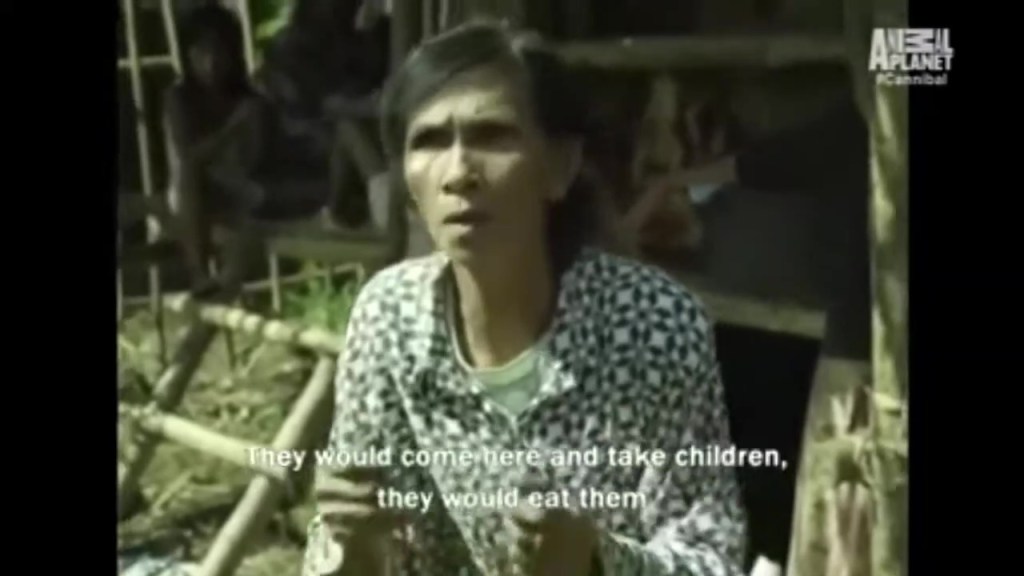
The program is ingeniously done. Hoernboeck, the modern-day anthropologist, shows purportedly real video of his interviews with the imprisoned Darrow (played by Richard Brake, who was in Game of Thrones and Hannibal Rising, so there’s a giveaway for the alert horror fan), and his expedition to trace the journey on which Darrow supposedly found the hobbits. Interspersed with this, we are shown what we are told is a reenactment of the original expedition by Darrow and his friends/victims. The implication is that we can believe the rest is real, because they told us what was staged. We move to the present to see the anthropologist tracking down Darrow’s tape recorder which contains the taped call of the hobbits, then eventually the actual film taken by Darrow that proved his innocence but, alas, not until after he died in the brutal Kerobokan prison.
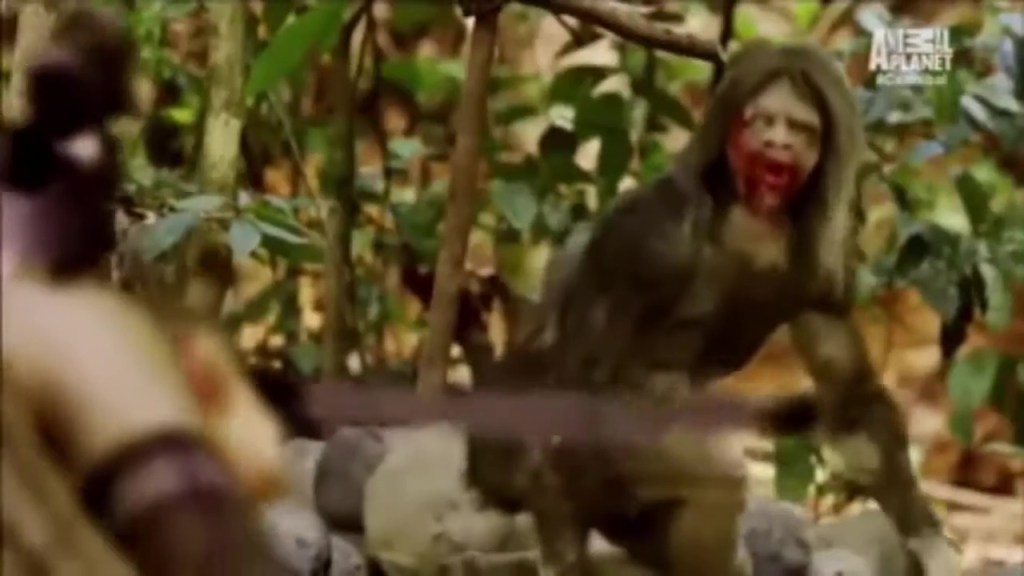
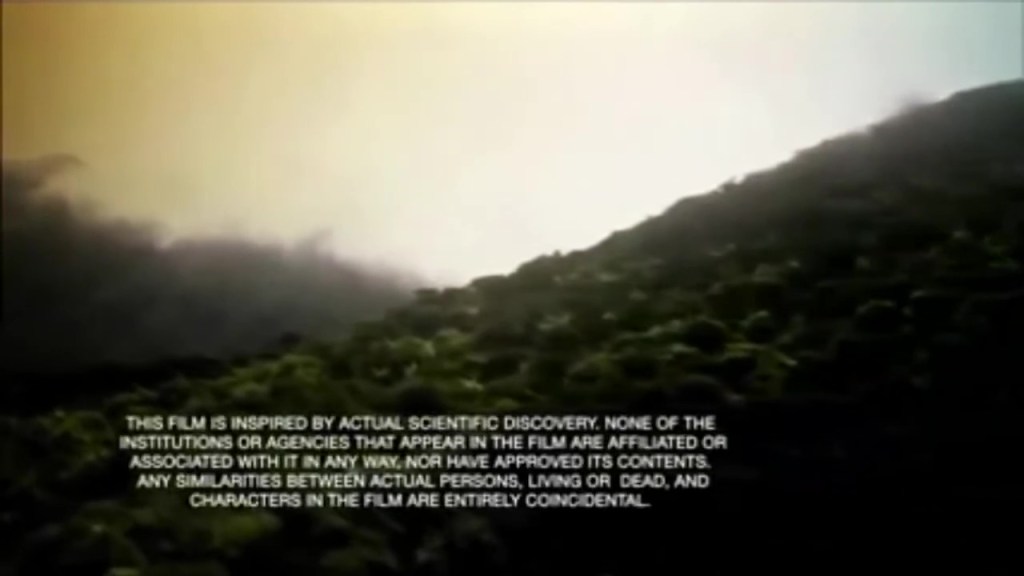
With a modicum of willing suspension of disbelief, it’s actually pretty convincing, and quite sad, unless we keep reminding ourselves that the whole thing is a fake. Those who watched it when it first came out, unless they recognised the Night King or the war criminal who ate Hannibal’s sister, did not discover that it was all fictional until the very end, when there is a (very) short statement. Most viewers probably wouldn’t even have noticed it.
What I found interesting is the depiction of the totally credible outrage of the Indonesian authorities, furious that an American would eat the Indonesian guide. Yet when the Flores locals are shown talking about the hobbits capturing and eating their children, there is inaction. Nature is red in tooth and claw! Animals eat each other, and eat people if they can, so if some unidentified ape ate your child, well, that’s unfortunate. But anthropocentric ideology denies our animality, so for a human to eat a human still manages to shock. The false binary of human/animal has led science to tie knots in the language, with some calling the hobbits “ape-men” and one learned anthropologist, Gregory Forth, calling his book about them Between Ape and Human. Like this documentary, the idea of a lacuna between apes and humans is fictional. We are a species of great ape, and our DNA is 98.8% identical to chimps.

Dr. Darrow’s supposed cannibalism was more horrific than nature’s mundane bloodbaths, not because he was genetically similar to the victim, but because he was a post-doctoral scientist, a ‘civilised’ man. If either party to slaughter, the one wielding or the one enduring the blade, can be defined as ‘animal’, all bets are off. The cannibals we consider in this blog are simply better than most people at dehumanising, objectifying the other.

The full movie is available, at the time of writing, at Daily Motion.
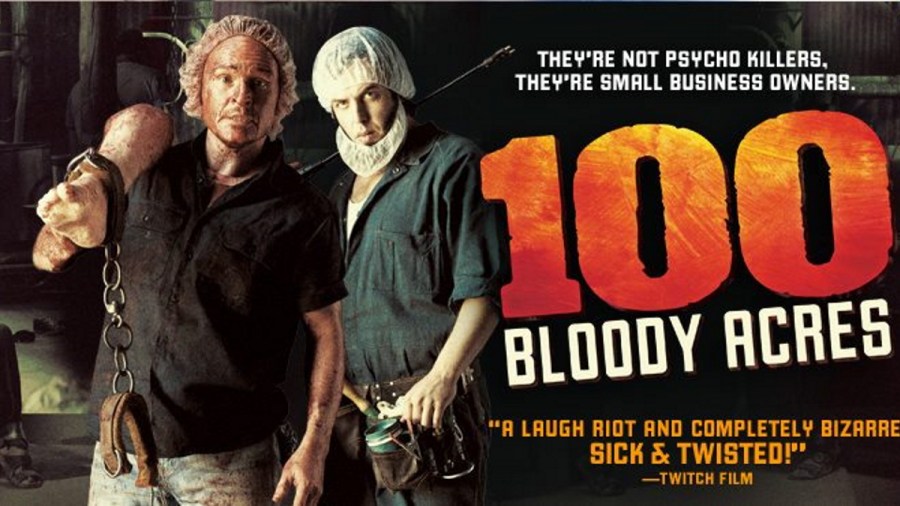
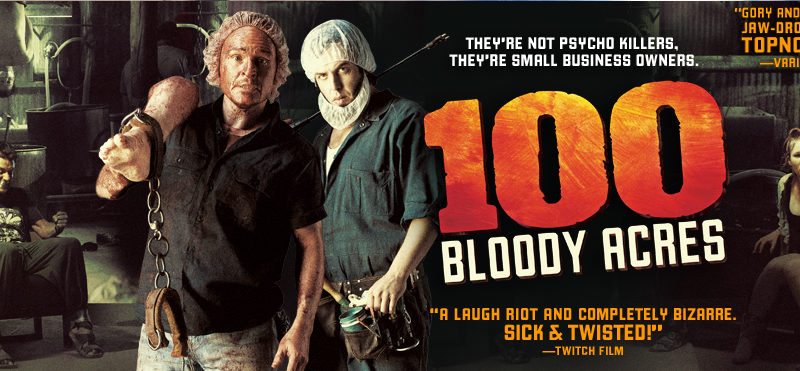
“They’re not psycho killers, they’re small business owners” 100 BLOODY ACRES (Colin and Cameron Cairnes, 2012)

There just aren’t enough Aussie cannibalism films (IMHO), particularly since the earliest movie I could find showing (purported) cannibalism, The Devil’s Playground, was made in Australia, way back in 1928. What few have been made are pretty great, including movies like The Last Confession of Alexander Pearce (about a cannibal convict) and more recently Two Heads Creek, which saw immigrants to the Australian outback being cooked and eaten. There was also a movie made about the so-called Snowtown murders (most of which did not take place in the town of Snowtown) but it avoids mentioning the cannibalism of the last victim, for some reason.

Presenting country folk as hicks, rednecks, hillbillies, etc is certainly not exclusive to Australian films. In the US, such plots are usually presented as slasher horror, such as The Texas Chain Saw Massacre and The Hills Have Eyes, and their endless sequels and prequels. In Italy during the “Cannibal Boom”, the primitives were tribes of savages, eating people for revenge, but also because they were yummy. But Australians love to see the humour, even (especially?) in a rapidly mounting body count and spurting arterial blood. 100 Bloody Acres is right in that tradition, filled with colourful rural characters who mispronounce words and aren’t that smart, taking it out on city slickers who stray into their territories.

This one stars two brothers, Reg (Damon Herriman, who (fun fact) played Charles Manson in both the Netflix series Mindhunter and in the Quentin Tarantino film Once Upon a Time in Hollywood) and Lindsay (Angus Sampson who was in Mad Max: Fury Road, Fargo and most recently The Lincoln Lawyer). The Morgan brothers own and operate a small blood and bone fertiliser business in South Australia, the motto of which is:

“We’ll fertilize ya!”

Their business has been booming in the area, we are told, where six Salvos (Salvation Army workers – everything in Aust. is abbrev’ed) have disappeared without trace – not hard to see where this plot is going. Reg is on his way to deliver blood and bone fertiliser when he sees a road accident, hauls out the body of a man and puts him into the back of his van, less a few fingers, due to his clumsiness in closing the doors. Meant to be shocking or hilarious? Subjective I guess. Reg then picks up a young woman and her two male companions whose car has died on the way to a music festival, because he fancies the woman. The men go in the back of the truck with the bags of fertiliser and the car crash victim, and predictably freak out when the body is revealed by the bumpy road. Reg takes the trio to the factory, where they are tied up and made to watch the car accident victim, who turns out to be alive, lowered into the meat grinder.

Reg tries to rescue him, but ends up covered in blood and holding just his legs and, perhaps the area between them that attracts his befuddled gaze. There is a theory that movies, particularly thrillers and horror stories, are aimed at 14-year-old boys, and I’m sure they would find this scene side-splitting.

Turns out that blood and bone made from humans is far better (as fertiliser) if they are alive and scared and in agony; it’s all in the hormones. This why torment is a crucial part of the dog-meat industry, and also not far from the way we treat other animals we confine and slaughter.

The older brother, Lindsay, tests the blood from the mixture and declares it “liquid gold”.

The rest of the movie is slapstick gore involving chases, more victims being killed or losing body parts, and other merriment. Rotten Tomatoes gave it a 77% fresh rating, and Matt Zoller Seitz of RogerEbert.com called it:

“a smartly written and acted and exceptionally well-directed movie.”

The Guardian’s Australian Editor, Lenore Taylor, was not so enthusiastic, declaring it,

“a splatterfest that abandons suspense in favour of sniggers.”

100 Bloody Acres is not nearly as shocking as it imagines itself to be (unless maybe I’ve watched too many cannibal movies) but it is entertaining, well made, stylishly directed, and the actors are top-notch. It hums along, and may even be seen as satirising the more strait-laced and dour cannibalism films from the USA and elsewhere. If you like black comedy and gore, this one may impress.

From the point of view of Cannibal Studies, it raises some interesting questions.

  • Is it still cannibalism is you kill someone not to eat, but to use, for example, as blood and bone (or for their skin and bones, like Ed Gein or Jame Gumb)? Does cannibalism require oral ingestion, or does any use of the human body count?
  • Is cannibalism of the dead less repugnant if the intended meal is already dead? In this film, the brothers collect dead bodies from road accident sites (human roadkill) and grind them up into blood and bone. While roadkill of wild animals is not a hugely popular source for food or other uses, it is actually more acceptable to some animal activists than confinement and slaughter, in that the animals may not have known what hit them, and in any case are killed without murderous intent. So why not human roadkill (maybe making sure they’re actually dead)? Is it really worse to eat (or otherwise utilise) a dead human, who can feel no pain, than a living, terrified cow or pig? Consider the outrage in Illinois when a satirical site claimed the local morgue assistant was using body parts from deceased men to help her win a spaghetti-cooking competition. It was a hoax, but there have been other cases, such as journalist William Seabrook, who purchased human flesh from a hospital and cooked it just to see what it tasted like. What exactly is the problem?
  • And most intriguingly, why do we stroll nonchalantly past the blood and bone bags in the hardware store, yet can be shocked at the thought of human blood and bone? As Shylock asked, “if you prick us, do we not bleed?”

We are all made of blood and bone.

Vietnam vets and cannibals: CANNIBAL APOCALYPSE (Antonio Margheriti, 1980)

This is one of those horror flicks that’s a bit hard to categorise. It’s an Italian “cannibal boom” film in the tradition of Ruggero Deodato’s classic Cannibal Holocaust which came out the same year, as well as earlier efforts such as Deodato’s Last Cannibal World, Joe D’Amato’s Black Emanuelle films, and the one that started the Italian cannibal boom, Umberto Lenzi’s The Man from Deep River. But Antonio Margheriti, using his alias Anthony M. Dawson, turned the genre on its head. The cannibal boom movies were usually set in the jungle, where tribes of primitive savages killed and ate Western interlopers, who richly deserved their fate. In other words, the archetypal colonialist cannibal story with a post-colonial twist (revenge!)

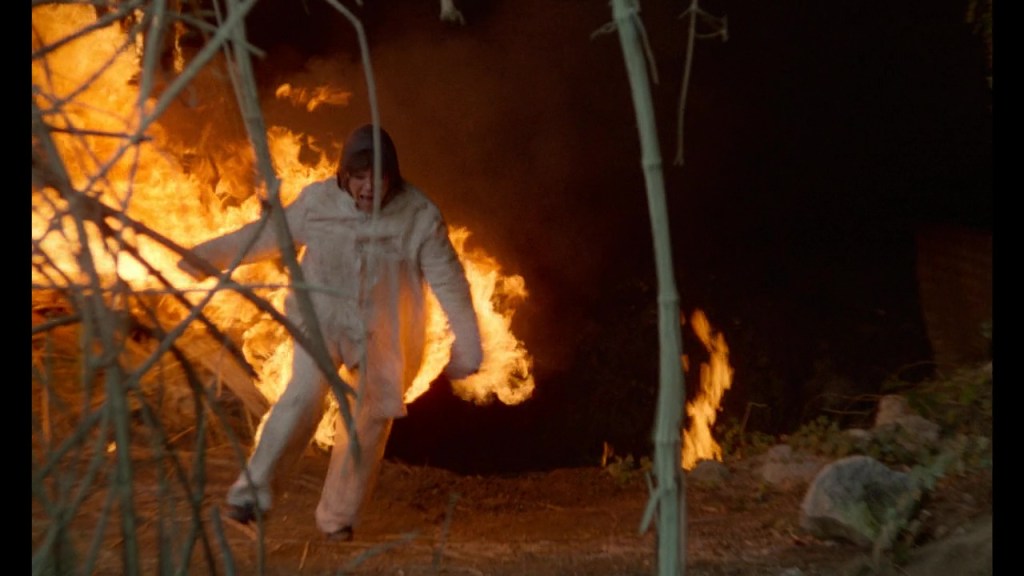
This one starts in the jungle too, but it’s a jungle in Vietnam, and the Western interlopers are American soldiers prosecuting the disastrous and eventually futile Vietnam War. A squad led by super-macho Norman Hopper (John Saxon from Nightmare on Elm Street) lands in a village and torches the place, after getting blown up by a dog (yeah, it gets worse). They find some POWs captured from their squad, Tommy Thompson (Tony King, who is now head of security for the hip-hop group Public Enemy) and Charlie Bukowski – a intertextual reference to the poet Charles Bukowski I guess, although the link seems tenuous. Bukowski (the soldier, not the poet) is played by John Morghen from Cannibal Ferox, an actor who pretty much always dies horribly in every movie he’s been in, and this is no exception.

They have somehow caught a virus (?) which makes them crave human flesh. That makes it sound more like a zombie movie than a cannibal one (think 28 Days Later), but let’s give it a cannibal pass by referencing the Wendigo films like Ravenous or Eater. Or you could claim, as the doctor says to Norman, it’s a “form of rabies.”

No, it isn’t. He really should have gone with Wendigo, a mythical figure – giant, fierce and cannibalistic, who gathers strength from feeding on human flesh, but the flesh makes him grow larger, and so his appetite can never be satisfied. He is sometimes protective (like Norman), and sometimes a figure of revenge (like Charlie and Tommy). The Wendigo gets inside people who are weak, hungry, or filled with rage.

Anyway, the squad is using flamethrowers to fight the Vietcong (and their women and small children) and one burning woman falls into the pit where the POWs are confined, making for a cooked meal. No home delivery jokes please.

Back in the States, Norman is having nightmares of being bitten by the POWs as he rescued them from their meaty pit. He realises something is wrong with him (the virus from getting bitten maybe?) and stares in horror and fascination at a bleeding lump of flesh in the fridge. Why is there flesh left to bleed in the fridge – isn’t that a health hazard?

One of the rescued POWs, Bukowski, suddenly phones him – he’s on day release from the “Hospital for Nervous Disorders”, or what the cops call a “loony bin”. Norman can’t meet him because the teenage neighbour is lasciviously pointing a hairdryer at him, and he is drawn to her lower regions, but for someone infected with the cannibal virus, ‘eating her out’ means something different to what she expects. She drops by later to tell him that she enjoyed being bitten. What do you know.

Meanwhile, Charlie has gone to see a war movie, as you do when you’re been treated for months for severe PTSD. It’s Umberto Lenzi’s From Hell to Victory, a lovely in-joke among amici, with lots of explosions and deaths. But no one is watching the war.

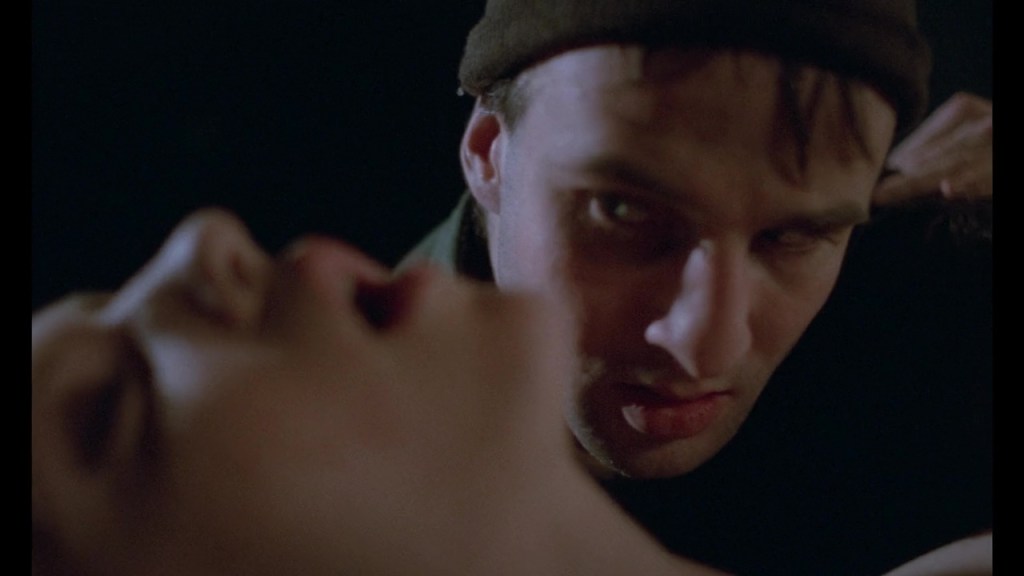
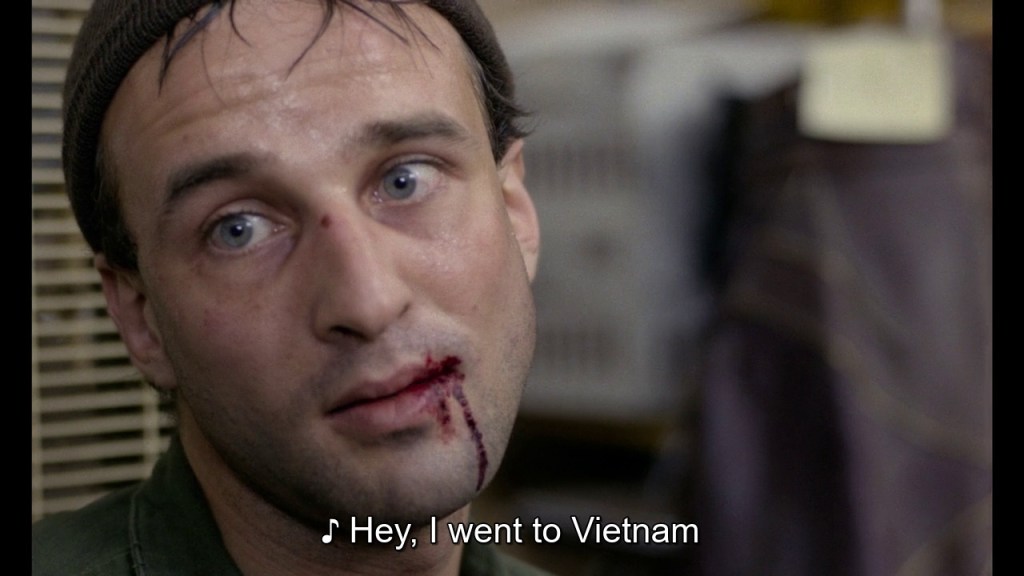
In front of him, a couple are doing oral things – exchanging saliva and sucking on boobs, erotic cannibalism, but Charlie joins in by taking a healthy bite of the girl’s neck as she leans back in her seat. He runs, there’s a shootout, he kills and eats a bikie and a security guard – it’s all downhill from here. The Atlanta police chief wants to know about him, not his name (despite it’s fascinating intertextuality):

Is he a subversive, a queer, a black, a commie, or a Moslim fanatic?

No, he’s a clean cut all-American (Italian) Vietnam vet, who wants to eat people.

Lots of people get bitten or scratched – a cop, a nurse, who then bites off the doctor’s tongue, and of course there’s that wanton teenager from next door (what horror film would be complete without promiscuous teenagers?), who was infected by Norman’s bite, even though he thought he could overcome the craving for meat.

Point is, they all have the cannibal virus, and the cannibals end up in the sewers (apparently hoping to hoof it to the airport and hop on a flight back to Vietnam), where they are chased by men with guns and flamethrowers; it’s really just like Nam, but now they have become the enemy.

The movie was one of 39 films to be prosecuted in Britain during the 80s as a ‘video nasty’. The acting sometimes leaves a little to be desired, but the main characters, Saxon and Morghen, are great. The special effects are by the legendary Giannetto De Rossi and are, like most of his work, spectacularly abject. The music is a mix of elevator and disco, creating what TV Tropes calls “soundtrack dissonance” – it’s either disturbing or just annoying, I’ll leave that up to you to decide.

In his commentary on the film, the director Antonio Margheriti proudly states that this film was Quentin Tarantino’s favourite of his movies. Tarantino referenced the film a couple of times: in Inglourious Basterds, Donnie Donowitz uses an alias “Antonio Margheriti”, while in Once Upon a Time in Hollywood, Leonardo DiCaprio character goes to Italy in 1969 to star in Spaghetti Westerns and also one Bond-type spy thriller supposedly directed by Margheriti titled Operazione Dyn-o-mite.

But video nasty or not, Cannibal Apocalypse has some interesting things to say about the fallacies and phalluses of war and cannibalism. The cannibal virus comes back to the USA with Vietnam veterans, a group who were sent to fight a vicious and often brutal war, often against civilians, and returned to abuse or neglect, with far more veterans dying from suicide than died in that war. They also brought back with them, on top of their trauma, exotic diseases, drug habits, and acute psychological damage. Many went as conscripts, and came back as severely damaged killing machines, metaphorically lusting for human flesh and spreading the anger and violence to all those near to them. It’s happened over and over in every war – a culture of killing leads to a spiral of violence. Even when you think the nightmare is over and all the cannibals dead, there’s still the teenager and her little brother to consider (hey, it’s been over forty years – where is the sequel this seems to promise?)

Probably not.

The drive to kill and to eat flesh are closely linked in human history. Consider the words of Isaac Bashevis Singer in the forward to the book Vegetarianism, a Way of Life, by Dudley Giehl:

As long as human beings will go on shedding the blood of animals, there will never be any peace…

If you think Cannibal Apocalypse sounds interesting but you’re short of time, most of the good (gory) bits are covered fully in the review by Mike Bracken, AKA The Horror Geek (@horrorgeek). Mike’s vodcasts are always very entertaining, but this review had me guffawing out loud, which is a bit weird when you’re watching with headphones, in apparent silence, and pretending to be writing an academic thesis. In fact, Mike’s review is much better than the film, IMHO.

“The most violent film ever made” – CANNIBAL FEROX (Lenzi, 1981)

The US distributor of this film (where it was renamed Make Them Die Slowly) made the claim that it was the most violent film ever made, and had been banned in 31 countries.

Warning.JPG

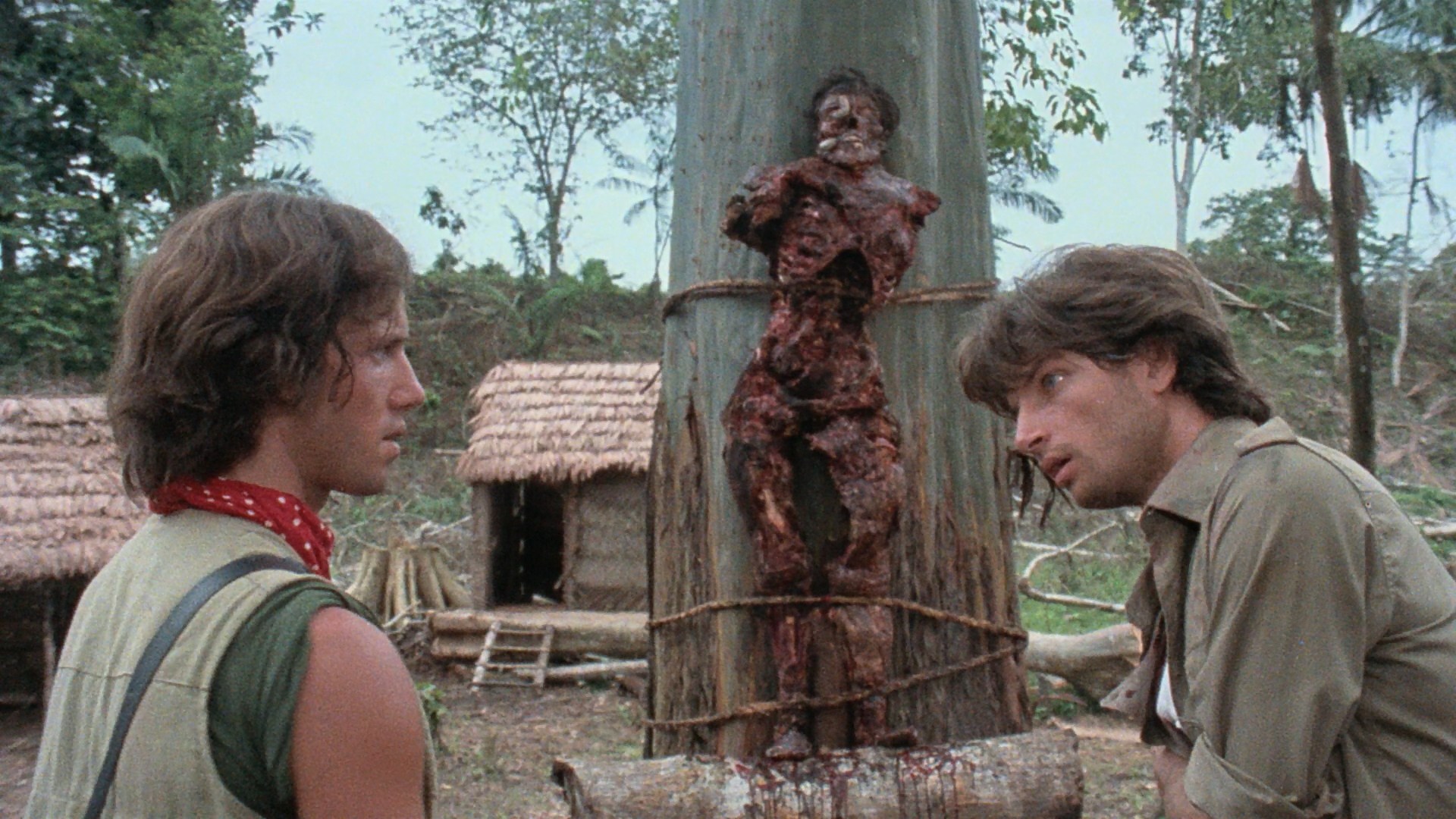
Both claims are highly dubious, but it is certainly one of the nastiest of the so-called “cannibal boom” movies that came out of Italy in the 1970s and 1980s. These films depicted a savage world in which the primitive natives were merciless cannibals, while the white victims were mostly corrupt and exploitative thugs, who invariably brought on the savagery by their own greed and violence (this one involves eye-gouging and penisectomies as well as brain and intestine munching). They deserved to be killed and eaten, especially since they were aware that all primitive people are cannibals. This from the civilisation that brought you Christopher Columbus, who coined the term “cannibal” and demonised the diverse nations of a whole continent.

cfblu4_original.jpg

Lenzi’s film was made a year after the most famous of the Italian cannibal slashers, Deodato’s Cannibal Holocaust. Although Cannibal Ferox seemed to be a rip-off of Deodato’s magnum opus, let us not forget that Lenzi started the boom back in 1971 with Man From Deep River. That in turn was lifted from the Mondo films like Mondo Cane, films which showed the disturbing violence within nature and primitive societies, and pointed out that such dark forces still swirled within the well-dressed breasts of modern, cosmopolitan Europeans.

cannibalferoxhd_pub.png

Look, I’ve been kinda avoiding reviewing this one, not because I  thought you couldn’t handle it (you are reading a cannibal blog fergoodnessake!) but more because I was wondering if I could. More gratuitously violent than Cannibal Holocaust, the scenes of torture are really all that this one is remembered for (certainly not for the plot or acting). Make up artist Gianetto de Rossi created the realistic special-effects, most infamously remembered for the scene where a woman is hoisted in the air by hooks through her breasts. De Rossi had previously worked on Emanuelle in America and Zombie II, the latter becoming famous as the goriest movie ever made.

MV5BNmVmOTkwMTctNzU0OS00YzIwLWI0MTktNWFkNDA5MWRlNGVmXkEyXkFqcGdeQXVyMjUyNDk2ODc@._V1_SX1777_CR0,0,1777,999_AL_.jpg

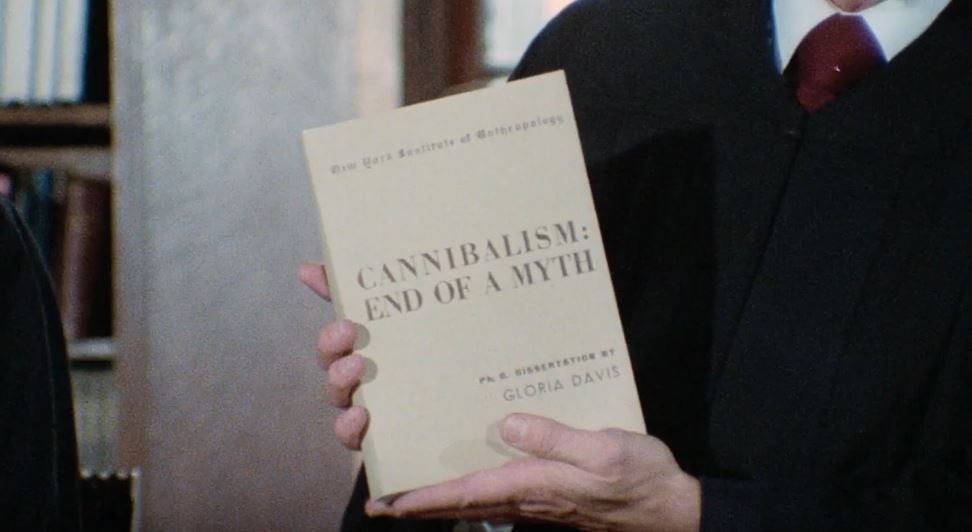
There’s a convoluted plot that you can follow on Wikipedia if you want, or even watch the movie if you must. It involves drugs, the Mafia, cannibals growing drugs for the Mafia, and cannibals eating greedy and vicious, or stupid and naïve, white people. The interesting part of the plot, from a Cannibal Studies point of view, is that the stupid, innocent Westerners who find themselves being caught up in all this (and tortured and eaten) are there on a fool’s errand – one of them, Gloria, is writing a thesis that is going to prove that cannibalism doesn’t exist and never existed. Her thesis is entitled “Cannibalism: End of the Myth”. [Holy excreted humanflesh; that’s kinda what I’m doing!] Radical as this thought is, it had actually been presented in an academic form by William Arens two years before this movie, in his book The Man-Eating Myth: Anthropology and Anthropophagy. Don’t you love coincidences like that? Wanton violence, abusive sex, torture, cannibalism and academic dishonesty – an honest portrait of the PhD process. Then there’s the invariable PhD curse – half way through your research, someone sits down with a bowl of intestines and screws up everything you’ve written.

PhD thesis.JPG

Cannibal Boom movies cannot be accused of involving any sort of academic rigour, concentrating instead on slaughter, torture, exploitative female nudity (and more torture) and cannibalism, as well as the totally gratuitous filming of real animal abuse. Italian cannibal directors love to put real footage into their stories of fake violence. Look, they say, a real animal suffered and died, so now you’ll accept that the actors were also killed. Actually, that sort of worked for Deodato, who was almost tried for murder,until he was able to get his Cannibal Holocaust actors to appear in court, to prove they were still alive.

tumblr_lhgoz0dPwo1qa4d9fo1_540
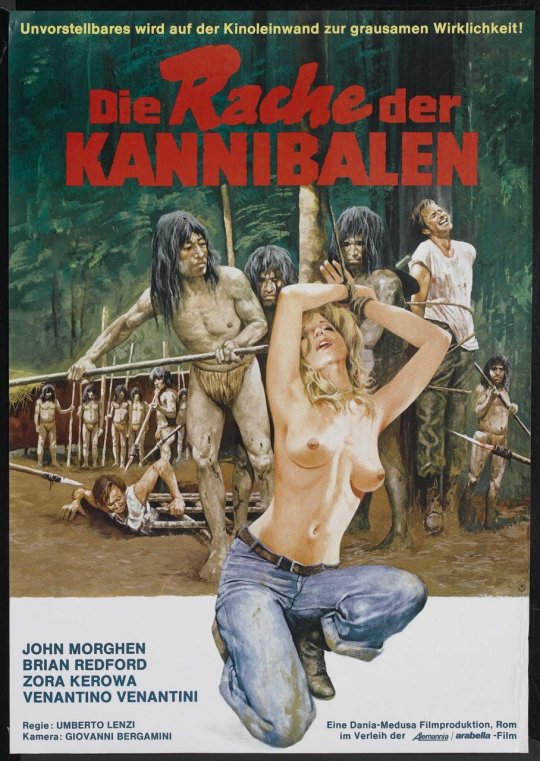
The German version was called “Revenge of the Cannibals”

Cannibal Ferox is torture-porn – it didn’t invent the genre, but it took it to new levels and laid the foundations for some of the grindhouse horror that was to follow. For example, the scene of a skull being opened and the brains eaten from it had already appeared in Deranged (Gillen & Ormsby) in 1974, and was perfected in Hannibal (Ridley Scott, 2001).

Cannibal Ferox managed to scrape together a 40% fresh rating on Rotten Tomatoes, from only five critics, one of whom summed up that “it both feeds and condemns our desire for the taboo sensations promised by its title”.

Couldn’t have put it better myself.

If you can’t be bothered watching the whole thing but would enjoy some highlights, this video review by “The Horror Geek” is hilarious!

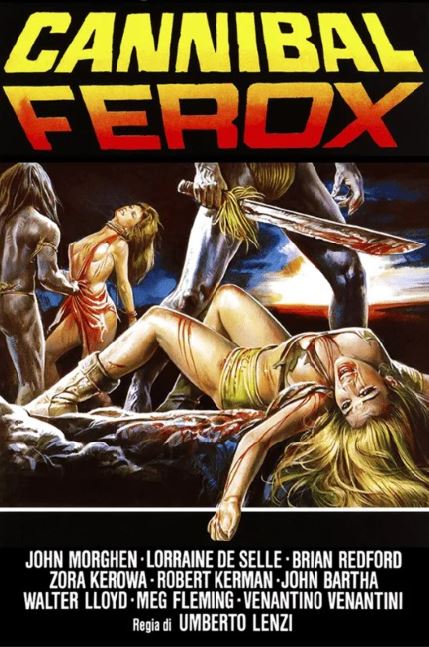
“Cannibal Ferox” means fierce cannibals. In the US, it was renamed “Make Them Die Slowly”, and in Australia “Woman from Deep River”. Not sure if that reveals some sort of cultural distinction right there.

Capture