“Cannibal chocolates”: CONSUMING PASSIONS (Giles Foster, 1988)

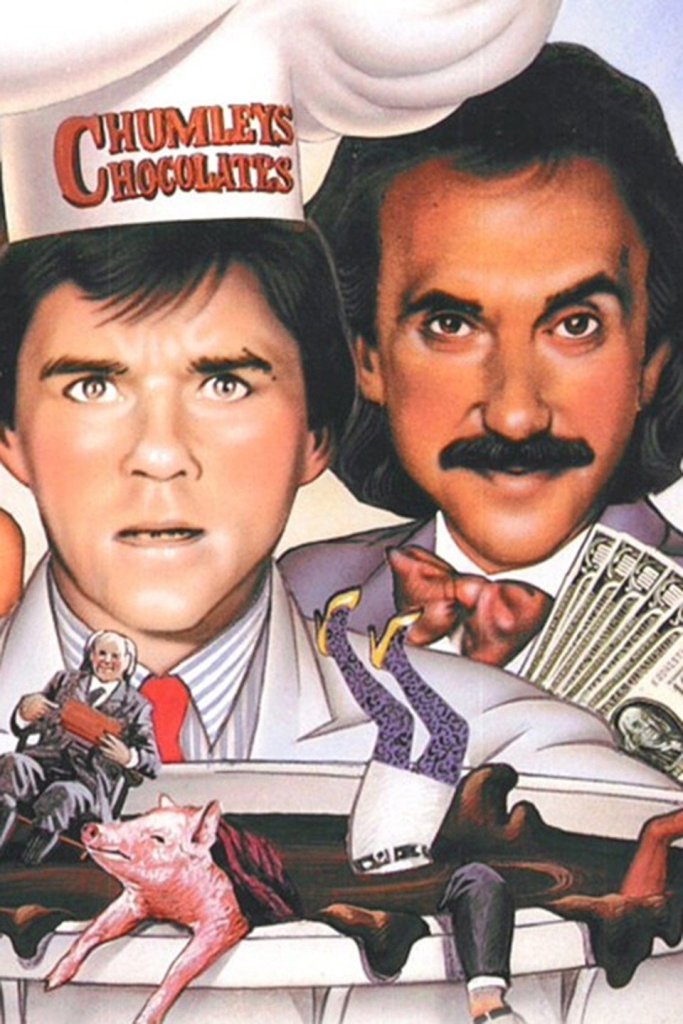
Consuming Passions is a black-comedy film directed by Giles Foster (Hotel du Lac). The film is based on the stage play Secrets by two of the Monty Python greats, Michael Palin and Terry Jones, which was filmed and shown on the BBC in 1973.

This is what I call entrepreneurial cannibalism, with a subgroup of accidental or fortuitous circumstances. A chocolate factory is preparing to launch a new luxury range, Passionelles. However, during production, the new management trainee causes three of the workers to fall into the giant vat of chocolate, where their flesh is mixed into the first batch.

The horrified boss tries to recall the chocolates, but they have already gone on sale. They prove a huge hit with the public. Market feedback says:

“Pleasantly nutty
subtle and delicious
addictive, compulsive
tasted full of goodness…”

They try to replicate the taste with meat from other animals, including a horrific scene where the guileless protagonist, Ian, orders a mountain of meat from the local butcher, including:

“three young porkers, with heads, ears and trotters”

But this bombs – only human flesh will give the chocolate that something special. As the secretary of the company (played by the wonderful Prunella Scales) says:

“People don’t want to eat chocolates with cows and pigs in them. People want to eat chocolates with people in them.”

They contemplate various ways to obtain dead bodies to use in their chocolate, including murder and/or chucking unemployed people in the vat. The new boss, played by the wonderful actor Jonathan Pryce (Brazil, The Two Popes, and many more) states the ultimate in neolib rationalisation:

“Think of all those millions and millions of unemployed school-leavers, yeah? A tragic, tragic situation. But we can give them a chance to do their bit for society yeah… think how it will shorten the dole queues.”

This seems to be based on Jonathan Swift’s 1729 pamphlet A Modest Proposal, in which he satirically suggested that the Irish, who were already being devoured economically by the landlords, should now sell the oppressors their children to make “a most delicious, nourishing, and wholesome Food; whether Stewed, Roasted, Baked or Boiled.”

In fact, the whole film is a commentary on the neoliberal ideologies that were dominating political policy at the time under Reagan and Thatcher. This toxic reasoning, which is still rampant, aspired to free up corporations while crippling any resistance from workers. Profit became the only determinant of policy – here the new owner of the company rejects the idea of putting real chocolate in the product, preferring artificial flavours and colours. When the market demands human bodies, that’s what they must have. Ian has to trawl morgues, hospitals, funeral parlours and medical schools. When his girlfriend, the quality control chemist, discovers there is human flesh in the chocolates, he assumes she will leave him, but she tells him,

“doesn’t hurt them if they’re dead. They’d probably be glad to know they’re being useful, like!”

By the end of the film, Ian is chocolate man of the year, knighted by the Queen, and made chairman of the company. He is no longer disgusted by cannibalism, but in fact is appraising everyone he meets, including his fiancée, for their weight, fat content and likely edibility. In an extreme example of what Marx called commodity fetishism, we have all become comestible commodities. Nancy Fraser writes and speaks convincingly about the way Cannibal Capitalism systematically destroys and consumes the sectors of society on which its own survival depends. In order to sell more commodities to the public, corporations will consume any resource, including the air we breathe, and our bodies too.

The Danes used a similar plot device later with The Green Butchers, starring Mads Mikkelsen (yep, it’s Hannibal, but not as we know him) as a butcher who accidentally locks the electrician in the freezer overnight and finds his customers love the resulting offcuts. The French tried it more recently with Some Like it Rare, in which a couple who own a butcher store accidentally run over and kill a vegan who has been protesting against their store for selling the flesh of animals. They too find their customers love human flesh, but only if it is uncontaminated by eating the meat of other animals – they only kill and cook vegans, a consummation (or consumption) of which Annie Potts and Jovian Parry have found, on social media, many carnists dream.

Talking about human body parts in chocolates, do you remember choc fingers? I used to scoff them down as a child. I was somewhat surprised to see they were still available, and were subject of a scandal in the UK in 2015 – Cadbury had reduced the size of the packet by two biscuits!

The headline is somewhat unfortunate, and that’s not what this movie is about. But I’d forgotten their very existence, until a recent ‘news’ report that a Sri Lankan woman bit into a chocolate and found the inside rather hard. Thinking it was a ‘fruit and nut’ variety, she persevered, but when the nut still did not crack she decided to check it out by holding the piece of chocolate under tap water. 

In case her tweet has been removed, here is the photo:

It was a bit of a finger, and it reminded me of this long-forgotten (perhaps deservedly) movie. That news, story, like the film, reminds us that, like the ouroboros, our society is busy eating its own tail, it’s workers.

For me, the only really repulsive bit was the dead piglets being dropped into the vat. I’m going to assume they were very realistic models, perhaps made of marzipan, but I’m aware that in a world that kills 1.3 billion pigs a year, buying real corpses would be a lot cheaper for a low-budget movie.

Consuming Passions received a 20% rotten rating on Rotten Tomatoes. It’s a nice idea, but they play it as farce, hanging the comedy on the assumption that we will all be so disgusted by the thought of eating human flesh that we will ignore the often silly dialogue and the occasionally appalling acting, particularly Vanessa Redgrave who, totally unnecessarily, flounces through the film proclaiming herself a “loose woman” and butchering a Maltese accent.

But there are some interesting ideas about masculinist theories of meat-eating, with one woman saying she was going to buy those chocs for her husband to “put the lead back in his pencil”. The idea that men somehow need meat for virility is a basic plank of meat marketing, despite the clear links to heart disease, colon cancer, environmental crises, and of course appalling animal cruelty. And the film’s basic principle, that we are all edible in our consumerist culture, is apposite and well argued, as more and more bodies are sucked into that vat of delicious brown ooze.
Cannibalism News Kerala: bodies cut up, possibly eaten

Indian media is consumed with news that Kochi City Police in the Indian state of Kerala are investigating whether the accused in a human sacrifice case “cooked and ate the flesh of the victims”.

City Police Commissioner C H Nagaraju said the police are still collecting evidence. He told a press conference on Wednesday 12 October 2022:

“There’s some information that the accused ate parts of the body after killing the victims. It is being investigated. We have to conduct DNA analysis and other scientific examinations.”

Three people were arrested the day before in connection with the murder of two women in Elanthoor ­— Padmam (52) a native of Tamil Nadu, and Rosily Varghese (50) a native of Thrissur.

Those arrested were Muhammad Shafi (52), a native of Perumbavoor who is currently residing in Kochi, and a couple — Bhagaval Singh (68) of Elanthoor and his wife Laila (59).

Bhagaval Singh and his wife Laila ran a massage centre at Elanthoor in Pathanamthitta district. Shafi is alleged to have brought the two women to the couple’s home in June and September, where they were brutally murdered by the couple.

The remand report filed at the Judicial First Class Magistrate court confirmed that human sacrifices for prosperity were the reason for both murders. Occult killings have become a recurrent theme in Indian criminal typology, much like serial killers in the USA or narco-cults in Mexico.

“Mohammed Shafi proposed that consumption of human sacrifices would ensure economic prosperity.”

The Ernakulam Judicial First Class Magistrate Court on Wednesday remanded all three accused to judicial custody. The police said they will approach the court seeking custody of the accused for 12 days to initiate further inquiry and collect evidence.

Commissioner C H Nagaraju said that the first accused, Shafi (aka Rasheed), is a “sexual pervert”, as there were sadistic injuries found on the private parts of the victims. “He is a hardcore criminal, a psychopath. We are investigating whether there are more accused and if more such cases happened,” the commissioner said.

“In 2020, Shafi raped a 75-year-old woman and inflicted grievous injuries on her private parts as well. This indicates sexual perversion and psychopathic behaviour.”

Padmam, who was living in a rented room in Elamkulam and selling lottery tickets, was picked up from near Krishna Hospital in Kochi, at around 10.15am on September 26. Police recovered a clip from CCTV footage in which Padmam was seen getting into Shafi’s car. She was offered Rs 15,000 by Shafi, according to the remand report. The two reached the house of Bhagaval Singh and Laila at Elanthoor around 4 pm the same day. The remand report says,

“At the bedroom located in the central part of the house, Padmam demanded money from the accused persons. Following the argument on it, they strangulated Padmam using a plastic rope. When Padmam became unconscious, she was shifted to another bedroom on the western side of the house. Shafi inflicted injuries on Padmam’s private parts with a knife and then slashed her throat, which led to her death. Later, all accused persons cut Padmam into 56 pieces using a cleaver and knives. These parts were collected in a bucket and dumped at a pit which was dug up in the compound of the house at the northern side.”

In the interrogation, the accused person reportedly confessed to a similar human sacrifice carried out in June 2022. The other victim, Rosily Varghese of Ashokapuram, Aluva, was taken to the couple’s house at Elanthoor and was reportedly offered Rs 10 lakhs for acting in a movie.

“Rosily’s hands and legs were tied to the bed in a room in the centre of the house. A piece of cloth was inserted into her mouth which was also taped with plaster. She was stabbed by Shafi and her throat was slashed. Later, her private parts were cut and preserved. The accused persons then cut up her body into several pieces and collected them in a bucket. The body parts were later dumped in a pit dug at the eastern part of the house.”

The Hindustan Times reported that police were using cadaver-sniffing dogs and digging at Shafi’s property to determine if there were any more victims buried there.

The couple allegedly admitted to consuming the victims’ flesh after each murder.

When asked if the accused persons cooked and ate the body parts of the two women, the Kochi Police Commissioner said:

“For human cannibalism to be proved there has to be a proper examination.”

It is reported that Shafi reacted with a smile when police asked whether he had eaten the flesh of the murdered women.

Sources in the investigation team disclosed that many internal organs from the two bodies were not found. “There were no lungs, livers, kidneys in the bodies of Roseli and Padma, the women who were sacrificed as part of the ritual,” said a member of the investigating team. The post mortem reports say that the dead bodies had been cut by a person familiar with human anatomy. Though Shafi conceded that he had worked as a mortuary assistant and was versed in handling dead bodies, the police have not ruled out the possibility of an outsider in the “mission”.

Yet another factor that concerns police is the revelation by the husband-wife team of Bhagwal and Laila that Shafi had assured them that the victims’ flesh could be sold, authorities claimed. Shafi allegedly told Singh and Laila, according to IANS,

“Some people who do certain [types of worship] eat human flesh.”

The flesh could net the couple up to Rs 20 lakh ($US24,280), and a buyer was already on their way to pick all of it up, Shafi claimed, according to investigating officers.

The hacked bodies were preserved in the refrigerator in the residence, where Shafi allegedly told police they had stored 10kg of human flesh. The refrigerator is stained with human blood and Shafi’s fingerprints were found on it. The investigators also came across a pressure cooker that apparently had been used to cook the flesh.

Reports are going around Kochi that Shafi may have sold cooked human flesh through the eatery owned by him in Ernakulam.

Animal sacrifices were carried out in Kerala until banned in the 1920s. Manu Pillai’s book Ivory Throne indicates that humans were at one time among the animals sacrificed, and that that human sacrifice used to be performed at the Panayannarkavu Devi Temple near Mannar.

Kerala Higher Education and Social Justice Minister Dr R Bindu said that the disturbing incident of human sacrifice was the result of “the frustration caused by globalisation.”

“People are falling into traps as they desperately try to make a quick buck as a result of globalization. In such a situation, some people are easily duped by false illusions that human sacrifices can bring them wealth.”

As the forces of neo-liberal capitalism turn us all into voracious consumers and simultaneously raw materials for commodification, it should not be surprising that the sacrifice and consumption of other animals for food, leather, experimentation or other uses is expanding into the sacrifice and consumption of human ones.

There is a comprehensive report on this case on NDTV, including a long interview with the Kochi Police Commissioner:

“I know that babies taste best”: SNOWPIERCER (Bong Joon-ho, 2013)

download.jpg

Verschlimmbesserung: a word I found in the Urban Dictionary. It means an attempted improvement, which just makes things worse.

How can we make the frightening prospects of global catastrophe due to climate change even worse? Well, apparently the best way is to come up with a half-arsed way of fixing it. In Snowpiercer, a corporation has come up with a substance, CW-7, which is sprayed into the atmosphere to deflect the sun’s rays and cool the planet. It succeeds brilliantly:

Pic-00001.jpg

The only humans left alive are on a train, the SNOWPIERCER, which dashes through the snow, circumnavigating the earth once a year. The grateful survivors form a happy band of brothers who work together to survive.

Just kidding!

Pic-00002.jpg

There is, as in all human society, a strict hierarchy of power and privilege. It’s the year 2031. The rich, including the train’s inventor Wilford (Ed Harris) live in luxury at the front of the train, the “scum” live at the back in squalor, beaten and tormented by armed soldiers and fed a mysterious protein bar made of what?

Pic-00008.jpg

There is revolution brewing though, led by Curtis (Chris Evans, in a far meatier role than Captain America ever offered him).

Pic-00012.jpg

There’s a lot to like in this movie – the plot is interesting, the action plentiful, the cast are stellar (including also John Hurt, Octavia Spencer, Song Kang Ho, and Tilda Swinton, as well as Paul Lazar, who played a nerdy scientist in Silence of the Lambs) and the photography, particularly of the frozen world and the train, is superb.

Pic-00004.jpg

Pic-00015.jpg

Bong Joon-ho is one of the most exciting filmmakers working today. Metacritic has ranked him one of the 25 best film directors of the 21st century, and he recently became the first Korean director to win the top prize at Cannes – the Palme d’Or, for his 2019 film Parasite, which also explores class and social divisions. Parasite went on to win four Oscars at the 92nd Academy Awards for Best Picture, Best Director, Best Original Screenplay and Best International Feature Film.

The film between Snowpiercer and Parasite was Okja, an animated piece that was also nominated for a Palme d’Or but was voted down, perhaps because it was released on Netflix. Okja crossed the anthropocentric line of privilege, featuring cruelty to a giant pig specially bred for human consumption (like so many animals today) and the horrors she faces in the slaughterhouse.

Pic-00020.jpg

Snowpiercer also explores some fascinating ethical issues to do with leadership, biopolitics, class privilege, revolution, violence, the Holocaust, our reliance on technology and yes, finally, cannibalism.

Pic-00023.jpg

Wilford explains to Curtis: “You’ve seen what people do without leadership.”

Pic-00074.jpg

Look, this is a pretty recent movie and got a woeful cinematic release, so you may still be planning to see it. Therefore, I won’t disclose the ending. But you need to know the cannibalism angle, because you are, after all, reading this blog on cannibal films and TV shows.

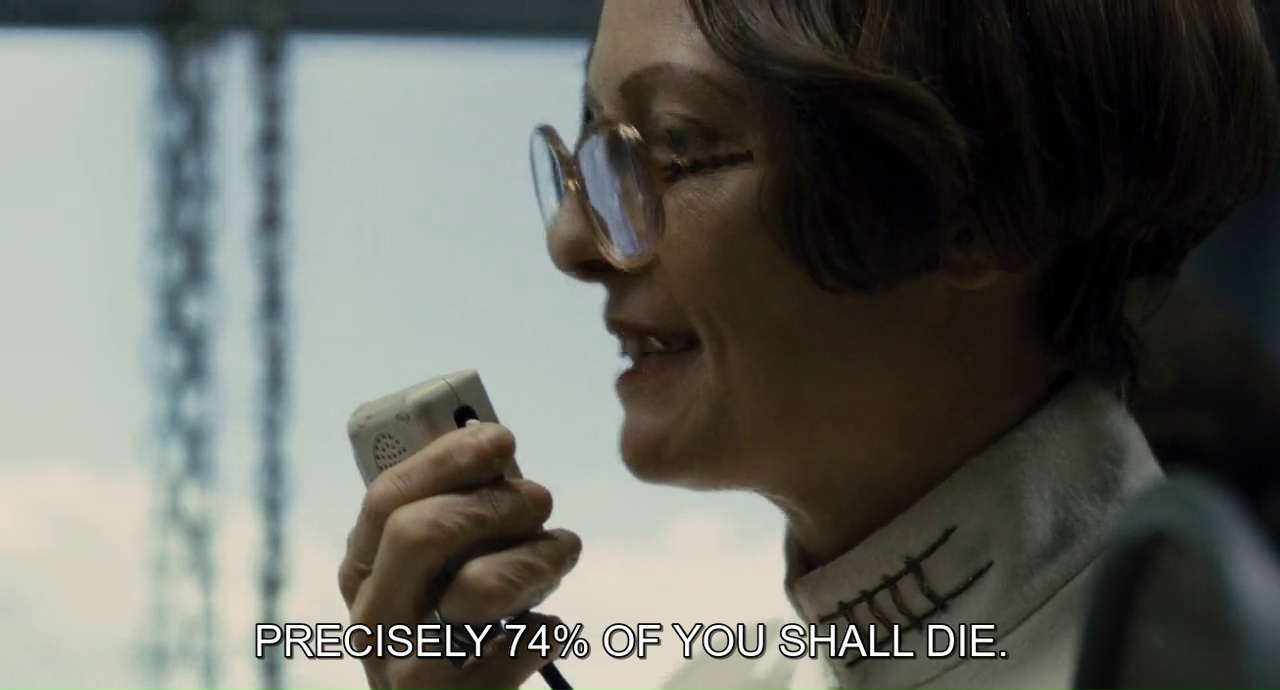
There are hints in the first half of the film, discussions about the number of arms people have, and then more food references as they march their prisoner Mason (Tilda Swinton), who previously lectured them on their place at the bottom of society, through the front cars. First they go through a greenhouse, then an aquarium, and we hear Bach’s Goldberg Variations, a tribute (one hopes) to Silence of the Lambs.  At the front of the aquarium, ecological balance is maintained by eating the fish twice a year as sushi. They sit down for this elite meal, but make their captive eat the protein bars that are the only food given to the “scum”.

Pic-00032.jpg

Curtis and his dwindling band of fighters go through a butchery, then a school, where the children are taught that tail-enders

Pic-00034.jpg

And that we, the pre-trainers,

Pic-00035.jpg

There are dentists, tailors, hairdressers, a fancy dining-car, an aquatic centre, a disco, a drug lounge – all the things that make up decadent, modern society.

Pic-00036.jpg

We are socially and culturally determined in large part by what we eat. The food is always better in first or business class. The higher classes eat beautifully prepared, gourmet tidbits. The lower classes, the starving and the deranged eat what they are given, or what they can hunt.

Just before the showdown, Curtis reveals what it was like when they first boarded the train: “A thousand people in an iron box. No food, no water.”

Pic-00042.jpg

“There was a woman. She was hiding with her baby. And some men with knives came. They killed her and they took her baby.”

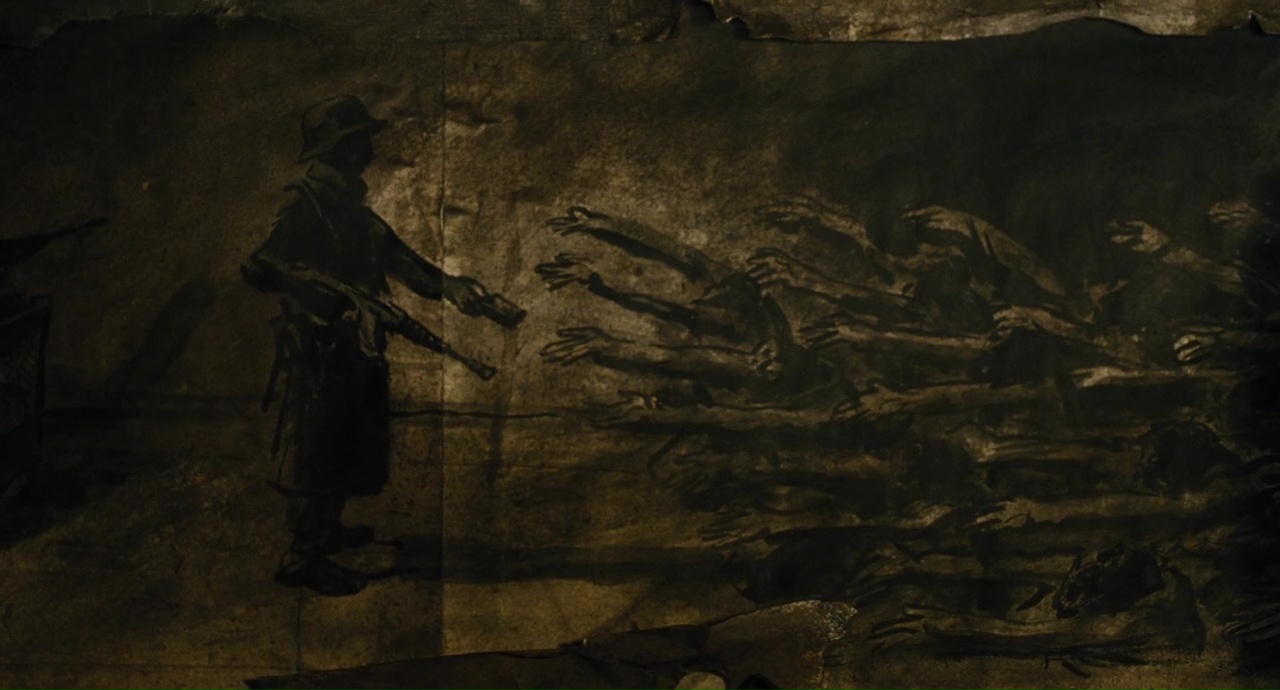
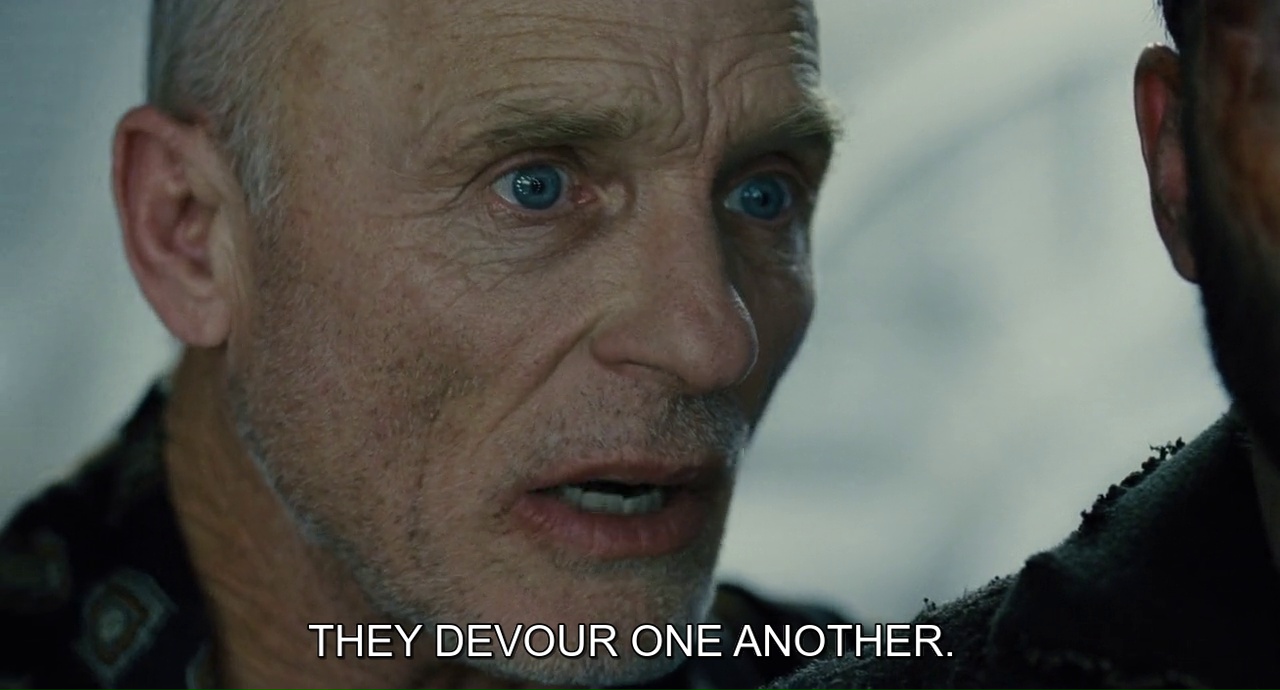
Then an old man took the knife and cut off his own arm, offering them that as food, to save the baby. Then others started doing the same. Sacrificing to the cannibals to save the next generation. Then the rich started sending through protein bars. And we thought they were going to be the cannibals!

Things Curtis hates about himself:

Pic-00044.jpg

Pic-00045.jpg

Well, there’s a lot more to the story, and a lot more to like, but you can find out by watching the movie. It’s worth it.

Here’s the trailer:

IF YOU LIKE MY BLOG, PLEASE FEEL FREE TO RECOMMEND IT (WITH DISCRETION) TO FRIENDS ON SOCIAL MEDIA.
IF YOU HAVE ANY QUESTIONS OR COMMENTS, YOU CAN USE THE TAG, OR EMAIL ME ON CANNIBALSTUDIES@GMAIL.COM.