Convict Cannibals: FOR THE TERM OF HIS NATURAL LIFE (Norman Dawn, 1927)

For the Term of His Natural Life is a 1927 Australian film directed, produced and co-written by Norman Dawn. It is based on the 1874 novel by Marcus Clarke, and was the most expensive Australian silent film ever made. It remains one of the most famous Australian films of the silent era. John Laws, in the trailer above, calls it “the grandest of them all, the climax of Australia’s silent cinema.” Amazingly, it was the third attempt to film the story, starting in 1908 with the film version of a stage play of the book,  and then in 1911 another filmed stage adaptation, The Life of Rufus Dawes.

It’s the story of a gentleman (in the traditional sense of that obsolete term) who is wrongly convicted and transported to Australia for “the term of his natural life.” This was a fairly common trope in Victorian novels (no one wanted to read about real criminals), and was recreated by Tim Burton when he made Sweeney Todd into a returned convict in his version of the Demon Barber of Fleet Street. As a convict, he changes his name to Rufus Dawes, and the rest of the story tells of the brutality of life as a convict at Macquarie Harbour in Tasmania and his eventual escape to claim his innocence. And, in the American version of the film, a happy ending (the book and the British version saw the hero and his true love come to a watery end).

The bit that interests devotees of Cannibal Studies in this story is the escape of a group of men led by a particularly evil-looking convict named Matt Gabbett (played by Arthur McLaglen in the 1927 film).

Being a silent movie, even the narrator gets an intertitle card:

After nine days with no food, Gabbett points out that there are only two choices— starvation, or eating one of the followers, who has fortuitously become lame. We see him taking an axe to a fellow escapee, while the others cringe, as we suppose semi-civilised folk would.

Gabbett tells them:

The cannibalism subplot was one of the most controversial aspects of the film. Gabbett is based on the true story of Alexander Pearce, who escaped from Macquarie Harbour in 1822 with seven other prisoners. Once recaptured, Pearce confessed that he had eaten his companions, but the magistrate in Hobart refused to believe him. A year later, Pearce escaped again and this time he was recaptured with the flesh of another man still in his pockets. He was taken to Hobart and hanged.

The story languished somewhat until revived in a six hour mini-series in 1983. In 2008-09, a number of Australian films were made that referenced Pearce – The Last Confession of Alexander Pearce (2008), directed by Michael James Rowland; Dying Breed (2008 – about his supposed offspring who are still eating people in the 21st century), directed by Jody Dwyer; and Van Dieman’s Land (2009), directed by Jonathan auf der Heide, which cut the crap and concentrated on the cannibalism story. We’ll get to revue this one, dear reader, one of these days.

The controversy over Norman Dawn’s 1927 version was driven partly by Tasmanian sensitivities about the unwholesome revelation of the island’s history. Marcus Clarke’s book was one thing; a big international motion picture, intended for a mass audience overseas, was quite another. Certainly, the film does sensationalise the cannibalism, shifting the focus away from the book’s message, which was to advocate prison reform. Prisoners like Gabbett (played by the brother of well-known British actor Victor McLaglen) seemed more likely to offer justification of capital punishment.

Australia is sorely lacking in cannibal stories, so even though Alexander Pearce was Irish (as were a large percentage of convicts), we claim him as our own. He did, after all, eat people and get hanged here, and if he hadn’t, no one would even remember he ever existed.

The film is currently available on YouTube.

Need to feed, need to breed: THE DYING BREED (Jody Dwyer, 2008)

Two hundred years ago (July 19 1824), Alexander Pearce was hanged in Hobart, Tasmania, and his body dissected for research. He was a cannibal.

Australia has a bit of a dearth of cannibal stories (compared to places like the USA and Russia). Ask Aussies about cannibalism and they will often make a joke about state or federal politicians. Then they may search their memories and come up with Katherine Knight, a slaughterhouse worker who in 2000 had passionate sex with her partner John Price, then stabbed him 37 times, professionally skinned him, hung his hide on a meat hook over the lounge room door, decapitated him, butchered his corpse and cooked some of his flesh. She served up his meat with baked potato, carrot, pumpkin, beetroot, zucchini, cabbage, squash and gravy in neat settings at the dinner table, putting beside each plate placenames for Price’s children. Another meal was tossed into the backyard; it appears she intended to eat it but decided against it. So, no points on that one I’m afraid – no one got eaten, so no cannibals. More recently, the Snowtown bodies in the barrels case was revealed to have an element of cannibalism in the final murder, but this was very much an afterthought to the killings, and not even mentioned in the film of the events.

Most of the real cannibals in Australian history were in fact convicts sent to the worst penal settlements the British could devise (and they were very good at that) then escaping, only to eat their comrades when other food sources were exhausted. Edward Broughton did just that in 1830, as did Thomas Jeffrey, who became a murderous bushranger, in 1836. But before them, a cannibalistic pioneer one might say, there was Alexander Pearce.

Pearce escaped the brutal penal colony only to eat his companions, not once but twice (he confessed when recaptured the first time, but the authorities didn’t believe him). He is shown very briefly in this movie as a historical flashback before the opening title, an escapee who is cornered by a very angry soldier whose gun misfires. Pearce tears the man’s throat out, swallows some and throws a bit to a thylacine (Tamanian Tiger) who is stalking him, to allow him time to escape.

The thylacine was a carnivorous marsupial who was endemic only to Tasmania, until wiped out by European colonists, the last one dying in Hobart zoo in 1936. There is no evidence of them eating humans. Thylacines were not the only targets of white settlers: Tasmanian Indigenous peoples were also rounded up and subjected to genocide in the first half of the nineteenth century.

Anyhow, the plot of this movie revolves around a biologist named Nina and her friends, who are trying to find proof that the thylacine is not extinct – her sister found a paw print, but was killed mysteriously near the Pieman River on the west coast. The film and other sources often claim that Alexander Pearce was known as the pieman due to his love of the meat of a wide variety of animals, although in fact it seems it was named after a pastry cook named Thomas Kent.

They get a punt across the river, driven by a cranky old man with a small girl who is playing with bones and reciting bloodthirsty rhymes. She bites the boyfriend.

They get to the town, where the locals are killing puppies and who knows who else.

Long story short, as they say, these are a cannibal family descended from Alexander Pearce, who they call the Pieman. The city slickers, mocking the locals as they depart, head down the river where, at the midpoint of the film (where the really good or really bad stuff happens) Nina finally but briefly sights a thylacine!

Of course, she doesn’t have her camera, so she grabs it and they go look for the animal, splitting up to search, proving without a doubt that none of them has ever watched a horror film before. You don’t split up! The other girl meets the creepy child from the punt, then is grabbed from behind and killed, and we get to watch her tongue torn out and eaten. The others find her strung up on a meat hook and butchered like any prey animal.

There’s plenty of gore and somewhat predictable jump scares (or maybe I’ve just seen too many of these types of movies) but the plot is interesting, the acting great, the direction and photography first-rate, and the scenery is spectacular, although the depiction of the Deliverance-like locals may reduce the usefulness of this film for promoting Tasmanian tourism.

“What did you hope to find? We’ve been here a long time. Almost as long as the nation. We have a life to protect, a tradition. You tourists have no tradition.”

The cannibals in this film capture tourists and either eat them or breed them, not that different to what humans do to other animals. When modern twenty-first century humans eat others they are often referred to as degenerate cannibals – they are accused of devolving into the cannibalistic savages that early humans are portrayed as, even though there is little evidence that earlier cultures were into cannibalism or that modern ones have outgrown it.

Humans often turn to cannibalism when food runs out. The Biblical story of the siege of Samaria in Israel some 3,000 years ago (2 Kings 6) relates that, unable to afford asses’ heads and doves’ dung, two women agreed to boil their babies for sustenance. But after they’d eaten the first one, his mother found that the second woman had hidden her child, a shocking breach of contract.  Such starvation cannibalism became common in the day of sailing ships, but even on land, Sawney Bean in fifteenth or sixteenth century Scotland is supposed to have stopped tourists as they passed through his wild lands and taken them home for dinner. Some of these stories seem to stray from cannibalism into something like an aversion to getting a job, which is how the modern versions like Texas Chain Saw Massacre and Hills Have Eyes are sometimes framed. We eat flesh because we need to or want to, and because we can. That still applies in the meat section of every supermarket. We don’t degenerate to cannibalism, we simply objectify the prey, be it human or any other animal. This objectification is at the heart of all politics.

The moral of these stories (they all have one, even the most basic slasher), is that there are other worlds out there, away from what we are used to in our own little niche. There are people outside our ways of understanding life and morality, whose daily existence may be inconceivable to those looking in. Coetzee said that the “upper intelligentsia” (Nina is a scientist) live lives irrelevant to most people, who may be “devoted to brawling and guzzling and fucking”. That’s whom we meet in the unexplored wilderness of Deliverance or Sawney’s Scotland or the Texas of the forgotten, and in this film; they fight, they kill, they eat and they reproduce. They survive and breed: the basis of all evolution. It’s what animals do, and a good cannibal film like this reminds us that we are, beneath our veneer of civilisation, just another brawling, guzzling, fucking animal.  

“Man’s flesh is delicious” THE LAST CONFESSION OF ALEXANDER PEARCE (Rowland, 2008)

Alexander Pearce was, as far as we know, Australia’s first cannibal. Although the Indigenous people of Australia were regularly accused of cannibalism, the evidence is suspiciously absent, and clearly such accusations were extremely useful in the British colonial campaigns of subjugation and genocide.

But Alexander Pearce was the real thing.

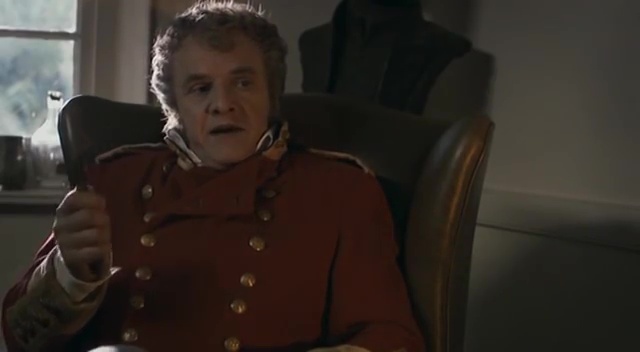
The film is mostly set in Hobart Jail, where Pearce (Irish actor Ciarán McMenamin) is waiting to be hanged, and has requested a priest to hear his confession. Somewhat unwillingly, an Irish priest named Father Philip Connolly (Adrian Dunbar) listens to Pearce’s story.

In 1824, the British penal colony of Van Diemen’s Land was a living hell, where vicious floggings were regular punishments.

Pic-00025.jpg

Pearce had been transported to Australia for stealing a pair of shoes, and continuing law-breaking saw him eventually transferred to Sarah Island, which was surrounded by sea on one side and wilderness on the other.

Pic-00010.jpg

Eight convicts made their escape, and headed off into the bush with enough food for four days. After eight days, weak with hunger, they start discussing cases where sailors lost at sea have engaged in cannibalism to survive, and realise they will have to do the same. They nominate Dalton the one member of their gang they all hate, a man who volunteered to be the “flogger” and who has whipped all of them. He probably should have kept his day job at Sarah Island.

Pic-00020.jpg

Three of the others turned back, but “took their share of Dalton”. Every time they run out of food, another man is killed. They see new potential meat – kangaroos and emus – and vow brotherly love – never to kill another of their own, but then discover how fast kangaroos and emus can run. Soon there are four, then just three, and Pearce realises that he is next, because the other two are friends. Luckily for Pearce, one of them gets bitten by a snake, develops gangrene and well… once more they have brotherly love. The priest is dismissive of such protestations of virtue, and Pearce answers:

Pic-00028.jpg

“A Full Belly is prerequisite to all manner of good! Without that, no man will ever know what hunger will make you do.”

Soon there are only two, and neither dares sleep. Pearce wins the game, and the last meal, but is interrupted by a local.

Pic-00031.jpg

After three months, Pearce made it, alone, to Jericho, in the centre of Tasmania, over 150km away from Sarah Island. The magistrate sent him back to Sarah Island, because he did not believe the story of cannibalism. He thought it was a cover for his friends, to disguise the fact that they were still at large, bushranging.

Pic-00033.jpg

“He’s a thief. He’s a forger. A recalcitrant Irish… but I didn’t credit him with being a savage”.

It was also impossible to hang him for murder, since there were no bodies – a legal benefit of cannibalism.

At Sarah Island, Pearce was viciously flogged and chained to a rock.

Pic-00035.jpg

He escaped again, perhaps at the urging of another young convict, whom he killed eight days later, while they still had provisions. He was apparently enraged when he discovered the boy couldn’t swim, a real disadvantage when escaping from an island. Pearce signalled the first passing ship, confessed his actions and showed the authorities the body. So this time, they could hang him.

Pic-00034.jpg

“The man’s a monster. He cut that young man in half, and devoured him for meat, and this while he himself still had bread and cheese lining his pockets”.

At the governor’s table, all merrily chewing on some other unfortunate animal, they discuss Pearce’s fate: to be hanged, and his body dissected.

Pic-00036.jpg

“Quite an irony, I imagine, a cannibal being dissected… see what breeds such savagery”.

Asked by the governor’s wife why he is giving comfort to Pearce, the priest replies “I do it for fear… Fear of what we all might become, here at the end of the world.”

Pic-00037.jpg

Pearce was hanged at the Hobart Jail at 9am on the 19th July 1824.

“whoever sheds the blood of man, by man shall that man’s blood be shed, for in his own image, God made human kind.”

Pic-00041.jpg

“The world is always easier understood held at a distance with tales of monsters and the like. This is how Alexander is remembered. Not as a man. Yet few truer words have ever been spoken: A full belly is prerequisite to all manner of good. Without that, no man will ever know what hunger will make him do.”

The film was nominated for the 2010 Rose d’Or, Best Drama at the 6th Annual Irish Film and Television Awards, Best Drama at the 2009 Australian Film Institute Awards, won Best Documentary at the 2009 Inside Film Awards and the director Michael James Rowland was nominated in the Best Director (Telemovie) category in the 2009 Australian Directors Guild Awards.

Pic-00023.jpg

Pearce is supposed to have said just before his execution:

“Man’s Flesh is Delicious. It Tastes Far Better Than Fish or Pork.”

This line does not appear in the film, and is probably apocryphal.