THE LION KING (1994, 2019, 2024)

With the release of another Lion King franchise film, Mufasa, this one a prequel to the earlier story, it is perhaps worth considering the subject of talking animals, and particularly whom they feel OK about eating.

The first film was released in 1994, and was a glorious animation, with music by Elton John and Tim Rice, but was clearly a cartoon, one that has earned almost a billion dollars since its release.

Although we can get into the plot and the emotions of the film, we don’t really feel obliged to believe in the anthropomorphic veracity of cartoon characters. Do we really care if a cartoon duck eats other birds? No, not if he wears clothes and speaks (a form of) English. It is clearly a line drawing that moves, and requires no ethical work.

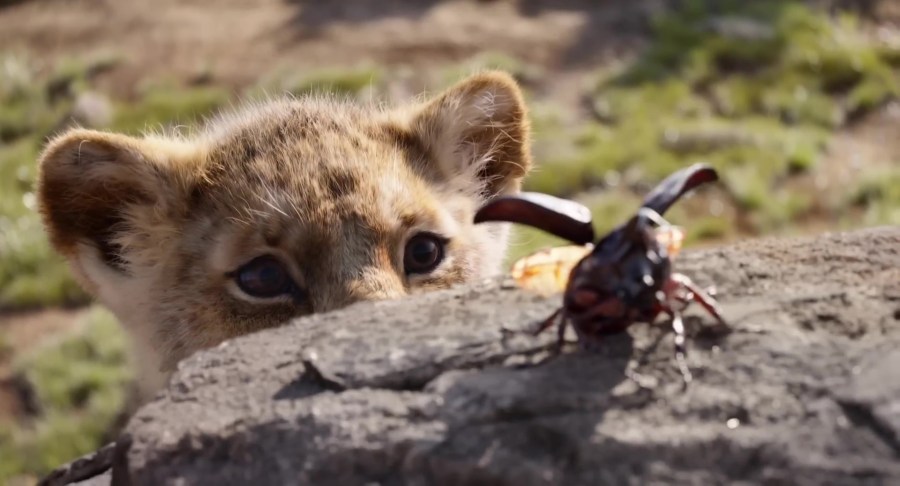
But in 2019, the film was remade as a photorealistic animation. With a small dose of suspension of disbelief, the animals looked like they were real, roared like lions, but somehow spoke English, some of them, strangely, with an eastern European accent. It was a sensation, so far earning over 1.6 billion dollars.

This blog will appear around Christmas, so I guess it is not unreasonable to unleash my inner Grinch, at least when it comes to anthropomorphic representations of carnivorous virility. As far as we are aware, lions can’t talk, except in movies. They can certainly communicate though, and that communication, particularly the roar that can be heard miles away, is featured prominently in all versions of the Lion King.
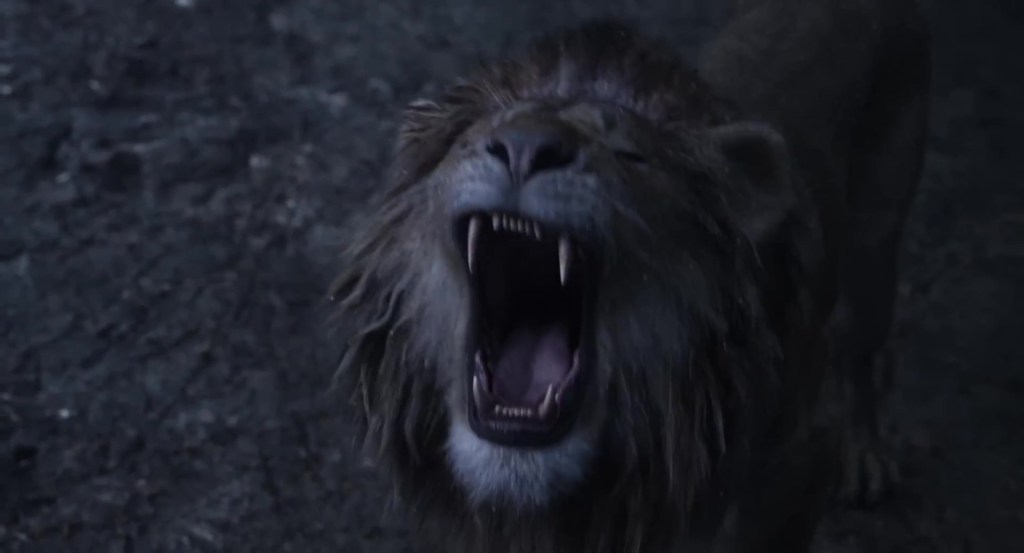
If they could talk, would they say and do the things shown in the film? Would they, for example, let a mandrill take their cub and hold him, Michael Jackson-like, over a cliff for the other animals to worship and celebrate? I’m even less sure of how celebratory the prey animals would be about the birth of yet another predator, no matter how cute.

But the main thing that bothered me throughout the film was the food, and it wasn’t (just) because I watched it at lunchtime. We are shown a happy monarchy (the “pride land”) where the devoted subjects are summarily executed and eaten by the king and his family. This is later turned into a blasted desert filled with the bones of the prey animals by a usurper king lion, an evil uncle lifted from Hamlet and made leonine.

Those not privileged to live in the pride-land inhabit a shadow terrain, the “elephants’ graveyard”, where (dark-skinned) hyenas skulk, with little evidence of anything to eat and, we are assured, always hungry. We have the “circle of life” followed by a circle of hell.

Even further away, in a wildness to which the exiled lion cub Simba flees from his evil and murderous uncle, we have a sort of Garden of Eden II. Here, mammals take a pledge not to eat each other, an expanded ring of utopian privilege, which excludes only insects and their pupal forms, who clearly would have to exist in immense numbers to feed a growing lion, let alone his friends.

Listen kid: if you live with us, you’re gonna have to eat like us.
This looks like a good spot to rustle up some grub.
A grub. What’s it look like?
Tastes like chicken.

What is the ecology here, and the ethic behind the food choices?

Simba, the cub and heir apparent, wonders about this too. He and his future wife (lions get married?) are the only ones to connect with all these environments, and Simba the only one to question the implicit ethos of each one. Early in the piece, as he surveys the kingdom where “the light touches” (as opposed to the darkness of the hyena shadowlands), he asks his father why they eat their loyal subjects, the zebras, antelopes and presumably anyone else slower than them. It’s a question most parents dread as they feed lumps of animal flesh to their children, and then read them books about happy animals. It’s the circle of life, says Simba’s Dad, clearing his throat for us all to join a singalong. We eat them, then when we die, our bodies feed the grass, and future victims eat the grass.
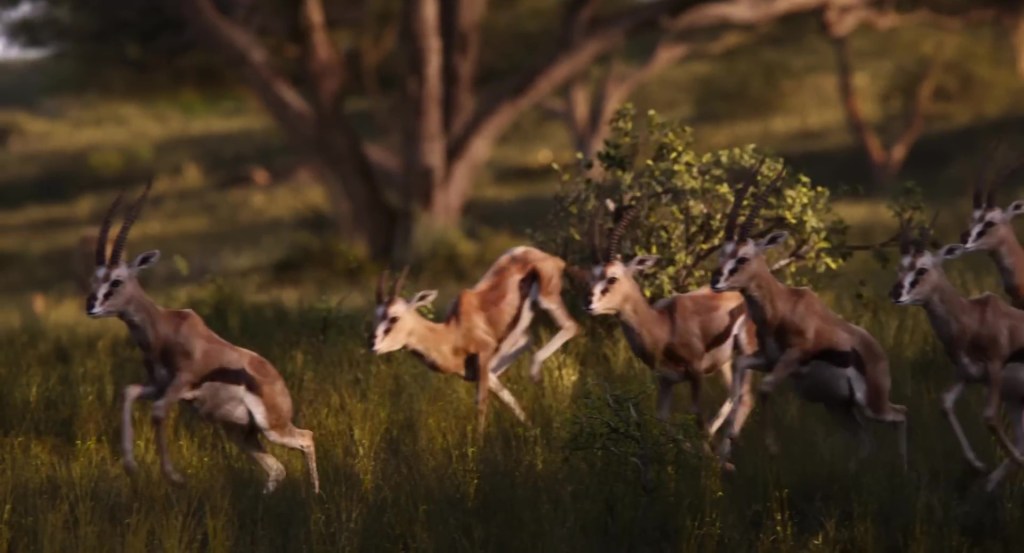
Now this is just absurd. I’m not sure how much grass the average antelope eats, but it would need an awful lot of dead lions buried underneath it to make it fecund. Photosynthesis, which combines carbon dioxide and water into carbohydrate and oxygen, is what makes the grass grow. Lion corpses (and presumably lion shit, now enriched with zebra fat) might add some trace elements, but they are hardly necessary. What lions actually do for the environment is thin out the number of herbivores so that they don’t eat all the vegetation and turn the area into desert, which is what inexplicably happens when the bad lion, Scar, and his army of hyenas, eat all the herbivores. Where does all the grass go? It should be a jungle without all those antelopes and giraffes.
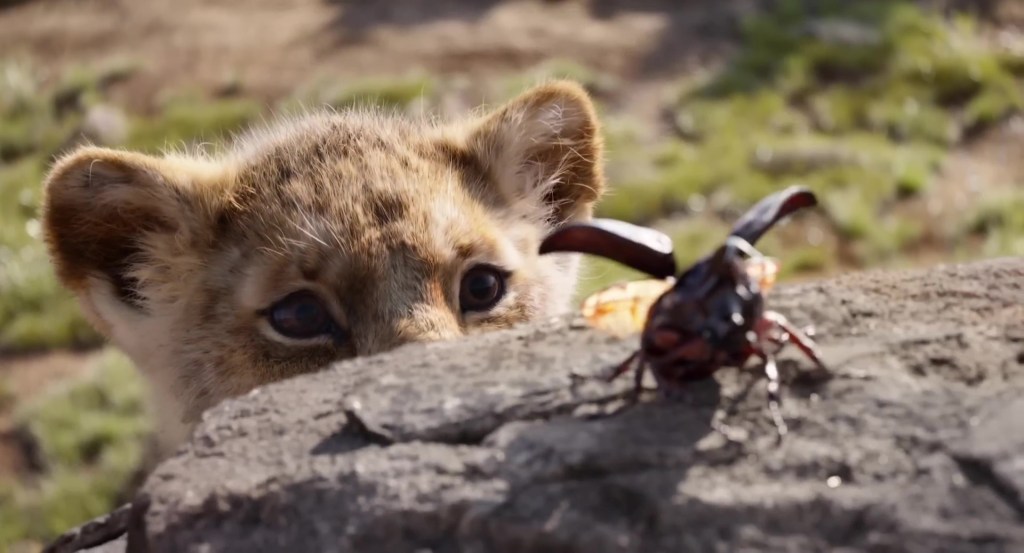
Then we have the entemo-vegetarians of the land beyond the shadows where, you know, hakuna matata, there are no worries, unless of course you are an insect. If you search the internet, you will find learned articles on how many hours a day a lion would need to be chewing pupae (it’s a lot more than 24) in order to sustain his life, let alone progress from cub through puberty to full sized adult male. And why can the various mammals and birds talk, but the insects can’t? Jiminy Cricket could talk in the early days of Disney – when did he fall out of the circle of privilege?

It’s all absurd, of course, but it’s what we teach kids, and not just by taking them to see Lion King. When they ask questions like “I love animals, so why are we eating them?” talk of feeding grass with our bones doesn’t cut it, which is probably why so many young people go vegan. The correct answer, which won’t satisfy anyone, is “because we want to, and because we can”. We have the appetite, and we have the power. We arbitrarily decide who is within our circle of privilege.

In the film, lions and all mammals, and some other odd creatures, live without being eaten in a hippie paradise. In the pride-land, under good king Mustafa (Simba’s dad) certain animals are part of the elite and don’t get eaten, while the anonymous proletariat animals seemingly go willingly to their just deserts (or desserts). Contrast this with the hyena shadow land, where, according to a Disney comic book, the hyenas enthusiastically engage in cannibalism, as well as presumably eating the dead elephants who come to the elephant graveyard to die (which, BTW, elephants don’t really do). The human circle of life is less well defined, depending on the culture: in the West, humans consider chickens, pigs and cows outside the elite of the inedible, while dogs, cats and dolphins are inside, and we express moral outrage when these capricious lines are crossed. In other parts of the world, dogs and cats may be delicacies, or cows or pigs may be forbidden. And this blog has brought you many films in which humans are the preferred repast.
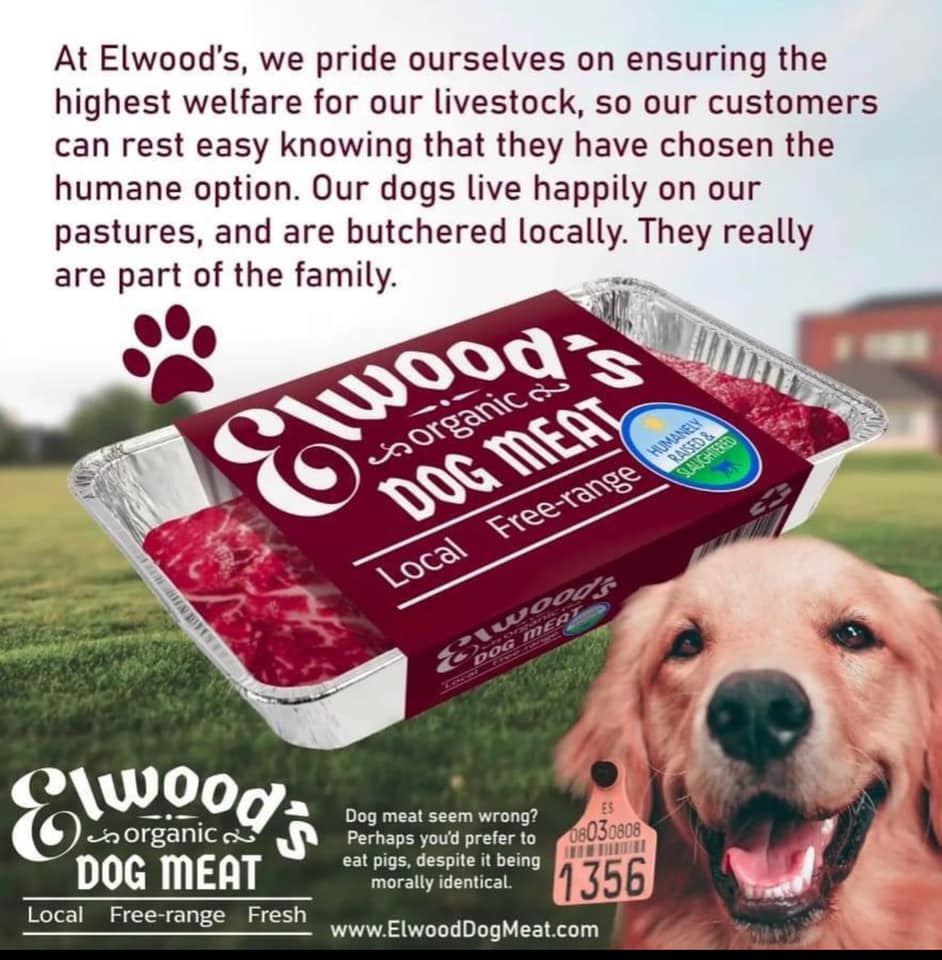
Animal activists are often accused of anthropocentrism, having the nerve, for example, to suggest that fish feel pain or dogs feel love. But truly toxic anthropomorphism appears in narratives of talking animals, where we offer temporary anthropomorphic capacities to other species, so that we can push ideological or commercial messages like a “circle of life” to an audience of minors, while pleading disingenuously that these are just cartoons. This cartoon lies to kids about the nature of nature, to promote the acceptability of carnivorous virility.

We don’t do our society any favours by lying to our kids. Lions don’t think about dying or the benefits their carcasses will bestow on the grass. They hunt because they are obligate predators and will starve otherwise, regardless of the available insect population. Humans, on the other hand, are closer to hyenas – scavengers who are never satiated. We don’t keep herbivore numbers in check by eating them; the opposite is the case – we deliberately breed them by the billions, often in appalling conditions, then slaughter them, in terror and agony, in industrial killing centres, polluting the land, degrading the water and filling the air with methane.
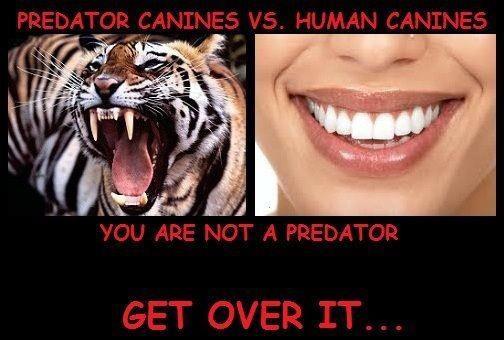
It’s not clear if Simba will impose insectivarianism on his kingdom after the credits roll – he may have to, insofar as the flocks seem to have been decimated. But Simba, if he really could talk, would be appalled by the way humans cynically misappropriate the role of predator in order to feed our insatiable appetites. I think perhaps even the hyenas would agree with him.

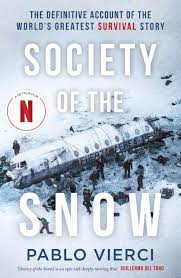
It’s just meat: SOCIETY OF THE SNOW (La sociedad de la nieve)  (J.A. Bayona, 2024)

Society of the Snow is a new account of the 1972 Andes plane crash. It is an adaptation of Pablo Vierci‘s book of the same name,which included detailed accounts of all sixteen survivors, many of whom Vierci had known from his earliest years.

The twist here (not really a spoiler as they keep presaging it) is that the narrator of the film is one of those who were not among the sixteen.

Uruguayan Air Force flight 571, chartered to transport the “Old Christians” rugby team to Santiago, Chile, crashed into a glacier in the heart of the Andes. Of the 45 passengers on board, only 16 survived for the 72 days before they were rescued. Trapped in one of the most inaccessible and hostile environments on the planet, they had to choose cannibalism to stay alive. In this blog, we are most interested in the debate that led to the decision to eat their friends and crew, but the whole story of their pursuit of survival goes beyond what they ate and is equally fascinating.

We see a group of very devout young people, laughing and joking as they organise the trip to Chile, horsing around as the plane gets most of the way over the Andes, and then their reactions as the plane just does not reach the required altitude.

After a week without food, their urine turning black from lack of protein, they start exploring their very limited options. One group believe they will be rescued, even though their plane is painted white and they are in one of the biggest snowfields in the world. But most of them start to think about the only realistic way to survive, particularly after they find a portable radio and hear that the search for them has been called off.

The film has some interesting discussions regarding the ethics of cannibalism.

“What’ll happen to us? Will God forgive us?”
“He’ll understand we’re doing everything we can to survive.”

Roberto, the medical student who has been trying to keep the injured alive, explains what happens to the body without food – it dries up, starts to absorb the organs. There is reference to the “God of the Mountains”, a different being to the one in the city. Arturo, one of the wounded, has a fascinating soliloquy about this God:

“That God tells me what to do back home, but not what to do out here…. I believe in another God. In the God that Roberto has in his head when he treats my wounds. In the God that Nando has in his legs when he keeps walking no matter what. I believe in Daniel’s hands when he cuts the meat, and Fito when he gives it to us, without saying which of our friends it belonged to. So we can eat it, without having to remember the life in their eyes.”

They discuss the legality and the practicality of cutting up bodies, the similarity to organ donation, but of course without consent. So that inspires them to make a pledge.

And so they begin to eat. There are scenes of skeletons being picked clean as the three Strauch cousins offer to cut up the bodies in an area that is hidden from the plane, “to keep the ones who eat from losing their minds”.

What the film glosses over is the Catholicism that permeates much of Latino culture. While they make the point that the bodies are now “just meat”, they do not look for the parallels of their cannibalism to the Eucharist, the eating and drinking of the wafer and wine in church which is supposed to transubstantiate into the blood and body of Christ. It is a theme explored in more detail in the earlier film, as well as in the memoirs of the survivors.

“Drawing life from the bodies of their dead friends was like drawing spiritual strength from the body of Christ when they took Communion”
(Parrado & Rause 2006. Miracle in the Andes: 72 Days on the Mountain and My Long Trek Home, p.117.)

They quote to each other Matthew 26:26: “Take and eat, this is my body.”
(Canessa & Vierci 2016. I Had to Survive: How a Plane Crash In The Andes Inspired My Calling to Save Lives,  p.27).

I suspect this might have been considered a bit too close to the bone (apologies for the pun) for the Spanish speaking audience to whom the film is mainly addressed. Or else they wanted to appeal to a wider audience than just the Catholics. Or perhaps a bit of both.

The story is best known in print for Piers Paul Read’s 1974 book Alive: The Story of the Andes Survivors, which was turned into the film Alive in 1993 by Frank Marshall. Since then, several of the survivors have written their own accounts, to set straight some of the alleged inaccuracies in Alive, but none are as well known. Outside of the Hannibal story and perhaps Soylent Green, Alive is the film most people seem to recall when they hear I have written a thesis on cannibalism.

Alive had a few problems that this film nicely avoids. For one thing, it was very Hollywood, or “Anglo” as the politically aware like to say. It starred American actors who did not look like they were starving, even when they were fondly reminiscing and lusting for the food they missed, which seemed to be mainly pizza. Society of the Snow has Uruguayan and Argentinean actors speaking in Spanish, and makeup and special effects have improved markedly in the thirty years between the films, so they look hungry, and their wounds look ghastly. It is a more authentic look at the situation in which a group of deeply religious young men could decide to eat their dead fellow passengers and friends, who conveniently lay around them, preserved in the snow.

The film closed the 80th Venice International Film Festival in an ‘Out of Competition’ slot. It was theatrically released in Uruguay on 13 December 2023, in Spain on 15 December 2023, and in the US on 22 December 2023, before streaming on Netflix in January 2024.

Society of the Snow received positive reviews. At the 96th Academy Awards, it was nominated for the Best International Feature Film, representing Spain, and Best Makeup and Hairstyling.

Society of the Snow is arguably a better movie than Alive, although at two hours forty minutes, I thought a bit more editing might have been useful. Still, sitting through that 160 minutes gave a miniscule sense of the despair of sitting in a wrecked plane in freezing conditions for 72 days, so we cannot complain!

But I was sorry to see them drop the cannibalism/communion issue, even though there is a hint in the final scene where the survivors sit around a dinner table like the Disciples at the Last Supper, their dead friends being the bread of life, transubstantiated from sacred to edible, the reverse of what is supposed to happen to the church wafer. Whether you consider this a cannibal movie or an epic of survival (and yes, there is controversy raging about that), exploring why people do or don’t eat each other is endless fascinating, and the question of cannibalising the body of Christ is, or should be, at the heart of this story.

“Our women can’t get pregnant” A BOY AND HIS DOG (L.Q. Jones, 1975)

“Dog eat dog” is an odd expression. Dogs generally don’t eat each other. The phrase is really a euphemism for the way humans will exploit and kill (and sometimes eat) each other. Accusing the dogs is more socially acceptable, but the phrase is more about our own predilection for devouring our own kind to satiate our various hungers, particularly in times of societal collapse.

This cannibalism blog has reviewed a number of post-apocalyptic films, the best known being Soylent Green, Delicatessen, The Bad Batch, Snowpiercer, 28 Days Later and The Road. Lesser known films include No Blade of Grass, We Are The Flesh, Cadaver, The Girl With All The Gifts, Tear Me Apart and of course several versions of the H.G. Wells classic, The Time Machine.

Clearly, we love bad things happening, preferably well into the future (800,000 years in The Time Machine), and to other people. It’s Greek tragedy but set in our future, warning us of the inevitable unwinding of society and, as we have found, often the eating of the most vulnerable. In most such movies, food is the obsession of both the protagonist and the various antagonists that must be overcome.

The protagonist of such movies is almost always male, and males, in most cultures, are conditioned to eat meat. If humans are the only meat available, that will often do just fine. Other appetites appear occasionally (there was a controversial rape scene in No Blade of Grass), but Freud’s insistence on the primacy of the sexual urges is put on the backburner (sorry) when it comes to eating.

Not this one though. The film is a post-apocalyptic black comedy (we see mushroom clouds at the start, and are told that World War 4 (in 2007) lasted five days – enough time to empty the missile silos). This film is set in 2024 (well, Soylent Green was set in 2022, so now seems like a good decade for disasters). The humans who survive work together in “rover packs” or else hunt alone as “solos”. There is an implication that the rover packs are happy to engage in a bit of cannibalism, as we see a small child carried, struggling, into a campsite.

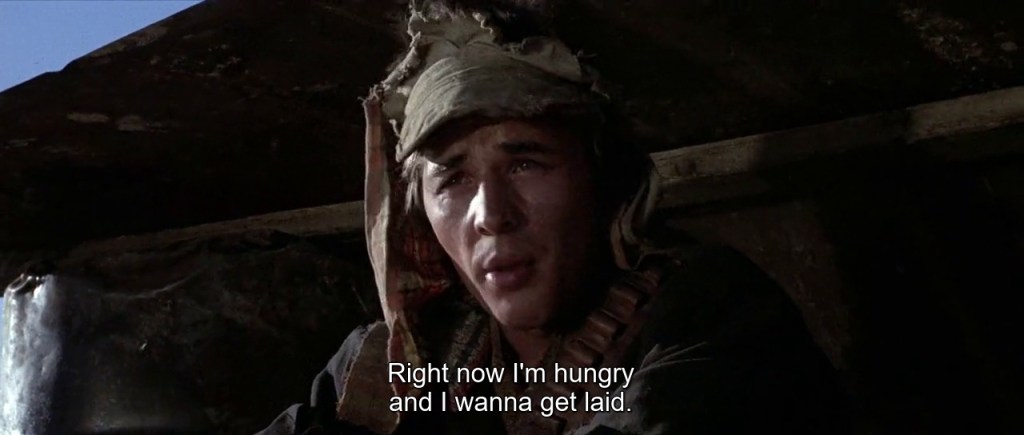
The main character is a solo – his name is Vic, and he is played by Don Johnson, who a decade later would become a huge star and win a Golden Globe for his role in Miami Vice.

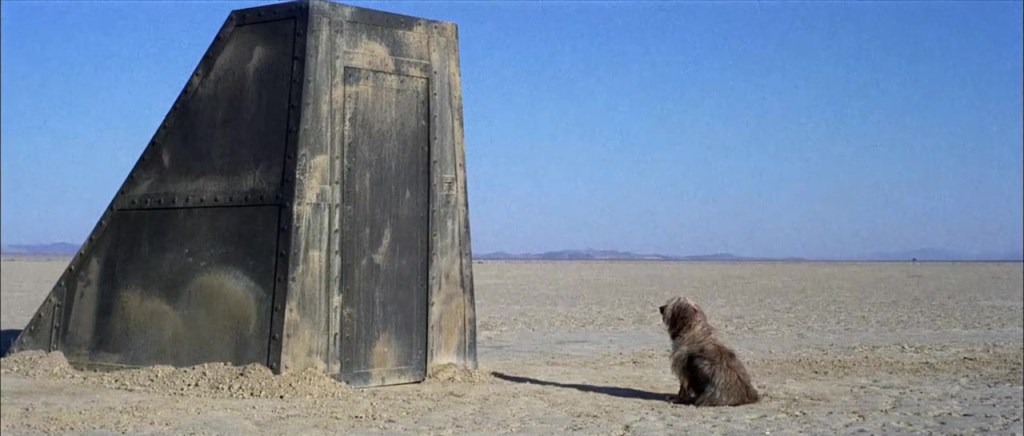
Did I say main character? Arguably, the star of this film is Blood, a shaggy dog.

Blood is smarter, better informed, has an advanced sense of humour and irony (he calls Vic “Albert”, after the rather more conventional dog stories of Albert Payson Terhune), has a superb sense of smell, and can converse telepathically with Vic. But the genetic modification that allowed this telepathy (designed for war of course) also removed his ability to hunt for food. So, Vic and Blood are symbiotes – Vic hunts for food, while Blood smells out women for the sexually voracious appetite of Vic.

In this ultimate extension of what Barbara Creed calls “aggressive phallicity”, the frontier of the rugged individual, the gun is king and women are purely there as rape targets. In the opening scene, Blood finds a woman, but a rover pack has arrived first, and they have knifed her after they have had their fun. Vic’s anger is purely selfish – that she could have been used a few more times. Blood mocks him “you’re so funny when you’re sexually frustrated.”

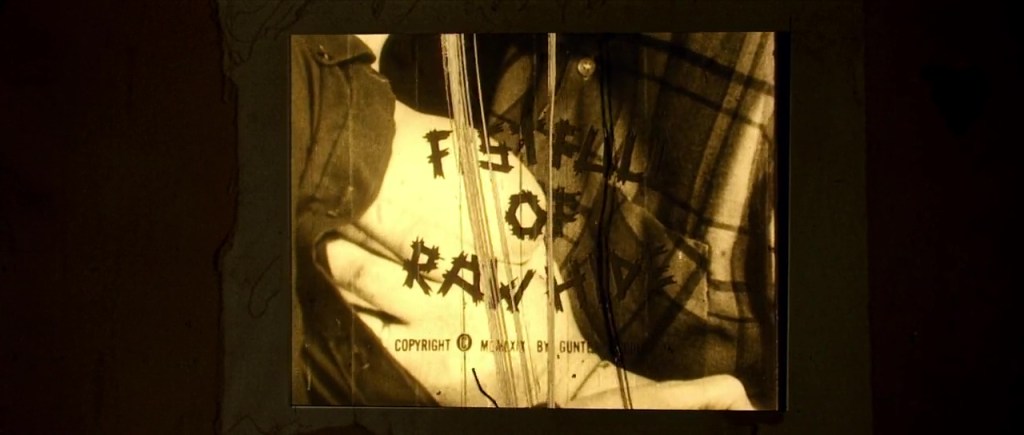
Later, Blood discovers a woman, Quilla (Susanne Benton) in disguise at the movies (there is one rover pack that exists as a sort of neutral space, putting on movies, running a brothel and selling popcorn). They put on old movies and cheesecake for lonely solos to beat off to. They watch Fistfull of Rawhide (it’s a real movie, from 1969) as Vic waits for the girl to leave and head someplace isolated where he can accost her.

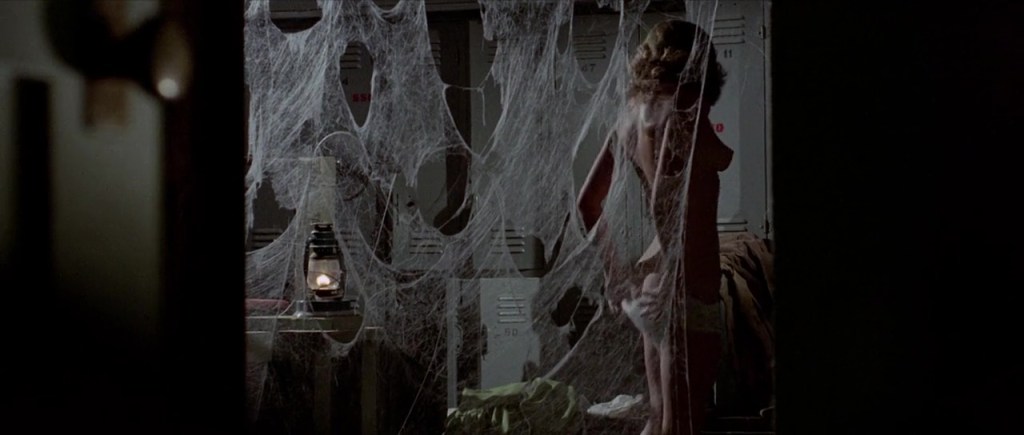
They follow her to a deserted gymnasium, where she is getting changed from her male disguise, and he is enchanted by her youth, beauty and cleanliness.

Quilla comes from a different world, the “Downunder”, a series of underground cities where traditional American values rule – raised hats, marching bands, picket fences, apple pies, civility). Everyone is made up in white-face – everyone is Middle America is white, and seem to need confirmation. Quilla, it turns out, was “the cheese” – she came to the surface to tempt Vic, like Eve tempted Adam, so he would enter the underground world, and bring his sperm with him.

Yes, the solid citizens of the symbolic order or language and laws have become sterile. But Blood, she says, wouldn’t fit in there. Trouble in paradise. Blood, badly wounded defending Vic, who had refused to leave Quilla to a rover pack, waits at the portal as Vic descends like Orpheus in search of Quilla. They want Vic’s sperm, because being underground has made their men sterile, but it’s not going to be the orgiastic event Vic imagines – they strap him down and connect his member to an electro-ejaculation machine, just as modern agriculture does to prize-winning bulls and rams. Such a device is normally inserted into the rectum and positioned against the prostate, and an electric charge causes involuntary ejaculation. To the townsfolk, Vic is an animal to be milked of sperm and then killed when they are done with him.

The film is available on YouTube (at the time of writing) so I won’t give too many spoilers. It’s well acted, the dog is delightful, the plot is pretty faithful to the novella of the same name, which came from the brilliant mind of Harlan Ellison. Ellison published the story is a collection called The Beast That Shouted Love At The Heart Of The World, in the introduction to which he objected to the term “new wave science fiction”, and cast bitter scorn on the “clots” who called his work “sci-fi”. Ellison was known for his brilliant writing but also his outspoken, combative personality; the Los Angeles Times described him as “the 20th-century Lewis Carroll” while Robert Bloch, author of Psycho, called him “the only living organism I know whose natural habitat is hot water”. The story’s concept remains original and the narrative sparkling, even half a century after the book and film were made.

The genius of this story, captured in the film, is the deconstruction of some of the most basic assumptions of our (pre-world war IV) societies. One, Derrida tells us, is common to all philosophers up to now – that we look at animals, but assume they do not look back. It is the basis of anthropocentrism (human supremacism) to assume that only humans are aware, are subjects who think and observe. But in this film Vic is the dumb animal that only knows how to fight and fornicate, while the “rational animal” who keeps him alive, teaches him and cares for him, is Blood, the dog.

Then there is the myth of the hero, the man of action – men like Vic seem to be a dying breed. Vic is only interested in “getting laid” – and believes that is only possible through violent rape. But Quilla is smarter than Vic, manipulative and calculating, as well as having a stronger libido – “I’m the one who’s supposed to want it” he complains. Socially too the dominant male is an anachronism. Above ground, the solos are being recruited into rover packs or killed, while below ground, the patriarchal symbolic order that is trying to recreate America of the 1950s is dying out – the males infertile.

Finally, I need to address the question of cannibalism, because, hey, this is a cannibalism blog. There is an implication in the film that the rover packs are kidnapping children from other packs for dinner (we all know that babies taste best). That’s what happens after an apocalypse – check out the gangs in The Road. But there is an implication that the society below ground also eats meat, and the only animals we see are humans, plus one small white dog. Those who disobey “The Committee”, a triumvirate who rule the place, are sent to “the farm”, to be killed and perhaps eaten. That’s what farms do – provide food.

And what about Blood and the other dogs – dogs are scavengers, but they usually prefer meat. While Vic collects pre-war cans of food, and Blood is very pleased to eat popcorn at the movies, there are certainly a lot of bodies lying around. But we see no evidence of anyone, human or canine, eating (adult) humans, until, like most apocalypse movies, there is no choice.

Or rather there is a choice – sex or love.

There is a popular ethical question about whom you would save from a burning building – a human stranger, or your dog? I suspect most people who have dogs would feel required to answer “the human”, but sotto voce would answer “my dog of course”. When Vic emerges from the Downunder with Quilla, he finds Blood badly injured and starving. Quilla tells Vic she loves him, tells him to leave the dog and go live with her. There’s lust, and there’s love. What will a boy do for his dog?