Criminals, rapists and cannibals: Donald Trump and the immigrants

Way back in 2015, when first campaigning for the presidency, Donald Trump announced he would build a wall on the border with Mexico to keep out:

“…people that have lots of problems. They’re bringing drugs. They’re bringing crime. They’re rapists. And some, I assume, are good people.”

That seems quite tame now, doesn’t it? Warning about rapists have lost their power, especially given Trump’s own personal legal struggles regarding sexual assault. 

So he has turned, dear reader, to our fave subject. Speaking on Right Side Broadcasting Network from Mar-a-Lago, a resort that relies heavily on immigrant labour, he upped the ante on border crossers by calling them cannibals released from mental institutions.

“They’re rough people, in many cases from jails, prisons, from mental institutions, insane asylums. You know insane asylums. That’s ‘Silence of the Lambs’ stuff. Hannibal Lecter, anybody know Hannibal Lecter?”  

This is not the first time that Trump has quoted Hannibal. At a rally in Iowa in October 3023, he also spoke of people from insane asylums sneaking into the country, and again quoted Hannibal. He added a rather strange endorsement.

“Hannibal Lecter, how great an actor was he? You know why I like him? Because he said on television on one of the – ‘I love Donald Trump.’ So I love him. I love him. I love him. He said that a long time ago and once he said that he was in my camp, I was in his camp. I don’t care if he was the worst actor, I’d say he was great to me.”

Hannibal Lecter is, of course, not in a position to comment on politics as he is a fictional character born in the mind and the novels of Thomas Harris and born again, we might say, in the films of those books in which Hannibal was played by Brian Cox and then by Anthony Hopkins. Then, in a third coming, Hannibal was rebooted as a Gen-X queer icon in the TV series Hannibal, played by Mads Mikkelsen.

Which of these Hannibals loves, or loved, Donald Trump?

Mads Mikkelsen told CBS News in 2016 that though he could “definitely laugh at some of the stuff [Trump] says, he can also go, ‘Oh my God, did he say that?’ I think he’s a fresh wind for some people.”

Brian Cox called Trump “such a fucking asshole” and “so full of shit.” So Trump is probably not quoting him.

Hopkins, who was born in Wales and became a U.S. citizen in 2000, told The Guardian that he doesn’t care for Trump and explained that he doesn’t vote anyway, because he doesn’t “trust anyone.”

“We’ve never got it right, human beings. We are all a mess, and we’re very early in our evolution.”

Nietzsche wrote of an Übermensch, a super-man who was as superior to ordinary people as they feel themselves to be to pigs. Hannibal clearly sees himself in this role. The mantra of the Übermensch is “Adapt, evolve, become”. But, as Charles Darwin would tell you (if he had not himself become extinct), evolution does not describe a ‘great chain of being’, an evolutionary ladder toward perfection. It is simply about best fitting a niche, surviving a hostile environment while competitors become extinct. The art of evolution is to out-run, out-fight, out-eat the other – to be the last one standing. And the only one eating. Perhaps eating the loser. As Frederick Chilton tells us, “Cannibalism is an act of dominance.”

Early humans seem to have practised cannibalism (according to some palaeontologists), although it may have been more for ritual purposes than for the protein. But in the modern age, protein is king, or at least those who eat the most protein consider themselves therefore superior to nature, and to other humans. Meat is a fetish, an addiction, a way of declaring human, particularly male, supremacy. We confine, torment and slaughter around 80 billion land animals each year (that’s 80,000,000,000) to feed this fetish.

But supremacism does not depend on species – those of another race, another origin, another gender, another age-group may all be dehumanised, objectified like farmed animals, and cannibalism is famously the accusation used to dehumanise colonised people, giving invaders the excuse to enslave or exterminate them. Trump dehumanises immigrants by accusations of cannibalism, just as his political opponents dehumanise him. When American comedian Jon Stewart was asked in 2017 by Late Show host Stephen Colbert to say something nice about then President Donald Trump, he hesitated and eventually blurted, “He’s not a cannibal”. Colbert followed this up a year later suggesting Trump eats human flesh, but only “it’s very well done with some ketchup”.
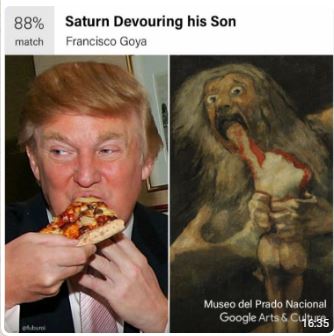
Consuming the appropriated assets of those considered foreign or inferior is standard operating procedure in human history. In the absence of now largely abandoned concepts of (some) humans being semi-divine creatures, created in the “image of God”, what is to stop the actual consumption of those on the next rung down? As the huge population of humanity consumes the environment, leading to climate change and famine, could cannibalism be the next phase of human evolution?

As anthropologist Harold Monroe asks in Cannibal Holocaust, “I wonder who the real cannibals are?”  

And as Hannibal said,

“It’s only cannibalism if we’re equals.”

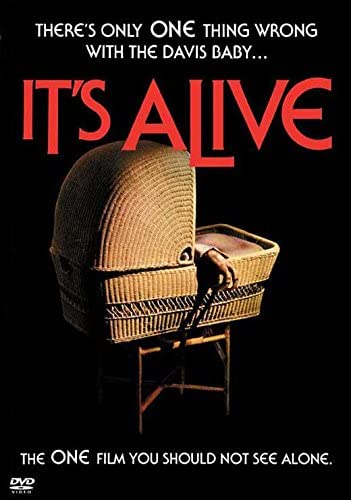
Cannibal baby: “IT’S ALIVE” (Larry Cohen, 1974)

It’s Alive is a 1974 American horror film written, produced, and directed by Larry Cohen. There are lots of movies about kids that grow up bad (e.g. The Omen) or get taken over by something bad (e.g. The Exorcist) but Cohen had the revolutionary idea to make a film about a newborn baby who was bad from birth. Straight from the womb to the killing fields.

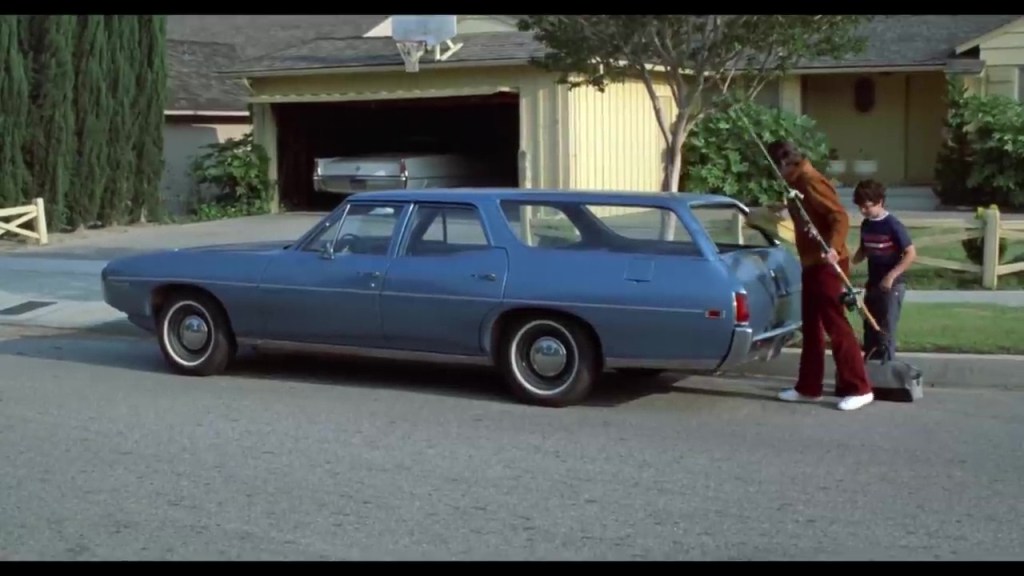
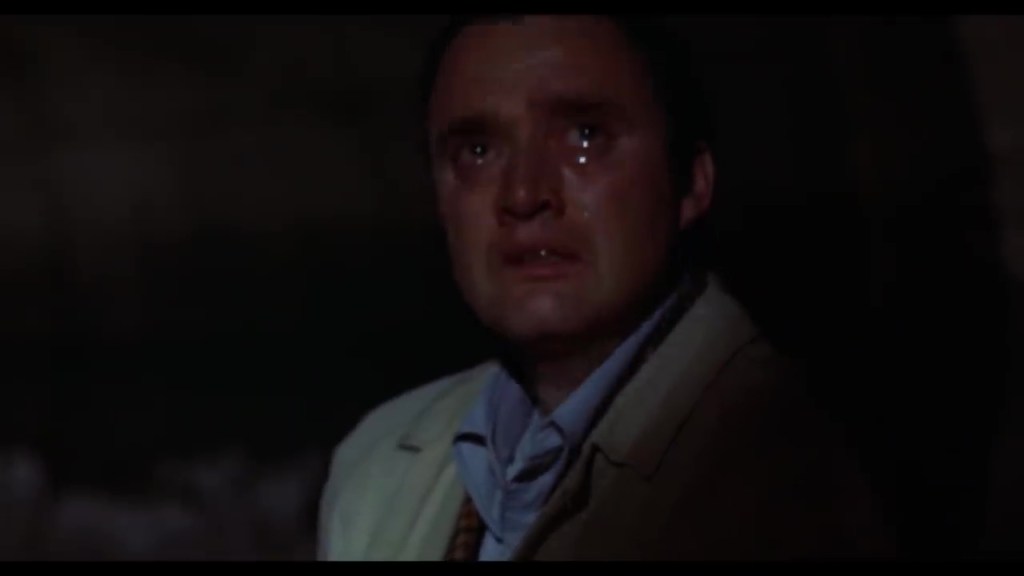
Every expectant parent’s greatest nightmare is that something will be wrong with their child. This baby’s parents are Frank (John P. Ryan from Runaway Train) and Lenore (Sharon Farrell). They have an older child, Chris, totally normal, initiated into the symbolic order, happy to get involved in fishing and other blood sports when the parents head off for labour.

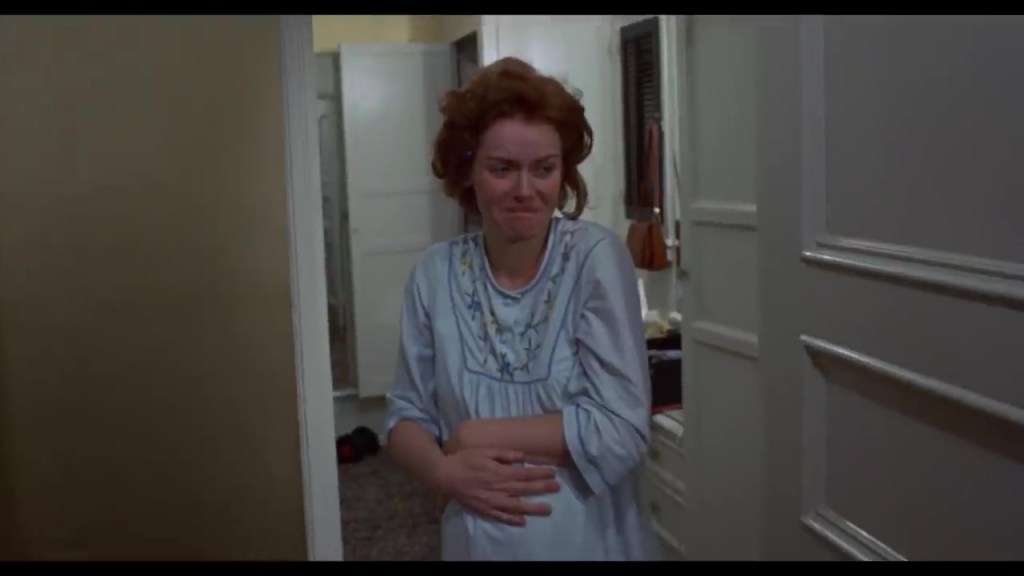
Chris is several years older, because Lenore has been on contraceptives for several years. Yes, there is a message there, but it remains a little muddy as she tells her husband, several times, that things “just don’t feel right.”

In the waiting room for fathers (this is the 1970s), they talk about pollution, toxins in the atmosphere that have led to monster cockroaches. Now the message is starting to get through.

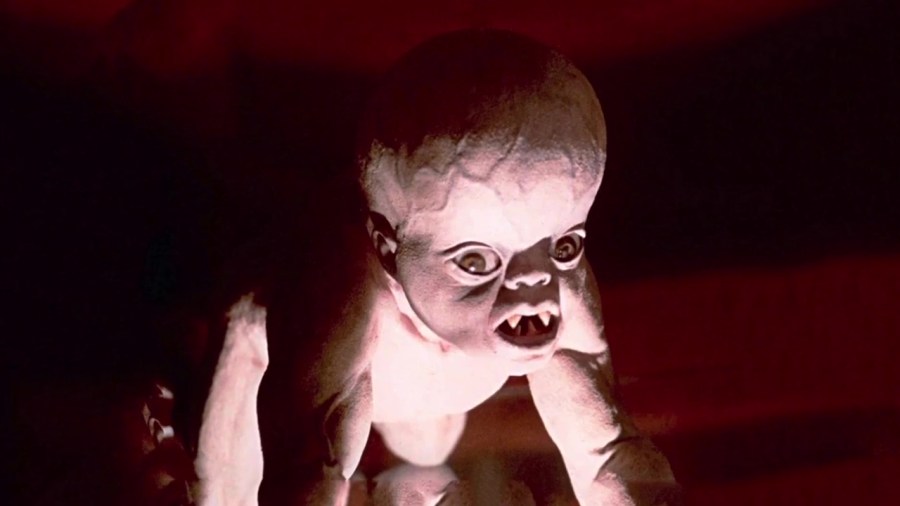
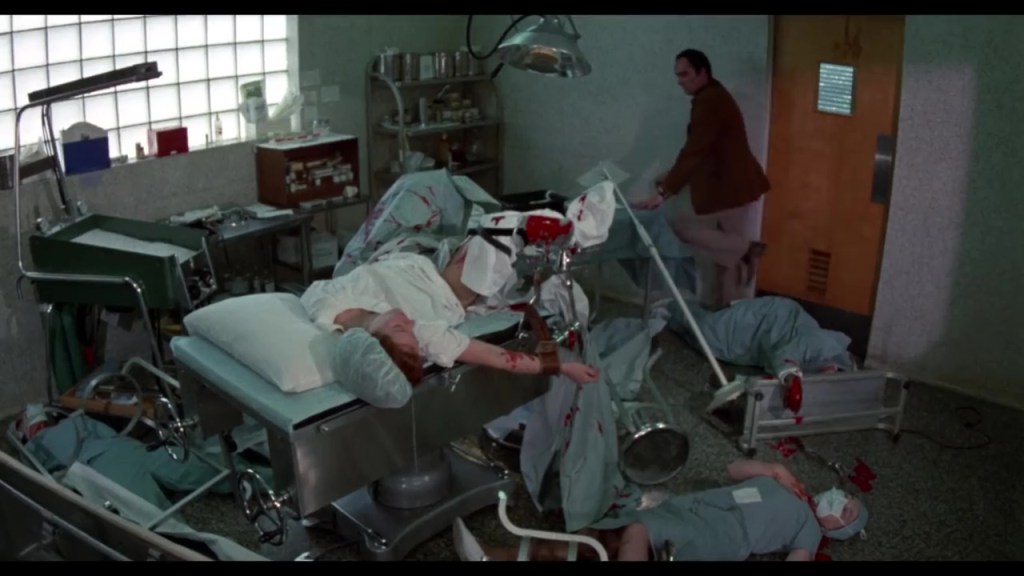
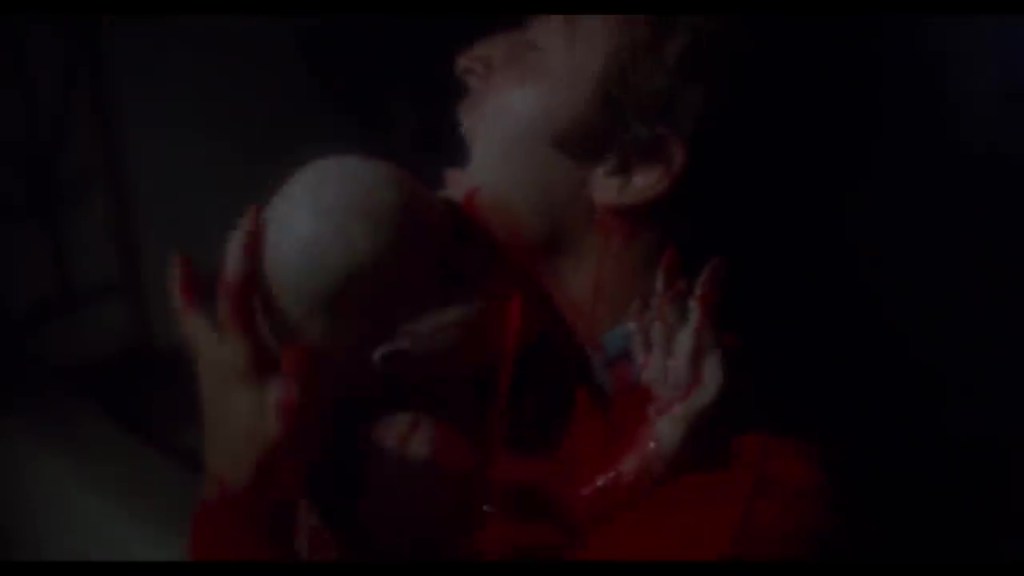
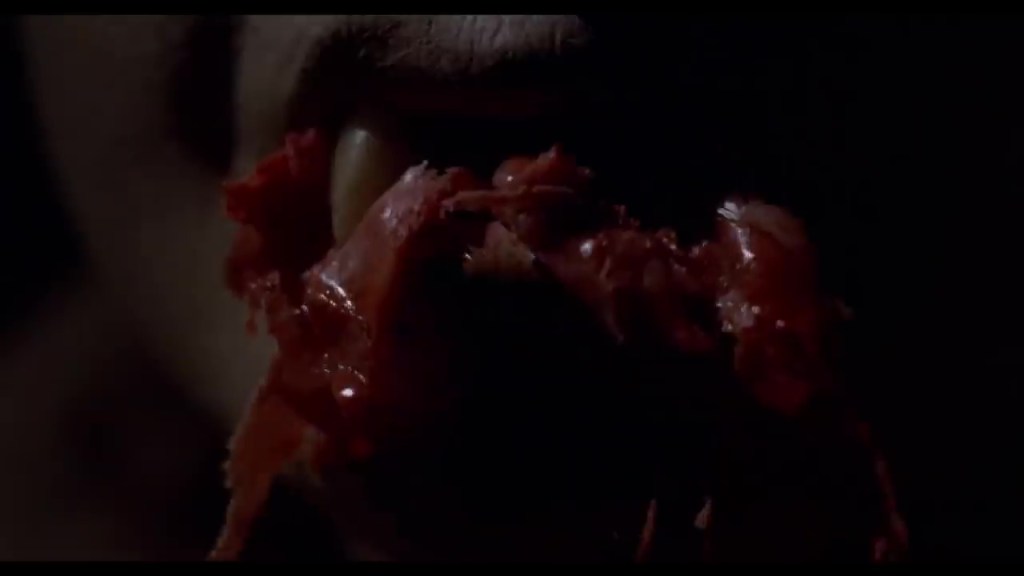
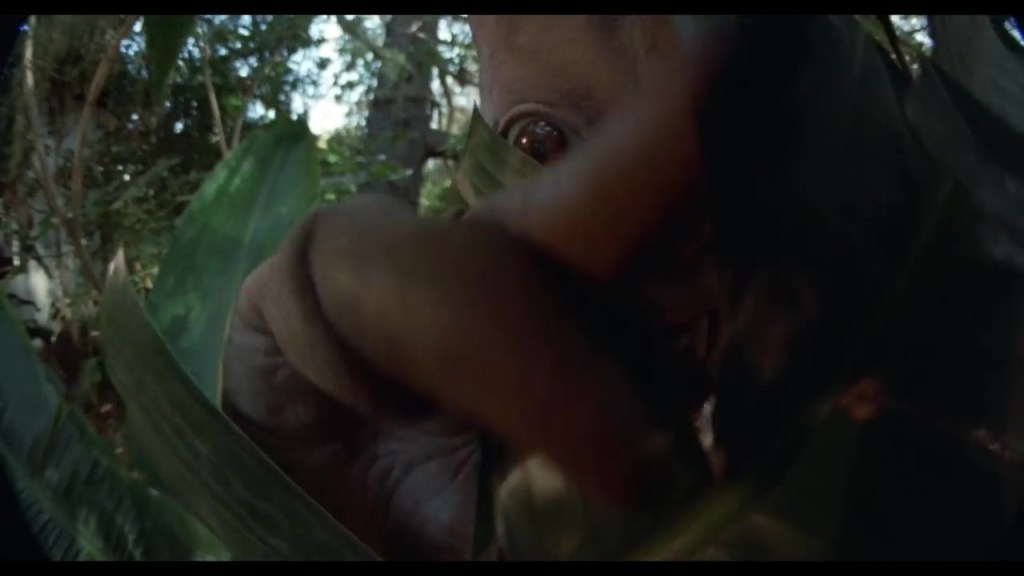
The birth does not go quite as planned, in fact all the doctors and nurses get massacred by, yep, the baby, who has the advantage of sharp fangs and claws. Cohen said he got the idea for the movie watching very young babies and noticing how angry and frustrated they seem. Well, we’ve heard of babies being brought into the world kicking and screaming, but this bub is next level. There are interesting scenes shot from the baby’s point of view, intelligently positing that newborns do not have perfect ocular control yet.

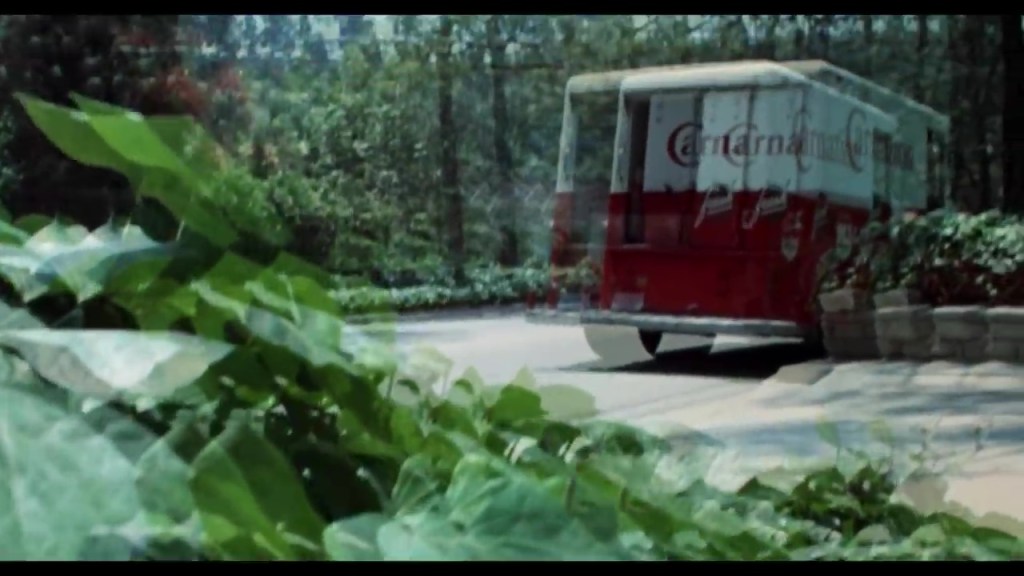
The baby heads off to do what babies do – disrupt sleep patterns, but also to slaughter people, including, comically, a milkman, leading to a flood of blood and milk (another subtle birth reference).

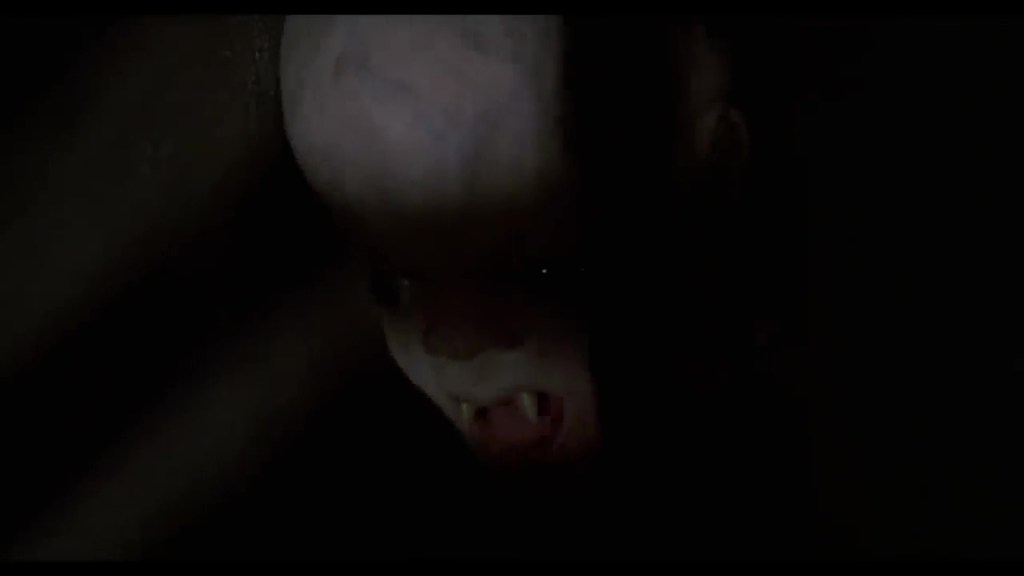
The film shows the baby only very briefly and in fleeting glimpses, instead concentrating on the parents, their guilt over birthing a monster, and their conflict over whether to love him or destroy him.

The title of the film, IT’S ALIVE, is of course a sly wink to James Whale’s classic 1931 monster movie Frankenstein. The father, Frank, tells a doctor that, when he was a kid, he always thought “Frankenstein” was the name of the monster, not the man who created it. In fact, the monster (Boris Karloff) had no name, while “Frankenstein” was the name of the doctor who put him together from spare body parts and brought him to life, famously shouting “it’s alive!” when his experiment worked.

Like a newborn, the monster is innocent and compliant until frightened, after which he attacks, not knowing his own strength, and from then on everyone wants to kill him.

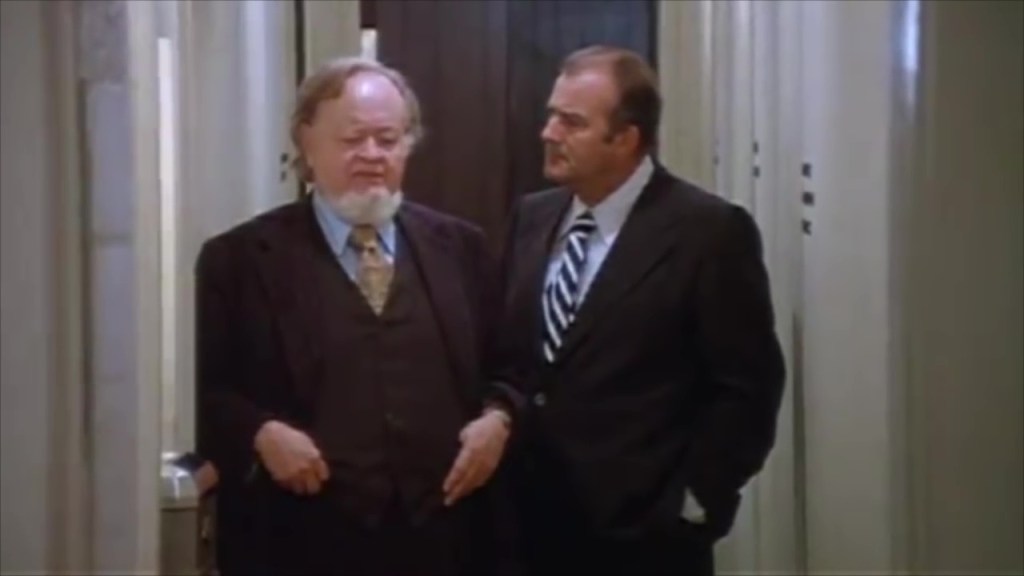
There’s lots of messages in this film, but the main two are the same as Frankenstein: science gone mad and irresponsibility of the ‘parent’. The pharmaceutical corporation that made Lenore’s contraceptive pill and her subsequent fertility treatment contacts her doctor – their meds may have caused the deformity, and they want the baby killed, to hide their legal liability.

Is this a swipe at contraception, interfering with nature, or just the usual condemnation of Big Pharma and insufficient testing? Hard to say. Then there is modern science, surrounding a newborn fresh from the womb with terrifying bright lights and sharp instruments. There is Frank, the father, who cannot accept his child’s variation from the standard model of a baby– helpless, innocent, unlikely to kill people.

He sets off with a gun to help the cops hunt and kill the child, while Lenore bitterly assails him, claiming that the poor little fella is just scared. Their conflict, and Frank’s guilt, are brilliantly acted and help turn what could have been a very silly B-movie into something quite special.

As for the baby, he’s scared and misses his parents, and probably hungry too, because he seems to have a lot of human body parts in his mouth most of the time. Or maybe he’s just teething.

Sigmund Freud described the primal drives which we repress in order to enter the symbolic order of civilised, patriarchal society, and these drives come back as the “return of the repressed”. A lot of horror can be boiled down to our vicarious reliving of the return of our repressions, and often are expressed through our sympathy with the monster. Frankenstein’s monster, like the baby in this film, is a frightened ‘newborn’, seeking unconditional love from his creators, but in vain. Freud described an “oral-sadistic” or “cannibalistic” phase of infancy, in which the child seeks to own the mother’s breast by biting and swallowing, and is conversely terrified of being eaten by the far more powerful parents. This is the earliest stage of orality, and Freud might have been delighted to see this cannibalistic phase come to life in the movies (although he treated the new technology with some scorn). Freud suggested in “Three Essays on Sexuality” that “pregenital” forms of sexual organisation in very young children could be “harking back to early animal forms of life.”

This baby takes the oral-sadistic to extremes and, with his strength and speed as well as his fangs and claws, he might just be superhuman, the prototype of the next stage of human evolution, like the mutant X-Men, who are also misunderstood and condemned. That is, if his dad and the cops don’t kill him first. But let’s not forget that we all have a savage, cannibalistic baby buried in our unconscious. This is why we’re scared of small things – mice, grasshoppers, cockroaches. And Cohen’s genius was to take the smallest, most innocent being we know, a tiny baby, and make him the monster from our id.

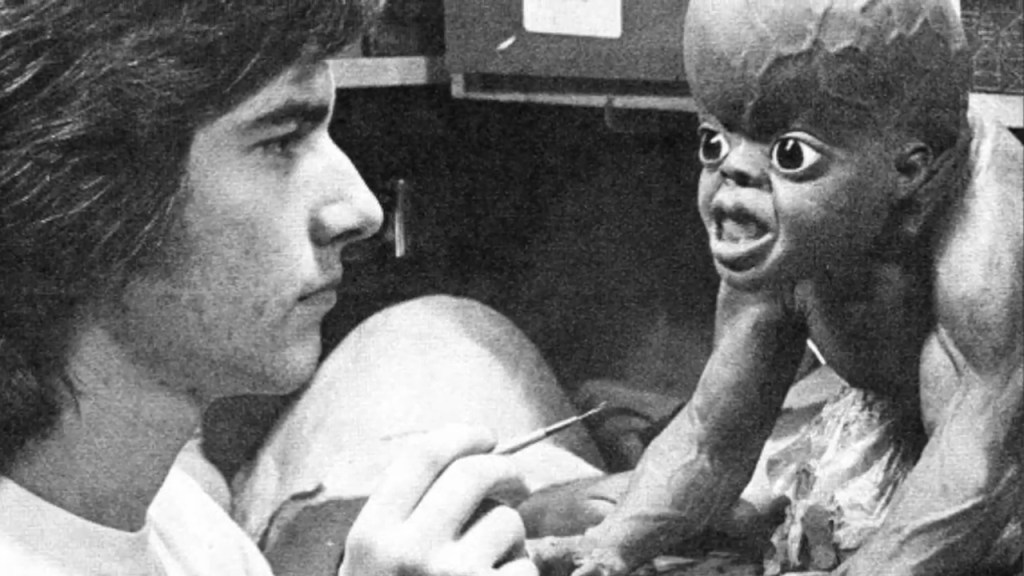
Make-up artist Rick Baker designed and created the murderous baby. This is saying a lot – Rick Baker won seven (count them – 7!) Academy Awards for his work on films including An American Werewolf in London (the first time the Academy had given an award for makeup), Harry and the Hendersons, The Nutty Professor and Men in Black, and was nominated for another four. Before any of that happened, he was working with Dick Smith on the special effects for The Exorcist when he got a call from Larry Cohen asking him to make a killer baby suit that could be worn by, perhaps, Cohen’s cat or a chicken or two.

Baker constructed a model of the baby based on Cohen’s drawings – the model had articulated limbs and moveable eyeballs. But he also made a full size mask, gloves and a partial body suit, which he somehow managed to persuade his girlfriend Elaine Parkyn, later his wife, to wear in the action scenes. However, the idea of a homicidal baby wandering the streets could prove a little risible, so Cohen makes sure in this film to keep us guessing, with just the occasional quick peek, often in dim lights. It is quite effective.

Besides the amazing Rick Baker monster model, the film boasts the music of the brilliant Bernard Hermann, also an Oscar winner, who wrote the score for Citizen Kane as well as several Hitchcock films, including the iconic theme from Psycho.

The film scored a very respectable 70% on Rotten Tomatoes. Slant Magazine called it “one of the finest American horror films of the last 30 years”, while Lessons of Darkness said it’s

A deeply terrifying portrait of child-parent relationships and intolerant fears of “otherness” defined as much by its sociological sharpness as its gore.

 The film ends with a cop getting a message on his radio that:

“Another one was born in Seattle.”

Yes, there are sequels: It’s Alive 2: It Lives Again in 1978 and It’s Alive 3: Island of the Alive in 1987. We’ll get to them, eventually. There was a remake in 2009 which was widely panned, and described by Larry Cohen as “beyond awful”. He advised anybody who liked his film to cross the street and avoid seeing the new one.

This original version, though, is from back in 1974, as America lost its innocence and its President, and kids were growing their hair, smoking pot and protesting, and telling their parents “don’t criticise what you don’t understand.” Larry Cohen commented that parents at that time felt like they had a stranger in their house, and one father actually shot his son because he thought he was a monster. The movie captures this generation war – the fears of the old and anger and fears of the kids.

It’s a corker, and it became a cult classic.