Henry: Portrait of a Serial Killer (1986)

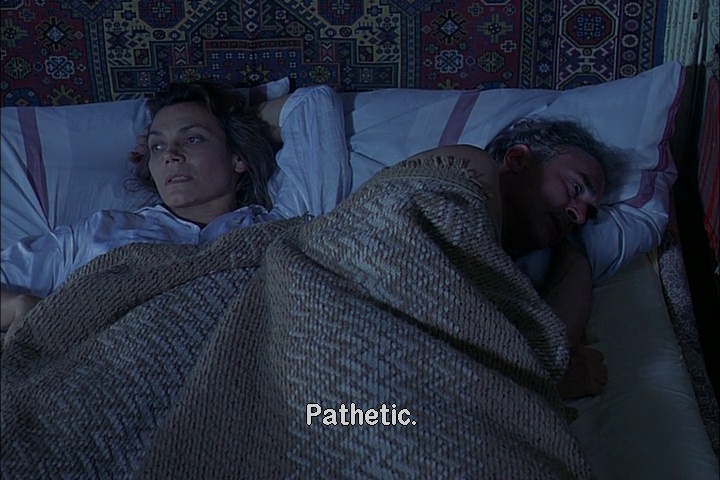
Henry: Portrait of a Serial Killer is an American psychological crime film directed and co-written by John McNaughton that depicts a random crime spree by Henry and his protégé Otis, who torture and kill with impunity. Michael Rooker in his debut film plays the nomadic killer Henry, Tom Towles plays Otis, a prison ‘friend’ who lives with Henry, and Tracy Arnold is Becky, Otis’s sister.

The characters of Henry and Otis are loosely based on convicted real life serial killers Henry Lee Lucas and Ottis Toole, who was famous for his claims to have cannibalised many of their victims, claiming that they also supplied women and children for human sacrifice to a cult called “The Hand of Death”.

Henry confessed to over 600 murders, which supposedly were committed between his release from prison in 1975 to his arrest in 1983, a pace that would have required a murder every week. A detailed investigation by the Texas attorney general’s office ruled out Lucas as a suspect in most of his confessions by comparing his known whereabouts to the dates of the murders to which he had confessed. It appears that the police would bring any cold case to his attention, feed him information about it, and then let him take responsibility. He had nothing to lose, and global fame and notoriety to gain. He was convicted of 11 murders and sentenced to death for the murder of an unidentified female victim known only as “Orange Socks.” His death sentence was commuted to life in prison by Texas Governor George W. Bush in 1998 due to evidence that Lucas was in Florida at the time “Orange Socks” was killed in Texas. Lucas later recanted all his confessions except for the murder of his mother, and died in prison of heart failure on March 13, 2001.
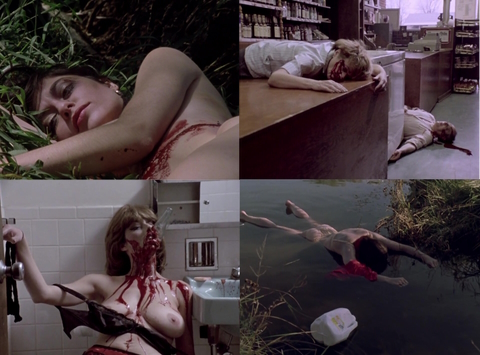
The film involves a lot of scenes of Henry driving his battered old Chevy Impala around the grey streets of Chicago, finding people to kill. Images of bloody mayhem are offered for their shock value and become repetitive, and rather fake, but then the film was made on a tiny budget.

Some narratives in the film run parallel to what we know of the real serial killers. Henry did meet Ottis, but in a soup kitchen in Jacksonville, Florida, not in prison. Henry’s father really did lose both of his legs after being struck by a freight train, leaving Henry at his mother’s mercy. But the film largely omits the long-term homosexual relationship between them (shyly hinting at it when they share the last can of beer) and, sadly, totally omits Ottis’ predilection for cannibalism.

Henry did sexually abuse Ottis’ 12-year-old niece Frieda Powell, who lived with them for many years. As in the film, Powell preferred to be addressed as Becky rather than Frieda. However, in the film Becky is Otis’s younger sister, and is presented as a considerably older single mother, not the real 12-year-old Powell.
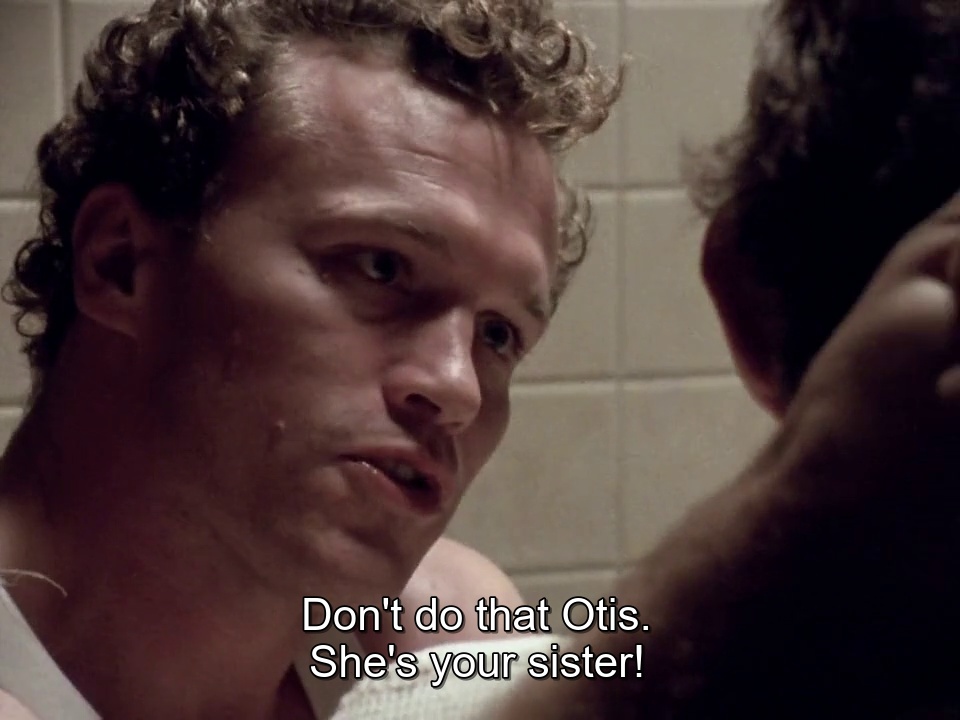
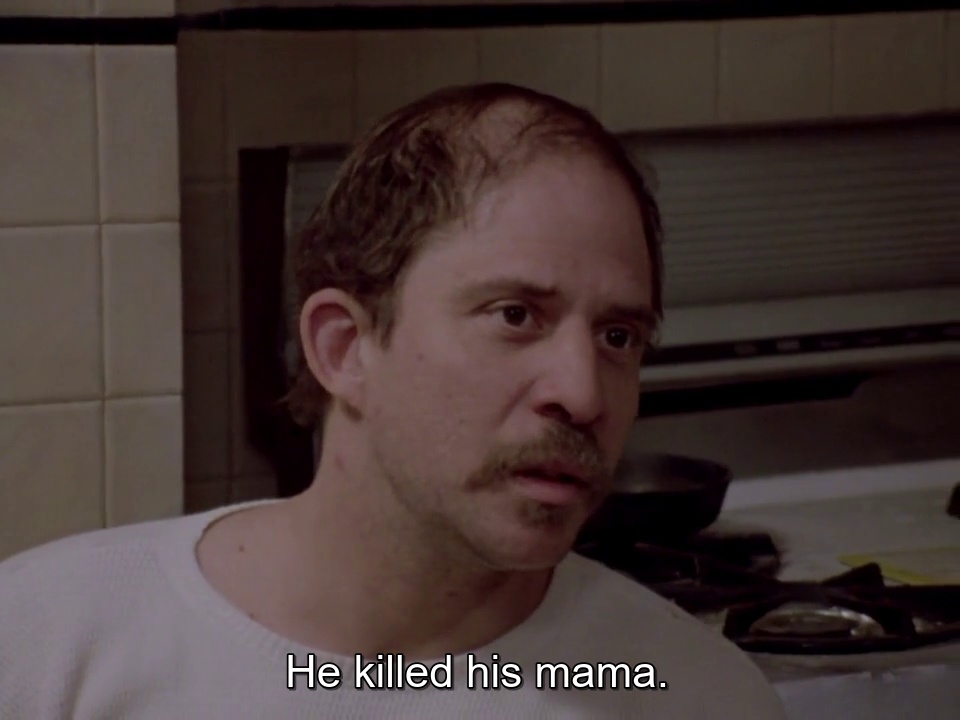
Sexual neurosis is presented as the root cause of the violent tendencies of both men. Otis, who is shown attempting to sexually abuse his sister, tells her that Henry killed his own mother, and when Becky asks Henry about it, he tells her his mother was a sadist and a “whore”, who forced him to watch her having sex with clients, sometimes making him wear girls’ clothing for further humiliation.
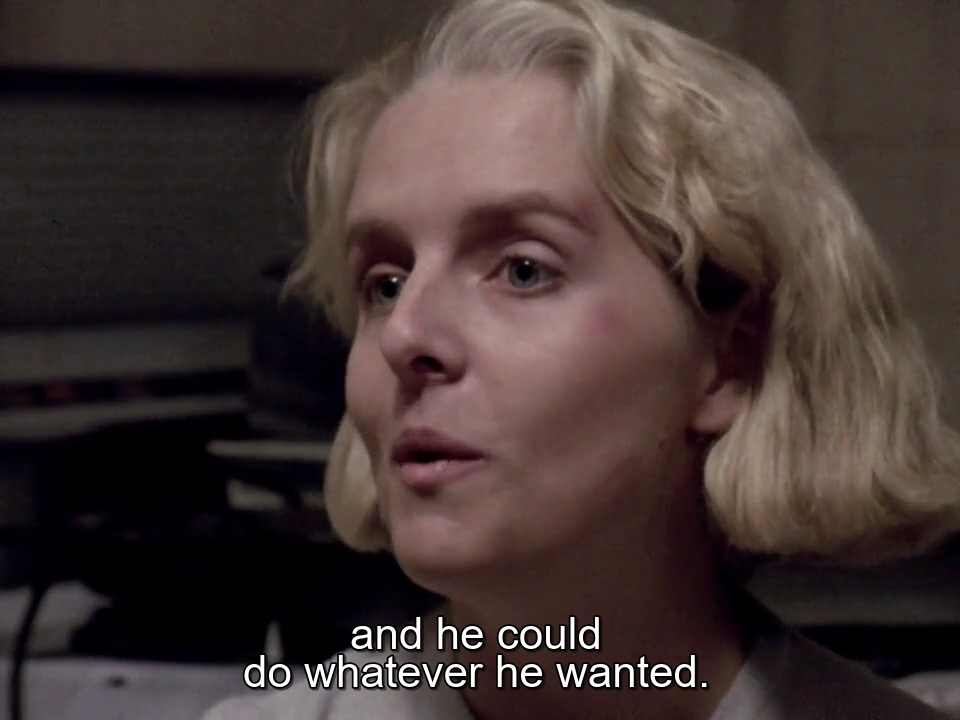
Becky in response tells Henry of her childhood, in which she was regularly raped by her father, with her mother claiming not to believe her.

“He told me he had a right, because he was my daddy and I was his daughter, and he fed me and let me live in his house, and he could do whatever he wanted. And he did… I didn’t fight him, because when I did he just hit me.”
Henry introduces Otis to his world of serial killing when they pick up two sex workers and Henry snaps their necks during sex, suggesting that he is revenging his mother’s abuse. To Henry, the world is against him, and murder is “always the same, and it’s always different.”
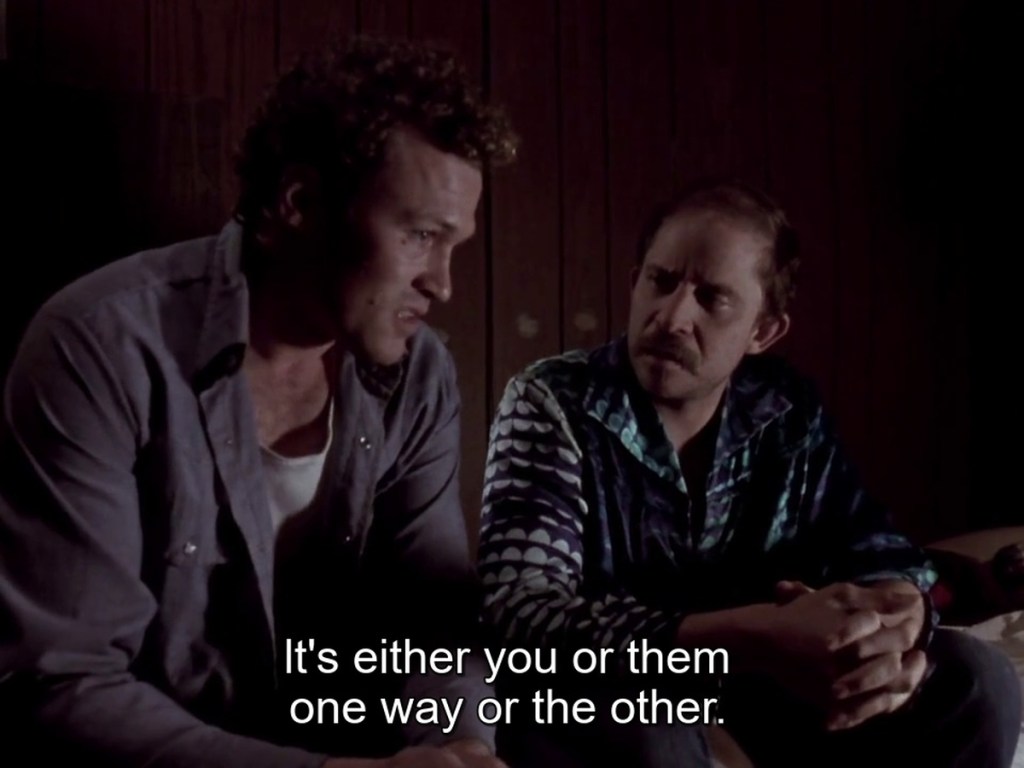
Otis gets a taste for murder when they kill a fence who mocks them when they try to buy a television from him, and then actively seeks out opportunities when a high school boy he comes on to punches him in the mouth. Henry says it would be a mistake to kill the boy, since they’ve been seen together, but Henry wants to kill someone. It’s the world being against them, again.
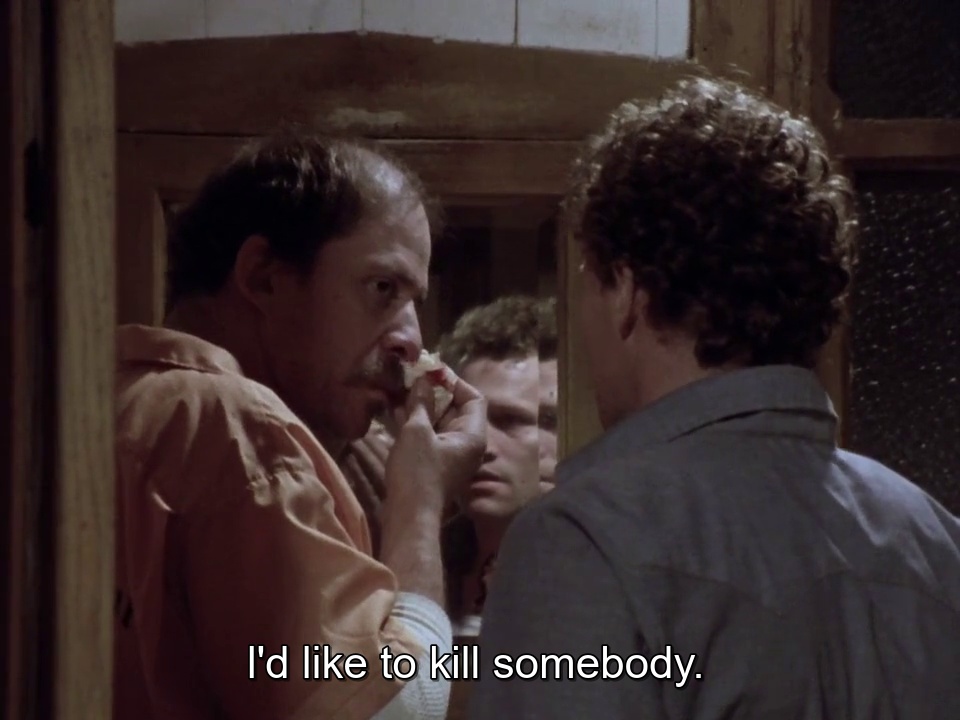
Henry schools Otis to make sure every murder is different – that way there can be no M.O. for the police to follow. A particularly brutal scene of the murder of a family is videotaped by the pair (on a camera stolen from the dead fence) and Otis enjoys re-watching himself molesting the screaming woman, breaking her neck and then attempting necrophilia, until Henry orders him to stop, just as he forced him to desist from molesting Becky when she arrived. When Henry finds Otis raping his own sister, he fights him and with Becky’s help, kills him.
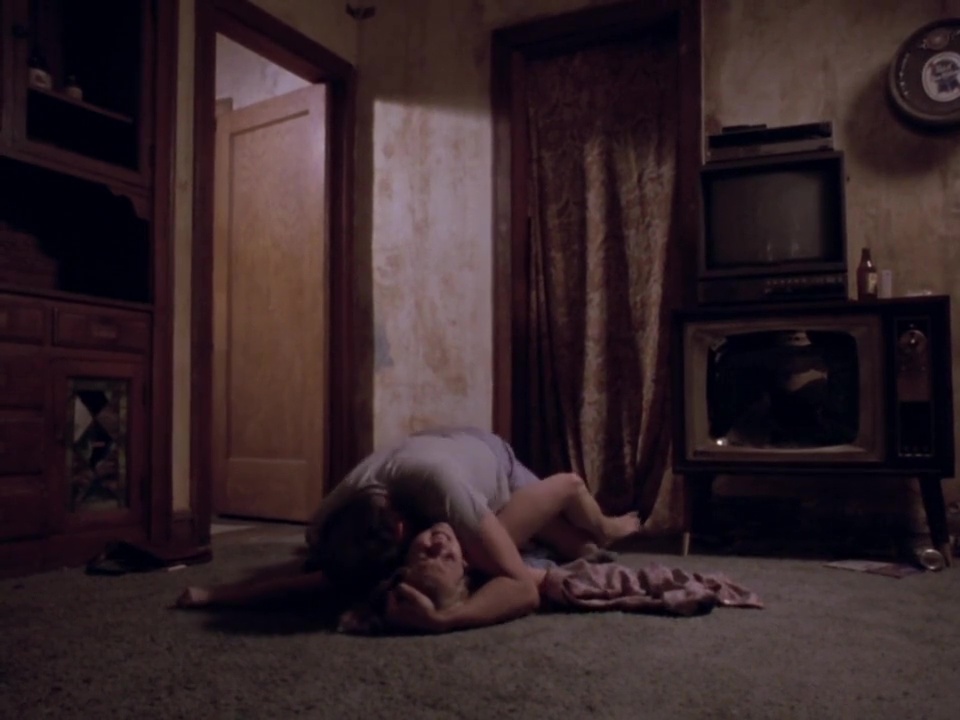
Henry has his own moral code, in which murder is fine, but incest, family violence and necrophilia are forbidden. The real Henry’s paedophilic involvement with twelve-year-old Becky, and the real Ottis’ interest in eating people, are never mentioned.

Incest, murder and cannibalism are the three great taboos of our civilisation according to Freud, the driving forces behind the creation of laws and morals, which stop us destroying our communities by doing those things. The movie sadly concentrates on the murders and has references to incest, but totally ignores the cannibalism.

Unlike the film, the real Henry did not kill Ottis – both men died in separate prisons, Ottis in Florida State Prison in 1996 and Henry in Ellis Unit, Huntsville, Texas in 2001.

Due to the violent imagery, the film was censored in many markets and the original poster (above) was banned. The controversy brought it some very valuable publicity. The reviews were also mostly positive – it has an 89% “Fresh” rating on Rotten Tomatoes, with Roger Ebert observing that the film does not “sugar-coat” or trivialise violence as most slashers tend to do, and calling it:

“a very good film, a low-budget tour de force that provides an unforgettable portrait of the pathology of a man for whom killing is not a crime but simply a way of passing time and relieving boredom.”

It’s well made (considering the miniscule budget), the cast are terrific (in both senses of the word) and the plot, if somewhat out of step with the reality of the case, is well presented and never dull. But why should it stick to the “facts” of the case, when clearly neither Henry nor Ottis were too sure what was real and what simply bravado?

A sequel, Henry: Portrait of a Serial Killer Part II, was released in 1996, but without any of the cast or crew from the original.

CANNIBALISM NEWS January 2022 – German killer who had ‘cannibalism fantasies’ jailed for life

‘Cannibal teacher’ hid his victim’s penis to avoid being outed

A man dubbed by the press a ‘cannibal teacher’ has been convicted of murder and sentenced to life in prison. The judge said the murder was carried out as part of his “cannibalism fantasies”. The 42-year-old, identified only as Stefan R, was also convicted of disturbing the peace of the dead, after a trial that opened in August 2021 and concluded this week.

German prosecutors described evidence of cannibalism in the killing of 44-year-old high-voltage technician, Stefan Trogisch, on 6 September 2020.

Stefan R. allegedly ate parts of his lover after sex, and subsequently concealed somehow the victim’s penis, so he wouldn’t be “outed” as gay. German police arrested the 41-year-old maths and chemistry teacher in November 2020 on suspicion of “sado-cannibalism for sexual gratification” after they found human bones stripped completely of flesh in a Berlin suburb. Under German law, the man’s surname cannot be revealed, yet there are pictures of him everywhere, so I’m guessing this is not a serious privacy issue.

A Berlin prosecutor’s office spokesperson said

“The suspect had an interest in cannibalism. He searched online for the topic.”

Well, hello! So do I, and maybe you, dear reader. I also look up COVID and cricket, but that doesn’t mean I caught one or played the other. Maybe he was writing a PhD thesis?

No one knows whether the victim, the other Stefan, had an interest in cannibalism, but we know that the two men were communicating on a gay dating website called Planet Romeo, according to a report in Der Spiegel. Stefan R. called himself “Spieltrieb1976” (roughly translated as “instinct to play”) and Stefan T. (now deceased) was “Dosenöffner79” (tin opener). Stefan R. also used the handle “Masterbutcher79” which prosecutors claimed was a reference to Armin Meiwes, who was dubbed the “Master Butcher of Rotenberg.”

The bones of Trogisch were found a couple of months after the murder, and showed signs of bite marks, although having been out in a field for a couple of months, it’s hard to say what species of animal had been biting them. A police officer told the newspaper Bild:

“Based on the bones found, which were completely stripped of flesh, and further evidence, we strongly suspect that Stefan T was the victim of a cannibal.”

Sniffer dogs led police to the apartment of the suspect, where they discovered knives, a medical bone saw, and a large freezer. Investigators also discovered 25kg of sodium hydroxide, a reagent that can be used to dissolve bodily tissue. It can also be used to make soap, which the accused claimed he bought it for. Traces of blood were discovered in the hallway of the suspect’s flat. The defendant had previously erected a sex swing in the living room and had a sign on the window ledge that read: “Instructions for emasculating and slaughtering a person.” He reportedly searched terms associated with cannibalism on the dark web such as “long pig” and “fatten and slaughter people” before Trogisch arrived at his residence. According to German newspaper Bild, he had also previously searched whether or not a person could survive after having their penis cut off.

Stefan R. told the court that Trogisch had died in his sleep on the sofa after a (presumably vigorous) sexual tryst. He claimed that Trogisch had consumed a cocktail of drugs and alcohol, and that he tried to revive him, but did not call emergency services “because it would have come out that I am homosexual”, according to Bild.

He said he decided to dispose of the body, and opted to separate Trogisch’s genitals “since my DNA could still have possibly been present due to the oral sex I performed”. But hours after the death, he logged back into the human slaughter forum where he proudly told a man from the city of Bremen: “I have it [the penis] now!”

In the sensitive style that we have come to expect from British news media, The Sun wrote

“the victim’s manhood has not yet been found.”

Judge Schertz said that, in 30 years as a judge, “nothing like this has come across my desk before”. He added that the defendant’s version of events was “unbelievable from start to finish”, noting the “very careful separation of testicles and penis” as evidence of a cannibalistic ritual.

The trial began in August 8 2021 and heard an autopsy report which revealed that the cause of death was a fatal loss of blood from the pelvic area due to a severed artery. This would seem to indicate that Trogisch bled to death after his penis was chopped off. The autopsy also ruled out the defendant’s claim that the victim was affected by alcohol or drugs, causing his death.

It’s a sensitive subject in Germany, where cannibalism was not uncommon between the world wars and was made into the subject of Fritz Lang’s masterpiece – “M – EINE STADT SUCHT EINEN MÖRDER” one of my favourite cannibalism movies. More recently, Armin Meiwes in 2001 met Bernd Jürgen Brandes on a site called Cannibal Café, and after a romantic interlude, agreed to Brandes’ request to kill him and eat him. The first act of the killing (all captured on video) was Meiwes cutting off Brandes’ penis, which he then cooked and the two men attempted to eat, very unsuccessfully. Meiwes subsequently killed Brandes and ate an estimated 45-65 pounds of flesh (20-30kg) from him.  Meiwes is still in jail, and Brandes is still in Meiwes (well, only in spirit, unless he has a very slow digestive tract). Unlike Brandes, there is no evidence that Trogisch had “consented” to his killing.

Then in 2013, Detlev Guenzel, a German police forensic specialist (you couldn’t make this stuff up), chopped up a man he met on a cannibalism fetish website and buried the pieces in the garden, taking a picture of himself standing next to a skeleton and holding an axe, wearing nothing but socks and sandals. There is little evidence to show that Guenzel ate any of the victim, although the victim’s penis and one testicle were not found in the flowerbed where the other pieces of the puzzle were unearthed.

There is probably another thesis to be written on the proportion of cannibalism reports that involve queer sexuality. Meiwes, of course, and Jeffrey Dahmer, who collected young men and killed them to keep them close. The film The Silence of the Lambs was heavily criticised when it was released for showing the serial killer Jame Gumb (“Buffalo Bill”) as a transsexual, although the plot was all about how he wasn’t authentically trans, and was killing women because he was rejected for gender reassignment surgery, and so was making himself a woman suit out of the skin of his victims. The film’s cannibal, Hannibal Lecter, was not gay in that series of films and books (he fancied the hell out of Clarice Starling), although Krendler, the nasty dude from the Justice Department in the book Hannibal, said he “figured he [Hannibal] was a homosexual” because, you know, he had good taste in food and wine and music – “artsy-fartsy stuff”. Krendler’s brain is later eaten by Hannibal and Clarice, so we have no reason to take him too seriously. But there was certainly plenty of homoerotic interaction in the twenty-first century reboot of Hannibal on TV, particularly when Hannibal is holding Will tenderly while cutting him up.

Is this tendency to depict cannibals as queer a reflection on the traumas experienced by gay youths and where they may lead behaviourally, or simply a noxious reaction against the lifting of restrictions on gay couples? Someone will write a paper on that one day. They probably already have.

The other issue raised by this case if of course the persistent theme (Meiwes and Guenzel again) of the chopping off and consumption of the male penis. Stefan R. discussed on one forum whether it was possible to survive a genital amputation – saying that some people desired it in order to feel like women, or else take masochistic pleasure in it. Prosecutors argued that Stefan R. had cut off the victim’s genitals with the intention of eating them, and the judge agreed, but it could not be established whether he had carried out that plan.

Freud had a lot to say about this! When little boys discover that their mothers or sisters have no penis, they assume the women were castrated, and as a result fear their own castration by their father (whom they suspect of the act). This is supposed to be the basis of the repression that eats away at the male mind and drives us to our various deviant behaviours.

Subsequent psychological studies as well as feminist analyses have demolished much of Freud’s speculative theories, but there is one thing we still don’t know – where is Stefan Trogisch’s penis?

The presiding judge, Matthias Schertz, told Stefan R. “What you did was inhuman”. But another German, Friedrich Nietzsche, might have called it “Human, all too human”.

“Egoism is not evil, for the idea of one’s “neighbour” (the word has a Christian origin and does not reflect the truth) is very weak in us; and we feel toward him almost as free and irresponsible as toward plants and stones. That the other suffers must be learned; and it can never be learned completely.”

Cannibals in the Soviet paradise: CITIZEN X (Chris Gerolmo, 1995)

Three years ago (where has the time gone?) I reviewed a pretty great movie called Child 44, with Tom Hardy as a Soviet investigator in pursuit of a murderer, based on the most prolific serial killer of the Soviet Union (excluding Stalin), Andre Chikatilo. Yes, pretty great, but it had some problems; from the point of view of this blog, it barely mentioned cannibalism. The murderer was “just” a psychopathic sadist. It also changed all the names and dates, presumably to protect the guilty.

But ten years earlier, today’s film Citizen X was made as an HBO television movie, based on Robert Cullen’s non-fiction book The Killer Department. This is a much more accurate rendering of the career of Andrei Chikatilo, the “Rostov Ripper”, who was eventually convicted of 52 murders, although he confessed to several more.

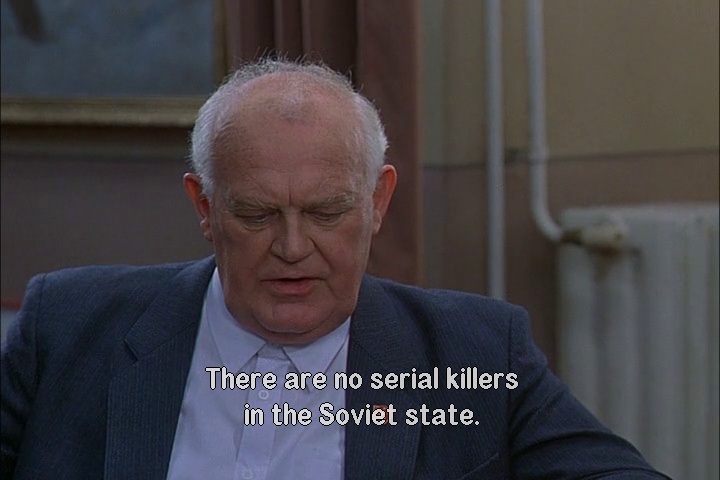
Chikatilo was able to continue killing for seventeen years, from 1978 to 1995, due to a combination of general ineptitude, official denial of the possibility of such a thing as a Soviet serial killer (they considered it a bourgeois American crime, inconceivable in the workers’ paradise), and luck (apparently his semen was found to have a different grouping to his blood). The authorities preferred to round up the Rostov homosexual community because of some absurd reasoning that homosexuals are also paedophiles, and some of the victims had been boys, which resulted in some gay men committing suicide in custody.

Chikatilo claimed that his mother had told him that his older brother had been kidnapped and cannibalised by starving neighbours when he was little. This may have been her way of trying to scare him into behaving, but he had been born in Ukraine at the time of the Holodomor, when Stalin was busy starving millions of people to death as part of the process of Collectivisation, so could well have been true.  Chikatilo was a self-confessed cannibal, stating that he gained sexual satisfaction from torturing his victims, and would sometimes drink their blood and eat their genitals, nipples and tongues.

This film is presented as a true-crime documentary. The viewer knows very early who the killer is – Chikatilo, a loser driven insane by rejection and humiliation at work and in bed.

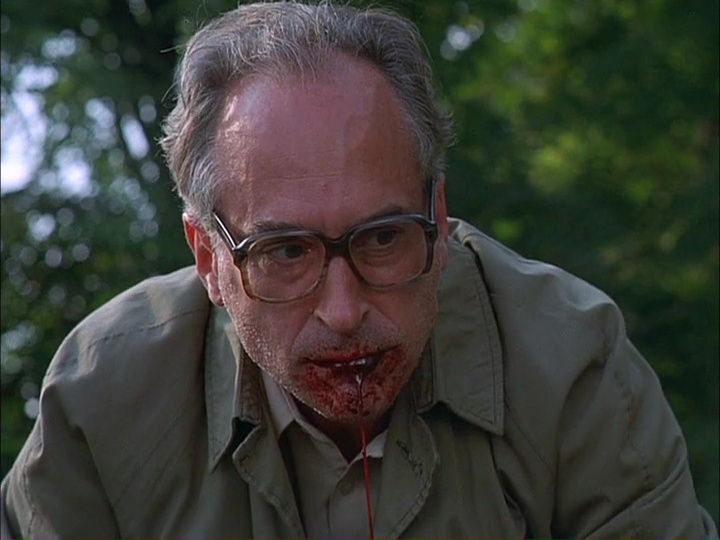
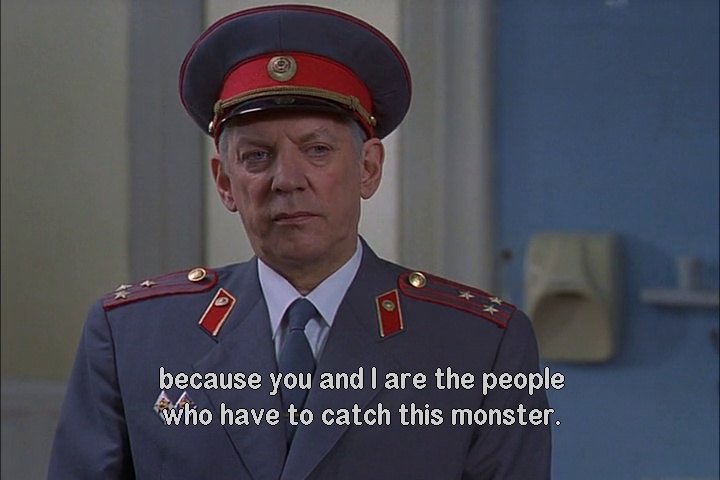
Chikatilo is played with nerdish rage by Jeffrey DeMunn, who we know now as Charles Rhoades, Sr. in Billions; no wonder he captures a psychopath perfectly. The rest of the cast is just as impressive – the forensic cop is played with tightened jaw and occasional tears by Stephen Rea (The Crying Game, Interview with the Vampire), his wife is played by the iconic actress Imelda Staunton, and his boss, Colonel Fetisov, is the wonderful Donald Sutherland, looking uncomfortable in a Soviet army uniform yet getting away with it due to his devilish grin.

The psychiatrist who helps them crack the case is played by the doyen of cinema Max von Sydow, who played chess with Death in Bergman’s The Seventh Seal, played Jesus in The Greatest Story Ever Told and even got an Emmy nomination for his role in Game of Thrones. With a cast like that, what could go wrong?

Roger Ebert nominated Citizen X as his example of a movie that totally immerses the viewer in a believable reality:

“We experience the hopelessness, self-loathing, fear, and bleak reality displayed by most of the characters, regardless of station, age, self-discipline, or level of humanity.”

Chikatilo, the very image of the alienated outsider, preys on society’s lost and abandoned, befriending them (like Fritz Haarmann in Germany in the 1920s) and then luring them to their death.

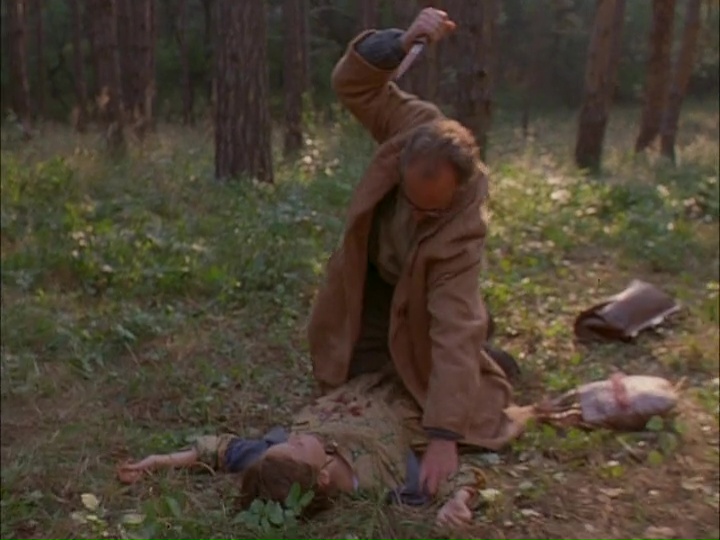
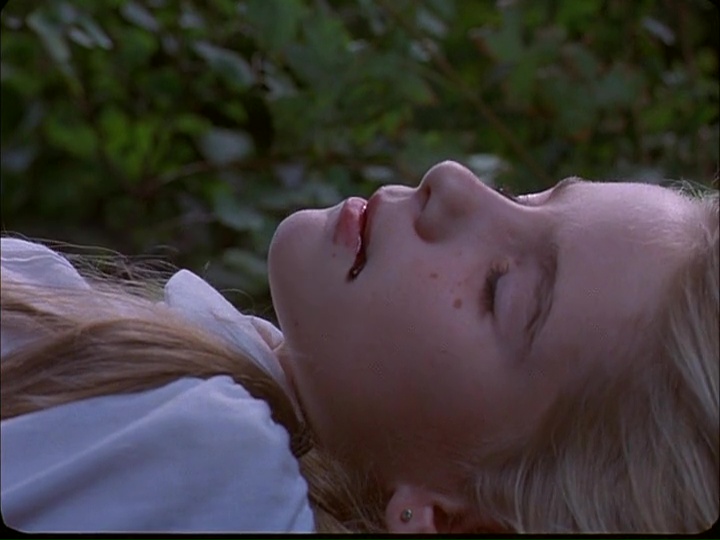
The story shows a lot of murders, children falling backwards, blood dribbling from their mouths, knife plunged into their defenceless breasts.

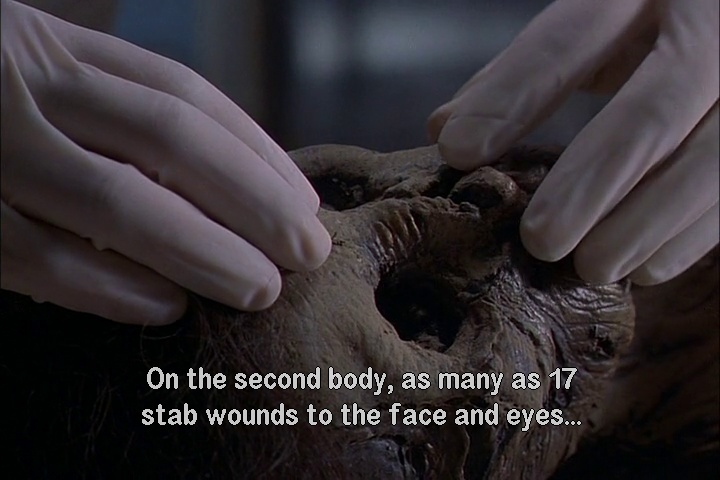
We see graphic scenes of their post mortem examinations after the bodies are eventually found.

But that’s not really what the film is about – it takes us into the stultifying atmosphere of a grey bureaucracy in which truth is determined not by facts but by favouritism, prejudice and nepotism. In that sense, it is a fascinating portrait of the closing years of the Soviet Union, but it also jolts us into the realisation that we have all been there, a system where, in order to make any progress, you have to play along with the idiots in charge. A world where who you know is more important than what you do, a frustration that is felt universally. It is really a psychological thriller more than a murder procedural. The militsia make little progress, stymied by the bureaucracy, the unwillingness to admit to the fact that a serial killer could inhabit the workers’ paradise, by the apparent blunder in typing Chikatilo’s blood and semen, and by the insistence that the hectoring interrogation is the only way to succeed in getting the truth.

Ultimately, it is the psychiatrist, reading his paper, in which he had earlier tried to profile the killer, that makes Chikatilo confess, recognising that someone has finally understood the torments churning inside him.

The story is not about Chikatilo’s hunger for flesh, but his appetite for compliant sex, for a partners unable to resist his sexual appetite, because they are dead or squirming in agony. Children were ideal objects for his cravings, particularly young ones who were lost, homeless or runaways.

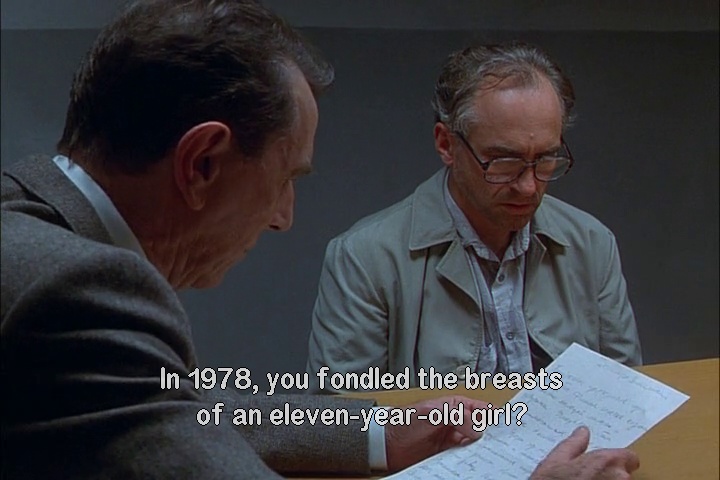
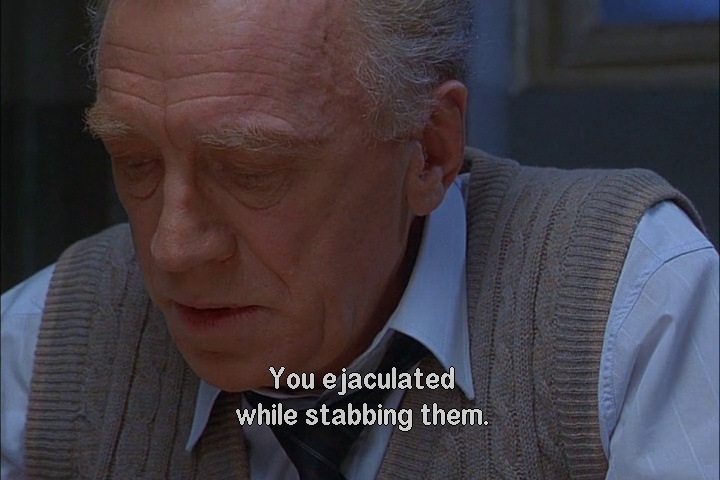
“Citizen X has probably had a tendency towards isolation since childhood. His internal world, filled with fantasy, is closed to those around him, even those close to him. The adolescence of such a person is, as a rule, painful, because he is often subjected to the laughter of his peers, at a time when success among them is the subject of his secret dreams. His sexuality is not noticeable to those around him, however it is an external asexuality that frequently coincides with steady masturbation and wild erotic fantasies. He is painfully sensitive in company, incapable of flirting and courtship, however it cannot be excluded that he has fathered a family.

There is reason to think that Citizen X has a weakness of sexual potency.He sits or squats astride his victim. The orgasm and ejaculation most likely occur at this stage of the act and in this position, sitting on the victim in the period of her agony…. You ejaculated while stabbing them.”

The film scored an 86% “fresh” rating on Rotten Tomatoes. The director, Chris Gerolmo, also wrote the screenplay, which earned him an Emmy nomination, a Writers Guild of America Award, and an Edgar Award. It’s an absorbing film, the acting is great (although the fake Russian accents don’t really convince anyone), but I still have an issue. Chikatilo is known for being the most prolific serial killer in the Soviet Union. But he is most notorious for being a cannibal, and that is barely mentioned.

What is it about cannibalism that makes it so comprehensively abject that a film about a serial killer who admitted to murdering over 53 people, 35 of them children, cannot bring itself to mention his regular feasting on the bodies?  Evidence aplenty spoke of the mutilation of the victims, particularly their eyes and sexual organs, and Chikatilo admitted in court that he had eaten the sexual organs. Yet the film, like the later Child 44, skipped over this aspect except for one brief glimpse.

Freud wrote that the two primary taboos of humanity are incest and cannibalism. It seems that his words are still accurate. We routinely see murder in films and television series – but it happens to someone else, and our attention is usually on the authority figure solving the crime. Cannibalism though is different – it opens up the human body and shows that we are made of meat, just like the animals we so carelessly torment and kill by the billions. Unlike the sometimes shocking, sometimes light-hearted killing of other people, cannibalism shows us what is inside us. It shows us our own mortality.