What the Fox? “My Son Jeffrey: The Dahmer Family Tapes”

A new streaming series promises “never-before-heard” conversations between serial killer Jeffrey Dahmer, “The Milwaukee Cannibal”, and his father, Lionel.

My Son Jeffrey: The Dahmer Family Tapes is streaming from Sept. 18 on Fox Nation, Fox News Channel’s subscription-based streaming service.

The four-part documentary series replays conversations recorded with Dahmer while he was in Columbia Correctional Institution in Portage, Wisconsin, serving 15 life sentences after confessing in 1991 to a string of crimes including murder, necrophilia and cannibalism. The recordings, made by Lionel Dahmer, have not been heard publicly before, according to Fox Nation.

The series also includes Dahmer family home movies, and interviews with a variety of others, including Mike Kukral, a high school friends from Ohio; Michael Prochaska, Dahmer’s college roommate; Ronald Flowers, the man who escaped after Dahmer had drugged, sexually abused and imprisoned him at Dahmer’s grandmother’s house in West Allis; and retired Milwaukee Police lieutenants Kenneth Mueller and Michael Dubis, who were on the scene the night of Dahmer’s arrest.

Dahmer was beaten to death in prison in 1994, but you wouldn’t know from watching streaming services. In 2022, Netflix went full Dahmer-mania, with Ian Brennan and Ryan Murphy’s dramatisation of the life and crimes called DAHMER: MONSTER – The Jeffrey Dahmer Story.   

“Monster” won a Golden Globe for best actor in a miniseries or TV movie for Evan Peters for his portrayal of Dahmer. The series received 13 nominations at the Primetime Emmy Awards, which drew some ire from Thomas M. Jacobson, the attorney who represented eight of the families of Jeffrey Dahmer’s victims. He told entertainment industry news site The Wrap that nominations for shows like that contributed “to glamorizing or desensitizing violence and crime in society.”

Netflix quickly followed up their re-enactment with Conversations with a Killer: THE JEFFREY DAHMER TAPES, a set of tapes made by his defence attorneys in which he made all sorts of fascinating admissions. At this point, there wasn’t much the keen true-crime aficionado didn’t know about Dahmer.

Actually, most of this information had long been out there. Plenty of evidence had been removed and studied after his arrest, including the fridge full of human body parts, several skeletons and the barrel of acid he used to dissolve unwanted flesh. Dahmer had spoken freely to his interrogators about the murders he had done, in graphic detail, all of which was revealed at trial. After his sentencing, and before he was killed (obviously), he gave interviews to news programs who could not believe their luck, and treated him like a celebrity.

Jeremy Renner had portrayed Dahmer when Netflix was still sending movies in the post, in a movie called Dahmer.

So what does this new Fox program hope to add (besides some sorely needed ratings)? FOX Nation President Jason Klarman said in a press release:

“The Jeffrey Dahmer case has captivated the public for over three decades and now with these exclusive tapes released for the very first time, viewers will hear from Dahmer in his own words and get insight into his relationship with his father”

Fox is featuring in the promos the fact that Dahmer was killing and pickling men back in the 1980s when he was living with his dear old grandma in Wisconsin. He had lured three men back to granny’s place and killed them, and kept mummified souvenirs in his room and in the basement.

The recording does not make clear to which victims the mummified remains belonged; Jamie Doxtator, Richard Guerrero and Anthony Sears were all killed at the location. Another victim, Steven Tuomi, was murdered by Dahmer in a nearby hotel but he kept those mummified remains in her basement as well. He told his father:

“Remember when you visited grandma? Remember that small, one-by-one square foot box? You know what was in it, don’t you? The mummified head and genitals of the last victim at the West Allis location”

Dahmer’s dad was presumably relieved to hear that it only had mummified body parts, because he was worried it was something naughty:

“It was wooden, but it had a metal covering, and you were very insistent that I opened that up because you thought I had pornography magazines”.

The show also plays up the fact that the dad, Lionel, admits to his son that he also had strange and disturbing thoughts in his youth, and perhaps actions too, since he expressed surprise that he had never been caught. He tells his son, “You’re just like me, Jeff”.
Showing audio on television is pretty dull so, like the Netflix tapes, it’s illustrated with lots of archive pictures. There are skulls, and meat from Dahmer’s fridge,

And his mug shot, which is actually a lot less terrifying than some we’ve seen recently.

It’s hard to imagine that the relatives of Dahmer’s victims, who objected to the Emmy nominations for the Netflix series, are going to be too thrilled at Fox Nation digging up the corpses again. But then, it’s Fox, and they love being on the edge.

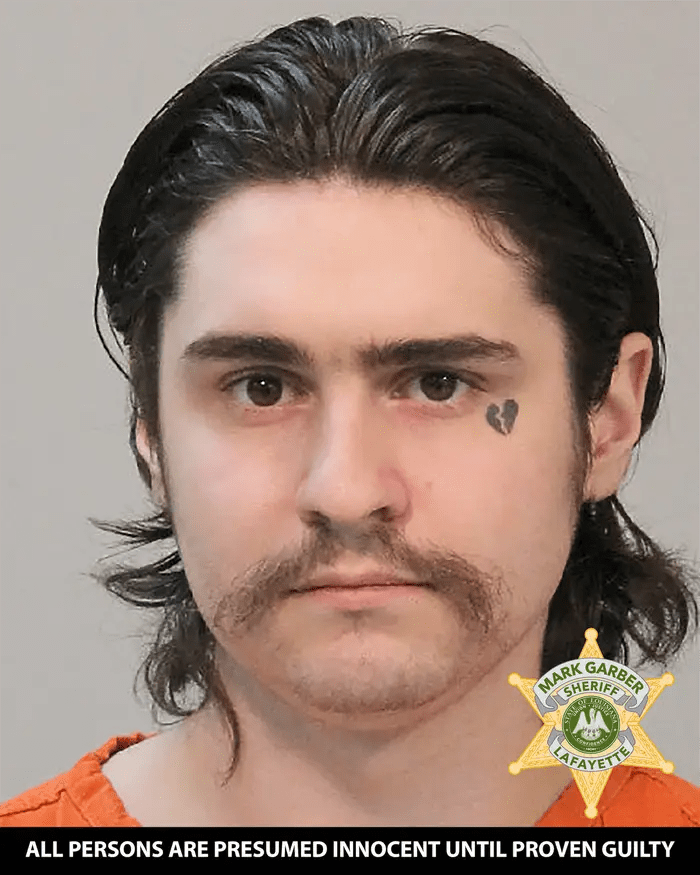
2023: Louisiana man sentenced to 45 years for trying to kill and eat gay men

Chance Seneca, 21, of Lafayette, Louisiana, was sentenced on January 25th to 45 years in federal prison for kidnapping and attempted murder, as part of his elaborate scheme to kidnap, murder and cannibalise gay men. 

The court based its sentence on several factors, including its determination that the defendant intentionally targeted the victim and other gay men because of their gender and sexual orientation. Assistant Attorney General Kristen Clarke of the Justice Department’s Civil Rights Division said:

“The facts of this case are truly shocking, and the defendant’s decision to specifically target gay men is a disturbing reminder of the unique prejudices and dangers facing the LGBTQ+ community today. The internet should be accessible and safe for all Americans, regardless of their gender or sexual orientation. We will continue to identify and intercept the predators who weaponize online platforms to target LGBTQ+ victims and carry out acts of violence and hate.”

Evidence was presented that Seneca, in June 2020, had used Grindr, a dating application for gay and bisexual men, to kidnap and attempt to murder a gay man identified in court only as “H.W.”  A day earlier, he used the app to set up a meeting with another gay man, but decided not to kill him.

Seneca proposed a meeting with H.W. with the intent of murdering and dismembering him, and he met H.W. and drove him to his father’s home in a 2006 Toyota Corolla. On arrival,  he took out a handgun, instructed H.W. to put on handcuffs, and then used several methods (details in the link if you want to know) to attempt to murder him, including strangulation, a hammer, an ice-pick and a knife. Believing that H.W. was dead, Seneca then attempted to dismember him. After his arrest, Seneca admitted that he had planned to continue murdering gay men until he was caught or killed. 

Seneca acknowledged that he had kidnapped and attempted to murder H.W. in order to satisfy a compulsive murder-fantasy. Seneca had become fixated with the idea of killing gay men, and this fascination led him to spend months designing a murder-kidnapping scheme that mirrored the murders of gay men committed by the cannibal serial killer Jeffrey Dahmer. Seneca specifically targeted gay men, as Dahmer had done. He also intended to eat and preserve the bodies of his victims, as Dahmer had done. 

The FBI and the Lafayette Police Department conducted the investigation. Lafayette police had responded to a call from Seneca in June 2020 and found a man, Holden White, 18, in a bathtub with severe injuries, including strangulation marks on his neck and “wrists slit to the bone,” according to an unsealed affidavit.

The affidavit was filed by an FBI agent based on information from Lafayette police and a conversation the agent had with Seneca. It said Seneca told police he had called 911 after the attack “in a self-described effort to be put into a mental institution.” Seneca had kidnapped two other men on June 19, the indictment said.

H.W, the Louisiana man stabbed by Seneca, identified himself as Holden White (pictured above). In an interview, he gave details of the night that he thought would be his last. He said he wants people to have hope for survival, even in their darkest moments.

White told KATC TV:

 “Part (of what) I remember is that I reached over to grab something out of my bag. That’s when I felt a cord wrap around my throat and he started pulling me backwards. He strangled me for, I can’t tell you how long, but it felt like a very long time. And he did it to the point as to where every single blood vessel in my face ruptured.”

White woke up in a bathtub sometime later, with his attacker standing over him.

“There was just blood all over my chest and stuff. He was just kind of sitting there watching me, and I was like, ‘Okay this is it.’ My final words to myself was, ‘Just stay calm.’ In my mind I kept repeating to myself, ‘Just stay calm, stay calm.’ Slowly, I passed out.”

Seneca apparently couldn’t go through with the murder, and contacted law enforcement instead. White woke up in a hospital bed.

“I’ve been told that Chance called the police and he said, ‘Hey, I just tried to murder somebody, send an ambulance,’ and when they found me I was still naked in the bathtub.”

White has spoken out to make sure the world understands that the attack was a hate crime – something local police had hesitated to declare. “This is a hate crime due to a fact that he made it a point to choose a gay man on a gay app,” he explained. “He made sure I was a gay man and then in the same breath, he also idolized Jeffrey Dahmer.

As his scars healed, White decided to mark the event with some body modification of his own: a new tattoo of a semicolon.

“Basically, what a semicolon does is it puts a pause on a sentence,” White explains. “Chance tried to stop my life, so instead of a period I made it a semicolon. I’m staying strong. “I’m not going to let this incident get to me.”

Chance Seneca remains in holding at Lafayette Parish Correctional Center awaiting trial.

White said the attack has coloured the way people view him and treat him and has at times been used in verbal or online attacks during arguments or disagreements.

“People tell me he should have killed me that night. He should have finished the job. They should bond him out so he can kill me.”

The case inevitably reminds us of the murders committed by the so-called Milwaukee Cannibal Jeffrey Dahmer between 1978 and 1991 in which he drugged young men and boys, attempted to turn them into sex slaves by injecting acid into their brains, and then (when that failed) killed and dismembered them and ate parts of their bodies. Chance Seneca wanted to emulate Dahmer, but couldn’t bring himself to do it.

More recently, Mark David Latunski, the “Michigan Cannibal”, met a young man on Grindr, slit his throat and fried and ate his testicles, and perhaps other parts of his body. This happened on Christmas Eve 2019, but did not go to trial until October 2022.

Gay men have been subject to abuse and violence for a long time; it is only recently that laws against gay sex were repealed, and even more recently that same-sex marriage was permitted. Although there has been some progress in those areas, change always comes with resistance, and the social media responses to the plight of Holden White reflects the victim-blaming that comes from a rejection of his humanity and his right to seek consensual pleasure as he chooses.

Chance Seneca wanted to be a cannibal serial killer like Dahmer and Latunski, but something stopped him half-way through the process, perhaps a recognition of White’s humanity. To kill and eat any animal requires a deanimalisation – turning them from living, sentient beings into meat. To kill and eat a human is one further step – the victim must be animalised (denied humanity) before being deanimalised and slaughtered. Apparently Seneca could not carry through, but plenty of others, including his idol Jeffrey Dahmer, could.

Another Seneca, the Roman Stoic Lucius Annaeus Seneca the Younger, who lived some 2,000 years ago, wrote about another “Chance”. Don’t you love coincidences like this?

“I’m just gonna make you my zombie”: DAHMER: MONSTER – The Jeffrey Dahmer Story (Murphy and Brennan, Netflix, 2022)

This new docudrama (I can’t believe that’s a word) is quite a big deal in the highly respected academic discipline of Cannibal Studies. While many people think of Hannibal Lecter when the subject of cannibalism arises, in terms of contemporary culture (and therefore putting aside the Donner Party for now), Jeffrey Dahmer, known as the “Milwaukee Cannibal”, is a crucial figure, not least because he really existed, we know a lot about him, and we have a good understanding of what he did. Dahmer typifies the modern cannibal in that he seems so unremarkable; we have seen, and perhaps remarked at, his cool demeanour and the fact that he seemed like just an ordinary, everyday boy next door.

There have been a few Dahmer movies and documentaries, including some interesting interviews with the man himself, arranged in jail, before a fellow prisoner caved his head in with a metal bar. This new one has a pedigree though. First of all because it is presented by Ian Brennan (Glee, Scream Queens, The Politician) and  Ryan Murphy, who signed a $300 million deal with Netflix in 2018 and who brought us such enormous and terrifying hits as Glee, Nip/Tuck, American Horror Story and American Horror Stories.

Monster – the Jeffrey Dahmer Story runs over ten episodes, released concurrently on September 21, 2022. The length alone (almost nine hours) makes it more comprehensive and immersive than the other treatments. It is also different to most serial killer / cannibal documentaries and films in that it is presented not from Dahmer’s point of view, but from that of those around him – the victims, but also the family and the neighbours (who had to put up with the appalling stench of death that always emanated from his rooms or apartments).

“We had one rule going into this from Ryan, that it would never be told from Dahmer’s point of view.”

The first episode drops us into the main event – Dahmer in his Milwaukee apartment, trolling gay bars and offering young men and boys money to come home with him for a photo session, where he drugs them and attempts to turn them into love zombies by drilling holes in their skulls and pouring acid into their brains. When this doesn’t work, he has sex with their corpses, and harvests their meat.

One man escapes and flags down the police, who arrest Dahmer. The series then turns back to his childhood, his parents’ messy divorce, and the isolation which left him free to hatch his murderous plots. Later, we meet some of his victims, and his neighbour Glenda Cleveland who repeatedly tried to notify the police and FBI of what she heard, saw and smelled, but was comprehensively ignored and even threatened for her interventions.

“What do you do in there? The smell, power tools going all hours of the night, I hear screaming coming from your apartment.”

Dahmer, threatened with eviction due to her complaints, offers her a sandwich, saying “I used to be a butcher. I made that just for you.” Glenda refuses to eat it, and we know why – it looks like a chicken sandwich (and probably is).

But our willing suspension of disbelief declares it human meat, which is not kosher in any religious tradition. He tells Glenda to “eat it!”

Most of this documentary is very true to the facts as we know them, but in any re-enactment, there will be gaps to fill in or characters that need to be heard, without filling the cast list with an unmanageable number of people to remember. So the sandwich was apparently a fact, but was not given to Glenda but to another neighbour, Pamela Bass, who thought he was a generous if shy young man, and admitted that she ended up eating it.

Glenda, played superbly by Niecy Nash (from Scream Queens and Claws), is a strong woman caught in one of those nightmares where you know there is horror, but no one will believe you.

She demands to know what is in the sandwich.

“It’s just meat… It’s like a, uh, pulled pork.”

This is a regular theme of cannibal texts: they remind us that humans are animals, and our flesh and organs are made of meat. It’s a popular meme on animal rights social media sites. This one shows the real Dahmer, in case you’ve forgotten what he looked like.

Dahmer was looking for love, but he was not willing to risk losing it, so he tried to conscript his victims as undead zombies or as corpses, skeletons, or just happy meals. He showed affection – he is seen lying with his corpses, holding their hands, preserving their body parts. He loved them in much the same way that farmers often claim to love their cattle, sheep, pigs, etc, just before putting them on the abattoir trucks.

Dahmer is played brilliantly by Evan Peters (American Horror Story, X-Men, Mare of Easttown), who looks a lot like Dahmer, but with a touch of the young Malcolm McDowell – imagine Clockwork Orange but with cannibalism. If you want to know what Dahmer might have looked like forty years after his arrest, check out McDowell in Antiviral.

Jeffrey Dahmer murdered and dismembered seventeen men and boys between 1978 and 1991, thirteen years during which the police had no clue about his serial murder spree and, some might say, didn’t care much, since most of the victims were people of colour. And this is the heart of this rendition of Dahmer’s story – he was protected by the racism and incompetence of the American justice system. Here was a clean-cut white man, and people of colour disappear without trace all the time, apparently, so the police did not bother him, while the judges treated him as just a naughty boy.  Glenda’s frantic calls were met with apathy or rudeness.

He kept getting away with everything – one of the most extraordinary moments is shown in flashback in episode 2. On May 27, 1991, Glenda Cleveland called the police to Dahmer’s apartment after her daughter, Sandra Smith, and her niece, Nicole Childress, found a bleeding, naked and incoherent boy on the street who was running from Dahmer. Dahmer appeared, white and polite, and told the police that the boy was his 19 years old boyfriend.

He said the boy was drunk and they had been in an argument, and so the cops helped him take the boy back to his apartment, had a quick look around, made homophobic remarks about AIDS, and left the boy there.

The boy was bleeding from a hole drilled in his skull. After the police left, he was dead within the hour. It was later discovered that the boy was 14-year-old Konerak Sinthasomphone, Dahmer’s 13th victim. Incredibly, Dahmer was actually on parole for an earlier arrest for the molestation of another child, who was one of Konerak’s older brothers.

When Cleveland spotted Konerak’s photo in a missing person alert in the newspaper days later, she realised he was the young boy Dahmer had claimed was his boyfriend. She contacted the police and the FBI yet again, but they didn’t even return her call. Five of Dahmer’s seventeen murders, including that of Konerak, were carried out after Cleveland began contacting police. All but three of Dahmer’s victims were non-white.

The Reverend Jesse Jackson, a leader in the Civil Rights movement since the time of MLK, got involved in the case despite the urgings of some of his supporters, who didn’t think the movement should be linked to “a gay serial killer who eats people”. But as he says:

“I realised it was not just a gruesome horror show. It’s a metaphor for all the social ills that plague our nation. Bad policing, underserved communities, the low value we assign to our young Black and brown men, especially if they happen to be gay.”

The old profiling stereotypes no longer work, in fact never did. Dahmer was a serial killer who was ignored by the law for thirteen years, because he was white and male. In the Soviet Union at the same time, Andrei Chikatilo was killing and eating parts of over fifty women and children, ignored by the police force, because serial killing was considered impossible in the “workers’ paradise”. But those profiles still endure: a Black man on the street is instantly suspected of criminal intent, a white man, even Jeffrey Dahmer, is largely untouchable. In that sense, society dehumanises the poor, the coloured, the disabled, just as effectively as Dahmer did to his prey.

As the philosopher Michel Foucault observed, the world outside was a scary place filled with monsters up to the seventeeth century, and those monsters were thought to be probably criminals. But in modern times, the criminal is considered likely to be a monster. Ancient monsters were recognisable – usually grotesque and often hybrids of humans and other animals. But the contemporary monster looks, speaks and eats pretty much like the rest of us. Like Jeffrey Dahmer – the boy next door.