

Idaho lawmakers have voted to expand a law that bans cannibalism because of fears about the popularity of human composting. Rep. Heather Scott introduced a bill in February 2024 to expand the state’s cannibalism ban and told a legislative committee that she’s worried about the possibility that people are eating other people.
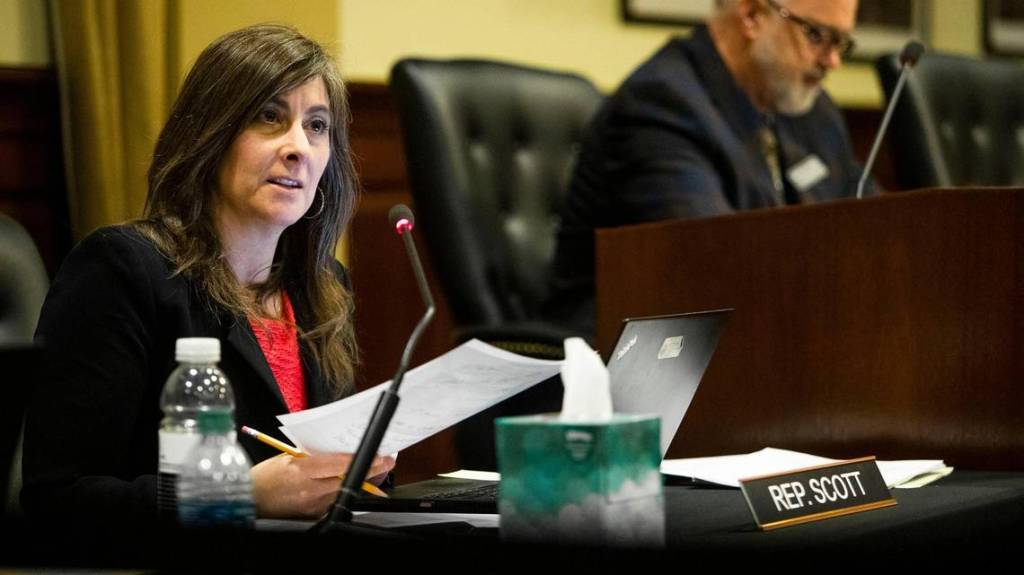
Scott said:
“This is going to be normalized at some point, the way our society’s going and the direction we’re going.”
People are often surprised to hear that Idaho is the only state in the USA to have outlawed cannibalism. Other states have laws which target abuse or desecration of a corpse, making cannibalism legally impractical and problematic. Idaho introduced its law during the frenzy called the “Satanic Panic” last century.
The US is not unique in this – most countries do not have specific laws banning cannibalism. Germany didn’t, until Armin Meiwes ate his new social media friend.
The new bill, 522, adds to Idaho’s existing prohibition of cannibalism a ban on giving someone else “the flesh or blood of a human being” without that person’s “knowledge or consent.” Scott said she is “disturbed” by the practice of human composting, which is legal in several states as an option for disposing of the dead that is more sustainable than other burial methods and reduces a funeral’s carbon footprint. Human composting involves decomposing human remains like other organic matter and turning it into soil that can be returned to the family or used to make land more fertile. But Scott said outlawing composting would require overhauling rules for morticians, and so instead she focused on banning the act of deliberately giving human flesh to another person.
“I didn’t want to see that in my Home Depot stores.”
Scott said she was on a plane and watched a clip from a TV show displaying a chef feeding human flesh in sausage to contestants, which inspired her to take action. The clip, which she sent to the Idaho Statesman, is from a TruTV prank show, in which they pretend to feed people flesh. “They didn’t tell the people, they fed it to them,” Scott told the Statesman, though she noted it may have been a spoof.
Scott also submitted a link to a video featuring a Chinese official denying that his country had sold canned human flesh to people in Zambia. The canning claim was a hoax, spread with fake photos of butchery, according to news reports from 2016. Scott additionally pointed to a North Idaho man who pleaded guilty to murder last year and was initially also charged with cannibalism after investigators found postmortem mutilation and a bloodied bowl at the crime scene. The cannibalism charge was later dropped, meaning that the Idaho anti-cannibalism laws have still not been tried in court.
An editorial in the Idaho Statesman concluded:
But that’s where we are in Idaho: Unhinged, unreal legislators can bring forth just about any crazy idea and get a bill printed.
But imagining that humans might unwittingly eat other humans is not so far-fetched. Mythology is full of innocent cannibals—Agave eating her son Penteus, Thyestes eating his sons at his brother’s feast, Tereus eating Itys. Becoming “innocent” cannibals make us squirm, writes Donald Tuzin, because it denies us the escape of declaring the cannibal a maniac or monster—anyone can become a cannibal. In the movie The Farm, humans are treated as “living meat” exactly the way cattle are regarded on factory farms—the men are slaughtered for meat, the women bred and their infants pitilessly killed in front of the mother (as often happens in the dairy industry) so the farmers can sell the mothers’ milk. The final commodities are sold to innocent cannibals, who occasionally ring up, horrified to find residues such as a human tooth in their meat. Inverting the agricultural business plan, the “livestock” are human, while the farmers are dressed in animal masks.
But it doesn’t only happen in fiction. The Farm may be based on the Canadian pig farmer and serial killer Robert Pickton who confessed to 49 murders in the 1990s, and allegedly “processed” the meat of his rape and murder victims by feeding them to his pigs and, police said, possibly mixing them up with the pork products he sold to neighbours.
Joe Metheny claimed to have killed 13 people in the Baltimore area in the 1990s and turned them into burgers. He reported:
“Over the next couple weeks on the weekends I opened up a little open-pit beef stand. I had real roast beef and pork sandwiches and why not they were very good. The human body tastes very similar to pork. If you mix it together no one can tell the difference.”
In 2007, two men in England were arrested for the murder of a 14-year-old girl, with the prosecution claiming that her body had been cut up and minced into kebabs in a Blackpool takeaway called “Funny Boys”.
On April 9, 2012, police in Garanhuns, Brazil, arrested for murder Jorge Beltrao Negromonte da Silveira, his wife, Isabel Pires, and his mistress, Bruna Cristina Oliveira, who all lived together in a group they called “The Cartel”.

Residing with the Cartel was a small child named Vitória, who had been the daughter of their first victim. The child’s mother was a seventeen-year-old homeless woman whom the Cartel had invited into their home in Olinda in May 2008. She had been murdered by the Cartel, who then dismembered and skinned her body, storing the meat in their refrigerator before seasoning it with salt and cumin, grilling and eating it. The woman’s daughter was fed some of her mother’s flesh.
The worldwide public interest in the crimes did not stem from their murder of three young mothers, but from the fact that the Cartel had baked the victims’ flesh into salgados, salty, deep-fried pastries, which they then sold to the unsuspecting public. To the disappointment of the media, the pictures of the perpetrators showed them as three ordinary Brazilians, not the monsters the public had expected.
Back to Idaho, where Rep Heather Scott’s bill 522 sailed through the House and is heading to the Senate. She quoted in support of her bill from a recent article in The New Scientist which reviewed the human history of cannibalism (they concluded that it happened a lot) and stated:
“Ethically, cannibalism poses fewer issues than you might imagine. If a body can be bequeathed with consent to medical science, why can’t it be left to feed the hungry? Our aversion has been explained in various ways. Perhaps it is down to the fact that, in Western religious traditions, bodies are seen as the seat of the soul and have a whiff of the sacred. Or maybe it is culturally ingrained, with roots in early modern colonialism, when racist stereotypes of the cannibal were concocted to justify subjugation.”
We don’t have to buy mulch to end up cannibals. Any sausage or burger might have human flesh in it, and no one would know the difference. We are animals, large mammals, made of red meat like cows, pigs and sheep. Unless you think we have some sort of supernatural dissimilarity from other animals, the thin red line between different species can only be identified as a cultural construct.

 The Cannibal Guy