Cannibal News June 2021: SWISS COURT SENTENCES CANNIBAL TO 20 YEARS

On Friday, 18 June 2021, a Swiss court sentenced 46-year-old Alieu Kosiah, a West African rebel leader, to 20 years in prison for rape, murder and cannibalism, committed during Liberia’s civil war. The case before a three-judge panel at the federal criminal court in Bellinzona was Switzerland’s first war crimes trial held in a civilian court.

Kosiah, AKA “bluff boy”, was a commander in the rebel faction United Liberation Movement of Liberia for Democracy (ULIMO) that fought former President Charles Taylor’s army in the 1990s. He faced 25 charges, including one in which he was accused of eating slices of a school-teacher’s heart. He was found guilty of all but four of the charges. The court listed the charges as

“recruitment and use of a child soldier, forced transportation, looting, cruel treatment of civilians, attempted murder, murder (directly or by order), desecration of a corpse and rape.”

Criminal complaints were filed by Liberian victims, represented by civil rights group Civitas Maxima. The indictment says Kosiah killed or participated in the killing of 18 civilians, forced a displaced woman to be his “wife”, raping her repeatedly, and recruited a 12-year-old boy as his personal bodyguard. In one incident described in the indictment, Kosiah joined fighters in eating slices of a dead man’s heart off a metal plate. Acts of cannibalism were not uncommon in the conflict.

Child soldiers with ULIMO

Kosiah was arrested in 2014 under a Swiss law that allows prosecution for serious crimes committed anywhere, under the principle of universal jurisdiction. He had denied all the charges and told the court he was a minor when first recruited into the conflict.

Dubbed “the Monster” by survivors of the war, Kosiah is infamously remembered for the Black Monday attack on June 28, 1993 when rebels rounded up and massacred villagers in Foya, Lofa County.

Other Liberian war criminals

Liberia has ignored pressure to prosecute crimes from its continuous wars between 1989-2003, in which about 250,000 people died and thousands of child soldiers were conscripted and taught to kill and commit atrocities. Charles Taylor is himself currently serving a 50-year prison sentence for aiding and abetting rebels who committed atrocities in neighbouring Sierra Leone, but not for his actions in Liberia. His son, Chuckie, was sentenced for torture in Liberia by a U.S. court in 2009.

Ex-warlord Mohammed “Jungle Jabbah” Jabateh has been jailed for 30 years in the US for lying about his past as a leader of a force that carried out multiple murders and acts of cannibalism.

In July 2018, France detained naturalised Dutch citizen Kunti K, a suspected former militant ULIMO commander and placed him under formal investigation for crimes against humanity including torture and cannibalism. Another Liberian commander, Gibril Massaquoi, known as “Angel Gabriel” is on trial in Finland accused of eating his victims, burning kids alive and raping women. A verdict is expected around September this year.

Gibril Massaquoi

An ULIMO commander named Joshua Milton Blahyi known as “General Butt Naked” gave evidence to Liberia’s Truth and Reconciliation Commission in 2008:

“Any time we captured a town, I had to make a human sacrifice. They bring to me a living child that I slaughter and take the heart off to eat it… A lady offered me her child for my sacrifice. After cutting up the child I divided the heart among my boys and myself. The blood of the child was still on my hand when Jesus appeared to me and asked me to stop being a slave.”

 Blahyi’s crimes included child sacrifice, cannibalism, the exploitation of child soldiers and trading blood diamonds for guns and cocaine, which he provided to boy soldiers as young as nine. He was never charged, and is now an evangelical pastor. He published an autobiography about his conversion.

General Butt Naked and Edna Fernandes

The cannibal as animal

One observation.

During his trial, Alieu Kosiah broke down and shouted:

“I’ve been locked up for six years, I have emotions, I’m not an animal.”

Well actually, he is an animal. We all are: humans are a species of Great Ape, as are our closest relatives the chimpanzees, who also wage war and indulge in occasional cannibalism. The point here, though, is that Kosiah saw himself stereotyped as a black man, an African, in a court full of white Europeans passing judgement on him. To the European, only a century or so ago, all Africans were considered savages and cannibals, little more than beasts, a libel which is hard to expunge, and a demonisation that was just as useful to European imperialist expansion as the use of gunboats.  As recently as 1959, New York Times reporter Homer Bigart (an almost perfect name) wrote to his foreign news editor about his contempt for the new class of African leaders such as Kwame Nkrumah,

“I vastly prefer the primitive bush people. After all, cannibalism may be the logical antidote to this population explosion everyone talks about.”

The savagery and cannibalism of the multitudes of wars that have swept Africa in the last decades have led to appalling atrocities. But let us not forget the role of the colonialist rulers who divided the continent up, regardless of the local tribal areas, and sucked the riches out of the land, leaving the newly independent countries destitute and riven with implacable hatreds.

As Malcolm X wrote in 1965 about the colonisers of Africa:

They projected Africa always in a negative light: jungles, savages, cannibals, nothing civilized.

The legacy of this demonisation (see Milton Allimadi’s new book “Manufacturing Hate: How Africa Was Demonized in Western Media.”) is seen in the support given to psychopathic dictators who seize control for their own enrichment, but also for that of their overseas sponsors.  

Milton Allimadi

Is it so surprising that this mythology of the ‘savage’ cannibal should be internalised and acted out in the heat of the internecine wars of our time?

As Professor Monroe says at the end of Cannibal Holocaust,

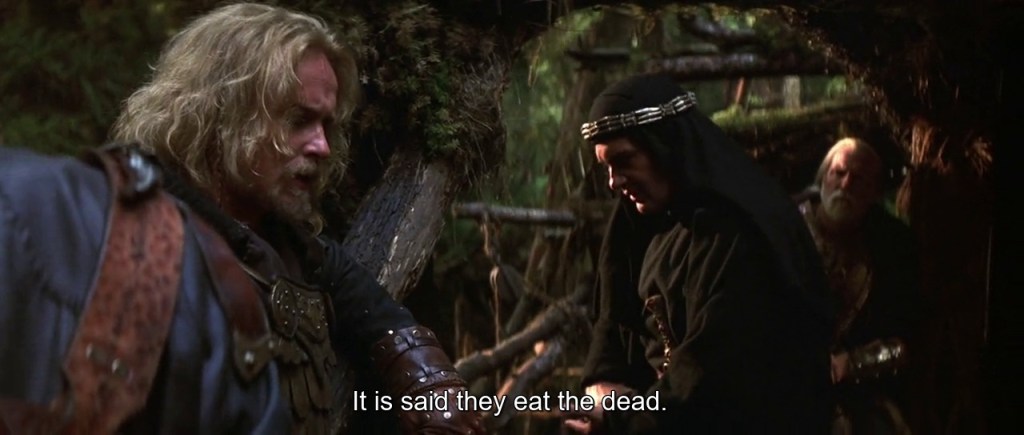
It is said they eat the dead: THE 13th WARRIOR (John McTiernan, 1999)

This film should have been a corker. It has a good pedigree – it is based on the novel Eaters of the Dead by Michael Crichton (Jurassic Park, ER, Westworld, Coma, etc, etc – the man was a prolific author of books and films and TV series). The story is based on Beowulf, one of the great classics of Old English literature. It was directed by one of the doyens of thriller films John McTiernan (Predator, Die Hard, Hunt for Red October, Last Action Hero) and final edits and extra shots were done by Crichton himself. It starred such luminaries as Antonio Banderas and (briefly) the late, great Omar Sharif.

But it bombed at the Box Office, big time, reputedly losing $100,000,000. Omar Sharif was so disgusted by the final output that he quit acting for a few years, calling it “a film so bad that it is not even worth exploring”. Nonetheless, explore it we shall, because, you know, it has cannibals. If you’re interested in what went wrong, Collider has a thorough and forensic dissection.

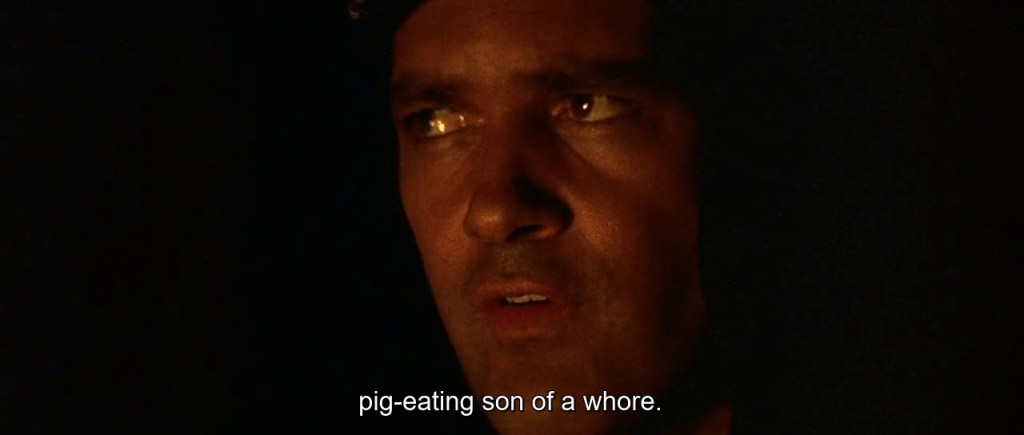
The story centres around Ahmad ibn Fadlan (Banderas), an actual historical figure – he was a Moslem travel writer from the tenth century. He gets exiled from Baghdad for fancying the wrong woman (the king’s wife) and ends up among the Vikings, who find him pretty funny, because he keeps telling them he’s not a warrior, which is rather important to Vikings. Anyway, a Viking boy appears from another kingdom telling of an ancient evil that even the bravest warriors dare not face, so of course they really, really want to go and face it, but their resident soothsayer says sooth, they need a 13th warrior, and, to make it interesting, he can’t be a Viking. So Ahmad becomes the thirteenth, thus the title. He learns their language by listening to them, proving, in his grasp of vocabulary, the superiority of the civilised man.

After this, their language somehow morphs into accented English, since audiences do not want to spend an action movie reading subtitles.

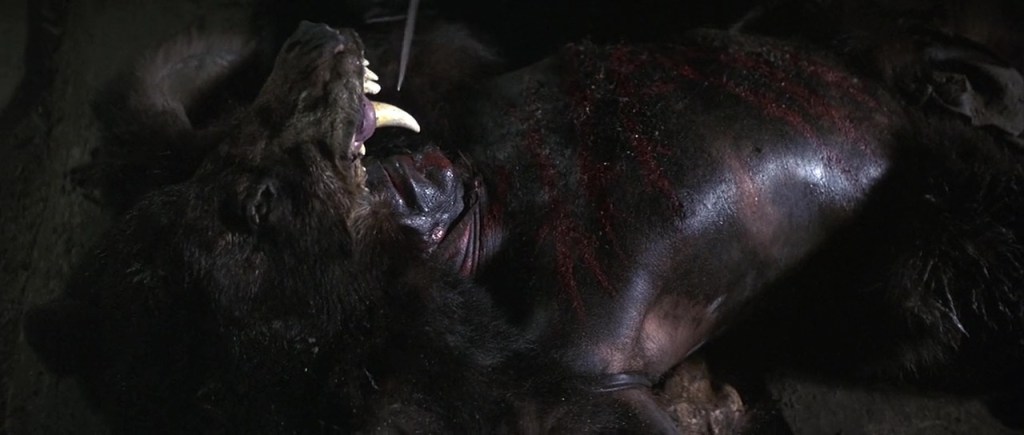
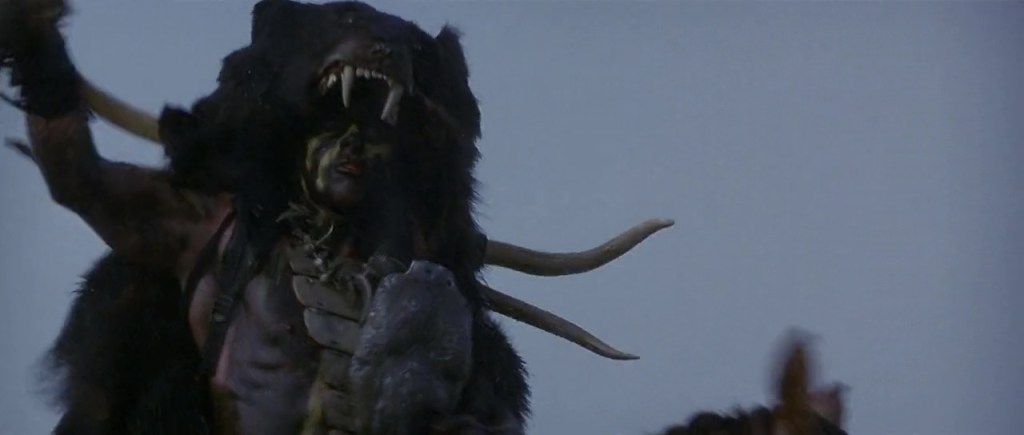
Anyway, (spoiler alert) they eventually find that the Wendols (sounds like Grendel from Beowulf, doesn’t it) are cannibals clothed to look like bears; they live like bears, and consider themselves bears. With teeth like a lion, but that’s OK, because good monsters are usually some sort of hybrid. But these are also human, -ish, bit like orcs. Dark skin, by coincidence, useful to tell the difference from the very Aryan Norsemen.

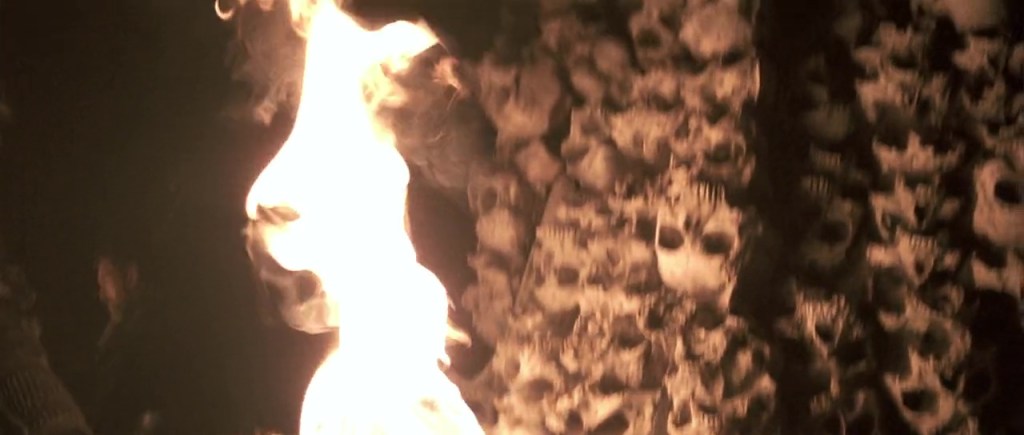
These dudes gnaw on their victims, and take the heads home to mother, whose calling card is an ancient fertility statue. Some humans prefer to eat legs, some breasts; these guys’ mum likes heads.

In the book, they turn out to be Neanderthals, but the movie does not go into detail of their species (just as well, because if they aren’t sapiens, they can’t so easily be accused of cannibalism). Of course, like Beowulf, the mother is the chief monster, and the Vikings are told they have to kill her. Their crazy old Völva (a much more appropriate name for a seer) tells them to find her under the earth – in a cave, like a bear.

So, the big plot point is that the mother of the Wendols eats people. So do the kids, but she is cannibal number one. She is what Barbara Creed calls

“the archaic mother… the parthenogenetic mother, the mother as primordial abyss.”

Our mother, who carries us, can seem, in what Freud called our infantile oral-sadistic or cannibalistic phase, just as easily able to reincorporate us. The archaic mother also has, or may appear to have, a phallus – in this movie, it’s a bear claw dipped in poison. Not a lot of use against a Viking broadsword, but she gives it a shot.

Roger Ebert said in his review “With a budget said to be more than $100 million, it displays a lot of cash on the screen, but little thought” and suggested it was designed just to showcase the special effects, with the story “shoehorned” in whenever there was a pause in the action.

Rotten Tomatoes gave it a measly 33% rating, and Time Out said “At its best, this achieves the beauty and grandeur of a Kurosawa epic – at its worst, however, it feels like a Python remake of The Vikings.”
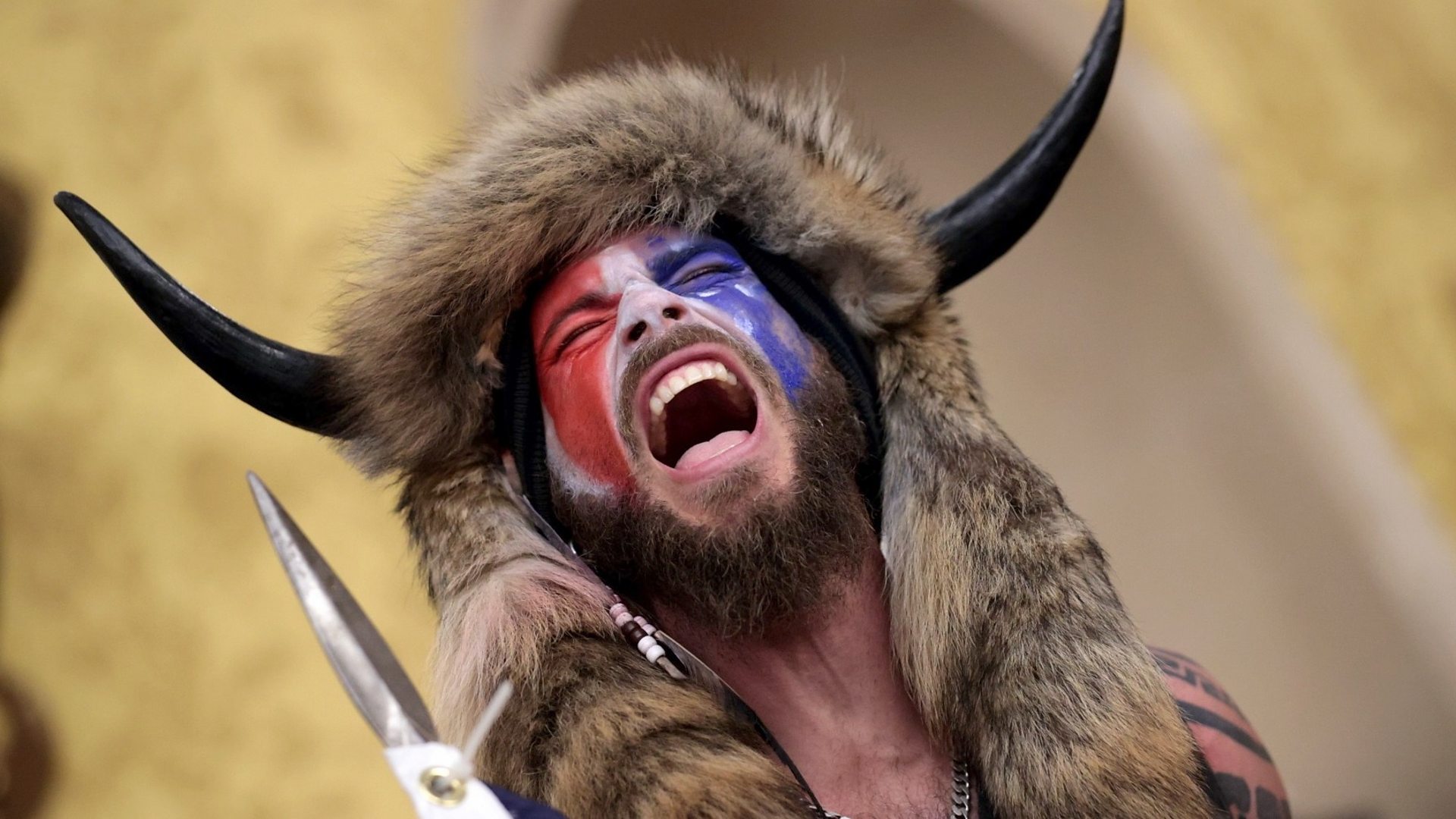
There are some real political problems, not least that Banderas is a Spanish actor playing an Arab, which sounds a bit like Hollywood saying “they’re both not quite white, so that’s all right.” The bad guys are pretty black, and the good guys very white (you know, Viking). The big climax, the battle with the mother, is over in seconds, as is a second climax that got added probably as a filler, with her son in his QAnon horns (still trying to figure out why a bear with lion teeth has horns). Other plot points also fizzle out without much resolution.

When we get that hat and bear mask off, the chief dude is clearly painted like a savage. Lucky the white dudes were there to kill him.

QAnon Shaman: 'I regret entering that building with every fibre of my body'  - BBC News
Where are the Vikings when you need them?

Beowulf of course killed Grendel, and then had to worry about a very angry Grendel’s mother, so this retelling is totally upside down – they kill the mum, then the chief turns up. That’s about all there is for plot twists.

But the scenery is superb, the action scenes are spectacular, the actors playing Vikings are great; their accents – one seems to be Irish – are a bit distracting, but who is going to watch a film entirely in Norse? If you’re looking for a cannibal film with lots of swordplay and arms and legs (and sometimes heads) flying through the air, you might even enjoy this, as the Vikings hack away at the unending stream of orcs or bears or whatever.

It’s kind of like Zulu, or The Magnificent Seven – Vikings beating off hordes of Wendol bear-men instead of British soldiers shooting Africans or cowboys shooting Mexican bandits. These films always end with the white saviours, or the few who survive, riding (or sailing) off into the sunset.

The film has had a bit of a reassessment since its disappointing start, as Vikings have become more fashionable. I admit to quite enjoying it despite its obvious problems, but I probably wouldn’t have bothered with it if it didn’t have cannibals, and I just wish those cannibals could have had a bit more character depth. I was hoping that the dark skin of the cannibals was because the filming was done in some exotic location where the extras were cheap, but turns out it was filmed in British Columbia in Canada. So I guess we’re back to the earliest colonial myths of the black savage cannibal being enlightened, dispossessed or exterminated by the civilised white man. I would also appreciate an explanation of why the morally questionable Vikings, who think nothing of hacking off someone’s head, are so gobsmacked when someone else chooses to eat that same body part.

Mom, why do you like heads so much?

IS ARMIE HAMMER A CANNIBAL?

In case you’re wondering, the above clip is definitely satirical.

So the news media is sure that Armie Hammer either is, or is not, a cannibal. Let us (briefly I hope) review.

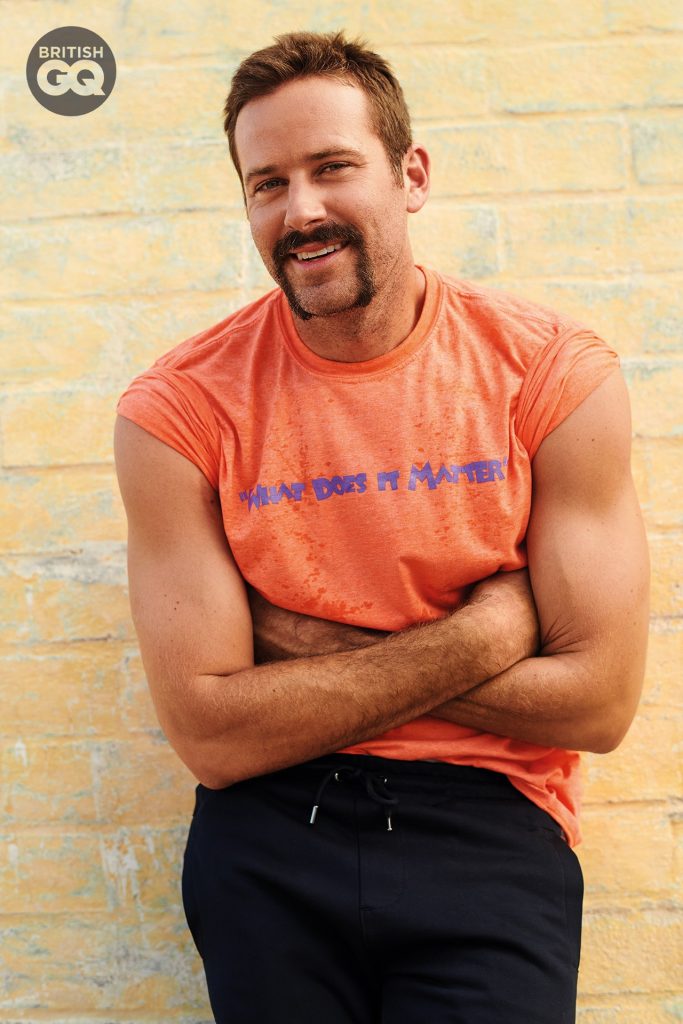
Hammer is a young American actor (not yet 35) who found fame with his 2008 portrayal of the evangelist Billy Graham in Billy, the Early Years for which he won a “Faith and Values Award” from Mediaguide, a Christian review organisation. Will the ironies never cease!

Hammer went on to star in several movies (including some bombs like The Lone Ranger alongside Johnny Depp) but he is best known for playing Oliver in Call Me by Your Name in 2017. He was supposed to star in a sequel, based on the novel Find Me, when his world turned to shit. Or didn’t. Because he was a cannibal. Or wasn’t.

While most of us were locked down in our humble homes for much of 2020, Hammer and his family locked down in a luxury villa in the Cayman Islands, where, he told GQ Mag,

“It was a very complicated, intense situation, with big personalities all locked in a little tiny place. I don’t think I handled it very well. I think, to be quite frank, I came very close to completely losing my mind.”

Hammer’s family was, shall we say, a colourful one. His aunt Casey declared “I started watching Succession and I had to turn it off, because it was like, ‘Oh, my God. That’s my family.’”

Close families! Hammer said he felt like a trapped wolf who wanted to “chew his own foot off.” Despite the raging pandemic, he flew back to the US, where he got over his imminent divorce with wild parties and a series of girlfriends.

Unfortunately for him, several of those girlfriends in early 2021 took to social media to describe Hammer as abusive, manipulative and violent. Screenshots of his text messages appeared to show him describing fantasies (or real events) of rape and cannibalism.

“I am 100% a cannibal…. Fuck. That’s scary to admit. I’ve never admitted that before. I’ve cut the heart out of a living animal before and eaten it while still warm.”

“I want to see your brain, your blood, your organs, every part of you. I would definitely bite it. 100%. Or try to fuck it. Not sure which. Probably both.”

“If I fucked you into a vegetative state id keep you, feed you, watch you, and keep fucking you…Till you are so sore and broken…. I can’t stop thinking of [fucking] your actual brain.”

“Brand you, tattoo you, mark you, shave your head and keep your hair with me, cut a piece of your skin off and make you cook it for me…. “Who’s slave/master relationship is the strongest?” We’d win. When I tell you to slit your wrists and use the blood for anal.”

In early March, Armie’s ex-girlfriend Paige Lorenze, 24, said in an explosive interview with Vanity Fair that during their time together she felt “really unsafe and sick to her stomach.” The interview claimed that the celebrity’s ex-partners have “compared him to Ted Bundy” and said he was obsessed with Shibari – a Japanese bondage art form where people are tied up in intricate patterns. Lorenze was horrified to see the accusations of cannibalism,

“Because he would say things to me…weird stuff…like, ‘I want to eat your ribs’.”

Paige Lorenze

She also claimed that Hammer had carved his initial into her pubic area and licked the wound, later bragging about it to friends, and that Hammer was fixated on biting her body, saying,

”If you did not tell me to stop I would eat a piece out of you.” And he was serious too. It was like he actually wanted to eat my flesh away.

The “A” that Armie allegedly carved into Paige

On their first night together, Lorenze said Hammer insisted: ‘You can either call me daddy or sir.’ 

Another woman named Effie whom he dated for about five months in 2020 said that he had told her he wanted to eat her flesh, and would suck or lick her wounds if she had “a little cut on my hand.”

Armie and Effie

But let’s remember that no one has actually accused Hammer of acting on his alleged cannibalistic fantasies — and in fact he has never confirmed that he sent those texts. In any case, texting and sex play, even bondage and sado-masochism (if consensual), are not illegal, and Hammer clearly enjoyed both.

But if he sent these texts, and if they were just fantasies, as they appear to be, he picked the very worst time, the apex of the #MeToo movement, to send them. Hammer subsequently lost leading roles for which he had been preparing, including in the Jennifer Lopez film Shotgun Wedding, and his agency dropped him. In March 2021, Effie, the woman who initially came forward with abuse allegations on Instagram, identified herself and accused Hammer of violently raping her in April 2017. The Los Angeles Police Department subsequently confirmed that he was the subject of a sexual assault investigation, which had been set in motion a month prior. Hammer has vehemently denied any wrongdoing via his lawyer, who stated that “all of his interactions with [Effie] – and every other sexual partner of his for that matter – have been completely consensual, discussed and agreed upon in advance, and mutually participatory.”

Hammer was unable to see his family during the pandemic lockdown, and his marriage fell apart.

In June 2021, Hammer checked into a Florida treatment centre for drug, alcohol and sex issues.

Katharine Gates, the author of Deviant Desires, describes a cannibalistic sex role play that tends to “involve more realistic scenarios…but still fantasy—they’re not actually eating pieces of people, but you will have one person be the meat and another is the preparer.”

Many, many people seem fascinated by cannibalism, and one artist is already turning Armie Hammer’s explicit DMs into NFT art (non-fungible tokens – it’s a long story).

One role play which seems popular on sites like Tumblr revolves around cannibal acts, a ‘paraphilia’ known as vorarephilia (it’s not in the DSM) – sexual arousal at eating, or being eaten by, another person (enthusiasts call themselves “vores”). A few, such as Armin Meiwes, eventually find a willing partner and make the fantasy a reality, but such cases are incredibly rare – Meiwes himself found that almost all the men who responded to his requests for someone who wanted to be eaten were not finally ready to take it to the next level –  actually becoming his meal.

But why this fascination? Cannibalism is an act of domination – there can be no greater conquest of another than converting them into a meal and eventually into excrement. Hammer revealed this need to dominate in wanting to be called ‘daddy or sir’. But this hunger for incorporative power goes back to our earliest experiences.

Freud wrote of an infantile impulse toward “oral incorporation” – a desire not just to feed at the mother’s breast but to consume, possess that source of nourishment, comfort, security and love. He called one of the earliest psychological phases the “cannibalistic pregenital sexual organisation”. This drive is both loving – wanting to unite with the object of desire, and destructive – prepared to destroy the object to satisfy those desires. Infants may generate such hostility when their needs and desires are not satisfied promptly, and may also learn fear from the suspicion that the source will never be enough, or that their feeble attempts to dominate the adult may be met with far more powerful reprisals.

Maggie Kilgour, the doyen of Cannibal Studies, summed up:

“…far from being sublimated into symbolic forms or even sexual desire, our original appetites still move us, so that we remain trapped in a new oral phase of consumption. The work implies that man-eating is a reality – it is civilisation that is the myth.”

So there is a deep vein of cannibalism in our unconscious minds, and it may resurface at times of stress (e.g. being locked down in the Cayman Islands) or as an expression of affection, which in Hammer’s case did not go over well.

Is Armie Hammer a cannibal? He is a rich and handsome movie star from a rich and famous family, who built his career on playing men who can get away with anything. He is certainly a privileged and persuasive abuser of (often much) younger women, a form of exploitative consumption that is uncomfortably close to cannibalistic ingestion.

But is he a cannibal? Almost certainly not in reality. But in his mind, in the deep, dark fissures of his unconscious, he certainly is. We all are.

Cannibal comedy: THE IT CROWD (2007)

The IT Crowd is a British comedy series about a couple of socially inept geeks who are employed as computer support in a fancy corporation. They are Moss – Richard Ayoade (Travel Man) and Roy – Chris O’Dowd (Bridesmaids, Girls), and their manager Jen – Katherine Parkinson (Doc Martin, Humans). It is a hilarious study of the absurdity of ‘normal’ interrelationships, portrayed through the eyes of the social outsiders. Moss and Roy are great with computers, but clueless with humans.

In Season 2 Episode 3, they realise their dependence on each other’s company has made them seem like ‘an old married couple’, so Moss decides to get out and see other people. He signs up for what he believes is a course of German cooking. But the cook is Johann (Philip Rham, who played a Death Eater in Harry Potter and the Goblet of Fire). Moss goes to see Johann, who is based on the Rotenburg Cannibal Armin Meiwes, who is hoping to cook him.

Johann has placed an ad saying “I want to cook with you.” This is roughly parallel to Armin Meiwes, who was a German computer technician and “vorephile” (a person with a sexual fetish for eating, or being eaten by, another human). He advertised in 2001 on a fetish website called The Cannibal Café for “a well-built 18 to 30-year-old to be slaughtered and then consumed”. The only reply that seemed sincere was from a man named Jürgen Brandes, whom he killed (or at least assisted to suicide) and then ate over several months. Like Meiwes, Johann wants a volunteer – he is into homicide, but not murder.

Moss is amused to discover the misunderstanding.

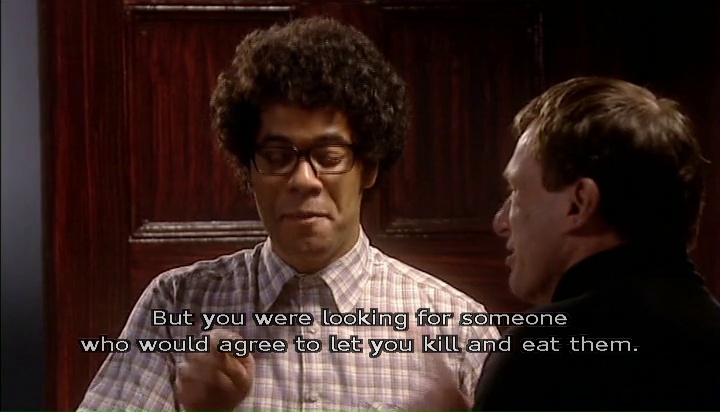
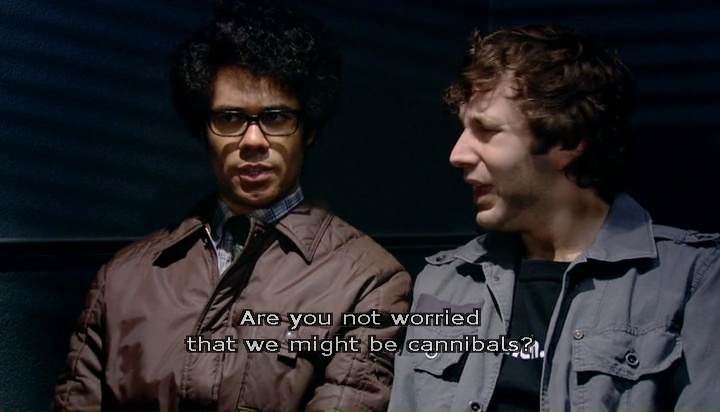
Johann is very disappointed, because he really wants a volunteer. This is exactly what happened with Armin Meiwes, who had interviewed several men before finally finding one who was actually willing to be killed and eaten. In one of the great lines from any cannibal show, Moss reflects

Roy is impressed with the story Moss tells at work next day.

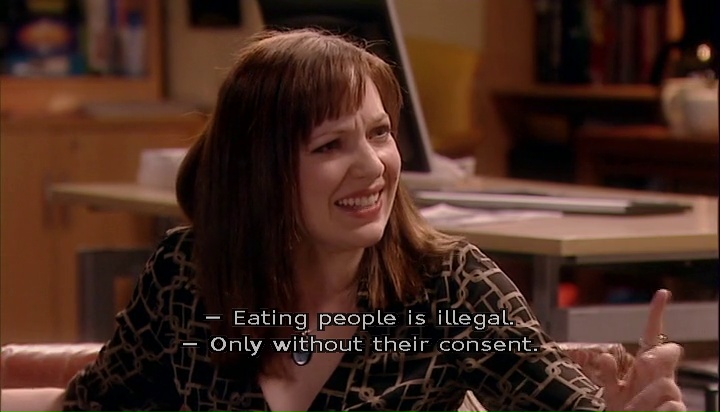
Jen demands to know why Moss didn’t call the police, because

Moss is right; surprisingly it’s only illegal if it is done without consent in most jurisdictions. The legal problems arise with the slaughter before the eating. Then Roy decides he wants to consent, just so he can watch a pirated movie on Johann’s big-screen TV.

It’s a hilarious episode, particularly if you are an aficionado of cannibal studies. When the cops arrive, it’s not to arrest the cannibal, but to nab Roy and Moss for video piracy.

Cannibalism is usually classified as horror, but is often recategorised to comedy. The serial killers like Dahmer and Chikatilo are rarely considered humorous, although the light-hearted TV series Rake started off with its own interpretation of the Meiwes case. But the ‘savage’ with the grass skirt and the bone through his nose has been fair game for comedians since the earliest movies like Be My King (1928) and Windbag the Sailor (1936) as well as cartoons like Jungle Jitters and television shows like Gilligan’s Island. Cartoons are full of ‘savage’ cannibals, despite anthropologists having long since relinquished the colonial belief that all colonised peoples are people-eaters.

http://bizarrocomic.blogspot.com.au/2010_09_01_archive.html

Cannibalism is useful as a humorous allegory for the limit of civil behaviour. When comedian Jon Stewart was asked by Late Show host Stephen Colbert to say something nice about President Donald Trump, he hesitated and eventually blurted “Donald Trump – is not – a cannibal”.

Colbert followed this up a year later suggesting Trump eats human flesh, but only “it’s very well done with some ketchup”. Essayist Katha Pollitt wrote in the subsequent election year that getting rid of Trump was so important that she would “vote for Joe Biden if he boiled babies and ate them”, a reference to the Sicilian tyrant Falaride who, Ateneo reported, “boiled babies and ate them” and even ate his own children, according to Aristotle. Cannibalism is an ideal hook for humour, because it is the extreme example of carnivorous virility and often encapsulates abuse of power.

What we find outrageous and therefore humorous about the Armin Meiwes case is not his appetite for human flesh, but the fact that his victim volunteered and even encouraged him to fulfil the agreement. But isn’t that what we all do when we cede our power to corrupt or inept leaders? Perhaps we are laughing at ourselves.