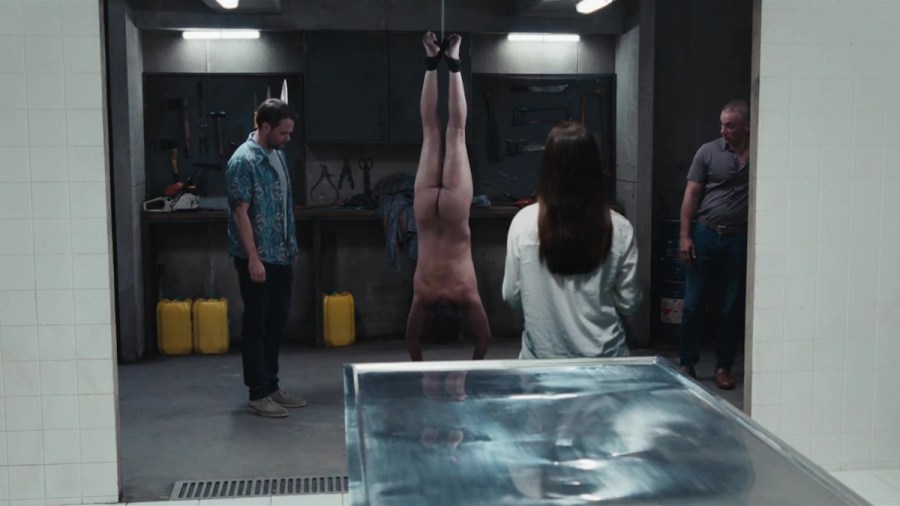
Be careful what you wish for! Aesop warned us of that over two thousand years ago, in his fable “The Old Man and Death.” In that story, an old man is so sick of picking up wood in the forest that he drops his bundle and calls on death to free him from his never-ending labours. But when Death appears, he reconsiders, and asks Death just to replace the bundle of sticks onto his back. In this movie, the sticks are gambling debts, and Death is a catering agency that pays chefs to kill people and cook them for rich people. Can his request be retracted like Aesop’s old man?
Look, many of us have sat in a restaurant, even (perhaps especially) the expensive ones, wondering what the hell we were eating. We rarely ask though – too polite, too squeamish, or too indifferent. If it’s on the menu, we figure, it must be OK. Once we’ve asked the waiter for the dish, it’s usually too late to retract. In Mark Mylod’s 2022 film The Menu, audiences speculated on whether the Chef (Ralph Fiennes) had served up humans in his exquisite banquets, including perhaps the Sous Chef and even his own mother, but it was never spelled out, so has not graced this cannibalism blog.
But in this week’s film, Nicholas Tomnay’s What You Wish For, the cannibalism is much more open, particularly for the diners, who are willing to pay big bucks for this, shall we say, unorthodox cuisine. Nicholas Tomnay is an Aussie (like the author of this blog) who works out of Sydney, New York and San Francisco. His first feature film was The Perfect Host (2010) which also included a lot of dining, and What You Wish For follows in this vein, but with a lot of human flesh involved.
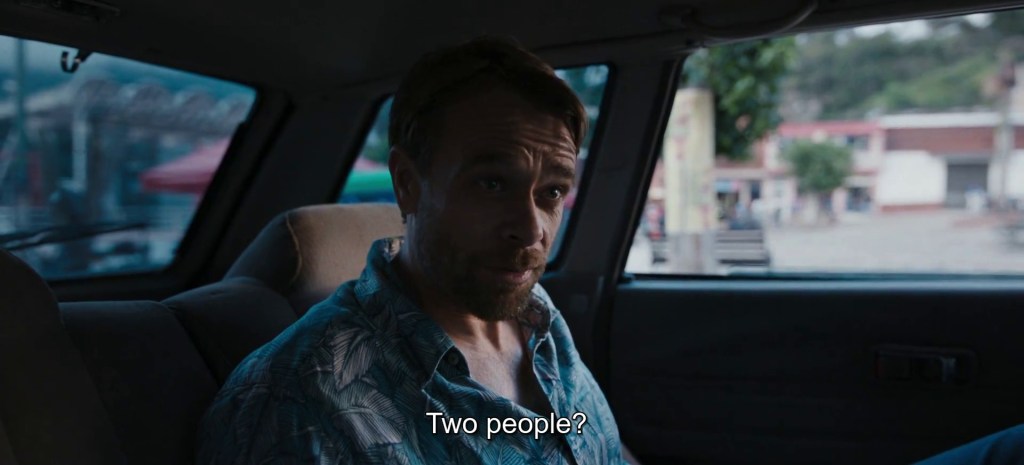
Ryan (Nick Stahl from Man Without a Face) arrives in Colombia (South America) at the invitation of his old friend Jack (Brian Groh). Ryan is on the run from massive gambling debts he has foolishly amassed. Although the debt collectors don’t know where he is, they do know where his mother is, and send him pictures to prove it. He needs lots of money and quickly. His friend Jack seems to have it all – a fancy house where he just has to cook one meal for the agency that contracts him, a fortune in his bank, and big pay cheques delivered after each meal.

But Jack is troubled by conscience, telling Ryan,
“The reward always matches the atrocity”
While Ryan is still coveting Jack’s lifestyle, Jack hangs himself. Recovering from the shock, Ryan realises that all he needs is a fake driver’s licence and a new password to become Jack and access all his money.

But when the agency people arrive – Imogen (Tamsin Topolski) and Maurice (Juan Carlos Messier) – they think he is Jack, and assume he knows what they want him to cook, are angry that he has not yet harvested the meat.

It turns out that his “ingredients” are local poor people, preferably ones who won’t be missed, and Imogen warns him that preparing and serving one bad course will be fatal not just to the person being cooked, but to the chef as well. The guests pay $1.5 million for the meal, including the exotic location, the private jets, and the specially sourced meat. They have special requests too – Imogen tells him “make sure you harvest the tongue.” So any thought of Ryan skipping out before the feast is extremely unpalatable (sorry).

The rationalisation is the same one found in most capitalist enterprises. It is the utilitarian argument in favour of the greatest good for the greatest number. Imogen tells Ryan:
“We kill on average fifty people a year, plus twenty-five in the clean-up. So, 75 deaths a year, and we generate over one hundred million dollars. We funnel 100% of our profits back into the communities. The farming, the infrastructure. We ensure clean drinking water for the entire population. You might say that’s simply self-interest. But we don’t eat everybody. Not even one percent. Now, you tell me what company makes that amount of money, has global presence, assists more than 99% of the people in the communities within which it operates, and their footprint has only ever killed 75 people a year? Oil companies kill on average 110 people a year, farmers are on about 250. Groundskeepers, truck drivers, roofers, they all thrash us in fatalities.”
The rest of the discussion is phrased in the same vocabulary as used by the meat industries. Old ones will taste disgusting, fear will taint the meat, the butcher will be covered in blood.

The victims are “produce” and become no more or less than “livestock”. Maurice, the agency killer who goes hunting with Jack, assures him “they won’t feel a thing”. When Ryan asks him if he feels bad, the reply is,
“Do you feel sad for a pig when you eat the bacon?”
Jack does what he has to do, after all his attempts to escape or alert the police are foiled.
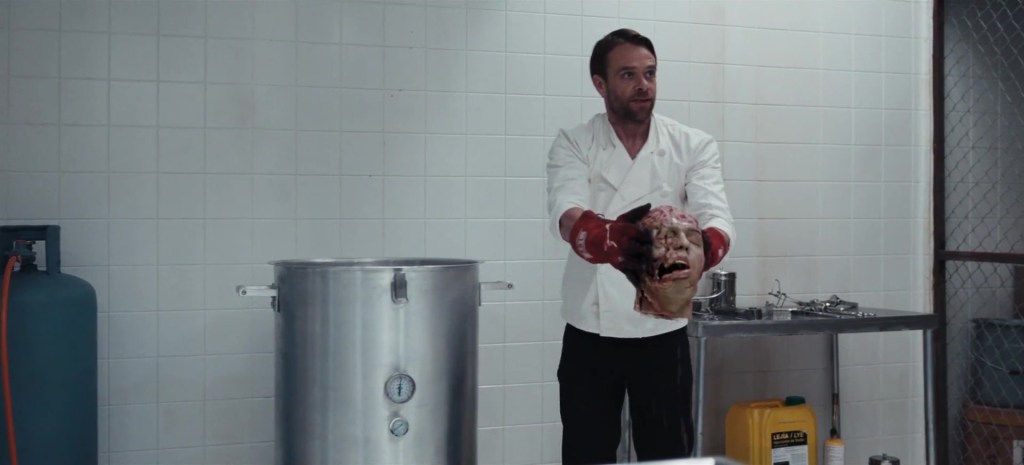
Imogen sympathises with his nagging conscience, telling him what every soldier, assassin, slaughterhouse worker or meat eater is told at first:
“No one likes it at the beginning. But after a while, it does stop bothering you”.
There is a popular meme about “eating the rich”, and even a few movies about it (e.g. Eat the Rich and Eating Raoul). But the facts of nature, humanity and economics are that the rich and powerful get to choose what, and who, they eat. In the film The Cannibal Club, rich Brazilians watch poor people fight to the death and then eat the loser, in Fresh, the protagonist chats up young women then drugs them and sells their flesh and their underwear to the “one percent of the one percent” who want what no one else can have, and can afford to pay for it. Jeffrey Epstein had a similar gig, supplying sex rather than meat.
The people with the power, the rich, eat the poor: they swallow their surplus labour, they squeeze rent from them, they sell them their shoddy products paid for by lending them money at ruinous rates, and they send their children off to war. Why not go the next step and literally cook them for dinner? It’s what we do to other animals, purely because we can.
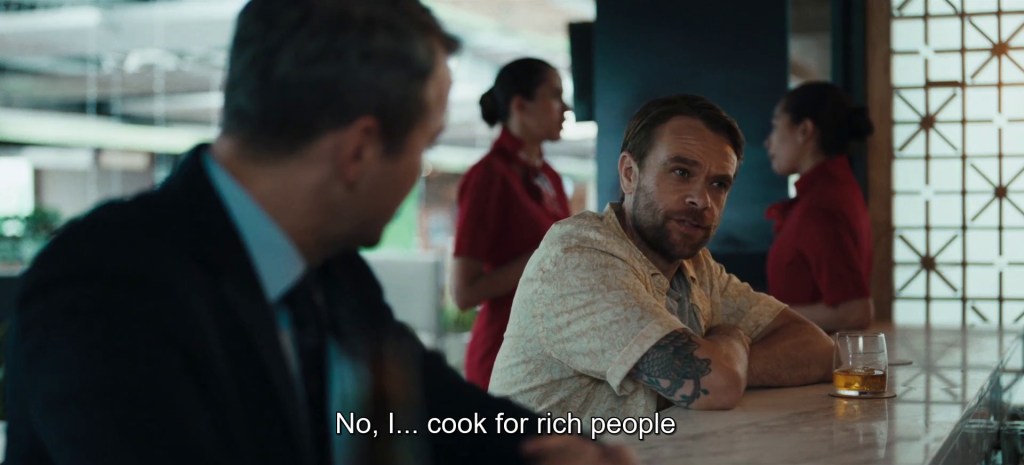
The film is sumptuously presented, the direction is assured and convincing, and the actors are all first rate, including the wealthy guests and the police who pop by and share the main course. The film is rated 80% “Fresh” on Rotten Tomatoes.
One reviewer opined, “What You Wish For will convert you to vegetarianism forever”.

 The Cannibal Guy
Pingback: A Fear in Provence – DELICIOUS (Nele Mueller-Stöfen, 2025) – The Cannibal Guy