THE HUNGER GAMES: Ballad of Songbirds and Snakes [and Cannibals] (Francis Lawrence, 2023)

The Hunger Games began as trilogy of novels by American author Suzanne Collins (2008-2010). The prequel, The Ballad of Songbirds and Snakes, was released in 2020. The first three were adapted into four films (annually from 2012-15), all of which set various box office records. The first film, The Hunger Games (2012), recorded for biggest opening day and biggest opening weekend for an original IP. In 2023, the prequel to the trilogy, titled The Ballad of Songbirds and Snakes, was released as a film.

The Hunger Games is a post-apocalyptic dystopia set in Panem, a North American country consisting of the wealthy Capitol and 13 districts in varying states of poverty, punished for rebelling against the Capitol. Every year, children from the first 12 districts are selected via lottery to participate in a compulsory, televised battle to the death called The Hunger Games. The name Panem derives from the Latin phrase Panem et circenses, which literally translates into “bread and circuses”, the ideology used by the Roman emperors to distract the citizens from their daily struggles and the obscene indulgence of the elites. One of the highlights of the Roman circuses was the gladiators, who would fight to the death, as a popular form of entertainment.

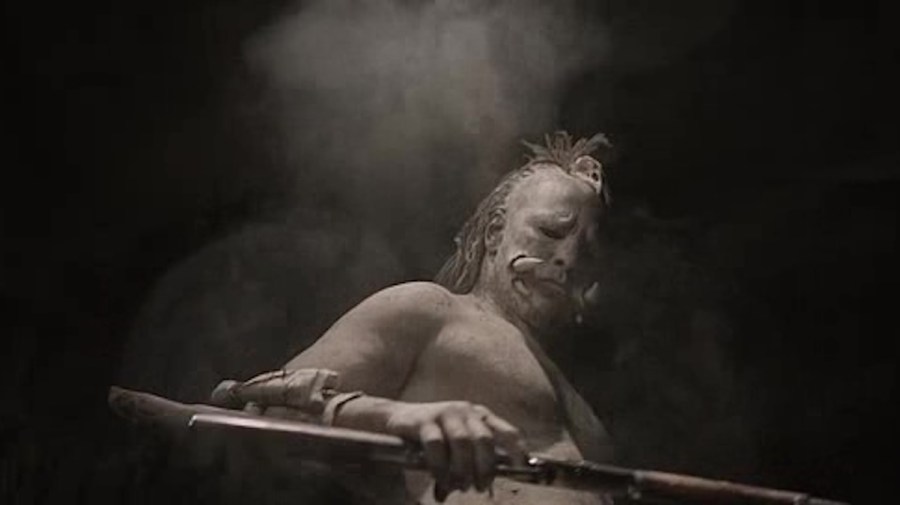
There are not really any rules to the Hunger Games (except kill everyone else) but cannibalism is frowned on, as the audience find it a bit gross. Compared to just, you know, chopping people up. Titus (named after one of the crazier Roman Emperors) kills combatants in the 66th Games by tearing out their throats and eating their organs; he is killed in an avalanche, presumably created by the organisers because of his threat to their ratings. Like many cannibals, he is dismissed as just plumb crazy.

The Ballad of Songbirds and Snakes is a prequel, starting 64 years before the Hunger Games, during the ‘Dark Days’ which led up to the failed rebellion in Panem. How, it wonders, did we get this way? Well, cannibalism of course is part of the answer. In the novel, the narrator says:

“…the siege had reduced the Capitol to cannibalism and despair.”

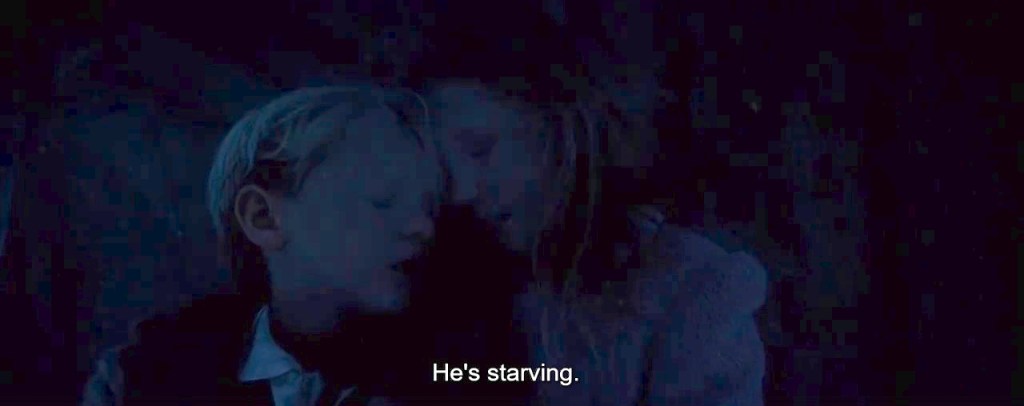
But this is a movie, and you know the golden rule: show don’t tell. So the opening reveals two children, a young Coriolanus and his cousin Tigris, running through the snowy streets of the Capitol during the rebellion, hunting for food. A man appears with a cleaver and chops the arm from the corpse of a woman.

“Why is doing that?” asks the boy. Tigris replies simply:

So, the scene is set for the rise of Coriolanus Snow, who eventually becomes the ruthless President of Panem (played by Tom Blyth in this film, and later the incomparable Donald Sutherland). To him, the ends justifies the means, and what ends are more important than staying alive, even if it requires killing and sometimes eating people? It’s the human condition, particularly in post-apocalyptic dystopias. That’s entertainment!

“See how quickly we become predator? See how quickly civilisation disappears?”

Is Donald a Cannibal?

No, not that Donald, the one that dresses in a blue suit with no trousers. That still didn’t help? I mean the Duck of course, the Walt Disney creation, who has been around since 1931.

In several films, including the 1948 cartoon Soup’s On (the above clip), Donald is seen enjoying the flesh of a bird, presumably a turkey or large chicken. In the Christmas or Thanksgiving movies such as Mickey’s Once Upon a Christmas, it is normally a turkey, because that is the animal people are encouraged or sometimes browbeaten into eating on those festivals. In that film, Donald actually chases the terrified turkey with a knife. I found it more disturbing than most of the cannibal films I have reviewed on this blog!

Turkeys are birds, and so are ducks, so every now and then, Social Media breaks out in a rash of accusations that Donald is a cannibal, because he is a bird who is eating a bird. Cannibalism, though, is defined as eating another of the same species, so let’s look at this a bit more closely.

It is far from clear what species of duck Donald might be. Taxonomy texts do not reveal any species that speaks (quacky) English, dresses (or half-dresses) in human clothes, or live in human houses. Nor have I been able to discover any animal other than Homo sapiens who cooks its food. Or a species of duck with TEETH! Or, as far as we can tell, one that believes in an afterlife.

Several cartoons depict humans (however vaguely) as cannibals – Disney had a go with Alice Cans The Cannibals in 1925, Merrie Melodies produced Jungle Jitters in 1938, a cartoon so racist that it was later placed  on a list known as the Censored Eleven, the very first episode of Bob’s Burgers explored the commercial perils of serving human meat, and a very odd stop motion video from Robot Chicken explored their theory that cryogenically preserved heads (in this case Walt Disney’s) could be revived as cannibalistic monsters.

A social media dispute arises regularly, in which the “Peanuts” cartoon character Woodstock (who is usually interpreted to be some sort of canary) is depicted eating chicken. Peanuts fans take to social media to accuse Woodstock of cannibalism for being a bird eating a bird, although it seems unlikely that he is eating a canary.

Likewise, there are many species of ducks, none of which Donald seems to be eating.

Ducks have the following taxonomy:

CLASS: Aves (birds)
ORDER: Anseriformes (water fowl – Anatidae plus a couple more species – the screamers, and the magpie goose)
FAMILY: Anatidae (ducks, geese, swans)

The “domestic” turkey, the one most eaten by humans, is quite different. They are one of the two species in the genus Meleagris and are the same species as the wild turkey.

CLASS: Aves (birds)
ORDER: Galliformes (ground-feeding birds – landfowl)
FAMILY: Phasianidae (185 species, including pheasants, partridges, chickens, turkeys and peafowl)

Now if we compare our own animal bodies, we find that humans are:

CLASS: Mammalia (animals that milk-feed their young)
ORDER: Primates (a wide collection of animals from lemurs to simians)
FAMILY: Hominidae (the “Great Apes” – 8 species including orang-utans, gorillas, chimps and humans)

So, if Donald were to eat a duck of a different species or a goose, from the family Anatidae, he would be committing the same sort of act that might cause offence if we found, say, gorilla meat in our supermarket. Very unlikely to happen in most of the places this blog reaches, but not so uncommon in times of shortage in Africa, where it is called “bush meat” and is a major cause of species extinction. Not cannibalism though, because even a goose is a different species to a duck.

But if Donald eats a turkey, he is simply eating another bird of the same Class, Aves. The outrage that accompanies his action should, therefore, be emulated when we see humans eat other Mammalia, such as pigs, sheep and cattle.

Categorically, if Donald is a cannibal, so are most humans. Small children, who tend to gush over other animals, seem instinctively to recognise this. But, by the time they reach the age of Huey, Dewey, and Louie (whatever that is), they are socialised to objectify others as us and them, friend and foe, sacred and edible.

May you have a splendid celebratory season, no matter your metaphysical beliefs, and enjoy lots of festive foods, from Kingdoms other than our kin Animalia.

Satanist cannibal released after fighting in Ukraine

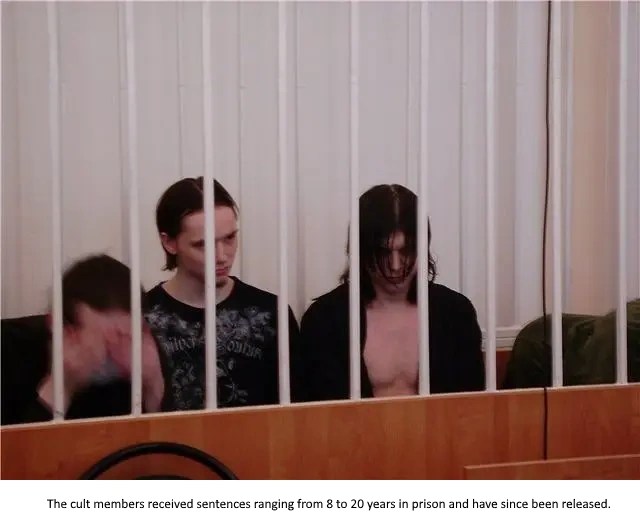
The Moscow Times has reported that a self-confessed member of a Satanist sect, who was serving a twenty-year prison sentence for murder and the desecration of dead bodies, has been freed after completing six months of military service in Ukraine.

Nikolai Ogolobyak and other Satan worshippers, including one nicknamed “Hitler,” beheaded two of their four victims — then removed their hearts and tongues, fried and ate them

In a second case in which they killed two other people, Ogolobyak made 666 stabs on his victim as an apparent reference to the ‘number of the beast’, a symbol of the devil.

Ogolobyak, 33, from the Yaroslavl region, was released earlier this month after he was severely injured in battle, his father said. His prison sentence had been set to end in 2030. His father told the press:

“He is not working. He is recovering. It is unlikely that he will be taken to the ‘special military operation’ again.”

Ogolobyak and his underage accomplices were sentenced in 2010 for killing four teenagers and desecrating their bodies in 2008 initiation rituals. Another suspect, Anton Makovkin, was ruled insane and was placed in a mental institution. The ritualistic murders rocked the Yaroslavl region — where the then-teenage Ogolbyak was known as “Count.”

Other members included Alexei “Dead” Chistyakov; Anton “Doctor Goth” Makovkin; Sergey “Distris” Karpenko, and Alexander “Hitler” Voronov”.

For the first two years, the teen Satanist carried out bloody rituals by sacrificing stray dogs and cats. Initially, new members were inducted into the cult using the blood of slaughtered animals, which were tied to an upside-down cross.

But in the summer of 2008, the Satanists went out hunting for people to sacrifice — and wound up killing and dismembering four college students they had befriended: Olga Pukhova, Anna Gorokhova, Andrej Sorokin and Varya Kuzmina.

On June 28, 2008, after a night of drinking, Pukhova and Gorokhova were lured to a clearing, where the cult members started a bonfire and positioned themselves in a pentagram formation, according to documents filed in the case.

When one of them gave a sign, all the suspects fell upon the two young women and plunged daggers into their bodies. Makovkin then decapitated the girls with a sword, after which the mutilated corpses were dismembered and carved up, and several internal organs were fried and eaten, according to the court records.

The newest member of the group, Ksenia “Kara” Kovaleva, was bathed in the victims’ blood as part of her initiation ceremony. One of the suspects was known in the group as “the secretary from hell” who took notes in a book of made from the skin of the victims.

Russia’s Defence Ministry and the Wagner mercenary group have recruited heavily from Russian prisons to the notorious “Storm Z” unit of convicts, to bolster their manpower in Ukraine, promising convicts a pardon in exchange for military service. Several of these pardoned convicts have reportedly committed new crimes after returning from Ukraine.

According to leading prisoner’s rights activist Olga Romanova, around 80,000 convicts were recruited from Russian prisons, and 20-30,000 have already returned to civilian life. The Kremlin has reiterated that they will keep the pardoning practice active for the foreseeable future.

Dmitri Peskov, Putin’s spokesperson, defended these pardons, believing that “people convicted, including for serious crimes, atone for their crime with blood on the battlefield.”

This blog reported on another jailed cannibal, Yegor Komarov, who was purportedly released to fight in Ukraine in 2022. It now appears that the cannibal sent to fight in the Ukraine may actually have been Ogolobyak.

 The Times reports that Russians are increasingly uneasy about the release of killers on the basis that they served in the army. Particularly, one must assume, cannibal Satanists.

“Every cannibal wants to be a director”: LONG PIGS (Nathan Hynes, Chris Power)

Long Pigs is a 2007 “found footage” movie, in which two desperate filmmakers come across a cannibal, ask him if they can document his eating habits, and then are shocked when he starts killing people and eating them. It is presented as a documentary, with all the usual warnings about graphic scenes etc.

Bit silly, and found footage has rather been done to death, but it has some interesting ideas, particularly the sympathetic approach to the main character, even as he commits his crimes. Look, it seems to say, everyone needs a hobby and, to this cannibal, killing and eating people is no more ethically questionable than hunting or fishing. Stalk, catch, kill (as quickly and painlessly as possible) and then enjoy. He does his best to keep the movie interesting, with a patter of jokes, historical facts and philosophical observations as he slices and dices.

The cannibal is played by Anthony Alviano (Headcase, A Matter of Justice), and he presents the cannibal, also called Anthony, as a boy-next-door persona, one who kills and guts people. Like a farmer of animals, he starts the film explaining that it’s bad to frighten the victims, not for ethical reasons, but because the adrenaline ruins the taste of the meat. The filming starts as he drives around looking for a “certain kind of woman”, because he wants to make “long pig stew”. “Long pig” is a term supposedly used in the Pacific region before colonisation to designate human meat, although that definition is widely contested. Anyway, Anthony is looking for “marbled meat”, so he searches for a sex worker (traditionally victims who are not exhaustively looked for by police) who is, let’s say, of a heavy build.

“People who eat stew make perfect stew. It sounds obvious. Yeah, she looks like she eats well.”

As she smiles at the camera, he sneaks up behind with a sledgehammer and cracks her skull, resulting in the cameraman vomiting (which is actually rather more gross than the murder). They ask Anthony if gets a sexual thrill from killing women, but he dismisses this, in the same way a slaughterhouse worker might deny any pleasure in killing a different species of mammal.

“I’m not a freak or anything like that. This is all culinary, this is hard work!”

“Any hunter would recognise this position. We got the corpse hanging by the ankles. The first thing I’m gonna do here is make a little incision and tie off the anus. That’s to stop contamination from the feces. You would do that whether it was a deer carcass or a cow or a person… Absolutely necessary for health reasons.”

He cooks a stew from a portion of her thigh, then after dinner goes off to brawl in an ice-hockey game, an arena that seems the very essence of carnivorous virility.

Afterwards, he cooks ribs on a barbecue, assuring the viewers that there are “no animal by-products” used – just soymilk. And a woman’s ribs, of course, thus reinforcing the anthropocentric mythology of the human as not really animal, even though he has just butchered one in the same way as any other animal prepared for human consumption. He quotes the Arawak word barbaca, the grill on which human meat was supposedly cooked, according to explorers like Hans Staden and Jean de Léry, which became the Spanish word barbacoa, and eventually morphed into English as barbecue. Staden’s narratives were later illustrated by Theodor de Bry in his 1592 book Americae Tertia Pars, and the film sneaks in a quick peek at that glimpse of sixteenth century sensationalism.

There’s a lot of moral philosophy interwoven in the scenes of murder and gastronomy. Anthony the cannibal and his friend try to persuade the filmmakers to try some of the ribs, saying, it’s dead, and therefore cannot suffer, whereas we eat live vegetables, and “broccoli feels pain! Did you know that?” This is precisely the argument tossed at vegans by carnists, but in this case, it demonstrates the contention of the nutritionist Herbert M. Shelton:

The cannibal goes out and hunts, pursues and kills another man and proceeds to cook and eat him precisely as he would any other game. There is not a single argument nor a single fact that can be offered in favor of flesh eating that cannot be offered with equal strength, in favor of cannibalism.

Anthony works as a valet in a fancy restaurant, parking cars for rude people, and if you follow the lore of Hannibal Lecter, you will know that rude people are prime targets of cannibals. They park the car of a particularly rude man, take down his address from his licence and, next day, shoot him and load him in their car trunk. Unfortunately, they have a flat tyre and have to head to a pig farm for help, where they witness pigs being slaughtered and prepared for sale, in identical ways to Anthony’s own processes, but with rather better technology, and, oh yes, totally legally.

Most of the film is a spoof on cooking shows, which regularly have smiling chefs, or hopeful chefs, preparing lumps of animal flesh, hoping to win prizes. Anthony shows, in high-speed motion accompanied by the music of the Sugarplum Fairy, exactly how he prepares a body, stripping it and dismembering it until all that is left is two feet (still in socks) and the long femurs. He demonstrates how to get rid of the bones, cutting them up and putting them in a kiln at 2600 degrees – he even uses the line “these are some we prepared earlier.” This is a cooking show for cannibals.

Anthony is a typical modern cognate cannibal; as he says, people expect Hannibal Lecter, so “no one is going to suspect the valet”. This gives him the invisibility that we saw in cases like Jeffrey Dahmer. He loves his old mother who is in a nursing home, and is bewildered by a doctor’s request to do a post mortem analysis brain when she dies, a sophisticated update of cannibalism. He sadly tells the filmmakers that she has Alzheimer’s, but we eventually find that she died of Creutzfeldt-Jakob spongiform encephalopathy, a human version of mad-cow disease, probably from eating human meat that he fed her. He also admits to eating a five-year-old girl called Ashley, because people prefer meat from young animals, but was subsequently perturbed by the extensive police searches, and now avoids playgrounds and schools: “It’s like a supermarket, man.” As New Year celebrations explode outside, he comes to realise the filmmakers are going to release the movie, which will detail all his criminal history, and goes to get his sledgehammer. The rest, as Shakespeare says, is silence.

Anthony has a philosophy that rejects anthropocentrism and sees nothing wrong with cannibalism, or at least nothing that does not apply to any other meat. It’s a cannibalistic rejection of what Richard Ryder and later Peter Singer called “speciesism”.

“It’s only human beings that are so arrogant that they believe they are better than every other kind of animal out there. Worms don’t think about, you know, oh my god, why did mama worm get eaten by a fish; fish eats the worm and that’s that, it’s completely accepted by the worm, and the fish, and small fish gets eaten by the big fish, and if it was so wrong to eat it, then why would it taste so good?”

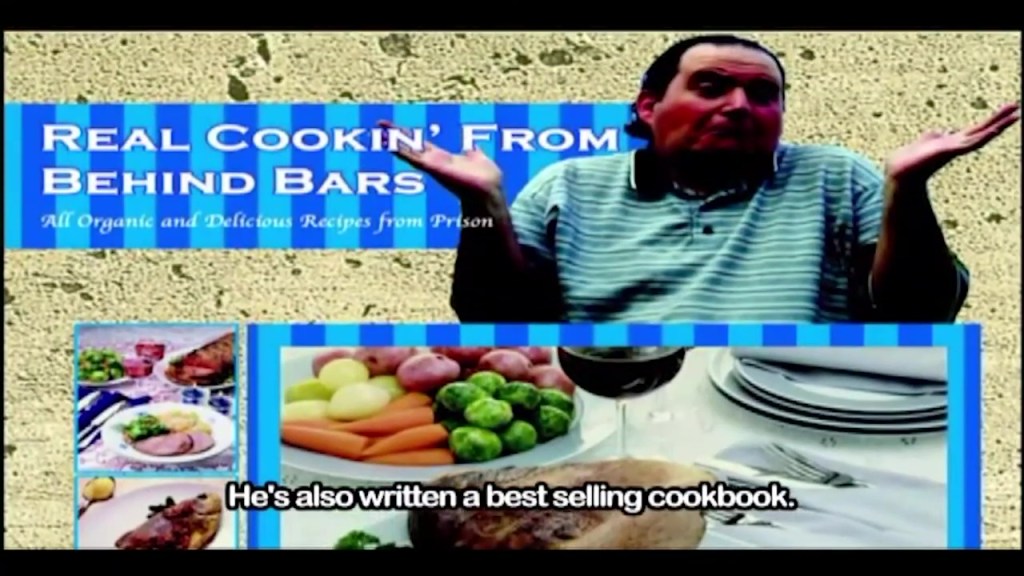
At the end, he is in jail, but he has published a cookbook. His cooking show has finally paid off.

This is a low-budget film, but is a lot better than might be expected. The creators were lucky enough to secure the services of Chris Bridges, the special effects artist whose credits include the Dawn of the Dead remake, Saw III & IV, 300 and Star Trek Discovery. Unless they actually killed and dismembered people, the result is spectacularly authentic. Anthony Alviano is brilliant in the role, which was written with him in mind.

The full movie (although slashed drastically from 81 minutes to 56 minutes) can, at the time of writing, be seen at https://youtube.com/watch?v=vnGXBRkxXuo.

Accused Nithari cannibal serial killers go free: “THE SLUMDOG CANNIBALS”

The 2006 Nithari serial murders case was alleged to have taken place in the house of businessman Moninder Singh Pandher in Noida near Nithari village, Uttar Pradesh, India between 2005 and 2006. Moninder Singh was convicted in two out of the five cases against him, while his servant Surinder Koli, accused of assisting him or possibly instigating the killings, was convicted in 10 out of the 16 cases against him.

Koli admitted to killing six children and a 20-year-old woman referred to as “Payal” after sexually assaulting them. He later confessed to eating their livers and other parts of their bodies. Both men were sentenced to death, Koli ten times, but eventually, in October 2023, after some 2,000 hearings, Allahabad High Court acquitted them both, citing lack of evidence.

Despite being from a family of Hindu vegetarians, Koli was from the Dalit, the Untouchable caste, who are considered subhuman by much of society, marginalised, excluded, with their human rights routinely violated. They survive by doing the jobs no one else wants. From 14, Koli worked as a butcher’s assistant, learning to slaughter and dismember large mammals, which seems to have been a useful skill later in his life. He apparently developed a taste for meat at this time.

In 2005, Koli became a servant to Pandher, where he witnessed some pretty lively parties involving Pandher’s friends and visiting sex workers. In March that year, a little girl went missing in Nithari, and a couple of weeks later it happened again. Between 2005-06, a child went missing in Nithari every six weeks on average.

Police told parents they had probably run away (although the youngest was three years old) and would return by themselves. Frustrated by police inaction, parents and local residents in December 2006 organised the excavation of the reeking drains behind Pandher’s house where they found bags of bones, which proved to the hands and legs of small children. Skulls were found on the other side of the house. Police arrested the two men, and found some of the children’s belongings in the house. Police put the number of child victims at more than 31. Locals rioted outside the house, claiming that the police were corrupt and had concealed evidence of crimes involving rich people; the father of one girl alleged that the police had threatened and harassed him.

They demanded that the local police force be replaced by the Federal Government agency, the Central Bureau of Investigation. In 2007, six police were suspended for incompetence and the CBI filed sixteen cases against the two men involving abduction, rape, murder, criminal conspiracy and trafficking.

The CBI investigated the case, which by now was surrounded by accusations that tried to explain the disappearances – an organ transplant racket, or a child pornography ring. Pandher’s laptop was found to contain images of naked children, but they turned out to be his grandchildren. The logistics of harvesting and selling organs of small children turned out to be almost certainly insurmountable. Extensive psychological evaluations found that Koli was obsessed with young girls aged 5-7, while Pandher had a thing for 18-19 year old sex workers (one victim was twenty, the rest were children). Koli admitted on tape to luring the little girls into the house, strangling them and having sex with them before killing them, then cutting up their corpses and eating body parts. The way he dismembered them was similar to what he would have learned as a butcher’s assistant when he was a teenager. Yet investigators found that he had behaved entirely normally with his own children back in his home village, where his wife and family lived.

On 12 February 2009, both the accused—Moninder Singh Pandher and his domestic servant Surinder Koli—were found guilty of the 8 February 2005 murder of Rimpa Haldar, 14, by a special sessions court in Ghaziabad. This verdict embarrassed the CBI, as they had earlier given a clean bill of health to Pandher in all their charge-sheets. Both were given the death sentence. Other victims were identified, including:

  • On 4 May 2010, Koli was found guilty of the 25 October 2006 murder of Arti Prasad, 7, and given a second death sentence eight days later.
  • On 27 September 2010, Koli was found guilty of the 10 April 2006 murder of Rachna Lal, 9, and given a third death sentence the following day.
  • On 22 December 2010, Koli was found guilty of the June 2006 murder of Deepali Sarkar, 12, and given a fourth death sentence.
  • On 24 December 2012, Koli was found guilty of the 4 June 2005 murder of Chhoti Kavita, 5, and given a fifth death sentence.

On 16 October 2023, 17 years after the crimes first came to light, Koli and Pandher were acquitted of all charges against them due to insufficient and largely circumstantial evidence, despite the recorded confessions of Koli. The parents were naturally shattered.

It seems likely that between the animalisation of lower caste humans and the sacralisation of certain species of cattle in India, some people are unable to discern any line between humans (except for their kin) and other large mammals.

“Moninder used to have call-girls coming home all the time. Seeing them, I wanted to have sex as well. Slowly, these feelings turned into my wanting to murder and eat them. A girl from Sector 30 called Dimple was passing in front of the house. I called her inside. I then strangled her with her chunni. When she was unconscious, I tried to have sex with her but failed. So I killed her. I wanted to eat her. So I took her body into the bathroom upstairs. I got a knife from the kitchen and cut her body into little pieces. I then cooked a piece of her arm and chest and ate it.”

Koli later denied any involvement in the murders, saying that the CBI made him “remember” names and details to frame him, as they were protecting rich men who were raping and killing girls and selling their organs (a high-tech form of cannibalism). Pandher is now free; Koli remains in jail. The victims’ families continue suffering, even as some of them were given houses and cash settlements. When money talks, nothing and no one is off the menu.

The BBC released a documentary on the case called The Slumdog Cannibal in 2012. This was after the initial trials, but before the several appeals. The documentary, which concentrates on the background and motivations of Surinder Koli, can be watched (at the time of writing) on YouTube.

The most famous Australian (non)cannibal: KATHERINE KNIGHT

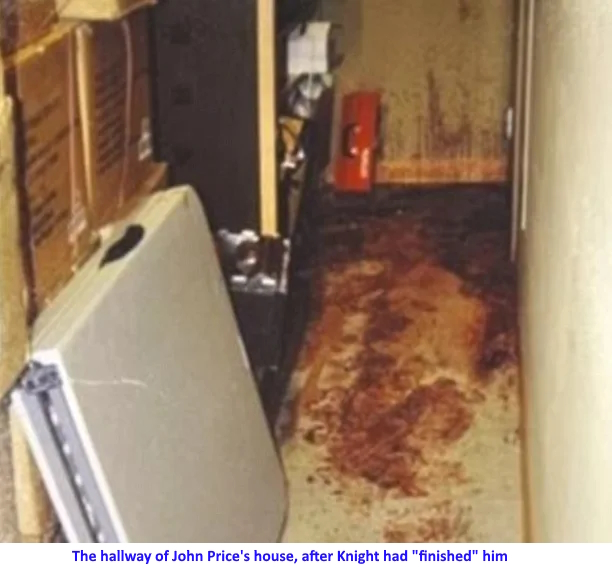
In the year 2000, 44-year-old slaughterhouse worker Katherine Knight had a night of passion with her partner, John Price, then stabbed him 37 times, professionally skinned him, hung his hide on a meat hook over the lounge room door, decapitated him, butchered his corpse and cooked parts of him. She served up his meat with baked potato, carrot, pumpkin, beetroot, zucchini, cabbage, squash and gravy in neat settings at the dinner table, putting beside each plate place-names for Price’s children. Another meal was tossed into the backyard; it appears she intended to eat it but couldn’t do so. The police arrived before Price’s children so, as far as we know, none of him was consumed (by humans anyway).

Knight pleaded guilty to murder and the judge ordered that her papers be marked “never to be released.” An appeal was quickly denied, and she is still serving her life sentence at Silverwater Women’s Correctional Centre in Sydney.

Shoreline Entertainment planned to make a film of the incident based on Peter Lalor’s book Blood Stain, but so far it has not surfaced.

It appears that Knight was NOT a cannibal, despite one of the favourite media labels about her being “Kathy the Cannibal”. Other reports called her “The Woman Hannibal Lecter”, a comparison that makes no sense at all, since Hannibal did not use 37 strokes to kill people, definitely did eat parts of them, and did not (as Knight did) take a cocktail of sleeping tablets afterwards while lying in bed with the mutilated corpse.

Darren O’Sullivan, whose documentary is linked at the top of this blog, commented,

 “this is possibly the most horrific thing I have ever discovered”.

Although the series is called “Real Twisted Tales”, I suspect O’Sullivan must have led a sheltered life. Knight was a slaughterhouse worker, recognised for her skills in knife work. She grew up in the NSW town of Aberdeen, where everyone in her family and most of the town were employed in the abattoir. Her job, from a young age, was to kill and cut up animals. She did to John Price what she was trained to do to other animals – slaughter them, cut them up, cook them. She did try to feed bits to his children, which is what farmers did in the UK (feeding cattle bone-meal to cattle), an act of cannibalism which led to Mad Cow Disease. But there is little evidence that she herself ate any of him.

The documentary above states that Katherine Knight is “one of the most evil people in the world”, because she was found sane enough to stand trial. But really, what she did was what she was paid to do every day, just to a different species than those who usually suffered and died under her hand.

Superstitious anthropocentric beliefs put humans on a tier somewhere between angels and animals, but really we are a species of Great Ape, closely related to the chimpanzee. Rationally speaking, there really is only a thin red line between killing and eating any species of animal.

Revenge cannibalism: LAST HOUSE ON THE LEFT (Wes Craven, 1972)

“Revenge is a dish best served cold”

Don Corleone said it in The Godfather, as did  Khan Noonien Singh in Star Trek II: The Wrath of Khan, but the saying goes back at least 100 years before that. It doesn’t seem to apply so much in cannibalism movies though, because if you’re really mad at someone, I suppose you’d want him to be warm and watching as you devour him, like Hannibal eating Abel Gideon, after feeding him oysters and acorns and sweet wine to improve his taste. Or Titus feeding Tamora, the queen of the Goths, a pie made of her own sons.

Revenge cannibalism is an exquisite form of retribution, going beyond murder to total destruction of the enemies (or his loved ones), incorporation of their essence, and conversion of their physicality into your excrement. Dante’s Inferno (Canto 33) depicts Count Ugolino in hell, gnawing eternally on the head of Archbishop Ruggieri, the man who had walled him up in a cell with his sons, whom he had eventually cannibalised. Perhaps the earliest narratives of revenge cannibalism appear in Greek legends, particularly that of Thyestes, who was fed the flesh of his sons by his pissed-off brother.

I’m adding this old classic film to the catalogue of cannibal texts as there is some human flesh eaten in anger, although it is not the main course of the film (puns are so hard to avoid in cannibalism blogs). The film starts with a couple of young girls heading to a rock concert, being abducted on the way, raped and murdered. If you are sensitive to such things (I hope most people are) or traumatised by recent news events, you may wish to give this film a miss.

I had forgotten about this movie until the Supernova Festival in which over 260 young people were abducted, raped and murdered, with a savagery reminiscent of that which befalls Mari and Phyllis in this week’s film. The barbaric slaughter of some 1,400 Israelis on October 7 2023 was followed by the IDF’s massive revenge, the extent of which shocked some of the world and impressed the rest. “Well, what would you do?” many online commentators asked.

Well, what would you do if, like the parents of one of the girls, you offered a warm welcome and overnight accommodation to some travellers who, you later discovered, were a gang of escaped criminals who had raped and murdered your child? The film answers that with a shotgun, a chainsaw, and an electric booby-trap.

Not what the UN would call a “proportionate response” (whatever that means), but many in the audience cheered at each gruesome death when it finally made it into cinemas (not until 2004 in Australia). Oh yes, one other form of killing that qualifies this otherwise simple slasher as a cannibal film—the girl’s mother, Estelle, pretends to seduce one of the gang members, then bites off his penis and swallows it.

The film critic Robin Wood spoke of what he called “the return of the repressed”. We repress our animal instincts to live in community, but beneath that veneer of respectability and normative morality lies “the monster”, the one we take out to exercise in the comparative safety of the cinema screen. Horror films such as this one depict the overcoming of repression, the shedding of the façade of respectability, in both the escaped psychopaths and then the vengeful parents, who shed their polite decorum to slash and kill. Craven shows the same thing in his later movie The Hills Have Eyes. Films from the seventies routinely explored a moral equivalence, a Vietnam War era pacifism that assumed any violence was equally appalling. Cannibal Holocaust, made at the end of that decade, sums up this view of the cycle of violence and the moral degeneracy of revenge when the anthropologist asks, “I wonder who the real cannibals are?” Later films from more cynical times tended to depict the killer or cannibal as either an irredeemable monster or a heroic figure, taking on bankrupt social imperatives. Right and wrong has come back into fashion but divides the viewers, depending on what their social media bubble tells them.

The film starts with a statement that it is a true story, which I guess used to be all the fashion—think Punishment Park, Cannibal Holocaust and the Blair Witch Project. The good old days, when truth was optional… oh forget I even started that sentence.

Anyway, this film wasn’t a true story, it was a remake of Ingmar Bergman’s 1960 film The Virgin Spring, in which a father takes merciless vengeance of a group that has raped and murdered his daughter. That was in turn based on a mediaeval Swedish ballad called “Töres döttrar i Wänge” (“Per Tyrsson’s daughters in Vänge”) in which the vengeful father discovers that the rapists he has just killed were actually his sons, sent off by him into the cruel world.

But it was Wes Craven’s film that introduced a bit of cannibalism into the revenge recipe. Wes Craven is best known for the Nightmare on Elm Street franchise and the first films of the Scream franchise. Last House on the Left was his first feature film, and he had such low expectations of its success that he felt he could be as outrageous as he liked and no one would ever hear about it, particularly his conservative family. But it did a lot better than he expected, to the extent that,

“I literally had people who would no longer leave their children alone with me. Or people that would, when they found out I had directed the film, say “That was the most despicable thing I had ever seen,” and walk out of the room.”

Audience members would get into fistfights, have heart attacks, and in many cases invaded the projection room to slash the film. Well, consider yourself warned.

Craven decided he would avoid horror, but was a complete failure at his attempts at more socially acceptable work. He had become known as the master of the slasher, leading him to another revenge cannibalism film in 1977 which became a cult classic, The Hills Have Eyes, in which a group of mutant cannibals kidnap, rape and slaughter (and eat) a ‘normal’ American family, who then inflict massive retaliation on them, adopting their savagery and raising the stakes.

In early 2023, a viral video seemed to show a couple of hunters gloating over a lion they had killed, and then being attacked and eaten by another lion, supposedly the dead lion’s brother.

Well, what would you do?

What’s in your pie? AUNTIE LEE’S MEAT PIES (Joseph F. Robertson, 1992)

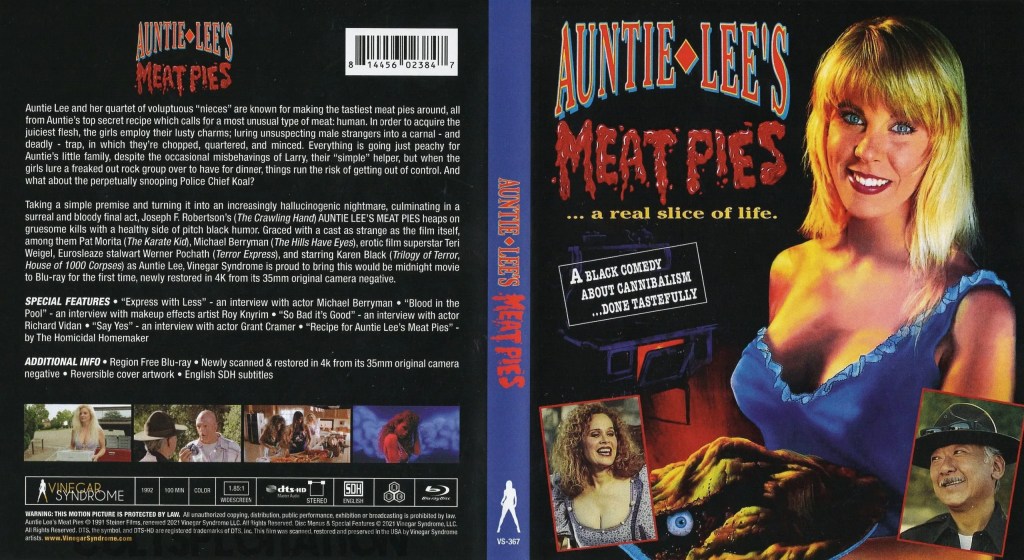
This is described on the cover of the Bluray disc as:

“A black comedy about cannibalism… done tastefully”

The particular genre of this little known 1992 film is “innocent cannibalism” – humans slaughtered and made into meat dishes for sale to unwitting customers; those customers thereby becoming the cannibals. It’s eternally fascinating, because everyone at one time has pulled something a bit lumpy or fibrous from their pie, hot dog or burger and wondered what (or who) that came from.

The plot is simple, even simplistic. Auntie Lee (the wonderful Karen Black) is a Satan-worshipper who sends her nubile nieces out to lure men back to the house/bakery (often by shooting out their tyres and then offering them a lift) where they are slaughtered in various grisly ways and then chopped up and made into pies, which are irresistibly delicious and widely sought after in the nearby restaurants.

This trope started with Sweeney Todd, the “Demon Barber of Fleet Street”, a crucial figure to modern cannibalism. There are those who argue that Sweeney really existed and was hanged outside Tyburn Prison in London in 1802. At any rate, his story was popularised in the 1846 “penny dreadful” A String of Pearls: a Romance (Prest, 2010) and remains enduringly popular. Sweeney in his early nineteenth century incarnation insouciantly slaughters his clients, dropping them through a trap-door and supplying their corpses to his partner, Mrs Lovett, to use in her popular meat pies, unwittingly setting a precedent for the industrial slaughter facilities that would proliferate in following years. The first movie version was a silent film in 1928, in which the whole narrative turned out to be a nightmare. A 1936 version showed Sweeney as a true hedonist, a man who just enjoyed killing and robbing his customers. Several remakes have happened since, most recently a musical by Tim Burton. A Danish adaptation called The Green Butchers with Mads Mikkelsen, who later played Hannibal in the eponymous  television series, depicted unsuccessful butchers suddenly becoming wildly popular when they start serving human flesh. The 2021 French film Barbaque [Some Like it Rare] depicts French butchers hunting vegans whose flesh, unpolluted by animal products, turns out to be hugely popular with their customers.

Most recently, the Sweeney story has been reborn as a fictional “true-crime” podcast becoming a Broadway play, which in turn becomes a television series: the wonderful Horror of Dolores Roach, which I finished reviewing last week. Like Dolores Roach, Auntie Lee reverses the usual order of carnivorous virility—instead of the psychopathic male murderer (there is one, but he is dispatched quickly after raping one of the women), the killing is done by young, nubile women who lure men into traps which are increasingly intricate and gory. This is the monstrous-feminine – the male fear of what may happen when lust overcomes caution and the female reverses the birthing role and instead reabsorbs her victim.

The female killers are Playboy models, and were clearly chosen for talents other than their acting. However, other main characters are really good—Karen Black who has appeared in several horror B-movies is Auntie Lee, sending the girls out to bring home “the makings”, Pat Morita (Happy Days, Karate Kid) as the witless sheriff, and the inimitable Michael Berryman (One Flew Over the Cuckoo’s Nest (1975), The Hills Have Eyes), whose hypohidrotic ectodermal dysplasia gave him such an unusual appearance that he made a career from portraying everything from idiots to monsters.

Except for the wooden acting by the “nieces”, this is a well-acted, light-hearted if gory comedy, and many of the images are very striking.

At the end, after every man who enters the house is dead and being cooked, Auntie Lee and the nieces speculate about moving out of the town to New York City, where “we’ll never run out of beef”. In popular parlance, the brawny male is often called “beefsteak”, while sex is offered as a transaction, becoming almost indistinguishable from any other form of commodity, including feeding. As Coral says to the man she is leading to his death (using one of the most popular double entendres in Cannibal Studies):

“I can’t wait to have you inside me”

Such is the nature of modern capitalist cannibalism – the human is just another species, a resource like any other, potentially exploitable, vulnerable, even edible. Auntie Lee won’t cook Mormons or Californians, but New Yorkers are fair game, just as some people won’t eat pigs or dogs but will eat sheep or chickens. As Isaac Bashevis Singer said:

“As long as human beings will go on shedding the blood of animals, there will never be any peace.”

At the time of writing, the full movie is available on YouTube.

“You draw the line there?”: DOLORES ROACH episodes 7 & 8

The climax. The denouement. The final two episodes of this quite brilliant podcast that became a Broadway show that became a television series about an untrue true crime, and includes podcasts and Broadway shows. If you need to catch up on the earlier episodes, I would suggest watching them, but if you can’t wait, here are my earlier blogs.

Episode 1

Episode 2 & 3

Episode 4

Episode 5

Episode 6

And here is the very brief synopsis.

  • In episode 1, Dolores has just been released from prison after 16 years – she took the fall for her boyfriend, who has since disappeared. She heads back to Washington Heights New York. but it’s all gentrified now, except for Empanada Loca, the shop of her old friend Luis, who offers her a room and sets her up as a masseuse, a skill she learnt in jail.
  • In episodes 2 and 3, Dolores kills the landlord who has been harassing Luis for his overdue rent, which he can’t afford because the neighbourhood is now fancy, and people don’t buy empanadas much. Luis creates a new empanada, MUY LOCO. It is hugely successful, because it contains, yep, human flesh, in this case, the landlord, Mr Pearlman, whose son, Jonah, appears in the shop at the end of episode 3, with two cops behind him.
  • In episode 4, Dolores is shocked to find what Luis has done with the body of the landlord she murdered, and disgusted by the secret contents of the muy loco empanadas—Mr Pearlman. She is particularly horrified when Luis offers Jonah an empanada to try, a muy loco, which she knows is a “mouthful of daddy”. Meanwhile, the local drug dealer, Marcie, has pissed off Dolores, and now she is also in Luis’ fridge, and bits of her are now in the empanadas.
  • In episode 5, Dolores hires a private eye called Ruthie, played by Cyndi Lauper, to trace her ex, who cheated on her and let her take the fall in a drug bust. Ruthie’s motto (or perhaps mission statement) is I NEVER DON’T FIND THEM. But the last thing Dolores wants is for Ruthie to find Mr Pearlman.
  • In episode 6, we see cannibalism as a business. Luis has been clear-eyed about this all along – he gets rid of the annoying landlord, he thoroughly destroys the evidence (in customers’ stomachs) and he makes money from the meat, which is apparently delicious and hugely popular, while saving money by not buying the flesh of other animals from the food-services man, Jeremiah, the only sympathetic character in the story so far.

Not a lot of human flesh being eaten in these final two episodes, because everything is turning to shit, largely due to the impulsive plans of Luis, and the tendency of Dolores to snap the neck of anyone who annoys her. Police are looking for the drug dealer Dolores killed back in episode 4, and threatening to call in the DEA. Luis is still chopping up the bodies of Dolores’ victims to fill his empanadas, but he doesn’t want anyone to find the marijuana he is growing. THAT would be incriminating. Dolores points out that his fridge and apartment are full of chopped up bodies, and asks him the question that defines all ethical discussions.

 She’s much more upset about the cannibalism than the increasing number of corpses she is leaving all over the shop. Odd that. Luis sees meat as his business, and Dolores’ steady body count as his (very reasonably priced) supplier. He’s not too fussed about all the killing, as long as he doesn’t have to do it – like customers in a butcher shop. When he finally kills a man, he is upset: “Look what you made me do!”

Luis cracks some of the best jokes in this show, in the middle of the street (much to Dolores’ fury) about the “fat fuck” she killed last episode, and how he is going to use the body fat in his pastry.

And some of the worst.

Lots of interesting Freudian things going on here – in earlier episodes, they discussed the difference between edible and Oedipal, and then there’s the whole thing with Luis only wanting to give Dolores cunnilingus, not penetrative sex, even though she has her period. She considers that eating her menstrual blood makes him a cannibal, even though he has been snacking on human empanadas all through the show, so it shouldn’t really be a surprise.

And his pet name is Mami. It’s apparently the Spanish equivalent of “baby” or “darling”, but is also used for, yep, mother. Freud said the two primary taboos are incest and cannibalism, and Luis definitely has an edible complex.

We find out why Luis doesn’t want sex – he fell in love with his father’s girlfriend when he was 12, had sex with her (so now we have another taboo covered) and then tried to castrate himself in punishment. He couldn’t cut through his penis (Meiwes and Brandes found it was much harder than you might think) and poured hot oil on the wound, leaving him horribly disfigured. Yes, Dr Freud, the threat of castration can be as big a motivation for mental illness as you thought.

Dolores just thinks she is a monster. But one of the fascinating things about cannibalism is that unlike other horror movie tropes, they are not supernatural or even particularly superhuman. And they really exist.

“I’m a monster. Worse, I’m real.”

Luis ends up “deep fried, like everybody else” in one of the most dramatic scenes, and Dolores escapes:

She goes looking for the showrunner of the play, a nice piece of postmodern complication as he clearly represents the creator of the show we are watching, Aaron Mark.

He is accused of humanising a serial killer, but hey, Dolores is very human, just like Macbeth and Oedipus and every tragic protagonist in literature. She’s not even a cannibal; in the whole eight episodes, we have not even seen her eat a human empanada! She’s just a misunderstood serial killer.

As she says, you have to draw a line somewhere.

She forces the showrunner to take her to a house where, he says, someone knows the whereabouts of the man who betrayed her and left her to rot in jail. When the door opens, she roars with laughter, and then pounces, but at whom? All we know is that, like Georgina in The Cook, The Thief, she is directing her invective at us, the audience! We may not know where her ex is living. But we do know that cannibalism starts at home.

Brain-eating cannibal released in Connecticut

Tyree Smith, from Bridgeport Connecticut, killed a homeless man on December 15, 2011, and ate his brain and eyeballs. He has just been released into the community, ten years after being committed to a state psychiatric hospital, the Whiting Forensic Hospital, supposedly for sixty years.

Smith apologised for the murder at the trial, and the three-judge panel decided he was not guilty of murder by reason of insanity, during his sentencing in July 2013.

In lieu of prison, Smith was committed to a state psychiatric hospital for sixty years. After just ten years, the state Psychiatric Security Review Board said Smith was ready to be transitioned back into the community and he has been released from the facility, Connecticut’s most secure.

He will be living in a Waterbury group home, under orders not to associate with anyone involved in criminal activity. The board stated in its report:

Tyree Smith is an individual with a psychiatric illness requiring care, custody and treatment. Since his last hearing, Tyree Smith has continued to demonstrate clinical stability. Mr. Smith is medication compliant, actively engaged in all recommended forms of treatment, and has been symptom-free for many years.

During the trial, Smith’s cousin Nicole Rabb claimed he arrived at her Connecticut home in December 2011, ranting about Greek gods and talking about needing to go out and get blood.

Police described in the arrest warrant what they believed happened.

Smith curled up outside the abandoned, boarded-up Brooks Street apartment building where he used to live. He was awakened by Angel “Tun Tun” Gonzalez, a homeless drunk who invited him in from the cold. Gonzalez was popular in the neighbourhood. Like Smith, he had also once lived in the Brooks Street building before it was boarded up.
Once inside the apartment, Smith heard a voice saying, “This is your blood.”
Police said Smith hacked Gonzalez to death with his axe and cannibalised the body.

When Smith’s cousin saw him the next evening, she noticed what appeared to be specks of blood on his pants, and found that he was carrying chopsticks and a bloody axe. Smith allegedly told Rabb he killed a man and ate his brains in the Lakeview Cemetery while drinking sake, and warned her he intended to eat more people. Smith said the rush he felt while hacking Gonzalez and consuming pieces of his body was unlike anything he had ever experienced before, according to the arrest warrant. He told Rabb he has a sexual lust for blood.

A month later, police found Angel Gonzalez’s mutilated body in the vacant apartment on Brooks Street in Bridgeport where Smith had lived as a child. Police later recovered the bloody axe and an empty bottle of sake in a streambed near the Boston Avenue cemetery.

In a videotaped statement to police, Smith said he used a hatchet to kill Gonzalez, then took out the man’s eyes and part of his brain and ate them, washed down with sake (rice wine).

Smith’s defence team relied on the testimony of Yale University psychiatrist Dr. Reena Kapoor, who indicated that Smith had retained his lust for human flesh after his arrest, even offering to eat her. Kapoor claimed Smith suffered from psychotic incidents since childhood, and heard voices.

The voices ordered Smith to eat the victim’s brain so they would get a better understanding of human behaviour, and the eyes so that they could see into the ‘spirit realm’

Kapoor added that Smith went to Subway after eating the man’s body parts.

The report on Smith’s release said there was no evidence of “internal preoccupation or paranoia” and that “he denied experiencing cravings but stated that if they were to arise, he would reach out to his hospital and community supports and providers.”

A year before the murder, Smith wrote on Facebook,

Devouring your flesh. Smelling your bodies burn in a heap. I hate the day they created you filthy humans. There. Thats whats been on my mind since a child. Happy?

Of course, spouting abuse on Facebook doesn’t mean that the writer will eat people’s brains. Well, not always.