A man was arrested on Friday March 22 in Kern County (north of Los Angeles in the San Joaquin Valley) and charged with the “removal of human remains from other than a cemetary” (sic) according to the Sheriff’s office.
Construction workers in Wasco reported seeing the man near the Amtrak station.
“I’m not sure from where, but he walked this way and he was waving a person’s leg. And he started chewing on it over there, he was biting it and he was hitting it against the wall and everything.”
It seems a pedestrian (unidentified so far, some reports say male, others female) was killed by a train on Friday morning near 7th and G streets in Wasco. According to eyewitnesses, a man was subsequently seen eating a human leg that had been torn off in the accident.
The video shows the man in a red hoodie and black pants bending over something. He turns around and laughs at the person taking the video and then walks away. Shortly afterwards, the video shows the police responding and the man waving the leg at the officers.
A voice can be heard on the video saying, “He’s eating that shit!” in English and then in Spanish. Most of the news reports edit out the parts where it looks like he might be eating the leg.
Other news footage from KERO-TV showed what appeared to be bloodstains on the sidewalk at the scene of the incident. Some reports say he was charged with mutilating the body, supporting claims that he had consumed some of the limb.
The sheriff’s office later confirmed that they had arrested the man and identified him as 27-year-old Resendo Tellez. He was charged with six offences including possession of controlled substance paraphernalia.
Social media commentary varied from reflecting on drugs, homelessness and poverty to accusations of demonic possession and culture war accusations against California liberals allowing a “breakdown of societal norms”. One headline stated, “Cannibals Are Alive and Well in Newsom’s California.”
JUST IN: California man arrested for allegedly eating a severed leg that he took from a pedestrian who was struck by a train.
The incident happened in Wasco, California.
According to police, 27-year-old Resendo Tellez removed a leg from an Amtrak Station.
News footage of the story often contains warnings of “distressing material” and in most cases blur the leg when showing the video. Is there something weird about all this shock and horror?
If the same person had not been hit by a train, it would have been perfectly normal to show that person’s leg in a program on, say, beach holidays. On a porn site, the leg would have been the least of what we might have seen. Yet once detached from the torso, a human limb becomes so abject it must be blurred, and even then, warnings issued. The reason seems to be that we are terrified to admit our animality. We can go to a supermarket and push a trolley around containing the leg of a cow or a lamb, with the overt understanding that we will be eating it later, just as Tellez allegedly did with what he identified as a piece of meat lying on the ground. Yet because it is a human body part, it becomes obscene, repulsive, horrifying, because it reminds us that we, too, are mortal, edible animals, made of meat.
Way back in 2015, when first campaigning for the presidency, Donald Trump announced he would build a wall on the border with Mexico to keep out:
“…people that have lots of problems. They’re bringing drugs. They’re bringing crime. They’re rapists. And some, I assume, are good people.”
That seems quite tame now, doesn’t it? Warning about rapists have lost their power, especially given Trump’s own personal legal struggles regarding sexual assault.
So he has turned, dear reader, to our fave subject. Speaking on Right Side Broadcasting Network from Mar-a-Lago, a resort that relies heavily on immigrant labour, he upped the ante on border crossers by calling them cannibals released from mental institutions.
“They’re rough people, in many cases from jails, prisons, from mental institutions, insane asylums. You know insane asylums. That’s ‘Silence of the Lambs’ stuff. Hannibal Lecter, anybody know Hannibal Lecter?”
This is not the first time that Trump has quoted Hannibal. At a rally in Iowa in October 3023, he also spoke of people from insane asylums sneaking into the country, and again quoted Hannibal. He added a rather strange endorsement.
Trump on Hannibal Lecter: You know why I like him? Because he said on television “I love Donald Trump” so I love him pic.twitter.com/1jYyXKFkjI
“Hannibal Lecter, how great an actor was he? You know why I like him? Because he said on television on one of the – ‘I love Donald Trump.’ So I love him. I love him. I love him. He said that a long time ago and once he said that he was in my camp, I was in his camp. I don’t care if he was the worst actor, I’d say he was great to me.”
Hannibal Lecter is, of course, not in a position to comment on politics as he is a fictional character born in the mind and the novels of Thomas Harris and born again, we might say, in the films of those books in which Hannibal was played by Brian Cox and then by Anthony Hopkins. Then, in a third coming, Hannibal was rebooted as a Gen-X queer icon in the TV series Hannibal, played by Mads Mikkelsen.
Which of these Hannibals loves, or loved, Donald Trump?
Mads Mikkelsen told CBS News in 2016 that though he could “definitely laugh at some of the stuff [Trump] says, he can also go, ‘Oh my God, did he say that?’ I think he’s a fresh wind for some people.”
Hopkins, who was born in Wales and became a U.S. citizen in 2000, told The Guardian that he doesn’t care for Trump and explained that he doesn’t vote anyway, because he doesn’t “trust anyone.”
“We’ve never got it right, human beings. We are all a mess, and we’re very early in our evolution.”
Nietzsche wrote of an Übermensch, a super-man who was as superior to ordinary people as they feel themselves to be to pigs. Hannibal clearly sees himself in this role. The mantra of the Übermensch is “Adapt, evolve, become”. But, as Charles Darwin would tell you (if he had not himself become extinct), evolution does not describe a ‘great chain of being’, an evolutionary ladder toward perfection. It is simply about best fitting a niche, surviving a hostile environment while competitors become extinct. The art of evolution is to out-run, out-fight, out-eat the other – to be the last one standing. And the only one eating. Perhaps eating the loser. As Frederick Chilton tells us, “Cannibalism is an act of dominance.”
Early humans seem to have practised cannibalism (according to some palaeontologists), although it may have been more for ritual purposes than for the protein. But in the modern age, protein is king, or at least those who eat the most protein consider themselves therefore superior to nature, and to other humans. Meat is a fetish, an addiction, a way of declaring human, particularly male, supremacy. We confine, torment and slaughter around 80 billion land animals each year (that’s 80,000,000,000) to feed this fetish.
But supremacism does not depend on species – those of another race, another origin, another gender, another age-group may all be dehumanised, objectified like farmed animals, and cannibalism is famously the accusation used to dehumanise colonised people, giving invaders the excuse to enslave or exterminate them. Trump dehumanises immigrants by accusations of cannibalism, just as his political opponents dehumanise him. When American comedian Jon Stewart was asked in 2017 by Late Show host Stephen Colbert to say something nice about then President Donald Trump, he hesitated and eventually blurted, “He’s not a cannibal”. Colbert followed this up a year later suggesting Trump eats human flesh, but only “it’s very well done with some ketchup”.
Consuming the appropriated assets of those considered foreign or inferior is standard operating procedure in human history. In the absence of now largely abandoned concepts of (some) humans being semi-divine creatures, created in the “image of God”, what is to stop the actual consumption of those on the next rung down? As the huge population of humanity consumes the environment, leading to climate change and famine, could cannibalism be the next phase of human evolution?
As anthropologist Harold Monroe asks in Cannibal Holocaust, “I wonder who the real cannibals are?”
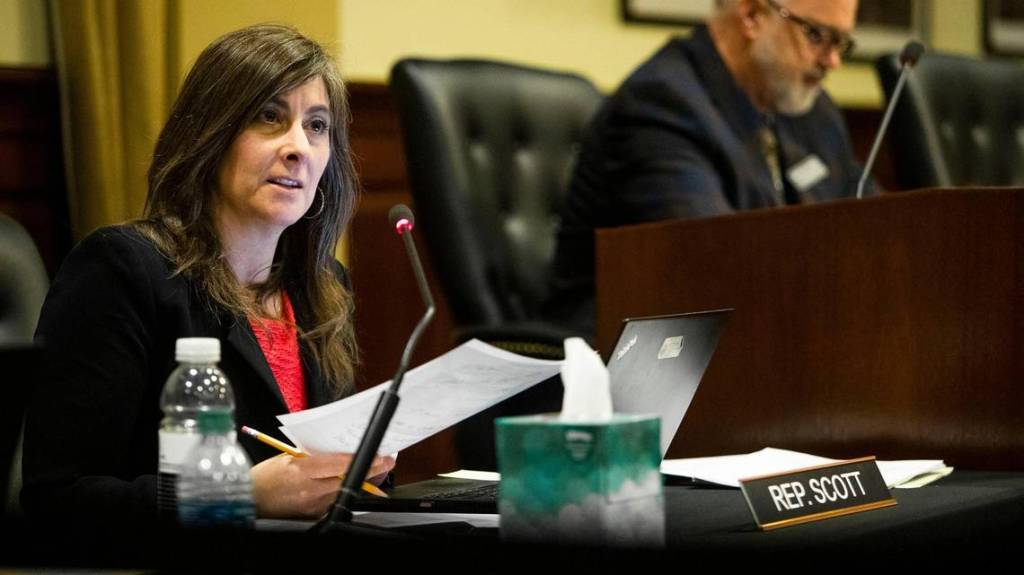
Idaho lawmakers have voted to expand a law that bans cannibalism because of fears about the popularity of human composting. Rep. Heather Scott introduced a bill in February 2024 to expand the state’s cannibalism ban and told a legislative committee that she’s worried about the possibility that people are eating other people.
Scott said:
“This is going to be normalized at some point, the way our society’s going and the direction we’re going.”
People are often surprised to hear that Idaho is the only state in the USA to have outlawed cannibalism. Other states have laws which target abuse or desecration of a corpse, making cannibalism legally impractical and problematic. Idaho introduced its law during the frenzy called the “Satanic Panic” last century.
The US is not unique in this – most countries do not have specific laws banning cannibalism. Germany didn’t, until Armin Meiwes ate his new social media friend.
The new bill, 522, adds to Idaho’s existing prohibition of cannibalism a ban on giving someone else “the flesh or blood of a human being” without that person’s “knowledge or consent.” Scott said she is “disturbed” by the practice of human composting, which is legal in several states as an option for disposing of the dead that is more sustainable than other burial methods and reduces a funeral’s carbon footprint. Human composting involves decomposing human remains like other organic matter and turning it into soil that can be returned to the family or used to make land more fertile. But Scott said outlawing composting would require overhauling rules for morticians, and so instead she focused on banning the act of deliberately giving human flesh to another person.
“I didn’t want to see that in my Home Depot stores.”
Scott said she was on a plane and watched a clip from a TV show displaying a chef feeding human flesh in sausage to contestants, which inspired her to take action. The clip, which she sent to the Idaho Statesman, is from a TruTV prank show, in which they pretend to feed people flesh. “They didn’t tell the people, they fed it to them,” Scott told the Statesman, though she noted it may have been a spoof.
Scott also submitted a link to a video featuring a Chinese official denying that his country had sold canned human flesh to people in Zambia. The canning claim was a hoax, spread with fake photos of butchery, according to news reports from 2016. Scott additionally pointed to a North Idaho man who pleaded guilty to murder last year and was initially also charged with cannibalism after investigators found postmortem mutilation and a bloodied bowl at the crime scene. The cannibalism charge was later dropped, meaning that the Idaho anti-cannibalism laws have still not been tried in court.
But that’s where we are in Idaho: Unhinged, unreal legislators can bring forth just about any crazy idea and get a bill printed.
But imagining that humans might unwittingly eat other humans is not so far-fetched. Mythology is full of innocent cannibals—Agave eating her son Penteus, Thyestes eating his sons at his brother’s feast, Tereus eating Itys. Becoming “innocent” cannibals make us squirm, writes Donald Tuzin, because it denies us the escape of declaring the cannibal a maniac or monster—anyone can become a cannibal. In the movie The Farm, humans are treated as “living meat” exactly the way cattle are regarded on factory farms—the men are slaughtered for meat, the women bred and their infants pitilessly killed in front of the mother (as often happens in the dairy industry) so the farmers can sell the mothers’ milk. The final commodities are sold to innocent cannibals, who occasionally ring up, horrified to find residues such as a human tooth in their meat. Inverting the agricultural business plan, the “livestock” are human, while the farmers are dressed in animal masks.
But it doesn’t only happen in fiction. The Farm may be based on the Canadian pig farmer and serial killer Robert Pickton who confessed to 49 murders in the 1990s, and allegedly “processed” the meat of his rape and murder victims by feeding them to his pigs and, police said, possibly mixing them up with the pork products he sold to neighbours.
Joe Metheny claimed to have killed 13 people in the Baltimore area in the 1990s and turned them into burgers. He reported:
“Over the next couple weeks on the weekends I opened up a little open-pit beef stand. I had real roast beef and pork sandwiches and why not they were very good. The human body tastes very similar to pork. If you mix it together no one can tell the difference.”
In 2007, two men in England were arrested for the murder of a 14-year-old girl, with the prosecution claiming that her body had been cut up and minced into kebabs in a Blackpool takeaway called “Funny Boys”.
On April 9, 2012, police in Garanhuns, Brazil, arrested for murder Jorge Beltrao Negromonte da Silveira, his wife, Isabel Pires, and his mistress, Bruna Cristina Oliveira, who all lived together in a group they called “The Cartel”.
Residing with the Cartel was a small child named Vitória, who had been the daughter of their first victim. The child’s mother was a seventeen-year-old homeless woman whom the Cartel had invited into their home in Olinda in May 2008. She had been murdered by the Cartel, who then dismembered and skinned her body, storing the meat in their refrigerator before seasoning it with salt and cumin, grilling and eating it. The woman’s daughter was fed some of her mother’s flesh.
The worldwide public interest in the crimes did not stem from their murder of three young mothers, but from the fact that the Cartel had baked the victims’ flesh into salgados, salty, deep-fried pastries, which they then sold to the unsuspecting public. To the disappointment of the media, the pictures of the perpetrators showed them as three ordinary Brazilians, not the monsters the public had expected.
Back to Idaho, where Rep Heather Scott’s bill 522 sailed through the House and is heading to the Senate. She quoted in support of her bill from a recent article in The New Scientist which reviewed the human history of cannibalism (they concluded that it happened a lot) and stated:
“Ethically, cannibalism poses fewer issues than you might imagine. If a body can be bequeathed with consent to medical science, why can’t it be left to feed the hungry? Our aversion has been explained in various ways. Perhaps it is down to the fact that, in Western religious traditions, bodies are seen as the seat of the soul and have a whiff of the sacred. Or maybe it is culturally ingrained, with roots in early modern colonialism, when racist stereotypes of the cannibal were concocted to justify subjugation.”
We don’t have to buy mulch to end up cannibals. Any sausage or burger might have human flesh in it, and no one would know the difference. We are animals, large mammals, made of red meat like cows, pigs and sheep. Unless you think we have some sort of supernatural dissimilarity from other animals, the thin red line between different species can only be identified as a cultural construct.
Videos such as the one above by freelance journalist Jonathan Petramala show hundreds of cars and trucks bogged in deep snow on the infamous Donner Pass, a stretch of road 7,088 feet above sea level over the Sierra Nevada mountains in Nevada County, California. On Saturday March 2 2024, more than three feet of snow fell on and around Interstate 80 northwest of Lake Tahoe, according to the Weather Channel. In winter, the old Donner Pass, now the historic US40, is often at risk of snow avalanches and blizzards, but this one was the strongest blizzard in California in years, and is being called a
“‘Snowpocalypse”
Blizzard warnings have been issued with snowfall of up to twelve feet expected in some higher elevation locations.
This is Donner Pass, covered in snow and looking a lot like it did when the Donner Party made their way through it over a century ago. pic.twitter.com/wC9jVdsaKL
Many people would not associate the words “California” and “Snowpocalypse”, but that is exactly what happened in 1846-7 when a group of pioneers became snowbound in the Sierra Nevada over winter, and famously turned to cannibalism to survive. Only 48 of the original 87 members of the party survived. Many of the others were eaten after they died, and when they ran out of corpses, they murdered two of the Native American guides to use as protein.
There have been quite a few films and books about the events of that winter in 1846. Most emphasise the cannibalism that became inevitable, but omit any ethical discussion (probably no record was kept of it anyway) and gloss over the clearly racist decision to kill and eat the Native American guides in preference to “white” meat, even where the potential victim had volunteered. The movie Alivecovered this rather better, showing a group of young men, all devout Catholics, debating how to justify eating their dead fellow passengers after the crash of a Uruguayan Air Force plane chartered by their football team in the Andes in 1972.
Back to the future – March 2024. The California Highway Patrol issued an appeal to people not to head out there, for obvious reasons.
The skiers, in particular, were not interested in listening to warnings – they wanted powder, and plenty of it. Despite snowfall of up to 12 feet being expected in some higher elevations, people headed out from San Francisco and all parts of the USA to find a mountain they could slide down. Many of them promptly got stuck in cars that would not respond in the freezing temperatures, and ski resorts had to shut down anyway. Big rigs also were stranded, blocked from moving (even if they had chains) by the inactive cars, or jack-knifing in the treacherous conditions.
Like 1846, this was a recipe for disaster. Residents of Truckee, California, one of the closest towns to Donner Pass, reported having inches of snow in front of their houses making it difficult to get out.
It did not take long for social media to pick up those reports of a “significant number of vehicles stranded over Donner Summit”. One headline read:
Untold Number of People Trapped at Site of Great American Tragedy
Some, of course, made the inevitable logical leap:
Sorry to disappoint, but there have been no reports of cannibalism from the stranded cars, trucks or town-folk. Unlike 1846, there are now emergency services available, including all sorts of technology from drones to snowploughs, and in fact emergency teams and tow services worked tirelessly to reach those affected.
While many had to leave their cars behind, no gnawed bones have been discovered so far. Maybe when the snow melts…
SNOWTOWN is back in the news at the moment, due to one of the perpetrators being granted parole after serving his 25-year sentence. Mark Haydon was convicted of assisting John Bunting and Robert Wagner in the murders of 11 people, including his wife, between 1992 and 1999.
Haydon reportedly rented the abandoned state bank building at Snowtown in which the bodies were stored in barrels of acid. A jury deadlocked on the charge that he was involved in the murders of his own wife, Elizabeth Haydon, and of Troy Youde, and he was never retried. His 25-year sentence was completed this year, and he will be freed into the community with no restrictions in May 2024 (unless the government succeeds in attempts to change the law to broaden the definition of a “high-risk offender”).
Above: the real Mark Haydon – then and now.
Relatives of the victims have long voiced their anguish and fear at any prospect of any of the perpetrators being released.
The film Snowtown is a recreation of this case, the most famous serial killer case in Australia (with the exception of the attempted genocide of the Indigenous population). A total of twelve victims were identified, and eight of the bodies were eventually found by police in barrels filled with acid, which were stored in an abandoned bank vault in the small town of Snowtown, in South Australia.
Although the press called this the “bodies in barrels” murders, it soon became known, to the sorrow of that little town, as THE SNOWTOWN MURDERS, even though only one of the murders had taken place there, the rest happening in the big city, Adelaide, between 1992 and 1999.
The final murder that took place in Snowtown, however, involved CANNIBALISM. We’ll have a look at that in this blog, although unfortunately the film doesn’t.
The film is a true Crime retelling, which means that none of the names have been changed to protect – anyone, and of course the dialogue has to be imagined to some extent. But we know a lot of what went on, and so did the film makers.
True Crime has been a popular genre for centuries, and transgressed the line between fiction and non-fiction in 1965, when Truman Capote released In Cold Blood, a “non-fiction novel”, relating or interpreting a 1959 Kansas murder. Modern versions of the genre extend beyond literature to films, podcasts, vodcasts and television shows. They tend to concentrate on the most sensationalistic cases and are grittily and brutally realistic in portraying the violence and gore.
In Australia, where this film originates, a survey found that some 44 percent of podcast listeners had listened to true crime podcasts, with an considerable proportion of them being women.
The protagonist of the film is Jamie Vlassakis, a teenager living with his single mother and two siblings. The mother’s boyfriend is a helpful sort of bloke who makes the kids dinner when mum has to go out, then strips them and takes photos of them for his own gratification. The mother deals quite effectively with this, beating him up and kicking him repeatedly, but soon a new man comes into their lives – John Bunting.
Bunting has a winning smile and a certitude that gets him into the family, and he takes Jamie under his wing. John also has a burning hatred of gay men and paedophiles, two rather different beasts whom he conflates into one evil figure. When Jamie tells him that he was raped by his older half-brother Troy, John tells Jamie he needs to “grow a pair” and take revenge. He involves Jamie in his plans to identify, capture and kill a range of people he considers monsters. He collects detailed information on a “spider wall” in his house. “Rock spider” is Australian slang for a paedophile.
But John Bunting has clearly not read Nietzsche:
He starts by involving Jamie in his plans to drive the erring boyfriend out of town. Jamie finds him in the garden, chopping up and mincing kangaroo body parts to toss onto the neighbour’s front door and sofa.
He involves Jamie in a raucous discussion of paedophile teachers, asking him what he thinks should be done with them. Jamie follows the fatal logic.
John takes Jamie under his wing, teaching him to ride a bike, shaving his head, showing him the spider wall, giving him a gun, and getting him to shoot John’s dog, a brutal blooding. When he introduces Jamie to the act of killing humans, there is also the accompanying deception: each victim is made to record a message that will be played on the answering phone of their loved ones. Jamie’s mum hears Troy say he hates her, and Jamie lies to her, letting her believe that forced call was true. Jamie goes off to doctors and government offices to collect payments, posing as the people they have killed. He doesn’t look happy about it, but he is sinking deeper and deeper into John’s machinations. After a while, collecting the government support payments becomes the motive as in the murder of Gary O’Dwyer; the vigilante pretext is forgotten. O’Dwyer invites the men to his place to watch him feed rats to his python, a process we see in slow motion in which the snake unhinges his jaw to swallow the prey whole, just as the men become unhinged in their growing lust to kill.
So John makes a man of Jamie, in the most toxic sense. He teaches him carnivorous virility – in order to be a man, you have to kill and eat. Not always the same carcass, but that does seem the logical consequence of the objectification of all victims.
The film traces the increasingly violent actions in which Jamie becomes involved, unwillingly at first, but totally under the control of John. He is made to watch them torture his half-brother Troy, who was earlier shown sodomising Jamie, and he finally steps in to finish the killing, tears rolling down his face, while John strokes his cheek and murmurs “good boy.”
Jamie is now a fully-fledged killer and a vigilante, not just an observer and helper the way Mark Haydon (the man currently being released on bail) is portrayed. Mark is a minor character, buying rubbish bags and digging holes for corpses, until near the end of the film, when he tells John he got into a fight with his wife, who called him a pussy. He told her what a big man he was – burying bodies. John brushes the story off, but we know she is next.
Although this murder is not shown in the film, evidence was given that Haydon saw his wife’s body and laughed. Her body was one of the ones found in barrels in the Snowtown bank building.
The final murder was Jamie’s half-brother (through a different father) David Johnson, whose only offence was his fastidiousness and unwillingness to go along with John’s rhetoric of violence. The final scene of the movie shows Jamie persuading David (one of the few wholesome characters in the film) to check out a computer supposedly offered for sale in Snowtown. They stop for a beer, they stop again so Jamie can urinate in a creek. He runs back to the car to accompany David to his death; the car is parked at a crossroads, clearly a symbol, a suggestion that Jamie, who is depicted as hating all the violence, could have chosen a different path at any time.
John Bunting, Australia’s most prolific serial killer, was convicted of eleven murders and sentenced to life imprisonment without the possibility of parole. Robert Wagner, his main accomplice, was convicted of ten murders and sentenced also to life without parole. Mark Haydon was initially charged with two murders but was only convicted on five counts of assisting. The jury did not come to a decision on two murder charges against Haydon, and another charge of assisting murder, which never came to retrial.
More than 250 suppression orders originally prevented publication of the details of this case at the time. In early 2011, a judge lifted the remaining orders in response to a request by the producers of the film Snowtown. Haydon was sentenced to 25 years, which he has now completed; he is back in the community on parole, with the head of the parole board saying he’s well behaved and poses no risk to the community. He has been moved to the Adelaide Pre-Release Centre – a low security facility where prisoners can participate in accompanied and unaccompanied leave, including for work and education. The usual conditions of parole apply (no binge drinking – yet), but he will be a free man in May 2024 when his sentence expires.
Jamie, presented in the film as an unwilling and even sympathetic killer, pleaded guilty to four murders and provided testimony against the other men, in exchange for a lesser sentence. He testified about the cannibalism that is not shown in this film — that Bunting and Wagner hacked at David’s body to make sure it would fit in the barrel and then sliced off a sliver of flesh from the right thigh. They heated a frying pan, cooked the flesh, and handed it around. Jamie’s testimony was the only evidence police had that cannibalism had taken place, and was presented by his attorney as proof that he was fully cooperating and deserved a lighter sentence. In 2005, when Haydon’s murder charges were dropped by the Director of Public Prosecutions, several suppression orders were lifted. These detailed the murder and cannibalism of the final victim, David Johnson.
Jamie Vlassakis was sentenced to four consecutive life sentences with a non-parole period of 26 years, which means it is possible he could be released on parole in 2025. He will be 45 years old.
The film is gritty and brutal, particularly the scenes of Jamie’s rape, and the torture of their victims. But it is compelling watching, and the acting and directing are quite brilliant, capturing the loss of innocence that starts with abuse and ends with brutality. Bunting’s early life reportedly was very rough; he said he enjoyed killing ants with acid, an idea he later transposed to those humans he saw as vermin. When he grew up, he worked at a slaughterhouse, where he would brag about slaughtering animals, saying that’s what he enjoyed the most. Later, when he moved in on Jamie’s family, he would kill cats and dogs and skin them while making Jamie watch. We see Jamie transform from the innocent teenager who stands around smoking at the start of the film to a shaven-headed killer, and even his little brother is shown with his head shaved, starting his short journey from childhood abuse to callousness.
The film is all about that loss of innocence. At an early age, these kids are introduced to poverty, abuse and violence that is a hallmark of violent, carnivorous society. Children famously love “animals” when they are little, recognising their own infant state of being helpless and unable to communicate, yet are socialised into carnivory by the peer pressure to conform and their recruitment into the ceaseless human war on nature. Animals, particularly the chattel slave animals generally referred to by their monetary value, “livestock”, are nothing and nobody. It is only a small step for John Bunting to assume the same about those he hunts, and so why would he flinch at eating them? It is the logical next step.
The film closes as Jamie shuts the door of the vault, trapping the unfortunate David Johnson with the killer gang. We don’t see the murder, or the frying pan. Unfortunately, that final step over the thin red line between humans and other animals appears to have been a bridge, or a meal, too far for this film.
Utah lawmakers are attempting to pass a bill to criminalise the ‘ritual abuse of a child,’ bringing back memories of the satanic panic of the 1980s, when other states passed similar laws.
Critics of the bill, however, say it is unnecessary and potentially harmful.
Republican state Rep. Ken Ivory is sponsoring the bill, House Bill 196. It defines ritual abuse as abuse that occurs as “part of an event or act designed to commemorate, celebrate, or solemnize a particular occasion or significance in a religious, cultural, social, institutional, or other context.” The bill lists specific actions that fall under the proposed definition: abuse against children that includes rape and sodomy, involving them in animal torture, bestiality or cannibalism, or forcing a child to ingest urine or faeces, enter a coffin or grave containing a corpse, or take drugs as part of a ritual.
A hearing of the House Judiciary Committee on February 21 heard from several adults who described themselves as survivors of ritualistic child sexual abuse. They described devil worship, animal torture, forced bondage, rape, cannibalism, child prostitution and mind control, saying that the abuse was so physically and emotionally traumatic that they had repressed memories of it.
Kimberli Raya Koen, President and Founder of The Healing Center for Complex Trauma in Salt Lake City, told the Committee that she was trafficked into a family that ritually abused her for more than two decades.
She told them:
“I see the light and I have fought to be in this chair, to be in this moment, to have a chance to say this is real and this is happening.”
Utah County Sheriff Mike Smith spoke in favour of the bill, telling the committee that he began investigating a high-profile “ritual sex abuse” case two years ago.
The investigation (covered by this blog at the time) became embroiled in politics after then-Utah County Attorney David Leavitt accused him of dredging up an old, unverified witness statement that accused Leavitt and 14 others of “cannibalizing young children” and participating in a “ritualistic” sex ring. Leavitt subsequently lost his re-election bid.
Several states passed similar laws in the 1980s and 1990s, during the height of furore over satanic ritual abuse, but few, if any, prosecutions came from them. Since then, federal law enforcement agencies, scholars and historians have pointed to the scarcity of evidence for the claims of widespread ritual abuse and warned that such legislation risks generating false allegations, wrongful imprisonments and wasting law enforcement resources.
Mary deYoung, professor emeritus of sociology at Grand Valley State University, has documented the harms of the satanic panic.
“This bill is a very good example of panic legislation, hastily cobbled together, on the basis of testimony from a couple of women recollecting childhood histories of satanic ritual abuse. It’s a bill that responds with the kind of approach where we get really angry and say, ‘There ought to be a law.’ And we don’t think about whether it can be enforced in such a way that adds any benefit to society or that ensures that justice is done.”
County Sheriff Smith acted on the reports, but his prosecutions have lagged in court for years, plagued by accusations that investigators mishandled witness statements and that the investigation was politically motivated from the start. He says:
“I was attacked, I was ridiculed, I’ve had memes made about me because of it. Without a doubt, these things do happen in Utah. I believe they’re happening, I believe they have happened.”
Utah’s proposed bill and the county sheriff’s investigation have attracted national interest from conservative media and online conspiracy theorists who believe this case will prove that the allegations in the satanic panic of the 1980s were true, and that cabals of satanists are still sexually abusing, murdering and cannibalising children. Several self-described internet investigators have, in blogs, videos and podcasts, accused hundreds of Utahns of participating in satanic ritual abuse rings.
Many of the claims in the 1980s were made in Utah, amid claims that local therapists used hypnosis and manipulative interview techniques to recover memories from alleged child victims. These were some of the earliest claims of widespread satanic ritual abuse.
Utah’s governor formed a task force in 1990 which spent $250,000 to address pervasive ritual abuse. Investigators interviewed hundreds of victims in more than 125 alleged cases, only one of which ended in prosecution. A final report from the state’s Attorney General in 1995 suggested that there was evidence of isolated instances of abuse involving rituals, but not a widespread plot to abuse children in this way.
National studies from the Department of Justice and the National Center on Child Abuse and Neglect found no evidence to support claims of widespread ritual abuse. Child sexual abuse, however, is staggeringly common; about 1 in 4 girls and 1 in 20 boys in the United States are victims, according to the Centers for Disease Control and Prevention.
In Utah, the Judiciary Committee voted 10 to 1 to advance the ritual abuse bill to the full House; if passed there, it will advance to the Senate. No one testified in opposition to the bill. Rep. Brian King, one of the two Democrats on the committee, cast a dissenting vote and questioned its necessity, noting that state law already criminalises physical and sexual child abuse. Ivory, the sponsor, conceded the offenses were already criminal, but said a specific law was necessary because the crimes are “so heinous.”
Rep. Kera Birkeland, a Republican, cried as she addressed the people who spoke during the hearing.
“I had no idea that this was happening in our state. We believe you.”
Do we? Are children in Utah or elsewhere being forced to eat human flesh (the focus of this blog) or other matter usually considered inedible in polite society? One of the most famous allegations is the conspiracy theory #Frazzledrip which maintains that a video is circulating showing Hillary Clinton and Huma Abedin, a former aide, ripping off a child’s face and wearing it as a mask before drinking the child’s blood in a satanic ritual sacrifice. No claims were made about making the child eat flesh though. So I guess that’s not covered by the bill.
Utah has a bit of a record here, with the ill-fated team eaten by Alferd (or Alfred) Packer leaving from the Bingham Canyon mines near Salt Lake City in November 1873 for the gold fields of Breckenridge in the Colorado Territory. They met Packer some 25 miles from their starting point, near Provo. Unrelated (I guess) is the story of a Utah man who was charged in September 2021 over the Capitol riots and later threatened to “eat the flesh” of a probation officer.
We might also wonder if these laws might be used against churches that practise the Eucharist, the eating and drinking of the wafer and wine in church, which is seen by some (particularly the Catholics) as a literal transubstantiation of wafer and wine into the flesh and blood of Christ. Children are usually expected to take communion, that is, eat the flesh and blood of Christ (in the form of wafer and wine), from the age of about seven. This does sound a lot like what the bill describes as “ingestion… of human bones, blood, or flesh”. I wonder what the churches might say about that?
Idaho is the only state to have a law against cannibalism, but it has never been used. Seems a terrible oversight, really, and perhaps the good folk of Utah can set it right.
Another Russian convicted of murder and cannibalism has been pardoned by Vladimir Putin after fighting in the Ukraine.
Denis Gorin (Денис Горин), from the city of Aniva, Sakhalin region, was recruited into a private military company after signing a contract with the Russian Ministry of Defence. He is known to have been convicted three times for murdering at least four people between 2003 and 2022. He and his brother were also convicted of eating the remains of his victims. Gorin killed his victims, then washed and refrigerated the remains. After his last conviction in 2018, Gorin was sentenced to 22 years in prison.
However, at least seventeen convicted murderers have been pardoned by the Russian President since 2022 for agreeing to serve in the war on Ukraine. A neighbour of Gorin, Dmitry Vladimirovich, said that Gorin was now free and had been admitted to a military hospital in the eastern Russian city of Yuzhno-Sakhalinsk due to a moderate injury. The neighbour added that the victims’ relatives are likely to arrange a lynching.
“He’s basically free, pardoned, and half his sentence has been wiped out. But I don’t think he’ll stay free for long. His victims’ relatives remember everything.”
The first murder was in 2003.
“At the trial, he admitted that they ate the murdered man; he was their acquaintance. They killed him because they were drunk, and then the elder brother, Evgeniy (he had already tasted human flesh by that time), tried to force his wife to eat it. Then – his younger brother, Denis. According to Denis, he refused, but his brother threatened to kill him too. Then he started eating.”
After that first murder, Gorin was sentenced to ten years imprisonment, but released after seven years due to “exemplary behaviour”. Gorin returned to Aniva where he stabbed to death the brother of another prisoner with whom he was in the pre-trial detention centre. After the murder, according to the case file, he “decided to remember the past, namely, to cut off the meat from [the victim] and subsequently eat it.”
In 2011, Denis Gorin and his brother killed a man and hid his body on the banks of the Lyutoga River, and at the beginning of 2012 they committed another murder, according to the regional prosecutor’s office. This was proven five years later. In 2018, the court sentenced Denis Gorin to 22 years of imprisonment in a special regime colony for the last three murders. The neighbour reported that:
“This came up by chance; they also tried to kill one local while they were drunk, but they couldn’t. When they were detained, (I was present), they opened the refrigerator, and it was filled to the brim with human meat! He told us right there how he cut meat from the legs of the dead, looked at the biceps to see if there was meat there. They showed the hole where the remains were buried – there were 12 people there. Not three, as stated in the verdict! And among the skeletons there was a very small one – some girl was killed. But we couldn’t prove it in court.”
In 2023, Putin pardoned him. Pro-Kremlin media has ignored the news of the cannibal’s pardon. Nevertheless, it appears sporadically on social networks and instant messengers.
“Maniacs are real. His brother was killed while still in prison, and this brother didn’t even serve five years, but is already free. Maybe he’ll be patient for a year, and then he’ll start killing again.”
A photo on Gorin’s social media profile on Odnoklassniki – a Russian social media platform shows him wearing a military uniform with the letter Z emblazoned on the sleeve, a pro-war symbol for conflicts in Ukraine and abroad widely used in Russia.
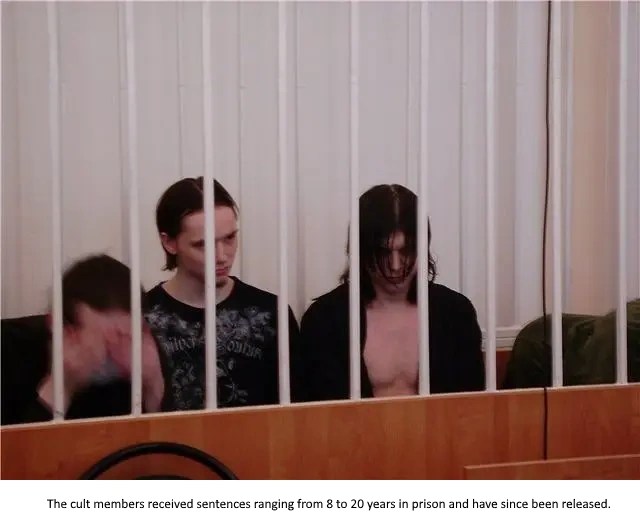
Another man, Nikolai Ogolobyak, a self-confessed Satanist, was convicted of ritual murders, and sentenced to 20 years in prison in 2019 for murdering four teenagers and then consuming their remains. The 33-year-old man was reportedly pardoned by the Russian president for fighting in Ukraine.
This blog reported on another jailed cannibal, Yegor Komarov, who was purportedly released to fight in Ukraine in 2022.
Russia’s Defence Ministry and the Wagner mercenary group have recruited heavily from Russian prisons to the notorious “Storm Z” unit of convicts, to bolster their manpower in Ukraine, promising convicts a pardon in exchange for military service. Several of these pardoned convicts have reportedly committed new crimes after returning from Ukraine. And returned soldiers do tend to come home undernourished and voraciously hungry.
Candace Owens responded to a young woman challenging Owen's anti-trans rant by pointing out Native American Two Spirit people existed. Owens goes off on her, calling Native Americans cannibals and drug users. Shocking, racist and vile. pic.twitter.com/HXFRyCR5Eo
Short answer: yes, and regularly used that way, throughout recorded history.
If you don’t recognise the person in the Tweet, her name is Candace Owens, and she is an American Conservative political commentator, author, activist, and television presenter who has both criticised and supported Donald Trump, attacked Black Lives Matter and been widely condemned for disseminating conspiracy theories, including accusing Israel of genocide. She seems to choose her conspiracies from both extremes of the political crazies – right and left. She has declared Kanye West to be a “dear friend and fellow superhero”.
In the clip above, she is asked by a young woman about Native American “Two Spirit” people – those who might today be called LGBTQIA+, particularly the “T” for “Trans”. The existence of the term and the concept itself would therefore, the questioner argues, go back hundreds or indeed thousands of years, and make nonsense of Owens’ claim that there were no transgender people when she graduated (although it seems she never did), so therefore the population must have has exploded since then. She summarises Owens’ argument: “Trans people are only here because the media is telling people these things”.
Owens does not know the term “Two Spirit” or that there are multiple words referring to the concept in many Native American languages. She answers instead:
“With Two Spirit people, is this like a Native American Tribe? Like high, smoking and talking about your spirit? I’m asking you seriously ’cause I think of Native American tribes talking about their spirits – I know they used to smoke a lot, they used to do drugs, they also were cannibals who used to eat people, so I don’t know if we should be taking our cues from cannibals…”
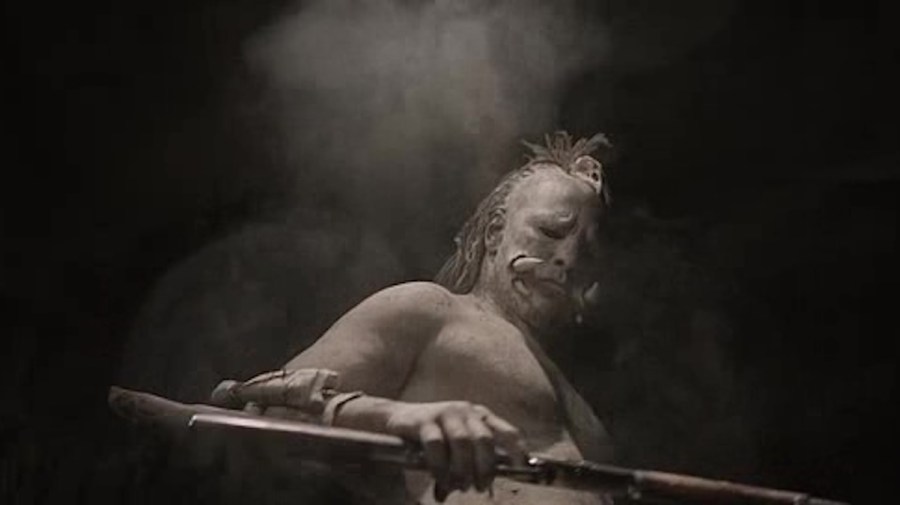
Owens used the same argument against Colin Kaepernick at the Conservative Political Action Conference in 2020, who had spoken of the 1.5 billion acres of land stolen from Indigenous people in the United States, asking “Did cannibalism get lost in Colin’s flowery depiction of Indigenous people?” She referred to Aztec cannibalism, which is generally thought to have taken place in Mesoamerican areas of what is now central Mexico, from 1300 until their society was decimated by the Spanish conquistadors. There is little academic consensus about this – theories range from Marvin Harris who said the flesh of the human sacrifices to the gods was fed to the ruling class due to the shortage of protein in the area, to William Arens who insisted that “there is no firm, substantiable evidence for the socially accepted practice of cannibalism anywhere in the world, at any time in history.” Nonetheless, cannibalism is still depicted as epitomising the uncivilised or, worse, those who have degenerated to savagery. Think of the “troglodytes” in the movie Bone Tomahawk.
the term “cannibalism” itself comes from Christopher Columbus, who named the practice after the Carib tribe of the Caribbean (also named after the Caribs). He claimed the Caribs ate their neighbors, but there is little evidence for this beyond the accusations of rival tribes who, despite never before meeting Europeans, understood that cannibalism was a powerful way to defame enemies. Frank Lestringant examines, in his book Cannibals: The Discovery and Representation of the Cannibal from Columbus to Jules Verne (1997), the contrasting reports from that period of the “savage” cannibals of the New World and the way they were compared, sometimes favourably, with the horrendous cruelty of European politics of the time, particularly in the writings of Montaigne.
Cannibalism is, therefore, an enduring and popular way to denigrate and vilify another group, to declare them less-than-human and therefore not worthy of respect or consideration. Cannibalism, definitionally, requires both sides of the repast to be human—the eater and eaten. But paradoxically, cannibals deny the anthropocentric particularity of their victims, and are in turn symbolically stripped of humanity due to what is seen as a horrendous contravention of shared ethics, deserving redefinition of the eaters as “inhuman” monsters. This was very useful to Columbus, who was not allowed to take slaves unless they were found to be cannibals, and has been used extensively by colonists to slander other Indigenous people including the people of the Pacific, Africans, and the Aboriginal people of Australia.
Cannibalism is a particularly popular trope for political, racist or queerphobic demonisation. The cannibal is most often depicted as male, but homosexuality, still considered repulsive by some despite its legalisation in most of the world, is often emphasised in the reporting of cases such as Jeffrey Dahmer,Ottis Toole, and Armin Meiwes, as if to impugn their masculinity and erroneously imply that straight men are not potential cannibals.
Accusations that a conspiracy known as “Deep State” was trying to subvert Trump crystallised in groups, accounts and pages linked to QAnon during the 2020 election campaign. The accusations included allegations of devil-worship, child-sex trafficking, torture and cannibalism. The fact-checking website Snopes rebuffed allegations about the existence of a “deep web” video showing Hillary Clinton and her campaign vice-chair raping, torturing and mutilating a little girl to cause the child to release adrenochrome into her bloodstream, before drinking her blood during a Satanic ritual sacrifice. Like characters in the filmsTexas Chain Saw Massacre(Hooper, 1974) and Silence of the Lambs (Demme, 1991), and the real-life murderer Ed Gein on whom they were based, they also supposedly excoriated the face to use as a mask. The bestselling QAnon-linked novel The Turner Diaries depicts a race war where white women and girls are constantly threatened and raped by “untamed, cannibalistic” black men, presented as symbolic of nature, and resisted by heroic white men, representing civilisation. Infanticide for cannibalistic feasts is not an original accusation, going back to the blood libels targeting European Jews and the Malleus Maleficarum(Hammer of Witches),the Inquisition’s guide to witch-hunting, which stated that witches would steal the host or wine from the Eucharist ritual to manifest a Christ-child, who would then be tortured, killed and consumed during diabolical feasts.
But back to Owens and her dismissal of “two-spirit” people as being the drug-fueled fantasies of cannibals. The term “Two-spirit” refers to persons who identify as having both masculine and feminine spirits, and is used by some Indigenous people to describe their sexual, gender and/or spiritual identity. The wider use of the term is attributed to Elder Myra Laramee, who proposed its use during the Third Annual Inter-tribal Native American, First Nations, Gay and Lesbian American Conference, held in Winnipeg in 1990. The term is a translation of the Anishinaabemowin term niizh manidoowag, meaning two spirits. It seems obvious that we all have some masculine and feminine features within our complex personalities, and it is useful, if poetic, to call these “spirits”. It explains motives, desires, emotions that may roil and confuse and sometimes contradict each other. It has little to do with gustatory preferences, except that some who feel they need to buttress their masculinity may insist on eating other animals to prove some dubious suppositions of human superiority, often including over other people they may consider less than human. “Real men”, they earnestly insist, don’t eat quiche; they eat lumps of meat, rare or even raw.
As do cannibals, very often. And with the flesh may come the spirit, allowing two spirits to co-exist, mingle, join within the cannibal’s body. Armin Meiwes told an interviewer that
“It’s not about killing or butchering. It is about entering into a relationship… My desire has always been to find a “brother” whom I could assimilate into myself.”
The nature or existence of ‘spirit’ is an eternal debate that will not be finalised in a Q&A session, particularly by a speaker who seems to know nothing about it. But it can only be obscured further by unfounded accusations about cannibalism, particularly by those who still happily chow down on their fellow mammals.
The Moscow Times has reported that a self-confessed member of a Satanist sect, who was serving a twenty-year prison sentence for murder and the desecration of dead bodies, has been freed after completing six months of military service in Ukraine.
Nikolai Ogolobyak and other Satan worshippers, including one nicknamed “Hitler,” beheaded two of their four victims — then removed their hearts and tongues, fried and ate them.
In a second case in which they killed two other people, Ogolobyak made 666 stabs on his victim as an apparent reference to the ‘number of the beast’, a symbol of the devil.
Ogolobyak, 33, from the Yaroslavl region, was released earlier this month after he was severely injured in battle, his father said. His prison sentence had been set to end in 2030. His father told the press:
“He is not working. He is recovering. It is unlikely that he will be taken to the ‘special military operation’ again.”
Ogolobyak and his underage accomplices were sentenced in 2010 for killing four teenagers and desecrating their bodies in 2008 initiation rituals. Another suspect, Anton Makovkin, was ruled insane and was placed in a mental institution. The ritualistic murders rocked the Yaroslavl region — where the then-teenage Ogolbyak was known as “Count.”
Other members included Alexei “Dead” Chistyakov; Anton “Doctor Goth” Makovkin; Sergey “Distris” Karpenko, and Alexander “Hitler” Voronov”.
For the first two years, the teen Satanist carried out bloody rituals by sacrificing stray dogs and cats. Initially, new members were inducted into the cult using the blood of slaughtered animals, which were tied to an upside-down cross.
But in the summer of 2008, the Satanists went out hunting for people to sacrifice — and wound up killing and dismembering four college students they had befriended: Olga Pukhova, Anna Gorokhova, Andrej Sorokin and Varya Kuzmina.
On June 28, 2008, after a night of drinking, Pukhova and Gorokhova were lured to a clearing, where the cult members started a bonfire and positioned themselves in a pentagram formation, according to documents filed in the case.
When one of them gave a sign, all the suspects fell upon the two young women and plunged daggers into their bodies. Makovkin then decapitated the girls with a sword, after which the mutilated corpses were dismembered and carved up, and several internal organs were fried and eaten, according to the court records.
The newest member of the group, Ksenia “Kara” Kovaleva, was bathed in the victims’ blood as part of her initiation ceremony. One of the suspects was known in the group as “the secretary from hell” who took notes in a book of made from the skin of the victims.
Russia’s Defence Ministry and the Wagner mercenary group have recruited heavily from Russian prisons to the notorious “Storm Z” unit of convicts, to bolster their manpower in Ukraine, promising convicts a pardon in exchange for military service. Several of these pardoned convicts have reportedly committed new crimes after returning from Ukraine.
According to leading prisoner’s rights activist Olga Romanova, around 80,000 convicts were recruited from Russian prisons, and 20-30,000 have already returned to civilian life. The Kremlin has reiterated that they will keep the pardoning practice active for the foreseeable future.
Dmitri Peskov, Putin’s spokesperson, defended these pardons, believing that “people convicted, including for serious crimes, atone for their crime with blood on the battlefield.”
This blog reported on another jailed cannibal, Yegor Komarov, who was purportedly released to fight in Ukraine in 2022. It now appears that the cannibal sent to fight in the Ukraine may actually have been Ogolobyak.
The Times reports that Russians are increasingly uneasy about the release of killers on the basis that they served in the army. Particularly, one must assume, cannibal Satanists.
The 2006 Nithari serial murderscase was alleged to have taken place in the house of businessman Moninder Singh Pandher in Noida near Nithari village, Uttar Pradesh, India between 2005 and 2006. Moninder Singh was convicted in two out of the five cases against him, while his servant Surinder Koli, accused of assisting him or possibly instigating the killings, was convicted in 10 out of the 16 cases against him.
Koli admitted to killing six children and a 20-year-old woman referred to as “Payal” after sexually assaulting them. He later confessed to eating their livers and other parts of their bodies. Both men were sentenced to death, Koli ten times, but eventually, in October 2023, after some 2,000 hearings, Allahabad High Court acquitted them both, citing lack of evidence.
Despite being from a family of Hindu vegetarians, Koli was from the Dalit, the Untouchable caste, who are considered subhuman by much of society, marginalised, excluded, with their human rights routinely violated. They survive by doing the jobs no one else wants. From 14, Koli worked as a butcher’s assistant, learning to slaughter and dismember large mammals, which seems to have been a useful skill later in his life. He apparently developed a taste for meat at this time.
In 2005, Koli became a servant to Pandher, where he witnessed some pretty lively parties involving Pandher’s friends and visiting sex workers. In March that year, a little girl went missing in Nithari, and a couple of weeks later it happened again. Between 2005-06, a child went missing in Nithari every six weeks on average.
Police told parents they had probably run away (although the youngest was three years old) and would return by themselves. Frustrated by police inaction, parents and local residents in December 2006 organised the excavation of the reeking drains behind Pandher’s house where they found bags of bones, which proved to the hands and legs of small children. Skulls were found on the other side of the house. Police arrested the two men, and found some of the children’s belongings in the house. Police put the number of child victims at more than 31. Locals rioted outside the house, claiming that the police were corrupt and had concealed evidence of crimes involving rich people; the father of one girl alleged that the police had threatened and harassed him.
They demanded that the local police force be replaced by the Federal Government agency, the Central Bureau of Investigation. In 2007, six police were suspended for incompetence and the CBI filed sixteen cases against the two men involving abduction, rape, murder, criminal conspiracy and trafficking.
The CBI investigated the case, which by now was surrounded by accusations that tried to explain the disappearances – an organ transplant racket, or a child pornography ring. Pandher’s laptop was found to contain images of naked children, but they turned out to be his grandchildren. The logistics of harvesting and selling organs of small children turned out to be almost certainly insurmountable. Extensive psychological evaluations found that Koli was obsessed with young girls aged 5-7, while Pandher had a thing for 18-19 year old sex workers (one victim was twenty, the rest were children). Koli admitted on tape to luring the little girls into the house, strangling them and having sex with them before killing them, then cutting up their corpses and eating body parts. The way he dismembered them was similar to what he would have learned as a butcher’s assistant when he was a teenager. Yet investigators found that he had behaved entirely normally with his own children back in his home village, where his wife and family lived.
On 12 February 2009, both the accused—Moninder Singh Pandher and his domestic servant Surinder Koli—were found guilty of the 8 February 2005 murder of Rimpa Haldar, 14, by a special sessions court in Ghaziabad. This verdict embarrassed the CBI, as they had earlier given a clean bill of health to Pandher in all their charge-sheets. Both were given the death sentence. Other victims were identified, including:
On 4 May 2010, Koli was found guilty of the 25 October 2006 murder of Arti Prasad, 7, and given a second death sentence eight days later.
On 27 September 2010, Koli was found guilty of the 10 April 2006 murder of Rachna Lal, 9, and given a third death sentence the following day.
On 22 December 2010, Koli was found guilty of the June 2006 murder of Deepali Sarkar, 12, and given a fourth death sentence.
On 24 December 2012, Koli was found guilty of the 4 June 2005 murder of Chhoti Kavita, 5, and given a fifth death sentence.
On 16 October 2023, 17 years after the crimes first came to light, Koli and Pandher were acquitted of all charges against them due to insufficient and largely circumstantial evidence, despite the recorded confessions of Koli. The parents were naturally shattered.
It seems likely that between the animalisation of lower caste humans and the sacralisation of certain species of cattle in India, some people are unable to discern any line between humans (except for their kin) and other large mammals.
“Moninder used to have call-girls coming home all the time. Seeing them, I wanted to have sex as well. Slowly, these feelings turned into my wanting to murder and eat them. A girl from Sector 30 called Dimple was passing in front of the house. I called her inside. I then strangled her with her chunni. When she was unconscious, I tried to have sex with her but failed. So I killed her. I wanted to eat her. So I took her body into the bathroom upstairs. I got a knife from the kitchen and cut her body into little pieces. I then cooked a piece of her arm and chest and ate it.”
Koli later denied any involvement in the murders, saying that the CBI made him “remember” names and details to frame him, as they were protecting rich men who were raping and killing girls and selling their organs (a high-tech form of cannibalism). Pandher is now free; Koli remains in jail. The victims’ families continue suffering, even as some of them were given houses and cash settlements. When money talks, nothing and no one is off the menu.
The BBC released a documentary on the case called The Slumdog Cannibal in 2012. This was after the initial trials, but before the several appeals. The documentary, which concentrates on the background and motivations of Surinder Koli, can be watched (at the time of writing) on YouTube.














 The Cannibal Guy