Idaho killer avoids death sentence

Family members of one of the victims of a gruesome murder of four college students in Idaho are furious that Bryan Kohberger has been offered and accepted a plea deal.

Kohberger was accused of stabbing Xana Kernodle, Madison Mogen, Kaylee Goncalves, and Ethan Chapin to death in November 2022 in Moscow, Idaho. The students were found with fatal stab wounds in an off-campus rental home in the early morning hours. Investigators believe the four students, thought to be sleeping at the time, were fatally stabbed between 3 a.m. and 5 a.m. According to the coroner, there was no sign of sexual assault.

A little over a month after the killings, Kohberger, a 28-year-old Ph.D. student and teaching assistant in the Department of Criminal Justice and Criminology at Washington State University, was arrested at his parents’ home in Pennsylvania on Dec. 30, 2022, and extradited to Idaho.

Kohberger was facing a possible death sentence if convicted in a trial that was scheduled to begin Aug. 18, 2025.

A letter sent to families of the victims to inform them of the deal said Kohberger will appear in court Wednesday to enter his guilty plea and be sentenced in late July to life in prison, according to the Idaho Statesman. Kohberger will forfeit his right to appeal as part of the deal. The letter from Moscow Prosecuting Attorney Bill Thompson said:

“We cannot fathom the toll that this case has taken on your family. This resolution is our sincere attempt to seek justice for your family. This agreement ensures that the defendant will be convicted, will spend the rest of his life in prison, and will not be able to put you and the other families through the uncertainty of decades of post-conviction appeals.”

Goncalves’s family had an angry reply on their Facebook page.

“We are beyond furious at the State of Idaho. They have failed us. Please give us some time. This was very unexpected. We appreciate all your love and support.”

The family issued a later post explaining what had been taking place.

“I would like to clarify a couple of things…we DID talk to the prosecution on Friday about the POSSIBILITY of a plea deal and it was a HARD NO from our family. It was very nonchalant and barely discussed as the majority of the conversation was surrounding the upcoming trial. NOTHING in our conversation prepared us for the next steps.”

A family member of one victim told NewsNation that upon hearing of the plea deal, she felt like “all the power had been given back to Kohberger.”

Why is this case featured in a blog about cannibalism? Well, A forensic psychiatrist told  Newsweek after the arrest that Kohberger had battled with “cannibalistic urges.

Reports then surfaced that Kohberger had followed a strict vegan diet, and had reportedly struggled with heroin addiction in the past.

Forensic psychiatrist Carole Lieberman told Newsweek that Kohberger’s “obsessive-compulsive eating habits” indicate he was afraid he would become addicted to meat if he ate it.

“He was not only vegan, he refused to eat off of pots or plates that had had meat on them. Psychologically, this represents his struggle against his cannibalistic urges. He was afraid that if he let himself go to taste meat once, he would become addicted to it—like he had become to heroin—and start killing and eating people.”

A relative told the New York Post that Kohberger’s dietary restrictions were “very, very weird” and that he seemed “very OCD,” referring to obsessive-compulsive disorder.

The woman, who asked not to be named, but said she was previously married into Kohberger’s family, said:

“It was above and beyond being vegan. His aunt and uncle had to buy new pots and pans because he would not eat from anything that had ever had meat cooked in them.”

Casey Arntz, who was friends with Kohberger in middle and high school, said in a video posted on TikTok that he had been “a heavy heroin user” in high school. Kohberger’s struggles with drug addiction continued into his college years, a friend from Northampton Community College told Fox News. Criminal profiler John Kelly told Fox News,

“This kind of person has this volcanic rage inside that’s going to explode on its victim of choice.”

Lieberman told Newsweek that Kohberger had probably studied criminology both to “calm the demons inside him that were telling him to kill” but also to “learn how to commit the perfect crime.”

It is possible that he had been in touch with the so-called BTK killer, Dennis Rader, whose serial killings in Wichita were the subject of a book by his supervisor, Katherine Ramsland.

Kohlberger may have corresponded with Rader (a lot of criminology students do) but we don’t know that for sure. We have to wonder if Rader would have told him about working in the meat department of a Wichita IGA a few years before his murder spree began.  

Kohlberger’s obsession with meat reflects a lot of issues considered in Cannibal Studies. Firstly, the question of human meat: there really is no significant difference between the meat of humans and other large mammals such as cows, pigs or sheep. Hannibal Lecter takes delight in feeding human meat to his guests, such as the flesh of the flautist of the Baltimore Philharmonic, whose Board members subsequently enjoy the meal immensely in the book and film Red Dragon, thus becoming “innocent cannibals”.
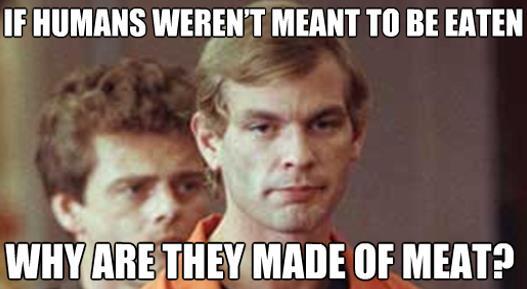
But the point is that once meat is prepared (cooked, seasoned, presented) it is very hard to tell its provenance. Cannibals who have been asked have mostly compared it to pork or veal, with Armin Meiwes telling an interviewer

“It would have made no difference in somebody else had tasted it; he wouldn’t have questioned the meat…. During preparation, it is not as dark, but bright and fresh as pork, and tastes so very close to pork.”

Kohlberger’s belief that he might like human flesh if he tried any meat at all therefore has some logic to it. Since Charles Darwin’s writings overthrew the special status of humans as closer to angels than other animals, anthropocentrism has been amended to offer a story of humans as the culmination of evolution and thereby continues, rather less successfully, to obscure human animality. Should such beliefs falter, as happens repeatedly in many cases of contemporary cannibalism, it becomes a very short step from eating other animals to eating the human one.

But why should he become addicted to any meat? Well, we know Kohlberger has an addictive personality, shown by his very heavy usage of heroin. But we’re not talking drugs of addiction but lumps of protein, aren’t we? Well, there are plenty of studies about that. Marta Zaraska, for example, wrote in her book Meathooked that meat is highly addictive on several fronts – genetic, cultural, historic and commercial, and coined the term “meathooked” for the incongruous compulsion to eat meat despite the pangs of cognitive dissonance – the repressed feeling of guilt when considering oneself an animal-lover while also paying big corporations to kill them. Then there is the mythology of the Wendigo, a creature from Algonquin legend who starts off as a human but becomes a being who can only live on human flesh, which makes him grow bigger and at the same time hungrier. If you believe in Wendigos, then the slippery slope from carnivore to cannibal seems reasonably clear.

This leads us to the issue of Kohlberger’s apparently very strict veganism. Most people seem to believe (or want to believe) that vegans are fanatics, obsessed with animal welfare (or the environment, or their own health) who therefore compulsively avoid meat. But in fact most vegans would certainly wash a pot thoroughly after a relative had cooked meat, but are unlikely to throw it out as irretrievably ruined, as Kohlberger purportedly did. Veganism is an ethical system that attempts to minimise harm to sentient animals, which includes humans (yes, Virginia, humans are animals). If there is a slippery slope from the flesh of other animals to the flesh of Homo sapiens, then the vegan is furthest from the edge of that slope. When Kohlberger killed those students, he was not following any known vegan code of ethics, even if he didn’t sample their flesh on the way out.

“…CANNIBALISTIC URGES” – Man on trial for brutal murder of four Idaho University students

A forensic psychiatrist has told Newsweek that the man charged in connection with the slayings of four University of Idaho students in November 2022 had battled with “cannibalistic urges.

Bryan Kohberger, a 28-year-old Ph.D. student and teaching assistant in the Department of Criminal Justice and Criminology at Washington State University, was arrested at his parents’ home in Albrightsville, Pennsylvania.

Kohberger is accused of breaking into a rental house in Moscow, Idaho, and fatally stabbing Kaylee Goncalves, Madison Mogen, Xana Kernodle and Ethan Chapin in the early morning hours on November 13.

Reports have surfaced divulging that Kohberger follows a strict vegan diet and has reportedly struggled with heroin addiction in the past.

Forensic psychiatrist Carole Lieberman told Newsweek that Kohberger’s “obsessive-compulsive eating habits” indicate he was afraid he would become addicted to meat if he ate it.

“He was not only vegan, he refused to eat off of pots or plates that had had meat on them. Psychologically, this represents his struggle against his cannibalistic urges. He was afraid that if he let himself go to taste meat once, he would become addicted to it—like he had become to heroin—and start killing and eating people.”

A relative told the New York Post last week that Kohberger’s dietary restrictions were “very, very weird” and that he seemed “very OCD,” referring to obsessive-compulsive disorder.

The woman, who asked not to be named, but said she was previously married into Kohberger’s family, said:

“It was above and beyond being vegan. His aunt and uncle had to buy new pots and pans because he would not eat from anything that had ever had meat cooked in them.”

Casey Arntz, who was friends with Kohberger in middle and high school, said in a video posted on TikTok that he had been “a heavy heroin user” in high school. Kohberger’s struggles with drug addiction continued into his college years, a friend from Northampton Community College told Fox News. Criminal profiler John Kelly told Fox News,

“This kind of person has this volcanic rage inside that’s going to explode on is victim of choice.”

Lieberman told Newsweek that Kohberger had probably studied criminology both to “calm the demons inside him that were telling him to kill” but also to “learn how to commit the perfect crime.”

It is possible that he had been in touch with the so-called BTK killer, Dennis Rader, whose serial killings in Wichita were the subject of a book by his supervisor, Katherine Ramsland.

Kohlberger may have corresponded with Rader (a lot of criminology students do) but we don’t know that yet. We have to wonder if Rader would have told him about working in the meat department of a Wichita IGA a few years before his murder spree began.  

Kohberger has been held without bond in Pennsylvania since his arrest. He will be tried in Idaho, the state in which the crimes took place, the only state in the US with a law against cannibalism, although no such charges have been laid against Kohberger.

His next court appearance will be June 26.

Kohlberger’s obsession with meat reflects a lot of issues considered in Cannibal Studies. Firstly, the question of human meat: there really is no significant difference between the meat of humans and other large mammals such as cows, pigs or sheep. Hannibal Lecter takes delight in feeding human meat to his guests, such as the flesh of the flautist of the Baltimore Philharmonic, whose Board members subsequently enjoy the meal immensely in the book and film Red Dragon, thus becoming innocent cannibals. Incidentally, being the Baltimore flautist seems to be a rocky road – their principal flautist Emily Skala, was fired in 2021 for spreading misinformation about the safety of coronavirus vaccines, the efficacy of face masks and the outcome of the 2020 presidential election, relieved of her post, but not eaten.

But the point is that once meat is prepared (cooked, seasoned, presented) it is very hard to tell its provenance. Cannibals who have been asked have mostly compared it to pork or veal, with Armin Meiwes telling an interviewer

“It would have made no difference in somebody else had tasted it; he wouldn’t have questioned the meat…. During preparation, it is not as dark, but bright and fresh as pork, and tastes so very close to pork.”

Kohlberger’s belief that he might like human flesh if he tried any meat at all therefore has some logic to it. Since Charles Darwin’s writings overthrew the special status of humans as closer to angels than animals, anthropocentrism has been amended to offer a story of humans as the culmination of evolution and thereby continues, rather less successfully, to obscure human animality. Should such beliefs falter, as happens repeatedly in many cases of contemporary cannibalism, it becomes a very short step from eating other animals to eating the human one.

But why should he become addicted to any meat? Well, we know Kohlberger has an addictive personality, shown by his very heavy usage of heroin. But we’re not talking drugs of addiction but lumps of protein, aren’t we? Well, there are plenty of studies about that. Marta Zaraska, for example, wrote in her book Meathooked that meat is highly addictive on several fronts – genetic, cultural, historic and commercial, and coined the term “meathooked” for the incongruous compulsion to eat meat despite the pangs of cognitive dissonance – the repressed feeling of guilt when considering oneself an animal-lover while also paying big corporations to kill them. Then there is the mythology of the Wendigo, a creature from Algonquin legend who starts off as a human but becomes a being who can only live on human flesh, which makes him grow bigger and at the same time hungrier. If you believe in Wendigos, then the slippery slope from carnivore to cannibal seems reasonably clear.

This leads us to the issue of Kohlberger’s apparently very strict veganism. Most people seem to believe (or want to believe) that vegans are fanatics, obsessed with animal welfare (or environment or their own health) who therefore compulsively avoid meat. But in fact most vegans I know would wash a pot well after a relative had cooked meat, but are unlikely to throw it out as irretrievably ruined, as Kohlberger purportedly did. Veganism is an ethical system that attempts to minimise harm to sentient animals, which includes humans (yes, Virginia, we are animals). If there is a slippery slope from the flesh of other animals to the flesh of Homo sapiens, then the vegan is furthest from the edge of that slope. If Kohlberger did kill those students (and at this stage it’s only alleged), then he is no vegan, even if he didn’t sample them on the way out.
Butchering vegans: SOME LIKE IT RARE – Barbaque (Eboué, 2021)

The French are sticklers for correct grammar. Bien sûr! Grammar, and particularly syntax, are importants! For example, there is a tendency in animal rights literature for people to declare: “I am vegan.” Simply untrue – you are made of meat, comrade, red meat to be precise, as this film sets out to demonstrate, and at some length.

The correct syntax is “I am A vegan”, that is, a person who tries to avoid eating the flesh of, or otherwise exploiting, any animal. This is usually for ethical reasons to do with the undoubted suffering caused by the modern industrial animal businesses, but sometimes for health reasons (e.g. Bill Clinton) or the environment, because the animal industries cause massive amounts of greenhouse emissions, use absurd amounts of land and water, and are the main cause of deforestation, particularly in the Amazon.

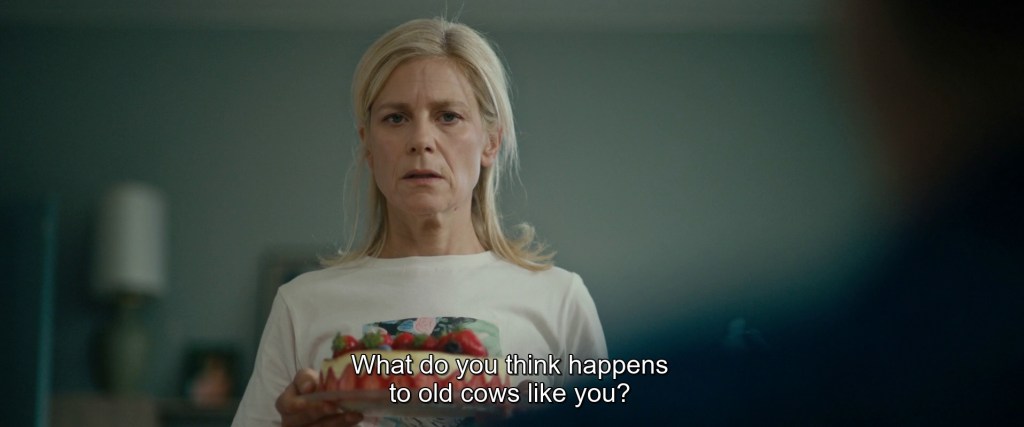
But none of these arguments are likely to persuade the protagonists of this quirky French comedy Barbaque released, for those of us outside of France, under the title Some Like it Rare. Husband-and-wife Vincent (Fabrice Éboué who also wrote and directed the film) and Sophie (Marina Foïs, who managed to make three other movies in that same year) are running a failing butcher shop called Pascal Boucherie, assailed by vegan activists who throw blood (I guess red paint) around their store in protest at their bloody business.

When they see the man who threw the paint riding his bike on the road (of course he rides a bike – this is satire), they stop their van suddenly and reverse, unintentionally (perhaps) causing him to crash into their vehicle and die.

What to do with the corpse? They can’t call the police, because Vincent has already reported the damage done to his store by the dead vegan activist, and it would be assumed to be a revenge murder. But alors, they run a butcher shop, so they have all the tools to dispose of the evidence. Sophie is watching true crime documentaries on TV (aren’t we all?) and tells Vincent to chop the body up and dump the pieces in the garbage. Vincent starts chopping, watched by his dog, who eagerly gobbles up a piece of the vegan that falls onto the floor. Vincent gives the dog an ear, then realises – hey, humans are made of meat!

Chopping up bodies is easy for a butcher, but then Sophie, thinking he has already thrown out the body parts, puts the meat on the shelves. Turns out the flesh of vegans is delicious (grain fed?) and there is a rush of customers seeking what Vincent decides to call “Iranian pork”. With enthusiastic customers in the store, Vincent does not stop Sophie tasting it. Afterwards, she asks

“Vegan” says Vincent.

It’s the perfect crime, the evidence is not just eaten but, as Sophie says, “shat out” afterwards. There are lots of cannibalism jokes, such as the local policeman promising to catch the vegans who attacked the store,

It’s not exactly a new idea. Mads Mikkelsen had the same problem and the same solution (after accidentally locking their electrician in the meat freezer) in the Danish movie The Green Butchers, together with a haircut that would have shocked the normally unshockable fans who loved him in Hannibal. And let us not forget the many variants of the Sweeney Todd story which saw the “demon barber of Fleet St” feeding meat pies filled with his hairdressing clients to the grateful populace of nineteenth century London, as well as a classic of kinky Hollywood cannibalism, Eating Raoul. Butchering people for meat has appeared in several other movies including the much-underrated film The Butchers and the animal revenge movie The Farm.

At first glance, this is a satire on veganism, but then there are all the references to how delicious their flesh tastes.

The only really dislikeable character in the film is their extremely carnivorous and insufferable friend who owns a chain of butcher shops and makes a fortune selling inferior and tainted cuts of meat. He is racist, sexist, and talks only about money. When Vincent has a scuffle with him and bites his ear off, he says “you taste disgusting – you should eat more veg.” Eating meat, Vincent has discovered, makes you taste bad. Maybe that’s why we don’t eat lions.

Vincent and Sophie discuss the logistics of their new business, in the same way other meat and dairy executives talk about the “growing” and “finishing” of the victim animals, as production units. They could farm vegans, they say, and she could milk them. Vincent points out that the best meat comes from castrated steers, he wants to find

There are references to Hitler being a vegetarian (it’s not true) and still being a butcher. Sophie tells how the rabbit she loves when she was little was turned into a stew by her father, and

“although I loved Thumper more than anything in the world, I loved him more as stew.”

They then proceed to kill a plump vegan who they’ve tied up in a bathtub. Most of the film’s action is slapstick hunting sequences as Vincent and Sophie stalk and kill vegans for their shop, interspersed with discussions about hunting a black woman, from which Vincent recoils, until Sophie tells him

They both spot a plump young boy, but Vincent draws the line at killing children, with Sophie complaining

It’s easy to see it as a commentary on the commercial meat corporations, which kill most animals when they are still little more than juveniles or (for veal) babies, and exploit female animals twice – for the production of their young (and sometimes their milk) and then for their flesh when they are worn out – what Carol Adams calls “feminized protein”. All Sophie wants to do (or wants Vincent to do) is apply the same methods to human meat.

The film currently has an unbeatable 100% “Fresh” rating on Rotten Tomatoes, with The Guardian critic Cath Clarke saying:

“Some Like It Rare is a tasty treat for herbivores and carnivores alike, and it honestly doesn’t feel like an anti-vegan film.”

Martin Unsworth in the Starburst magazine said:

Some Like it Rare is a non-meat eater’s idea of extreme horror, and if you’re upset by the sight of meat being prepared, you should avoid it at all costs.”

Yes, but that’s not really true. I know plenty of meat-eaters who scrupulously avoid knowing the source of their main course. That’s why animals are butchered in remote slaughterhouses with high walls and maximum security, by anonymous, minimum-wage workers. On the other hand, it is the vegans who climb those high walls and take videos (YouTube is full of them). So while they don’t like what’s going on, the “extreme horror” is probably more applicable to those who are assailed with the cognitive dissonance of knowing they support corporations that do what Vincent and Sophie do, albeit to other species (as far as we know).

If you don’t mind subtitles (or are fluent in French) this is well worth a viewing. Let me know what you think the message is.

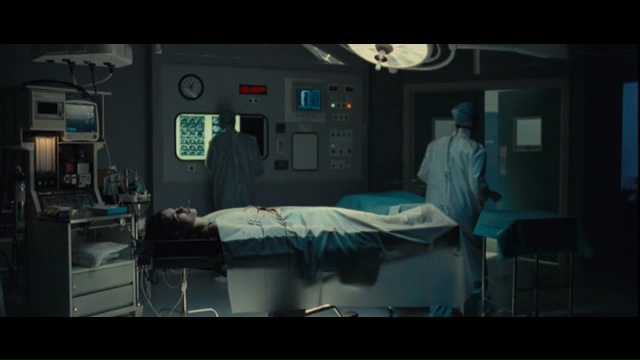
Commodity cannibalism: NEVER LET ME GO (Mark Romanek, 2010)

NEVER LET ME GO is based quite faithfully on the beautifully written and quite disturbing 2005 novel of the same name by British author Kazuo Ishiguro, which was shortlisted for the Booker prize (which he had previously won with Remains of the Day) and was named by Time Magazine as the best novel of 2005, as well as being listed as fourth on their list of the 100 Best English-language novels published since 1923 (when they started publishing).

This gave the film a high bar, but it does not disappoint, due to the superb cast, the direction of Mark Romanek (One Hour Photo), and the script by Alex Garland (28 Days Later), a friend of Ishiguro, who asked the author for film rights before he even finishing reading the manuscript. Yep, it’s that good.

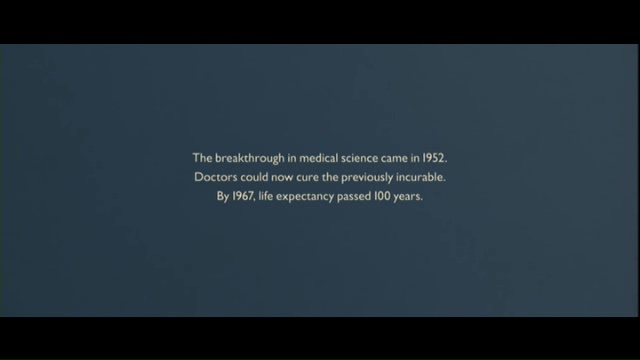
OK. This is a spoiler alert, particularly if you are going to read the book, although any review will soon tell you what it’s about, and the “secret” is revealed quite early in the film. Here goes. The film is set in an alternative present, where incurable diseases have been conquered.

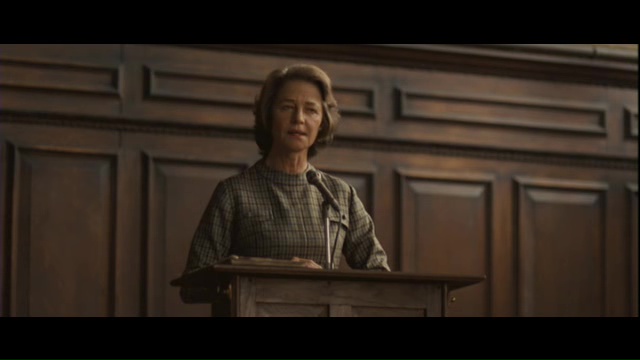
The protagonists are clones, bred to supply their organs to “real” humans, who can now live well into their hundreds, thanks in part to these donations, and the new medical technologies. The kids are brought up to live healthy lives. Smoking? Right out. A healthy replacement part in a healthy body. The stern principal, Miss Emily (the wonderful Charlotte Rampling) tells them not to spoil the merchandise:

“Students of Hailsham are special. Keeping yourselves well, keeping yourselves healthy inside, is of paramount importance.”

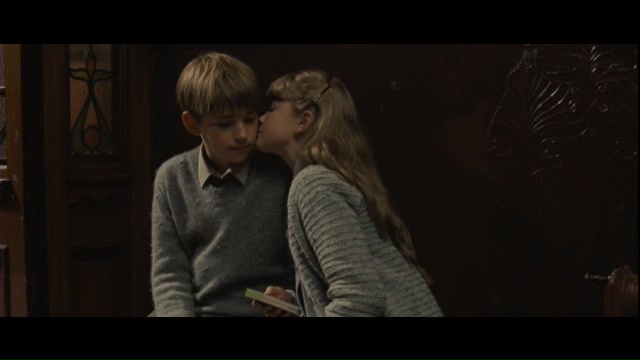
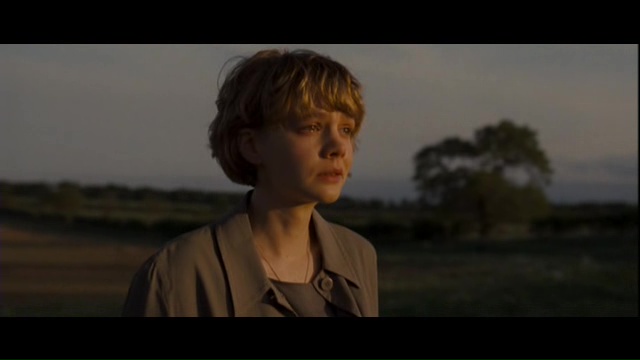
We see the childhood of the protagonists mainly through the eyes of 11-year-old Kathy (Isobel Meikle-Small) who has a preteen crush on Tommy (Charlie Rowe).

Her best friend is Ruth (Ella Purnell). Ruth’s confidence and precocity wins over the shy and vulnerable Tommy, who is barely able to cope with the inevitable challenges and failures of growing up. Tommy represents so many of us – filled with rage at the injustices and humiliations of the world, but unwilling to stand up and take what he wants. Kathy accepts the loss of her first love to her first friend.

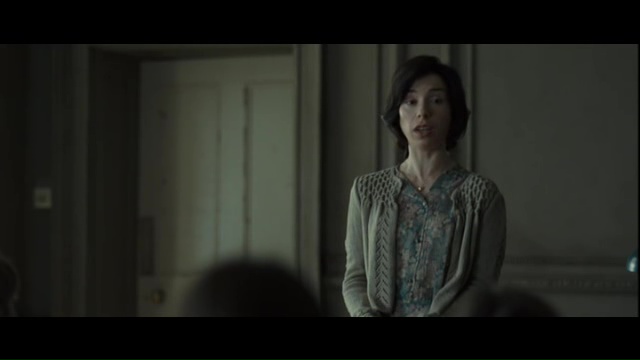
The children are encouraged to create pictures, poetry and sculpture, which may be chosen for display in a mysterious place called “The Gallery”. They are told that Hailsham children are special. They are told of dangers that befall children who leave the school grounds – the boy who was found tied to a tree with his hands and feet cut off, the girl who starved outside the gates. They are not told the truth. One teacher, Miss Lucy (Sally Hawkins from The Shape of Water) dares to tell them what will happen when they grow up, which gets her fired. She tells them,

“You will become adults, but only briefly. Before you are old, before you are even middle-aged, you will start to donate your vital organs. That’s what you’re created to do. And sometime around your third or fourth donation, your short life will be complete.

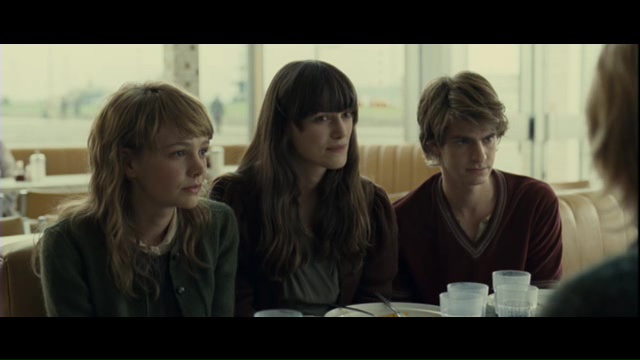
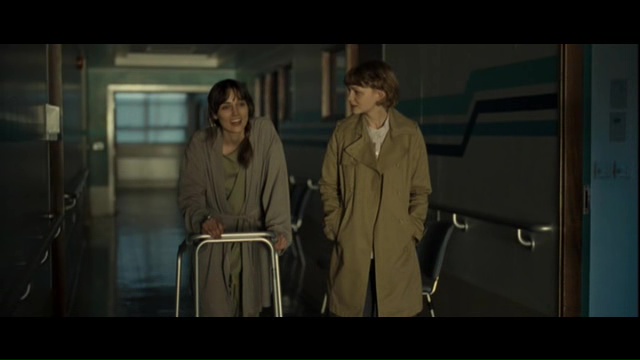
The film moves to their adulthood – at 18, they are moved out of Hailsham and sent to a collection of farm buildings called the cottages, to wait until they are old enough to move to “completion centres” where they will begin to donate their organs. Tommy (Andrew Garfield) is now in a sexual relationship with Ruth (Keira Knightley) which shatters the friendship of Ruth and Kathy (Carey Mulligan).

The people from the outside, the delivery men and others, are reticent, unable to make eye contact with the kids; they exhibit the kind of cognitive dissonance you might see from people on a petting farm, admiring a piglet that they know will soon be bacon.

These kids are not considered human, even though they are genetically identical to some “original” whom they desperately want to meet – the ‘real’ human from whom they were replicated. Ruth is convinced they must be less than fully human, that they are cloned only from

“trash – junkies, prostitutes, winos, tramps, convicts, as long as they aren’t psychos. If you want to look for originals… look in the gutter.”

Tommy finds Kathy looking through porn magazines, flipping through quickly, looking only at the faces. She is looking for the “trash”, the less-than-humans from whom they may have been cloned.

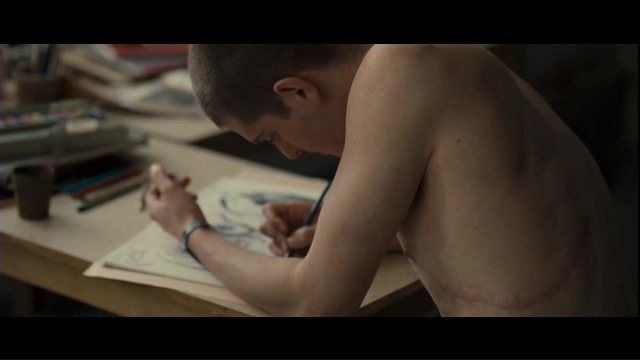
The other young people tell them of a rumour about the possibility of Hailsham students getting a “deferral”—a temporary reprieve from organ donation if they can prove they are in love. Tommy decides that The Gallery at Hailsham was part of a study to see if clones have souls, can fall in love, and are therefore worthy of deferral. He becomes obsessed with finding the Gallery, and seeing if love, verifiable love, makes them human.

They are also able to volunteer to become carers for the others, and Kathy decides to do this, delaying thereby her own donations. She finds Ruth at a completion centre – Ruth has endured two donations and is ready, willing to complete on the next.

They visit Tommy at another centre, who tells them that Hailsham has closed, and donors are now raised in schools that are like “battery farms”. The donation centre is full of “donors” with missing parts – and they often die (or complete) after two or more donations.

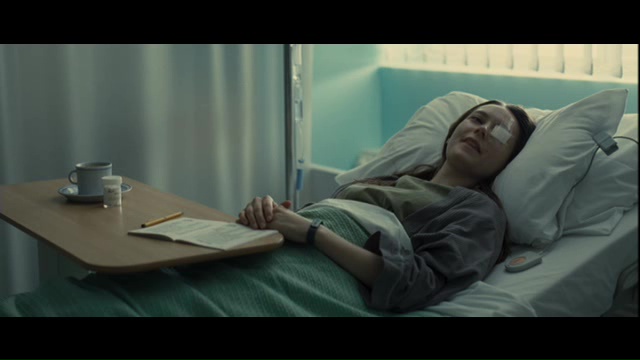
Ruth has heard that after the fourth donation, there are no more carers, no more recovery centres, just harvesting of parts until they switch you off. Kathy cares for Ruth, who dies (completes) after her third donation, and Kathy then takes Tommy, still reasonably well after two donations, to see the mysterious gallery owner.

They’re in love, they tell her. They want a deferral. But the gallery was just part of an ethical argument – Hailsham was the last place where the ethics of the donor system were questioned, and the art was supposed to show what they were capable of. But they were exploring an answer to a question no one was asking.

“Would you ask people to return to darkness – the days of lung cancer, breast cancer, motor-neurone disease? They’ll simply say no…. We didn’t have the gallery to look into your souls. We had the gallery to see if you had souls at all.”

Films on www.thecannibalguy.com tend to centre around violence and gore. That is what people expect from horror and from cannibal movies. But this is not a horror movie, or at least not a monster movie in the traditional sense of the grotesque, frightening and uncanny. But is it a cannibal movie?

I believe it is. Definitions of cannibalism vary according to who is accusing whom. At what point does exploitation of the human body or mind turn to abuse or consumption? Organ transplants, where a living organ is incorporated into the body of a recipient, is sometimes called cannibalism, particularly due to speculation that some part of the ‘donor’ remains imbued – consider James Whale’s classic 1931 film Frankenstein, where the monster is given a brain stolen from the cranium of a criminal, which makes him homicidal. In any case, if an organ is taken without the consent of the ‘donor’, such as the alleged cases of political prisoners being executed according to the demand for their tissue-type, how is this different to Hannibal’s feasts?

The horror in this film is in the human struggle with questions of mortality, what it even means to be human. These kids seem to be normal people – they laugh, they sing, they tease each other, they fall in love. But they are aware of their own deaths, something that most of us repress more or less successfully, assuming that we will always have another tomorrow. They know better; they are destined to be cut up and emptied of organs until their bodies give out. They are not fully human, despite looking just like any other bunch of kids, because they are cloned, and so are classified as beneath the human line in the anthropocentric scorecard. They are at best “all but human” through their art. But the ‘real’ humans don’t care. Redefine someone as less than human, objectify them, be they a different race, gender or species, and the range of abuses is unlimited. Nothing matters but our delusion that we will live forever, necessitating the sacrifice of the other.

The critic Roger Ebert wrote:

“Essentially it asks, how do you live with the knowledge that you are not considered a human being but simply a consumer resource? Many hourly workers at big box stores must sometimes ponder this question.”

There is no option for resistance. They have been brought up all their young lives to obey, to believe that it is necessary to be cut up, to complete, for the benefit of unknown others, because that’s what they were bred for, just as we justify cutting up cows and pigs and chickens and lambs because that’s we bred them for. Only Tommy rebels, but it’s an inchoate howl of rage, the same scream at the butchering world that he aimed at the kids who didn’t pick him for their game when he was 11. Powerless, all he can do is bellow like a steer in an abattoir. It may be that defiance of death that verifies his humanity, because, as Dylan Thomas said, we ought to “rage against the dying of the light”.

Or as another Dylan said (Bob), “He not busy being born is busy dying.”

Kathy sums this up at the end:

“What I’m not sure about is if our lives have been so different from the people we save. We all complete. Maybe none of us really understand what we’ve lived through. Or feel we’ve had enough time.”