I did it Meiwes – “THE CANNIBAL NEXT DOOR”

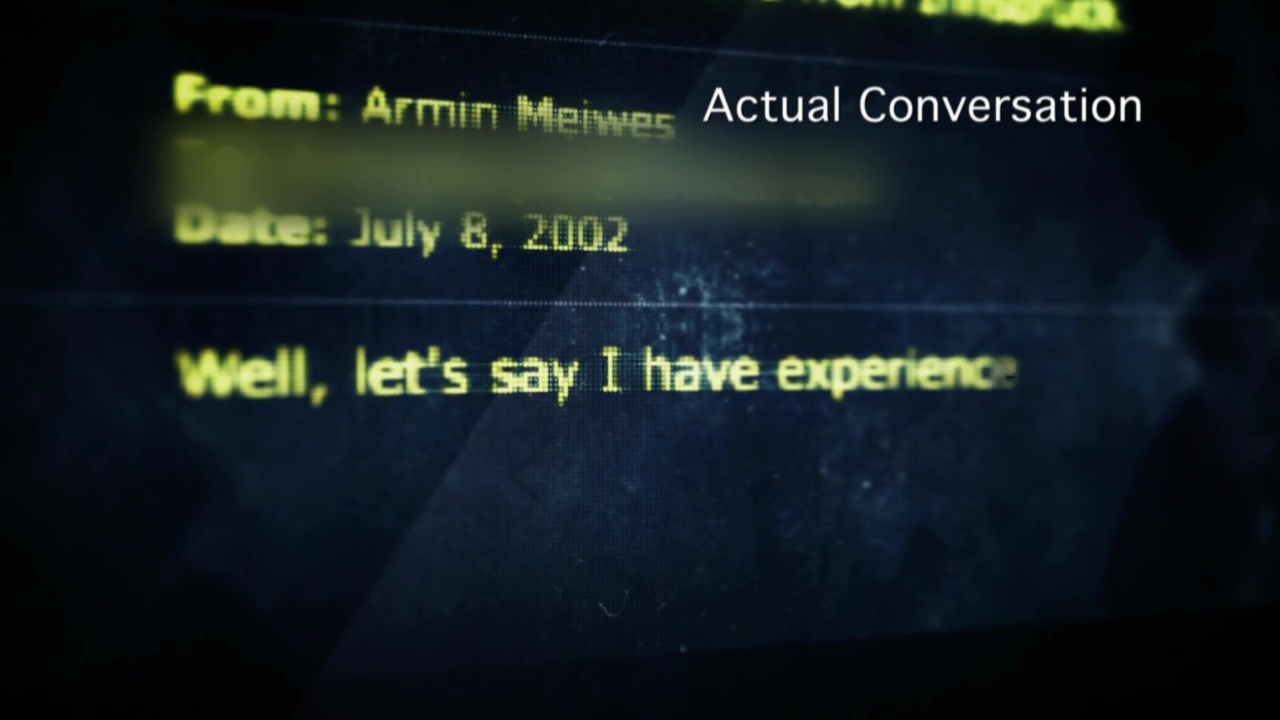
December 1, the date on which I am writing this blog, is the birthday of perhaps the most famous living cannibal, the German named Armin Meiwes. He became famous around the globe when he was arrested in December 2002 for killing and eating a willing volunteer he had met on the Internet in 2001, a man named Bernd-Jürgen Brandes, who had helped sever and cook his own penis before being finished off and filleted by Meiwes. Movies have been made based on the events, from reenactments like Dora’s Cannibal to fantasies like Weisz’s Grimm Love. Songs have been written about him and sensationalised retellings haunt our documentaries, often inexplicably comparing him to Hannibal Lecter.

Meiwes was born in Essen in 1961, and was raised by his stern and controlling mother after his father and half-brother moved out, not unlike the story of Ed Gein, who tried to resurrect his severe and hard-hearted mother by killing and eating the genitals of local women in Plainfield Wisconsin. Armin Meiwes, hopelessly devoted to his late mother as he brooded in his thirty-room house, sometimes dressing in her clothes and impersonating her voice, was not dissimilar to Norman Bates in Hitchcock’s film Psycho, which was based on the Gein murders. Many have tried to pin his later conduct on his childhood feelings of abandonment and helplessness although, if that were the case, we would expect millions of similar cases around the world. Maybe there are, but they don’t get caught?

At any rate, young Meiwes developed a taste for cannibalism (sometimes called vorarephilia) from reading fairy tales, particularly the Grimm Brothers’ Hansel and Gretel, in which abandoned children almost get eaten by a witch. The witch, we might note, was the only adult to show them any affection, even though her ulterior motives were clear, at least to the children who were reading the story. The Grimms wrote their fairy tales near Rotenburg, where Meiwes killed and butchered his friend. You may also remember (at least, Fannibals will) that Hannibal Lecter referred to this fairy-tale when he was serving up dinner to Abel Gideon; Gideon’s own leg, smoked in candy apples and thyme, glazed, and served on a sugar cane quill.

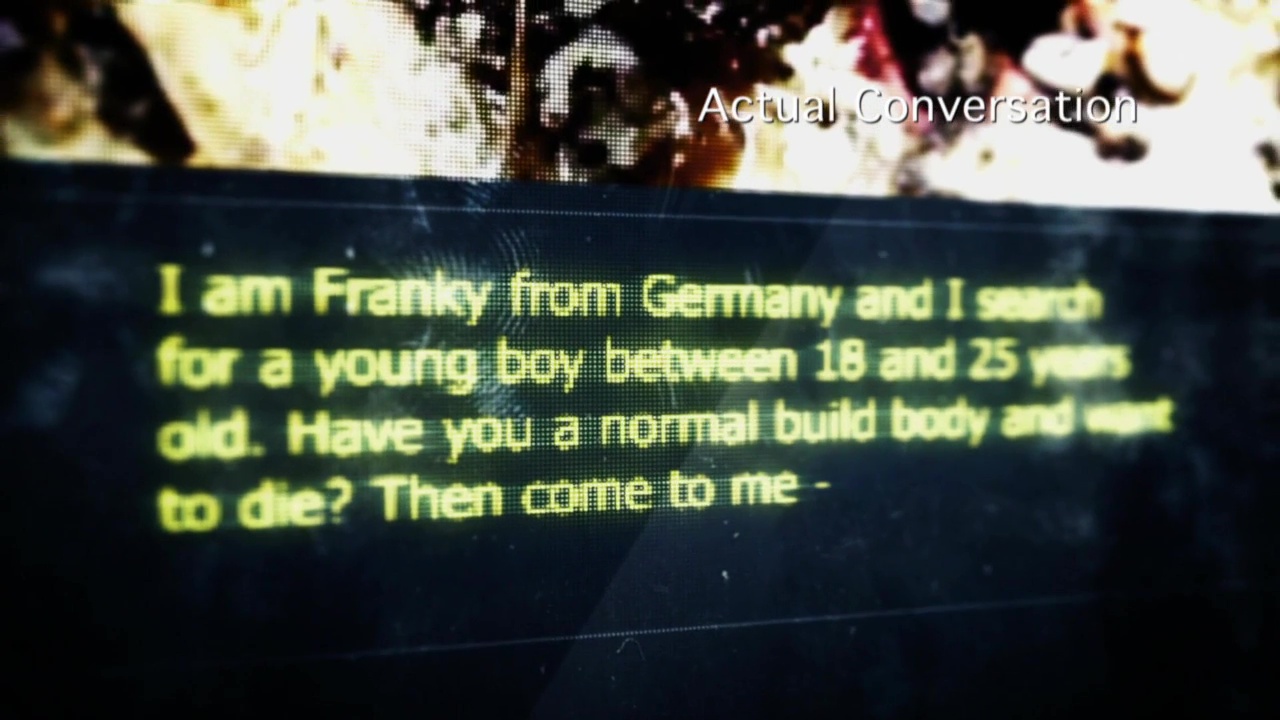
Meiwes fantasy of eating and incorporating a brother culminated in 2001 in him advertising on a fetish website called The Cannibal Café for “a well-built 18 to 30-year-old to be slaughtered and then consumed”. The only reply that seemed sincere, indeed eager, was from Brandes, who was not really well-built or 18-30, but fitted the bill because he was determined to be eaten.

They got together and, after getting to know each other (which included slicing off Brandes’ penis and cooking it), Meiwes left his friend to bleed out in the bath, and then proceeded to butcher his carcass and eat the meat, in a variety of cuts, over several months.

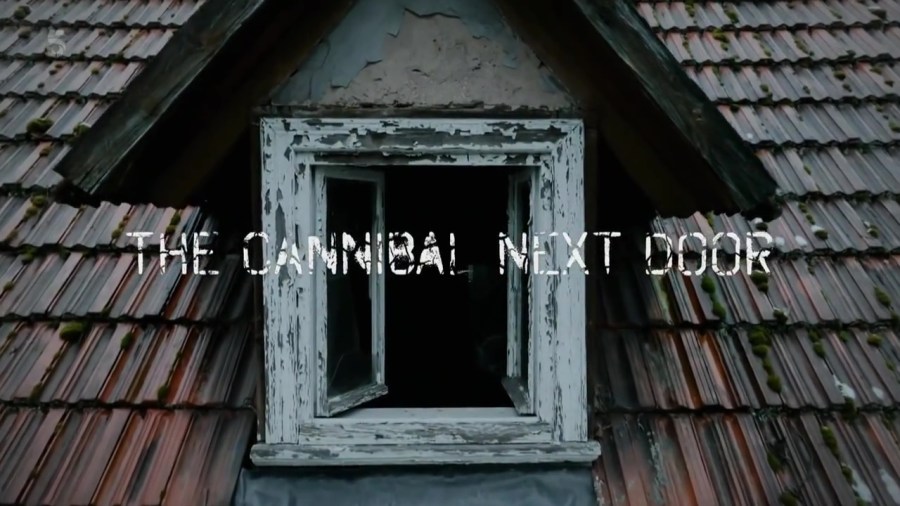
In case there are still a few psychologists and journalists who haven’t yet pontificated on Meiwes and Brandes, this week we consider a 2023 UK Channel 5 documentary called The Cannibal Next Door, directed by Calum Farmer. This is quite a good reenactment of the events, although like many others, it relies too heavily on brooding, portentous music and opinions from experts, all of whom are universally repulsed by the cannibalism, a repulsion that Meiwes and many of his correspondents clearly did not share.  

“It had broken humanity’s last great taboo.”

Trigger warning: the real Meiwes (seeing it’s his birthday): This website claims it has actual leaked stills from Meiwes’ video. If you don’t like pictures of chopped up humans, maybe skip the link. They look fake to me, but this Reddit reader swears they are real.

Meiwes is still in jail in Germany, not for cannibalism, which is still not a crime, but for murder, which is absurd since Brandes wanted to die, and was in fact obsessed with being slaughtered and eaten. If anything, Meiwes is guilty of assisting a suicide. There was no law in Germany against eating a human.

We know so much about the case because Meiwes was very open in describing what happened, even videotaping the whole process of slaughtering and butchering. The jury in his case watched this video, and reportedly turned quite green, but it seems likely that they would have also done so had they been made to watch some of the horror clips of cruelty and killing in abattoirs that are abundant on YouTube. His lawyer argued:

“We say it is neither murder or manslaughter, but killing on demand. My client is not a monster.”

As it was clearly not murder and there was no law against eating a corpse, Meiwes was sentenced for manslaughter and given an 8½ year sentence. Public outrage resulted in a retrial which then found him guilty of murder, on the devious premise that Brandes had been mentally incapacitated by depression, and therefore open for manipulation by his killer. He was sentenced to life, which in Germany requires a minimum of fifteen years imprisonment. Meiwes has already served more than that.

Meiwes believed that he did nothing wrong. It seems that the only thing he can see as a moral failing is not the fact that he ate human meat, but that he ate any meat; he subsequently became an environmentalist and a vegetarian, both of which would obviate eating any flesh, including human. His simple claim in his defence was that, unlike pigs, sheep, cows, chickens and other animals, here was a willing victim who consented to, indeed demanded, his own slaughter and consumption. Is it not clearly more ethical to eat an animal who wants to be eaten, whatever the species, than one who does not?

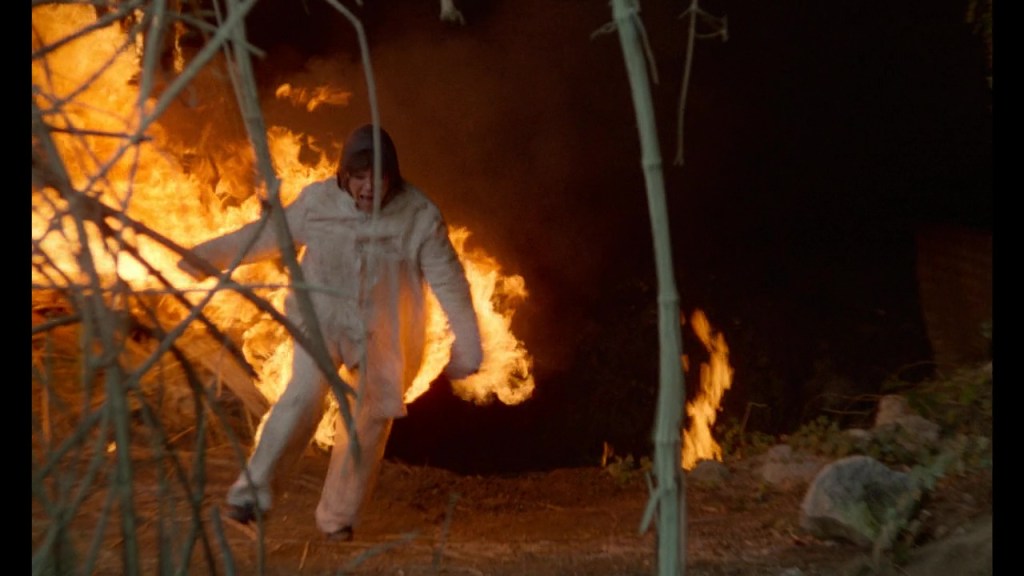
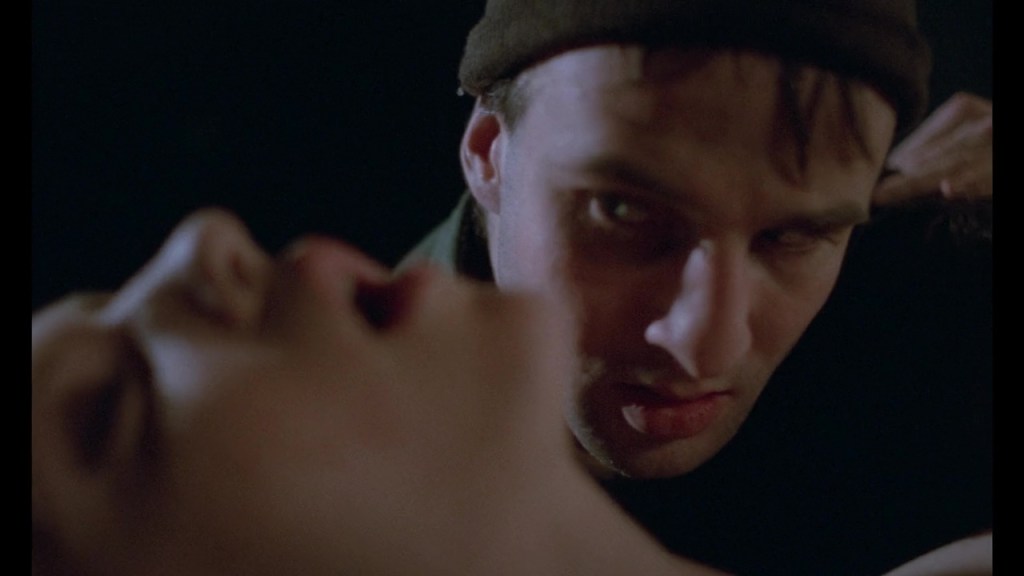
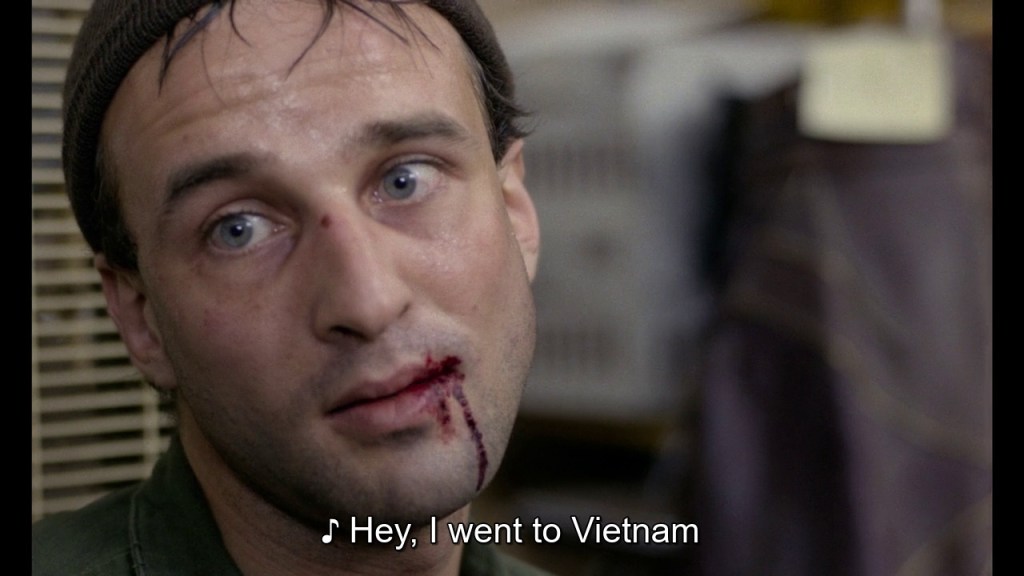
Vietnam vets and cannibals: CANNIBAL APOCALYPSE (Antonio Margheriti, 1980)

This is one of those horror flicks that’s a bit hard to categorise. It’s an Italian “cannibal boom” film in the tradition of Ruggero Deodato’s classic Cannibal Holocaust which came out the same year, as well as earlier efforts such as Deodato’s Last Cannibal World, Joe D’Amato’s Black Emanuelle films, and the one that started the Italian cannibal boom, Umberto Lenzi’s The Man from Deep River. But Antonio Margheriti, using his alias Anthony M. Dawson, turned the genre on its head. The cannibal boom movies were usually set in the jungle, where tribes of primitive savages killed and ate Western interlopers, who richly deserved their fate. In other words, the archetypal colonialist cannibal story with a post-colonial twist (revenge!)

This one starts in the jungle too, but it’s a jungle in Vietnam, and the Western interlopers are American soldiers prosecuting the disastrous and eventually futile Vietnam War. A squad led by super-macho Norman Hopper (John Saxon from Nightmare on Elm Street) lands in a village and torches the place, after getting blown up by a dog (yeah, it gets worse). They find some POWs captured from their squad, Tommy Thompson (Tony King, who is now head of security for the hip-hop group Public Enemy) and Charlie Bukowski – a intertextual reference to the poet Charles Bukowski I guess, although the link seems tenuous. Bukowski (the soldier, not the poet) is played by John Morghen from Cannibal Ferox, an actor who pretty much always dies horribly in every movie he’s been in, and this is no exception.

They have somehow caught a virus (?) which makes them crave human flesh. That makes it sound more like a zombie movie than a cannibal one (think 28 Days Later), but let’s give it a cannibal pass by referencing the Wendigo films like Ravenous or Eater. Or you could claim, as the doctor says to Norman, it’s a “form of rabies.”

No, it isn’t. He really should have gone with Wendigo, a mythical figure – giant, fierce and cannibalistic, who gathers strength from feeding on human flesh, but the flesh makes him grow larger, and so his appetite can never be satisfied. He is sometimes protective (like Norman), and sometimes a figure of revenge (like Charlie and Tommy). The Wendigo gets inside people who are weak, hungry, or filled with rage.

Anyway, the squad is using flamethrowers to fight the Vietcong (and their women and small children) and one burning woman falls into the pit where the POWs are confined, making for a cooked meal. No home delivery jokes please.

Back in the States, Norman is having nightmares of being bitten by the POWs as he rescued them from their meaty pit. He realises something is wrong with him (the virus from getting bitten maybe?) and stares in horror and fascination at a bleeding lump of flesh in the fridge. Why is there flesh left to bleed in the fridge – isn’t that a health hazard?

One of the rescued POWs, Bukowski, suddenly phones him – he’s on day release from the “Hospital for Nervous Disorders”, or what the cops call a “loony bin”. Norman can’t meet him because the teenage neighbour is lasciviously pointing a hairdryer at him, and he is drawn to her lower regions, but for someone infected with the cannibal virus, ‘eating her out’ means something different to what she expects. She drops by later to tell him that she enjoyed being bitten. What do you know.

Meanwhile, Charlie has gone to see a war movie, as you do when you’re been treated for months for severe PTSD. It’s Umberto Lenzi’s From Hell to Victory, a lovely in-joke among amici, with lots of explosions and deaths. But no one is watching the war.

In front of him, a couple are doing oral things – exchanging saliva and sucking on boobs, erotic cannibalism, but Charlie joins in by taking a healthy bite of the girl’s neck as she leans back in her seat. He runs, there’s a shootout, he kills and eats a bikie and a security guard – it’s all downhill from here. The Atlanta police chief wants to know about him, not his name (despite it’s fascinating intertextuality):

Is he a subversive, a queer, a black, a commie, or a Moslim fanatic?

No, he’s a clean cut all-American (Italian) Vietnam vet, who wants to eat people.

Lots of people get bitten or scratched – a cop, a nurse, who then bites off the doctor’s tongue, and of course there’s that wanton teenager from next door (what horror film would be complete without promiscuous teenagers?), who was infected by Norman’s bite, even though he thought he could overcome the craving for meat.

Point is, they all have the cannibal virus, and the cannibals end up in the sewers (apparently hoping to hoof it to the airport and hop on a flight back to Vietnam), where they are chased by men with guns and flamethrowers; it’s really just like Nam, but now they have become the enemy.

The movie was one of 39 films to be prosecuted in Britain during the 80s as a ‘video nasty’. The acting sometimes leaves a little to be desired, but the main characters, Saxon and Morghen, are great. The special effects are by the legendary Giannetto De Rossi and are, like most of his work, spectacularly abject. The music is a mix of elevator and disco, creating what TV Tropes calls “soundtrack dissonance” – it’s either disturbing or just annoying, I’ll leave that up to you to decide.

In his commentary on the film, the director Antonio Margheriti proudly states that this film was Quentin Tarantino’s favourite of his movies. Tarantino referenced the film a couple of times: in Inglourious Basterds, Donnie Donowitz uses an alias “Antonio Margheriti”, while in Once Upon a Time in Hollywood, Leonardo DiCaprio character goes to Italy in 1969 to star in Spaghetti Westerns and also one Bond-type spy thriller supposedly directed by Margheriti titled Operazione Dyn-o-mite.

But video nasty or not, Cannibal Apocalypse has some interesting things to say about the fallacies and phalluses of war and cannibalism. The cannibal virus comes back to the USA with Vietnam veterans, a group who were sent to fight a vicious and often brutal war, often against civilians, and returned to abuse or neglect, with far more veterans dying from suicide than died in that war. They also brought back with them, on top of their trauma, exotic diseases, drug habits, and acute psychological damage. Many went as conscripts, and came back as severely damaged killing machines, metaphorically lusting for human flesh and spreading the anger and violence to all those near to them. It’s happened over and over in every war – a culture of killing leads to a spiral of violence. Even when you think the nightmare is over and all the cannibals dead, there’s still the teenager and her little brother to consider (hey, it’s been over forty years – where is the sequel this seems to promise?)

Probably not.

The drive to kill and to eat flesh are closely linked in human history. Consider the words of Isaac Bashevis Singer in the forward to the book Vegetarianism, a Way of Life, by Dudley Giehl:

As long as human beings will go on shedding the blood of animals, there will never be any peace…

If you think Cannibal Apocalypse sounds interesting but you’re short of time, most of the good (gory) bits are covered fully in the review by Mike Bracken, AKA The Horror Geek (@horrorgeek). Mike’s vodcasts are always very entertaining, but this review had me guffawing out loud, which is a bit weird when you’re watching with headphones, in apparent silence, and pretending to be writing an academic thesis. In fact, Mike’s review is much better than the film, IMHO.

Copycat Killers 1.08 HANNIBAL: “A real life Hannibal Lecter comes to light”

The TV series Copycat Killers which debuted in 2016, attempts to match real-life crime with murder cases in film. The premise is really a bit of a long-shot. For example, episode 4 is called “Silence of the Lambs” and shows long lingering shots of the naked butt of serial killer Jame Gumb (Buffalo Bill). It covers the case of a 14-year-old boy, Michael Hernandez, who cut the throat of a friend, and years later joked on the phone, from jail, about “skin suits” (Gumb’s main preoccupation) and Mason Verger cutting off his own face. The boy also, the judge revealed, listened to death-metal band Cannibal Corpse, a group that thrives on notoriety and violent lyrics, but does not, as far as anyone is aware, actually eat people or recommend that others do so. So this boy did not skin people, like Gumb, nor did he eat them, like Lecter.

vlcsnap-00003.jpg

The episode reviewed in this blog, episode 8, is also Hannibal Lecter-based. This particular killer, a German named Armin Meiwes, was nothing like the Hannibal in the books, the movies or the television show. Nonetheless, when the police searched his house, the solemn narrator tells us:

“even the most jaded detective on that case was sickened by what they found in that freezer…. Police had discovered a real life Hannibal Lecter.”

Pictures of Meiwes and Lecter are flashed on screen consecutively, to draw a visual conclusion that is hardly supported by the text.

vlcsnap-00001.jpg

vlcsnap-00002.jpg

An actor re-enacting the Meiwes story cuts meat and drinks wine, which an on-screen expert (crime writer Lisa Coryell) compares to Hannibal’s line from the movie Silence of the LambsI ate his liver with fava beans and a nice Chianti”.

A Professor of Film Studies at the American University explains that Lecter’s elegance, charm and humour makes him “irresistible”. Hannibal, he says, is the top movie villain of the century, and there isn’t even a close second.

Meiwes, a German computer technician, advertised on a fetish website called The Cannibal Café for “a well-built 18 to 30-year-old to be slaughtered and then consumed”. He actually received a heap of replies, but the only one that seemed sincere was Jürgen Brandes. The two met in 2001, had sex, then Brandes took a lot of sleeping pills and half a bottle of schnapps, and they collaboratively sliced off Brandes’ penis and tried, unsuccessfully, to cook and eat it with salt, pepper, wine, and garlic (it ended up in the dog’s bowl). Brandes went off to die in the bath while Meiwes read a Star Trek novel and, when he found Brandes still alive and suffering hours later, killed him and proceeded to eat quite a lot of him over the coming weeks and months.

vlcsnap-00005.jpg

When Meiwes started running low on flesh, he advertised again, and this time one respondent reported him to police, who found some of Brandes still in the fridge. Meiwes was charged with manslaughter as he had killed Brandes (at worst it was assisted suicide), and was sentenced to eight years. Due to the ensuing publicity, a retrial was ordered and he was convicted of murder, on the grounds that he had talked Brandes into giving permission to kill him, for his own sexual pleasure.

Silence of the Lambs and its sequel Hannibal caused, we are told in this doco, a surge of interest in cannibalism, leading Meiwes to pursue his obsession with cannibalism. Still didn’t make him into Hannibal though, IMHO.

A forensic psychologist who glories in the name Dr J. Buzz von Ornsteiner: tells us “I’ve worked with a lot of criminals within my criminal history. But this is by far the worst case I’ve ever encountered.”

The recreation goes into Meiwes unfortunate history with his controlling mother, one more thing that he and Hannibal do not have in common (you may remember from Hannibal Rising that Lecter’s mother was a delightful woman, who was killed in a duel between a tank and divebomber while he was still a small boy).

At the same age, Meiwes father left the family. From this trauma, we are led to believe by Dr Buzz, Meiwes decided the best way to keep people in his life was to eat them. The crime writer explains to us that

“If you’ve experienced loss as a child, as Armin clearly did, cannibalism is one way, it’s a sick way, to make sure that no one ever walks out on you.”

Now the idea that Meiwes and Lecter are cannibals because they lost one or more parents is pretty terrifying, since there are a lot of people to whom that applies. On that logic, you might as well suspect Princes William and Harry. However.

Once mum died, Meiwes was free to get on the internet and find others interested in his hobby.

vlcsnap-00015.jpg

vlcsnap-00017.jpg

vlcsnap-00018.jpg

Lisa Coryell (the crime writer):

“You couldn’t look at the facts of this case and not think of Hannibal Lecter.”

Well, actually, I think I could. Meiwes joined a chat room, something Hannibal did not do and would not do, even in the TV version (set in the Internet era). Brandes, his co-conspirator, wanted to be killed and eaten. Meiwes and Brandes were both convinced that this act of cannibalism would make their bond permanent. It is possible that Hannibal believes eating Will Graham would help Hannibal forgive him for his betrayal. Will, however, was not a willing collaborator in such a scheme.

Is there anything Meiwes has in common with Lecter? Buzz points out that “Somehow between these two men there doesn’t seem to be any value for human life”. I guess Hannibal would agree that human life is not sacred in any way, and that rude people are good to eat. Meiwes, on the other hand, seemed to have liked Brandes, and wanted to keep him around, or more accurately inside.

Brandes wanted to die, but he wanted to taste human flesh before he did so. The show finds a Hannibal parallel here: Hannibal feeding Ray Liotta’s character, Paul Krendler, a portion of his own brain in the movie Hannibal. But of course Krendler was not a willing participant, and once his frontal lobe was on the hotplate, he couldn’t be said to have had any opinions at all.

The rest of the documentary is full of some painful reminders of the speciesism with which philosophers from Aristotle to Descartes to Kant, and even Derrida, have considered the abyss between human and “animal”.

Lisa Coryell:

“Armin begins drawing on Berndt’s body to map out the places he wants to eat most. Armin was treating Brandes like a piece of meat, like an animal for slaughter and it defies humanity.”

It wasn’t of course “like a piece of meat”; it was exactly as a piece of meat. The commentators assume that we, humans, are not animals and are not made of meat, which is ludicrous.

Buzz sums up:

“he doesn’t think there anything wrong with killing someone provided they want to be killed.”

I spat out my tea at this point. It just reminded me of the scene from Douglas Adams’ Restaurant at the End of the Universe:

Arthur: I don’t want to eat an animal that’s lying there inviting me to. I think it’s heartless!

Zaphod: It’s better than eating an animal that doesn’t want to be eaten.

The grave tone of the narrator and commentators of the show, and the ominous music, are intended to convey the extreme gravity of Meiwes’ crime. Meiwes meanwhile has reportedly been a model prisoner, and has also become a vegetarian. In 2018, his appeal to be eligible for release one day (he was given a life sentence) was denied, and he will probably die in jail.

Yet, when compared to other crimes, what has Meiwes actually done? He sought willing victims, men who wanted to die and fantasised about being eaten after their death. He helped Berndt commit suicide, delivering the coup de grâce only when he found Berndt still suffering hours later. He then followed Berndt’s fervent wishes by eating large parts of the man’s corpse. The police originally could not charge him with murder, because there was no evidence that he had intended to kill, until the suicide went wrong and he saw it as an act of mercy. It was the cannibalism that inflamed public opinion around the world, and forced the police to cobble together an appeal, which claimed that he had influenced Berndt to agree to the scheme, which was a bit absurd (he actually offered to take him to the train station if he got cold feet). The problem was that there was no law against cannibalism, and still isn’t in most of the world.

vlcsnap-00004.jpg

So the parallels with Hannibal Lecter are bizarre. Hannibal killed and ate people he considered rude and discourteous. He felt that they deserved it, that he was improving the gene pool maybe. He considered himself superior to the people he ate, just as the average carnivore considers himself superior to a cow or a pig. But what Hannibal does is considered murder, because of his intentions and the fact that the victims presumably did not want to be killed or eaten.

But after considering the case of Armin Miewes, we have to consider the question: if a being wants to die, and you help him along, and then eat him, is that really worse than confining a being who doesn’t want to die (from any species), deliberately killing him or her (or paying someone else to do so) and then eating their flesh? Which is what we humans do well over eight million times every hour of every day.

This issue is discussed in a simpler form in the Australian television series Rake. In a re-imagined version of the Meiwes case, the cannibal is a respected economist and the victim’s suicide is successful. There is no murder; all the economist does is eat the body, yet is told “you ate someone. You’re never going home”. Is that scenario also worse than the intentional killing of a cow or pig for human consumption?

If you think it is, please tell me why in the comments, or email cannibalstudies@gmail.com.

I’d really like to know.


NEXT WEEK: HANNIBAL Season 3 Episode 2.

“Death is not a defeat” HANNIBAL Season 2 Episode 4 “Takiawase” (Fuller 2014)

Previously on Hannibal, Will Graham was arrested for Hannibal’s murders, and chose to plead not guilty; but if the verdict goes against him, the penalty will be death. However, he now has a short reprieve thanks to a secret admirer, who generously killed the judge in his case. We, the audience, have a chance to “draw a breath”, which is also the term for being alive. And this episode is all about life and death, and choosing between them, for ourselves, for those we love, and for our victims. It is summed up in the “previously on Hannibal” reprise, where Jack and Hannibal discuss death. Jack has spent his life chasing serial killers:

vlcsnap-00001.jpg

Will mentally escapes his prison purgatory by remembering good times – fishing. He finds this, as many people describe, relaxing and even meditative. In this memory, he visualises teaching Abigail to fish, the same Abigail who everyone believes is dead and at least partly inside Will’s digestive tract (in that he vomited up one of her ears). Abigail sees no real difference between hunting with her father, who killed and ate girls who looked like her, and trapping and killing fish. She has a point.

vlcsnap-00004.jpg

vlcsnap-00005.jpg

Beverley, the super smart FBI investigator, wants to believe Will is not guilty, but cannot buy his accusations against Hannibal. She seeks Will’s assistance to understand who killed the dude who made mosaics out of corpses, and gets mad at him when he accuses, who else, Hannibal. Why, she asks, would he do it?

vlcsnap-00007.jpg

He tells her: “There will be a clever detail – he wouldn’t be able to resist it.”

Will is contemplating murder, Beverley is contemplating motive, and Jack’s wife, Bella, is contemplating suicide. Her breast cancer has spread, and she is consulting Hannibal about life and death, subjects on which, like most things, he is expert. Her cancer has won the battle, and she has no quality of life, is only staying alive for Jack.

vlcsnap-00027.jpg

vlcsnap-00028.jpg

That thought, she tells Hannibal, makes her feel alive. How, she asks, does it make Hannibal feel? And that question affords us a fascinating glimpse into Hannibal as Übermensch:

vlcsnap-00032.jpg

“The thought that my life could end at any moment frees me to fully appreciate the beauty and art and horror of everything this world has to offer”

Nietzsche, like Hannibal, was a Dionysian, contemptuous of the moralising of Christian ethics. Dionysus was the god of controlled passion, a worthy adversary to Christian suppression of passion. Nietzsche pictured himself as a satyr, half man, half goat, a bridge between man and nature, an affirmer of life.  Will Graham sees Hannibal, after he realises that he is the killer they seek, as a faceless man with stag-horns, a windigo, a monster from Algonquian legend, transformed from human shape into a powerful creature driven by a lust for human flesh. Hannibal is Dionysus, in his form as satyr.

Hannibal is clearly a master of ancient Greek culture, telling Bella, as they discuss suicide (according to Sartre, the only subject worth discussing):

“Upon taking his own life, Socrates offered a rooster to the god of healing, to pay his debt. To Socrates, death was not a defeat…”

vlcsnap-00041.jpg

There is of course a separate killer keeping the FBI team busy – a sweet, new agey woman who wants to put people out of their misery, taking away their pain with her herbal cures, in one case blinding a patient, in the other killing him and filling his head with bees. She is also, the team speculates, into mythological symbolism:

vlcsnap-00061.jpg

vlcsnap-00062.jpg

Beverley discovers, after some broad hints from Hannibal, that the killer from last episode, the dude making mosaics out of corpses, is missing a kidney. This links the murder of the murderer to the Chesapeake ripper, who takes surgical trophies from his victims.

vlcsnap-00070.jpg

Will remembers Hannibal’s first visit to his home in Season 1 Episode 1, with breakfast neatly packed in a picnic basket.

vlcsnap-00071.jpg

Will realises that Hannibal was feeding him human flesh, and so he also is a cannibal, if innocently. And we know Jack has been dining regularly at Hannibal’s table.

vlcsnap-00073.jpg

vlcsnap-00074.jpg

Bella has taken Hannibal’s musings about suicide to heart, and decided that the life Jack wants to preserve (hers) is of a quality not worth saving.

vlcsnap-00082.jpg

She has taken a lethal dose of her morphine. Hannibal has reservations – not about death, which, we remember, he described as a cure. But about the effect on his friend, her husband, Jack.

vlcsnap-00087.jpg

Life, death. They are no more than the flip of a coin.

vlcsnap-00090.jpg

He revives her. She wakes up and gives him a pretty good slap, for someone who was nearly dead. Her view: he has robbed her of her release, her “cure”.

Meanwhile, Beverley is convinced of Will’s claims against Hannibal and goes snooping in his basement. This was never going to end well.

vlcsnap-00095.jpg

IF YOU LIKE MY BLOG, PLEASE FEEL FREE TO RECOMMEND IT (WITH DISCRETION) TO FRIENDS ON SOCIAL MEDIA.
IF YOU HAVE ANY QUESTIONS OR COMMENTS, YOU CAN USE THE TAG, OR EMAIL ME ON CANNIBALSTUDIES@GMAIL.COM.