I did it Meiwes – “THE CANNIBAL NEXT DOOR”

December 1, the date on which I am writing this blog, is the birthday of perhaps the most famous living cannibal, the German named Armin Meiwes. He became famous around the globe when he was arrested in December 2002 for killing and eating a willing volunteer he had met on the Internet in 2001, a man named Bernd-Jürgen Brandes, who had helped sever and cook his own penis before being finished off and filleted by Meiwes. Movies have been made based on the events, from reenactments like Dora’s Cannibal to fantasies like Weisz’s Grimm Love. Songs have been written about him and sensationalised retellings haunt our documentaries, often inexplicably comparing him to Hannibal Lecter.

Meiwes was born in Essen in 1961, and was raised by his stern and controlling mother after his father and half-brother moved out, not unlike the story of Ed Gein, who tried to resurrect his severe and hard-hearted mother by killing and eating the genitals of local women in Plainfield Wisconsin. Armin Meiwes, hopelessly devoted to his late mother as he brooded in his thirty-room house, sometimes dressing in her clothes and impersonating her voice, was not dissimilar to Norman Bates in Hitchcock’s film Psycho, which was based on the Gein murders. Many have tried to pin his later conduct on his childhood feelings of abandonment and helplessness although, if that were the case, we would expect millions of similar cases around the world. Maybe there are, but they don’t get caught?

At any rate, young Meiwes developed a taste for cannibalism (sometimes called vorarephilia) from reading fairy tales, particularly the Grimm Brothers’ Hansel and Gretel, in which abandoned children almost get eaten by a witch. The witch, we might note, was the only adult to show them any affection, even though her ulterior motives were clear, at least to the children who were reading the story. The Grimms wrote their fairy tales near Rotenburg, where Meiwes killed and butchered his friend. You may also remember (at least, Fannibals will) that Hannibal Lecter referred to this fairy-tale when he was serving up dinner to Abel Gideon; Gideon’s own leg, smoked in candy apples and thyme, glazed, and served on a sugar cane quill.

Meiwes fantasy of eating and incorporating a brother culminated in 2001 in him advertising on a fetish website called The Cannibal Café for “a well-built 18 to 30-year-old to be slaughtered and then consumed”. The only reply that seemed sincere, indeed eager, was from Brandes, who was not really well-built or 18-30, but fitted the bill because he was determined to be eaten.

They got together and, after getting to know each other (which included slicing off Brandes’ penis and cooking it), Meiwes left his friend to bleed out in the bath, and then proceeded to butcher his carcass and eat the meat, in a variety of cuts, over several months.

In case there are still a few psychologists and journalists who haven’t yet pontificated on Meiwes and Brandes, this week we consider a 2023 UK Channel 5 documentary called The Cannibal Next Door, directed by Calum Farmer. This is quite a good reenactment of the events, although like many others, it relies too heavily on brooding, portentous music and opinions from experts, all of whom are universally repulsed by the cannibalism, a repulsion that Meiwes and many of his correspondents clearly did not share.  

“It had broken humanity’s last great taboo.”

Trigger warning: the real Meiwes (seeing it’s his birthday): This website claims it has actual leaked stills from Meiwes’ video. If you don’t like pictures of chopped up humans, maybe skip the link. They look fake to me, but this Reddit reader swears they are real.

Meiwes is still in jail in Germany, not for cannibalism, which is still not a crime, but for murder, which is absurd since Brandes wanted to die, and was in fact obsessed with being slaughtered and eaten. If anything, Meiwes is guilty of assisting a suicide. There was no law in Germany against eating a human.

We know so much about the case because Meiwes was very open in describing what happened, even videotaping the whole process of slaughtering and butchering. The jury in his case watched this video, and reportedly turned quite green, but it seems likely that they would have also done so had they been made to watch some of the horror clips of cruelty and killing in abattoirs that are abundant on YouTube. His lawyer argued:

“We say it is neither murder or manslaughter, but killing on demand. My client is not a monster.”

As it was clearly not murder and there was no law against eating a corpse, Meiwes was sentenced for manslaughter and given an 8½ year sentence. Public outrage resulted in a retrial which then found him guilty of murder, on the devious premise that Brandes had been mentally incapacitated by depression, and therefore open for manipulation by his killer. He was sentenced to life, which in Germany requires a minimum of fifteen years imprisonment. Meiwes has already served more than that.

Meiwes believed that he did nothing wrong. It seems that the only thing he can see as a moral failing is not the fact that he ate human meat, but that he ate any meat; he subsequently became an environmentalist and a vegetarian, both of which would obviate eating any flesh, including human. His simple claim in his defence was that, unlike pigs, sheep, cows, chickens and other animals, here was a willing victim who consented to, indeed demanded, his own slaughter and consumption. Is it not clearly more ethical to eat an animal who wants to be eaten, whatever the species, than one who does not?

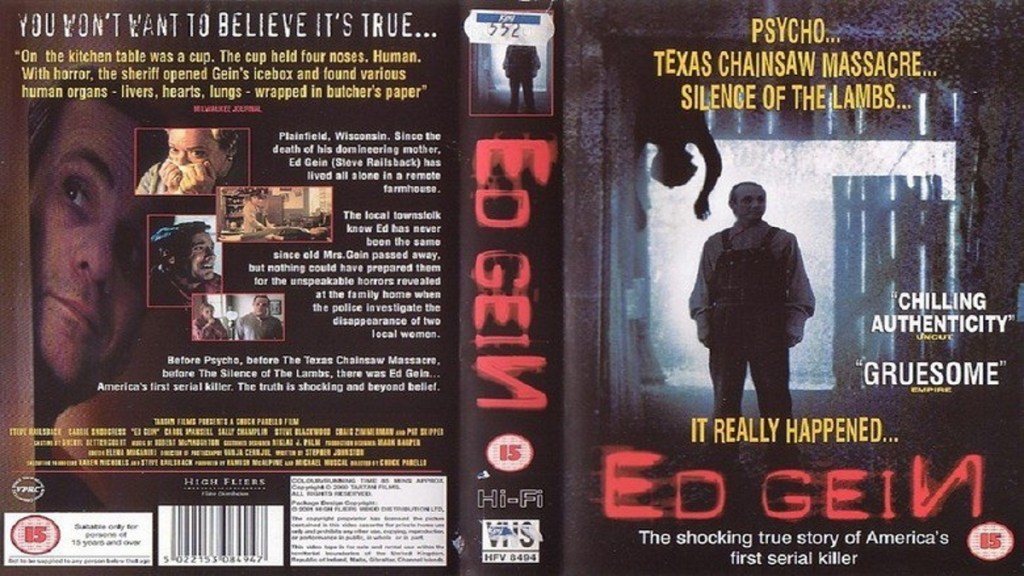
The Butcher of Plainfield: ED GEIN (Chuck Parello, 2000)

Ed Gein is an important figure in the study of American cannibalism, not because he ate a lot of people (we can’t be sure how many) but more for the inspiration his deviant activities furnished to some great books and movies, after his arrest and incarceration.

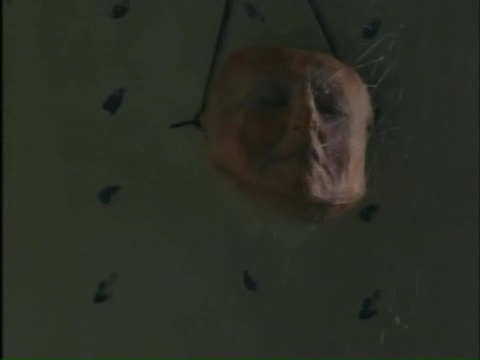
This film, called Ed Gein in the US and Australia and In the Light of the Moon in other markets, follows the life and crimes of the Wisconsin man who became known as “The Butcher of Plainfield”. Plainfield is a little town in Wisconsin, about forty miles from Chicago. Gein would haunt the cemetery at night to dig up corpses of recently deceased women, take them home and make all sorts of things out of their body parts. As well as chairs and lampshades covered in skin, bowls made of human skulls and belts made of nipples, ideas inspired by his fascination with Nazi atrocities, Gein would make women suits out of human skin (which inspired Jame Gumb – “Buffalo Bill” – in Silence of the Lambs) and then dress up as his Mama (which inspired the book and later hugely successful 1960 Hitchcock movie Psycho). His facemasks made out of human faces inspired the character Leatherface in The Texas Chain Saw Massacre. Truly a seminal figure in cannibal studies!

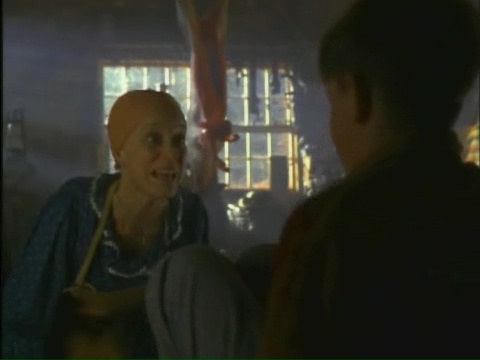
The plot is pretty much an accurate retelling of his hijinks, as far as anyone can tell without asking him (and he claimed he couldn’t remember anything about the murders, plus he’s dead now anyway). Ed (Steve Railsback, who had played Charles Manson several years earlier) grew up with a mother (played by Carrie Snodgress of Diary of a Mad Housewife fame) who was a vituperative fundamentalist and beat the fear of God into her children.

Ed worshipped her and thought she was a saint, and went batshit crazy when she died.

But in a tiny little town like Plainfield WI, everyone was a bit weird (the film starts with some genuine interviews of the locals, and they look even stranger than Ed). Local people thought him odd but harmless, and even employed him to babysit their kids. He seems to have had no interest in women, until the ghost of his mother appears to him in a burning bush (I kid you not, this is how much he is Biblewashed).

Meanwhile, Ed spends his nights digging up recently deceased women and souveniring their parts, particularly their lady-parts, which he has researched pretty solidly.

His house if full of his trophies: lamps made from human spines, and shrunken heads.

But what he really wants is for Mama to return from the dead. He practices on his excavated corpses to see if he can command them to “AWAKE – AND ARISE!” and one seems to turn her head, but by now we are deep in his psychosis. He visits his mother’s grave and begs her to return.

He reads books about head-hunters, Nazis, and even the pulp detective comics that he used to get into trouble for wanking to in his younger days.

There are flashbacks to those younger days, including the funeral of his brother (whom, the movie tells us, he killed, which may also be true). Ed hugs his Mama, telling her it’s just the two of them now, but she pushes him away, feeling his overenthusiastic erection. Ed is a sinner, and he needs his saint.

So anyway, Mama’s ghost tells him that the women of the town are all sinners, whores, and he must visit God’s judgement upon them, then she will be able to return to him. Pretty clear to us, the audience, that he is having psychotic delusions, but to him it’s all very real, so he heads off to shoot, kidnap and eventually fillet and cook two of the townswomen – the one that runs the bar in town and the one that runs the general store. He also collects mementos like noses and breasts, and he particularly likes vulvas.

The rest of the bodies are not wasted either.

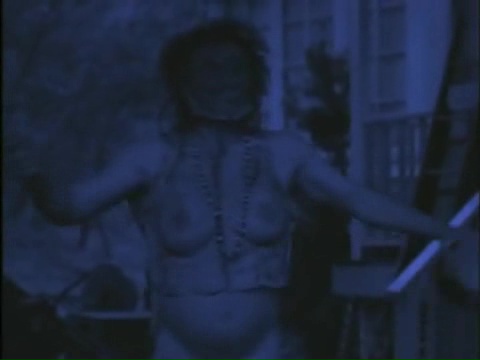
He has no neighbours within screaming distance, so he can get up to whatever he wants, including dancing in the moonlight in what Hannibal would call a “vest with tits”.

But bloodshed is not really his thing (even though he killed his brother, but that was for insulting their mom). The men of the town go off hunting deer as soon as the season starts, but Ed tells one of his prospective victims that he hates hunting.

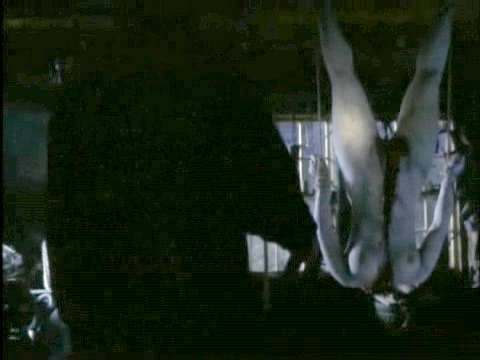
But Mama has other ideas, and it’s clear that Ed has learnt, as a good Wisconsin carnophallogocentric man, how to dress a carcass. The men of the town are spending their nights inculpably slitting open harmless ruminant mammals of the family Cervidae, but are shocked and nauseated when the carcass in Ed’s basement turns out to be of another species. The word “butcher” has dual meanings – the butchers of Plainfield are horrified by activities of the “Butcher of Plainfield”. Put a capital B on the word butcher and it moves from blameless to shocking. But it’s hard not to notice that, until his psychotic delusions of mother take over, poor Ed is doing what everyone else is doing, but he’s doing it to dead bodies rather than living white-tailed deer.

Once the cops finally accept that Ed is not a harmless eccentric, they find lots of interesting things in his house.

This was a huge story in 1957!

So that’s Ed, our modern, domestic cannibal – a man (usually) who seems a bit odd but, everyone thinks, is apparently harmless. Think of the big names of modern cannibalism – Albert Fish, a sweet old man who took ten-year-old Grace Budd off to a purported children’s party, but really took her home for his dinner. Jeffrey Dahmer, who took young men home for photography and sex but then drugged them, drilled holes in their heads and ate parts of them. Armin Meiwes, who advertised on the Internet for someone who wanted to be eaten, and ate the successful applicant. Issei Sagawa, who shot a fellow grad student at the Sorbonne because he wanted to have sex with her corpse and then eat bits of her. Each of them were described by their neighbours as either “normal” or a bit odd but harmless.

Chuck Parello and Steve Railsback won Best Film and Best Actor respectively at the 2000 Sitges Film Festival, one of the leading festivals featuring horror and fantasy films. But the film scored a wretched 10% on Rotten Tomatoes, with critics calling it “dry and dull.” I beg to differ. Ed is played as dull, because he appeared to be so, right up until he imagines Mama riling him up to declare war on loose women. His dullness and misapprehension of social and religious conventions that are usually unquestioned, is the whole point of the film, and the two main actors, Steve Railsback as Ed and Carrie Snodgrass as Mama, do a superb and convincing job. The slow, rural pace makes the sudden appearance of violence and body parts all the more shocking, and there’s plenty of both. The deaths when they happen are slow and wretched, as they would no doubt be in real life. There’s a surprising amount of suspense, the soundtrack admittedly is incredibly annoying, but other than that it’s a pretty great cannibal film, with lots of interesting philosophical questions to chew on.