The Moscow Times has reported that a self-confessed member of a Satanist sect, who was serving a twenty-year prison sentence for murder and the desecration of dead bodies, has been freed after completing six months of military service in Ukraine.
Nikolai Ogolobyak and other Satan worshippers, including one nicknamed “Hitler,” beheaded two of their four victims — then removed their hearts and tongues, fried and ate them.
In a second case in which they killed two other people, Ogolobyak made 666 stabs on his victim as an apparent reference to the ‘number of the beast’, a symbol of the devil.
Ogolobyak, 33, from the Yaroslavl region, was released earlier this month after he was severely injured in battle, his father said. His prison sentence had been set to end in 2030. His father told the press:
“He is not working. He is recovering. It is unlikely that he will be taken to the ‘special military operation’ again.”
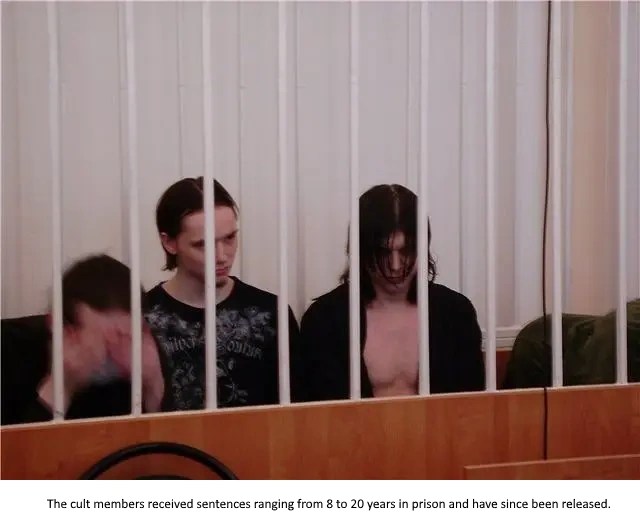
Ogolobyak and his underage accomplices were sentenced in 2010 for killing four teenagers and desecrating their bodies in 2008 initiation rituals. Another suspect, Anton Makovkin, was ruled insane and was placed in a mental institution. The ritualistic murders rocked the Yaroslavl region — where the then-teenage Ogolbyak was known as “Count.”
Other members included Alexei “Dead” Chistyakov; Anton “Doctor Goth” Makovkin; Sergey “Distris” Karpenko, and Alexander “Hitler” Voronov”.
For the first two years, the teen Satanist carried out bloody rituals by sacrificing stray dogs and cats. Initially, new members were inducted into the cult using the blood of slaughtered animals, which were tied to an upside-down cross.
But in the summer of 2008, the Satanists went out hunting for people to sacrifice — and wound up killing and dismembering four college students they had befriended: Olga Pukhova, Anna Gorokhova, Andrej Sorokin and Varya Kuzmina.
On June 28, 2008, after a night of drinking, Pukhova and Gorokhova were lured to a clearing, where the cult members started a bonfire and positioned themselves in a pentagram formation, according to documents filed in the case.
When one of them gave a sign, all the suspects fell upon the two young women and plunged daggers into their bodies. Makovkin then decapitated the girls with a sword, after which the mutilated corpses were dismembered and carved up, and several internal organs were fried and eaten, according to the court records.
The newest member of the group, Ksenia “Kara” Kovaleva, was bathed in the victims’ blood as part of her initiation ceremony. One of the suspects was known in the group as “the secretary from hell” who took notes in a book of made from the skin of the victims.
Russia’s Defence Ministry and the Wagner mercenary group have recruited heavily from Russian prisons to the notorious “Storm Z” unit of convicts, to bolster their manpower in Ukraine, promising convicts a pardon in exchange for military service. Several of these pardoned convicts have reportedly committed new crimes after returning from Ukraine.
According to leading prisoner’s rights activist Olga Romanova, around 80,000 convicts were recruited from Russian prisons, and 20-30,000 have already returned to civilian life. The Kremlin has reiterated that they will keep the pardoning practice active for the foreseeable future.
Dmitri Peskov, Putin’s spokesperson, defended these pardons, believing that “people convicted, including for serious crimes, atone for their crime with blood on the battlefield.”
This blog reported on another jailed cannibal, Yegor Komarov, who was purportedly released to fight in Ukraine in 2022. It now appears that the cannibal sent to fight in the Ukraine may actually have been Ogolobyak.
The Times reports that Russians are increasingly uneasy about the release of killers on the basis that they served in the army. Particularly, one must assume, cannibal Satanists.
Long Pigs is a 2007 “found footage” movie, in which two desperate filmmakers come across a cannibal, ask him if they can document his eating habits, and then are shocked when he starts killing people and eating them. It is presented as a documentary, with all the usual warnings about graphic scenes etc.
Bit silly, and found footage has rather been done to death, but it has some interesting ideas, particularly the sympathetic approach to the main character, even as he commits his crimes. Look, it seems to say, everyone needs a hobby and, to this cannibal, killing and eating people is no more ethically questionable than hunting or fishing. Stalk, catch, kill (as quickly and painlessly as possible) and then enjoy. He does his best to keep the movie interesting, with a patter of jokes, historical facts and philosophical observations as he slices and dices.
The cannibal is played by Anthony Alviano (Headcase, A Matter of Justice), and he presents the cannibal, also called Anthony, as a boy-next-door persona, one who kills and guts people. Like a farmer of animals, he starts the film explaining that it’s bad to frighten the victims, not for ethical reasons, but because the adrenaline ruins the taste of the meat. The filming starts as he drives around looking for a “certain kind of woman”, because he wants to make “long pig stew”. “Long pig” is a term supposedly used in the Pacific region before colonisation to designate human meat, although that definition is widely contested. Anyway, Anthony is looking for “marbled meat”, so he searches for a sex worker (traditionally victims who are not exhaustively looked for by police) who is, let’s say, of a heavy build.
“People who eat stew make perfect stew. It sounds obvious. Yeah, she looks like she eats well.”
As she smiles at the camera, he sneaks up behind with a sledgehammer and cracks her skull, resulting in the cameraman vomiting (which is actually rather more gross than the murder). They ask Anthony if gets a sexual thrill from killing women, but he dismisses this, in the same way a slaughterhouse worker might deny any pleasure in killing a different species of mammal.
“I’m not a freak or anything like that. This is all culinary, this is hard work!”
“Any hunter would recognise this position. We got the corpse hanging by the ankles. The first thing I’m gonna do here is make a little incision and tie off the anus. That’s to stop contamination from the feces. You would do that whether it was a deer carcass or a cow or a person… Absolutely necessary for health reasons.”
He cooks a stew from a portion of her thigh, then after dinner goes off to brawl in an ice-hockey game, an arena that seems the very essence of carnivorous virility.
Afterwards, he cooks ribs on a barbecue, assuring the viewers that there are “no animal by-products” used – just soymilk. And a woman’s ribs, of course, thus reinforcing the anthropocentric mythology of the human as not really animal, even though he has just butchered one in the same way as any other animal prepared for human consumption. He quotes the Arawak word barbaca, the grill on which human meat was supposedly cooked, according to explorers like Hans Staden and Jean de Léry, which became the Spanish word barbacoa, and eventually morphed into English as barbecue. Staden’s narratives were later illustrated by Theodor de Bry in his 1592 book Americae Tertia Pars, and the film sneaks in a quick peek at that glimpse of sixteenth century sensationalism.
There’s a lot of moral philosophy interwoven in the scenes of murder and gastronomy. Anthony the cannibal and his friend try to persuade the filmmakers to try some of the ribs, saying, it’s dead, and therefore cannot suffer, whereas we eat live vegetables, and “broccoli feels pain! Did you know that?” This is precisely the argument tossed at vegans by carnists, but in this case, it demonstrates the contention of the nutritionist Herbert M. Shelton:
The cannibal goes out and hunts, pursues and kills another man and proceeds to cook and eat him precisely as he would any other game. There is not a single argument nor a single fact that can be offered in favor of flesh eating that cannot be offered with equal strength, in favor of cannibalism.
Anthony works as a valet in a fancy restaurant, parking cars for rude people, and if you follow the lore of Hannibal Lecter, you will know that rude people are prime targets of cannibals. They park the car of a particularly rude man, take down his address from his licence and, next day, shoot him and load him in their car trunk. Unfortunately, they have a flat tyre and have to head to a pig farm for help, where they witness pigs being slaughtered and prepared for sale, in identical ways to Anthony’s own processes, but with rather better technology, and, oh yes, totally legally.
Most of the film is a spoof on cooking shows, which regularly have smiling chefs, or hopeful chefs, preparing lumps of animal flesh, hoping to win prizes. Anthony shows, in high-speed motion accompanied by the music of the Sugarplum Fairy, exactly how he prepares a body, stripping it and dismembering it until all that is left is two feet (still in socks) and the long femurs. He demonstrates how to get rid of the bones, cutting them up and putting them in a kiln at 2600 degrees – he even uses the line “these are some we prepared earlier.” This is a cooking show for cannibals.
Anthony is a typical modern cognate cannibal; as he says, people expect Hannibal Lecter, so “no one is going to suspect the valet”. This gives him the invisibility that we saw in cases like Jeffrey Dahmer. He loves his old mother who is in a nursing home, and is bewildered by a doctor’s request to do a post mortem analysis brain when she dies, a sophisticated update of cannibalism. He sadly tells the filmmakers that she has Alzheimer’s, but we eventually find that she died of Creutzfeldt-Jakob spongiform encephalopathy, a human version of mad-cow disease, probably from eating human meat that he fed her. He also admits to eating a five-year-old girl called Ashley, because people prefer meat from young animals, but was subsequently perturbed by the extensive police searches, and now avoids playgrounds and schools: “It’s like a supermarket, man.” As New Year celebrations explode outside, he comes to realise the filmmakers are going to release the movie, which will detail all his criminal history, and goes to get his sledgehammer. The rest, as Shakespeare says, is silence.
Anthony has a philosophy that rejects anthropocentrism and sees nothing wrong with cannibalism, or at least nothing that does not apply to any other meat. It’s a cannibalistic rejection of what Richard Ryder and later Peter Singer called “speciesism”.
“It’s only human beings that are so arrogant that they believe they are better than every other kind of animal out there. Worms don’t think about, you know, oh my god, why did mama worm get eaten by a fish; fish eats the worm and that’s that, it’s completely accepted by the worm, and the fish, and small fish gets eaten by the big fish, and if it was so wrong to eat it, then why would it taste so good?”
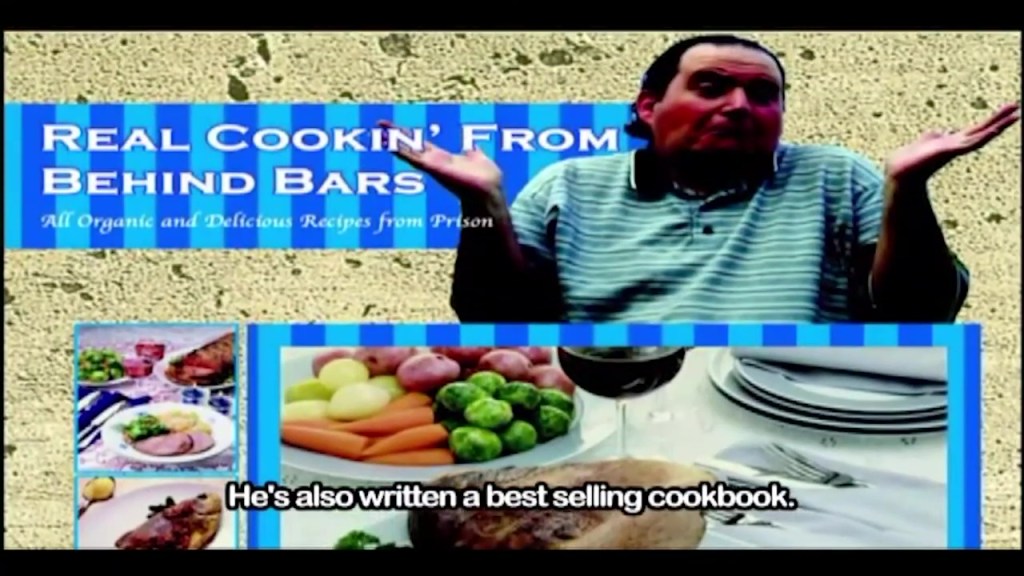
At the end, he is in jail, but he has published a cookbook. His cooking show has finally paid off.
This is a low-budget film, but is a lot better than might be expected. The creators were lucky enough to secure the services of Chris Bridges, the special effects artist whose credits include the Dawn of the Dead remake, Saw III & IV, 300 and Star Trek Discovery. Unless they actually killed and dismembered people, the result is spectacularly authentic. Anthony Alviano is brilliant in the role, which was written with him in mind.
The full movie (although slashed drastically from 81 minutes to 56 minutes) can, at the time of writing, be seen at https://youtube.com/watch?v=vnGXBRkxXuo.
In the year 2000, 44-year-old slaughterhouse worker Katherine Knight had a night of passion with her partner, John Price, then stabbed him 37 times, professionally skinned him, hung his hide on a meat hook over the lounge room door, decapitated him, butchered his corpse and cooked parts of him. She served up his meat with baked potato, carrot, pumpkin, beetroot, zucchini, cabbage, squash and gravy in neat settings at the dinner table, putting beside each plate place-names for Price’s children. Another meal was tossed into the backyard; it appears she intended to eat it but couldn’t do so. The police arrived before Price’s children so, as far as we know, none of him was consumed (by humans anyway).
Knight pleaded guilty to murder and the judge ordered that her papers be marked “never to be released.” An appeal was quickly denied, and she is still serving her life sentence at Silverwater Women’s Correctional Centre in Sydney.
Shoreline Entertainment planned to make a film of the incident based on Peter Lalor’s book Blood Stain, but so far it has not surfaced.
It appears that Knight was NOT a cannibal, despite one of the favourite media labels about her being “Kathy the Cannibal”. Other reports called her “The Woman Hannibal Lecter”, a comparison that makes no sense at all, since Hannibal did not use 37 strokes to kill people, definitely did eat parts of them, and did not (as Knight did) take a cocktail of sleeping tablets afterwards while lying in bed with the mutilated corpse.
Darren O’Sullivan, whose documentary is linked at the top of this blog, commented,
“this is possibly the most horrific thing I have ever discovered”.
Although the series is called “Real Twisted Tales”, I suspect O’Sullivan must have led a sheltered life. Knight was a slaughterhouse worker, recognised for her skills in knife work. She grew up in the NSW town of Aberdeen, where everyone in her family and most of the town were employed in the abattoir. Her job, from a young age, was to kill and cut up animals. She did to John Price what she was trained to do to other animals – slaughter them, cut them up, cook them. She did try to feed bits to his children, which is what farmers did in the UK (feeding cattle bone-meal to cattle), an act of cannibalism which led to Mad Cow Disease. But there is little evidence that she herself ate any of him.
The documentary above states that Katherine Knight is “one of the most evil people in the world”, because she was found sane enough to stand trial. But really, what she did was what she was paid to do every day, just to a different species than those who usually suffered and died under her hand.
Superstitious anthropocentric beliefs put humans on a tier somewhere between angels and animals, but really we are a species of Great Ape, closely related to the chimpanzee. Rationally speaking, there really is only a thin red line between killing and eating any species of animal.
The climax. The denouement. The final two episodes of this quite brilliant podcast that became a Broadway show that became a television series about an untrue true crime, and includes podcasts and Broadway shows. If you need to catch up on the earlier episodes, I would suggest watching them, but if you can’t wait, here are my earlier blogs.
In episode 1, Dolores has just been released from prison after 16 years – she took the fall for her boyfriend, who has since disappeared. She heads back to Washington Heights New York. but it’s all gentrified now, except for Empanada Loca, the shop of her old friend Luis, who offers her a room and sets her up as a masseuse, a skill she learnt in jail.
In episodes 2 and 3, Dolores kills the landlord who has been harassing Luis for his overdue rent, which he can’t afford because the neighbourhood is now fancy, and people don’t buy empanadas much. Luis creates a new empanada, MUY LOCO. It is hugely successful, because it contains, yep, human flesh, in this case, the landlord, Mr Pearlman, whose son, Jonah, appears in the shop at the end of episode 3, with two cops behind him.
In episode 4, Dolores is shocked to find what Luis has done with the body of the landlord she murdered, and disgusted by the secret contents of the muy loco empanadas—Mr Pearlman. She is particularly horrified when Luis offers Jonah an empanada to try, a muy loco, which she knows is a “mouthful of daddy”. Meanwhile, the local drug dealer, Marcie, has pissed off Dolores, and now she is also in Luis’ fridge, and bits of her are now in the empanadas.
In episode 5, Dolores hires a private eye called Ruthie, played by Cyndi Lauper, to trace her ex, who cheated on her and let her take the fall in a drug bust. Ruthie’s motto (or perhaps mission statement) is I NEVER DON’T FIND THEM. But the last thing Dolores wants is for Ruthie to find Mr Pearlman.
In episode 6, we see cannibalism as a business. Luis has been clear-eyed about this all along – he gets rid of the annoying landlord, he thoroughly destroys the evidence (in customers’ stomachs) and he makes money from the meat, which is apparently delicious and hugely popular, while saving money by not buying the flesh of other animals from the food-services man, Jeremiah, the only sympathetic character in the story so far.
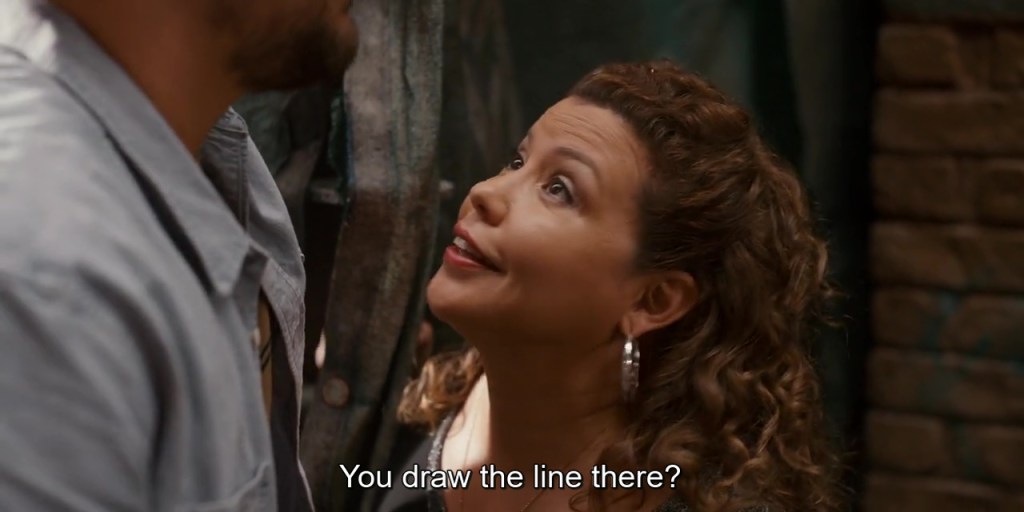
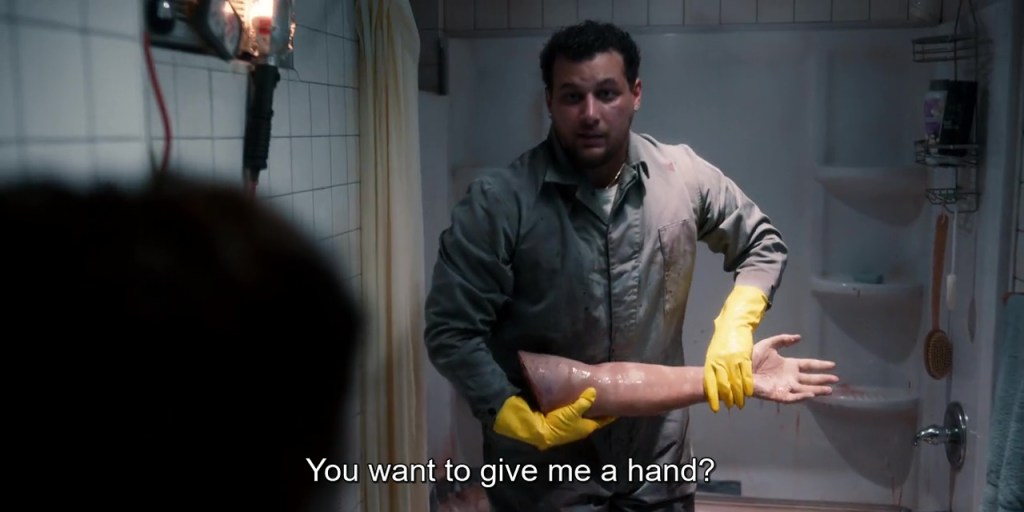
Not a lot of human flesh being eaten in these final two episodes, because everything is turning to shit, largely due to the impulsive plans of Luis, and the tendency of Dolores to snap the neck of anyone who annoys her. Police are looking for the drug dealer Dolores killed back in episode 4, and threatening to call in the DEA. Luis is still chopping up the bodies of Dolores’ victims to fill his empanadas, but he doesn’t want anyone to find the marijuana he is growing. THAT would be incriminating. Dolores points out that his fridge and apartment are full of chopped up bodies, and asks him the question that defines all ethical discussions.
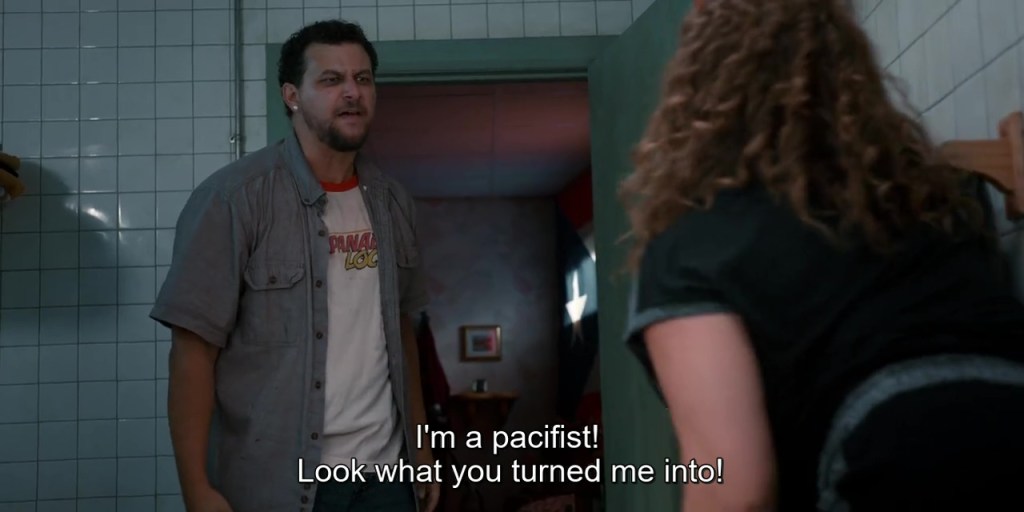
She’s much more upset about the cannibalism than the increasing number of corpses she is leaving all over the shop. Odd that. Luis sees meat as his business, and Dolores’ steady body count as his (very reasonably priced) supplier. He’s not too fussed about all the killing, as long as he doesn’t have to do it – like customers in a butcher shop. When he finally kills a man, he is upset: “Look what you made me do!”
Luis cracks some of the best jokes in this show, in the middle of the street (much to Dolores’ fury) about the “fat fuck” she killed last episode, and how he is going to use the body fat in his pastry.
And some of the worst.
Lots of interesting Freudian things going on here – in earlier episodes, they discussed the difference between edible and Oedipal, and then there’s the whole thing with Luis only wanting to give Dolores cunnilingus, not penetrative sex, even though she has her period. She considers that eating her menstrual blood makes him a cannibal, even though he has been snacking on human empanadas all through the show, so it shouldn’t really be a surprise.
And his pet name is Mami. It’s apparently the Spanish equivalent of “baby” or “darling”, but is also used for, yep, mother. Freud said the two primary taboos are incest and cannibalism, and Luis definitely has an edible complex.
We find out why Luis doesn’t want sex – he fell in love with his father’s girlfriend when he was 12, had sex with her (so now we have another taboo covered) and then tried to castrate himself in punishment. He couldn’t cut through his penis (Meiwes and Brandes found it was much harder than you might think) and poured hot oil on the wound, leaving him horribly disfigured. Yes, Dr Freud, the threat of castration can be as big a motivation for mental illness as you thought.
Dolores just thinks she is a monster. But one of the fascinating things about cannibalism is that unlike other horror movie tropes, they are not supernatural or even particularly superhuman. And they really exist.
“I’m a monster. Worse, I’m real.”
Luis ends up “deep fried, like everybody else” in one of the most dramatic scenes, and Dolores escapes:
She goes looking for the showrunner of the play, a nice piece of postmodern complication as he clearly represents the creator of the show we are watching, Aaron Mark.
He is accused of humanising a serial killer, but hey, Dolores is very human, just like Macbeth and Oedipus and every tragic protagonist in literature. She’s not even a cannibal; in the whole eight episodes, we have not even seen her eat a human empanada! She’s just a misunderstood serial killer.
As she says, you have to draw a line somewhere.
She forces the showrunner to take her to a house where, he says, someone knows the whereabouts of the man who betrayed her and left her to rot in jail. When the door opens, she roars with laughter, and then pounces, but at whom? All we know is that, like Georgina in The Cook, The Thief, she is directing her invective at us, the audience! We may not know where her ex is living. But we do know that cannibalism starts at home.
Simone (a bravura performance by 17-year-old Désirée Nosbusch) is a teenage fan obsessed with a pop singer known only as “R.” That obsession takes over her life – she drops out of school, waits outside the post office for a week for a reply to her letter, which will never come because his fan mail goes straight to the tip. She climbs to the top of the church steeple in her town of Ulm (it’s actually the tallest steeple in the world) and thinks about jumping off, splattering herself all over the town square, but with a letter to R in her pocket, so he will hear of her at last.
Nosbusch as Simone offers a fascinating glimpse of the modern cannibal – she looks and acts normal (for an angst-ridden teen) but underneath are irresistible currents of passion and voracious appetite for her idol. She attacks the postal worker who disappoints her by not having a letter for her, she attacks her father for turning off the TV show on which R is performing. The walls of her room are covered in pictures of R. The film shows parallel imagery to her obsessive love; images of Nazi salutes – the same obsessive love that led Germany and the world into catastrophe a few decades previously.
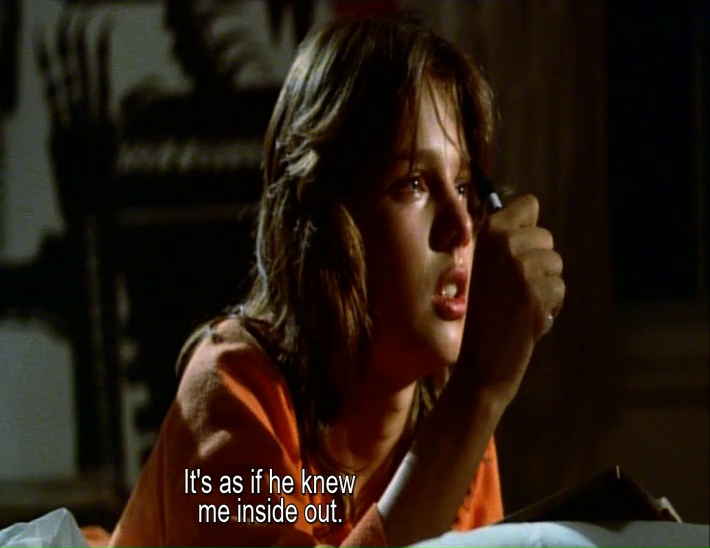
The word “fan” comes from “fanatic”. The fanatic believes he or she has found the answer, the one who knows us, cares for us. She feels that R, who has never heard of her, knows her inside out. And she will know him, inside out.
She drops out of school and hitchhikes to Munich, where R’s shows are recorded, being accosted on her way by a range of toxic men, but of course the worst of them is the one she is so desperate to meet. She sleeps in unlocked cars while she waits outside the studio, so frantic that, when she finally meets him, she faints.
R seems concerned and kind, invites her to his show, where he appears as a mannequin surrounded by store mannequins – a bald wig symbolically obscuring the divide between human and inhuman, life and death.
He takes Simone back to the apartment of a friend who has gone to the US for a year, where she finally achieves the intimacy she has craved. Nobody knows they are there, so anything can (and does) happen.
But R is a superstar – he is not interested in the meeting of the souls that she imagines will happen, and afterwards tells her he has to go back to his work, tries to fob her off with vague promises of future meetings. He tells her to leave the keys on her way out.
Simone wants to own him and his love, but he just wanted her young body. As he leaves, she picks up a figurine of the goddess Diana, the Huntress, and she then hunts him, killing him with a blow to the head.
Once he is dead, he is hers at last, to do with as she wishes. The imagery switches to that of a Christ, broken and crucified, and she cradles him in her lap like an erotic Pietà.
She sees a freezer, and she sees an electric knife.
R’s blood is, as the Bible says, his life, and she laps it up from the floor and from her knife.
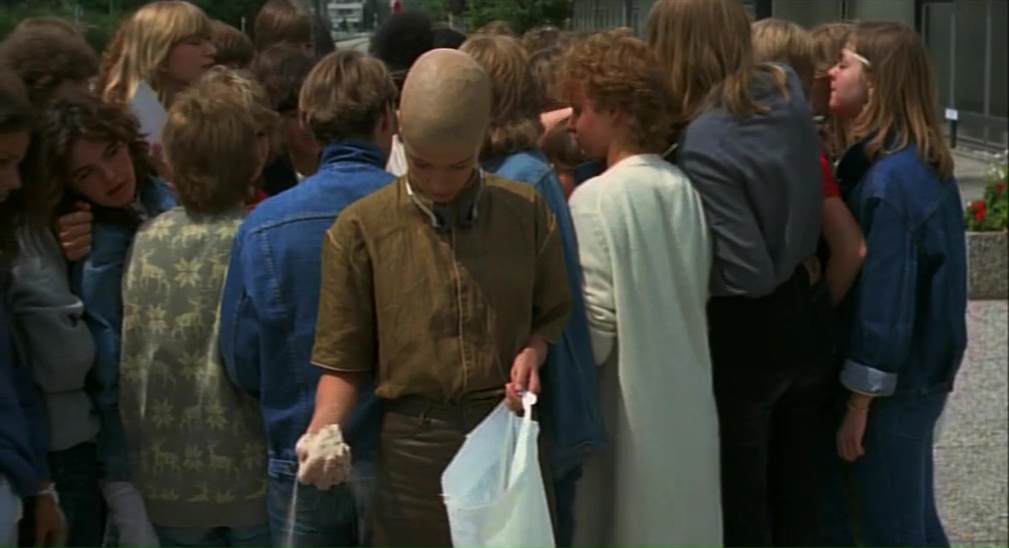
When R is neatly packed in the freezer, Simone faints, but next day we see pots boiling on the stove, his foot being basted with his juices.
She eats him over a few weeks, then grinds his bones to dust and takes the dust back to the TV studio; pouring it out at the place she met him.
Her revenge involves ceremonial murder and cannibalism, to ensure he will always stay with her, and inside her. Leaving for home, her head shaved so she looks like one of the mannequins from his performance, she promises her parents to return to school.
She sits with them and watches the news – R’s disappearance weeks ago remains a mystery. But she knows where he is.
“I missed my period. I’m four weeks late. I will bring you into the world. We will be happy. I know you love me. And me too: I love you.”
He is inside her, and so is his seed. Like Christian mythology, R will be reborn, but this time totally dependent on her, loving only her.
The film did not garner a lot of interest or decent reviews, but has picked up a bit of a cult following in the years since. It is an excellent study of the monstrous-feminine, a figure often found in cannibal narratives, particularly around revenge and love. Mariana Enriquez’s recent collection of stories called The Dangers of Smoking in Bed has a similar story called “Meat”, in which two similarly obsessed fans dig up a dead pop idol and eat his rotting corpse. Well worth a read if, perhaps, not during mealtime.
Fuelled by a minimalist synth soundtrack from Rheingold and stunning photography, Der Fan is an engrossing and fascinating study of love, not in its sentimental, romantic form, but as possession, greed, rage and cannibalism. Much of lovemaking is expressed orally, through kissing, fellatio, cunnilingus, and licking or sucking and sometimes chewing of various body parts. Simone has taken this to its logical extreme. R is inside her, and so is an embryonic version of him, which she promises to love as she had hoped to love its father. It’s resurrection through transubstantiation.
A Texas teen has been arrested on murder charges, accused of slaughtering his parents and two siblings — including a 5-year-old brother — because he believed they were all “cannibals” planning to eat him.
Cesar Olalde, 18, was arrested after a standoff with police on Tuesday May 23 in suburban Texarkana and charged with capital murder — punishable by the death penalty or life in prison without parole.
Police in the town of Nash — population about 3,800 — went to Olalde’s home after getting a report that a man had harmed his family and was threatening to kill himself.
When they arrived, they found the teen holed up, while family members were inside.
An affidavit by Nash Police Officer Craig Buster, said that the teen, barricaded inside, had called police, saying “he had pulled the trigger, and shot his family.”
After persuading Olalde to end his standoff and surrender, police went inside the home and found the bodies of his parents, Reuben Olalde and Aida Garcia, older sister, Lisbet Olalde, and 5-year-old brother, Oliver Olalde — all in a bathroom.
“It appeared as if the victims had been shot at various places in the residence and [had been dragged] to the bathroom,” according to the affidavit. Multiple spent cartridge casings were found throughout the home, and “blood spatter on multiple surfaces.”
The affidavit said Joseph Flieder, a colleague of Lisbet Olalde, had gone to the house because she’d missed work that day. He knocked on the door but got no response.
Flieder, together with a family member who had also arrived to check on the family, forced his way inside, where he was confronted by Cesar Olalde. The teen allegedly pointed a gun at the man several times and brandished a knife.
Flieder told responding police officers that Cesar Olalde said,
“he had killed his family because they were cannibals, and they were going to eat him”
Olalde was jailed on a $10 million bond.
Neighbour Robert Ward described the victims as a “beautiful family” made up of “extremely nice” and “hardworking people.” He said the daughter had recently graduated from college and planned to become a teacher, and that Cesar was “such a good kid. He was going to get into an apprentice program to be a plumber.”
There is no actual cannibalism involved in this story (unless Cesar Olalde was right about his family, as suggested by several people online).
But what is interesting is the fear of cannibalism that must have been strong enough to drive him to this desperate act, killing those closest to him. There are clearly major mental problems involved, but that’s not a sufficient explanation. Why see them as cannibals – why not aliens or pirates or something else?
The terror of cannibalism relates directly to our experience as babies, when we are altricial – totally dependent on caregivers, for far longer than any other animal of similar size. We gestate as cannibals, eating from the placenta – our mother’s body. We are born and fed from a breast (usually human or bovine), which is more eating of the body. As we grow, we experience rage when our needs are not immediately recognised and satisfied, and this rage may be homicidal in nature (Freud called the first six months of a child’s life the “cannibalistic stage”). We want to eat our mother, and are terrified that, being so much larger and more powerful, she may feel like eating us first. We fear, in other words, reabsorption into the maternal body from which we emerged.
The only difference between eating human meat and that of other animals is that we fear consumption by other humans, whereas the animals we eat – cows, pigs, sheep, chickens, fish, etc, are generally herbivorous or gentle, peaceful animals. We don’t recognise this fear at a conscious level, but under stress or psychic collapse, we find ourselves back inside our mental image of Freud’s primal “cannibalistic phase”.
Dreams (夢, Yume) is a 1990 magical realist anthology of eight stories, written and directed by Akira Kurosawa, inspired by his recurring dreams. An international co-production of Japan and the United States, Dreams was made with assistance from George Lucas and Steven Spielberg.
Akira Kurosawa (Japanese: 黒澤 明, March 23, 1910 – September 6, 1998) was a Japanese filmmaker and painter who directed thirty films in a career over fifty years. Kurosawa directed around one film per year throughout the 1950s and early 1960s, including a number of classics which were often adapted by other directors. These included Rashomon (1950), Ikiru (1952), Seven Samurai (1954) – which was remade in 1960 by John Sturges as The Magnificent Seven, Throne of Blood (1957), Yojimbo (1961) and High and Low (1963). He is widely considered one of the most important and influential filmmakers in the history of cinema.
Kurosawa’s bold, dynamic style was strongly influenced by Western cinema, yet distinct. In 1990, the year Dreams was released, he accepted the Academy Award for Lifetime Achievement.
Dreams is his most personal work, taken from his own life and unconscious mind. He addresses themes such as childhood, spirituality, art, death, and the mistakes and transgressions made by humans against nature. The episodes within Dreams do not have a single narrative, but are the fragmentary adventures of a “surrogate Kurosawa” (often recognizable by the character wearing Kurosawa’s trademark hat) through eight different segments, or “dreams”, each one with a title. Each is more a fairy tale than a dream in the filmic sense.
A child sees a forbidden fox wedding ceremony and is told he must suicide, another weeps as he witnesses the spirits of a peach orchard that has been cut down by his family, reflecting the human war on nature.
The fear of nature fighting back is a bleak dream of men struggling through a mountain blizzard. The horror of war is demonstrated as a Japanese officer is confronted by the ghosts of his annihilated platoon.
Our understanding of nature is questioned in “Crows”, the only dream not made in Japanese, where Vincent van Gogh is portrayed by American filmmaker Martin Scorsese, with a broad New York accent, and the protagonist travels through the images that fill van Gogh’s tortured imagination.
Our abuse of nature comes to its logical conclusion as we see nuclear power points explode behind Mount Fuji, human ingenuity able to create but not control these forces; in the end, all they can do is colour the toxic pollution so people know what is killing them.
“The Weeping Demon” is the seventh dream, and of particular interest in Cannibal Studies. It shows the aftermath of nuclear devastation, a fear that has haunted us all for eighty years, particularly the Japanese, who were the first and only people to experience nuclear weapon attacks.
A man is wandering around a misty, bleak mountainous terrain. He meets an oni(demon or ogre), who is a mutated human with a single horn on his head. Oni are known for indulging in murder and cannibalism when they get the chance. They are typically portrayed as hulking figures with one or more horns growing out of their heads, massive teeth, and occasionally a third eye in the centre of the forehead.
The demon tells him that there was a nuclear conflagration, which resulted in the destruction of nature and animals, the growth of dandelions taller than humans, and horns sprouting on the heads of those humans left. The horns cause them to feel excruciating pain each evening; but they cannot die, so they howl in agony all night. Many of these demons were formerly millionaires and government officials, who are now suffering through a hell befitting their sins.
Even in this apocalyptic post-war world, the social hierarchies continue to oppress – the demons with two or three horns eat those with only one.
“There’s no food! We feed on ourselves. The weak ones go first. It’s about my turn now. Even here we have grades. One-horn demons like myself always get eaten by those who have two or three horns. Before they were powerful and pretentious. And now they still throw their weight around as demons.”
The demon that the man meets is waiting to be eaten, seeing this as an escape from his agony and nagging hunger, but also as a punishment – before the wars, he was a farmer who poured milk into the river and buried vegetables to maintain market prices. He warns the man to flee, but when the man asks where he should go, the demon just asks if he too wants to become a demon. The terrified man runs away with the demon in pursuit.
The film finishes with a meditation on death, the final and irrevocable return to nature. Laying down our technology, our appetites and our bodies is celebrated – peace at last.
Condemned as disjointed by some critics, the film has a logic to it, a dream logic, in which things are out of place yet seem quite natural. It starts with a little boy witnessing the wedding procession of the foxes, a slow funereal procession that is forbidden for human viewing, and finishes in a village that has spurned technology and progress in favour of clean air and water and long, peaceful lives, where we witness a funeral procession that is pure colourful celebration.
Dreams is a sumptuous, thoughtful, dramatic, film from which I found it hard to look away. Although it is one of Kurosawa’s last films, it shows him at the height of his power and creativity, and offers a glimpse into his mind, just as he glimpses the mind of van Gogh.
Dreams is now a classic, as are all Kurosawa’s works, but it currently has only 66% fresh rating on Rotten Tomatoes, proving that a lot of people can’t be bothered listening to (or even watching) other people’s dreams. The New York Times critic called it:
“…a collection of short, sometimes fragmentary films that are less like dreams than fairy tales of past, present and future”
But dreams, like the evening news, are always fragmentary – narratives jump from tragedy to kitsch to humour. Dreams often reflect and amplify our repressed emotions and fears, and fairy tales are mythic versions of dreams. Many, perhaps most, fairy tales include cannibalistic giants, wicked step-parents, witches and ogres, such as Little Red Riding Hood, Hansel and Gretel or The Juniper Tree. Children wander, lost and hungry, through brooding forests and come across strange and fantastic creatures. Dreams reveal our repressed fears about the human attacks on nature and each other, the struggles and conflicts that lead to monsters or demons.
In dreams, we lose our rational sense of causality – anything can happen. We get lost, like in fairy tales, in forests or snowstorms or in the mind of Vincent van Gogh, seeing the world the way he had to, consuming it and reimagining it before he could paint it. We meet ghosts of people who don’t know they are dead. Nuclear power plants explode, a fear on everyone’s mind in 1990, four years after The Chernobyl disaster. In dreams, ethics become aesthetics, to quote from Hannibal. Dreams, like fairy tales, are episodic and disjointed, and the film captures this brilliantly.
Although fairy tales date back centuries, they remain ever popular, with new versions or completely new stories released to reflect the fears of each historical period. In our modern period, the growing and changing presence of media makes us all aware of the bloodshed on the battlefields and in the death camps and slaughterhouses of modern industrial societies, images that we desperately try to forget or repress. It is no wonder that dreams are full of cannibals.
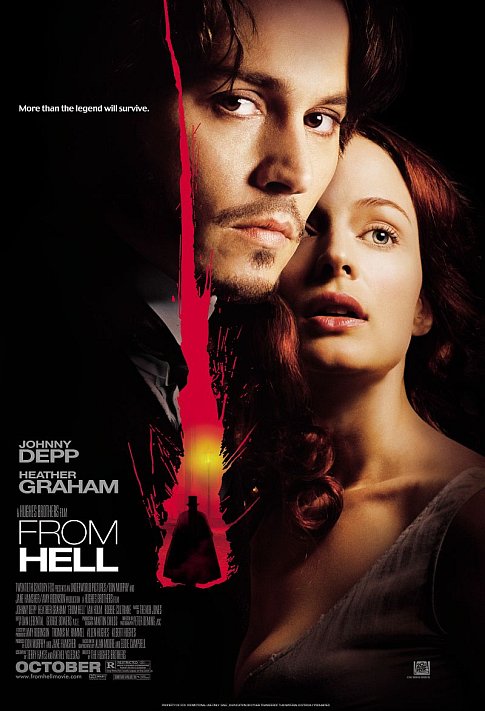
Even those who are not True Crime aficionados know of Jack the Ripper, a mysterious serial killer who slaughtered women in the Whitechapel district of London in 1888, took body parts for trophies, and on one occasion wrote to the authorities boasting of having eaten a victim’s kidney. Well, half a kidney – the other half was enclosed in the letter, and was positively identified as human tissue. The letter was entitled “FROM HELL”.
In my thesis, I date modern, domestic cannibalism from 1888, when Jack the Ripper murdered five or more women in the summer and autumn of that year.
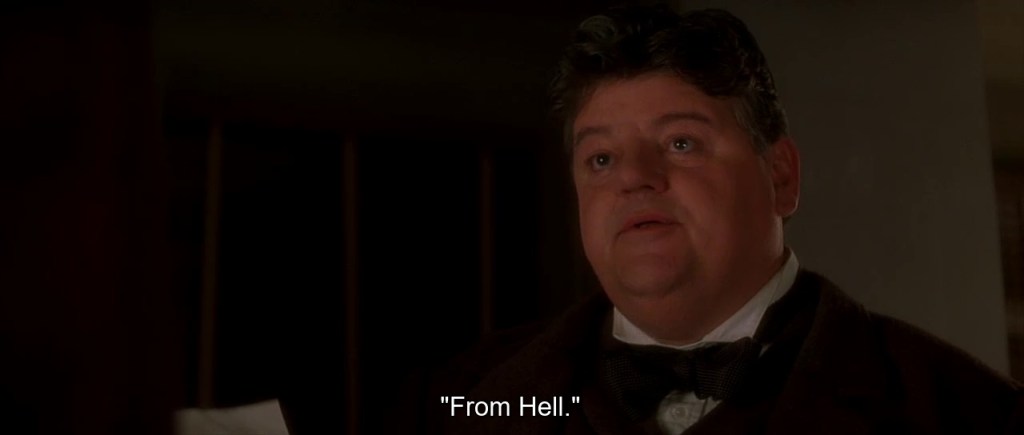
The From Hell letter was sent to the Chairman of the Whitechapel Vigilance Committee in October with a box containing half a kidney. The letter stated that the writer had taken the kidney from a woman, and half of it was enclosed as proof. “tother piece I fried and ate it very nise” (sic).
This letter, and the half-kidney, are featured in this week’s movie.
A huge literature has developed on the history and likely identity of Jack, but none of it is conclusive; the crime writer Patricia Cornwell argued that the Ripper was the famous artist Walter Sickert. Others have written credible accounts of other suspects, including Prince Edward Albert Victor, second in line to the British throne. The enduring mythology of Jack the Ripper, though, depends on the fact that he remains unknown, a figure hidden by his presumed uniformity with those of his milieu. Jack was the domestic cannibal – murderous, voracious, and indistinguishable from any other citizen, just another face in the street, as demonstrated by the fact that he was never apprehended, or even conclusively identified.
Jack rapidly became an international phenomenon. A Chicago doctor wrote in the Medical Standard that,
… the Whitechapel murderer is a cannibal pure and simple. The Whitechapel murders are clearly the work of a lunatic of the so-called “sexual pervert” type, fortunately rare in Anglo-Saxon lands but not infrequently met with in Russia, Germany, Bohemia and France. In these lunatics there is a return to the animal passions of the lowest cannibalistic savage races. Cannibalism is shown in a thirst for blood, and these animal passions come to the surface when the checks imposed by centuries of civilization are removed either by disease or by the defects inherited from degenerate parents.
So critical to the creation of the domestic monster was The Ripper that almost a century and a half later, books and films are still investigating and theorising on his acts and identity.
Jack went “viral” long before the internet was around to invent the term. Jack conventions are held around the world offering attendees the opportunity to view and buy merch and listen to “experts” tell them who Jack (maybe) was. Many books have offered definitive proof of Jack’s secret identity, only to have other experts contradict them. One writer actually bought at auction a shawl belonging to one of the victims, Catherine Eddowes, and had it forensically examined, finding, through links to the DNA of descendants, that it contained her blood, and the semen of a long-suspected Polish immigrant named Aaron Kosminski. Seems conclusive, doesn’t it, but other Jack-fans were sceptical; DNA can be contaminated. Richard Cobb, who organizes Jack the Ripper conventions, told the Guardian that the shawl had been “openly handled by loads of people and been touched, breathed on, spat upon.”
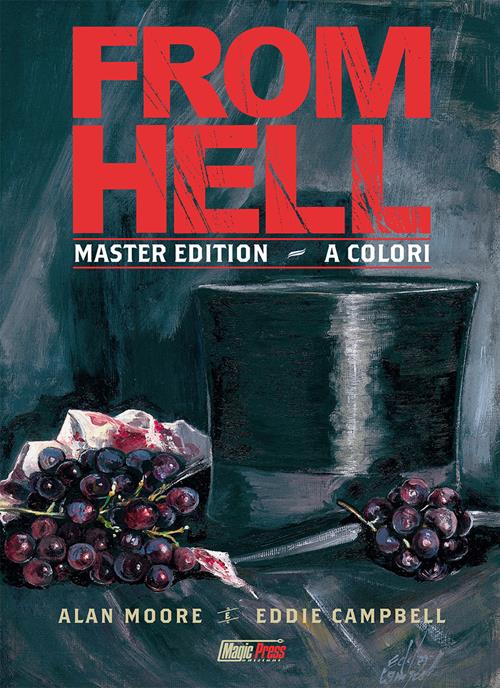
This film, From Hell, has a somewhat more circuitous lineage, being based on a graphic novel (formerly called comic book series) by Alan Moore and Eddie Campbell which was published from 1989-1998 and then collected into book form. That novel is based on a 1976 non-fiction book by Stephen Knight with the rather unfortunate title of Jack the Ripper: The Final Solution.Knight’s theory proposes a conspiracy by the Freemasons, in which high-ranking Freemason Sir William Gull, royal surgeon to Queen Victoria, is told to cover up the marriage of a shopgirl, Annie Crook to Prince Albert Victor, the heir to the throne, which had resulted in a baby who would be in line for the crown, particularly as the Prince was dying of syphilis. The murders themselves were not the crimes of passion common in impoverished London, particularly from the pimps that the women feared most, but involved the careful dissection of the bodies and removal of organs and often vulvas. The basis of many theories was that these were clearly the work of an educated man with medical or at least anatomical training.
“Martha Tabram was raped, tortured and killed. This is methodical. The butchery is irrational, yet meticulous and deliberate. Altogether a different breed of killer.”
The film had mixed reviews, getting a 57% “fresh” rating on Rotten Tomatoes, but I found it an easy to watch, interesting tale told with some gusto, by a stellar cast: Sir William Gull, physician to His Maj and presumed serial killer, is played by the late lamented Ian Holm, who was playing a sweet, doddery, 111 year old Bilbo Baggins in The Lord of the Rings: The Fellowship of the Ring the same year he played Jack.
Johnny Depp plays Inspector Abberline, the cop searching for Jack, with his usual brooding sensual close-ups, while Heather Graham (Boogie Nights) is quite luminous as the sex worker Mary Kelly, who becomes his love interest as well as a target of Jack. Then there’s a delightful performance by Robbie Coltrane (Hagrid from the Harry Potter films) as Abberline’s sergeant, who quotes Shakespeare as he tries to revive Abberline from his opium den dreams, where he imbibes absinthe laced with laudanum and “sees” the murders as they happen.
Ian McNeice (Bert Large from Doc Martin) pops up as the coroner, and there are a host of other familiar faces. If you like a boisterous story and some great performances, you might enjoy this. But if you are serious Jack groupie, you will wince at the anachronism that puts the receipt of the kidney some time before the murder of Catherine Eddowes, from whom that kidney is likely to have been taken.
Like any fictional recreation of history, there is inevitably exaggeration and speculation. The film depicts an all-powerful Freemason movement infiltrating the police and medical establishment and threatening or killing anyone in their way. There is an evocative depiction of the life of late nineteenth century sex workers (called “whores” by the police, and often themselves, and “unfortunates” in official language). There is also some cursory mention of the classism and racism that English society exhibited in the age of Empire (and still does), seeking to blame the American natives in “Buffalo Bill’s Wild West Show” (perhaps a wink to the serial killer in The Silence of the Lambs?), foreigners, Orientals, Jews, Socialists – anyone other than the rich and powerful. Several scenes feature the hatred of Jews that saw the police and the populace open to antisemitic provocation when looking for a scapegoat. The chasm between the respectable killer and the honest but disreputable poor is made by means of an (otherwise gratuitous) appearance by the Elephant Man, Joseph Merrick who, like Jack, was a famous denizen of Whitechapel. He stands surrounded by respectable white men, wondering at his ugliness, but having no inkling of his humanity.
Foreigners, the disfigured, the “unfortunates” and Jews were outsiders in English society, and outsiders are denied the protection that other citizens expect, and so are easily accused, attacked, killed and sometimes even eaten. The “unfortunate” mother of the royal baby is kidnapped and given a frontal lobotomy, a new scientific technique which was instantly turned to the advantage of the elite.
In Victorian England, the poor were blamed for any and all of society’s ills, with the idea of suspecting a rich, educated man excluded from consideration. Of course, the Indigenous people in Queen Victoria’s empire were similarly objectified, enslaved or slaughtered, also using the benefits of modern technology such as the gunboat and machine-gun.
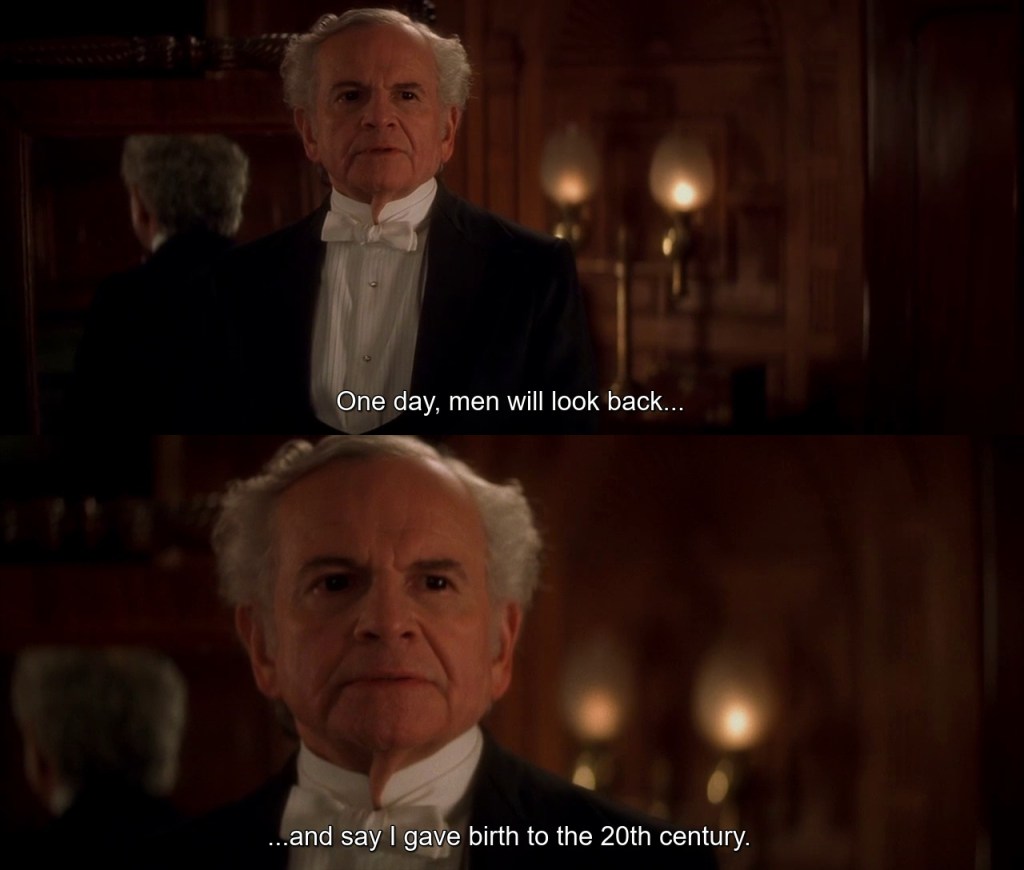
The movie opens with a quote, Jack, saying “One day men will look back and say I gave birth to the twentieth century.”
I can see no other reference to such a quote in any source other than this movie, but it has a certain ring to it, it makes sense of this modern drama between the rich, who only ever want more, and the poor, who scrabble just to stay alive. At a time when the environment has been appropriated and cannibalised by the ruling class, has Jack’s comment in 1888 proved prophetic?
Jack the Ripper was less “a return to the animal passions of the lowest cannibalistic savage races” and more a manifestation of the voracious appetite and greed of modern capitalist industrial society, where the value of everything, including the life of humans and other animals, is counted only in monetary terms, and the marginalised and objectified are cast out and consumed.
A Brazilian murder suspect and Dutch resident who police believe may have participated in “cannibal practices” was arrested at an airport in Portugal with a suitcase containing “suspicious meat” and bloodstained clothing.
Begoleã Mendes Fernandes, 26, was taken into custody at Lisbon Airport on Monday February 27, 2023, after getting off a flight from Amsterdam, where he was suspected of killing 21-year-old Alan Lopes a day earlier. Both the victim and suspect are of Brazilian descent. Fernandes was at first arrested on suspicion of travelling on falsified documents.
Portuguese media reported that pieces of meat were found inside a plastic bag packed into Fernandes’ luggage, and that the meat could be human flesh. The meat is still to be analysed in a laboratory, to determine its origin. The Portuguese Immigration and Border Services (Servico De Estrangereiros E Fronteiras or SEF) issued a statement:
“After contacting the authorities in the Netherlands, the country where he resided, it was confirmed that he was wanted on suspicion of committing a crime of murder that occurred on February 26, in Amsterdam, which led the judicial authorities of that country to issue, yesterday afternoon, a European Arrest Warrant for extradition purposes. By indication of the Dutch authorities and the Lisbon DIAP, in addition to the documents that the suspect had in his possession, a bandage and clothes with traces of blood, a plastic package containing several pieces of meat and a mobile phone were seized, with the foreign citizen taken to the PJ’s Scientific Police Laboratory.”
Fernandes drew border officers’ attention because he had a bandage on his right hand and bloodstains on his clothing. He was scheduled to board a flight to Belo Horizonte in Brazil.
The police found the body of Lopes in his home on Vegastraat in Amsterdam at around 9:20 p.m. that Sunday after calls from his concerned friends. “It was clear that he died in a violent crime,” the police said in an initial statement. Specialists were deployed to the scene to do a forensic investigation.
The Portuguese daily newspaper Jornal de Notícias noted that
“The suspect claimed that he killed the victim because the latter forced him into cannibalistic practices.”
Lopes’ friends told Dutch daily paper Parool that they called the police after Fernandes messaged them to say that he had killed the young man. Several of Lopes’ friends received the voice notes at around 7:30 p.m. on Sunday. Marco Cunha (23) told Parool:
“He said that he tried to defend himself against Alan because he had pretended to be a cannibal. Other friends received the same vague message.”
The 26-year-old Fernandes, who described himself on Facebook as “2% genius, 98% crazy” made his initial court appearance in Lisbon and was placed in custody pending his extradition to the Netherlands.
Lopes was found dead Sunday night at a house in Amsterdam that he shared with his mother and sister, who were away at the time. According to Lopes’ friends, the young man was trying to help Fernandes, who worked as a delivery boy and had descended into drug-taking in recent months.
“He went crazy in a short time. He was on drugs, and it drove him crazy. His brain just stopped working.”
“Alan tried to help him. He had a big heart, even for the one who killed him,” Lopes’ mother, Antonia Lima (45), said to Parool. Her partner, Freek Posthumus (60), said that the young man was building a life in the Netherlands. “He was busy with his driver’s license and worked hard. I am convinced he had a bright future ahead of him.”
Kamila Lopes, the victim’s sister, told the news site Notícias ao Minuto that Fernandes was homeless and would stay with the family whenever he had nowhere to reside.
However, in an interview with the Portuguese television channel SIC, Fernandes’ mother, Carla Pimentel, suggested that her son may have killed Lopes in self-defence, according to the Portuguese-language news outlet RFI.
According to Pimentel, Fernandes was having dinner with the victim when Lopes offered him human flesh, and also showed him videos about cannibalism. The 21-year-old then allegedly tried to kill Fernandes.
The mom claimed that the meat found in her son’s possession in Lisbon was the same that was offered to him by Lopes, and that her son had kept it as evidence that he planned to hand to the authorities. Some reports are claiming that forensics have shown the meat is not from the body of the victim, Lopes, suggesting that the claims about cannibalism of a third person may be accurate.
Fernandes is expected to be extradited to the Netherlands sometime “this week” (i.e. week commencing 20 March). In the meantime, he has been locked in a jail cell in Lisbon airport for 22 hours every day for his own safety. According to tabloidCorreio da Manhã, due to the media frenzy, he is now known as “the cannibal”, and authorities hope to “contain any untoward reactions with other inmates”.
The modern cannibal is usually hard to identify. Jeffrey Dahmer was the all-American boy next door. Armin Meiwes used to mow his neighbours’ lawns to be helpful. Issei Sagawa was so small and helpless that he seemed vulnerable rather than threatening. Albert Fish was a sweet old man, so charming that the Budd’s let him take their little girl to a party.
They were normal, everyday people, a bit weird, but not monsters.
At least, not in appearance. This is a recent phenomenon – the original cannibals were called anthropophagi (Greek for man-eaters) and were humanoid in shape, but were usually some sort of hybrid – a mix of humans and gods or other animals – strong, ferocious, and clearly not quite human. From the 15th century, the alleged cannibals found by Columbus and other explorers were different in culture and skin colouring, so were easily distinguished, defamed and exterminated. It is only recently, since Jack the Ripper in 1888, that the cannibal walked among us, undetected until the victims were found (or what was left of them).
Bones and All presents as a coming of age cannibal romance, taking a sharp turn back into cannibal history for its themes. Maren (Taylor Russell from Lost in Space) is finishing high school, a spectacular end of term in which she is invited to her friend’s sleepover and bites a girl’s finger off, instead of, you know, just admiring the nail polish, as she had been invited to do.
She then goes on the run with her father, who has been keeping her ahead of the law as she grew up (her first human meat was her babysitter when she was three) but now ditches her, with a few hundred dollars and a birth certificate.
It then becomes a road movie, as she travels through the American Mid-West trying to find her mother, attracting suspicion not because of her eating habits but just because she looks too young to be on the road. She comes across another cannibal (they are called “eaters”) in the shape of a weird old man named Sully (Mark Rylance, Bridge of Spies) before meeting up with Lee, played by the love interest of seemingly everyone nowadays, Timothée Chalamet. Chalamet appeared in the third instalment of Guadagnino’s “Desire Trilogy”, Call Me by Your Name), in which he was the love interest of Oliver, played by Armie Hammer, who has recently been generating his own cannibalism headlines.
As a road movie it’s Thelma and Louise mixed with Romeo and Juliet, if they had been cannibals. In other words outsiders, star-crossed lovers, and lots of flesh being torn off dead (and sometimes living) bodies. Road movies rely on meeting new and weird people, and learning about the protagonists (and ourselves) from their stories.
Sully is a lonely old man who teaches Maren about being an eater, and how an eater has a super-power – like a vampire, they have a nose that can smell other eaters at great distances, and can also smell dying people, which allows him to feast on them fairly inculpably, although Maren rather wonders if they should be calling 911 rather than letting them gasp their last breaths. So they are anthropophagi, they smell different, have a strong sense of smell, and so are not quite human. We subsequently discover that the cannibal gene is passed on – Lee’s dad and Maren’s mother were also eaters. They are a breed apart, hybrid humans, who can mate with non-eaters.
They are also presented as ‘savages’ – related to the colonised peoples who were declared cannibal by the imperial powers. Maren is biracial, and Sully (although played by a classical British Shakespearean actor) seems to be presented as a Native American, with a long ponytail and a feather in his hat. The marginalised and disenfranchised are regularly presented as dangerous, thieves, murders, cannibals, regardless of any evidence.
An interesting character from colonial times is the wendigo, a figure from Algonquin mythology who eats his fellow humans and draws on their strength to grow huge and powerful, which only makes him hungrier and deadlier. Sully tells Maren that her fate is to need more and more flesh as she gets older.
Just like the wendigo, who is an indigenous version of the anthropophagus, and one that was used by the victims to characterise the European invaders and their voracious appetite for land and gold. The phrase “bones and all” reminds us of the colonial greed that denied the humanity of those invaded and insisted on taking everything, leaving nothing and nowhere to go but a few reservations or missions in remote, unprofitable areas. Eating bones and all is also a perfect way of getting rid of the evidence.
The title Bones and All is taken from the book of the same name by Camille DeAngelis, but the phrase was not used in the book – it just meant that Maren and the other eaters would automatically eat the whole person, bones and all. Except for her first, the babysitter, because she was too small to swallow bones – she left a pile of them, a pool of blood, and the hammer from an eardrum. In a movie, though, it can be harder for the viewer to maintain a willing suspension of disbelief, so eating the victim bones and all becomes a rite of passage – the next level of being an eater. Maren and Lee don’t know how to eat a person bones and all, so they are not yet postgrad eaters. Maren puts it succinctly – “that’s impossible.” But what about eating the flesh? Armin Meiwes took ten months to eat 20 kilograms (44 lb) of Brandes, but we are asked to accept that Maren and Lee can eat a whole body in a night.
But then, everything is ambiguous in this story, which has been widely described as a metaphor for otherness and queerness. The story is set in 1981, as Ronald Reagan is entering the White House. Being different, queer, compassionate, seeking social justice were all considered laughable or dangerous. Greed was good, and so eating a victim bones and all might have seemed laudable. Drug addiction was escalating, and some have seen the cannibalism in this film as a metaphor for this as well – Maren and Lee can’t go too long without their feed, and will do whatever they need to in order to get it.
Some of the ambiguities are more subtle: Maren looks young, which bothers various people she deals with, although she is 18 and technically an adult in most places. Lee falls in love with her, but is also capable of appearing to be cruising for gay sex.
He chooses a carnival worker who has been mean to a child, leads him into the bushes and masturbates him, slitting the man’s throat as he orgasms. It was not until twenty years later that gay sex was legalised in the US, and this man’s secret desire for same sex petite mort becomes his real mort. They then discover that the man had a wife and family, and are stricken with guilt, because apparently eating some people is OK, but not family people.
Then we have the eaters – Maren is naïve and caring, horrified by her need to feed. Lee is a puny dude who kills seemingly effortlessly, but like Hannibal Lecter, Lee prefers to eat rude people – when we first meet him, he challenges a rude person in a supermarket and leads him to a deserted shed where he kills and eats him. Sully is an senior eater, so has to eat regularly, but says he tries not to kill people – sniffs out those who are dying, but later he gets violent when Maren rejects his advances.
Jake (Michael Stuhlbarg) is an eater who has graduated to eating bones and all, but he is accompanied by a friend named Brad (David Gordon Green), a cop (!), who is not a natural eater, but just likes doing it. Maren accepts that she and Lee have to eat people, but is revolted by Jake’s wish to do the same. We’re back to the old debate of nature versus nurture. Are people born queer? Or with addictive personalities? Or psychopathic? Or cannibalistic?
The Director, Luca Guadagnino, has made a number of changes from the book, which are examined elsewhere. The most obvious one, though, is that Maren is brought up and then eventually abandoned by her mother in the book, but her father in the film. This changes the dynamic considerably, because we now have two eaters in the family, both female. The eater parent in both versions is locked up in an asylum, having eaten their own hands, but in the movie it’s her mother, (a short but superb appearance by Chloë Sevigny). We arrive at last at the modern horror archetype, the “monstrous-feminine”, the figure that confronts the male viewer with his fears of being castrated (Freud’s favourite explanation), as well as “the monstrous womb” – a terrifying image of a “black hole which threatens to reabsorb what it once birthed” (Creed, The Monstrous-Feminine, p. 27). The female cannibal is quintessentially monstrous-feminine, terrifying men with the antithesis of popular female stereotypes of giving life and nurturing. In the book, Maren only eats boys or men (after the initial babysitter) – she is drawn to eat those who seek to be close to her. In both versions of the story, the ambiguity is clear to us and the female cannibals – they have a compulsion to eat, but don’t want to hurt others.
Maren’s solution is to try to act normal, fall in love, get a job, get “clean” of the eating. Her mother’s was to lock herself away, and even then she chewed off her own hands.
To me, the most fascinating ambiguity in this film and in our societies generally is the question “who can you eat?” Eating some animals is considered just “normal” – Lee is chewing on bacon (pig flesh) served to him in a very respectable café, and has been working in an abattoir. When they need money, he and Maren rob the abattoir at night, later sitting on the overhead walkway watching the cows who are to be killed for legal, non-controversial eating, when Maren observes
“every one of them has a mom and a dad, sisters, brothers, cousins, kids. Friends even.”
The real question, Derrida says, is not what to eat but how to eat well. Perhaps, as Chalamet has said, it is impossible to live ethically – every act of consumption or energy usage wrecks the environment a little bit more. For some carnivores, this is seen as a ‘bones and all’ issue, they call it “nose to tail” – killing is OK, but wasting any part of the animal is the real crime. But as Maren says, cows also feel terror, pain, bereavement when their babies are taken from them. The author of the book, Camille DeAngelis, went vegan before writing it, indicating that the problem of who to eat, the rude or dying, the human or the cow, weighed on her, and the scene filmed in the slaughterhouse indicates that Guadagnino may have felt the same. Cat Woods’ review in Salon reminds us that Brad, the off duty policeman, chooses to be a cannibal:
“Why would he hunt, slaughter, and feast upon human flesh if he doesn’t need to? And, if we the audience can be repulsed by that – and his evident choice to slaughter and eat flesh when there is abundant satiety that doesn’t cause violence, pain and loss – then perhaps we need to venture a little deeper into our own psyches and ask: Why would we feast upon flesh if we don’t need to?”
This is a seriously good film, with a great cast and, in the midst of all this carnage, we are treated to magnificent scenery beautifully captured by cinematographer Arseni Khachaturan. I have not revealed the ending, and hope I have not revealed too many other plot points. I recommend you go see it.