The maddest story ever told: “Spider Baby” (Hill, 1967)

Are cannibals worse (horror-wise) than other notorious monsters? Spider Baby thinks so: the theme song (sung by Lon Chaney Jr) goes through the usual full-moon etc scenarios and then suggests that

“Frankenstein, Dracula, even the Mummy,

are sure to end up in somebody’s tummy!”

Cannibals are real humans who have chosen to eat from their own species, while the others are undead, reanimated, aliens, etc – less believable for being (to most of us) not true. Cannibals are true – they have existed, they do exist, they will exist. Not quite like this little family, though.

Spider Baby is a 1967-ish black horror comedy film, written and directed by Jack Hill. I say “1967-ish” because the film was made in 1964, whereupon the producer went bust, and it was finally released to less than ecstatic reviews in December 1967. Spider Baby was barely marketed (no budget) and also suffered a series of title changes, being called at various times The Liver Eaters, Attack of the Liver Eaters, Cannibal Orgy, and The Maddest Story Ever Told. Two of the titles were incorporated in the title song: “This cannibal orgy is strange to behold, in the maddest story ever told.” And the opening titles of the film read Spider Baby or, The Maddest Story Ever Told.

DVD

Three siblings live in a decaying rural mansion with their guardian and chauffeur, Bruno (Lon Chaney). The children suffer from “Merrye Syndrome”, a genetic affliction unique to members of their family, which causes them to mentally, socially and physically regress down the evolutionary ladder until they reach:

…a prehuman condition of savagery and cannibalism.

Bruno describes it as “rotting of the brain” and compares it to paresis, one of the latter stages of syphilis.

Two distant relatives arrive with their lawyer and his secretary in order to examine and claim the property as rightful heirs. They insist on staying for dinner, so the crazy brother, Ralph (Sid Haig, who appeared recently in another cannibal movie, Bone Tomahawk), catches a stray cat. The family won’t eat it though – they are vegetarians. “It’s dead” the other sister explains. “We don’t eat dead things.” Eating meat hastens the process of the syndrome. Another good argument for veganism.

I smell a bug
Virginia smells a bug

Virginia (Jill Banner) is the eponymous “Spider Baby”, so called because of her obsession with spiders. She stalks and eats bugs, moving with a strange and spider-like grace. She also enjoys trapping unsuspecting victims in her rope “web”, and “stinging” them to death using two butcher knives. After murdering an innocent delivery man (Mantan Moreland), Virginia cuts off one of his ears, which she keeps in a match box.

Spider web

The mysterious Aunt Clara, Aunt Martha, and Uncle Ned, who have regressed even further than the Merrye siblings, are kept in the cellar. The family also keep the skeleton of the family’s dead father, in striped pyjamas, in a bedroom, and  Virginia likes to kiss him goodnight. She also eats spiders, explaining that this is something “cannibal spiders do”. Which is quite insightful. Bruno leaves on an errand, first warning the children to “behave”, but of course murder, rape and cannibalism ensue.
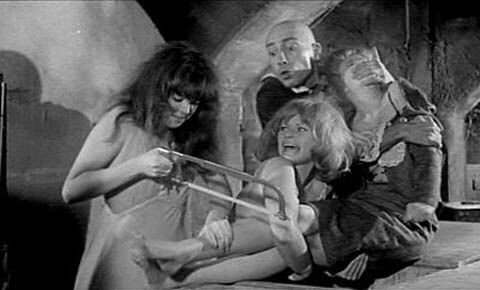
Preparing the meal

The bodies end up in the cellar, where the older generation of Merryes eat them. Family relations go rapidly downhill, culminating in Bruno blowing up the house and its occupants. The surviving cousin speaks to the camera at the end, boasting that he has inherited the family fortune, and that the “Merrye Syndrome” has been eradicated in the exploding house. As he speaks, the camera pans to his young daughter, who looks a lot like Virginia, as she admires a spider.
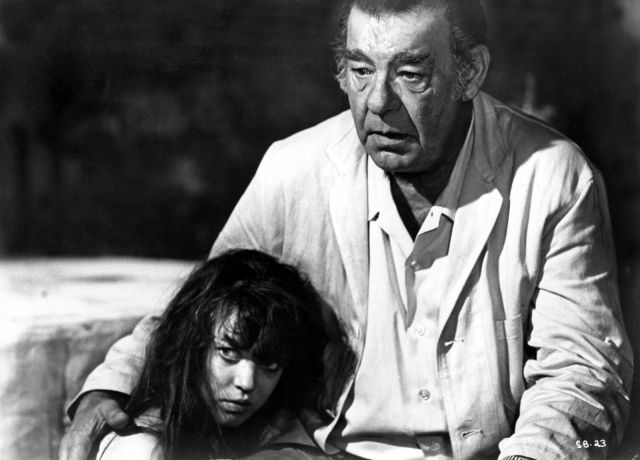
Lon Chaney

Lon Chaney Jr is of course one of the greats of the horror genre. His father was probably more famous, a giant of the horror silents, but Junior did OK. He first shot to fame not in horror but in the 1939 film of John Steinbeck’s Of Mice and Men.  He entered the world of horror two years later as The Wolfman (Waggner, 1941) and subsequently played the whole gamut of reboot monsters in The Ghost of Frankenstein (Kenton, 1942), The Mummy’s Tomb (Young, 1942) and Son of Dracula (Siodmak, 1943). He appeared in a vast range of parts, not just horror but Westerns, comedies and dramas and even had a guest role in The Monkees. The great director Stanley Kramer told the press in the 1950s that, whenever a script came in with a role too difficult for most actors in Hollywood, he called Chaney.

vlcsnap-2018-07-17-22h45m09s595
Fun fact: Bruno drive a Duesenberg, a classic American limousine

Spider Baby cost about $65,000 to make, and took only 12 days to shoot, in black and white. The promo said:

Spider Baby has the seductive innocence of Lolita and the savage hunger of a Black Widow.
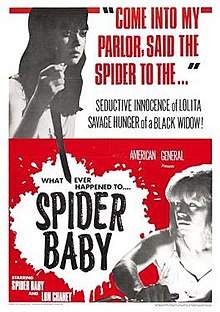
220px-Spiderbabyposter

The film was barely noticed on release but has since achieved cult status (it has its own website due to plans for a remake, which never eventuated) and has achieved an extraordinary 100% rating on Rotten Tomatoes with one critic saying:

Simultaneously creepy and hilarious, this is the perfect slice of Grand Guignol for a humid summer’s night.

The full movie is available, last time I checked, on Youtube.


IF YOU LIKE MY BLOG, PLEASE FEEL FREE TO RECOMMEND IT (WITH DISCRETION) TO FRIENDS ON SOCIAL MEDIA.
IF YOU HAVE ANY QUESTIONS OR COMMENTS, YOU CAN USE THE TAG, OR EMAIL ME ON CANNIBALSTUDIES@GMAIL.COM.

The cannibal next door: The Santa Clarita Diet (Fresco, 2017)

OK, last week’s cannibal film blog, Dahmer, was a bit grim (even if we didn’t see anyone eat anyone, for a change), so this week something witty and clever, and with lots of people-eating.

I’ve watched 20 episodes now of the Netflix series Santa Clarita Diet, and I’m still wondering: is this even a cannibalism show? Without risking too many spoilers, the protagonist, Sheila (the wonderful Drew Barrymore) is undead, what we sometimes (but never in this show) call a “zombie”. But she’s not the type that shuffles about, rotting bits falling off of her (well, maybe a few) and drooling for brains. She is sweet, witty, strong, loving and over-sexed. And dead. Sorry, undead.

santa-clarita-diet

She just seems so human. Presently human, not just formerly, decrepit, rotting human. I guess there’s room in cannibal studies for the undead human people-eater?

Sheila and husband Joel (Timothy Olyphant) are realtors, living the perfect suburban life-style in sunny Santa Clarita, Los Angeles County. The American Dream becomes more dream-like when Sheila is showing a house to a prospective buyer, but ruins the sale by expelling copious amounts (we’re talking gallons) of vomit on the perfect bedroom carpet, together with a small object that might be her life force or soul or something (later it grows legs, so maybe not a soul). She realises that night that, while she is feeling just fine and dandy, she no longer has a pulse.

And then she gets hungry, and it’s a diet that could only be zombie, or perhaps broadminded paleo. No carbs, just meat. And only one species will do. But, like Hannibal, she will only eat bad people – rude, abusive, Nazis, etc. Can they find a cure? Does Sheila want to?

Don’t you want to be cured?

Of course I do. Although, I do like the way I feel. I have endless energy, and I sleep two hours a night. I get so much done.

You eat people!

I know, it’s just that I’m so much more confident now. And our sex is incredible… And I can parallel park in one move now.

rs-santa-clarita-diet-02-0db921f3-9b0c-405c-8cd6-59cdb789d18f

The dialogue is sparkling and very funny. I can imagine the hilarity in the writers’ room when they were putting all this together. Lines like:

We have to kill someone who won’t be missed. Someone without a family. And someone bad, who deserves it… the prototype would be a young, single Hitler.


I’m feeling a little low energy. Maybe I need to eat people with more iron in their diet.


She gets this look in her eye. The next thing you know, she’s yanking intestines out of these guys, like a magician pulling out scarves! The other day I came home and my kitchen looked like someone shot a person out of a confetti gun. There was a dick in my fruit bowl. The next morning I’m eating oatmeal at the same counter like my life is Leave it to Fucking Beaver!

Inside a shark

Here’s the thing: it’s very funny, and the characters are sympathetic and honest. Barrymore and Oliphant are brilliant, and so is their daughter, Abby (Liv Hewson) and her friend Eric (Skyler Gisondo), the nerd next door who understands both the science and the occult aspects of the problem.

santa-clarita-diet-season-Abby and Eric

I’m asking because last night you saw your mom and dad scrape a half-eaten dead guy into a grave.

Please. I once walked in on my grandparents changing in a cabana. That was intense.

Yes, lots of gore (also vomit in episode 1) but in so much surfeit that it is cheerfully fake. The manicured lawns and perfect houses feel even faker – this is the Stepford Wives gone feral. The neighbours suspect nothing, even when Sheila eats one of them.

If you’re wondering how cannibal movies prepare the flesh, the special effects designer said in an interview:

Drew Barrymore is essentially a vegetarian, so a lot of the methods that we might have used traditionally — sushi, tuna coated with fake blood or ground meat or turkey meat or anything like that — was an absolute no. So we had to find other resources. One of the resources that we went to was gummy bears.

And this is the heart of the Santa Clarita Diet. For one thing, it celebrates the resurgence of the monstrous feminine cannibal. From Sheila, to Justine in Raw, and Melanie in The Girl With All The Gifts, and even the Cannibal Women of the Avocado Jungle of Death, we see women cannibals emerge from their niches in myth and fairy tale to stand their ground, glorying in their power. Sheila says she hunts when she feels “a tingle in her vagina” and tells Joel all about the orgasm she enjoyed while eating a human liver.

Pinterest
She so did not eat this heart sandwich. It’s a strictly no-carb diet

It’s also a biting commentary on the stories we tell about appetite and about power. Sheila believes she is a good person, who is strong enough to hunt anyone she chooses, and to eat whatever or whoever she feels she needs or wants. And isn’t that the story of every carnivore?

The only things I believe in enough to crochet on a pillow are “I’m winging it” and “all races taste the same.”


IF YOU LIKE MY BLOG, PLEASE FEEL FREE TO RECOMMEND IT (WITH DISCRETION) TO FRIENDS ON SOCIAL MEDIA.
IF YOU HAVE ANY QUESTIONS OR COMMENTS, YOU CAN USE THE TAG, OR EMAIL ME ON CANNIBALSTUDIES@GMAIL.COM.

The American Nightmare: “Dahmer” (Jacobson, 2002)

DVD cover

Dahmer is a 2002 American semi-biographical film starring Jeremy Renner as the serial killer Jeffrey Dahmer, who drugged and killed at least 17 men and boys, and ate parts of some of them, giving him the title in the popular press after his arrest of “The Milwaukee Cannibal. Dahmer (the man, not the movie) became perhaps the best-known modern real-life cannibal, not because he killed or ate more people than, for example, Andre Chikatilo, the “Rostov Ripper”, but perhaps because he did it in the belly of the beast, the consumer society of the USA.

The film shows two timelines; the story starts with a couple of days in the life of Dahmer before his arrest; the flashbacks show the evolution of his murderous career.

As the film begins, there are pools of – not blood – chocolate! Jeffrey Dahmer works in a candy factory in metropolitan Milwaukee. Enduring crippling shyness, partly due to his overbearing and intolerant father, he slips into alcohol abuse, drugs, and murder. In his flashbacks, he frequents gay clubs, but can only have sex with young men who have been rendered unconscious by mixing barbiturates into their drinks. Leaving a string of unconscious and sodomised men in the hourly rent rooms, he is caught by the barman, beaten and thrown out. The lesson he seems to draw: everything’s easier at home.

dahmerDahmer’s M.O. was to lure young men to his home, drug them with pills crushed into their rum and Coke, and then conduct experiments involving drilling holes in his their heads and pouring in acid, trying to create living zombies, partners who would never leave him. Cannibalism was a further attempt to achieve the same ends – rather than keeping their bodies with him, he hoped to keep their bodies inside him. Incorporation as love.

Although the script recreates actual events, the names of the victims were changed out of respect for the families. Some time is spent on the case of Khamtay, who is drugged and has a hole drilled in his head and acid injected into his brain. This really happened, except the young man was really a 14-year-old boy named Konerak Sinthasomphone. Like Khamtay in the film, he wandered out of the apartment while Dahmer was out buying booze, and was picked up by the police. When Dahmer came around the corner, he persuaded the police that the boy was his drunken boy-friend, and they helpfully delivered the child back to the apartment, where he was subsequently killed.

dahmer-knife

Dahmer received mixed reviews. It currently holds a 68% “Fresh” rating on Rotten Tomatoes. Entertainment Weekly said “It lets you brush up against the humanity of a psycho, without making him any less psycho.” Most reviews, even those that did not like the film, praised the performance of Jeremy Renner. In fact, Kathryn Bigelow said that she cast Renner in The Hurt Locker because of his performance in Dahmer.

Chocolate, pooled, shaped and incorporated, is a continuing image throughout the film. Chocolate typifies our consumer fetishism: it is purely pleasurable (I keep hearing that the dark version is good for us, but my dentist disagrees). People love chocolate. The hypnotic pull of continuous, voracious and escalating consumption drives our society. When commodities run out, or try to escape, then incorporation, Dahmer argues, is the only solution. He cannot give up his nightly hunting sessions, even when he makes an emotional connection to a victim, any more than the rest of us can give up chocolate. Rejecting his family’s intolerant religiosity, he argues that he is not weird: “What’s weird is when you go to church and they make you eat Christ’s body and drink his blood”.

hqdefault
The band Macabre released an album in 2000 called “Dahmer”

There is remarkably little gore in the film and surprisingly no mention of what made Dahmer so famous: his cannibalism. The violence is mainly in Dahmer’s words. He projects his own pain onto his intended victims. His last intended victim, Rodney (whose name in real life was Tracy Edwards), offers real affection and the possibility of a loving relationship to Dahmer, who projects his own pain back onto this gentle young man.

“You’re pissed at everyone because you’re gay. Everyone laughs at you. Shits on you.”

Yet Rodney returns opposite, loving words: “You’re beautiful. You’re tall, you’re strong, but gentle. I always dreamed about somebody – just like that.” But Dahmer cannot accept love (also there is the problem of the corpse of Khamtay in his bedroom). He responds to Rodney: “I am a pervert. I am an exhibitionist. I am a masturbator. And a killer. Like you”.

Dahmer is the incarnation of Bataille’s “accursed share” – the segment of production that must and will be spent on sex, destruction, sacrifice.

The victim is a surplus taken from the mass of useful wealth. And he can only be withdrawn from it in order to be consumed profitlessly, and therefore utterly destroyed. Once chosen, he is the accursed share, destined for violent consumption. But the curse tears him away from the order of things; it gives him a recognizable figure, which now radiates intimacy, anguish, the profundity of living beings.

Yet there is no power in hidden destruction; power for the giver is in the obligation of the receiver to reciprocate. So Dahmer is driven by the need to be caught. Not because he wants to be stopped, but so that he can be celebrated. Rodney escapes, after Dahmer cannot go through with his attempt to strangle him. The real-life victim, Tracy, led the police back to Dahmer’s lair, where they found much more than they expected.

The real Jeffrey Dahmer was not celebrated either, although he did receive several offers of marriage while awaiting trial (from women who, like his father, seemed to have no understanding of his sexual preferences). In 1992, he was handed a 937 year sentence, subsequently became a born again Christian in prison, and then in 1994 had his head caved in by a fellow prisoner with a metal bar.

The killer told a prison guard “God told me to do it”.

Dahmer - made of meat
The real Jeffrey Dahmer, in a popular vegan meme


If you like my blog, please feel free to recommend it (with discretion) to friends on social media.
If you have any questions or comments, you can use the tag, or email me on cannibalstudies@gmail.com.

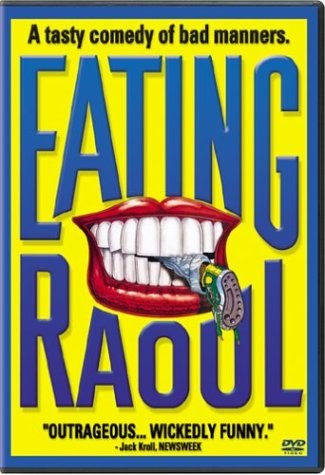
Entrepreneurial cannibalism: “Eating Raoul” (Bartel, 1982)

Eating RaoulEating Raoul has become a cult classic since its release in 1982. It was directed by Paul Bartel, who also plays the role of Paul Bland, a use of nominative irony, since he and his wife Mary (played by the wonderful Mary Woronov who starred in Warhol and Corman films) are a bland and horribly normal couple. They live in a block of apartments and eke out an existence working at unsatisfying jobs, while dreaming of somehow opening their own restaurant.

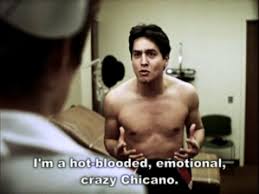
The film starts with a shot of the iconic Hollywood sign and a voice-over, of the type that was popular in film newsreels, describing the contrasts in that town between rich and poor, and tells us that “sex hunger is reflected in every aspect of daily life”.

vlcsnap-2018-06-14-16h37m54s405
“The barrier between food and sex has totally dissolved.”

This contrast then goes to the microcosm of the life of Paul and Mary. They are prudes; they sleep in separate beds and disapprove of sex, except for “a little hugging and kissing”. But there are almost constant “swinger” parties in an adjoining apartment: as if to exacerbate their financial woes, rich and decadent swingers share their lift and their corridors. When one of the swingers tries to rape Mary, Paul kills him with the cast iron frypan, finds $600 in the guy’s wallet, and thus begins a career of hilarious and profitable murders of “rich perverts”, whom they lure with ads offering kinky sex.

eatingraoul

But that doesn’t make it a cannibal film, suitable for this blog. That comes later, when their locksmith, Raoul, enters the scene, ready to make money from the bodies and the victims’ cars.

images

But when Raoul himself has to be disposed of, and there is nothing to serve the real estate agent who is going to secure the purchase of their dream restaurant… Well, as Hannibal said in Silence of the Lambs:

“Haven’t you had company coming and no time to shop? You have to make do with what’s in the fridge, Clarice.”

Cannibalism is all about power and appetite, and so Eating Raoul is a perfect allegory for Western (and particularly Hollywood) society. Everyone is either exploiting or fucking everyone else, and why should Paul and Mary Bland be any different? Cannibalism – it’s the ultimate American Dream.

27767id_1479_359_primary_w1600

The sex shop scene on Youtube:

If you like my blog, please feel free to recommend it (with discretion) to friends on social media.
If you have any questions or comments, you can use the tag, or email me  on cannibalstudies@gmail.com.

Euro-cannibalism – it has style. “Caníbal” (Cuenca, 2013)

Carlos (Antonio de la Torre) is the most prestigious tailor in Granada (Spain), but he has a secret life as a serial killer. He captures women – in the opening scene he causes a car crash – and he takes his victims to his remote mountain cabin where he slices them up for their meat. The butchery is discreet: we hear the chopper descend and see a trickle of blood dripping off the marble slab. But compared to most cannibal films, it’s pretty polite.

Cover

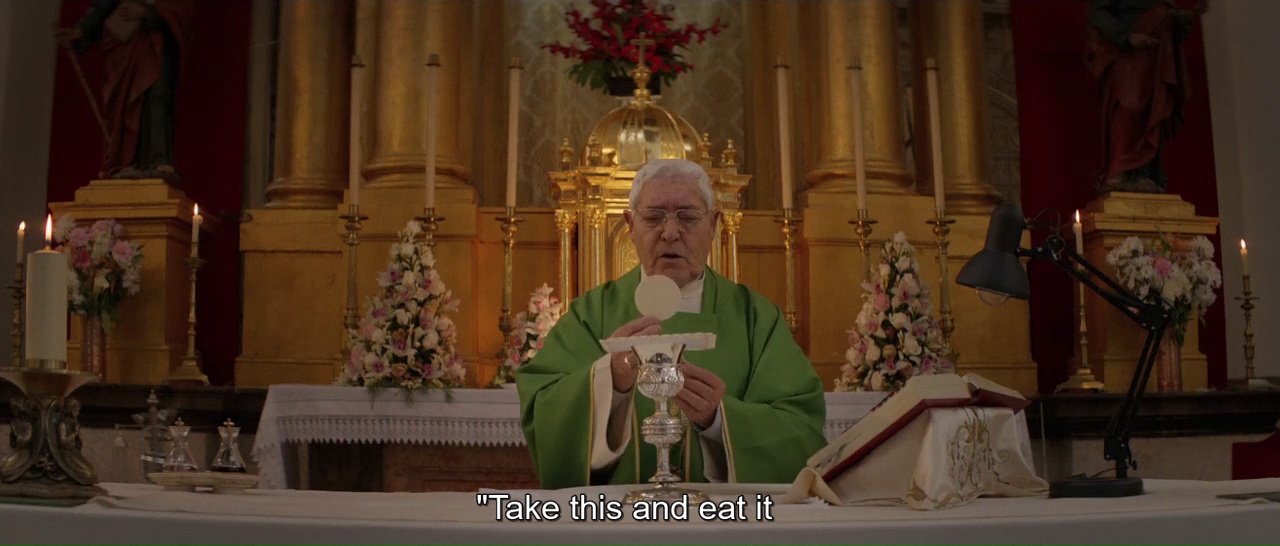
No pretence of an explanation is given for the act of cannibalism, although it is done in so ceremonious a fashion that some reviewers have speculated that it represents a form of transubstantiation: the body and blood of the women is, for him, the body and blood of communion. Carlos is a respected church goer, and the priest has him repairing sacred fabrics. He attends church, where we hear about the blood and body of Christ.

vlcsnap-2018-06-06-23h13m30s606vlcsnap-2018-06-06-23h13m52s027

Carlos seems to feels no guilt about this hobby, slicing his expensive woollen suit fabrics as precisely and dispassionately as he gathers his meat, and he is a man of precise habits, reading nothing but tailoring texts and eating nothing but a fillet of meat with a nice glass of vino tinto. His prey seems to be exclusively women: he kills men, but then seems to lose interest in their carcasses. Could this be his form of love or erotic attraction? Or is it a deeper psychoanalytic condition where women are blamed for the woes of the world (check out the book of Genesis) or seen as more “animal” because they breed and bleed? Or is it a comment on the modern meat industry, which uses female animals for their reproductive output (milk, eggs, etc) then turns them into meat when they are worn out?

His routine is interrupted when a beautiful but noisy immigrant from Romania appears in his life and peeks into his fridge, commenting on his apparently paleo diet. The last we see of her, she is getting into his car. Later, her much more demure twin sister arrives looking for her (both are played by Olimpia Melinte), and she awakens in Carlos something akin to love. She speculates that he had once had a girlfriend who hurt him badly. She asks him if he likes girls. “I like girls” he replies. Probably not in quite the way she meant though.

v1.aDsxMTg3ODU7ajsxNzY4NjsxMjAwOzYxNDQ7NDA5Ng

What happens when you fall in love with your next meal?

Some have suggested that Manuel Martín Cuenca, the director, could have edited out at least half an hour of nothing happening, but then you tend to hear that while shuffling out of the screening of most European movies. I thought the movie was beautifully made and quite engrossing, as we watch the dispassionate killer gradually make a connection, begin to see the face of the other. Cuenca himself asked: “If the devil fell in love and if through love he understands the feeling of compassion, what would happen?”

Caníbal got only a 50% rating on Rotten Tomatoes (the review website) but, on the other hand, Variety wrote:

Sumptuously shot in carefully composed long takes, Caníbal puts every scene in perfect aesthetic balance – the scenery and colours all harmonise, whether a snow covered mountain, a neat tailor’s shop or a naked body being hacked up. The film firmly keeps its butchery off-screen and, given its glacial pace and lack of overt sensationalism, it definitely ranks as a niche item — and a rarefied one, at that. But sophisticated arthouse audiences might eat it up.

Another reviewer said “this feels like a short film stretched out to two hours”. I disagree, but at least you have been warned.

The important difference here from most cannibal films is that there is no real attempt to understand why Carlos eats women. They are just his preferred meat. Cuenca says:

“Carlos could be your dad or husband or friend. Carlos eating female flesh every night at the table with his utensils and civilised manners is each and every one of us every evening.”


If you like my blog, please feel free to recommend it (with discretion) to friends on social media.
If you have any questions or comments, you can use the tag, or email me  on cannibalstudies@gmail.com.

Highway cannibalism: “The Road”, (Hillcoat, 2009)

Cormac McCarthy wrote his chilling book The Road in 2006 and won the Pulitzer Prize for it. I remember reading it at the time, and it was a very disturbing experience. Diving into the book was like one of those dreams where you walk out of the sunshine into a cold, dark and ominous environment. It left me both sorry and relieved to finish it. The sense of loss and wasted opportunity left a deep impression for weeks after reading it, maybe forever. The film captured some of this deep sense of menace and loss, but to a much lesser extent. Roger Ebert and many other reviewers praised the film, at the same time pointing out that it was not as powerful as the book. The Guardian reviewer summed the film up as intensifying the poignancy while deflecting the horror, and some of the more graphic examples of cannibalism are skipped in the film, particularly the finding of an infant’s corpse, all prepared for consumption by his desperate parents. But perhaps it’s an unfair comparison: experiencing a book through one’s own imagination is never really comparable to seeing the interpretation of the actors and director.

The_Road_movie_poster.jpg

So: what’s it about? Well, it’s post-apocalyptic. A great catastrophe has wiped out most life on earth, including most of the forests that we rely on for the very air that we breathe. The earth is dying; the voice-over tells us “No animals have survived, and all the crops are long gone”. We are never told what happened: there is a flash and there are two characters: man and boy. They are given no names beyond those.

“Cannibalism is the great fear”

The earth is stripped of life, the survivors of their names and their humanity. Armed gangs roam the highways, killing and eating anyone they can find. When the man shoots a member of a cannibal gang who encounters them on the road, he is left with only one bullet in his gun. It will be for the boy, if it should ever come to the point where the only choice is to kill him or let him be eaten. When they come across a big house, they find a number of people locked in the basement – kept for future meals. When the cannibals arrive, they hide in the bathroom, and the man gets the gun ready at the boy’s head.

cannibals

There is a lovely scene where they find a survivalist shelter and spend a few days eating as much as they want, and even bathing – feeling clean is an almost forgotten luxury. But there is a pervasive sense of dread, of a world spiralling down into total extinction. Viggo Mortensen from Lord of the Rings plays the nameless man, cold, dirty and desperate, Strider who will never become Aragorn. The mother is played by Charlize Theron in a lamentably brief appearance, and Robert Duvall makes an appearance as a nearly blind old fellow somehow surviving in a time with no hope. The man teaches the boy a stripped down deontological ethic – there are “good guys” and “bad guys”, and the good guys are “carrying the fire”. They also don’t eat people. It is a final grasp at a humanism which failed humanity and failed the planet.

vlcsnap-2018-06-06-14h51m44s265

The impact of The Road comes from its feasibility. We know that we will probably not meet a psychopathic psychiatrist or even hairdresser, we don’t go to fly-over towns where the local abattoir workers have gone feral, we certainly don’t charter Uruguayan military planes to fly us across the Andes. But the threat of some sort of apocalypse confronts us from the front pages of the papers every day, in stories of natural disasters, nuclear wars, pandemics and environmental collapses. Human history is replete with examples of disasters followed by social collapse and cannibalism. The Road takes this scenario into our own time. We see the J-curves of human population matched by the same graph of species extinctions and carbon emissions, and we are forced to think – if the worse happens, what, or whom, will we eat?

vlcsnap-2018-06-06-15h05m54s445


Autocannibalism – you Reddit here first

This is not a movie review – they come out on Sundays.

So this is from Reddit, which is a social news aggregation, web content rating and discussion website. People post under pseudonyms, and then win points for how many people like the post. This means that stuff sometimes is, let us say, exaggerated. Reddit has over 200 million users. Which still doesn’t mean the stories are true.

However, nothing is guaranteed true in this world, not even promises to denuclearise, which you might think everyone would want to happen. Therefore: I’m giving this story the benefit of the doubt, and if it isn’t true, the dude went to a lot of trouble, so he deserves an up vote just for all the hard work.

Come on. If this was on a cooking blog, you wouldn’t even blink.

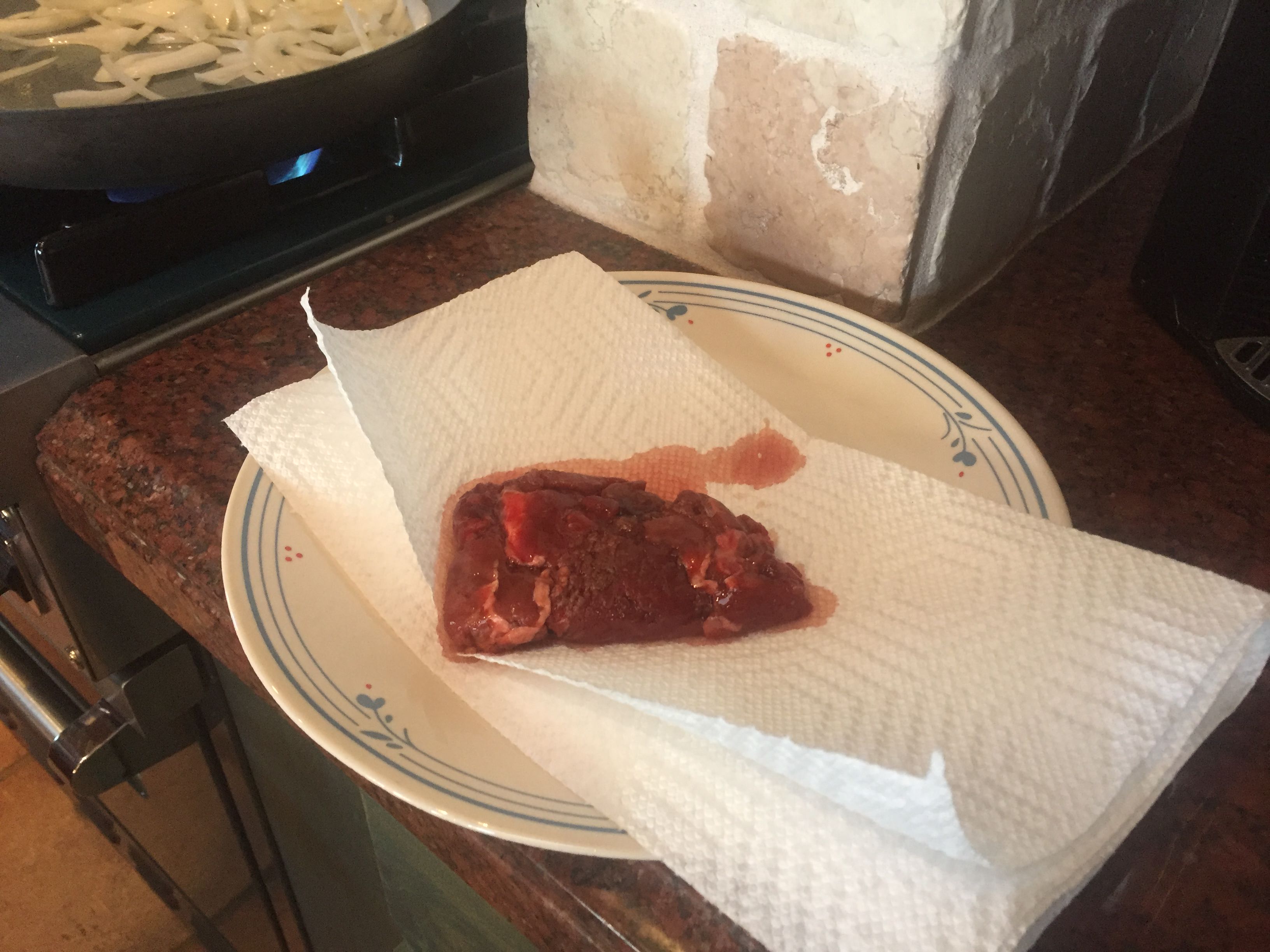
This guy, who calls himself Incrediblyshinyshart, served his friends tacos, made from his own amputated leg. He reported to Vice that he was involved in an accident a couple of years ago – a car hit his bike, and his foot was shattered to the point that he would never walk on it again. When the doctor asked if he wanted to amputate, his one question was, “Can I keep it?”

To make a long leg story short, he invited ten of his most closest friends to a special brunch. They ate apple strudel, they drank gin lemonade punches and mimosas. And then he served fajita tacos made from Shiny’s severed human limb.

The foot was not going to be fixed.

The full process is described in the June 12 on-line edition of Vice, and I don’t intend to repeat it all here. There were a number of pictures, some quite grizzly, which were not included in the article, but they did conveniently put in a link if you really want to go there. I don’t recommend it, but then I also avoid the meat section at the supermarket.

The article emphasised that what he did was in no sense illegal. Cannibalism can often be linked to murder (thank you Dr Lecter) or at least interference with a corpse, both of which are legally frowned upon. But this was his own body part, and did not involve a corpse – he is very much alive and kicking. [Sorry – Reddit is full of much worse puns]. The Legal Information Institute at Cornell makes it clear that, in the USA, there are no laws against cannibalism per se.

Why am I not surprised at the t-shirt caption?

The bit I was most interested in was: what did he taste like? His answer is quite comprehensive:

“People think it tastes like pork because in movies we hear it called “long pig.” But that term originated in places like Papua New Guinea, where they eat wild boar. They’re not eating our big, fat, domesticated pigs that have white meat. Boars don’t have white meat. They just don’t…. I think it’s more akin to that. This particular cut was super beefy. It had a very pronounced, beefy flavor to it. The muscle I cut was tough and chewy. It tasted good, but the experience wasn’t the best.”

The Reddit entry by Shiny is here.

Enjoy.

The future is cannibal: “The Time Machine” (Pal, 1960)

773px-Poster_for_the_1960_film_The_Time_Machine

HG Wells wrote his ground-breaking novella The Time Machine in 1895, and George Pal’s movie of it, made in 1960, kept to that timeline, with of course a detour some 800,000 years into the future. The film was fairly sensational at the time of its release and won an Oscar for best special effects for the time-lapse images, particularly the disintegrating corpse (we’ll get to it). It took some liberties with several aspects of the story for the purpose of fitting a lot of science and a lot of fiction into under 100 minutes of film, but was generally true to the social commentary of the book, particularly the division of humanity into the effete intellectuals and the menacing workers. To this, the Director, George Pal, added a sixties flavour that was quite prescient for a work made in the first year of that decade, particularly a strong antiwar theme, including a horror of nuclear conflagration and resulting environmental devastation, which occupied a large part of the public imagination in the Cold War years.

Why is the Time Traveller interested in time travel?

“I don’t much care for the time I was born into. It seems people aren’t dying fast enough these days. They call upon science to invent new, more efficient weapons to depopulate the earth.”

Freud said that the two most profound taboos are incest and cannibalism, and he traced their origins, as linked events, to Darwin’s primal hordes and the murder and consumption of the father who was monopolising the women. Anyway, fast forward (very fast) to the year 802701 and incest seems to have had a revival (insofar as everyone looks the same) while cannibalism, somehow, is still frowned upon. Or rather it has gone underground.

download

The Time Traveller meets the humans of the future, the Eloi, who look like a bunch of beautiful but listless hippies, even though hippies did not exist for a few years after the film was made. A separate race of humans known as Morlocks live underground, shunning the daylight and any kind of fire. In their deep caverns, they have dark, satanic mills and chop up the Eloi, who are clothed and fed by the industrious Morlocks and then “harvested” at maturity. This is why there are no old Eloi, although there don’t seem to be any babies either, which makes the sustainability of the cannibal diet a little tricky.

Eloi 1280x720-2WW

But wait, are the Morlocks cannibals? To be a cannibal, you really need to eat the flesh of someone of your own species, and it seems unlikely that the Eloi and Morlocks are even related, having evolved into different niches centuries earlier. The Time Traveller, known only as George, is shown some “rings” (a form of data disks which require no energy except for a quick twirl with finger and thumb) which reveal that a 326 year war destroyed the environment, causing the human race to retreat underground. Some remained in the infernal depths as white-eyed demons, preying on the innocent, while those who got the subterranean homesick blues eventually returned to the surface when it cooled down. There they continued to be fed and clothed by the Morlocks, but when the factory whistle goes, they march glassy-eyed into the factory – as raw materials.

hqdefault

The Morlocks are dressed in baggy skin and flabby paunches and have bulging eyes and long, shaggy white hair. In fact, they look more like decrepit twenty-first century boomer hippies than the Eloi ever did. They are also no match for George who has his fists and his matches. There is also a love interest – Weena, (Yvette Mimieux), an Eloi girl whom George saves from drowning, since the Eloi can’t really see the problem if she does. He accuses her of being a child, then hopes to take her home with him on the Time Machine, a nice precursor to Lolita, which was filmed two years later. In 1895, in contrast, George has only male friends, and his off-sider is the Scotsman David Filby, played by Alan Young, who went on to be the side-kick of a horse in Mister Ed for many years.

time_machine

All right, there are some very silly things in this movie, and leading the list is the fact that the Eloi all speak perfect twentieth century English. Considering we can barely understand Chaucerian English from 600 years ago, it seems a bit odd to be able to converse with the locals straight off the boat, as it were, some 801,000 years into the future. In the book, the TT has to learn the Eloi language, but there’s no time for such nonsense in a 90 minute movie, unless it’s a European art-house film. Then there is the time machine stopping in 1966, just in time for nuclear war to break out, giving the film only six years before proving itself wrong.

There is a Robinson Crusoe feel to this film – although the planet seems quite heavily populated by young pretty hippies and old decrepit cannibal hippies, George is the only civilised patriarchal figure there, shouting at the Eloi and setting fire to the Morlocks as he sees fit. His first encounter with the Morlocks involves seeing – yep, a footprint. Lots of footprints, showing where the Morlocks have absconded with the time machine. We know the year; we don’t know whether it’s  Friday though.

178759-004-87293FC6

Anyway, George gets down and dirty into the underground, beats up some Morlocks, and sets the place on fire. He also fires up the Eloi who reclaim their power and beat up a few Morlocks too. Their totally vegan diet apparently has not left them, as George rudely claimed, “living vegetables”. His judgement of the Morlocks though is more severe: they had:

“… degenerated into the lowest form of human life: cannibalism!”

He gets his machine back and flees into the future, after killing a Morlock, who decomposes in time lapse mode, a scene that was quite the talk of the audience at the time.

But really, George. They have a system that works. His plan appears to be to return to 802701, impose regime change, and “free” the Eloi from the mouths of the Morlocks to build a new world. But of course the Eloi have no idea how to grow their food or make their clothes. With George as absolute monarch, they may learn. Or might they splinter into cliques, as humans always do, and soon go back to eating and wearing each other?

Filby, back in 1900, realises that George wouldn’t go off to build a civilisation without a plan. He figures out that he has gone back to the future and has taken just three books with him. Which books? No one knows.

Which books, Filby asks with a twinkle, would you have taken?

Book

Maybe Janice Poon’s cookbook?


If you like my blog, please feel free to recommend it (with discretion) to friends on social media.
If you have any questions or comments, you can use the tag, or email me  on cannibalstudies@gmail.com.

Revenge is (sweet) meat: “Sweeney Todd, The Demon Barber of Fleet Street” (Burton, 2007)

sweeney-todd-poster-sweeney-todd-460606_694_1024

Tim Burton’s Sweeney Todd, made in 2007, seeks explanations, rationalisations and even justifications for the depicted crimes of murder, cannibalism and various pure food offences. This version of the 19th century pot-boiler is a star vehicle and also a musical, a most unlikely format for a ‘slasher’ film. It is an adaptation of the Sondheim stage musical, in which Todd is an honest man wronged by a corrupt power establishment: Judge Turpin (the late, great Alan Rickman) has falsely convicted him and transported him to the colonies so that he, the judge, can abduct Todd’s wife, Lucy. Todd meets Mrs Lovett (Helena Bonham Carter) who tells him Lucy was raped by Turpin and committed suicide, leaving their daughter a ward of the wicked judge, who now lusts for the young girl. In the twenty-first century, Sweeney Todd is not the entrepreneur that he was in earlier versions of the story, but the wronged anti-hero, and the forces of the law and government demonstrate the unregulated libidinism that previously characterised Todd. His plans to trap the judge thwarted, Todd wreaks revenge on all males (females being fortunate not to need barbers) with his cutthroat razors.

The abjection is constant, starting with the opening credits where we see streams of blood, mincemeat, pies going into ovens and more blood flowing into the sewer. The 2007 Todd is an artist: Depp’s portrayal is almost balletic in his use of the razor to slice each throat, and the viewer is treated each time to fountains of arterial blood. There is no polite avoidance of the cannibal question in this film: Todd and Lovett share a song where they speculate on the gastronomic features of different professions (she recommends priests). Todd puts this discussion in a social context:

“The history of the world, my love, is those below serving those up above! How gratifying for once to know, that those above will serve those down below!”

Despite this class-based comment, they agree to forgo the alterity that their working class roots would demand: “We’ll not discriminate great from small… we’ll serve anyone… and to anyone”. The reification of any adult male that comes into the shop arises not from Todd but from Lovett: he wishes only to waste everyone, to revenge himself on a society that has betrayed and (he believes) killed all those he held dear. She argues that this would be wasteful: “With the price of meat what it is, when you get it, if you get it; good, you got it!”

poster

Todd and Lovett never seem to eat their abject products; the pies being hugely financially successful they can, like the ruling class in Soylent Green, afford better fare. In fact, Lovett is presented as the psychopath in this version. She suggests the pie-making scheme despite her abjection at her rival’s use of local cats, and then, despite the young apprentice Toby’s clear devotion to her, locks him in the cellar with the corpses when he discovers the truth, and goes to fetch the murderous Todd. She is coldly rational like Hannibal Lecter, does no killing herself, and is in fact a perfect reflection of free trade capitalism, adding value to the raw materials that come her way. Todd is persuaded: the crunching sounds outside are “man devouring man my dear, and who are we to deny it in here?”

Todd almost kills his own daughter, who is disguised as a boy, finally kills the wicked Judge Turpin,  unknowingly kills his wife who is alive but insane, then throws Lovett into her own furnace when he discovers that she could have told him the truth. He once again kills for revenge, while Lovett dies not for her evil schemes but because she hoped to win his love. It is up to Toby, the innocent cannibal (he just loved Mrs Lovett’s pies), to slit Todd’s throat and thereby restore the social balance.

large sweeney todd blu-ray5

Todd kills and dies because there are no legal recourses for injustice in Burton’s universe. Although he is a ruthless killer, the audience of the 2007 Todd is clearly invited to identify and sympathise with the anti-hero, much as we did the previous decade with Hannibal Lecter. Todd is a killer, but ordinary folks like us who jostle to get a table and eat one of Mrs Lovett’s delicious and very affordable pies are the real cannibals.

Sweeney Todd 2007 eating pies

Sweeney Todd received three Oscar nominations at the 80th Academy Awards: Best Actor in a Leading Role for Depp, Best Achievement in Costume Design, and Best Achievement in Art Direction, which it won.

If you like my blog, please feel free to recommend it (with discretion) to friends on social media.
If you have any questions or comments, you can use the tag, or email me  on cannibalstudies@gmail.com.

I feel pretty? “Dumplings” 餃子 (Chan, 2004)

“Do you dare to be pretty and young forever?”

Dumplings, (Chinese: 餃子) directed by Fruit Chan, was expanded from a short segment in the horror compilation, Three… Extremes.

Mrs Li, a former actress, wants to regain her youthful looks and her husband’s passion. She seeks the help of Aunt Mei, a local chef. Mei cooks her some special dumplings which, she says, initiate rejuvenation. Mrs Li sneaks a look as they are being made and discovers the main ingredient: Mei tells her that unborn fetuses imported from an abortion clinic are the secret to reversing ageing.  Mrs Li’s husband finds out what’s going on and wants a taste – it all goes downhill from there.

Dumplings_(film poster)

In all good arguments, the premises must be opposed, otherwise there is nothing to argue about. So, in the abortion debate, one side starts with the premise that a fetus is human, the other that it is only potentially human. Both agree on the unspoken premise that human life (if it is human) is sacred, which is pretty rich in a world where, according to the UN, some twenty thousand children die every day of starvation or diseases caused by malnutrition. Anyway, this movie does not really take sides in that debate, although if the fetuses are not human then that kind of ruins this as a cannibal movie. So let’s pretend for 91 minutes.

dumplings rejuvenate

Eating children as an elixir of life or an aphrodisiac is not exactly a new idea. Probably the most famous case is Elizabeth Bathory, a Hungarian noblewoman who was perhaps the world’s most prolific serial killer, well before the term was invented – she was accused of torturing and killing hundreds of young women and girls between 1585 and 1609. Drinking blood, or the claim that she bathed in the blood of virgins (almost certainly a beat-up) was supposed to keep her young. Pavel Novotny made a doco about her in 2014 – 400 Years of the Bloody Countess – but I am not granting her true cannibal status (it’s about flesh, Liz), so you’re on your own with that one.

Dumpling

If you’re not enamoured of dumplings, you may never eat one again after watching this. One reviewer on Rotten Tomatoes said:

  1. Do not watch it when you are eating. 2. Do not watch it when you are pregnant. And as someone who watched it whilst both pregnant and eating, my third piece of advice would be to NEVER do the two together.

However. I liked this movie, and I admit it gave me an appetite, but then I am very partial to Chinese dumplings. It is beautifully filmed, and it raises some important questions about how far people are willing to go in the quest for eternal youth. Why go under the knife if a simple Chinese feed can do the trick?

Young and pretty

If you like my blog, please feel free to recommend it (with discretion) to friends on social media.
If you have any questions or comments, you can use the tag, or email me  on cannibalstudies@gmail.com.