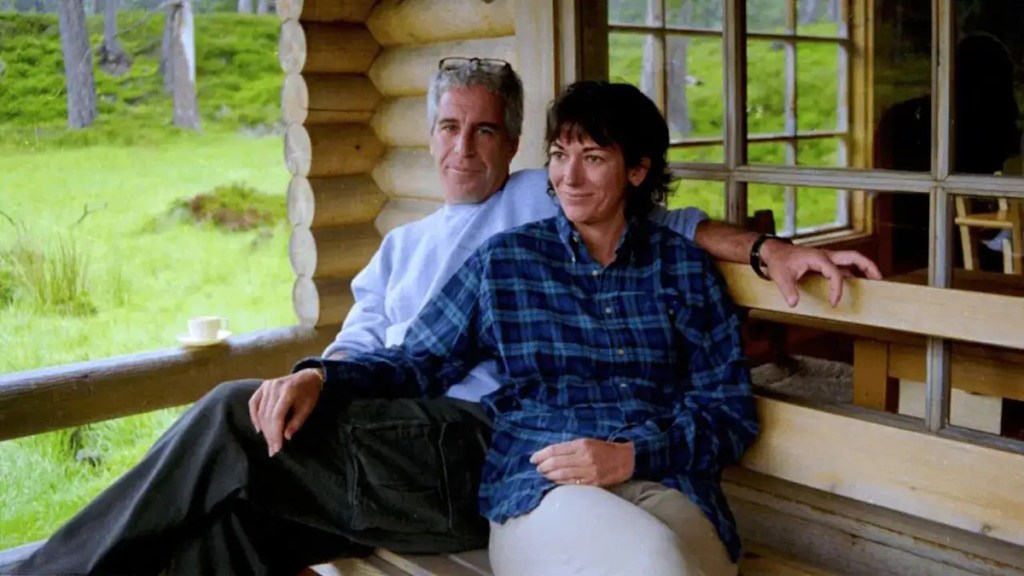
Mark Haydon, who was involved in Snowtown murders, being released from jail. SNOWTOWN (Justin Kurzel, 2011)

SNOWTOWN is back in the news at the moment, due to one of the perpetrators being granted parole after serving his 25-year sentence. Mark Haydon was convicted of assisting John Bunting and Robert Wagner in the murders of 11 people, including his wife, between 1992 and 1999.

Haydon reportedly rented the abandoned state bank building at Snowtown in which the bodies were stored in barrels of acid. A jury deadlocked on the charge that he was involved in the murders of his own wife, Elizabeth Haydon, and of Troy Youde, and he was never retried. His 25-year sentence was completed this year, and he will be freed into the community with no restrictions in May 2024 (unless the government succeeds in attempts to change the law to broaden the definition of a “high-risk offender”).

Above: the real Mark Haydon – then and now.

Relatives of the victims have long voiced their anguish and fear at any prospect of any of the perpetrators being released.

The film Snowtown is a recreation of this case, the most famous serial killer case in Australia (with the exception of the attempted genocide of the Indigenous population). A total of twelve victims were identified, and eight of the bodies were eventually found by police in barrels filled with acid, which were stored in an abandoned bank vault in the small town of Snowtown, in South Australia.

Although the press called this the “bodies in barrels” murders, it soon became known, to the sorrow of that little town, as THE SNOWTOWN MURDERS, even though only one of the murders had taken place there, the rest happening in the big city, Adelaide, between 1992 and 1999.

The final murder that took place in Snowtown, however, involved CANNIBALISM. We’ll have a look at that in this blog, although unfortunately the film doesn’t.

The film is a true Crime retelling, which means that none of the names have been changed to protect – anyone, and of course the dialogue has to be imagined to some extent. But we know a lot of what went on, and so did the film makers.

True Crime has been a popular genre for centuries, and transgressed the line between fiction and non-fiction in 1965, when Truman Capote released In Cold Blood, a “non-fiction novel”, relating or interpreting a 1959 Kansas murder. Modern versions of the genre extend beyond literature to films, podcasts, vodcasts and television shows. They tend to concentrate on the most sensationalistic cases and are grittily and brutally realistic in portraying the violence and gore.

In Australia, where this film originates, a survey found that some 44 percent of podcast listeners had listened to true crime podcasts, with an considerable proportion of them being women.

The protagonist of the film is Jamie Vlassakis, a teenager living with his single mother and two siblings. The mother’s boyfriend is a helpful sort of bloke who makes the kids dinner when mum has to go out, then strips them and takes photos of them for his own gratification. The mother deals quite effectively with this, beating him up and kicking him repeatedly, but soon a new man comes into their lives – John Bunting.

Bunting has a winning smile and a certitude that gets him into the family, and he takes Jamie under his wing. John also has a burning hatred of gay men and paedophiles, two rather different beasts whom he conflates into one evil figure. When Jamie tells him that he was raped by his older half-brother Troy, John tells Jamie he needs to “grow a pair” and take revenge. He involves Jamie in his plans to identify, capture and kill a range of people he considers monsters. He collects detailed information on a “spider wall” in his house. “Rock spider” is Australian slang for a paedophile.

But John Bunting has clearly not read Nietzsche:

He starts by involving Jamie in his plans to drive the erring boyfriend out of town. Jamie finds him in the garden, chopping up and mincing kangaroo body parts to toss onto the neighbour’s front door and sofa.

He involves Jamie in a raucous discussion of paedophile teachers, asking him what he thinks should be done with them. Jamie follows the fatal logic.

John takes Jamie under his wing, teaching him to ride a bike, shaving his head, showing him the spider wall, giving him a gun, and getting him to shoot John’s dog, a brutal blooding. When he introduces Jamie to the act of killing humans, there is also the accompanying deception: each victim is made to record a message that will be played on the answering phone of their loved ones. Jamie’s mum hears Troy say he hates her, and Jamie lies to her, letting her believe that forced call was true. Jamie goes off to doctors and government offices to collect payments, posing as the people they have killed. He doesn’t look happy about it, but he is sinking deeper and deeper into John’s machinations. After a while, collecting the government support payments becomes the motive as in the murder of Gary O’Dwyer; the vigilante pretext is forgotten. O’Dwyer invites the men to his place to watch him feed rats to his python, a process we see in slow motion in which the snake unhinges his jaw to swallow the prey whole, just as the men become unhinged in their growing lust to kill.

So John makes a man of Jamie, in the most toxic sense. He teaches him carnivorous virility – in order to be a man, you have to kill and eat. Not always the same carcass, but that does seem the logical consequence of the objectification of all victims.

The film traces the increasingly violent actions in which Jamie becomes involved, unwillingly at first, but totally under the control of John. He is made to watch them torture his half-brother Troy, who was earlier shown sodomising Jamie, and he finally steps in to finish the killing, tears rolling down his face, while John strokes his cheek and murmurs “good boy.”

Jamie is now a fully-fledged killer and a vigilante, not just an observer and helper the way Mark Haydon (the man currently being released on bail) is portrayed. Mark is a minor character, buying rubbish bags and digging holes for corpses, until near the end of the film, when he tells John he got into a fight with his wife, who called him a pussy. He told her what a big man he was – burying bodies. John brushes the story off, but we know she is next.

Although this murder is not shown in the film, evidence was given that Haydon saw his wife’s body and laughed. Her body was one of the ones found in barrels in the Snowtown bank building.

The final murder was Jamie’s half-brother (through a different father) David Johnson, whose only offence was his fastidiousness and unwillingness to go along with John’s rhetoric of violence. The final scene of the movie shows Jamie persuading David (one of the few wholesome characters in the film) to check out a computer supposedly offered for sale in Snowtown. They stop for a beer, they stop again so Jamie can urinate in a creek. He runs back to the car to accompany David to his death; the car is parked at a crossroads, clearly a symbol, a suggestion that Jamie, who is depicted as hating all the violence, could have chosen a different path at any time.

John Bunting, Australia’s most prolific serial killer, was convicted of eleven murders and sentenced to life imprisonment without the possibility of parole. Robert Wagner, his main accomplice, was convicted of ten murders and sentenced also to life without parole. Mark Haydon was initially charged with two murders but was only convicted on five counts of assisting. The jury did not come to a decision on two murder charges against Haydon, and another charge of assisting murder, which never came to retrial.

More than 250 suppression orders originally prevented publication of the details of this case at the time. In early 2011, a judge lifted the remaining orders in response to a request by the producers of the film Snowtown. Haydon was sentenced to 25 years, which he has now completed; he is back in the community on parole, with the head of the parole board saying he’s well behaved and poses no risk to the community. He has been moved to the Adelaide Pre-Release Centre – a low security facility where prisoners can participate in accompanied and unaccompanied leave, including for work and education. The usual conditions of parole apply (no binge drinking – yet), but he will be a free man in May 2024 when his sentence expires.  

Jamie, presented in the film as an unwilling and even sympathetic killer, pleaded guilty to four murders and provided testimony against the other men, in exchange for a lesser sentence. He testified about the cannibalism that is not shown in this film — that Bunting and Wagner hacked at David’s body to make sure it would fit in the barrel and then sliced off a sliver of flesh from the right thigh. They heated a frying pan, cooked the flesh, and handed it around. Jamie’s testimony was the only evidence police had that cannibalism had taken place, and was presented by his attorney as proof that he was fully cooperating and deserved a lighter sentence. In 2005, when Haydon’s murder charges were dropped by the Director of Public Prosecutions, several suppression orders were lifted. These detailed the murder and cannibalism of the final victim, David Johnson.

Jamie Vlassakis was sentenced to four consecutive life sentences with a non-parole period of 26 years, which means it is possible he could be released on parole in 2025. He will be 45 years old.

The film is gritty and brutal, particularly the scenes of Jamie’s rape, and the torture of their victims. But it is compelling watching, and the acting and directing are quite brilliant, capturing the loss of innocence that starts with abuse and ends with brutality. Bunting’s early life reportedly was very rough; he said he enjoyed killing ants with acid, an idea he later transposed to those humans he saw as vermin. When he grew up, he worked at a slaughterhouse, where he would brag about slaughtering animals, saying that’s what he enjoyed the most. Later, when he moved in on Jamie’s family, he would kill cats and dogs and skin them while making Jamie watch. We see Jamie transform from the innocent teenager who stands around smoking at the start of the film to a shaven-headed killer, and even his little brother is shown with his head shaved, starting his short journey from childhood abuse to callousness.

The film is all about that loss of innocence. At an early age, these kids are introduced to poverty, abuse and violence that is a hallmark of violent, carnivorous society. Children famously love “animals” when they are little, recognising their own infant state of being helpless and unable to communicate, yet are socialised into carnivory by the peer pressure to conform and their recruitment into the ceaseless human war on nature. Animals, particularly the chattel slave animals generally referred to by their monetary value, “livestock”, are nothing and nobody. It is only a small step for John Bunting to assume the same about those he hunts, and so why would he flinch at eating them? It is the logical next step.

The film closes as Jamie shuts the door of the vault, trapping the unfortunate David Johnson with the killer gang. We don’t see the murder, or the frying pan. Unfortunately, that final step over the thin red line between humans and other animals appears to have been a bridge, or a meal, too far for this film.

Cannibalism in the Ukraine: GHOUL (Petr Jákl, 2015)

Ghoul is a “found footage” movie, a postmodern affectation that pretends it is a documentary that has been ‘found’ after some gruesome disaster. The genre was popularised (although not originated) by the Blair Witch Project in 1999 which, like Ghoul, had young film-makers heading off to investigate the paranormal, and wishing they hadn’t. One of its most famous antecedents was Cannibal Holocaust in 1980, which was purportedly a documentary about missing documentary makers, and was (purportedly) believable enough to lead to a court case in which the actors had to be produced to prove they had not in fact been killed in some sort of snuff movie. This was of course great publicity for the film, as was the fact that it had been banned in several jurisdictions. The very first film in the genre was probably Punishment Park in 1971, in which anti-Vietnam War demonstrators are supposedly dropped in the desert and hunted by Nixon’s cops.

The main point of interest in this film (the found footage itself being unoriginal and totally preposterous) is the fact that it is set in The Ukraine which, at the time of writing, is again suffering from decisions taken in Moscow. The “Holodomor” (literally “murder by starvation”) was an event that took place in the Ukraine in 1932-3, during which the population was deliberately decimated by the collectivisation of the farms and seizure of food stores. As starvation set in, corpses began to disappear, and the government response was simply to put up signs saying, “Eating dead children is barbarism”. Timothy Snyder’s Bloodlands, the history of Nazi and Soviet mass murders between the wars, examines the incidents of cannibalism in the Ukraine and Poland, and concludes “With starvation will come cannibalism”. When there is no bread or other meat, human flesh becomes the currency. Snyder describes several reports, including an orphanage in Kharkiv where the older children began eating the youngest, who himself joined in, “tearing strips from himself and eating them, he ate as much as he could.”

Pretty difficult to invent a story worse than such a reality. So to add some spice, we have in Ghoul an amateur film crew from America who are fascinated by cannibalism (as, apparently, are very many people: this blog is currently receiving over 10,000 views per month – THANK YOU for reading!) They are researching evidence of cannibalism during the Holodomor, as part of a planned television series on cannibals of the twentieth century. They are conducting interviews in Kyiv of elderly survivors of that time, but they are also hoping to interview a man named Boris who was arrested rather more recently for eating a colleague, confessed to the crime under hypnosis, but then was released, as the body was never found. He said that he was made to do it. By whom, they wonder.

The crew are taken to a local psychic/witch, who tells them that paranormal entities were behind that murder. The crew dismisses this as superstition, getting drunk and getting her to perform a séance involving a pentagram, in which they mockingly summon the ghost of Andrei Chikatilo, a notorious serial killer and cannibal who killed and partially consumed dozens of women and children in the late 1970s and 1980s.

The next morning is full of strange and uncanny events, but the crew are unable to leave for help. The Ukrainian psychic tries but fails to evict Chikatilo’s presence, with no luck: he’s back now, and killing again. The idea is that Chikatilo forced Boris, their reluctant interviewee, to kill and eat his victim. He possesses (as in takes over the body of) a cat, then Boris, who proceeds to chase the young filmmakers, screaming, through various dark, gothic passages.

WTF? (Or що за біса as they say in The Ukraine). The film’s poster (below) says “INSPIRED BY TRUE EVENTS”. But where is the connection between Stalin’s attempted genocide in the 1930s and the ghost of a cannibal who had been active in Russia in the 1970s and 80s and was executed by a bullet behind his ear in 1994? Well, turns out Chikatilo had a brother that disappeared during the famine, and his ever-loving mummy told him the brother had been kidnapped and eaten. This may have just been to make him behave better (spoiler: didn’t work very well). So anyway, he decided to become a cannibal, specialising in small children. A real piece of work, and not one you’d want to reawaken from the dead.

I find hand-held filming annoying even in the hands of an expert, and this lot are supposed to be a bit sloppy, so the picture is jumping all over the place, to the point of seasickness. Reminds me of my dad’s Super-8 home movies (although he didn’t have a cannibal ghost to film, just bored kids). If you are patient enough to put up with the soundtrack (annoying bangs meant to scare you) and the shaky camera, the concept of a massacre being presented through the dispassionate eye of a video camera is interesting, in that it could be interpreted as the way the universe indifferently watches the suffering of its animals as they eat each other or, more immediately, the way the world watches as Russia tries to cannibalise Ukraine.

But besides the irritating camera work and the noisy things that go bump in the night, the plot is absurd – you have a historical tragedy, an imaginary murderer and the supposed ghost of a real murderer, who is somehow able to take over cats, people (including during sex) and of course kill people. The whole thing is frankly a bit of a yawn. It somehow managed to get to 22% on Rotten Tomatoes, with the LA Times critic summing it up well:

“Ghoul” can’t decide whether it should be about cannibals, serial killers, ghosts or demons. The found footage trivializes rather than reflects the horrific events that serve as the film’s basis.

According to IMDB, Ghoul was the highest grossing horror in Czech history. It also won the Vicious Cat Award at the Grossmann film and wine festival. Not sure if that will impress you or not.

The full movie was available on YouTube last time I checked, but all the dialog is in Czech and Ukrainian. Even if you speak both fluently, I wouldn’t bother.

“A spoiled bloodline of inbred animals”: BONE TOMAHAWK (S. Craig Zahler, 2015)

This is a cannibal film, also a Western and a horror movie, so it has something for (almost) everyone. Although a low budget work by a first-time film-maker, the film has been widely recognised for the excellence of the script and direction, and the characterisation by a team of top actors. And the graphic nature of its climax.

Bone Tomahawk is set in a small town in the last days of the Old West, a frontier society held together by a sheriff, Franklin Hunt, played by Kurt Russell (who managed to fit in a starring role in Tarantino’s The Hateful Eight that year as well), with an understated calm and a brooding power. A drifter comes into town and Hunt shoots him when he tries to run from the saloon, necessitating Samantha (Lili Simmons from Banshee), who practices medicine, to treat him in the jail. She, the drifter and a deputy are all abducted during the night – the only evidence is an arrow in the wall, and a dead African-American stable boy. Who could have done that?

We assume ‘Indians’, but a Native American they trust, “the Professor” (Zahn McClarnon, from Longmire and Fargo), tells them these are not the ‘Indians’, or at least the ones with whom the American invaders have been at war. They are a tribe with no name, no language (i.e. less than human). The local Indians call them “troglodytes”, cave dwellers,

The Sheriff, his “back-up deputy” and comic relief, Chicory (Richard Jenkins from Six Feet Under and Shape of Water), the mysterious Indian-fighter Brooder (Matthew Fox from Party of Five and Lost) and Samantha’s husband Arthur (Patrick Wilson from Fargo) with a broken leg that is fast turning gangrenous, set out in pursuit. Most of the film, until the climax when they meet the trogs, is more a road movie than a Western or a cannibal horror film. It’s four cowboys against the elements. On the long ride out to the land of the trogs, they come across two Mexicans and Brooder kills them, suspecting that they are scouts for a bandit gang. Chicory explains,

“Mr Brooder just educated two Mexicans on the meaning of manifest destiny”.

Manifest destiny was a widely held cultural ideology that proposed that the culturally and racially superior American settlers were destined to expand across North America. Inferior, backward, savage peoples were meant to get out of the way, or be exterminated. Even the horses were supposed to be racially intolerant. When the rest of the gang comes in the night and steals their horses, Brooder is incredulous that his horse would allow a Mexican to ride her.

Discrimination, be it racism, speciesism, ageism, ableism or any other, is never all-encompassing. Most racists don’t hate everyone, or at least not equally. The settlers in areas like the old West hated the ‘Indians’ for defending their lands, which the white men wanted. Even in the era when this movie is set, sometime in the late nineteenth century, some Native Americans like the Professor were accepted as, if not equals, at least semi-civilised negotiating partners, while others, who maintained their resistance, were considered bloodthirsty savages, and portrayed as killers, rapists and sometimes cannibals.

In this film, this second group is distilled into a people so inhuman that they do not even have language, which is often the first thing quoted in defining the supposed gulf between humans and other animals. They are accused of raping and killing their mothers and, worse yet, abducting and raping white women, requiring the gallant sacrifice of heroes such as those depicted here. One of the party, Brooder, boasts of having killed more Indians than all the rest of the town put together. When pressed, he admits that not all were men, as Indian women and children can also handle an arrow or a spear, and he tells of losing his mother and sisters to an Indian massacre when he was ten. For Brooder, white vs red, civilised vs savage is no different to good vs evil. He is an absolute racist, but for what he considers good reasons.

Yet even these less-than-human troglodytes are racists – they left the black stable-boy behind, because “they don’t eat Negroes”. No explanation is given, and it makes no sense since, under the skin (of whatever colour) we are all red meat. Yet their refusal to eat black people paints the white supremacism of the others as less vile somehow – look, these brutal savages must be exterminated – and they’re racists too, so it’s OK for us to discriminate against them.

Of course, those we wish to destroy must be dehumanised, vilified, and preferably accused of vile crimes, of which cannibalism usually seems to be the leading contender. But there is little evidence of Native Americans indulging in the flesh of their victims, whereas only fifty years before the demise of the Old West, the Donner Party had tucked into the remains of the members of their party who had died in the bitter winter snows of the Sierra Nevada in 1846-47. When they ran out of corpses, they murdered and ate their Native American guides.

The film is written and directed by S. Craig Zahler who also wrote the music with Jeff Herriott. It is a tour de force, a modern film that manages to bring to life the Western, a genre that, like its heroes, does not ever seem to die. American Frontier scholar Matthew Carter points out that this story is

“informed by one of white America’s oldest and most paranoiac of racist-psychosexual myths: the captivity narrative

In these narratives, civilised society is threatened by an evil outside force, and something precious (usually a woman, seen as a possession) is stolen and must be recovered. In Bone Tomahawk, traditional narratives are challenged to some extent – the women are not passive, Brooder’s prejudice is challenged, the savages are motivated by the drifters desecrating their burial ground. But the heroes are white men, the story is told from their perspective, the fear of the outsider or alien (remember this is only a few years after 9/11) offers a stark binary which equates civilised with good and savage with evil. It is the myth that was used to justify manifest destiny and the genocide of the Native American tribes. The trogs are barely human – they are covered in white mud which disguises their humanity and they have whistles implanted in their throats instead of having voices, so they cannot be engaged in rational discussion. We see a prisoner scalped and then cut open while alive, to establish their monstrosity.

Their own women, we see at the end, are heavily pregnant, blinded and their limbs removed, so they are simply breeding machines for more warriors, a reference, intentional or not, to the way anti-Islamic propaganda depicts Moslem women as blinded by fundamentalist controls and their burqa.

But perhaps the Professor is the most interesting character. In Westerns, there were ‘good Indians’ who were assimilated into the dominant culture, often assisted in spreading ‘civilisation’ (think Tonto in The Lone Ranger).

Then there were the ‘bad Indians’ – the outsiders, vicious and merciless, uninterested in accommodating the invaders on their land, and often (although not always) portrayed as cannibals.