“Every cannibal wants to be a director”: LONG PIGS (Nathan Hynes, Chris Power)

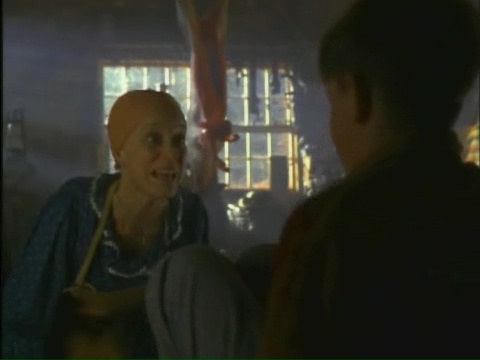
Long Pigs is a 2007 “found footage” movie, in which two desperate filmmakers come across a cannibal, ask him if they can document his eating habits, and then are shocked when he starts killing people and eating them. It is presented as a documentary, with all the usual warnings about graphic scenes etc.

Bit silly, and found footage has rather been done to death, but it has some interesting ideas, particularly the sympathetic approach to the main character, even as he commits his crimes. Look, it seems to say, everyone needs a hobby and, to this cannibal, killing and eating people is no more ethically questionable than hunting or fishing. Stalk, catch, kill (as quickly and painlessly as possible) and then enjoy. He does his best to keep the movie interesting, with a patter of jokes, historical facts and philosophical observations as he slices and dices.

The cannibal is played by Anthony Alviano (Headcase, A Matter of Justice), and he presents the cannibal, also called Anthony, as a boy-next-door persona, one who kills and guts people. Like a farmer of animals, he starts the film explaining that it’s bad to frighten the victims, not for ethical reasons, but because the adrenaline ruins the taste of the meat. The filming starts as he drives around looking for a “certain kind of woman”, because he wants to make “long pig stew”. “Long pig” is a term supposedly used in the Pacific region before colonisation to designate human meat, although that definition is widely contested. Anyway, Anthony is looking for “marbled meat”, so he searches for a sex worker (traditionally victims who are not exhaustively looked for by police) who is, let’s say, of a heavy build.

“People who eat stew make perfect stew. It sounds obvious. Yeah, she looks like she eats well.”

As she smiles at the camera, he sneaks up behind with a sledgehammer and cracks her skull, resulting in the cameraman vomiting (which is actually rather more gross than the murder). They ask Anthony if gets a sexual thrill from killing women, but he dismisses this, in the same way a slaughterhouse worker might deny any pleasure in killing a different species of mammal.

“I’m not a freak or anything like that. This is all culinary, this is hard work!”

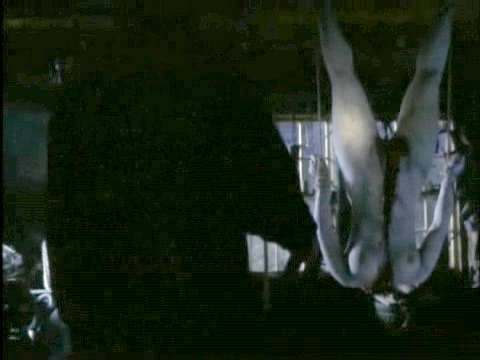
“Any hunter would recognise this position. We got the corpse hanging by the ankles. The first thing I’m gonna do here is make a little incision and tie off the anus. That’s to stop contamination from the feces. You would do that whether it was a deer carcass or a cow or a person… Absolutely necessary for health reasons.”

He cooks a stew from a portion of her thigh, then after dinner goes off to brawl in an ice-hockey game, an arena that seems the very essence of carnivorous virility.

Afterwards, he cooks ribs on a barbecue, assuring the viewers that there are “no animal by-products” used – just soymilk. And a woman’s ribs, of course, thus reinforcing the anthropocentric mythology of the human as not really animal, even though he has just butchered one in the same way as any other animal prepared for human consumption. He quotes the Arawak word barbaca, the grill on which human meat was supposedly cooked, according to explorers like Hans Staden and Jean de Léry, which became the Spanish word barbacoa, and eventually morphed into English as barbecue. Staden’s narratives were later illustrated by Theodor de Bry in his 1592 book Americae Tertia Pars, and the film sneaks in a quick peek at that glimpse of sixteenth century sensationalism.

There’s a lot of moral philosophy interwoven in the scenes of murder and gastronomy. Anthony the cannibal and his friend try to persuade the filmmakers to try some of the ribs, saying, it’s dead, and therefore cannot suffer, whereas we eat live vegetables, and “broccoli feels pain! Did you know that?” This is precisely the argument tossed at vegans by carnists, but in this case, it demonstrates the contention of the nutritionist Herbert M. Shelton:

The cannibal goes out and hunts, pursues and kills another man and proceeds to cook and eat him precisely as he would any other game. There is not a single argument nor a single fact that can be offered in favor of flesh eating that cannot be offered with equal strength, in favor of cannibalism.

Anthony works as a valet in a fancy restaurant, parking cars for rude people, and if you follow the lore of Hannibal Lecter, you will know that rude people are prime targets of cannibals. They park the car of a particularly rude man, take down his address from his licence and, next day, shoot him and load him in their car trunk. Unfortunately, they have a flat tyre and have to head to a pig farm for help, where they witness pigs being slaughtered and prepared for sale, in identical ways to Anthony’s own processes, but with rather better technology, and, oh yes, totally legally.

Most of the film is a spoof on cooking shows, which regularly have smiling chefs, or hopeful chefs, preparing lumps of animal flesh, hoping to win prizes. Anthony shows, in high-speed motion accompanied by the music of the Sugarplum Fairy, exactly how he prepares a body, stripping it and dismembering it until all that is left is two feet (still in socks) and the long femurs. He demonstrates how to get rid of the bones, cutting them up and putting them in a kiln at 2600 degrees – he even uses the line “these are some we prepared earlier.” This is a cooking show for cannibals.

Anthony is a typical modern cognate cannibal; as he says, people expect Hannibal Lecter, so “no one is going to suspect the valet”. This gives him the invisibility that we saw in cases like Jeffrey Dahmer. He loves his old mother who is in a nursing home, and is bewildered by a doctor’s request to do a post mortem analysis brain when she dies, a sophisticated update of cannibalism. He sadly tells the filmmakers that she has Alzheimer’s, but we eventually find that she died of Creutzfeldt-Jakob spongiform encephalopathy, a human version of mad-cow disease, probably from eating human meat that he fed her. He also admits to eating a five-year-old girl called Ashley, because people prefer meat from young animals, but was subsequently perturbed by the extensive police searches, and now avoids playgrounds and schools: “It’s like a supermarket, man.” As New Year celebrations explode outside, he comes to realise the filmmakers are going to release the movie, which will detail all his criminal history, and goes to get his sledgehammer. The rest, as Shakespeare says, is silence.

Anthony has a philosophy that rejects anthropocentrism and sees nothing wrong with cannibalism, or at least nothing that does not apply to any other meat. It’s a cannibalistic rejection of what Richard Ryder and later Peter Singer called “speciesism”.

“It’s only human beings that are so arrogant that they believe they are better than every other kind of animal out there. Worms don’t think about, you know, oh my god, why did mama worm get eaten by a fish; fish eats the worm and that’s that, it’s completely accepted by the worm, and the fish, and small fish gets eaten by the big fish, and if it was so wrong to eat it, then why would it taste so good?”

At the end, he is in jail, but he has published a cookbook. His cooking show has finally paid off.

This is a low-budget film, but is a lot better than might be expected. The creators were lucky enough to secure the services of Chris Bridges, the special effects artist whose credits include the Dawn of the Dead remake, Saw III & IV, 300 and Star Trek Discovery. Unless they actually killed and dismembered people, the result is spectacularly authentic. Anthony Alviano is brilliant in the role, which was written with him in mind.

The full movie (although slashed drastically from 81 minutes to 56 minutes) can, at the time of writing, be seen at https://youtube.com/watch?v=vnGXBRkxXuo.

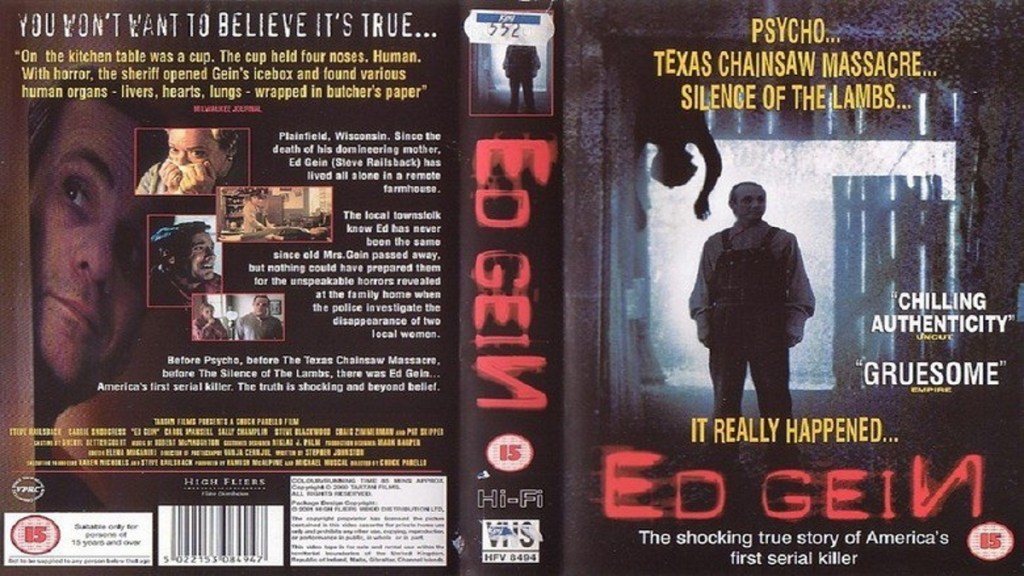
The Butcher of Plainfield: ED GEIN (Chuck Parello, 2000)

Ed Gein is an important figure in the study of American cannibalism, not because he ate a lot of people (we can’t be sure how many) but more for the inspiration his deviant activities furnished to some great books and movies, after his arrest and incarceration.

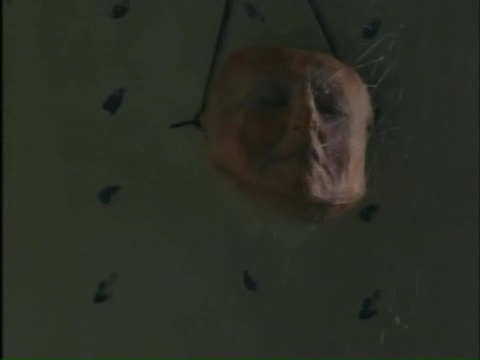
This film, called Ed Gein in the US and Australia and In the Light of the Moon in other markets, follows the life and crimes of the Wisconsin man who became known as “The Butcher of Plainfield”. Plainfield is a little town in Wisconsin, about forty miles from Chicago. Gein would haunt the cemetery at night to dig up corpses of recently deceased women, take them home and make all sorts of things out of their body parts. As well as chairs and lampshades covered in skin, bowls made of human skulls and belts made of nipples, ideas inspired by his fascination with Nazi atrocities, Gein would make women suits out of human skin (which inspired Jame Gumb – “Buffalo Bill” – in Silence of the Lambs) and then dress up as his Mama (which inspired the book and later hugely successful 1960 Hitchcock movie Psycho). His facemasks made out of human faces inspired the character Leatherface in The Texas Chain Saw Massacre. Truly a seminal figure in cannibal studies!

The plot is pretty much an accurate retelling of his hijinks, as far as anyone can tell without asking him (and he claimed he couldn’t remember anything about the murders, plus he’s dead now anyway). Ed (Steve Railsback, who had played Charles Manson several years earlier) grew up with a mother (played by Carrie Snodgress of Diary of a Mad Housewife fame) who was a vituperative fundamentalist and beat the fear of God into her children.

Ed worshipped her and thought she was a saint, and went batshit crazy when she died.

But in a tiny little town like Plainfield WI, everyone was a bit weird (the film starts with some genuine interviews of the locals, and they look even stranger than Ed). Local people thought him odd but harmless, and even employed him to babysit their kids. He seems to have had no interest in women, until the ghost of his mother appears to him in a burning bush (I kid you not, this is how much he is Biblewashed).

Meanwhile, Ed spends his nights digging up recently deceased women and souveniring their parts, particularly their lady-parts, which he has researched pretty solidly.

His house if full of his trophies: lamps made from human spines, and shrunken heads.

But what he really wants is for Mama to return from the dead. He practices on his excavated corpses to see if he can command them to “AWAKE – AND ARISE!” and one seems to turn her head, but by now we are deep in his psychosis. He visits his mother’s grave and begs her to return.

He reads books about head-hunters, Nazis, and even the pulp detective comics that he used to get into trouble for wanking to in his younger days.

There are flashbacks to those younger days, including the funeral of his brother (whom, the movie tells us, he killed, which may also be true). Ed hugs his Mama, telling her it’s just the two of them now, but she pushes him away, feeling his overenthusiastic erection. Ed is a sinner, and he needs his saint.

So anyway, Mama’s ghost tells him that the women of the town are all sinners, whores, and he must visit God’s judgement upon them, then she will be able to return to him. Pretty clear to us, the audience, that he is having psychotic delusions, but to him it’s all very real, so he heads off to shoot, kidnap and eventually fillet and cook two of the townswomen – the one that runs the bar in town and the one that runs the general store. He also collects mementos like noses and breasts, and he particularly likes vulvas.

The rest of the bodies are not wasted either.

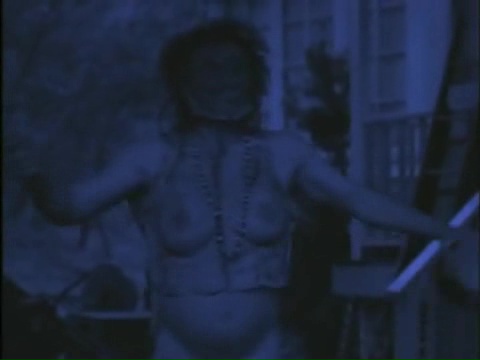
He has no neighbours within screaming distance, so he can get up to whatever he wants, including dancing in the moonlight in what Hannibal would call a “vest with tits”.

But bloodshed is not really his thing (even though he killed his brother, but that was for insulting their mom). The men of the town go off hunting deer as soon as the season starts, but Ed tells one of his prospective victims that he hates hunting.

But Mama has other ideas, and it’s clear that Ed has learnt, as a good Wisconsin carnophallogocentric man, how to dress a carcass. The men of the town are spending their nights inculpably slitting open harmless ruminant mammals of the family Cervidae, but are shocked and nauseated when the carcass in Ed’s basement turns out to be of another species. The word “butcher” has dual meanings – the butchers of Plainfield are horrified by activities of the “Butcher of Plainfield”. Put a capital B on the word butcher and it moves from blameless to shocking. But it’s hard not to notice that, until his psychotic delusions of mother take over, poor Ed is doing what everyone else is doing, but he’s doing it to dead bodies rather than living white-tailed deer.

Once the cops finally accept that Ed is not a harmless eccentric, they find lots of interesting things in his house.

This was a huge story in 1957!

So that’s Ed, our modern, domestic cannibal – a man (usually) who seems a bit odd but, everyone thinks, is apparently harmless. Think of the big names of modern cannibalism – Albert Fish, a sweet old man who took ten-year-old Grace Budd off to a purported children’s party, but really took her home for his dinner. Jeffrey Dahmer, who took young men home for photography and sex but then drugged them, drilled holes in their heads and ate parts of them. Armin Meiwes, who advertised on the Internet for someone who wanted to be eaten, and ate the successful applicant. Issei Sagawa, who shot a fellow grad student at the Sorbonne because he wanted to have sex with her corpse and then eat bits of her. Each of them were described by their neighbours as either “normal” or a bit odd but harmless.

Chuck Parello and Steve Railsback won Best Film and Best Actor respectively at the 2000 Sitges Film Festival, one of the leading festivals featuring horror and fantasy films. But the film scored a wretched 10% on Rotten Tomatoes, with critics calling it “dry and dull.” I beg to differ. Ed is played as dull, because he appeared to be so, right up until he imagines Mama riling him up to declare war on loose women. His dullness and misapprehension of social and religious conventions that are usually unquestioned, is the whole point of the film, and the two main actors, Steve Railsback as Ed and Carrie Snodgrass as Mama, do a superb and convincing job. The slow, rural pace makes the sudden appearance of violence and body parts all the more shocking, and there’s plenty of both. The deaths when they happen are slow and wretched, as they would no doubt be in real life. There’s a surprising amount of suspense, the soundtrack admittedly is incredibly annoying, but other than that it’s a pretty great cannibal film, with lots of interesting philosophical questions to chew on.

Dear Meat (J. Snow, 2020)

This blog has laboured mightily to keep up with the constantly growing catalogue of cannibalism movies and TV shows, as well as the increasing number of actual cases reported in the media. So this week we are taking a rather exciting side-trip into the wonderful world of short stories, a place where the sets can be as lavish as the author wishes since there are no Producers cutting budgets, the protagonists can do anything the mind can conjure up without the need for stunt persons or insurance, and the whole thing requires no masks or social distancing.

The story considered in this week’s cannibalism blog is called DEAR MEAT, and it appears in the third Women of Horror Anthology, titled THE ONE THAT GOT AWAY.

The anthology contains an amazing assortment of thirty fresh looks at the wonderful world of horror. I have, naturally, chosen to review the cannibalism story by J Snow, since that’s what I do, for reasons best known to myself and the Department of Culture and Communications at the University of Melbourne.

Ms Snow has written and published five cannibalism stories; reassuring to know that others also labour in these fields. For those of you who wish to know how (or why) she writes, there is an interview at Paula Readman’s Clubhouse.

Dear Meat was written a few years before the pandemic, but reads like it could be taken from tomorrow’s newsfeed. It involves a small elite group of rich and powerful men who have decided that human population growth is threatening to destroy the biosphere, and so must be stopped and reversed. More than two thirds of the population, billions of people, must be “eliminated.”

Various ingenious and possibly prophetic strategies are mentioned such as introducing viruses and tainted vaccines, genetically modified foods and contaminated water supplies. Free tubal ligations and vasectomies are encouraged, and abortions allowed up to two months after birth. But the key plan in this story is to set the populace at each other’s throats, or more precisely at the barrels of guns. Yes, hunting season for humans becomes the only way to feed the family. Tags are issued, which is apparently the way hunting works in the USA, and the distribution is weighted according to the discriminatory preferences of these shadowy rulers – the “unworthy and unholy” are allotted the most tags meaning the poor and the non-Christians are most likely to be hunted and cooked. Illegal immigrants are always open season. The rich and the politicians, however, don’t ever seem to end up on the butcher’s slabs.

English cleric and economist Thomas Malthus pointed out in 1798 that population increases geometrically, but food availability increases only arithmetically. All things being equal, this means we must run out of food, unless there is a disaster or an intentional reduction in human population growth. Too many people and not enough food is likely to lead to cannibalism, although Malthus did not venture into such abject speculations. The ethologist John Calhoun crossed that bridge in his study of rats, where he found that putting rats into a utopian environment, with no shortage of food or shelter, and letting them breed unconstrained, ended up in a chaotic maelstrom of sexual deviance and cannibalism. A Malthusian/Calhounian scenario is the basis for the film Soylent Green which is set (honest, I’m not making this up) in 2022, when overpopulation has led to a situation where the enormous population of poor people can only be fed by recycling the bodies of those who die or can be persuaded to accept euthanasia.

Not so in Dear Meat. The people running the government know one thing that has been true since the start of humanity: when there is hunger,

“People turn on each other, become monsters, all for one tiny morsel.”

The people turning on each other in this story are from a family; a man, a woman and a child. Not even close to a large family by today’s standards, but in the world of the story, any increase in population (child) must be balanced by a decrease (a hunted tag). One person must die, be carted to the butcher and carried home as meat, just as the odd hunter does now to deer or kangaroos or anyone else that happens to move at the wrong moment.

I am introducing some levity because this is a grim scenario, skilfully crafted, beautifully written and with an ending that I absolutely will not spoil. The wonderful thing about eBooks is that they are ridiculously affordable and offer hours of reading pleasure. This collection, and particularly Dear Meat, is highly recommended.

Here’s a review from Goodreads:

And here’s one from Amazon:

The author’s details are here, and the book is available at on line retailers including Amazon.