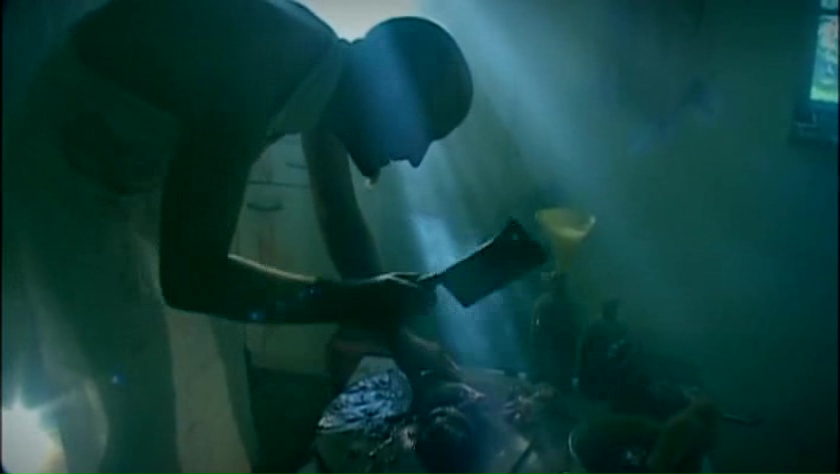
“I’m just gonna make you my zombie”: DAHMER: MONSTER – The Jeffrey Dahmer Story (Murphy and Brennan, Netflix, 2022)

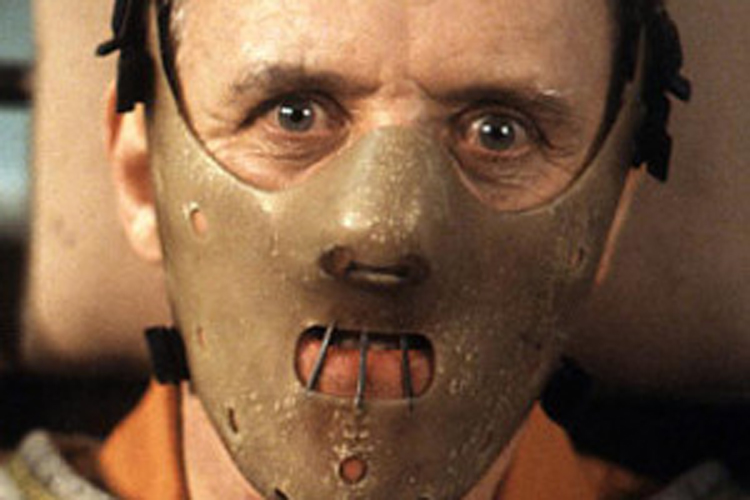
This new docudrama (I can’t believe that’s a word) is quite a big deal in the highly respected academic discipline of Cannibal Studies. While many people think of Hannibal Lecter when the subject of cannibalism arises, in terms of contemporary culture (and therefore putting aside the Donner Party for now), Jeffrey Dahmer, known as the “Milwaukee Cannibal”, is a crucial figure, not least because he really existed, we know a lot about him, and we have a good understanding of what he did. Dahmer typifies the modern cannibal in that he seems so unremarkable; we have seen, and perhaps remarked at, his cool demeanour and the fact that he seemed like just an ordinary, everyday boy next door.

There have been a few Dahmer movies and documentaries, including some interesting interviews with the man himself, arranged in jail, before a fellow prisoner caved his head in with a metal bar. This new one has a pedigree though. First of all because it is presented by Ian Brennan (Glee, Scream Queens, The Politician) and  Ryan Murphy, who signed a $300 million deal with Netflix in 2018 and who brought us such enormous and terrifying hits as Glee, Nip/Tuck, American Horror Story and American Horror Stories.

Monster – the Jeffrey Dahmer Story runs over ten episodes, released concurrently on September 21, 2022. The length alone (almost nine hours) makes it more comprehensive and immersive than the other treatments. It is also different to most serial killer / cannibal documentaries and films in that it is presented not from Dahmer’s point of view, but from that of those around him – the victims, but also the family and the neighbours (who had to put up with the appalling stench of death that always emanated from his rooms or apartments).

“We had one rule going into this from Ryan, that it would never be told from Dahmer’s point of view.”

The first episode drops us into the main event – Dahmer in his Milwaukee apartment, trolling gay bars and offering young men and boys money to come home with him for a photo session, where he drugs them and attempts to turn them into love zombies by drilling holes in their skulls and pouring acid into their brains. When this doesn’t work, he has sex with their corpses, and harvests their meat.

One man escapes and flags down the police, who arrest Dahmer. The series then turns back to his childhood, his parents’ messy divorce, and the isolation which left him free to hatch his murderous plots. Later, we meet some of his victims, and his neighbour Glenda Cleveland who repeatedly tried to notify the police and FBI of what she heard, saw and smelled, but was comprehensively ignored and even threatened for her interventions.

“What do you do in there? The smell, power tools going all hours of the night, I hear screaming coming from your apartment.”

Dahmer, threatened with eviction due to her complaints, offers her a sandwich, saying “I used to be a butcher. I made that just for you.” Glenda refuses to eat it, and we know why – it looks like a chicken sandwich (and probably is).

But our willing suspension of disbelief declares it human meat, which is not kosher in any religious tradition. He tells Glenda to “eat it!”

Most of this documentary is very true to the facts as we know them, but in any re-enactment, there will be gaps to fill in or characters that need to be heard, without filling the cast list with an unmanageable number of people to remember. So the sandwich was apparently a fact, but was not given to Glenda but to another neighbour, Pamela Bass, who thought he was a generous if shy young man, and admitted that she ended up eating it.

Glenda, played superbly by Niecy Nash (from Scream Queens and Claws), is a strong woman caught in one of those nightmares where you know there is horror, but no one will believe you.

She demands to know what is in the sandwich.

“It’s just meat… It’s like a, uh, pulled pork.”

This is a regular theme of cannibal texts: they remind us that humans are animals, and our flesh and organs are made of meat. It’s a popular meme on animal rights social media sites. This one shows the real Dahmer, in case you’ve forgotten what he looked like.

Dahmer was looking for love, but he was not willing to risk losing it, so he tried to conscript his victims as undead zombies or as corpses, skeletons, or just happy meals. He showed affection – he is seen lying with his corpses, holding their hands, preserving their body parts. He loved them in much the same way that farmers often claim to love their cattle, sheep, pigs, etc, just before putting them on the abattoir trucks.

Dahmer is played brilliantly by Evan Peters (American Horror Story, X-Men, Mare of Easttown), who looks a lot like Dahmer, but with a touch of the young Malcolm McDowell – imagine Clockwork Orange but with cannibalism. If you want to know what Dahmer might have looked like forty years after his arrest, check out McDowell in Antiviral.

Jeffrey Dahmer murdered and dismembered seventeen men and boys between 1978 and 1991, thirteen years during which the police had no clue about his serial murder spree and, some might say, didn’t care much, since most of the victims were people of colour. And this is the heart of this rendition of Dahmer’s story – he was protected by the racism and incompetence of the American justice system. Here was a clean-cut white man, and people of colour disappear without trace all the time, apparently, so the police did not bother him, while the judges treated him as just a naughty boy.  Glenda’s frantic calls were met with apathy or rudeness.

He kept getting away with everything – one of the most extraordinary moments is shown in flashback in episode 2. On May 27, 1991, Glenda Cleveland called the police to Dahmer’s apartment after her daughter, Sandra Smith, and her niece, Nicole Childress, found a bleeding, naked and incoherent boy on the street who was running from Dahmer. Dahmer appeared, white and polite, and told the police that the boy was his 19 years old boyfriend.

He said the boy was drunk and they had been in an argument, and so the cops helped him take the boy back to his apartment, had a quick look around, made homophobic remarks about AIDS, and left the boy there.

The boy was bleeding from a hole drilled in his skull. After the police left, he was dead within the hour. It was later discovered that the boy was 14-year-old Konerak Sinthasomphone, Dahmer’s 13th victim. Incredibly, Dahmer was actually on parole for an earlier arrest for the molestation of another child, who was one of Konerak’s older brothers.

When Cleveland spotted Konerak’s photo in a missing person alert in the newspaper days later, she realised he was the young boy Dahmer had claimed was his boyfriend. She contacted the police and the FBI yet again, but they didn’t even return her call. Five of Dahmer’s seventeen murders, including that of Konerak, were carried out after Cleveland began contacting police. All but three of Dahmer’s victims were non-white.

The Reverend Jesse Jackson, a leader in the Civil Rights movement since the time of MLK, got involved in the case despite the urgings of some of his supporters, who didn’t think the movement should be linked to “a gay serial killer who eats people”. But as he says:

“I realised it was not just a gruesome horror show. It’s a metaphor for all the social ills that plague our nation. Bad policing, underserved communities, the low value we assign to our young Black and brown men, especially if they happen to be gay.”

The old profiling stereotypes no longer work, in fact never did. Dahmer was a serial killer who was ignored by the law for thirteen years, because he was white and male. In the Soviet Union at the same time, Andrei Chikatilo was killing and eating parts of over fifty women and children, ignored by the police force, because serial killing was considered impossible in the “workers’ paradise”. But those profiles still endure: a Black man on the street is instantly suspected of criminal intent, a white man, even Jeffrey Dahmer, is largely untouchable. In that sense, society dehumanises the poor, the coloured, the disabled, just as effectively as Dahmer did to his prey.

As the philosopher Michel Foucault observed, the world outside was a scary place filled with monsters up to the seventeeth century, and those monsters were thought to be probably criminals. But in modern times, the criminal is considered likely to be a monster. Ancient monsters were recognisable – usually grotesque and often hybrids of humans and other animals. But the contemporary monster looks, speaks and eats pretty much like the rest of us. Like Jeffrey Dahmer – the boy next door.

Serving your crew: DREAD HUNGER (eight-player cannibalism game)

Imagine you are trapped on a ship surrounded by ice in the Arctic, and some of your friends might actually not be whom they seem. Dread Hunger, a New Zealand computer game in which players can cannibalise their friends, has become a huge success, mainly in China.

I usually blog about cannibal movies here, or news stories about cannibalism when they break. This is the first game I have covered, although I am waiting to see the game “Borneo: A Jungle Nightmare” which is due for release this year – it is scripted and directed by Ruggero Deodato, who brought us one of the seminal cannibal movies in 1980: CANNIBAL HOLOCAUST. This game was originally going to have the same title, but is not a remake (in game form) of the original, but more like fourth in Deodato’s cannibal saga. Due out sometime in 2022.

Anyway, back to DREAD HUNGER! When the Christchurch company, Digital Confectioners, released the game earlier this year, they were hoping they might reach 10,000 players in the US. To their surprise, they found that more than 260,000 people in China play the game every day. Due to time zones, says Director Sam Evans, the demand is mostly between the hours of 12.30am and 5am New Zealand time (which for computer nerds is a fairly normal operating time).

Dread Hunger is a survival game set during an Arctic exploration in 1847-48. Players can build fires, fight off wolves, and hunt for food, including, sometimes, human flesh from their shipmates.

There are various weapons, and the players can also “pick up severed heads and limbs and use them to kill.”

One of the strategies is:

Betray Your Friends
Feed them tainted food, lure animals to attack them, hex them with blood magic, or if all else fails… just shoot them in the back.”

The game has become a target of hackers, including DDOS attacks and “cheats” where hackers find a loophole in the game code they can exploit to give players an unfair advantage.

Dread Hunger has just passed 1 million copies sold, a figure Evans called “insane”. The graphics are splendid and, well, graphic.

This has led to some new, if profitable, challenges.

“The American market largely treats games like a product. They buy the game, they play the game on average 10-15 hours over a few weeks, then they move on. But in China when they find a game they like, they play it for hundreds of hours, for years and years. This forced us to treat the game like a service. We now have to focus on continual development and regularly updating the game to add more cool features over time.”

The game is mainly based on the 1845 expedition of 129 men led by explorer Sir John Franklin, which left Britain for the Canadian Arctic in search of the elusive Northwest Passage. Their ships, the H.M.S. Erebus and the H.M.S. Terror never returned.

Rumours that the crew resorted to cannibalism have swirled around the doomed expedition since the nineteenth century. Evidence suggests that Franklin’s crew may have not only consumed the flesh of deceased compatriots, but also cracked their bones, to eat the marrow inside. In 1854, interviews with local Inuits described piles of human bones, cracked in half.

In 1864, Sir Edwin Landseer‘s painting Man Proposes, God Disposes caused a stir at the Royal Academy exhibition for its depiction of two polar bears, one chewing on a tattered ship’s ensign, the other gnawing on a human ribcage. Cannibalism did not get a mention – yet. 

More recently, in the 1980s and 1990s, researchers recovered remains of the crew on King William Island. Knife marks on the bones backed up early accounts of human cannibalism. A newer analysis of 35 bones by anthropologists Simon Mays and Owen Beattie suggests that the men did indeed eat each other. The bones showed signs of breakage and heating—indicating that the crew members probably cooked them to extract the marrow. Mays and Beattie published their results in 2015 in the International Journal of Osteology.

Horror writer Dan Simmons‘s 2007 book The Terror was developed as a 2018 AMC television series also called The Terror. The expedition has, over the years, taken on the mythic value to the British that the Donner Party holds in the USA.
One of the lines from the launch trailer (above):

“I have heard it said that this land can change a man. Turn him into a beast. Well, to that I would say—men were always beasts. Some you see, well, they’re just better at hiding it than others.”

Dread Hunger is what is called in games parlance a “social deduction game”. This is a category of game in which players attempt to uncover each other’s hidden role or team allegiance. It’s an ideal formula for a population who never know quite who the agents of their government might be. And also an ideal cannibalism game for the recent history of man-eating, in which the cannibals like Albert Fish, Jeffrey Dahmer, Issei Sagawa and Armin Meiwes all appeared as very ordinary, normal neighbours.

We all need to do some social deductions, it seems.

CANNIBALISM NEWS January 2022 – German killer who had ‘cannibalism fantasies’ jailed for life

‘Cannibal teacher’ hid his victim’s penis to avoid being outed

A man dubbed by the press a ‘cannibal teacher’ has been convicted of murder and sentenced to life in prison. The judge said the murder was carried out as part of his “cannibalism fantasies”. The 42-year-old, identified only as Stefan R, was also convicted of disturbing the peace of the dead, after a trial that opened in August 2021 and concluded this week.

German prosecutors described evidence of cannibalism in the killing of 44-year-old high-voltage technician, Stefan Trogisch, on 6 September 2020.

Stefan R. allegedly ate parts of his lover after sex, and subsequently concealed somehow the victim’s penis, so he wouldn’t be “outed” as gay. German police arrested the 41-year-old maths and chemistry teacher in November 2020 on suspicion of “sado-cannibalism for sexual gratification” after they found human bones stripped completely of flesh in a Berlin suburb. Under German law, the man’s surname cannot be revealed, yet there are pictures of him everywhere, so I’m guessing this is not a serious privacy issue.

A Berlin prosecutor’s office spokesperson said

“The suspect had an interest in cannibalism. He searched online for the topic.”

Well, hello! So do I, and maybe you, dear reader. I also look up COVID and cricket, but that doesn’t mean I caught one or played the other. Maybe he was writing a PhD thesis?

No one knows whether the victim, the other Stefan, had an interest in cannibalism, but we know that the two men were communicating on a gay dating website called Planet Romeo, according to a report in Der Spiegel. Stefan R. called himself “Spieltrieb1976” (roughly translated as “instinct to play”) and Stefan T. (now deceased) was “Dosenöffner79” (tin opener). Stefan R. also used the handle “Masterbutcher79” which prosecutors claimed was a reference to Armin Meiwes, who was dubbed the “Master Butcher of Rotenberg.”

The bones of Trogisch were found a couple of months after the murder, and showed signs of bite marks, although having been out in a field for a couple of months, it’s hard to say what species of animal had been biting them. A police officer told the newspaper Bild:

“Based on the bones found, which were completely stripped of flesh, and further evidence, we strongly suspect that Stefan T was the victim of a cannibal.”

Sniffer dogs led police to the apartment of the suspect, where they discovered knives, a medical bone saw, and a large freezer. Investigators also discovered 25kg of sodium hydroxide, a reagent that can be used to dissolve bodily tissue. It can also be used to make soap, which the accused claimed he bought it for. Traces of blood were discovered in the hallway of the suspect’s flat. The defendant had previously erected a sex swing in the living room and had a sign on the window ledge that read: “Instructions for emasculating and slaughtering a person.” He reportedly searched terms associated with cannibalism on the dark web such as “long pig” and “fatten and slaughter people” before Trogisch arrived at his residence. According to German newspaper Bild, he had also previously searched whether or not a person could survive after having their penis cut off.

Stefan R. told the court that Trogisch had died in his sleep on the sofa after a (presumably vigorous) sexual tryst. He claimed that Trogisch had consumed a cocktail of drugs and alcohol, and that he tried to revive him, but did not call emergency services “because it would have come out that I am homosexual”, according to Bild.

He said he decided to dispose of the body, and opted to separate Trogisch’s genitals “since my DNA could still have possibly been present due to the oral sex I performed”. But hours after the death, he logged back into the human slaughter forum where he proudly told a man from the city of Bremen: “I have it [the penis] now!”

In the sensitive style that we have come to expect from British news media, The Sun wrote

“the victim’s manhood has not yet been found.”

Judge Schertz said that, in 30 years as a judge, “nothing like this has come across my desk before”. He added that the defendant’s version of events was “unbelievable from start to finish”, noting the “very careful separation of testicles and penis” as evidence of a cannibalistic ritual.

The trial began in August 8 2021 and heard an autopsy report which revealed that the cause of death was a fatal loss of blood from the pelvic area due to a severed artery. This would seem to indicate that Trogisch bled to death after his penis was chopped off. The autopsy also ruled out the defendant’s claim that the victim was affected by alcohol or drugs, causing his death.

It’s a sensitive subject in Germany, where cannibalism was not uncommon between the world wars and was made into the subject of Fritz Lang’s masterpiece – “M – EINE STADT SUCHT EINEN MÖRDER” one of my favourite cannibalism movies. More recently, Armin Meiwes in 2001 met Bernd Jürgen Brandes on a site called Cannibal Café, and after a romantic interlude, agreed to Brandes’ request to kill him and eat him. The first act of the killing (all captured on video) was Meiwes cutting off Brandes’ penis, which he then cooked and the two men attempted to eat, very unsuccessfully. Meiwes subsequently killed Brandes and ate an estimated 45-65 pounds of flesh (20-30kg) from him.  Meiwes is still in jail, and Brandes is still in Meiwes (well, only in spirit, unless he has a very slow digestive tract). Unlike Brandes, there is no evidence that Trogisch had “consented” to his killing.

Then in 2013, Detlev Guenzel, a German police forensic specialist (you couldn’t make this stuff up), chopped up a man he met on a cannibalism fetish website and buried the pieces in the garden, taking a picture of himself standing next to a skeleton and holding an axe, wearing nothing but socks and sandals. There is little evidence to show that Guenzel ate any of the victim, although the victim’s penis and one testicle were not found in the flowerbed where the other pieces of the puzzle were unearthed.

There is probably another thesis to be written on the proportion of cannibalism reports that involve queer sexuality. Meiwes, of course, and Jeffrey Dahmer, who collected young men and killed them to keep them close. The film The Silence of the Lambs was heavily criticised when it was released for showing the serial killer Jame Gumb (“Buffalo Bill”) as a transsexual, although the plot was all about how he wasn’t authentically trans, and was killing women because he was rejected for gender reassignment surgery, and so was making himself a woman suit out of the skin of his victims. The film’s cannibal, Hannibal Lecter, was not gay in that series of films and books (he fancied the hell out of Clarice Starling), although Krendler, the nasty dude from the Justice Department in the book Hannibal, said he “figured he [Hannibal] was a homosexual” because, you know, he had good taste in food and wine and music – “artsy-fartsy stuff”. Krendler’s brain is later eaten by Hannibal and Clarice, so we have no reason to take him too seriously. But there was certainly plenty of homoerotic interaction in the twenty-first century reboot of Hannibal on TV, particularly when Hannibal is holding Will tenderly while cutting him up.

Is this tendency to depict cannibals as queer a reflection on the traumas experienced by gay youths and where they may lead behaviourally, or simply a noxious reaction against the lifting of restrictions on gay couples? Someone will write a paper on that one day. They probably already have.

The other issue raised by this case if of course the persistent theme (Meiwes and Guenzel again) of the chopping off and consumption of the male penis. Stefan R. discussed on one forum whether it was possible to survive a genital amputation – saying that some people desired it in order to feel like women, or else take masochistic pleasure in it. Prosecutors argued that Stefan R. had cut off the victim’s genitals with the intention of eating them, and the judge agreed, but it could not be established whether he had carried out that plan.

Freud had a lot to say about this! When little boys discover that their mothers or sisters have no penis, they assume the women were castrated, and as a result fear their own castration by their father (whom they suspect of the act). This is supposed to be the basis of the repression that eats away at the male mind and drives us to our various deviant behaviours.

Subsequent psychological studies as well as feminist analyses have demolished much of Freud’s speculative theories, but there is one thing we still don’t know – where is Stefan Trogisch’s penis?

The presiding judge, Matthias Schertz, told Stefan R. “What you did was inhuman”. But another German, Friedrich Nietzsche, might have called it “Human, all too human”.

“Egoism is not evil, for the idea of one’s “neighbour” (the word has a Christian origin and does not reflect the truth) is very weak in us; and we feel toward him almost as free and irresponsible as toward plants and stones. That the other suffers must be learned; and it can never be learned completely.”

“FERAL” (American Horror Stories, episode 6 – August 2021)

Last week’s blog was not a film or TV story but a real event, the account of displaced people being kidnapped for ransom by Mexican cartels, and chopped up for their meat if the money was not found. This segues nicely into this week’s blog, in which a boy disappears and the parents suspect a cartel kidnapping, but in fact (spoiler alert) he has joined a group of feral cannibals.

The response to news of cartels, kidnapping and cannibalism is to shake our heads and ask how people can DO such things. The assumption behind such a question is that we have ‘progressed’ and, while cannibalism may have been a part of our savage past, it should have been left behind in today’s enlightened civilisation. Yet we are aware that cannibalism continues to exist, and that it can reappear when food is short, as in the siege of Leningrad, or for revenge like the man who killed and ate up to thirty women because he resented their rejection of him, or sexual attraction and desire to keep the person with us (or within us) like Jeffrey Dahmer and Armin Meiwes, or just for fun and profit, like Fritz Haarmann.

Sigmund Freud wrote of an ORAL SADISTIC or CANNIBALISTIC STAGE, which coincides with the time babies’ teeth start to erupt. We recognise our mother’s breast as external to us, and wish to retain ownership, by biting and swallowing it. At the same time, the aggression is tempered or sometimes instead magnified by anxiety at the potential loss of the other (mothers don’t like to be bitten) or fear that the much stronger parent will instead choose to devour the child. Our first instance of logical reasoning – if I can bite her, she can surely bite me harder. These early influences may sink into the sludge at the bottom of our unconscious minds as we grow up, but they remain there, and can reappear at any time in different forms.

It is tempting, therefore, to see acts of cannibalism as simply throwbacks – to our earlier social models (savagery) or to psychotic deviance dredged up from tortured unconscious memories. Civilisation, we think, can conquer such eruptions. But not always, and not in this episode of American Horror Stories, another episode of which we considered recently.

This one is set in, and against, nature. A man, woman and three-year-old boy are driving into Kern Canyon National Park in California for a camping trip. The father wants to return to nature, get them out of their comfort zone. The mother points out that “out of the comfort zone” is equivalent to “uncomfortable”, and the little boy wants a TV. A phone call on the way tells us that the father is a lawyer defending a “greedy-ass corporation” – the type that exploits and destroys the environment for profit. This is going to be about nature, red in tooth and claw, and revenge.

The boy, Jacob, disappears while camping with his family. Ten years later, his father, Jay, is approached by a hunter who tells him that he believes Jacob is alive, kidnapped by a drug cartel running pot farms in the park. The hunter leads Jay and Jacob’s mother, Addy, into the woods to look for him. The Park Ranger, who for some reason is Australian, warns then not to go, but of course they head off and, like last week’s Mexican abduction, it’s a trap.

Deep in the woods, they are attacked by wild, human-like creatures, who eat their abductor. Jay and Addy seek refuge at the Park Ranger’s station, where the Ranger tells them that the National Park Service was created by the government

“…to keep Americans from things that would kill and eat them.”

These are feral humans, he says, possibly descendants of Vikings, or of mountain men who never came down from the mountains, or maybe Civil War soldiers who never surrendered. Or people who just checked out, had enough of the world. In any case, they have gone back to nature, gone feral, and so are a threat to the civilised, cultured humans who use and abuse the natural world. The Ranger tells them there are are tribes of ferals in every National Park – over 2,000 people have vanished from the parks over the years. There are certainly people living off the grid in the wild areas of the world, but not necessarily feral cannibals. Why is it kept top secret?

“Governments need their citizens to believe they are in control. Plus, the National Parks generate billions of dollars in revenue every year. Capitalism, baby! If people knew there were feral cannibals running around, attendance might drop off.”

The Station is attacked by the feral cannibals, and the ranger is killed. Jay and Addy are taken to the leader of the creatures, seated on a throne of skulls, looking remarkably like a Renaissance Jesus.

Of course it is Jacob (speculation is already mounting that Jacob, the cannibal king, might get his own spin-off series). Jacob seems to recognise his parents, but when one of the creatures asks Jacob who they are he answers, “dinner“. Freud would have enjoyed the feast that follows: the “primal hordes” overthrowing and eating the father; Jacob, frozen in his infantile cannibalistic phase, tasting his parents’ blood.

This episode is also a study in what Georgio Agamben calls the “anthropological machine”, a paradigm that we use to separate ourselves from other animals. In the pre-modern machine, non-humans were depicted as human-like to draw the distinction – we spoke of werewolves, minotaurs and cyclops; in this episode they evoke Bigfoot or the Australian equivalent, the Yowie. But the modern anthropological machine instead declares certain humans to be less than human or else inhuman – race, ability, gender or social status may be used to divide us into human and “other”. The ferals are inhuman because they have regressed to savagery, chosen nature over civilisation. For hundreds of thousands of years, we existed in small clans, and anyone outside the immediate family was assumed inhuman. We need to fear, and sometimes eat, the outsider, because we evolved to do so.

We like to think that this is all ancient history. But our sanguine belief in social progress lulls us into supposing that that acts of cannibalism (as depicted in this blog thecannibalguy.com, for example), are simply aberrations, throwbacks to a savage past, or unfortunate outbursts by deranged or psychopathic individuals. What this confident diagnosis ignores is the inherent violence of the human species.

As sociologist Zygmunt Bauman points out, the civilising process has simply presented a “redeployment of violence”. Instead of hunting animals or, more recently, slaughtering them in the street in what used to be called “the shambles”, we now mass produce death in huge factories called abattoirs, which are placed away from residential areas and surrounded by high walls and sophisticated security systems. Violence against our fellow humans has been similarly redeployed, with drones and smart bombs replacing hand to hand conflict. Fear of social sanctions or maybe divine punishment keep us in control of our internalised aggressive drives against our fellow citizens, at least some of the time. But at any moment, for reasons usually unclear, we can loose this violence, together with the voracious appetite that characterises consumerism, and redeploy it against adversaries. Call it feral, as per this episode, or perhaps, instead, call it authentic, cannibalistic humanity.

“…we are all potential cannibals”: SERIAL KILLERS: THE REAL LIFE HANNIBAL LECTERS (Sean Buckley, 2001)

This is an American documentary about serial killers, but specialising in those who ate parts of some of their victims. I guess that makes it inevitable that they will throw the name Hannibal Lecter in there, even though the similarities are not immediately apparent.

There are a lot of documentaries about cannibals, some mostly interested in sensationalism, and others seeking some sort of journalistic accuracy. This is one of the better ones, with a good selection of experts commenting on the various cases.

Cannibals, and particularly cannibal serial killers, are a real problem for the media. The difficulty comes from the scepticism that journalists need to cultivate in interpreting a world of stories that are stranger than fiction, or sometimes are fiction disguised as fact, or just fiction that people want to believe. Cannibal books and films fall into the horror genre and are usually lumped together with vampires, zombies, ghouls and other strange monsters out of their creators’ nightmares. So cannibals are a problem.

Cannibals are real. Many cannibals have had their activities thoroughly documented, some are even willing to be interviewed. Jeffrey Dahmer gave a range of interviews in which he spoke openly of the way he lured young men and boys to his apartment in Milwaukee and drugged them, then drilled holes into their heads and injected acid, hoping to create compliant zombie lovers, or else strangled and ate them. Dahmer was killed by a fellow prisoner after serving only a tiny fraction of his sentence of 937 years imprisonment.

But others are still alive – Armin Meiwes is in prison in Germany for eating a willing victim whom he met on the Internet and has willingly given interviews revealing his deepest passions, and he even gets out on day release from time to time. Another documentary reviewed on this site a couple of years ago compared him to, yep, Hannibal Lecter.

Issei Sagawa was arrested in Paris for killing a Sorbonne classmate whose body he lusted after and then eating parts of her, but was not sent to prison as he was declared insane. When the asylum sent him back to Japan, he was released (the French didn’t send any evidence with him), and lives in Tokyo where he has made porn movies, written for cooking magazines, and yes, done interviews for unnerved journalists. There are at least three documentaries on him, which we will get to – eventually.

Documentaries like this one love to compare real-life cannibals, or the much wider field of serial killers, with the fictional character, Hannibal Lecter, “Hannibal the Cannibal”. The problem here is that the serial killers in this doco (or any that weren’t) are not very much like Hannibal. Actual modern cannibals are usually categorised as banal, normal-looking folks who under the polite surface are depraved psychopaths, while Hannibal is civilised, educated, rational, brilliant and independently wealthy. He is a highly respected psychiatrist (until his arrest) and remains a likeable protagonist to many readers and viewers, despite his penchant for murder and guiltless consumption of human flesh. He even introduces his own ethical guidelines: he prefers to eat rude people: the “free range rude” to quote another Hannibal epigram.

Much of the commentary in this documentary is by Jack Levin, a Criminologist with a rather distracting moustache, or perhaps a pet mouse that lives on his upper lip. He sums up the modern cannibal serial killer:

 “Many Americans when they think of a serial killer will think of a glassy-eyed lunatic, a monster, someone who acts that way, someone who looks that way. And yet the typical serial killer is extraordinarily ordinary. He’s a white, middle-aged man who has an insatiable appetite for power, control and dominance.”

The standard serial killer appears very ordinary indeed. According to the doco, 90% of serial killers are white males. Many serial killers, we are told, experienced a difficult childhood, abused emotionally, physically or sexually. Hannibal of course saw his sister eaten, and probably innocently joined in the meal, so I guess you might call that a difficult childhood. But of course many people have difficult childhoods (less difficult than Hannibal’s, one hopes) without becoming cannibals or serial killers. Many of these so-called “real life Hannibal Lecters” featured in this program were not even cannibals, such as John Wayne Gacy, who murdered at least 33 young men and boys, but did not eat them, and was not even vaguely similar to Hannibal in appearance, MO, or dining habits. Same with Ted Bundy, who also gets a segment. These killers killed because they enjoyed it – as an act of dominance. Serial killers, Levin tells us, get “high” on sadism and torture. Hannibal, on the other hand, just killed his victims the way a farmer might choose a chicken for dinner – slaughter the tastiest, fattest one, or else the one who has been annoying him.

 “There is much discussion as to whether cannibalism is an inherent characteristic in all human beings, our animal impulses, or whether cannibalism stems only from the minds of mad beasts such as some of the most prolific serial killers.” Richard Morgan, narrator.

Eventually, we get to the cannibals. First up is Andrei Chikatilo, the Russian cannibal who sexually assaulted, murdered, and mutilated at least fifty-two women and children between 1978 and 1990. Chikatilo, we are told, liked to cook and eat the nipples and testicles of his victims, but would never admit to eating the uterus – far too abject for his psychosis. Sigmund Freud and Julia Kristeva would find that fascinating.

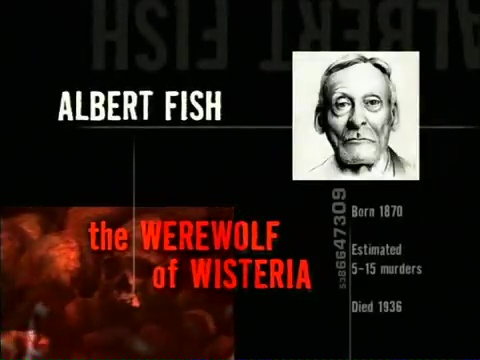
 We look in some detail at Albert Fish, the “Gray Man” who tortured and killed probably fifteen children around the US at the beginning of the twentieth century. He mostly specialised in the children of the poor and people of colour, but was eventually caught because he ate a little white girl, causing the police to take the cases seriously at last.

A large section of the documentary is dedicated to Jeffrey Dahmer, perhaps the most famous of the modern real-life cannibals. Dahmer was not a sadist, disliking violence and suffering, so he did not really fit the description used in the doco, and was certainly no Hannibal.

The other experts wax lyrical about cannibals, such as author and psychiatrist Harold Schechter, who speculates that

Anthropological evidence seems to suggest that cannibalism was a kind of activity that our pre-human ancestors indulged in with a certain regularity, so I think there is probably some sort of innate impulse towards that kind of activity… serial killers act out very archaic, primitive impulses that clearly still exist on some very very deep level.”

Well, that’s definitely not Hannibal, the Renaissance man, who carefully considers each action and dispassionately stays several steps ahead of his pursuers. Jack Levin again:

“Any serial killer who cannibalises victims has broken one of the most pervasive and profound taboos in all of society. Psychologically, this means the killer has achieved the opposite of what he had hoped… in terms of ego, in terms of self-image, he has got to feel worse about himself.”

That certainly is not Hannibal!

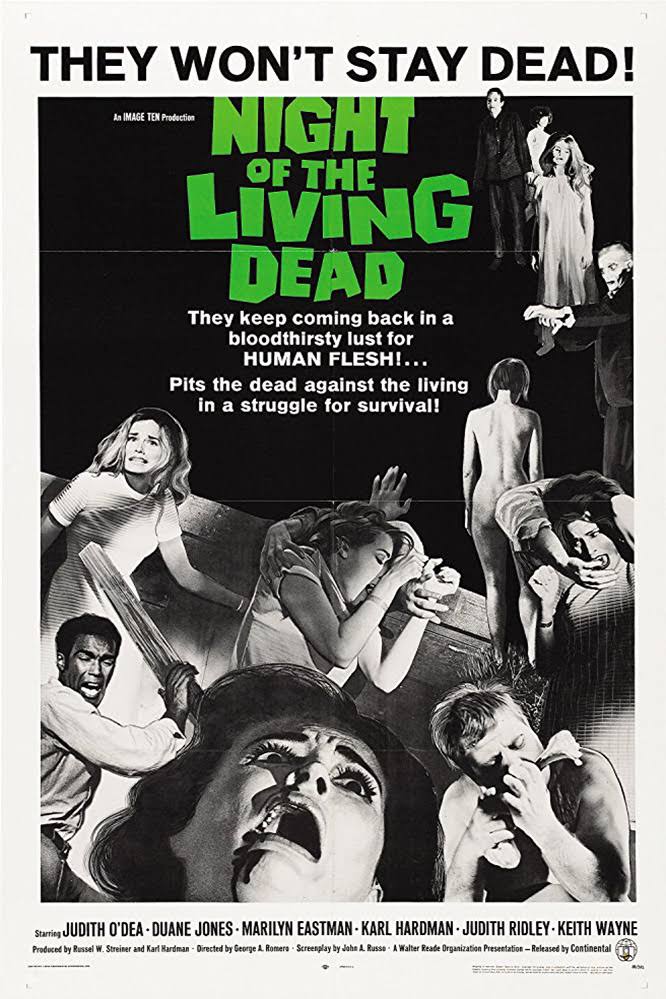
But there are some interesting observations in this documentary if we set aside the obvious problems with the comparisons with Hannibal. Zombie flesh-eaters were first popularised in Night of the Living Dead which came out in 1968, what the documentary calls “the most murderous decade” – the 1960s, followed a few years later by The Texas Chain Saw Massacre. People flocked to the cinema to see people being eaten because two Kennedys and MLK were assassinated and the brutal, unending Vietnam war was filling the television screens? Maybe so.

Levin tells us

Most people don’t see the difference between Hannibal Lecter and Jeffrey Dahmer. To the average person, there is no difference between fact and fantasy.

 Col. Robert K. Ressler, who founded the FBI Behavioural Sciences Unit (which makes him a real life Jack Crawford) points out that there are no serial killer psychiatrists, nor do serial killers normally become well integrated into the upper levels of society like Hannibal. So he’s not helping the Hannibal comparison at all. Nor is Levin, who points out that Dahmer was remorseful at his trial, and went out of his way to avoid inflicting pain, unlike most serial killers to whom the killing is a “footnote” to the main text – the torture of the victim. So Dahmer does not fit into the model of serial killer presented here, and he has nothing in common with Hannibal Lecter.

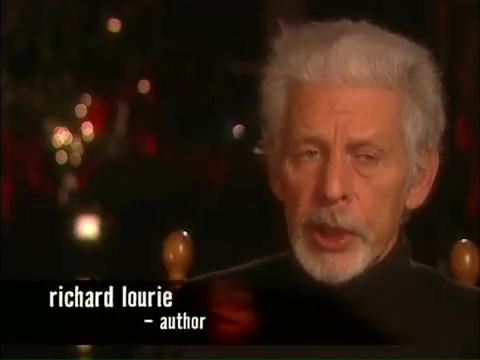
But author Richard Lourie, who wrote a book about Chikatilo, points out that we, the audience, really want to see the serial killer as a Nietzschean Übermensch (superman) – a brilliant criminal genius. He also tells us that Hannibal seems asexual, above the primal drives that motivate people like Chikatilo and Dahmer. Not entirely true of course, if you have read the end of the book Hannibal or read any of the Fannibals’ fan fiction which speculates on some juicy homoerotic episodes between him and Will.

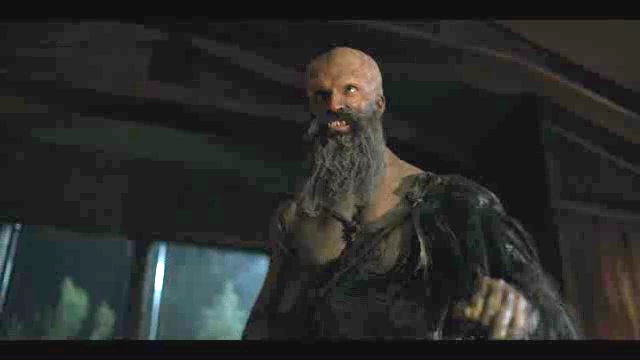
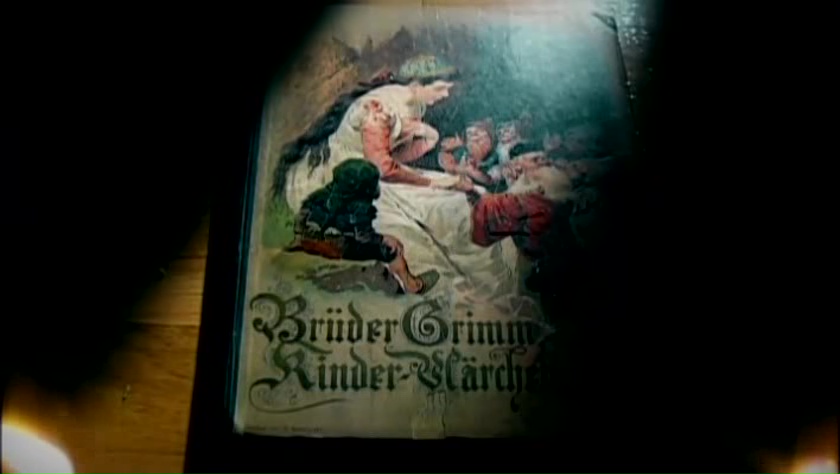
But there is a point to all these rather painfully stretched comparisons between real serial killers and the fictional Hannibal Lecter. Hannibal, Leatherface, the Zombies, are all the inchoate faces of our nightmares, and horror stories are our way of understanding the terrors that fill the news sites. Hannibal is not typical of the real-life serial killer or cannibal, but remember that the apparently kindly old woman who wanted to eat Hansel and Gretel was hardly typical of the horrors of Europe at the time of famine and plague when the Grimms were writing their stories. Each is a facet of horror.

Schechter talks about the simplistic view that cannibalism is in itself “evil”. Which is actually worse, he asks, to torture and kill a person or to eat their flesh when they are dead, an act which can certainly do them no more harm? Indeed.

Levin sums up:

It could be argued that cannibalism as this ultimate form of aggression lurks within every one of us…. We have an aggressive part of ourselves, it’s part of basic human nature, and to that extent we are all potential cannibals.

A kind face, a deceptive smile, a gingerbread house or psychiatrist’s couch can sometimes be more terrifying than the sordid crime scenes left by Chikatilo, Dahmer and Fish. The seeming normality of Albert Fish, Andrei Chikatilo, Jeffrey Dahmer or Hannibal Lecter conceals something that we hide deep within our shadow selves.

The full documentary is available (at the time of writing) on YouTube.

Six dead(ish) serial killers: THE BUTCHERS (Steven Judd, 2014)

If you could somehow bring a dead serial killer back to life, let me ask you this:

  1. What question would you ask him?
  2. Why the hell would you bring him back to life??

This movie was called The Butchers in some markets and Death Factory in others, but didn’t exactly set the world alight in either case. The “plot” (sic and sick) concerns a bunch of misfits reciting a spell that returns to life some of the more notorious recent serial killers, who are featured in a bizarre museum called The Death Factory: Albert Fish, John Wayne Gacy, Jack the Ripper, Jeffrey Dahmer, Ed Gein, and the Zodiac Killer. Wait – that doesn’t make sense? Well, enjoy the ride.

 Before the ride, though, a flashback – Simon (Damien Puckler – Grimm) is having a nightmare about when he was a little boy and killed his father with a golf club. First we get to sit through the father killing a neighbour and Simon’s mother, in grisly detail. Yeah, Simon has serious issues. So did I after watching a woman have her teeth knocked out.

He’s on a bus with his brother (who reads Dante’s Inferno, as you do) and a bunch of misfits representing various stereotypes of America, heading for the Grand Canyon, but the bus breaks down and so they hoof it the Death Factory.

Meanwhile, a lawyer from Africa comes to visit the Factory, gets a guided tour of the killers (for the sake of the audience rather than him I rather think) and sees the vials of blood collected from them (how the hell did they get blood from Jack the Ripper?) and then kills the owner.

He has a big antique book, which we just know is going to be full of magic spells. The Goth couple from the bus find it and recite the spell of resurrection (you know, just for fun), and all hell breaks loose. No, really, it’s all a Satanic plot. Say the words, and the drops of blood form columns of fire and the dead butchers are resurrected.

But keep your disbelief suspended – it gets worse. When they get killed, they return to dust and smoke and enter the one who killed them. Confused? So were the writers I fear.

Of course, no slasher film is complete without the impending victims arriving from a broken-down vehicle at a sinister and run-down gas station / diner.

But the interest in this script is not so much in the bus passengers but the six born again killers who stalk them. From the point of view of a cannibalism blog, we only really care about four of them (the cannibals) and there are some real plot problems here. For a start, Albert Fish was ostensibly a harmless old man, unless you were a young child (he used to kidnap children, flog them, murder them and eat them), but he was clearly not up to a fist fight, unless you were under eight years old. Here is the movie Fish, and the real one. Not a bad likeness, but a scary monster?

Jack the Ripper was never identified (nor was Zodiac come to that) so this one wears an old person mask and talks with an English accent. But we have a revelation when Jack takes off the mask! Yes, Jack the Ripper turns out to be a lesbian, who finds out what little girls are made of (with the help of a cut-throat razor). Well, glad they sorted out that mystery anyway. Any clues on who killed JFK while you’re there?

Ed Gein was technically not even a serial killer since he only killed a couple of people, preferring to source his body parts from gravesites, and he was also pretty decrepit, an unlikely partner for hand-to-hand combat. Not even trying for a likeness here – just a scary Fred Flinstone.

That leaves Jeffrey Dahmer who was certainly a serial killer, but his M.O. was to drug his victims then drill holes in their heads when they were unconscious, hoping thereby to keep them around as zombie boyfriends. So, Dahmer was a lover, not a fighter.

Dahmer does, however, have the best line in the movie; after biting one dude:

“33% of Caucasians are A positive… I prefer A negative.”

Another great line is when Simon and the bible thumping lady find a series of pentagrams and vials of serial killer blood (curiouser and curiouser). She has some expertise here, which turns out to be as useless as it sounds:

“I wrote a paper on the psychological dysfunction of fanatical religious behaviour. At Emory.”

But most of the dialog consists of people saying to other people “stay here, I’ll go check it out.” You just know that’s not going to end well. Several times (yawn).

This is a pretty awful movie, garnering a handsome 12% on Rotten Tomatoes. If you like gore, that is well done and you might enjoy it, if you can get past all the metaphysical nonsense of pentagrams and life force transfers. If, however, you are a student of cannibalism, you will be mystified by their portrayals of these murderers. Have these people never heard of Wikipedia?

More importantly, how did they decide on these six as the world’s worst serial killers, and why were four of them (67%) best known for their cannibalistic behaviour? Our fear of death is notorious – watch a group of people flee from a loud noise like a flock of pigeons. The primal part of our brain, like that of the pigeon, takes over when survival seems to be at issue. Cultural anthropologist Ernest Becker argued that our terror of death is the basic motivation of human behaviour.

But the enormous interest in cannibalism indicates that there is something even more terrifying than dying: being eaten. Dramatic headlines announce the victim of the latest shark or crocodile attack, while meanwhile hundreds die unremarked, in more mundane incidents taking place all around them. We build mausoleums or place immense marble slabs over our graves to keep out marauders, we pour chemicals into the veins of our corpses to preserve them from worms and bacteria. The worst terror, though, is incorporation into the body of another human. Theologians write learned pieces on God’s options for restoring the body on the day of judgement; if we have been absorbed into another body, to whom would the restored flesh belong? Ed Gein is included in the canon of cannibals not for the numbers he killed but because he used the body parts to make furniture and lampshades.

Cannibalism feeds our darkest fears – that we are not made in the image of God (however that is interpreted) but that we are edible animals, no different to the millions of other animals we slaughter every day: for their flesh like Dahmer and Fish, for their skins and bones like Gein, or just to see what’s inside, like Jack.

“I did it… Meiwes!” CANNIBAL (Marian Dora, 2006)

Cannibal was the directorial debut of the German director Marian Dora in 2006, and is basically a re-enactment of the famous case of Armin Meiwes (pronounced like the Sinatra song “I did it my way”), the so-called ‘Rotenburg Cannibal’. Meiwes was a German computer technician who was into “vorarephilia” (sexual attraction to eating, or being eaten by, another). He advertised on the Internet for a man who was willing to be killed and eaten, and ended up doing both of those things to an engineer named Bernd Jürgen Brandes whose greatest desire was to be eaten. Unlike most crime re-enactments, this one was easy to research, because Meiwes videotaped most of the killing, butchering and eating of Brandes. We’ve met Meiwes in a couple of earlier blogs: in Grimm Love an American researcher (Keri Russell) searches for the videotape and then freaks out when she gets hold of it. The documentary Copycat Killer covered the famous case with lots of dramatic music and comparisons to Hannibal Lecter, which was absurd. The Australian comedy Rake also did a great simplified version of it with the wonderful Hugo Weaving as both an economics professor and a cannibal (which is more terrifying?).

Marian Dora is a pseudonym used by a film-maker whose real name is shrouded in mystery. Probably for good reason – his first two releases were included in anthologies of short films named Blue Snuff 1 and Blue Snuff 2, the latter of which was withdrawn due to its extremely graphic content. He then went on to work with Ulli Lommel on a number of crime/slasher films.

This film was assigned to Dora by Lommel, but proved too rich for Lommel’s taste, and Dora ended up releasing it himself, direct to video. Really? Too rich for Ulli Lommel, whose grisly bio of Fritz Haarmann we reviewed earlier this year? Well, that’s promising. Lommel went on to make his own version of the Meiwes story, with the protagonist changed to female for some reason. This was also called Cannibal at first, then changed to Diary of a Cannibal, and has graced the “Bottom 100” lists of Yahoo and IMDB ever since. We… might get to it one day. Maybe.

Meiwes and Brandes are not named in this film – the eater is just called “The Man” and the eaten “The Flesh”. There is very little dialogue, except for the Man’s mother reading him Hansel and Gretel at the beginning (when he was presumably called the Boy), presumably turning him into a cannibal (didn’t that happen to everyone who read the Brothers Grimm?)

We then Get To See A Selection Of The Man’s preferred reading matter: cannibal art by Hieronymus Bosch and Hans Staden, books on Jeffrey Dahmer, and some interesting texts on anatomy and butchering, which he will find handy later.

We see the Man having a series of meetings with a bunch of guys (and one woman) he has contacted on internet chats, all of whom turn out to be not that serious about going through with the whole, you know, kill me and eat me thing. The woman might have been ready, but he writes, “Women are too important for the survival of mankind.” Pretty much how the dairy and egg industries operate, when they sex the calves and chicks and immediately kill the males.

He even meets up with a couple of kids, not presumably through the web, but seems to prefer his meat aged and consensual.

The Man finally meets the Flesh, who introduces himself,

“I’m your flesh”

But then adds:

“I don’t want to suffer”

Yeah, no probs, mate; the Man stops on the way home from picking up the Flesh at the railway station to buy some schnapps and some cough medicine.

Then after a game of petanque and some sweaty sex, the Flesh won’t feel a thing. Hmmm.

“You’ll become a part of me”

Seems to me to be a bit of a misunderstanding of how the alimentary system works. However.

Once they enter the house, the movie becomes very dark. Literally – one of those movies where it’s hard to see what the hell is going on. They’re going to have sex, one of them is going to eat the other, but first, a nice cuppa tea.

There’s a lot of plinky-plonky music and sex scenes which drag on interminably, and end with the Flesh anally penetrating the Man. No one was expecting that. Isn’t cannibalism supposed to be about dominance? It’s an interesting conflict. They curl up on the floor together and, when they awake, the Flesh demands the Man bite off his penis. My thoughts immediately went to Monty Python (“ergh! With a gammy leg?”) at the thought of biting his penis after anal sex; but hey, call me old fashioned. Anyway, the Flesh is not called the Teeth or even Jaws, and can’t do more than draw blood, a kind of ineffective circumcision, and the Flesh growls:

“You are too weak!”

Freud would have had an orgasm of his own at this point – we have power, guilt and of course male fears which, he said, were based around the act of castration, usually due to the fear of the father’s anger at the boy’s Oedipal desires. But this man is too weak to eat him! Perhaps because he needs to eat. They need to merge before they can merge. It’s another challenge. But as Freud said, the cannibal “only devours people of whom he is fond”, which is why, according to Brigid Brophy, Christians eat God to affirm the love of the Father. The Man is seeking the transubstantiation of the Flesh.

So anyway, the Man does what any man does when his lover is disappointed – runs for the cough medicine; let’s knock him out! But then they both fall asleep, seeming to decide that this wasn’t such a hot idea. When they wake, it seems like it’s all over, but they are a stubborn pair – a splash of water on his face and the Flesh is ready and raring to get ate. This time they pick up prescription sleeping tablets at the pharmacy – Stilnox, very popular among Australian athletes apparently, and the Flesh washes it down with a bottle of brandy.

“Castrate me, then kill me. Do it now.”

The Man sets up the video (and this is all pretty much as it happened – Meiwes did videotape the whole procedure, which helped the police considerably during the court case). He puts on a record of church music, and fetches a knife. We get to see a lengthy scene of Bobbitting (hint – don’t try amateur anaesthesia at home: the cough medicine and booze don’t work very well).

He fries the severed cock up with some garlic (yep, all true to the actual case) but they find it tough and inedible. They spit it out (in the real case they fed it to Meiwes’ dog, but the sensible dogs of Germany refused to sign up for this movie).

Then the rest of the film is the killing of the Flesh and the preparation of his flesh. The Man puts the Flesh in the bathtub to bleed out, and reads a Jerry Cotton book while he waits. This is an outrageous fictionalisation – Meiwes in fact read a Star Trek novel. Ah well, poetic licence.

When the Flesh refuses to die by the time the Man finishes his book, the Man drags him out of the bath, vomiting, urinating and defecating, and lays him out in the Schlachthof he has set up, arms outstretched like the Broken Christ, then cuts his throat.

The final twenty minutes or so of this film (if anyone is still watching) is clinical – a masterclass in butchery. The Flesh is strung up by his feet and the Man disembowels him in great detail, vomiting as he does so. The Flesh, already dehumanised, is now deanimalised too; he is simply a carcass being prepared for the meat chiller.

I loved this review from Letterboxd which complains that the movie describes:

“how a cannibal prepares his food, everything is in detail and the scene came exactly when I was going to have my breakfast fuck me it’s like the movie knew when I’m going to eat my food, this has happened quite a few times with me now and its getting creepy 😂”

Scott Weinberg of DVD Talk wrote,

“One of the sickest and freakiest movies ever to come from a nation well-known for its freaky and sick movies (Germany)”

To me, the butchery was not the most abject part of the film; it was the sort of thing you might see in an instructional video for abattoir workers, except not with the usual species of victim. The defecation and vomiting were harder to take, but I guess that is subjective. All in all, most people will find something to disgust them in this film, and perhaps that was the point. It’s disgusting, but it’s not that different to what we get minimum-pay workers in slaughterhouses to do eight hours a day to some seventy billion animals every year. Unless the special effects budget was huge (not obvious from the rest of the film), a real animal was gutted and chopped up to make this film, which is actually the sickest part of it.

The butchery is shown in loving detail and for extended time. It lets us experience what it would be like to do that (I’m guessing most of us have not butchered an animal, human or otherwise). Being his first time, the Man keeps stopping to either snack on some flesh or to remorsefully throw up; pretty sure neither would be encouraged in the industrial meat corporation.

For a real slaughterhouse worker, wielding the cleaver would be sickening the first time, then boring for the hours thereafter. We see the Flesh reduced to just meat cuts. As King Lear said, when stripped of civilisation:

“unaccommodated man is no more but such a poor, bare, fork’d animal”

If you don’t want to watch the whole thing, there is an excellent and hilarious summary by Mike Bracken “The Horror Geek” which had me laughing out loud several times, despite the content.

At the end of the film, the Man has a nice Flesh dinner (the Flesh is present at the table, short of one body), then jerks off to his home movie, and next morning is all scrubbed up, in a nice suit, and trotting off to meet his potential next sacrifice. In fact, Meiwes was eventually caught because he advertised for another victim a few months later, when he started running out of Brandes. Meiwes is still in jail in Germany, and is now apparently a vegetarian.

As I said, we know very little about the director, except that Dora is not his real name, and that he is vegetarian and works as a physician. After watching this movie, you’ll understand why he wants to remain anonymous. Perhaps also why he’s a vegetarian.

The cannibal apocalypse: NIGHT OF THE LIVING DEAD (George Romero, 1968)

The author John Steinbeck wrote to a friend in 1941 that:

“It isn’t that the evil thing wins—it never will—but that it doesn’t die… two forces are necessary in man before he is man.”

Horror depends on our inability to accept the inevitability of our own deaths, and cannibalism adds to the recipe the terror of that death involving our total disappearance, not just our spirit but our bodies, incorporated into the stomach, then the cells and finally the shit of another. We cheer the death of the ‘bad guy’ because we feel at a primal level that his death is required for the continuance of our life. But what if, as Steinbeck says, the evil never dies, and keeps coming back for us?

This I think is the attraction of the zombie, who has become a critical character in our culture since the release of this movie in 1968. An earlier movie, The White Zombie (1932) saw Bela Lugosi turned Madge Bellamy into a mindless love object – returned to life, but as a slave with no will of her own. Those zombies did what they were told, but they did not go out of their way to eat people. That type of compliant, submissive zombie is pretty much what Jeffrey Dahmer was hoping to achieve when he drilled holes in his lovers’ skulls and poured in what he hoped were non-lethal doses of acid.

George Romero’s genius was to combine the undead with the cannibal to create what in this story is called a “ghoul”. The zombie was still, in 1968, the undead servant of Haitian mythology. In this film, the ghoul, a figure that traditionally hangs out in graveyards and sometimes digs up corpses, becomes those corpses, and so gives birth to what we will ever after call zombies. These zombies are cheaper by the dozen – they have no will, no intelligence, just the force of numbers, and overwhelm the living with their ragged, shuffling weight of numbers.

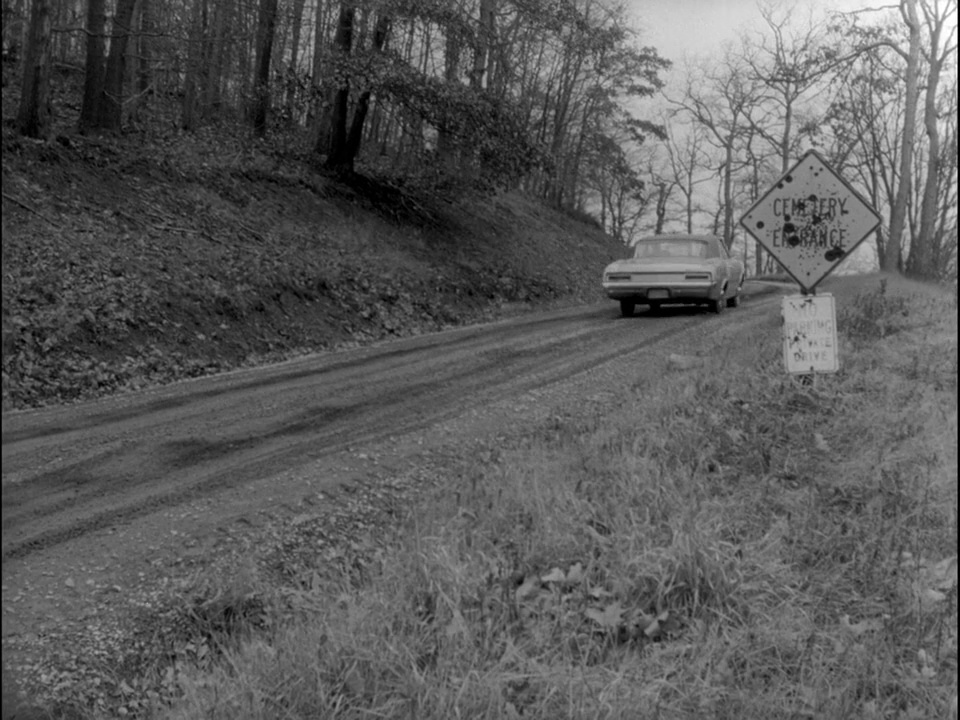
What raises these dead? We are told by a TV newsreader that a strange phenomenon, perhaps radiation from a space probe that exploded in Earth’s atmosphere, is causing the dead to rise from their graves. They are voraciously hungry, but very fussy eaters – their preferred cuisine is living human flesh, although cooked (when a truck explodes) will do. But the horror in this movie is from the “banality of evil” – the things that really haunt our nightmares are not ogres and aliens, but cemeteries at dusk,

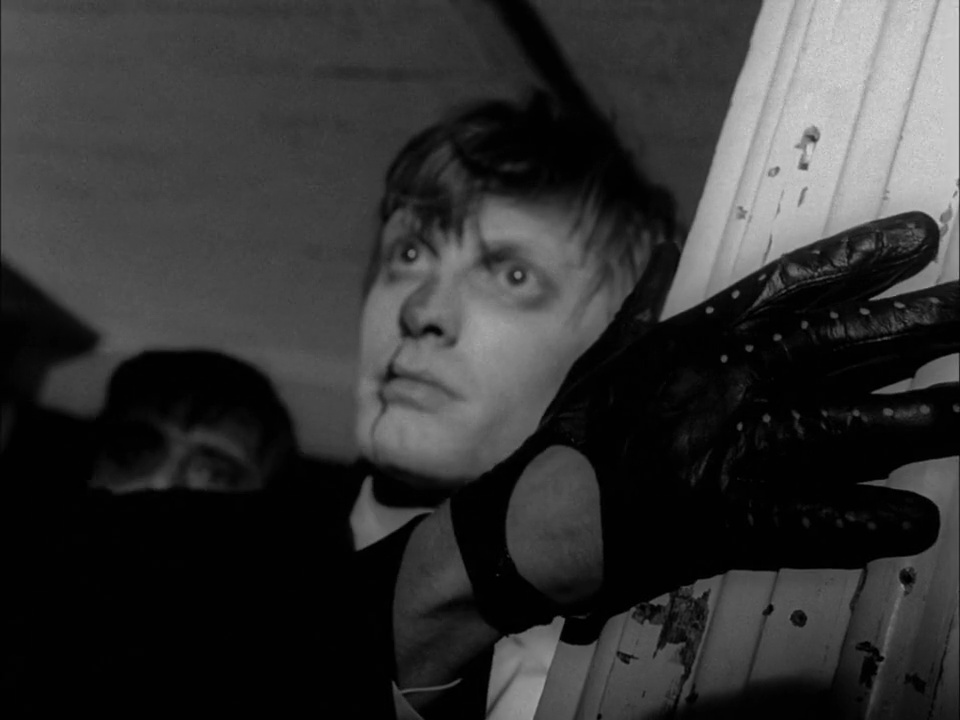
Ordinary (ish) looking people trying to get into our car, when we can’t find the keys

Technology that won’t work at times of crisis

And of course the dead. Particularly when they look angry. And hungry!

Romero did not just bring to life the zombie hordes, but also very many cannibal movies owe a debt to him, as do “splatter” movies generally. The simple opening scene of a couple of siblings driving across the desert to visit their father’s grave was later replicated to some extent in The Texas Chain Saw Massacre, and The Hills Have Eyes. And of course many, many zombie movies and TV shows have followed in the shuffling footsteps of this one. Without Night of the Living Dead, there is no Walking Dead.

The story revolves around a group of people sheltering in a farmhouse in western Pennsylvania, which is under assault by a growing crowd of cannibalistic, undead corpses. The phone doesn’t work, which is annoying, but the radio and even the TV are fine, which is useful as a dramatic device to fill us in on what’s going on.

The radio reports that they are:

“things that look like people but act like animals.”

The horror of this film seems so much greater by their ordinariness (although the low budget may have had something to do with it). Cannibals are often described as acting “like animals”, but of course, we are all animals, great apes, and cannibals are just as likely to be accused of treating their prey “like animals.”  Ordinary people, animals, fall down when shot, but the horror of these undead is their invincibility. It’s hard to kill someone who is dead, and has just risen from the grave. Shoot them in the chest and they fall over and then get up again and keep coming. They can however be shot in the brain or walloped on the head or burnt, so we are not left without hope.

But there are other dynamic binaries – heroism and cowardice, fire and fuel, shelter and intrusion, eater and eaten, and a scene where an infected girl within the boarded up house eats her own parents, and an undead brother returns to eat his sister. In two short scenes, Romero takes Freud’s insistence that cannibalism and incest are the two original prohibitions of mankind, and merges them into incestuous cannibalism. The film comprehensively problematises the narrative of humans vs monsters. We are all hiding in our houses, terrified of the latest headline, and we are also all members of the monster horde.

The protagonist is Ben (Duane Jones), an African-American hero, which in itself was rare in the sixties. Romero says Jones was chosen just because he gave the best audition, but the dynamic he brings, particularly in the inter-relationship battles inside the house, where he insists on being boss, and of course in the climax, took the film into the heart of darkness that was 1968 America. As the ghouls lurched toward the house, the Vietnam war was raging, students and police were battling on the streets of Chicago outside the Democratic Party convention, Martin Luther King and Bobby Kennedy were gunned down, and in Paris revolution was in the air.

But it’s not “all right”. The racism issues raised by the film further complicate the dichotomy between human and ghoul; human and, well, inhuman. Because when the authorities arrive, they are basically a vigilante mob killing ghouls with a random collection of guns, and building bonfires to dispose of the corpses. When they see a black man – will they recognise him as a real, live human? Well, no, Ben has made it through the night, surviving the attack of hundreds of the ghouls, only to be shot through the head by a police sharp-shooter as he emerges. The film ends with grainy images of him being pulled from the house with meat-hooks and burnt with the corpses of the again-dead, and the pictures are unmistakably reminiscent of photos taken at lynchings.

The review from the Pulitzer Prize-winning movie reviewer, Roger Ebert, sums up the response to the movie at the time. This was written after he had watched the movie in a cinema filled with kids, who had been dropped at the cinema, unaccompanied, for an afternoon of fun scary time.

The movie had stopped being delightfully scary about halfway through, and had become unexpectedly terrifying. There was a little girl across the aisle from me, maybe nine years old, who was sitting very still in her seat and crying.
I don’t think the younger kids really knew what hit them. They were used to going to movies, sure, and they’d seen some horror movies before, sure, but this was something else. This was ghouls eating people up — and you could actually see what they were eating. This was little girls killing their mothers. This was being set on fire…

The movie has 98% on Rotten Tomatoes, with the Chicago Reader summing up:

Over its short, furious course, the picture violates so many strong taboos — cannibalism, incest, necrophilia — that it leaves audiences giddy and hysterical.

Interestingly, the movie was removed from Netflix in Germany, following a written demand from the German Commission for Youth Protection.

“Banality of evil” is a phrase coined by Hannah Arendt in her report on the trial of Adolf Eichmann, the Nazi organiser of the death camps in which millions died. What shocked Arendt was that, while it would have been comforting to find that Eichmann, one of the most pivotal figures in the Holocaust, was a monster, in fact she found him “terribly and terrifyingly normal”.

This is the crucial difference between the early cannibals of Herodotus or Columbus and the ones inside our cities after 1888 (the year of Jack the Ripper). They don’t look that different from us. They are men and women, young and old, dressed and naked. We can no longer tell them for sure from our next-door neighbours.

The ghouls of Night of the Living Dead are human but dehumanised. They are dead, but still walking and eating, and the dead and the undead all burn in the same fire. In fact, the ghouls are us, filled with rage at the fact of our mortality, but they don’t look that dissimilar from people you might be standing next to at a political rally.

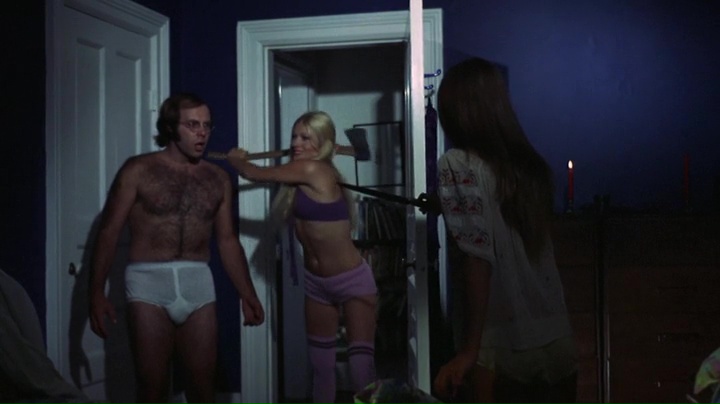
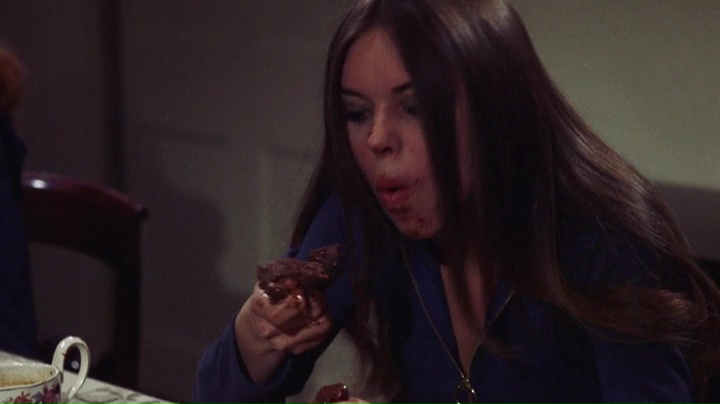
Ladies that lunch: CANNIBAL GIRLS (Ivan Reitman, 1973)

Mention cannibalism in conversation (sorry, yes, I often do), and you will usually (in my experience) be met with either humour or revulsion and very often both at once. Ivan Reitman has wrestled with that paradox in this early movie – he went on to direct Meatballs, Stripes, Ghostbusters I and II, Twins, Kindergarten Cop, Dave and Junior. Great comedy classics, but none of them involved cannibalism, unfortunately.

This Canadian film employs the classic horror trope of the young couple lost or having car problems or, in this case, both at once. The couple are Clifford and Gloria, played with gusto by the very young and almost unrecognisable Eugene Levy (American Pie, Schitt’s Creek, most Christopher Guest movies) and Andrea Martin (My Big Fat Greek Wedding).

There’s the creepy gas station person, the corrupt cop, and a particularly unctuous reverend. When shown in the cinemas, there was apparently a bell that rang immediately preceding the gore to warn the squeamish to close their eyes. This was omitted in the version I watched, and with good reason – if you don’t know what to expect when a guy starts pulling on his clothes and a woman reaches for a sharp implement, then you are probably watching the wrong channel.

Then there’s the hotel of horrors, where the motel proprietor tells them the “legend of the three beautiful girls”, who lure men to their farmhouse, take them to bed, and then kill and eat them.

“Food can be a marvellous appetiser” one of them tells her chosen victim. The girls have a ritual – a dab of blood between the breasts and the incantation:

“Within me and without me, I honour this blood, which gives me life.”

There’s the wink to the audience as the butcher holds up a piece of meat and tells a customer: “Mrs Wilson, if it was any fresher, it would get up and tell you itself”.

And then, there are the cannibal girls of the title. Turns out they are, I dunno, maybe succubi? Anyway, they eat human flesh, drink blood, and live forever. And, we are told, they never get sick. They feed the reverend, who seems to be in charge of all this hocus pocus, on their blood, as they chant:

“We shall drink the blood of life, of life eternal, and we shall live forever.”

The problem here is that the film is trying to be a horror story and a comedy at the same time, and does OK at both, but brilliantly at neither. It was made on a low budget, not uncommon in cannibal movies, but, to make a long story short, the less the money, the greater the tendency to make a short story long. It drags a bit, and although there’s lots of blood and meat, there’s not much terror or humour.

But it does get to the point of cannibal stories – humans are edible, under the skin we are just another large mammal, and probably taste, as several cannibals report, somewhere between veal and pork. The movie reminds us of that sad truth with subtle hints like cows grazing beside the road, and a meat truck carrying some sort of mammal flesh to the local butcher.

Hard to build a whole horror show on that, so of course there has to be a supernatural element, based on traditional beliefs about capturing the strength, wisdom, skill or even soul of the one being eaten. You can trace this belief, or hope, in contested stories of cannibalism, such as the Fore tribe of PNG who ate their ancestors and acquired not strength or skill but a nasty shaking disease called Kuru. A popular version is the myth of the Wendigo, a spirit that inhabits humans and gives them an insatiable desire for human flesh, which makes them immortal and invulnerable – a topic covered rather nicely in the movie Ravenous.

These cannibal girls are not Wendigos – they are not particularly strong, just well armed, and are under the thrall of the reverend, who lives off their life forces and can hypnotise anyone with just a glance. Maybe he is some sort of evil spirit.

But real life cannibals do not gain strength from their meals, and they do not live forever. Jeffrey Dahmer hoped only to keep his boyfriends with him as zombie sex slaves, and eventually was beaten to death in prison. Ottis Toole died of cirrhosis of the liver, also in prison. In the final analysis, what cannibals eat is just meat, it has no magical powers, and usually results in legal trouble rather than invulnerability.

But it’s an entertaining enough movie, and after all the movies we have reviewed, it is a refreshing change to see some women tucking in to a bit of man-flesh.

That’s a carrot she’s peeling. Behave yourselves.

“He is pure evil” – the Jeffrey Dahmer interviews

Serial killers and/or cannibals don’t usually give interviews, probably at the insistence of their legal counsel, but after his arrest, and sentenced to 937 years behind bars, Jeffrey Dahmer was willing, even keen, to tell his story to whoever would listen.

Dahmer was arrested in 1991 after a killing spree that started in 1978 and took the lives of seventeen young men and boys. Serial killers are not so rare, particularly in the US, that they get worldwide attention, but Dahmer also readily admitted to eating parts of some of his victims, and the police found body parts in his fridge, apparently ready for the next meal. He quickly became known as “The Milwaukee Cannibal”. The media frenzy was awesome to behold.

In 1993, Dahmer sat down with Nancy Glass for an interview that was aired on Bill O’Reilly’s show Inside Edition. The segment (link below) was called

“INSIDE THE MIND OF JEFFREY DAHMER: SERIAL KILLER’S CHILLING JAILHOUSE INTERVIEW”.

O’Reilly introduced the segment by saying

“He is pure evil, but you’d never know it by looking at him.”

vlcsnap-00040
vlcsnap-00041

The tools of true crime interviews are graphics, eerie music and a suitably horrified interviewer. This segment had all three, in spades.

vlcsnap-00046

Dahmer, though, was calm and rational, answering each question fully and, apparently, as honestly as he could. He spoke of his “sexual fantasies of control, power, complete dominance” which became reality, and stated

“It’s a process, it doesn’t happen overnight. When you depersonalise another person and view them as just an object, an object for pleasure instead of a living, breathing human being, it seems to make it easier to do things you shouldn’t do.”

The cannibalism was “a way of making me feel that they were a part of me”.

Nancy Glass concluded that

Jeffrey Dahmer is intelligent and articulate. That is what makes him so frightening.”

vlcsnap-00003

In February 1994, nine months before Dahmer was bashed to death in prison, Stone Phillips recorded an interview with Jeffrey and Lionel Dahmer (his Dad) who had just published a book on his side of the story. Phillips included excerpts from other interviews with Jeffrey’s father and, separately, his mother. This was shown on DATELINE, and later put together with some of the unaired footage into a TV movie (link below) called

“CONFESSIONS OF A SERIAL KILLER”

Dahmer’s father spoke of Jeffrey’s trauma when he was two or three and suffered a double hernia, which can make the penis seem to disappear into the body.

“You know, the old Freudian castration complex might come to bear here… he was concerned about losing his penis. He asked his mother if he had lost it, if it had been cut off”

Which is what Jeffrey did to some of his victims later, so there just might be something to that.

Lionel added that, when he first saw Jeffrey after the arrest,

“He just looked very innocuous. He looked like an average person who couldn’t possibly do the things that he did”

Dahmer made several interesting admissions to Phillips

  • It was not about race (even though ten of his victims were African American): he said that race didn’t matter – his first two victims were white, the third was American Indian, the fourth and fifth were Hispanic. It was just their looks he was after.
  • The cannibalism “made me feel like they were a permanent part of me”. Also, he was curious as to what it would be like to eat human flesh.
  • He didn’t enjoy the killing. What he wanted was to create “living zombies” by drilling holes in their heads and pouring in muriatic acid or hot water, but it never worked.
  • Why? “I just wanted to have the person under my complete control, not having to consider their wishes, being able to keep them there as long as I wanted”.
  • He became a Christian in jail, because of material sent by his Dad, which (he said) proved that evolution was “a complete lie” which “cheapens life”.

Dahmer refused to blame his parents or education or society for his actions, but was happy to blame his formerly secular viewpoint:

“…if a person doesn’t think that there is a God to be accountable to, then what’s the point of trying to modify your behaviour, to keep it within acceptable ranges?”

Dostoevsky felt the same way in Brothers Karamazov:

“…if you were to destroy in mankind the belief in immortality, not only love but every living force maintaining the life of the world would at once be dried up. Moreover, nothing then would be immoral, everything would be lawful even cannibalism.”

vlcsnap-00042

JEFFREY DAHMER: MIND OF A MONSTER

A new documentary was released on May 25, 2020. This is not specifically an interview with Dahmer, although it uses the  transcripts of the lengthy (66 hours) of police interrogations, as well as speaking to cops, journalists, neighbours, his father and even a couple of victims who escaped. 

And if my thought-dreams could be seen
They’d probably put my head in a guillotine
But it’s alright, Ma, it’s life, and life only.

Most importantly, Dahmer was invisible to the society he lived in. Look at the descriptions of him above:

  • intelligent and articulate
  • polite and unnervingly normal
  • innocuous

Dahmer was not the terrifying ‘monster’ or ‘savage’ from beyond the borders of the polis. He looked and sounded just like one of us. His fantasies of control, power, complete dominance and his curiosity and appetite are driving forces of modern, capitalist societies. As, of course, is objectification of people and other animals for pleasure.

Pogo's Warning to Business: 'We Have Met the Enemy and He Is Us ...