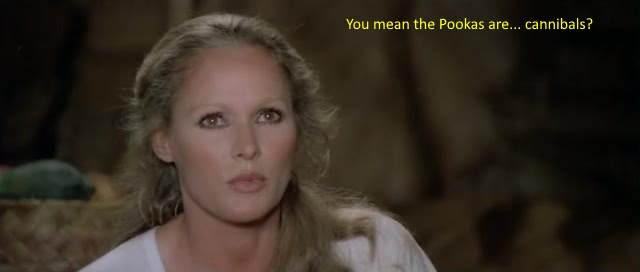
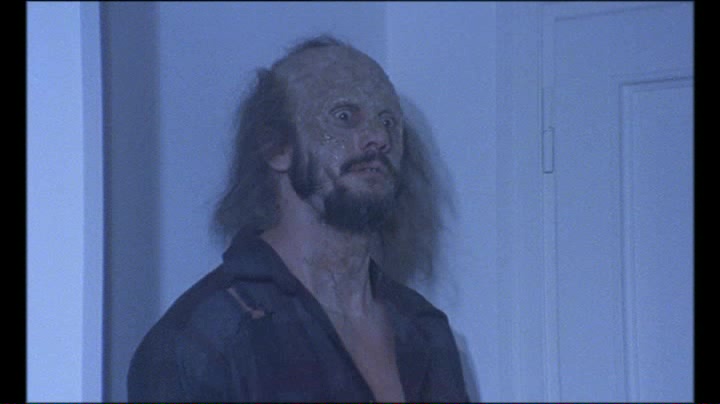
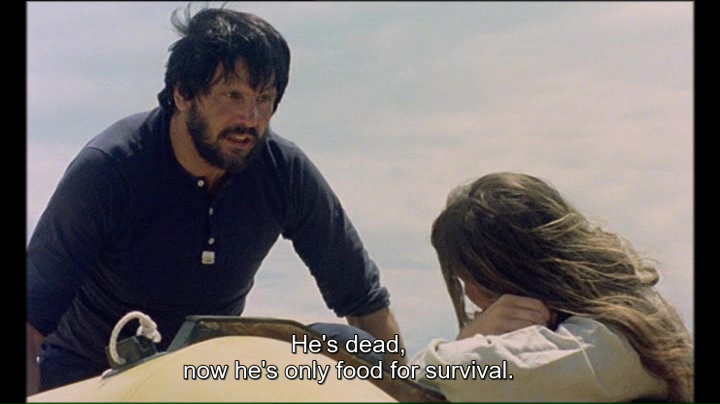
MOUNTAIN OF THE CANNIBAL GOD (Sergio Martino, 1978)

“Why is everyone so scared of the Pooka?”
“In their language, Rara Me means mountain of the cannibal god

Well that explains it then. Why Susan (Ursula Andress, who was the first “Bond Girl” in Dr No), is tied up in the jungle naked, being smeared with cream by some local girls. Why her husband’s skeleton is being worshipped as a god because his Geiger counter is still ticking within his bones. Why Professor Foster (Stacy Keach) is admitting to having been a cannibal (spoiler: he didn’t like the taste much).

Hey, that pretty much sums up the whole movie. The film starts with stock footage of animals, intended to persuade us we are in the jungles of PNG, but they seem to be chosen at random. The grey-headed flying fox, for example, is native to Australia. Close, but no points.

Like all the Italian horror movies of the seventies, this one has the obligatory scene of real animals being cut up and eaten, some of them while still alive. It was intended to add “realism” to what were pretty dumb plots, but just managed to put a lot of people off watching the films. There is an inordinately long scene of a python eating a monkey alive, and then humans eating a lizard, which Foster tells us is “part of their religion”. Just like eating meat is part of the religion called ‘Humanism’. I guess these scenes also try to teach us that the law of the jungle applies just as much to humans as to other animals. Or else it teaches us to appreciate the fast-forward button.

Manolo (Claudio Cassinelli), a wandering adventurer, joins the merry band and tells them:

“Animals only follow their instincts. That of all living beings – killing and eating. Man too has the same instincts. To satisfy them, he uses more subtle means. Lying, trickery.”

He also tells them he doesn’t kill animals, which would probably make living in the jungle difficult (not many vegan restaurants), but they all seem to enjoy coconuts, so who knows?
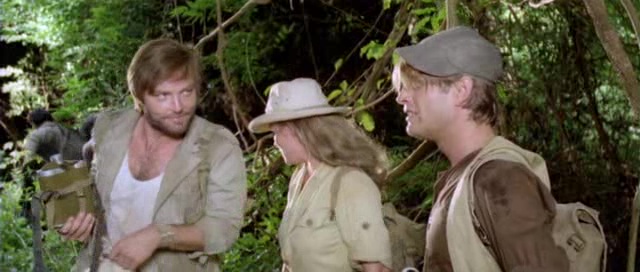
The first half of the film is about a motley bunch of white people heading for Papua New Guinea (it was actually filmed in Sri Lanka) on a Pakistani plane, to explore a heavily wooded island inhabited by cannibals called the Pookas, and the various reasons they are there (uranium, that sort of thing, yawn).

The title card explains that “life has remained at its primordial level” – meaning the rest of us have advanced? Just turn on the news channel any time to fact-check that.

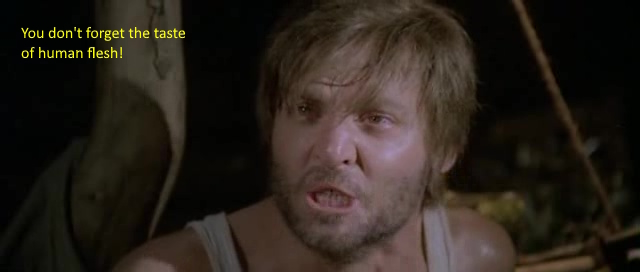
Cannibalism doesn’t get a look in until after the first half, when Foster admits to having lived with the Pooka tribe, where he had to eat human flesh. It haunts him still, and he wants to exterminate them. Sure, eating dead humans is horrifying, but killing live ones is fine.
Thirty minutes before the end, they finally agree that the Pooka exist, when they stumble into their pantry.
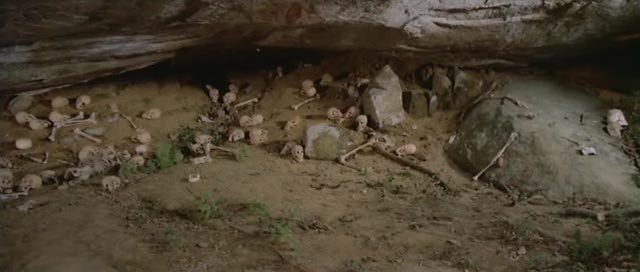
They are soon captured and the Chief checks them out for meat quality, but then he remembers that he has a photo of her with her husband who, I may have already mentioned, is being worshipped due to his clicking Geiger counter, a proof of his immortality, despite being a rotting corpse.

So now Susan is the new god, and gets dolled up for the occasion, while her brother, luckily dead, is disembowelled for the coronation feast.
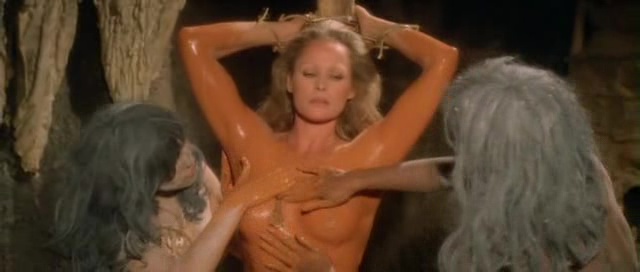
Susan gets to eat some of her brother, while the girls who so enjoyed smearing her with whipped cream lie around pleasuring themselves, and the guys engage in bestiality with a totally uninterested pig. This is getting sillier and sillier.

One of the men, perhaps tiring of being ignored by the pig, tries some hanky-panky with the new goddess, and is pulled off and given a rather extreme form of circumcision. Following which, the tribesmen all start eating snakes, for no apparent reason, but with considerable gusto. The film by now is longing to reach some conclusion, so Manolo has a snack with his new friends (seems to be Kentucky Fried Lizard).

Susan is invited to chop up the rapist, but chooses to stick the knife in the Chief instead, and there is now so much meat to go around that everyone goes for a post-prandial nap. Except for Manolo, who watches a bird fight a snake (Pooka version of Netflix perhaps). Finally bored silly, Manolo and Susan fight their way out, kill a lot of cannibals on their way, and escape on a floating log into a river that we have been shown is full of crocodiles. Yes, it’s a happy ending. Maybe more so for the crocs.

Mountain of the Cannibal God is the translation of the Italian title (La montagna del dio cannibale). The movie was released in the US as Slave of the Cannibal God in 1979 and the UK as Prisoner of the Cannibal God, but not until 2001 due to its “graphic violence”. Can’t see the problem myself, but maybe I have watched too many cannibal movies.

The review from Allmovie said:

“a graphic and unpleasant film, with all the noxious trademarks intact: gratuitous violence, real-life atrocities committed against live animals, and an uncomfortably imperialist attitude towards underprivileged peoples.”

I found it a bit dull, with long scenes of exposition and lingering images of the cast struggling through the jungle or over waterfalls. I guess they had to pad it out somehow, considering all the action takes place in the last ten minutes.

The complete movie, at the time of writing, was available on YouTube.

200 And don’t miss “The Horror Geek” Mike Bracken’s hilarious review at Sick Flicks:

Vietnam vets and cannibals: CANNIBAL APOCALYPSE (Antonio Margheriti, 1980)

This is one of those horror flicks that’s a bit hard to categorise. It’s an Italian “cannibal boom” film in the tradition of Ruggero Deodato’s classic Cannibal Holocaust which came out the same year, as well as earlier efforts such as Deodato’s Last Cannibal World, Joe D’Amato’s Black Emanuelle films, and the one that started the Italian cannibal boom, Umberto Lenzi’s The Man from Deep River. But Antonio Margheriti, using his alias Anthony M. Dawson, turned the genre on its head. The cannibal boom movies were usually set in the jungle, where tribes of primitive savages killed and ate Western interlopers, who richly deserved their fate. In other words, the archetypal colonialist cannibal story with a post-colonial twist (revenge!)

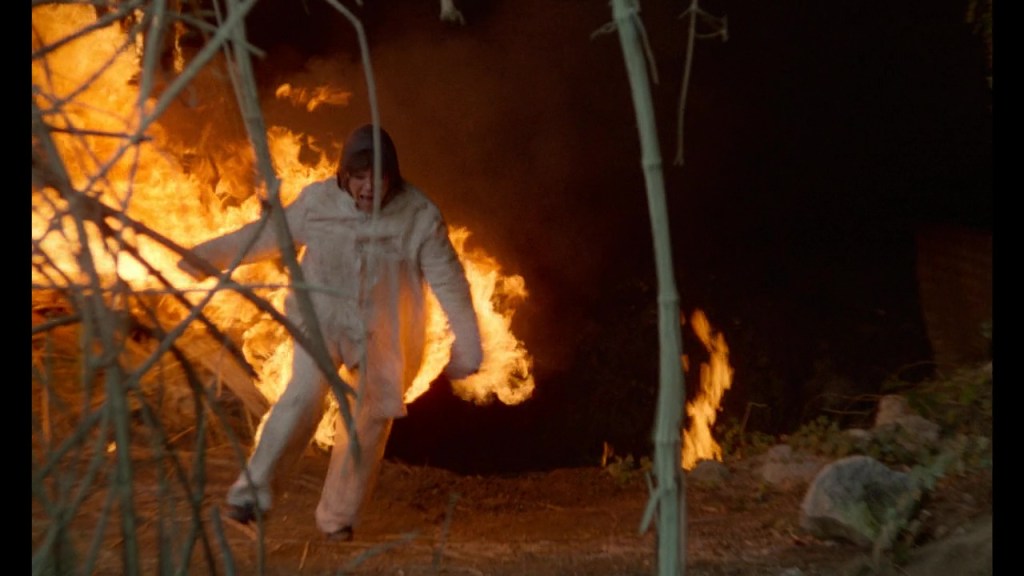
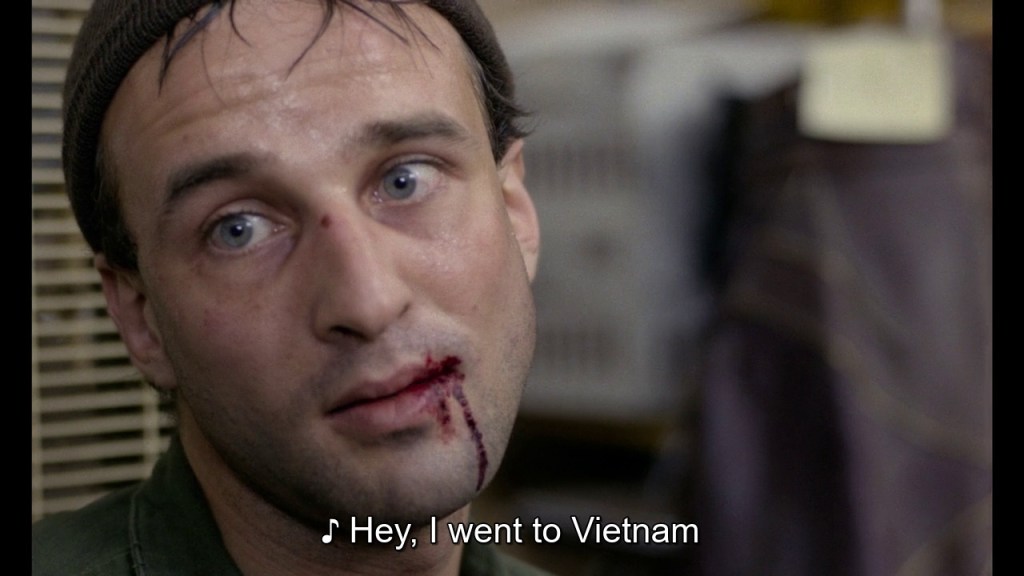
This one starts in the jungle too, but it’s a jungle in Vietnam, and the Western interlopers are American soldiers prosecuting the disastrous and eventually futile Vietnam War. A squad led by super-macho Norman Hopper (John Saxon from Nightmare on Elm Street) lands in a village and torches the place, after getting blown up by a dog (yeah, it gets worse). They find some POWs captured from their squad, Tommy Thompson (Tony King, who is now head of security for the hip-hop group Public Enemy) and Charlie Bukowski – a intertextual reference to the poet Charles Bukowski I guess, although the link seems tenuous. Bukowski (the soldier, not the poet) is played by John Morghen from Cannibal Ferox, an actor who pretty much always dies horribly in every movie he’s been in, and this is no exception.

They have somehow caught a virus (?) which makes them crave human flesh. That makes it sound more like a zombie movie than a cannibal one (think 28 Days Later), but let’s give it a cannibal pass by referencing the Wendigo films like Ravenous or Eater. Or you could claim, as the doctor says to Norman, it’s a “form of rabies.”

No, it isn’t. He really should have gone with Wendigo, a mythical figure – giant, fierce and cannibalistic, who gathers strength from feeding on human flesh, but the flesh makes him grow larger, and so his appetite can never be satisfied. He is sometimes protective (like Norman), and sometimes a figure of revenge (like Charlie and Tommy). The Wendigo gets inside people who are weak, hungry, or filled with rage.

Anyway, the squad is using flamethrowers to fight the Vietcong (and their women and small children) and one burning woman falls into the pit where the POWs are confined, making for a cooked meal. No home delivery jokes please.

Back in the States, Norman is having nightmares of being bitten by the POWs as he rescued them from their meaty pit. He realises something is wrong with him (the virus from getting bitten maybe?) and stares in horror and fascination at a bleeding lump of flesh in the fridge. Why is there flesh left to bleed in the fridge – isn’t that a health hazard?

One of the rescued POWs, Bukowski, suddenly phones him – he’s on day release from the “Hospital for Nervous Disorders”, or what the cops call a “loony bin”. Norman can’t meet him because the teenage neighbour is lasciviously pointing a hairdryer at him, and he is drawn to her lower regions, but for someone infected with the cannibal virus, ‘eating her out’ means something different to what she expects. She drops by later to tell him that she enjoyed being bitten. What do you know.

Meanwhile, Charlie has gone to see a war movie, as you do when you’re been treated for months for severe PTSD. It’s Umberto Lenzi’s From Hell to Victory, a lovely in-joke among amici, with lots of explosions and deaths. But no one is watching the war.

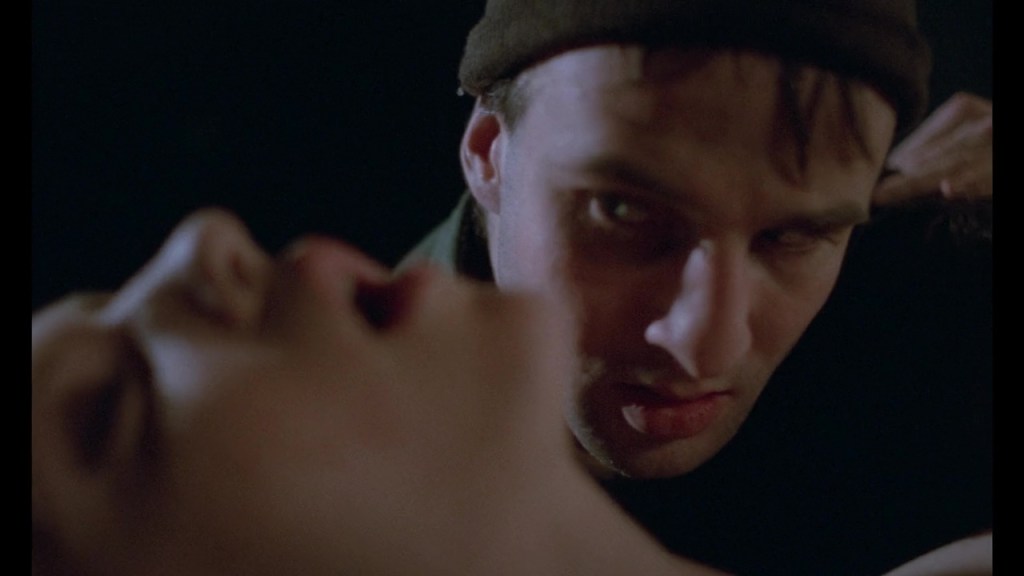
In front of him, a couple are doing oral things – exchanging saliva and sucking on boobs, erotic cannibalism, but Charlie joins in by taking a healthy bite of the girl’s neck as she leans back in her seat. He runs, there’s a shootout, he kills and eats a bikie and a security guard – it’s all downhill from here. The Atlanta police chief wants to know about him, not his name (despite it’s fascinating intertextuality):

Is he a subversive, a queer, a black, a commie, or a Moslim fanatic?

No, he’s a clean cut all-American (Italian) Vietnam vet, who wants to eat people.

Lots of people get bitten or scratched – a cop, a nurse, who then bites off the doctor’s tongue, and of course there’s that wanton teenager from next door (what horror film would be complete without promiscuous teenagers?), who was infected by Norman’s bite, even though he thought he could overcome the craving for meat.

Point is, they all have the cannibal virus, and the cannibals end up in the sewers (apparently hoping to hoof it to the airport and hop on a flight back to Vietnam), where they are chased by men with guns and flamethrowers; it’s really just like Nam, but now they have become the enemy.

The movie was one of 39 films to be prosecuted in Britain during the 80s as a ‘video nasty’. The acting sometimes leaves a little to be desired, but the main characters, Saxon and Morghen, are great. The special effects are by the legendary Giannetto De Rossi and are, like most of his work, spectacularly abject. The music is a mix of elevator and disco, creating what TV Tropes calls “soundtrack dissonance” – it’s either disturbing or just annoying, I’ll leave that up to you to decide.

In his commentary on the film, the director Antonio Margheriti proudly states that this film was Quentin Tarantino’s favourite of his movies. Tarantino referenced the film a couple of times: in Inglourious Basterds, Donnie Donowitz uses an alias “Antonio Margheriti”, while in Once Upon a Time in Hollywood, Leonardo DiCaprio character goes to Italy in 1969 to star in Spaghetti Westerns and also one Bond-type spy thriller supposedly directed by Margheriti titled Operazione Dyn-o-mite.

But video nasty or not, Cannibal Apocalypse has some interesting things to say about the fallacies and phalluses of war and cannibalism. The cannibal virus comes back to the USA with Vietnam veterans, a group who were sent to fight a vicious and often brutal war, often against civilians, and returned to abuse or neglect, with far more veterans dying from suicide than died in that war. They also brought back with them, on top of their trauma, exotic diseases, drug habits, and acute psychological damage. Many went as conscripts, and came back as severely damaged killing machines, metaphorically lusting for human flesh and spreading the anger and violence to all those near to them. It’s happened over and over in every war – a culture of killing leads to a spiral of violence. Even when you think the nightmare is over and all the cannibals dead, there’s still the teenager and her little brother to consider (hey, it’s been over forty years – where is the sequel this seems to promise?)

Probably not.

The drive to kill and to eat flesh are closely linked in human history. Consider the words of Isaac Bashevis Singer in the forward to the book Vegetarianism, a Way of Life, by Dudley Giehl:

As long as human beings will go on shedding the blood of animals, there will never be any peace…

If you think Cannibal Apocalypse sounds interesting but you’re short of time, most of the good (gory) bits are covered fully in the review by Mike Bracken, AKA The Horror Geek (@horrorgeek). Mike’s vodcasts are always very entertaining, but this review had me guffawing out loud, which is a bit weird when you’re watching with headphones, in apparent silence, and pretending to be writing an academic thesis. In fact, Mike’s review is much better than the film, IMHO.

Eat your heart (ETC) out: ANTROPOPHAGUS (Joe D’Amato, 1980)

Joe D’Amato was a prolific director of around 200 films in a wide range of genres, but is best known for his horror and erotic ones. Antropophagus is not one of his ‘best’ (if that word even means anything in these genres) but has developed a cult following in the forty years since its release. D’Amato did not make many cannibal films for some reason – we have previously reviewed his Black Emanuelle film Emanuelle and the Last Cannibals, and we still need to look at (eventually) a few more including Emanuelle’s Revenge, Papaya Love Goddess of the Cannibals, Beyond the Darkness, Orgasmo Nero and the sequel to this one, directed under the pseudonym Peter Newton, Antropophagus II. Looks like we’re going to be here for a while, folks!

Joe D’Amato’s cameo appearance in the Athens cable-car scene

The lost travellers encountering savage or insane cannibals is one of the favourite tropes of cannibal stories. Odysseus and his men getting gobbled up by the Cyclops would be an early version (assuming a guy with only one eye in the middle of his head and a god-father is “human” which is pretty important for the definition of cannibalism). But ancient tales loved to dwell on the semi-human monsters outside civilisation eating unwary travellers, as did the lurid tales told by explorers and missionaries in colonial times. Robinson Crusoe is part of the tradition, although he was on his own until he met Friday (whom he saved from, yep, cannibals).

In films, the defining moment for sexed up teens in faulty cars getting slaughtered and eaten by crazed cannibals was Tobe Hooper’s The Texas Chain Saw Massacre in 1974, where the cannibals were rust-belt hillbillies killing tourists to replace the closure of the slaughterhouses and loss of their usual victims, and The Hills Have Eyes where the cannibals were mutants created by atomic testing in the desert. The killers got progressively weirder with such offerings as Wrong Turn which was sort of Deliverance with a meat department, but the prize for weirdest demented cannibal probably goes to this one: Antropophagus.

Instead of driving around or breaking down in dodgy areas of derelict states to run into cannibal tribes, this lot are touring the Greek Islands on a yacht. Well, if you’re going to get killed and eaten, do it in style. We start off with a couple of German tourists relaxing on probably the most uncomfortable beach you’ve ever seen, the girl going for a swim because apparently Jaws hadn’t been released in Germany five years before this movie was made?

Her boyfriend, relaxing on some sharp lava, has a rude awakening involving a meat cleaver through his head.

We immediately switch to our jetsetting tourists on a cable car in Athens. One of the tourists is heavily pregnant, so sailing around the islands is an even weirder choice when you think about it, and leads to the most famous cannibal scene involving a fetus in any movie (not many directors other than D’Amato have dreamed of getting away with anything like that).

Antropophagus was written by D’Amato and George Eastman (born Luigi Montefiori), the incredibly tall villain of heaps of Italian B-movies and Spaghetti Westerns as well as several of D’Amato’s other movies. In this one, Eastman plays the slasher, who (it turns out from a journal he left lying around on the island) was driven mad when he and his family were shipwrecked and he ended up eating the wife and child to survive. So now he kills and eats people who come to his island. Everyone needs a hobby. And the role of the cannibal has always been to explore the limits of humanity, and the extremes of inhumanity.

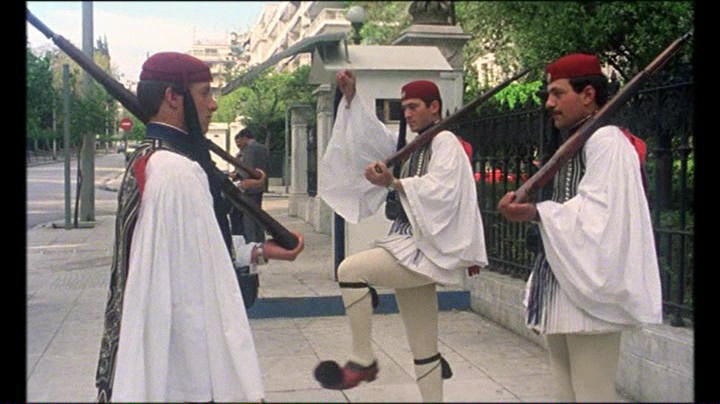
Look, it’s a slasher, and they are not to everyone’s taste, in fact a version of the film without most of the gore was released in the US and UK under the title The Grim Reaper. The acting is pretty awful, ranging from wooden to way over the top. But D’Amato was a talented director (as well as prolific) and the scenes of Athens including the changing of the Guard at the Tomb of the Unknown Soldier, and the Greek Islands, are glorious, and accompanied by suitably cheerful bouzouki music.

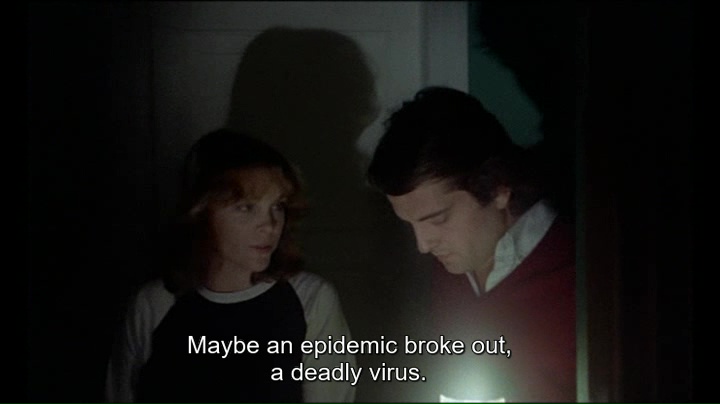
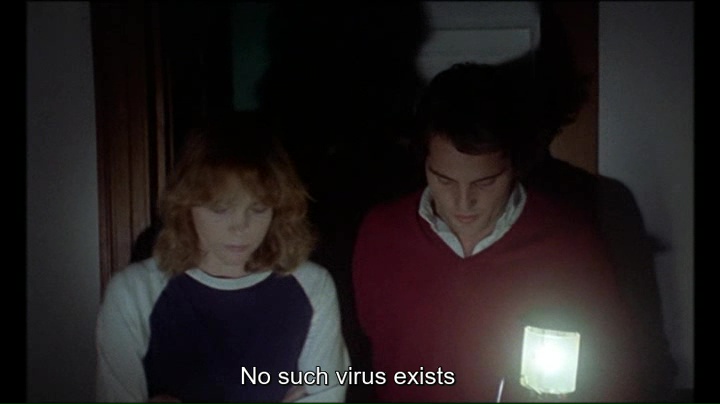
The team head for an island which turns out to be ‘almost’ deserted (because everyone’s dead of course). They can’t understand it and ask, forty years too early:

Well, they’ll laugh about that one when they tell the story to their grandkids in 2020 or so. The “final girl” (there’s usually a final girl who survives the slasher) is played by Tisa Farrow, little sister of Mia Farrow, and daughter of Maureen O’Sullivan. Quite a lineage. She’s supposed to be there to look after a blind girl, who doesn’t know where her parents are, but can still tell when the antropophagus is lurking.

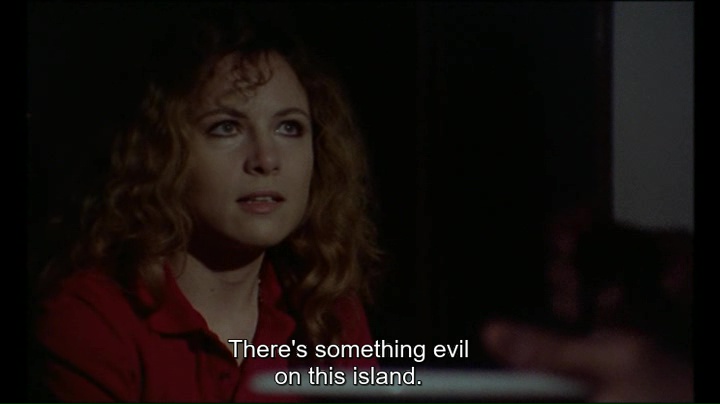
The middle section of the film follows the mystified tourists as they explore an apparently deserted town on a remote island, but it’s not really dull, more atmospheric, establishing the existence of evil, a malevolent presence that smells of blood.

Besides the blind girl with the supernose who can smell blood (but can’t apparently smell a room full of corpses), there is Carol (Zora Kerova from Cannibal Ferox) who can read Tarot cards and sense evil vibes.

There’s an electrical storm worthy of King Lear. A scene in a cemetery (of course). A mysterious woman who leaves threatening messages. A blind girl who attacks them with a knife. A whole lot of rooms full of bodies, which surprisingly are discovered by pulling off their shrouds rather than by smelling their decomposition. A seemingly inexhaustible packet of Marlboro (product placement maybe?) A lot of pointless relationship arguments. But, if you’ve bought a ticket to see the gore, then as one critic wrote on IMDB,

“The movie starts with a brutal meat cleaver scene then becomes very slow n downright tedious. The last twenty mins contains the two nasty scenes coz of which this film earned the video nasty label.”

I liked the way the violence is mostly presented from the point of view of the cannibal, rather than the victim. At the beginning we see forward movement, drops of blood, a meat cleaver. Later there is a view of the boat through metal palings and some guttural breathing. When one of the men has his throat torn out, we see the throat, before we finally see the antropophagus with his bloody mouth, bad haircut and poor dental hygiene, but that’s already fifty minutes into the film.

So the scenes of the “normal” people are intentionally dull – there’s pretty scenery, with the occasional interruption for carnage and slaughter. Something for everyone. Makes a nice contrast with the depraved cannibal, who we eventually find out (by flashback!) was a shipwreck survivor and accidentally killed his wife when she wouldn’t let him eat their dead son. Domestic cannibal in domestic dispute.

So – the famous last twenty minutes. Pregnant lady is found by her pretty useless husband in a crypt where rats with red eyes (hungover? Late flight?) are eating corpses.

The antropophagus stabs the guy, who dies slowly enough to watch him pull the fetus from her body and, yep, eat it (turns out it was a skinned rabbit, as if that makes us feel better).

Then in the climax, he gets disembowelled with a pickaxe, and in the last moments of the film, starts to chew on his own intestines.

Yep, both of those scenes were left out of The Grim Reaper. The full film is still banned in England according to The Horror Geek, because they thought it was a real fetus. Read Wikipedia before making censorship decisions, guys!

Antropophagus is available in Blu-ray from Amazon, or the full movie is (or was when I checked) on YouTube – but has Czech subtitles, which some may find distracting. Or you might learn some Czech, and you never know when that may prove useful.

If you can’t / don’t want to watch the whole movie, you can get a comprehensive and extremely funny summary together with some priceless Gilligan’s Island references on the YouTube site of the Horror Geek. Highly recommended.