
Short answer: yes, and regularly used that way, throughout recorded history.
If you don’t recognise the person in the Tweet, her name is Candace Owens, and she is an American Conservative political commentator, author, activist, and television presenter who has both criticised and supported Donald Trump, attacked Black Lives Matter and been widely condemned for disseminating conspiracy theories, including accusing Israel of genocide. She seems to choose her conspiracies from both extremes of the political crazies – right and left. She has declared Kanye West to be a “dear friend and fellow superhero”.
In the clip above, she is asked by a young woman about Native American “Two Spirit” people – those who might today be called LGBTQIA+, particularly the “T” for “Trans”. The existence of the term and the concept itself would therefore, the questioner argues, go back hundreds or indeed thousands of years, and make nonsense of Owens’ claim that there were no transgender people when she graduated (although it seems she never did), so therefore the population must have has exploded since then. She summarises Owens’ argument: “Trans people are only here because the media is telling people these things”.
Owens does not know the term “Two Spirit” or that there are multiple words referring to the concept in many Native American languages. She answers instead:
“With Two Spirit people, is this like a Native American Tribe? Like high, smoking and talking about your spirit? I’m asking you seriously ’cause I think of Native American tribes talking about their spirits – I know they used to smoke a lot, they used to do drugs, they also were cannibals who used to eat people, so I don’t know if we should be taking our cues from cannibals…”

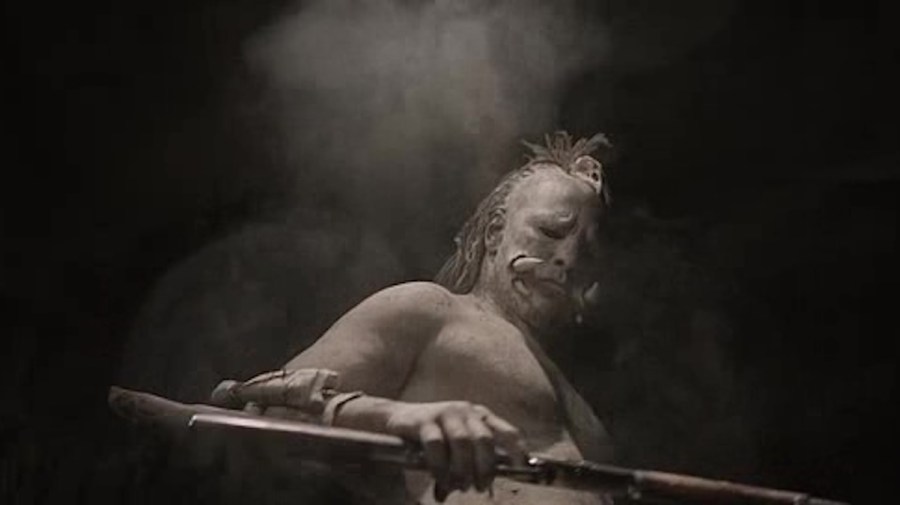
Owens used the same argument against Colin Kaepernick at the Conservative Political Action Conference in 2020, who had spoken of the 1.5 billion acres of land stolen from Indigenous people in the United States, asking “Did cannibalism get lost in Colin’s flowery depiction of Indigenous people?” She referred to Aztec cannibalism, which is generally thought to have taken place in Mesoamerican areas of what is now central Mexico, from 1300 until their society was decimated by the Spanish conquistadors. There is little academic consensus about this – theories range from Marvin Harris who said the flesh of the human sacrifices to the gods was fed to the ruling class due to the shortage of protein in the area, to William Arens who insisted that “there is no firm, substantiable evidence for the socially accepted practice of cannibalism anywhere in the world, at any time in history.” Nonetheless, cannibalism is still depicted as epitomising the uncivilised or, worse, those who have degenerated to savagery. Think of the “troglodytes” in the movie Bone Tomahawk.
the term “cannibalism” itself comes from Christopher Columbus, who named the practice after the Carib tribe of the Caribbean (also named after the Caribs). He claimed the Caribs ate their neighbors, but there is little evidence for this beyond the accusations of rival tribes who, despite never before meeting Europeans, understood that cannibalism was a powerful way to defame enemies. Frank Lestringant examines, in his book Cannibals: The Discovery and Representation of the Cannibal from Columbus to Jules Verne (1997), the contrasting reports from that period of the “savage” cannibals of the New World and the way they were compared, sometimes favourably, with the horrendous cruelty of European politics of the time, particularly in the writings of Montaigne.
Cannibalism is, therefore, an enduring and popular way to denigrate and vilify another group, to declare them less-than-human and therefore not worthy of respect or consideration. Cannibalism, definitionally, requires both sides of the repast to be human—the eater and eaten. But paradoxically, cannibals deny the anthropocentric particularity of their victims, and are in turn symbolically stripped of humanity due to what is seen as a horrendous contravention of shared ethics, deserving redefinition of the eaters as “inhuman” monsters. This was very useful to Columbus, who was not allowed to take slaves unless they were found to be cannibals, and has been used extensively by colonists to slander other Indigenous people including the people of the Pacific, Africans, and the Aboriginal people of Australia.
Cannibalism is a particularly popular trope for political, racist or queerphobic demonisation. The cannibal is most often depicted as male, but homosexuality, still considered repulsive by some despite its legalisation in most of the world, is often emphasised in the reporting of cases such as Jeffrey Dahmer, Ottis Toole, and Armin Meiwes, as if to impugn their masculinity and erroneously imply that straight men are not potential cannibals.

Accusations that a conspiracy known as “Deep State” was trying to subvert Trump crystallised in groups, accounts and pages linked to QAnon during the 2020 election campaign. The accusations included allegations of devil-worship, child-sex trafficking, torture and cannibalism. The fact-checking website Snopes rebuffed allegations about the existence of a “deep web” video showing Hillary Clinton and her campaign vice-chair raping, torturing and mutilating a little girl to cause the child to release adrenochrome into her bloodstream, before drinking her blood during a Satanic ritual sacrifice. Like characters in the films Texas Chain Saw Massacre (Hooper, 1974) and Silence of the Lambs (Demme, 1991), and the real-life murderer Ed Gein on whom they were based, they also supposedly excoriated the face to use as a mask. The bestselling QAnon-linked novel The Turner Diaries depicts a race war where white women and girls are constantly threatened and raped by “untamed, cannibalistic” black men, presented as symbolic of nature, and resisted by heroic white men, representing civilisation. Infanticide for cannibalistic feasts is not an original accusation, going back to the blood libels targeting European Jews and the Malleus Maleficarum (Hammer of Witches), the Inquisition’s guide to witch-hunting, which stated that witches would steal the host or wine from the Eucharist ritual to manifest a Christ-child, who would then be tortured, killed and consumed during diabolical feasts.
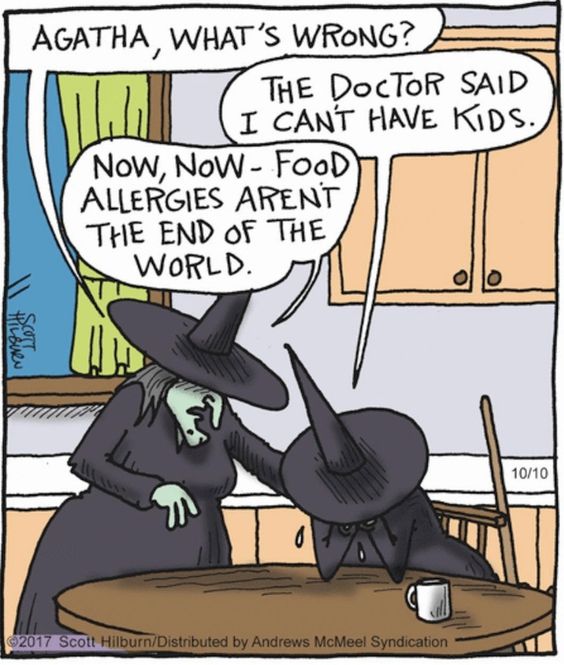
But back to Owens and her dismissal of “two-spirit” people as being the drug-fueled fantasies of cannibals. The term “Two-spirit” refers to persons who identify as having both masculine and feminine spirits, and is used by some Indigenous people to describe their sexual, gender and/or spiritual identity. The wider use of the term is attributed to Elder Myra Laramee, who proposed its use during the Third Annual Inter-tribal Native American, First Nations, Gay and Lesbian American Conference, held in Winnipeg in 1990. The term is a translation of the Anishinaabemowin term niizh manidoowag, meaning two spirits. It seems obvious that we all have some masculine and feminine features within our complex personalities, and it is useful, if poetic, to call these “spirits”. It explains motives, desires, emotions that may roil and confuse and sometimes contradict each other. It has little to do with gustatory preferences, except that some who feel they need to buttress their masculinity may insist on eating other animals to prove some dubious suppositions of human superiority, often including over other people they may consider less than human. “Real men”, they earnestly insist, don’t eat quiche; they eat lumps of meat, rare or even raw.
As do cannibals, very often. And with the flesh may come the spirit, allowing two spirits to co-exist, mingle, join within the cannibal’s body. Armin Meiwes told an interviewer that
“It’s not about killing or butchering. It is about entering into a relationship… My desire has always been to find a “brother” whom I could assimilate into myself.”
The nature or existence of ‘spirit’ is an eternal debate that will not be finalised in a Q&A session, particularly by a speaker who seems to know nothing about it. But it can only be obscured further by unfounded accusations about cannibalism, particularly by those who still happily chow down on their fellow mammals.


 The Cannibal Guy