Awarded PhD from the University of Melbourne for a thesis questioning how cultural manifestations of cannibalism challenge the assumed anthropocentrism of our relationships to other animals.
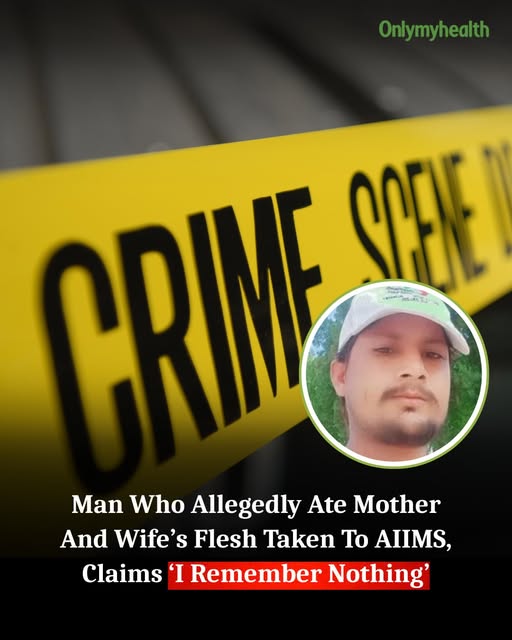
Screams, smashed skulls, flying flesh were not what villagers of an Uttar Pradesh village expected on a quiet Monday morning when a 30-year-old labourer brutally murdered his wife and mother on the rooftop of his house and then chewed flesh from their smashed skulls as his neighbours watched.
A 30-year-old man was arrested on 12 January 2026 in Kushinagar’s Parsa village for the double murder of his mother and wife. The suspect, who has been identified as Sikandar Gupta, had returned to the village about a month previously after working as a labourer in Mumbai. According to police reports, the victims were identified as his wife, Priyanka (28), and his mother, Runa Devi (60). Gupta initially attacked the victims with wooden sticks, and then with cement bricks, causing fatal head injuries to them.
Local residents rushed to the scene as the screams of the women echoed through the neighbourhood. Witnesses reported seeing Gupta mutilate the bodies and consume portions of the remains. When the crowd attempted to stop him, Gupta began throwing pieces of debris and human flesh at them, which caused widespread panic until the Ahirauli police arrived to detain him.
Kushinagar Superintendent of Police, Keshav Mishra, said that,
“a case of double murder was registered, and police are also examining the accused’s mental condition as part of the investigation.”
Neighbours informed police that Gupta had a history of substance abuse involving alcohol and cannabis and was known for frequent domestic disputes. The accused remains in custody pending a formal psychiatric evaluation to determine if he is fit to stand trial or if the murders were the result of a total psychological collapse.
Gupta has been admitted to the Psychiatry Department at AIIMS (All India Institutes of Medical Sciences) under police custody. According to reports, Gupta is speaking incoherently, at times claiming he was drunk during the incident and at other times saying he does not remember anything at all. Doctors have sedated him due to aggressive behaviour and are closely monitoring his condition.
Experts suggest the violence points to deep-seated psychological issues. Dr. PK Khattri, a senior clinical psychologist in Lucknow, said that Gupta’s agitated and non-communicative behaviour “points toward a severe psychotic break” that led to cannibalism.
As Dr Watson used to say, “No shit, Sherlock!”
Ashok Srivastava, an independent criminologist and an associate of the National Forensic Sciences University (NFSU), said that such extreme acts often stem from a
“desire for total domination”
He added that this type of behaviour represents an “ultimate expression of control, often triggered by internal frustrations or extreme psychopathology.”
Which could be said of human societies generally. From bullying in school to sexual abuse to war atrocities to the commercially pressured obsession with eating the flesh of other animals, appetites are driven by this “desire for total domination”, of territory, of food, and of the bodies of others. Anthropocentrism, sometimes called speciesism, is maintained by the practice of killing other animals in ever increasing numbers, to prove our superiority and deny our own animality and mortality. The French philosopher Jacques Derrida called that “carnivorous virility”, the sacrificial slaughter and consumption of “inferior” animals by the rational, patriarchal civilised meat-eater.
What happens when the lust to dominate or kill outruns the limits of anthropocentrism and is instead turned back on fellow humans? The biological fact is that humans are animals, and animals are made of meat. When a society reaches a point where the old ethical agreements are disintegrating, it can either forge new ones or dissolve into chaos, war and, yes, cannibalism. The psychopath, such as the one in this case who allegedly started his brutal rampage with domestic violence before turning to murder and flesh eating, seems to understand this better than most ‘sane’ people.
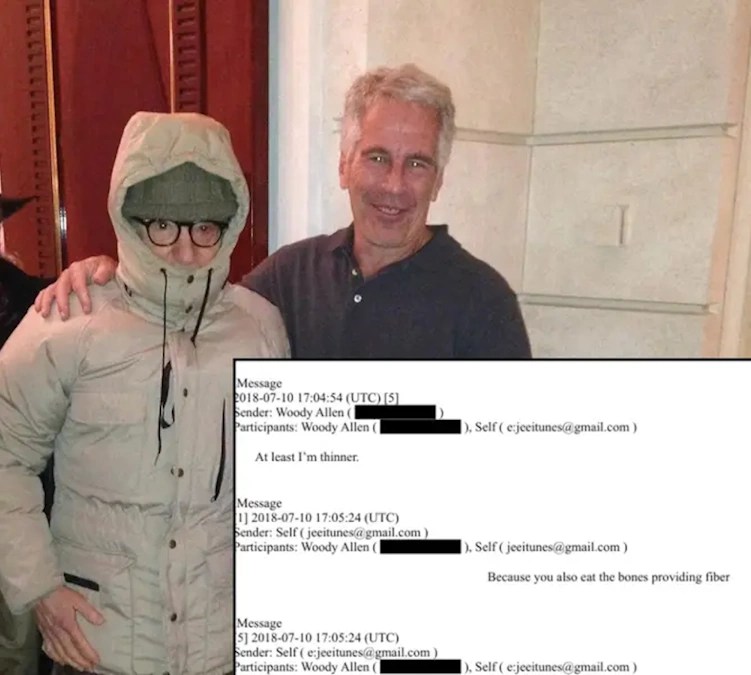
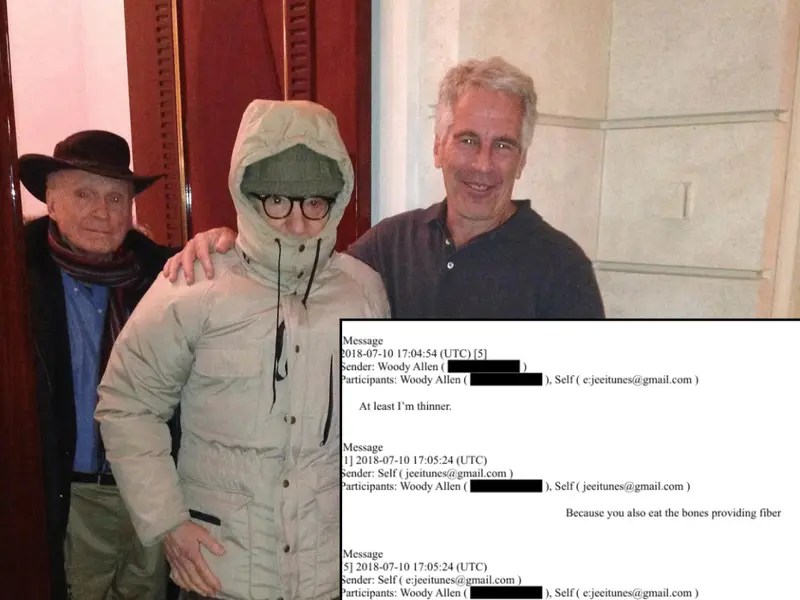
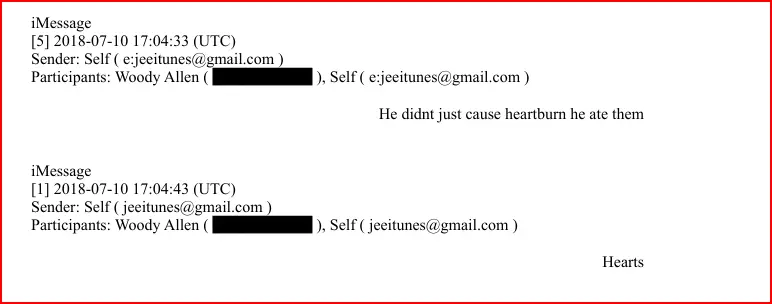
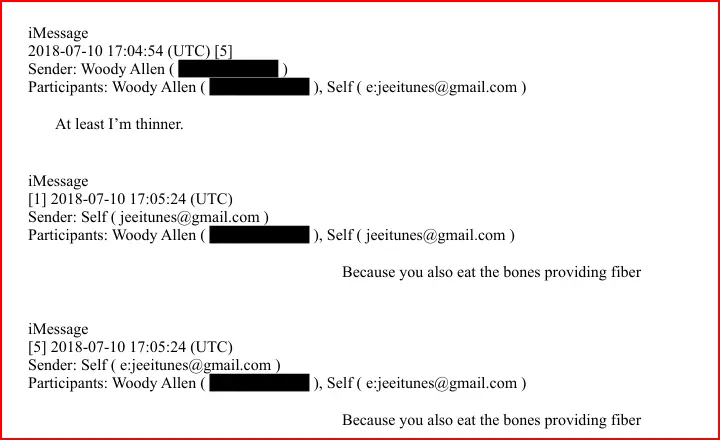
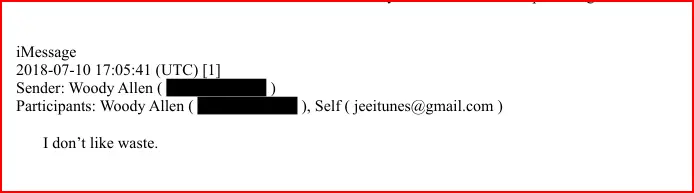
The undated and unlocated iMessage text and image above appeared on a handout released by Democrats on the House Oversight Committee, on December 18, 2025. It shows late convicted sex offender Jeffrey Epstein and US filmmaker Woody Allen. It appears that they had a humorous conversation about eating hearts and bones.
Woody Allen is part of a long list of names that feature in the documents released by the Department of Justice on January 30. Netizens have flagged Allen and Epstein’s exchange as eerie, creepy and disgusting, expressing shock at the dark humour at play. In the chat, Epstein tells Allen,
“He didn’t just cause heartburn, he ate them. Hearts.”
“Thanks. At least I’m thinner.”
“Because you also eat the bones, providing fibre.”
“I don’t like waste.”
Comedy is Allen’s business, and cannibal jokes are common.
However, the exchange between Epstein and Allen immediately triggered further speculation about Epstein’s purported cannibalism, as covered in this blog last week. Although there is no direct evidence of the sex offender or his guests eating human remains, social media has been abuzz.
Epstein and Allen were neighbours in New York City and had known each other for a long time. Allen and his wife, Soon-Yi Previn, reportedly dined with Epstein and attended common gatherings where famous names from media and academia were also present. In 2015, Epstein used his contacts in the Obama administration to arrange a White House tour for Allen and Previn. However, there is no evidence of Allen being linked to Epstein’s sex crimes.
Woody Allen was at the centre of another controversy in 1992 when he started dating Soon-Yi Previn, who was 21 at the time, while he was 56. Soon-Yi was the adopted daughter of Allen’s then-girlfriend Mia Farrow.
Allen was also investigated over allegations by farrow that he had assaulted their adopted daughter, Dylan Farrow, who was seven at the time. Epstein and Allen were in touch during all these times. Their correspondence shows that they supported each other during the controversies. Maybe Jeffrey hoped that Woody was a kindred spirit.
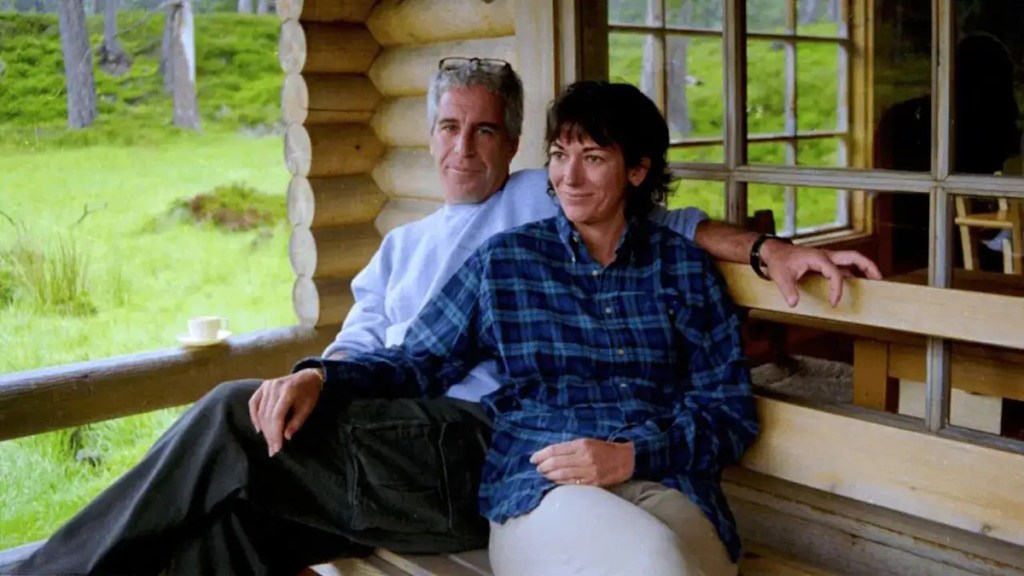
Another document has raised speculation of a link between Epstein and the disappearance of three-year-old Madeleine McCann, who was taken from the Ocean Club in Praia da Luz, Portugal in 2007. According to an unnamed witness, Madeleine (or a child of the age she would have been then) was seen was a woman who looked a lot like Ghislaine Maxwell, Epstein’s former partner, in 2009.
Rampant speculation and muckraking, but I guess it’s only a matter of time before every lost child will be rumoured to have been in Epstein’s bed or on his table.
“Get your hand off my knee and get me, uh, my lunch!
What’s leading the news? Wars roiling the globe? Economic dislocations? Warnings about possible new and very nasty pandemics?
No. All anyone seems to want to talk about is Jeffrey Epstein, the late financier and convicted sex offender, and the millions of pages of documents and photos that are being released (the latest and final batch on January 30) by the US Department of Justice in a hodgepodge of verified or dubious forms, some heavily redacted.
Claims are now circulating online that Jeffrey Epstein engaged in cannibalism or, to be more precise, “ate babies”.
One document, cited by online users, contains allegations that babies were dismembered and their remains consumed. The same document makes a reference to “George Bush 1”. However, the claims have not been substantiated, and their origins remain obscure.
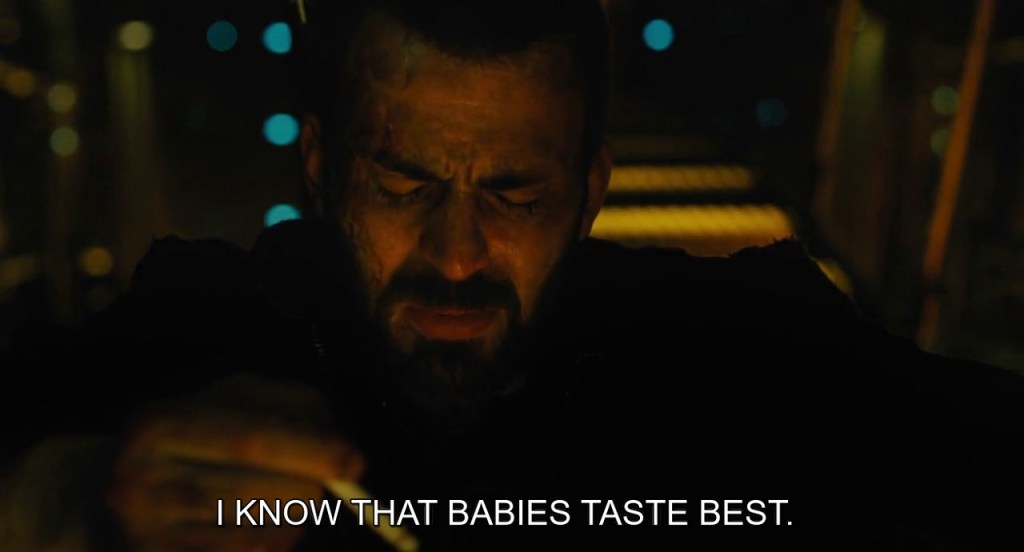
Babies are the first choice of predators and scavengers like humans, because they are easier to catch and their meat more tender. Think of how “lamb” or “veal” sell at a premium to “mutton” or “beef”, how “suckling” pigs are a delicacy, or how so-called “broiler” chickens are killed and eaten at six to seven weeks old. As Curtis says in the movie Snowpiercer:
Some have even suggested, satirically, that eating babies would be a good thing for the environment.
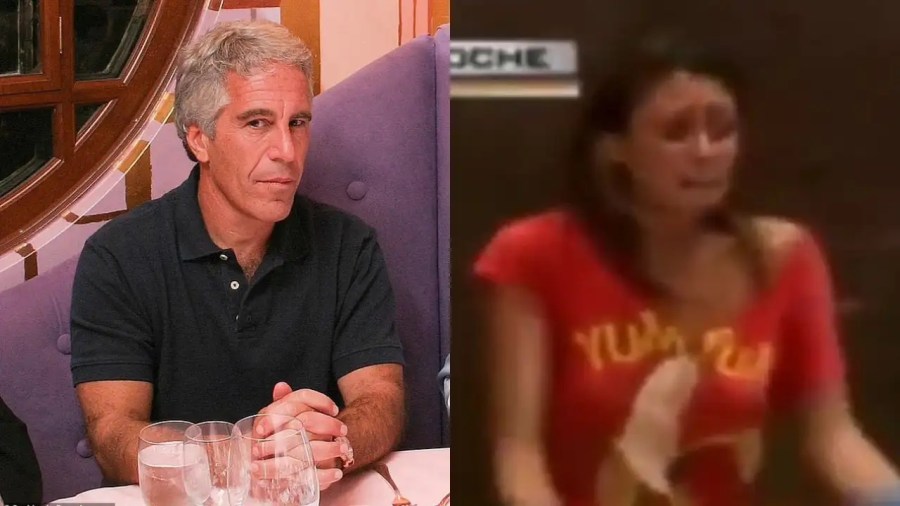
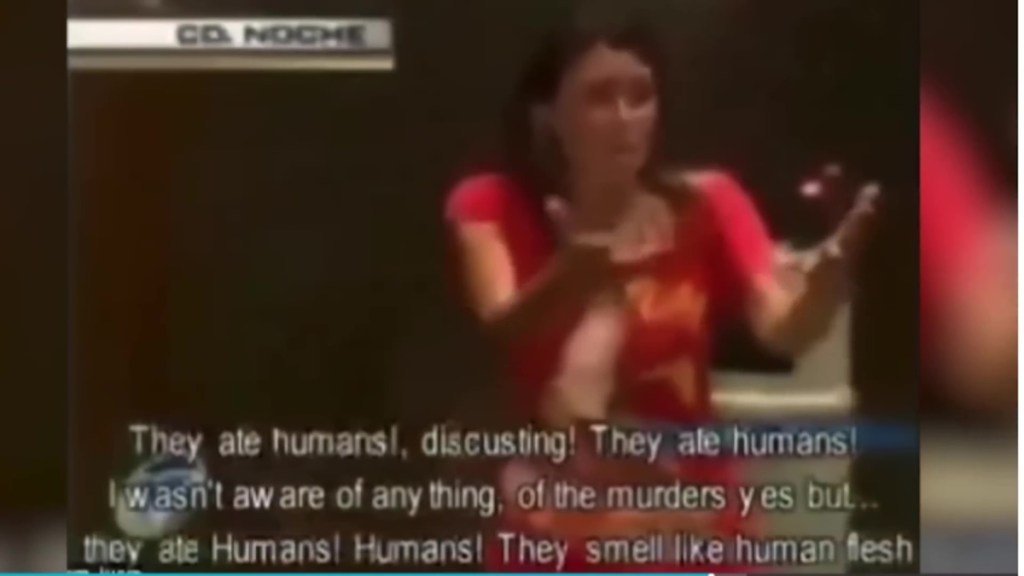
The allegations have been further amplified by the resurfacing of a video from 2009 featuring Gabriela Rico Jimenez, recorded in Mexico. In the clip, Jimenez alleged that she attended a private gathering of wealthy individuals where she witnessed cannibalism.
This story was covered by this blog some months ago, when it last made the rounds due to an exposé on a podcast called Mexico Explained. The blog about her is linked here.
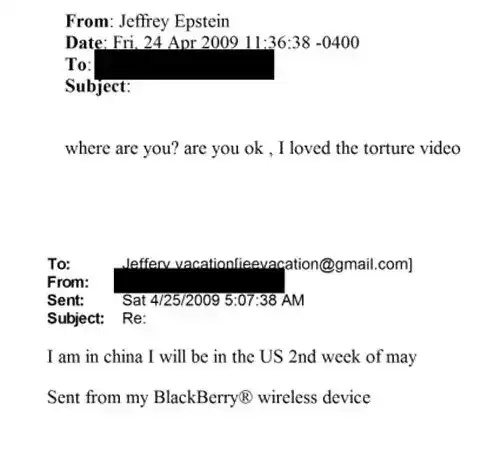
Interest in Jiménez’s case has now surged again, after newly released Epstein documents referenced a party on a yacht and included allegations involving extreme behaviour. One email allegedly sent from Epstein’s known email address read:
“Where are you? Are you okay? I loved the torture video.”
These references, revealed as part of the January 2026 document release, sparked widespread public concern and renewed online theories linking Epstein’s network to past claims made by Jiménez. The material has led many online to speculate on connections between the Epstein files and Jiménez’s 2009 accusations. While no new verified information has emerged about Gabriela Rico Jiménez’s whereabouts or fate, the mystery surrounding her disappearance continues to enthral internet users worldwide. However, there is a dearth of concrete evidence linking her allegations to Epstein.
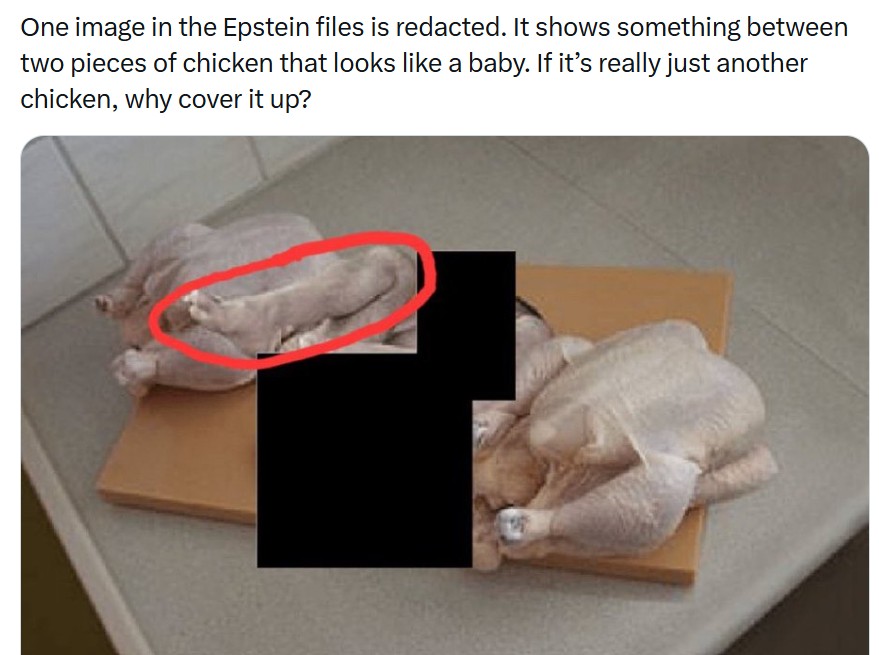
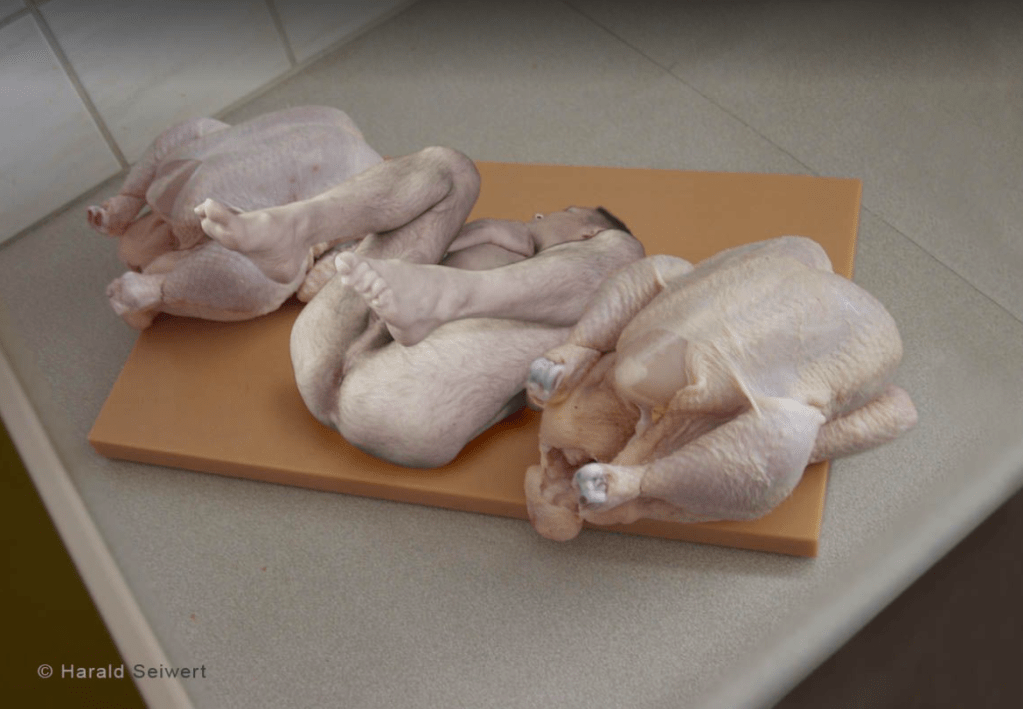
Social media users have drawn further conclusions from unrelated material, including an image (heavily redacted) that they claim emerged from the Epstein files showing a baby among chicken corpses. Observers have noted that the photograph was actually an art work from 2003 by a German artist named Harald Seiwert, used in vegetarian campaigns.
Why cover it up? Well, maybe because it was showing a guy’s hairy bum. Here’s the original:
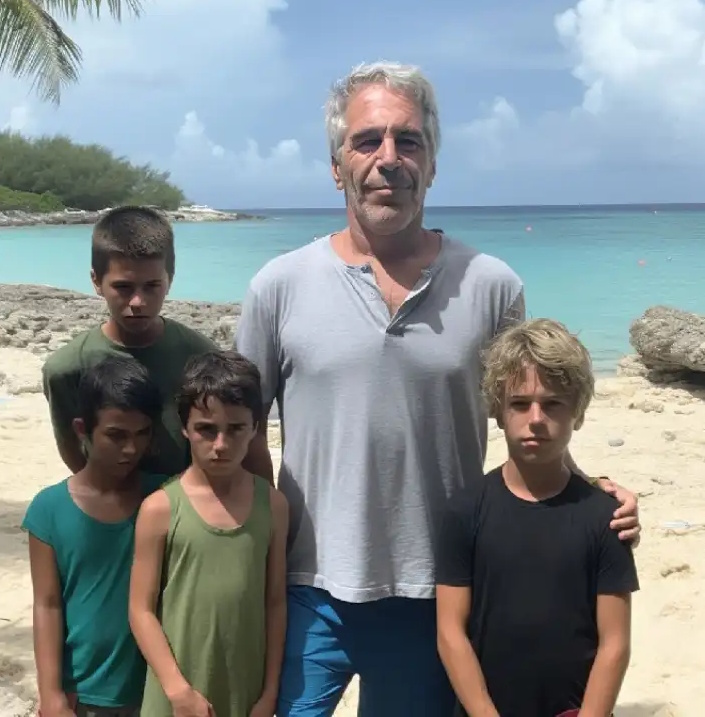
Several posts on X have promoted conspiracy theories in response to the files. Others are circulating (again) a long-debunked image, clearly a deepfake which first appeared in 2023, purporting to show Epstein with young boys from a rap duo called “Island Boys”, Alexander (Alex) and Franklyn (Franky) Venegas. Some are even claiming the twins are Epstein’s children. However, Snopes rated the claim false in January 2026, Reuters found no supporting evidence, and the Island Boys themselves denied ever meeting Epstein in a 2023 statement to TMZ.
Still, a bit of evidence (or lack thereof) should not spoil a good story. One user wrote:
“These scumbags ate children. Some documents state that they conducted rituals on a yacht and consumed the fetus; they even compared its taste to cheese. They are messengers of the devil in their purest form.”
Another claimed:
“Jeffrey Epstein emails with the gruesome subject ‘Slicing a Pizza’ probably means that Pizza-Gate is most certainly real. Sadly Conspiracy Confirmed.”
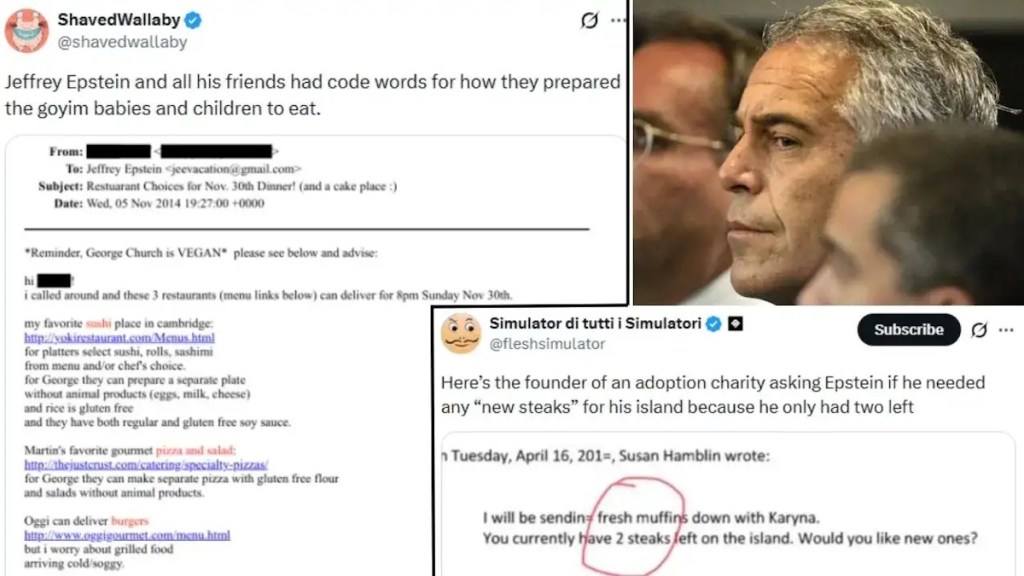
The Pizzagate theory — since widely debunked —was a conspiracy theory that exploded online during the 2016 U.S. presidential election, alleging that a child sex-trafficking ring involving prominent Democratic officials was being run out of a Washington pizzeria called Comet Ping Pong, interpreting food-related terms as code words. Posts suggested that words such as “pizza” or “steak” were code for children. One user alleged that an adoption charity founder asked Epstein if he needed “new steaks” for his island. A text search for the word “pizza” in the Justice Department documents comes up with an astonishing 849 results, most clearly related to Italian cuisine, but someone will no doubt find something there to reignite Pizzagate.
Others invoked comments made by comedian Roseanne Barr in 2024, when she claimed on a television appearance that Hollywood and political elites were “vampires” who drank blood and ate babies.
Note the antisemitic implications in the post above from someone who calls himself “ShavedWallaby”:
“Jeffrey Epstein and all his friends had code words for how they prepared the goyim babies and children to eat.”
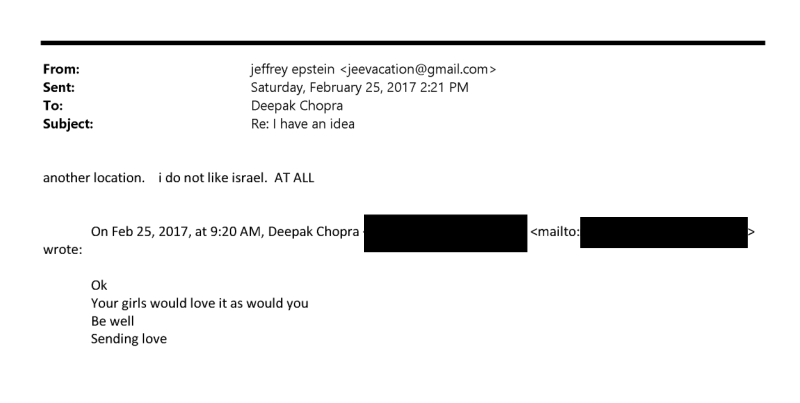
“Goyim” is a word from Hebrew, found in the Bible where it means “nations”, particularly those being described in the narrative of wars from over 3,000 years ago: Hittites, Amorites, Jebusites, etc. Since then, its use has evolved to refer, sometimes disparagingly, to Gentiles, or everyone who is not Jewish. Most languages have a sometimes extensive range of words for outsiders; the Roma refer to outsiders as Gadjo, and the Japanese talk about foreigners as Gaijin. The person posting the above is implying that only non-Jewish children are being eaten at these dinner parties. Epstein of course is a Jewish name, although there is absolutely no indication that he adhered to any religious precepts whatsoever, and was certainly not a Zionist according to a tweet to Deepak Chopra revealed in the latest batch of documents from the Justice Department.
Other posters have alleged that they found evidence in the files proving Epstein was involved in “Baal worship”, was a “Mossad agent” or championed “Jewish supremacy,” old conspiracies are being repackaged as new revelations. In fact, the bank account named “Baal” was a scanning failure: the document says “Bank”. Also, for those who have ever looked at a Bible, a lot of it involves God telling the Israelites to avoid any contamination by the idolatrous Baal worshippers.
The reference to Jews eating (non-Jewish) children is, however, very familiar, even in the twenty-first century, and derives from the “blood libels” that caused riots and pogroms for centuries throughout Europe, starting in the twelfth century. Jews, and those accused of being witches, were tortured, exiled or slaughtered due to totally unsubstantiated claims of infant cannibalism, or more precisely the use of infant blood in religious rituals – an accusation that makes no sense when placed against the strict Kosher rules that forbid eating blood of any animal in any form. But such claims do not fade easily, and will often be seen in new forms, such as descriptions of Israeli soldiers deliberately starving, kidnapping or killing Gazan children in a (singularly unsuccessful) attempt to perform genocide. Only the most malicious and vituperative claims now involve cannibalism, and they are usually posted anonymously (I presume the above is a pseudonym since, in Australia, we do not usually shave wallabies).
A protest in Washington, D.C. on November 20 2025 featuring activists dressed as Israeli Prime Minister Benjamin Netanyahu, U.S. President Donald Trump, U.S. Secretary of State Marco Rubio and other officials dining on food and drink meant to resemble organs, skin and blood. The demonstration took place both inside and outside Union Station, the capital’s central train station. The activists deemed it as “Israel’s Friendsgiving Dinner,” with signage behind a long dining table displaying a menu consisting of “starter: Gaza children’s limbs,” “main: stolen organs,” “drink: Gaza’s spilled blood” and “dessert: illegally harvested skin.”
Meanwhile, this image appeared on the campus of San Francisco State University, or perhaps a modernised version of it (this one was from the second intifada). It is classic blood libel: Thomas of Monmouth would be jealous of the modern technology, but would recognise the vilification strategy.
Epstein’s crimes involved a type of cannibalism – the exploitation and abuse of children who were also supplied to other sexual predators. But despite the volume of accusations filling the social media of those with nothing better to do, there is no concrete evidence in the released documents that Epstein or anyone else in his circle of the rich, entitled and depraved engaged in actual consumption of babies. But then, I guess it’s a bit much to expect them to leave proof, or even bones, lying around. Men (and I guess a few women) who see themselves as gods, masters of the universe, happily guzzle all the evidence.
See also my post on Woody Allen and his friendship with Epstein.
Pluribus (or in the titles “Plur1bus”) is the latest series from Vince Gilligan, the genius behind Breaking Bad and its sequel, Better Call Saul, as well as some thirty episodes of X-Files and its spin-off, The Lone Gunmen. I watched Breaking Bad and BCS compulsively (even though there was no cannibalism in them) because they forensically unwrapped the thin veneer of civilisation that tries to conceal the greed and violence underlying human societies.
Pluribus goes to the next step, exploring the nature of solutions that have historically been offered to the depraved appetites that motivate and terrify us – food, territory, sex. It envisages a utopia that is an allegory of every kind of perfectible society attempted from religion to revolution, all of which start by wanting to save us all from war, violence, oppression and hatred, and end up enforcing their perfect society with brutality, bloodshed and the suppression of individual liberties and thoughts.
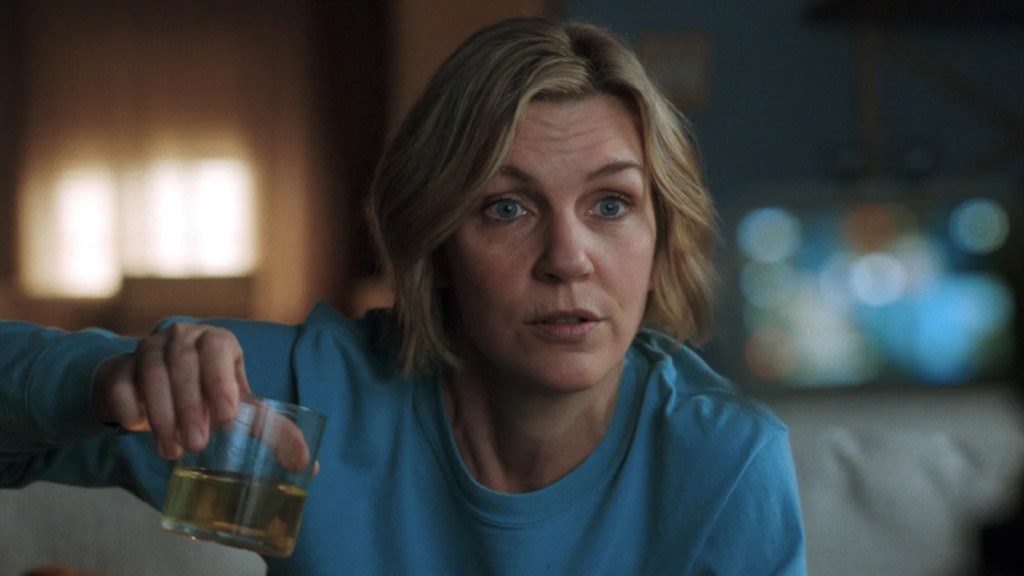
In this scenario, Carol Sturka (Rhea Seehorn from Better Call Saul) finds that virtually everyone else on earth except a handful of immune people have been affected by a virus whose origin is a stream of data from a distant galaxy. They have merged their minds into a collective consciousness, a “hive mind”. Imagine if suddenly everyone around you was inhabited by ChatGPT and had all the knowledge of humanity at their fingertips, was polite and helpful, and wanted you to join them. Or if not AI, then consider meeting members of a cult. They are always so polite – until perhaps you join them! No one is an individual any more – the “joining” has caused almost everyone to share their thoughts, their knowledge, their talents.
Violence is therefore totally obsolete, unimaginable, the way that murder was considered unthinkable in the “workers’ paradise” of the Soviet Union. It is the ultimate form of Communism, where everyone works together for the common good like bees or ants, there is no dissension, and no one is exploited or killed (except when Carol has her tantrums). Carol is the outsider, the one who does not fit with the smothering conformity that society calls well-balanced happiness. Imagine a vegan in a Beef Week parade. She has, by a freak of genetics, taken what The Matrix calls the red pill – the one that sees even painful individuality as more important than submission to comfortable conformity. So, when Carol expresses her rage, thousands of people die from the shock waves of her uncontrolled emotions. In fact, the show’s log-line is:
“The most miserable person on Earth must save the world from happiness”
That’s the background, and if you haven’t watched it yet, you may wish to stop reading here and go turn on Apple TV, who outbid Netflix for it. Because there is a big spoiler – for the viewer, and for Carol, who by almost the end of the season has found love with one of the hive people (who of course is also everyone else on earth) and comfort in the fact that she herself is immune and cannot be ‘saved’ without giving them, voluntarily, her DNA from stem cells.
This is a blog about cannibalism, so let’s look more closely at what all humans, even perfectly happy, hive mind ones, have to do: eat. Pluribus is, in a way, a reboot of Robinson Crusoe, sometimes sited as the first English language novel. Like Carol, Crusoe is alone, either psychically in her genetically forced separation from the hive mind, or literally when she causes such havoc that the others all move out of town (it’s set in Albuquerque like earlier Gilligan shows), leaving her isolated, forced to entertain herself with fireworks and golf. But Crusoe discovers that there are other humans visiting his island – cannibals who capture and kill rivals for dinner.
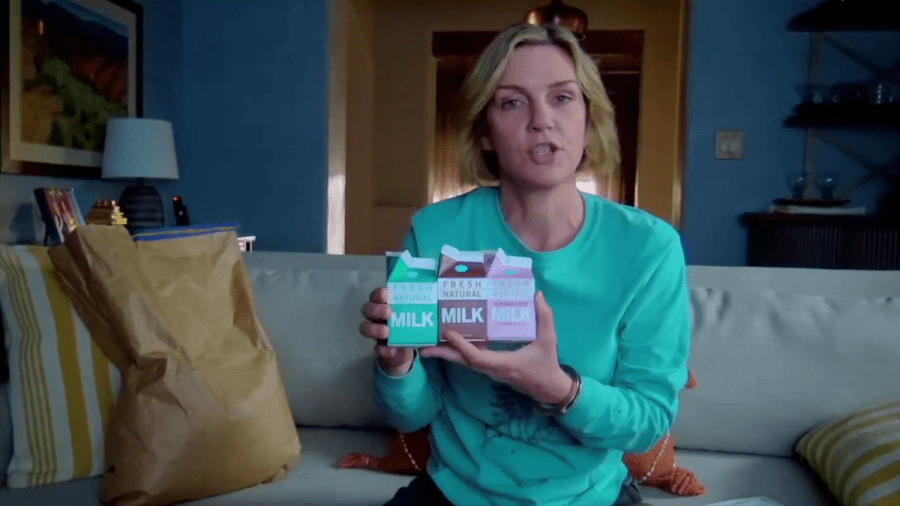
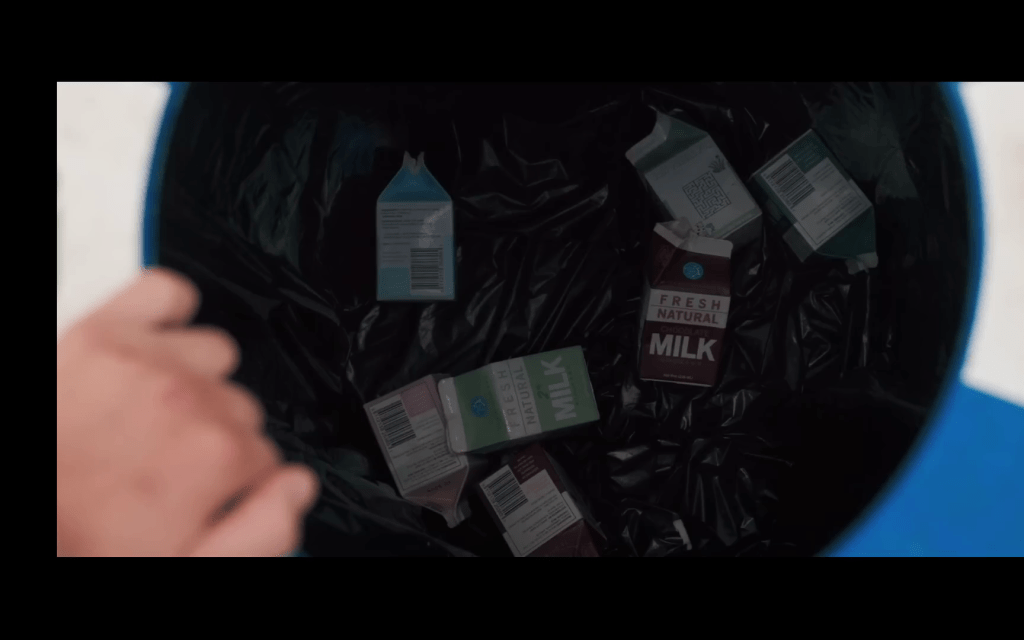
Carol similarly discovers cannibalism. Dumping her trash, she finds a large number of empty milk cartons in one of the town’s rubbish bins from a local dairy. She observes in episode 5, “Got milk”:
They sure like their milk”
She investigates and finds that, instead of milk, the dairy is producing a strange fluid created from a bagged crystalline substance. In episode 6, “HDP”, Carol traces the origin of this substance to a food packaging plant.
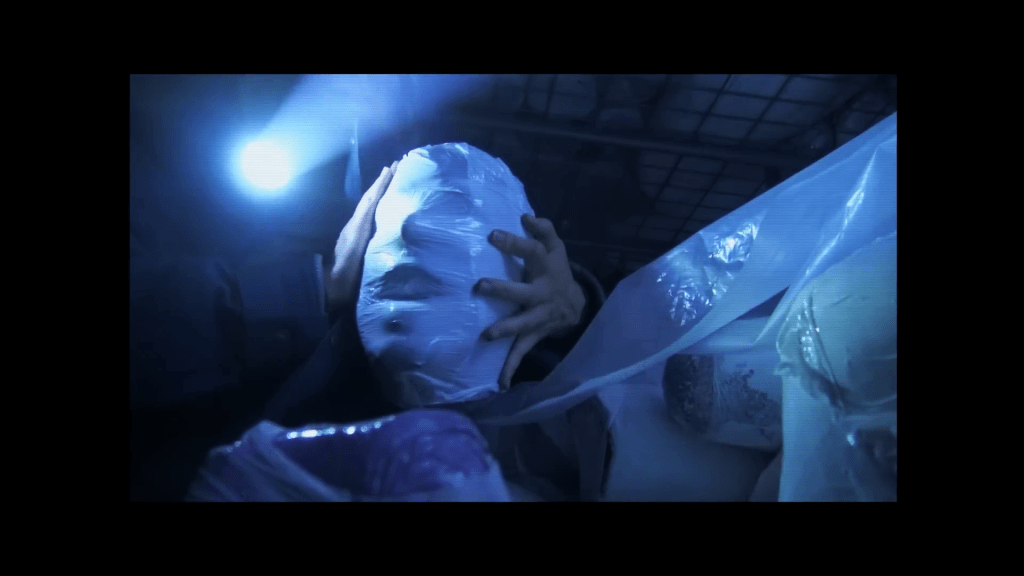
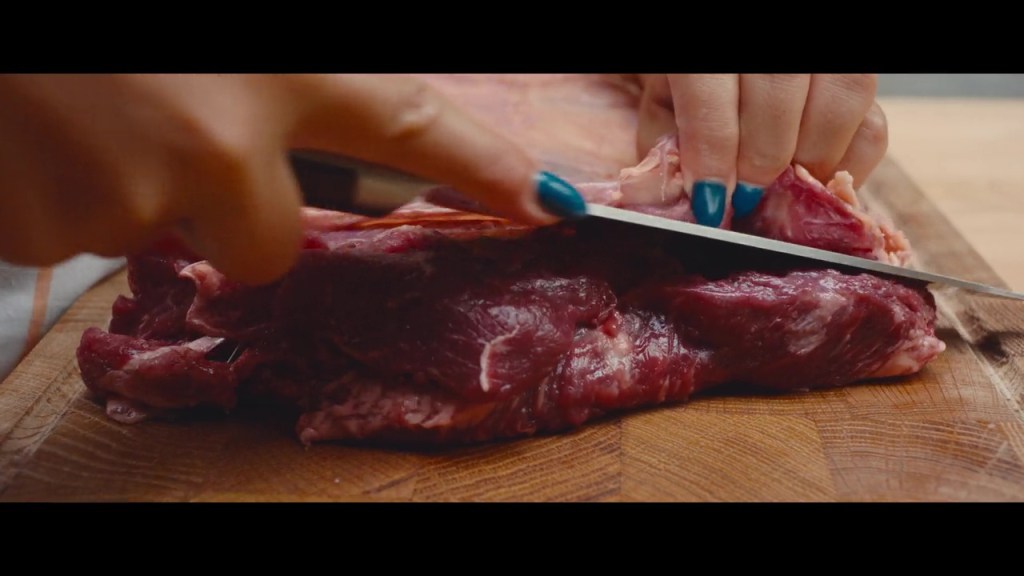
At this point, if you are a regular reader of this blog, you will have come to suspect the origin of this mysterious substance. Yep, like Soylent Green, the answer to starvation caused by overpopulation is simple – process and eat the dead humans. “HDP” stands for “Human Derived Protein”, and the plant is full of snap-frozen human body parts, presumably some of the millions of people who died during the joining. She picks up a frozen human head which (fun fact) is Vince Gilligan’s.
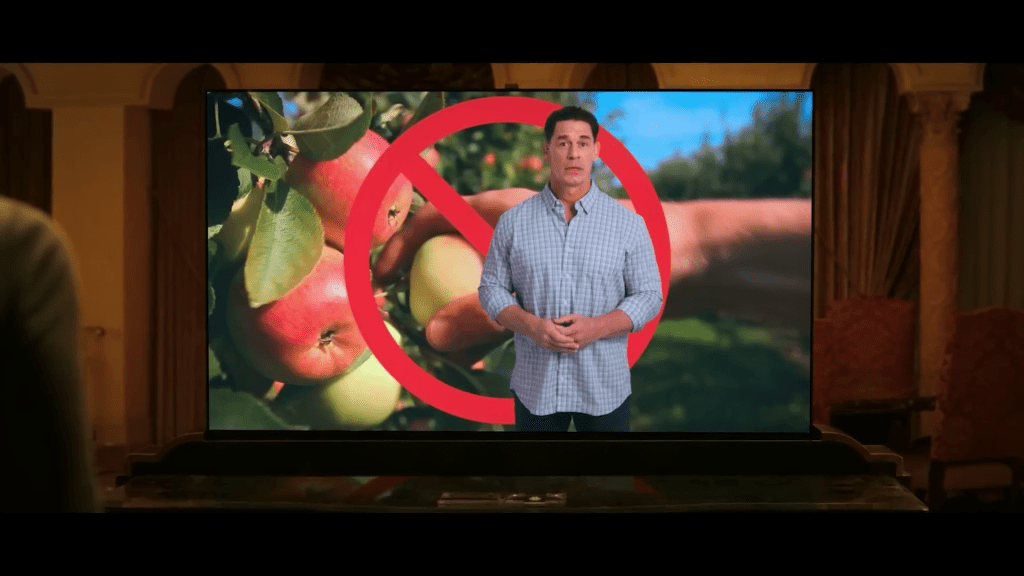
Like the plane crash survivors in Alive, there is nothing else for them to eat. A member of the others, played by John Cena (actor, wrestler, rapper and Peacemaker), explains that consuming people is not the Joining’s preference, but is instead a last resort to avoid mass starvation as their strict non-violence has extended to all other life, animal and plant; they have freed the animals from farms and zoos, and will not even pick an apple unless it falls from a tree by itself.
Carol’s hope that this discovery will unite the dozen immune non-joiners in her crusade to undo the joining proves in vain – they don’t care, just like the on-lookers didn’t really care that “Soylent Green is people!” as Charlton Heston screamed as he was being carried out. They don’t even let her join their video conferences due to her propensity to rage.
The joined, represented by Cena, are open and honest about their solution to starvation. The world has become a perfect utopia, except that there is nothing to eat except the waste product of the joining: human corpses. They explain to Carol that nearly 100,000 people die every day on Earth from natural causes. The Others are recycling those bodies like industrial food waste.
They call it “honouring the memory of the deceased.” As Alive asked, isn’t cannibalism better than dying of starvation? And, the next logical step taken in this show, isn’t it better to eat the dead than the living?
Carol by now has been abandoned by the “others”, even though they deliver to her anything she requests, usually by drone. Driven to distraction by isolation, she asks them to return, but writes a reminder to herself on her whiteboard, underlining it aggressively:
“THEY. EAT. PEOPLE”
The reminder stays there on her whiteboard, but she is so traumatised by isolation that she accepts their help and the love of the woman sent to contact her, even though she understands that she is just one cell in the hive mind. She also knows that the situation is unsustainable and that the others will soon be dying of starvation by the millions when they run out of corpses. But what finally changes her mind, makes her back into the outsider, is that she finds that the others have worked out how to develop new strains of the virus specifically for the immune. They already have her DNA from her eggs which she froze earlier in her life. They are planning to get her to join them.
Carol puts in a special request: an atomic weapon. She is determined to return humanity to its old individualistic self: fighting, raping, and exploiting each other, and, like John Cena’s Peacemaker, seems to be willing to kill them all to get there.
So the joining, like all utopias, turns out to be a nightmare from which millions will wake up dead. Although Carol has rejected the idea of joining, she has accepted that the rest of humanity is already joined and she is the glorious outsider, the non-conformist. What changes her mind is the realisation that they will not rest until she joins them too, despite the dire outlook for continued human existence.
What about the “milk” – the HDP? She is shocked when she finds the freezers full of human body parts, horrified to hear that this is what they eat to supplement the fast-dwindling supplies of food from before the joining, but, as they explain to her, the HDP is from people who have already died – there is no violence involved. Unlike our societies where billions of innocent and gentle animals are kept in appalling conditions and slaughtered industrially, the others have created a society along the line of what John Lennon hoped to see:
“Nothing to kill or die for And no religion too Imagine all the people Living life in peace”
She just doesn’t want to join them and, you know, EAT. PEOPLE.
Violence in the Highlands of Papua New Guinea marred celebrations of the country’s 25th anniversary of independence. Armed men were shown in videos holding body parts and saying “this is our meat.” The story brought back memories of former US President Joe Biden claiming his uncle’s body was never found during the Second World War as he had been eaten in PNG, stating that “there were a lot of cannibals, for real, in that part of New Guinea”.
Sean ‘Diddy’ Combs, already in hot water for sex trafficking and racketeering charges, has been accused of cannibalism now. In the Peacock documentary Diddy: The Making of a Bad Boy – which covers the rise and dramatic fall of Combs, 55 – former Making the Band 2 contestant Sara Rivers revealed what she and others experienced when cameras weren’t rolling. When Diddy got angry, she says, he threatened her band member:
“You make me so mad I want to eat your flesh!”
In the North West Province of South Africa, one of a group of illegal miners (zama zamas, or “those who take a chance” inZulu) in the Stilfontein mine (which closed in 2013) has disclosed that he and his fellow miners turned to cannibalism when they ran out of food 2km (1.25 miles) underground. The police had cut off food supplies the previous August to ‘smoke out’ the illegal miners.
February
Two artists put on a show in Scotland where they made and cooked “black pudding” sausages from their own blood. Although they did not eat the sausages after this show due to legal considerations, they have done so in the past, although one of the artists has since become a vegetarian and has said he will not be eating them in the future.
John Beagles and Graham Ramsay
Tyree Smith, the “Connecticut Cannibal”, was given conditional release by the Nutmeg State’s Psychiatric Security Review Board from the mental facility to which he was incarcerated. Smith was handed sixty years in 2013 for killing a homeless man and eating his brain and eyeball in a cemetery, washed down with sake. Doctors who have been treating Smith said he’s been fully rehabilitated, thanks to medications that quelled the voices in his head. Others, including the family of the man he killed and ate, are less optimistic about his future plans. Mr Gonzalez’s sister-in-law, Talitha Frazier, asked the review board “How do we know he’s not going to do this again?” Republican state Senator Paul Cicarella said “Murder and cannibalism and release in the same sentence … that’s a problem”.
What’s with all the eyeballs? A “preppy” Princeton grad was charged with murdering his brother at their luxury Princeton apartment, after which he ripped out the victim’s eyeball and ate it. He also reportedly set the family’s cat on fire. Even the Duke of Cornwall in King Lear would have blushed at that transgression.
March
A woman in Brazil barbecued and ate her victim’s heart and penis. Josefa Lima de Sousa, 65, left a blood-stained sign by the mutilated corpse with a message, using her street name, saying: “Gringa got rapist.” She told police the victim had been a child abuser.
A Texas embalmer with the wonderful name Amber Ludermilk was charged with the felony “abuse of a corpse” after cutting off the penis of a deceased sex offender and jamming it into his mouth. An arresting constable stated that “No matter what one thinks of his life, the law requires that he be treated with dignity in death.” In a world where thousands of humans die of starvation every day, and we casually torment, kill and then mutilate the corpses of billions of other animals every year for food, medical experiments, clothing or entertainment, are we expected to weep for this sex offender’s insentient corpse?
A South Carolina mental health facility was sued by family of a victim of murder and cannibalism. The lawsuit alleged that the killer, another inmate, had killed two men and eaten both the victims’ ears, as well as drinking their blood so he could “gain their power.”
In Rwanda, a minister said that persecution and cannibalism of Tutsi people are still “commonplace.” Readers may remember that just over thirty years ago, almost one million ethnic Tutsis in that country, some 75% of the Tutsi population, were slaughtered in the space of just 100 days. Although the word genocide has come to mean ‘anything done by someone you don’t like’, that one was a real genocide.
June
A young woman who calls herself pterodactylhunny disclosed on TikTok that her doctors had given her one her ribs which had been surgically removed. She took it home, boiled it to remove the meat, then ate the meat to see what it tasted like. Spoiler: the formaldehyde in which it had been soaked made it taste pretty bad. The cannibalism of eating her own flesh, however, she described as “cool” and “not that weird”. Viewers responses ranged from shocked to approving, pointing out that eating one’s own meat could be considered vegan, since the animal from which it came had given her consent.
16 men were arrested in the West Pokot region of Kenya after human remains were found including the bodies of several children. One boy was found in a maize field with his organs removed. Police say the suspects have confessed to killing and eating eight people.
Relatives of the victims of a mass-murderer in Idaho were outraged to find that he had taken a plea deal for the stabbing of four students in 2022, thus avoiding the death penalty. No indication of him eating his victims, but a forensic psychologist reported that he had become a strict vegan before that, because:
He was afraid that if he let himself go to taste meat once, he would become addicted to it—like he had become to heroin—and start killing and eating people.”
In Kenya, a man recently released from prison for killing his wife, murdered his second wife, cooked her flesh and fed it to his children. Irate members of the community lynched him and set him on fire. The incident elicited sharp debate among Kenyans over the old claims of cannibalism among members of the community. Samuel Bosire Angwenyi, the Secretary General of Abagusii Council of Elders, dismissed the claims saying it was a myth which some people blindly believed. “If there is a person who can eat a fellow human being, then that must be Satan.”
August
An Australian boxer whose nickname is “the Butcher” told fans he had “become a cannibal”. What he meant was that, as part of his training for a big fight, he had taken advantage of the birth of his child by eating his wife’s placenta, in tablet form, washing it down with a little breast milk. He said:
“I’ve technically become a cannibal. It’s actually like a superpower”
In Cuba, a man arrested for murder was found to have a jar filled with human fat, jars of fried meat, and a bag of ribs in his refrigerators. Cannibalism was suspected but never officially confirmed. Meanwhile, other residents of Santiago de Cuba, seeing an unusual level of police activity in September, fear that the case may be linked to the disappearance of other residents from the Abel Santamaría neighbourhood.
In Zimbabwe, a woman allegedly poisoned her four-year-old granddaughter, Tawanayasha Kadhene, before mutilating her body in Shurugwi on 26 August. Police said: “The suspect gave the victim a maheu drink laced with a maize pesticide pill. The child collapsed and died instantly. The suspect then cut flesh from the victim’s cheek, mixed it with herbs prescribed by a sangoma, cooked it and ate the mixture.” The ritual killing allegedly happened following the woman’s consultation of a traditional healer.
September
In an unusual case of auto-cannibalism, a patient at the University of California Los Angeles (UCLA) David Geffen School of Medicine received intravenous lorazepam to treat anxiety and claustrophobia in order to facilitate an MRI. He subsequently developed acute psychosis, performed self-inflicted digital enucleation of his left eye, and then ingested it. Lorazepam is a benzodiazepine that has been FDA-approved as a fast-acting anxiolytic and sedative. It is one of the most commonly used medications for these indications. The studies of the case claim that it is an “extremely rare paradoxical reactions to benzodiazepines.” Worth keeping an eye on though.
October
A thirteen-year-old boy in Egypt was arrested after reports he had murdered his classmate, sawed his body into pieces and ate them “out of curiosity”. He told the police that he that he found human flesh was “similar to breaded chicken”.
November
The strange case of Gabriela Rico Jiménez, a 21-year-old model from Mexico who disappeared in 2009 after raging against alleged cannibalistic captors while outside a fancy hotel in Monterrey Nuevo Leon, has been rediscovered by TikTok posters. Didn’t know this was happening until my blog on the story suddenly started to take wings recently.
In New Zealand, a mortuary technician lost his licence due to posting online talks ‘promoting cannibalism. He offered to obtain human tissue to interested readers, and added “When we have burn victims…. They smell so good sometimes”. The man also engaged in online conversations about rape and sexualising children, his own alleged drug use and ways of making explosives.
December
We closed the year with allegations from the Ukrainian government that Russian troops trying to occupy Zaporizhzhia in eastern Ukraine have run out of food and are killing and eating each other. The Ukrainian spy service GUR reported that:
“Due to a lack of food, the occupiers are sharpening their knives and preparing to eat their younger comrades”
Intercepted radio messages apparently include soldiers saying “We’ll eat each other, it’s all fucked up here. We’re already looking for someone younger” and “I’ve sharpened my knives. I don’t give a shit who I have to cut up. I just want to eat. Fuck everyone else”.
Around this time last year, this blog reported on several convicted Russian murderers who had admitted to cannibalism but been offered pardons if they agreed to serve in the Russian forces in Ukraine for six months. Later reports have noted that the pardons and repatriations may not ever have happened.
Back in Russia, “Perm cannibal” Mikhail Malyshev died at the age of 65 in a clinic, while waiting for a doctor. Malyshev was arrested in 2000 for two proven murders, although a polygraph test claims that he was involved in at least eight: he killed, dismembered and partially ate a man and a woman. Malyshev reportedly used the soft tissue to fry cutlets and threw away the rest. He often made kebabs out of stray dogs. He was sentenced to 25 years and served his sentence in the Perm region, undergoing mandatory psychiatric treatment. He was released from prison in October 2022. Some reports stated that after his release from prison, Malyshev had found work at a shelter for homeless animals. That part may be the most disturbing aspect of the 2025 story!
New cannibalism movies
A veritable swathe of new releases this year, showing again that cannibalism is the flavour of the month (sorry about the pun) or the year, or indeed the whole damn century:
Know Me: A True-Life Drama
Story of the “Causeway Cannibal” and media response
Devour
All female metal band called “The Virginia Bitches” come across a town full of cannibals
Human Hibachi 3: The Last Supper
Cult of devout followers eat human sacrifices in a “last supper”
Cannibal Comedian
Cannibal takes a stab at stand-up
Cannibal Mukbang
She makes vodcasts of voracious eating – mixed with cannibalism of bad men
A few years ago, I got chatting to a couple who owned a business in New Zealand – they were undertakers. When I mentioned my doctoral thesis, the thin red line between cannibalism and carnivorism, they told me they often received calls and emails seeking body parts. I doubted the story at the time – after all, cannibalism was a convenient story in the early days of British colonialism, and while Maoris have agreed it happened occasionally, it seemed unlikely to be a regular commercial proposition in the twenty-first century.
But the story lives on. In November 2025, The New Zealand Health Practitioners Disciplinary Tribunal found that a former mortuary technician had posted comments to social media “promoting cannibalism” and boasted that he could “literally steal an entire heart”.
The man – who cannot be named for legal reasons – also shared an image online of a dissected human skull with a handwritten message inside: “We’re inside your head”.
The Tribunal ruled that this constitutes professional misconduct, stating that he:
“engaged in conversations … promoting cannibalism and eating post mortem tissue”
Their ruling noted the man identified himself online as someone who worked in forensic pathology and/or was involved in post-mortems.
The man also engaged in online conversations about rape and sexualising children, his own alleged drug use and ways of making explosives, offering to show others how to make explosives.
One online conversation saw the man claim:
“When we have burn victims…. They smell so good sometimes”
In another online discussion about cannibalism, he discussed the provision of human (post-mortem) tissue to others.
“When you’re working here. We got enough [muscle] to go around. Save your muscle”
He also boasted about being able to access body parts.
“I mean. It’s not actually that hard. I could literally steal an entire heart. It all just goes back into a bag we stitch back inside them not like anyone checks it”
He told one online user he could “sneak a little heart slice next week. It’ll be me conveying my love to you. Sending some actual human heart.”
The man also claimed that he’d decapitated a corpse “to boil her head”.
The Tribunal ruling noted the man “accepts that his rhetoric, comments and information about post-mortems, post-mortem procedures, and dissections that he posted and/or circulated in his social media posts was inappropriate and that his conduct fell below the expected ethical and professional standards that apply to members of his profession”.
The Tribunal also noted the “charge of professional misconduct is established”.
No charges have been laid regarding the man actually carrying out any of these acts. What happened to free speech and entrepreneurialism in New Zealand?
According to Hollywood, everyone eagerly anticipates Christmas, which must be why incidents of violence flare over the festive season (largely driven by festive booze). Christmas goes for twelve days (they tell me), which covers the New Year mayhem as well, and reportedly involves a lot of odd things like lords leaping and pear trees containing medium sized birds. This film covers the twelve days, but omits French hens and turtle doves, etc, in favour of lots of blood and gore. I reviewed it many years ago, but it seems worth a fresh “bah humbug” as I recover over my keyboard after battling greedy retailers and stressed-out motorists.
“Bah! Humbug” always seems like a pretty good response to the confected cheer of Christmas, particularly to those who do not, for various reasons, celebrate the event or conform to the voracious consumerism that accompanies it. If you are one of the many who is over the Christmas rom-coms and tear-jerkers, you may have already come across the German Christmas demon Krampus, who appeared in a 2015 movie from Michael Dougherty, involving goblins, killer toys, malicious snowmen and a jack-in-the-box that eats a child whole, although he has been punishing naughty children for a lot longer than that, and may date back to pre-Christian folklore.
The cannibal movie reviewed today, though, was originally called The 12 Deaths of Christmas and features a different villain – a Christmas witch named Frau Perchtawho, according to legend, steals a child each of the twelve nights of Christmas. The witch is also said to slit open the bellies of disobedient children (not dissimilar to the threats of cannibalism which Andre Chikatilo’s mother used to keep him in line). The film’s name was changed to Mother Krampus for the American audience, many of whom have adopted Krampus as a sort of anti-Santa. Frau Perchta does not have nearly the same fan base.
The Santa Claus dogma is of course about socialisation – children are told that a large stranger will sneak into their houses at night and reward them if they are “good”. What if they are not good? Who will sneak into their house then, and what mayhem will ensue? Krampus was one answer, Frau Perchta another. Then there was Santa’s assistant, Père Fouettard who, in a nod to the suffering energy corporations, hands out lumps of coal to children who are not deemed to have been good, and sometimes whips them too (the name Père Fouettard translates as “Father Whipper”. Following Santa around appears to have been his punishment for engaging in a bit of entrepreneurial cannibalism, in which he and his wife drugged three children, slit their throats, cut them into pieces, and stewed them in a barrel, to be sold as Christmas hams. The taste, allegedly, is almost identical.
But today’s film is not just about stealing the bad children, and perhaps killing them, no, it’s all about the punishment of the wicked being extended to the following generations – a popular theme in the Bible (check out Deuteronomy 5:9 for some unfair shit). Perchta is coming for the children of adults who wronged her.
One of these children, and the protagonist of what passes for the plot, is Amy (Faye Goodwin – Mandy the Doll). Her mum is Vanessa (Claire-Maria Fox of Suicide Club and Bride of Scarecrow), and Vanessa’s dad – Amy’s grandpa – (Tony Manders, from The Young Cannibals) lives outside the village, near a scary forest in Belgrave (the UK one), and asks her to drive him, on Christmas no less (no Ubers I guess) to the Church, where a bunch of locals want to discuss the focal local issue – lots of village children are disappearing. There we finally get to hear the legend of the witch:
“Frau Perchta was a witch, who over Christmas stole the souls of children.”
Dad admits to Vanessa that the peaceful villagers got together to kill an old woman 25 years ago. We, the audience, know the background, through an endless voiceover accompanied by cards at the start of the movie. 12 kids disappeared over the 12 days of Christmas in 1921, and none were found, except for one girl whose mind was gone, and she could only scream “the witch! The witch!”
Then, in 1992, five more kids disappeared, their bodies were found in the forest, and the villagers believed, for reasons far from clear, that a nice old lady was the killer and was in fact Frau Perchta the witch, so they stabbed her and lynched her, as you do if the local constable is on leave, in a backward and primitive town like Belgrave, which apparently hosts the National Space Centre!
But as she died, she shouted a curse – that Frau Perchta would be back to wreak revenge on them, and their children. So, maybe she wasn’t quite so nice. Yeah, that’s about it for plot – we see (several times) the stringing up of the old woman, we see the risen witch. The witch kills lots of people in creative ways, including one who is cut up and made into a Christmas light show, another whose flesh is pressed into a cookie cutter to make Christmas peoplebread men, while another is trussed up like a Christmas turkey with an apple in her mouth and carved up, and her flesh cooked and fed to her boyfriend, who is Amy’s absentee dad. Then dad has his heart pulled out and eaten (not uncommon in cannibal stories – think Fresh Meat or even Hannibal).
The climax of a horror film (or any action movie) is usually the last ten minutes, in which the story is resolved and the bad guy defeated (until the sequel). This one goes on (and on and on) for about half an hour, presumably to ensure the film is considered a full-length feature, and it resolves nothing much, with a twist at the end that makes no sense at all. But lots of people get killed, and several have parts of them eaten, which is enough to get a mention in this blog, I guess. The plot is thin, the acting is often appalling, the continuity director in some parts seems to have been taken into the forest and eaten. But it’s presented as a low-budget slasher, and that’s what they are often like – they are not dramatic masterworks, but gruesome pantomimes. The idea of one child’s aunt walking him home through the dark forest at night when bodies are turning up everywhere is narratively absurd but, in a panto, we want to anticipate the villain, we want to guess what is going to happen, and yell at the actors to “look behind you!” And the gore, and the fright factors, are quite well done.
The moral of the story, if there is such a thing, is pronounced by a mysterious woman who turns out to be Amy’s grandma, not that it does her much good.
“Taking it into our own hands, playing God. That’s why all this is happening.”
Isn’t that exactly what humans do – play God? Nietzsche told us that God is dead, we killed him, so we have to become God. We play God in so many ways – the Christmas story in essence is about a Jewish family trying to escape one of the many psychopaths who have played God over the centuries. We play God when we nominate ourselves as above nature, more angel than animal, and proceed to destroy our own ecosystem. Who bears the suffering from such follies? The children. Like Frau Perchta, our vicious brutality usually comes back to haunt us, through the generations.
At the time of writing, the full movie (should you wish to bother) is available on YouTube.
A 13-year-old schoolboy allegedly murdered his classmate, sawed his body into pieces and ate them “out of curiosity”. The teenager killed his friend, Mohamed, by beating him with a wooden stick before using a power saw to cut his body into small parts that would fit into his school rucksack.
The killer reportedly lured his classmate to his family’s home in Ismailia’s Al-Mahatta Al-Jadida district on October 20, 2025. While alone, the child cannibal said he repeatedly hit the victim on the head with a stick until he died. The suspect, known as Youssef A, said he was reenacting the murder scenes which he saw in films and online games. The killer explained that he wanted to “try the way” he had seen online. Police officers were made aware of the attack after the victim’s remains were found near a shopping centre.
After conducting a search, the authorities then found further severed pieces of the victim under a bridge, in a pool and on an open field.
Youssef admitted to the killing and using an electric saw to dismember his victim. He also said he scattered his remains across the city in Egypt.
The suspect added that he ate part of the victim’s body “out of curiosity” and explained that it was “similar to breaded chicken”.
The child cannibal was made to re-enact the crime for investigators, leading police around the city to the places he had disposed of the body parts.
The suspect was transferred to a juvenile care facility after being detained for four days by Public Prosecution. He remained there for a week while judges reviewed his case.
Youssef also underwent a full physical examination, drug testing and forensic analysis to compare samples with Mohamed’s.
Investigators continue to look into the violent film and video content which he said influenced him to conduct the gruesome act. The case ignited calls for children to have greater protection from graphic content, with increased supervision from parents.
The case begs the question – plenty of children watch gruesome movies without then eating their friends. What did Youssef see in these media that led to his curiosity? The movies offered the blueprint for homicidal techniques, but behind all that is the isolation that saw two children on their own long enough for mayhem to ensue, and the constant reiteration of the cheapness of life, both human and non-human, that led a child to wonder what difference there might be between a friend, and a breaded chicken.
Delicious is a German horror film, a genre that has a proud history, but it’s also a psychological and socio-political drama that examines the many ways the rich eat the poor, and the potential for revenge. It is written and directed by Nele Mueller-Stöfen in her directorial debut, although it as well made as a work from far more experienced directors.
The film starts with social and class-based unrest. In the opening scene, a rich German family are in a car fitted with bulletproof glass as protesters swarm the streets of Paris, jumping on the car and fighting with police. The father is unworried – “they’re not interested in us.” Perhaps that’s true, but the protests are about poverty and the cost of living, and others are very interested in this family.
As they settle into their holiday home in Provence, another group of young working-class people watch them, the serving staff, who live impoverished lives as they wait on the rich, in a hotel room where they are lying on rich people’s beds and pissing in their fancy mineral water bottles. They work at a fancy hotel nearby, and observe as the family have dinner and a few drinks. On the way home, somewhat tipsy, they appear to hit a young woman walking across the road. In fact, we know that her friend has deliberately cut her arm to make the accident more believable. She reopens the wound when necessary, to maintain her connection to their guilt.
The next day, she tells them she has been fired for not being able to work after the accident, and asks for a job as a maid, but she gradually infiltrates the lives of each member of the family. They have designs on her body, but she and her friends have designs on theirs, and (this being a cannibal blog) you can probably work out what is going to happen well before they do.
Serving the rich (in some novel senses) is definitely on the menu, as blood and meat (eaten raw) feature in the early scenes. Less gory versions of eating too, including cunnilingus.
I’ll avoid spoilers, because it’s on Netflix, which means a lot of people will probably watch it. It’s beautifully filmed and well acted, but does tend to drag in the middle, although that is not unusual for European films – they never seem to be in the same hurry as Hollywood, which may explain some of the appalling reviews. But by the time the wife goes to a party with the young ones, we are right into it.
The way of the world is usually the rich squeezing the life out of the poor, and while there are many films about that (think Fresh, The Cannibal Club or What You Wish For), there are not many that look at the retaliation which the exploited must often crave. Eating Raoul captured that anger and propensity to violence well, and this one does it too, without the humour, but with a cast of fine young cannibals for whom the viewer may well feel some sympathy. The family, beset with their own issues to do with work and relationships, does not see disaster coming, and that is the basis for most good horror.
“You have high gates, but your perfect world cannot be separated from ours.”
The plot unravels slowly and by the time blood starts to flow, it’s almost time to finish the film. If you like plots where the invisible reclaim their power, you may enjoy this. Think Parasite or Saltburn, but with the added spice of cannibalism.
At one point Teodora, the “maid” quotes the Marxist, Antonio Gramsci, to her supposed boss.
“The old world is dying, and the new world struggles to be born: now is the time of monsters”
In the time of the monsters, when humanity has turned the planet into a giant abattoir, assuming that some are edible and some are not is just a social construction, with little rational basis. Riding off on their motorbikes, the cannibals seem to have cast off such contingent social customs. But who, the film asks, are the monsters?
Kinds of Kindness is a black comedy drama, presented as a “triptych fable” – three separate stories which are nevertheless connected. The director, Yorgos Lanthimos, has made many celebrated films, including The Lobster,The Killing of a Sacred Deer and most recently Bugonia. He has won a BAFTA and been nominated for five Academy Awards. Kinds of Kindness has his regular extraordinary cast, including Emma Stone, Jesse Plemons, Willem Dafoe and Margaret Qualley.
When directors use ensemble casts, it usually means they use the same actors in a series of unrelated films, but this one is really three films in which the same actors play different roles. The one of interest to us is the middle section, “R.M.F. is flying”, which employs the theme of this blog, cannibalism. But the whole film is a entertaining (if somewhat lengthy), and there is a relationship between the three parts that makes an interesting, if somewhat disorienting and bewildering, whole. Life imitates art, in that the director and Stone have recently been involved in signing uninformed statements about international politics, an area in which they clearly are sadly ignorant. Imagined kindness becomes abusive behaviour, the theme of the film.
Spoiler alert – if you haven’t seen the movie, and plan to do so, maybe do that first.
The first part of the trilogy explores abusive relationships, particularly in the workplace, as Robert (Jesse Plemons) lets his boss Raymond (Willem Dafoe) control every aspect of his life. Raymond is loving and generous (a kind of kindness), but only as long as Robert obeys every order Raymond gives him, including his daily food regime, his sexual activities, and the order to kill a person known only as R.M.F. Kindness is presented as a toxic attachment.
The second story, R.M.F. is Flying, follows a police officer named Daniel, (Plemons), whose wife Liz (Emma Stone) has disappeared at sea while on a biology research expedition. Despite all predictions, she is found and flown back home by R.M.F., but Daniel believes she is an imposter – her shoes don’t fit, she does not remember his favourite song, and she suddenly loves chocolate which she previously could not stand, telling of a dream where dogs were the master species and fed their pet humans on chocolate.
Flashbacks reveal how she survived – by cannibalising the other members of the team.
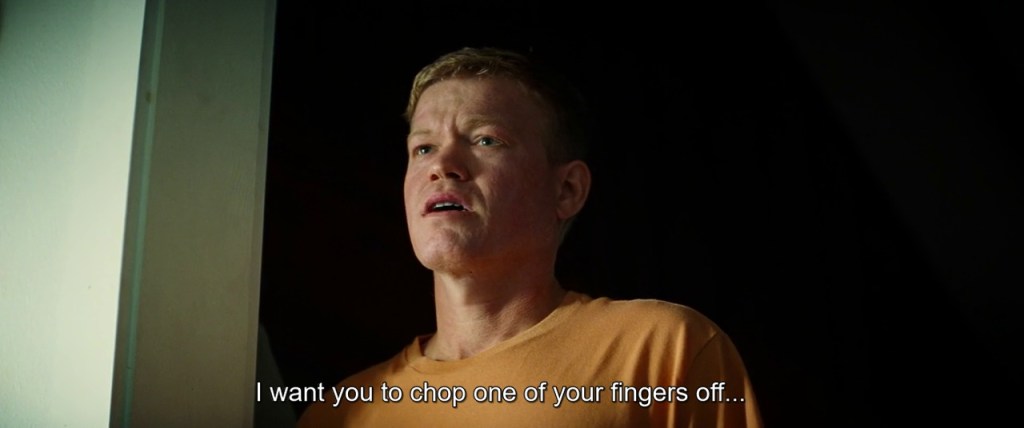
At one point, the distraught cop Daniel shoots a suspect in the hand, and starts licking up the blood from the wound, just as a dog might do. Like the dogs in her dream, Daniel becomes Liz’s pack leader and she accepts his humiliation and cruelty like a “beta dog” would. Demanding she prove her love, Daniel asks her to cook him one of her fingers or thumb, and we see her cut it off and fry it.
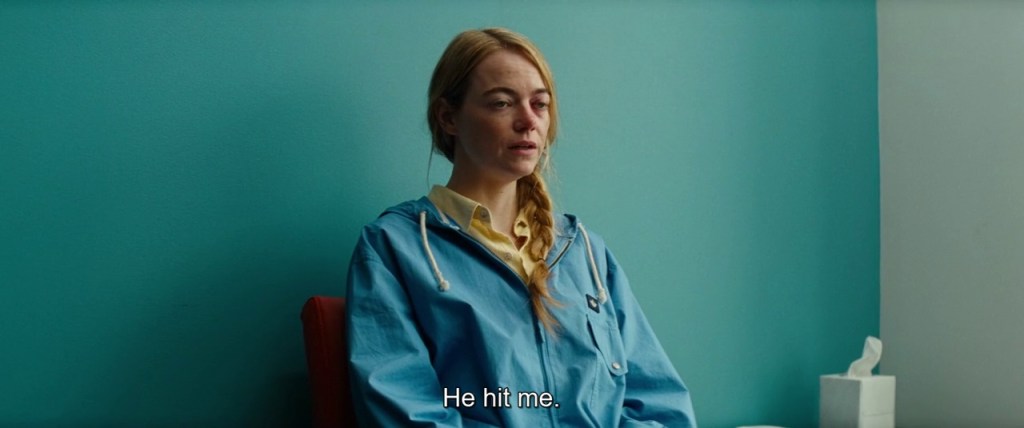
When she reveals she is pregnant, he beats her until she loses the baby.
Finally, he says he is still hungry, famished, and says he wants her liver. She removes it with a kitchen knife, dying in the process, and we see the ‘real’ Liz appear at the door, to be greeted lovingly by Daniel.
The closing credits show dogs driving a car, a dead human lying by the roadside like roadkill. This story exposes kindness as vulnerability in intimate relationships. Daniel is determined that Liz be exactly as he wants her and rejects all her overtures of love, eventually leading to her death and rebirth as his ideal wife.
The final story examines a sex cult led by Omi (Dafoe) and Aka (Hong Chau) where followers are purified by drinking water cleansed by the tears of the leaders, and can thereafter only have sex with Omi and Aka. Emily (Stone) and Andrew (Plemons) are paired and sent out to find a messiah – a woman who can revive the dead. Emily, like many converts to cults, has left her family behind, although she sneaks into her old house sometimes to sit on her little girl’s bed. Eventually she goes to visit her family, but the daughter is asleep and her ex-husband drugs and rapes her, meaning that she is now, to the cult, ‘contaminated’, and so ejected from the compound. She perseveres and eventually finds the messiah, a veterinarian named Ruth (Margaret Qualley) who heals a stray dog whose paw Emily has cruelly cut. Liz drugs Ruth and takes her to the morgue, where Ruth brings back R.M.F. from the dead. Triumphant, Emily drives the still dazed Ruth to cult headquarters after doing a victory dance that appears in the trailer at the top of this blog. As the credits roll, though, her reckless driving ends up with her driving her Dodge Charger into a wall, killing Ruth. Abusive kindness again, this time as spiritual devotion turned toward thralldom and abuse.
In all three stories, the characters seek fulfilment and, yes, kindness, going to excessive lengths to achieve it – Daniel kills a man to win his boss’ love, Liz cuts out her own liver to feed her husband and placate his repulsion, and Emily kidnaps her purported messiah to win back the love of her cult leader.
The film is an absurdist romp, reflecting the incongruity of human relationships and social behaviour. In each part, someone is being exploited and abused, a form of consumption, but the middle story makes cannibalism, inherent in all abuse, graphically apparent. There are many variations of cannibalism; Liz indulges in starvation cannibalism to survive as she waits to be rescued, Daniel becomes psychotic and licks blood from a wounded civilian, Daniel indulges in revenge cannibalism, ultimately killing Liz.
When he is convinced the woman that was rescued is not really Liz, he becomes contemptuous, and from that point, her death and consumption are inevitable. She has been, in his eyes, dehumanised, objectified like the animals sent to their deaths by the billions every year for human consumption. They are “de-animalised” – their flesh turned into commodities, made to look as little as possible as the living, feeling animals from which it came. For humans to be cannibalised, they must first be animalised, then de-animalised.
Thus, Daniel licks the wound of the man he shot like a dog might treat a wound; thus, Liz’s dream in which the dogs are in charge and feed the humans, not exactly what they want, but chocolate, of which there is plenty, probably because dogs cannot eat it (it’s toxic for them).
In relationships built on distrust and rage, we are animalised, and animals like dogs become the paradigm of civilisation. The humans are just wearing people masks.














































 The Cannibal Guy