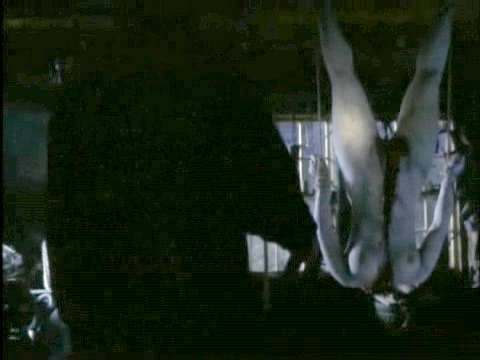
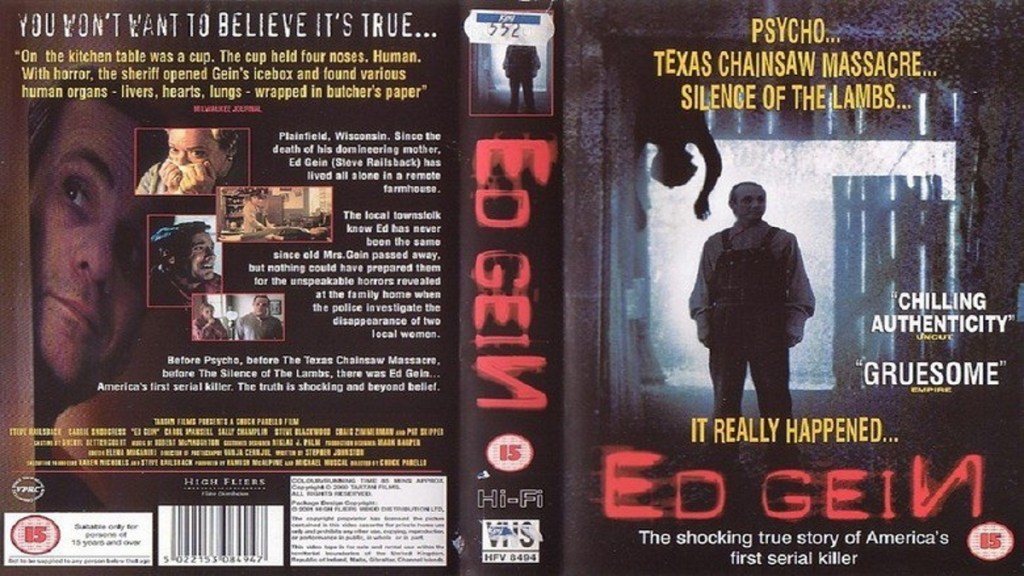
The Butcher of Plainfield: ED GEIN (Chuck Parello, 2000)

Ed Gein is an important figure in the study of American cannibalism, not because he ate a lot of people (we can’t be sure how many) but more for the inspiration his deviant activities furnished to some great books and movies, after his arrest and incarceration.

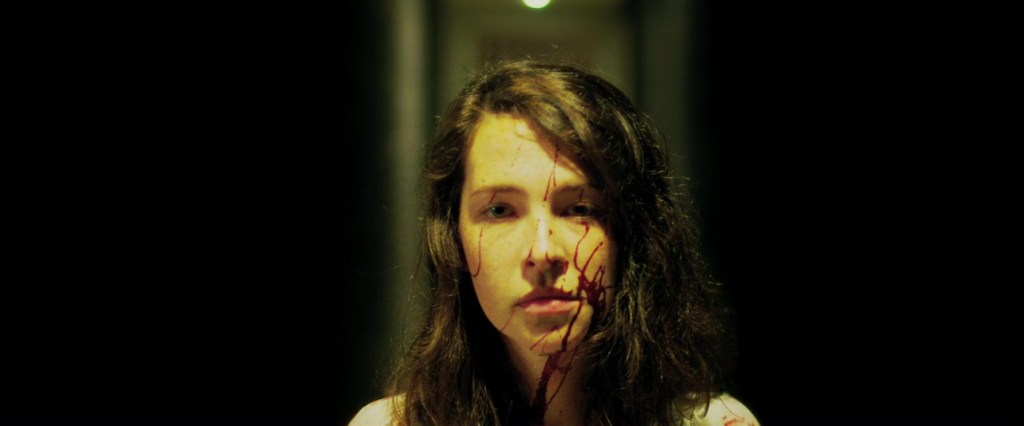
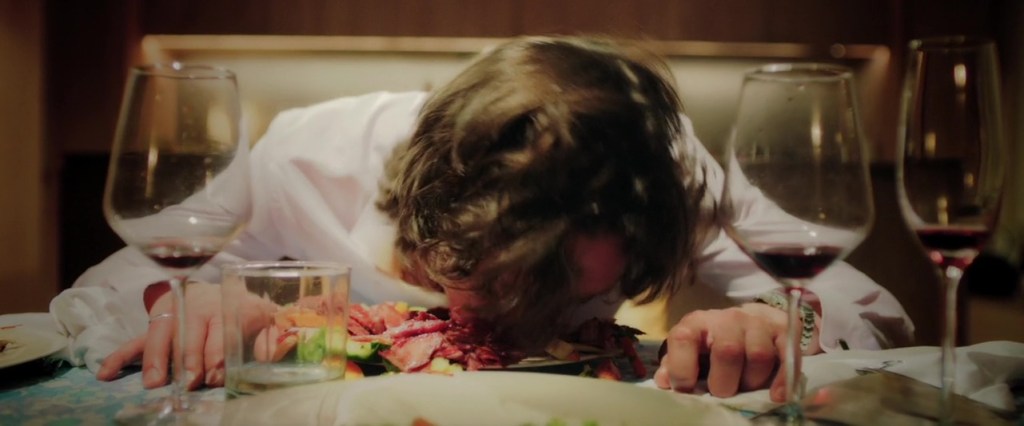
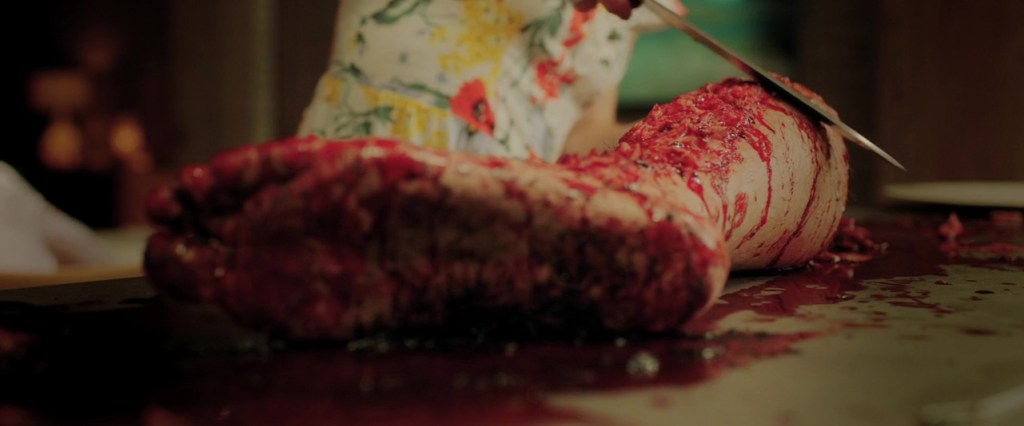
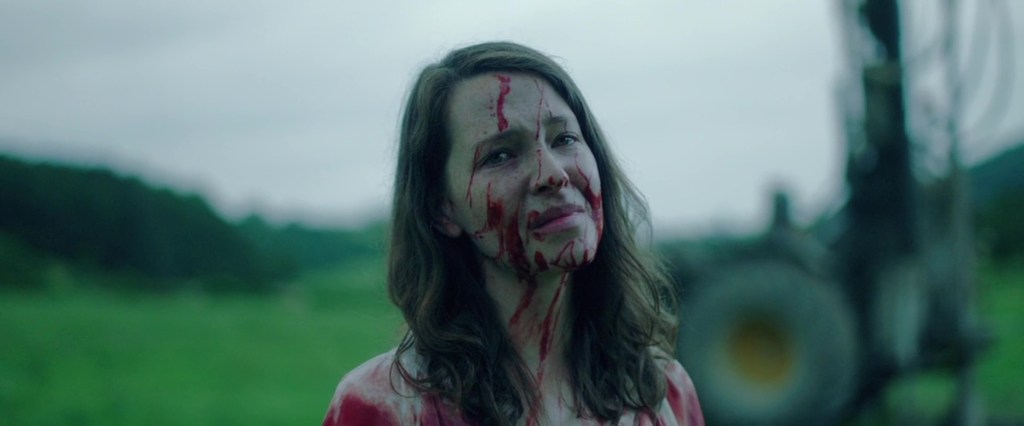
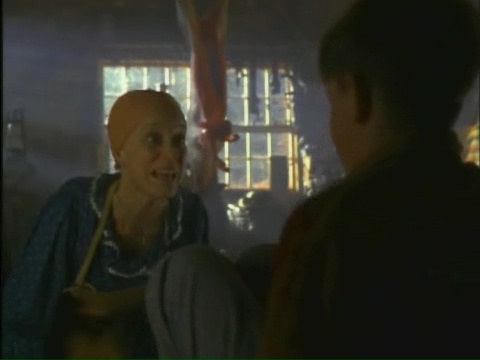
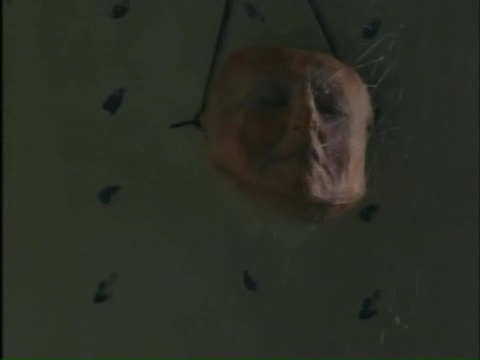
This film, called Ed Gein in the US and Australia and In the Light of the Moon in other markets, follows the life and crimes of the Wisconsin man who became known as “The Butcher of Plainfield”. Plainfield is a little town in Wisconsin, about forty miles from Chicago. Gein would haunt the cemetery at night to dig up corpses of recently deceased women, take them home and make all sorts of things out of their body parts. As well as chairs and lampshades covered in skin, bowls made of human skulls and belts made of nipples, ideas inspired by his fascination with Nazi atrocities, Gein would make women suits out of human skin (which inspired Jame Gumb – “Buffalo Bill” – in Silence of the Lambs) and then dress up as his Mama (which inspired the book and later hugely successful 1960 Hitchcock movie Psycho). His facemasks made out of human faces inspired the character Leatherface in The Texas Chain Saw Massacre. Truly a seminal figure in cannibal studies!

The plot is pretty much an accurate retelling of his hijinks, as far as anyone can tell without asking him (and he claimed he couldn’t remember anything about the murders, plus he’s dead now anyway). Ed (Steve Railsback, who had played Charles Manson several years earlier) grew up with a mother (played by Carrie Snodgress of Diary of a Mad Housewife fame) who was a vituperative fundamentalist and beat the fear of God into her children.

Ed worshipped her and thought she was a saint, and went batshit crazy when she died.

But in a tiny little town like Plainfield WI, everyone was a bit weird (the film starts with some genuine interviews of the locals, and they look even stranger than Ed). Local people thought him odd but harmless, and even employed him to babysit their kids. He seems to have had no interest in women, until the ghost of his mother appears to him in a burning bush (I kid you not, this is how much he is Biblewashed).

Meanwhile, Ed spends his nights digging up recently deceased women and souveniring their parts, particularly their lady-parts, which he has researched pretty solidly.

His house if full of his trophies: lamps made from human spines, and shrunken heads.

But what he really wants is for Mama to return from the dead. He practices on his excavated corpses to see if he can command them to “AWAKE – AND ARISE!” and one seems to turn her head, but by now we are deep in his psychosis. He visits his mother’s grave and begs her to return.

He reads books about head-hunters, Nazis, and even the pulp detective comics that he used to get into trouble for wanking to in his younger days.

There are flashbacks to those younger days, including the funeral of his brother (whom, the movie tells us, he killed, which may also be true). Ed hugs his Mama, telling her it’s just the two of them now, but she pushes him away, feeling his overenthusiastic erection. Ed is a sinner, and he needs his saint.

So anyway, Mama’s ghost tells him that the women of the town are all sinners, whores, and he must visit God’s judgement upon them, then she will be able to return to him. Pretty clear to us, the audience, that he is having psychotic delusions, but to him it’s all very real, so he heads off to shoot, kidnap and eventually fillet and cook two of the townswomen – the one that runs the bar in town and the one that runs the general store. He also collects mementos like noses and breasts, and he particularly likes vulvas.

The rest of the bodies are not wasted either.

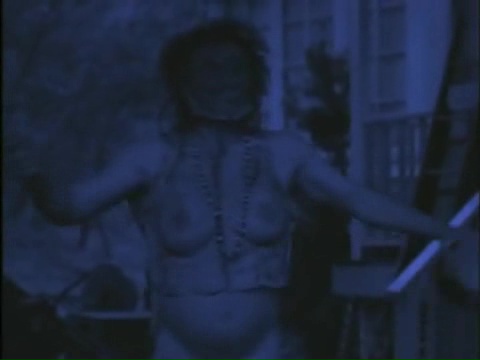
He has no neighbours within screaming distance, so he can get up to whatever he wants, including dancing in the moonlight in what Hannibal would call a “vest with tits”.

But bloodshed is not really his thing (even though he killed his brother, but that was for insulting their mom). The men of the town go off hunting deer as soon as the season starts, but Ed tells one of his prospective victims that he hates hunting.

But Mama has other ideas, and it’s clear that Ed has learnt, as a good Wisconsin carnophallogocentric man, how to dress a carcass. The men of the town are spending their nights inculpably slitting open harmless ruminant mammals of the family Cervidae, but are shocked and nauseated when the carcass in Ed’s basement turns out to be of another species. The word “butcher” has dual meanings – the butchers of Plainfield are horrified by activities of the “Butcher of Plainfield”. Put a capital B on the word butcher and it moves from blameless to shocking. But it’s hard not to notice that, until his psychotic delusions of mother take over, poor Ed is doing what everyone else is doing, but he’s doing it to dead bodies rather than living white-tailed deer.

Once the cops finally accept that Ed is not a harmless eccentric, they find lots of interesting things in his house.

This was a huge story in 1957!

So that’s Ed, our modern, domestic cannibal – a man (usually) who seems a bit odd but, everyone thinks, is apparently harmless. Think of the big names of modern cannibalism – Albert Fish, a sweet old man who took ten-year-old Grace Budd off to a purported children’s party, but really took her home for his dinner. Jeffrey Dahmer, who took young men home for photography and sex but then drugged them, drilled holes in their heads and ate parts of them. Armin Meiwes, who advertised on the Internet for someone who wanted to be eaten, and ate the successful applicant. Issei Sagawa, who shot a fellow grad student at the Sorbonne because he wanted to have sex with her corpse and then eat bits of her. Each of them were described by their neighbours as either “normal” or a bit odd but harmless.

Chuck Parello and Steve Railsback won Best Film and Best Actor respectively at the 2000 Sitges Film Festival, one of the leading festivals featuring horror and fantasy films. But the film scored a wretched 10% on Rotten Tomatoes, with critics calling it “dry and dull.” I beg to differ. Ed is played as dull, because he appeared to be so, right up until he imagines Mama riling him up to declare war on loose women. His dullness and misapprehension of social and religious conventions that are usually unquestioned, is the whole point of the film, and the two main actors, Steve Railsback as Ed and Carrie Snodgrass as Mama, do a superb and convincing job. The slow, rural pace makes the sudden appearance of violence and body parts all the more shocking, and there’s plenty of both. The deaths when they happen are slow and wretched, as they would no doubt be in real life. There’s a surprising amount of suspense, the soundtrack admittedly is incredibly annoying, but other than that it’s a pretty great cannibal film, with lots of interesting philosophical questions to chew on.

Is Anne Hathaway a cannibal?

The short answer, as far as anyone who knows anything about it knows, is NO.

The long answer is still no, but involves a Twitter experiment, which turned into a viral storm.

It started on Saturday, June 25, when a fan posted a picture of Anne Hathaway (below) from Elle France magazine. When I last checked, this post had over 300,000 likes, 23,000 retweets and 4,600 quote tweets.

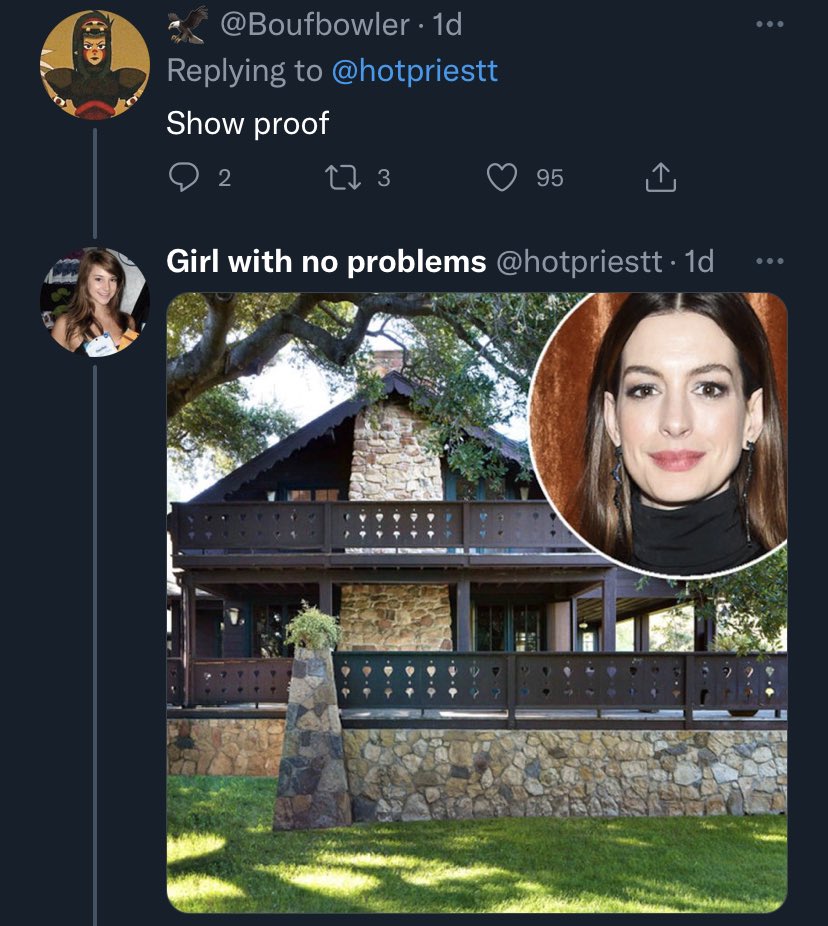
That’s where it got complicated, because while most of the comments declared undying love for her, one of the quote tweets, from a user named hotpriestt, stated 

“every tweet about anne hathaway going viral like police didn’t find human remains and evidence of cannibalism in her LA home that she sold in 2013”

The original quote tweet was later deleted, but others have since tweeted the same, rather confusing, text.

This understandably caused some consternation, since we are all sure that everything printed on the Internet generally, and Twitter in particular, is invariably true.

One tweeter demanded: SHOW PROOF, to which the original tweeter replied with a picture of the supposed house in which the purported cannibalism had taken place. Not sure that evidence would stand up in a court of law as proof, but apparently it was pretty convincing for some Twitter users.

Some thought that the fact she never seems to get any older indicates that she is eating human flesh, or at least bathing in the blood of virgins like Elizabeth Báthory. Or else eating human fetuses, like Mrs Li in Dumplings.

One Hathaway fan declared that she “doesn’t look like” she had eaten people. Another replied:

“What are you meant to look like when u eat people?”

After leaving this internationally important debate to brew for a few hours, the tweet’s author returned to Twitter on June 26 to say:

Harvard University has provided no information to the media regarding this purported study, or any evidence that Anne Hathaway has any connection to cannibalism, and it seems unlikely that a University would involve itself in a study that sounds decidedly defamatory. Meanwhile, the user who posted the viral tweet cancelled their Twitter account.

So it was, amazingly, all a fake. One Twitter user admitted to having spent “15 minutes googling this shit.” Another admitted:

There’s a moral there somewhere.

Hathaway does have some odd eating habits though. She went vegan in 2011, not for ethical reasons but to lose weight for the role of Catwoman in The Dark Knight Rises. She kept it up until a dinner with Matt Damon during the filming of Interstellar in 2014, when she tried some fish and “my brain felt like a computer rebooting”.

That statement of course is somewhere between wishful thinking and deliberate obfuscation. She felt like fish and ate it without qualms, because she had not gone vegan in order to spare fish or other sentient animals from the agony of being farmed and killed, but simply for her own appearance. The idea that anything other than drugs can instantly affect the brain before even being digested, let alone distributed to the cells of the body, is absolute bullshit (which is also not vegan). To me, the fish story is the silliest untruth of this blog, more so than the cannibalism story.

 Hathaway went vegan again recently (raw vegan this time) to prepare for the role of Rebekah Neumann in the new series We Crashed, which premiered on Apple TV+ in March 2022. That didn’t stick either, and she is reportedly back on burgers.

So. Anne Hathaway is not a cannibal, in that she doesn’t knowingly eat human flesh. She is a mammal eating mammalian flesh though, so I guess that makes her (like most people) a kind of cannibal.

And after all, who knows what was in that burger?

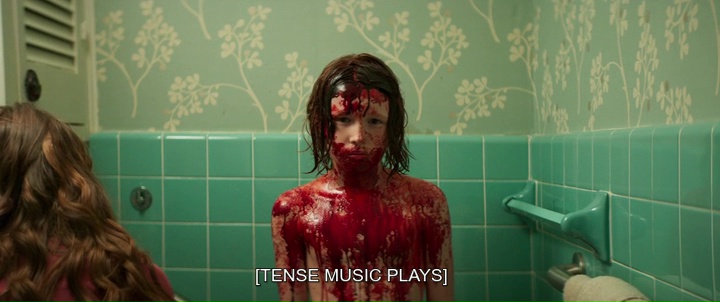
“Drowning in a river of blood”, SON (Ivan Kavanagh, 2021)

Children as cannibals seems to be the fashion, with fans of Timothée Chalamet waiting impatiently for the new cannibal romance movie Bones and All due towards the end of 2022 (maybe). Chalamet teams up with Taylor Russell, who plays a girl that has been a cannibal since she grew her first teeth. Yeah, I read the book, but no spoilers here. A couple of weeks ago, we looked at the movie It’s Alive, which featured a man- (and woman-) eating newborn baby. Combine that hungry little fella with the cannibal kids in The Girl With All the Gifts and some baffled doctors in Rosemary’s Baby or The Exorcist or The Omen and we get this little boy named David (Luke David Blumm from The Sinner), who is a sweet little boy, except that he kills and eats people.

His mother, Laura (Andi Matichak from Halloween) kicks off the movie as she escapes from a religious cult, hugely pregnant, and gives birth in her car as a King Lear level storm rages outside. Yes, there be some devil work afoot – those demons love a young virgin. Or is she escaping extreme sexual abuse? Or is she chronically delusional?

Eight years later, Laura and David are a happy, well-adjusted family of two, until one night she goes into David’s room and there are a whole bunch of people standing around his bed, which she is not happy about – has the cult come back for David? He seems OK, though, with the normal hopes and dreams of an eight-year-old boy.

The cops think she’s crazy, except for Paul (Emile Hirsch from Into The Wild) who seems to have no police work to do other than sympathise with Laura. David starts having seizures, skin irruptions and internal bleeding, which the doctors are baffled by, as they normally are in this genre. Some of them seem to be in cahoots with the cult members who want not Laura, but David. The cult’s slogan is “HE IS COMING”. It turns up, written in blood, all over the place.

There is only one thing that makes David feel better – a nice dose of human body parts. Not a cure exactly, but it seems to clear up the crusty sores and vomiting of blood very nicely. Laura escapes the hospital with David when she figures the doctors are all involved in the cult, and flees to the home of her friend Susan. She leaves David with Susan while she gets a few essentials from home, but when she comes back, David is feeling much better, and Susan much worse. Yes, some fresh human flesh is a great aid to healing, apparently.

And so it goes. Laura washes David down in the shower and subsequently listens to his entreaties (“It hurts, mom!”) and his threats (“Get me some fuckin’ food, you bitch!”).

But eventually, she does what any good mother would do when faced with a hungry child – she finds him some food. But not just, you know, anyone; like Hannibal who prefers to eat rude people, or Sheila from Santa Clarita Diet who wants to eat “someone bad, who deserves it… the prototype would be a young, single Hitler”, Laura sees a very nasty pimp beating up one of his girls, and decides to invite him around for dinner.

Of course, one of the worst parts of being a parent is cleaning up after dinner.

So it’s a cannibal mystery. Laura is really named Anna and, according to the newspapers of the time, she was repeatedly raped by her father and a whole lot of men to whom he sold her from the age of ten. A paedophile cult!

If you can’t accuse someone of being a cannibal, call them a paedophile. But her childhood friend, who admittedly is now a hopeless junkie, tells her that in reality her father didn’t touch her; she was sacred.

The cult would torture and kill animals in her bedroom then force her to chant a spell to summon a demon named Palystes (fun fact, that is not the name of a demon but of a spider) who would rape her and, yep, get her with child. Rosemary’s Baby and The Omen for a new century, a new, improved version, now with cannibalism. Her shrink (retired) tells the police, who are interested in talking to her about the hollowed out friend Susan, that she is psychotic and imagined the whole cult thing. The cops, even Paul who’s really into her, decide she is having a psychotic episode and is the one killing and dismembering people.

Well, it’s a new movie and you might want to catch it, so no spoilers (although so many reviewers say the ending is obvious). The directing by Irish filmmaker Ivan Kavanagh is sure footed, the Irish certainly know their way around devils and the children of supernatural beings. The actors are great, particularly Andi Matichak as Laura and Luke David Blumm as the junior cannibal, the plot rolls along well and if the continuity is a bit jumpy, well, that’s part of the psychotic story arc. For those who like that sort of thing, there is a LOT of gore, and having a cute little boy doing the killing and eating is a nice touch. Although why no one believes a little boy could be a cannibal killer baffles me. I was a little boy once, and I wouldn’t put anything past the kids I knew.

Son scored a respectable 76% “fresh” on Rotten Tomatoes, with the Los Angeles Times calling it “an amped-up version of everyday parental paranoia” and the San Jose Mercury News saying “it’s engrossing and well-made, but you’ll need a strong stomach to get through it”.

Son asks some interesting questions about trauma, believing victims but also questioning false memories, fear of the past and vengeance. It also reminded me of people who are shocked at cannibalism movies, but even more shocked at vegans who, they complain, are neglecting their children by not feeding them meat. David has no such problems in this movie. As Hannibal would say, “nothing here is vegetarian”.

“Reports of widespread cannibalism” – NO BLADE OF GRASS (Cornell Wilde, 1970)

Cities are locked down, citizens are trying to escape from a deadly virus, food is rationed, rumours abound of dark government plots to kill off sections of the population. No, it’s not a COVID-19 movie but a speculative fiction film from over fifty years ago. From the trailer (above):

“Mankind destroyed what made most of the world liveable. Nature – wounded, diseased, and enraged – took revenge on her murderers. She cut off their food supply, and then waited, while they consumed each other.”

Yes, it’s a cannibal film based on a cannibal book, and its premise is the human war against nature, the way victory inevitably turns into defeat, and then perhaps extinction. The book it was based on, The Death of Grass by John Christopher, came out in 1956, which makes it quite prescient, and a bit of a shame more people didn’t read it back then, when carbon dioxide levels were 314 parts per million, compared to today’s 430ppm. Here’s a quote from that book:

“…he could no longer believe that there would be any last-minute reprieve for mankind. First China, and then the rest of Asia, and now Europe. The others would fall in their turn, incredulous, it might be, to the end. Nature was wiping a cloth across the slate of human history, leaving it empty for the pathetic scrawls of those few who, here and there over the face of the globe, would survive.”

Those who did take it seriously were film-makers like Ray Milland, who made Panic in Year Zero! in 1962 with a very similar plot, and this one, No Blade of Grass, an adaptation of Christopher’s book made by the acclaimed American actor turned director Cornell Wilde, whose 1965 film The Naked Prey was in many ways a forerunner of the Italian “Cannibal Boom” films of the 1970s and 1980s.

The film, set in the UK, starts with scenes of environmental destruction, as did its more famous American rival Soylent Green three years later. Soylent Green specifically nominated global warming as the cause of the collapse of the food system, due to the human population peaking in a way Thomas Malthus might have found terrifying.

In No Blade of Grass, it’s a virus sweeping the globe (right up to date, again); this one is killing all the grasses, including wheat, oats, barley, rye and rice, the food staples, without which the human species (and many other animals) will starve. We’re already getting a taste of this, for example with the blockade of Ukraine, the grains from which make up a majority of the food supplies for some of the poorer countries.

Of course, that is ‘over there’ and while we can feel sorry for the starving masses, we also have remote controls so we can turn off the sad news and enjoy our dinners. Just so, in this film we get unsubtle examples of starving children, interposed with rich, entitled, white British folks scoffing their roast beef and looking superior as they hear the news from overseas where, we are told, 600 million people have died of starvation, and the Chinese government is using nerve gas to kill 300 million of their own citizens to keep the state from total anarchy. The news continues:

“In the countries which no longer have any form of government, there are reports of widespread cannibalism.”

But even the comfortably bourgeois patriarch John Custance (Nigel Davenport) is making plans, in his light-hearted, Pythonesque way, to take his family up to visit his brother in the country. Do come along, old boy, he tells his daughter’s boyfriend, a scientist who has insider knowledge of what’s going to happen, because:

Anarchy breaks out in London and major cities. Fighting their way out of London, John and his family adopt the savagery of the collapsing society, robbing and killing those who stand in their way.

The car is stopped and John is knocked unconscious, while his wife (Jean Wallace, Cornel Wilde’s wife and frequent collaborator) and daughter (Lynne Frederick, later to be the last of the many wives of Peter Sellers) are raped. This rape scene, not the famine and cannibalism, turned out to be the controversial part of the movie, since Lynne Frederick was only 15 at the time. Nevertheless, Michael never loses his eyepatch or his cool or his alpha masculinity, while the women mostly do what they are told, and their hair remains perfectly coiffed.

A short-wave radio news bulletin reports:

“All the evidence indicates that France, Germany, Italy, in fact all of Western Europe along with a major part of Asia, South America and Africa have ceased to exist as part of the civilised world. In the midst of complete anarchy, and mass starvation, the horrors of cannibalism are already widespread.”

Only America and Canada are left, in the words of the US President, to “survive and preserve… the heritage of man’s greatness.”

When they finally arrive at John’s brother’s farm after a battle with a bikie gang that seems to owe more to the early Western than to science fiction, they have collected a whole lot of salt-of-the-earth farmers, whom the brother is not pleased to see, as he doesn’t want to feed them. The final showdown is therefore a modern iteration of Cain and Abel – the battle of the brothers.

The really odd thing about this cannibal film is that, while we witness the descent of civilised British gentlefolk into savagery, we never see any actual cannibalism. We hear a lot about it occurring in other countries, and speculation about it being about to happen at home, but the British seem to find each other particularly unappetising.

Cornell Wilde was an activist director, intent on convincing his audiences that the world was going pear-shaped in a hurry, and he was not big on subtlety. Unfortunately, the audience expects not just social commentary but also entertainment, and despite a lot of shooting and explosions and murders and rapes, the film suffered from some wooden dialogue and irritating flash-forwards which extinguished any suspense. The film received a desultory score of just 40% on Rotten Tomatoes.

No Blade of Grass is over fifty years old, which is not to excuse but does partly explain the overt sexism, classism and racism that it addresses while also often seeming to endorse. Yet the film’s environmental theme is even more current today than it was on its release fifty years ago. Pollution is killing off agriculture, the water is contaminated and unfit for drinking, animals are dying out everywhere. The two little boys in the car even mention global warming, years before most of us had heard of it.

When COVID hit in 2020, people queued for food and water and guns and (most urgently) toilet paper, and there was much talk of famine, the breakdown of social order and, inevitably, the rise of cannibalism, just as we see in this film (although being British, they never discuss or seemingly require toilet paper). With no grains and no domesticated animals, people naturally turn to the only available meat, that which grows on the ape called Homo sapiens. But fifty years on, we don’t seem to have learnt anything from such speculations.

The film ends with a narrator announcing:

“This motion picture is not a documentary; but it could be.”

Indeed.

Cannibalism News – IS THE UK ABOUT TO GO CANNIBAL?

If you have been in a shop recently, you will probably have noticed that a lot of shelves are empty, and what is there seems to have increased dramatically in price. Not just your normal inflation, this is part of a world-wide shortage of lots of things, but particularly food.

A major part of the problem is that the Ukraine is unable to ship wheat and cooking oils out of its main ports, due to Russia’s blockade. Lockdowns in China are also causing serious disruptions to supply chains.

The Governor of the Bank of England, Andrew Bailey, warned on May 17 that is the world should brace for serious food price rises. He added soothingly

“Sorry for being apocalyptic, but that is a major concern.”

In a column for The Sunday TimesJeremy Clarkson, who knows a thing or two about prices (of cars anyway) stated

“I don’t pretend to be an expert in geopolitics any more than I pretend to be a farmer, but I really think the world has slipped into a pair of margarine trousers and is now hurtling down a well-watered slide into the pit of hunger, misery and death… Politicians say they are ‘monitoring the situation’, which means they aren’t doing anything at all, but one day they will have to because while people can live without heat or clothing or even sex, they cannot live without food. 
Hunger makes people eat their neighbours.”

The Guardian reports that around forty countries rely on Russia and Ukraine for more than half of their wheat imports, and some of those countries, such as Syria, Yemen, and Somalia, are among the poorest and most vulnerable in the world. 

Well, the Russians were glad to hear Clarkson, who they seem to imagine is one of the UK’s most respected commentators, warning about the consequences of aiding the Ukraine in its battles against the Russian army. TsargradTV – which is owned by Vladimir Putin-supporter Konstantin Malofeev – has used Clarkson’s comment in an article headed:

“Cold, Hunger, Cannibalism: London fell into its own Ukrainian pit”

The article was accompanied by a vision of a future London – two cavemen peering through some Union Jack flags.

If you needed any further proof that politics is just a slightly more polite form of cannibalism, another article earlier in the year reported that the former Prime Minister of Ukraine, Arseniy Yatsenyuk, had (before the invasion began),  advised President Volodymyr Zelensky not to hold direct talks with Russian leader Vladimir Putin.

 “If Vladimir Zelensky starts negotiating independently with Vladimir Putin, he will eat him for breakfast.”

Maybe THAT will ameliorate the food shortages a bit.

Talking of food shortages and cannibalism, next week’s film review blog concerns just that. The 1970 film No Blade of Grass is set during a world-wide famine caused by a viral disease which destroys all grasses, including wheat, rice and maize. Like Soylent Green, made only a few years later, it posits a near future of too many people and not enough food, and the answer to that seems, well, obvious.

Food for thought?

THE UTAH CANNIBALS – Satanic Panic in Utah County

While we’re talking cannibalism investigations (it’s what we do on this blog), we’ve now got the Utah County Attorney going public to deny accusations that he and his wife are cannibals.

Here’s how it went down.

On June 1, the Utah County Sheriff’s Office (UCSO) sent a media release stating that:

Special Victims Unit Detectives and investigators from multiple county and federal agencies are investigating reports of ritualistic child sexual abuse from as far back as 1990.

The statement specified investigations into child sexual abuse and child sex trafficking that occurred in Utah County, Juab County, and Sanpete County between 1990 and 2010.

Sgt. Spencer Cannon with the UCSO stated that:

“We have gotten to the point where we believe we have been able to verify some of the information that we’ve been told.”

The Utah County Attorney, David Leavitt, held a press conference that day, calling for the resignation of Utah County Sheriff Mike Smith and for an investigation into his activities for misuse of taxpayer and county resources. He said that he had been wrongly accused of cannibalism, as well as the murder of small children.

Leavitt said that he had been provided a copy of an alleged witness statement from a person he called a “tragically mentally ill woman.”

“And for the first time in the reportedly 15 or 20 years since the report was given, I learned that my wife and I were part of those allegations, alleging that we were guilty of cannibalizing young children.”

Leavitt says the woman in question made sex abuse claims against 15 to 20 people before he was ever in office in Utah County. That case was dismissed, he said, because the allegations were deemed not credible by the special victims unit. He called the allegations “ludicrous” and “outlandish” and a “pack of lies.”

When asked whether Leavitt is a subject of that investigation, the sheriff responded: “We don’t talk about who is under investigation.”

But Leavitt insisted that the report names him. He believed the timing of the announcement from the sheriff’s office was suspicious, since Leavitt is running for re-election — and ballots are expected to go out next week.

“I am calling upon Sheriff Mike Smith to open his office to an outside investigation,” Leavitt said, “where outside, independent investigators are able to investigate and confirm or deny that documents from a debunked investigation from more than a decade ago were or were not used for political purposes in a Utah County Attorney’s race.”

Sheriff Smith said he won’t resign, and he doesn’t apologize for using county resources on the investigation. He stressed that this “was not a politically motivated investigation,” and that a year ago his office was contacted by people reporting crimes that were similar in nature to those brought up by Leavitt.

“Leavitt,” said Sheriff Smith, “is using his authority and his pulpit to bully, distract, and mischaracterize the facts of an ongoing investigation.”

The sheriff emphasized that while Leavitt focused on accusations of “cannibalism”, the primary investigation involves sexual abuse.

The only forum where Leavitt is publicly alleged to have been involved with the sex ring is purportedly published online by a man who Leavitt’s office is prosecuting for a 2008 rape case. Prosecutors allege that the man faked his death in the United States, and is now living in Scotland under a different name. He has denied, through his attorney, that he is the person prosecutors allege he is.

That website claims that County Sheriff Sgt. Spencer Cannon confirmed that Leavitt was the head of a “widespread ritual sex abuse ring in Utah.” Cannon said Wednesday that he spoke to the man, but never confirmed to him that Leavitt or any other specific persons were suspected.

Conspiracy theories are not a new phenomenon, and they have often involved cannibalism, often in the form of drinking blood, such as the blood libel accusations levelled at Jews during the Middle Ages, and resurfacing in the development of antisemitic movements from the nineteenth century until the Nazis, and even present day.

Since the 1980s, accusations of “ritual sex abuse” have been rife in the United States, and in Utah in particular. The US has seen over 12,000 alleged cases of satanic ritual abuse, leading to the coining of a new term: SATANIC PANIC. Satanic cults were said to have engaged in bizarre sexual acts such as necrophilia, forced ingestion of semen, blood and faeces, cannibalism, orgies, liturgical parody such as pseudo-sacramental use of faeces and urine; infanticide, sacrificial abortions to eat fetuses, and human sacrifice. Accusations of Satanic groups engaging in torture and cannibalism of children were extensively made during recent US elections. The event called “#Pizzagate” arose from QAnon claims that Democrats were torturing and killing children in the basement of a (basementless) pizza shop in Washington DC, following which a dude with a rifle entered the shop to save the supposed victims.

Proponents of the conspiracy theory #Frazzledrip believe that a video is circulating showing Hillary Clinton and Huma Abedin, a former aide, ripping off a child’s face and wearing it as a mask before drinking the child’s blood in a satanic ritual sacrifice. Supposedly, the video was later found on the hard drive of Abedin’s former husband, Anthony Weiner, under the code name ‘Frazzledrip’. Snopes found the whole thing to be a giant fake.

Looking forward to hearing new and, hopefully, more original cannibalism stories in the mid-terms!

Cannibalism news May 2022, New York: The CHINESE ZODIAC KILLER

A man calling himself The Chinese Zodiac Killer has been arrested by the FBI in Jefferson County, New York for sending letters to media outlets, government offices including the White House, and other organisations, claiming he killed people, ate their flesh and that he plans to kill more, including an unidentified bus driver.

Jesse Bartlett, 46, of LaFargeville in Jefferson County was arrested on May 19 for allegedly mailing the letters to addresses in New York, New Jersey, Connecticut, Pennsylvania, New Hampshire, Vermont, and Washington, D.C.

U.S. Attorney Carla Freedman said that Bartlett allegedly mailed “threatening communications” to news organisations, government buildings, houses of worship and private businesses. Bartlett was charged with Mailing Threatening Letters. He faces a maximum sentence of five years in prison, a fine of up to $250,000, and supervision of three years.

Bartlett, a school bus driver who, according to prosecutors, owns multiple firearms, was arrested after he was allegedly caught on surveillance cameras placing what appeared to be brown envelopes into U.S. Postal Service collection boxes. On May 12, the FBI filmed Bartlett dropping 21 envelopes into U.S. Postal Service boxes in Watertown and Clayton, and another 21 in the same Watertown bin on May 15. Further investigation found that the letters were consistent with those written by the so-called “Chinese Zodiac Killer.” Authorities said the letters were signed “Aleister Crowley,” a name that was also referenced in earlier Chinese Zodiac Killer letters, and presumably refers to the late English occultist and artist.

The letters said in part:

EVERY MONTH SINCE NOVEMBER I HAVE KILLED BOTH MALE AND FEMALES. IT IS POSSIBLE THAT I AM KILLING INDIVIDUALS WHOSE IDENTITIES ARE IMPOSSIBLE TO TRACK (I.E., HOMELESS, RUNAWAYS, ILLEGAL IMMIGRANTS), AND DESTROYING ALL EVIDENCE SO EFFICIENTLY.

In August 2021, a letter was received by a retail company in Syracuse. In the letter, Bartlett allegedly stated:

“EACH MONTHLY LETTER CONTAINS MY CURRENT KILL COUNT – AND WHETHER OR NOT I FEASTED ON THE FLESH OF MY VICTIMS.”

Another letter sent to The Day newsroom pledged to enslave people in a “macabre paradice”, using the same misspelling as the original Zodiac. The case is being investigated by the FBI’s Joint Terrorism Task Force, along with New York State Police, and the United States Postal Inspection Service.

The original Zodiac Killer stabbed or shot to death five people in Northern California in 1968 and 1969. He had sent taunting letters and cryptograms to police and newspapers that included astrological symbols. He did not eat anyone (human), as far as we know.

That original Zodiac Killer was never caught, but a group called The Case Breakers, a team of former journalists and law enforcement officers that investigates cold cases, said in October 2021 that they had identified the killer as a man who died in 2018, but authorities debunked the theory. The FBI and San Francisco Police Department both consider the Zodiac Killer murders open cases. The Times Union received a letter in 1973 saying:

YOU Were WRONG I AM NOT DEAD OR IN THE HOSPITAL I AM ALIVE AND WELL AND IM GOING TO START KILLING AGAIN Below is the NAME AND LOCATION OF MY NEXT VICTIM But you had Better hurry because I’m going to kill her August 10th at 5 P.M. when the shifts change. ALBANY is A nice Town.

The Chinese Zodiac Killer also inserted cryptic codes into his letters, which have not been interpreted (if, in fact, they are not simply gibberish.)

However, it seems very unlikely that this latest arrest is Chinese, the Zodiac Killer, or a cannibal killer, but simply a copycat who has added cannibalism to his modus operandi because, you know, it’s just so fashionable. Bartlett has not been charged with any homicide offences, although he was acquitted of the murder of a friend in 2010 after pleading self-defence. His main motivation seems to be recognition and celebrity, warning “I WILL MAKE AN EXAMPLE OF ANYONE WHO REFUSES TO EDUCATE THE PUBLIC OF MY EXISTENCE”:

I HAVE ALREADY KILLED SOMEONE IN THE NEW YORK AREA. HEAR MY PROPHECY: I WILL KILL AGAIN.  HELL WANTS MORE SOULS. I AM A SEXUAL PREDATOR AND A KILLER AMONG THE LIVING. I AM NOT HIDING.  I AM VERY EASY TO FIND …BECAUSE I NEED TO BE FOUND. BUT I MUST TEST YOU.

Prosecutors also said Bartlett had stated that he is “a sexual predator” and is “on the hunt for your women at all times.” Bartlett is being held at the Albany County Jail, where he is awaiting psychiatric evaluation.

Although prosecutors do not seem to be pursuing any leads to do with murder or cannibalism, we may never know for sure what the Chinese Zodiac killer got up to. Could it be the case, as he wrote, that he is killing people whose identities are impossible to track (i.e. homeless, runaways, illegal immigrants), “AND DESTROYING ALL EVIDENCE SO EFFICIENTLY”?

Cannibalism is certainly a very efficient (and ecologically sustainable) way of destroying evidence.

Cannibal baby: “IT’S ALIVE” (Larry Cohen, 1974)

It’s Alive is a 1974 American horror film written, produced, and directed by Larry Cohen. There are lots of movies about kids that grow up bad (e.g. The Omen) or get taken over by something bad (e.g. The Exorcist) but Cohen had the revolutionary idea to make a film about a newborn baby who was bad from birth. Straight from the womb to the killing fields.

Every expectant parent’s greatest nightmare is that something will be wrong with their child. This baby’s parents are Frank (John P. Ryan from Runaway Train) and Lenore (Sharon Farrell). They have an older child, Chris, totally normal, initiated into the symbolic order, happy to get involved in fishing and other blood sports when the parents head off for labour.

Chris is several years older, because Lenore has been on contraceptives for several years. Yes, there is a message there, but it remains a little muddy as she tells her husband, several times, that things “just don’t feel right.”

In the waiting room for fathers (this is the 1970s), they talk about pollution, toxins in the atmosphere that have led to monster cockroaches. Now the message is starting to get through.

The birth does not go quite as planned, in fact all the doctors and nurses get massacred by, yep, the baby, who has the advantage of sharp fangs and claws. Cohen said he got the idea for the movie watching very young babies and noticing how angry and frustrated they seem. Well, we’ve heard of babies being brought into the world kicking and screaming, but this bub is next level. There are interesting scenes shot from the baby’s point of view, intelligently positing that newborns do not have perfect ocular control yet.

The baby heads off to do what babies do – disrupt sleep patterns, but also to slaughter people, including, comically, a milkman, leading to a flood of blood and milk (another subtle birth reference).

The film shows the baby only very briefly and in fleeting glimpses, instead concentrating on the parents, their guilt over birthing a monster, and their conflict over whether to love him or destroy him.

The title of the film, IT’S ALIVE, is of course a sly wink to James Whale’s classic 1931 monster movie Frankenstein. The father, Frank, tells a doctor that, when he was a kid, he always thought “Frankenstein” was the name of the monster, not the man who created it. In fact, the monster (Boris Karloff) had no name, while “Frankenstein” was the name of the doctor who put him together from spare body parts and brought him to life, famously shouting “it’s alive!” when his experiment worked.

Like a newborn, the monster is innocent and compliant until frightened, after which he attacks, not knowing his own strength, and from then on everyone wants to kill him.

There’s lots of messages in this film, but the main two are the same as Frankenstein: science gone mad and irresponsibility of the ‘parent’. The pharmaceutical corporation that made Lenore’s contraceptive pill and her subsequent fertility treatment contacts her doctor – their meds may have caused the deformity, and they want the baby killed, to hide their legal liability.

Is this a swipe at contraception, interfering with nature, or just the usual condemnation of Big Pharma and insufficient testing? Hard to say. Then there is modern science, surrounding a newborn fresh from the womb with terrifying bright lights and sharp instruments. There is Frank, the father, who cannot accept his child’s variation from the standard model of a baby– helpless, innocent, unlikely to kill people.

He sets off with a gun to help the cops hunt and kill the child, while Lenore bitterly assails him, claiming that the poor little fella is just scared. Their conflict, and Frank’s guilt, are brilliantly acted and help turn what could have been a very silly B-movie into something quite special.

As for the baby, he’s scared and misses his parents, and probably hungry too, because he seems to have a lot of human body parts in his mouth most of the time. Or maybe he’s just teething.

Sigmund Freud described the primal drives which we repress in order to enter the symbolic order of civilised, patriarchal society, and these drives come back as the “return of the repressed”. A lot of horror can be boiled down to our vicarious reliving of the return of our repressions, and often are expressed through our sympathy with the monster. Frankenstein’s monster, like the baby in this film, is a frightened ‘newborn’, seeking unconditional love from his creators, but in vain. Freud described an “oral-sadistic” or “cannibalistic” phase of infancy, in which the child seeks to own the mother’s breast by biting and swallowing, and is conversely terrified of being eaten by the far more powerful parents. This is the earliest stage of orality, and Freud might have been delighted to see this cannibalistic phase come to life in the movies (although he treated the new technology with some scorn). Freud suggested in “Three Essays on Sexuality” that “pregenital” forms of sexual organisation in very young children could be “harking back to early animal forms of life.”

This baby takes the oral-sadistic to extremes and, with his strength and speed as well as his fangs and claws, he might just be superhuman, the prototype of the next stage of human evolution, like the mutant X-Men, who are also misunderstood and condemned. That is, if his dad and the cops don’t kill him first. But let’s not forget that we all have a savage, cannibalistic baby buried in our unconscious. This is why we’re scared of small things – mice, grasshoppers, cockroaches. And Cohen’s genius was to take the smallest, most innocent being we know, a tiny baby, and make him the monster from our id.

Make-up artist Rick Baker designed and created the murderous baby. This is saying a lot – Rick Baker won seven (count them – 7!) Academy Awards for his work on films including An American Werewolf in London (the first time the Academy had given an award for makeup), Harry and the Hendersons, The Nutty Professor and Men in Black, and was nominated for another four. Before any of that happened, he was working with Dick Smith on the special effects for The Exorcist when he got a call from Larry Cohen asking him to make a killer baby suit that could be worn by, perhaps, Cohen’s cat or a chicken or two.

Baker constructed a model of the baby based on Cohen’s drawings – the model had articulated limbs and moveable eyeballs. But he also made a full size mask, gloves and a partial body suit, which he somehow managed to persuade his girlfriend Elaine Parkyn, later his wife, to wear in the action scenes. However, the idea of a homicidal baby wandering the streets could prove a little risible, so Cohen makes sure in this film to keep us guessing, with just the occasional quick peek, often in dim lights. It is quite effective.

Besides the amazing Rick Baker monster model, the film boasts the music of the brilliant Bernard Hermann, also an Oscar winner, who wrote the score for Citizen Kane as well as several Hitchcock films, including the iconic theme from Psycho.

The film scored a very respectable 70% on Rotten Tomatoes. Slant Magazine called it “one of the finest American horror films of the last 30 years”, while Lessons of Darkness said it’s

A deeply terrifying portrait of child-parent relationships and intolerant fears of “otherness” defined as much by its sociological sharpness as its gore.

 The film ends with a cop getting a message on his radio that:

“Another one was born in Seattle.”

Yes, there are sequels: It’s Alive 2: It Lives Again in 1978 and It’s Alive 3: Island of the Alive in 1987. We’ll get to them, eventually. There was a remake in 2009 which was widely panned, and described by Larry Cohen as “beyond awful”. He advised anybody who liked his film to cross the street and avoid seeing the new one.

This original version, though, is from back in 1974, as America lost its innocence and its President, and kids were growing their hair, smoking pot and protesting, and telling their parents “don’t criticise what you don’t understand.” Larry Cohen commented that parents at that time felt like they had a stranger in their house, and one father actually shot his son because he thought he was a monster. The movie captures this generation war – the fears of the old and anger and fears of the kids.

It’s a corker, and it became a cult classic.

Issei Sagawa, in your face: CANIBA (2017)

In 1987, Japanese student Issei Sagawa murdered a young Dutch woman, Renée Hartevelt, a fellow student at the Paris Sorbonne, then mutilated, cannibalised, and performed necrophilia on her corpse over a period of two days.

Sagawa was declared insane in France and returned to Japan, where he could not be tried for murder as no evidence had been sent by the French. A free man, he became something of a celebrity, making torture porn movies, selling paintings (many of them nudes), writing books and manga showing his crime, and even becoming a food critic. The fascination so many people feel with the life and crimes of Issei Sagawa is shown by the number of documentaries made about him:

  • Cannibal Superstar (Viasat Explore, Sweden, 1986, 47 minutes)
  • Excuse Me for Living (Channel 4, UK, 1993, 60 minutes)
  • The Cannibal That Walked Free (Channel 5, UK, 2007, 46 minutes)
  • Interview with a Cannibal (Vice, US, 2011, 34 minutes)

And, most recently, this one: Canniba, made by two artists/anthropologists, Véréna Paravel and Lucien Castaing-Taylor from Harvard’s Sensory Ethnography Lab. Unlike the more standard documentaries which deal in psychoanalytic speculations and dramatic narration, this one is an extreme close-up of the cannibal himself, in his declining years. The only characters shown are Sagawa himself, his brother Jun and a young woman carer, who is inappropriately dressed in a maid’s uniform and happily tells him zombie stories as she prepares him for bed. Sagawa was hospitalized in 2013 from a cerebral infarction, which permanently damaged his nervous system, and due to this and severe diabetes is largely unresponsive through most of the filming, becoming animated only when discussing his murder of Renée. Jun sums his brother up:

“Cannibalism is really very much nourished by fetishistic desire. The desire to lick the lips of your lover, and things like that, are based on primal urges. Cannibalism is just an extension of that. Both extremes exist within him. Cannibalism is a totally different world for him.”

The film seems to ask us to consider our own fetishes (you don’t have any? That would make you unique) and asks whether we are repulsed by Sagawa’s acts, or by the abjection in ourselves which he forces us to confront.

The first thirty minutes are a gruelling close-up of the two men – Issei and Jun and their desultory interactions, with the camera so close you can see every pore, except when it (blessedly) goes out of focus. Issei is largely catatonic, staring sightlessly as we, in turn, stare in extreme close-up at his face, which looks almost like a death mask. The only signs of animation are when he is offered chocolate, of which he seems inordinately fond, perhaps as a substitute for the human flesh he so craved. Probably not great for his diabetes, but we’re not really hoping for a happy ending to this story.

Unable to see a future, Issei dwells on the past. He remembers his mother telling him in graphic detail about falling down some stairs in a department store and miscarrying.

From this glimpse of the behavioural background to his subsequent actions, we are suddenly catapulted to a clip of a much younger Issei in a porn film, biting a woman’s buttocks, as he did to the dead victim, then being urinated on and finally masturbated by her.

The horror of his ruined visage is contrasted to the prudish pixilation of the debauchery.

If we haven’t walked out by now, as many of the audience did at the early screenings in the Toronto and Venice film festivals, we are then treated to his commentary, now quite animated, on his manga – a comic-book format showing his murder, rape and cannibalisation of the young woman. His brother tut-tuts throughout, saying he doesn’t want to see such things, while Issei explains what he did, and what it meant to him.

“For a hideous person like me, she was out of reach.”

A bullet in the back of her neck was the only way he could think of to bring her into his reach.

“Finally the thing I was craving to eat was right in front of me! The stench doesn’t matter. I started with the richest part of her right buttock.”

The murder and cannibalism turned a shy, diminutive man-child into a fierce Samurai, in his own mind.

He describes the eating the flesh (the harvesting of which is shown in detail in the manga) as “an historical moment!” For that brief time, the woman was entirely his, and what Derrida called carnivorous virility gave him an absurd sense of masculine power as he “dominated” the woman’s corpse for his sexual and gastronomic pleasure.

There’s heaps more, but you’ll have to watch the film or get the manga – my blog has its limits.

The film then disconcertingly lurches into home movies of the two men when they were cute little boys.

We are not given a commentary, but we know from other accounts that their uncle would dress up as a cannibal and capture them for his cooking pot. The psychoanalysts would eat that up, but we should consider that many of us are chased by various demented relatives in our childhood games without going on to become monsters in their likeness.

Issei’s brother Jun, now his carer, appears as the sane one in the family, but we are quickly disabused of that as we see his own self-abuse – he likes to wrap his arms in barbed wire, and cut his arms with knives. Everyone needs a hobby I guess. Issei is not impressed – compared to shooting a woman from behind and then having sex with the body and eating parts of it, a bit of cutting would seem fairly tame to him.

Finally we meet the carer, a young, attractive women dressed as a maid. This is actually Satomi Yôko, an actress playing a maid playing a carer, a further jolt to our fragile sense of reality. She giggles over Issei, telling him, as he stares into her breasts (a particular fetish of his):

She asks him if he wants to cosplay a zombie, and tells him a convoluted story about a zombie woman who eats the old man who keeps her in chains, a reversal of his history, and another fetish of Issei’s, who early in the film says “I want to be eaten by Renée.” She tells him:

“For the zombie to survive, I have to keep eating live humans… I’m alive, but I can’t be with normal humans.”

It’s a perfect summation for the fate of Issei Sagawa.

The only soundtrack is at the very end, The Stranglers’ 1981 song “La Folie” (“madness”) which concerned Sagawa’s crime.

It’s in French, but the partial translation is:

He was once a student
Who strongly wanted, like in literature,
His girlfriend, she was so sweet
That he could almost eat her
Rejecting all vices
Warding off all evils
Destroying all beauty

The film managed 53% fresh on Rotten Tomatoes, while the New York Times called the movie “an exercise in intellectualized scab-picking.” IndieWire summed up:

“Caniba” ranks among the most unpleasant movies ever made, but that doesn’t mean you shouldn’t see it.

There is another review of an earlier Sagawa documentary, The Cannibal That Walked Free on my blog. The film Caniba is available, if you are so inclined, from https://grasshopperfilm.com/film/caniba/

The first splatter film: BLOOD FEAST (Lewis 1963)

Blood Feast is a very early American horror film, made way back in 1963. It was composed, shot and directed by Herschell Gordon Lewis, and is considered the first “splatter” film, a sub-genre of horror noted for its graphic depictions of on-screen gore. The plot focuses on a food caterer named Fuad Ramses (Mal Arnold) who kills women so that he can include their body parts in his meals, which are ritual sacrifices to resurrect the Egyptian goddess Ishtar (fun fact, Ishtar was actually a Babylonian goddess).

The preview (at the top) advises that the picture

“contains scenes which under no circumstances should be viewed by anyone with a heart condition or anyone who is easily upset. We urgently recommend that if you are such a person, or the parent of a young or impressionable child now in attendance, that you and the child leave the auditorium for the next ninety seconds.”

Well, “leave the auditorium for the next sixty-seven minutes” might have been better advice, but hey, Blood Feast was highly successful, grossing four million dollars against its tiny $24,500 budget, despite receiving terrible reviews calling it amateurish and vulgar. Blood Feast was part of a trilogy, comprising Two Thousand Maniacs! In 1964 and Color Me Blood Red in 1965, although these were not strictly cannibal films.

Lewis had seen Alfred Hitchcock’s Psycho and felt that it cheated (in the shower scene) by showing blood going down the drain but not the actual murder, and he set out to make up that shortcoming, with buckets of gore and actual body parts (e.g. a sheep’s tongue was imported from Tampa Bay for the scene where Ramses cuts out a woman’s tongue).

He also, like Hitchcock, had some gimmicks to promote the film, giving the audience “vomit bags” and taking out an injunction against the film in Sarasota, Florida, purely for the publicity. The film was banned in the UK as a “video nasty” and not released in full for over forty years, which just added to its notoriety.

Blood Feast was followed by a “tribute” movie, Blood Diner, in 1987, although this was written as a comedy and ended up not directly related to the story of Blood Feast. A belated sequel, Blood Feast 2: All U Can Eat, was released in 2002.

The plot is paper thin – Ramses is a wild-eyed killer who chops up several young women, described in the poster as “nubile”, supported by cleavage close-ups wedged into the scenery wherever vaguely possible.

He takes body parts from these “nubile young girl victims”, such as legs, tongues, hearts and brains. These he boils in a cauldron (except for a leg which, for some reason, gets baked in an oven), from which he will prepare the offering that will allow the rebirth of the goddess.

The cop on his trail is played by William Kerwin who had a long and illustrious career in film, TV and on stage, despite being in this movie. The cops are clueless for most of the film because apparently weird guys shuffling around with machetes don’t attract much notice in Miami Beach. The murderer conveniently is asked to cater a dinner for a wealthy socialite’s daughter, who will be his final victim, and who is conveniently in love with the cop in charge, with whom she conveniently goes to lectures on ancient Egyptian religious rituals. Oh dear.

The cop sums up the evidence:

“Lust, murder, food for an ancient goddess who received life through the perverted death of others.”

I suppose there are some ethical issues raised, like how come humans can cut out the tongue of a sheep for an appallingly awful movie, but a goddess can’t have a few nubile girls for her resurrection? But such issues, if raised, are raised purely accidentally.

The film managed to achieve 38% on Rotten Tomatoes which, considering the perhaps deliberate awfulness, is not too bad a score. It does not try to be Hitchcock – there is little to no suspense, or even plot, and the music and acting are far closer to pantomime than horror. Each murder is clearly signalled to the audience, with women getting into baths, smooching boyfriends, moving into motel rooms, each accompanied by ominous strings and a snare drum.

The violence is gratuitous, particularly a scene where he whips a girl to death to collect her blood, and the gore is gloriously overdone, as if satirising its tribute to the restrained murder scene in Psycho (which of course had a far more powerful audience affect). The dialogue wanders in a thin band between wooden and absurd, such as these exchanges:

“Well, the killer must have thought she was dead.”
It’s a miracle she wasn’t.”
Well, she is now.”

The Los Angeles Times called it “grisly, boring movie trash” and “a blot on the American film industry.” Stephen King tweeted last year:

Variety called the film:

“an insult even to the most puerile and salacious of audiences.”

Yes it was, and they ate it up.