December 1, the date on which I am writing this blog, is the birthday of perhaps the most famous living cannibal, the German named Armin Meiwes. He became famous around the globe when he was arrested in December 2002 for killing and eating a willing volunteer he had met on the Internet in 2001, a man named Bernd-Jürgen Brandes, who had helped sever and cook his own penis before being finished off and filleted by Meiwes. Movies have been made based on the events, from reenactments like Dora’s Cannibal to fantasies like Weisz’s Grimm Love. Songs have been written about him and sensationalised retellings haunt our documentaries, often inexplicably comparing him to Hannibal Lecter.
Meiwes was born in Essen in 1961, and was raised by his stern and controlling mother after his father and half-brother moved out, not unlike the story of Ed Gein, who tried to resurrect his severe and hard-hearted mother by killing and eating the genitals of local women in Plainfield Wisconsin. Armin Meiwes, hopelessly devoted to his late mother as he brooded in his thirty-room house, sometimes dressing in her clothes and impersonating her voice, was not dissimilar to Norman Bates in Hitchcock’s film Psycho, which was based on the Gein murders. Many have tried to pin his later conduct on his childhood feelings of abandonment and helplessness although, if that were the case, we would expect millions of similar cases around the world. Maybe there are, but they don’t get caught?
At any rate, young Meiwes developed a taste for cannibalism (sometimes called vorarephilia) from reading fairy tales, particularly the Grimm Brothers’ Hansel and Gretel, in which abandoned children almost get eaten by a witch. The witch, we might note, was the only adult to show them any affection, even though her ulterior motives were clear, at least to the children who were reading the story. The Grimms wrote their fairy tales near Rotenburg, where Meiwes killed and butchered his friend. You may also remember (at least, Fannibals will) that Hannibal Lecter referred to this fairy-tale when he was serving up dinner to Abel Gideon; Gideon’s own leg, smoked in candy apples and thyme, glazed, and served on a sugar cane quill.
Meiwes fantasy of eating and incorporating a brother culminated in 2001 in him advertising on a fetish website called The Cannibal Café for “a well-built 18 to 30-year-old to be slaughtered and then consumed”. The only reply that seemed sincere, indeed eager, was from Brandes, who was not really well-built or 18-30, but fitted the bill because he was determined to be eaten.
They got together and, after getting to know each other (which included slicing off Brandes’ penis and cooking it), Meiwes left his friend to bleed out in the bath, and then proceeded to butcher his carcass and eat the meat, in a variety of cuts, over several months.
In case there are still a few psychologists and journalists who haven’t yet pontificated on Meiwes and Brandes, this week we consider a 2023 UK Channel 5 documentary called The Cannibal Next Door, directed by Calum Farmer. This is quite a good reenactment of the events, although like many others, it relies too heavily on brooding, portentous music and opinions from experts, all of whom are universally repulsed by the cannibalism, a repulsion that Meiwes and many of his correspondents clearly did not share.
“It had broken humanity’s last great taboo.”
Trigger warning: the real Meiwes (seeing it’s his birthday): This website claims it has actual leaked stills from Meiwes’ video. If you don’t like pictures of chopped up humans, maybe skip the link. They look fake to me, but this Reddit reader swears they are real.
Meiwes is still in jail in Germany, not for cannibalism, which is still not a crime, but for murder, which is absurd since Brandes wanted to die, and was in fact obsessed with being slaughtered and eaten. If anything, Meiwes is guilty of assisting a suicide. There was no law in Germany against eating a human.
We know so much about the case because Meiwes was very open in describing what happened, even videotaping the whole process of slaughtering and butchering. The jury in his case watched this video, and reportedly turned quite green, but it seems likely that they would have also done so had they been made to watch some of the horror clips of cruelty and killing in abattoirs that are abundant on YouTube. His lawyer argued:
“We say it is neither murder or manslaughter, but killing on demand. My client is not a monster.”
As it was clearly not murder and there was no law against eating a corpse, Meiwes was sentenced for manslaughter and given an 8½ year sentence. Public outrage resulted in a retrial which then found him guilty of murder, on the devious premise that Brandes had been mentally incapacitated by depression, and therefore open for manipulation by his killer. He was sentenced to life, which in Germany requires a minimum of fifteen years imprisonment. Meiwes has already served more than that.
Meiwes believed that he did nothing wrong. It seems that the only thing he can see as a moral failing is not the fact that he ate human meat, but that he ate any meat; he subsequently became an environmentalist and a vegetarian, both of which would obviate eating any flesh, including human. His simple claim in his defence was that, unlike pigs, sheep, cows, chickens and other animals, here was a willing victim who consented to, indeed demanded, his own slaughter and consumption. Is it not clearly more ethical to eat an animal who wants to be eaten, whatever the species, than one who does not?
One of the most horrendous abuses of the Stalinist era was the mass deportation of 6,700 prisoners to what became known as “Cannibal Island”. This was a small island called Nazino in the Ob River in western Siberia (now the Tomsk Oblast). The island was 3 kilometres (1.9 miles) long and 600 meters (660 yards) wide and had no possibility of feeding the thousands of new residents.
The only thing the prisoners had was a little raw flour, but no tools and no clothes or shelter from the harsh Siberian climate. They had two choices: to starve, or to tear each other apart for food.
This documentary follows the development of the Soviet Union into a brutal dictatorship under Joseph Stalin in the early 1930s. Stalin was determined to industrialise the still largely rural economy, and his main tool was collectivisation, which forced the peasants onto State farms, to better harvest food and other resources for the growing urban proletariat. Famine followed, and the exodus of millions into the cities.
To control the population, Stalin’s secret police the OGPU led by Genrikh Yagoda introduced compulsory passports, available only to city dwellers – peasants were sent back to work the land. Anyone found without a passport for any reason was arrested and declared “socially harmful”, and thousands were shipped off to Siberia or Khazakstan every month, where there were rich resources, but hardly any people to garner them. The police and militia were given arrest quotas, so there was no avenue of appeal and no mercy.
Those arrested were shipped to usually freezing climes in whatever clothes they were wearing. One young girl was deported after her mother stepped off the train at a transit in Moscow to buy some bread. In Spring 1933 alone, 73,000 people were arrested and deported from Moscow and Leningrad. Thousands were deported on May 1 (May Day) 1933. These deportees, called “outdated elements”, were headed for the island of Nazino.
The first group of deportees to Nazino were petty criminals, delinquents and even vagrants, peasants who had left their villages looking for work in the cities but could not get passports. After them came the mostly innocent civilians arrested for not having passports on them, even if they had just left them at home or popped out for a packet of cigarettes without them, or were passing through the city and hadn’t needed one. It didn’t matter if they were party members or valuable workers. What they had in common was no knowledge of how to survive outside the city or to work the land.
With no preparations in place to feed or house the thousands of deportees, authorities decided to unload the barges full of prisoners on the island near the village of Nazino which soon became known as Cannibal Island. A week after being confined to the island, doctors started reporting incidents of cannibalism. News of this was sent back to Tomsk, but the response was to send another 1,000 prisoners and no extra food.
Within 13 weeks, over 4,000 of the deportees had died or disappeared, and most of the survivors were in ill health. Those who attempted to swim across the river to safety were killed by armed guards. The survivors formed gangs which preyed on the others and ate what food was available, including human flesh. The guards ignored the cannibalism and concentrated on shooting those trying to escape; there was in any case no provision in the Soviet criminal code against necrophagia (eating the dead). One survivor reported:
“I only ate livers and hearts. It was very simple. Just like shashlik. We made skewers from willow branches, cut it into pieces, stuck it on the skewers, and roasted it over the campfire. I picked those who were not quite living, but not yet quite dead. It was obvious that they were about to go — that in a day or two, they’d give up. So, it was easier for them that way. Now. Quickly. Without suffering for another two or three days.”
Young women were particularly preferred by those hunting for meat, and the guards claimed that escapees would take a “cow” – a young, naïve person who was glad to join the escape, but was chosen as a walking meat larder for when the others ran out of food.
Although this happened in 1933, it was not until the 1980s, in the preliminary days before the fall of the Soviet Union, that the archives were opened and historians were able to review the report of Vasily Velichko, a Soviet propaganda worker who had dared to investigate and had even written to Stalin about it. Stalin had ordered a commission of enquiry. These reports were finally published in 2002 by the human rights organisation Memorial. One eyewitness report sighted by the organisation stated:
“They were given a handful of flour. They mixed it with water and drank it and then they immediately got diarrhoea. The things we saw! People were dying everywhere; they were killing each other … On the island there was a guard named Kostia Venikov, a young fellow. He fell in love with a girl who had been sent there and was courting her. He protected her. One day he had to be away for a while, and he told one of his comrades, “Take care of her,” but with all the people there the comrade couldn’t do much really… People caught the girl, tied her to a poplar tree, cut off her breasts, her muscles, everything they could eat, everything, everything … They were hungry, they had to eat. When Kostia came back, she was still alive. He tried to save her, but she had lost too much blood.”
This is a thorough documentary, with plenty of historical images and film clips. That makes the recreations a bit confusing. Obviously, the guy playing Velichko is an actor, but what about the narrator, who tells us he is Ivan Portman, and that his grandfather was arrested in May 1933 and deported, making this seem a personal rather than just a historical account? He is portrayed by French actor/director Fabrice Pierre with English voiceover by actor Geoffrey Bateman. The documentary is basically a recreation of the Velichko report and the commission of enquiry, told by animations and live actors, together with commentary by (real) historians. This is never really made clear.
But overall, it’s a fascinating glimpse of an event from almost a century ago that sheds light on modern politics too. People are still crammed together in inhuman conditions all over the world. A billion people go to sleep hungry each night around the world. When food ceases to exist, death is one option, eating each other is the other, and when it happens, it is not too surprising. The only question is whether it will be done cooperatively like the survivors of Uruguayan Air Force flight 571 in 1972, by some sort of lottery as shipwrecked sailors often did, according to racial or other rankings as in the Donner Party, or just degenerate into a kind of survival of the fittest as individual predators or by Lord of the Flies or Yellowjackets tribalism, as happened with the gangs of Nazino. Unfortunately, the last option is probably the most likely.
If Donald Duck (who vaguely resembles a duck) eats a chicken’s body parts, such as wings, does that make him a cannibal? You know, because he’s a (sort of) bird eating body parts of birds.
Donald appeared this week on the YouTube interview show HOT ONES (see link above). Hot Ones calls itself:
The show with hot questions, and even hotter wings.
It’s a talk show produced by First We Feast and Complex Media and hosted by the very congenial host Sean Evans. The simple but ingenious premise is that Evans interviews celebrities while they eat a platter of spicy chicken wings. To make it interesting, the wings are served with increasingly hot chilli sauces. The questions become deeper and more personal as the Scoville hotness score of the sauces is ramped up and the guest becomes hot and bothered.
The Scoville score on Donald’s last sauce, “Straight out of Hades”, is 1,454,000, which has the expected result on poor Donald.
So anyway, would eating chicken wings be classified as cannibalism for young Mr Duck (who, we are told, is actually celebrating his 90th anniversary of his animated life)? Well, I covered the biological question pretty comprehensively in my blog last Christmas, which looked at the ethics of Donald and family eating chickens and turkeys for their festive meal.
The traditional definition of cannibalism is eating the flesh of a member of one’s own species. Now, it is not clear what species of duck Donald purports to be, but to be a cannibal, he would have to be eating a duck that wears clothes and speaks (sort of) English (the Hot Ones interview helpfully offers subtitles). This would probably limit his cannibalism feasting options to his nephews, Huey, Dewey and Louie, or Uncle Scrooge, and all of those people remain alive and uneaten, as far as we are aware. Or, of course, his long-time paramour Daisy, and he tells us that she is still around; indeed, she was the one who challenged him to agree to the interview while they were watching earlier episodes.
Now if we’re going to say that Donald eating any bird (Class: Aves) is cannibalism, then we need to agree that humans eating cows, pigs, sheep, goats, etc (Class: Mammalia) would also be cannibalism. I’m happy to go with that, but I haven’t found too many other takers.
But there is one more obstacle to the outrage of those condemning Donald’s consumption of chicken wings. Sean Evans states very clearly at the start of the feast
I notice you have the cauliflower wings on that side of the table, but no water or milk to help you out?
Donald doesn’t need them (he claims). What a rebel! That’s why we love Donald, far more than we love Mickey, at least, according to the totally unscientific surveys I have performed.
Donald doesn’t want chicken meat, or cow’s milk. Donald is a vegan! I guess in a world where humans eat twelve million ducks (and 200 million chickens) every day, we shouldn’t expect anything else.
As a general rule, I am not a big fan of “mockumentaries” – if you’re making stuff up, then why not just describe it as fiction? And if you are a channel like Animal Planet which makes factual documentaries about (real) fauna and flora for its seventy million viewers, it seems at least deceptive if not actively fraudulent to start showing made up stuff as if it is a “documentary”. This is not the first time they’ve done it; they had previously tried to make us believe they had found evidence of dragons and mermaids. So an untrue ‘true-crime’ documentary about a fake cannibal locked up for supposed cannibalism which was actually carried out by an extinct species of hobbits seemed pretty tame to the Ethics Department of Animal Planet I guess.
I should concede that some of the classics of cannibal texts are mockumentaries or “found footage” inventions. Many of the Italian ‘cannibal boom” films attempted to appear as factual records, particularly the classic Cannibal Holocaust, for which the director, Ruggero Deodata, secreted away the actors to make it appear they had been killed, then had to produce them in court to avoid facing homicide charges. More recently, District Nine, Ghoul and Long Pigs have all made somewhat desultory attempts to persuade us that we were watching the actual killing and eating of humans by humans.
In this week’s offering, The Cannibal in The Jungle, the director Simon George presents a feature-length ‘true-crime’ special about an American scientist accused of murdering and consuming the remains of his fellow explorers while on an expedition in 1970s Indonesia. The murder/cannibalism case is told through interviews with an Australian anthropologist Richard Hoernboeck (played by Scottish actor Jim Sturgeon with a broad Australian accent), who says he found evidence of a tribe of very small hominids which he calls hobbits, and subsequently chose to investigate the murder/cannibalism case, 25 years after it happened. He tells us that in 1977, an American ornithologist was convicted of killing and cannibalising two colleagues in the jungles of Indonesia while on a quest to study eagles, as well as hoping to find a supposedly extinct owl. Instead, Dr Timothy Darrow, branded ‘The American Cannibal’ by the press during his trial for murder and cannibalism, claimed in his (unsuccessful) defence that they had been attacked by a lost species of early humans. These hobbits, he said, were responsible for the murder and consumption of his friends. Nobody believed him. Cannibalism is easier to believe than hobbits.
In fact, the remains of a species matching Darrow’s description were found in those jungles of Indonesia in 2003 by an anthropologist from Wollongong University, although his name was Mike Morwood (a hobbit name if ever I heard one). In what is now regarded as one of the most important anthropological finds ever, a team of scientists discovered the bones of an entirely new species of human, one that stood only 43 inches or 110cm tall. Homo floresiensis (popularly called Flores Man or more popularly Hobbits) lived on the island for perhaps over a million years before going extinct. Some recent research suggests that a tribe of the hominins known as Homo erectus became isolated on this remote Indonesian island, perhaps a million years ago, and evolved a dramatically smaller body size.
But did they really go extinct? An indigenous tribe on the Indonesian island of Flores, where the remains of the ‘hobbits’ were discovered, have their own accounts of little wild men that climb trees and walk on two legs. They also describe them as cannibals. And according to their legends, they may never have died out at all. This story claims to follow Hoernboeck’s expedition into the jungle of Flores, Indonesia, seeking to discover if hobbits still exist, whether Timothy Darrow’s ill-fated expedition really encountered the supposedly extinct creatures, and if the ‘American Cannibal’ was therefore innocent of the crimes for which he was convicted more than three decades previously.
The local people of the island, the Lio, claim that the hobbits were around until very recently, and may still be hiding out in the forest. In the fake doco, they are shown suggesting that they would kidnap and eat children, although being a different species to Homo sapiens, I suppose this would not technically be cannibalism.
The program is ingeniously done. Hoernboeck, the modern-day anthropologist, shows purportedly real video of his interviews with the imprisoned Darrow (played by Richard Brake, who was in Game of Thrones and Hannibal Rising, so there’s a giveaway for the alert horror fan), and his expedition to trace the journey on which Darrow supposedly found the hobbits. Interspersed with this, we are shown what we are told is a reenactment of the original expedition by Darrow and his friends/victims. The implication is that we can believe the rest is real, because they told us what was staged. We move to the present to see the anthropologist tracking down Darrow’s tape recorder which contains the taped call of the hobbits, then eventually the actual film taken by Darrow that proved his innocence but, alas, not until after he died in the brutal Kerobokan prison.
With a modicum of willing suspension of disbelief, it’s actually pretty convincing, and quite sad, unless we keep reminding ourselves that the whole thing is a fake. Those who watched it when it first came out, unless they recognised the Night King or the war criminal who ate Hannibal’s sister, did not discover that it was all fictional until the very end, when there is a (very) short statement. Most viewers probably wouldn’t even have noticed it.
What I found interesting is the depiction of the totally credible outrage of the Indonesian authorities, furious that an American would eat the Indonesian guide. Yet when the Flores locals are shown talking about the hobbits capturing and eating their children, there is inaction. Nature is red in tooth and claw! Animals eat each other, and eat people if they can, so if some unidentified ape ate your child, well, that’s unfortunate. But anthropocentric ideology denies our animality, so for a human to eat a human still manages to shock. The false binary of human/animal has led science to tie knots in the language, with some calling the hobbits “ape-men” and one learned anthropologist, Gregory Forth, calling his book about them Between Ape and Human. Like this documentary, the idea of a lacuna between apes and humans is fictional. We are a species of great ape, and our DNA is 98.8% identical to chimps.
Dr. Darrow’s supposed cannibalism was more horrific than nature’s mundane bloodbaths, not because he was genetically similar to the victim, but because he was a post-doctoral scientist, a ‘civilised’ man. If either party to slaughter, the one wielding or the one enduring the blade, can be defined as ‘animal’, all bets are off. The cannibals we consider in this blog are simply better than most people at dehumanising, objectifying the other.
The full movie is available, at the time of writing, at Daily Motion.
A new streaming series promises “never-before-heard” conversations between serial killer Jeffrey Dahmer, “The Milwaukee Cannibal”, and his father, Lionel.
My Son Jeffrey: The Dahmer Family Tapes is streaming from Sept. 18 on Fox Nation, Fox News Channel’s subscription-based streaming service.
The four-part documentary series replays conversations recorded with Dahmer while he was in Columbia Correctional Institution in Portage, Wisconsin, serving 15 life sentences after confessing in 1991 to a string of crimes including murder, necrophilia and cannibalism. The recordings, made by Lionel Dahmer, have not been heard publicly before, according to Fox Nation.
The series also includes Dahmer family home movies, and interviews with a variety of others, including Mike Kukral, a high school friends from Ohio; Michael Prochaska, Dahmer’s college roommate; Ronald Flowers, the man who escaped after Dahmer had drugged, sexually abused and imprisoned him at Dahmer’s grandmother’s house in West Allis; and retired Milwaukee Police lieutenants Kenneth Mueller and Michael Dubis, who were on the scene the night of Dahmer’s arrest.
Dahmer was beaten to death in prison in 1994, but you wouldn’t know from watching streaming services. In 2022, Netflix went full Dahmer-mania, with Ian Brennan and Ryan Murphy’s dramatisation of the life and crimes called DAHMER: MONSTER – The Jeffrey Dahmer Story.
“Monster” won a Golden Globe for best actor in a miniseries or TV movie for Evan Peters for his portrayal of Dahmer. The series received 13 nominations at the Primetime Emmy Awards, which drew some ire from Thomas M. Jacobson, the attorney who represented eight of the families of Jeffrey Dahmer’s victims. He told entertainment industry news site The Wrap that nominations for shows like that contributed “to glamorizing or desensitizing violence and crime in society.”
Netflix quickly followed up their re-enactment with Conversations with a Killer: THE JEFFREY DAHMER TAPES, a set of tapes made by his defence attorneys in which he made all sorts of fascinating admissions. At this point, there wasn’t much the keen true-crime aficionado didn’t know about Dahmer.
Actually, most of this information had long been out there. Plenty of evidence had been removed and studied after his arrest, including the fridge full of human body parts, several skeletons and the barrel of acid he used to dissolve unwanted flesh. Dahmer had spoken freely to his interrogators about the murders he had done, in graphic detail, all of which was revealed at trial. After his sentencing, and before he was killed (obviously), he gave interviews to news programs who could not believe their luck, and treated him like a celebrity.
Jeremy Renner had portrayed Dahmer when Netflix was still sending movies in the post, in a movie called Dahmer.
So what does this new Fox program hope to add (besides some sorely needed ratings)? FOX Nation President Jason Klarman said in a press release:
“The Jeffrey Dahmer case has captivated the public for over three decades and now with these exclusive tapes released for the very first time, viewers will hear from Dahmer in his own words and get insight into his relationship with his father”
Fox is featuring in the promos the fact that Dahmer was killing and pickling men back in the 1980s when he was living with his dear old grandma in Wisconsin. He had lured three men back to granny’s place and killed them, and kept mummified souvenirs in his room and in the basement.
The recording does not make clear to which victims the mummified remains belonged; Jamie Doxtator, Richard Guerrero and Anthony Sears were all killed at the location. Another victim, Steven Tuomi, was murdered by Dahmer in a nearby hotel but he kept those mummified remains in her basement as well. He told his father:
“Remember when you visited grandma? Remember that small, one-by-one square foot box? You know what was in it, don’t you? The mummified head and genitals of the last victim at the West Allis location”
Dahmer’s dad was presumably relieved to hear that it only had mummified body parts, because he was worried it was something naughty:
“It was wooden, but it had a metal covering, and you were very insistent that I opened that up because you thought I had pornography magazines”.
The show also plays up the fact that the dad, Lionel, admits to his son that he also had strange and disturbing thoughts in his youth, and perhaps actions too, since he expressed surprise that he had never been caught. He tells his son, “You’re just like me, Jeff”.
Showing audio on television is pretty dull so, like the Netflix tapes, it’s illustrated with lots of archive pictures. There are skulls, and meat from Dahmer’s fridge,
And his mug shot, which is actually a lot less terrifying than some we’ve seen recently.
It’s hard to imagine that the relatives of Dahmer’s victims, who objected to the Emmy nominations for the Netflix series, are going to be too thrilled at Fox Nation digging up the corpses again. But then, it’s Fox, and they love being on the edge.
I don’t usually put warnings about graphic images in my blogs; I figure if you are reading a blog called “thecannibalguy.com” that you are probably not expecting unicorns and fairies. But this short clip has its own trigger warning, so I’ll just reproduce it here.
Vegans are often told by caring or sanctimonious friends and relatives that they need animal protein or they will get sick and die. This can be a bit wearisome, particularly for long-term vegans. Now here’s a novel solution.
Jamie Lee Curtis Taete (I wonder who his parents’ favourite film star was?) has been vegan or vegetarian for almost 20 years (and clearly has not died yet). After years of carnivorous peer-pressure, he’s decided to consume animal products from what he calls the only truly ethical source: himself.
Jamie seeks advice from “Blood for Food” activist, Laura Schälchli, about her recipes, which are made with blood from other animals. He follows her recipe for blood meringues, substituting his own blood for whatever unfortunate animal is usually slaughtered and bled.
And eats the results.
He starts by whisking the blood, because blood tends to clot, which even he describes as “disgusting”. But,
“I find the thought of it less gross than if I were eating the blood of an animal.”
Jamie is perhaps using shorthand, or forgetting that we are all animals?
The protein albumin comprises about fifty percent of human blood plasma, and is similar to egg whites, so the obvious choice for Jamie was to make a meringue, which is usually made from the whites of chicken eggs or, far less often, in the recipe he has chosen, the blood of goats or cows.
“I was expecting a sugary bowl of gore, but this looks like it could be real food.”
So look, autocannibalism is not an appetising prospect, but most vegans would say the same about dishes made from the organs, muscles or blood of an animal who was unwillingly slaughtered for the purpose.
“I think I probably enjoyed this more than if I had made it using animal blood, because there was no death involved. I am really the only ethical source of animal products, because I can give my consent to myself in a way that a sheep can’t.”
Here are some of the comments from YouTube:
Some suggested that Jamie would end up a cannibal, a common thread through the literature – if you eat human flesh (or blood I guess), you will become addicted, because we are somehow irresistible. It is absolute nonsense of course. Others felt like it had made the point: eating any animal product, including from the ape known as Homo sapiens, is a bit disgusting. I have seen people flinch as they pull a piece of meat out of the fridge and pour out the blood that pools under it.
As Jamie says, if you must eat animal protein, use the nearest animal, and the only one that is able to consent, although the occasional cannibal like Armin Meiwes manages to find a willing third party to sate his cannibalistic desires. Remember the scene from The Restaurant at the End of the Universe, when the “dish of the day” offers them his shoulder to eat, braised in a little white wine sauce, saying “naturally mine, sir, nobody else’s in mine to offer!”
“I just open the page, and the first thing I see is – a half-eaten head.”
If you’re not familiar with the term, “anime” is animation, which can be hand drawn or computer generated. It usually refers to Japanese creations, but in Japan it can apply to any animated work. Usually, anime is used to refer to TV shows or movies, while “manga” usually means graphic novels (comics). There is children’s anime and a whole range of adult material, which regularly wanders into the world of sex and violence.
The manga reviewed in this short YouTube clip (above) embraces both sex and violence, as well as combining those in the form of necrophilia and cannibalism, and does so in graphic detail. It is the autobiographical record of Issei Sagawa, a Japanese man who murdered and cannibalised a young Dutch student named Renée Hartevelt, whom he had befriended at the Sorbonne in Paris in 1981. Sagawa never served time for the act.
Sagawa’s story has been told in many formats, including several documentaries, including The Cannibal Who Walked Free in 2007 and CANIBA in 2017.
Sagawa died in 2022, but he left behind a record of his activities in the form of manga, a comic book, although it was far from comical. In fact, this review on YouTube is on the site “Anime Dork”, described as “a team of passionate anime otakus” (obsessive fans), formed in August 2022, whose reviews are usually fairly light-hearted and humorous.
Not this one. The reviewer, Sydney Poniewaz, who writes under the name sydsnap, is an actress and YouTube star (pushing toward a million subscribers, so very successful), and a True Crime aficionado, particularly fascinated by the often very weird crimes committed in Japan, where she sometimes resides. But she is clearly horrified by the content of the booklet she is holding which, she tells us, is drawn by “an awful human being”, and extracts of which she eventually begins showing us.
She gives a brief synopsis of the case, such as:
“He began to sexually assault her corpse, and then partake in cannibalisation of her body.”
In the manga, she tells us,
“He talked about everything he did to her body: every scent he smelled, every texture he felt, every disgusting brief or prolonged thought throughout any sort of disgusting act he did, which – he does a lot!”
She seems most shocked by the fact that he escaped justice and led the rest of his life a free man, making films including porn, writing books, and even doing restaurant reviews.
“I’m trying to show one image where he’s not being disgusting, but honestly, he always is… he’s talking about how good it felt to murder her, how he wants to do it again.”
So, Sydney did not like the book, which she bought for (no doubt) a lot of money, and then she had to pay lots more to have the Japanese text translated, which she truly seems to regret.
“I do not recommend it. I really, really, really do not recommend it for the faint of heart. I am a pretty hard person to shake in terms of content, but this is probably the most disgusting thing I have ever read.”
There are a lot of comments on the YouTube site, mostly shocked and horrified, and a few are below. I particularly like the one that emphasises that these stories almost always focus on the killer, this one being told by him from his point of view, and rarely the victim. Renée Hartevelt, like Charlene Downes whom we discussed last week, deserves to be remembered for more than just being eaten by another member of her species.
There are more extracts of the manga, if you are interested, in the Caniba documentary, and I captured a few for my review of it. Or if you really want to get into the whole story (and I suppose some readers will), the manga itself is available on eBay, for a hefty price tag.
Why did he do it? The manga makes that pretty clear. He ate Renée for the same reason any of us eat anything – because he wanted to. The outrage that followed is based on the deeply held but mostly unexamined idea, largely based in religion, that humans are somehow separate and above other animals, kind of demi-gods. Issei Sagawa, obviously, did not believe that.
This is a fascinating documentary by the highly respected director Erin Lee Carr who also made such acclaimed narratives as Britney vs Spears.
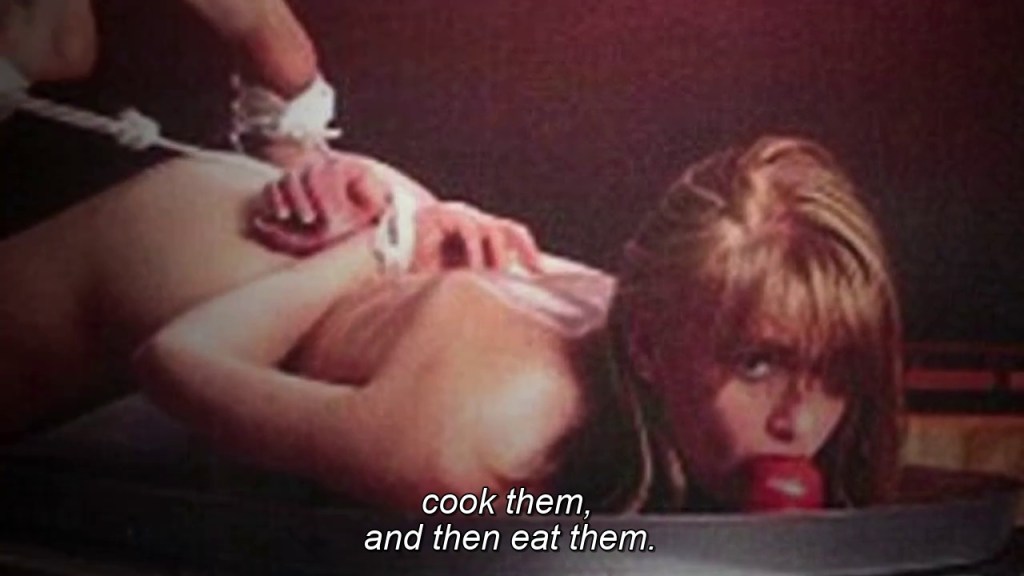
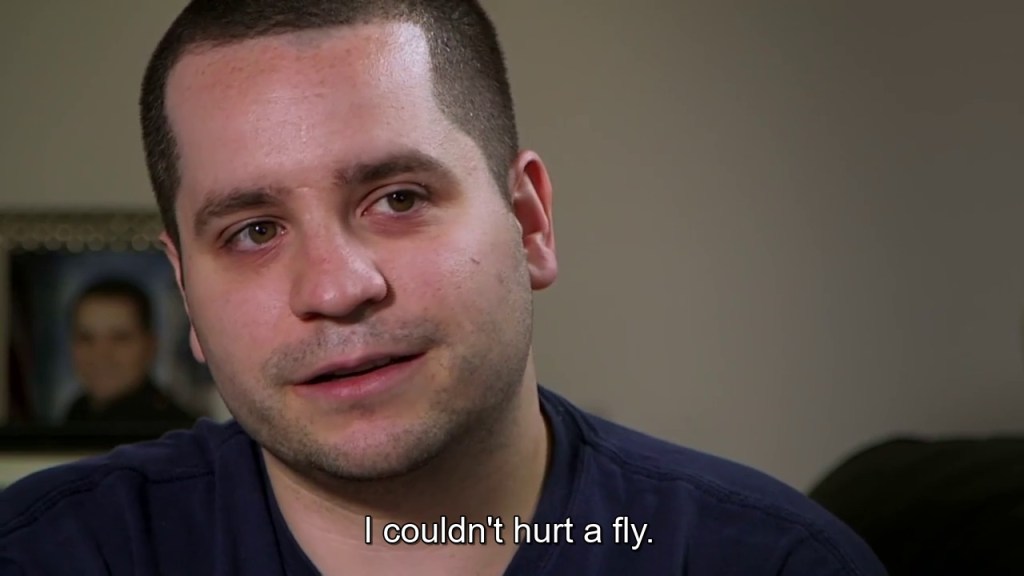
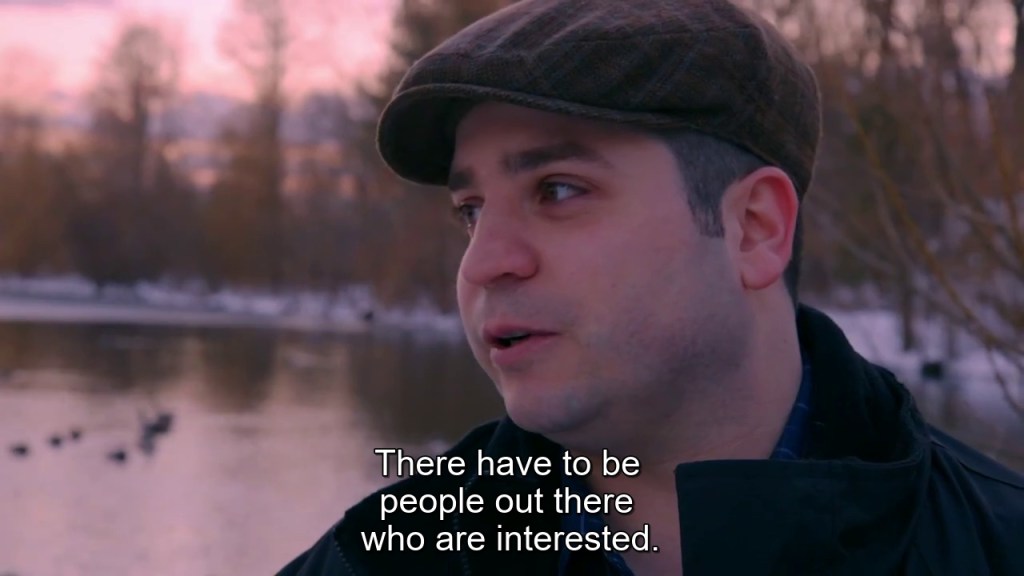
The 81 minute documentary features Gilberto Valle, a New York City Police Department officer who haunted online fetish chatrooms in 2012. There he had detailed very graphically his fantasies of kidnapping, torturing, raping, killing, and cannibalising various women he knew, including his wife and some of her friends.
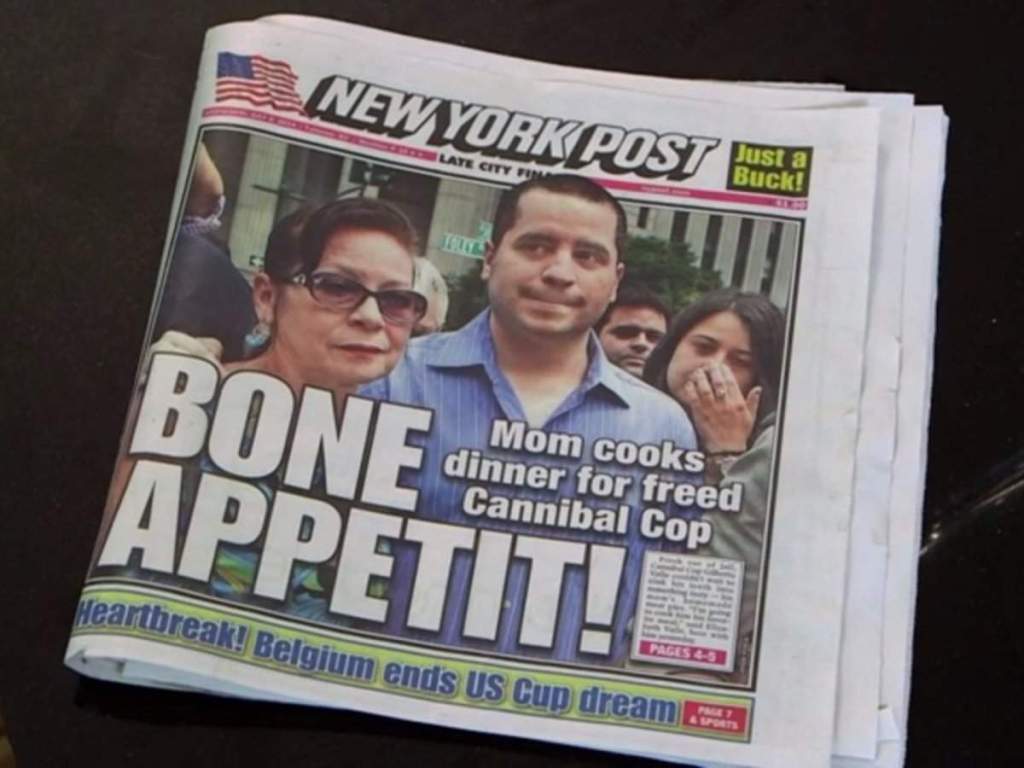
The case became a media circus, due to the fact that he was a cop, and the discovery that he had used, without authorisation, a police database to find the addresses of some of the purported victims.
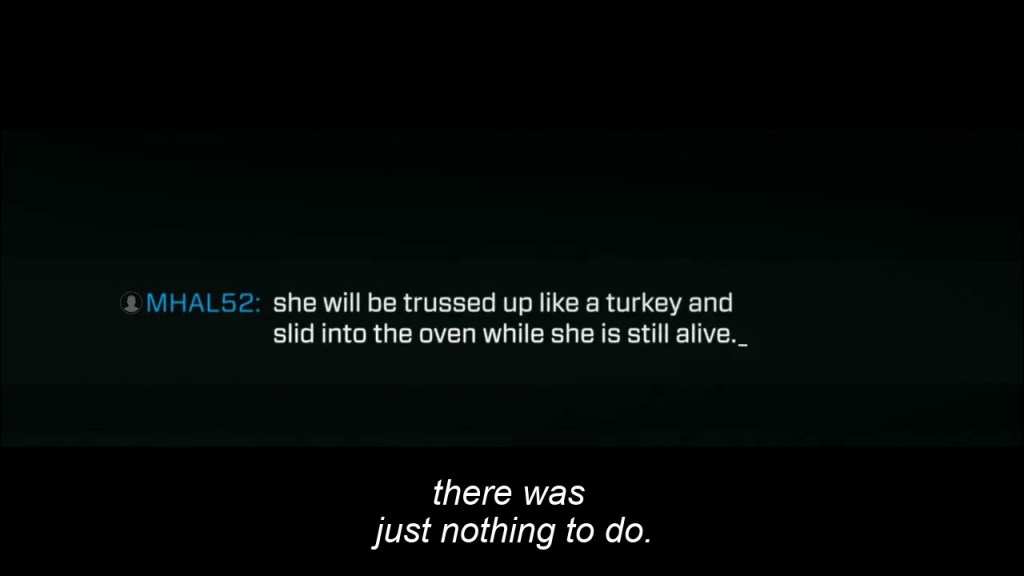
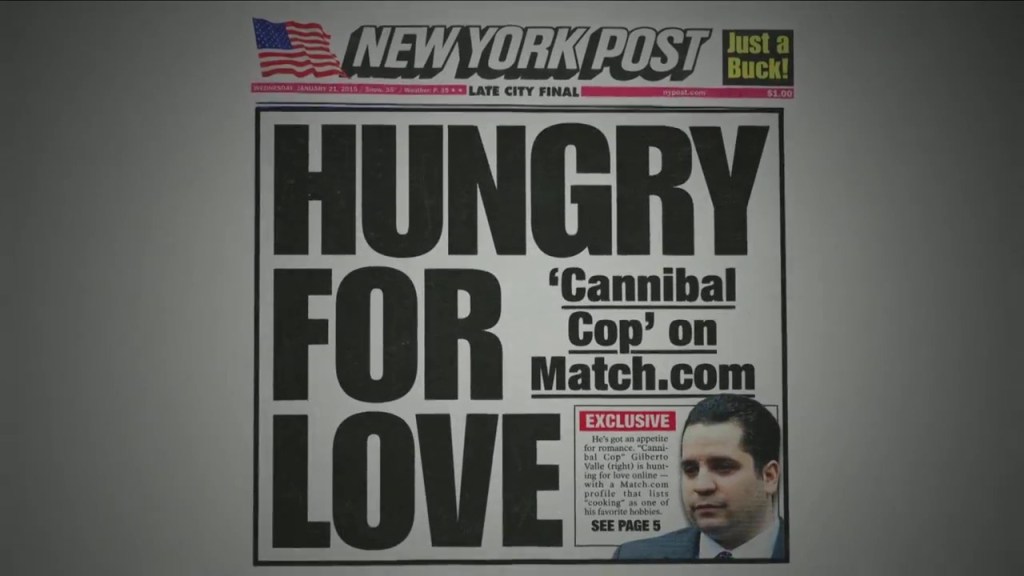
After his arrest, the media dubbed him the “Cannibal Cop“. The arrest was the result of his wife’s suspicions about his late nights, leading to her installing logging software onto their computer, which recorded all his keystrokes and took screen images every five minutes.
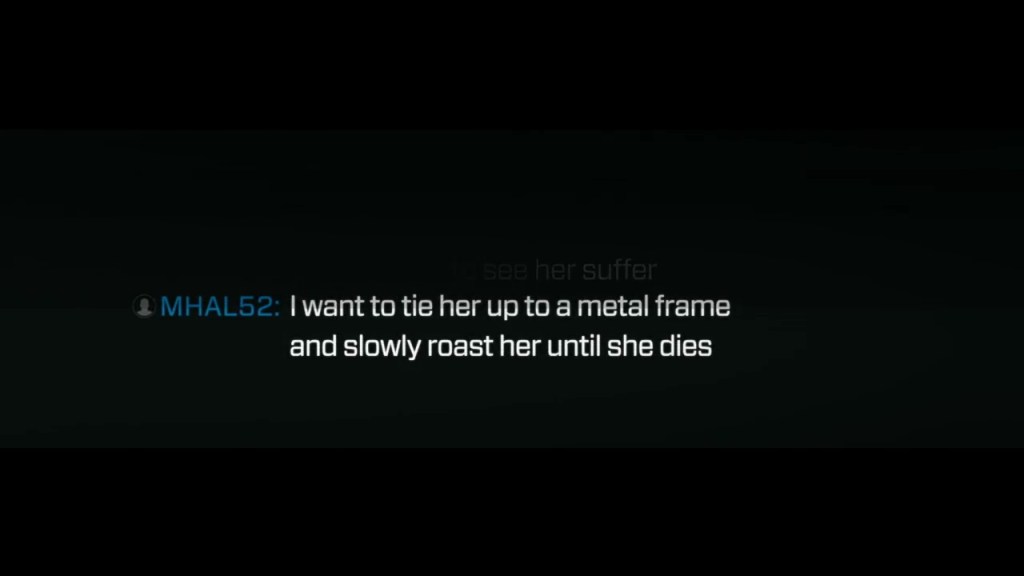
“She will be trussed up like a turkey and slid into the oven while she is still alive. Once she dies I will pull her out and then properly butcher her and cook her meat.”
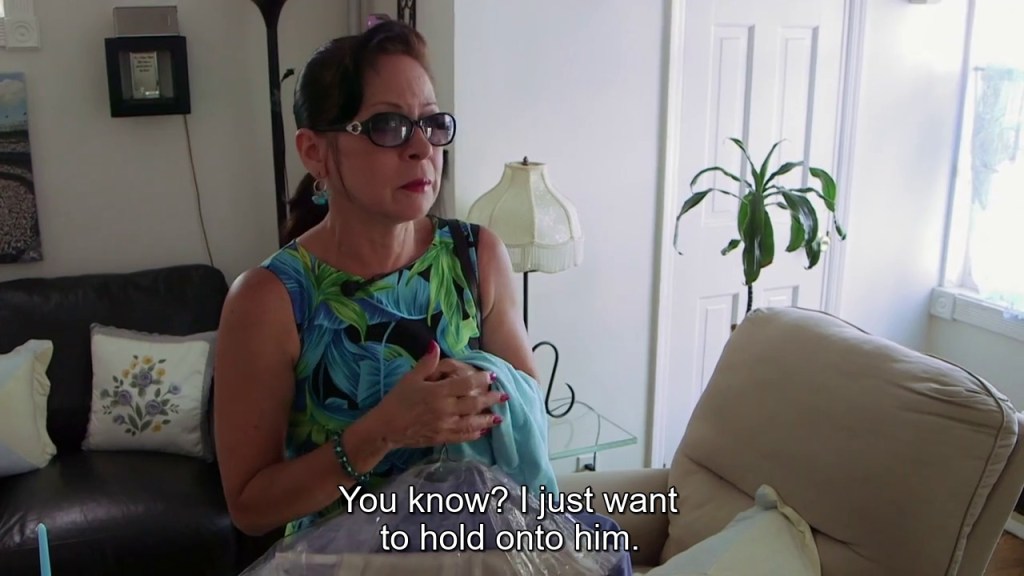
Valle was convicted by a jury of conspiracy to commit kidnapping and, for the use of the police database, violations of the Computer Fraud and Abuse Act (CFAA). He faced a possible sentence of life in prison. His divorced parents both stood by him, particularly his mother.
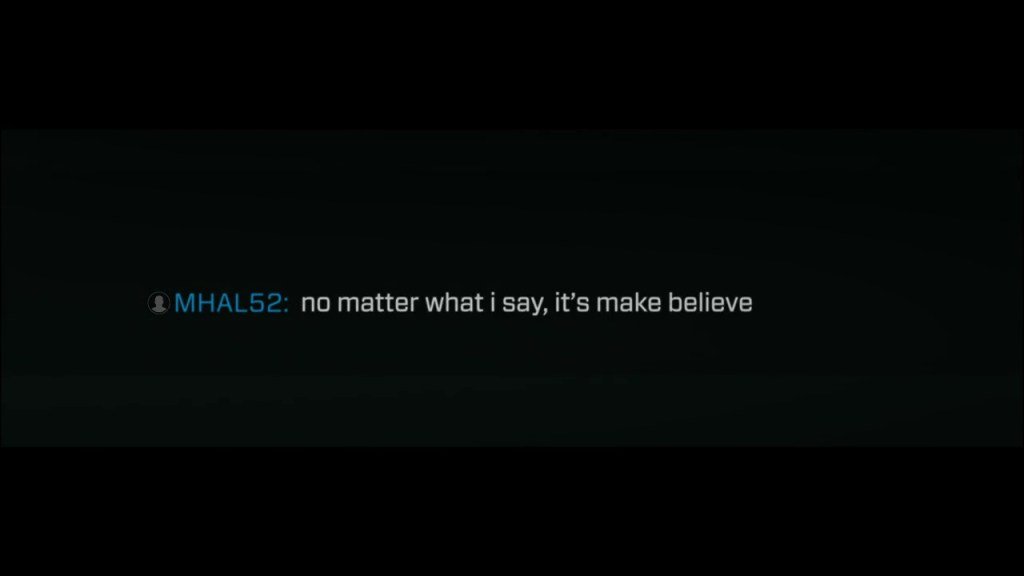
The presiding judge, however, disregarded the jury’s verdict and acquitted Valle on the conspiracy charges, ruling that the prosecution had not proven that Valle’s online communications went beyond “fantasy role-play”. On appeal, the United States Court of Appeals for the Second Circuit upheld the judge’s judgment of acquittal and further ruled that Valle’s misuse of the police database did not constitute a violation of the CFAA. The documentary details Valle’s months in jail before the trial, mostly in solitary due to being a cop, and then a longer period in home detention at his mother’s house.
The case drew widespread attention, not least for the ethical question it posed about when the exploration of dark fetishes becomes a criminal conspiracy. The defence team argued that this was a “thought police” case, a reference to Orwell’s novel 1984, and that “we don’t prosecute people for their thoughts”.
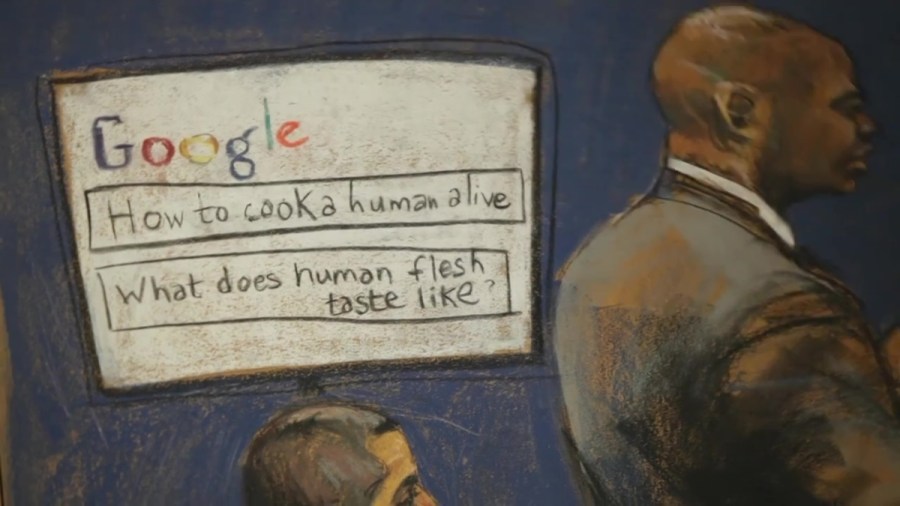
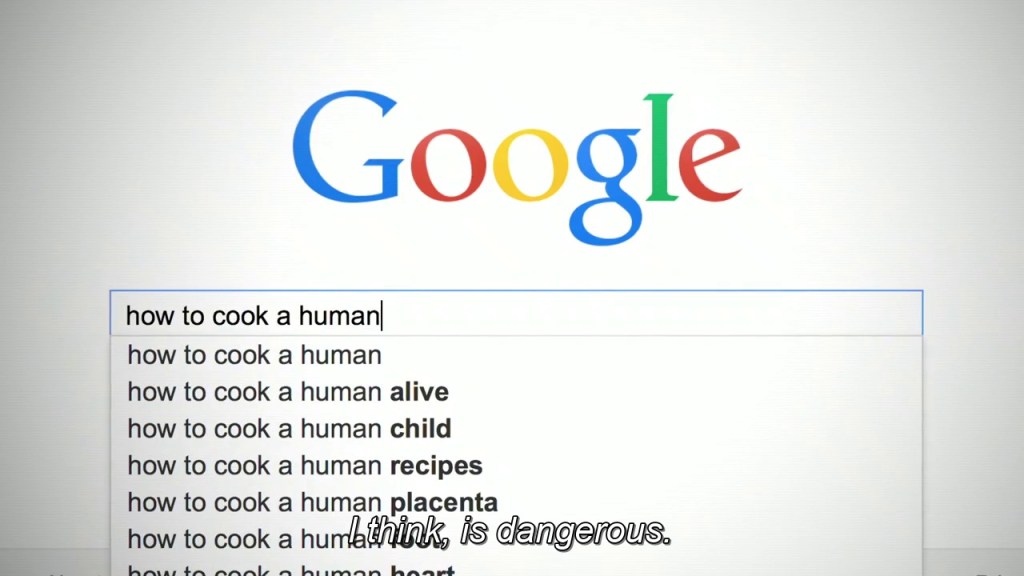
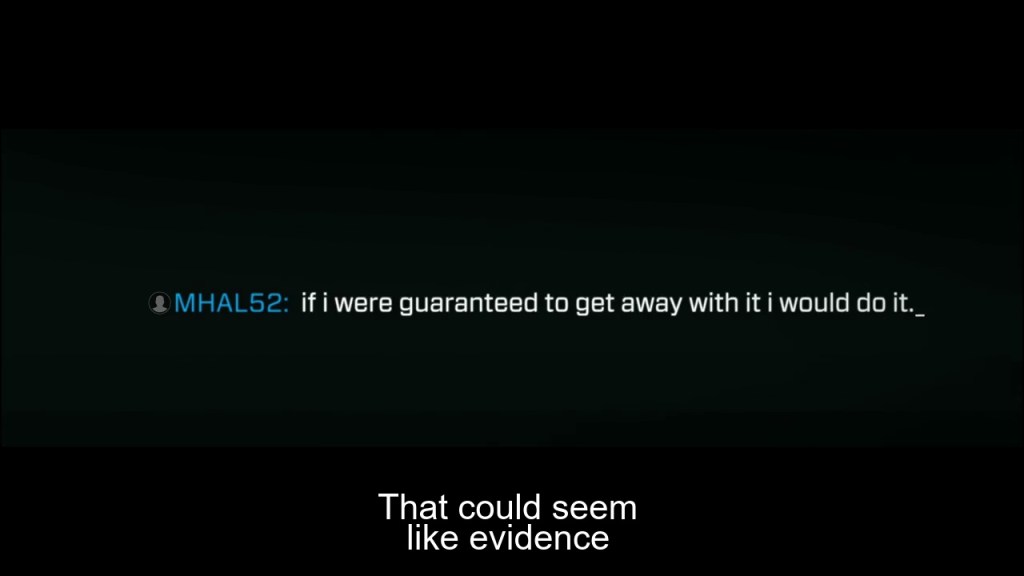
But the jury were convinced by his position of power (particularly the use of the police database to find addresses and other information on his supposed victims) and the fact that, of the 24 chats shown, three had not clearly stated that they were fantasies. Most of the chats involving detailed planning, and were followed by some very imprudent searching on Google. The other 21 had all contained disclaimers, although sometimes these were wistfully followed up with thoughts about being willing if he thought he would get away with it.
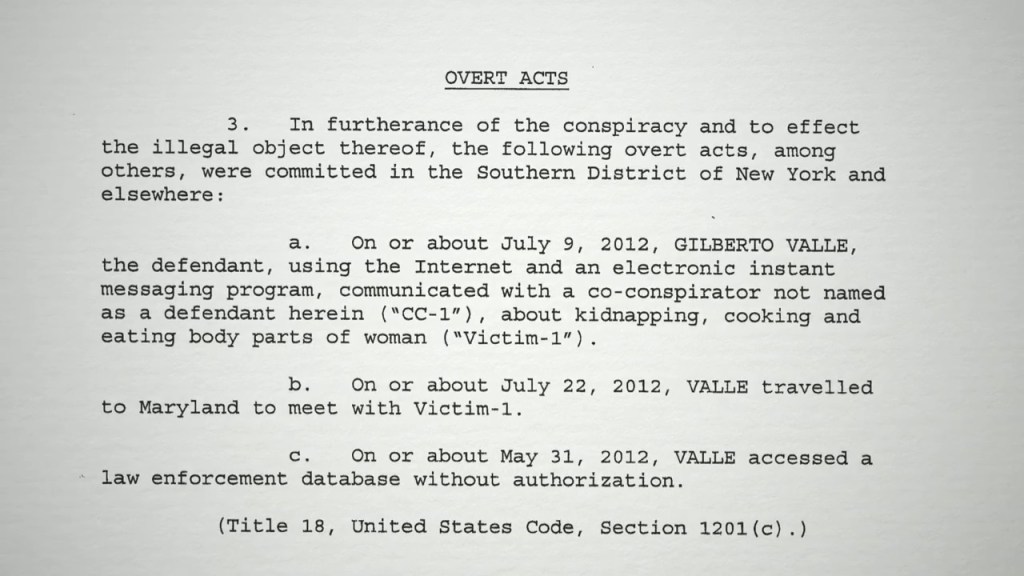
Famous defence attorney Alan Dershowitz explains that conspiracy is not just talking about a crime and agreeing to do it, there must also be an “overt act”.
Valle had travelled to Maryland with his wife and family, and visited an old college friend there, a young woman who was on his ‘list’. This, and his various Google searches, were presented in court as overt acts. The problem for the prosecution was that none of these searches had resulted in any actions against anyone, or even the purchase of the chloroform, ropes, gaffer tapes and so on that they had discussed on line. Some of the debate was absurd – Valle’s basement where women were supposedly going to be tied, raped and murdered was actually a shared laundry room in his apartment block.
Professor Maria Tatar from Harvard is interviewed about the human fascination for violence.
“Our stories move us immediately into a safe space where we can imagine the worst things possible, our darkest side… The Cannibal Cop case worries me because we’re entering a new era, and it’s almost uncharted territory. It’s always been fairly easy for us to draw a line between fantasy and reality. I mean, there are the stories and images, and then there’s what happens in real life. Well, we’re in the postmodern era, where these boundaries are becoming more and more difficult to draw.”
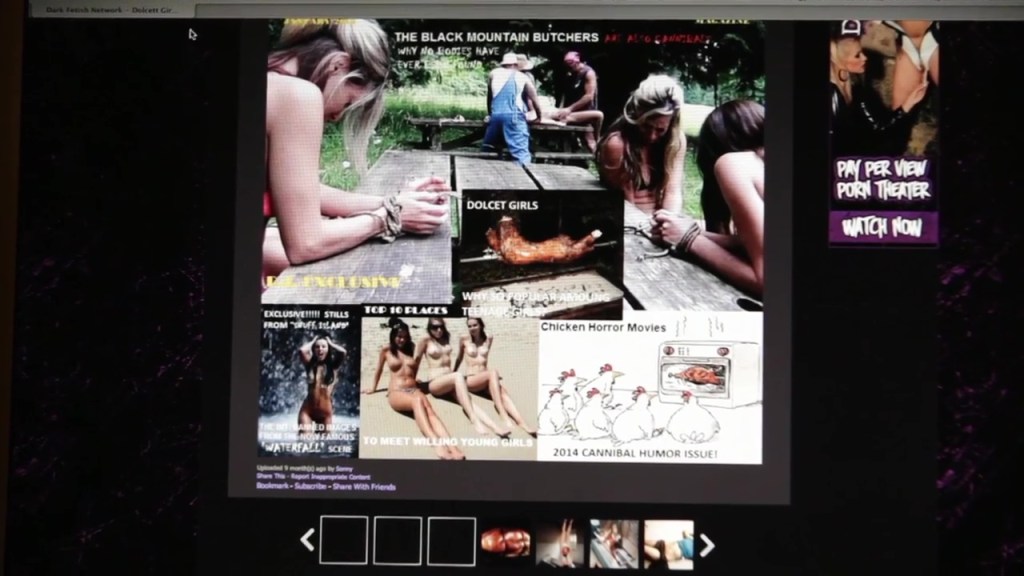
There is also the question of anthropocentrism – one interesting panel on one of the many websites mentioned (some of which are still very much on-line) is a cartoon of a some chickens sitting around watching a “chicken horror movie” – but it’s not on TV, it’s an oven with a rotisserie, on which turns one of their kin. Cannibalism, after all, is only horrifying to humans, because it’s humans being eaten. No other species gives a hoot.
Laurie Penny of The Guardian sums up the difficulty of this case well:
“Anybody should be allowed to write a dirty story on the Internet. Or have a dirty fantasy. Even if it’s gruesome and tasteless, and not something you would necessarily want to talk to your Mum about over dinner. It stops being fine when other real people are involved.”
Can a person be two people – a fantasy projection on the web, and a ‘normal’ homebody the rest of the time? This was Valle on Darkfetish:
And in the documentary:
But at the same time Valle was protesting his innocence in New York City, another cop named Detlev Günzel, a forensic specialist in Saxony, Germany, was being tried for killing a willing victim he met on a website for cannibalism fetishists, and chopping him up in an S&M chamber. No evidence of cannibalism was presented in that case, but the victim’s penis and one testicle were not found with the rest of the body parts. And the website on which they met billed itself as the “#1 site for exotic meat”.
Forensic psychiatrist Michael Welner is interviewed about Valle’s claims that the fantasy was totally disengaged from his family life (even though he uploaded a picture of his wife as a possible victim):
“Perhaps the most significant aspect of this story is that Valle’s sexuality was hidden. If one has to wall off an entire aspect of what turns them on, then one has a fundamentally dishonest relationship with their partner. And when you have a dishonest relationship with your partner, you may be able to maintain appearances, but the story is never going to end well.”
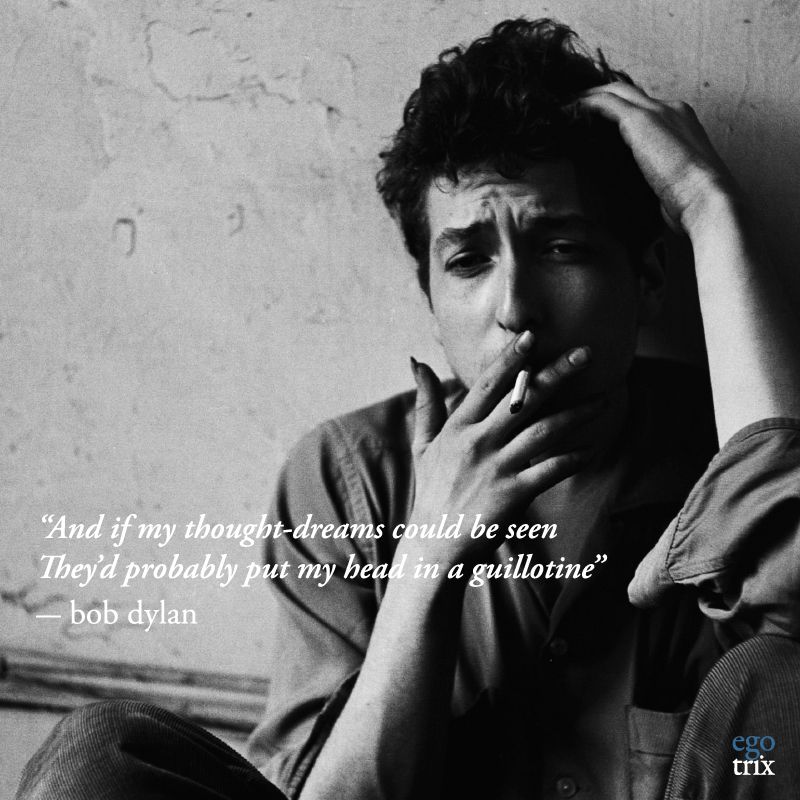
That seems rather idealistic. Who does not have dark secret thoughts that are dangerous or frightening to share? As Bob Dylan wrote almost sixty years ago:
Laurie Penny again:
“What makes somebody an ethical human being isn’t what they think, but what they choose to do with those thoughts. Somebody can be having the most dark, depraved thoughts, but if they don’t do anything about them, or find an outlet that is entirely harmless, then that doesn’t stop them from being a decent human being. And in the gap between thought and action, that’s where people actually discover what kind of human being they are. And I think people have to be allowed to make that discovery and then live with the consequences.”
Valle is now a free man. The conspiracy charges were dismissed on appeal, and the misdemeanour use of the police computer system saw his sentenced to time already served. But he lost his job, his wife and his child. The documentary offers him every opportunity to appear sympathetic – a genuine, kind young man who just made a bad mistake. But as Law Professor James Cohen asks: “How are you going to feel if you let him off and he goes out and eats somebody?”
He wants to date again, but wonders at what point of the date he would bring up the – you know. His dating profile on match.com was discovered by the media and immediately taken down.
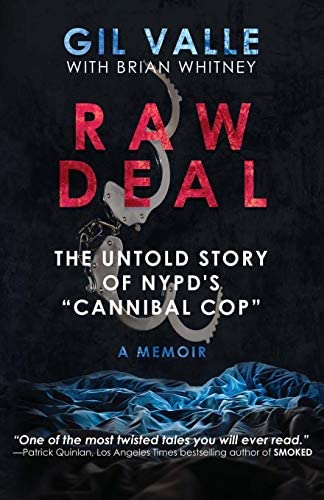
Whatever he does, to the world Gil Valle will always be “The Cannibal Cop.” He has written a book (which he called an “untold story”) about the case, called Raw Deal.
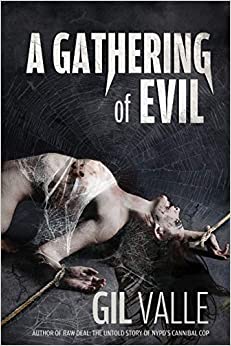
Since then, he has tried to find a way to make a living (he’s not going to be getting back his police job) by becoming an author. His first novel, A Gathering of Evil, came out in 2018, and is described as “an “extremely violent” horror novel about a planned kidnapping and murder.
This was followed in 2019 by The Lake Tahoe Ten Killings about a dying serial killer mentoring a younger one, and The Social Catalogue of #Prey,a story that warns about the dangers of posting too many personal details on social media, as these are very useful for kidnappers, human traffickers, and cannibals.
Oxygen True Crime is a program brand within the NBCUniversal stable, and is rather oddly described as:
“a multi-platform high quality crime destination brand for women”
I guess because most of the murderers reported by the show are men?
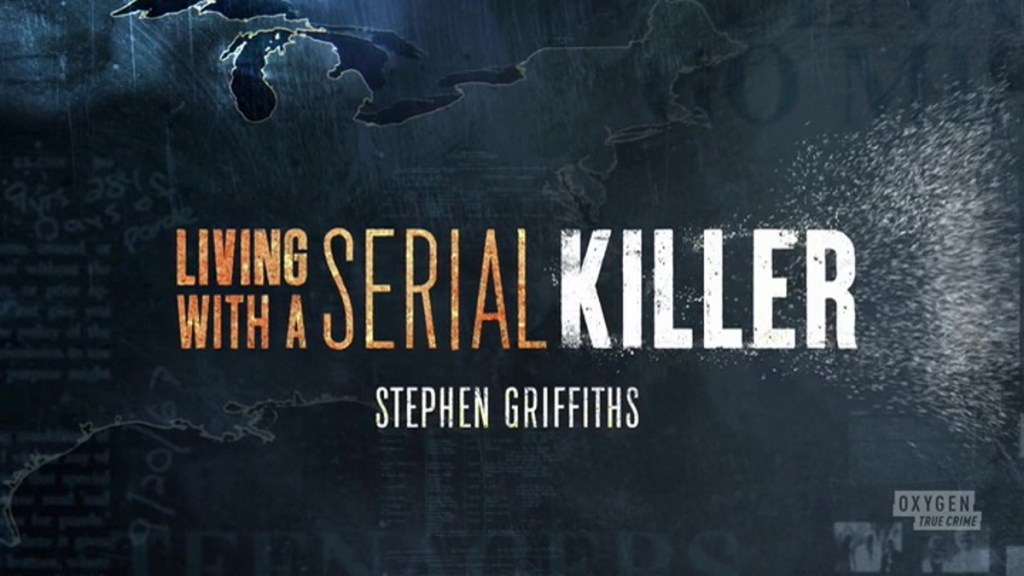
Anyway, the show we are reviewing here is part of the 2022 second season of an Oxygen series called Living with a Serial Killer, the first season of which aired in 2021. The program has covered a number of British and North American killers, including Steve Wright (the Suffolk Strangler), Peter Tobin, Timothy Boczkowski and a couple of women: Elizabeth Wettlaufer, a Canadian nurse who murdered several of her patients and Joanne Dennehy, who stabbed three men to death in 2013.
Living with a Serial Killer concentrates not so much on the killer, as do most true crime shows, but on the partners or friends or even children who lived with them, the people who thought they knew them, and it tells how they lived either in fear or else were oblivious to the exploits of the murderers. Most, but not all, of these unwilling companions were women.
Most of the killers were not cannibals, disappointingly for this blog, but one was, or says he was, despite there not being enough left of his victims to confirm or deny his claim. This was Stephen Griffiths, who stood up in court for his arraignment for murder and, when asked his name, identified himself as THE CROSSBOW CANNIBAL.
Griffiths killed three women in the city of Bradford, West Yorkshire, England in 2009 and 2010; 43-year-old Susan Rushworth disappeared on 22 June 2009, followed by 31-year-old Shelley Armitage on 26 April 2010 and 36-year-old Suzanne Blamires on 21 May that year.
The women were all Bradford sex workers. Parts of Blamires’s body, including her severed head still containing a crossbow bolt, were found in the River Aire in Shipley, near Bradford, on 25 May. Other human tissue found in the same river was later established to belong to Armitage. No remains of Rushworth were ever found. Griffiths was arrested after CCTV security footage caught him in the act of killing Suzanne Blamires. He not only committed the execution on camera but, after dragging her body inside his apartment, returned carrying his crossbow and gave a middle finger to the camera, knowing he had been seen.
Griffiths was a postgraduate research student studying criminology and specialising in British murderers, so he knew a great deal about killing and disposing of bodies. He also knew what sort of activities led to sensationalist press coverage, and he seems to have been determined to become more famous than one of his pin-ups, the Yorkshire Ripper, Peter Sutcliffe. Sutcliffe had murdered thirteen women in the same area between 1975 and 1980, and was at the time rotting in prison with several life sentences to serve, and judicial instructions that he was never to be released. Sutcliffe died in November 2020 after refusing treatment for COVID-19.
After his arrest, which happened a few days later when the caretaker checked the CCTV tapes, Griffiths readily admitted the murders to the police, telling them he had eaten some of his victims’ flesh, and adding, “That’s part of the magic.”
The program focuses on Kathy Hancock, who lived with Griffiths for a considerable time. A tough woman, a prison officer when they met, she was physically abused by him, poisoned, and perhaps worst of all psychologically tortured (particularly when he stole her dogs) to the extent that she was unable to escape his influence. She did not know that he was a serial killer, but was not very surprised when she found out. Despite the occasional escape, she was with him or under his influence for much of the decade from 2001 until his arrest in 2010.
When interviewed by West Yorkshire Police (extract at the top of this blog), Griffiths was asked why he killed the three sex-workers. His reply:
“I don’t know. Well, I’m misanthropic. I don’t have much time for the human race.”
Police divers found 159 pieces of human tissue when they searched the River Aire; almost all were from the final victim, Suzanne Blamires. There were only two parts of Shelley Armitage found – a part of her spine and a section of flesh revealing knife marks. Susan Rushworth’s family had no definite confirmation of her death or disposal, and no remains over which to mourn. He told the police:
“… it was just meat in the bath that was chopped up and churned, some of it eaten raw and I don’t know after that. I don’t know where she is.”
Griffiths claimed to be possessed by an alter ego named Ven Pariah who took over his social media accounts and boasted of his exploits. Psychiatrists found him fit to be tried, but it is still possible that his psychotic episodes (he was diagnosed as a sadistic schizoid psychopath) accompanied the murders and he really does not know what happened subsequently. It does sound a bit convenient though, like Hans Beckert in Fritz Lang’s M – EINE STADT SUCHT EINEN MÖRDER, who claimed he could not remember murdering and consuming his child victims, particularly as Griffiths seems to have clear recall of the actual murders and dismemberments.
Or he could be making it all up, since we know that Griffiths was desperate to be (in)famous and, as a student of criminology, would have been aware that cannibalism would make far bigger headlines than murder.
But here’s another explanation. Griffiths told police that he did not particularly despise sex workers, but that they were easy targets – they worked on dark, run-down streets and, due to their propensity for addiction, the police were unlikely to worry too much if they disappeared – there were plenty of other possible explanations besides murder. This is reminiscent of Albert Fish, who killed and ate African-American and Latino children, not because he was a racist, but because he knew the police would not look too hard for them.
Griffiths’ hatred was not aimed at sex workers but at women in general. He was insecure, vain, and had a desperate need to dominate. This is indicated in his relationship with Kathy Hancock, whom he abused and tormented despite the fact that she was voluntarily cohabiting with him. When she finally left he stalked and threatened her, to the extent that she finally moved overseas to get as far away from him as possible.
The ultimate form of control is to kill and consume the ‘other’. Humans do it all the time to other animals to establish an ideological superiority and supremacy – we eat meat (some of us) not because it is necessary for our health but because sacrificing the animal demonstrates human exceptionalism. It elevates the human, or those privileged to be considered human, to a higher plane than other animals and ‘lesser’ or sub-humans (untermenschen), whom we feel free to exploit in a wide variety of ways such as slavery, sweatshops and, in the extreme, cannibal feasting. Griffiths’ profound misogyny could find its deepest expression not in paying for the use of their bodies, or even ‘just’ killing them, but in utterly destroying them, and at the same time absorbing them into his own body, thereby destroying their independent subjectivity and making them exist only as part of him. Cannibalism offers ultimate power and control over the victims.
David Wilson, Professor of Criminology and Criminal Justice at Birmingham City University, said that
“We want to see serial killers as real aberrations, as different from dominant beings in our culture, but often they are just extreme versions of other beings of their time.”
Was Stephen Griffiths a cannibal or a braggart? We’ll never know for certain. Claims of cannibalism are hard to confirm, as the perpetrator is often undiscovered, unreliable, or dead. Except for cases where cannibals recorded their acts on video tape (such as Armin Meiwes), we only have the verification of missing flesh or slashed bones, evidence over which everyone from archaeologists to forensic scientists can argue forever, or the confessions of the cannibal, which can be easily retracted before trial or may prove to be just boasting and narcissistic grandstanding. Griffiths told the police:
“It was just a slaughterhouse in the bath tub.”
The cannibal, whether literal or metaphorical, is essentially enacting an extreme form of carnivorous virility, and thereby questioning the conventional view of humans as above nature, as not animals, not meat. The cannibal makes us look at ourselves as edible, and thereby question our place in, and exploitation of, the natural world. The bath tub, our symbol of cleanliness and separation from the dirt and smell of nature, becomes a slaughterhouse. The slaughterhouse, normally hidden in remote towns behind high walls, comes home.
It’s definitely Dahmer month, with Netflix releasing this second blockbuster series on October 7, less than three weeks after Ryan Murphy’s ten-part series “Monster”.
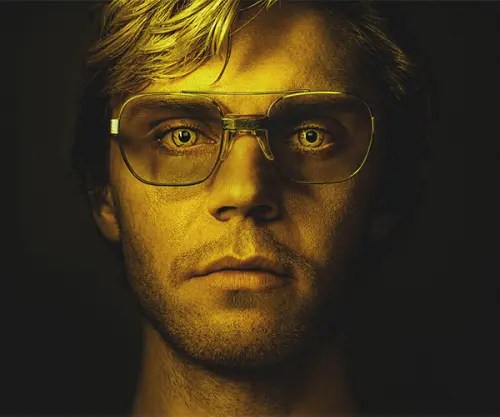
The massive interest in Jeffrey Dahmer has been simmering since he was arrested in 1991, but it burst into a conflagration on September 21 2022 with the release of Ryan Murphy’s new documentary MONSTER – The Jeffrey Dahmer Story. This re-enactment, with Evan Peters playing Dahmer, became number one on the Netflix hit parade immediately. According to The New Yorker, as soon as it was released on September 21st, “Dahmer” became far and away the streaming service’s most-watched title of the week and its biggest-ever series début, despite receiving little advance marketing. Subscribers logged nearly two hundred million hours watching the program in its first week of release—more than three times as many hours as Netflix’s next most popular series. There’s even a walking tour in Milwaukee in the footsteps of Jeffrey Dahmer.
My earlier blogs on the Dahmer movie with Jeremy Renner as the killer, and the documentaries showing the real Jeffrey Dahmer being interviewed for news shows, are getting hundreds of hits each week (thank you!), in this new era of Dahmer-mania. Family members of Dahmer’s victims are speaking out against the “Monster” series, saying it forces them to relive the traumatic events and personalises Dahmer, and even complaining about a Keshasong from 2010 which mentioned Dahmer. Nevertheless, Netflix has now released (October 7) a new series of Conversations with a Killer, this time using some previously unreleased tape-recorded interviews of Dahmer himself and his defence team, including his lawyer Wendy Patrickus, during his high-profile case. It was her first case, and she said, “I felt like Clarice Starling in Silence of the Lambs.” She spent months talking to Dahmer about each victim, preparing a defence which could only be based on an insanity plea, since there was a mountain of evidence against him, and he had already confessed everything to the police. Wendy’s DAHMER TAPES cover 32 hours of conversations held from July to October 1991. These tapes were never previously released – and are the basis of this three-part series.
This three-part true crime documentary is the third in a series from Academy Award nominee Producer/Director Joe Berlinger, whose earlier “Conversations with…” covered The Ted Bundy Tapes (2019) and The John Wayne Gacy Tapes (2022). Bundy and Gacy were prolific serial killers but, as far as we know, were not cannibals (although an English tabloid suggested Bundy might have had a few mouthfuls).
This is the Netflix summary of the Conversations with a Killer: The Jeffrey Dahmer Tapes series:
When Milwaukee police entered the apartment of 31-year-old Jeffrey Dahmer in 1991, they weren’t prepared for what they’d find. From a freezer full of human heads to decomposing body parts, the discovery amounted to the grisly personal museum of a sadistic killer. Dahmer quickly confessed to sixteen murders in Wisconsin over the span of four years, plus another murder in Ohio — but the most shocking revelation involved acts of necrophilia and cannibalism…. Why was Dahmer, who had been convicted of sexual assault of a minor in 1988, able to avoid suspicion and detection from police as he stalked Milwaukee’s gay scene for victims, many of whom were people of color?
Like the previous movies and documentaries and even the interviews with Dahmer himself and his family, the question that keeps being raised is why he did these things? Earlier texts concentrate on the psychopathy of the man himself, skirting the politics, while Murphy’s series, and this new documentary, spend more time on the ineptitude and racist privilege that seemingly kept delivering him get-out-of-jail-free cards.
“It [cannibalism] made me feel like they were a permanent part of me.”
This new release sheds much heat but very little new light onto that question. Dahmer has already told interviewers that he just wanted to possess the young men and boys who came to his home under the pretence of taking photos for money, keep them with him, without the complications of building actual reciprocal relationships. He lured them to his apartment, drugged them and then killed them or drilled holes into their skulls and injected muriatic (hydrochloric) acid. He wanted to turn them into zombies, with no will of their own, who would stay with him and be available for sex whenever he wanted. He tells his lawyers all this on the scratchy recordings that assail our ears here. The interviews are accompanied by blurry re-enactments of the prison interviews by actors dressed as Jeff and Wendy, and interspersed with contemporary interviews of the actual journalists, police, lawyers, psychiatrists, friends of the killer and the victims, all noticeably older and still in many cases clearly distressed by their involvement in the case. There are images of his victims, of the saws and drills he used, home movies of him as a (pretty happy and normal) child, as a teen, as a prisoner. There is news footage, from outside the building, of stunned crowds and news reporters doing what they do – repeating the few snippets of information they have, over and over.
But there seems to be a lot more that is alluded to but not fully analysed in both of these new Netflix releases. In flashbacks in the Monster series, and in the “conversations”, we see things like Jeff impaling worms on his hooks with his Dad, saying “ouch!” as they pretend to empathise with the animals’ suffering. We see him as a little boy examining a dead marsupial that, his Dad says, must have crept under the house to escape a predator, despite already having its skull crushed, indicating that brainless (zombie) life is feasible; Dad takes him on road trips to find and then dissect road kill. He tells a wide-eyed Jeff of the biology experiments (Dad was a chemist) in which frogs with most of their brain destroyed will still react to pain stimuli. We see him mock a vegetarian girl in biology class who doesn’t want to dissect a piglet, and later find him torturing small animals including neighbourhood dogs and cats, actions which are strikingly common in the personal histories of serial killers. Dahmer tells the lawyer:
“I didn’t seem to have the normal feelings of empathy.”
Insensitivity to animals (human or otherwise) can snowball. Killing and eating the other has always been the ultimate symbol of domination. Humans have probably done it to enemies for millennia, and psychologists tell us that industrial society since the late nineteenth century has undermined the formation of stable identities through technology-based isolation, mass mediated representations of cultural interactions, the conversion of all human relationships into fiscal transactions and the disintegration of communities. Mass-murderers and particularly cannibals like Dahmer, Fish, Meiwes or Sagawa could not have operated so freely in communities where people more intimately knew their fellow citizens’ daily movements and actions.
But such social and cultural changes affect us all, and we are not all cannibals (at least, not at this historical moment). There is more to it; the borderline pathology formed by modern life has to be ignited into violent action by an often (seemingly minor) inciting incident – Meiwes watched pigs being butchered, Sagawa recalled his uncle, who regularly played cannibalism games. Many cannibals, like many murderers, start their abuse with the objectification of other animals, as did Dahmer. Vincenzo Verzeni, who was arrested in 1871 on suspicion of killing up to twenty women, put his sexual obsession with killing and drinking blood down to the pleasure he had experienced wringing the necks of chickens when he was twelve years old. Jeffrey Dahmer had hidden his sexuality from his disapproving family for so long that he no longer wanted the gay sex that was becoming available in the 1980s – he wanted to sate his appetites without having to satisfy his partners. Sleeping pills, easily obtained due to his work as a night-shift operator at a chocolate factory, meant that he could put them to sleep and do whatever he felt like.
“I could just lay around with them, without feeling pressure to do anything they wanted to do. They wouldn’t make any demands on me. I could just enjoy them the way I wanted to.”
The men he chose were in many cases ready to have casual sex, but that was not enough. He wanted permanent relationships, but only he was to benefit. From drugs, he moved to experiments aimed at creating compliant, subservient zombies. Of course, this didn’t work, so he did the next best thing, killing them, keeping their body parts, eating their flesh so they would be a part of him.
Dahmer had learnt to ignore suffering in his fishing expeditions, at his father’s dissection table, and of course in the kitchen, where we all watch pieces of meat being prepared, our childish minds wrestling with the dawning knowledge that these were the same living, breathing, suffering animals we saw on farms, or whose representations we enjoyed in our toy-boxes or television shows.
One psychiatrist has opined that Dahmer struggled with both borderline personality disorder and schizophrenia, and therefore suffered “great confusion about what’s real and what isn’t”. There is some evidence that Dahmer couldn’t live with what he’d done, or couldn’t live without doing it any more, offering to admit to a crime he didn’t commit (the murder of six-year-old Adam Walsh) if it would get him the electric chair in Florida.
The Dahmer legend continues to grow, despite it being over thirty years since his arrest. How unique is his story? The police investigators called for a manifest of missing persons, trying to establish the identities of the remains found in Dahmer’s apartment. In episode 2, the detective says they were getting 300 calls every day from people looking for their lost loved ones, and wondering if they had ended up in Dahmer’s abattoir. Where do all these missing people go? Is it possible that there are more successful cannibals out there, busily eating the evidence, not raising the suspicions of their neighbours, and not getting caught?
In a world where humans routinely and legally do to other sentient beings what Dahmer did to his victims, it may be that the cannibal is just less tolerant of ambiguity, and when taught that the ‘other’ can be casually and ruthlessly collected, kept captive, killed and eaten, he (or occasionally she) just takes that to its logical conclusion. Interestingly, PETA is already getting feedback about that.
This documentary does not offer any revelations to those of us who already know a lot (too much?) about this case. But it lays it all out in sequence, explained by those who were involved – the police, the journalists, the doctors, and most of all Dahmer himself on the tapes. His voice is that of a witness, trying to explain what he does not understand. He killed and ate people not because he was some uncanny monster, but for the same reason anyone eats anything: because he wanted to, and he could. The jury in his case were adamant that Dahmer was sane.
What does it mean, to say that a person is sane, and how is a jury of non-experts to decide that? In episode 2, the forensic psychiatrist for the Defence, Fred Berlin, says:
“If a man who is preoccupied with having sex with corpses, if a man who is drilling holes in the heads of human beings to try to keep them alive in a zombie-like state doesn’t have a psychiatric disorder, then I don’t know what we mean by psychiatric disease. How many people does someone have to eat in Milwaukee before they think you have a mental disease?
Dahmer comes across as the picture of the civilised male subject, fully initiated into the symbolic order. As the Milwaukee journalist who was first to report the case, Jeff Fleming, put it:
“The danger could be someone who looks just like your next door neighbour. He passed on the street as a very normal person. He didn’t look scary.”
“…in their behavior toward creatures, all men were Nazis. The smugness with which man could do with other species as he pleased exemplified the most extreme racist theories, the principle that might is right.”
But what we see in factory farms is not the hatred and the wish to exterminate that motivated the Nazis. Animal agriculture corporations often tell us that they “love” their animals, just as Dahmer loved his men and boys, and wanted to enjoy them. Perhaps it would be more accurate to say that in our behaviour to animals, all men are Dahmer.


























 The Cannibal Guy