Whales and cannibals: IN THE HEART OF THE SEA (Ron Howard, 2015)

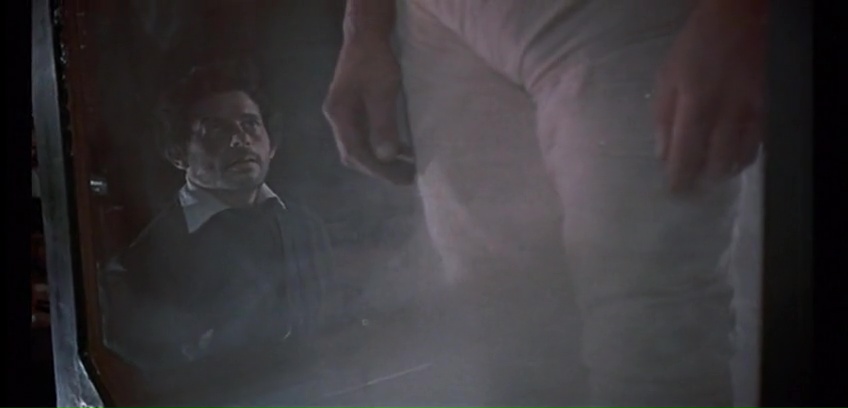
Herman Melville’s Moby Dick, the original ‘Great American Novel’, was based on the story of the Essex, a whaling ship that was destroyed by a bull sperm whale in 1820. The story of the wreck, and particularly the subsequent cannibalism that some of the survivors employed to survive, has largely faded from public knowledge (Moby Dick finished with the whale sinking the ship), but in the nineteenth century, every American child would have learnt about it at school, and this film starts with a young Melville (Ben Wishaw, who played a very different role in Perfume) seeking out the last survivor some decades later, hoping to get the full story to use in his novel.
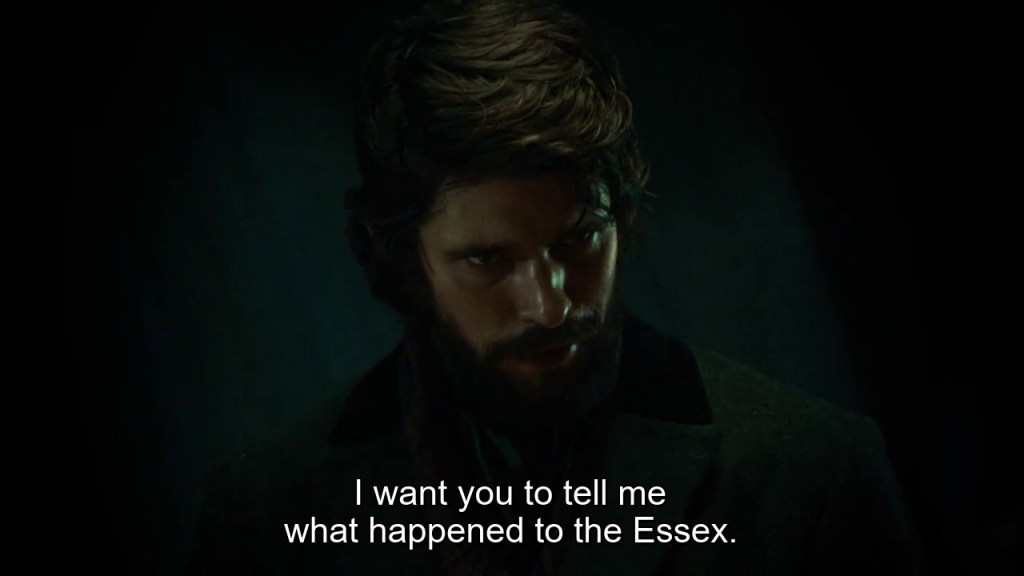
This film is based on a meticulously researched 2000 book of the same name on the Essex disaster by Nathaniel Philbrick, which won him the National Book Award for Nonfiction in that year. Whaling was no more controversial in the early nineteenth century than crude oil in the early twentieth – it was used to power the factories and light up the cities of the world, and was worth a fortune. As the fleets decimated the whales near shore, the boats had to head further into, well, the heart of the sea, to find their victims. Whaling was, and remains, an incredibly brutal business, with small boats harpooning the giant mammals then drawing near and stabbing them to death. A successful kill was signalled by a plume of blood spurting out of the whale’s blowhole.

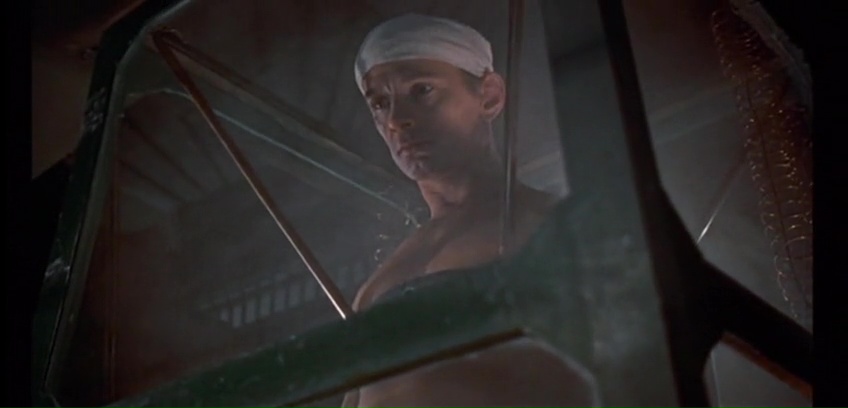
Whaling was a class-based system, with the captains drawn from the powerful old families in Nantucket, the tiny American island that was the centre of the industry. The main protagonist of the film is Owen Chase (Chris Hemsworth – the mighty Thor) as the first mate, who was refused the captaincy because he is socially inferior, an “off-islander”.

His best friend is the second mate Matthew Joy (Cillian Murphy from 28 Days Later). The Captain, George Pollard (Benjamin Walker from Abraham Lincoln: Vampire Hunter) is ineffectual but is from one of the original Nantucket families, and so has been promoted over Chase. In fact, the ships were run on strict class and race lines: the African-Americans and off-islanders lived in the Foc’s’le or front of the ship, where the food was inferior, and did the dirty work. The Nantucketers lived aft, and were fed and treated better. They were, in general, the ones that survived sinkings. Six African-Americans made it into the whaling boats – none survived. True Nantucketers were also mostly devout Quakers, pacifists who, however, saw no problem in killing magnificent whales and “raising bloody havoc at sea” as Philbrick put it. Class conflict is the basis of the story for the first half, before the angry whale comes along.

The story of the Essex is told to Melville by a decrepit old drunk who is the last remaining survivor, Thomas Nickerson (Brendan Gleeson, who was also in 28 Days Later). Nickerson had been a cabin boy (played by Tom Holland – Spiderman) when the boat sank. Nickerson did write an account of the events, but it was not discovered until 1980, so Melville did not in fact use his words. Chase’s brief account would have been the one known to Melville, who embroidered the conflict, as authors do, to make the whale white and almost supernatural, and avoided the controversy, not mentioning the cannibalism that resulted from the wrecking of the boat.

This does shed some light on the different reception of cannibalism over time. When the Essex set sail, cannibalism at sea after shipwrecks was not uncommon, and was generally considered embarrassing but necessary. The Monty Python team did a skit based on a version of this incident.

In the Heart of the Sea suggests a conspiracy by the whaling company to ignore the cannibalism as the presence at sea of a giant, angry whale would discourage further exploration, but Chase and Pollard refuse to cooperate. By Melville’s time, cannibalism was too graphic for his potential audience (he wanted to sell books after all). In our time, the great white whale is still of interest, in that he represents nature fighting back against human rapaciousness, but the real point of this film is now the cannibalism. Would anyone go to see a movie about a shipwreck if Thor didn’t eat anyone?

Or even if he did. The film’s tagline was “Based on the incredible true story that inspired Moby-Dick”, which did not inspire enough people to see it – it grossed $93 million, which sounds great until you see that it’s budget was $100 million. It scored a paltry 42% on Rotten Tomatoes, with the Seattle Times critic summarising it as:

“Thor and Spider-Man fight a whale.”

Despite some critics seeing the movie as over-long and dull, the scenes at sea are full of action (if not exactly Pirates of the Caribbean) and very well done, and the special effects are spectacular, especially the whales and the sails, and the whales demolishing the sails (you can guess which side I was on).

But as Philbrick wrote in his book,

The Essex disaster is not a tale of adventure. It is a tragedy that happens to be one of the greatest true stories ever told. (p.236)

The halfway point of a movie is usually the turning point in some form, and it certainly is here – in the middle of the film, in the middle of the Pacific, they finally find an abundance of whales, including the great white whale that they were warned about on a stop in Ecuador. He charges the ship, staves in the side, the whale oil they had collected goes up in flames, and they have to abandon ship and fit as much food as they can (which isn’t much) into their little whaling boats.

The rest of the movie is all about how some (a few) of them survived the long voyage of 4,500 nautical miles back to South America. They reach a small but uninhabitable island, and the white whale makes them welcome by tipping over their boats as they head for the beach. Chase and the Captain abandon their class struggle to engage in dialogue about anthropocentric carnivorous virility instead.

Pollard answers with presupposed anthropocentric arrogance.

“We are supreme creatures, made in God’s own likeness. Earthly kings, whose business it is to circumnavigate the planet bestowed to us…”

The island cannot sustain them – they find the skeletons of a previous party that took shelter there, so repair the boats and head off again for another agonising trip across the endless ocean. After 48 days stranded, with almost no food or water, one of the sailors on Chase’s boat dies. The others prepare to toss him overboard, but Chase stops them. It’s all handled quite delicately, but it’s definitely become a cannibal movie.
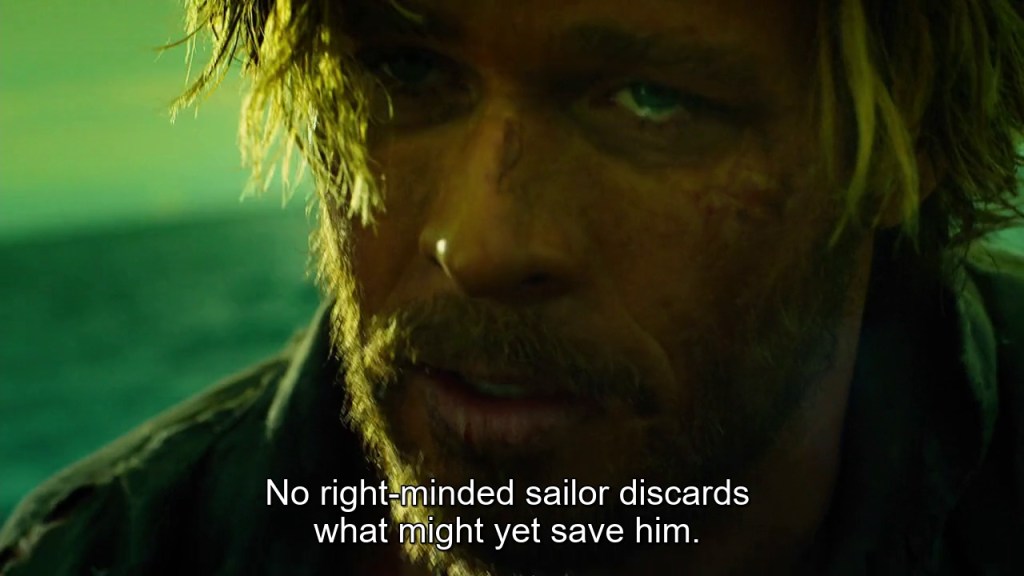
“We prepared the body. We removed the organs. Separated his limbs from his body and cut all the flesh from the bones.”

In the other boat, no one dies so conveniently, so they draw straws for a victim. The captain gets the short straw, but his cousin cannot shoot him and shoots himself instead, keeping the catering in the family.

The whale comes back, but he and Chase exchange a look, and Chase cannot bring himself to kill the magnificent bull.

After ninety days at sea, the survivors reached South America. According to the book, a boat that drew up alongside saw two men sucking the marrow from the bones of the dead, refusing to give them up. Unlike some survivor cannibal stories such as Alive, where the actors looked pretty much the same weight at the end of the ordeal, Hemsworth reported that the cast were put on a strict ration of 500–600 calories a day, and he lost 40 pounds (18kg), giving him a reasonable idea of what the sailors had gone through.

What the film doesn’t mention is that the survivors could have had a much easier time of it if they had headed not for South America but west toward the Marquesas Islands, only 1,200 miles away. They chose not to do so, because of earlier reports that the natives were, yep, cannibals. One mariner, Georg von Langsdorff, had written in 1804 that the natives so loved human flesh that “those who have once eaten it can with difficulty abstain from it.” Of course, it was all nonsense.

Instead, they headed east, and ended up eating each other.

Trey Parker and Matt Stone’s CANNIBAL THE MUSICAL (Trey Parker, 1993)

Ever wondered what Trey Parker and Matt Stone did before South Park? Here’s a surprise – they went to college, where they wrote, directed, produced, co-scored and acted in a musical about cannibalism. This is it.

How’s your American history? It’s certainly never dull – full of wars, insurrections, and also a good deal of cannibalism – historical and contemporary. Probably the most famous incident is the Donner Party, a group of families who became snowbound in the Sierra Nevada over winter 1846-47, and famously turned to cannibalism to survive. Also up there in the mythology is the story of the famous typo, Alferd Packer, a prospector and self-proclaimed wilderness guide, who confessed to cannibalism during the harsh winter of 1874. Packer and five other men had attempted to travel across the San Juan Mountains of Colorado through the bitter winter snow, and Packer was the only one to arrive, some two months later, at the Los Pinós Indian Agency, near Saguache, Colorado. He first claimed the other men had abandoned him, then changed his story to tell of shared cannibalism of the men who had died of the cold, but was eventually charged with murder.

The real Alferd (Alfred) Packer

Incidentally, in case you’re wondering, his name was probably Alfred, but according to some sources, he changed it to Alferd after a mix up with a tattoo. Don’t know if that’s true, but just think of Jame Gumb in Silence of the Lambs, who refused to correct his birth certificate by adding an S to his first name. The author of that book, the meticulous researcher Thomas Harris, may have been having a wink at Alferd with that one.

According to a book on Packer, the judge at his trial sentenced him to death, saying:

Stand up yah voracious man-eatin’ sonofabitch and receive yir sintince. When yah came to Hinsdale County, there was siven Dimmycrats. But you, yah et five of ’em, goddam yah. I sintince yah t’ be hanged by th’ neck ontil yer dead, dead, dead, as a warnin’ ag’in reducin’ th’ Dimmycratic populayshun of this county. Packer, you Republican cannibal, I would sintince ya ta hell but the statutes forbid it.

Packer was not hanged, due to a legal technicality – he was sentenced under state law, but Colorado was not a state at the time of the cannibalism. Antonia Bird’s film Ravenous was also partly based on Packer.

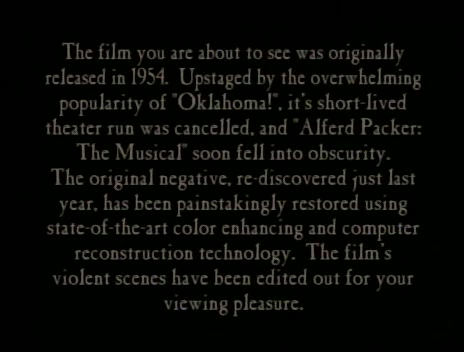
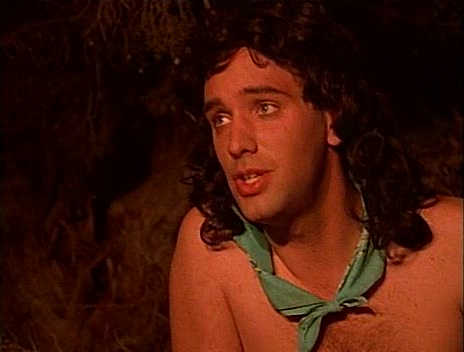
That is pretty much the story that Trey Parker tells, using the names, dates and versions of the events that happened, and even in musical form, he tells it rather more accurately than an earlier biopic called The Legend of Alfred Packer (1980); also a lot more accurately than a later film called Devoured: The Legend of Alferd Packer (2005), which offered audiences the ghost of Alferd eating people in the modern day. Parker and Stone add lots of humour and gore and some very impressive and catchy songs, all written by, and mostly sung by, Trey Parker. Parker and Stone are masters of irony, and it is laid on thick, starting with the card at the beginning saying that the film was originally released in 1954 (some 15 years before Parker and Stone were born) but was eclipsed by the release of Oklahoma. The card goes on to claim that the violence has been edited out, and they follow this with a scene showing Packer killing the other members of his group by biting their necks and tearing off their arms.

The film moves between Packer’s trial (the bloody scene at the start is the prosecution lawyer re-enacting the alleged crime) and Packer’s description of the actual events, complete with dance routines and love songs to his horse, Liane.

The group who persuade Packer to be their guide are totally unprepared for the march from Utah to the Colorado gold fields over the snowbound Rockies, and are warned not to proceed into a big storm by a tribe of Indians, played by Japanese foreign exchange students, who speak Japanese, and even carry Samurai swords.

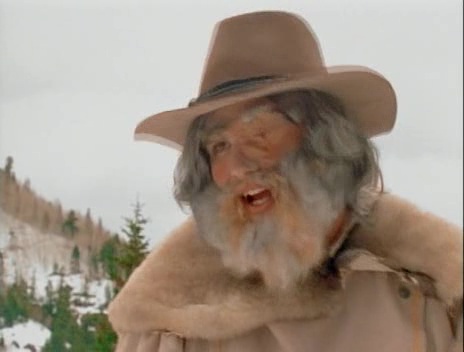
In a nice bit of cannibal intertextuality (Homer’s Odyssey), they try to kill a sheep belonging to a one-eyed cyclops (actually a Confederate soldier who lost his eye in the civil war). Early shades of South Park, as the cyclops squirts pus from his missing eye.

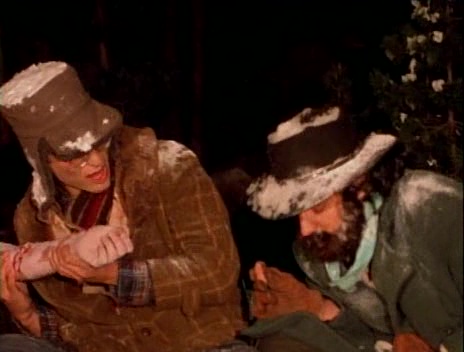
Sitting around the campfire, starving, they recall the story of the Donner party, and that gives them an idea. Yeah, they eat the guy who was an incurable optimist, who they shot for wanting to build a snowman. Look, it makes sense at the time. They even discuss not exactly the ethics of cannibalism, but at least the aesthetics – they won’t eat the dead guy’s butt, and Packer (Parker) is sick at what part Humphrey (Stone) chooses to eat.

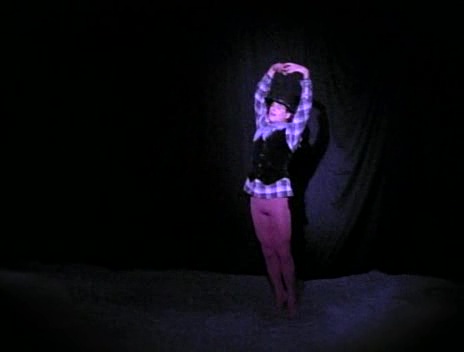
There’s a ballet dream with Alfred dreaming of a reunion with Lianne (the horse), who has run away with a gang of trappers. Yeah, you’ll have to see it.

But the snow has them trapped, and they run out of food, and now the discussion is not which parts of a corpse to eat, but which member of the team should be sacrificed for the next meal. There is a hugely extravagant massacre, following which Packer waits out the winter, but now with plenty of meat, and then heads into town with his story of losing the rest of his party. That doesn’t wash, particularly when the well chewed bodies are found.

There’s a bar fight, pretty much de rigueur in Westerns, and Packer escapes to Wyoming, which he says is worse than being torn apart by the furious townspeople. Eventually he is arrested and brought back to Colorado. During his trial, there is a love interest, Polly (Toddy Walters), who interviews Packer through the bars of his cell in a scene that kept reminding me of Clarice Starling interviewing Hannibal Lecter in Silence of the Lambs, which had swept the Oscars in 1992, the year before this was made. She becomes convinced of his innocence and – well, it’s complicated. But the film is well worth your 100 minutes, just to see what Parker and Stone could do with real people instead of simulated cut-outs.

The film had mixed reviews, with some of the reviewers not knowing what to make of it. The critic score on Rotten Tomatoes is only 65%, but the audience score is 82%. The critic from Empire said: “there’s an air of genial enthusiasm, tempered by sick humour, that is surprisingly engaging”.

The tagline for the film is:

“In the tradition of Friday the 13th Part 2… and Oklahoma… comes the first intelligent movie about cannibalism!”

Parker and Stone are not shy about their fascination with cannibalism, for example, check out the South Park episode “Scott Tenorman Must Die”, in which Cartman takes revenge on a boy by killing the boy’s parents, and cooking and feeding them to him.

vlcsnap-00012.jpg

For a movie made by a couple of students at the University of Colorado, this is very impressive. It’s well made, the cast is great and the music is hard to get out of your head afterwards. I guess not so surprising, when we consider that four years later, in 1997, Parker and Stone launched South Park, which has been running ever since with over 300 episodes shown so far, and more seasons booked until at least 2022.

Modern geniuses.

The Vampire of Hanover: THE TENDERNESS OF WOLVES (Ulli Lomel, 1973)

The Tenderness of Wolves (Die Zärtlichkeit der Wölfe) is about the German serial killer and cannibal Fritz Haarmann. It’s not a documentary though, it’s an artistic interpretation of the story, and it’s a classic of the cannibal genre.

Fritz Haarmann, a.k.a. “the Butcher of Hanover” or “the Vampire of Hanover”, was a German serial killer who sexually assaulted, murdered and mutilated at least 24 boys and young men between 1918 and 1924 in Hanover, Germany. His case was the partial inspiration for Fritz Lang’s film M, the antagonist of which was a composite of Haarmann and at least three other interwar cannibals.

The most recent film to be directly based upon Haarmann’s murder spree, Der Totmacher (The Deathmaker), was released in 1995 and focused on the written records of the psychiatric examinations of Haarmann.

The real Fritz Haarmann

Haarmann was a petty thief, conman, and homosexual (which was against the law at that time) and served several prison sentences. Germany was in dire social and financial distress after the war, and crime was rampant. The police knew of Haarmann’s minor criminalities, but preferred to use him as an informant, and even tolerated him patrolling the railway stations demanding to see travellers’ documents and making arrests.

The film transfers the action to the late 1940s after the second world war; it was too expensive to recreate the streets of 1924, although the final scene reveals that Haarmann was executed in 1925. But the story is timeless, so the time shift is incongruous, but not disturbing.

Everything else about the film is disturbing though. The streets of Germany were full of homeless youths, and Haarmann would offer them shelter, take them home, feed them and make love to them, and then bite through their adam’s apples to kill them. He called this his “love bite”. He was never actually charged with cannibalism (it was not a criminal offence, and still isn’t in most jurisdictions) but he actively traded in black-market ground meat, and neighbours reported seeing him carrying large amounts out of his apartment, although he was never seen to bring in any carcasses.

The film makes it clear that the meat he supplies his delighted neighbours is human. The “innocent” cannibals around the table accept Haarmann’s story that the meat comes from a butcher named Karl, are pleased to be able to get meat, and do not ask questions.

Tenderness of the Wolves was produced by Rainer Werner Fassbinder, the prolific if short-lived German film maker. Fassbinder also appears in a minor role as Haarmann’s criminal accomplice, Hugo Wittkowski.

The director, Ulli Lommel – later responsible for the infamous video nasty The Boogeyman – was a regular actor in Fassbinder films, but this was only his second directorial effort and shows an exquisite artistry.

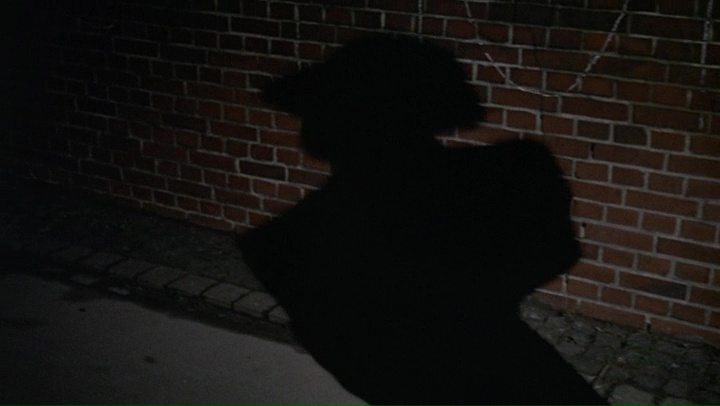
Kurt Raab wrote the screenplay as well as delivering an astonishing performance as Haarmann. At once vulnerable and yet able to play the tough cop, Raab’s Haarmann is drawn from Peter Lorre’s performance in M but also F.W. Murnau’s 1922 Expressionist vampire classic Nosferatu. The symbolism of the monstrous killer is clear at the beginning as we watch Haarmann’s shadow moving over the street, just as we saw, in the earlier movie, the nosferatu climbing the stairs.

But is he the vampire Nosferatu or the snivelling child molester from M?

Well, both, and that gives him a complexity that makes the film so fascinating. Haarmann is not the only criminal in the story – he is just worst among equals. Everyone is grifting and looking for an edge. The homeless kids are looking for food and shelter and affection, and Haarmann is only too willing to give them all that, but there is a price – their lives and their flesh. He is looking for love too, but from all the wrong people, in particular his tempestuous relationship with Hans Grans, who sees him purely as a meal ticket.

Roger Ebert summed up the film:

“the movie has a haunting banality. It’s about insignificant creeps, and it invests them with a depressing universality.”

Haarmann in this film is both tender and wolf, and in that he encapsulates Hannah Arendt’s summation of Adolf Eichmann in her study of his war crimes trial. Eichmann was a leading figure in the Holocaust, the destruction of European Jewry during the second world war. Arendt found that, while it would have been comforting to find that Eichmann was a monster, in fact he was “terribly and terrifyingly normal”. Eichmann maintained that he was just following orders, doing his job, and Arendt called this “the banality of evil”.

Just so, Haarmann would have argued that he was just doing his job, doing what he needed to do to survive a broken society, make a little money and feed his appetite for food, for sex and for flesh. And for love, the one thing he never achieved.

At the end, Haarmann is led off to the police car, his neighbours and followers who ate his meat gladly watching on. His last words are:

“Take my little life. I am not afraid of death through the axe or the hangman. It is my salvation. I am happy to give my death and my blood for atonement into God’s arms and justice. It could have been thirty, but also forty – I don’t know. There are victims that you don’t know about. But they are not the ones you’re thinking of. They were the most beautiful ones I had.”

The full movie is currently available on YouTube.

The Beautiful Child: GRETEL AND HANSEL (Osgood Perkins, 2020)

Here’s Horror royalty: the classic “fairy tale” from the Brothers Grimm, directed by Oz Perkins, son of the one and only Anthony Perkins (Norman Bates in Hitchcock’s Psycho). Oz is also an actor – he appeared as the young Norman Bates in Psycho II.

The witch, bloodthirsty and cannibalistic, is in many ways the exemplar of what Barbara Creed calls the monstrous feminine – and her victims are most often children, which is perhaps why children love stories about witches. Some adults dismiss children’s stories as light-weight and simplistic. But kids interpret the world through what they see, and the stories they hear. What kids understand is their own powerlessness – parents and teachers have control, and their youthful grasp of justice can make that seem uncomfortable or even intolerable. The bildungsroman, the coming of age story, is all about finding their power, in the face of seemingly inexorable oppression.

The usual title of this story is Hansel and Gretel, the 1812 Grimm story of the children who are abandoned in the forest and find an enchanted gingerbread house in which lives a cannibalistic witch, who fattens up Hansel for her dinner. The story is an important one in cannibal studies – even Hannibal quotes it from time to time.

Perkins has reversed the title deliberately to make Gretel (Sophia Lillis from It) the older child, a girl on the verge of womanhood, who must unwillingly take responsibility for her little brother Hansel (Sam Leakey in his debut role), see through the deceptions and dangers of adults, and make decisions that can be literally life and death, eater or eaten.

There is a fairy story within the story:

“The beautiful child in her little pink cap”

It tells of a little girl who was saved from a fatal illness by an enchantress, but,

The child was granted second sight. People came to hear what she saw, but did not like what she said.

She had other powers, and could deliver death to anyone, even her own father.

Fairy stories have morals, and the moral of the beautiful child, and Hansel and Gretel, is

Their mother sends them out to offer her services to a local lecher, who takes advantage of a “terrible pestilence” (sounds familiar) and asks the young girl

Furious at Gretel’s refusal to sell her body to help with the finances, the mother chases them out with an axe. Their world, once they are alone, is one of mystery, magic and terror. “The big, bad world opened up in front of us…”

There is plenty of intertextual humour to keep us guessing: Gretel is a sassy American, with strong views on the feudal class system.

Hansel is a cheeky English boy. They are rescued from an ogre by a huntsman, who tells them if they stray from their path, they can expect to meet wolves (a reference to a different cannibal story called “Little Red Riding Hood”.)

They find the gingerbread house, well, at least it smells of cake (and bacon, says Hansel). Inside is a table groaning with an abundance of food. Gifts!

There’s a witch of course, named Holda (Alice Krige, the Borg Queen from Star Trek: First Contact) who is charming and courteous. She plucks a strand of Hansel’s hair as he hoes into dinner, and sniffs it, like Hannibal sniffing Will Graham.

What can I say – she loves children!

But there is much more to this story (both stories). Is she “the beautiful child” of the internal fairy story? She senses that Gretel has second sight and magical powers. In the house, in dreams or in second sight, Gretel sees several children who appear out of mirrors.

Gretel is vegetarian, while Hansel likes his meat; at eight he is already imbued with carnivorous virility.

The witch, Holda, is not impressed, pointing out that “the ox, with his vegetable-made bones pulls the cart and the fat man who sits atop it!” She is dismissive of his carnivorous virility. Of course, we have to wonder, as Gretel does, where all the meat and milk come from, considering there are no animals on the property. Except for human ones. Are our cities any different?

Gretel starts to appreciate her powers, and the abundance they will offer her.

“This is your power. To see what is hidden and to take it. A small mind believes only what it can see. But we know that we are our fate’s own masters, don’t we?”

Hansel remembers Gretel’s lessons:

“You always say there aren’t any gifts in this world. That nothing is given without something taken away.”

To take on her full powers, Gretel realises that she’ll need to lose Hansel, who is a burden. The witch warns that

“he’ll soon come to fear you, as all men should if they’re smart.”

We only see Holda eat once, and when she finishes, she pulls out of her mouth a long lock of blonde hair with a little bow on the end. Well, we guessed what she ate, especially if we ever quaked through a Brothers Grimm story or two.

The witch in psychoanalytic terms is the oral-sadistic mother, and Creed calls her an “implacable enemy of the symbolic order”, because she demonstrates its frailty. Holda at first seems maternal – she offers the lost children food and shelter, but the fact that they can so quickly end up in that food warns us of that frailty – she reminds us that we, too, are edible animals.

Gretel soon finds out where all the food is coming from.

The witch tells her the real story of the beautiful child and of her power. Gretel has achoice – will she take the gift and pay the price? But hey, no spoilers. See the movie to find out what Gretel decides. It’s worth it.

The reviewer on RogerEbert.com called it:

“the kind of low-key gem that horror fans are always looking for but so rarely find—one that is smartly conceived, visually stylish and genuinely creepy at times.”

The story is even more relevant than it was when the movie was made (or the Grimms wrote it down) because of the weird conspiracy theories circulating in the USA about politicians torturing and killing children in the basements of pizza restaurants in order to harness their youthful energies. But leaving aside the magic and the second sight, isn’t the cynical utilisation of the young the basis of advertising, wars and agriculture? Society is built on the exploitation and sometimes the slaughter and consumption of the innocent.

The cinematography of this film is splendid, and the actors are sensational, particularly G&H despite, or perhaps because of, their youth. Overall, a very satisfying reboot of a classic cannibalism story.

Commodity cannibalism: NEVER LET ME GO (Mark Romanek, 2010)

NEVER LET ME GO is based quite faithfully on the beautifully written and quite disturbing 2005 novel of the same name by British author Kazuo Ishiguro, which was shortlisted for the Booker prize (which he had previously won with Remains of the Day) and was named by Time Magazine as the best novel of 2005, as well as being listed as fourth on their list of the 100 Best English-language novels published since 1923 (when they started publishing).

This gave the film a high bar, but it does not disappoint, due to the superb cast, the direction of Mark Romanek (One Hour Photo), and the script by Alex Garland (28 Days Later), a friend of Ishiguro, who asked the author for film rights before he even finishing reading the manuscript. Yep, it’s that good.

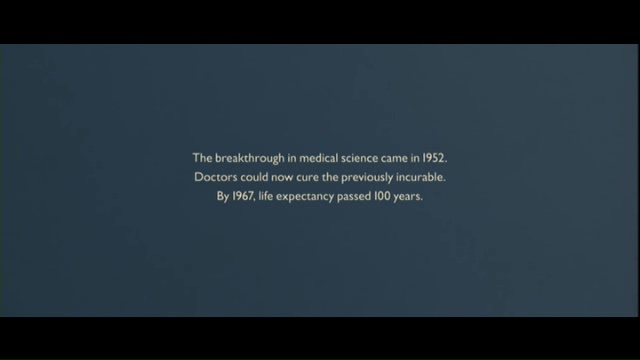
OK. This is a spoiler alert, particularly if you are going to read the book, although any review will soon tell you what it’s about, and the “secret” is revealed quite early in the film. Here goes. The film is set in an alternative present, where incurable diseases have been conquered.

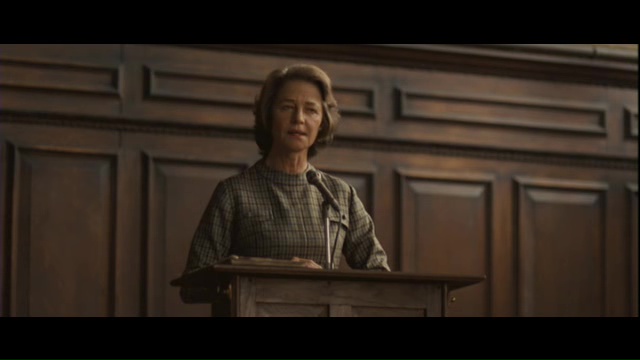
The protagonists are clones, bred to supply their organs to “real” humans, who can now live well into their hundreds, thanks in part to these donations, and the new medical technologies. The kids are brought up to live healthy lives. Smoking? Right out. A healthy replacement part in a healthy body. The stern principal, Miss Emily (the wonderful Charlotte Rampling) tells them not to spoil the merchandise:

“Students of Hailsham are special. Keeping yourselves well, keeping yourselves healthy inside, is of paramount importance.”

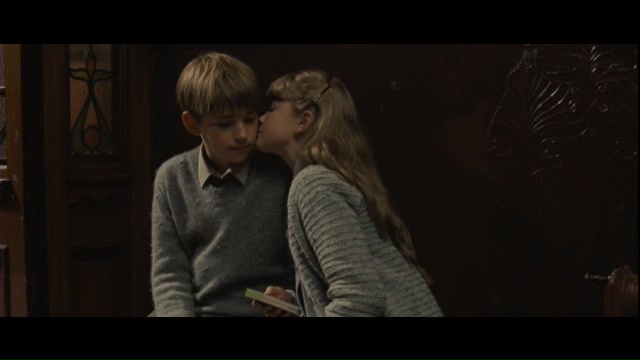
We see the childhood of the protagonists mainly through the eyes of 11-year-old Kathy (Isobel Meikle-Small) who has a preteen crush on Tommy (Charlie Rowe).

Her best friend is Ruth (Ella Purnell). Ruth’s confidence and precocity wins over the shy and vulnerable Tommy, who is barely able to cope with the inevitable challenges and failures of growing up. Tommy represents so many of us – filled with rage at the injustices and humiliations of the world, but unwilling to stand up and take what he wants. Kathy accepts the loss of her first love to her first friend.

The children are encouraged to create pictures, poetry and sculpture, which may be chosen for display in a mysterious place called “The Gallery”. They are told that Hailsham children are special. They are told of dangers that befall children who leave the school grounds – the boy who was found tied to a tree with his hands and feet cut off, the girl who starved outside the gates. They are not told the truth. One teacher, Miss Lucy (Sally Hawkins from The Shape of Water) dares to tell them what will happen when they grow up, which gets her fired. She tells them,

“You will become adults, but only briefly. Before you are old, before you are even middle-aged, you will start to donate your vital organs. That’s what you’re created to do. And sometime around your third or fourth donation, your short life will be complete.

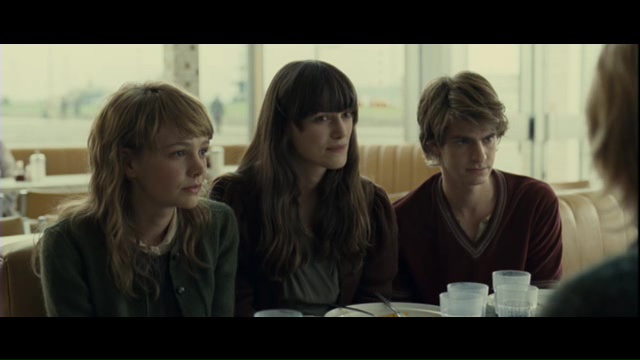
The film moves to their adulthood – at 18, they are moved out of Hailsham and sent to a collection of farm buildings called the cottages, to wait until they are old enough to move to “completion centres” where they will begin to donate their organs. Tommy (Andrew Garfield) is now in a sexual relationship with Ruth (Keira Knightley) which shatters the friendship of Ruth and Kathy (Carey Mulligan).

The people from the outside, the delivery men and others, are reticent, unable to make eye contact with the kids; they exhibit the kind of cognitive dissonance you might see from people on a petting farm, admiring a piglet that they know will soon be bacon.

These kids are not considered human, even though they are genetically identical to some “original” whom they desperately want to meet – the ‘real’ human from whom they were replicated. Ruth is convinced they must be less than fully human, that they are cloned only from

“trash – junkies, prostitutes, winos, tramps, convicts, as long as they aren’t psychos. If you want to look for originals… look in the gutter.”

Tommy finds Kathy looking through porn magazines, flipping through quickly, looking only at the faces. She is looking for the “trash”, the less-than-humans from whom they may have been cloned.

The other young people tell them of a rumour about the possibility of Hailsham students getting a “deferral”—a temporary reprieve from organ donation if they can prove they are in love. Tommy decides that The Gallery at Hailsham was part of a study to see if clones have souls, can fall in love, and are therefore worthy of deferral. He becomes obsessed with finding the Gallery, and seeing if love, verifiable love, makes them human.

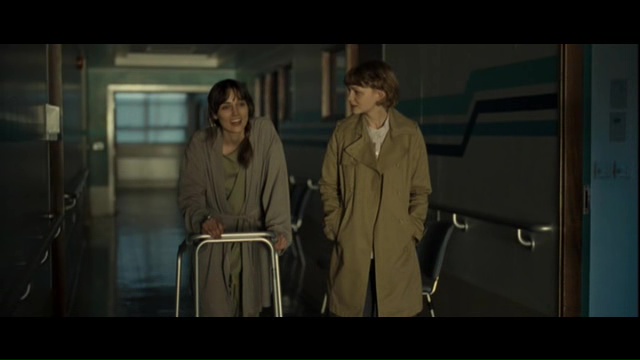
They are also able to volunteer to become carers for the others, and Kathy decides to do this, delaying thereby her own donations. She finds Ruth at a completion centre – Ruth has endured two donations and is ready, willing to complete on the next.

They visit Tommy at another centre, who tells them that Hailsham has closed, and donors are now raised in schools that are like “battery farms”. The donation centre is full of “donors” with missing parts – and they often die (or complete) after two or more donations.

Ruth has heard that after the fourth donation, there are no more carers, no more recovery centres, just harvesting of parts until they switch you off. Kathy cares for Ruth, who dies (completes) after her third donation, and Kathy then takes Tommy, still reasonably well after two donations, to see the mysterious gallery owner.

They’re in love, they tell her. They want a deferral. But the gallery was just part of an ethical argument – Hailsham was the last place where the ethics of the donor system were questioned, and the art was supposed to show what they were capable of. But they were exploring an answer to a question no one was asking.

“Would you ask people to return to darkness – the days of lung cancer, breast cancer, motor-neurone disease? They’ll simply say no…. We didn’t have the gallery to look into your souls. We had the gallery to see if you had souls at all.”

Films on www.thecannibalguy.com tend to centre around violence and gore. That is what people expect from horror and from cannibal movies. But this is not a horror movie, or at least not a monster movie in the traditional sense of the grotesque, frightening and uncanny. But is it a cannibal movie?

I believe it is. Definitions of cannibalism vary according to who is accusing whom. At what point does exploitation of the human body or mind turn to abuse or consumption? Organ transplants, where a living organ is incorporated into the body of a recipient, is sometimes called cannibalism, particularly due to speculation that some part of the ‘donor’ remains imbued – consider James Whale’s classic 1931 film Frankenstein, where the monster is given a brain stolen from the cranium of a criminal, which makes him homicidal. In any case, if an organ is taken without the consent of the ‘donor’, such as the alleged cases of political prisoners being executed according to the demand for their tissue-type, how is this different to Hannibal’s feasts?

The horror in this film is in the human struggle with questions of mortality, what it even means to be human. These kids seem to be normal people – they laugh, they sing, they tease each other, they fall in love. But they are aware of their own deaths, something that most of us repress more or less successfully, assuming that we will always have another tomorrow. They know better; they are destined to be cut up and emptied of organs until their bodies give out. They are not fully human, despite looking just like any other bunch of kids, because they are cloned, and so are classified as beneath the human line in the anthropocentric scorecard. They are at best “all but human” through their art. But the ‘real’ humans don’t care. Redefine someone as less than human, objectify them, be they a different race, gender or species, and the range of abuses is unlimited. Nothing matters but our delusion that we will live forever, necessitating the sacrifice of the other.

The critic Roger Ebert wrote:

“Essentially it asks, how do you live with the knowledge that you are not considered a human being but simply a consumer resource? Many hourly workers at big box stores must sometimes ponder this question.”

There is no option for resistance. They have been brought up all their young lives to obey, to believe that it is necessary to be cut up, to complete, for the benefit of unknown others, because that’s what they were bred for, just as we justify cutting up cows and pigs and chickens and lambs because that’s we bred them for. Only Tommy rebels, but it’s an inchoate howl of rage, the same scream at the butchering world that he aimed at the kids who didn’t pick him for their game when he was 11. Powerless, all he can do is bellow like a steer in an abattoir. It may be that defiance of death that verifies his humanity, because, as Dylan Thomas said, we ought to “rage against the dying of the light”.

Or as another Dylan said (Bob), “He not busy being born is busy dying.”

Kathy sums this up at the end:

“What I’m not sure about is if our lives have been so different from the people we save. We all complete. Maybe none of us really understand what we’ve lived through. Or feel we’ve had enough time.”

Beautiful inside: THE UNDERTAKER AND HIS PALS (T.L.P. Swicegood, 1966)

We all are vaguely aware of our eventual deaths, and some people even take it seriously enough to arrange insurance of other funding for their funerals. But how many of us consider the environmental cost of burying or burning human bodies? Over one million people die every week – all those bodies going into landfill under granite slabs, or adding to the carbon emissions from the crematoria.

Why not eat them? Many of these corpses are still covered in healthy flesh. If human meat is comparable to that of the other animals we choose to eat (apparently somewhere between veal and pork), why not let those who are hungry eat some of the corpses, preferably the ones that are minimally diseased? Is death by starvation less abject than cannibalism?

Most readers will find this unthinkable and assert that they would die rather than eat human flesh, as many did after hearing about the Uruguayan rugby team survivors from Uruguayan Air Force Flight 571 which crashed in the Andes, leaving nothing to eat but frozen passengers. But like most taboos, this one is based on cultural conditioning rather than any rational thought. After all, why is it fine to source meat from a pig who has lived a short and brutal life and suffered an agonising death, but repulsive to eat a person who no longer is capable of pleasure or pain?

That is the question this short film seems to ask.

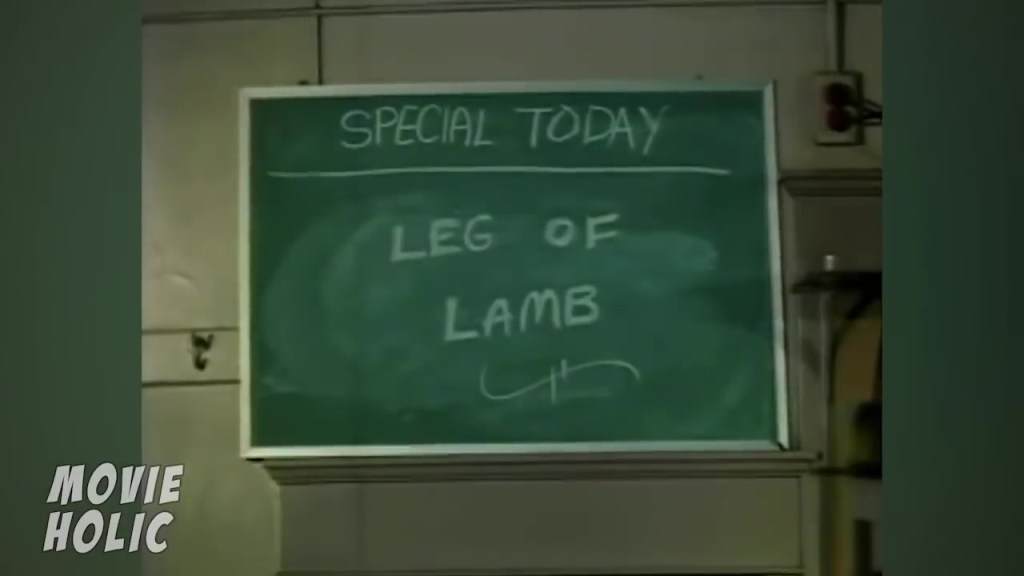
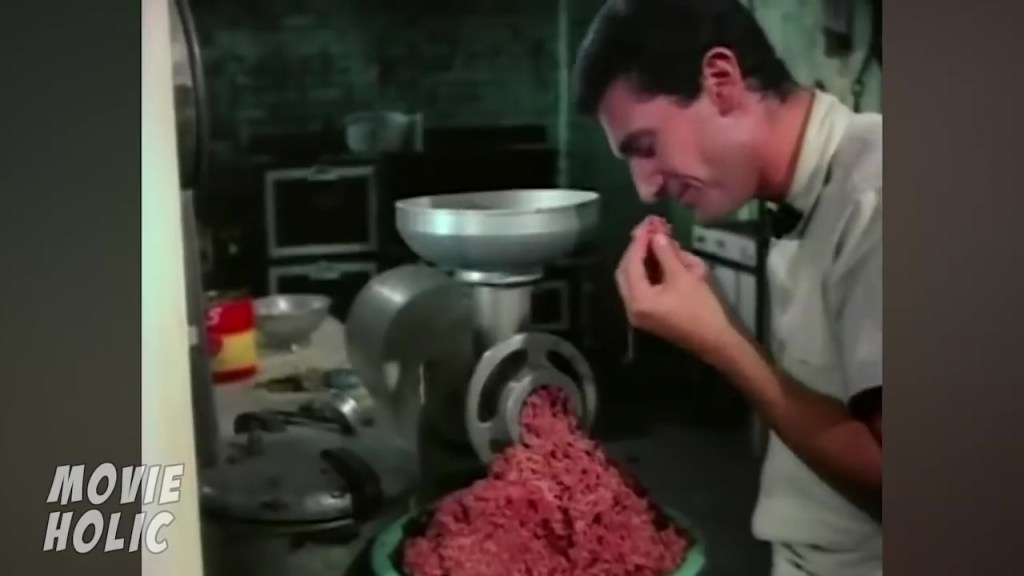
An undertaker and his two friends, who are restaurant owners, go out on the town killing people; the restaurant owners cook parts of the bodies, and the undertaker earns his keep burying the left-overs. The rather thickly ladled humour involves the victims having the names given to the flesh of animals: their first victim is Sally Lamb, and the specialty at their restaurant that day is lamb leg.

Their racket goes awry when a detective, who has a secretary conveniently named Miss Poultry, suspect that something isn’t quite kosher.

Lévi-Strauss wrote in “A Lesson in Wisdom from Mad Cows”

“The link between a meat-based diet and cannibalism (a notion broadened to take on a certain universality) thus has very deep roots in thought…. Indeed, a day may come when the idea that human beings in the past raised and slaughtered living things for food and complacently displayed slabs of their flesh in shop windows will inspire the same revulsion as what travellers in the sixteenth and seventeenth centuries felt about the cannibal meals of American, Oceanian, or African indigenous peoples.”

Acceptance of violent slaughter, particularly the impersonal conveyer-belt killing of modern agriculture, legitimises cannibalism by removing all subjectivity from the victim. The voracious and ever growing desire for meat, together with the fading of the clarity of the naïve dualism of human and animal, leads inexorably to acceptance of the consumption of human meat; thus the boom in cannibal films and television shows. The harvesting methods in this film are repulsive because they are similar to what we pay slaughterhouse workers to do, hidden from our sight.

There’s even pre-slaughter stunning.

With its bad jokes, wooden acting and terrible script, this movie scored a paltry 43% on Rotten Tomatoes, with the only official critic writing “You’ve never heard of this movie. Keep it that way.”

But the full movie (all 63 minutes of it) is on Youtube should you wish to ignore that advice. With its mid-century kitsch and ironic soundtrack, it’s so bad it’s good, if you know what I mean.

Patriarchal civilisation, Derrida tells us, depends on what he calls “carnivorous virility”:

The subject does not want just to master and possess nature actively. In our cultures, he accepts sacrifice and eats flesh. ‘Eating Well’ or the Calculation of the Subject.

The movie makes this abundantly clear in the macho strutting of the killers and the detective on their trail, but also in its choice of female victims. Men are killed violently, but as a struggle for power. Women must be subjugated, terrorised then cut up and eaten. One of the killers uses a chain to destroy a statue of the goddess Aphrodite (the Venus de Milo) in a spa, then kills a woman with the same chain. Yes, it’s symbolism, double-strength. The women are nature, presented in this film as seductive and edible. The men are the symbolic order, at war with nature and controlling her through their carnivorous sacrifice.

As one of the killers asks, his hands full of intestines:

“Isn’t she beautiful inside?”

“The mothers were empty… cored” – THE GIRL WITH ALL THE GIFTS (Colm McCarthy, 2016)

In an alternative present, or perhaps near future, humanity has been decimated by a fungal disease that turns its victims into flesh-eating “hungries“.

At an army base in rural England, a small group of infected children are being studied by biologist Dr. Caroline Caldwell (Glenn Close, fatally attractive once more), who considers them less than human, or at least dispensable in her search for a vaccine. A sacrifice for the good of humanity, which is on the brink of extinction.

Despite being “hungries”, compelled by their infected brains to tear any uninfected human apart for food, these children think rationally and feel human emotions. But only one person, their teacher Helen Justineau (Gemma Arterton), considers them human.

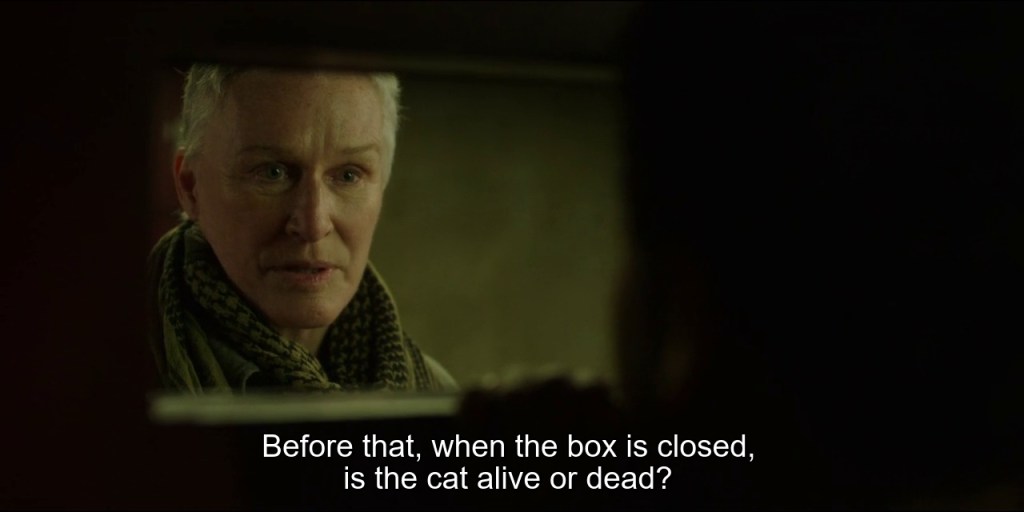
One girl, Melanie (a brilliant performance by thirteen-year-old Sennia Nanua), is inquisitive, imaginative and excels in the classroom to which the children are wheeled each morning, strapped to their chairs to stop them eating the guards and teacher. Through the peephole of her stone cell, Caldwell gives Melanie riddles and even asks her to consider the Quantum Mechanics paradox of Schrödinger’s cat, in which a cat in a sealed box could be either alive or dead, or both, depending on a random state of subatomic particles controlling a potentially lethal radioactive charge. The hungries, strapped to their wheelchairs, polite until they smell flesh, are neither human nor subhuman, or perhaps, like the cat, alive and dead at the same time. Melanie is in a box (or a stone cell) and may be alive or dead, depending on the science; human or inhuman, depending on the politics. Like all of us, her life is in a state of quantum superposition, controlled by random forces over which we have no control. Ask anyone in an ER ward.

The children are kept in cells and only taken out by heavily armed soldiers. Their food is live worms.

Melanie is precociously brilliant and loves her teacher Miss Justineau.

When the base is invaded by hungries, Melanie escapes along with Miss Justineau, Dr. Caldwell and some heavily armed soldiers, some of whom she needs to eat to save Justineau. This causes her human side some ethical issues.

The group agree to take Melanie with them, believing that Caldwell will be cutting her up for a vaccine, but she is forced to wear a mask, like Hannibal Lecter as they try to find a fortified settlement in a world filled with hungries.

Rotten Tomatoes gave the film a respectable 86% although most of the reviewers saw it as a superior entry in the zombie tradition. It’s actually not a zombie movie, although there are very large numbers of rotting people standing around, ready to chase anyone that moves too fast or talks too loud.

But the hungries are not corpses who have risen from the dead like Night of the Living Dead; they are infected by Ophiocordyceps unilateralis, which is a real fungus discovered by Wallace in 1859 (the dude who came up with the idea of natural selection at the same time as Darwin). The fungus, which normally affects insects, has in this story mutated to take over the brains of living humans, making them into hungries. Spores from the fungus, or a bite from a hungry, can turn a person into one in a few seconds. If you recall the virus that took over the UK in 28 Days Later and filled the victims with uncontrollable rage, this is an infection (albeit fungal) that fills its victims with voracious appetite. The hungries stand around like rotting statues, unresponsive to anything but the taste, sound, smell or movement of living animals, including humans. Is there a metaphor here for the way we drift through life, only mobilised, often by smart marketing, into sudden bouts of voracious hunger? The hungries are “free” of all the cares and duties of being human – they are only alive when they smell fresh flesh. They live what Kundera calls an “idyllic” existence of constant repetition. Melanie is equally free in her cell – to strap herself into her chair, learn her lessons, and eat her worms at night. Once she is freed, there are all sorts of decisions to be made – practical and ethical ones.

Although the fungus is not a virus like COVID-19, it does eventually kill the hungries to feed on their bodies, in order to grow its fruit body and create spoors.

Caldwell explains that the child hungries, including Melanie, were discovered in a maternity hospital.

“The mothers were there too. They were… empty. Cored. From the inside.”

The embryos were infected through the placenta, and

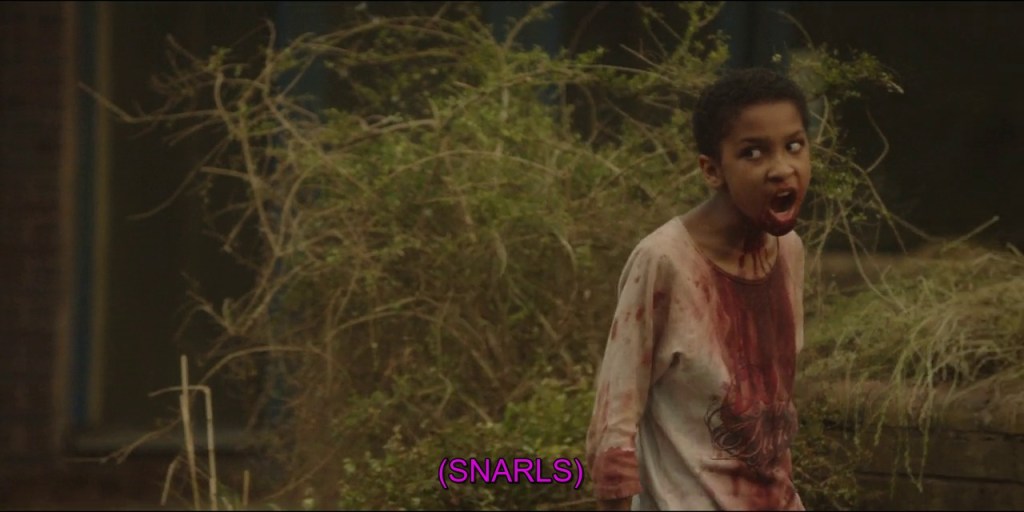
Melanie and the other children at the base were captured soon after birth and socialised (except for the, you know, growling and biting), but other child hungries have gone feral, and live in urban tribes that hunt and can communicate only in grunts and snarls. Melanie has to establish her authority over them by employing their own violent methods.

The movie (and book on which it is based by Mike Carey, who simultaneously wrote the screenplay) is a bildungsroman, the story of Melanie’s coming of age. Incarcerated since birth, Melanie has a burning desire to understand what she is, how she got that way, and control her own future.

The interviewer on rogerebert.com said:

“There’s a visceral, emotional impact to the horror and action of “The Girl with All the Gifts” that resonates because the characters and the world they live in feels real to us.”

We all live in that world, where infections run wild, the authorities are at a loss for solutions, and superspreaders and conspiracy theorists are hungries. This is an intelligent and gripping thriller that asks questions about the nature and ethics of sacrifice. While we are sacrificing front line workers to save oldies (like me) from COVID, what can we say about the sacrifice of the innocent like Melanie?

The favourite word of 2020 was “unprecedented” as an unknown and widely unforeseen virus disrupted all aspects of normal life. Derrida uses the term “arrivant” – an “Other”, an absolute newcomer about whom we know nothing, and who may take monstrous form. Melanie and the hungries, like SARS-CoV-2, are arrivants.

The big question Melanie asks the scientist and the teacher is: what if the arrivants, the child hungries who are symbiotes with the fungus, are a superior race of human? We eat animals we consider lesser beings – why shouldn’t they do the same?

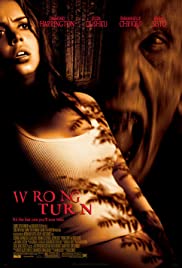
Short cuts: WRONG TURN (Rob Schmidt, 2003)

How to make a slasher: take a group of young and pretty people, travelling and (gasp) sleeping together and therefore sinning against Gud and the Hays Code. There’s usually a gas station run by a creepy dude whose advice it might be wise to ignore (but they never do). Then there’s a freaky villain or group of villains: outsiders, possibly mutant, and always psychopathic killers. The killers slaughter all the pretty people, using sudden montage cuts and loud music, except (usually) one, known as a “last girl” who will scream a lot but ultimately survive, and probably wreak revenge.

In that sense, Wrong Turn is a fairly formulaic slasher movie and, like The Hills Have Eyes, The Texas Chain Saw Massacre and many others, it went on to generate a slew of sequels and prequels, many of which were treated less than generously by the critics and fans. There are six so far, and 2021 promises a reboot which will no doubt be widely called number 7, so you’d have to say that this indicates a successful franchise, even if a reboot won’t add anything very new to the formula.

Slashers don’t always eat their victims, which is essential if their stories are to grace this blog, but Wrong Turn does not let us down in that area. These movies, what are sometimes called hillbilly horror, depict a clash of cultures, and attempt to show both sides through the eyes of the other. For the hillbillies, the effete city slickers are weak, spoiled and elitist, their wealth and privilege giving them an infuriating sense of entitlement. To the pretty city kids, lost in an alien land (in this case West Virginia), the locals in the flyover backwoods are inbred, amoral subhumans.

Three cannibalistic inbred mountain men are the antagonists, and their names are Three Finger, Saw Tooth and One Eye, names presumably earned by their current physical state rather than bestowed at birth. The film’s opening sequence shows examples of genetic mutants, with implications that this is due to inbreeding (although there are no females in the clan). This lot are so degenerate that they do not even speak, except for some Paleolithic grunting. And these guys definitely follow the paleo diet. Their enormous strength and ability to shrug off apparently mortal wounds may come from their diet of flesh, but seems more likely to be an unexpected benefit of their genetic reinforcement.

Not much information is given (until Wrong Turn 4, which I suppose we’ll get to sometime), as to how they got that way, or as Clarice said to Hannibal Lecter “what happened to you”. In this one, behaviourism really doesn’t matter – these are quintessential bad guys, monsters, inhumans, existing only to frighten, to kill (and eat) and then to get their comeuppance, with of course an unexpected survivor to point toward (yawn) the inevitable sequel.

There are six beautiful people, two couples, who quickly come to sticky ends, and their friend Jessie (Eliza Dushku) whom they had invited to a getaway after her messy relationship breakup. She is the only one not currently living in sin (although one of the other couples are planning their wedding as they are slaughtered) so she seems destined by the morality of slashers to be the “last girl”. They are lost on a dirt road with a flat tyre, caused by the mutants laying barbed wire across the road, when the square-jawed hero Chris (Desmond Harrington) crashes into their car, taking a wrong turn to get to a business appointment which we all know is going to seem pretty irrelevant. Four of them head off into the woods looking for a phone (they have mobile phones, but hey, it’s out in the middle of nowhere – no cell towers?) The couple who stay with the cars are slaughtered almost immediately. Now there’s a turnaround, Chris show himself to be a leader, he is going to be last boy! The intersection of the two groups, heroes and mutants, comes when the lost city folks find the house of the mutants, and have to hide under the furniture, where they have to watch the killers chop up their friends for dinner.

This is extreme slasher binary conflict: human vs inhuman, normal vs freak, civilised vs wild, prey vs predator. We follow Jessie and Chris as they watch their friends die and flee into the woods, and we barely see the ghastly faces of the antagonists, until toward the climax.

Most victims in slashers are despatched quickly, but the last girl is traditionally captured, tied up in what looks like a rape scene but usually isn’t, because the bad guys are interested in gustatory rather than sexual carnality.

Jessie is tied to a bed, about to be slaughtered – no particular reason why she has not been killed instantly like the others, but we need time for a rescue. The freaks are predators, but Chris and Jessie are warriors. Like The Hills Have Eyes, the victims have to adopt the savagery of the killers to survive, and there is plenty of gore and explosions if that’s your thang. Unlike THHE, where the victims arguably become the savages, Chris and Jessie look to have grown through their ordeal, so that’s a novel approach.

Wrong Turn earned a measly 40% on Rotten Tomatoes, with one critic writing,

“the gore is so ridiculously overdone and the script so lame, that it undermines all sense of suspense.”

But I didn’t think so. The cast is great, the plot is fast moving and certainly never dull, and the suspense is well done. There is no reason given for the murders, except that humans are their preferred quarry. But that is the question that cannibalism, as a concept, poses in every film – why eat humans? Because they’re made of meat?

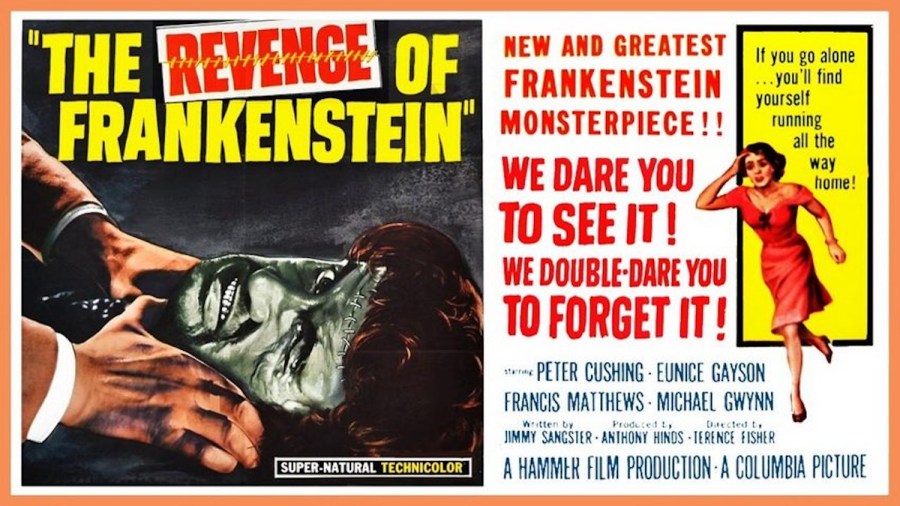
Monstrous appetites: THE REVENGE OF FRANKENSTEIN (Terence Fisher, 1958)

Just over 200 years ago, Mary Shelley, at the age of just eighteen, conceived the story of “Frankenstein or the Modern Prometheus” while sheltering with her lover (and later husband) the poet Percy Bysshe Shelley at the home of Lord Byron, the Villa Diodati by Lake Geneva in Switzerland. Frankenstein is a brilliant but tortured scientist who creates a creature and brings it to life, whereupon it wreaks havoc, due to Frankenstein’s actions in first abandoning his creation, then reneging on his promise to create a wife for it. Shelley’s story perfectly summed up the fears of the Romantics: Science was capable of the improvement or even perfection of humanity, but if misused, could lead only to catastrophic consequences. She would have been fascinated by the modern versions of this paradox: global warming, weapons of mass destruction, and pandemics issuing from factory farms and slaughterhouses.

A century after his literary birth, Frankenstein and his monster were popularised by Hollywood (with the story considerably changed) in James Whale’s Frankenstein (1931), with Boris Karloff as the huge, shuffling, homicidal monster.

The British company Hammer Horror, the virtuosi of Gothic films, revived the story in 1957 with The Curse of Frankenstein, their first colour horror movie, and the first gory slasher, with Peter Cushing as Victor Frankenstein and Christopher Lee as the Creature. This week’s choice, Revenge of Frankenstein, was the first in a string of sequels, which made Hammer the pre-eminent horror studio, and Peter Cushing the master of cultured monstrosity.

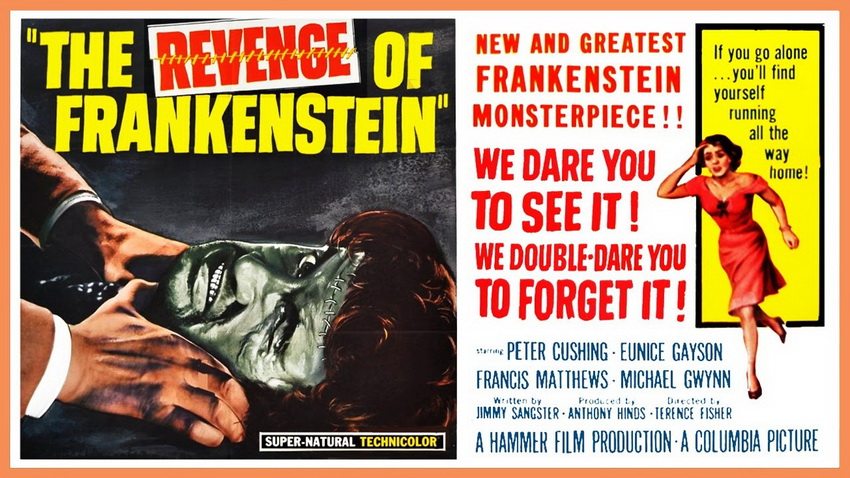
The trailer to the movie (above) gives a succinct summary of the story so far: Baron Frankenstein (Peter Cushing) was sentenced to the guillotine in 1860 for creating a version of a human, and was blamed for its murderous rampage, caused by the creature’s brain being damaged.

“It should have been perfect. I made it to be perfect. If the brain hadn’t been damaged, my work would have been hailed as the greatest scientific achievement of all time.”

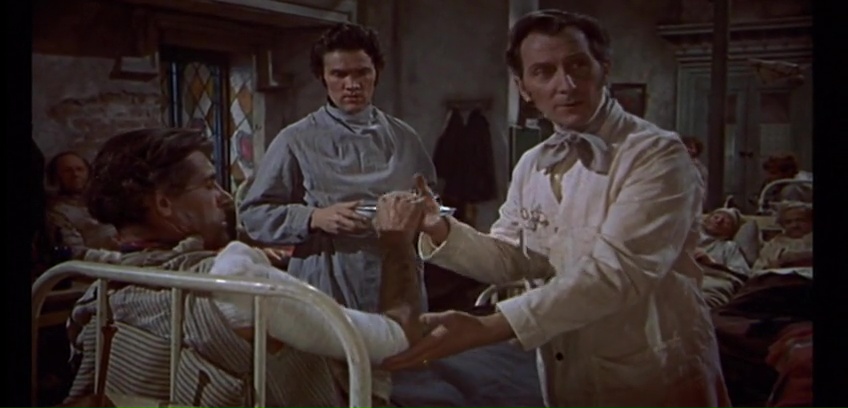
He escapes the guillotine by substituting a priest whom he pays the executioner to decapitate instead of him, and relocates to Carlsbrück under a false name (Dr Stein). Here he treats the hypochondriac rich and the grimy poor, whose limbs and other parts he amputates for his continued research.

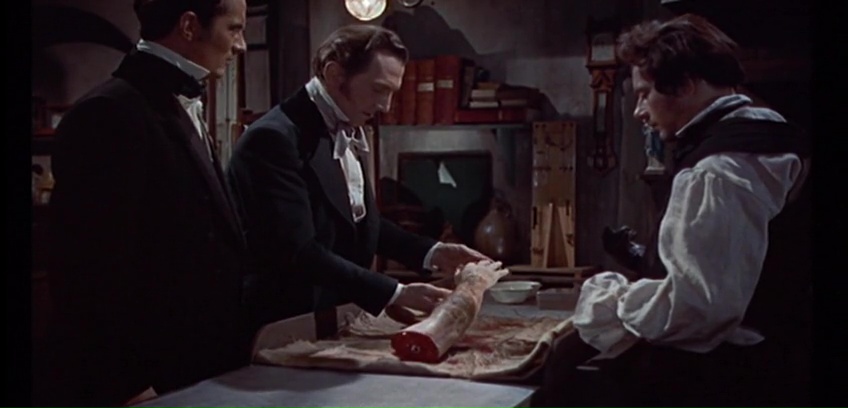
Another doctor recognises him and blackmails him into agreeing to work together, and they plan to transfer the brain of Stein’s hunchback assistant Karl (played by Oscar Quitak) into a “healthy” (i.e. not disabled) body (played by Michael Gwynn).

“Nobody. He isn’t born yet. But this time he is perfect… All I need is a brain, and then I can give it life.”

Karl is a hunchback, and can’t wait to get his brain removed and put into Frankenstein’s jigsaw of spare parts.

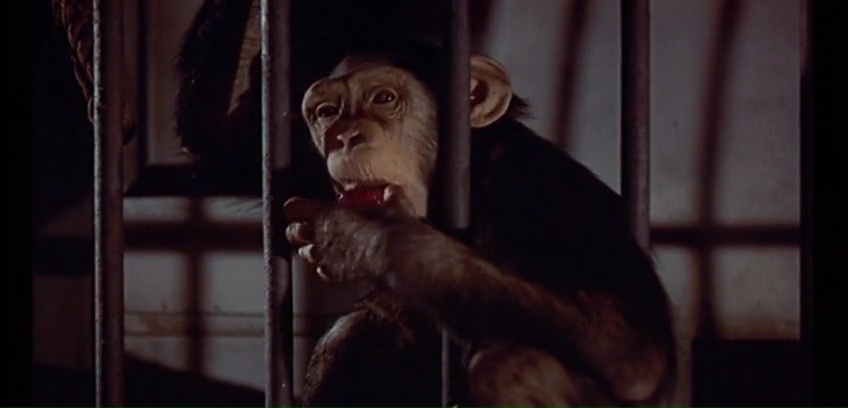
Is the hybrid human getting a brain transplant? Or is Karl getting a body transplant? There’s another character, Otto, a chimpanzee into whom Stein has already (unforgivably) transplanted the brain of an orang-utan. After the operation, however, Otto “ate his wife”.

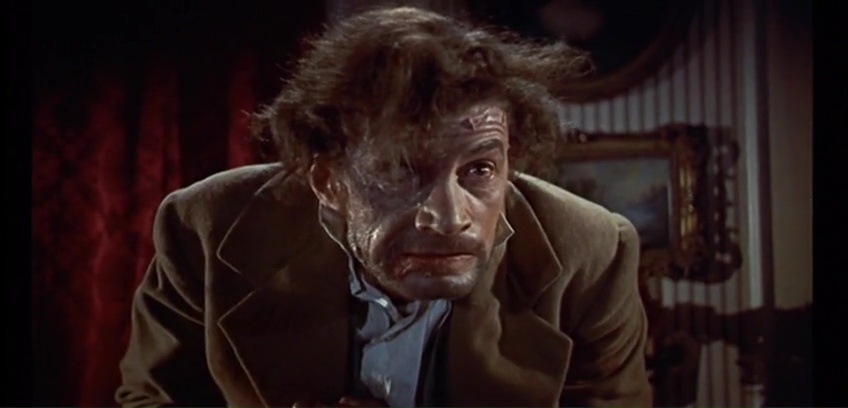
Yes, brain transplants, followed by head trauma, lead to cannibalism – who knew? Karl, in his new body, escapes but is spotted and beaten up by a janitor, whom Karl (now brain-damaged) then kills and eats. The Otto syndrome has spread to Karl! His injured brain then, somehow, starts restoring his hunchback, and his withered arm and leg – he starts turning into Richard III. An eyewitness tells the police that Karl’s first victim was killed by “some sort of animal”. Karl is dehumanised – again, first as through his disability, then through his monstrous appetite, caused by the tinkering of Frankenstein and the violence of the janitor. As expected of a monster, Karl gets right into killing and eating people.
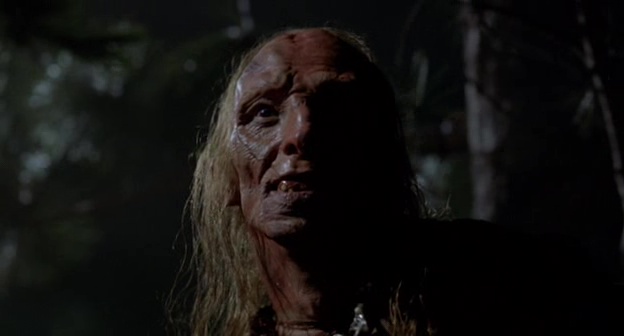
But Karl’s violence is not really the point. Earlier movies had a shuffling, terrifying monster to amaze the audience but, in this one, it is pretty clear that the monster is not Karl, in either of his bodies, but it is the handsome, brilliant Doctor Frankenstein, a forerunner of the serial-killer Renaissance man, Doctor Hannibal Lecter. While Karl’s brain, twisted by insertion in a “perfect” body after a life living with societal rejection and shame at his disability, drives him to kill and eat human flesh, the good doctor deliberately and calculatedly ‘consumes’ the limbs, organs and other parts of the poor who fill his clinic, in order to satiate his scientific curiosity. Organ transplants save lives, but if taken from unwitten donors, how are they different to gustatory cannibalism? Like Hannibal, Victor Frankenstein is the real cannibal in this story.

It’s an interesting and at times engrossing film; the dramatic music by composer Leonard Salzedo  is annoying, but Peter Cushing and the rest of the cast are great and, in 1958, it might possibly have seemed as scary as the hype made out. The film has 87% fresh rating on Rotten Tomatoes, with Empire Magazine calling it an:

“Expertly executed example of a golden time in British cinema – one to savour.”

Of course. All cannibal movies should be savoured, as long as they are properly prepared.

Disney’s savages: ALICE CANS THE CANNIBALS (Walt Disney 1925)

The most interesting aspect of Disney’s “Alice” silent cartoon series was that it predated Mickey Mouse by several years. The “Alice Comedies” were a hybrid of live action (a young girl named Virginia Davis) with animated characters, particularly a cat named Julius.

Cats were winning the media wars over mice in those days, almost a century ago, when the most recognisable cartoon character was Felix the Cat from Australian cartoonist Pat Sullivan. Winkler Pictures had dropped Felix after a row with his creator, and Disney was able to get them to distribute Alice and even pay to bring young Virginia from Missouri to Los Angeles to star in the work. Julius was so similar to Felix he could have been a littermate.

In the Alice series, Julius does most of the heavy lifting, but Alice gets the naming rights, since the universe they inhabit originates in her dreams after she visits a cartoon studio in the very first episode, Alice’s Wonderland (based on Lewis Carroll of course, but also perhaps a nod to Surrealism and Dada that were revolutionising art after the Great War). There were 57 cartoons in total, all directed, produced and animated by Walt, but of course we are only interested in number 12, Alice Cans the Cannibals, released in 1925.

Alice and Julius drive their car into the sea and lasso a fish to drag them to land (the car floats! The fish cooperates! They have a lasso in their possession! It’s a dream, OK?) They land on an island that is inhabited by cannibals (luckily, there is a signpost in the ocean saying “this way to the Cannibal Islands”). Cannibals, of course, were then widely considered the ubiquitous inhabitants of any land not yet settled by white people – the eternal others. The cannibal king wears a crown, so he must be every inch a king, and the cannibals spend the rest of the cartoon chasing Alice and Julius, hoping, no doubt, to eat them.

The image of a six-year-old girl being chased as prey, hit with a rock and speared in her behind might seem a little unusual these days, but it was 1925, it was a dream, and it was a cartoon, so what the hell, huh Walt? Anyway, Alice can hold her own against a bunch of primitive natives, and she instructs Julius to use a rubber tree to shoot rocks to knock them all down.

The cannibals are very accurate spear throwers, hitting both Alice and Julius in their bums, the only places that spears ever penetrated in cartoons. Alice throws the spears back with surprising accuracy.

The barrage of spears proves useful – they form a ladder up the cliff, from which our heroes can brain the cannibals below with rocks and old ostrich eggs (once again, it’s a dream).

Alice saves the day when she realises that cannibals always have rings through their noses and throws a spear which manages to go through those rings and into the bum of a hippo, who pulls them to a watery grave.

One more spear, this time into the rather easier target of the king’s bum, and white supremacy over the dark cannibals is restored.

Let’s not take it too seriously – it’s a light-hearted cartoon about a little girl’s dream of overcoming cannibals – I wonder if Freud saw it? The main interest is its depiction of the outsider – those who had not yet been colonised and enlightened (or massacred) were unarguably cannibals, and a spear up the wazoo was the least they could expect. It was the white man’s burden.