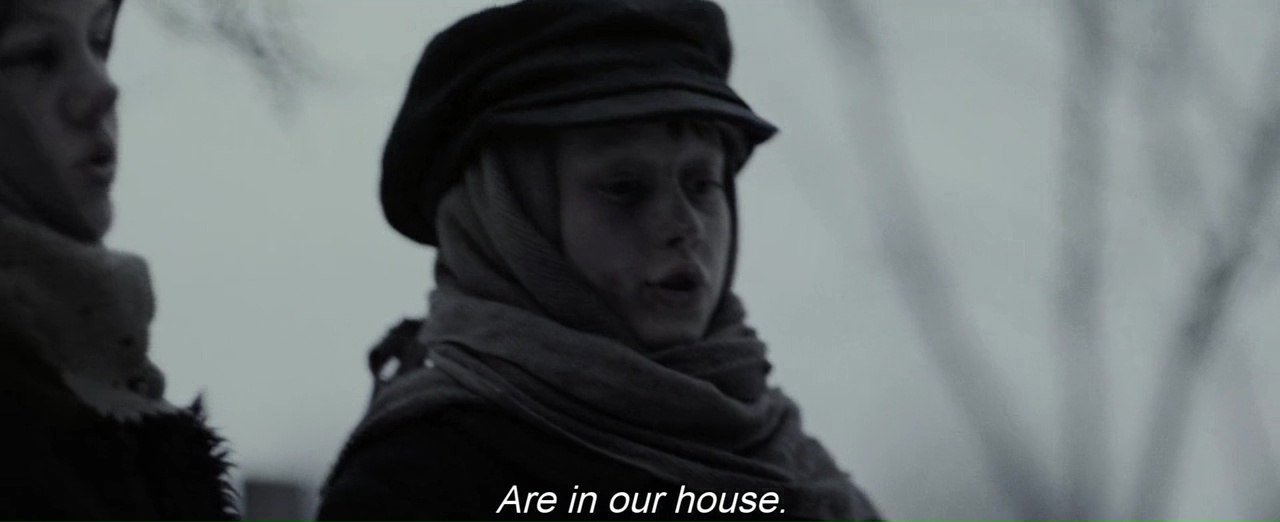
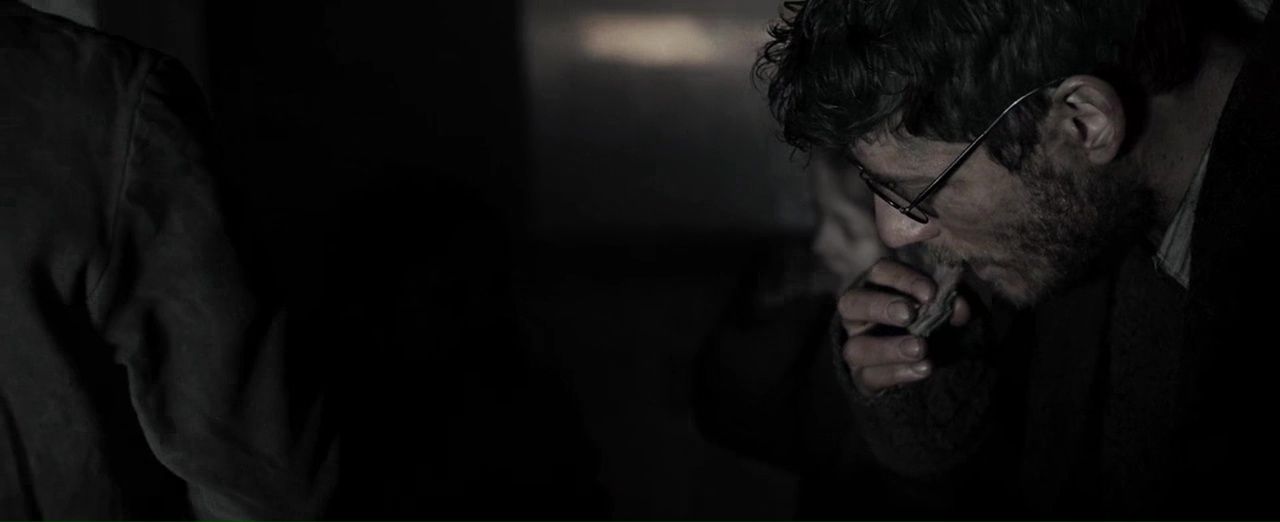
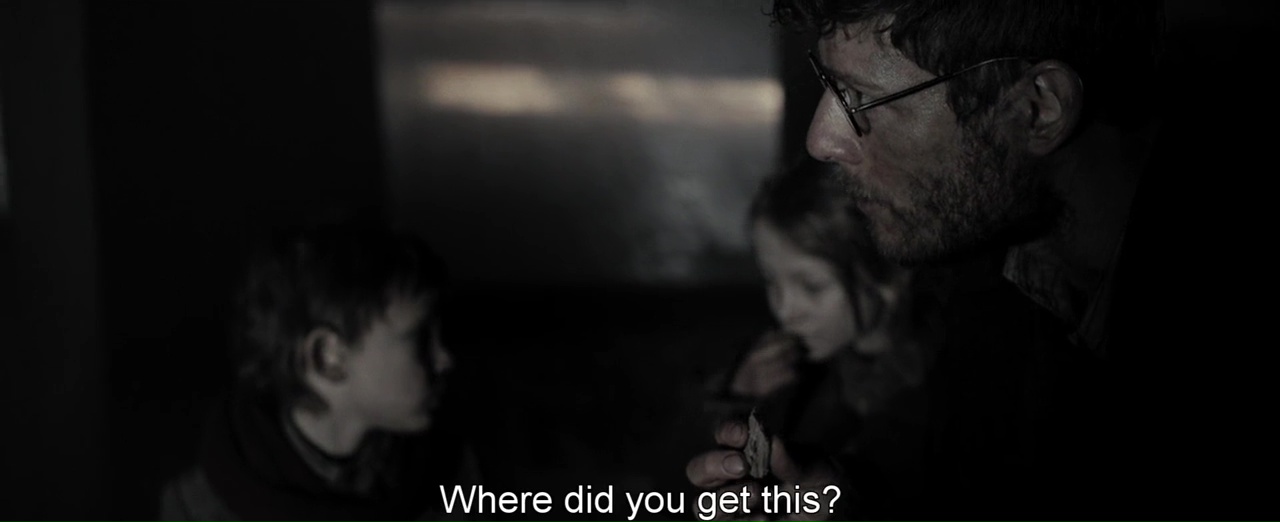
Virus apocalypse – 28 DAYS LATER (Danny Boyle, 2002)

A highly contagious virus, originating in human exploitation of captive animals, leads to the complete collapse of society. Pretty far-fetched, huh?

Do you remember back in the good old days, let’s say 2019, when “post-apocalyptic” was just a genre, a metaphor, rather than a feature of every evening news bulletin? The Director, Danny Boyle, reveals in his movies glimpses of different worlds, or rather our world, but disfigured by our appetites. In his debut film, Shallow Grave, it was money, in Trainspotting it was heroin, in Steve Jobs it was recognition. In this film, what we consume and vomit out is rage.

Chimp learning rage.

The film starts with a brief explanation of how zoonotic diseases originate; often that happens in a laboratory. In the opening scene, a chimp is tied to a bed and made to watch videos of rage: lynchings, riots, shootings.

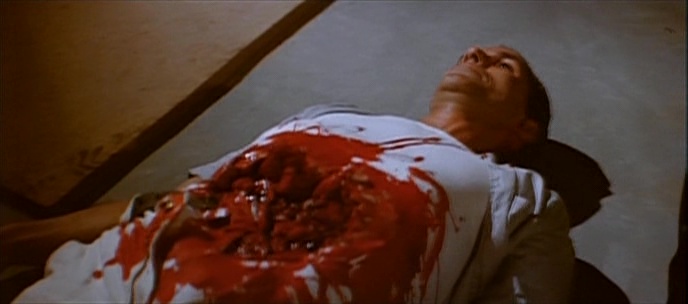
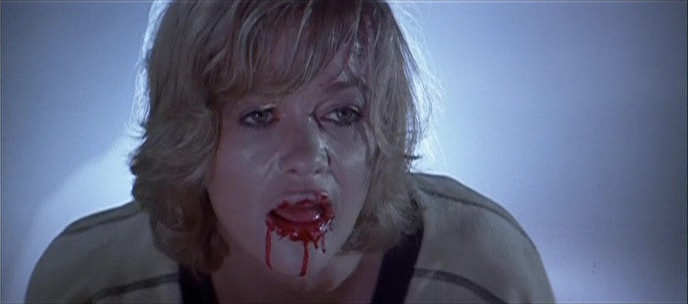
The chimps have been infected with an inhibitor that triggers overwhelming rage. It is carried in a virus, and a highly contagious one. When a group of animal liberationists break in to free the tormented primates, the virus is unleashed as well. There is no cure; the infected humans become killing machines.

If they break your skin or their blood enters your bodily fluids, you are then infected too. The cities are evacuated, the affected killed with no warning.

Like the hero of The Day of the Triffids, the protagonist wakes in a hospital. Jim (Cillian Murphy) is a bicycle courier who has been in a coma for 28 days after a run-in with a car.

He wanders the empty streets, and the rest of the movie revolves around his efforts to avoid the infected and find those who are still, well, human. Which means they have slightly less rage.

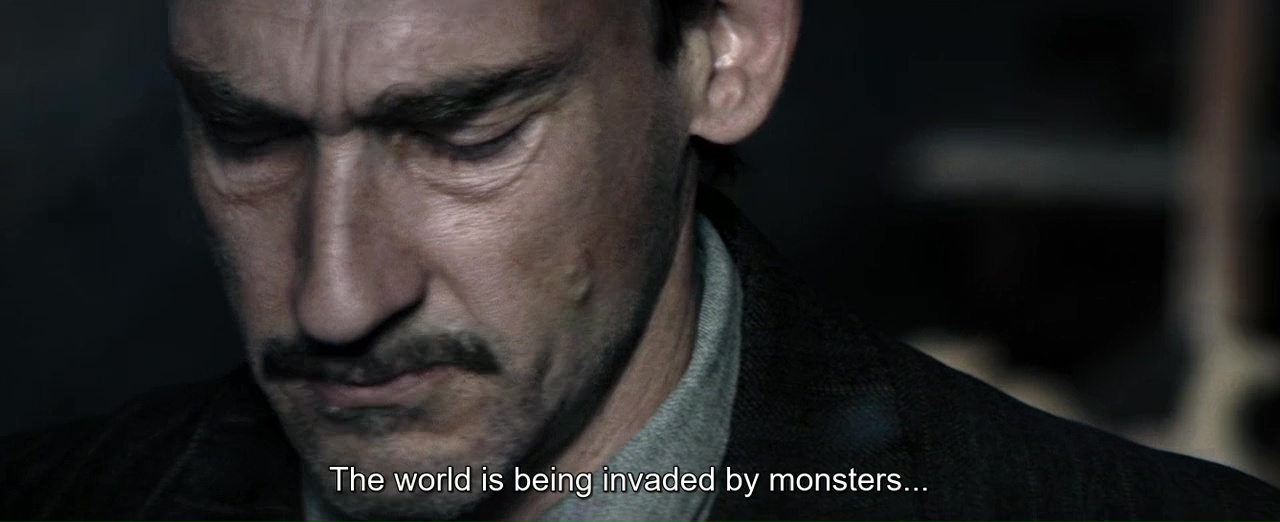
28 Days Later is a horror thriller, but much more than that. Yes, you will jump when infected people with bright red eyes leap through the window at you, but it also portrays a profound appreciation of loss, particularly when Jim finds his parents, who have suicided, and is informed he is “lucky”. There is also plenty of humour, and some stunning scenes revealing the beauty of a world, how it could be without humans busily killing each other and poisoning nature.

Danny Boyle captures perfectly the imagery of Rainer Maria Rilke:

“Let everything happen to you
Beauty and terror
Just keep going
No feeling is final”

Jim and his survivor friends find a platoon of soldiers who have varying views of the virus. The Sergeant (Stuart McQuarrie) is a Nietzschean, who sees humanity as a temporary blip on the smooth course of evolution:

“So if the infection wipes us out, that is a return to normality.”

But the Major in charge (Christopher Eccleston) is more Hobbesian, and sees us as creatures of the jungle.

“Which to my mind puts us in a state of normality now”.

But what’s “normal”? What occurs around us, or the global scene? Perhaps it is only their country (it’s set in the UK) that is affected and locked down?

Made in 2002, the film seems very prophetic. COVID-19 is not exactly the zombie apocalypse, but the themes of the attack on nature, the unintended consequences of animal exploitation, the distrust of the authorities, the fear of infection and the pain of quarantine make this movie even more timely now.

And it’s not portraying the zombie apocalypse, because the film is not really a zombie movie. Zombies, after all, are dead, or at least undead, but this lot are living, although ravaged by the virus and prone to uncontrollable snarling and biting. Roger Luckhurst, in his cultural history of zombies, states that zombies are

“a contagion, driven by an empty but insatiable hunger to devour the last of the living… the Rapture with rot”.

Zombies are supposed to shuffle along, with bits falling off. There was an uproar when this film came out – zombies that can run! Fast zombies. Or sick cannibals?

I try to limit this blog to authentic cannibals, living humans who eat or otherwise incorporate body parts of other humans, living or dead. Once I start including the undead, well, it becomes a never ending feast – a lot of fun, but out of scope. Maybe when I run out of cannibal films and TV shows – which is looking increasingly unlikely – we can start on zombies.

The thing about zombies is they don’t actually exist (as far as we can determine). Whereas cannibals – oh yes, they are out there. But who are the cannibals – the contagious, the ones who deliberately developed the virus, or the authorities who use it to their political advantage?

Immigrants and cannibals: TWO HEADS CREEK (Jesse O’Brien, 2019)

The thread that runs through cannibalism texts, from Homer’s Cyclops to Harris’ Hannibal Lecter, is the social outsider. It is a theme that never seems to age, since humans love to form cliques, united by an irrational hatred of those who don’t belong, even if it’s just because they dress differently or support a different sporting team. The most obvious example at the moment, and for most of modern history, is the immigrant.

Norman is played by Jordan Waller who also wrote the script – you may have seen him appear in the TV series Victoria. He runs his mother’s Polish butcher shop in Slough (it’s a real place, although there is definitely a pun in there). It’s post-Brexit Britain, and the locals scream abuse and paint his windows with dog-shit.

vlcsnap-00005.jpg

He’s English, but his shop sells Polish meats, so he is the hated outsider. His twin sister Anna (Kathryn Wilder) is the assertive one, and is totally uninterested in his butcher shop.

vlcsnap-00014

When they discover at their mother’s funeral (held in the butcher shop) that they were adopted, they find a postcard from their mother, postmarked from a small Australian town: Two Heads Creek. Not sure if this is international invective, but in Australia, “two-heads” is pretty much a synonym for “inbred”, and is used to denigrate rural people. The outsider does not need to come from outside – just a different region will do.

vlcsnap-00008.jpg

Norman is named after his mothers’ favourite singer, the Australian pop star Normie Rowe, who was enormously popular in the sixties, until the government decided to conscript him to the war in Vietnam as a publicity stunt. Normie’s oeuvre is featured heavily in the soundtrack. Nevertheless, the twins know nothing of Australia as they sell the butcher shop and head “Down Under” to seek their birth mother, except for clichéd English convict stereotypes, so when the customs agent asks if he has a criminal record, Norman answers “is that a prerequisite?” They travel ten hours to the outback town with a group of Asian immigrants, on a bus driven by an Indigenous man, Apari (Gregory J. Fryer) who is treated like dirt by their guide.

This is a blog about movies involving cannibalism, so it’s probably not a big spoiler to mention why the immigrants are being sent to Two Heads Creek.

pic-00009pic-00010

Australian governments of both parties have a long-standing practice of locking up refugees in offshore detention and leaving them there to rot or go mad. So far, they have not considered cannibalism as a solution, so we have to hope they don’t see this movie.

There are lots of explicit cannibalism scenes, as well as some cute intertextual references, e.g.

pic-00011.jpg

19vlcsnap-00019.jpg

The movie is far from subtle in its treatment of jingoism, racism, sexism and various other discriminatory practices popular in Australia and elsewhere.

pic-00032

But an important thing to realise about cannibalism is that it is an ultimate equaliser – although only certain groups may be chosen as victims, once skinned and cooked, we are all the same. Our differences are, literally, skin deep.

pic-00015pic-00016pic-00019

The scenes of cannibalism are accompanied by another soundtrack, this one the Aussie group Skyhooks, with their big hit “Horror Movie” which, in the song, turned out to be about watching the evening news, and so is just as relevant now as ever. Perhaps more so.

pic-00024.jpg

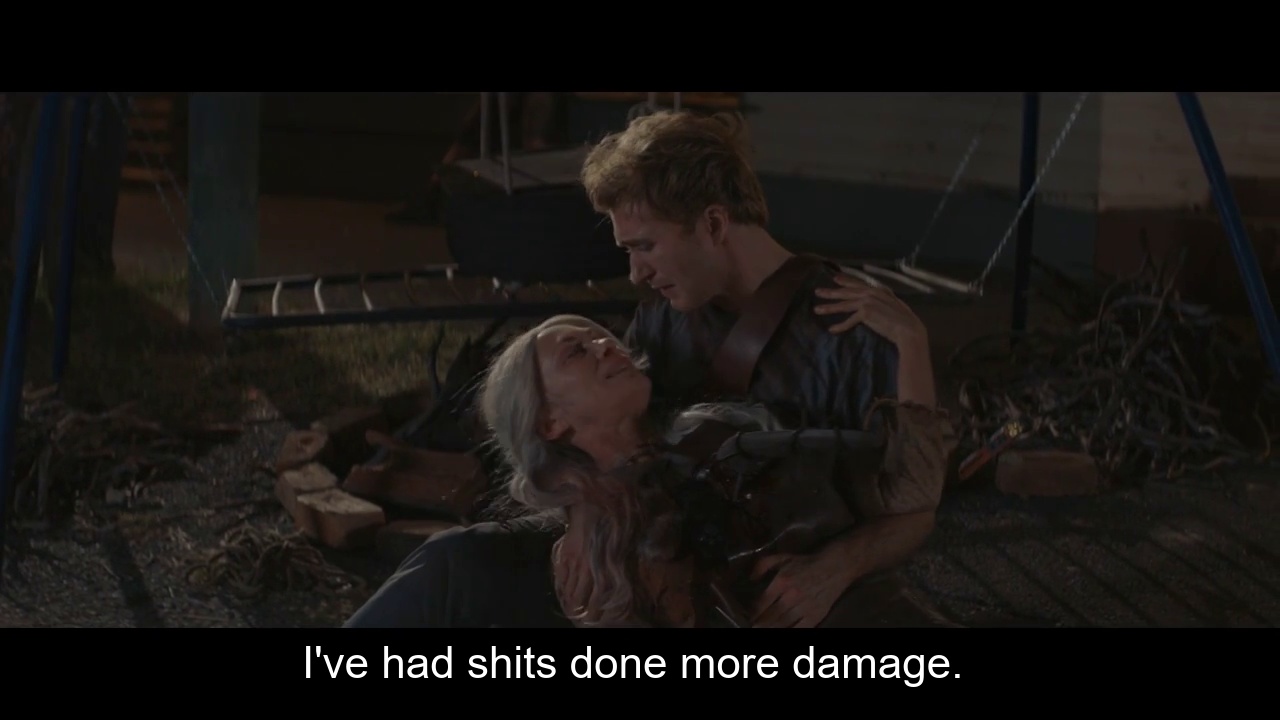
They do get to meet (and almost eat) their mother, yes, she is named Mary (the wonderful Kerry Armstrong from Lantana, Seachange and so much more), who perplexes them by describing their father as “a good man”.

pic-00042

The final act is a climax of gore, wildly over the top and full of people being stabbed in the crotch, presumably for the 14-year-old-boy market. The main antagonist, Apple (Helen Dallimore) gets shot with an arrow and goes into the giant meat-mincer with her middle finger the final part to be ground up, while screaming the theme of the movie:

pic-00054pic-00056

The best line of the film is from their mother, who is hit in the neck by a lethal boomerang studded with nails, but dismisses it as “only a flesh wound”

pic-00068.jpg

Apari, a descendant of the original inhabitants of the land, is left to clean up the blood and corpses that litter the town. With some justification, as he watches the Australians and the English hobble off, he says:

pic-00058

This well-crafted film is only the second feature from Australian director Jesse O’Brien. He said of the setting, the mining town of Cracow in the Banana Shire, 500km northwest of Brisbane, that

“I think that myth of the outback being ‘a scary place’, which isn’t always true, does fit rural Queensland really well.”

pic-00044.jpg

The cast is great and the film is fresh, funny and still manages to ask some interesting questions about differences and about appetites. It has a 90% fresh rating on Rotten Tomatoes. Film Threat described it as:

“A deliciously deranged horror-comedy, overflowing with blood and wit.”

The movie is available on Amazon Prime.


Communists and cannibals: MR JONES (Agnieszka Holland, 2019)

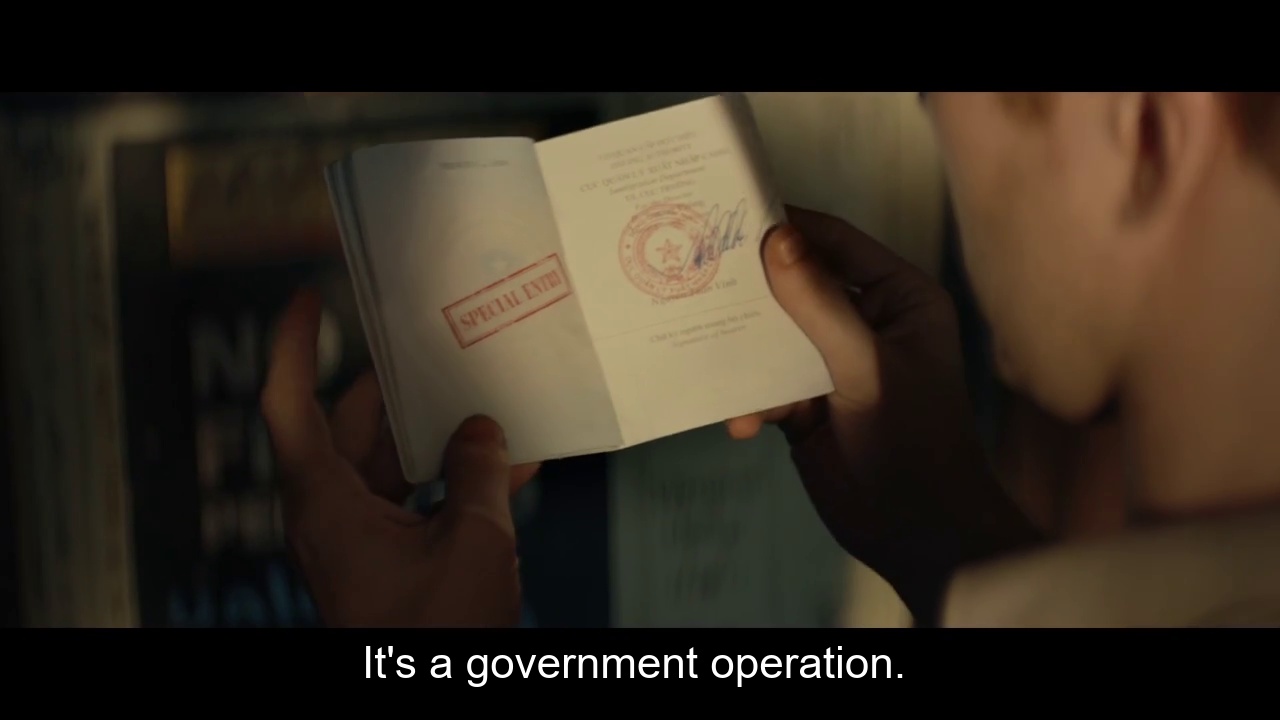
In 1932, Joseph Stalin engineered a famine in The Ukraine, which killed millions of people. Historians still argue whether the famine, called in Ukrainian the Holodomor (Голодомор) or “death by hunger”, was a deliberate act of genocide, a way to counter the independence movement, or a part of the Soviet collectivisation strategy. Probably all of the above. The peasants were forced to give all their grain, including seed for the following year, to gangs from Stalin’s Komsomol youth groups. In 1928, the USSR was exporting 100,000 metric tons of grain; by 1931 it was over 5,000,000 metric tons. There was literally nothing left for the peasants to eat, and one commentator has written that cannibalism was more widespread at this time and place than anywhere else in history. More than 2,500 people were convicted of cannibalism and sentenced to ten years in the Gulag or execution, but this must have been just the tip of the iceberg.

Into this maelstrom comes a mild-mannered reporter named Gareth Jones (James Norton), who had gained some international recognition by interviewing Adolf Hitler soon after he took power in Germany. Jones wants to interview Joseph Stalin as well, to ask about the enormous sums of money the Soviets are spending on modernisation, in the middle of the Depression – where’s the money coming from?

Jones speaks Russian: his mother had worked in Hughesovka, renamed Stalino, now called Donetsk. He rings his friend, the journalist who got him the Hitler gig and is now in Moscow. The friend tells him he is  is working on a huge story. The friend is soon found dead, and Jones discovers the story was : The Ukraine.

Jones escapes his minders and travels to The Ukraine to see for himself the horrors unfolding there.

vlcsnap-00021.jpg

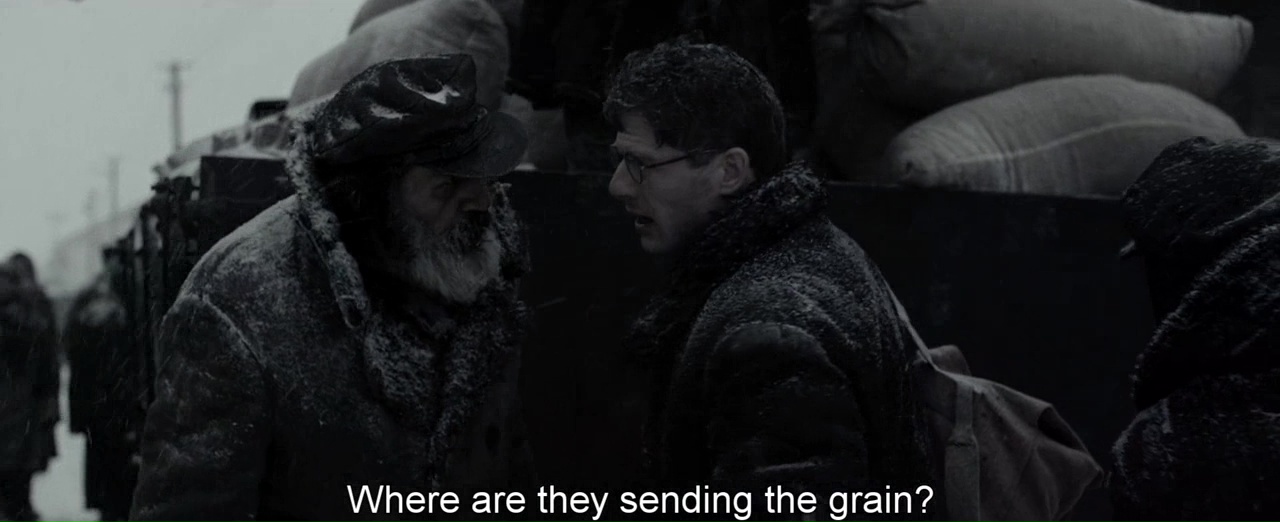
He is made to carry sacks of grain that are being shipped out, past the starving locals.

vlcsnap-00015

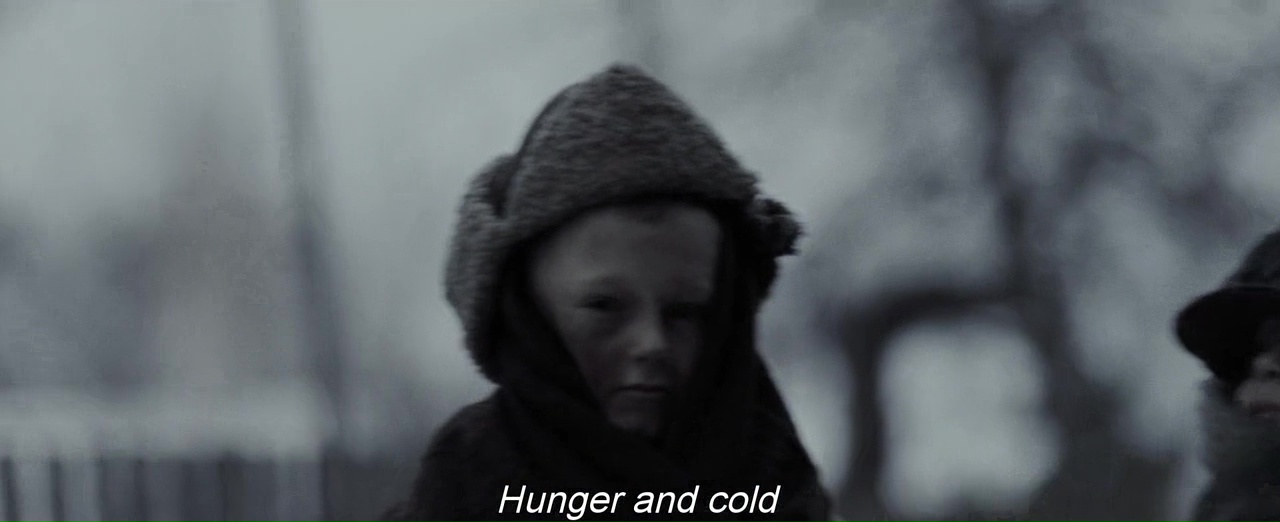
He is almost shot as a spy, kids sing him a sweet song about being cold and hungry, then steal his food.


vlcsnap-00018vlcsnap-00019

“Nothing to eat, nowhere to sleep.

And our neighbour has lost his mind, and eaten his children.”

Like the peasants, Jones eats bark from the trees. He finds a barn that was in a picture his mother gave him, meets three young children there and helps them carry firewood home. They make him a meal, with real meat.

vlcsnap-00024vlcsnap-00031vlcsnap-00030

Who is Kolya? Kolya is their brother. Jones asks if Kolya is a hunter. They just look at him. Where is Kolya?

vlcsnap-00037.jpg

Yes, Kolya is involuntarily providing for his family. Jones, who has walked past corpses in the streets and taken photos of starving children, is now violently ill at the thought he has partaken of Kolya. Go figure. Incidentally, Jones’ relatives have attacked the film’s depiction, saying that he did not witness or take part in cannibalism.

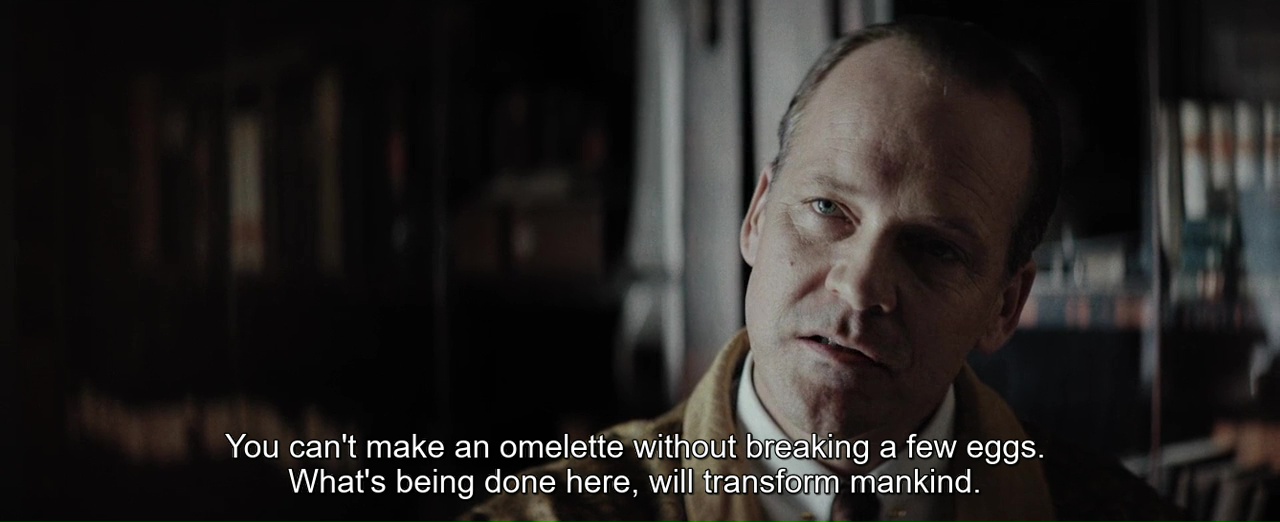
Jones returns home and tells his story, but the Russians deny the existence of a famine, and are backed up by their apologists. Western intellectuals such as George Bernard Shaw and Upton Sinclair travelled to the Soviet Union, swallowed the propaganda, and returned home to praise Stalin and Soviet progress. One such convert is shown in the film: Walter Duranty (played by Peter Sarsgaard) who was the pulitzer prize-winning New York Times resident journalist. Duranty threw depraved parties in Moscow while writing that all was well in the workers’ paradise.

vlcsnap-00089
Yes, Duranty actually said that, in the New York Times of March 31, 1933.

Others were less sanguine, and early reports of the famine had been written anonymously by Malcolm Muggeridge. The film starts with George Orwell (Joseph Mawle from Game of Thrones) penning his famous novel Animal Farm, in which he called the farmer, his chief antagonist, “Mr Jones”, perhaps in tribute to Gareth Jones. Orwell appears throughout the film, at first supporting Stalin, and later accepting Jones’ story and, disillusioned, writing Animal Farm.

vlcsnap-00002.jpg

The Holodomor is a very important part of cannibal mythology. For example, Russian cannibal serial killer Andrei Chikatilo, the “Rostov Ripper“, was a small child during the Holodomor and his mother told him that cannibals had kidnapped and eaten his brother, and would do the same to him if he didn’t behave, a traumatic story that helped explain his slaughter and cannibalisation of at least 52 women and children between 1978 and 1990.

The film has a creditable 84% on Rotten Tomatoes. The Director, Poland’s Agnieszka Holland, was arrested by the Soviets, during the Prague Spring. She knows the way political leaders eat their own people. Whether Jones ate Kolya or not, he certainly witnessed one of the worst famines in history, deliberately engineered by the government. The starving ate anything they could find – grass, hay, bark from trees, corpses dug up from cemeteries, even their own children.

The question is: who were the monsters?


Pregnant and hungry: INSEMINOID (HORROR PLANET), Norman J. Warren, 1981

We’ve looked at some great cannibal movies in this blog, and we’ve also checked out some duds. Inseminoid (called Horror Planet in the US) unfortunately falls pretty much into the latter category, proving that cannibalism alone is not sufficient to make a great film. But hey, it raises some interesting philosophical and psychological questions. Not including “who thought this was a good idea?” and “who wrote dialogue like this?”

Holly: Get your ass up here on the double!
Gary: I know what I’d like to do with her arse.

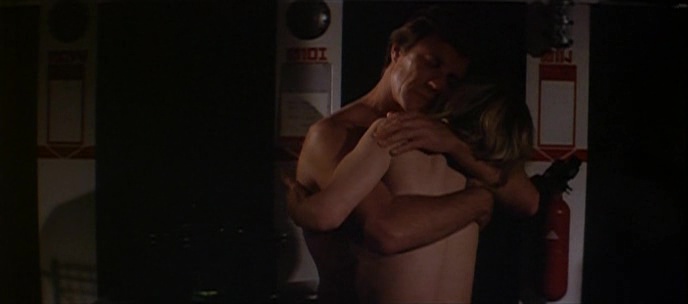
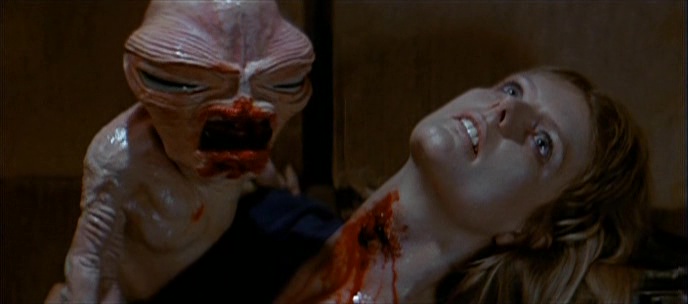
There’s a group of English and American archaeologists and scientists excavating an ancient tomb on a seemingly uninhabited planet. Uninhabited, but not uninhibited. A couple of them find some glowing rocks, there’s an explosion, then the rocks come to life when Mark (Robin Clarke) and Sandy (Judy Geeson from To Sir With Love) make out in the room where the rocks are kept.

pic-00006.jpg

pic-00007

How many horror stories start with illicit sex and end up with what looks a lot like religious retribution? Think of the Scream movies – sex happens, then slashers.

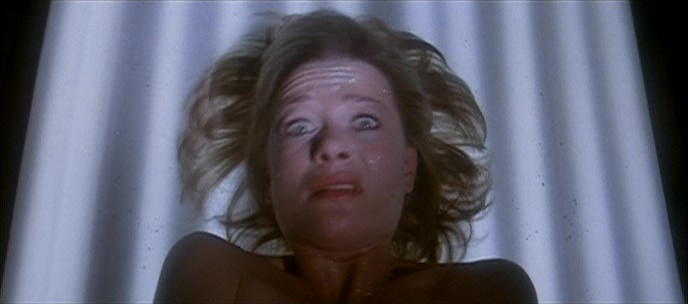
After much fighting in dim lights and dark caves, Sandy is captured and raped by perhaps the least scary monsters since the Creature from the Black Lagoon.

pic-00020.jpg

pic-00021

Immediately two months pregnant (we know because she vomits in a bin), she starts killing her colleagues and eating their flesh.

pic-00030

Also blowing up what appear to be their pinball machines.

pic-00029.jpg

Like vampires when transformed, Sandy has become immensely strong, but can be brought down by, yep, a punch in her pregnant stomach. One critic summed up:

“…in what has to be a new low, even for extraterrestrial-horror films, all the men end up punching this pregnant woman in the stomach.”

vlcsnap-00001

Besides some wooden acting and clunky lines, the film also suffered from being released not long after Ridley Scott’s brilliant movie Alien, which also showed an alien rape and birth, although that movie had the novelty value of having a man going through a very traumatic labour (yes, if men had to give birth…). Inseminoid was immediately criticised as a knock off of Alien, which the director denied, although there were plenty of other knock-offs being released around that time, including Contamination (1980) and Scared to Death (1981).

But intentional knock-off or not, Inseminoid did not compare well with Scott’s film, one critic saying

“imagine Alien without the fantastic sets, convincing special effects and literate dialogue, and you have a picture of Horror Planet.”

Inseminoid (1981) - IMDb

Alien was, in the words of film studies Professor Barbara Creed, an articulation of the archaic mother – the mother as “primordial abyss”, the place we all came from, and to which we fear we will return. Unlike Freud’s insistence that boys are terrified of what they see as their potential castration when they perceive their mother’s genitals as “a lack”, the monster in Alien, and to some extent Sandy in Inseminoid, represent not a castrated but a castrating feminine. The many shots of teeth seem to refer back to the classic tales of the vagina dentata – the toothed vagina.

pic-00046.jpg

Although Sandy is eventually brought down by the square-jawed all-American hero, he is no match for her twin human-alien hybrids, who are just so cute, until they get hungry.

pic-00051

But Inseminoid had one advantage over Alien: it had a cannibal, and a female one at that. Praise be.

pic-00036.jpg

Next week’s blog: the final episode of Hannibal ever (or until they make a new season).

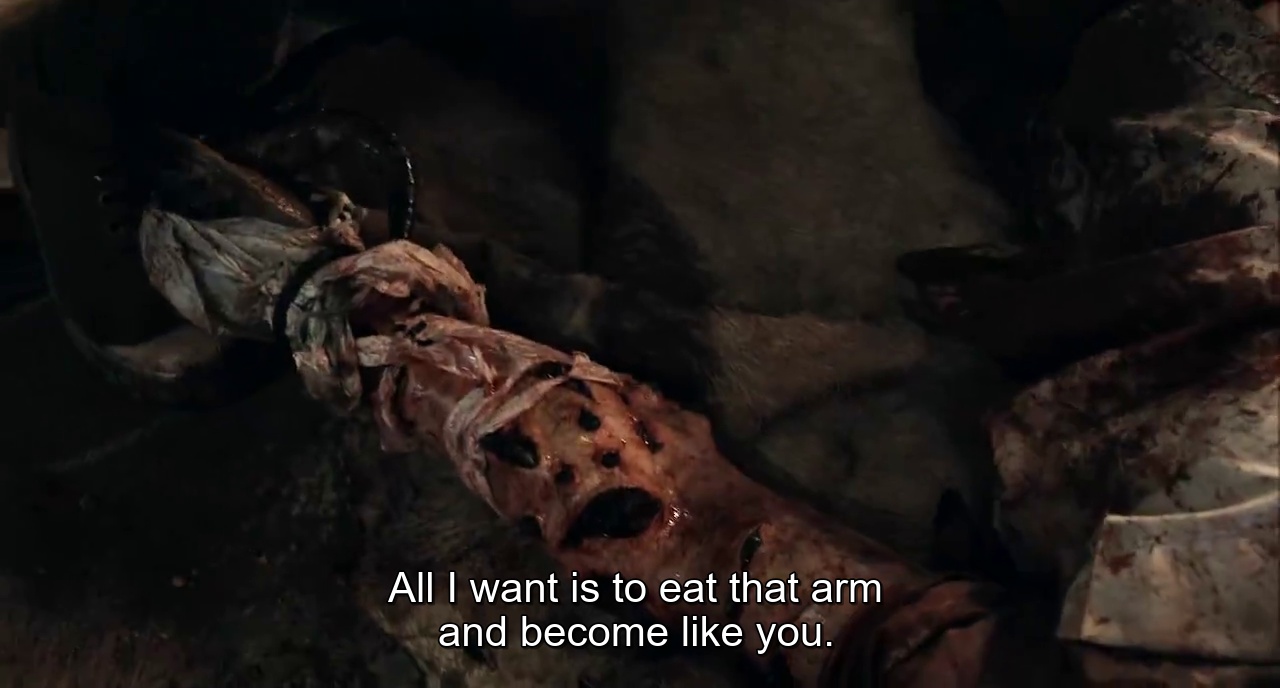
“All I want is to eat that arm and become like you”, DISTRICT 9 (Neill Blomkamp, 2009)

Back in 2009, fifteen years after the end of apartheid, South Africa seemed to be the obvious place to make movies that offered clear metaphors about racism and xenophobia. Today, they’d probably be filmed in Minneapolis, but nonetheless, after more than ten years, this movie works just as well, perhaps even better in this time, when people have to fight for their lives against both racism and an invasive disease.

DISTRICT 9 is directed by Neill Blomkamp and produced by Peter Jackson (yes, that Peter Jackson), and set in Johannesburg, South Africa. It is presented as “found footage” – fictional news stories, CCTV and interviews. District 9 is an internment camp for aliens – not from across the border or across the ocean, but across the universe. A giant UFO hovers above the city showing no signs of life, and when the authorities cut their way inside they find it is full of diseased and starving aliens, who look, as Roger Ebert said, like two metre tall lobsters. They are brought to land and housed in a secure area – District 9 – where they recover, and cause havoc with their love of wrecking stuff and eating lots of cat food.

pic-00006

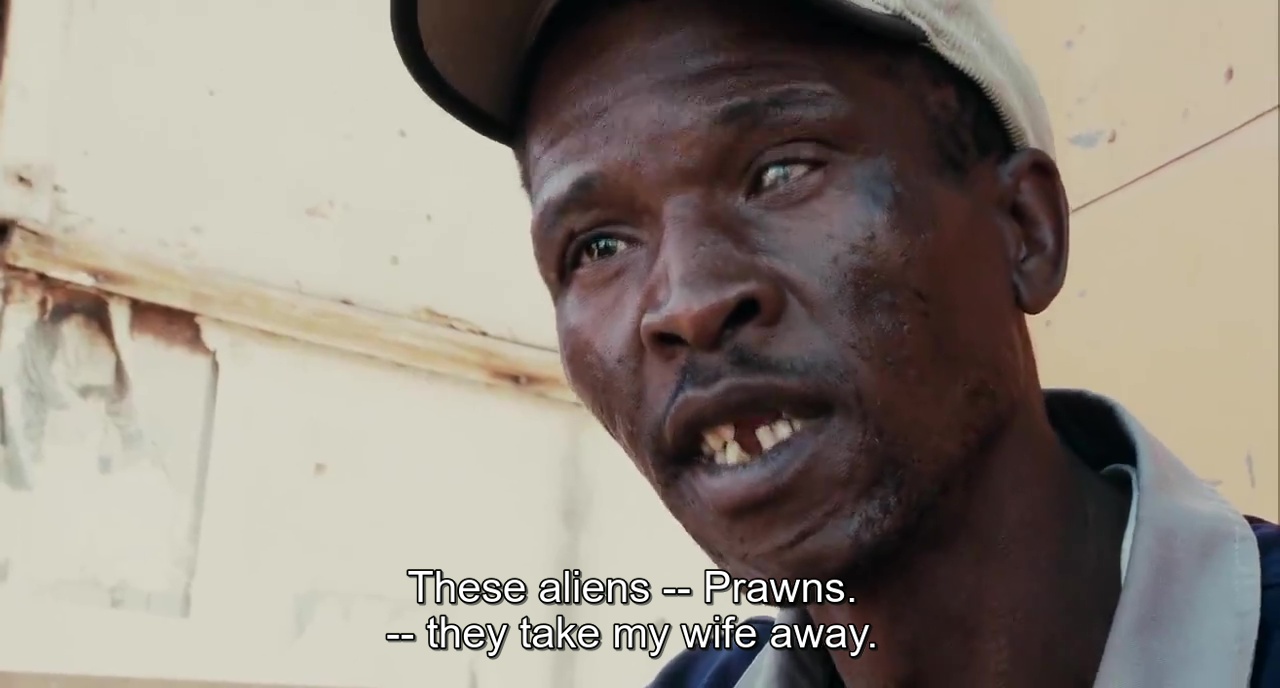
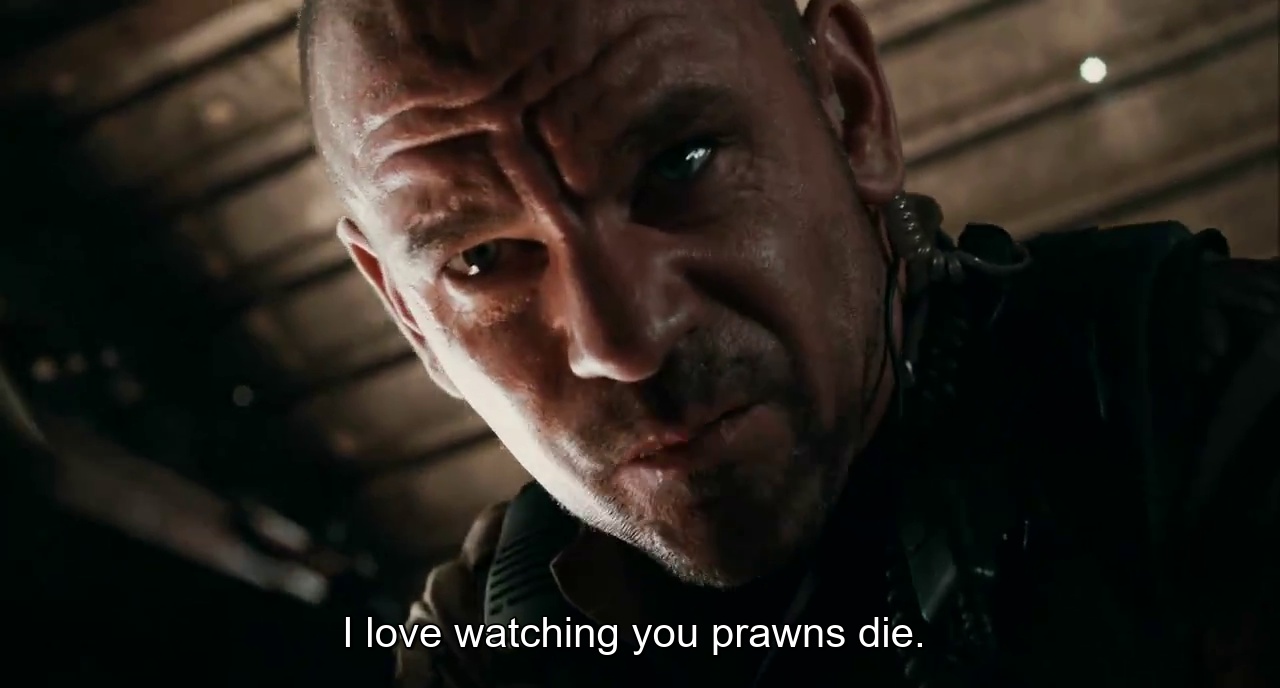
Yes, it’s not without humour. There are “interviews” with people of different races, all saying that these aliens – now known universally as “prawns” – should be sent home or else taken out of the city, away from human contact. Resettlement camp, detention centre, ghetto – those who are different can be separated with just some pernicious circumlocution.

vlcsnap-00012

vlcsnap-00017

The movie follows Wikus van de Merwe (Sharlto Copley), a naïve and nerdy mid-level executive in a huge multi-national corporation called MNU (it stands for Multi National United), which supplies mercenaries for just such situations.

vlcsnap-00001

Wikus heads off with his army and a clipboard, believing that he is going to knock on doors and ask the “prawns” to agree to be moved to a new camp, whereas of course the whole process is aimed at intimidation and terrorising of the populace.

vlcsnap-00028

Searching one building, he finds a tube of alien fuel, which they have been synthesising for twenty years, planning an escape. He opens it, and it sprays all over him.

pic-00017

Soon, he starts metamorphosing into a “prawn” – his hand turns into an alien claw, and his teeth and nails start to fall out. This is obviously a big problem – actually two. First, his company, MNU, wants to cut him up and study his organs, desperate to learn how to transmute others, because the aliens have immensely powerful weapons that will only operate in the hands of someone with alien DNA. He escapes back to District 9, pursued by the sadistic head of the corporation’s private army, who personifies white supremacist violence.

pic-00035

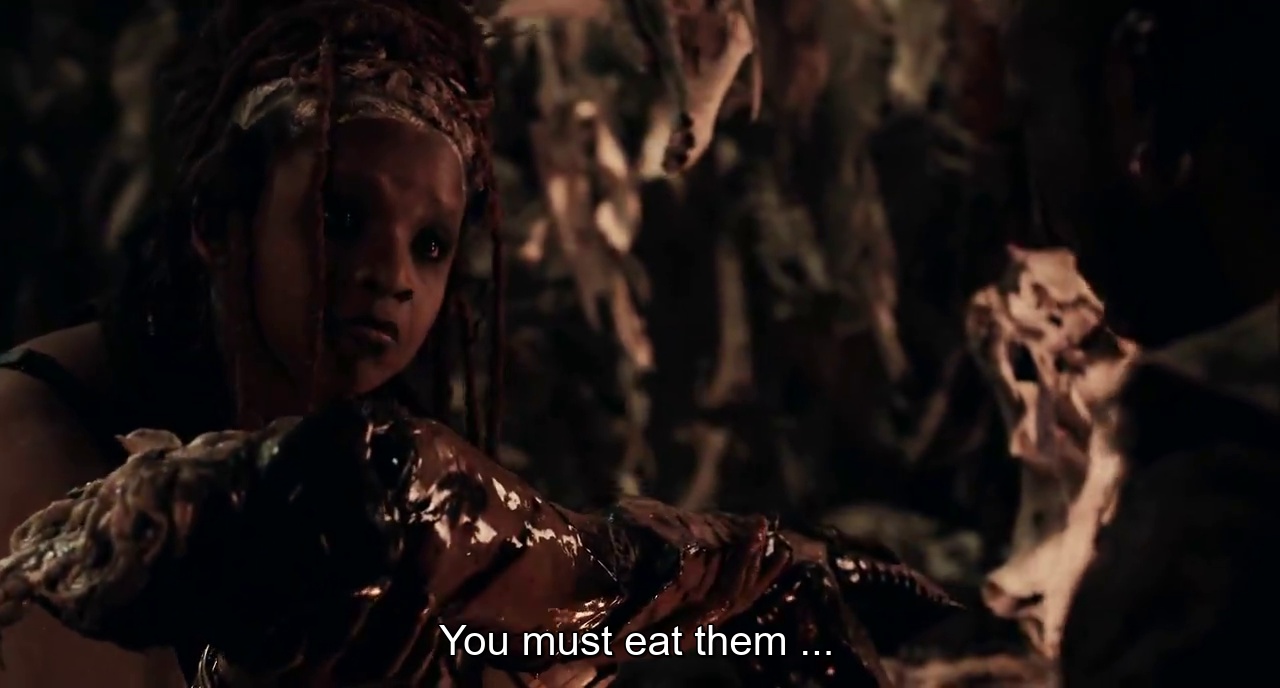
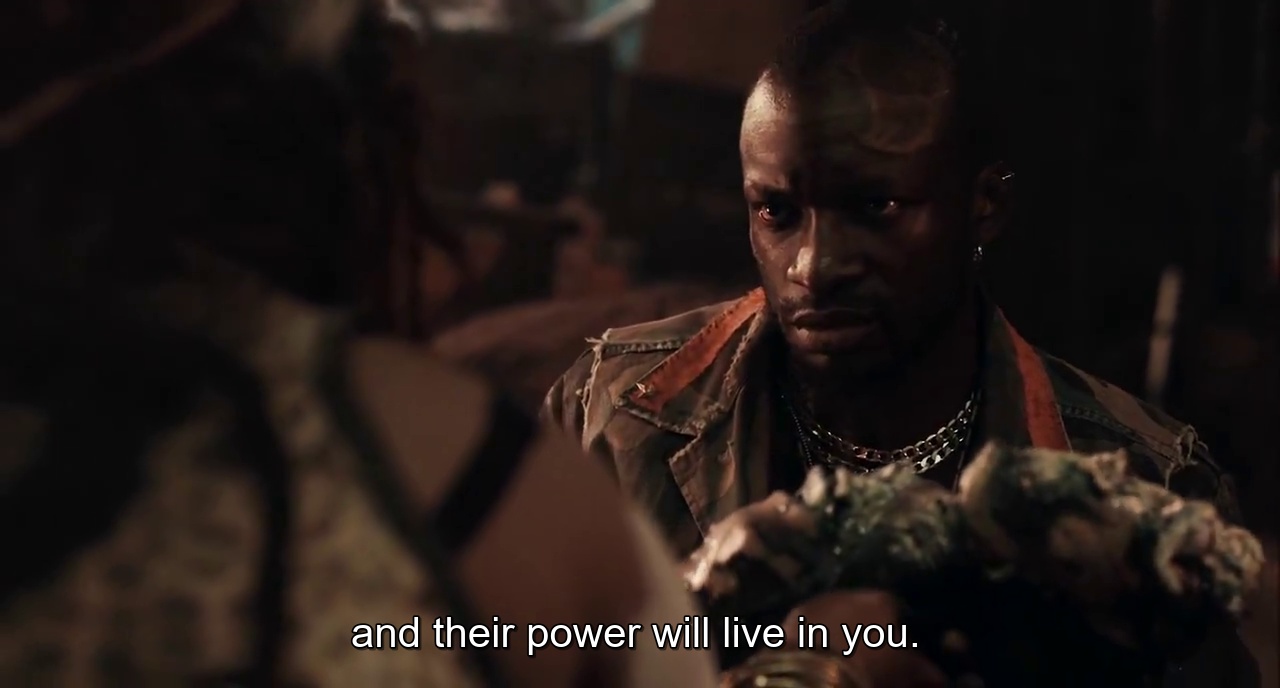
Back in District 9, Wikus is captured by a Nigerian criminal gang, who make their fortune from the aliens, selling them cat food, and offering interspecies prostitution (delicately presented). The Nigerians’ leader, whose name is taken from that of a former President of Nigeria, also wants to control those weapons, and believes eating Wikus’ arm will make him part alien as well. Why not just eat a prawn? Oh, they’ve tried that.

pic-00040

The trope of cannibals taking on the strengths of those they eat has been around pretty much forever. It is used to explain both mortuary cannibalism, where the strength of the ancestors is passed to the descendants through their flesh, and also aggressive cannibalism where the legs of the fastest enemy, or the testicles – you get the idea. It revolves around the idea that “you are what you eat”, but if you believe that, well, what does that say about the trolls who love to write “But BACON!” on vegan social media sites?

The film was shot around Johannesburg, and the squalid hovels shown were in an area of Soweto that was being demolished and the people relocated. The story is based on the true case of District Six in Capetown, where 60,000 inhabitants were forcibly removed during the 1970s by the apartheid regime. But finding a parallel story of forced removals of oppressed populations would not be difficult in most of the world’s nations. A reviewer wrote in an article entitled “District 9 reveals human inhumanity”:

“Substitute “black,” “Asian,” “Mexican,” “illegal,” “Jew,” or any number of different labels for the word “prawn” in this film and you will hear the hidden truth behind the dialogue, echoing what we historically as a species are all too capable of doing.”

Several different facets of cannibalism are presented in District 9. The Nigerians eat “prawns” – is that cannibalism, or if not, what about their plan to eat Wikus as he transforms into a prawn? The big corporation is only interested in the billions of dollars that will come from working out how to operate the alien weapons, and are ready and willing to sacrifice Wikus and use his body parts in pursuit of this goal. The aliens are tall and powerful (pulling people limb from limb in a few scenes) and look a bit reminiscent of the creatures from the Alien movie franchise, even though they don’t eat each other or the humans; but  they are keen on meat from other species like pigs and goats and whoever ends up in the slurry called cat food.

pic-00019pic-00022pic-00023

The formal definition of cannibalism tries to restrict the definition to humans eating humans, but it is always leaking out the sides. What we see in this film is the way that anyone can be abused, objectified and even eaten if they can be reclassified as inhuman or subhuman. Wikus starts the story happy to burn down shacks full of alien eggs, enjoying the sound of the eggs bursting, which sounds like popcorn. Captured by the corporation and made to operate alien weapons, he is happy to destroy pigs but begs not to be made to shoot the aliens. Later, turning into a “prawn”, he is more than happy to use the alien weapons to blow apart various soldiers of his former employer, to protect the prawns. The irony of this film is that Wikus, who is a fully carnophallogocentric human in the terms used by Derrida (“adult white male, European, carnivorous and capable of sacrifice”), only finds his humanity when he begins morphing into something else and becomes one of the outsiders he previously disdained.

It’s well worth seeing – if you don’t dig the message, then there’s plenty of action scenes, car chases and explosions. Some unintended explosions after the movie, too, when the Nigerian Information Minister asked cinemas to ban the film because it depicted Nigerians as criminals and cannibals. Not the first time white people have applied those epithets against Africans, and the film also scored a mention in Salon’s list of “white saviour” movies, since Wikus is white, and desperate to remain so. But the Malawian actor, Eugene Khumbanyiwa, who played the gang leader, said that the Nigerians in the cast weren’t bothered: “It’s a story, you know. It’s not like Nigerians do eat aliens. Aliens don’t even exist in the first place.” Sensible, but not a great look for a film that is slamming racist stereotypes through the metaphor of speciesism.

pic-00001

The direction is adroit and the story buzzes along with never a dull moment. The acting is first rate, even the guys in the alien suits become sympathetic characters, and the special effects are first rate. The film has a 90% “fresh” rating on Rotten Tomatoes. It’s available on Netflix.

Thank you!

This blog reviews films and TV shows involving human cannibalism. Sounds creepy, well, it is a bit, but it’s part of an exercise investigating how we decide what is edible and what is repulsive. Why are we happy to kill for food an animal that doesn’t want to die, yet unwilling to eat another animal that is already dead? Every work considered contributes to the answer to that question, some more than others of course.

Anyway, this post is to say thanks for reading this blog. In May, for the first time, the blog received well over 1,000 views, which is very exciting. As a special thank you, here is one of my favourite cannibal songs, by the wonderful Mr Tom Lehrer.

And remember:

Hannibal-only if equals

Man-eating Mermaids: THE LURE (Agnieszka Smoczynska, 2015)

Look, if you haven’t seen Robert Marshall’s 2023 live action version of The Little Mermaid and somehow managed to miss the Disney version (1989) or the other version in 2018, you were probably, as a defenceless child, read the 1837 Hans Christian Andersen story. A mermaid is an outsider – neither fish nor human. A sea creature, yet capable of living on the land as a two-legged person, and falling in love, and all those complications. She is often also mad, bad and dangerous to know.

vlcsnap-00003

vlcsnap-00004

The Lure is a Polish version of this mermaid myth, in which the mermaids, Golden and Silver, get a job in an adult entertainment nightclub (mermaids have beautiful voices – remember the “sirens” in Homer’s Odyssey?) and for part of the time, when not performing, they lure men to their deaths, and eat them. Love is tricky, since they are, in human form, devoid of genitals, but hey, pour a glass of water on them, or throw them into the swimming pool, and problem solved.

vlcsnap-00012

vlcsnap-00013

Is a mermaid eating a human really cannibalism? Well, they are half human, so I guess we could conclude that it’s half-cannibalism. As Hannibal Lecter said, “It’s only cannibalism if we’re equals”. They do seem to be mammals though.

vlcsnap-00055

Maybe they are whalemaids? Anyhoo, there’s that very long fish tail, that was a bit of a problem, even in 1837, but can be overcome – they can change. Silver loves the hot bass player and has her tail cut off, and legs grafted on. The Polish doctors seem to be pretty damn good at what would have to be considered very serious surgery.

vlcsnap-00075

vlcsnap-00082

vlcsnap-00084

What happens when you lose your tail – will you be accepted as “normal”? Well, ask any immigrant to anywhere – it’s not that easy. Silver loses not just her scales but her singing voice. The bassist digs her dedication to his love, but is disgusted when he tries to have sex with her and ends up covered in blood (definitely a risk if you have just had a WHOLE NEW LOWER BODY grafted onto your tummy).

The AV reviewer said the film “celebrates the animalistic, the feminine, and the intimate intersections between the two”. It does not resile from the blood or, indeed, their fishy smell, a popular misogynistic trope.

vlcsnap-00015

vlcsnap-00040

The changing body is not restricted to young mermaids, but is common to those suffering puberty. As the director Agnieszka Smoczynska said of becoming young women, “they menstruate, they ovulate, their bodies start smelling and feeling different”. And another problem, in terms of social acceptance, is their teeth, with which they tear people to pieces. Teenager girls can be so mean.

vlcsnap-00041

In the Disney version, Ariel becomes human and lives happily ever after (sorry, but not much of a spoiler – what do you expect from Disney?) This one is closer to the Andersen fairy tale, which means: much darker.

vlcsnap-00044

vlcsnap-00045

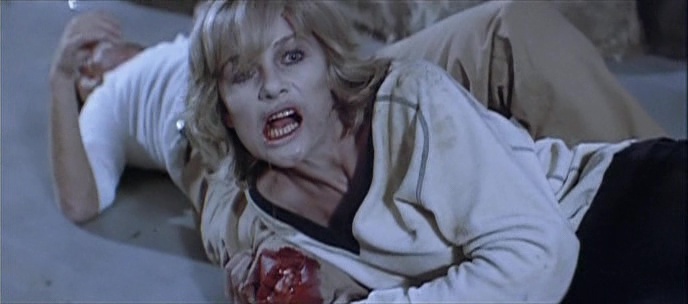
The prince marries someone else, and the mermaid can only recover her fishiness by eating him; if she doesn’t, she’ll become sea-foam. In this dissonant, modern version, the kingdom is the Warsaw nightclub, the prince is a bass player, and people get eaten – why waste a good corpse? The sea-foam – that, of course, is the constant of every good (and not so good) movie.
vlcsnap-00086

vlcsnap-00088

Anyway, this film is a hoot, and well worth seeking out (not so easy, but persevere). The Roger Ebert reviewer called it “sadly not as joyfully deranged as it could be”, but it has 88% on Rotten Tomatoes, which is pretty good!

vlcsnap-00091

The Lure is a movie that (hopefully) will leave you thinking about its themes long afterwards. Why can Silver not exist if her prince/guitarist marries someone else? Why does he only want her when her natural pudenda (in her tail) are removed and replaced with someone else’s, between human legs? Eating flesh makes the girls strong, but love can turn them into sea-foam? Like all cannibal movies (maybe all movies?) it’s all about fear and appetite. The club staff and patrons go wild with desire when the mermaid sisters sing, but they also fear and hate them for being different, for being monsters, and they are shamelessly exploited and underpaid. Go read Barbara Creed on female monsters – men don’t fear them because they appear to have been castrated as Freud thought, rather they dread them as castrators, the bearer of the toothed vagina, and of the womb from which we all come, and into which we subconsciously fear being reabsorbed, eaten and digested, until we, not Silver, are just sea-foam once again.
At the end of every good cannibal movie, we should leave the cinema (or nowadays the couch) asking, “who, exactly, was the monster?”

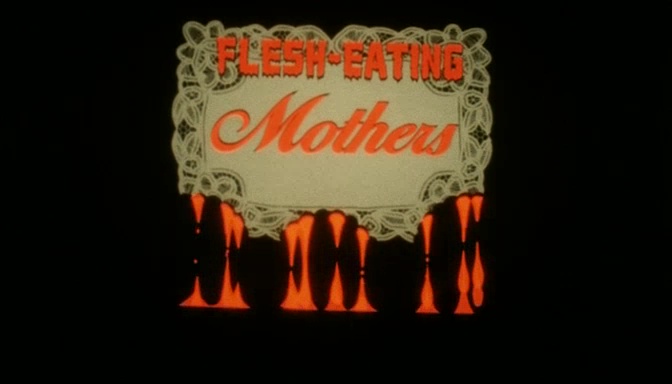
“FLESH EATING MOTHERS” (James Aviles Martin, 1989)

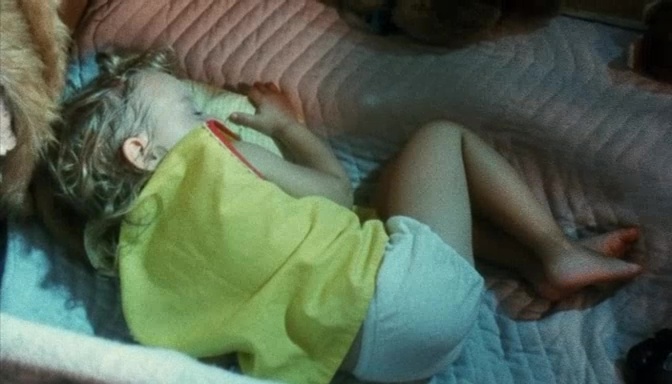
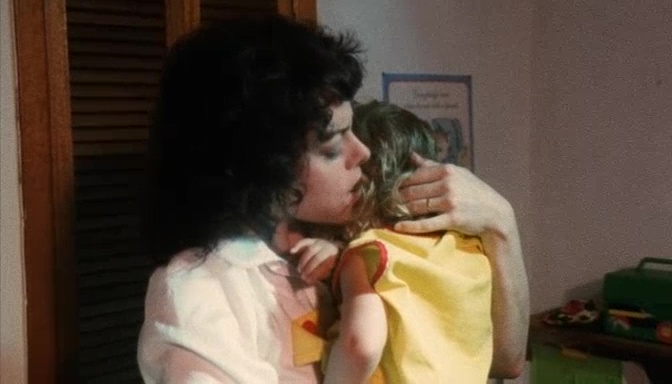
OK, I’m posting this on Mother’s Day, and a very happy occasion may it be for those who have a mother, particularly one who doesn’t routinely eat her children. But the film is also about a deadly virus, one which has been covered up by the authorities, so it’s not just schlock horror, but also somewhat prophetic.

vlcsnap-00005.jpg

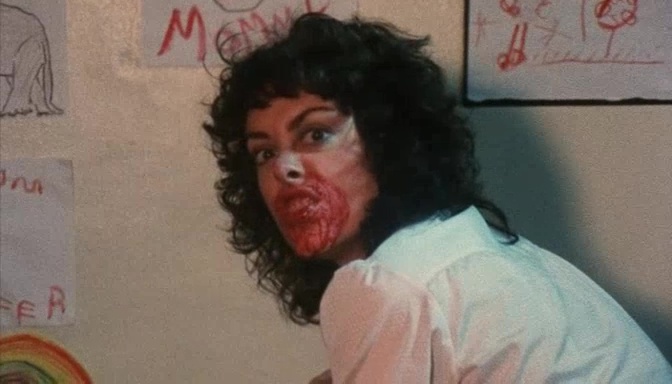
This has it all: cannibalism, domestic violence, murder, lots of blood, adultery and filicide – yes, the mothers eat everything in the fridge and then start on their kids. Early in the piece, one mother stuffs a whole sandwich in her mouth (possibly the most abject scene) then starts on her son, who is still, absurdly, wearing his baseball mitt.

vlcsnap-00020.jpg

vlcsnap-00023.jpg

Her husband is a cop and manages to shoot her as she nominates him as main course, then he’s arrested, has to prove his innocence with the help of a scientist who is being stymied by official obstruction, and at this point there is a tendency to turn off and watch something else, particularly as the acting is so bad that one suspects it has to be deliberate.

This one literally is the best actor in the film:

vlcsnap-00027.jpg

vlcsnap-00031.jpg

vlcsnap-00032.jpg

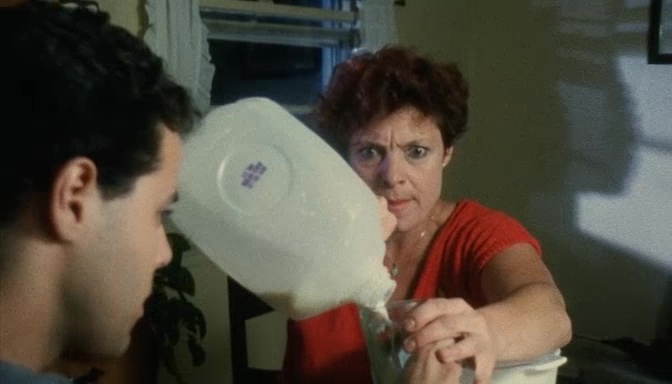
You get the idea. One mother makes her son special creamy mashed potatoes, which he eats as she describes the process of producing milk-fed veal. Is there a message here – a cream-fed kid who is about to be her dinner?

“Milk-fed baby cows…. The calf is taken from the mother and put in a small room, so small that he can’t move around, see, so that his muscles are real tender. And they don’t feed him anything but milk, so that he’s really soft by the time they kill him. And so he’s really delicate to eat.”

She pours him another glass of milk.

vlcsnap-00034.jpg

vlcsnap-00035.jpg

“Mom’s on the rag again” he complains to his friend after he escapes, adding that he doesn’t blame her: “it’s all society’s fault”.

The kids work out what’s going on and unite in opposition, but not until plenty of makeup and fake blood has been added to this powerful stew of nonsense.

vlcsnap-00037.jpg

vlcsnap-00041.jpg

vlcsnap-00046.jpg

“My mother ate my brother.”
“My mother too!”
“My mother ate my father.”
“She’s never done anything like this before!”

Look, it’s all very light-hearted, despite the R rating, and it’s a bit unfortunate that I decided to review it the week after one of the greatest cannibalism movies, Fritz Lang’s M. But there’s an important point here, for us keen Cannibal Studies scholars. So many cannibal films feature male cannibals, from Hans Beckert to Sweeney Todd to Hannibal Lecter. Yet as Barbara Creed told us in The Monstrous Feminine, published not long after this movie hit the big screen, mythical tales and modern horror films teem with female monsters. But the stereotype for cannibal films is the male cannibal and, often, the female victim. Where monsters are female, they often follow Freud’s odd designation of women as terrifying and abject because little boys are supposed to see their lack of a penis as proof their mothers were castrated. Thus, we get the dumb teenager saying “Mom’s on the rag again”. She is, even after trying to eat him, a victim in his eyes.

But Creed, and this film, argue that the female monster relates not to her lack but her centrality to reproduction and nurturing. Woman is the all-consuming womb, the witch, the vampire, the castrator rather than the castrated. We know we came out of her, and fear we may be reabsorbed. But hey, the scene of the battered wife eating the fist of her abusive husband fills us with a certain satisfaction.

vlcsnap-00044.jpg

Of the more than 300 films involving cannibalism that I will be discussing in this blog (eventually), only a handful involve female protagonists or even female directors. When they do, they are often presented as comedy as (I presume) this film is; films such as Cannibal Women in the Avocado Jungle of Death or Santa Clarita Diet. Even in those, though, as in the more serious offerings such as Raw or Jennifer’s Body, cannibalism is presented as a form of empowerment, never as a lack.

Here’s the virus under a microscope.

vlcsnap-00045.jpg

The authorities knew about it, but kept it hidden, apparently because they thought it was a punishment for adultery. Plenty of Trump supporters who doubtlessly believe the same about COVID-19. Luckily, there’s a smart scientist with an instant vaccine.

vlcsnap-00047.jpg

This is a very silly movie, but it’s refreshing to see some women do the flesh-eating for a change.

Poster.jpg

Happy Mother’s Day!

Fritz Lang’s Cannibalism Masterpiece – “M – EINE STADT SUCHT EINEN MÖRDER”, (1931)

Fritz Lang considered this film to be his magnum opus. It regularly appears on lists of the best movies ever made, it was voted the best German film of all time by the Association of German Cinémathèques, and it is one of the few movies with 100% on the website Rotten Tomatoes. It set the standard by which police procedurals and serial killer stories would be judged for the next century. But is it a cannibal movie?

01.png

The story starts with a group of small children standing in a circle, and a little girl, Elsie, is choosing who is eliminated from the game, using a song:

“Soon will come the man in black for you…”

03.png

04.png

Ja, it’s a cannibal film. We don’t see anyone get eaten, but that is not unusual, particularly in the older films from the cannibal genre.

Elsie is heading home after school, bouncing her ball, past a poster seeking information about the murderer of eight children.

06.png

A nice man, Hans Beckert (Peter Lorre in his first major film role), compliments her colourful ball and offers to buy her a balloon. He is whistling Grieg’s “In the Hall of the Mountain King”. The music is best known for its use in Ibsen’s Peer Gynt, which is not actually a cannibal story, but does involve a lot of stuff about trolls eating people.

Soon we see the ball rolling away, the balloon floating off, briefly caught on telegraph wires.

09.png

Like most modern cannibals since Jack The Ripper, the killer is indistinguishable from the rest of the public – just a normal guy (well, as normal as Peter Lorre could ever be).

13.png

The panic over the ninth murder makes everyone a suspect, particularly after Beckert writes to the papers, boasting that he’ll keep on killing.

11.png

12.png

vlcsnap-2020-04-26-22h18m29s472.png

The police raid the criminal underground every night, which is terrible for business.

14.png

16.png

The bar owner complains to the police that even the hardest working prostitute…

“hides a mother inside… I know many hard crooks whose eyes mist up looking at the little children playing.”

19.png

And so it goes. The coppers can’t catch him, so the underworld decides they will catch him, just so they can get back to business as usual.

vlcsnap-00007.jpg

The police have their own theories of why they cannot catch him:

“He’s not a real crook! Maybe he’s somebody who shows the harmless look of a good citizen who wouldn’t kill a fly.”

vlcsnap-00009.jpg

“If it wasn’t for this… apparent innocence of murderers, it would be unthinkable that a man like Grossmann or Haarmann could live for years next door to their neighbours, without raising any kind of suspicion”.

The police follow leads from the asylums; the crooks have other methods. Of course, everyone is a suspect, except – the beggars. The heads of the underworld offer them a reward to watch all the children of the city. Meanwhile, Beckert is watching little girls in shop window reflections.

vlcsnap-00022.jpg

The “M” of the title is chalked onto his coat by one of the beggars, as he is taking away his next child.

vlcsnap-00036.jpg

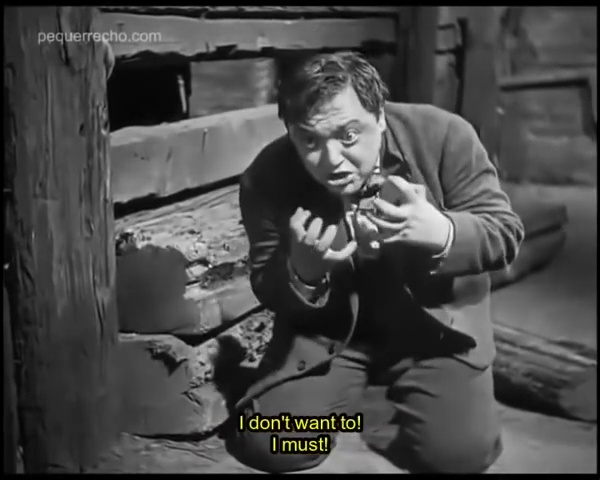
No more spoilers. Let us just say that the climax is a trial, in which Lang asks some hard questions about whether we are responsible for our actions, even when we cannot control our own minds.

vlcsnap-00044.jpg

vlcsnap-00063.jpg

vlcsnap-00110.jpg

The moral of the story is presented by Elsie’s mother, sitting outside the court, who says:

“This will not bring our children back to life. People should take better care of their children!”

Indeed.

No mention is made of the precise fate of the victims in the movie – Lang leaves that up to our imagination, and some knowledge of German serial killers of that time. They disappeared without trace for some days and…

21.jpg

*   Some critics and reviewers claim that M was based on serial killer Peter Kürten—the Vampire of Düsseldorf—whose murdered at least ten people including several children in the 1920s and achieving sexual climaxes from the killings, and from drinking the blood of some of the victims. He was also keen on writing to newspapers, as is depicted in the film. Kürten was beheaded in 1931 for his crimes, so would have been very much in the news at the time of the film’s creation.

Fritz Lang, however, in an interview in 1963 with film historian Gero Gandert, denied that M was based solely on Kürten

“At the time I decided to use the subject matter of M, there were many serial killers terrorizing Germany—Haarmann, Grossmann, Kürten, Denke”

The first two are actually mentioned in the film. Fritz Haarmann, known as the “Butcher of Hanover”, killed at least 24 boys and young men between 1918 and 1924, often by biting their throats, and then allegedly eating or selling the meat from their corpses as pork or horse-meat. Carl Großmann was arrested in 1921, a suspect in up to 100 murders of women and girls, whose flesh he was suspected of selling on the black market and from a hot-dog stand in Berlin during the Great War. Karl Denke killed and sold the flesh of dozens of homeless vagrants and travellers from 1903-1924.

The fact that Lang quoted those four serial killers as his models indicate that he certainly had cannibalism in mind when creating the role presented by Peter Lorre – the serial killer who cannot control his urges.

vlcsnap-00098.jpg

M is highly recommended as a classic, not just of the cannibal genre, but of cinematic art.

The full movie is currently available (and with excellent quality) on Youtube:

Essential worker cannibals: THE TIME MACHINE (Wells, 2002)

Those of us who can get away with it are locked up at home, some of us writing blogs. Meanwhile, outside in the world, the ‘essential workers’ – doctors, nurses, check-out operators, delivery drivers, teachers and, of course, hairdressers – have never been busier. We are splitting into two groups – the enforced idle, and those with hazardous, possibly lethal jobs, upon whom we rely. That will last, we are told, until a COVID-19 vaccine arrives, but those identities are already forged and will leave their cultural fossils behind. The idle, basking in their gardens (if they have them) and the toilers, looking after them. Both, of course, share the need to eat.

In 2011, Guy Standing released a book called The Precariat: The New Dangerous Class.  It was about how a new class was being produced by neo-liberal capitalism – people whose jobs, lifestyles and sense of stability had been devastated by the imposition of the free market and globalisation. The divergence between rich and poor has never been greater, and not just in the “developed” nations. Workers everywhere are being cast down into poverty and despair, not just by their bosses, but by workers in other countries who are willing to work for a pittance. The precariat, said Standing, “are prone to listen to ugly voices, and to use their votes and money to give those voices a political platform of increasing influence”.

Neo-libs found a voice in Margaret Thatcher and Ronald Reagan, and later the Tea Party in the USA. Trump, Putin and Brexit and fascist leaders in Hungary and Brazil rode to power as those ugly voices grew, looking for a scapegoat, an “other”, to blame. The splits in our societies continue to widen, so the ugly voices, and the hunger, increase. Fritz Lang in the film Metropolis (1927) told of workers being condemned to work in the dark caverns underground while the rich enjoyed life in skyscrapers.

What do these two trends have in common? Enforced idleness, medical or economic, and frantic toil, often with disproportionately meagre rewards, often in appalling conditions. The calls to strike out against real or imagined elites. It’s taken to its logical conclusion in THE TIME MACHINE, the original 1895 book by H.G. Wells, George Pal’s 1960 film, and this 2002 DreamWorks remake, directed by Simon Wells (the great-grandson of H.G.), which takes a new look at this story of human evolution. Where exactly are we heading?

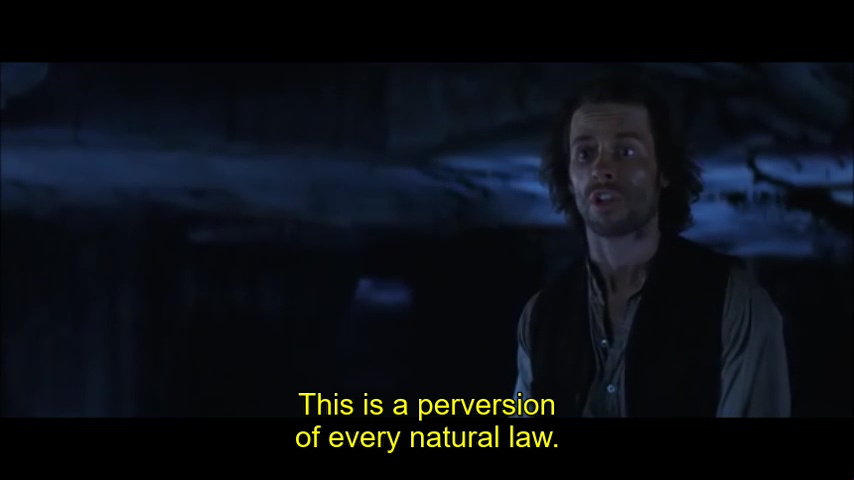
In this version, unlike the original, “the Time Traveller” has a name: Dr. Alexander Hartdegen, associate professor of applied mechanics and engineering at Columbia University. He is played by Guy Pearce, an Aussie actor whom we know from Priscilla Queen of the Desert, Memento, Jack Irish and of course Neighbours. Pearce has also appeared in a couple of cannibal films, including the lead role in Ravenous and “the Veteran” in The Road.

vlcsnap-00079.jpg

Modern movies insist on specific and personal motivations – think of Sweeney Todd, who in Tim Burton’s 2007 version was motivated by revenge for his wrongful transportation to Australia while his wife and child were abducted by the judge. In the 1936 version, however, he was just a greedy bastard who liked killing people and stealing their goods (and selling their flesh). Just so, in this 2002 Time Machine, professor Hartdegen’s fiancé is murdered in a mugging gone wrong, and he is driven to invent a time machine to see if he can go back and save her.

In the book and the 1960 movie, the humans of the future had regressed, defying the then (and still) popular concept of a “great chain of being” in which evolution inexorably means progress to ever higher forms. This ideology had become known as “social Darwinism” although the assumption of progress would have baffled Charles Darwin, who saw evolution as natural selection of those species who best fitted an environment. Darwin did not, therefore, involve subjective terms like “progress” in his theories (much). In H.G.Wells’ vision, the effete ruling classes had become the beautiful but useless Eloi, who sat in a bucolic paradise picking flowers. They were, in turn, picked off at night for dinner by the cannibalistic Morlocks, descended from the workers, who had gone underground and were now subterranean predators, spooky, but easily defeated by shining lights in their eyes (or by the ham-like fists of Rod Taylor – another Aussie who played the Time Traveller in the 1960 movie).

vlcsnap-00012.jpg

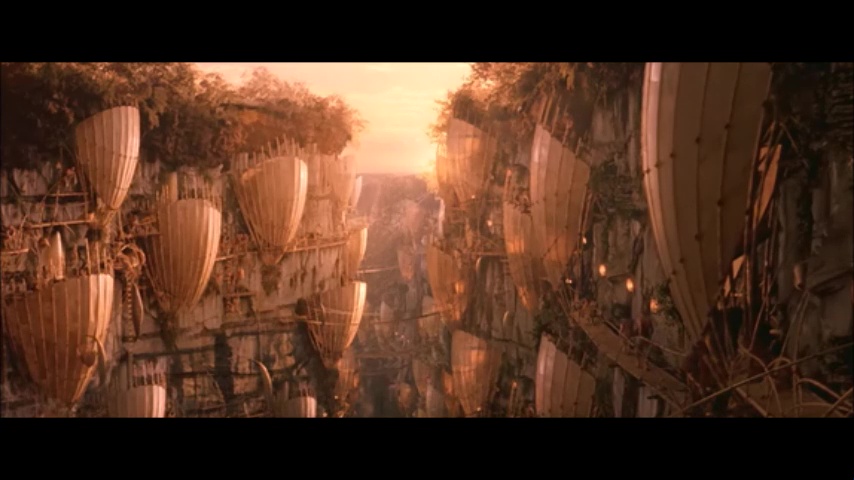
But the Eloi of the year 802,701 in this 2002 version are a somewhat sterner lot, building sanctuaries high in the mountains to avoid the nocturnal depredations of the Morlocks, but fatalistically accepting what would probably happen to them one dark night.

vlcsnap-00014.jpg

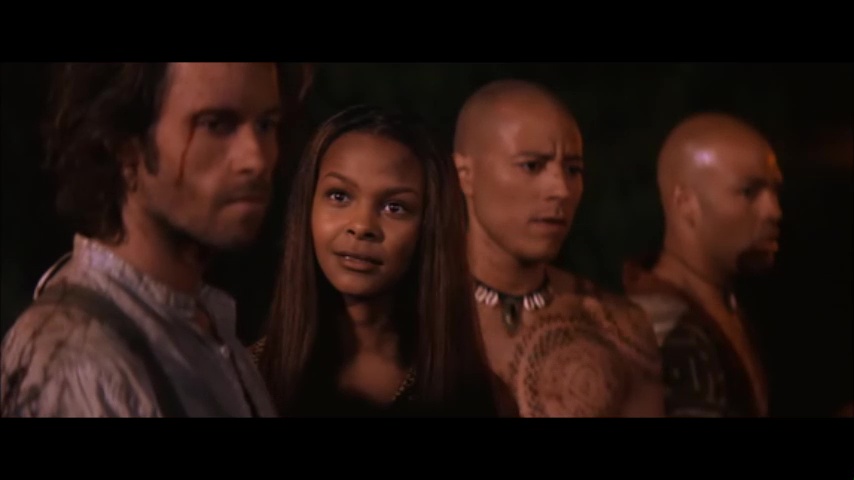
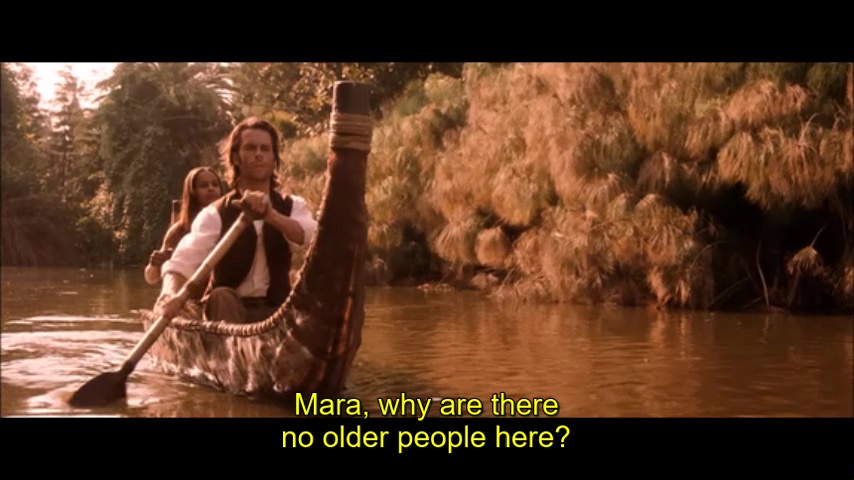
Hilariously, they have set up a shrine to the America of our time, and learn from childhood a perfect 21st century American English, taught by the film’s love interest (and damsel in distress) Mara (played by the Irish singer Samantha Mumba).

vlcsnap-00018.jpg

vlcsnap-00114.jpg

The Morlocks are a far more formidable foe too, appearing from the ground, in daylight, and capturing their prey with poisoned darts; they are immensely strong, not too smart, and hideously ugly. They are also, like the humans of the present and most other periods, voraciously hungry, and capable of eating all their supplies (roasted Eloi) at once if not controlled.

vlcsnap-00048.jpg

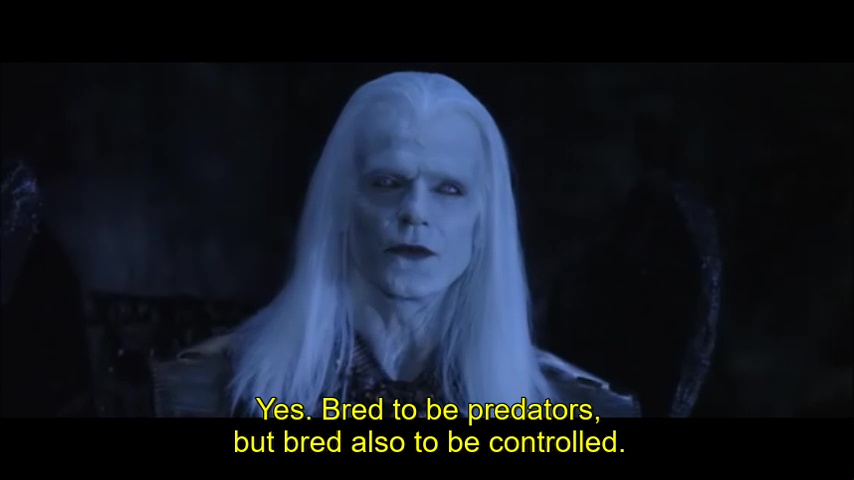
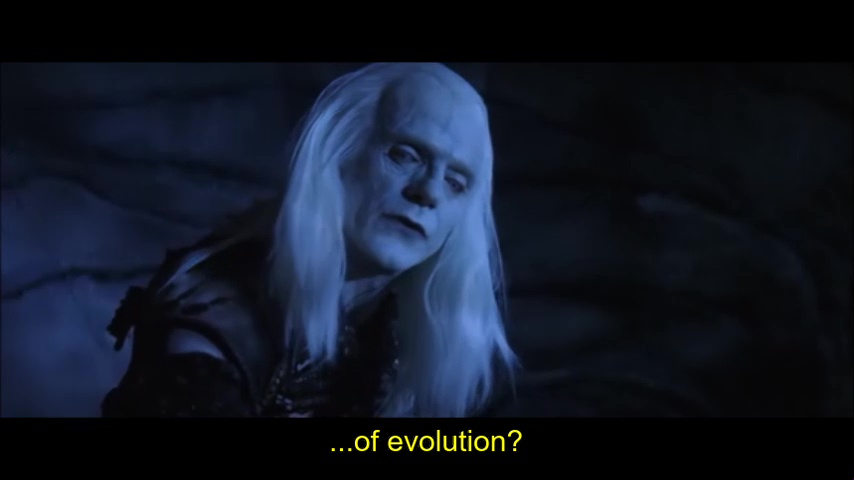
And here is the main interest in this story – the Morlocks are controlled, psychically, by an “Übermorlock” (Jeremy Irons, looking a lot like the late, great Tom Petty).

vlcsnap-00060.jpg

tom-petty-mn-02_6b4798f8561588a96f9500a199ee96b6.jpg

Civilisations, as this story illustrates, do not trend toward constant progress, but rise and fall in cycles, as John Gray has been trying to tell us,

“To believe in progress is to believe that, by using the new powers given to us by growing scientific knowledge, humans can free themselves from the limits that frame the lives of other animals. This is the hope of nearly everybody today, but it is groundless.”

As if to prove this point, a quick trip to the year 635,427,810 shows a burning wasteland with armies of soldiers or slaves wandering in the desolation.

vlcsnap-00107.jpg

At their most perilous, civilisations turn to power-hungry dictators – think Caligula, Hitler, Stalin, Mao, or the Übermorlock. They offer simplistic solutions to increasingly complex problems. Those solutions find a scapegoat, an alien group, an easy sacrifice, and death for those target populations is common, as is their consumption, if not as food, then as slaves.

vlcsnap-00070.jpg

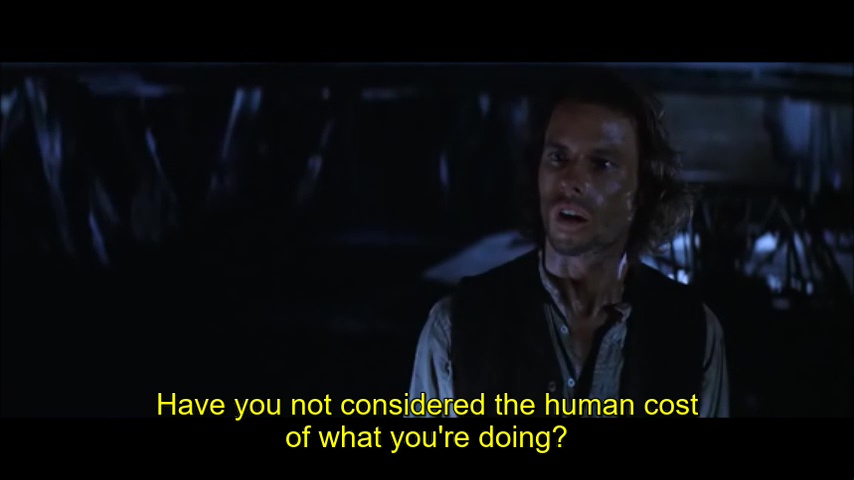
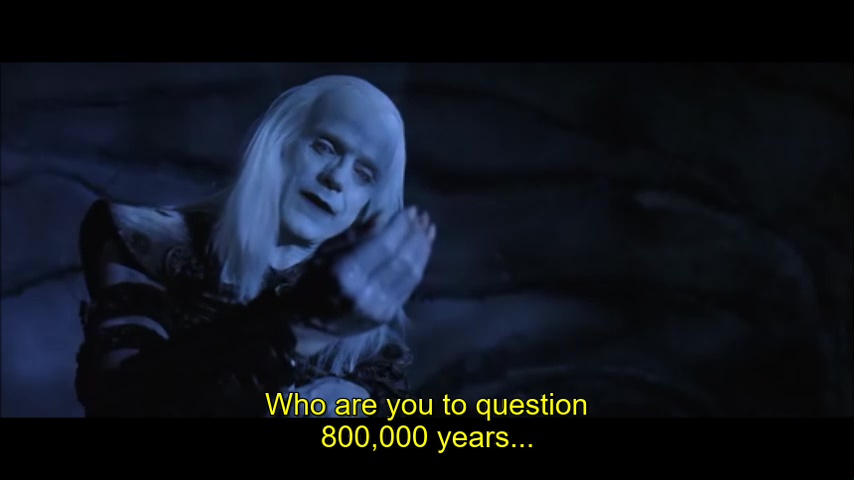
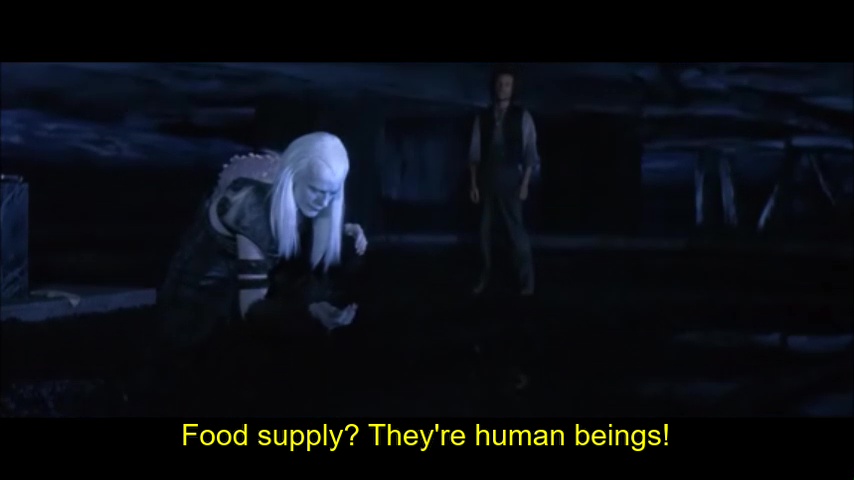
The Übermorlock explains that the underground workers and the above ground hedonists evolved into two separate species, and that within his own type, castes developed – the brutish predators and the intelligentsia, who use mind control. The Eloi are simply “livestock” and the Übermorlock is unimpressed by our hero’s attempts to impose the anti-cannibal ethics of 800,000 years ago.

vlcsnap-00077.jpg

vlcsnap-00078.jpg

And is he wrong? Think of the COVID dialogues about letting the vulnerable old people die to allow the economy to grow.

vlcsnap-00021.jpg

Yes, the Morlocks, like humanoid coronaviruses, find it much easier to catch old people. The rest of the Eloi are allowed to get fat and sassy until time for slaughter – just like some seventy billion other animals we inculpably slaughter and eat every year. Hartdegen does not realise this until he falls into the Morlock waste processing system.

vlcsnap-00047.jpg

Are the Morlock’s evil? Perhaps by the standard of 20th century liberal humanism. In 800,000 years, or now if we choose, we may have other ideas.

vlcsnap-00075.jpg

Rotten Tomatoes gave it a paltry 29%, saying

“This Machine has all the razzle-dazzles of modern special effects, but the movie takes a turn for the worst when it switches from a story about lost love to a confusing action-thriller.”

Bit harsh, IMHO. The cast is good, the special effects great fun, and the reimagining of the story shows some interesting thoughts about evolution and human ethics. Entertaining and worth a look, I’d say.