On February 24 2023, Hong Kong model Abby Choi was found dead in a rental unit in Hong Kong’s northern Tai Po district. Or at least, some of her; Choi’s corpse was not complete. Her head was missing, to be found by the police, after some analysis, in a cooking pot. The police described the crime scene as a “slaughterhouse”, and they found other parts of her body in the refrigerator.
An electric saw and a meat-grinder that had been used to mince human flesh were found at the crime scene, as well as soup pots containing human tissue.
Police have taken into custody her ex-husband Alex Kwong, his father Kwong Kau and his brother Anthony Kwong. All were charged with murdering model Abby Choi a day earlier. Alex Kwong’s mother, Jenny Li, faces one count of perverting the course of justice. None of the four were granted bail.
The former husband, one of the main suspects in the murder, was arrested the next day at a pier in Tung Chung, on one of the city’s outlying islands, Lantau, while trying to flee with just the clothes on his back, and half a million HK dollars and four million $HK worth of fancy watches.
On Sunday, authorities confirmed that a young woman’s skull believed to be Choi’s had been found in a cooking pot that was seized from the house. Officials believe that a hole on the right rear of the skull is where the fatal blow was struck.
Ms Choi lived at Kadoorie Hill in Ho Man Tin and had been missing since Tuesday (Feb 21). Police discovered two legs in the apartment’s refrigerator, as well as the victim’s ID card, credit cards, and other belongings, according to Police Superintendent Alan Chung. Human tissue was found in pots of soup, while the victim’s torso and hands were not at the scene. Chung said:
“Police also have found that the flat was arranged by cold-blooded killers meticulously. Tools that are used to dismember human bodies were found in the flat, including meat grinders, chainsaws, long raincoats, gloves, and masks.”
According to China Underground, Choi’s former father-in-law had rented the flat, which was almost bare of furniture, as were the two bedrooms. Police found two types of choppers, a hammer, face shields, black raincoats, and a purple handbag that belonged to Choi. The suspects reportedly covered the walls with a sail and wore face shields and raincoats to prevent being bloodstained while dismembering the body. This was clearly not a spur of the moment crime.
More than 100 police personnel were sent to search the Tseung Kwan O Chinese Permanent Cemetery on Saturday, including a diving team who were deployed to the nearby catchwater.
The motive of the murder has yet to be determined, but it is believed to be a financial dispute between Choi, who was only 28 years old, and her ex-husband’s family, involving around 100 million Hong Kong dollars.
As a model, Choi enjoyed international exposure and was photographed at the Elie Saab Spring Summer 2023 Haute Couture show in Paris, France, as recently as January. She also appeared as the digital cover model for the luxury magazine L’Officiel Monaco and attended this year’s Paris Fashion Week.
Choi, who was also known as a social media influencer, has nearly 100,000 followers on her Instagram account, which features photographs of her posing with various luxury brands in locations from London to Paris and Shanghai and aboard yachts in Hong Kong. In her bio she writes that she’s “embracing every moment in life.”
Choi’s friend Bernard Cheng said she had four children: two sons ages 10 and 3, and two daughters ages 8 and 6; a son and a daughter from her ex-husband, who have been placed in the care of the model’s mother, and two children with her present partner.
The murder case has been adjourned to May.
The news has been greeted with horror in Hong Kong. But social media is already making tasteless comments about cannibalism and cunnilingus.
The comment in the social media posts about HK people “always” cooking their murder victims seems a little hard to swallow (sorry). No one has yet accused the alleged perps of eating the human flesh soup found in the pots, and there is some speculation that they were cooking the flesh just to render it down for disposal, or to stop it decomposing. But if you find pots of soup on a stove, you’d imagine that the most likely explanation would be that they were there for degustation. Everything else about the case uses metaphors of carnivorous virility and factory farming – the flat being a “slaughterhouse”, the grinders and protective equipment, and the motivation for the killing – lots of money.
Except in times of chronic famine, or during the Cultural Revolution, China is not known for many cases of cannibalism, unlike some other countries we could (and often do) name. But the Chinese do make some great cannibal movies, including Herman Yau’s Human Pork Buns and Ebola Syndrome (伊波拉病毒), and Fruit Chan’s Dumplings. Check them out, and then ask yourself, what exactly was planned for those pots?
A forensic psychiatrist has told Newsweek that the man charged in connection with the slayings of four University of Idaho students in November 2022 had battled with “cannibalistic urges“.
Bryan Kohberger, a 28-year-old Ph.D. student and teaching assistant in the Department of Criminal Justice and Criminology at Washington State University, was arrested at his parents’ home in Albrightsville, Pennsylvania.
Kohberger is accused of breaking into a rental house in Moscow, Idaho, and fatally stabbing Kaylee Goncalves, Madison Mogen, Xana Kernodle and Ethan Chapin in the early morning hours on November 13.
Reports have surfaced divulging that Kohberger follows a strict vegan diet and has reportedly struggled with heroin addiction in the past.
Forensic psychiatrist Carole Lieberman told Newsweek that Kohberger’s “obsessive-compulsive eating habits” indicate he was afraid he would become addicted to meat if he ate it.
“He was not only vegan, he refused to eat off of pots or plates that had had meat on them. Psychologically, this represents his struggle against his cannibalistic urges. He was afraid that if he let himself go to taste meat once, he would become addicted to it—like he had become to heroin—and start killing and eating people.”
A relative told the New York Post last week that Kohberger’s dietary restrictions were “very, very weird” and that he seemed “very OCD,” referring to obsessive-compulsive disorder.
The woman, who asked not to be named, but said she was previously married into Kohberger’s family, said:
“It was above and beyond being vegan. His aunt and uncle had to buy new pots and pans because he would not eat from anything that had ever had meat cooked in them.”
Casey Arntz, who was friends with Kohberger in middle and high school, said in a video posted on TikTok that he had been “a heavy heroin user” in high school. Kohberger’s struggles with drug addiction continued into his college years, a friend from Northampton Community College told Fox News. Criminal profiler John Kelly told Fox News,
“This kind of person has this volcanic rage inside that’s going to explode on is victim of choice.”
Lieberman told Newsweek that Kohberger had probably studied criminology both to “calm the demons inside him that were telling him to kill” but also to “learn how to commit the perfect crime.”
Kohlberger may have corresponded with Rader (a lot of criminology students do) but we don’t know that yet. We have to wonder if Rader would have told him about working in the meat department of a Wichita IGA a few years before his murder spree began.
Kohberger has been held without bond in Pennsylvania since his arrest. He will be tried in Idaho, the state in which the crimes took place, the only state in the US with a law against cannibalism, although no such charges have been laid against Kohberger.
Kohlberger’s obsession with meat reflects a lot of issues considered in Cannibal Studies. Firstly, the question of human meat: there really is no significant difference between the meat of humans and other large mammals such as cows, pigs or sheep. Hannibal Lecter takes delight in feeding human meat to his guests, such as the flesh of the flautist of the Baltimore Philharmonic, whose Board members subsequently enjoy the meal immensely in the book and film Red Dragon, thus becoming innocent cannibals. Incidentally, being the Baltimore flautist seems to be a rocky road – their principal flautist Emily Skala, was fired in 2021 for spreading misinformation about the safety of coronavirus vaccines, the efficacy of face masks and the outcome of the 2020 presidential election, relieved of her post, but not eaten.
But the point is that once meat is prepared (cooked, seasoned, presented) it is very hard to tell its provenance. Cannibals who have been asked have mostly compared it to pork or veal, with Armin Meiwes telling an interviewer
“It would have made no difference in somebody else had tasted it; he wouldn’t have questioned the meat…. During preparation, it is not as dark, but bright and fresh as pork, and tastes so very close to pork.”
Kohlberger’s belief that he might like human flesh if he tried any meat at all therefore has some logic to it. Since Charles Darwin’s writings overthrew the special status of humans as closer to angels than animals, anthropocentrism has been amended to offer a story of humans as the culmination of evolution and thereby continues, rather less successfully, to obscure human animality. Should such beliefs falter, as happens repeatedly in many cases of contemporary cannibalism, it becomes a very short step from eating other animals to eating the human one.
But why should he become addicted to any meat? Well, we know Kohlberger has an addictive personality, shown by his very heavy usage of heroin. But we’re not talking drugs of addiction but lumps of protein, aren’t we? Well, there are plenty of studies about that. Marta Zaraska, for example, wrote in her book Meathooked that meat is highly addictive on several fronts – genetic, cultural, historic and commercial, and coined the term “meathooked” for the incongruous compulsion to eat meat despite the pangs of cognitive dissonance – the repressed feeling of guilt when considering oneself an animal-lover while also paying big corporations to kill them. Then there is the mythology of the Wendigo, a creature from Algonquin legend who starts off as a human but becomes a being who can only live on human flesh, which makes him grow bigger and at the same time hungrier. If you believe in Wendigos, then the slippery slope from carnivore to cannibal seems reasonably clear.
This leads us to the issue of Kohlberger’s apparently very strict veganism. Most people seem to believe (or want to believe) that vegans are fanatics, obsessed with animal welfare (or environment or their own health) who therefore compulsively avoid meat. But in fact most vegans I know would wash a pot well after a relative had cooked meat, but are unlikely to throw it out as irretrievably ruined, as Kohlberger purportedly did. Veganism is an ethical system that attempts to minimise harm to sentient animals, which includes humans (yes, Virginia, we are animals). If there is a slippery slope from the flesh of other animals to the flesh of Homo sapiens, then the vegan is furthest from the edge of that slope. If Kohlberger did kill those students (and at this stage it’s only alleged), then he is no vegan, even if he didn’t sample them on the way out.
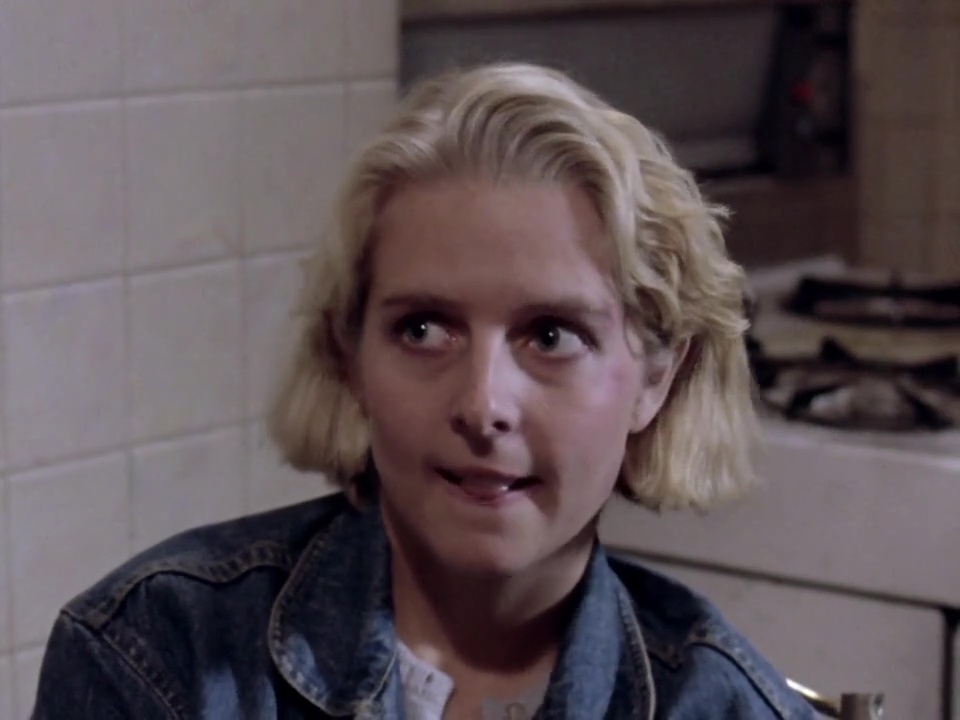
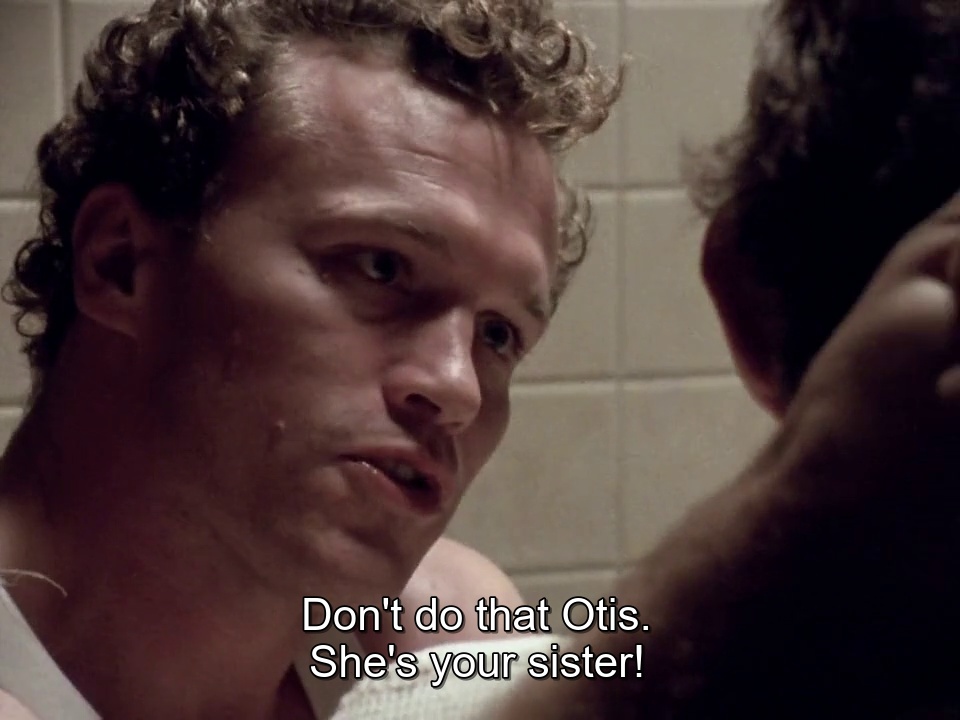
Henry: Portrait of a Serial Killer is an American psychological crime film directed and co-written by John McNaughton that depicts a random crime spree by Henry and his protégé Otis, who torture and kill with impunity. Michael Rooker in his debut film plays the nomadic killer Henry, Tom Towles plays Otis, a prison ‘friend’ who lives with Henry, and Tracy Arnold is Becky, Otis’s sister.
The characters of Henry and Otis are loosely based on convicted real life serial killers Henry Lee Lucas and Ottis Toole, who was famous for his claims to have cannibalised many of their victims, claiming that they also supplied women and children for human sacrifice to a cult called “The Hand of Death”.
Henry confessed to over 600 murders, which supposedly were committed between his release from prison in 1975 to his arrest in 1983, a pace that would have required a murder every week. A detailed investigation by the Texas attorney general’s office ruled out Lucas as a suspect in most of his confessions by comparing his known whereabouts to the dates of the murders to which he had confessed. It appears that the police would bring any cold case to his attention, feed him information about it, and then let him take responsibility. He had nothing to lose, and global fame and notoriety to gain. He was convicted of 11 murders and sentenced to death for the murder of an unidentified female victim known only as “Orange Socks.” His death sentence was commuted to life in prison by Texas Governor George W. Bush in 1998 due to evidence that Lucas was in Florida at the time “Orange Socks” was killed in Texas. Lucas later recanted all his confessions except for the murder of his mother, and died in prison of heart failure on March 13, 2001.
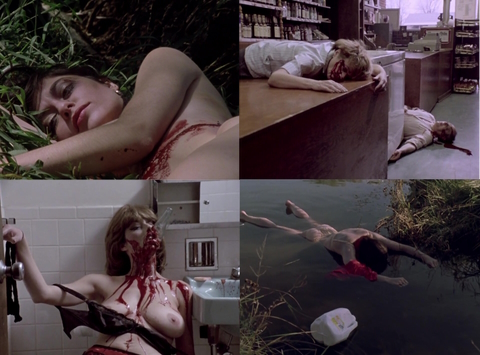
The film involves a lot of scenes of Henry driving his battered old Chevy Impala around the grey streets of Chicago, finding people to kill. Images of bloody mayhem are offered for their shock value and become repetitive, and rather fake, but then the film was made on a tiny budget.
Some narratives in the film run parallel to what we know of the real serial killers. Henry did meet Ottis, but in a soup kitchen in Jacksonville, Florida, not in prison. Henry’s father really did lose both of his legs after being struck by a freight train, leaving Henry at his mother’s mercy. But the film largely omits the long-term homosexual relationship between them (shyly hinting at it when they share the last can of beer) and, sadly, totally omits Ottis’ predilection for cannibalism.
Henry did sexually abuse Ottis’ 12-year-old niece Frieda Powell, who lived with them for many years. As in the film, Powell preferred to be addressed as Becky rather than Frieda. However, in the film Becky is Otis’s younger sister, and is presented as a considerably older single mother, not the real 12-year-old Powell.
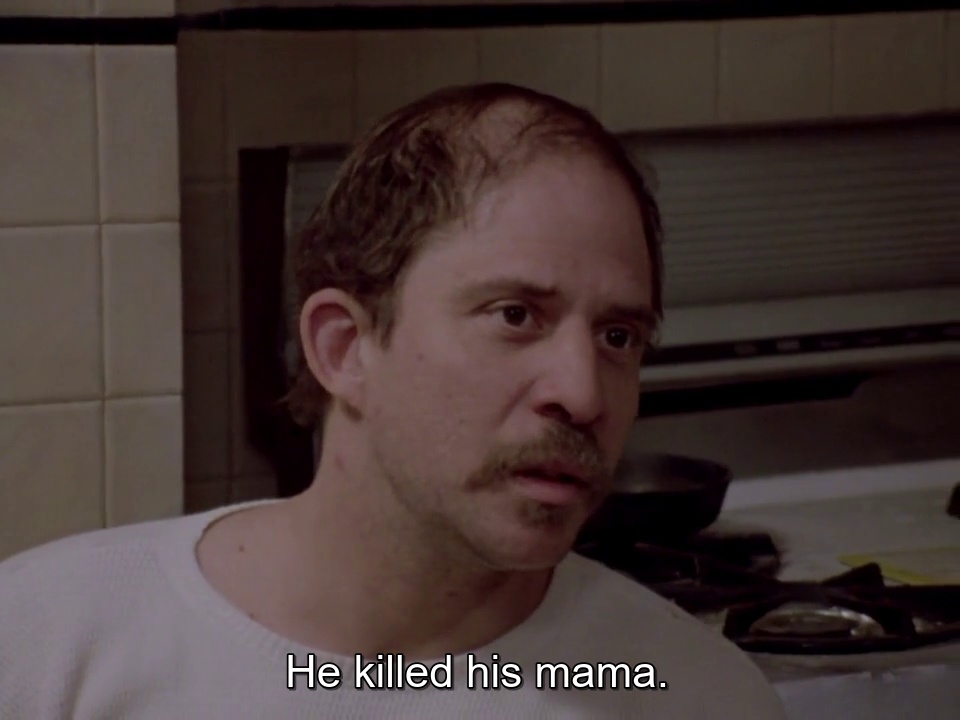
Sexual neurosis is presented as the root cause of the violent tendencies of both men. Otis, who is shown attempting to sexually abuse his sister, tells her that Henry killed his own mother, and when Becky asks Henry about it, he tells her his mother was a sadist and a “whore”, who forced him to watch her having sex with clients, sometimes making him wear girls’ clothing for further humiliation.
Becky in response tells Henry of her childhood, in which she was regularly raped by her father, with her mother claiming not to believe her.
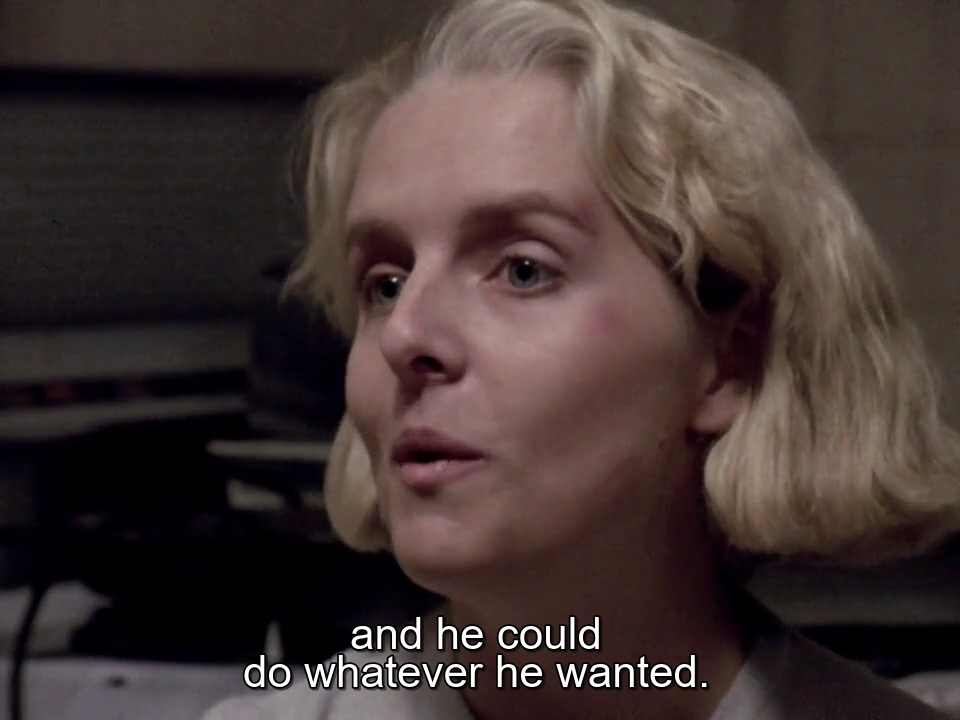
“He told me he had a right, because he was my daddy and I was his daughter, and he fed me and let me live in his house, and he could do whatever he wanted. And he did… I didn’t fight him, because when I did he just hit me.”
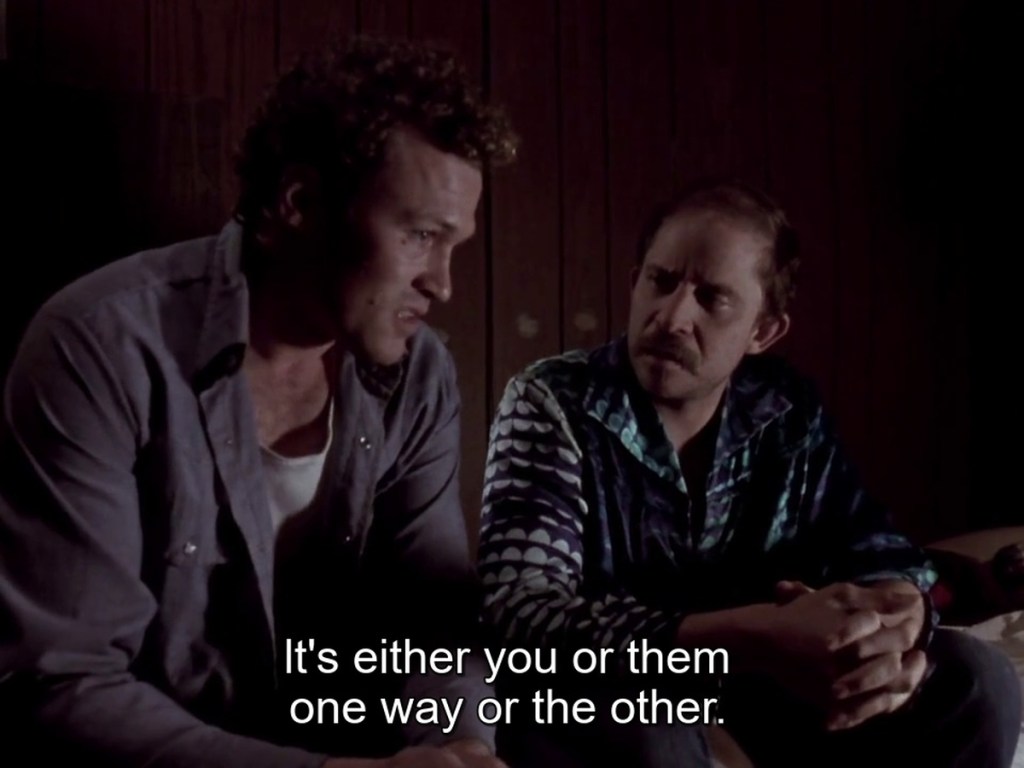
Henry introduces Otis to his world of serial killing when they pick up two sex workers and Henry snaps their necks during sex, suggesting that he is revenging his mother’s abuse. To Henry, the world is against him, and murder is “always the same, and it’s always different.”
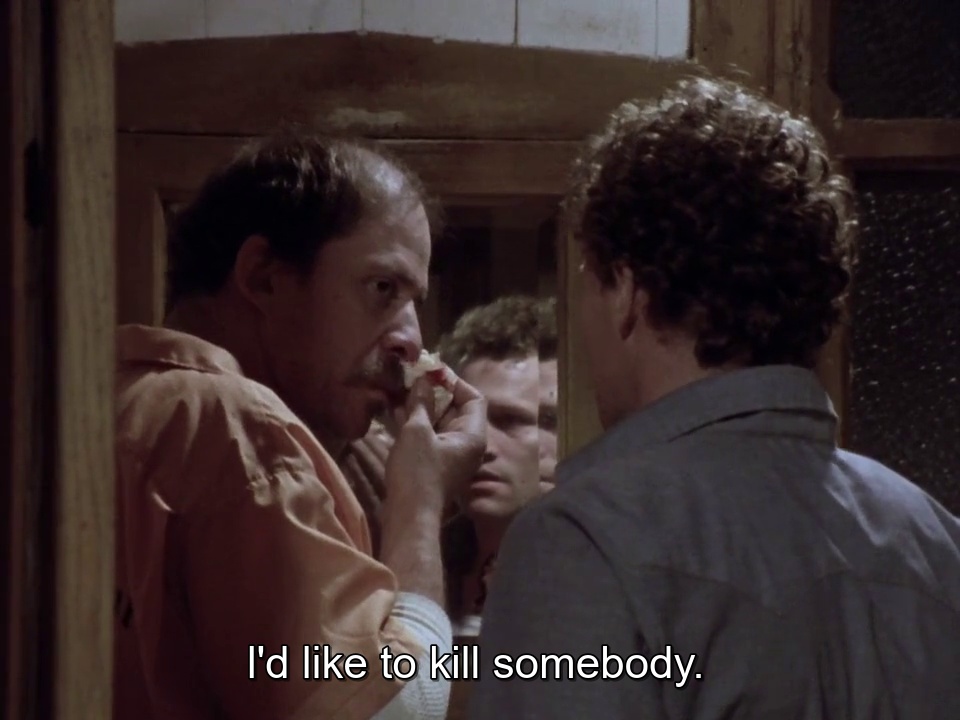
Otis gets a taste for murder when they kill a fence who mocks them when they try to buy a television from him, and then actively seeks out opportunities when a high school boy he comes on to punches him in the mouth. Henry says it would be a mistake to kill the boy, since they’ve been seen together, but Henry wants to kill someone. It’s the world being against them, again.
Henry schools Otis to make sure every murder is different – that way there can be no M.O. for the police to follow. A particularly brutal scene of the murder of a family is videotaped by the pair (on a camera stolen from the dead fence) and Otis enjoys re-watching himself molesting the screaming woman, breaking her neck and then attempting necrophilia, until Henry orders him to stop, just as he forced him to desist from molesting Becky when she arrived. When Henry finds Otis raping his own sister, he fights him and with Becky’s help, kills him.
Henry has his own moral code, in which murder is fine, but incest, family violence and necrophilia are forbidden. The real Henry’s paedophilic involvement with twelve-year-old Becky, and the real Ottis’ interest in eating people, are never mentioned.
Incest, murder and cannibalism are the three great taboos of our civilisation according to Freud, the driving forces behind the creation of laws and morals, which stop us destroying our communities by doing those things. The movie sadly concentrates on the murders and has references to incest, but totally ignores the cannibalism.
Unlike the film, the real Henry did not kill Ottis – both men died in separate prisons, Ottis in Florida State Prison in 1996 and Henry in Ellis Unit, Huntsville, Texas in 2001.
Due to the violent imagery, the film was censored in many markets and the original poster (above) was banned. The controversy brought it some very valuable publicity. The reviews were also mostly positive – it has an 89% “Fresh” rating on Rotten Tomatoes, with Roger Ebert observing that the film does not “sugar-coat” or trivialise violence as most slashers tend to do, and calling it:
“a very good film, a low-budget tour de force that provides an unforgettable portrait of the pathology of a man for whom killing is not a crime but simply a way of passing time and relieving boredom.”
It’s well made (considering the miniscule budget), the cast are terrific (in both senses of the word) and the plot, if somewhat out of step with the reality of the case, is well presented and never dull. But why should it stick to the “facts” of the case, when clearly neither Henry nor Ottis were too sure what was real and what simply bravado?
Gannibalis a new seven-episode television series set in present day, rural Japan. The show is based on a Manga series (comic or graphic novel) which appears to be available on-line.
In the first episode, we see a policeman raging outside a house, accusing the occupants of cannibalism. He soon comes to a sticky end.
Police officer Daigo Agawa becomes Chuzai (residential police officer) at the Kuge village, accompanied by his wife Yuki and daughter Mashiro, after the previous Chuzai mysteriously went missing (the same officer seen being killed in the opening). Daigo has caused some incident in his previous posting, which has led to his transfer to this remote and eerie (but very beautiful) village.
The daughter, Mashiro, seems to have no fear, but also refuses to speak, which Daigo believes is his fault. On his first day, Daigo is summoned by the Goto family, who seem to run the small forestry village, like a local crime family.
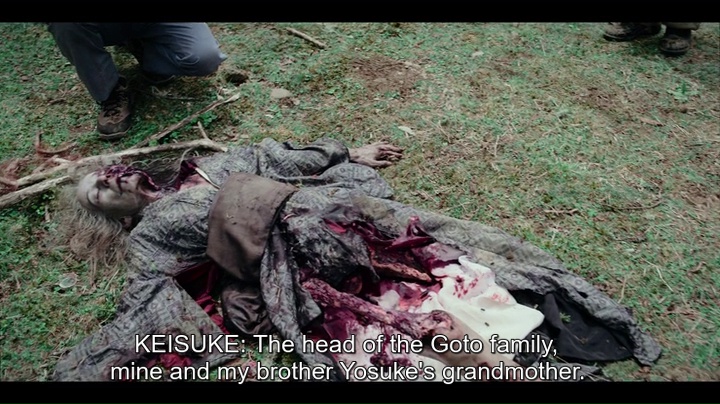
They have found the body of their grandmother, Gin Goto, the head of the family. They insist she was attacked by a bear, and pull out firearms when Daigo points out that the tooth marks on her arm are human.
Meanwhile the little girl Mashiro wanders away from home, and meets up with a large blind guy who seems only able to snarl.
Showing no fear, she offers him a sugar candy, and in turn comes home with a human finger.
Problem: the finger is not from Gin Goto. Lots of people are, apparently, getting dismembered.
Daigo accompanies the Goto family on a hunt to find the bear that they claim ate Grandma, and is then attacked by a bear, who turns out to have granny’s specs in his stomach.
In a scene that could almost define carnivorous virility, the men gather around the bear and eat his flesh, a ritual that is supposed to keep Grandma within them.
This is what we call, in Cannibal Studies, “essentialism”, the idea that the spirit or strength of a person lives on by eating them, even if only via the bear that ate her (even though that’s clearly not what happened).
In the following episodes, Daigo slowly unravels the truth about cannibalism in the village.
Gannibal is directed by Shinzô Katayama, the director of the horror-thriller Missing. Reviews have been glowing, stressing how ‘gross’ and unsettling the show is. One tweet said:
Except for the opening, which is over the top in Japanese anime style, the acting is great, the suspense interesting without jump scares, the music eerie, and the photography beautiful. If you like a good suspense show and don’t mind subtitles, this one is highly recommended.
Gannibal started streaming December 28 on Hulu. Also available on Disney+.
In October 2022, thecannibalguy blog reported on the news that Russia has been boosting the number of soldiers fighting in Ukraine by recruiting within its worst maximum-security prisons, including enlisting a convicted cannibal.
The cannibal, Yegor Komarov, had been the subject of an earlier blog in December 2021. He had been arrested for murder in the town of Sortavala (near the Finnish border) after a headless body fell from his car. Komarov admitted to being a cannibal and confessed to stabbing and killing another man in a St Petersburg park the previous year for the sole purpose of tasting human flesh, adding that he had sliced off the victim’s tongue and fried it in butter.
The recruiters of this motley army of murderers, rapists (and at least one cannibal), all of who are promised freedom if they survive six months of war, is a mercenary force called The Wagner Group. It had first been deployed to the Ukraine back in 2014 to help pro-Russian separatists battle Ukrainian forces.
Yevgeny Prigozhin, an oligarch known as “Putin’s chef” because he rose from being a restaurateur and caterer for the Kremlin, is the leader of the Wagner Group. Many of Mr Prigozhin’s companies are currently under US sanctions for what it calls his “malign political and economic influence around the globe”.
Prigozhin originally denied any connection with the Wagner Group, but now a new video has surfaced (at the top of this page) where he shows how his mercenaries are trained before being sent in as the shock troops of the Russian war to occupy Ukraine.
In the video, Prigozhin speaks about so-called “elite” fighters from a special training base in the village of Molkino in the Krasnodar region of southern Russia:
This is a supplementary training base for our fighters…. Here experienced fighters are given additional training in their specialties. So they raise young eagles there, and here they make real cannibals.
These prisoners from the worst Russian prisons are considered disposable, sent into the front lines in Ukraine as cannon fodder. According to the Ukrainian President, after the fighting around the Soledar salt mines in January 2023,
“Thousands of their people were lost: the whole land near Soledar is covered with the corpses of the occupiers and scars from the strikes. This is what madness looks like.”
Commanders of the brutal mercenary group are reportedly castrating their own soldiers who try to surrender or retreat. In an intercepted call in December 2022, US intelligence said that they learned a member of the Wagner Group was castrated for either trying to retreat or surrender. The intercepted call heard a Russian soldier say, “The Wagnerians caught him and cut his fucking balls off” but the video tape was not released.
We have no reports yet about the fate of the recruited cannibal, Yegor Komarov, nor do we know if he is finding ‘gainful’ employment teaching other recruits how to be “real cannibals”.
We do know that cannibalism is a recurring event in Russian and Ukrainian history, particularly in the last hundred years. Russia’s worst serial killer was a cannibal named Andrei Chikatilo, who was convicted of killing fifty-two women and children between 1978 and 1990, although he had confessed to many more. Chikatilo blamed his cannibalism fetish on the story his mother had told him about his brother being taken and eaten by the neighbours in the 1930s, during the Holodomor.
The “Holodomor” (literally “murder by starvation”) was an event that took place in the Ukraine in 1932-3, during which the population was deliberately decimated by Stalin’s collectivisation of the farms and seizure of food stores. As starvation set in, corpses began to disappear, and the government response was simply to put up signs saying, “Eating dead children is barbarism”.
Not so in war, apparently. What exactly Yevgeny Prigozhin meant by turning his soldiers into “real cannibals” is not clear. But in view of his total disregard for their welfare, we have to wonder how well Prigozhin feeds his soldiers. Or, as Putin’s chef, does he simply give them a recipe book?
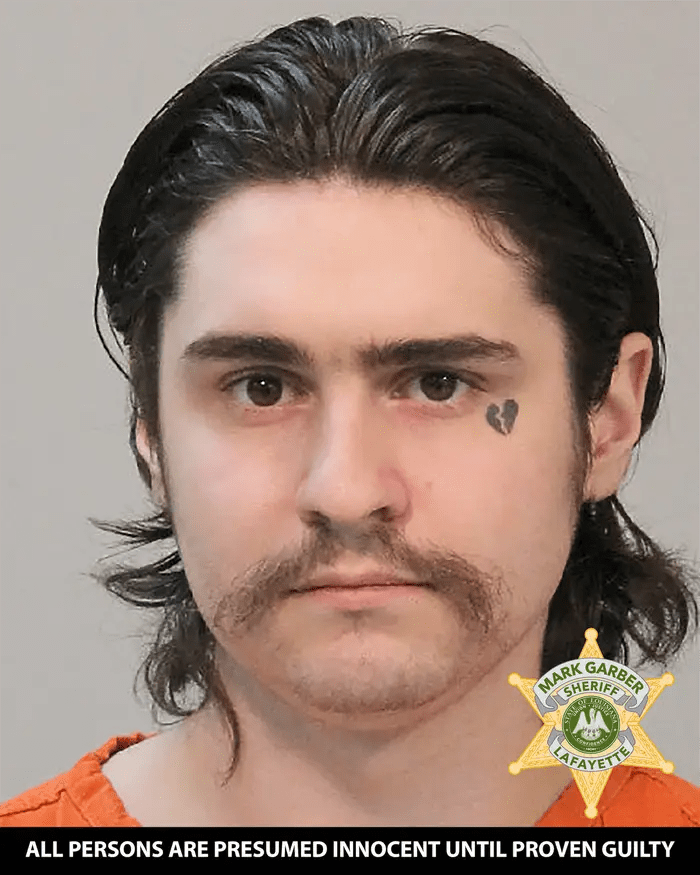
Chance Seneca, 21, of Lafayette, Louisiana, was sentenced on January 25th to 45 years in federal prison for kidnapping and attempted murder, as part of his elaborate scheme to kidnap, murder and cannibalise gay men.
The court based its sentence on several factors, including its determination that the defendant intentionally targeted the victim and other gay men because of their gender and sexual orientation. Assistant Attorney General Kristen Clarke of the Justice Department’s Civil Rights Division said:
“The facts of this case are truly shocking, and the defendant’s decision to specifically target gay men is a disturbing reminder of the unique prejudices and dangers facing the LGBTQ+ community today. The internet should be accessible and safe for all Americans, regardless of their gender or sexual orientation. We will continue to identify and intercept the predators who weaponize online platforms to target LGBTQ+ victims and carry out acts of violence and hate.”
Evidence was presented that Seneca, in June 2020, had used Grindr, a dating application for gay and bisexual men, to kidnap and attempt to murder a gay man identified in court only as “H.W.” A day earlier, he used the app to set up a meeting with another gay man, but decided not to kill him.
Seneca proposed a meeting with H.W. with the intent of murdering and dismembering him, and he met H.W. and drove him to his father’s home in a 2006 Toyota Corolla. On arrival, he took out a handgun, instructed H.W. to put on handcuffs, and then used several methods (details in the link if you want to know) to attempt to murder him, including strangulation, a hammer, an ice-pick and a knife. Believing that H.W. was dead, Seneca then attempted to dismember him. After his arrest, Seneca admitted that he had planned to continue murdering gay men until he was caught or killed.
Seneca acknowledged that he had kidnapped and attempted to murder H.W. in order to satisfy a compulsive murder-fantasy. Seneca had become fixated with the idea of killing gay men, and this fascination led him to spend months designing a murder-kidnapping scheme that mirrored the murders of gay men committed by the cannibal serial killer Jeffrey Dahmer. Seneca specifically targeted gay men, as Dahmer had done. He also intended to eat and preserve the bodies of his victims, as Dahmer had done.
The FBI and the Lafayette Police Department conducted the investigation. Lafayette police had responded to a call from Seneca in June 2020 and found a man, Holden White, 18, in a bathtub with severe injuries, including strangulation marks on his neck and “wrists slit to the bone,” according to an unsealed affidavit.
The affidavit was filed by an FBI agent based on information from Lafayette police and a conversation the agent had with Seneca. It said Seneca told police he had called 911 after the attack “in a self-described effort to be put into a mental institution.” Seneca had kidnapped two other men on June 19, the indictment said.
H.W, the Louisiana man stabbed by Seneca, identified himself as Holden White (pictured above). In an interview, he gave details of the night that he thought would be his last. He said he wants people to have hope for survival, even in their darkest moments.
“Part (of what) I remember is that I reached over to grab something out of my bag. That’s when I felt a cord wrap around my throat and he started pulling me backwards. He strangled me for, I can’t tell you how long, but it felt like a very long time. And he did it to the point as to where every single blood vessel in my face ruptured.”
White woke up in a bathtub sometime later, with his attacker standing over him.
“There was just blood all over my chest and stuff. He was just kind of sitting there watching me, and I was like, ‘Okay this is it.’ My final words to myself was, ‘Just stay calm.’ In my mind I kept repeating to myself, ‘Just stay calm, stay calm.’ Slowly, I passed out.”
Seneca apparently couldn’t go through with the murder, and contacted law enforcement instead. White woke up in a hospital bed.
“I’ve been told that Chance called the police and he said, ‘Hey, I just tried to murder somebody, send an ambulance,’ and when they found me I was still naked in the bathtub.”
White has spoken out to make sure the world understands that the attack was a hate crime – something local police had hesitated to declare. “This is a hate crime due to a fact that he made it a point to choose a gay man on a gay app,” he explained. “He made sure I was a gay man and then in the same breath, he also idolized Jeffrey Dahmer.
As his scars healed, White decided to mark the event with some body modification of his own: a new tattoo of a semicolon.
“Basically, what a semicolon does is it puts a pause on a sentence,” White explains. “Chance tried to stop my life, so instead of a period I made it a semicolon. I’m staying strong. “I’m not going to let this incident get to me.”
Chance Seneca remains in holding at Lafayette Parish Correctional Center awaiting trial.
White said the attack has coloured the way people view him and treat him and has at times been used in verbal or online attacks during arguments or disagreements.
“People tell me he should have killed me that night. He should have finished the job. They should bond him out so he can kill me.”
The case inevitably reminds us of the murders committed by the so-called Milwaukee Cannibal Jeffrey Dahmer between 1978 and 1991 in which he drugged young men and boys, attempted to turn them into sex slaves by injecting acid into their brains, and then (when that failed) killed and dismembered them and ate parts of their bodies. Chance Seneca wanted to emulate Dahmer, but couldn’t bring himself to do it.
More recently, Mark David Latunski, the “Michigan Cannibal”, met a young man on Grindr, slit his throat and fried and ate his testicles, and perhaps other parts of his body. This happened on Christmas Eve 2019, but did not go to trial until October 2022.
Gay men have been subject to abuse and violence for a long time; it is only recently that laws against gay sex were repealed, and even more recently that same-sex marriage was permitted. Although there has been some progress in those areas, change always comes with resistance, and the social media responses to the plight of Holden White reflects the victim-blaming that comes from a rejection of his humanity and his right to seek consensual pleasure as he chooses.
Chance Seneca wanted to be a cannibal serial killer like Dahmer and Latunski, but something stopped him half-way through the process, perhaps a recognition of White’s humanity. To kill and eat any animal requires a deanimalisation – turning them from living, sentient beings into meat. To kill and eat a human is one further step – the victim must be animalised (denied humanity) before being deanimalised and slaughtered. Apparently Seneca could not carry through, but plenty of others, including his idol Jeffrey Dahmer, could.
Another Seneca, the Roman Stoic Lucius Annaeus Seneca the Younger, who lived some 2,000 years ago, wrote about another “Chance”. Don’t you love coincidences like this?
Peter Kürten was a German serial killer, often called “The Vampire of Düsseldorf” and the “Düsseldorf Monster”. Described as “the king of sexual perverts”, Kürten was beheaded in July 1931 at the age of 48.
He perpetrated at least nine murders and a number of sexual assaults between February and November 1929 in the city of Düsseldorf. Previous to this, Kürten had accrued a long criminal record for offences including arson and attempted murder. He also confessed to the 1913 murder of a ten-year-old girl in Mülheim am Rhein and the attempted murder of a 17-year-old girl in Düsseldorf.
Kürten was called the “Vampire of Düsseldorf” because he occasionally drank the blood of his victims. He was also known for decapitating swans in the Düsseldorf Hofgarten to drink their blood.
This week’s movie, The Vampire of Düsseldorf or, in French, Le Vampire de Düsseldorf, was a joint production between Spain, France and Italy, filmed in 1964. Fritz Lang’s 1931 film M – Eine Stadt Sucht Einen Mörderwas loosely based on Kürten (who had been beheaded the year the film was made), but also on the other German serial killers of the time: Haarmann, Großmann, and Denke. Fritz Haarmann had killed at least 24 boys and young men between 1918 and 1924, often by biting their throats, and then allegedly eating or selling the meat from their corpses as pork or horse-meat. Carl Großmann was arrested in 1921, suspected of up to 100 murders of women and girls, whose flesh he was supposedly selling on the black market and from a hot-dog stand in Berlin during the Great War. Karl Denke killed and sold the flesh of dozens of homeless vagrants and travellers from 1903-1924. So Peter Kürten was far from unique in famine-stricken Germany between the wars.
The Director of this film, Robert Hossein, cast himself in the title role of this and several of his films, which is not that unusual among auteur filmmakers. He didn’t look much like Peter Kürten, who was a remarkably nondescript individual (as are so many modern, domestic cannibals), but that’s not the problem. The film twists the story but ends up turning it into a fairly pedestrian slasher rather than the psychological profile of a cannibal serial killer, which it could have been. It also sanitises the story, ignoring the many murdered children and in fact the whole aspect of cannibalism by clinical vampirism(his consumption of blood).
Kürten started his killing well before anyone had heard of Hitler, and even before the First World War, which led to the economic crises that presaged fascism. But by 1929, when most of Kürten’s murders took place, the darkened streets of German cities were full of violence: fascists battling communists, unemployed workers demanding bread and work, and killers like Kürten taking advantage of the chaos.
It is not therefore totally unfair for the film to present Kürten as the embodiment of the sickness that led to the growth of totalitarianism. We see several faces of Europe between the wars – Kürten helping an old neighbour with her groceries, the crowded music halls so popular in Weimar Germany, and the killer, still dressed as respectable citizen, stalking the streets. Kürten, had he survived a bit longer, might have made a very powerful Nazi, with his penchants for smart clothes and extreme violence.
The plot is much simplified. Kürten kills young women and writes letters to the police boasting of his exploits (much as Jack the Ripper did around forty years before him).
He falls in love with a nightclub singer, Anna, who mocks him, sparking his misogynistic rage. He meets two young girls from the countryside who should know better than to open their doors to strangers.
Anna eventually becomes his lover, but then she finds the latest letter he is writing to the police.
Anna must die, much to Kürten’s regret, and his rage is expressed in arson attacks on the nightclub.
The real Kürten was of course a serial killer whose toll was far higher, and whose preferred victims were often very young girls. He was also an arsonist, and he achieved orgasm both through the act of killing and the burning of the body or buildings. Murderpedia has a full account of his acts if you want to read further. It’s pretty gruesome.
Little attempt is made in the film to portray the real Kürten, and even less to explain why he was the way he was. But the film was made in 1965 when sensitivities were somewhat more pronounced than now, particularly in Germany which had only shed the Nazis twenty years earlier. But it’s a masterfully made film, and the music by Hossein’s father, André, is particularly affecting. Worth seeing, if you can lay your hands on it.
As he was led to the guillotine, Kürten asked the prison psychiatrist,
“Tell me, after my head has been chopped off will I still be able to hear; at least for a moment, the sound of my own blood gushing from the stump of my neck? …That would be the pleasure to end all pleasures.”
After he was beheaded, Kürten’s head was preserved and his brain removed for examination, to see if there were any anatomical anomalies (there weren’t). The mummified and bisected head can still be viewed, if you feel so inclined, in the “Odditorium” of Ripley’s Believe It or Not! At 115 Broadway, Wisconsin Dells.
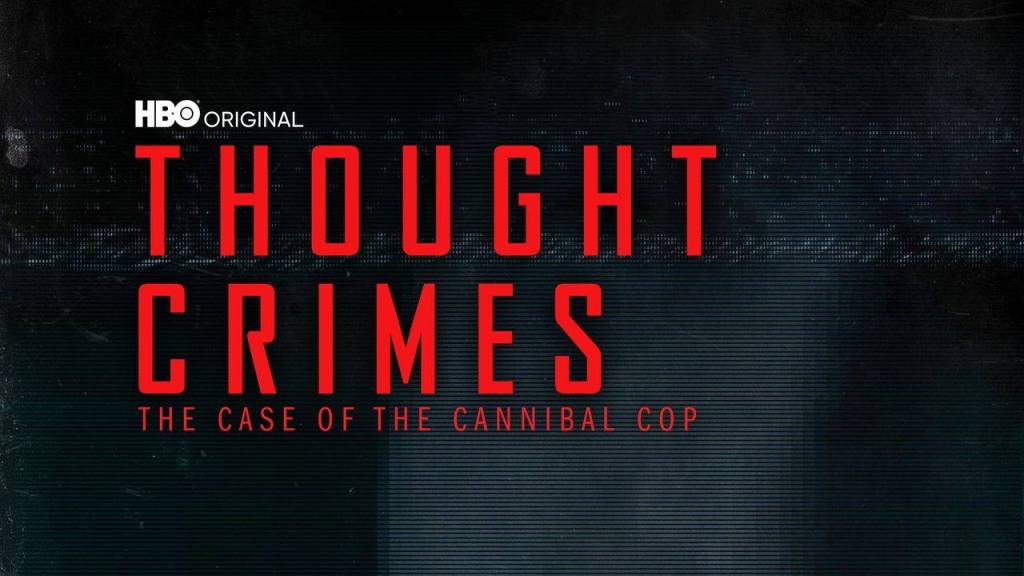
This is a fascinating documentary by the highly respected director Erin Lee Carr who also made such acclaimed narratives as Britney vs Spears.
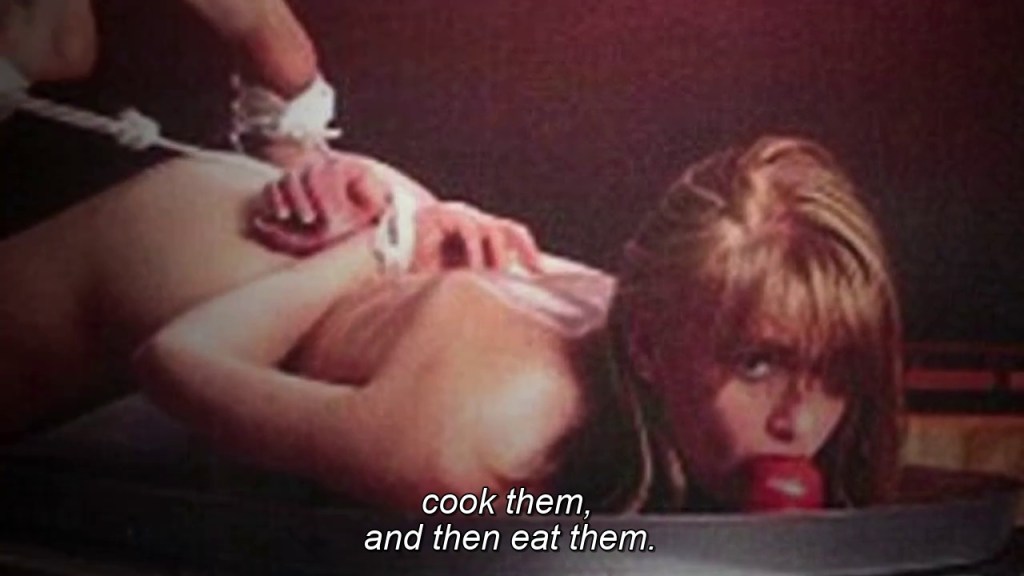
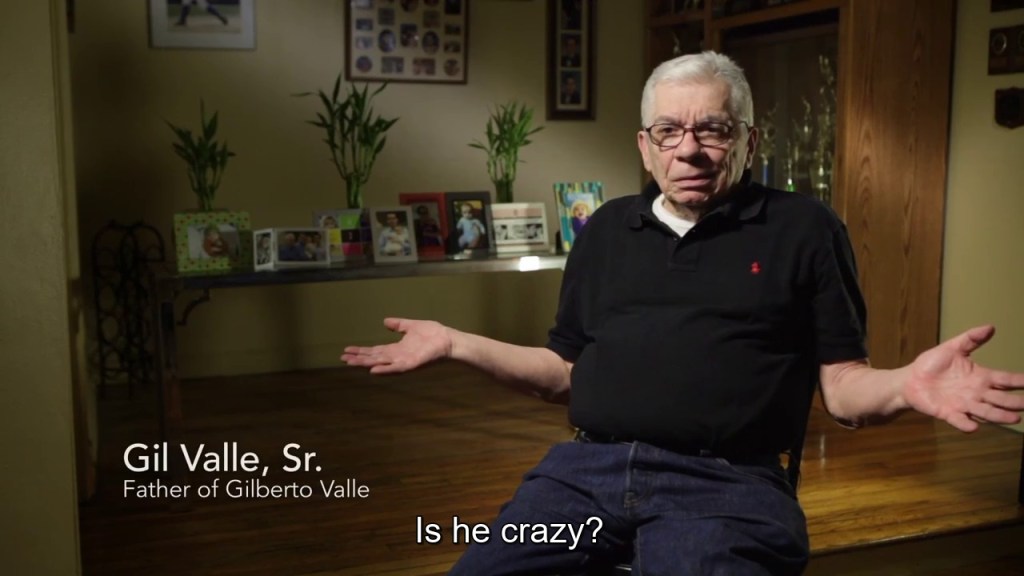
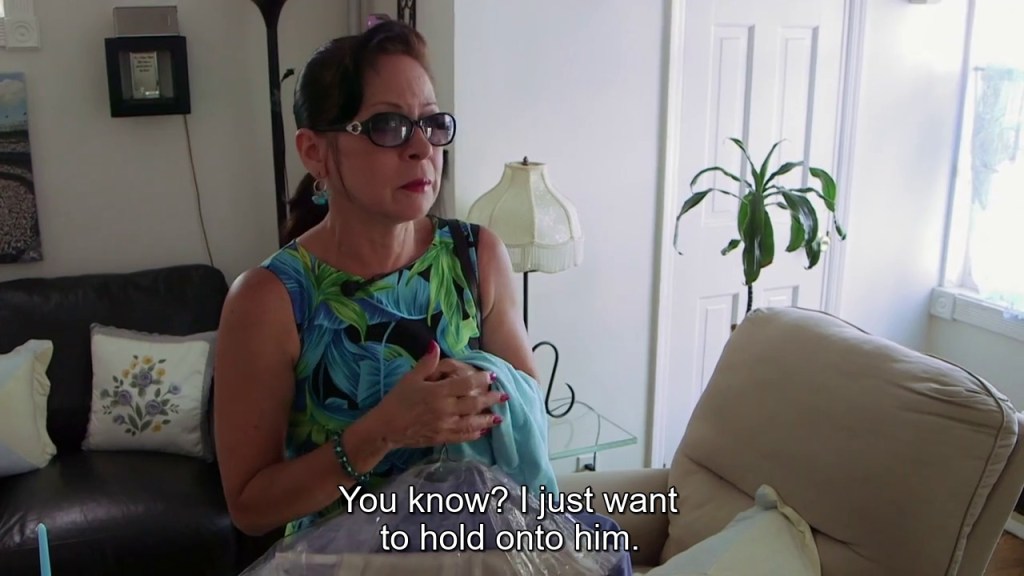
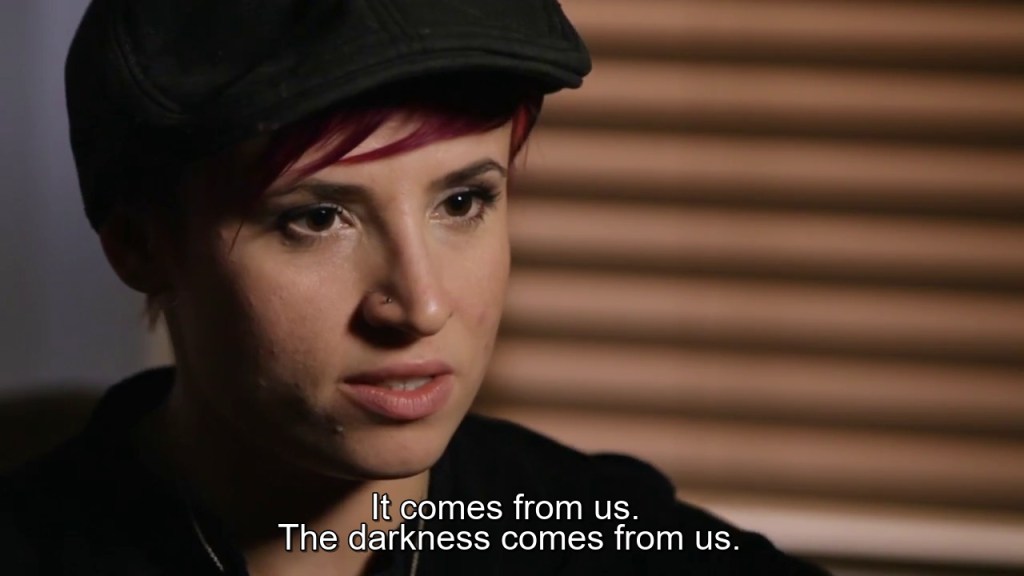
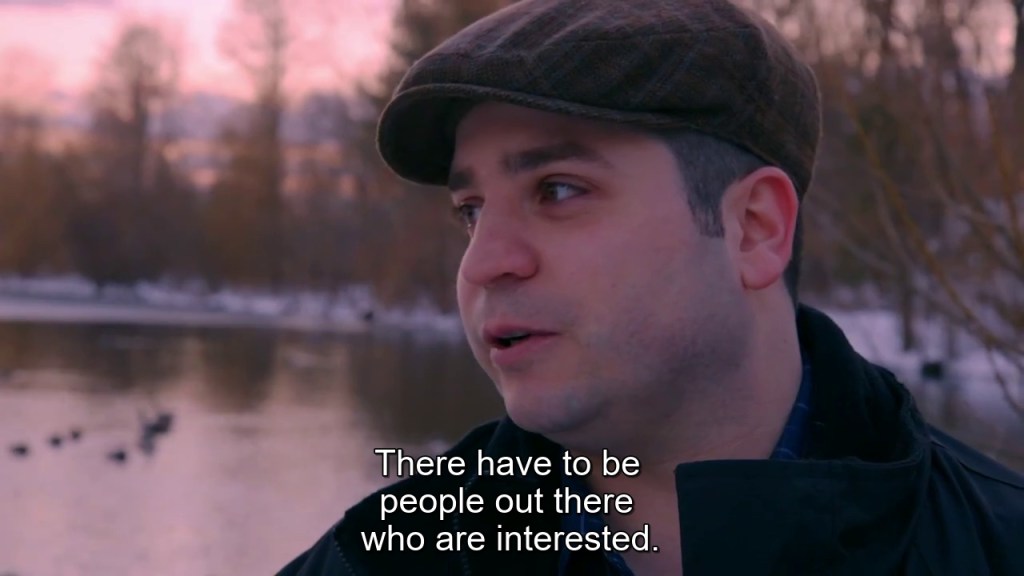
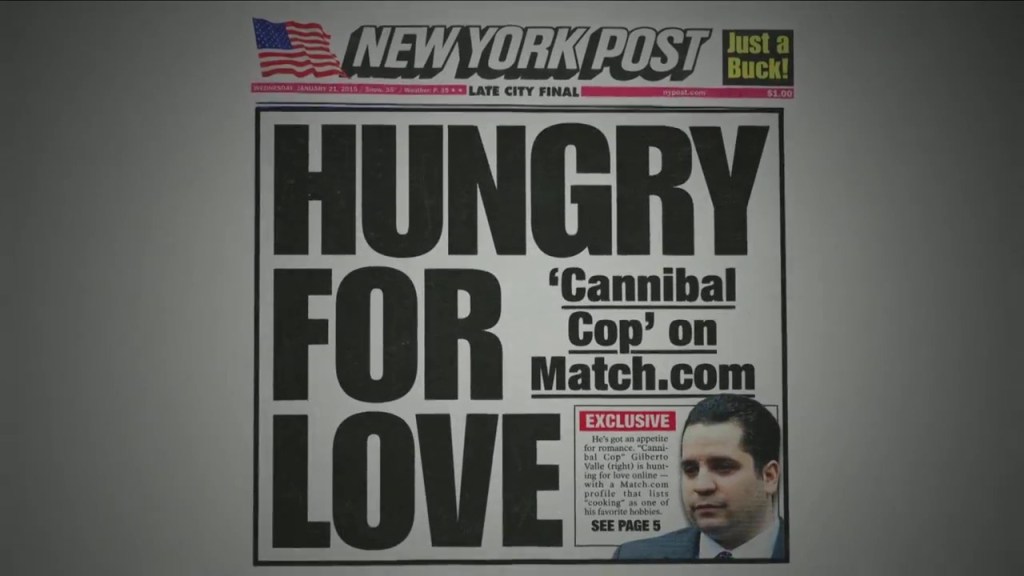
The 81 minute documentary features Gilberto Valle, a New York City Police Department officer who haunted online fetish chatrooms in 2012. There he had detailed very graphically his fantasies of kidnapping, torturing, raping, killing, and cannibalising various women he knew, including his wife and some of her friends.
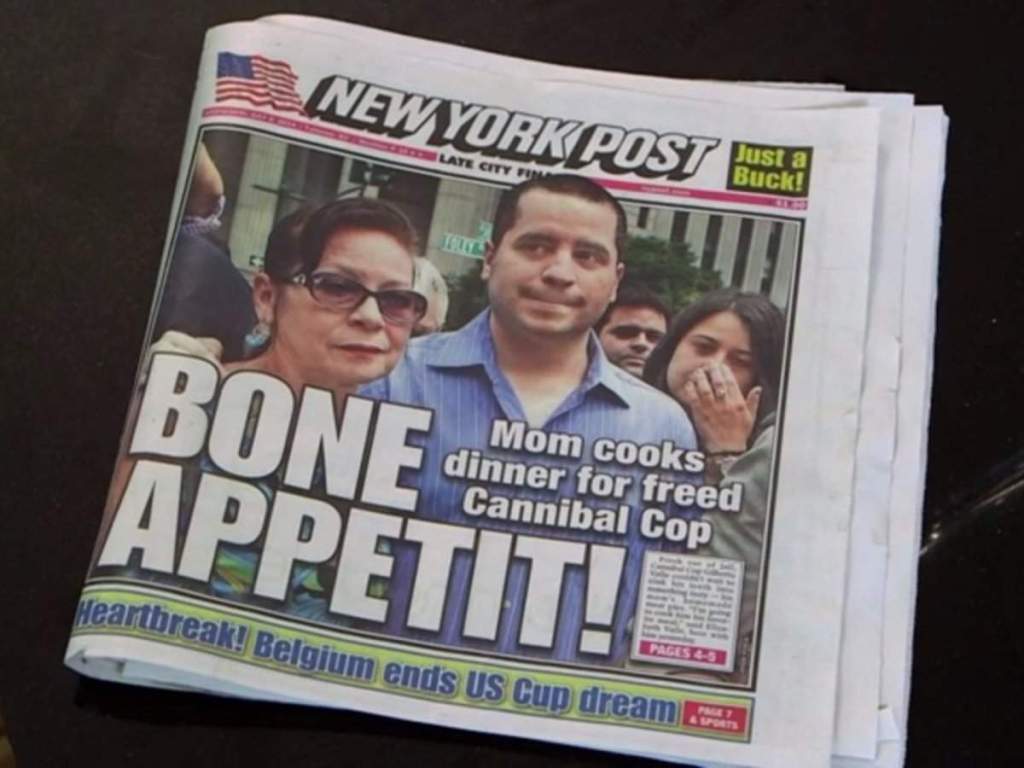
The case became a media circus, due to the fact that he was a cop, and the discovery that he had used, without authorisation, a police database to find the addresses of some of the purported victims.
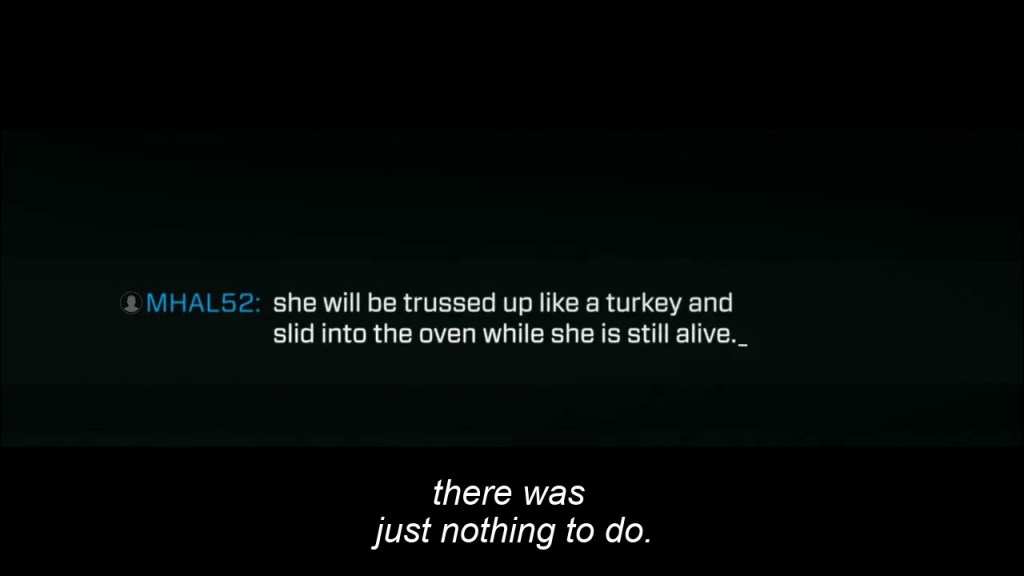
After his arrest, the media dubbed him the “Cannibal Cop“. The arrest was the result of his wife’s suspicions about his late nights, leading to her installing logging software onto their computer, which recorded all his keystrokes and took screen images every five minutes.
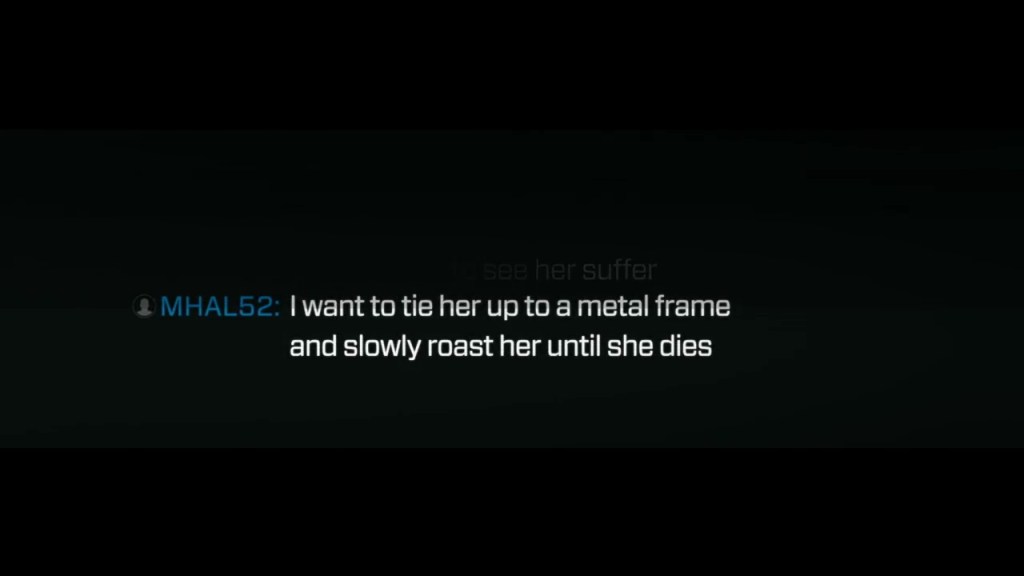
“She will be trussed up like a turkey and slid into the oven while she is still alive. Once she dies I will pull her out and then properly butcher her and cook her meat.”
Valle was convicted by a jury of conspiracy to commit kidnapping and, for the use of the police database, violations of the Computer Fraud and Abuse Act (CFAA). He faced a possible sentence of life in prison. His divorced parents both stood by him, particularly his mother.
The presiding judge, however, disregarded the jury’s verdict and acquitted Valle on the conspiracy charges, ruling that the prosecution had not proven that Valle’s online communications went beyond “fantasy role-play”. On appeal, the United States Court of Appeals for the Second Circuit upheld the judge’s judgment of acquittal and further ruled that Valle’s misuse of the police database did not constitute a violation of the CFAA. The documentary details Valle’s months in jail before the trial, mostly in solitary due to being a cop, and then a longer period in home detention at his mother’s house.
The case drew widespread attention, not least for the ethical question it posed about when the exploration of dark fetishes becomes a criminal conspiracy. The defence team argued that this was a “thought police” case, a reference to Orwell’s novel 1984, and that “we don’t prosecute people for their thoughts”.
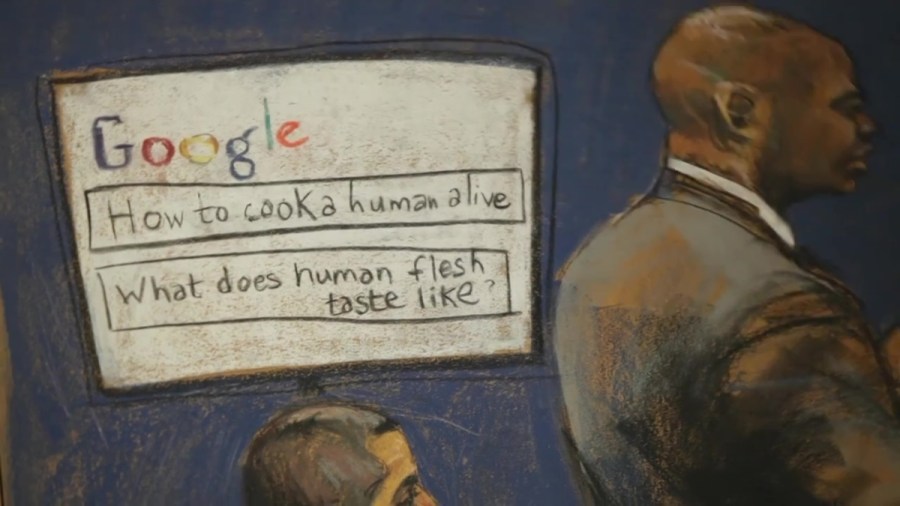
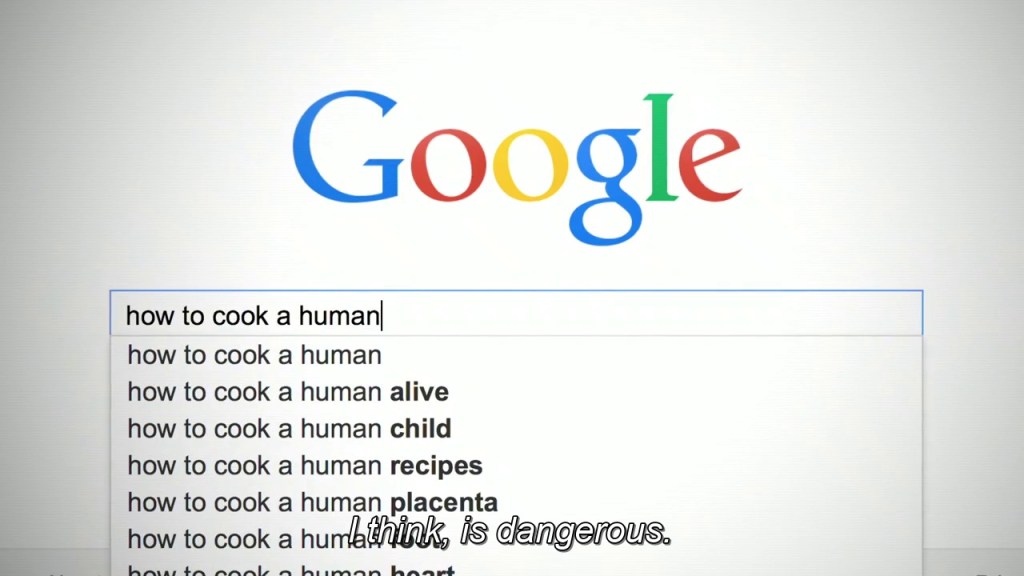
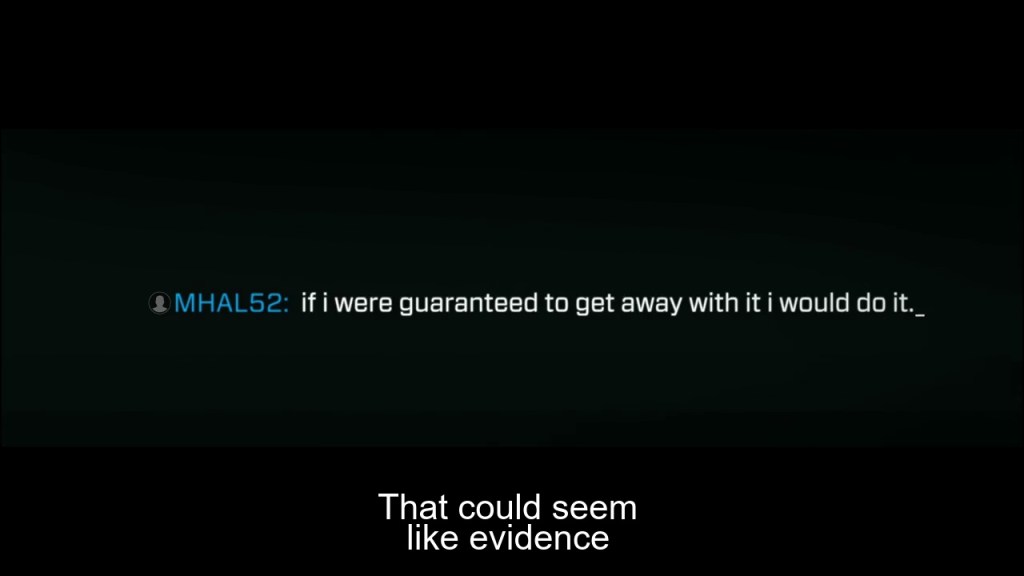
But the jury were convinced by his position of power (particularly the use of the police database to find addresses and other information on his supposed victims) and the fact that, of the 24 chats shown, three had not clearly stated that they were fantasies. Most of the chats involving detailed planning, and were followed by some very imprudent searching on Google. The other 21 had all contained disclaimers, although sometimes these were wistfully followed up with thoughts about being willing if he thought he would get away with it.
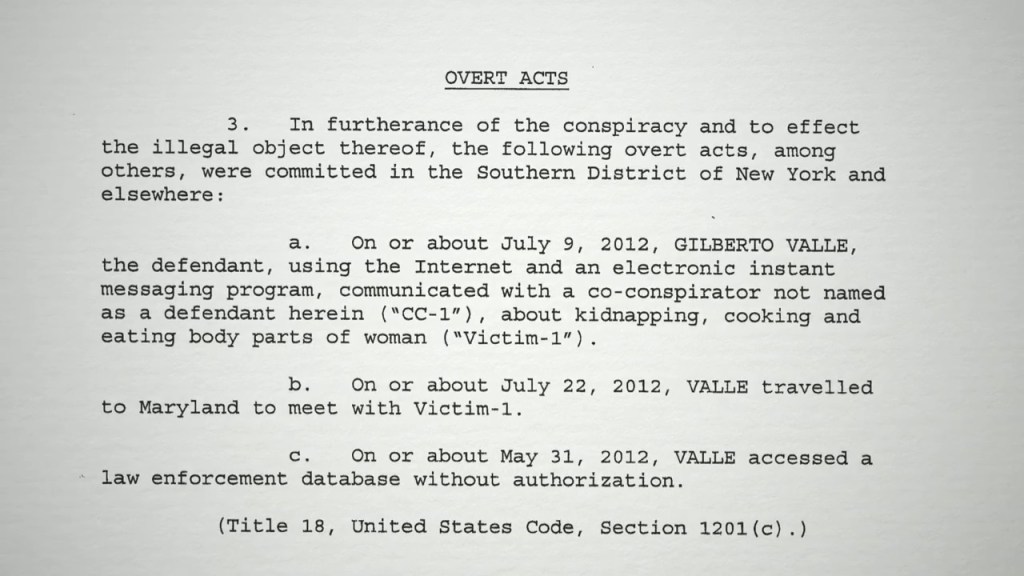
Famous defence attorney Alan Dershowitz explains that conspiracy is not just talking about a crime and agreeing to do it, there must also be an “overt act”.
Valle had travelled to Maryland with his wife and family, and visited an old college friend there, a young woman who was on his ‘list’. This, and his various Google searches, were presented in court as overt acts. The problem for the prosecution was that none of these searches had resulted in any actions against anyone, or even the purchase of the chloroform, ropes, gaffer tapes and so on that they had discussed on line. Some of the debate was absurd – Valle’s basement where women were supposedly going to be tied, raped and murdered was actually a shared laundry room in his apartment block.
Professor Maria Tatar from Harvard is interviewed about the human fascination for violence.
“Our stories move us immediately into a safe space where we can imagine the worst things possible, our darkest side… The Cannibal Cop case worries me because we’re entering a new era, and it’s almost uncharted territory. It’s always been fairly easy for us to draw a line between fantasy and reality. I mean, there are the stories and images, and then there’s what happens in real life. Well, we’re in the postmodern era, where these boundaries are becoming more and more difficult to draw.”
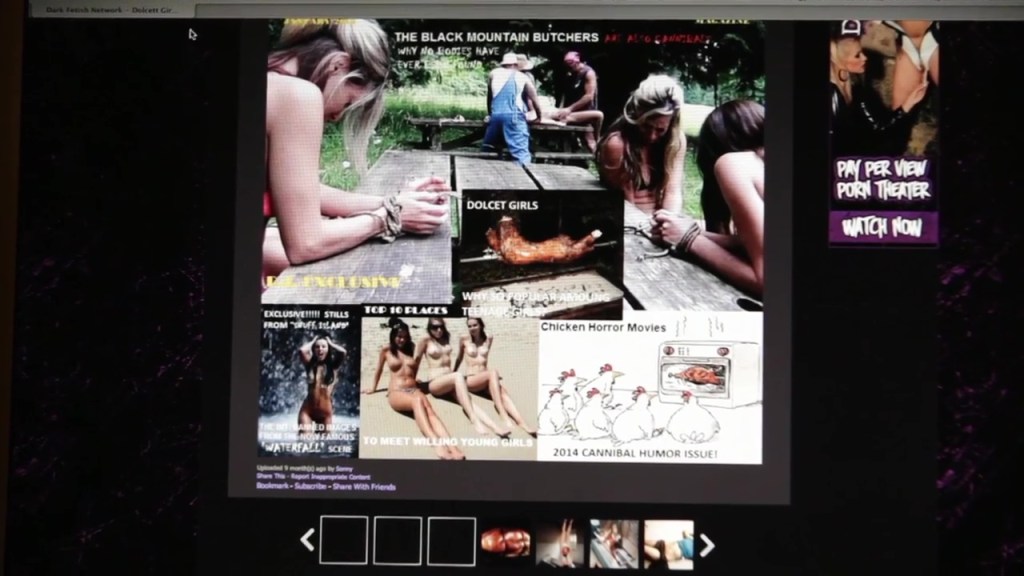
There is also the question of anthropocentrism – one interesting panel on one of the many websites mentioned (some of which are still very much on-line) is a cartoon of a some chickens sitting around watching a “chicken horror movie” – but it’s not on TV, it’s an oven with a rotisserie, on which turns one of their kin. Cannibalism, after all, is only horrifying to humans, because it’s humans being eaten. No other species gives a hoot.
Laurie Penny of The Guardian sums up the difficulty of this case well:
“Anybody should be allowed to write a dirty story on the Internet. Or have a dirty fantasy. Even if it’s gruesome and tasteless, and not something you would necessarily want to talk to your Mum about over dinner. It stops being fine when other real people are involved.”
Can a person be two people – a fantasy projection on the web, and a ‘normal’ homebody the rest of the time? This was Valle on Darkfetish:
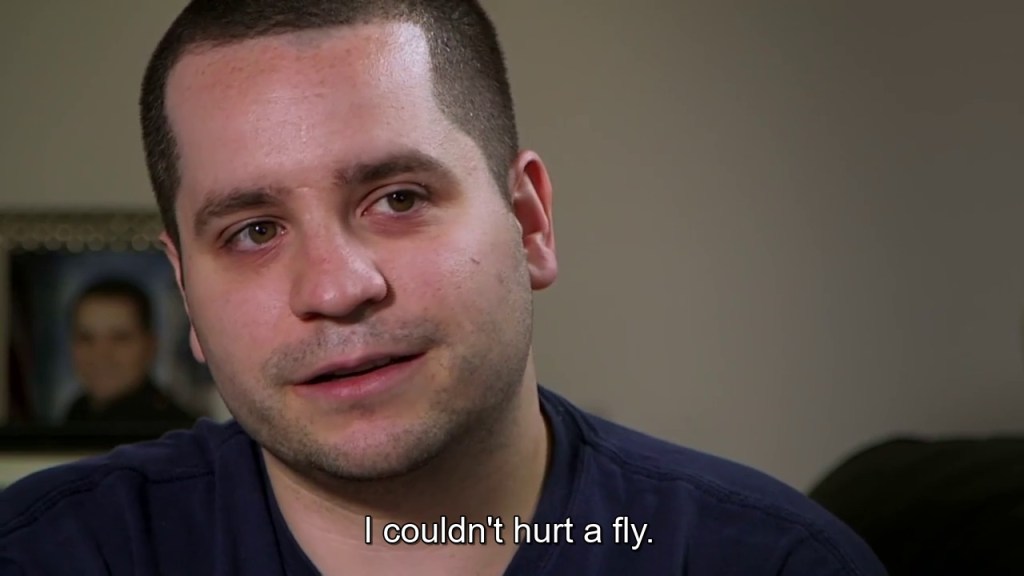
And in the documentary:
But at the same time Valle was protesting his innocence in New York City, another cop named Detlev Günzel, a forensic specialist in Saxony, Germany, was being tried for killing a willing victim he met on a website for cannibalism fetishists, and chopping him up in an S&M chamber. No evidence of cannibalism was presented in that case, but the victim’s penis and one testicle were not found with the rest of the body parts. And the website on which they met billed itself as the “#1 site for exotic meat”.
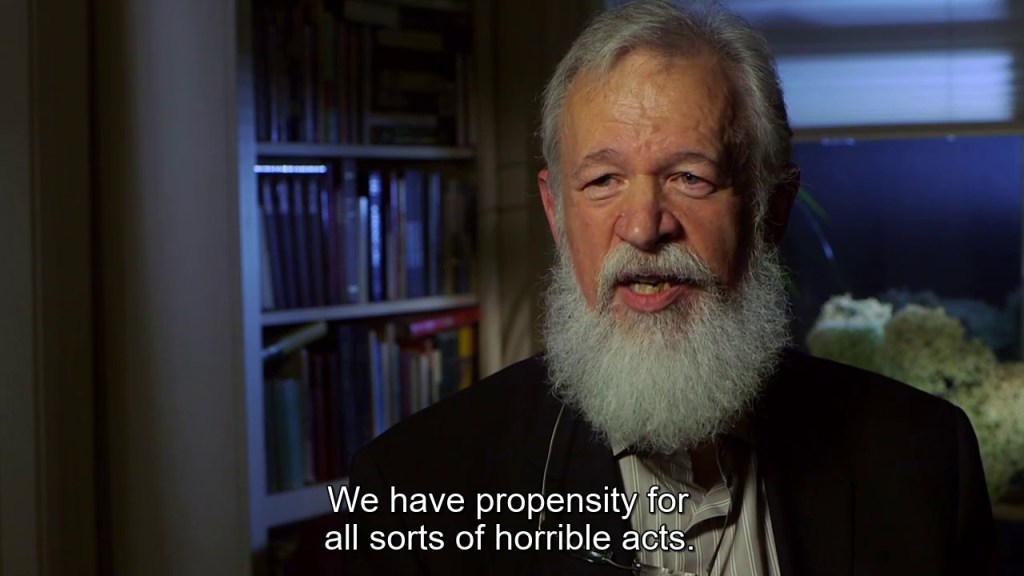
Forensic psychiatrist Michael Welner is interviewed about Valle’s claims that the fantasy was totally disengaged from his family life (even though he uploaded a picture of his wife as a possible victim):
“Perhaps the most significant aspect of this story is that Valle’s sexuality was hidden. If one has to wall off an entire aspect of what turns them on, then one has a fundamentally dishonest relationship with their partner. And when you have a dishonest relationship with your partner, you may be able to maintain appearances, but the story is never going to end well.”
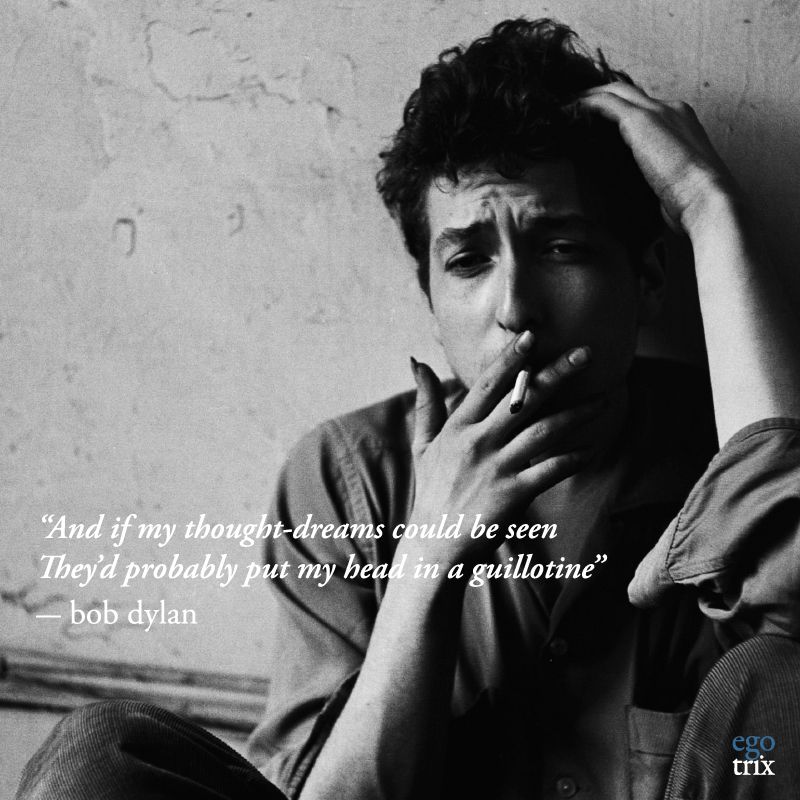
That seems rather idealistic. Who does not have dark secret thoughts that are dangerous or frightening to share? As Bob Dylan wrote almost sixty years ago:
Laurie Penny again:
“What makes somebody an ethical human being isn’t what they think, but what they choose to do with those thoughts. Somebody can be having the most dark, depraved thoughts, but if they don’t do anything about them, or find an outlet that is entirely harmless, then that doesn’t stop them from being a decent human being. And in the gap between thought and action, that’s where people actually discover what kind of human being they are. And I think people have to be allowed to make that discovery and then live with the consequences.”
Valle is now a free man. The conspiracy charges were dismissed on appeal, and the misdemeanour use of the police computer system saw his sentenced to time already served. But he lost his job, his wife and his child. The documentary offers him every opportunity to appear sympathetic – a genuine, kind young man who just made a bad mistake. But as Law Professor James Cohen asks: “How are you going to feel if you let him off and he goes out and eats somebody?”
He wants to date again, but wonders at what point of the date he would bring up the – you know. His dating profile on match.com was discovered by the media and immediately taken down.
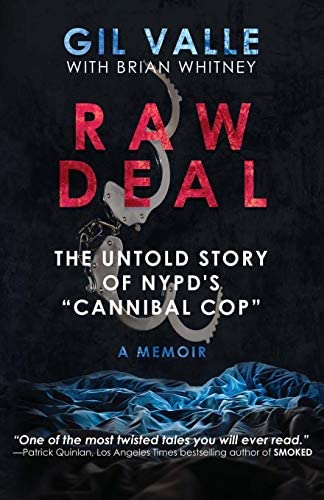
Whatever he does, to the world Gil Valle will always be “The Cannibal Cop.” He has written a book (which he called an “untold story”) about the case, called Raw Deal.
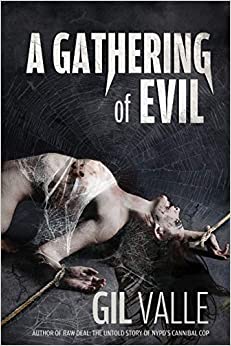
Since then, he has tried to find a way to make a living (he’s not going to be getting back his police job) by becoming an author. His first novel, A Gathering of Evil, came out in 2018, and is described as “an “extremely violent” horror novel about a planned kidnapping and murder.
This was followed in 2019 by The Lake Tahoe Ten Killings about a dying serial killer mentoring a younger one, and The Social Catalogue of #Prey,a story that warns about the dangers of posting too many personal details on social media, as these are very useful for kidnappers, human traffickers, and cannibals.
The modern cannibal is usually hard to identify. Jeffrey Dahmer was the all-American boy next door. Armin Meiwes used to mow his neighbours’ lawns to be helpful. Issei Sagawa was so small and helpless that he seemed vulnerable rather than threatening. Albert Fish was a sweet old man, so charming that the Budd’s let him take their little girl to a party.
They were normal, everyday people, a bit weird, but not monsters.
At least, not in appearance. This is a recent phenomenon – the original cannibals were called anthropophagi (Greek for man-eaters) and were humanoid in shape, but were usually some sort of hybrid – a mix of humans and gods or other animals – strong, ferocious, and clearly not quite human. From the 15th century, the alleged cannibals found by Columbus and other explorers were different in culture and skin colouring, so were easily distinguished, defamed and exterminated. It is only recently, since Jack the Ripper in 1888, that the cannibal walked among us, undetected until the victims were found (or what was left of them).
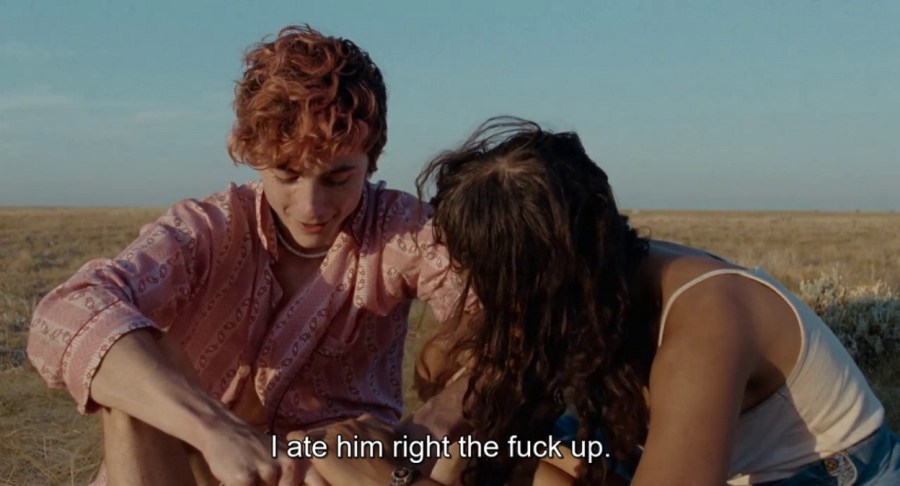
Bones and All presents as a coming of age cannibal romance, taking a sharp turn back into cannibal history for its themes. Maren (Taylor Russell from Lost in Space) is finishing high school, a spectacular end of term in which she is invited to her friend’s sleepover and bites a girl’s finger off, instead of, you know, just admiring the nail polish, as she had been invited to do.
She then goes on the run with her father, who has been keeping her ahead of the law as she grew up (her first human meat was her babysitter when she was three) but now ditches her, with a few hundred dollars and a birth certificate.
It then becomes a road movie, as she travels through the American Mid-West trying to find her mother, attracting suspicion not because of her eating habits but just because she looks too young to be on the road. She comes across another cannibal (they are called “eaters”) in the shape of a weird old man named Sully (Mark Rylance, Bridge of Spies) before meeting up with Lee, played by the love interest of seemingly everyone nowadays, Timothée Chalamet. Chalamet appeared in the third instalment of Guadagnino’s “Desire Trilogy”, Call Me by Your Name), in which he was the love interest of Oliver, played by Armie Hammer, who has recently been generating his own cannibalism headlines.
As a road movie it’s Thelma and Louise mixed with Romeo and Juliet, if they had been cannibals. In other words outsiders, star-crossed lovers, and lots of flesh being torn off dead (and sometimes living) bodies. Road movies rely on meeting new and weird people, and learning about the protagonists (and ourselves) from their stories.
Sully is a lonely old man who teaches Maren about being an eater, and how an eater has a super-power – like a vampire, they have a nose that can smell other eaters at great distances, and can also smell dying people, which allows him to feast on them fairly inculpably, although Maren rather wonders if they should be calling 911 rather than letting them gasp their last breaths. So they are anthropophagi, they smell different, have a strong sense of smell, and so are not quite human. We subsequently discover that the cannibal gene is passed on – Lee’s dad and Maren’s mother were also eaters. They are a breed apart, hybrid humans, who can mate with non-eaters.
They are also presented as ‘savages’ – related to the colonised peoples who were declared cannibal by the imperial powers. Maren is biracial, and Sully (although played by a classical British Shakespearean actor) seems to be presented as a Native American, with a long ponytail and a feather in his hat. The marginalised and disenfranchised are regularly presented as dangerous, thieves, murders, cannibals, regardless of any evidence.
An interesting character from colonial times is the wendigo, a figure from Algonquin mythology who eats his fellow humans and draws on their strength to grow huge and powerful, which only makes him hungrier and deadlier. Sully tells Maren that her fate is to need more and more flesh as she gets older.
Just like the wendigo, who is an indigenous version of the anthropophagus, and one that was used by the victims to characterise the European invaders and their voracious appetite for land and gold. The phrase “bones and all” reminds us of the colonial greed that denied the humanity of those invaded and insisted on taking everything, leaving nothing and nowhere to go but a few reservations or missions in remote, unprofitable areas. Eating bones and all is also a perfect way of getting rid of the evidence.
The title Bones and All is taken from the book of the same name by Camille DeAngelis, but the phrase was not used in the book – it just meant that Maren and the other eaters would automatically eat the whole person, bones and all. Except for her first, the babysitter, because she was too small to swallow bones – she left a pile of them, a pool of blood, and the hammer from an eardrum. In a movie, though, it can be harder for the viewer to maintain a willing suspension of disbelief, so eating the victim bones and all becomes a rite of passage – the next level of being an eater. Maren and Lee don’t know how to eat a person bones and all, so they are not yet postgrad eaters. Maren puts it succinctly – “that’s impossible.” But what about eating the flesh? Armin Meiwes took ten months to eat 20 kilograms (44 lb) of Brandes, but we are asked to accept that Maren and Lee can eat a whole body in a night.
But then, everything is ambiguous in this story, which has been widely described as a metaphor for otherness and queerness. The story is set in 1981, as Ronald Reagan is entering the White House. Being different, queer, compassionate, seeking social justice were all considered laughable or dangerous. Greed was good, and so eating a victim bones and all might have seemed laudable. Drug addiction was escalating, and some have seen the cannibalism in this film as a metaphor for this as well – Maren and Lee can’t go too long without their feed, and will do whatever they need to in order to get it.
Some of the ambiguities are more subtle: Maren looks young, which bothers various people she deals with, although she is 18 and technically an adult in most places. Lee falls in love with her, but is also capable of appearing to be cruising for gay sex.
He chooses a carnival worker who has been mean to a child, leads him into the bushes and masturbates him, slitting the man’s throat as he orgasms. It was not until twenty years later that gay sex was legalised in the US, and this man’s secret desire for same sex petite mort becomes his real mort. They then discover that the man had a wife and family, and are stricken with guilt, because apparently eating some people is OK, but not family people.
Then we have the eaters – Maren is naïve and caring, horrified by her need to feed. Lee is a puny dude who kills seemingly effortlessly, but like Hannibal Lecter, Lee prefers to eat rude people – when we first meet him, he challenges a rude person in a supermarket and leads him to a deserted shed where he kills and eats him. Sully is an senior eater, so has to eat regularly, but says he tries not to kill people – sniffs out those who are dying, but later he gets violent when Maren rejects his advances.
Jake (Michael Stuhlbarg) is an eater who has graduated to eating bones and all, but he is accompanied by a friend named Brad (David Gordon Green), a cop (!), who is not a natural eater, but just likes doing it. Maren accepts that she and Lee have to eat people, but is revolted by Jake’s wish to do the same. We’re back to the old debate of nature versus nurture. Are people born queer? Or with addictive personalities? Or psychopathic? Or cannibalistic?
The Director, Luca Guadagnino, has made a number of changes from the book, which are examined elsewhere. The most obvious one, though, is that Maren is brought up and then eventually abandoned by her mother in the book, but her father in the film. This changes the dynamic considerably, because we now have two eaters in the family, both female. The eater parent in both versions is locked up in an asylum, having eaten their own hands, but in the movie it’s her mother, (a short but superb appearance by Chloë Sevigny). We arrive at last at the modern horror archetype, the “monstrous-feminine”, the figure that confronts the male viewer with his fears of being castrated (Freud’s favourite explanation), as well as “the monstrous womb” – a terrifying image of a “black hole which threatens to reabsorb what it once birthed” (Creed, The Monstrous-Feminine, p. 27). The female cannibal is quintessentially monstrous-feminine, terrifying men with the antithesis of popular female stereotypes of giving life and nurturing. In the book, Maren only eats boys or men (after the initial babysitter) – she is drawn to eat those who seek to be close to her. In both versions of the story, the ambiguity is clear to us and the female cannibals – they have a compulsion to eat, but don’t want to hurt others.
Maren’s solution is to try to act normal, fall in love, get a job, get “clean” of the eating. Her mother’s was to lock herself away, and even then she chewed off her own hands.
To me, the most fascinating ambiguity in this film and in our societies generally is the question “who can you eat?” Eating some animals is considered just “normal” – Lee is chewing on bacon (pig flesh) served to him in a very respectable café, and has been working in an abattoir. When they need money, he and Maren rob the abattoir at night, later sitting on the overhead walkway watching the cows who are to be killed for legal, non-controversial eating, when Maren observes
“every one of them has a mom and a dad, sisters, brothers, cousins, kids. Friends even.”
The real question, Derrida says, is not what to eat but how to eat well. Perhaps, as Chalamet has said, it is impossible to live ethically – every act of consumption or energy usage wrecks the environment a little bit more. For some carnivores, this is seen as a ‘bones and all’ issue, they call it “nose to tail” – killing is OK, but wasting any part of the animal is the real crime. But as Maren says, cows also feel terror, pain, bereavement when their babies are taken from them. The author of the book, Camille DeAngelis, went vegan before writing it, indicating that the problem of who to eat, the rude or dying, the human or the cow, weighed on her, and the scene filmed in the slaughterhouse indicates that Guadagnino may have felt the same. Cat Woods’ review in Salon reminds us that Brad, the off duty policeman, chooses to be a cannibal:
“Why would he hunt, slaughter, and feast upon human flesh if he doesn’t need to? And, if we the audience can be repulsed by that – and his evident choice to slaughter and eat flesh when there is abundant satiety that doesn’t cause violence, pain and loss – then perhaps we need to venture a little deeper into our own psyches and ask: Why would we feast upon flesh if we don’t need to?”
This is a seriously good film, with a great cast and, in the midst of all this carnage, we are treated to magnificent scenery beautifully captured by cinematographer Arseni Khachaturan. I have not revealed the ending, and hope I have not revealed too many other plot points. I recommend you go see it.
What a year! These are some of the cannibalism stories, films and songs that arrived in 2022, with links back to the original reports, so that you can look up the ones that catch your interest, and so that this blog does not take all of 2023 to read.
January
A German man dubbed by the press the ‘cannibal teacher’ was convicted of murder and sentenced to life in prison. Stefan R., a 41-year-old maths and chemistry teacher, had apparently searched on the dark web for terms such as “long pig” and “fatten and slaughter people”. The man claimed his victim died of natural causes after a (presumably vigorous) sexual tryst, and he had removed the man’s penis “since my DNA could still have possibly been present due to the oral sex I performed”. In other words, he didn’t mind a bit of mutilation and perhaps cannibalism, but was concerned not to be “outed” as gay.
Djalma Campos Figueiredo, 46, was arrested in Brazil. He had been sentenced by the Court of Justice of Rondonia in the city of Porto Velho to 42 years in prison for several counts of aggravated murder but had escaped custody. The Civil Police alleged he would eat his victims’ eyes and ears and drink their blood.
Meanwhile, the Zamfara (NW Nigeria) State Police Command arrested a 57-year-old man, Aminu Baba, for allegedly eating and selling human body parts. Baba and three others were arrested after the murder of a nine-year-old boy. The Police Commissioner reported that Baba had “confessed that he usually ate the body parts and identified the throat as the most delicious part. He also sold some of the human parts to his customers.”
February
A war between rival cartels in the Mexican state of Zacatecas graduated from the normal torture and beheadings to systematic cannibalism, with new sicarios (cartel assassins) being required to eat parts of their rivals before being allowed to graduate (or remain alive).
In Afghanistan, we discovered that the Taliban were rounding up drug addicts and putting them in rehabilitation centres to detox, which is a nice thought, except that they gave them little or no food (“cold turkey” does not count), so they apparently resorted to cannibalism.
In the Indian state of Assam, a man who had had perhaps more than a few drinks smelt cooking meat in a crematorium in a Hindu cremation ground. He helped himself to a few portions of the body, but was caught by villagers and handed over to police; but not before he had eaten about half of his purloined flesh.
May
A man calling himself The Chinese Zodiac Killer was arrested by the FBI in Jefferson County, New York for sending letters to media outlets, government offices including the White House, and other organisations, claiming he killed people and ate their flesh, and that he plans to kill more. He seems to have based his story on the Zodiac killer who terrorised California in the late 1960s. The original Zodiac Killer (who was not accused of cannibalism) was never caught, but this one was easily found, posting his threatening letters (what century is this again?) at the same letterbox he had previously used.
June
The case against James David Russell (see above in April) went to preliminary trial. Sadly, the judge threw out the charge of cannibalism, saying there was insufficient evidence to pursue it, and went with the rather more mundane offence of first-degree murder. Since this has a life sentence attached, the practical effect of dropping the cannibalism charge is negligible, but as the first cannibalism case in the USA, it would have been fascinating.
A rumour swept the Internet that the actress Anne Hathaway was a cannibal, based on a cryptic Tweet saying “police didn’t find human remains and evidence of cannibalism in her LA home that she sold in 2013.” We were all later astonished to discover the whole thing was a hoax.
The effects of the war in The Ukraine were starting to be felt in Europe and the UK (whose people often do not think it’s part of Europe). The Russians fell gladly on a statement from one Jeremy Clarkson (a car enthusiast) that “Hunger makes people eat their neighbours” to predict that the British will soon be a nation of cavemen feeding off each other. Of course, if you’ve ever been to a soccer match…
industrial/electronic music duo SKYND released their tenth song, called ARMIN MEIWES, about the German man who killed and ate a willing volunteer.
The New York Times raised the temperature of the culture wars with its review of several books, movies and TV shows about cannibalism, culminating in the (somewhat tongue in cheek) statement that “Cannibalism has a time and place… that time is now.” The right-wing press predictably jumped on the story accusing the NYT of everything from irresponsibility to Satanism.
Also in New York, Steven Spielberg whipped out his cell phone to record Marcus Mumford singing his new work, a haunting song called “CANNIBAL“. The song might be about love and lockdown, or it could involve child abuse.
DISCOVERY+ launched a three-part series called HOUSE OF HAMMER. The series explored allegations from various girlfriends of the actor Armie Hammer that he was a cannibal, or had at least threatened them with cannibalism. It also examined his relatives, many of whom seemed to be presented as even worse specimens than Armie.
Russia discovered the war was not going well in Ukraine, and started recruiting murderers and rapists to be sent to the front as reinforcements. Also – one cannibal, Yegor Komarov, whose man-eating exploits we learned about in December 2021.
October
In the Indian state of Kerala, there were allegations that a couple who ran a massage centre were bringing women home not so much for massages, but for human sacrifice and ritual cannibalism.
In the US state of Michigan, Mark David Latunski, who had been arrested in 2019 for killing and eating his Grindr date, finally came to trial and entered a plea of guilty.
November
Issei Sagawa, the “Kobe Cannibal”, died of pneumonia at the age of 73. Sagawa had killed and eaten a young Dutch fellow-student in Paris in 1981. He was found insane and sent back to Japan, where he was released and lived free ever since, making movies, writing books, and even becoming a restaurant reviewer.
Rapper Comethazine released Bawskee 5, the 12th song on which was called “CANNIBAL“.
Back in Brazil again! A patient in the Municipal Hospital of Nuovo Hamburgo in the state of Rio Grande do Sul attacked other patients, screamed and spat at people, and eventually chewed off his own fingers and toes. A witness said “while he was chewing his own meat, you could hear the crackling of bones in his mouth”.
December
Mark Latunski, 52, was sentenced to life in prison without the possibility of parole on December 15 for the murder of his Grindr date three years previously. Kevin Bacon, 25, had been killed and mutilated by Latunski on December 24, 2019 at Latunski’s Bennington home. Latunski pleaded guilty in September to killing Bacon and eating one of his testicles, after stabbing him in the back and slitting his throat. In a victims’ impact statement, the victim’s father said “Evil does exist, and it touched us.”
On the screen
The big news on streaming television this year was Jeffrey Dahmer, the “Milwaukee Cannibal”, who took Netflix by storm with not one but two titles, despite having been killed by a fellow prisoner in 1994.
Ryan Murphy and Ian Brennan’s docudrama called “MONSTER: THE JEFFREY DAHMER STORY“, which logged nearly two hundred million hours of watching in its first week of release
Joe Berlinger’s third series of CONVERSATIONS WITH A KILLER, featuring previously unheard defence attorney tapes of interviews with Dahmer.
Lots of new cannibalism feature films in 2022, some of which I will catch up with next year:
Luca Guadagnino’s BONES AND ALL, featuring Timothée Chalamet and Taylor Russell as teenage cannibals in a tender and gory road movie, has been getting heaps of publicity.
Mimi Cave’s FRESH is a charming romcom, until the knives come out. A fascinating insight into ultimate consumerism.
Leatherface came back (again!), this time older but no wiser. This is the ninth (!) instalment of the TEXAS CHAINSAW MASSACRE franchise, and went straight to Netflix.
John Ainslie’s DO NOT DISTURB depicts a couple renewing their romance by taking peyote, but finding that this particular variant of the drug awakens a taste for human flesh.
Leatherface came out to play again, this time as a fan-film prequel called THE SAWYER MASSACRE. Made on a shoestring but arguably superior to the other sequels and prequels.
Liam Regan’s EATING MISS CAMPBELL, in which a vegan, goth student falls in love with her new English teacher and develops a taste for human flesh.
Sean Patrick Flanery’s enjoyable road movieFRANK AND PENELOPE, in which a couple take on a cannibal cult in the wilds of Texas.
Timo Vuorensola’s JEEPERS CREEPERS REBORN, the umpteenth take on a supernatural tale of the demon who eats people and incorporates their bodies, but only every 23 years.
Fred Olen Ray’s PIRANHA WOMEN offers a totally believable story of women who turn into man-eaters because of an anti-cancer treatment.
THE MENU has Ralph Fiennes as a demented chef and Anya Taylor-Joy as the fly, as it were, in his menu plan. There is no obvious cannibalism involved in the movie, but there is some speculation on-line about the final cheeseburger.
‘Ted Lasso goes cannibal’ in Adam Leader & Richard Oakes’ FEED ME, a jolly rant in which a grieving man wants to die, and a nearby cannibal wants to help him, but by instalment.
And now for something completely different
From out of the future, we have some new AI software of which Shital Shah, a senior research engineer at Microsoft, said:
ChatGPT was dropped on us just bit over 24 hours. It's like you wake up to the news of first nuclear explosion and you don't know yet what to think about it but you know world will never be the same again. Here some interesting snapshots of this "explosion"🧵:
ChatGPT is “a large language model that has been trained to generate human-like responses to text input.” In other words, you can ask it questions and receive (often) intelligent answers, rather than a series of links, like Google. You can try it for free (at the moment) here.
Naturally, I asked it questions such as “is meat murder” and it replied:
“Ultimately, whether or not eating meat is considered murder is a matter of personal belief and moral judgement.”
So, I barked back, like a prosector out for a conviction, “Where does that leave the cannibal?”
“Whether or not eating other humans is considered murder would also be a matter of personal belief and moral judgement. Most people would consider cannibalism to be morally reprehensible, as it involves the killing and consuming of another human being. However, there may be some individuals who do not see it that way, and their personal beliefs and moral judgement would dictate their view on the matter.”




























 The Cannibal Guy