
The revenge of nature: WENDIGO (Larry Fessenden, 2001)

Wendigo is a film written, directed and edited by Larry Fessenden, who would, a few years later, make an episode of the TV horror series Fear Itself called SKIN AND BONES, which was about a guy who disappears on a hunting trip with friends and returns cold, thin and desperately hungry. He has, we quickly discover, become a Wendigo! In this, the earlier film, there are also crazy hunters led by Otis (John Speredakos), who are mad with our protagonists for driving into a stag (the traditional symbol of the Wendigo) who they have been tracking and, worst of all, breaking his antlers, which are apparently very valuable. The Wendigo is already there in their cabin as a “dark presence”, so we just need to be introduced.
First, the really good cast – George (the Dad) is played by Jake Weber, from the 2004 remake of Dawn of the Dead and Meet Joe Black. He is a super-stressed New York photographer, and the last thing he needs is a run-in with a bunch of redneck hunters. Kim, the Mom, is played by the wonderful Patricia Clarkson (most recently starring in Gray) and the kid, Miles, is played by Erik Per Sullivan, who was Dewey in Malcolm in the Middle.
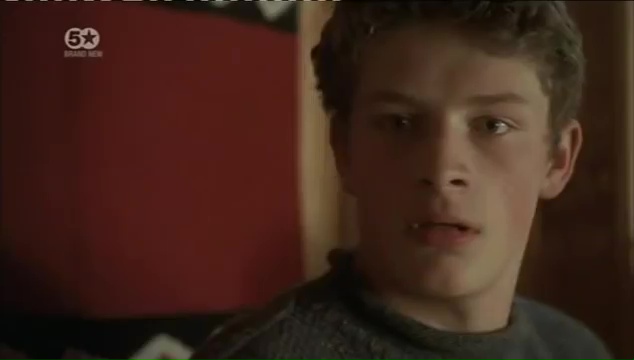
George is more disturbed by the rednecks than he is willing to let on, telling Kim, who is a psychologist, that he is distressed by the “abyss” between him and them, with no possibility of communication. She tells him that:

“It’s very archetypical for the civilised man to feel threatened by the man of the country.”

George is utterly divorced from nature, seeing it as alien and menacing. So, the other last thing he needs to meet is a Wendigo, a figure on the front line of the human war on nature.

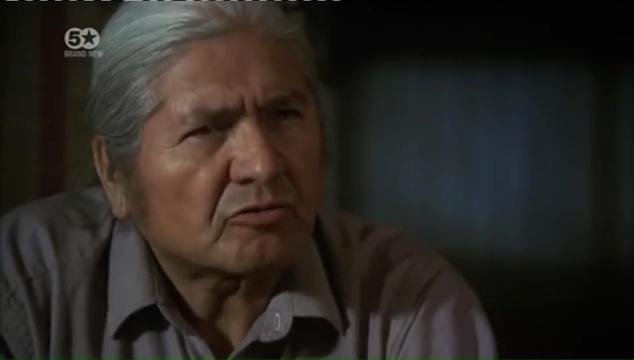
They head into town to buy curry (as you do in small towns) and Miles meets in the store a Native American Elder who tells him about the Wendigo, a small carving of which Miles is drawn to.

“The Wendigo is a mighty powerful spirit… it can take on many forms, part wind, part tree, part man, part beast. Shape shifting between them… It can fly at you, like a sudden storm, without warning, and consume you with its ferocious appetite. The Wendigo is hungry, always hungry. The more it eats, the bigger it gets, and the bigger it gets, the hungrier it gets, and we are hopeless in the face of it. We are consumed, devoured…. There are spirits that are angry. Nobody believes in spirits anymore. Doesn’t mean they’re not there.”

The Wendigo is a figure from the mythology of the Algonquin people of North America. They lived in a land of long winters where the competition for food would have been intense and cannibalism of the dead probably not unusual. Myths help to spell out behaviours that societies need to discourage – cannibalism could decimate small, isolated communities. That myth, of the voracious monster whose hunger only grows with feeding, was later applied to the invaders, the colonists who took their land, their produce and often their lives. In such a struggle, the Wendigo, as an original figure of their culture, could take almost a vengeful role, eating the technologically superior invaders. George inadvertently confirms this, telling Miles “the Wendigo only goes after bad guys.”

The Elder tells Miles he can keep the figure, but there is no sign of him when Kim is subsequently asked to pay for it. He is presumably one of those spirits, not angry but advisory.  He warns Miles about the “cry of the Wendigo”. The Wendigo is clearly (to the audience) imbued into that carving.

Then the Wendigo strikes. Or is it the rednecks? Did the Wendigo knock George off his sled, or did it carry him home after Otis shot him? Was it the revenge of nature, or society? When the Wendigo later demands of Otis “Give me my liver!” it voices the cry of revenge of every animal, human and otherwise, killed for fun or profit. When Otis meets justice, Miles awakes with his Wendigo figure in his hand.

It’s a great cast, with an absorbing plot, although it gets a bit lost at the end. But the questions it asks are compelling.  The New York Times critic wrote:

“Mr. Fessenden carefully blurs the line between psychology and the supernatural, suggesting that each is strongly implicated in the other. The rampaging Wendigo may be a manifestation of Miles’s incipient Oedipal rage, but at the same time it is a force embedded in nature and history.”

The Wendigo carries so much symbolism, besides the horror trope in which he seems so regularly to find himself, such as in Fear Itself or the classic Wendigo film, Ravenous, which was made a couple of years before this film. He expresses the anger that rages within George, the father who cannot show interest in his son’s curiosity because of his own issues brought with him from the city, frustration and fear of failure. And we can infer (as the NYT does) that Miles himself feels an Oedipal rage toward his father who, Freud tells us, is the child’s rival for sexual possession of the mother throughout childhood. The voracious hunger comes from an even earlier stage, what Freud called the “cannibalistic stage” of babyhood, where the infant wants to own the breast, consume it so it will always remain in his possession. George’s playacting the cannibal, attacking and pretending to eat Miles, is a common parent/child game, but is also deeply revealing of these forces hidden deep in the unconscious.

At yet another level, the Wendigo represents the revenge of nature on the civilised, those whose insatiable hunger for growth decimates the land and finds sport in killing its inhabitants, be they human, deer or any ‘other’. The antler is a weapon used by the stag, a normally shy and timorous animal who becomes a formidable fighter in the mating season, and the size and strength of its antlers represents both its sexual and fighting prowess. In the hybrid shape of a human and a stag, the Wendigo recasts humans from hunters to hunted, from predator to prey. This is precisely why Hannibal Lecter is shown in Wendigo form throughout much of the three seasons of the television series Hannibal. Hannibal is the civilised, rational, erudite man of science, a psychiatrist who knows of the dark forces inside the human psyche, and has determined that the human is just another animal, no more deserving of respect or inedibility than any other species, and even less if he happens to be rude. Who judges that – the supernatural force, the inhuman, the less-than-human or, in Hannibal’s opinion, the more-than-human? Whichever you choose, it appears as the Wendigo.

“You are what you eat” – EAT A SWEDE, 2021

The world’s most popular pastime is eating. Plants “eat” carbon dioxide and water and turn it into carbohydrates, which animals then eat. Some animals then eat those animals. The theologian William Ralph Inge described nature as “a conjugation of the verb to eat, in the active and the passive”. Everyone is eating most of the time. When appetite becomes too voracious, we end up eating each other, or being eaten.

The video starts with members of a focus group being told they were trying human flesh.

The video shows Erik Karlsson as an entrepreneur who is trying to persuade investors to back his project to grow human meat for sale in supermarkets, and especially meat that is grown from the cells of Sweden’s national treasure, the actor Alexander Skarsgård. He then tries to persuade Skarsgård to donate some cells, for which he offers a partnership in the company. No dice.

The trailer at the top of this blog links to a website which explains the theory behind the longer clip, which is also available on YouTube: Eat a Swede (which has subtitles) or at the Eat a Swede website. Karlsson tells us that

“In 2050, the global population will reach 10 BILLION. The demand for food is expected to increase by 98%.”

There is no doubt that current meat industries are environmentally unsustainable. Humans slaughter some seventy billion (70,000,000,000) land animals every year for food, and trillions of sea animals. Yet most of the world’s people eat far less meat than Americans or Australians, and biologist E.O. Wilson estimated that for the rest of the world to reach those levels of consumption would require four more planet Earths. Other options for replacing meat include fungus, insects, larvae, etc. But why would we eat maggots (or pigs) when we have flesh from clean-living, environmentally conscious Swedes?

So anyway, meticulous detective work (AKA a quick glance at the website) revealed that this is not in fact a real company, nor are they growing real human flesh in the lab. It’s what they describe as “edutainment” or “mockumentary”. The Swedish Food Federation – an industry organization with about 800 member companies from Arla and Absolut to Oatly and Orkla – wanted to share their knowledge about sustainable food production, and in the process increase the competitive edge for Swedish food. Release a website on sustainable agriculture and you may get a few dozen likes. Make a “mockumentary” on growing human meat and

The people in the focus were actually eating “Swedish tenderloin” cut from the loin of an animal who had no doubt suffered and died at a tender age (as the name seems to imply). Probably a cow, although there is also a cut known as tenderloin from chickens, but for this process, I would think they would choose a cow because, apparently, our flesh tastes like beef, according to some people who have tried it (others say pork from wild pigs).

But the technology is already here. It is possible to grow cells in the laboratory, taking cells from an animal (and let us not forget that we ARE animals) and culture them into, well, meat. Clean meat, often called in vitro or lab meat, is meat grown in sterile laboratory conditions from animal cells. It is not plant-based meat, as so many supermarkets now offer, but actual flesh, grown in a nutritional medium, instead of cut from the carcass of a slaughtered animal. The idea is the basis of Brandon Cronenberg’s film Antiviral. While this may be a potential threat to the meat industries if /when it becomes commercially viable, it presents an immediate challenge to our culture of carnivorous virility, the ideology that makes us feel superior to other animals, demi-gods, the sacrificial violence that maintains the abyss between humans and other animals while bolstering the image of masculinity in most cultures.

More relevant to this thesis is the fact that clean meat could be grown from any animal cell. Want to try whale meat? Like to see what dodos or dinosaurs tasted like? Find a readable chain of DNA and contract the lab. And of course, the easiest cells to source are human ones – we hand them over to pathologists and crime scene investigators all the time. If clean meat becomes a reality, there is no reason (other than administrative) to assume we could not grow human steaks, livers or sweetbreads.  And as Erik says:

“It’s the only product where we have consent that it’s fine to eat it. We have a donor – that person has said ‘you can take my cells, you can grow them, and it’s fine with me that you eat them.’”

The artist Diego Rivera claimed in his memoir that human flesh is the most “assimilable” of foods for humans. Most testimonies by actual cannibals attest that human meat is not unique, and tastes similar to veal or pork. Erik says, tongue presumably in cheek, that human meat tastes like crocodile. Which, he says, tastes like – chicken.

“Since they say you are what you eat, why not eat a Swede?”

It is fascinating that polite society finds perfectly acceptable the confinement and torment of billions of animals in wretched conditions until they are slaughtered, yet so many people are shocked and repulsed by the idea of meat from a different animal, Homo sapiens, grown in sterile conditions with no need for branding, castration, confinement, slaughter and disembowelment.

Cannibal supermodels: THE NEON DEMON (Nicolas Winding Refn, 2016)

Marcellus (Hamlet Act I, scene iv) claimed that “something is rotten in the state of Denmark”, but it’s not their cannibal films or actors. The Neon Demon is directed by Nicolas Winding Refn (currently in trouble with PETA for killing a pig for a TV series). Refn has made several movies (Pusher, Valhalla Rising, etc) starring Mads Mikkelsen, probably known best by the readers of this blog as Hannibal Lecter, or perhaps Svend in Anders Thomas Jensen’s The Green Butchers. This film does not have Mads in it, but it does have Elle Fanning as a sixteen-year-old model who, we just know, is going to be chewed up, swallowed and spat out by the Los Angeles fashion industry.

Books about screen-writing always stress the opening image – it sets the scene, establishes the atmosphere, tells the viewer what to expect. Well, this one sure does.

Jesse (Elle Fanning from The Great) dead on a couch, blood caked onto her throat and down her arm. A grim male gaze from a photographer. The killer? Police forensics?

No, he’s an amateur photographer doing audition shots for her, and is probably the only nice guy in the story, and we all know where nice guys finish. Anyway, Jesse is befriended, as she wipes off the fake blood, by a make-up artist named Ruby (Jena Malone from The Hunger Games), who takes her to a party to meet the LA fashion scene.

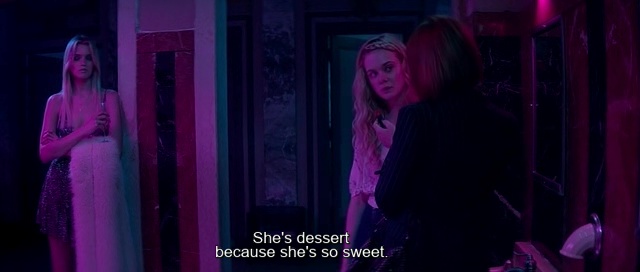
The other models hate her for being young and pretty and not needing the constant plastic surgery to fix all the things the surgeon and our culture say is wrong with their bodies. In the bathroom, as you do, they discuss lipsticks, which they note are always named after either food or sex, and speculate on this new commodity, Jesse. Is she food or sex?

Either way, it’s about appetite. Think of an animal, any animal – a snail, a snake, a human. What is the animal thinking about? It’s almost certainly food or sex. This film combines the two. The men have the power – the celebrity photographer, the fashion designer, even the sleazy motel manager (played with black humour by Keanu Reeves) – Jesse is their fresh meat.

The young, hopeful girls have their looks, and a useful booster of narcissism, a taste for the neon demon of fame, which fuels their journey through the fashion jungle.

When they get “old” (over twenty apparently), they inject various toxins and go under the plastic surgeon’s knife to fix what they are convinced are their failings. But it’s never enough. Jesse sees visions which confirm her own beauty in her eyes:

Women would kill to look like this. They carve and stuff and inject themselves. They starve to death, hoping, praying that one day they’ll look like a second-rate version of me.

But once used up, the women and girls are rejected, discarded, left to fight among themselves – to the death. Jesse is edible to them too, but not in the male way, more in the way that Elizabeth Báthoryis alleged to have bathed in the blood of virgins to keep her youth.

That’s a small taste of the real cannibalism in the film, which infiltrates the metaphoric cannibalism of the meat markets of advertising and fashion. There is an ancient tradition, from the earliest days of tribal ceremonies and the Wendigo to Richard Chase and Armin Meiwes, that eating the flesh or drinking the blood of a victim (preferably a young fit one) will transfer their strength and attractiveness to the eater. If you can keep them down of course.

An even older tradition talks of killing and eating the gods of the harvest, in order that they may be reborn and bring with them next year’s prosperity. The tradition survives in the transubstantiation of the Eucharist service. Jesse is a young and beautiful. She is, or thinks she is, a goddess. How can she not be eaten, in this film both metaphorically and literally?

There is no point in going on with the plot, it’s filled with rape, paedophilia, murder, masturbation, necrophilia, and of course cannibalism, but you really need to see it yourself, and anyway, the plot is not the point. Brian Tellerico, the reviewer from Rogerebert.com, summed this up:

It is a sensory experience, driven by the passion of its fearless filmmaker and a stunning central performance by Elle Fanning.

The director called the film an “adult fairy tale”:

“I woke up one morning a couple of years ago and was like, ‘Well, I was never born beautiful, but my wife is,’ and I wondered what it had been like going through life with that reality. I came up with the idea to do a horror film about beauty, not to criticize it or to attack it, but because beauty is a very complex subject. Everyone has an opinion about it.”

Everyone had an opinion about The Neon Demon too, with some of the audience at Cannes booing it and the rest giving it a standing ovation. You can make up your own mind – it’s an Amazon original, so you should be able to find it quite easily wherever you are in the world. It is a beautiful film, the acting is superb, the direction is assured and precise. The horror is not so much from the gore, as the scenes of young girls being treated as meat. But that is exactly the point.

The French philosopher Jacques Derrida spoke of what he called “carnivorous sacrifice”:

“The establishment of man’s privileged position requires the sacrifice and devouring of animals.”

The animals we sacrifice and devour are little more than infants – chickens for example are slaughtered at seven weeks of age. Pigs are killed at six months (less if they run into Refn, apparently). We no more eat old animals than photographers seek out old models. Remember Curtis’ line in Snow Piercer:

“I know what people taste like. I know that babies taste best.”

Or the words of John Jacques Rousseau:

The animals you eat are not those who devour others; you do not eat the carnivorous beasts, you take them as your pattern. You only hunger after sweet and gentle creatures who harm no one, which follow you, serve you, and are devoured by you as the reward of their service.

Cannibalism is no more or less than the sacrifice and devouring of animals – in this case, the Great Ape known as Homo sapiens. As voracious consumerism and greed extends its reach, to plunder the entire planet, the distinction between us and the other animals seems increasingly to evaporate.

Rage and appetite: SKIN AND BONES S1E08 of “Fear Itself” (Larry Fessenden, 2008)

Fear Itself was an American horror/suspense anthology television series shot in Canada. It began airing on June 5, 2008.

vlcsnap-00002.jpg

Look, it’s a TV video nasty, but the cast is great, and it features a Wendigo, a figure made famous in Hannibal and the movie Ravenous.

The Wendigo (sometimes called Wetigo) is a figure from North American Algonquin folklore. He is a mythical figure – giant, fierce and cannibalistic. He gathers strength from feeding on human flesh, but the flesh makes him grow larger, and so his appetite can never be satisfied. He is sometimes protective, and sometimes a figure of revenge (Cartman may have been taken over by a Wendigo in last week’s blog!) In this story, the Wendigo is “the spirit of the lonely places” and is all about revenge. The Wendigo gets inside people who are weak, hungry, and filled with rage.

We know what’s going to happen. So does the token wise old Native American, Eddie Bear (Gordon Tootoosis) who knows all about Wendigos, as did Joseph Runningfox in Ravenous. Of course, no one is interested in metaphysical explanations from those who might understand the land, so it just escalates from there.

vlcsnap-00006.jpg

“Don’t matter what you call it. It’s a madness, it’s fierce, it’s a hunger that can’t be satisfied. It’s an anger that can’t be settled. It’s the Wendigo!”

Grady (Doug Jones from Pan’s Labyrinth, Hellboy II and Star Trek Discovery) has a ranch but knows nothing about living off the land. His brother Rowdy (John Pyper-Ferguson) is running the ranch, and is clearly making out with his wife Elena (Molly Hagan). There are two children (Cole Heppell and Brett Dier, who you might recognise as Michael from Jane the Virgin).

vlcsnap-00003.jpg

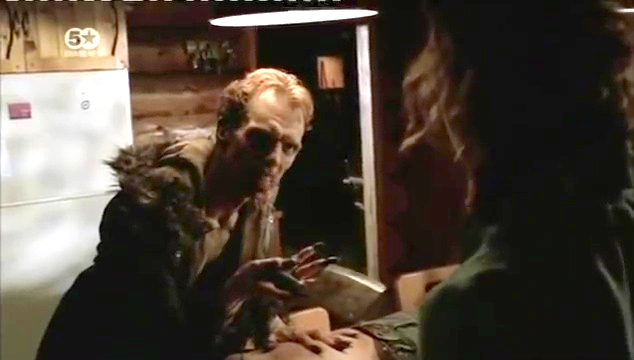
The kids challenge Rowdy with the usual line “You’re not our father!” so of course we know he must be. The Wendigo has taken over Grady while he was on a hunting trip (with Chuck and Billy who have, you know, disappeared: down the hatch) and when Grady stumbles back to the ranch, he is skinny, covered in frostbite, and remarkably creepy. And hungry. So hungry, he could eat a horse (and does).

vlcsnap-00001.jpg

But he certainly doesn’t want Elena’s soup. When she feels his forehead, he licks her arm, and mutters, “tastes good!” Soon he is feeling fine. And still hungry. Soon it’s Rowdy’s turn to be the family meal. He makes Elena cut up and cook and then eat his brother. OK, he’s possessed by a Wendigo, but it’s still cannibalism in my book.

vlcsnap-00009.jpg

CUT IT UP AND COOK IT! …it’s just meat.

Director Larry Fessenden had made an earlier Wendigo movie called, well, Wendigo, which got a respectable 60% on Rotten Tomatoes.

If you want to know what happens in this one (and you can really sort of guess), you can watch the whole episode on Youtube.

It’s worth watching, if only for Doug Jones’ performance as the Wendigo.

vlcsnap-00011.jpg

“I could feel a rage growing up inside me. A rage that would not let me die!”

Sounds like an allegory of twenty-first century politics.

vlcsnap-00008.jpg

Cannibalism and the limits to appetite: THE COOK, THE THIEF, HIS WIFE AND HER LOVER (Greenaway, 1989)

Michel Montaigne wrote, back in the sixteenth century, that savagery is not all on the side of the cannibal:

There is more barbarisme [sic] in eating men alive, than to feed upon them being dead; to mangle by tortures torment a body full of lively sense… than to roast him after he is dead”.

vlcsnap-00001.jpg

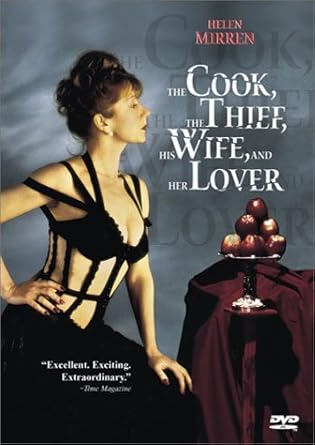
Peter Greenaway’s The cook, the thief, his wife and her lover (1989) is the perfect representation of the savage cannibal within our own civilisation, even though the actual act of cannibalism does not occur until the closing minutes of the film. The film however is replete with images of physical and metaphoric incorporation and abjection: eating, corpses, excrement, violence and humiliation. This is such a perfect representation of abjection that the Reelviews reviewer was “at a loss” to find anything disgusting that had been left out.

vlcsnap-00003.jpg

The film is almost entirely set inside the upmarket restaurant Le Hollandais which has been bought by gangster Albert Spica (Michael Gambon) who torments and humiliates the patrons, staff, his men and his wife Georgina (Helen Mirren). Crystal Bartolovich describes this process as “making everyone around him miserable in ways that depend upon the alimentary canal”. Another reviewer observed that the restaurant metaphorically presents a reversed alimentary canal: the back door with its dog-shit is the anus, the stomach is the kitchen where the food is processed and finally the dining room is the mouth, the site of cultured discrimination, but also of abuse.

vlcsnap-00016.jpg

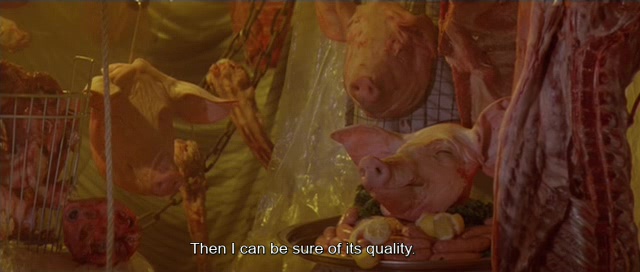
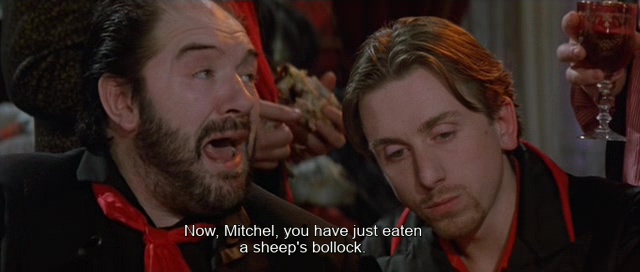
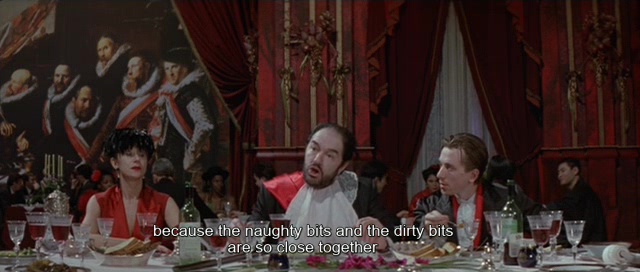
While Spica eats and belches and spouts abuse and absurd bon mots, Georgina escapes, in brief interludes, to have a sexual and then a loving relationship with the very refined bookshop owner Michael (Alan Howard), with the connivance of the cook, Richard Borst (Richard Bohringer). The world of the restaurant is surreal, with each room coloured differently and the costumes of the protagonists changing to match as they move between them. Tables in the kitchen and the dining room are groaning under the bodies of dead birds and mammals. Spica shows little distinction between his three pet subjects: food, excrement and sex. The pleasures of sex and eating and the abjection of excretion are important messages from Greenaway’s film: Spica sums up “the naughty bits and the dirty bits are so close together, that it just goes to show how eating and sex are related”.

vlcsnap-00008.jpg

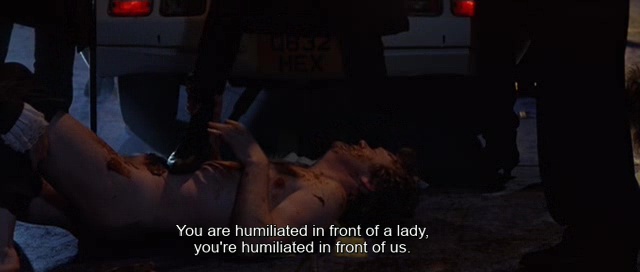
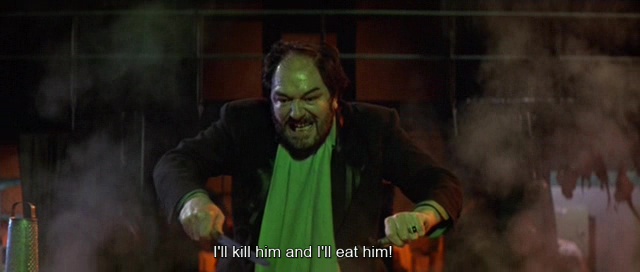
He forces an enemy to eat dog-shit, his men gorge on the fine dining and vomit on the table, and his wife reveals that sex for him involves only violence and degradation. Spica’s favoured method of torture is force feeding: he feeds excrement in the opening scene to a man who owes him money, he feeds buttons to the kitchen boy, and when he discovers the love affair, he promises to catch the lover, kill him, and eat him. He and his men kill Michael by making him eat one of his books.

vlcsnap-00024.jpg

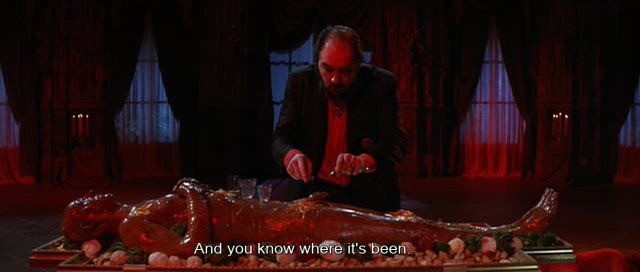
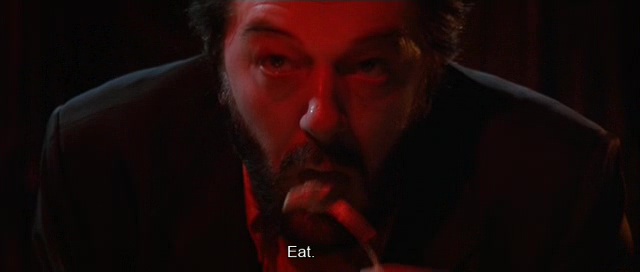
Georgina persuades Borst to cook Michael’s body; in a ceremonial scene, she reverses his force-feeding tactic and at gunpoint forces him to make good his earlier threat to eat the lover, suggesting he starts with Michael’s cock: “it’s a delicacy, and you know where it’s been”.

vlcsnap-00067.jpg

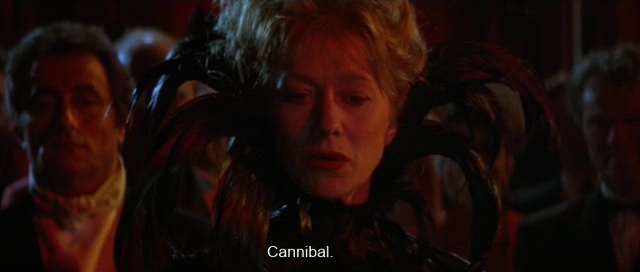
As she kills Spica with another phallic symbol, his own gun, she hisses at him (while looking at us, the viewers) the single, final word of the film: “cannibal!”

vlcsnap-00072.jpg

The film’s alterity focuses on the criminal crew against polite society. It was made toward the end of the long period known as Thatcherism, in which Britain was hugely polarised between followers of “libertarianism” and their opponents who felt that money and power were crushing all vestiges of civil society. The film has widely been interpreted as a protest about the politics of that time, with the thief as Thatcher and her greedy plutocrats and the lover as the ineffectual left opposition, the cook as the civil service and the wife as the people, being alternately wooed and abused. Roger Ebert saw a more universal message about an entrepreneurial class that is raping the earth and its environment while the “timid majority” finds distraction in romance and escapism. The New York Times felt that Greenaway was asking the question: what happens when “the most crass and sadistic people” gain power? Greenaway himself said that his use of cannibalism was a metaphor of consumer society: “once we’ve stuffed the whole world into our mouths, ultimately we’ll end up eating ourselves”.

vlcsnap-00068.jpg

Some critics, however, sees Greenaway’s message as elitist: consumption is only an issue when the “wrong” people are doing it. Spica and his crew debase the high culture of Le Hollandais with their ignorance, crudity and violence. Georgina (whom Spica insists on calling “Georgie” as if trying to alter her gender), Michael and Borst are refined, aesthetic and vulnerable, like the high culture which the thieves despise and aspire to at the same time. Greenaway seems to be accusing the “low culture” thieves, and his audience, of the same “voracious hunger” that colonialism cited to calumniate the natives they wanted to subdue.

vlcsnap-00070.jpg

Greenaway is exploring these “limits to appetite” in his scenes of sex, food and excrement; the contemporary cannibal demonstrates a new and uncertain relation to commodities. The cook is a film about abjection, but also desire. Cannibalism reduces the human to a roast dinner, but at the same time questions the limits we increasingly need to put on our meals, as we overconsume our share of natural resources.

Related image