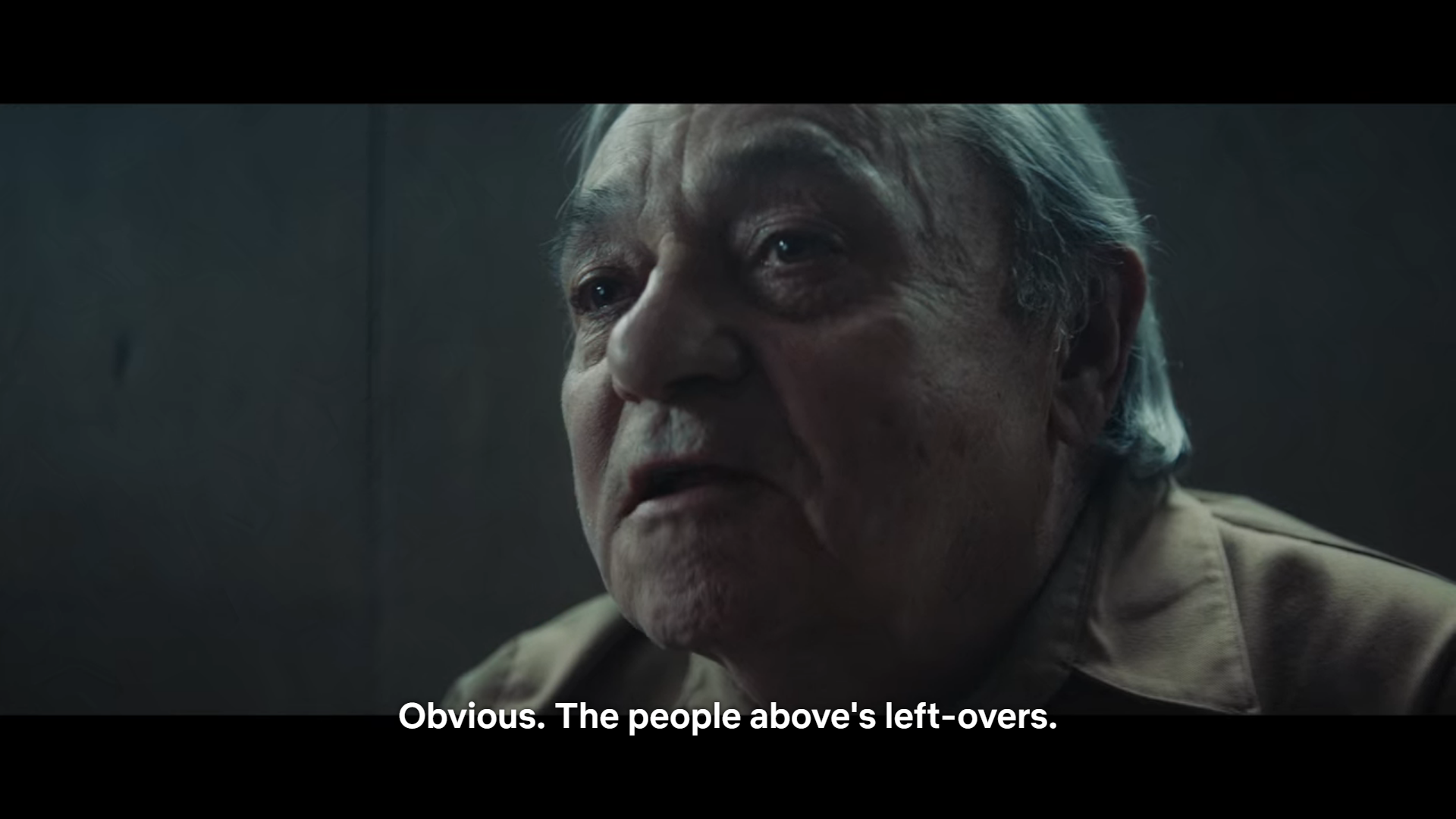
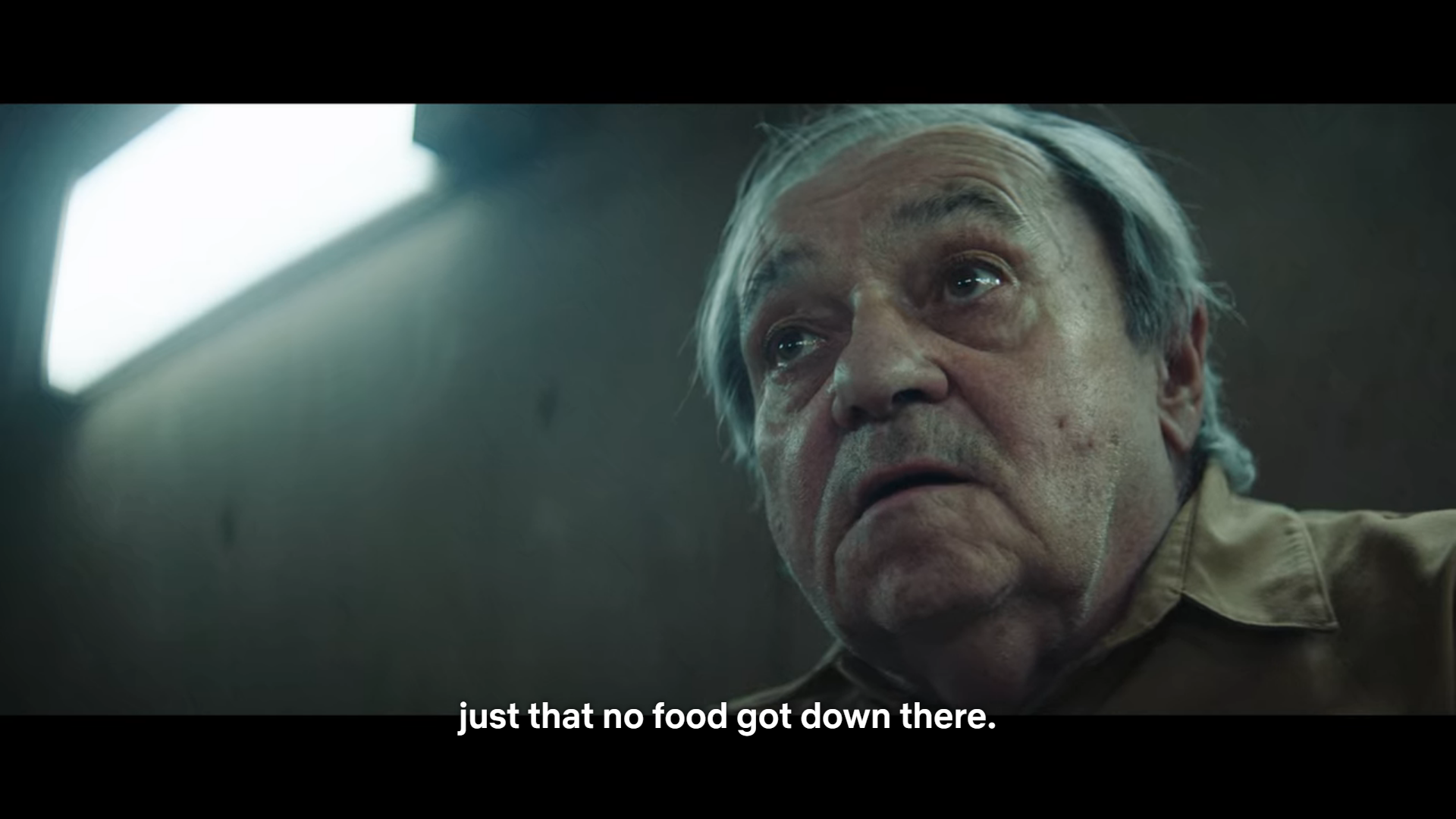
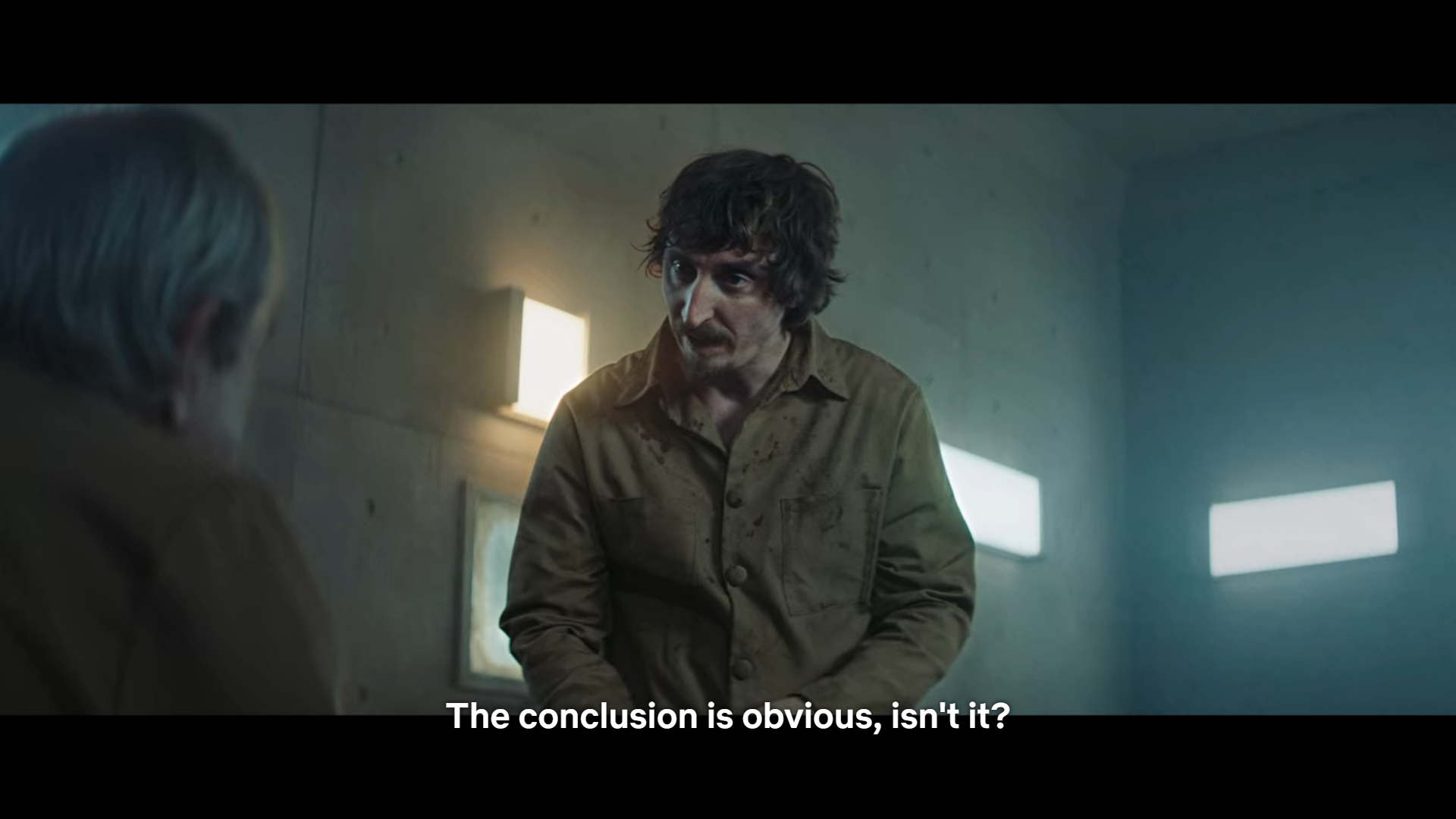
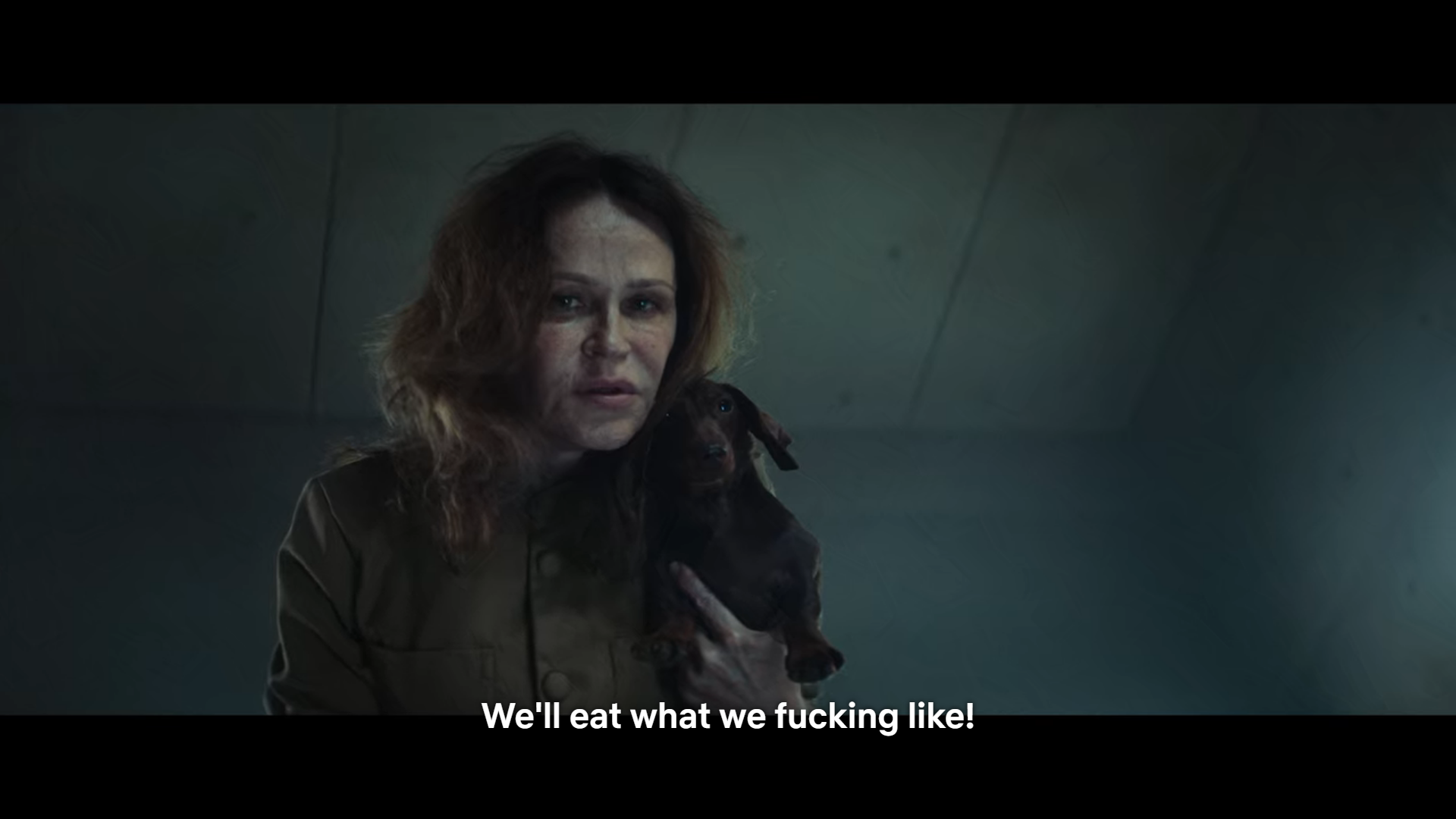
What would you do? HUNGER (Steven Hentges, 2009)

People who automatically flinch at the idea of cannibal movies (or cannibalism generally) give a little mental shrug when the subject turns to starvation. What would you do if you had no food, nothing containing any life-giving nourishment except other human bodies? The honest answer to that is, usually, ‘I don’t know, and I hope never to find out’.

Several films considered in this blog have looked into what we might call “survival cannibalism”, a sub-group of the wider “castaway” genre—films like Hitchcock’s Lifeboat—which derive from the narrative of Robinson Crusoe. The most famous in Cannibal Studies is still Alive, which retold the story of the young footballers who survived a plane crash in the Andes, only to discover that the search had been called off and there was literally no food in the snow, except the bodies of their fellow passengers (most of whom were their friends). It was recently rebooted in Spanish in Bayona’s La sociedad de la nieve. Such stories are contemporary versions of the old shipwreck stories which motivated much of the cannibalism narratives of early modern Europe, horrifying the Europeans, when they weren’t accusing the colonialised of the same thing. A classic story is the whaling ship Essex, the wreck of which inspired Moby Dick. The film In the Heart of the Sea follows that story – what happened to them after the ship sunk? Well, weeks in a lifeboat with nothing but each other for company and no food…

Then we have the many, many post-apocalyptic stories, starting with Soylent Green, in which overpopulation and climate change have led to the recycling of dead people into delicious crackers. Other classics of this genre include Delicatessen, We Are The Flesh, Cadaver, and of course the bleak glimpse of the future, The Road. Such disasters can be intentionally created, such as Stalin’s famine in the Ukraine, during which the starving ate their own relatives. In the USA, the classic case of starvation cannibalism is the Donner Party.

This week’s film, Hunger, explores the same question: what would you do? If you were starving, what, or who, would you eat? An apocalypse is not the fault of the victims, and surviving any way you can, feeding yourself and your family, is difficult to criticise. It may still be gross to some (or most) people, but it is nevertheless, in some ways, understandable.

But this film complicates it by taking away the excuses of an indifferent nature or a catastrophic global event. In Hunger, there is no apocalypse. The characters are just five people who wake to find themselves in a dark dungeon, with no idea how they got there. It’s a cistern, a larger version of the abandoned well in which Catherine Martin found herself trapped in Silence of the Lambs. And, of course, like Catherine, there is no food being catered. Science hates anecdotal evidence, so in this film we have a scientist who has gathered ‘ordinary’ people in extraordinary circumstances, just to see what would happen. You may remember Mason Verger boasting of a similar experiment in Hannibal:

“I adopted some dogs from the shelter. Two dogs that were friends. I had them in a cage together with no food and fresh water. One of them died hungry. The other had a warm meal.”

They have access to four barrels of water, a toilet (of sorts, but only four toilet rolls) and a day-clock that marks off 30 days, the length of time the human body can survive without food.

On the second day, they find on their water barrels a scalpel, an instrument that Jordan, the doctor played by Lori Heuring (Mulholland Drive), calls “a human carving knife”. It soon becomes clear what that is for, and it ends up (after much discussion) being used for just that purpose – to kill and butcher each other.

We find out as they talk that they seem to have been chosen because they have all taken a life – one killed her abusive partner, another in a hold-up gone wrong, another through euthanasia. Doctors like Jordan handle life and death every day. But the scientist wants to know, are they willing to kill out of hunger alone?

Then there is that scientist who kidnapped them; we find that he had been a young boy who survived a car crash: we later discover he cannibalised his mother’s corpse to stay alive. Now he watches his captives, and takes careful notes.

He shares their predilection for taking life: when a couple come to have sex in the quiet country area and hear the pleas for help from their oubliette, he shoots them with tranquiliser darts and pushes their car into the river, but not until they wake up. He thereby reveals a sadistic streak, a psychopathy, or at least a disavowal of empathy, common in scientists who experiment on mice, rats, dogs, monkeys and other animals. Most of us react to seeing other sentient beings in pain by initiating an empathetic response called resonance in the inferior frontal gyrus and the inferior parietal lobule of our brains. Recent research in which rats were given electric shocks and responded similarly both to pain and to watching other rats in pain showed that this ability is not restricted to humans, and in fact may be better developed in rats than in some scientists. Like Descartes torturing dogs or Josef Mengele experimenting on camp inmates, a psychopathic scientist can justify any cruelty for the sake of research.

Cannibalism, the act of killing and eating another, is sometimes considered transcendent (by the cannibal), with one character making reference to cannibalism as a spiritual pursuit:

“Human flesh is essence. It captures a person’s soul!”

The scientist likes this idea, because he ate his mother, so it’s comforting to think that he now contains her soul. But the main theme of the film remains starvation cannibalism, in this case forced on the victims, as it was in the Ukrainian famines or the Nazi death camps. The counterpart of this cannibalism is happening in their bodies. As Dr Jordan tells us, the process of starvation progresses as “your body basically cannibalises itself.” The alternative is what the scientist hopes to witness, the choice to “become a savage”.

Jordan, the doctor, is the only character who refuses to consider cannibalism. Like “the Man” in The Road, she wants to “carry the fire”, and that anthropocentric ideal does not include eating humans. The others spurn such naïve ideology:

“You can hold on to your precious humanity. We’re doing what we have to do to survive.
And your boyfriend? He tasted surprisingly delicious.”

Cannibalism is usually depicted by society as a form of madness or monstrosity involving a devolution from civilised to savage, from enlightened to barbaric. Unless we pay someone else to do it for us—then it’s called animal husbandry.

The film was produced for a tiny $625,000, so the special effects and production time are limited (except for the buckets of gore), but it is still extremely effective. Hunger was released on Fangoria’s Frightfest DVD line, the same distributor as the (reworked) Armin Meiwes story Grimm Love. It does not seem to have received wide distribution, which is a shame, as it is well made, well acted (particularly Lori Heuring, who is quite incandescent) and is well worth your while chasing down. Moreover, it covers a crucial question that becomes more urgent as the world goes to hell in a handbasket – what would you do?

Cannibalism News – IS THE UK ABOUT TO GO CANNIBAL?

If you have been in a shop recently, you will probably have noticed that a lot of shelves are empty, and what is there seems to have increased dramatically in price. Not just your normal inflation, this is part of a world-wide shortage of lots of things, but particularly food.

A major part of the problem is that the Ukraine is unable to ship wheat and cooking oils out of its main ports, due to Russia’s blockade. Lockdowns in China are also causing serious disruptions to supply chains.

The Governor of the Bank of England, Andrew Bailey, warned on May 17 that is the world should brace for serious food price rises. He added soothingly

“Sorry for being apocalyptic, but that is a major concern.”

In a column for The Sunday TimesJeremy Clarkson, who knows a thing or two about prices (of cars anyway) stated

“I don’t pretend to be an expert in geopolitics any more than I pretend to be a farmer, but I really think the world has slipped into a pair of margarine trousers and is now hurtling down a well-watered slide into the pit of hunger, misery and death… Politicians say they are ‘monitoring the situation’, which means they aren’t doing anything at all, but one day they will have to because while people can live without heat or clothing or even sex, they cannot live without food. 
Hunger makes people eat their neighbours.”

The Guardian reports that around forty countries rely on Russia and Ukraine for more than half of their wheat imports, and some of those countries, such as Syria, Yemen, and Somalia, are among the poorest and most vulnerable in the world. 

Well, the Russians were glad to hear Clarkson, who they seem to imagine is one of the UK’s most respected commentators, warning about the consequences of aiding the Ukraine in its battles against the Russian army. TsargradTV – which is owned by Vladimir Putin-supporter Konstantin Malofeev – has used Clarkson’s comment in an article headed:

“Cold, Hunger, Cannibalism: London fell into its own Ukrainian pit”

The article was accompanied by a vision of a future London – two cavemen peering through some Union Jack flags.

If you needed any further proof that politics is just a slightly more polite form of cannibalism, another article earlier in the year reported that the former Prime Minister of Ukraine, Arseniy Yatsenyuk, had (before the invasion began),  advised President Volodymyr Zelensky not to hold direct talks with Russian leader Vladimir Putin.

 “If Vladimir Zelensky starts negotiating independently with Vladimir Putin, he will eat him for breakfast.”

Maybe THAT will ameliorate the food shortages a bit.

Talking of food shortages and cannibalism, next week’s film review blog concerns just that. The 1970 film No Blade of Grass is set during a world-wide famine caused by a viral disease which destroys all grasses, including wheat, rice and maize. Like Soylent Green, made only a few years later, it posits a near future of too many people and not enough food, and the answer to that seems, well, obvious.

Food for thought?

Cannibals in quarantine: THE PLATFORM (Galder Gaztelu-Urrutia, 2019)

As we isolate ourselves in our homes (if we have homes) and wait for the storm of contagion to whistle past outside, we can imagine, rather more easily than was the case ‘way back’ in 2019 when this film was made, what it would be like to be locked in a room with an uncertain supply of food. Would we turn to cannibalism?

Netflix have released The Platform, a Spanish film that has been widely described as “stomach churning”. You’d think a churned stomach would be the bare minimum for cannibal movies! More temptingly, an Indian website called it “Just The Film To Stay Away From During Corona”:

“This Spanish film vomits its venomous bile on a depraved civilization with graphic description of cannibalism and excretion, not in any particular order. Human beings are shown as survivalist degenerates.”

The Platform offers a metaphorical analysis of neo-liberal capitalism (but also Stalinist communism), through the lens of a prison, in which there is plenty of food, if only everyone would share! With true, deadly, neo-lib efficiency, the prisoners are not fed by the labour intensive method of guards delivering food, but by a platform that descends from the top of the building, stopping briefly at each level. The inmates at the top have their choice of the gourmet food, and those further down on each level get the left-overs. “What are we going to eat?” Asks Goreng.

Screenshot (14).png

Of course, the people at the top gorge, binge and horde, occasionally defecating and spitting on those below, and those at the bottom starve or turn to cannibalism. Así es la vida.

“There are three types of person: those at the top, those at the bottom, and those who fall.”

Goreng (it’s a pun – the Indonesian/Malay word for fried food) is played by Iván Massagué, who finds himself in a prison cell with Trimagasi (another Malay pun, meaning “thank you”), Zorion Eguileor. They become friends, for a while, motivated by their shared misfortunes, and then are driven apart by the same thing.

Screenshot (49).png

The people at the top get first pick of the superb feasts prepared by a team of chefs, while at the bottom of the platform are the homeless, sleeping rough, hopefully 1.5 metres apart.

Screenshot (7).png

By the time the platform gets to the bottom levels, there is not a scrap of food. Trimagasi has spent a month down there. He tells Goreng about it. “I didn’t say I didn’t eat anything…”

Screenshot (26).png

Screenshot (38).png

Those on the middle levels hope to find some sustenance in the trickle-down from those above them, who in turn consider them barely human.

Screenshot (18).png

Goreng is there for six months to earn a college degree, while Trimagasi is in for manslaughter. His crime was getting mad at the ads and throwing his TV out the window, where it killed an illegal immigrant who was passing by. “He shouldn’t have even been there!” Trimagasi cries. Both actors are best known for playing comedic roles, and there is a surprising amount of humour found in what is otherwise quite a bleak story.

The woman who processed Goreng turns up in his cell, and tells him the prison is a “vertical self-management centre”, an experiment in “spontaneous solidarity”. But it turns out to be closer to a social experiment about weakness, and irresistible hunger, reminiscent of Mason Verger putting two dogs who were friends in a cage with no food, to see who would eat whom.

Screenshot (100).png

Screenshot (101).png

Interest is cannibalism grows apace. A recent article stated that cannibal stories typically emerge at times of social unrest and uncertainty. 2019 and the first quarter of 2020 presented us with plenty of evidence of that, with a plethora of cannibal movies released or in production, including:

She Never Died Audrey Cummings
Corporate Animals Patrick Brice
Pet Sematary Kevin Kölsch and Dennis Widmyer
Big Top Evil Sean Haitz, Chris Potter
The Young Cannibals Kris Carr, Sam Fowler
Aamis (Ravening) Bhaskar Hazarika
The Perfect Patient Mikael Håfström
The Platform Galder Gaztelu-Urrutia
Mr Jones Agnieszka Holland
Two Heads Creek (Aust) Jesse O’Brien
Wrong Turn 7: 2020 Mike P. Nelson
Cannibal Christmas Massacre Nick Heinrichs Jr
Gretel and Hansel Oz Perkins
Human Hibachi Mario Cerrito III
Evil for Dinner Travis Youngquist
Antlers Scott Cooper
Cannibal Comedian Sean Haitz
The Dinner Party Miles Doleac

Look, I’m not going to tell you what happens in The Platform or discuss the rather ambiguous ending (you can google all sorts of explanations, including one from the Director). It would be too easy to drop spoilers, and you really should see this one – it’s a corker, and it’s available on Netflix, so if you have that, watch it while we all stay home isolated or in quarantine. Then turn on the news and watch people fighting for toilet paper.

The battle cry of humans when they fear scarcity:

Screenshot (116).png

This film is the perfect metaphor of the fear and greed displayed by those hoarding during the pandemic:

Goreng is haunted by the words of Jesus as he descends to the lowest level:

“If you drink not of the flesh of the Son of Man, nor drink of his blood, ye have no life…. For my flesh is meat indeed, and my blood is drink indeed. He that eateth my flesh and drinketh my blood dwelleth in me, and I in him.”

This is our new reality – cannibalism. The coronavirus is showing us the limits to growth. Voracious appetite, incapable of sharing or even consideration of others, can only lead to one place. When the good times roll past, our flesh is meat indeed.

Screenshot (50).png

The film premiered at the 2019 Toronto International Film Festival, where it won the People’s Choice Award for Midnight Madness. It was released on Netflix on March 20, 2020.

Hansel, Gretel and incestuous cannibalism: WE ARE THE FLESH – Tenemos la carne (Emiliano Rocha Minter, 2016)

It’s Hansel and Gretel, Captain, but not as we know it. This Mexican film is a visual experience, rather than a traditional narrative. It is set, like many of the films we have covered in this blog, after what appears to be an unexplained apocalypse. The “witch” is a crazy old guy named Mariano (Noé Hernández) who makes fuel out of old bread and trades it to persons unknown, through a hole in the wall, for food – mostly eggs and meat. Mariano is more Satan than witch.

vlcsnap-00059.jpg

He believes in chance, which, he says, is “the greatest criminal to ever roam the Earth.”

He is an aficionado of solitude, but when a young brother and sister, Lucio (Diego Gamaliel) and Fauna (María Evoli), appear in his abandoned apartment, he feeds them and puts them to work on ever more peculiar projects, such as a womb-like cocoon, made of wooden struts and vast amounts of packing tape.

vlcsnap-00009.jpg

Mariano receives some meat through the hole in the wall, and cooks it for his guests. But there’s a problem: Lucio is a vegetarian. Fauna tucks into her steak, rather reversing the normal situation where Hansel ignores Gretel’s warnings and eats the gingerbread. But Mariano has laced the meat with poison that, he says, the Nazis used to kill Jews. He won’t give Fauna the antidote until Lucio eats his meat.

vlcsnap-00019.jpg

So, it’s all about transgression, overcoming taboos, abandoning inhibitions, accepting pleasure rather than bothering with difficult questions of ethics. Mariano then decides that the kids need to have sex, and Lucio’s objection, that she is his sister, is dismissed:

“Do you think your cock gives a damn about her being your sister?”

So then there’s lots of incestuous sex, some of which is captured in lurid neon heat-map images. Mariano sings to them and masturbates as they perform for him, finally fainting as he ejaculates. Or dies, but is resurrected, because, as we know, the monster is never really gone.

vlcsnap-00034.jpg

vlcsnap-00036.jpg

The Brothers Grimm was never like this. Although who knows what siblings Jacob and Wilhelm Grimm got up to before they became philologists?

Anyway, we finally get to the cannibalism, about an hour into the film, as Mariano captures a soldier, tells him exactly what they have planned.

“We won’t kill you for money. We won’t kill you for an ideology. Or for the pleasure of watching you suffer. It’s not revenge for what you have done. We are neither avengers nor executioners.”

vlcsnap-00056.jpg

vlcsnap-00057.jpg

vlcsnap-00058.jpg

They sing the Mexican anthem and then slit his throat, catching his blood in a container. Various body parts are rendered into liquid and sealed into buckets, presumably to be traded through the hole in the wall.

Another girl comes into the maze looking for shelter, but is instead raped by Fauna and then Lucio.

vlcsnap-00070.jpg

Have we shattered every convention and broken every taboo yet?

vlcsnap-00022.jpg

Not quite. Mariano celebrates his naming day, a party in which all sorts of weirdos turn up and get it on. Mariano is to be the guest of honour, but also the main course.

vlcsnap-00076.jpg

“It is also the day I’ll live inside your squalid bodies. Don’t forget that the spirit does not reside in our flesh. Flesh is the spirit itself! So I kindly ask that all you lowlifes devour me until there is nothing left.

vlcsnap-00082.jpg

vlcsnap-00083.jpg

vlcsnap-00090.jpg

There’s a twist at the end, but hey, enough spoilers. Go watch it – it’s only 80 minutes.

Catherine Bray in Variety called the movie a “joyously demented portrait of humanity.” She summarised the theme very well:

“Much of its most vivid imagery is purpose-built to interrogate the moral values society projects onto biological matter: human meat ground to a slush, slopping about in a bucket; a clitoral close-up; a pipette inserted casually into a hole in a boy’s temple; a sister’s gelatinous menses dripping into her brother’s mouth.”

The stubborn belief that humans, unlike other animals, have some sort of spirit that elevates us into the ranks of demi-gods and therefore justifies the havoc we unleash on the rest of nature has crumbled. As Mariano insists, flesh IS the spirit. We are meat, driven by our appetites. Our carefully crafted moral convictions can vanish like smoke in the face of hunger or desire.

vlcsnap-00024.jpg


Hansel and Gretel is a seminal cannibal text of course: innocents, abandoned for daring to expect to be fed, and left to face the voracious appetite of the outside world. Many of us probably first heard about cannibalism while sitting on a parent or relative or baby-sitter’s knee, crafting our next nightmare as they read us stories from the Brothers Grimm. Variants of the story are everywhere – a new movie is due soon (I’m looking out for it) called Gretel and Hansel. Here’s the trailer: