
Idaho killer avoids death sentence

Family members of one of the victims of a gruesome murder of four college students in Idaho are furious that Bryan Kohberger has been offered and accepted a plea deal.

Kohberger was accused of stabbing Xana Kernodle, Madison Mogen, Kaylee Goncalves, and Ethan Chapin to death in November 2022 in Moscow, Idaho. The students were found with fatal stab wounds in an off-campus rental home in the early morning hours. Investigators believe the four students, thought to be sleeping at the time, were fatally stabbed between 3 a.m. and 5 a.m. According to the coroner, there was no sign of sexual assault.

A little over a month after the killings, Kohberger, a 28-year-old Ph.D. student and teaching assistant in the Department of Criminal Justice and Criminology at Washington State University, was arrested at his parents’ home in Pennsylvania on Dec. 30, 2022, and extradited to Idaho.

Kohberger was facing a possible death sentence if convicted in a trial that was scheduled to begin Aug. 18, 2025.

A letter sent to families of the victims to inform them of the deal said Kohberger will appear in court Wednesday to enter his guilty plea and be sentenced in late July to life in prison, according to the Idaho Statesman. Kohberger will forfeit his right to appeal as part of the deal. The letter from Moscow Prosecuting Attorney Bill Thompson said:

“We cannot fathom the toll that this case has taken on your family. This resolution is our sincere attempt to seek justice for your family. This agreement ensures that the defendant will be convicted, will spend the rest of his life in prison, and will not be able to put you and the other families through the uncertainty of decades of post-conviction appeals.”

Goncalves’s family had an angry reply on their Facebook page.

“We are beyond furious at the State of Idaho. They have failed us. Please give us some time. This was very unexpected. We appreciate all your love and support.”

The family issued a later post explaining what had been taking place.

“I would like to clarify a couple of things…we DID talk to the prosecution on Friday about the POSSIBILITY of a plea deal and it was a HARD NO from our family. It was very nonchalant and barely discussed as the majority of the conversation was surrounding the upcoming trial. NOTHING in our conversation prepared us for the next steps.”

A family member of one victim told NewsNation that upon hearing of the plea deal, she felt like “all the power had been given back to Kohberger.”

Why is this case featured in a blog about cannibalism? Well, A forensic psychiatrist told  Newsweek after the arrest that Kohberger had battled with “cannibalistic urges.

Reports then surfaced that Kohberger had followed a strict vegan diet, and had reportedly struggled with heroin addiction in the past.

Forensic psychiatrist Carole Lieberman told Newsweek that Kohberger’s “obsessive-compulsive eating habits” indicate he was afraid he would become addicted to meat if he ate it.

“He was not only vegan, he refused to eat off of pots or plates that had had meat on them. Psychologically, this represents his struggle against his cannibalistic urges. He was afraid that if he let himself go to taste meat once, he would become addicted to it—like he had become to heroin—and start killing and eating people.”

A relative told the New York Post that Kohberger’s dietary restrictions were “very, very weird” and that he seemed “very OCD,” referring to obsessive-compulsive disorder.

The woman, who asked not to be named, but said she was previously married into Kohberger’s family, said:

“It was above and beyond being vegan. His aunt and uncle had to buy new pots and pans because he would not eat from anything that had ever had meat cooked in them.”

Casey Arntz, who was friends with Kohberger in middle and high school, said in a video posted on TikTok that he had been “a heavy heroin user” in high school. Kohberger’s struggles with drug addiction continued into his college years, a friend from Northampton Community College told Fox News. Criminal profiler John Kelly told Fox News,

“This kind of person has this volcanic rage inside that’s going to explode on its victim of choice.”

Lieberman told Newsweek that Kohberger had probably studied criminology both to “calm the demons inside him that were telling him to kill” but also to “learn how to commit the perfect crime.”

It is possible that he had been in touch with the so-called BTK killer, Dennis Rader, whose serial killings in Wichita were the subject of a book by his supervisor, Katherine Ramsland.

Kohlberger may have corresponded with Rader (a lot of criminology students do) but we don’t know that for sure. We have to wonder if Rader would have told him about working in the meat department of a Wichita IGA a few years before his murder spree began.  

Kohlberger’s obsession with meat reflects a lot of issues considered in Cannibal Studies. Firstly, the question of human meat: there really is no significant difference between the meat of humans and other large mammals such as cows, pigs or sheep. Hannibal Lecter takes delight in feeding human meat to his guests, such as the flesh of the flautist of the Baltimore Philharmonic, whose Board members subsequently enjoy the meal immensely in the book and film Red Dragon, thus becoming “innocent cannibals”.

But the point is that once meat is prepared (cooked, seasoned, presented) it is very hard to tell its provenance. Cannibals who have been asked have mostly compared it to pork or veal, with Armin Meiwes telling an interviewer

“It would have made no difference in somebody else had tasted it; he wouldn’t have questioned the meat…. During preparation, it is not as dark, but bright and fresh as pork, and tastes so very close to pork.”

Kohlberger’s belief that he might like human flesh if he tried any meat at all therefore has some logic to it. Since Charles Darwin’s writings overthrew the special status of humans as closer to angels than other animals, anthropocentrism has been amended to offer a story of humans as the culmination of evolution and thereby continues, rather less successfully, to obscure human animality. Should such beliefs falter, as happens repeatedly in many cases of contemporary cannibalism, it becomes a very short step from eating other animals to eating the human one.

But why should he become addicted to any meat? Well, we know Kohlberger has an addictive personality, shown by his very heavy usage of heroin. But we’re not talking drugs of addiction but lumps of protein, aren’t we? Well, there are plenty of studies about that. Marta Zaraska, for example, wrote in her book Meathooked that meat is highly addictive on several fronts – genetic, cultural, historic and commercial, and coined the term “meathooked” for the incongruous compulsion to eat meat despite the pangs of cognitive dissonance – the repressed feeling of guilt when considering oneself an animal-lover while also paying big corporations to kill them. Then there is the mythology of the Wendigo, a creature from Algonquin legend who starts off as a human but becomes a being who can only live on human flesh, which makes him grow bigger and at the same time hungrier. If you believe in Wendigos, then the slippery slope from carnivore to cannibal seems reasonably clear.

This leads us to the issue of Kohlberger’s apparently very strict veganism. Most people seem to believe (or want to believe) that vegans are fanatics, obsessed with animal welfare (or the environment, or their own health) who therefore compulsively avoid meat. But in fact most vegans would certainly wash a pot thoroughly after a relative had cooked meat, but are unlikely to throw it out as irretrievably ruined, as Kohlberger purportedly did. Veganism is an ethical system that attempts to minimise harm to sentient animals, which includes humans (yes, Virginia, humans are animals). If there is a slippery slope from the flesh of other animals to the flesh of Homo sapiens, then the vegan is furthest from the edge of that slope. When Kohlberger killed those students, he was not following any known vegan code of ethics, even if he didn’t sample their flesh on the way out.

Cannibalism news – the 2024 round-up

‘There will be cannibalism, and rumours of cannibalism”

Yes, I paraphrased the Book of Matthew. Although not all that many people got eaten, the media was full of cannibal stories, and here are a few of them, sorted by their places of occurrence.

Australia

One of the men imprisoned for the so-called Snowtown murders (which mostly did not take place in the little town of Snowtown) was released. Mark Haydon was charged with assisting the men who did the actual killing and who ate part of one victim’s leg some 25 years earlier.

Brazil

Influencer Israel dos Santos Assis, better known online as Pinguim (Penguin) was arrested for desecrating graves in the cemetery of San Francisco the Count in the Salvador Metropolitan Region, stealing human bones, and using human flesh from the corpses to cook his most popular dish: feijoada, a bean stew usually involved simmering beans with beef or pork. Seems rotting human is a good substitute for pork.

Canada

Robert Pickton, the pig farmer convicted of six counts of second-degree murder (although he was charged with at least twenty others), was attacked by another inmate in prison and died a few weeks later. Pickton allegedly “processed” the meat of his rape and murder victims by feeding them to his pigs and, police said, possibly mixing them up with pork products he sold to his neighbours for their personal consumption.

China

Netflix released a new version of the classic science fiction book 3 Body Problem and ran into a storm of criticism from China for its depictions of the extreme violence of the Cultural Revolution. Although most of the victims of the purges were killed by shooting, live burial, drowning, boiling alive, and disembowelling, there is evidence that several hundred had been cannibalised, as the ultimate in humiliation.

The General who presided over a Cultural Revolution massacre that included cannibalism of those deemed “enemies of the people”, Wei Guoqing, was reburied (or at least his ashes were) with full honours in Beijing’s Babaoshan Revolutionary Cemetery – the resting place of China’s high-ranking leaders and revolutionary heroes. Wei’s name is most strongly linked in the public mind with cannibalism during the massacre period in Guangxi’s Wuxuan and Wuming counties and Nanning city. Researchers have found that at least 137 people were eaten, with thousands participating. “Paying tribute to a legendary gourmet,” wrote one wag on social media.

Cuba

Stories began circulating this year that the extreme food shortages in Cuba were leading to the danger, or actual occurrence, of cannibalism. This was bolstered by reports from 2022 of two hospital workers who had been stealing hearts and fat from human bodies and selling them as mince.

Haiti

Rumours circulated that the natural disasters and gang violence in Haiti was leading to starvation cannibalism. Jimmy Cherizier, a gang leader called Barbecue (“Babekyou” in the local parlance) was known for his penchant for burning people alive, and there was at least one video on Twitter/X of one gang member supposedly “tearing flesh from the leg of a burning corpse and eating it.” Such stories cannot be selfishly maintained by one little country, so of course it was not long before Bill and Hillary Clinton were accused of joining the cannibal feast. To add to the hilarity, Elon Musk posted on his own site, X, that a picture of a man near a fire was evidence of cannibalism, only to have the post removed by his own team for violating community standards. The fact-checking website Snopes pointed out that videos of bodies in Haiti being roasted on spits had previously appeared as accusations against a Nigerian restaurant, and were in fact from a Halloween prank in China in 2018. Still, you know, voodoo and all. Meanwhile, Trump ally Laura Loomer supplied conclusive proof that Haitians were cannibals: apparently, if you Google it, you will see a lot of results. The Prosecution rests its case.

India

India’s top court put a temporary stay on the execution of a man convicted of killing his mother and eating her remains in what is being deemed as the “rarest of rare” cases of cannibalism. Sunil Rama Kuchkoravi of western Maharashtra state’s Kolhapur district was handed a death penalty by a lower court in 2021 for killing his 63-year-old mother in 2017. The High Court in October this year upheld the death sentence against Kuchkoravi, stating that the convict possibly has a “syndrome of pathological cannibalism”. The execution has been delayed until the case is reheard in April 2025.

Israel (and around there)

Francesca Albanese, the U.N. special rapporteur for Palestinian rights, has been condemned for antisemitic rhetoric by the governments of the U.S., France and Germany among others. Albanese, known for accusing Israel of genocide (an odd charge seeing that the population of Gaza has increased in the last twelve months), wrote that the Israeli army was “rotten to the core”. A follower immediately introduced the classic blood libel: “Jews are capable of eating human flesh”, to which Albanese replied along the lines of “not all Jews”. Reassuring to note that a person paid by the taxpayers of the West, who finance the UN, can admit that some Jews are not cannibals!

A Yazidi woman was rescued from Gaza by Israeli troops. She revealed that, after being captured by ISIS in 2014 and forced to be sex slaves, the women were starved and finally fed meat which, they later told her, was from the bodies of a beheaded Yazidi baby, the child of one of the women. They told her:

We cooked your one-year-old son that we took from you, and this is what you just ate’.

Indonesia

Police investigated a suspected cannibalism case in West Java Province. The Head of the Criminal Investigation Unit confirmed that a video on social media showed the alleged perpetrator consuming a small portion of the victim’s flesh. He said that police had found 12 body parts of the victim at the crime scene.

Italy

An inmate in the notorious Poggioreale Prison in Naples tore the finger off another inmate and ate it. The Campania Guarantor, Samuele Ciambriello, observed that “it is now clear that the Poggioreale prison needs a structure suitable for hosting inmates suffering from mental disorders.” Seems like a good idea.

Mexico

A podcast called Mexico Unexplained revisited this year the story of Gabriela Rico Jiménez, a 21-year-old model from Mexico who disappeared some 15 years ago, after raging against the machine outside a fancy hotel in Monterrey Nuevo Leon. Ranting about the elites, including oddly the Queens of England and Germany (which is a Republic), she had shouted that “They ate humans! Disgusting!… They smell like human flesh!”

Nigeria

A man accused of being a sorcerer was blamed by villagers of the small town of Kirikiri for the disappearance of several children and elderly people. He was supposed to be “feeding on the flesh of the innocent.” Several claimed to have located the individual on the edge of a forest, wearing clothes “stained with blood” and mumbling mysterious incantations. A group of villagers beat the man and left him for dead.

Russia

Erkinzhon Abdurakhmanov, 47, intended to cure his own heart problems ‘after making a pact with the devil’, he told police. He killed a 65-year-old male pensioner in the Kuyurgazinsky district of Russian region Bashkortostan by striking him three times with an axe, according to reports. He then then cut out the heart and ‘ate the meal’ as he waited at a bus stop. He gave the uneaten remains to a woman also waiting for a bus ‘and asked her to bury it’. He was not arrested, however, until he headed into a liquor store and tried to steal some drinks. Cannibalism is not against the law in Russia, but murder and stealing alcohol is.

Vladimar Putin’s policy of giving pardons to criminals who agreed to fight in Ukraine in lieu of serving their sentences, was honoured in a pardon to a charmer named Denis Gorin, who had been convicted of at least four murders, and had eaten the flesh of his victims.

Another pardon involved Dmitri Malyshev. Malyshev was sentenced to 25 years in prison in 2015 for multiple criminal offences. Ten years ago, he murdered an acquaintance, a Tajik native, and then filmed himself cutting the heart out of the victim and roasting it in a frying pan and eating it. Neighbours seemed uneasy about his imminent return home.

South Africa

On December 26, 2024, eight illegal miners known as zama zamas emerged from Shaft 10 of a mine near Stilfontein, located in Northwest South Africa. They were taken by police, who confirmed that twelve bodies remained trapped beneath the ground, with miners reportedly resorting to eating human flesh due to severe food shortages.

Ukraine

Novosibirsk Archpriest Alexander Novopashin became notorious for claiming that Ukrainians are “cannibals”. Although conspiracy theories about cannibals are becoming more common, this particular Archpriest is taken seriously in Russia, and regularly lectures Russian security forces and soldiers.

UK

Marius Gustavson, who called himself “the eunuch maker”, offered a service where he charged men to destroy or remove their testicles, and then charged subscribers to his website to see him perform the operations. The court heard that that there was “clear evidence” of cannibalism and that Gustavson had “cooked testicles for lunch in an artfully arranged salad platter”.

Meanwhile, a candidate from a party called Reform UK was suspended for saying that meat-eaters should “eat other humans” and said humanity should be “obliterated”. Just saying what many are thinking, perhaps.

USA

The cannibal story of the year was the President, Joe Biden, claiming that his uncle had been eaten by cannibals in New Guinea. The leaders of PNG took exception to the stereotyping of their people as cannibals. Apparently, only some of them had been.

Speaking of Presidents, Donald Trump embellished his rhetoric on immigration by pointing out that some of the undocumented people pouring over the border were from insane asylums, and called that “Silence of the Lambs stuff”. Trump had previously claimed that Hannibal Lecter had endorsed his candidacy, which is a bit odd since Hannibal is a fictional character, but by far not the oddest claim in the 2024 election.

In March, a homeless man in Kern County was arrested for picking up the leg of a person who had been killed in a train accident and chowing down on it. California has no laws against cannibalism, but he was charged with “mutilating the body” which is a bit odd, since the train had already done that.

In Utah, which also has no law against cannibalism (Idaho is the only state that does), a law was passed to criminalise the ‘ritual abuse of a child’, which apparently regularly includes making the little ones eat “organic substance or material” (i.e. bits of people) before they are allowed to have their desserts. This in addition to claims that such rituals would sometimes involve eating the children instead.

A keen-eyed traveller pointed out that the road once taken by the Donner Party, which ended up in them getting lost and eating each other, was now signposted with a sign indicating dining was available. Much hilarity ensued on social media.

Conservative political commentator Candace Owens managed to link transexuals, Native Americans and cannibals, all in one sentence. No wonder she is so widely admired.

Much to the relief of the good people of Idaho (the only State in the Union with laws against cannibalism), the law was amended to ensure that giving someone else human flesh to eat was also prohibited. This led, on its long road to farce, to the accusation that bodies were being turned into compost which could be used to grow food for humans to consume. Rather than DNA test all compost, the law confined itself to banning the act of deliberately giving human flesh to another person. The legislator who introduced the bill cited a disturbing case on the show TruTV, which she admitted might have been a prank (it was) in which diners were told they had been eating human flesh, just to whet their appetites perhaps.

Ariana Grande raised some eyebrows when she was asked on a podcast whom she would most like to dine, and named Jeffrey Dahmer. Not sure Dahmer would have agreed – he was more into man-flesh, and there’s not much meat on Ariana anyway.

In April, a man was arrested in Las Vegas for eating a victim’s eyeballs and ears. The victim was pronounced dead. What happens in Vegas stays – internal.

Talking of ears, Mike Tyson, famous for biting the ear of Evander Holyfield in a fight in (where else) las Vegas in 1997, released a line of marijuana gummies shaped like nibbled ears.

Allegations were raised that Gilgo Beach ‘serial killer’ Rex Heuermann’s family was involved in the murders, which took place near the remote beach town of Gilgo in Suffolk County, New York from the 1990s to 2011. His daughter, who likes to paint the odd Satanic scene including body parts and cannibal feasts, was accused of being involved in his depredations. Homicide experts said that was insane, a word that gets tossed around a lot in cannibal stories. Heuermann was charged with a seventh murder last week.

On October 9, a woman in Kentucky, Torilena May Fields, was arrested after a dismembered body was found behind a home in Northern Kentucky and cooked human body parts were found in the oven. The body, and its parts, turned out to have been her mother. She was also charged with cruelty in that she “intentionally tortured and killed a domestic dog.”. A contractor found the dismembered body of the mother, and told police the perp had been “casting spells.” Her bail was set at $1.5 million. Her next court appearance is set for March 10, 2025 in Robertson County.
Some people just give cannibalism a bad name.

Another Kentucky woman, a former youth counsellor, was arrested for allegedly discussing cannibalism and other hobbies with a convicted murderer.

In Oklahoma, Kevin Ray Underwood was executed by lethal injection in December (on his 45th birthday, the press gleefully informed us) for killing a ten-year-old girl in a “cannibalistic fantasy.” The man admitted to luring the girl into his apartment and beating her over the head with a cutting board before suffocating and sexually assaulting her. He told investigators that he nearly beheaded her in his bathtub before abandoning his plans to eat her. So not really a cannibalism story, but near enough.

International

Citizen of the world, Donald Duck, appeared on the interview show Hot Ones on the Internet (which is global), where guests eat chicken wings with hot sauce. Turns out Donald is a vegan though, preferring cauliflower, and since ducks aren’t chickens, the controversy that ensued over whether he was (or would have been) a cannibal by partaking of chicken was just silly.

HAPPY NEW YEAR, and may your worst problems be mild gastro-oesophageal reflux.

And don’t forget to go to the dentist.

IDAHO amends its anti-cannibalism bill – cannibalism news, March 2024

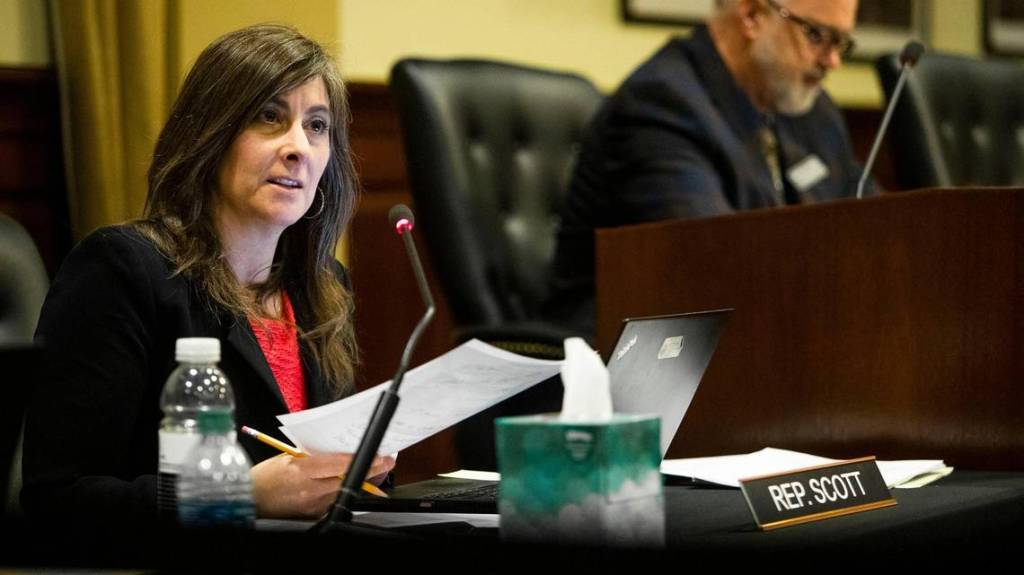
Idaho lawmakers have voted to expand a law that bans cannibalism because of fears about the popularity of human composting. Rep. Heather Scott introduced a bill in February 2024 to expand the state’s cannibalism ban and told a legislative committee that she’s worried about the possibility that people are eating other people.

Scott said:

“This is going to be normalized at some point, the way our society’s going and the direction we’re going.”

People are often surprised to hear that Idaho is the only state in the USA to have outlawed cannibalism. Other states have laws which target abuse or desecration of a corpse, making cannibalism legally impractical and problematic. Idaho introduced its law during the frenzy called the “Satanic Panic” last century.

The US is not unique in this – most countries do not have specific laws banning cannibalism. Germany didn’t, until Armin Meiwes ate his new social media friend.

The new bill, 522, adds to Idaho’s existing prohibition of cannibalism a ban on giving someone else “the flesh or blood of a human being” without that person’s “knowledge or consent.” Scott said she is “disturbed” by the practice of human composting, which is legal in several states as an option for disposing of the dead that is more sustainable than other burial methods and reduces a funeral’s carbon footprint. Human composting involves decomposing human remains like other organic matter and turning it into soil that can be returned to the family or used to make land more fertile. But Scott said outlawing composting would require overhauling rules for morticians, and so instead she focused on banning the act of deliberately giving human flesh to another person.

“I didn’t want to see that in my Home Depot stores.”

Scott said she was on a plane and watched a clip from a TV show displaying a chef feeding human flesh in sausage to contestants, which inspired her to take action. The clip, which she sent to the Idaho Statesman, is from a TruTV prank show, in which they pretend to feed people flesh. “They didn’t tell the people, they fed it to them,” Scott told the Statesman, though she noted it may have been a spoof.

Scott also submitted a link to a video featuring a Chinese official denying that his country had sold canned human flesh to people in Zambia. The canning claim was a hoax, spread with fake photos of butchery, according to news reports from 2016. Scott additionally pointed to a North Idaho man who pleaded guilty to murder last year and was initially also charged with cannibalism after investigators found postmortem mutilation and a bloodied bowl at the crime scene. The cannibalism charge was later dropped, meaning that the Idaho anti-cannibalism laws have still not been tried in court.

An editorial in the Idaho Statesman concluded:

But that’s where we are in Idaho: Unhinged, unreal legislators can bring forth just about any crazy idea and get a bill printed.

But imagining that humans might unwittingly eat other humans is not so far-fetched. Mythology is full of innocent cannibals—Agave eating her son Penteus, Thyestes eating his sons at his brother’s feast, Tereus eating Itys. Becoming “innocent” cannibals make us squirm, writes Donald Tuzin, because it denies us the escape of declaring the cannibal a maniac or monster—anyone can become a cannibal. In the movie The Farm, humans are treated as “living meat” exactly the way cattle are regarded on factory farms—the men are slaughtered for meat, the women bred and their infants pitilessly killed in front of the mother (as often happens in the dairy industry) so the farmers can sell the mothers’ milk. The final commodities are sold to innocent cannibals, who occasionally ring up, horrified to find residues such as a human tooth in their meat. Inverting the agricultural business plan, the “livestock” are human, while the farmers are dressed in animal masks.

But it doesn’t only happen in fiction. The Farm may be based on the Canadian pig farmer and serial killer Robert Pickton who confessed to 49 murders in the 1990s, and allegedly “processed” the meat of his rape and murder victims by feeding them to his pigs and, police said, possibly mixing them up with the pork products he sold to neighbours.

Joe Metheny claimed to have killed 13 people in the Baltimore area in the 1990s and turned them into burgers. He reported:

“Over the next couple weeks on the weekends I opened up a little open-pit beef stand. I had real roast beef and pork sandwiches and why not they were very good. The human body tastes very similar to pork. If you mix it together no one can tell the difference.”

In 2007, two men in England were arrested for the murder of a 14-year-old girl, with the prosecution claiming that her body had been cut up and minced into kebabs in a Blackpool takeaway called “Funny Boys”.

On April 9, 2012, police in Garanhuns, Brazil, arrested for murder Jorge Beltrao Negromonte da Silveira, his wife, Isabel Pires, and his mistress, Bruna Cristina Oliveira, who all lived together in a group they called “The Cartel”.

Residing with the Cartel was a small child named Vitória, who had been the daughter of their first victim. The child’s mother was a seventeen-year-old homeless woman whom the Cartel had invited into their home in Olinda in May 2008. She had been murdered by the Cartel, who then dismembered and skinned her body, storing the meat in their refrigerator before seasoning it with salt and cumin, grilling and eating it. The woman’s daughter was fed some of her mother’s flesh.

The worldwide public interest in the crimes did not stem from their murder of three young mothers, but from the fact that the Cartel had baked the victims’ flesh into salgados, salty, deep-fried pastries, which they then sold to the unsuspecting public. To the disappointment of the media, the pictures of the perpetrators showed them as three ordinary Brazilians, not the monsters the public had expected.

Back to Idaho, where Rep Heather Scott’s bill 522 sailed through the House and is heading to the Senate. She quoted in support of her bill from a recent article in The New Scientist which reviewed the human history of cannibalism (they concluded that it happened a lot) and stated:

“Ethically, cannibalism poses fewer issues than you might imagine. If a body can be bequeathed with consent to medical science, why can’t it be left to feed the hungry? Our aversion has been explained in various ways. Perhaps it is down to the fact that, in Western religious traditions, bodies are seen as the seat of the soul and have a whiff of the sacred. Or maybe it is culturally ingrained, with roots in early modern colonialism, when racist stereotypes of the cannibal were concocted to justify subjugation.”

We don’t have to buy mulch to end up cannibals. Any sausage or burger might have human flesh in it, and no one would know the difference. We are animals, large mammals, made of red meat like cows, pigs and sheep. Unless you think we have some sort of supernatural dissimilarity from other animals, the thin red line between different species can only be identified as a cultural construct.

Cannibalism and ‘Satanic Panic’ in Utah

Utah lawmakers are attempting to pass a bill to criminalise the ‘ritual abuse of a child,’ bringing back memories of the satanic panic of the 1980s, when other states passed similar laws.

Critics of the bill, however, say it is unnecessary and potentially harmful.

Republican state Rep. Ken Ivory is sponsoring the bill, House Bill 196. It defines ritual abuse as abuse that occurs as “part of an event or act designed to commemorate, celebrate, or solemnize a particular occasion or significance in a religious, cultural, social, institutional, or other context.” The bill lists specific actions that fall under the proposed definition: abuse against children that includes rape and sodomy, involving them in animal torture, bestiality or cannibalism, or forcing a child to ingest urine or faeces, enter a coffin or grave containing a corpse, or take drugs as part of a ritual.

A hearing of the House Judiciary Committee on February 21 heard from several adults who described themselves as survivors of ritualistic child sexual abuse. They described devil worship, animal torture, forced bondage, rape, cannibalism, child prostitution and mind control, saying that the abuse was so physically and emotionally traumatic that they had repressed memories of it.

Kimberli Raya Koen, President and Founder of The Healing Center for Complex Trauma in Salt Lake City, told the Committee that she was trafficked into a family that ritually abused her for more than two decades.

She told them:

“I see the light and I have fought to be in this chair, to be in this moment, to have a chance to say this is real and this is happening.”

Utah County Sheriff Mike Smith spoke in favour of the bill, telling the committee that he began investigating a high-profile “ritual sex abuse” case two years ago.

The investigation (covered by this blog at the time) became embroiled in politics after then-Utah County Attorney David Leavitt accused him of dredging up an old, unverified witness statement that accused Leavitt and 14 others of “cannibalizing young children” and participating in a “ritualistic” sex ring. Leavitt subsequently lost his re-election bid.

Several states passed similar laws in the 1980s and 1990s, during the height of furore over satanic ritual abuse, but few, if any, prosecutions came from them. Since then, federal law enforcement agencies, scholars and historians have pointed to the scarcity of evidence for the claims of widespread ritual abuse and warned that such legislation risks generating false allegations, wrongful imprisonments and wasting law enforcement resources.

Mary deYoung, professor emeritus of sociology at Grand Valley State University, has documented the harms of the satanic panic.

“This bill is a very good example of panic legislation, hastily cobbled together, on the basis of testimony from a couple of women recollecting childhood histories of satanic ritual abuse. It’s a bill that responds with the kind of approach where we get really angry and say, ‘There ought to be a law.’ And we don’t think about whether it can be enforced in such a way that adds any benefit to society or that ensures that justice is done.”

County Sheriff Smith acted on the reports, but his prosecutions have lagged in court for years, plagued by accusations that investigators mishandled witness statements and that the investigation was politically motivated from the start. He says:

“I was attacked, I was ridiculed, I’ve had memes made about me because of it. Without a doubt, these things do happen in Utah. I believe they’re happening, I believe they have happened.”

Utah’s proposed bill and the county sheriff’s investigation have attracted national interest from conservative media and online conspiracy theorists who believe this case will prove that the allegations in the satanic panic of the 1980s were true, and that cabals of satanists are still sexually abusing, murdering and cannibalising children. Several self-described internet investigators have, in blogs, videos and podcasts, accused hundreds of Utahns of participating in satanic ritual abuse rings.

Many of the claims in the 1980s were made in Utah, amid claims that local therapists used hypnosis and manipulative interview techniques to recover memories from alleged child victims. These were some of the earliest claims of widespread satanic ritual abuse.

Utah’s governor formed a task force in 1990 which spent $250,000 to address pervasive ritual abuse. Investigators interviewed hundreds of victims in more than 125 alleged cases, only one of which ended in prosecution. A final report from the state’s Attorney General in 1995 suggested that there was evidence of isolated instances of abuse involving rituals, but not a widespread plot to abuse children in this way.

National studies from the Department of Justice and the National Center on Child Abuse and Neglect found no evidence to support claims of widespread ritual abuse. Child sexual abuse, however, is staggeringly common; about 1 in 4 girls and 1 in 20 boys in the United States are victims, according to the Centers for Disease Control and Prevention.

In Utah, the Judiciary Committee voted 10 to 1 to advance the ritual abuse bill to the full House; if passed there, it will advance to the Senate. No one testified in opposition to the bill. Rep. Brian King, one of the two Democrats on the committee, cast a dissenting vote and questioned its necessity, noting that state law already criminalises physical and sexual child abuse. Ivory, the sponsor, conceded the offenses were already criminal, but said a specific law was necessary because the crimes are “so heinous.”

​​Rep. Kera Birkeland, a Republican, cried as she addressed the people who spoke during the hearing.

“I had no idea that this was happening in our state. We believe you.”

Do we? Are children in Utah or elsewhere being forced to eat human flesh (the focus of this blog) or other matter usually considered inedible in polite society? One of the most famous allegations is the conspiracy theory #Frazzledrip which maintains that a video is circulating showing Hillary Clinton and Huma Abedin, a former aide, ripping off a child’s face and wearing it as a mask before drinking the child’s blood in a satanic ritual sacrifice. No claims were made about making the child eat flesh though. So I guess that’s not covered by the bill.

Utah has a bit of a record here, with the ill-fated team eaten by Alferd (or Alfred) Packer leaving from the Bingham Canyon mines near Salt Lake City in November 1873 for the gold fields of Breckenridge in the Colorado Territory. They met Packer some 25 miles from their starting point, near Provo. Unrelated (I guess) is the story of a Utah man who was charged in September 2021 over the Capitol riots and later threatened to “eat the flesh” of a probation officer.

We might also wonder if these laws might be used against churches that practise the Eucharist, the eating and drinking of the wafer and wine in church, which is seen by some (particularly the Catholics) as a literal transubstantiation of wafer and wine into the flesh and blood of Christ. Children are usually expected to take communion, that is, eat the flesh and blood of Christ (in the form of wafer and wine), from the age of about seven. This does sound a lot like what the bill describes as “ingestion… of human bones, blood, or flesh”. I wonder what the churches might say about that?

Idaho is the only state to have a law against cannibalism, but it has never been used. Seems a terrible oversight, really, and perhaps the good folk of Utah can set it right.

“…CANNIBALISTIC URGES” – Man on trial for brutal murder of four Idaho University students

A forensic psychiatrist has told Newsweek that the man charged in connection with the slayings of four University of Idaho students in November 2022 had battled with “cannibalistic urges.

Bryan Kohberger, a 28-year-old Ph.D. student and teaching assistant in the Department of Criminal Justice and Criminology at Washington State University, was arrested at his parents’ home in Albrightsville, Pennsylvania.

Kohberger is accused of breaking into a rental house in Moscow, Idaho, and fatally stabbing Kaylee Goncalves, Madison Mogen, Xana Kernodle and Ethan Chapin in the early morning hours on November 13.

Reports have surfaced divulging that Kohberger follows a strict vegan diet and has reportedly struggled with heroin addiction in the past.

Forensic psychiatrist Carole Lieberman told Newsweek that Kohberger’s “obsessive-compulsive eating habits” indicate he was afraid he would become addicted to meat if he ate it.

“He was not only vegan, he refused to eat off of pots or plates that had had meat on them. Psychologically, this represents his struggle against his cannibalistic urges. He was afraid that if he let himself go to taste meat once, he would become addicted to it—like he had become to heroin—and start killing and eating people.”

A relative told the New York Post last week that Kohberger’s dietary restrictions were “very, very weird” and that he seemed “very OCD,” referring to obsessive-compulsive disorder.

The woman, who asked not to be named, but said she was previously married into Kohberger’s family, said:

“It was above and beyond being vegan. His aunt and uncle had to buy new pots and pans because he would not eat from anything that had ever had meat cooked in them.”

Casey Arntz, who was friends with Kohberger in middle and high school, said in a video posted on TikTok that he had been “a heavy heroin user” in high school. Kohberger’s struggles with drug addiction continued into his college years, a friend from Northampton Community College told Fox News. Criminal profiler John Kelly told Fox News,

“This kind of person has this volcanic rage inside that’s going to explode on is victim of choice.”

Lieberman told Newsweek that Kohberger had probably studied criminology both to “calm the demons inside him that were telling him to kill” but also to “learn how to commit the perfect crime.”

It is possible that he had been in touch with the so-called BTK killer, Dennis Rader, whose serial killings in Wichita were the subject of a book by his supervisor, Katherine Ramsland.

Kohlberger may have corresponded with Rader (a lot of criminology students do) but we don’t know that yet. We have to wonder if Rader would have told him about working in the meat department of a Wichita IGA a few years before his murder spree began.  

Kohberger has been held without bond in Pennsylvania since his arrest. He will be tried in Idaho, the state in which the crimes took place, the only state in the US with a law against cannibalism, although no such charges have been laid against Kohberger.

His next court appearance will be June 26.

Kohlberger’s obsession with meat reflects a lot of issues considered in Cannibal Studies. Firstly, the question of human meat: there really is no significant difference between the meat of humans and other large mammals such as cows, pigs or sheep. Hannibal Lecter takes delight in feeding human meat to his guests, such as the flesh of the flautist of the Baltimore Philharmonic, whose Board members subsequently enjoy the meal immensely in the book and film Red Dragon, thus becoming innocent cannibals. Incidentally, being the Baltimore flautist seems to be a rocky road – their principal flautist Emily Skala, was fired in 2021 for spreading misinformation about the safety of coronavirus vaccines, the efficacy of face masks and the outcome of the 2020 presidential election, relieved of her post, but not eaten.

But the point is that once meat is prepared (cooked, seasoned, presented) it is very hard to tell its provenance. Cannibals who have been asked have mostly compared it to pork or veal, with Armin Meiwes telling an interviewer

“It would have made no difference in somebody else had tasted it; he wouldn’t have questioned the meat…. During preparation, it is not as dark, but bright and fresh as pork, and tastes so very close to pork.”

Kohlberger’s belief that he might like human flesh if he tried any meat at all therefore has some logic to it. Since Charles Darwin’s writings overthrew the special status of humans as closer to angels than animals, anthropocentrism has been amended to offer a story of humans as the culmination of evolution and thereby continues, rather less successfully, to obscure human animality. Should such beliefs falter, as happens repeatedly in many cases of contemporary cannibalism, it becomes a very short step from eating other animals to eating the human one.

But why should he become addicted to any meat? Well, we know Kohlberger has an addictive personality, shown by his very heavy usage of heroin. But we’re not talking drugs of addiction but lumps of protein, aren’t we? Well, there are plenty of studies about that. Marta Zaraska, for example, wrote in her book Meathooked that meat is highly addictive on several fronts – genetic, cultural, historic and commercial, and coined the term “meathooked” for the incongruous compulsion to eat meat despite the pangs of cognitive dissonance – the repressed feeling of guilt when considering oneself an animal-lover while also paying big corporations to kill them. Then there is the mythology of the Wendigo, a creature from Algonquin legend who starts off as a human but becomes a being who can only live on human flesh, which makes him grow bigger and at the same time hungrier. If you believe in Wendigos, then the slippery slope from carnivore to cannibal seems reasonably clear.

This leads us to the issue of Kohlberger’s apparently very strict veganism. Most people seem to believe (or want to believe) that vegans are fanatics, obsessed with animal welfare (or environment or their own health) who therefore compulsively avoid meat. But in fact most vegans I know would wash a pot well after a relative had cooked meat, but are unlikely to throw it out as irretrievably ruined, as Kohlberger purportedly did. Veganism is an ethical system that attempts to minimise harm to sentient animals, which includes humans (yes, Virginia, we are animals). If there is a slippery slope from the flesh of other animals to the flesh of Homo sapiens, then the vegan is furthest from the edge of that slope. If Kohlberger did kill those students (and at this stage it’s only alleged), then he is no vegan, even if he didn’t sample them on the way out.

2022 CANNIBAL NEWS and VIEWS

What a year! These are some of the cannibalism stories, films and songs that arrived in 2022, with links back to the original reports, so that you can look up the ones that catch your interest, and so that this blog does not take all of 2023 to read.

January

  • A German man dubbed by the press the ‘cannibal teacher’ was convicted of murder and sentenced to life in prison. Stefan R., a 41-year-old maths and chemistry teacher, had apparently searched on the dark web for terms such as “long pig” and “fatten and slaughter people”. The man claimed his victim died of natural causes after a (presumably vigorous) sexual tryst, and he had removed the man’s penis “since my DNA could still have possibly been present due to the oral sex I performed”. In other words, he didn’t mind a bit of mutilation and perhaps cannibalism, but was concerned not to be “outed” as gay.
  • Djalma Campos Figueiredo, 46, was arrested in Brazil. He had been sentenced by the Court of Justice of Rondonia in the city of Porto Velho to 42 years in prison for several counts of aggravated murder but had escaped custody. The Civil Police alleged he would eat his victims’ eyes and ears and drink their blood.
  • Meanwhile, the Zamfara (NW Nigeria) State Police Command arrested a 57-year-old man, Aminu Baba, for allegedly eating and selling human body parts. Baba and three others were arrested after the murder of a nine-year-old boy. The Police Commissioner reported that Baba had “confessed that he usually ate the body parts and identified the throat as the most delicious part. He also sold some of the human parts to his customers.”

February

  • In Afghanistan, we discovered that the Taliban were rounding up drug addicts and putting them in rehabilitation centres to detox, which is a nice thought, except that they gave them little or no food (“cold turkey” does not count), so they apparently resorted to cannibalism.

April

We have been following the case of an Idaho man, James David Russell, who was accused of killing and eating a neighbour in September 2021. This was a big deal for us in Cannibal Studies, because Idaho is still the only state in the Union to have a law against cannibalism, a statute that hit the books in 1990, but has never been used. In April, Russell was deemed fit to stand trial.

  • In the Indian state of Assam, a man who had had perhaps more than a few drinks smelt cooking meat in a crematorium in a Hindu cremation ground. He helped himself to a few portions of the body, but was caught by villagers and handed over to police; but not before he had eaten about half of his purloined flesh.

May

  • A man calling himself The Chinese Zodiac Killer was arrested by the FBI in Jefferson County, New York for sending letters to media outlets, government offices including the White House, and other organisations, claiming he killed people and ate their flesh, and that he plans to kill more. He seems to have based his story on the Zodiac killer who terrorised California in the late 1960s. The original Zodiac Killer (who was not accused of cannibalism) was never caught, but this one was easily found, posting his threatening letters (what century is this again?) at the same letterbox he had previously used.

June

  • The case against James David Russell (see above in April) went to preliminary trial. Sadly, the judge threw out the charge of cannibalism, saying there was insufficient evidence to pursue it, and went with the rather more mundane offence of first-degree murder. Since this has a life sentence attached, the practical effect of dropping the cannibalism charge is negligible, but as the first cannibalism case in the USA, it would have been fascinating.
  • A rumour swept the Internet that the actress Anne Hathaway was a cannibal, based on a cryptic Tweet saying “police didn’t find human remains and evidence of cannibalism in her LA home that she sold in 2013.” We were all later astonished to discover the whole thing was a hoax.
  • The effects of the war in The Ukraine were starting to be felt in Europe and the UK (whose people often do not think it’s part of Europe). The Russians fell gladly on a statement from one Jeremy Clarkson (a car enthusiast) that “Hunger makes people eat their neighbours” to predict that the British will soon be a nation of cavemen feeding off each other. Of course, if you’ve ever been to a soccer match…
  • industrial/electronic music duo SKYND released their tenth song, called ARMIN MEIWES, about the German man who killed and ate a willing volunteer.
  • Back in the USA, the Utah County Attorney felt he had to go public to deny accusations that he and his wife are cannibals. Honest. I wouldn’t/couldn’t make this stuff up.

July

  • The New York Times raised the temperature of the culture wars with its review of several books, movies and TV shows about cannibalism, culminating in the (somewhat tongue in cheek) statement that “Cannibalism has a time and place… that time is now.” The right-wing press predictably jumped on the story accusing the NYT of everything from irresponsibility to Satanism.
  • Also in New York, Steven Spielberg whipped out his cell phone to record Marcus Mumford singing his new work, a haunting song called “CANNIBAL“. The song might be about love and lockdown, or it could involve child abuse.

August

September

  • DISCOVERY+ launched a three-part series called HOUSE OF HAMMER. The series explored allegations from various girlfriends of the actor Armie Hammer that he was a cannibal, or had at least threatened them with cannibalism. It also examined his relatives, many of whom seemed to be presented as even worse specimens than Armie.
  • Russia discovered the war was not going well in Ukraine, and started recruiting murderers and rapists to be sent to the front as reinforcements. Also – one cannibal, Yegor Komarov, whose man-eating exploits we learned about in December 2021.

October

  • In the Indian state of Kerala, there were allegations that a couple who ran a massage centre were bringing women home not so much for massages, but for human sacrifice and ritual cannibalism.
  • In the US state of Michigan, Mark David Latunski, who had been arrested in 2019 for killing and eating his Grindr date, finally came to trial and entered a plea of guilty.

November

  • Issei Sagawa, the “Kobe Cannibal”, died of pneumonia at the age of 73. Sagawa had killed and eaten a young Dutch fellow-student in Paris in 1981. He was found insane and sent back to Japan, where he was released and lived free ever since, making movies, writing books, and even becoming a restaurant reviewer.
  • Rapper Comethazine released Bawskee 5, the 12th song on which was called “CANNIBAL“.
  • Back in Brazil again! A patient in the Municipal Hospital of Nuovo Hamburgo in the state of Rio Grande do Sul attacked other patients, screamed and spat at people, and eventually chewed off his own fingers and toes. A witness said “while he was chewing his own meat, you could hear the crackling of bones in his mouth”.

December

  • Mark Latunski, 52, was sentenced to life in prison without the possibility of parole on December 15 for the murder of his Grindr date three years previously. Kevin Bacon, 25, had been killed and mutilated by Latunski on December 24, 2019 at Latunski’s Bennington home. Latunski pleaded guilty in September to killing Bacon and eating one of his testicles, after stabbing him in the back and slitting his throat. In a victims’ impact statement, the victim’s father said “Evil does exist, and it touched us.”

On the screen

The big news on streaming television this year was Jeffrey Dahmer, the “Milwaukee Cannibal”, who took Netflix by storm with not one but two titles, despite having been killed by a fellow prisoner in 1994.

  • Ryan Murphy and Ian Brennan’s docudrama called “MONSTER: THE JEFFREY DAHMER STORY“, which logged nearly two hundred million hours of watching in its first week of release
  • Joe Berlinger’s third series of CONVERSATIONS WITH A KILLER, featuring previously unheard defence attorney tapes of interviews with Dahmer.

Lots of new cannibalism feature films in 2022, some of which I will catch up with next year:

  • Luca Guadagnino’s BONES AND ALL, featuring Timothée Chalamet and Taylor Russell as teenage cannibals in a tender and gory road movie, has been getting heaps of publicity.
  • Mimi Cave’s FRESH is a charming romcom, until the knives come out. A fascinating insight into ultimate consumerism.
  • Leatherface came back (again!), this time older but no wiser. This is the ninth (!) instalment of the TEXAS CHAINSAW MASSACRE franchise, and went straight to Netflix.
  • John Ainslie’s DO NOT DISTURB depicts a couple renewing their romance by taking peyote, but finding that this particular variant of the drug awakens a taste for human flesh.
  • Leatherface came out to play again, this time as a fan-film prequel called THE SAWYER MASSACRE. Made on a shoestring but arguably superior to the other sequels and prequels.
  • Liam Regan’s EATING MISS CAMPBELL, in which a vegan, goth student falls in love with her new English teacher and develops a taste for human flesh.
  • Sean Patrick Flanery’s enjoyable road movie FRANK AND PENELOPE, in which a couple take on a cannibal cult in the wilds of Texas.
  • Timo Vuorensola’s JEEPERS CREEPERS REBORN, the umpteenth take on a supernatural tale of the demon who eats people and incorporates their bodies, but only every 23 years.
  • Fred Olen Ray’s PIRANHA WOMEN offers a totally believable story of women who turn into man-eaters because of an anti-cancer treatment.
  • THE MENU has Ralph Fiennes as a demented chef and Anya Taylor-Joy as the fly, as it were, in his menu plan. There is no obvious cannibalism involved in the movie, but there is some speculation on-line about the final cheeseburger.
  • Ted Lasso goes cannibal’ in Adam Leader & Richard Oakes’ FEED ME, a jolly rant in which a grieving man wants to die, and a nearby cannibal wants to help him, but by instalment.

And now for something completely different

From out of the future, we have some new AI software of which Shital Shah, a senior research engineer at Microsoft, said:

ChatGPT is “a large language model that has been trained to generate human-like responses to text input.” In other words, you can ask it questions and receive (often) intelligent answers, rather than a series of links, like Google. You can try it for free (at the moment) here.

Naturally, I asked it questions such as “is meat murder” and it replied:

Ultimately, whether or not eating meat is considered murder is a matter of personal belief and moral judgement.”

So, I barked back, like a prosector out for a conviction, “Where does that leave the cannibal?”

“Whether or not eating other humans is considered murder would also be a matter of personal belief and moral judgement. Most people would consider cannibalism to be morally reprehensible, as it involves the killing and consuming of another human being. However, there may be some individuals who do not see it that way, and their personal beliefs and moral judgement would dictate their view on the matter.”

The Internet has spoken, at last.

Update: Idaho murder/cannibalism suspect deemed fit to face trial

In December, we covered the arrest of Oldtown man James David Russell, 39, for cannibalism and murder in relation to the September 10 death of David Flaget. Police had seized evidence including a bloodied microwave oven, a glass bowl and a bloodied knife and duffel bag. There was evidence that heat had been applied to the body of the victim and body parts were missing, speculation being that the body parts had been cooked in the microwave.

Court proceedings were paused in late October when the Magistrate found Russell unfit to stand trial for first-degree murder and ordered him to the Idaho Security Medical Program for a mental health evaluation. This has finally cleared him to stand trial.

The full report from December is at this page:

Idaho is the only state of the United States which has laws against cannibalism.

The full case file is available here.

Dec 2021 Cannibal News: IDAHO MAN CHARGED WITH MURDER AND CANNIBALISM

A man from Oldtown in Bonner County has had cannibalism charges added to his accusations of first-degree murder.

The Bonner County Prosecutor amended the criminal complaint on Wednesday, December 15, charging James David Russell, 39, of cannibalism in relation to the September 10 murder of David Flaget.

Police searched Russell’s home the day after the murder and found portions of Flaget’s body, including a “thermal artifact” which is an observational finding showing that heat has been applied to only a portion of the remains, rather than the entire body.

Dr. Veena Singh of the Spokane Medical Examiner’s Office completed an autopsy on September 13, finding that the tissue found in Russell’s residence belonged to Flaget. Some of Flaget’s remains have not been found.

Police seized a bloodied microwave oven and glass bowl and a bloodied knife and duffel bag. Bonner County Detective Phillip Stella said on Thursday

“When dealing with death and carnage it’s a shock to our conscience. As far as I know this is the first cannibalism charge in Idaho.”

Sheriff’s deputies had been called to a possible murder on Lower Mosquito Creek Road on September 10. They found Flaget upside down in the passenger’s seat of his truck, unresponsive. Russell eluded the officers, barricading himself in the loft space of the garage on the property.

After a brief stand-off, Russell was apprehended. According to court documents, Russell was unable to understand his Miranda rights after they were repeatedly read to him. Russell made only one statement to law enforcement in which he repeated more than twice: “It’s private property and we don’t like non-family on it.”

“Flaget had several conflict-like run-ins with Russell and told the family about them,” Detective Stella said. “The family had enough warning signs that Mr. Russell was a danger to himself or others.”

According to the supplemental probable cause affidavit, Russell believed that he could “heal himself by cutting off portions of flesh” in order to “cure his brain.”

The Detective added:

“There’s a lot of facets we will certainly never know. It wasn’t the bloodiest crime scene, but it’s more of the psychological, ‘what the heck is going on here?’ and ‘why am I picking up pieces?’ It’s a walk down the dark path that we don’t see very often.”

Court proceedings were paused in late October after First District Magistrate Judge Tara Harden found Russell unfit to stand trial for first-degree murder and ordered him to the Idaho Security Medical Program. The results of the mental health evaluation on October 5 remain sealed by court order.

Oldtown is on the state border of Washington, and is a suburb of Newport, Washington, but is but is officially a city in Bonner County, Idaho, with a population of 184 at the 2010 census.

Idaho is the only state of the United States which has laws against cannibalism, having introduced legislation in 1990 aimed at stopping Satanic rituals.

TITLE 18
CRIMES AND PUNISHMENTS
CHAPTER 50 MAYHEM

18-5003.  CANNIBALISM DEFINED — PUNISHMENT. 
(1) Any person who wilfully ingests the flesh or blood of a human being is guilty of cannibalism.
(2)  It shall be an affirmative defense to a violation of the provisions of this section that the action was taken under extreme life-threatening conditions as the only apparent means of survival.
(3)  Cannibalism is punishable by imprisonment in the state prison not exceeding fourteen (14) years.

This is not to say that you should all start eating each other. The Legal Information Institute points out that

…most, if not all, states have enacted laws that indirectly make it impossible to legally obtain and consume the body matter. Murder, for instance, is a likely criminal charge, regardless of any consent. Further, even if someone consents to being eaten and kills himself, the cannibal may still be liable for criminal or civil actions based on laws governing the abuse or desecration of a corpse, which vary from state to state.

What you may do under the law of most states of the world is pay someone to kill pretty much any other animal for your dinner. As philosophy Professor William B. Irvine of Wright State University (Ohio) says:

“in America and in much of the world a human corpse is more of a sacred thing than is a living cow: to defile a corpse – which of course is incapable of suffering – is a far greater crime than is causing a cow significant discomfort and suffering simply so that one can enjoy a Big Mac.”

We end 2021 with yet one more proof that Aristotle’s claim that humans are rational animals was vastly over-optimistic.