Last week’s doomscrolling offered a story about a church roof collapsing during Sunday Mass in a northern Mexican city, killing at least nine people and injuring 40.
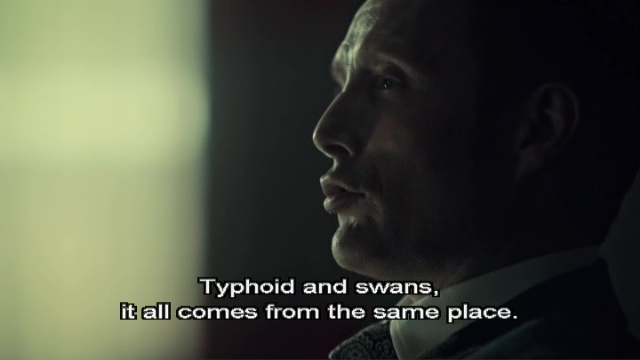
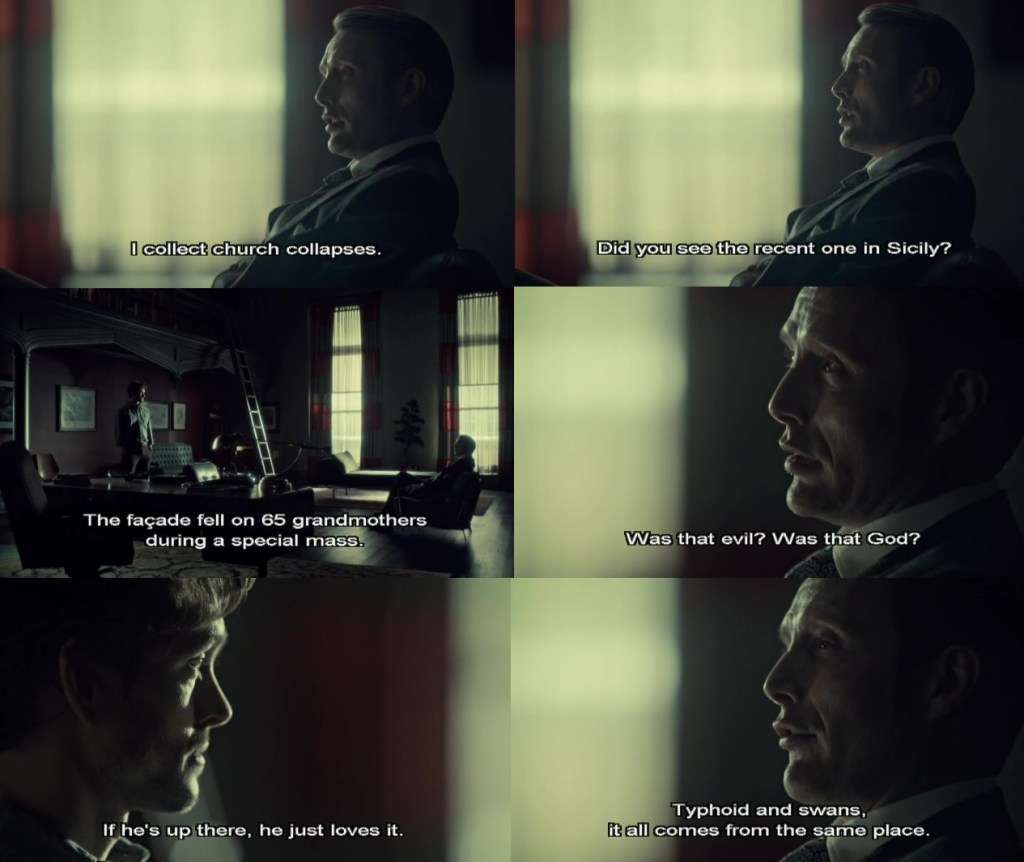
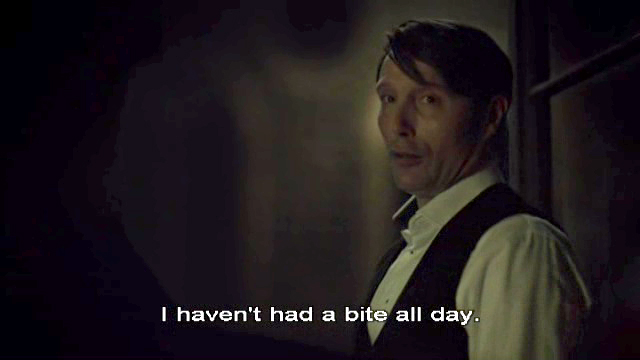
Hannibal and Will are talking about God, as you do when discussing the art of killing people with your psychiatrist.
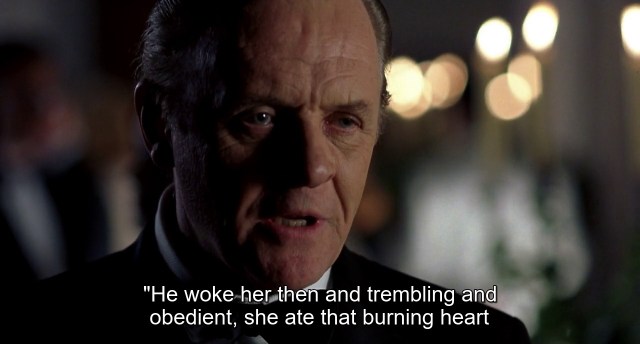
Will: what do you think about when you think about killing? Hannibal: I think about God. Will: Good and evil? Hannibal: Good and evil has nothing to do with God.
As Hannibal says, God kills lots of people, and are we not made in his image?
Why shouldn’t it feel good. It does to God. Why, only last week in Texas he dropped a whole church roof on the heads of 34 of his worshippers just as they were grovelling through a hymn. He wouldn’t begrudge you one journalist.
Or consider what Hannibal Lecktor (they spelled it differently) played by Brian Cox said about the joys of murder in the movie Manhunter:
It feels good Will because God has power. And if one does what God does enough times, one will become as God is.
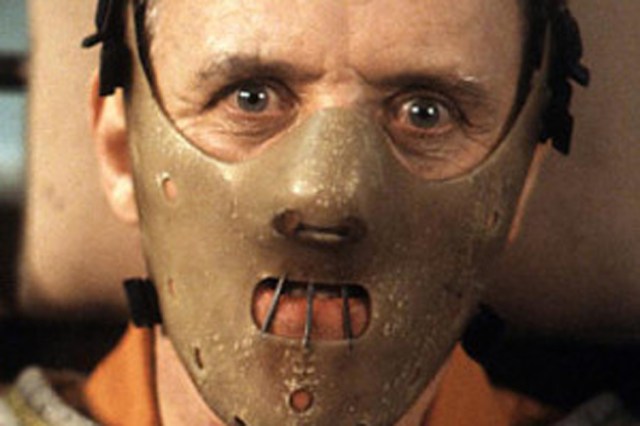
Of all the (sometimes) wonderful cannibal movies and shows I have reviewed in this blog, my personal favourite is still The Silence of the Lambs with Anthony Hopkins as Hannibal the Cannibal. It was the first film I reviewed on this blog (does that mean I liked the others less each time? Not at all), and interestingly, it does not actually feature any cannibalism, although we hear a lot about it.
Fun fact!
So I was pretty chuffed to find that The Silence of the Lambs is the favourite horror movie of the State of Utah, according to the Horrornews.net website. They used information from Rotten Tomatoes and Google Trends, and partnered with Mindnet Analytics, to analyse how interest in horror movies varied in each US state and the District of Columbia (DC). The results are presented on their website:
This survey covers all horror, whereas in this blog we concentrate on the cannibal, so please let us know your favourite cannibal film (or TV show, but if it’s a series, your favourite episode) either in the comments at the bottom of the page (after a few suggestions) or at cannibalstudies@gmail.com. I’ll let you know the results.
FILM STILL – THE GREEN INFERNO – TGI PERU 108 – Ramo´n Llao.tif
So first the bad news – due to contractual arrangements, Hannibal Lecter does not make an appearance in the new TV series called Clarice. He can’t – the DeLaurentiis company (which produced Bryan Fuller’s Hannibal as well as the movies Manhunter, Hannibal, Red DragonandHannibal Rising) has exclusive rights to the characters originating in the novels Red Dragon, Hannibal and Hannibal Rising, and MGM have exclusive rights to The Silence of the Lambs, and own the movie too. Clarice Starling first appeared in Silence of the Lambs, so can be revisited in this series, while Hannibal and Will Graham originated in Red Dragon, so can come to life in Fuller’s brilliant series, but the three of them cannot ever meet. With intellectual property as hot as the characters that came from the Promethean mind of Thomas Harris, sharing it around among production companies is about as likely as two dogs with one bone.
The good news is that Clarice is a damn good show, and Rebecca Breeds, the Aussie actor with the West Virginia accent (it sounded good to me, although I’ve never been to WV) is just right in the role. In the pilot, she manages to convey a complex picture of a young woman who is smart, resourceful and tough, fighting for her place in a man’s world, while still haunted by untreated PTSD from her run-in with Buffalo Bill in the movie.
This is a sequel to Silence of theLambs, and while there is no appearance from Hannibal (who, after all, was on the run after his gory escape in the movie), there are plenty of references to the film, particularly Buffalo Bill (Jame Gumb), the serial killer whom Clarice killed at the climax of the film.
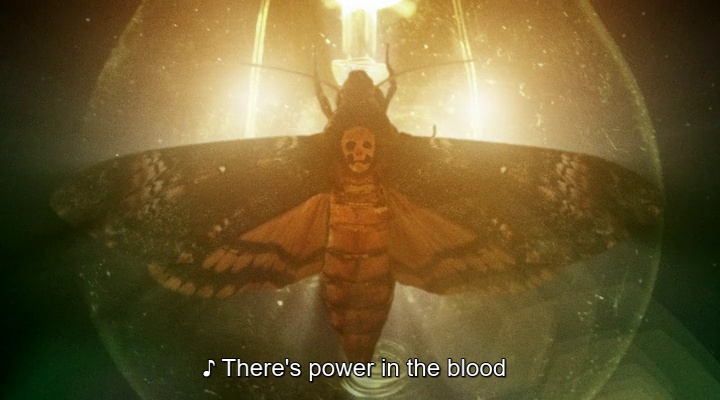
A year after the events of the film, Clarice is waking up at night from nightmares full of violence and deaths-head moths.
She is attending mandatory psychiatric sessions, which she is not happy about, and tries to joke, argue and obfuscate her way out. The therapist says that is
“understandable, given that your last therapist was an inmate in the Baltimore Hospital for the Criminally Insane,”
If you remember Silence of the Lambs, you will recall that the serial killer, Jame Gumb, had captured Catherine Martin, whose mother was a US Senator, and was about to skin her to make a “vest with tits” as Hannibal so elegantly put it. The mother, Ruth Martin (Jayne Atkinson), is now Attorney General of the US, and determined that a new serial killer will not be running wild on her watch.
Ruth Martin drags Clarice out of the Quantico FBI HQ where she has been hiding and doing data entry, and attaches her to the new ViCAP (Violent Crime Apprehension Program) task force. She tells Clarice,
“You saved my little girl. You are a woman with a very public reputation for hunting monsters, Clarice.”
The pilot episode is largely procedural, as was Hannibal when Season one started. Someone is killing women and mutilating them. Is it a crazed serial killer? Well, he is biting them, so that qualifies him for this cannibalism blog, but Clarice notices something odd about the wounds. There’s no intimacy. No frenzy.
“A true psychopath? We’d still be looking. But a true sociopath – they wouldn’t have left their faces.”
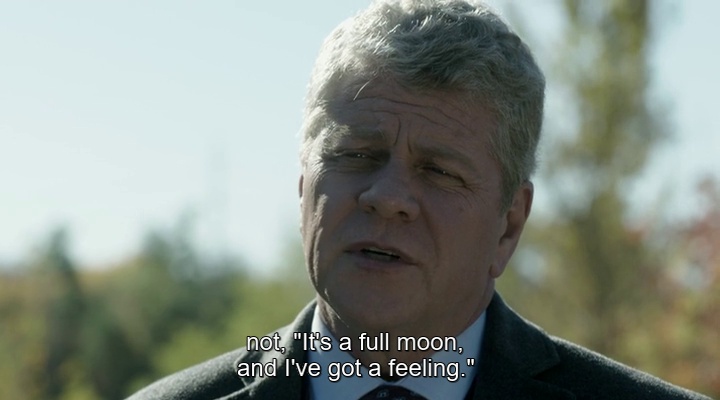
The ongoing antagonist in this is Paul Krendler (Michael Cudlitz from Walking Dead) who barely appeared in the film Silence of the Lambs, although he was an important opponent in the book, and became more important as he destroyed her career in the book and film Hannibalin revenge for her unwillingness to indulge his sexual appetites. In this series, he is a cranky old man, dubious of her talents (he thinks she just got lucky in pursuit of Buffalo Bill) and not willing to let her play hunches.
The FBI grunts play tricks on her, putting lotion on the handles of her desk drawers and telling her
Which of course were Gumb’s instructions to Catherine, using the impersonal pronoun ‘it’ to dehumanise her.
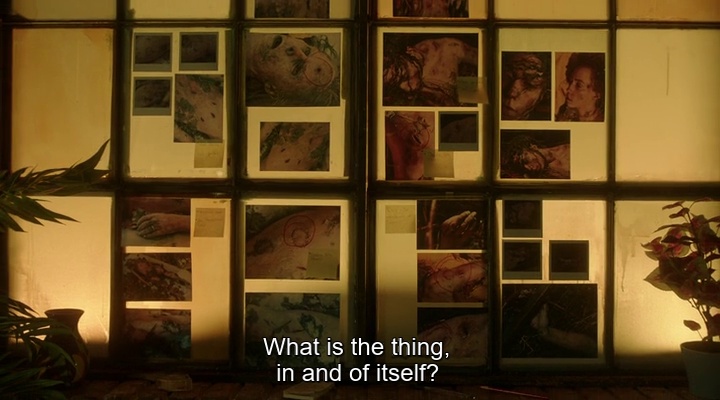
Clarice remembers what Hannibal taught her about the Emperor Marcus Aurelius, with a little prompting from her friend Ardelia (Devyn A. Tyler).
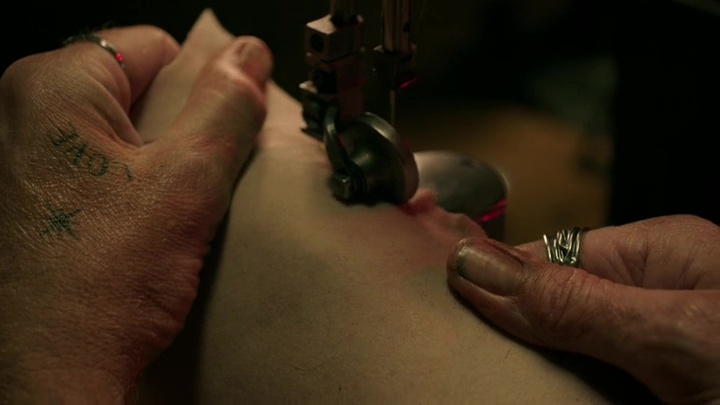
She works out that the wounds are “desperately random”, which is what Hannibal told her about the apparently random dumping of the bodies by Jame Gumb. She realises that the murderer is not a crazy serial killer but is cold, calculating and has a set of targets. The rest of the episode is about her tracking him down, while still haunted by her past. Meanwhile, Catherine Martin is frantic to talk to her; Catherine is now an anorexic recluse, because Gumb only took big girls, whose skin would fit on his frame (but at least she has Gumb’s dog Precious, who I always thought was a nod to Tolkein). Clarice suffers flashbacks and nightmares: Catherine in the oubliette, Jame Gumb sewing a garment of human hide.
The press are obsessed with Clarice, the National Tattler calling her (as in the movie), the “Bride of Frankenstein”.
Krendler wants her to toe the official line and tell the press that this is a crazy guy. But this is Clarice. She’s going to tell it like it is.
Now, I know a lot of Fannibals would have preferred a fourth season of Hannibal to a new series about Clarice (and have said so quite vociferously). But let us not forget what Clarice meant to Hannibal, or at least Hannibal in his twentieth century persona. She was one of the first to interview him successfully in his solitary cell. He found her fascinating and was, let us admit it, somewhat smitten with her, in the books and the films. Remember Hannibal’s words:
“I think it would be quite something to know you in private life.”
So let’s not disparage our opportunity to know her. In the movie Hannibal, he points out that he has travelled half way around the world to watch her run, and wonders why she won’t now let him run, then chops off his own hand rather than harm her.
Unlike many male authors, Thomas Harris can write female protagonists as real, complex people, and he does it so well; not just Clarice Starling, but also the central characters of his first and most recent novels (both non-Hannibal stories) – Dahlia Iyad in Black Sunday (1975) and the eponymous protagonist of Cari Mora (2019).
Hollywood was not willing to countenance a romance between a law officer and (as they saw it) a psychopathic serial killer. But in the novel, the relationships are far more complex: Hannibal hopes Clarice might provide a position in the world for Mischa, his sister, who was eaten by Nazi collaborators during the war. Clarice suggests an alternative: Mischa can live through him, Hannibal, instead, and “she” and Clarice can be like sisters. Remembering Hannibal’s question to Senator Martin (in Silence of the Lambs), she asks if he was breastfed, and if he ever felt that Mischa had made him give up the breast when she was born. Well, he won’t have to give up this one: she offers him her breast, with a warm drop of Chateau d’Yquem suspended from the nipple. He sucks it, but not as a cannibal; as a child, or as a lover. Freud of course would wonder if there is actually a difference.
Unlike the film, in the book Hannibal and Clarice are presumed live happily ever after; the asylum guard Barney sees them at the Teatro Colon, the opera house in Buenos Aires. They are watching Tamerlane, an opera that starts with an Emperor in chains, and ends with a love duet.
This new series, Clarice, is what happens between Hannibal`s escape at the end of Silence of the Lambs and their renewed encounters in Hannibal. It’s important history, one which those of us who loved the books and movies need to explore, even if we loved the Hannibal TV series too.
Clarice is on CBS (where you can watch the first episode if you are in the USA or have a VPN) and streaming on Stan in Australia.

































 The Cannibal Guy