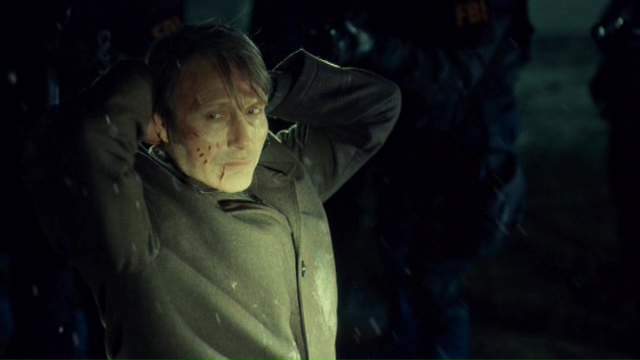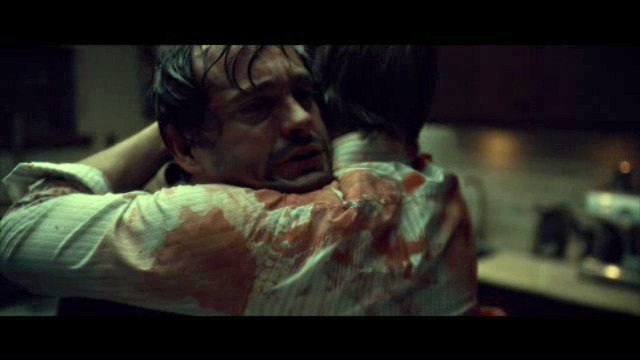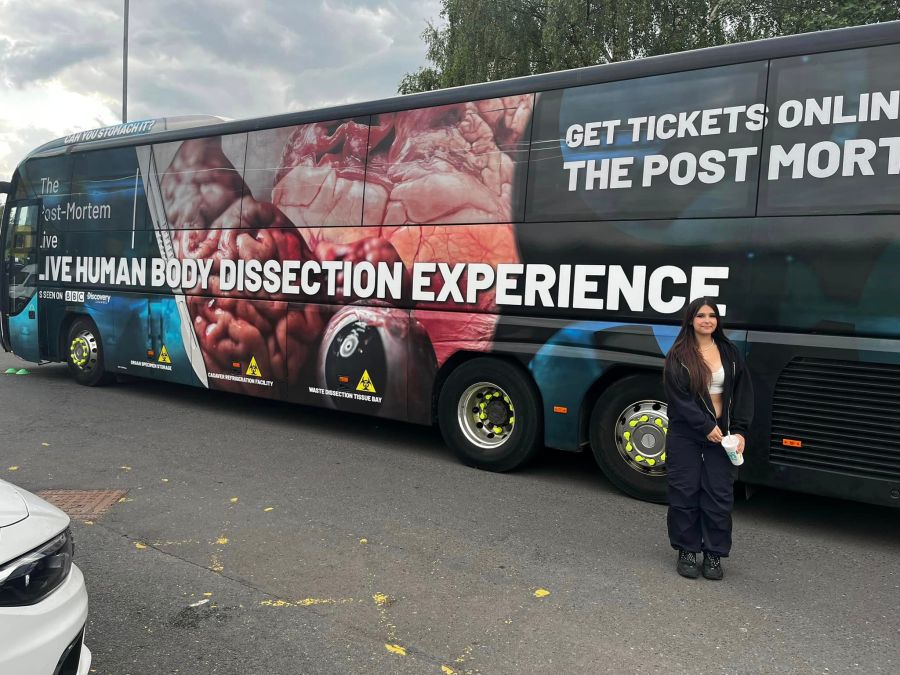
LIVE CANNIBALISM SHOWS: Post Mortem Live

What’s your idea of a great night out? How about attending a post mortem examination of a cannibal serial killer’s victims? That is the theme of “Post Mortem Live” which is touring various parts of the UK, purporting to show the workings of a crime lab, with some extras for the paying audience – they supposedly get to taste parts of the corpses! The press release asks:

“Ever wanted to try a real organ? Well now’s your chance. What does it taste like? Tender, fatty, juicy? Will introducing the pallet to organ meat leave you wanting more, and what lengths will you go to in order to satisfy your hunger?”

This press release is not on their website or Facebook page as far as I could see. If it ever existed (it is reported on several outraged social media sites) then it must have been a joke, and has now been removed.

The show is based on the real murders committed by Dennis Nilsen in the UK and Jeffrey Dahmer in the USA, and gives the audience a hands-on experience of the post-mortem and forensic processes used to gather evidence of cause of death and identity of the victims, as well as piece together the actions of the serial killer, including tracing evidence of cooking and eating body parts.
​​

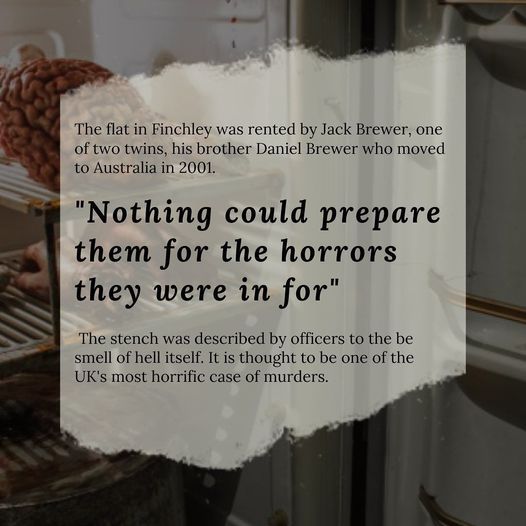
The storyline involves the (fictional) killings of 23 people, brutally murdered and dismembered by an equally fictional serial killer called Jack Brewer, who is said to have had a “feast”. Audience members will investigate the crimes in an “immersive and one-of-a-kind experience” through forensic tests similar to those used to catch and prosecute Nilsen and Dahmer. 

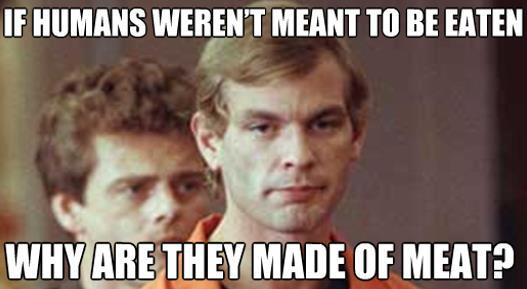
Jeffrey Dahmer killed at least seventeen young men and boys between 1978 and 1991, and ate parts of some of them. Dahmer did not look monstrous, just a lonely young gay man befriending marginalised others and offering them money to pose for photographs or friendship and sex, then drugging them. In some cases, he injected acid into their brains in a desperate but vain attempt to turn them into sex zombies, before killing and eating them, often preserving their skulls so that they would always remain with him.

Dennis Nilsen was a Scottish serial killer who murdered at least twelve young men and boys between 1978 and 1983. Following each murder, Nilsen would bathe and dress the victim’s body, which he retained for extended periods of time, before dissecting and disposing of the remains by burning them or flushing them down the toilet. Nilsen expressed surprise at the public revulsion towards his disposal of his victims’ corpses, which included cooking the flesh to render it down, and perhaps to consume it. Nilsen was trained as a butcher and chef, and we know that a number of serial killers worked as butchers, one of many occupations conferring a professional detachment from the carcasses of non-human animals, which are not very different from human ones.

The audience at this show are offered the opportunity to dissect organs, a method used in crime labs to determine whether a suspect had tried to dismember, degrade, cook or consume the victims. Is it possible, they ask, to deceive the science and conspire to carry out the perfect murder?
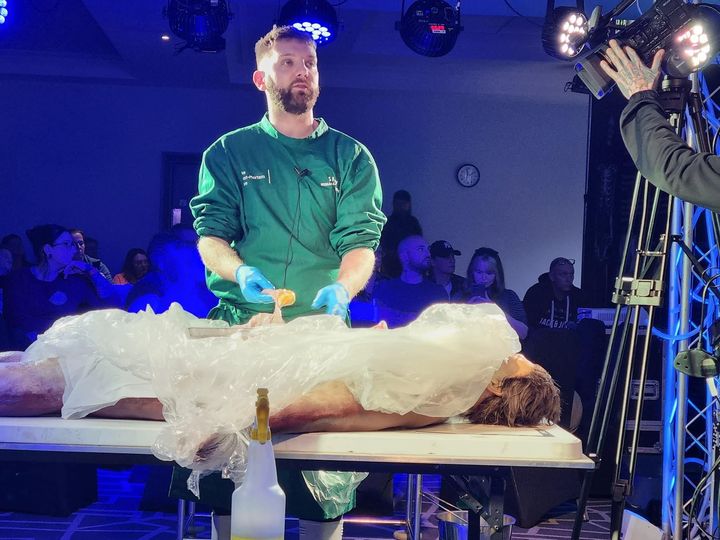
The FAQ states that the show is aimed at students and healthcare professionals, but anyone can attend as long as they’re over 14, and buy a ticket. The ticket price includes “basic PPE, gloves, specimens and clinical consumables.”

What happens at the show?

“The Post Mortem Live offers the chance to get hands on with real anatomical specimens of porcine origin contextualised into a simulated human body dissection.”

There is some eating. For a bit extra, you can book a “Dinner & Dissection”. The offer asks “Are you ready for main-corpse? or Dead-ssert?” Ah, no cannibalism story is complete without a few puns, and the organisers aggravate the crime by calling this a “cutting edge insight” into dark world of homicide detection, forensics and pathology.

The website blog features a number of particularly gruesome images of diseased and injured body parts, nothing to do with the fictional case, but maybe a warning of what to expect. Many of them are on their Facebook page too, some with graphic content warnings, others (possibly worse ones) without. Go figure. I can safely predict you will either love or hate these pages. If you think you will hate them, maybe don’t open them.

I’m not using the images of smashed limbs and spiked eyeballs on this site – all images here are from the show. Which is not real humans.

But… it is is bodily material from real pigs – that’s what they mean by “real anatomical specimens of porcine origin.” I wonder if this is supposed to be reassuring? No dead humans were harmed in the making of this show, but a whole lot of live pigs were killed so that they could be cut up for human amusement. That is sicker than the atrocity pics.
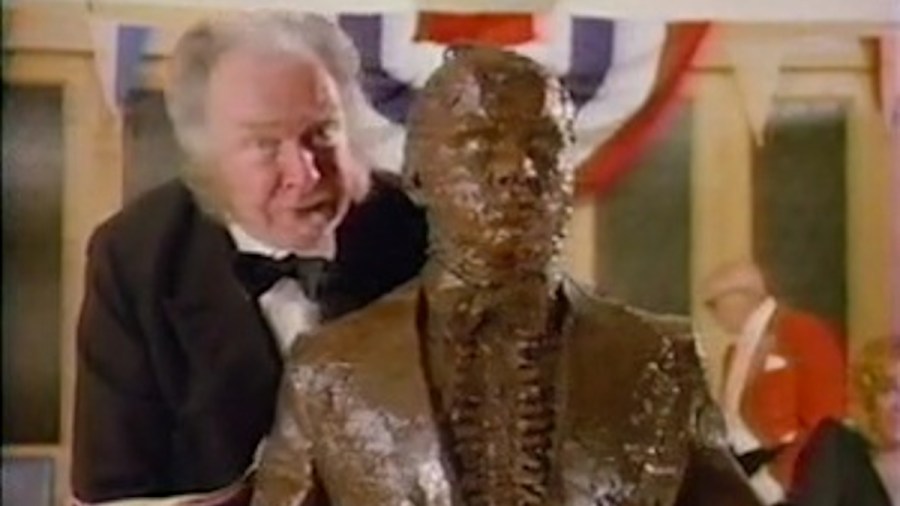

“Cannibal chocolates”: CONSUMING PASSIONS (Giles Foster, 1988)

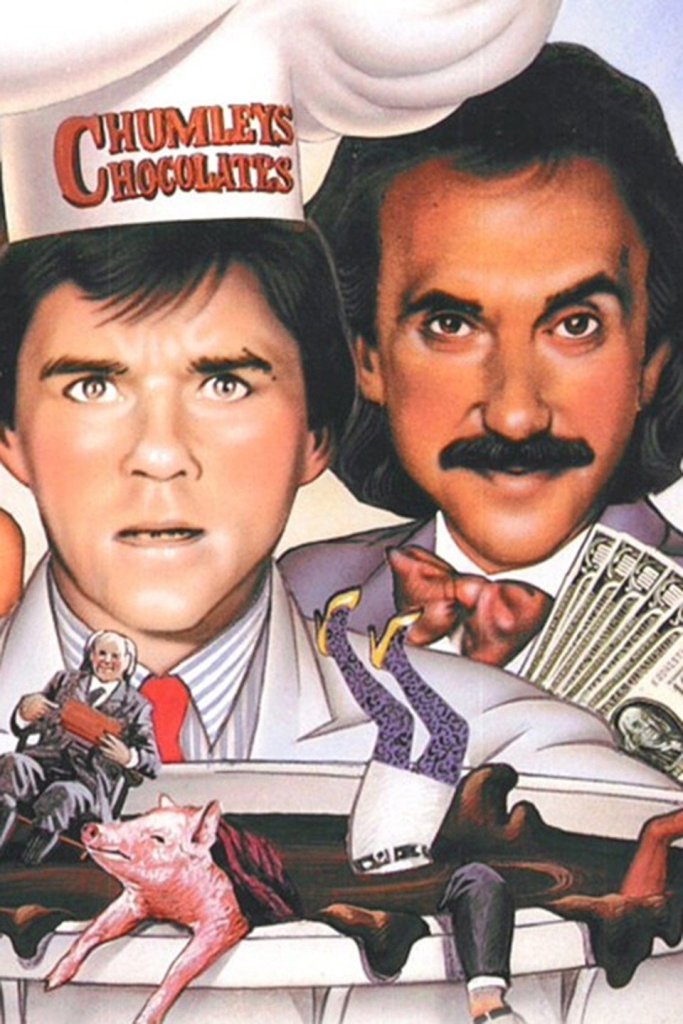
Consuming Passions is a black-comedy film directed by Giles Foster (Hotel du Lac). The film is based on the stage play Secrets by two of the Monty Python greats, Michael Palin and Terry Jones, which was filmed and shown on the BBC in 1973.

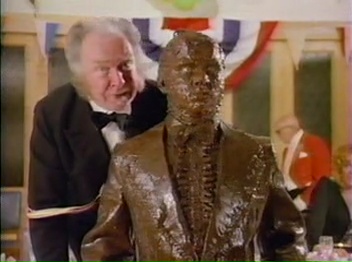
This is what I call entrepreneurial cannibalism, with a subgroup of accidental or fortuitous circumstances. A chocolate factory is preparing to launch a new luxury range, Passionelles. However, during production, the new management trainee causes three of the workers to fall into the giant vat of chocolate, where their flesh is mixed into the first batch.
The horrified boss tries to recall the chocolates, but they have already gone on sale. They prove a huge hit with the public. Market feedback says:

“Pleasantly nutty
subtle and delicious
addictive, compulsive
tasted full of goodness…”

They try to replicate the taste with meat from other animals, including a horrific scene where the guileless protagonist, Ian, orders a mountain of meat from the local butcher, including:

“three young porkers, with heads, ears and trotters”

But this bombs – only human flesh will give the chocolate that something special. As the secretary of the company (played by the wonderful Prunella Scales) says:

“People don’t want to eat chocolates with cows and pigs in them. People want to eat chocolates with people in them.”

They contemplate various ways to obtain dead bodies to use in their chocolate, including murder and/or chucking unemployed people in the vat. The new boss, played by the wonderful actor Jonathan Pryce (Brazil, The Two Popes, and many more) states the ultimate in neolib rationalisation:

“Think of all those millions and millions of unemployed school-leavers, yeah? A tragic, tragic situation. But we can give them a chance to do their bit for society yeah… think how it will shorten the dole queues.”

This seems to be based on Jonathan Swift’s 1729 pamphlet A Modest Proposal, in which he satirically suggested that the Irish, who were already being devoured economically by the landlords, should now sell the oppressors their children to make “a most delicious, nourishing, and wholesome Food; whether Stewed, Roasted, Baked or Boiled.”

In fact, the whole film is a commentary on the neoliberal ideologies that were dominating political policy at the time under Reagan and Thatcher. This toxic reasoning, which is still rampant, aspired to free up corporations while crippling any resistance from workers. Profit became the only determinant of policy – here the new owner of the company rejects the idea of putting real chocolate in the product, preferring artificial flavours and colours. When the market demands human bodies, that’s what they must have. Ian has to trawl morgues, hospitals, funeral parlours and medical schools. When his girlfriend, the quality control chemist, discovers there is human flesh in the chocolates, he assumes she will leave him, but she tells him,

“doesn’t hurt them if they’re dead. They’d probably be glad to know they’re being useful, like!”

By the end of the film, Ian is chocolate man of the year, knighted by the Queen, and made chairman of the company. He is no longer disgusted by cannibalism, but in fact is appraising everyone he meets, including his fiancée, for their weight, fat content and likely edibility. In an extreme example of what Marx called commodity fetishism, we have all become comestible commodities. Nancy Fraser writes and speaks convincingly about the way Cannibal Capitalism systematically destroys and consumes the sectors of society on which its own survival depends. In order to sell more commodities to the public, corporations will consume any resource, including the air we breathe, and our bodies too.

The Danes used a similar plot device later with The Green Butchers, starring Mads Mikkelsen (yep, it’s Hannibal, but not as we know him) as a butcher who accidentally locks the electrician in the freezer overnight and finds his customers love the resulting offcuts. The French tried it more recently with Some Like it Rare, in which a couple who own a butcher store accidentally run over and kill a vegan who has been protesting against their store for selling the flesh of animals. They too find their customers love human flesh, but only if it is uncontaminated by eating the meat of other animals – they only kill and cook vegans, a consummation (or consumption) of which Annie Potts and Jovian Parry have found, on social media, many carnists dream.

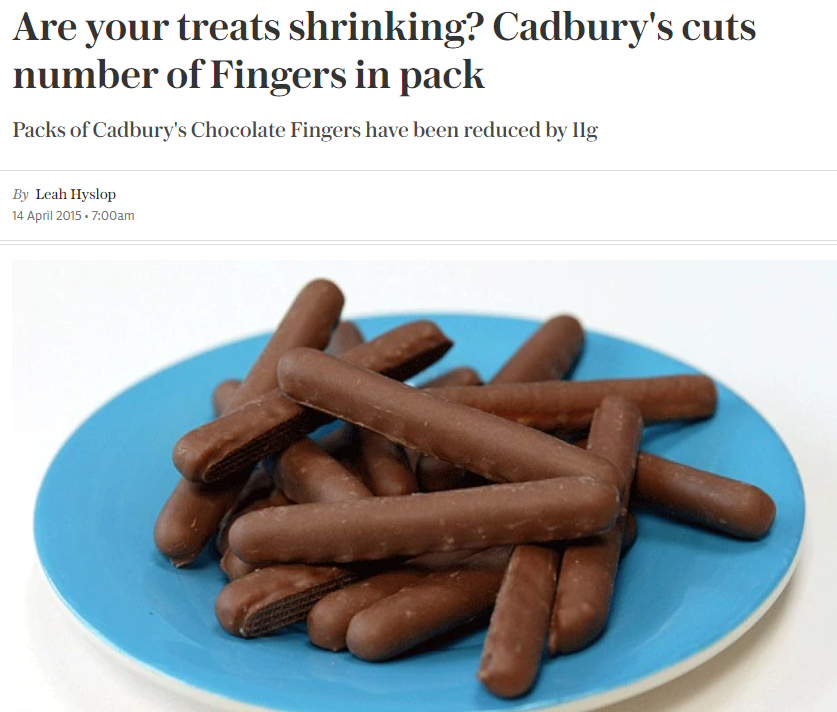
Talking about human body parts in chocolates, do you remember choc fingers? I used to scoff them down as a child. I was somewhat surprised to see they were still available, and were subject of a scandal in the UK in 2015 – Cadbury had reduced the size of the packet by two biscuits!

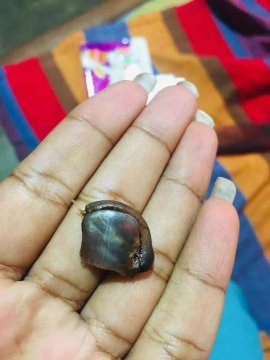
The headline is somewhat unfortunate, and that’s not what this movie is about. But I’d forgotten their very existence, until a recent ‘news’ report that a Sri Lankan woman bit into a chocolate and found the inside rather hard. Thinking it was a ‘fruit and nut’ variety, she persevered, but when the nut still did not crack she decided to check it out by holding the piece of chocolate under tap water. 

In case her tweet has been removed, here is the photo:

It was a bit of a finger, and it reminded me of this long-forgotten (perhaps deservedly) movie. That news, story, like the film, reminds us that, like the ouroboros, our society is busy eating its own tail, it’s workers.

For me, the only really repulsive bit was the dead piglets being dropped into the vat. I’m going to assume they were very realistic models, perhaps made of marzipan, but I’m aware that in a world that kills 1.3 billion pigs a year, buying real corpses would be a lot cheaper for a low-budget movie.

Consuming Passions received a 20% rotten rating on Rotten Tomatoes. It’s a nice idea, but they play it as farce, hanging the comedy on the assumption that we will all be so disgusted by the thought of eating human flesh that we will ignore the often silly dialogue and the occasionally appalling acting, particularly Vanessa Redgrave who, totally unnecessarily, flounces through the film proclaiming herself a “loose woman” and butchering a Maltese accent.

But there are some interesting ideas about masculinist theories of meat-eating, with one woman saying she was going to buy those chocs for her husband to “put the lead back in his pencil”. The idea that men somehow need meat for virility is a basic plank of meat marketing, despite the clear links to heart disease, colon cancer, environmental crises, and of course appalling animal cruelty. And the film’s basic principle, that we are all edible in our consumerist culture, is apposite and well argued, as more and more bodies are sucked into that vat of delicious brown ooze.

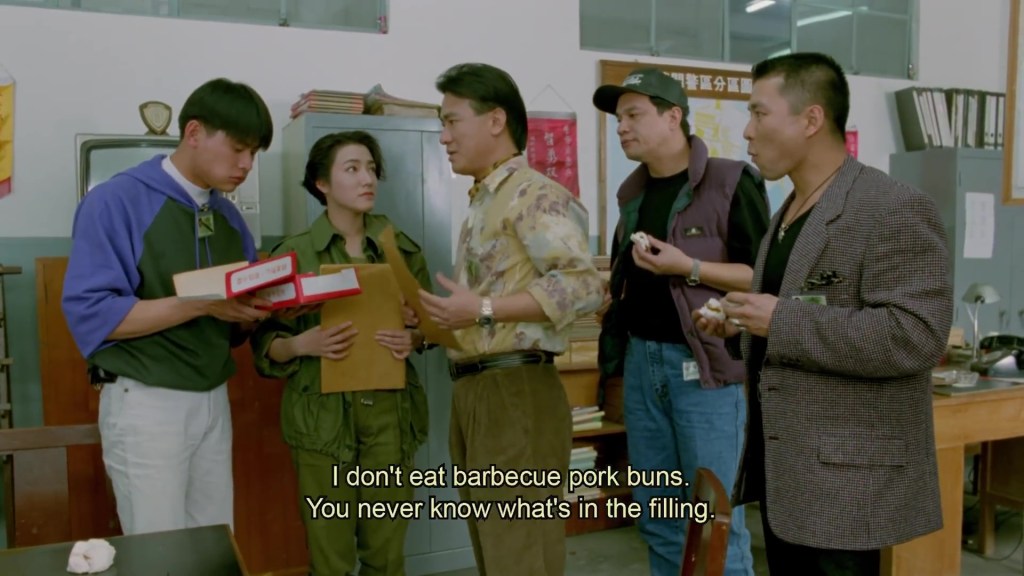
Human Pork Buns: THE UNTOLD STORY (Herman Yau, 1993)

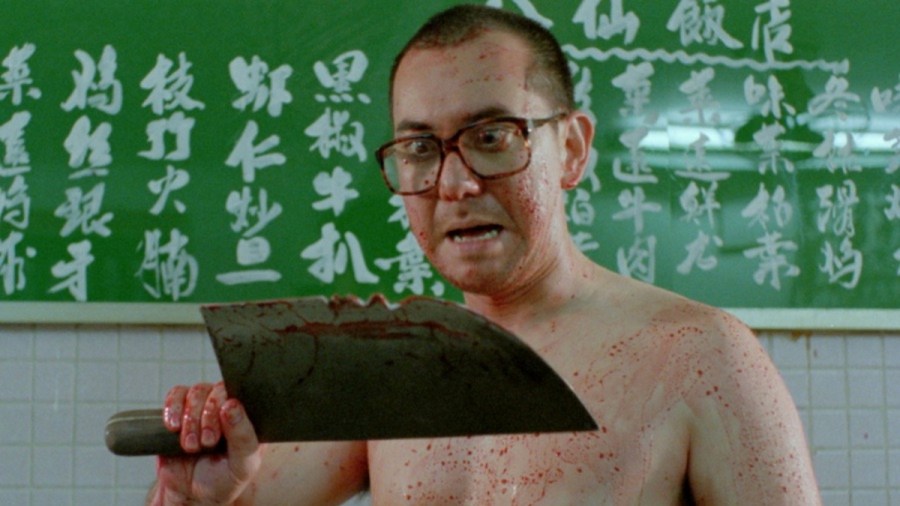
The Chinese title of this movie apparently translates to HUMAN PORK BUNS which is a more accurate description of the film, and also a lot more fun.

It’s a 1993 Hong Kong crime-thriller directed by Herman Yau who has made a few “cult classics” including EBOLA SYNDROME which I reviewed a while ago, and which the director said was his best work.

Both movies revolve around restaurants which serve human meat to unsuspecting diners.

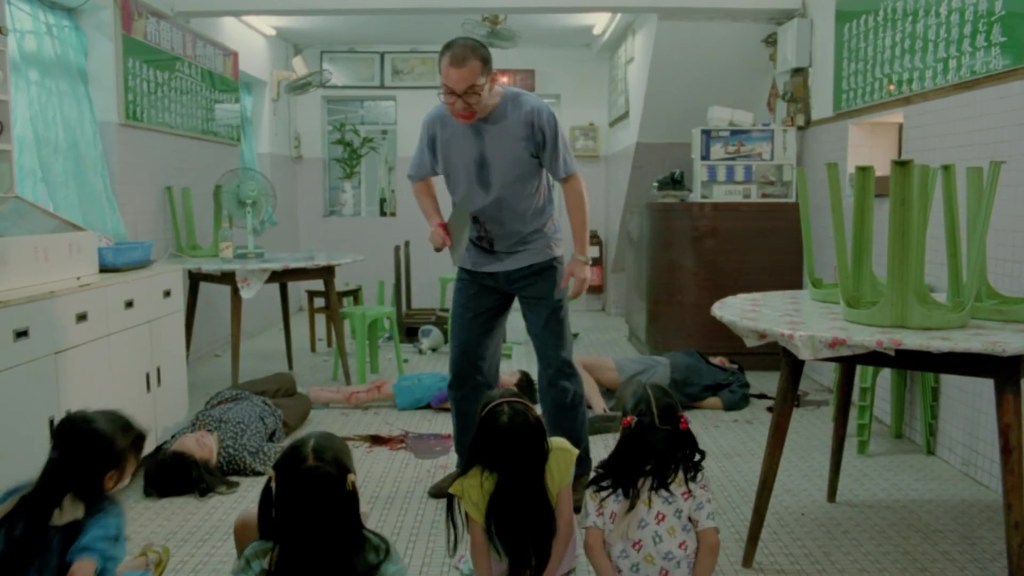
This film is based on a true story – the so-called PORK BUN MURDERS which took place in August 1985 at the Eight Immortals restaurant in Mutya, Macau. A gambler named Huang Zhiheng was charged with the murder of a family of ten in their restaurant, after the father failed to repay gambling debts. Huang moved into their house and took over the restaurant, which he ran for eight months. Body parts from family members were washed up on local beaches and proved to have been severed with precision (discounting the original theory that they had been victims of a shark attack).

As Huang had cut the bodies up, and run the restaurant for some months, rumours naturally started that the flesh of the murdered family had ended up in the pork buns. After all, we (humans) apparently taste pretty similar to pigs. There is no evidence that he actually did this, and he committed suicide before his trial, but anyway, it’s the premise of this movie, which claims to be no more than a fictionalised version of the Pork Bun Murders.

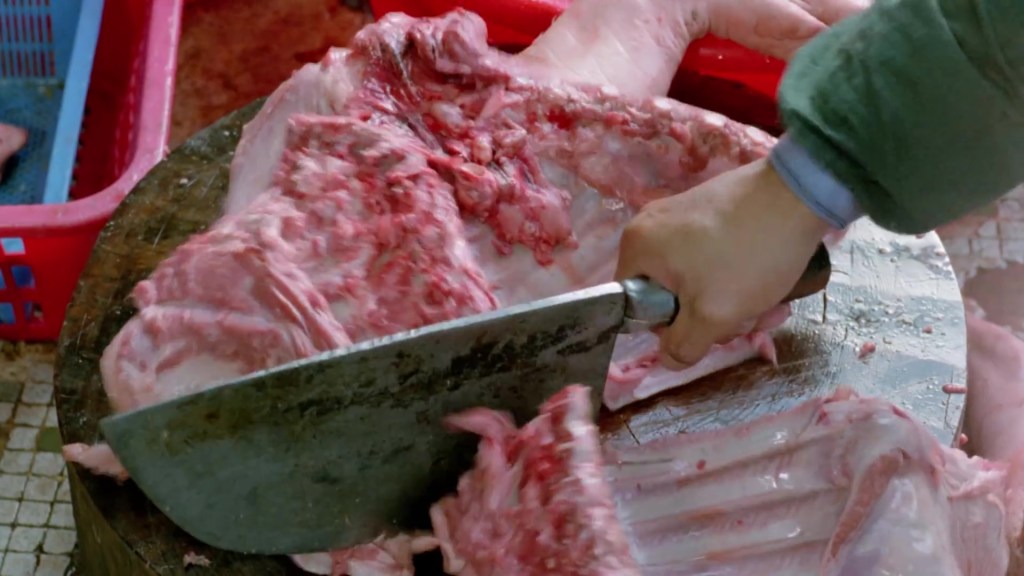
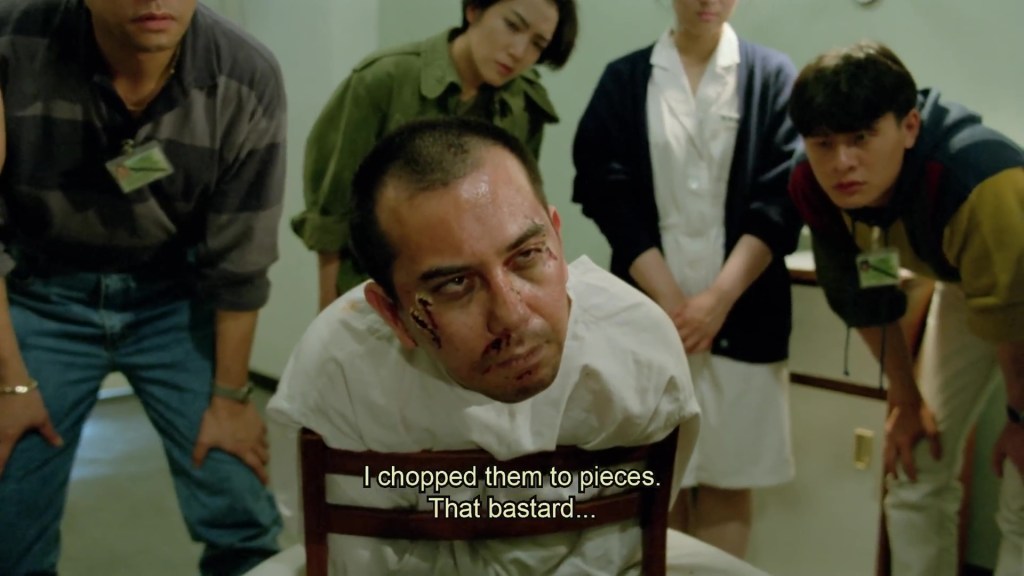
Look, it’s pretty graphic – there are beatings, torture, a rape (involving chopsticks), murders with broken bottles and cleavers and even a stationery spike, a guy gets burnt alive, and small children get chopped up,

…and of course a lot of meat gets put into buns and fed to “innocent cannibals” dining in the restaurant.

If that’s not your thing, you might want to skip this one, but it’s somehow mixed in (minced?) with a light-hearted humour, and there are great, over the top performances from Anthony Wong as the perp Wong Chi-hang and Danny Lee as Inspector Lee, the cop on his trail.

Inspector Lee is right – you can never really be sure what meat you are being served. The killing industry is a business, and always puts profits first. Find out what people want, then sell it to them. Even if it’s made out of them.

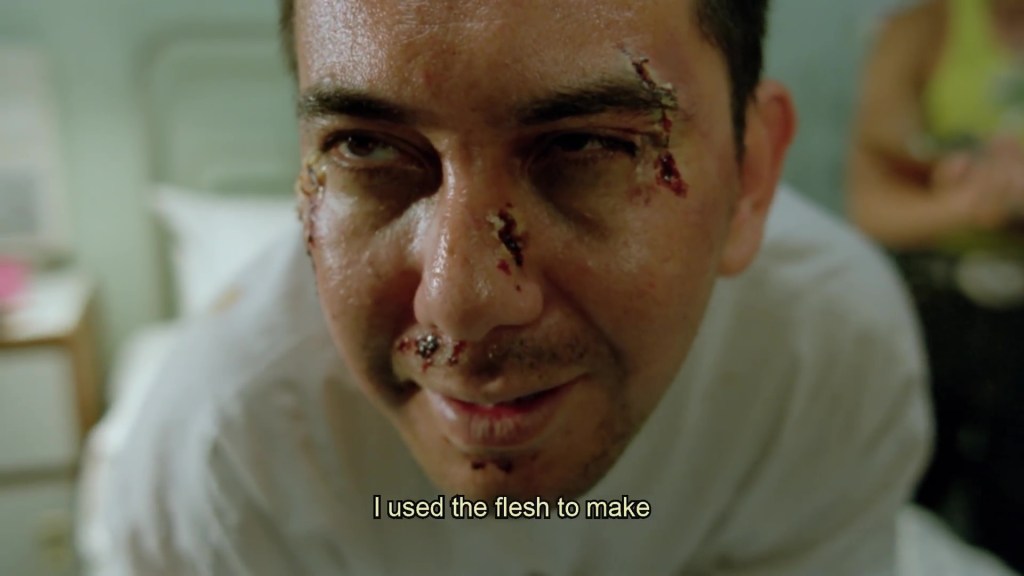
“I used the flesh to make what you guys loved to eat and didn’t pay for … HUMAN MEAT BUNS”

The full movie, when last checked, can be streamed on-line.

Or you could just watch the always entertaining review by Mike Bracken at THE HORROR GEEK.

You might also enjoy Herman Yau’s later film, Ebola Syndrome.

For a more recent case of murder (and maybe cannibalism) in Hong Kong, check out the killing of Abby Choi.

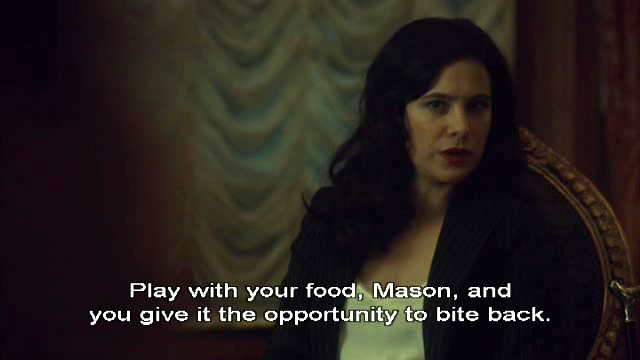
Don’t play with your food… HANNIBAL Season 3 Episode 7, “Digestivo”

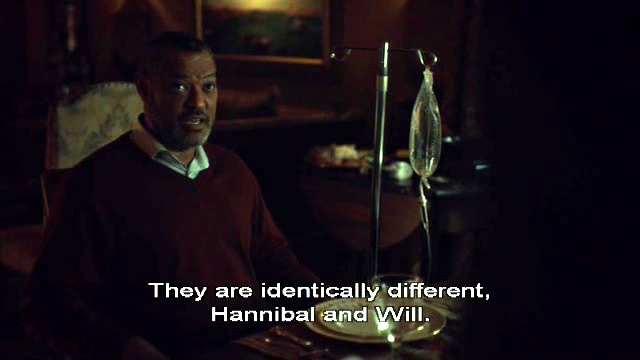
Pigs and people. Are they identically different, like Hannibal and Will?

vlcsnap-00001.jpg

Why do we consider pigs uncontroversially edible, and yet are so shocked at Hannibal or Mason eating human? [If you have the answer to that, please let me know – I’m up to 65,000 words and still haven’t come to a conclusion]. We use them in gruesome experiments because they are like us, but then justify it by saying they are not really like us at all. This episode is all about pigs and people interchangeably being used, abused, and prepared for dinner.

Pigs of course are remarkably similar to humans – have you ever seen a butcher carrying a pink corpse into the shop and wondered for a moment who he has killed? Geneticists have proved the similarity:

“We took the human genome, cut it into 173 puzzle pieces and rearranged it to make a pig. Everything matches up perfectly. The pig is genetically very close to humans.”

The episode is called Digestivo, which in Italian is an after-dinner drink, usually a liqueur or bitter, which is meant to settle the stomach. We have, in this episode, finished consuming the plot of the book and movie Hannibal, which follows Mason’s quest for revenge. Next episode, we go to the central plot of Red Dragon, which of course pre-dated the other books but, by the brilliance of Bryan Fuller, is readily reimagined as a later time in this new universe.

Mason always carries a little knife that belonged to his father. Perhaps it’s the same one that he used to slice off his face. His father would test the depth of fat on a pig’s back by poking him or her with this knife, something neither the pig nor farmer found terribly acceptable. Now he is doing it to Hannibal. It’s clear that he is planning to turn Hannibal into a pig before he eats him.

vlcsnap-00013.jpg

vlcsnap-00014.jpg

Of course, there’s many a slip, as they say, or as Nick Cave says:

“If you’re gonna dine with the cannibals, sooner or later baby you’re gonna get eaten”.

Or as Alana warns:

vlcsnap-00019.jpg

To the sublime tones of the Mozart Piano Concerto 21, Hannibal and Will are dressed and brought to Mason’s table. In the opulent dining room of Muskrat Farm, Mason tells Hannibal that “I snatched Will Graham right out of your mouth.” He is referring to Hannibal’s plan to eat Will’s brain, foiled by the arrival of the Italian police, who were in Mason’s pay.

vlcsnap-00024.jpg

Hannibal and Mason compare their depth of reading, as Hannibal reminds Mason of the biblical story of Jezebel, who was, like Mason’s face, eaten by dogs. Mason in return spouts a news story he read about “that German cannibal” (he can’t remember the name of Armin Meiwes?) who advertised on the Internet for someone who wanted to be eaten.

The cannibal and the intended meal ate the man’s penis together before the latter died and was packaged up in the freezer. Mason’s assistant, Cordell, arrives hilariously at that moment with some pork sausages, thus emphasising the human/pig parallels.

vlcsnap-00033.jpg

“Go to all that trouble to eat a friend and you overcook his penis. They ate it anyway, they had to, they committed. But they didn’t enjoy it.”

vlcsnap-00038.jpg

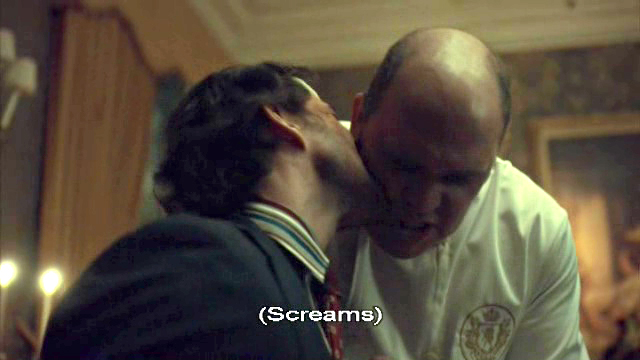
Mason reveals part of his plan – he likes Will’s face, and intends to graft it onto Hannibal before he eats him. The rationale is that Will and Hannibal were both there watching as the dogs ate Mason’s face. They banter pleasantly (Hannibal shows no fear) about the order in which Mason will eat the various parts of Hannibal’s body. Everyone loves to chat about cannibalism! Will’s banter is a little less polite, as he takes a healthy bite of Cordell’s cheek, much to Hannibal`s amusement, and is left with a bloody chin, reminiscent of Anthony Hopkins in Silence of the Lambs. Will has become at least a functional cannibal.

vlcsnap-00062.jpg

vlcsnap-00064.jpg

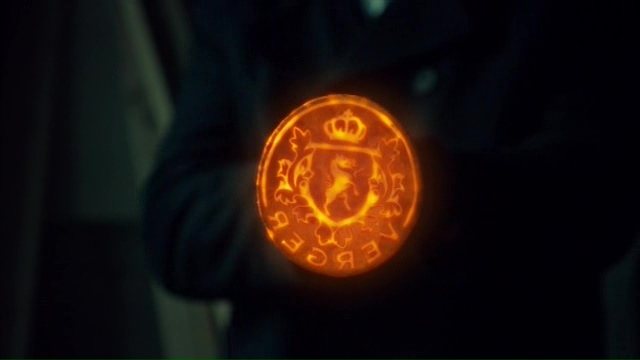
Cordell sews up his own face, then advances on Hannibal with the Verger branding iron. He brands Hannibal with the Verger emblem.

vlcsnap-00071.jpg

Hannibal is being turned into an edible pig, because as Mason admitted, he did not really fancy eating human flesh. Much easier to eat the animal that daddy made his fortune exploiting, than to eat the man who consistently outsmarted him.

“Mason would have preferred to brand your face. He fought bravely, and with his own funds, against the humane slaughter act, and managed to keep face-branding legal.”

vlcsnap-00078.jpg

Part of what supposedly makes us superior to other animals is the power of speech. Pigs can grunt and scream eloquently, but they can’t form their words into either maxims or complaints. The tongue is crucial, and Cordell tells Hannibal he intends to

“…boil it, slice it very thin, marinate it in olive oil, garlic, parsley and vinegar.”

vlcsnap-00083.jpg

Cordell describes the rest of his plans, in something almost out of a cooking show. But looking down appreciatively, he adds

vlcsnap-00087.jpg

“Every day I’ll feed Mason some new part of you. And don’t you worry Dr Lecter, you will always be cooked to perfection.”

Anyway, we know that nothing like that is going to happen, because we still have six episodes to go. AND SEASON 4 [please?] The rescue involves Alana and Margo, who find that Mason kept Margo’s eggs and that there is a surrogate having her baby.

vlcsnap-00153.jpg

A pig, of course. Not too successfully; the baby is dead, which makes her fighting mad. They head off to kill Mason. First, they release Hannibal, because he has to save Will (about to have his face cut off without anaesthetic). Alana knows that Hannibal promised to kill her at the end of Season 1. But she has no other choice if Will is to survive.

“You’re the only one who can save Will. Promise me you’ll save him?”

vlcsnap-00127.jpg

vlcsnap-00128.jpg

The “abyss” that Heidegger described between human and animal is further breached as Mason is eaten by his pet eel. Or chokes as he eats the eel. All lines are crossed.

vlcsnap-00166.jpg

Having saved Will, Hannibal finally meets up with Chiyoh. She is willing to watch over him, but not in a cage: “Some beasts shouldn’t be caged.” Her obsessive hunt, she tells him, was motivated not by his plight or hers, but Mischa’s.

vlcsnap-00177.jpg

“Yes,” says Hannibal, “but I did not kill her”.

We see the broken teacup that has bothered Hannibal throughout the books, movies and this TV series. Can time reverse? Can we undo what has been done?

vlcsnap-00185.jpg

As he waits for Will to recover and awake, Hannibal is working on some higher level calculus, presumably still trying to work the maths on how to reverse time.

vlcsnap-00187.jpg

But Will is having none of it.

vlcsnap-00190.jpg

“I miss my dogs. I’m not going to miss you. I’m not going to find you. I’m not going to look for you. I don’t want to know where you are or what you do.”

vlcsnap-00203.jpg

vlcsnap-00204.jpg

“You delight. I tolerate. I don’t have your appetite.

Goodbye Hannibal.”

vlcsnap-00211.jpg

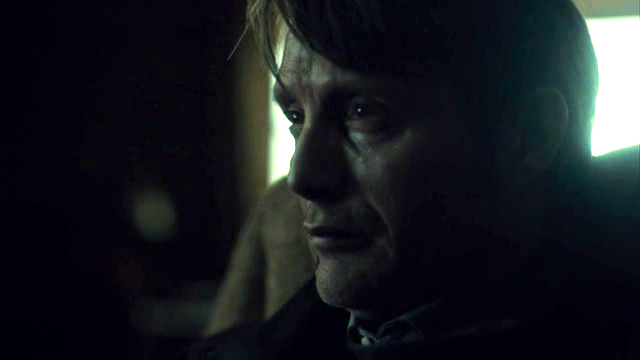
The digestivo here is a bitter drink – look at Hannibal’s face. Takes a hell of an actor to portray strong emotion so simply. Will has divorced Hannibal. But Hannibal is not giving up – he never does. He escapes before the FBI arrive, but then returns and surrenders.

vlcsnap-00220.jpg

vlcsnap-00222.jpg

Next episode, Will takes on the Red Dragon, but – can he do it without Hannibal? Silly question really, don’t know why I bothered asking it.

Remembrance of Things Past: HANNIBAL Season 3 Episode 4: “Aperitivo”.

There was a “Hannibal” in Proust: Comte Hannibal de Bréauté-Consalvi in The Guermantes Way. Now there is some Proust in Hannibal – everything in this episode is à la recherche du temps perdu – “Remembrance of Things Past” or, more accurately, “In Search of Lost Time”.

Hannibal, let’s be clear, gets into people’s heads (including those of his loyal Fannibals). That of course is his job as a psychiatrist, but he takes it well beyond work hours, getting into the heads of everyone with whom he deals, including Miriam Lass, who was his captive for a long time, and shot Frederick Chilton, because Hannibal was in her head.

vlcsnap-00012.jpg

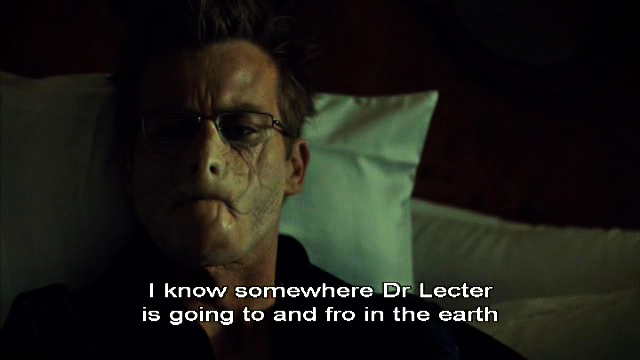
It’s episode 4, and we are finally finding out what happened to all the people knifed, shot and pushed out of windows (or made to eat their own faces) in the previous season. Those still alive have it in for him, are hunting him in their own ways. Mason Verger, whose fortune is based on breeding and killing pigs, wants to catch Hannibal and feed him to those pigs. He has offered a reward of one million dollars for his capture. Chilton, less one eye and half his teeth from Miriam’s bullet, just says “Happy hunting!” Verger’s words about Hannibal are taken from the Bible, the Book of Job, where Satan tells God he has been “going to and fro on the earth, and from walking back and forth on it”. He is relating Hannibal to a supernatural being: Satan. But also to an edible being: a pig. This can’t end well.

vlcsnap-00021.jpg

We know Will was cut up good in his last dance with Hannibal, but we get a new perspective in the next scene after the credits – we are inside Will’s body cavity, in the coil of guts, looking at the stomach skin as it is punctured by Hannibal’s linoleum knife. Waking up in the hospital, he is visited not by Abigail, as he had hoped and imagined in episode 2, but Chilton, who wants help catching Hannibal, who would be a prize specimen for his “hospital” for the criminally insane.

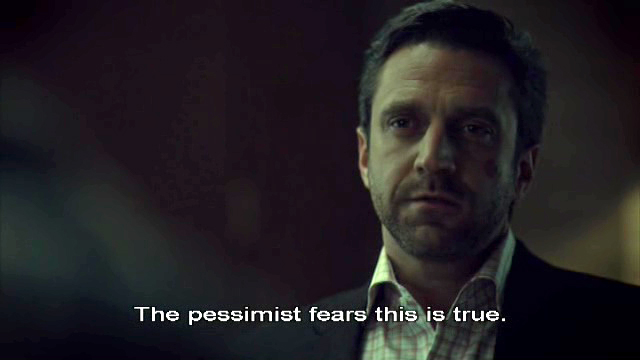
Will spurns Chilton’s offer of compassion and friendship, which leads to one of Chilton’s best lines of the show:

The optimist believes we live in the best of all possible worlds;

vlcsnap-00024.jpg

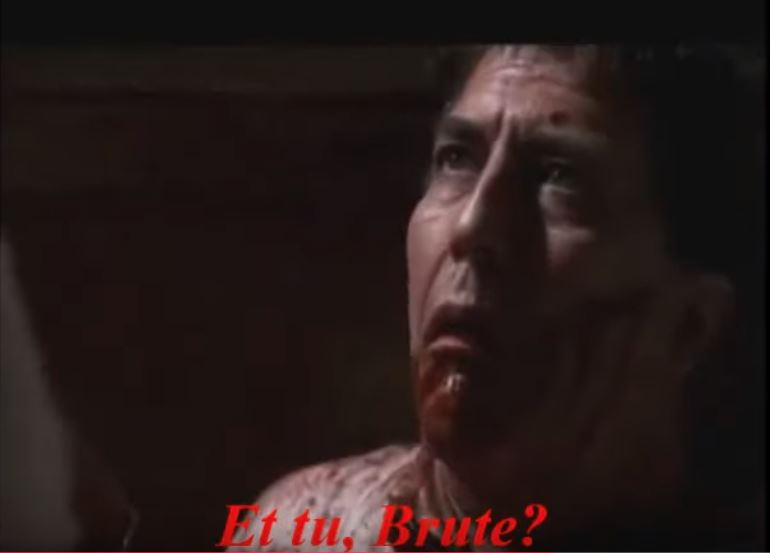
Will is still imagining scenarios – in the next scene, he and Hannibal are plunging knives into Jack Crawford in a scene that could only have been inspired by Julius Caesar.

Et Tu Brute.JPG

vlcsnap-00025.jpg

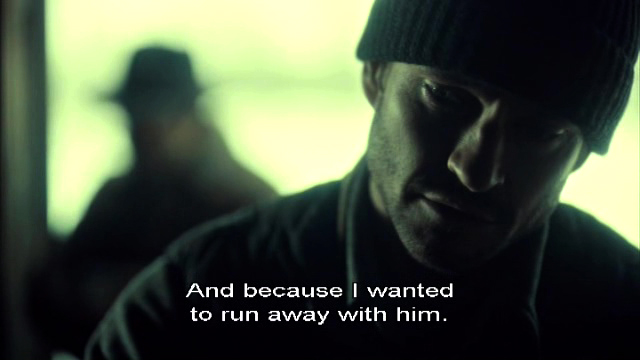
But Will finally didn’t go with Hannibal, and Jack’s not dead – he’s tracking to Will’s boatshed to seek Will’s help, just as he did at the beginning of Red Dragon, where the whole saga started. Will admits that he warned Hannibal, wanted him to run, because “he was my friend”,

vlcsnap-00029.jpg

Alana is still alive too, despite being pushed out of a first storey window. She wakes up full of rods that hold her together. The doctors have told her that a lot of marrow got into her bloodstream from her multiple broken bones, so she should expect to think differently. And she does.

vlcsnap-00031.jpg

She goes to see Mason Verger, who tells her he has found religion, been saved by the risen Jesus or, as he familiarly calls him “the Riz”. As a believer, he says he has forgiven Hannibal. Alana is not so convinced.

vlcsnap-00043.jpg

Jack remembers his apparent death at Hannibal’s hands, but has somehow recovered. His health, not his career – he has been forced to retire from the FBI. The culture has found a new nightmare to slap its clammy flab and ruin its sleep.

vlcsnap-00044.jpg

He also remembers waking up in hospital, lying next to Bella, his wife, who is continuing to die without him as it turns out. He takes her home, sits with her, holds her while her heart stops and her brain dies. He dresses for church and visualises their wedding, but it’s a funeral, she is in a casket, and there is a splendid bouquet from – who else – Hannibal. The card contains a John Donne poem and finishes “I’m so sorry about Bella, Jack”. Fighting to the death does not, apparently, reduce the respect or affection Hannibal feels for his opponents.

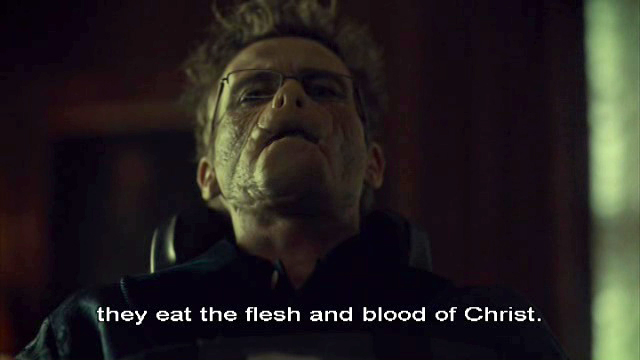
Everyone, everyone alive that is, wants to find Hannibal, and most of them want to kill him. What does Will want, as he embarks on a sustainable sailing voyage to Europe to find Hannibal? We don’t know. Mason Verger is talking transubstantiation – his face has been (somewhat) restored by extensive surgery, now he wants to transubstantiate Hannibal. In most ceremonies

vlcsnap-00052.jpg

He is planning a more elaborate ceremony. He tells his major-domo nurse Cordell

vlcsnap-00055.jpg

Alana is helping, telling Verger that Hannibal will be traceable because, wherever he goes, he will be ordering the very best wine, truffles, etc. She tells him “You’re preparing the theatre of Hannibal’s death. I’m just doing my part to get him to the stage.”

It sounds like they are all conspiring against poor Hannibal. But remember what Alana told Jack when they thought they were outsmarting him – Hannibal is always in charge of the narrative. Whatever the others are doing, he wants them to be doing. Or as Bedelia said, he is drawing them to him. Nietzsche wrote:

“In your friend, you should possess your best enemy. Your heart should feel closest to him when you oppose him.”

While everyone else is remembering things past, or searching for lost time, Hannibal is making friends.

The Young cannibal: PIGSTY (Italian: PORCILE), Pier Paolo Pasolini, 1969

Pasolini’s films were usually brilliant, but rarely easy to watch. They were not designed as entertainment, but to make a point, usually political, and even then don’t ever go straight to it, but leave it up to the viewer to interpret. Some of his films were extremely graphic – his final film, Salo, was based on de Sade and was particularly difficult to watch. He was murdered soon after that one was released, so who knows what might have come next?

This slideshow requires JavaScript.

The opening credits roll over some very cute pigs in a sty, although they are not a major part of the rest of the movie, until the end. I guess for Pasolini they represent the European bourgeoisie, which I think is appallingly offensive. To the pigs.

vlcsnap-00068.jpg

Two separate stories are being told, interwoven. Segments of one are followed by the other, or sometimes the same one again. One story is set in 1967 and is about a German industrialist who looks a lot like Hitler, his son Julian, described by his mother as a “Mannerist San Sebastian”, and his radical fiancée Ida who joins protests to piss on the Berlin wall.

vlcsnap-00080.jpg

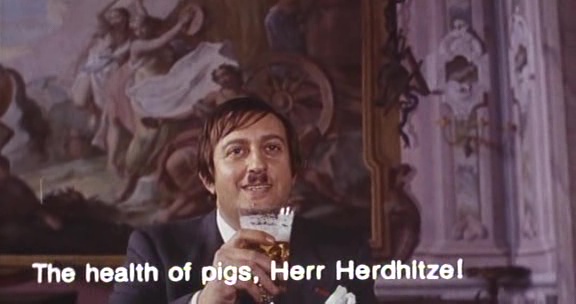
Julian will not go with her to the wall, nor even kiss her – he becomes catatonic after telling her that he has another love. Turns out to be the pigs in the porcile (sty). He prefers them to the hedonistic existence of his father who makes an alliance with an old rival, Herr Herdhitzel, even though he knows of that rival’s involvement in the Holocaust, and could destroy him.

vlcsnap-00081.jpg

vlcsnap-00082.jpg

The locals arrive to tell of Julian’s fate, eaten by the pigs. Like Sebastian in Suddenly Last Summer, Julian is eaten by those he loved, or lusted after, or ate.

vlcsnap-00099.jpg

But the industrialist doesn’t want to spoil the celebrations, and tells the locals:

vlcsnap-00107.jpg

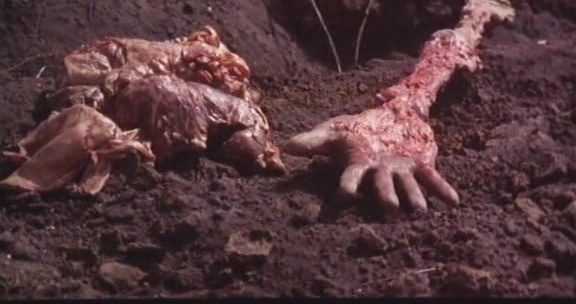
The other is set sometime in the middle ages (judging by the weapons and armour) and in a volcanic waste-land. A young man, called only “the young cannibal”, wanders around catching and eating whatever he can find, including lone soldiers.

vlcsnap-00078.jpg

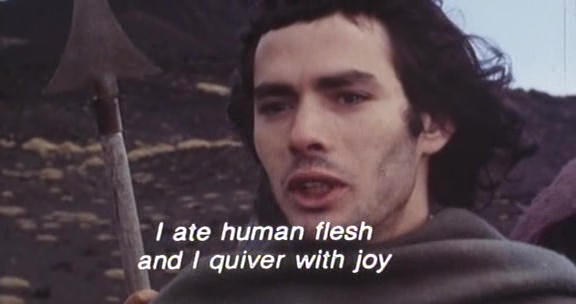
He joins up with other brigands who wander the smoking hills catching, killing and eating, throwing their victims heads into the volcano. When he is caught and prepares to be executed, tied down to four wooden stakes and left for the wild dogs to tear to pieces, he utters the words for which the film is most famous:

vlcsnap-00089.jpg

vlcsnap-00090.jpg

The young cannibal is a mirror image of Christ, killing his father instead of being killed, tied to the ground instead of raised on a cross, quivering with joy instead of asking why he has been forsaken. For Nietzsche, God is dead. For Pasolini, we have eaten him.

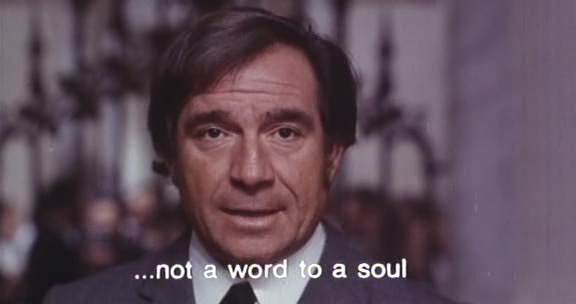
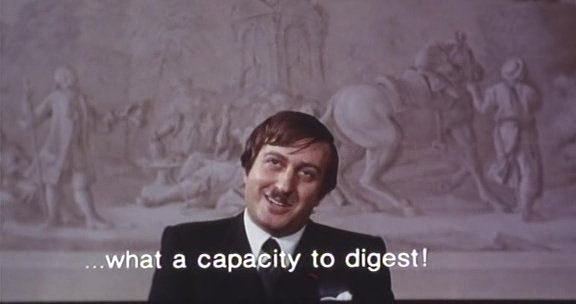
Cannibalism is usually defined as the eating of human flesh by humans. There are a lot of grey areas (and pink ones when pigs are involved). We eat them, they eat us, we eat each other. It’s about greed and power, and is the same whoever is eating or being eaten. Julian’s father sums it up:

vlcsnap-00085.jpg

vlcsnap-00086.jpg

vlcsnap-00087.jpg

IF YOU LIKE MY BLOG, PLEASE FEEL FREE TO RECOMMEND IT (WITH DISCRETION) TO FRIENDS ON SOCIAL MEDIA.
IF YOU HAVE ANY QUESTIONS OR COMMENTS, YOU CAN USE THE TAG, OR EMAIL ME ON CANNIBALSTUDIES@GMAIL.COM.