Deep tissue cannibalism: THE HORROR OF DELORES ROACH Episode 1 (Aaron Mark, 2023)

This is not only a fabulous story, but possesses a proud heritage in the field of Cannibal Studies, and is not afraid to flaunt it. Delores Roach is a young woman in a basement in Washington Heights Manhattan, who gives massages for a living, occasionally killing her clients and delivering their bodies to Luis, who runs the struggling empanada store above, to use as meat. Yes, it is unapologetically the offspring of the legend of Sweeney Todd, the “Demon Barber of Fleet Street”, who killed his customers instead of shaving them and then dropped them through a trapdoor to his colleague and perhaps lover, Mrs Lovett, who turned them into delicious meat pies. There is some controversy over whether or not Sweeney was a real person who was publicly hanged outside Newgate Prison in 1802 or just an urban legend of early capitalism. In any case, Sweeney appeared in a number of movies; in 1936 he was just plumb crazy, while in 2007 Tim Burton made him an honest man wronged by a corrupt power establishment. Burton’s film is based on a Sondheim musical that played interminably on Broadway and around the world.

In this version, Delores (Justina Machado) turns everything upside down; it’s Sweeney through the looking glass. We’re in New York instead of London, with a female serial killer instead of a male, and a male pastry chef instead of a female. Delores is downstairs killing people for Luis who is upstairs cooking them, again turning the Sweeney legend upside down. Like Sweeney, at least in the Tim Burton musical version of the story, Delores has returned from a long and unjust term of incarceration.

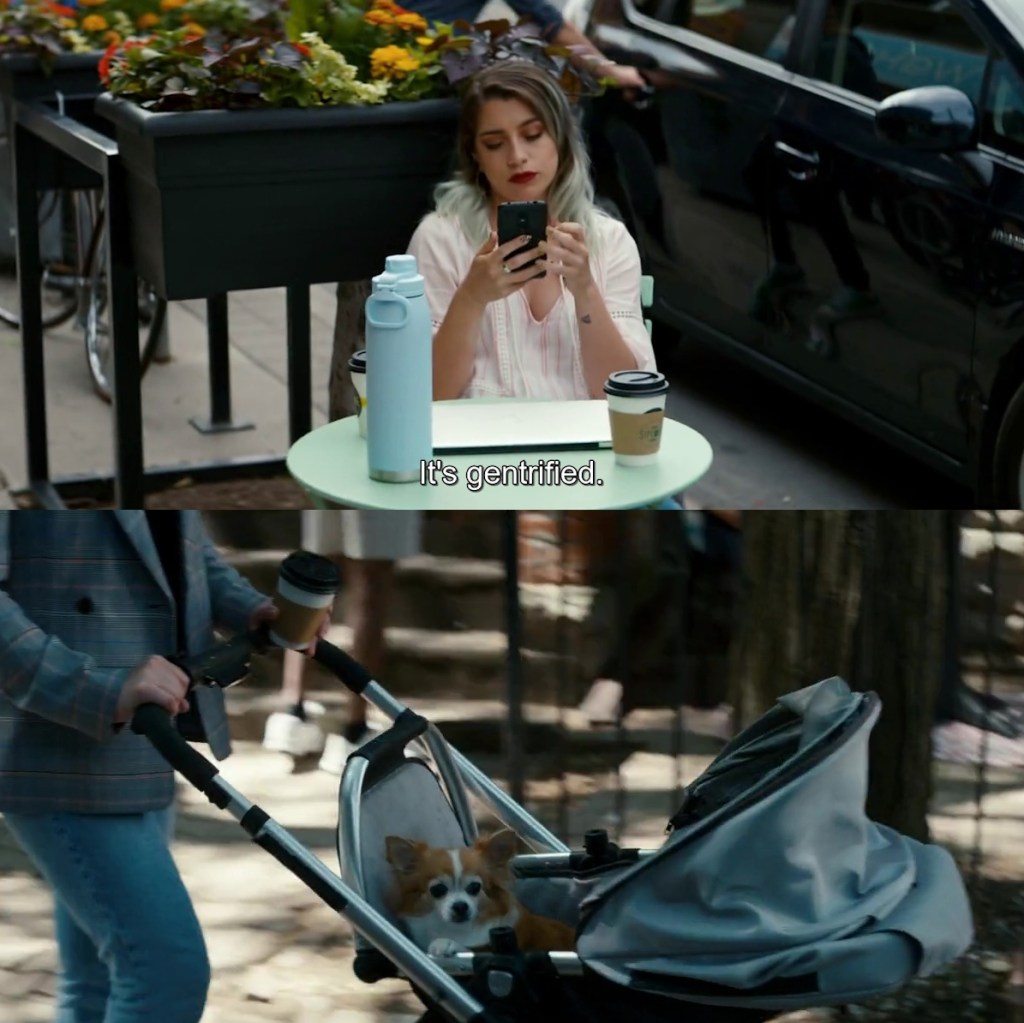
She finds her shabby neighbourhood, Washington Heights, gentrified after 16 years in the slammer, to the extent that she doesn’t even recognize any of the shops. A lot of the reviews seem to focus on gentrification as the main crime in this story.
Except for her favourite fast food store, Empanada Loca, run by Luis (Alejandro Hernandez), the son of the man who used to make the empanadas. He has a soft spot for Delores, who used to pay him in cash and spliffs when he delivered her lunches. Luis offers her accommodation, for old time’s sake, and maybe the odd massage.

There are plenty of stories based on butchers serving human meat to unwitting customers, turning them into innocent cannibals. Among them are Hitchcock’s Speciality of the House, Mielche’s The Butchers, Yau’s The Untold Story, Jensen’s The Green Butchers, Stjernswärd’s The Farm and Eboué’s Some Like it Rare. And of course our old friend Hannibal, who tells his guests “Nothing here is vegetarian”.

Burton’s Sweeney Todd was based on a Broadway musical, but Delores is a generation later, and so now her Broadway show is based on a more contemporary form of popular culture, the TRUE CRIME podcast.

Of course, it’s not true, but in the postmodern age, a true crime podcast needs a true crime, which is also confected for our narrative pleasure.

The podcast becomes a Broadway play, with the actor Jessica Pimentel (Orange is the New Black) playing Flora who is playing Delores in the play (stay with me here). Her performance is a triumph; in her final soliloquy she is covered in blood and holding a human heart.

The performance of the play, and the episode we are watching, both end with a song: Stanley Holloway’s “Sweeney Todd the Barber”:

“Sweeney Todd the barber,
by gob he were better than the play
Sweeney Todd the barber,

I’ll polish them off he used to say
and many’s  the poor young orphan lad
had the first square meal he ever had
a hot meat pie made out of his dad
from Sweeney Todd the barber”

For those of us who have been waiting for this series, or those who just saw the advance publicity, we are now in the omniscient position of knowing what is going to happen. We have seen the newspaper headline of the “real” murder and the review of the “real” true crime podcast, and seen the full house audience cheering the performance. In case we aren’t sure, a couple of friends pour drinks in Flora’s dressing room, chatting about the play and its reflection in the “real” world.

“…the café in Taipei serving human flesh dumplings?”
“Yes, yes, yes, yes and the human bone marrow in that bistro in Paris!”

Then the “real” Delores appears in the dressing room after the friends leave. No, not to murder Flora for impersonating her, but to tell her the true story.

“I’m gonna tell you shit you could never un-know.”

So now, we have a dramatisation of a fake true crime podcast about an actual crime that doesn’t exist, and the dramatisation is being applauded for creating a wave of actual cannibalism events (that also didn’t happen). They concern a female serial killer who is based on a male serial killer who also probably didn’t exist. An actor playing the (unreal) serial killer is telling her story to the actor playing the actor who is playing that serial killer. It plays (sorry) with the mind.

So does cannibalism. Except for a few rare cases where the cannibal is prepared to admit all his or her activities, such as Albert Fish, Jeffrey Dahmer and Issei Sagawa (who laid out the whole project in a manga), cannibalism narratives are very difficult to nail down. Some like Ottis Toole over-confess, leading to speculation that they are making it all up, helped by police who want to clear the cold case log. Others deny everything. And some just disappear and are never found, like Jack the Ripper. Cases of cannibalism are so sensationalised that the reports of the popular press are dubious in their accuracy.

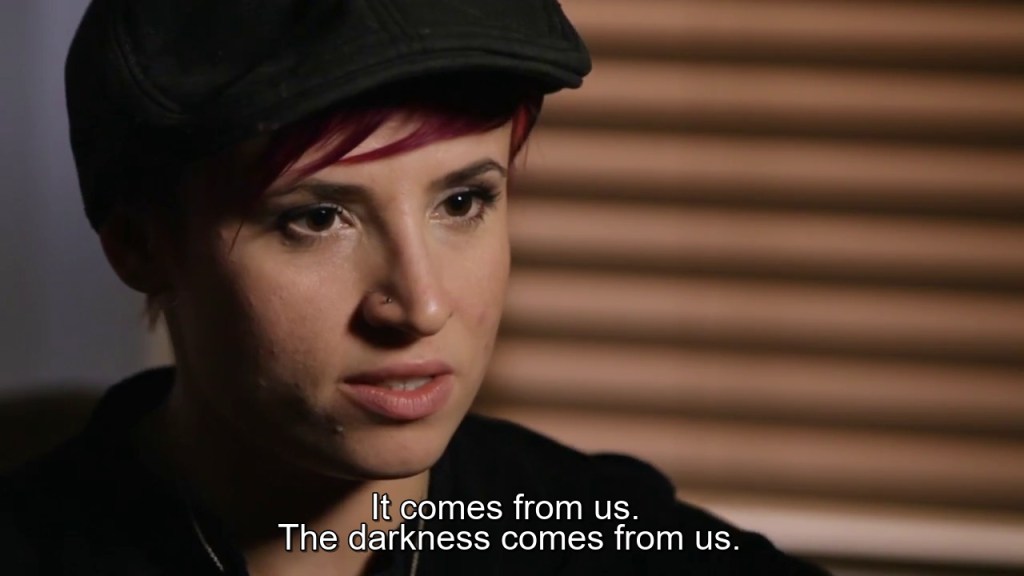
But what we do know is that cannibalism is real, and is one of the primal drives among every type of animal from comb jellies to humans. Freud and Abrahams called the first six months of an infant’s life “the cannibalistic stage”. We all have a cannibal inside; it just comes out more readily for some people than others.

The series is a Blumhouse production on Prime Video and is so good that I am spreading this blog over all the episodes. Among the many great names to appear in future will be Cyndi Lauper as a detective.

Cannibals just wanna have fun.

Thought Crimes: The Case of the CANNIBAL COP (Erin Lee Carter, 2015)

This is a fascinating documentary by the highly respected director Erin Lee Carr who also made such acclaimed narratives as Britney vs Spears.

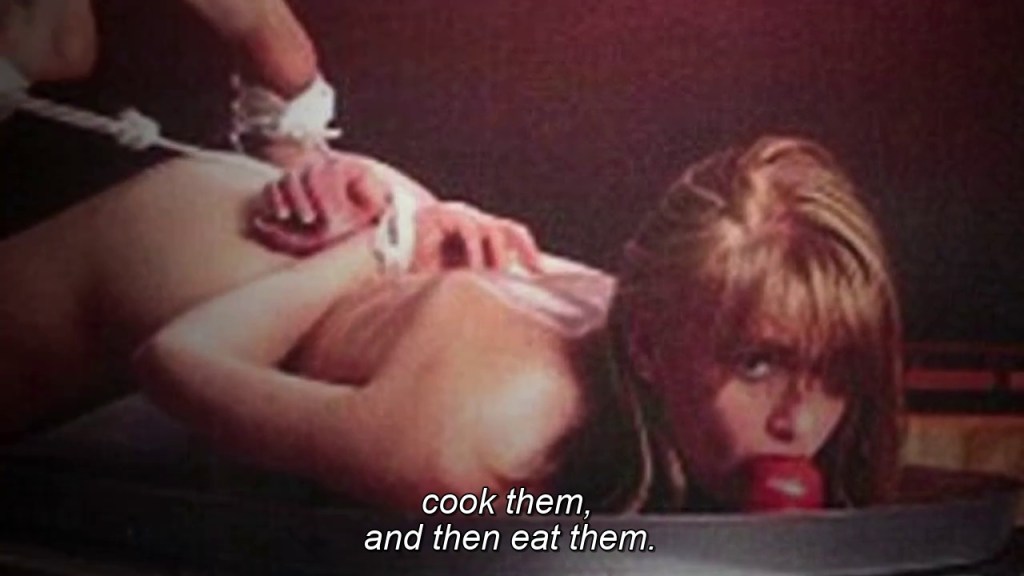
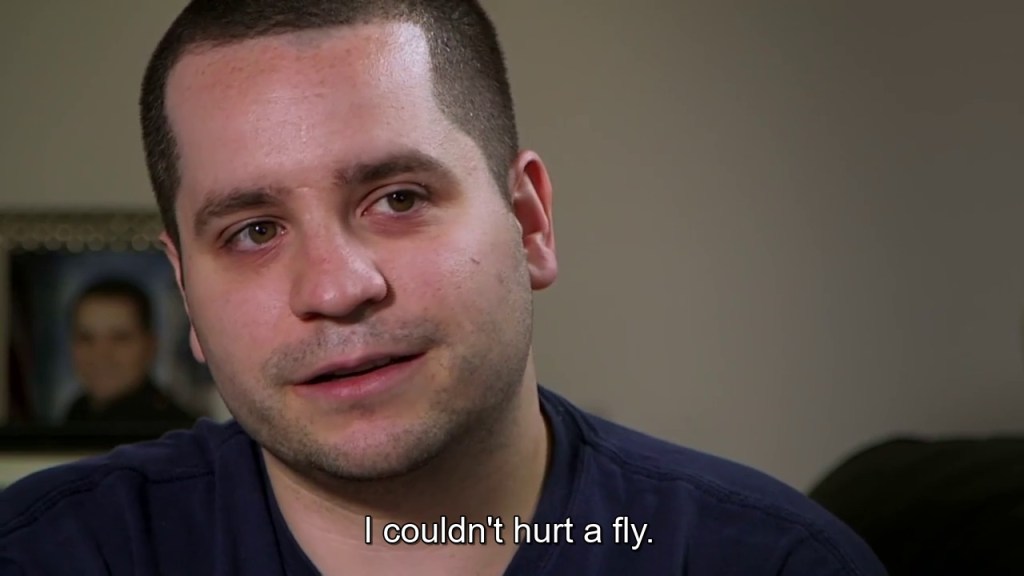
The 81 minute documentary features Gilberto Valle, a New York City Police Department officer who haunted online fetish chatrooms in 2012. There he had detailed very graphically his fantasies of kidnapping, torturing, raping, killing, and cannibalising various women he knew, including his wife and some of her friends.

The case became a media circus, due to the fact that he was a cop, and the discovery that he had used, without authorisation, a police database to find the addresses of some of the purported victims.

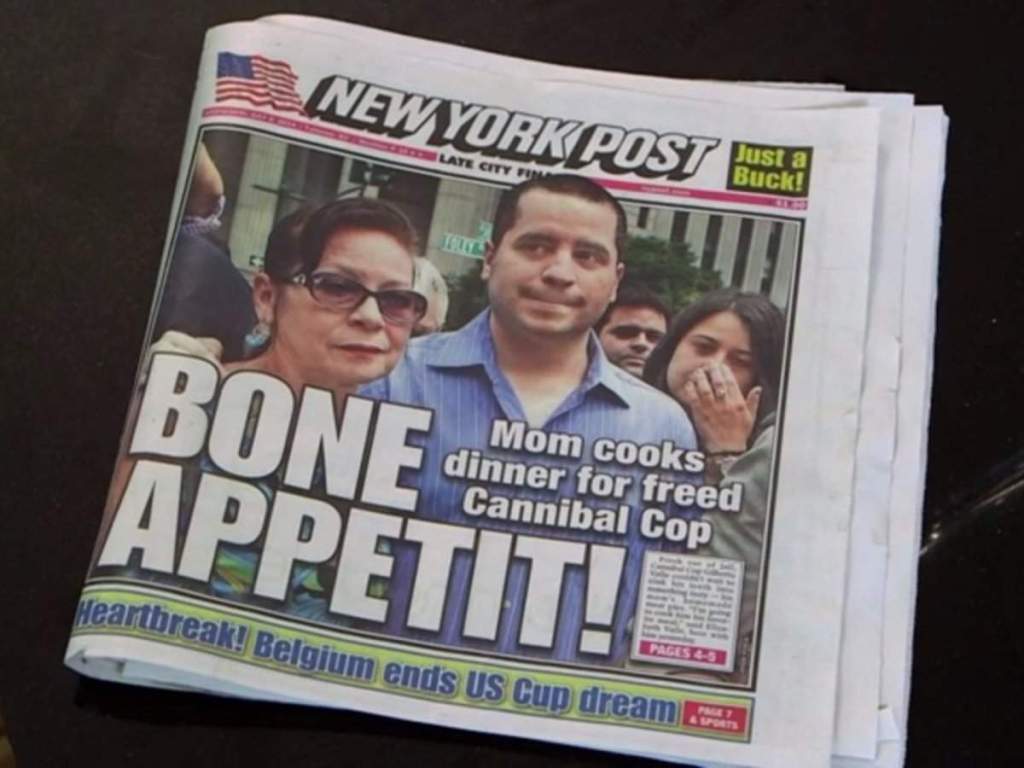
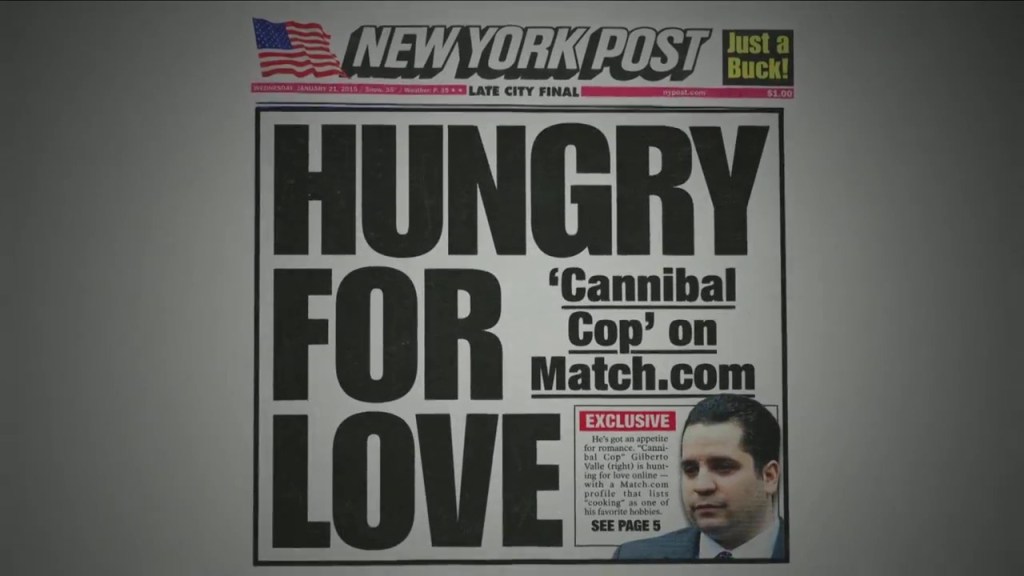
After his arrest, the media dubbed him the “Cannibal Cop“. The arrest was the result of his wife’s suspicions about his late nights, leading to her installing logging software onto their computer, which recorded all his keystrokes and took screen images every five minutes.

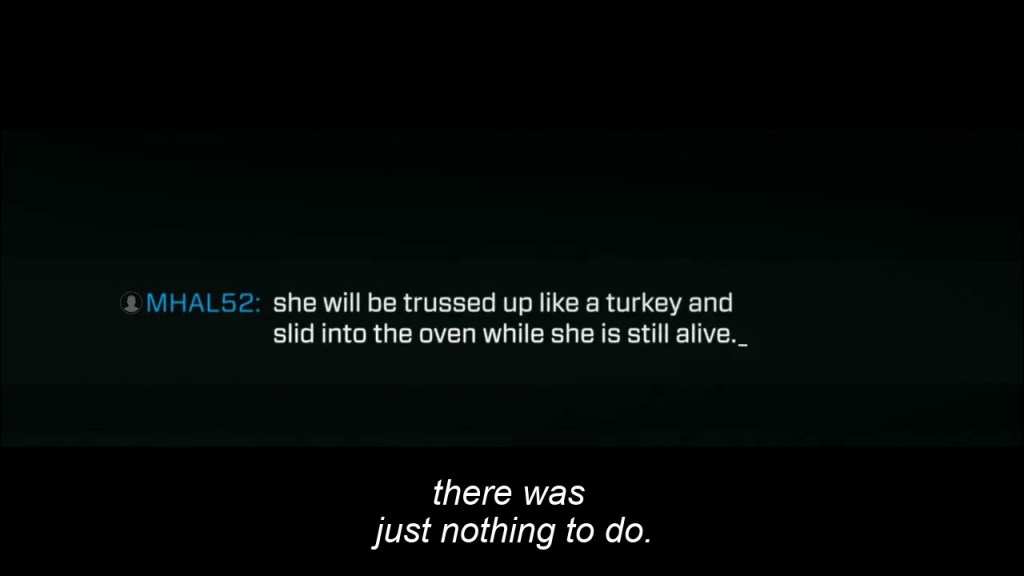
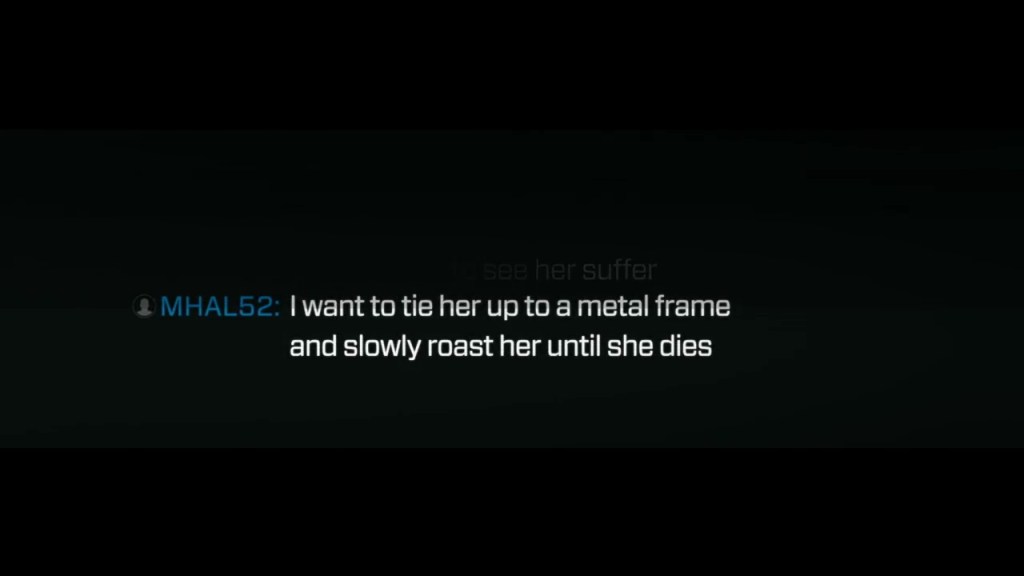
“She will be trussed up like a turkey and slid into the oven while she is still alive. Once she dies I will pull her out and then properly butcher her and cook her meat.”

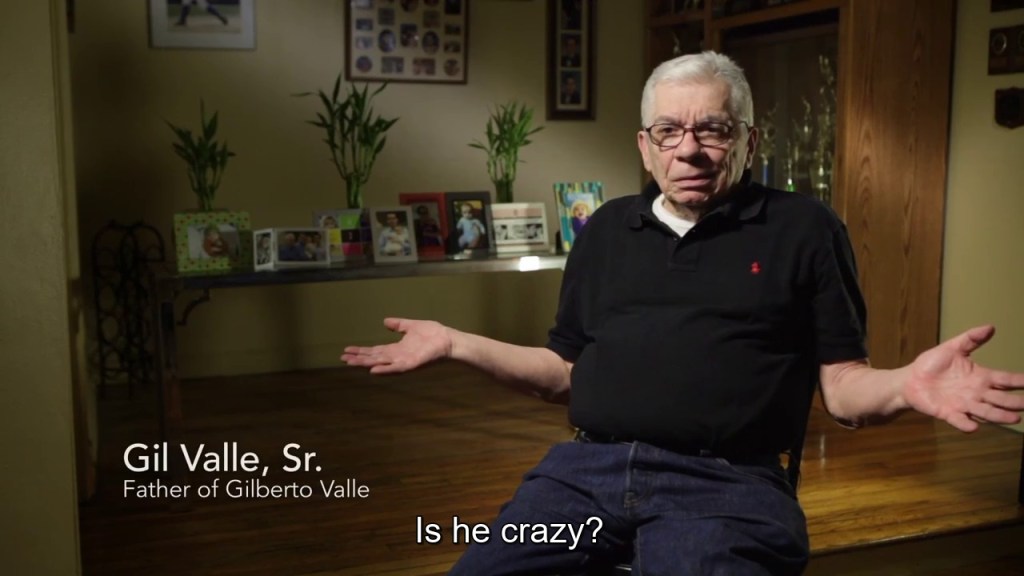
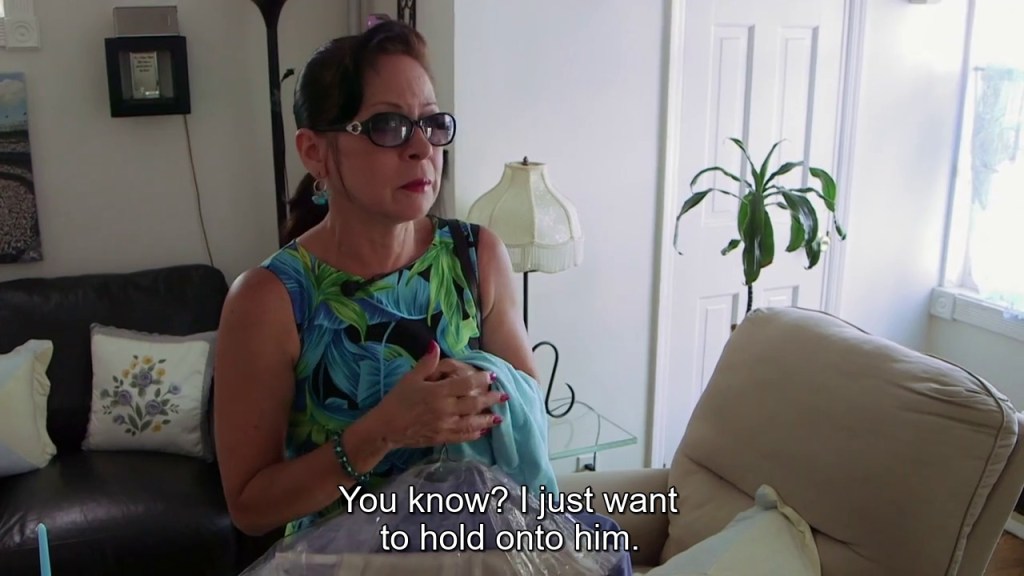
Valle was convicted by a jury of conspiracy to commit kidnapping and, for the use of the police database, violations of the Computer Fraud and Abuse Act (CFAA). He faced a possible sentence of life in prison. His divorced parents both stood by him, particularly his mother.

The presiding judge, however, disregarded the jury’s verdict and acquitted Valle on the conspiracy charges, ruling that the prosecution had not proven that Valle’s online communications went beyond “fantasy role-play”. On appeal, the United States Court of Appeals for the Second Circuit upheld the judge’s judgment of acquittal and further ruled that Valle’s misuse of the police database did not constitute a violation of the CFAA. The documentary details Valle’s months in jail before the trial, mostly in solitary due to being a cop, and then a longer period in home detention at his mother’s house.

The case drew widespread attention, not least for the ethical question it posed about when the exploration of dark fetishes becomes a criminal conspiracy. The defence team argued that this was a “thought police” case, a reference to Orwell’s novel 1984, and that “we don’t prosecute people for their thoughts”.

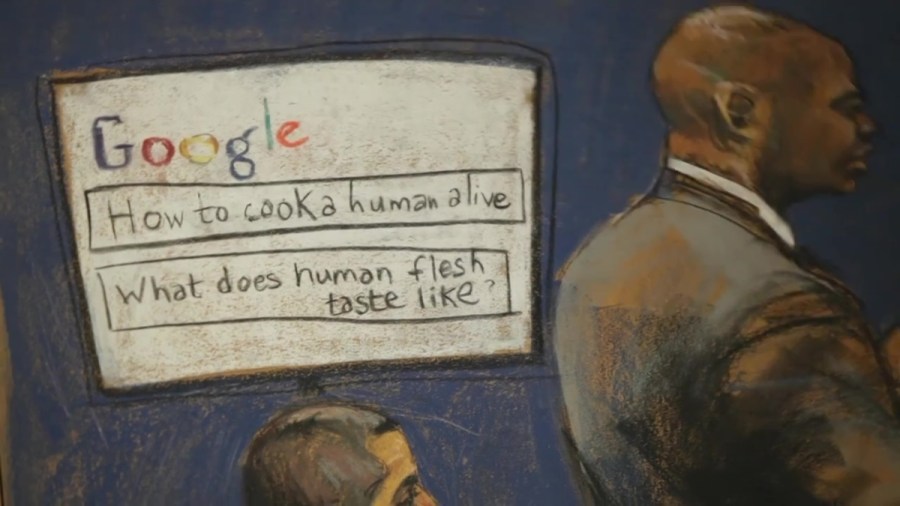
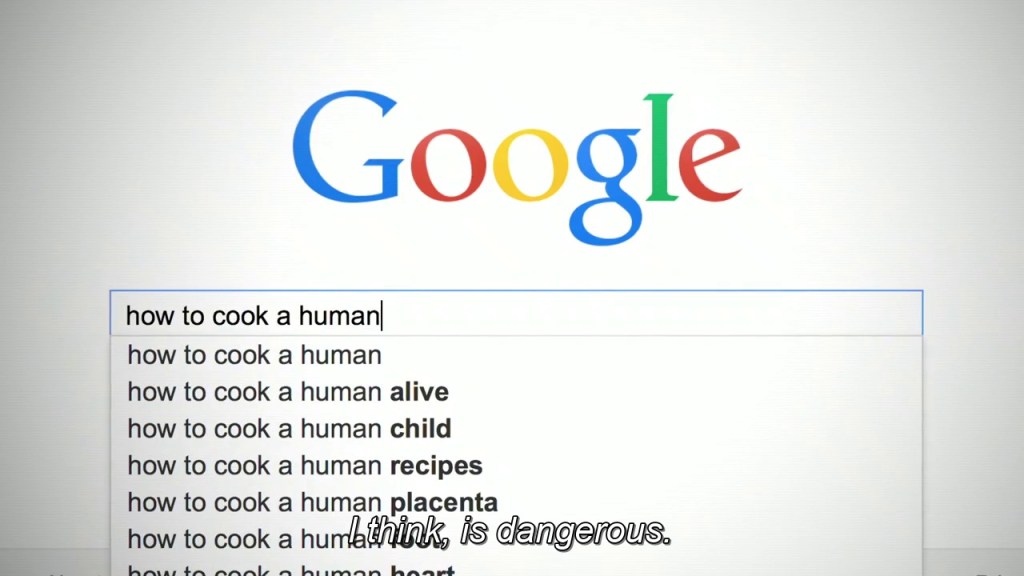
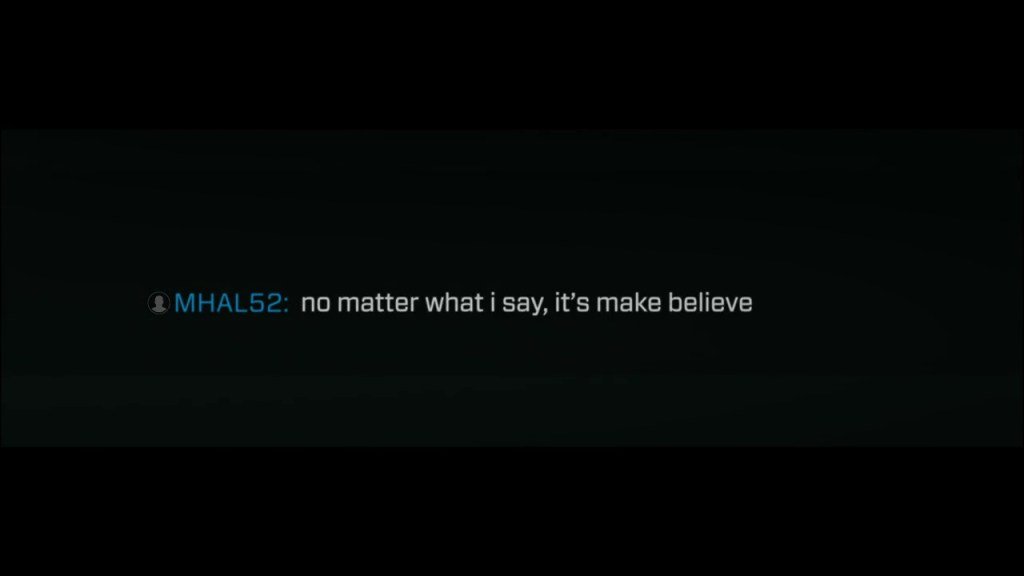
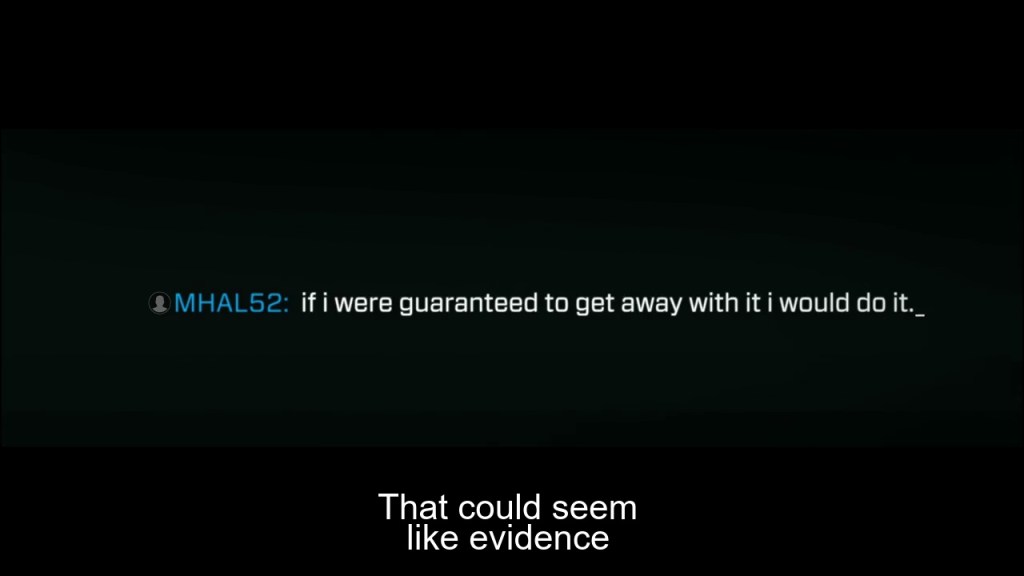
But the jury were convinced by his position of power (particularly the use of the police database to find addresses and other information on his supposed victims) and the fact that, of the 24 chats shown, three had not clearly stated that they were fantasies. Most of the chats involving detailed planning, and were followed by some very imprudent searching on Google. The other 21 had all contained disclaimers, although sometimes these were wistfully followed up with thoughts about being willing if he thought he would get away with it.

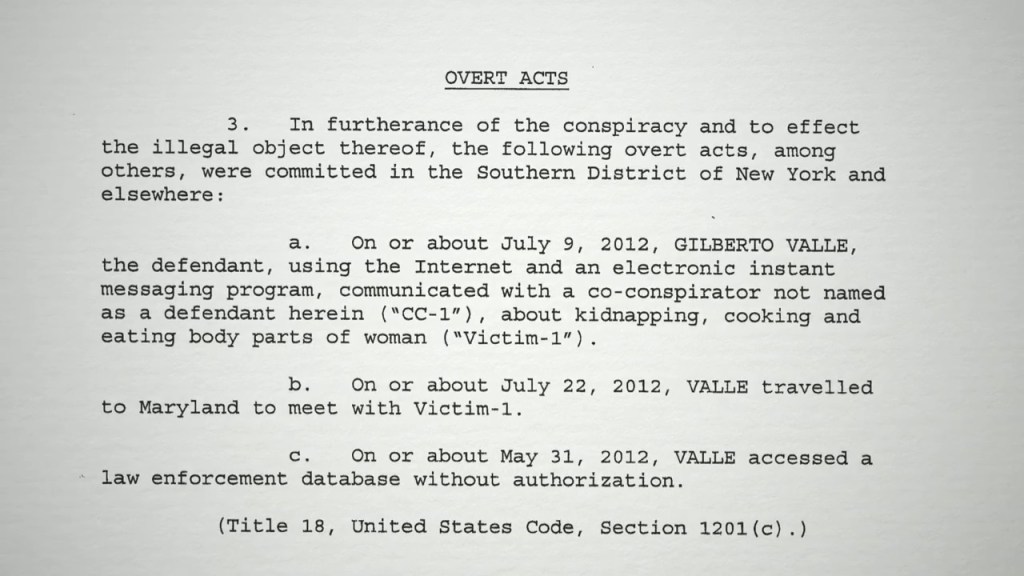
Famous defence attorney Alan Dershowitz explains that conspiracy is not just talking about a crime and agreeing to do it, there must also be an “overt act”.

Valle had travelled to Maryland with his wife and family, and visited an old college friend there, a young woman who was on his ‘list’. This, and his various Google searches, were presented in court as overt acts. The problem for the prosecution was that none of these searches had resulted in any actions against anyone, or even the purchase of the chloroform, ropes, gaffer tapes and so on that they had discussed on line. Some of the debate was absurd – Valle’s basement where women were supposedly going to be tied, raped and murdered was actually a shared laundry room in his apartment block.

Professor Maria Tatar from Harvard is interviewed about the human fascination for violence.

“Our stories move us immediately into a safe space where we can imagine the worst things possible, our darkest side… The Cannibal Cop case worries me because we’re entering a new era, and it’s almost uncharted territory. It’s always been fairly easy for us to draw a line between fantasy and reality. I mean, there are the stories and images, and then there’s what happens in real life. Well, we’re in the postmodern era, where these boundaries are becoming more and more difficult to draw.”

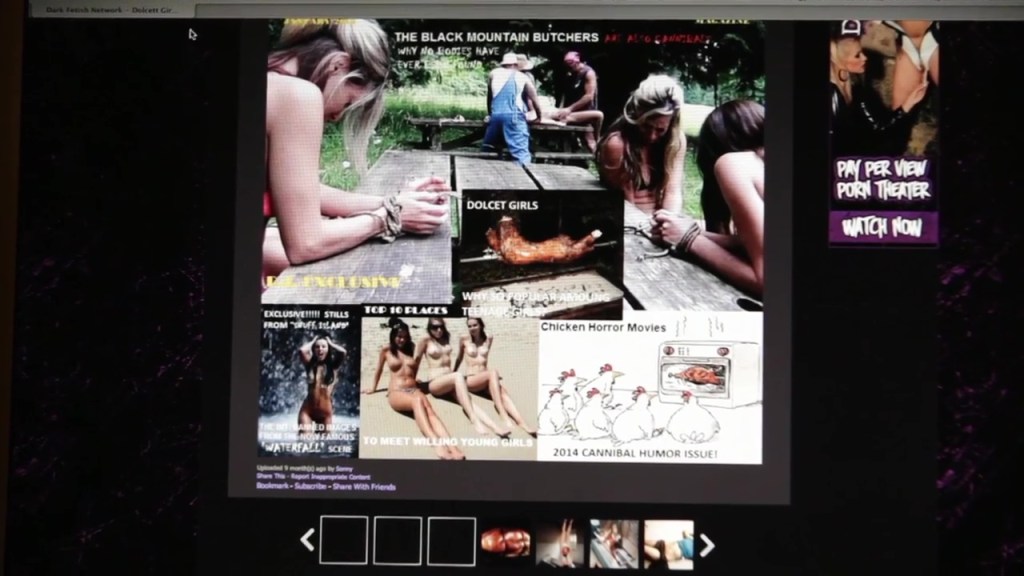
There is also the question of anthropocentrism – one interesting panel on one of the many websites mentioned (some of which are still very much on-line) is a cartoon of a some chickens sitting around watching a “chicken horror movie” – but it’s not on TV, it’s an oven with a rotisserie, on which turns one of their kin. Cannibalism, after all, is only horrifying to humans, because it’s humans being eaten. No other species gives a hoot.

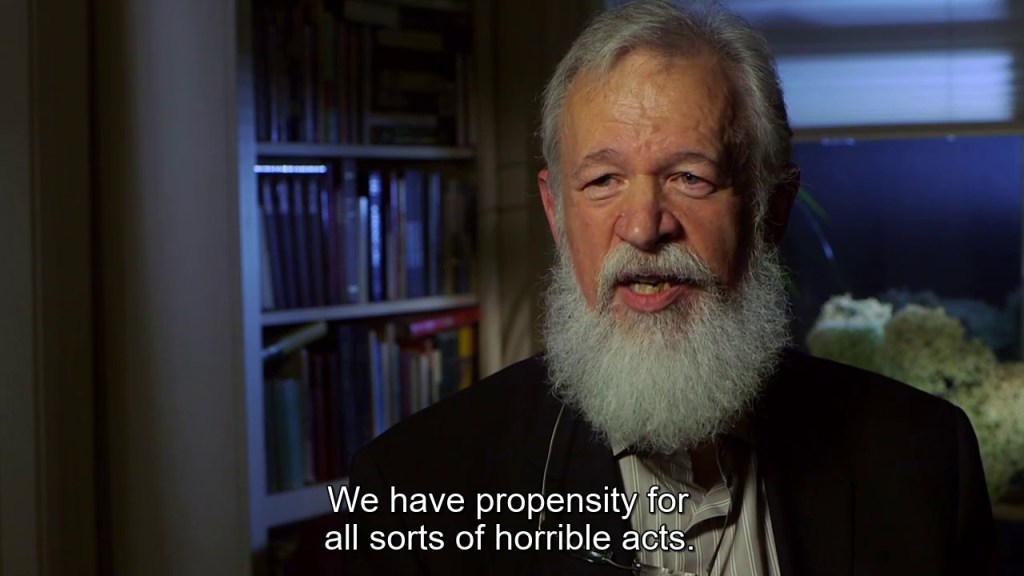
Gary Allen, author of How to Serve Man: On Cannibalism, Sex, Sacrifice, & the Nature of Eating, suggests in another interview that violent stories remind us of primal feelings, our propensity for violence.

Laurie Penny of The Guardian sums up the difficulty of this case well:

“Anybody should be allowed to write a dirty story on the Internet. Or have a dirty fantasy. Even if it’s gruesome and tasteless, and not something you would necessarily want to talk to your Mum about over dinner. It stops being fine when other real people are involved.”

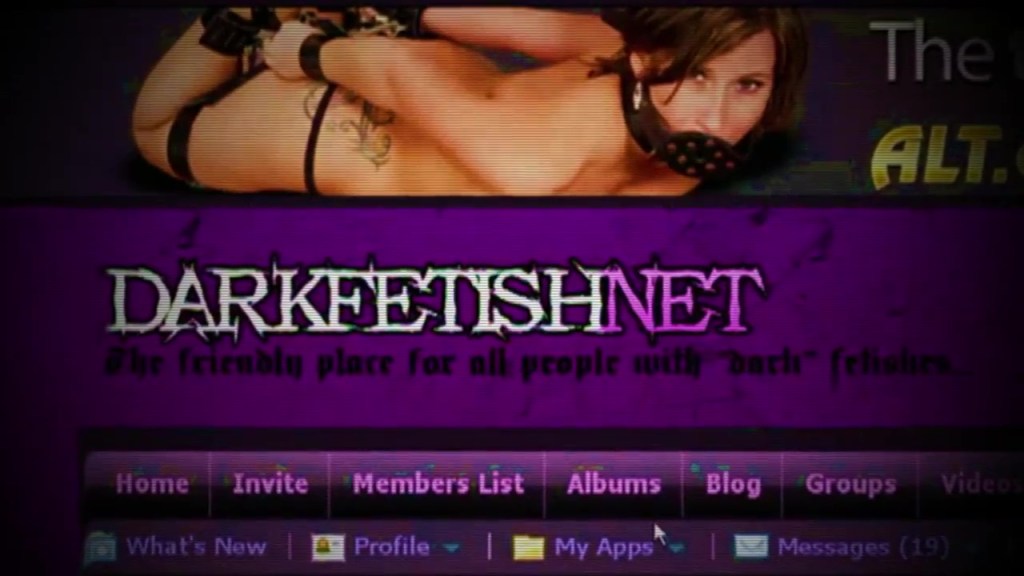
Can a person be two people – a fantasy projection on the web, and a ‘normal’ homebody the rest of the time? This was Valle on Darkfetish:

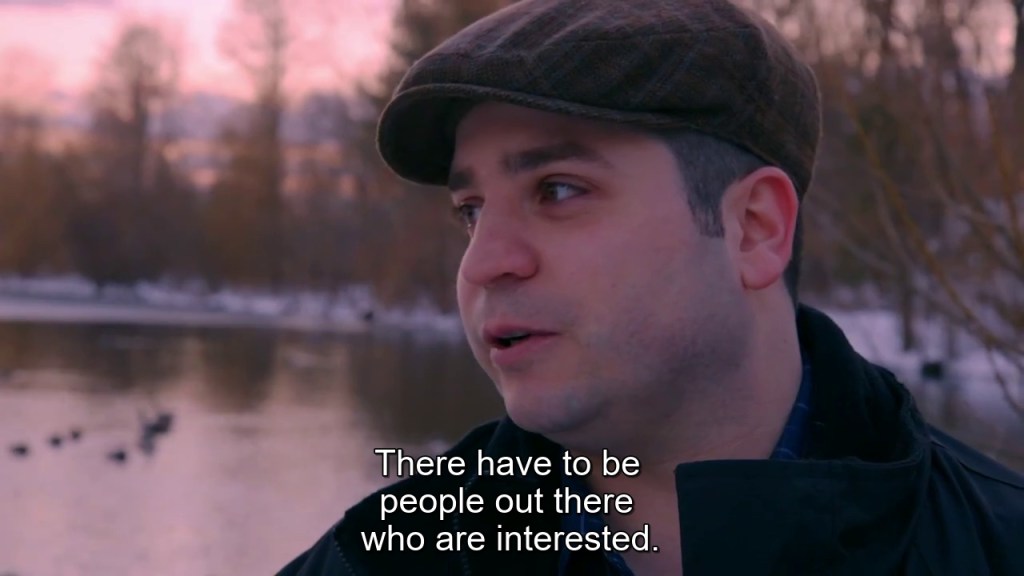
And in the documentary:

But at the same time Valle was protesting his innocence in New York City, another cop named Detlev Günzel, a forensic specialist in Saxony, Germany, was being tried for killing a willing victim he met on a website for cannibalism fetishists, and chopping him up in an S&M chamber. No evidence of cannibalism was presented in that case, but the victim’s penis and one testicle were not found with the rest of the body parts. And the website on which they met billed itself as the “#1 site for exotic meat”. 

Forensic psychiatrist Michael Welner is interviewed about Valle’s claims that the fantasy was totally disengaged from his family life (even though he uploaded a picture of his wife as a possible victim):

“Perhaps the most significant aspect of this story is that Valle’s sexuality was hidden. If one has to wall off an entire aspect of what turns them on, then one has a fundamentally dishonest relationship with their partner. And when you have a dishonest relationship with your partner, you may be able to maintain appearances, but the story is never going to end well.”

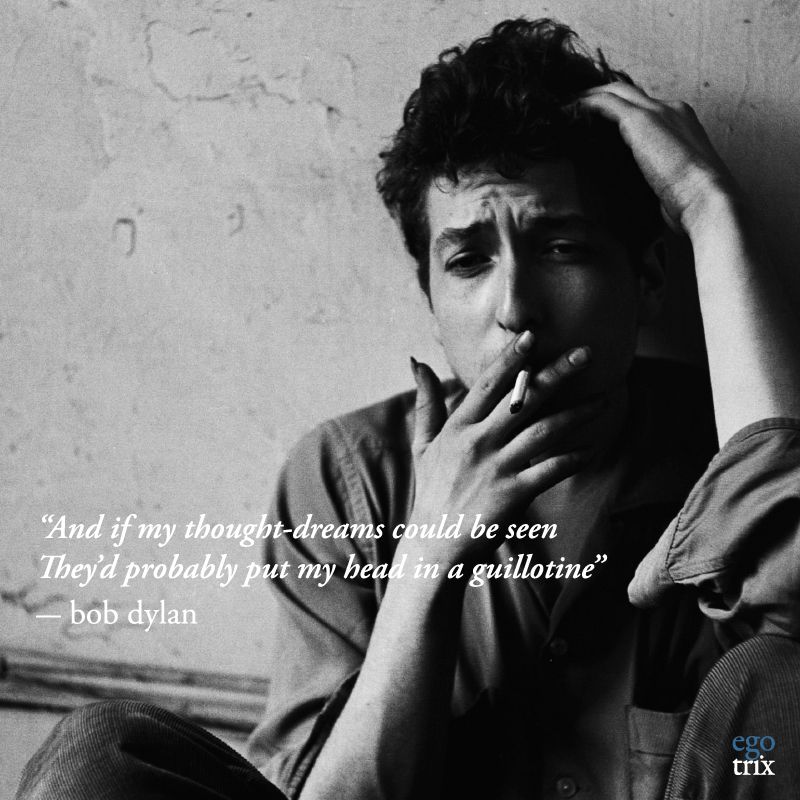
That seems rather idealistic. Who does not have dark secret thoughts that are dangerous or frightening to share? As Bob Dylan wrote almost sixty years ago:

Laurie Penny again:

“What makes somebody an ethical human being isn’t what they think, but what they choose to do with those thoughts. Somebody can be having the most dark, depraved thoughts, but if they don’t do anything about them, or find an outlet that is entirely harmless, then that doesn’t stop them from being a decent human being. And in the gap between thought and action, that’s where people actually discover what kind of human being they are. And I think people have to be allowed to make that discovery and then live with the consequences.”

Valle is now a free man. The conspiracy charges were dismissed on appeal, and the misdemeanour use of the police computer system saw his sentenced to time already served. But he lost his job, his wife and his child. The documentary offers him every opportunity to appear sympathetic – a genuine, kind young man who just made a bad mistake. But as Law Professor James Cohen asks: “How are you going to feel if you let him off and he goes out and eats somebody?”

He wants to date again, but wonders at what point of the date he would bring up the – you know. His dating profile on match.com was discovered by the media and immediately taken down.

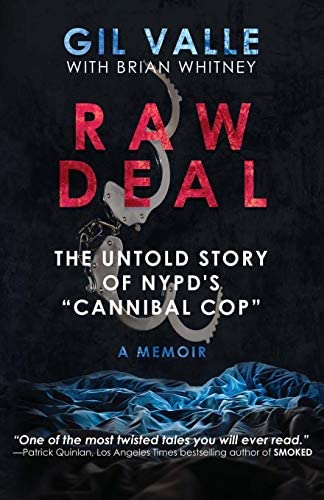
Whatever he does, to the world Gil Valle will always be “The Cannibal Cop.” He has written a book (which he called an “untold story”) about the case, called Raw Deal.

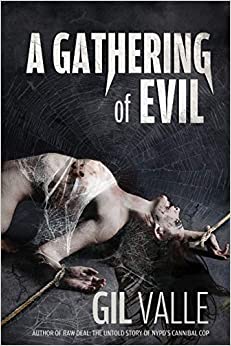
Since then, he has tried to find a way to make a living (he’s not going to be getting back his police job) by becoming an author. His first novel, A Gathering of Evil, came out in 2018, and is described as “an “extremely violent” horror novel about a planned kidnapping and murder.

This was followed in 2019 by The Lake Tahoe Ten Killings about a dying serial killer mentoring a younger one, and The Social Catalogue of #Prey, a story that warns about the dangers of posting too many personal details on social media, as these are very useful for kidnappers, human traffickers, and cannibals.

Gilberto Valle seems to have found his niche.