“It’s a mouthful of daddy”: DELORES ROACH episode 4

This is such a great show. I was going to blog a couple of episodes at a time, but there is so much content in the short episodes that I had to do this one, the fourth, in splendid isolation. Also, I’m uploading it on father’s day (in Australia and probably some other places), and having a character eat some of his father just seems so pertinent!

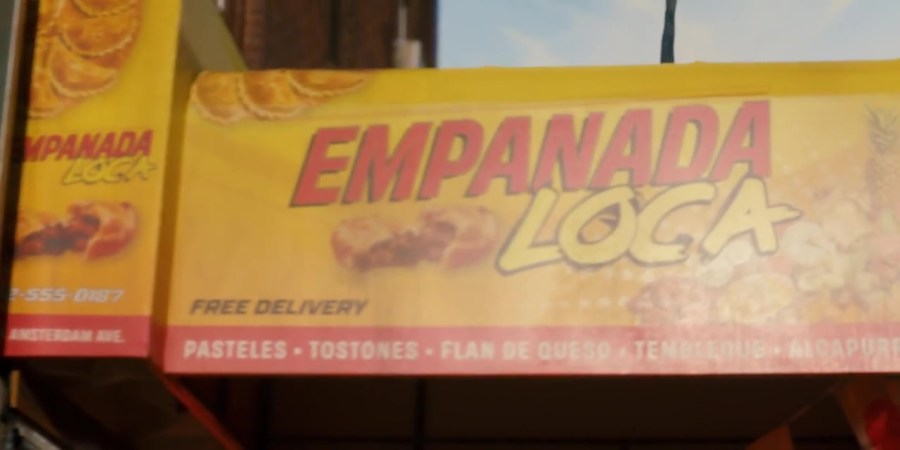
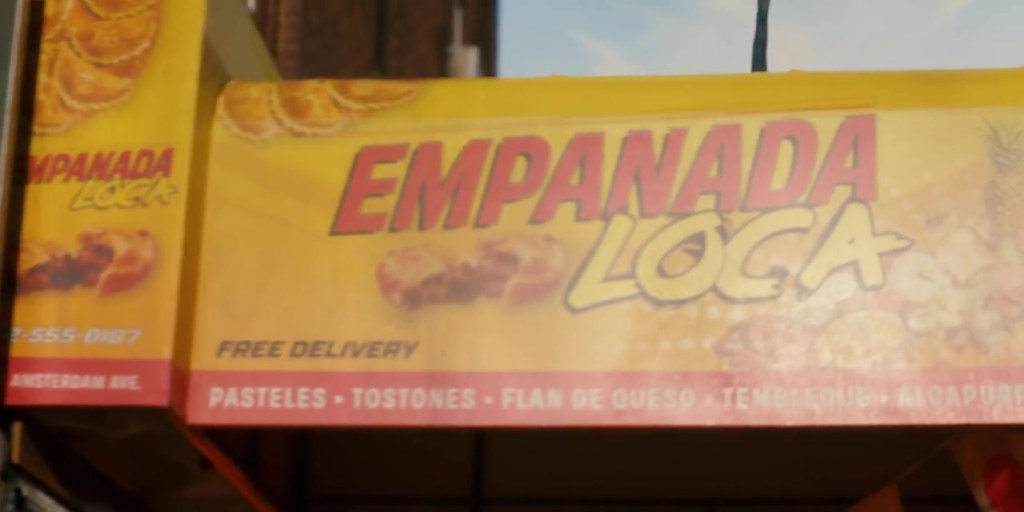
If you haven’t read my blogs on the first episodes, you might want to do that first. In a nutshell, in episode 1, Delores has just been released from prison after 16 years. She heads back to Washington Heights NY but it’s all gentrified now, except for the Empanada Loca shop of her old friend Luis, who offers her a room and sets her up as a masseuse, a skill she learnt in jail.

In episodes 2 and 3, Delores kills the landlord who has been harassing Luis for his overdue rent, which he can’t afford because the neighbourhood is now fancy, and people don’t buy empanadas much. Luis creates a new empanada, MUY LOCO. It is hugely successful, like the chocolates in last week’s blog, because it contains, yep, human flesh, in this case, the landlord. Whose son, Jonah, appears in the shop at the end of episode 3, with two cops behind him.

All caught up, and now we’re at episode 4. It turns out Jonah does not know his dad is missing, and the cops are just waiting for their empanadas. But Delores does not want to go back to jail, having just got out after sixteen years, so you might think that finding Luis destroying (or actually cooking and selling) the evidence should be good news, but (call her old fashioned) she is horrified by the idea of cannibalism (although, funnily, not so much the murder she committed) and disgusted by the secret contents of the muy loco empanadas.
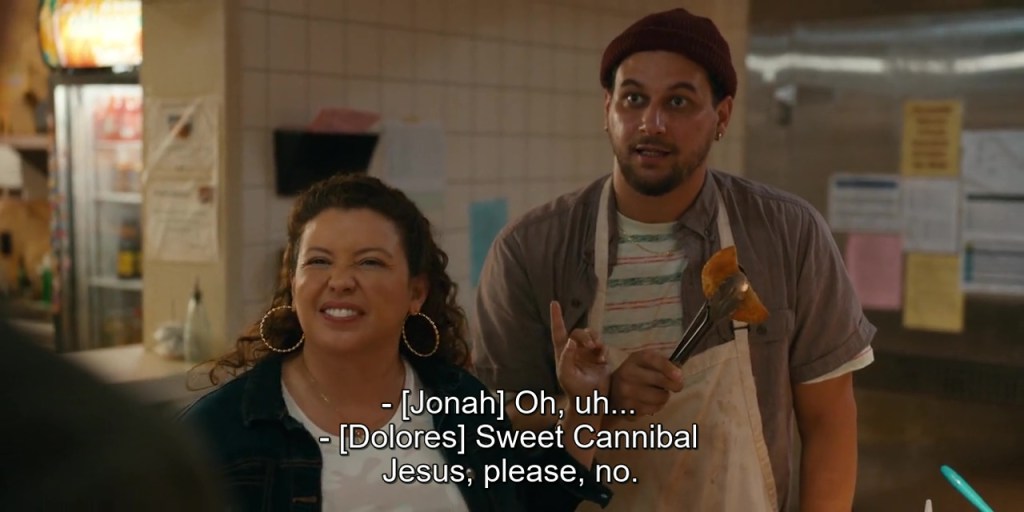
This dissonance between getting rid of the evidence of her rather serious crime and disgust at the fact that the evidence is being fed to an enthusiastic clientele is aggravated when Luis offers Jonah an empanada to try, a muy loco, reminding us of the lyrics of the old Stanley Holloway song about Sweeney Todd, on whom this story is based:

“For many a poor orphan lad
The first square meal he ever had
Was a hot meat pie made out of his dad
From Sweeney Todd the Barber”

Luis tells Jonah “the meat’s locally sourced” which is particularly true for him. Jonah loves the taste, asks if the meat is duck.

No, it’s no duck. We hear Delores’ thoughts:
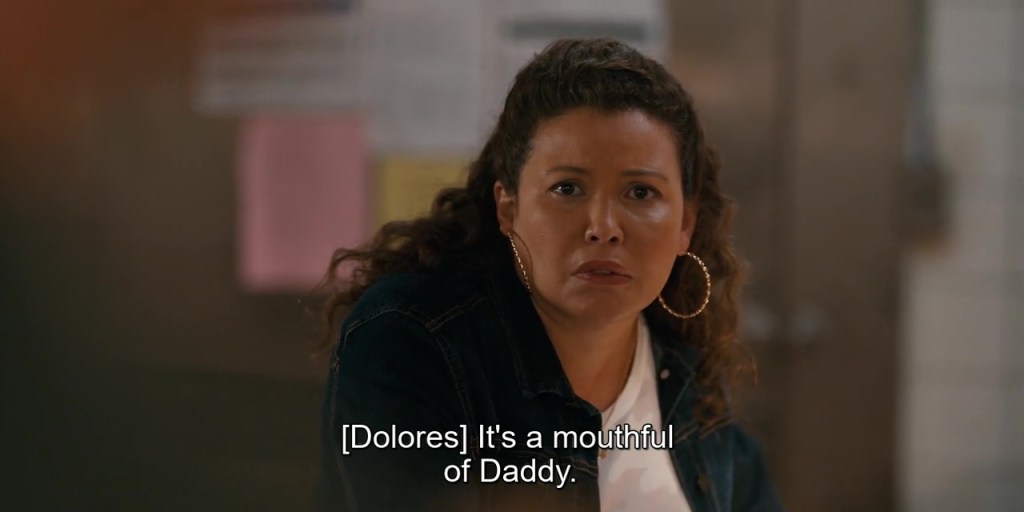
Furious at Luis for feeding the landlord to his son, Delores takes the rest of the meat and sets fire to it, putting the muy loco off the menu. Luis is furious, and cannot see what the problem is, and then comes one of the great double entendres of the cannibal genre –

Luis barks at her:

“Hey, it’s edible! Like the Greek myth.”

Now we’re getting to the meat of the cannibalism debate!

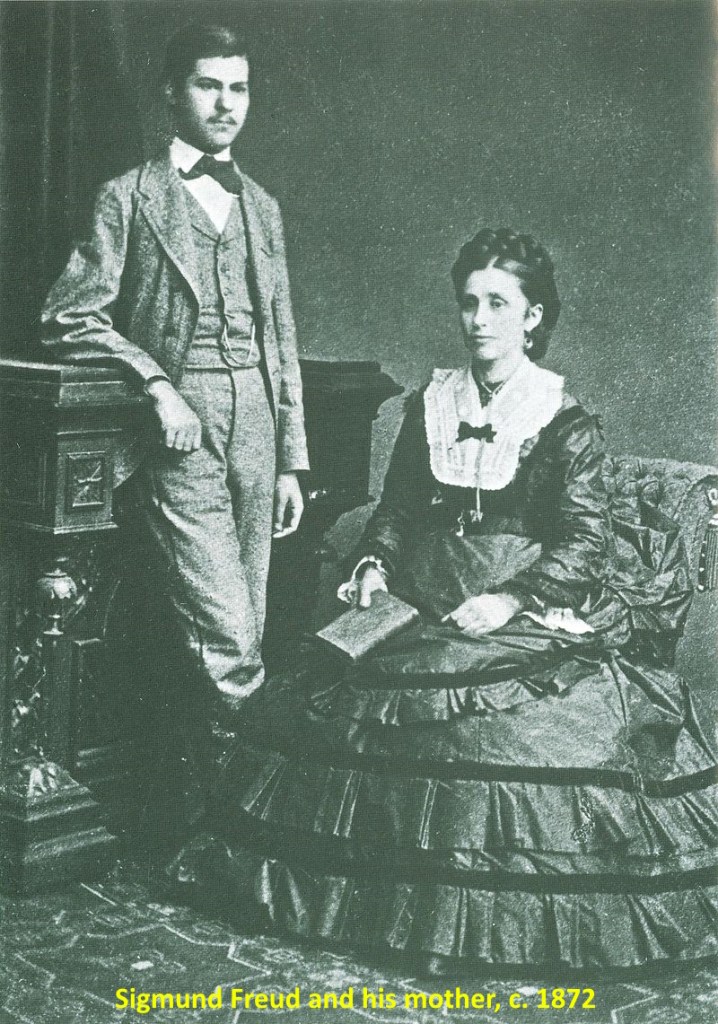
Quick refresher: Oedipus was a mythological figure depicted in the play Oedipus Rex written by Sophocles some 2500 years ago. Oedipus became king of Thebes after unwittingly fulfilling a prophecy that he would kill his father, Laius (the previous king), and marry his mother, Jocasta (whom Oedipus took as his queen). It was more a case of mistaken identity and road rage than some deep psychosexual drive, but Sigmund Freud used it as the basis of what he called the Oedipus complex. This referred to a child’s sexual desire for the opposite-sex parent and hatred for the same-sex parent which, if not reconciled, leads to neurosis. Freud wrote that,

“It is the fate of all of us, perhaps, to direct our first sexual impulse towards our mother and our first hatred and our first murderous wish against our father. Our dreams convince us that this is so.”

Oedipus didn’t eat his father, but Freud believed that cannibalism is a foundation of the human unconscious. He asserted that cannibalism is one of the two original prohibitions of humankind, the other being incest. Freud’s conception was that the origin of human civilisation was an act of incestuous patricide and cannibalism by a group of pre-sapien savages, which became the origin of cooperative civilisation. In Totem and Taboo, he speculated that a prehuman group of brothers in a “primal horde” had come to resent their father’s monopolisation of the tribe’s females (common among primates) and conspired to kill the father and take their mothers and sisters for themselves. “Cannibal savages as they were, it goes without saying that they devoured their victim as well”. A later wave of remorse led these conspirators to create “out of their filial sense of guilt the two fundamental taboos of totemism”, the proscription of cannibalism and incest. This father/son guilt, he argued, corresponds with the Oedipus complex, which he called “the nuclear complex of the neuroses”.
So Jonah, like Oedipus has unwittingly eaten human flesh, the flesh of his father, not knowing what it was. If Luis had said it was duck, he would have believed him, and accepted that contentedly, because social conventions say we can eat ducks, but not dads. Yet the taste is so close that he couldn’t tell the difference. And since his dad was already dead, was this worse than deliberately killing a living, sentient duck?

Meanwhile, the local drug dealer, Marcie, accuses Delores of selling drugs and stealing her customers, because of the long queues of people waiting for muy loco empanadas. Delores tries to persuade her she is running a massage business and takes her downstairs for a massage, where Marcie starts to vandalise her room looking for drugs, and mocks her for protecting her old boyfriend, revealing that he cheated on her and eventually turned her in to the DEA to save his own hide. They fight, and Marcie becomes the new supply for the next batch of muy locos.

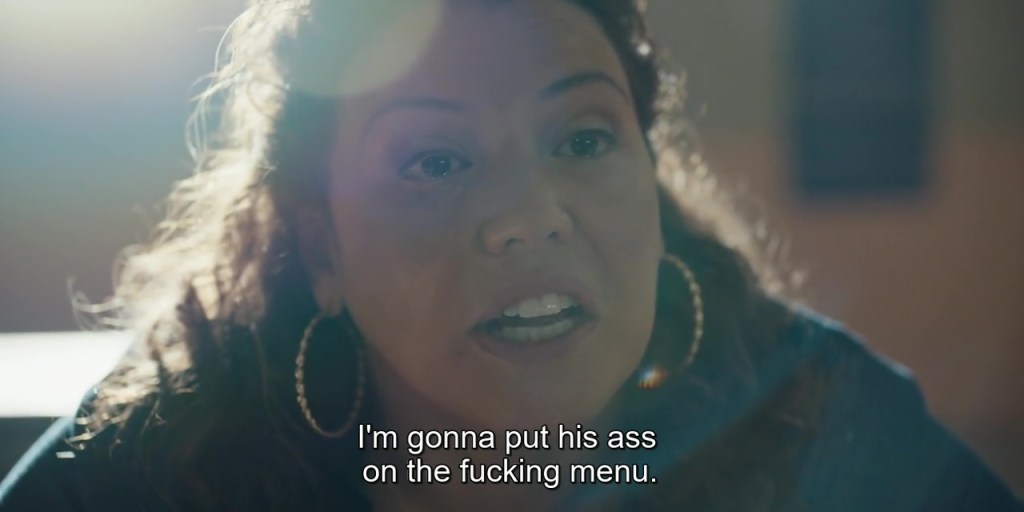
Delores is determined to find the cheating boyfriend. When she does, she promises,
Deep tissue cannibalism: THE HORROR OF DELORES ROACH Episode 1 (Aaron Mark, 2023)

This is not only a fabulous story, but possesses a proud heritage in the field of Cannibal Studies, and is not afraid to flaunt it. Delores Roach is a young woman in a basement in Washington Heights Manhattan, who gives massages for a living, occasionally killing her clients and delivering their bodies to Luis, who runs the struggling empanada store above, to use as meat. Yes, it is unapologetically the offspring of the legend of Sweeney Todd, the “Demon Barber of Fleet Street”, who killed his customers instead of shaving them and then dropped them through a trapdoor to his colleague and perhaps lover, Mrs Lovett, who turned them into delicious meat pies. There is some controversy over whether or not Sweeney was a real person who was publicly hanged outside Newgate Prison in 1802 or just an urban legend of early capitalism. In any case, Sweeney appeared in a number of movies; in 1936 he was just plumb crazy, while in 2007 Tim Burton made him an honest man wronged by a corrupt power establishment. Burton’s film is based on a Sondheim musical that played interminably on Broadway and around the world.

In this version, Delores (Justina Machado) turns everything upside down; it’s Sweeney through the looking glass. We’re in New York instead of London, with a female serial killer instead of a male, and a male pastry chef instead of a female. Delores is downstairs killing people for Luis who is upstairs cooking them, again turning the Sweeney legend upside down. Like Sweeney, at least in the Tim Burton musical version of the story, Delores has returned from a long and unjust term of incarceration.

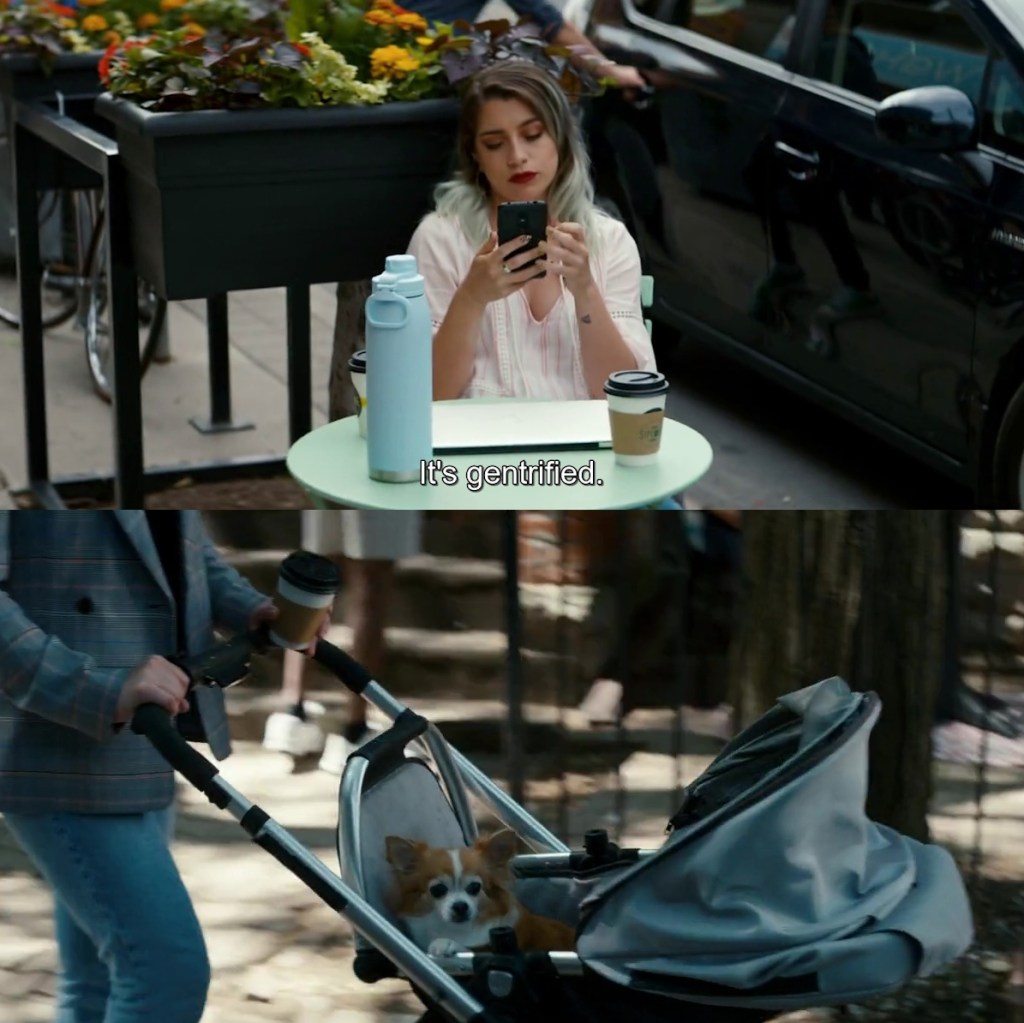
She finds her shabby neighbourhood, Washington Heights, gentrified after 16 years in the slammer, to the extent that she doesn’t even recognize any of the shops. A lot of the reviews seem to focus on gentrification as the main crime in this story.

Except for her favourite fast food store, Empanada Loca, run by Luis (Alejandro Hernandez), the son of the man who used to make the empanadas. He has a soft spot for Delores, who used to pay him in cash and spliffs when he delivered her lunches. Luis offers her accommodation, for old time’s sake, and maybe the odd massage.

There are plenty of stories based on butchers serving human meat to unwitting customers, turning them into innocent cannibals. Among them are Hitchcock’s Speciality of the House, Mielche’s The Butchers, Yau’s The Untold Story, Jensen’s The Green Butchers, Stjernswärd’s The Farm and Eboué’s Some Like it Rare. And of course our old friend Hannibal, who tells his guests “Nothing here is vegetarian”.

Burton’s Sweeney Todd was based on a Broadway musical, but Delores is a generation later, and so now her Broadway show is based on a more contemporary form of popular culture, the TRUE CRIME podcast.

Of course, it’s not true, but in the postmodern age, a true crime podcast needs a true crime, which is also confected for our narrative pleasure.

The podcast becomes a Broadway play, with the actor Jessica Pimentel (Orange is the New Black) playing Flora who is playing Delores in the play (stay with me here). Her performance is a triumph; in her final soliloquy she is covered in blood and holding a human heart.

The performance of the play, and the episode we are watching, both end with a song: Stanley Holloway’s “Sweeney Todd the Barber”:

“Sweeney Todd the barber,
by gob he were better than the play
Sweeney Todd the barber,

I’ll polish them off he used to say
and many’s  the poor young orphan lad
had the first square meal he ever had
a hot meat pie made out of his dad
from Sweeney Todd the barber”

For those of us who have been waiting for this series, or those who just saw the advance publicity, we are now in the omniscient position of knowing what is going to happen. We have seen the newspaper headline of the “real” murder and the review of the “real” true crime podcast, and seen the full house audience cheering the performance. In case we aren’t sure, a couple of friends pour drinks in Flora’s dressing room, chatting about the play and its reflection in the “real” world.

“…the café in Taipei serving human flesh dumplings?”
“Yes, yes, yes, yes and the human bone marrow in that bistro in Paris!”

Then the “real” Delores appears in the dressing room after the friends leave. No, not to murder Flora for impersonating her, but to tell her the true story.

“I’m gonna tell you shit you could never un-know.”

So now, we have a dramatisation of a fake true crime podcast about an actual crime that doesn’t exist, and the dramatisation is being applauded for creating a wave of actual cannibalism events (that also didn’t happen). They concern a female serial killer who is based on a male serial killer who also probably didn’t exist. An actor playing the (unreal) serial killer is telling her story to the actor playing the actor who is playing that serial killer. It plays (sorry) with the mind.

So does cannibalism. Except for a few rare cases where the cannibal is prepared to admit all his or her activities, such as Albert Fish, Jeffrey Dahmer and Issei Sagawa (who laid out the whole project in a manga), cannibalism narratives are very difficult to nail down. Some like Ottis Toole over-confess, leading to speculation that they are making it all up, helped by police who want to clear the cold case log. Others deny everything. And some just disappear and are never found, like Jack the Ripper. Cases of cannibalism are so sensationalised that the reports of the popular press are dubious in their accuracy.

But what we do know is that cannibalism is real, and is one of the primal drives among every type of animal from comb jellies to humans. Freud and Abrahams called the first six months of an infant’s life “the cannibalistic stage”. We all have a cannibal inside; it just comes out more readily for some people than others.

The series is a Blumhouse production on Prime Video and is so good that I am spreading this blog over all the episodes. Among the many great names to appear in future will be Cyndi Lauper as a detective.

Cannibals just wanna have fun.