THE LION KING (1994, 2019, 2024)

With the release of another Lion King franchise film, Mufasa, this one a prequel to the earlier story, it is perhaps worth considering the subject of talking animals, and particularly whom they feel OK about eating.

The first film was released in 1994, and was a glorious animation, with music by Elton John and Tim Rice, but was clearly a cartoon, one that has earned almost a billion dollars since its release.

Although we can get into the plot and the emotions of the film, we don’t really feel obliged to believe in the anthropomorphic veracity of cartoon characters. Do we really care if a cartoon duck eats other birds? No, not if he wears clothes and speaks (a form of) English. It is clearly a line drawing that moves, and requires no ethical work.

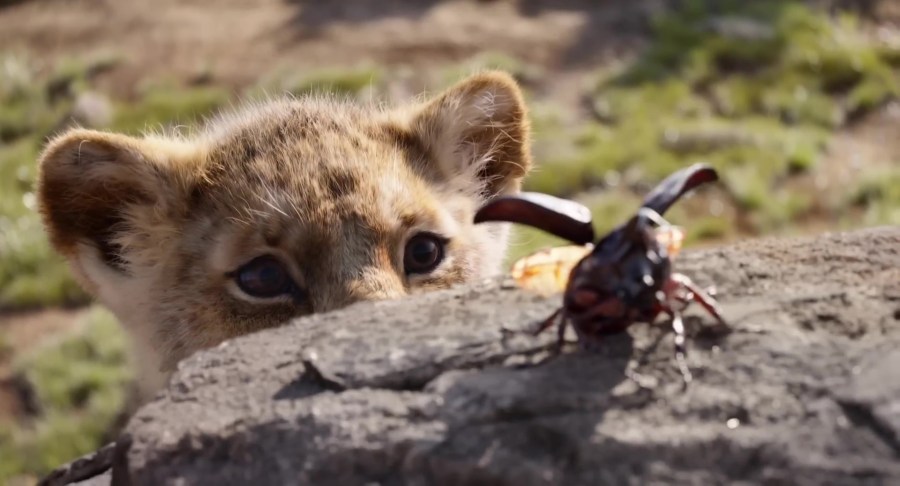
But in 2019, the film was remade as a photorealistic animation. With a small dose of suspension of disbelief, the animals looked like they were real, roared like lions, but somehow spoke English, some of them, strangely, with an eastern European accent. It was a sensation, so far earning over 1.6 billion dollars.

This blog will appear around Christmas, so I guess it is not unreasonable to unleash my inner Grinch, at least when it comes to anthropomorphic representations of carnivorous virility. As far as we are aware, lions can’t talk, except in movies. They can certainly communicate though, and that communication, particularly the roar that can be heard miles away, is featured prominently in all versions of the Lion King.
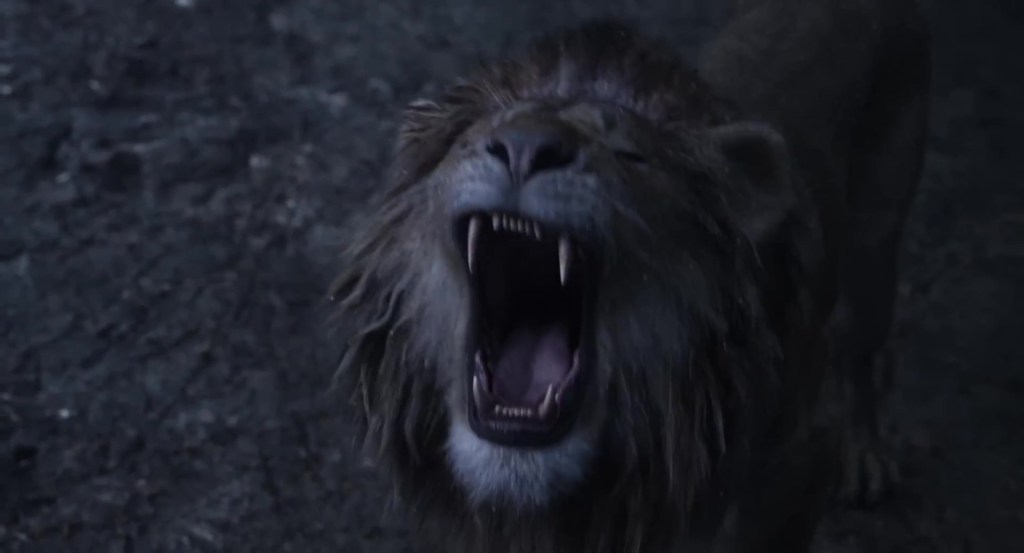
If they could talk, would they say and do the things shown in the film? Would they, for example, let a mandrill take their cub and hold him, Michael Jackson-like, over a cliff for the other animals to worship and celebrate? I’m even less sure of how celebratory the prey animals would be about the birth of yet another predator, no matter how cute.

But the main thing that bothered me throughout the film was the food, and it wasn’t (just) because I watched it at lunchtime. We are shown a happy monarchy (the “pride land”) where the devoted subjects are summarily executed and eaten by the king and his family. This is later turned into a blasted desert filled with the bones of the prey animals by a usurper king lion, an evil uncle lifted from Hamlet and made leonine.

Those not privileged to live in the pride-land inhabit a shadow terrain, the “elephants’ graveyard”, where (dark-skinned) hyenas skulk, with little evidence of anything to eat and, we are assured, always hungry. We have the “circle of life” followed by a circle of hell.

Even further away, in a wildness to which the exiled lion cub Simba flees from his evil and murderous uncle, we have a sort of Garden of Eden II. Here, mammals take a pledge not to eat each other, an expanded ring of utopian privilege, which excludes only insects and their pupal forms, who clearly would have to exist in immense numbers to feed a growing lion, let alone his friends.

Listen kid: if you live with us, you’re gonna have to eat like us.
This looks like a good spot to rustle up some grub.
A grub. What’s it look like?
Tastes like chicken.

What is the ecology here, and the ethic behind the food choices?

Simba, the cub and heir apparent, wonders about this too. He and his future wife (lions get married?) are the only ones to connect with all these environments, and Simba the only one to question the implicit ethos of each one. Early in the piece, as he surveys the kingdom where “the light touches” (as opposed to the darkness of the hyena shadowlands), he asks his father why they eat their loyal subjects, the zebras, antelopes and presumably anyone else slower than them. It’s a question most parents dread as they feed lumps of animal flesh to their children, and then read them books about happy animals. It’s the circle of life, says Simba’s Dad, clearing his throat for us all to join a singalong. We eat them, then when we die, our bodies feed the grass, and future victims eat the grass.
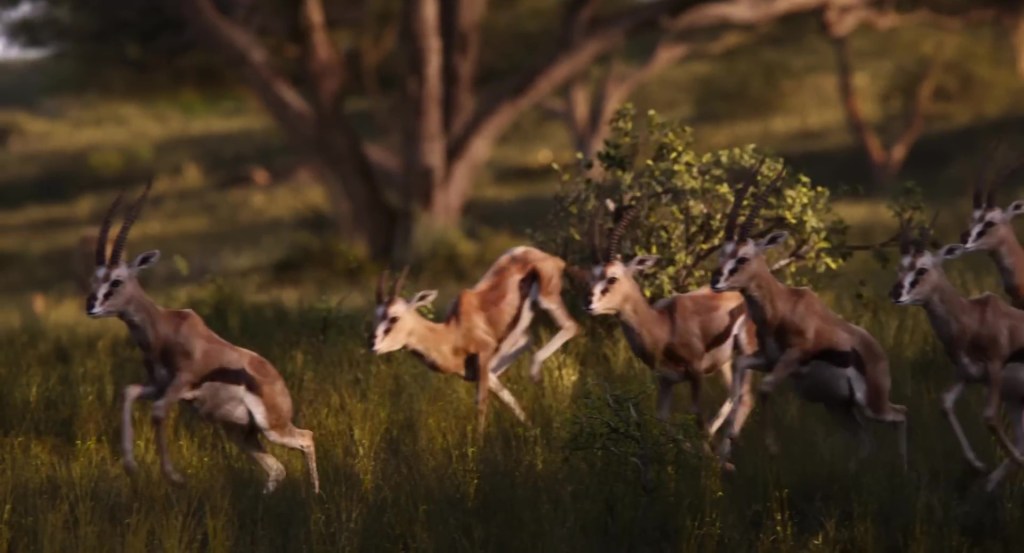
Now this is just absurd. I’m not sure how much grass the average antelope eats, but it would need an awful lot of dead lions buried underneath it to make it fecund. Photosynthesis, which combines carbon dioxide and water into carbohydrate and oxygen, is what makes the grass grow. Lion corpses (and presumably lion shit, now enriched with zebra fat) might add some trace elements, but they are hardly necessary. What lions actually do for the environment is thin out the number of herbivores so that they don’t eat all the vegetation and turn the area into desert, which is what inexplicably happens when the bad lion, Scar, and his army of hyenas, eat all the herbivores. Where does all the grass go? It should be a jungle without all those antelopes and giraffes.
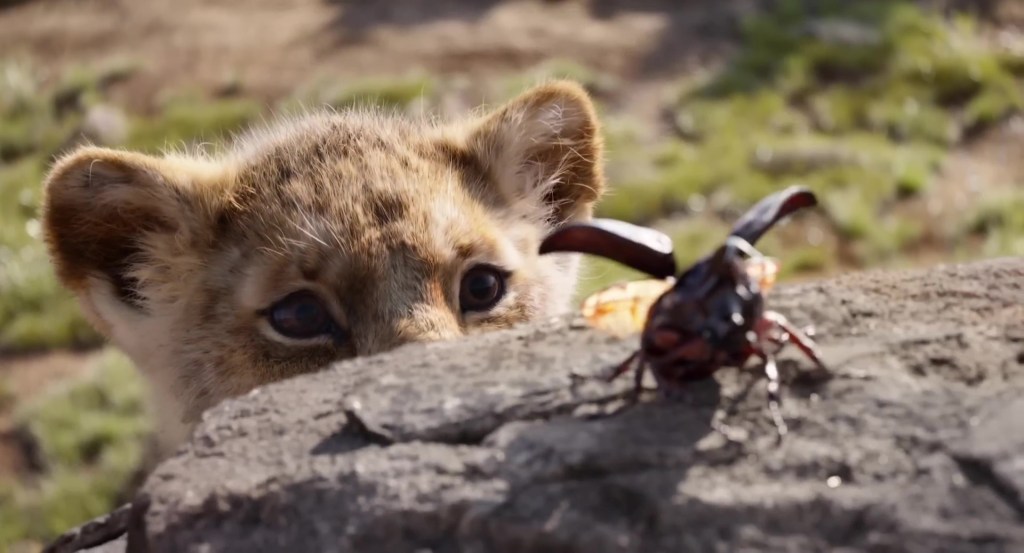
Then we have the entemo-vegetarians of the land beyond the shadows where, you know, hakuna matata, there are no worries, unless of course you are an insect. If you search the internet, you will find learned articles on how many hours a day a lion would need to be chewing pupae (it’s a lot more than 24) in order to sustain his life, let alone progress from cub through puberty to full sized adult male. And why can the various mammals and birds talk, but the insects can’t? Jiminy Cricket could talk in the early days of Disney – when did he fall out of the circle of privilege?

It’s all absurd, of course, but it’s what we teach kids, and not just by taking them to see Lion King. When they ask questions like “I love animals, so why are we eating them?” talk of feeding grass with our bones doesn’t cut it, which is probably why so many young people go vegan. The correct answer, which won’t satisfy anyone, is “because we want to, and because we can”. We have the appetite, and we have the power. We arbitrarily decide who is within our circle of privilege.

In the film, lions and all mammals, and some other odd creatures, live without being eaten in a hippie paradise. In the pride-land, under good king Mustafa (Simba’s dad) certain animals are part of the elite and don’t get eaten, while the anonymous proletariat animals seemingly go willingly to their just deserts (or desserts). Contrast this with the hyena shadow land, where, according to a Disney comic book, the hyenas enthusiastically engage in cannibalism, as well as presumably eating the dead elephants who come to the elephant graveyard to die (which, BTW, elephants don’t really do). The human circle of life is less well defined, depending on the culture: in the West, humans consider chickens, pigs and cows outside the elite of the inedible, while dogs, cats and dolphins are inside, and we express moral outrage when these capricious lines are crossed. In other parts of the world, dogs and cats may be delicacies, or cows or pigs may be forbidden. And this blog has brought you many films in which humans are the preferred repast.

Animal activists are often accused of anthropocentrism, having the nerve, for example, to suggest that fish feel pain or dogs feel love. But truly toxic anthropomorphism appears in narratives of talking animals, where we offer temporary anthropomorphic capacities to other species, so that we can push ideological or commercial messages like a “circle of life” to an audience of minors, while pleading disingenuously that these are just cartoons. This cartoon lies to kids about the nature of nature, to promote the acceptability of carnivorous virility.

We don’t do our society any favours by lying to our kids. Lions don’t think about dying or the benefits their carcasses will bestow on the grass. They hunt because they are obligate predators and will starve otherwise, regardless of the available insect population. Humans, on the other hand, are closer to hyenas – scavengers who are never satiated. We don’t keep herbivore numbers in check by eating them; the opposite is the case – we deliberately breed them by the billions, often in appalling conditions, then slaughter them, in terror and agony, in industrial killing centres, polluting the land, degrading the water and filling the air with methane.
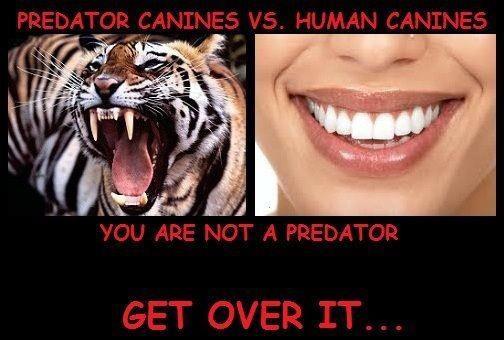
It’s not clear if Simba will impose insectivarianism on his kingdom after the credits roll – he may have to, insofar as the flocks seem to have been decimated. But Simba, if he really could talk, would be appalled by the way humans cynically misappropriate the role of predator in order to feed our insatiable appetites. I think perhaps even the hyenas would agree with him.

Convict Cannibals: FOR THE TERM OF HIS NATURAL LIFE (Norman Dawn, 1927)

For the Term of His Natural Life is a 1927 Australian film directed, produced and co-written by Norman Dawn. It is based on the 1874 novel by Marcus Clarke, and was the most expensive Australian silent film ever made. It remains one of the most famous Australian films of the silent era. John Laws, in the trailer above, calls it “the grandest of them all, the climax of Australia’s silent cinema.” Amazingly, it was the third attempt to film the story, starting in 1908 with the film version of a stage play of the book,  and then in 1911 another filmed stage adaptation, The Life of Rufus Dawes.

It’s the story of a gentleman (in the traditional sense of that obsolete term) who is wrongly convicted and transported to Australia for “the term of his natural life.” This was a fairly common trope in Victorian novels (no one wanted to read about real criminals), and was recreated by Tim Burton when he made Sweeney Todd into a returned convict in his version of the Demon Barber of Fleet Street. As a convict, he changes his name to Rufus Dawes, and the rest of the story tells of the brutality of life as a convict at Macquarie Harbour in Tasmania and his eventual escape to claim his innocence. And, in the American version of the film, a happy ending (the book and the British version saw the hero and his true love come to a watery end).

The bit that interests devotees of Cannibal Studies in this story is the escape of a group of men led by a particularly evil-looking convict named Matt Gabbett (played by Arthur McLaglen in the 1927 film).

Being a silent movie, even the narrator gets an intertitle card:

After nine days with no food, Gabbett points out that there are only two choices— starvation, or eating one of the followers, who has fortuitously become lame. We see him taking an axe to a fellow escapee, while the others cringe, as we suppose semi-civilised folk would.

Gabbett tells them:

The cannibalism subplot was one of the most controversial aspects of the film. Gabbett is based on the true story of Alexander Pearce, who escaped from Macquarie Harbour in 1822 with seven other prisoners. Once recaptured, Pearce confessed that he had eaten his companions, but the magistrate in Hobart refused to believe him. A year later, Pearce escaped again and this time he was recaptured with the flesh of another man still in his pockets. He was taken to Hobart and hanged.
The story languished somewhat until revived in a six hour mini-series in 1983. In 2008-09, a number of Australian films were made that referenced Pearce – The Last Confession of Alexander Pearce (2008), directed by Michael James Rowland; Dying Breed (2008 – about his supposed offspring who are still eating people in the 21st century), directed by Jody Dwyer; and Van Dieman’s Land (2009), directed by Jonathan auf der Heide, which cut the crap and concentrated on the cannibalism story. We’ll get to revue this one, dear reader, one of these days.

The controversy over Norman Dawn’s 1927 version was driven partly by Tasmanian sensitivities about the unwholesome revelation of the island’s history. Marcus Clarke’s book was one thing; a big international motion picture, intended for a mass audience overseas, was quite another. Certainly, the film does sensationalise the cannibalism, shifting the focus away from the book’s message, which was to advocate prison reform. Prisoners like Gabbett (played by the brother of well-known British actor Victor McLaglen) seemed more likely to offer justification of capital punishment.

Australia is sorely lacking in cannibal stories, so even though Alexander Pearce was Irish (as were a large percentage of convicts), we claim him as our own. He did, after all, eat people and get hanged here, and if he hadn’t, no one would even remember he ever existed.

The film is currently available on YouTube.

Need to feed, need to breed: THE DYING BREED (Jody Dwyer, 2008)

Two hundred years ago (July 19 1824), Alexander Pearce was hanged in Hobart, Tasmania, and his body dissected for research. He was a cannibal.

Australia has a bit of a dearth of cannibal stories (compared to places like the USA and Russia). Ask Aussies about cannibalism and they will often make a joke about state or federal politicians. Then they may search their memories and come up with Katherine Knight, a slaughterhouse worker who in 2000 had passionate sex with her partner John Price, then stabbed him 37 times, professionally skinned him, hung his hide on a meat hook over the lounge room door, decapitated him, butchered his corpse and cooked some of his flesh. She served up his meat with baked potato, carrot, pumpkin, beetroot, zucchini, cabbage, squash and gravy in neat settings at the dinner table, putting beside each plate placenames for Price’s children. Another meal was tossed into the backyard; it appears she intended to eat it but decided against it. So, no points on that one I’m afraid – no one got eaten, so no cannibals. More recently, the Snowtown bodies in the barrels case was revealed to have an element of cannibalism in the final murder, but this was very much an afterthought to the killings, and not even mentioned in the film of the events.

Most of the real cannibals in Australian history were in fact convicts sent to the worst penal settlements the British could devise (and they were very good at that) then escaping, only to eat their comrades when other food sources were exhausted. Edward Broughton did just that in 1830, as did Thomas Jeffrey, who became a murderous bushranger, in 1836. But before them, a cannibalistic pioneer one might say, there was Alexander Pearce.

Pearce escaped the brutal penal colony only to eat his companions, not once but twice (he confessed when recaptured the first time, but the authorities didn’t believe him). He is shown very briefly in this movie as a historical flashback before the opening title, an escapee who is cornered by a very angry soldier whose gun misfires. Pearce tears the man’s throat out, swallows some and throws a bit to a thylacine (Tamanian Tiger) who is stalking him, to allow him time to escape.

The thylacine was a carnivorous marsupial who was endemic only to Tasmania, until wiped out by European colonists, the last one dying in Hobart zoo in 1936. There is no evidence of them eating humans. Thylacines were not the only targets of white settlers: Tasmanian Indigenous peoples were also rounded up and subjected to genocide in the first half of the nineteenth century.

Anyhow, the plot of this movie revolves around a biologist named Nina and her friends, who are trying to find proof that the thylacine is not extinct – her sister found a paw print, but was killed mysteriously near the Pieman River on the west coast. The film and other sources often claim that Alexander Pearce was known as the pieman due to his love of the meat of a wide variety of animals, although in fact it seems it was named after a pastry cook named Thomas Kent.

They get a punt across the river, driven by a cranky old man with a small girl who is playing with bones and reciting bloodthirsty rhymes. She bites the boyfriend.

They get to the town, where the locals are killing puppies and who knows who else.

Long story short, as they say, these are a cannibal family descended from Alexander Pearce, who they call the Pieman. The city slickers, mocking the locals as they depart, head down the river where, at the midpoint of the film (where the really good or really bad stuff happens) Nina finally but briefly sights a thylacine!

Of course, she doesn’t have her camera, so she grabs it and they go look for the animal, splitting up to search, proving without a doubt that none of them has ever watched a horror film before. You don’t split up! The other girl meets the creepy child from the punt, then is grabbed from behind and killed, and we get to watch her tongue torn out and eaten. The others find her strung up on a meat hook and butchered like any prey animal.

There’s plenty of gore and somewhat predictable jump scares (or maybe I’ve just seen too many of these types of movies) but the plot is interesting, the acting great, the direction and photography first-rate, and the scenery is spectacular, although the depiction of the Deliverance-like locals may reduce the usefulness of this film for promoting Tasmanian tourism.

“What did you hope to find? We’ve been here a long time. Almost as long as the nation. We have a life to protect, a tradition. You tourists have no tradition.”

The cannibals in this film capture tourists and either eat them or breed them, not that different to what humans do to other animals. When modern twenty-first century humans eat others they are often referred to as degenerate cannibals – they are accused of devolving into the cannibalistic savages that early humans are portrayed as, even though there is little evidence that earlier cultures were into cannibalism or that modern ones have outgrown it.

Humans often turn to cannibalism when food runs out. The Biblical story of the siege of Samaria in Israel some 3,000 years ago (2 Kings 6) relates that, unable to afford asses’ heads and doves’ dung, two women agreed to boil their babies for sustenance. But after they’d eaten the first one, his mother found that the second woman had hidden her child, a shocking breach of contract.  Such starvation cannibalism became common in the day of sailing ships, but even on land, Sawney Bean in fifteenth or sixteenth century Scotland is supposed to have stopped tourists as they passed through his wild lands and taken them home for dinner. Some of these stories seem to stray from cannibalism into something like an aversion to getting a job, which is how the modern versions like Texas Chain Saw Massacre and Hills Have Eyes are sometimes framed. We eat flesh because we need to or want to, and because we can. That still applies in the meat section of every supermarket. We don’t degenerate to cannibalism, we simply objectify the prey, be it human or any other animal. This objectification is at the heart of all politics.

The moral of these stories (they all have one, even the most basic slasher), is that there are other worlds out there, away from what we are used to in our own little niche. There are people outside our ways of understanding life and morality, whose daily existence may be inconceivable to those looking in. Coetzee said that the “upper intelligentsia” (Nina is a scientist) live lives irrelevant to most people, who may be “devoted to brawling and guzzling and fucking”. That’s whom we meet in the unexplored wilderness of Deliverance or Sawney’s Scotland or the Texas of the forgotten, and in this film; they fight, they kill, they eat and they reproduce. They survive and breed: the basis of all evolution. It’s what animals do, and a good cannibal film like this reminds us that we are, beneath our veneer of civilisation, just another brawling, guzzling, fucking animal.  

Sorority initiation: CANNIBAL HOOKERS (Donald Farmer, 1987)

Also known as I Will Dance on Your Grave, this film’s videotape release by Hollywood International Pictures “through Italian Stallion Video Comportation [sic]” has a notice on the front and back covers that cautions the potential viewer: “Warning: graphic scenes of violence and horror”, and adds that it has a running time of 91 minutes. Subsequent VHS releases were (badly) re-cut to 63 minutes, including the 4 minute end credits. All DVD releases are ripped from the 63 minute version. Which is still about 62 minutes too long.

So, to the “story” (sic). At a sorority initiation (we are told it is “the sleaziest sorority in the State), two girls are given a chance to prove themselves to the sisterhood by posing as hookers. But then they turn into vampires and start killing and eating the frat boys. Not good for business, but luckily there seem to be no bounds to the number or stupidity of the local men.

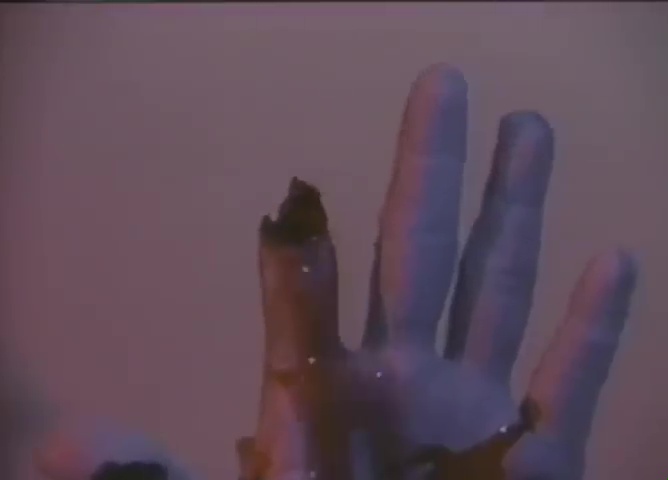
The movie starts with a guy following a woman to a bar, leering at her from the bed as she returns naked except for an axe held tactfully behind her back, bites off his finger (resulting in lots of the most watered-down fake blood I have ever seen), then chops him up.

Move to domestic turmoil as college girl tells mom she wants to join a sorority, then in the car on the way to college, agrees with her friend it’s only because they like to party. Stark realism so far. They pledge, and their initiation is to dress as sex workers and pick up one man each, on Sunset Boulevard. They agree, because “do you want to be socially ostracised all year?” The other girl suggests they join a frat house as “little sisters” instead. The best line of the movie follows:

“Little sisters? For your information, being a little sister has all the social status of being gang raped by Nazis.”

Despite the occasional zinger, the rest of the film is full of bad writing, laughable acting, gratuitous breast shots, and fake gore. There is an unexplained weirdo named Lobo at the brothel, who takes men’s coats when they arrive, and then kills them while they are getting it on with the girls.

Besides killing people, Lobo’s job is to bring glasses of blood to the head vampire, on whom he has a crush. She sleeps with a human skull on her stomach. Much as one does in sororities, I suppose.

The protagonists are both turned into vampires, and the rest of the film revolves around necks and teeth. There is a detective on their case, but he is easily captured, and told:

“We have a very special diet. We only eat warm human flesh.”
“No kidding. I think I read about that diet in the National Enquirer.”

I won’t give any spoilers in case you are tempted to watch it, but let’s just say that, while some of the female vampires meet a sticky end, there is far more sacrificial killing and eating of males, which makes this somewhat unusual in cannibal films.

I don’t know whether the writer/director Donald Farmer ever saw the German movie Die Wiebchen which came out in 1970. At any rate, male terror at being eaten by females, reabsorbed by the Monstrous-Feminine, is much underrated, and this film, badly made as it is, at least helps to remind us of that uncanny terror and restore the balance, however marginally.

I couldn’t resist this review on IMDB:

The full movie (or the bits that weren’t cut) can be seen if you really want to at https://tubitv.com/movies/100014132/i-will-dance-on-your-grave-cannibal-hookers

Hobbit cannibals: THE CANNIBAL IN THE JUNGLE (Simon George, 2015)

As a general rule, I am not a big fan of “mockumentaries” – if you’re making stuff up, then why not just describe it as fiction? And if you are a channel like Animal Planet which makes factual documentaries about (real) fauna and flora for its seventy million viewers, it seems at least deceptive if not actively fraudulent to start showing made up stuff as if it is a “documentary”. This is not the first time they’ve done it; they had previously tried to make us believe they had found evidence of dragons and mermaids. So an untrue ‘true-crime’ documentary about a fake cannibal locked up for supposed cannibalism which was actually carried out by an extinct species of hobbits seemed pretty tame to the Ethics Department of Animal Planet I guess.

I should concede that some of the classics of cannibal texts are mockumentaries or “found footage” inventions. Many of the Italian ‘cannibal boom” films attempted to appear as factual records, particularly the classic Cannibal Holocaust, for which the director, Ruggero Deodata, secreted away the actors to make it appear they had been killed, then had to produce them in court to avoid facing  homicide charges. More recently, District Nine, Ghoul and Long Pigs have all made somewhat desultory attempts to persuade us that we were watching the actual killing and eating of humans by humans.

In this week’s offering, The Cannibal in The Jungle, the director Simon George presents a feature-length ‘true-crime’ special about an American scientist accused of murdering and consuming the remains of his fellow explorers while on an expedition in 1970s Indonesia. The murder/cannibalism case is told through interviews with an Australian anthropologist Richard Hoernboeck (played by Scottish actor Jim Sturgeon with a broad Australian accent), who says he found evidence of a tribe of very small hominids which he calls hobbits, and subsequently chose to investigate the murder/cannibalism case, 25 years after it happened. He tells us that in 1977, an American ornithologist was convicted of killing and cannibalising two colleagues in the jungles of Indonesia while on a quest to study eagles, as well as hoping to find a supposedly extinct owl. Instead, Dr Timothy Darrow, branded ‘The American Cannibal’ by the press during his trial for murder and cannibalism, claimed in his (unsuccessful) defence that they had been attacked by a lost species of early humans. These hobbits, he said, were responsible for the murder and consumption of his friends. Nobody believed him. Cannibalism is easier to believe than hobbits.

In fact, the remains of a species matching Darrow’s description were found in those jungles of Indonesia in 2003 by an anthropologist from Wollongong University, although his name was Mike Morwood (a hobbit name if ever I heard one). In what is now regarded as one of the most important anthropological finds ever, a team of scientists discovered the bones of an entirely new species of human, one that stood only 43 inches or 110cm tall. Homo floresiensis (popularly called Flores Man or more popularly Hobbits) lived on the island for perhaps over a million years before going extinct. Some recent research suggests that a tribe of the hominins known as Homo erectus became isolated on this remote Indonesian island, perhaps a million years ago, and evolved a dramatically smaller body size.

But did they really go extinct? An indigenous tribe on the Indonesian island of Flores, where the remains of the ‘hobbits’ were discovered, have their own accounts of little wild men that climb trees and walk on two legs. They also describe them as cannibals. And according to their legends, they may never have died out at all. This story claims to follow Hoernboeck’s expedition into the jungle of Flores, Indonesia, seeking to discover if hobbits still exist, whether Timothy Darrow’s ill-fated expedition really encountered the supposedly extinct creatures, and if the ‘American Cannibal’ was therefore innocent of the crimes for which he was convicted more than three decades previously.

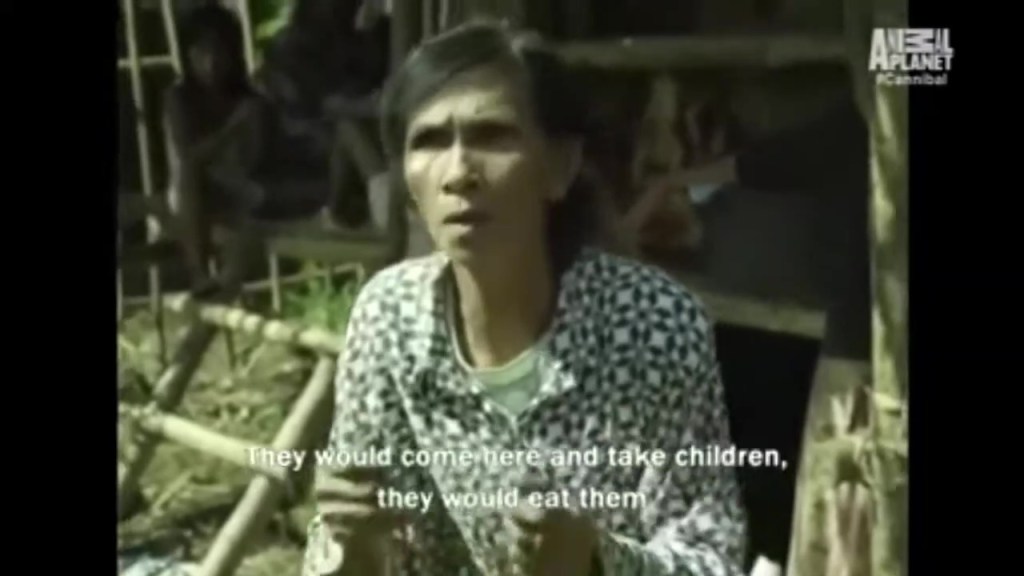
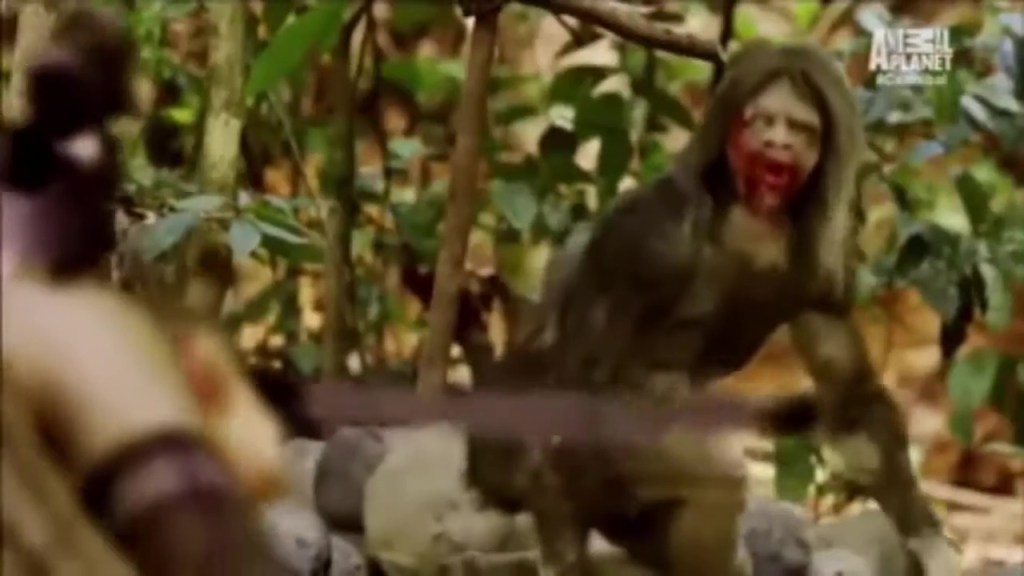
The local people of the island, the Lio, claim that the hobbits were around until very recently, and may still be hiding out in the forest. In the fake doco, they are shown suggesting that they would kidnap and eat children, although being a different species to Homo sapiens, I suppose this would not technically be cannibalism.

The program is ingeniously done. Hoernboeck, the modern-day anthropologist, shows purportedly real video of his interviews with the imprisoned Darrow (played by Richard Brake, who was in Game of Thrones and Hannibal Rising, so there’s a giveaway for the alert horror fan), and his expedition to trace the journey on which Darrow supposedly found the hobbits. Interspersed with this, we are shown what we are told is a reenactment of the original expedition by Darrow and his friends/victims. The implication is that we can believe the rest is real, because they told us what was staged. We move to the present to see the anthropologist tracking down Darrow’s tape recorder which contains the taped call of the hobbits, then eventually the actual film taken by Darrow that proved his innocence but, alas, not until after he died in the brutal Kerobokan prison.

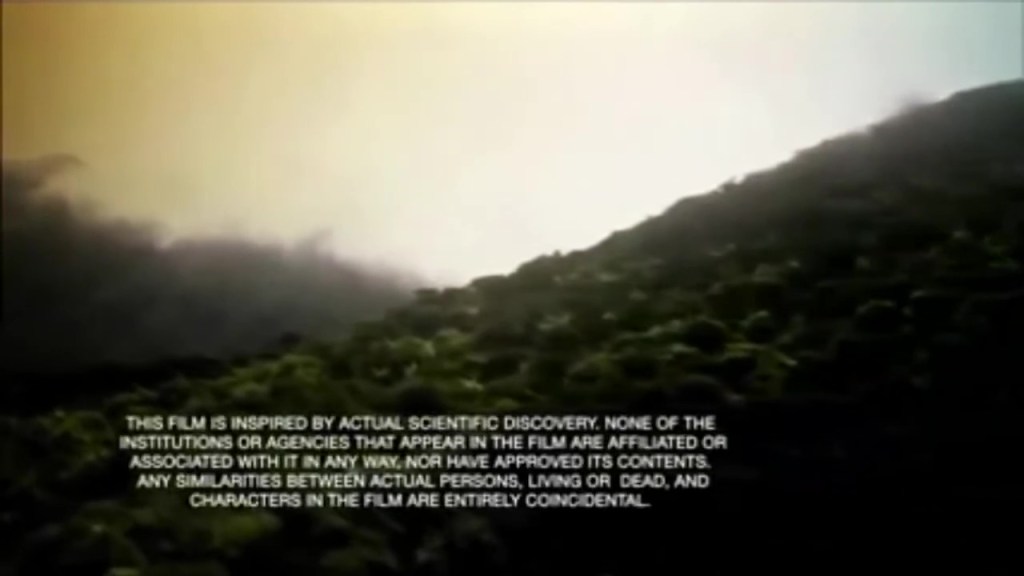
With a modicum of willing suspension of disbelief, it’s actually pretty convincing, and quite sad, unless we keep reminding ourselves that the whole thing is a fake. Those who watched it when it first came out, unless they recognised the Night King or the war criminal who ate Hannibal’s sister, did not discover that it was all fictional until the very end, when there is a (very) short statement. Most viewers probably wouldn’t even have noticed it.

What I found interesting is the depiction of the totally credible outrage of the Indonesian authorities, furious that an American would eat the Indonesian guide. Yet when the Flores locals are shown talking about the hobbits capturing and eating their children, there is inaction. Nature is red in tooth and claw! Animals eat each other, and eat people if they can, so if some unidentified ape ate your child, well, that’s unfortunate. But anthropocentric ideology denies our animality, so for a human to eat a human still manages to shock. The false binary of human/animal has led science to tie knots in the language, with some calling the hobbits “ape-men” and one learned anthropologist, Gregory Forth, calling his book about them Between Ape and Human. Like this documentary, the idea of a lacuna between apes and humans is fictional. We are a species of great ape, and our DNA is 98.8% identical to chimps.

Dr. Darrow’s supposed cannibalism was more horrific than nature’s mundane bloodbaths, not because he was genetically similar to the victim, but because he was a post-doctoral scientist, a ‘civilised’ man. If either party to slaughter, the one wielding or the one enduring the blade, can be defined as ‘animal’, all bets are off. The cannibals we consider in this blog are simply better than most people at dehumanising, objectifying the other.

The full movie is available, at the time of writing, at Daily Motion.

MALI – alleged cannibalism by soldiers (warning – graphic images)

Videos are circulating on social networks such as TikTok showing an alleged case of the Malian army practising cannibalism.

A soldier, dressed in an army uniform, is seen gutting his dead opponent. In the second part of the video, he roasts the victim’s liver over a fire and expresses his intention to eat it.

The soldier filming this is holding severed fingers as a souvenir. The video is believed to have been filmed near the Mauritanian border in 2022 and is currently under investigation by the Malian army. Sources from Mali’s security forces and human rights organisations that spoke to Radio France International believe that the video may have been recorded in the town of Sokolo in south-central Mali in June 2022, or the village of Mourdiah in May 2023.

Speaking in local Malian Bambara language, the man says he is going to eat the victim’s liver, according to comments and media reports on the footage. A surrounding group of men in fatigues laugh as he cuts through the corpse.

Mali’s armed forces have ordered an investigation into the video. The army chief said in a statement in July that this was a “rare atrocity akin to cannibalism”, adding that the act did not align with the Sahelian West African nation’s military values.

Malian General Staff statement announcing an investigation into the first cannibalism video 

Rights groups and the United Nations have repeatedly accused Malian soldiers of serious abuses, including executions and torture, committed against civilians suspected of collaborating with jihadist groups that have been waging an insurgency in the Sahel since 2012. The army has always denied any wrongdoing.

Reports of abuses and atrocities against civilians by the Malian Armed Forces have steadily increased since the 2022 coup that saw a military junta take control of the country, with Russian Wagner Group (now Africa Corps) mercenaries hired by the junta accused of jointly committing massacres of unarmed civilians with the Malian military.

Despite the junta’s hiring of Wagner to replace the UN peacekeeping and EU training mission it expelled, it has lost control of growing parts of northern Mali to Tuareg separatists, Islamist fighters of al-Qaeda affiliate Support Group for Islam and Muslims (Jama’at Nusrat al-Islam wa al-Muslimin or JNIM), and Islamic State’s Sahel Province.

Hundreds of thousands have been killed and millions displaced as militants have seized territory and foreign-backed armies retaliated. The failure to restore security has contributed to two military coups in Mali, two in neighbouring Burkina Faso, and one in Niger since 2020.

The video was trending on X, but has since been removed for violating the platform’s rules. 

“What do you collect?” THE MAN WHO COLLECTED FOOD (Matthew Roth, 2010)

Written, directed and produced by Matthew Roth, The Man who Collected Food (also released as Cannibal Collector) is a parable of modern consumerist society.

Miguel (Mike N. Kelly) is the unexceptional, almost unnoticeable man next door (like most modern cannibals), who is quietly (or sometimes noisily) proud of his collection. What he collects is food, and he hoards it in cupboards and on display shelving. Like any serious collector (think of Barbie collections or comic books), it is definitely not for consumption.

He carefully stores his purchases in their original packaging, knowing that they would be ruined as collector’s items if he were to open them or, heaven forbid, eat them! Like any obsession, collecting takes over his life.

To survive without spoiling his collection, he eats people. He won’t open any of his food packets, but has a cold-room full of abducted humans, collected according to ethnicity, some already cooked, others tied and gagged and awaiting prep, which involves unfastening them and then chasing and killing them with various fun toys like mediaeval maces.

“Mother always told me to never play with my food. But I don’t think she know how much fun it really is.”

It’s just his quirk, and his neighbours are presented as even crazier than him. There’s the deer hunters, identical father and son in matching lumberjack plaid, and then there’s Kelvin, who runs around with a shotgun shooting at aliens (and who is covered in what he claims are bits of their green brains).

Kelvin sums up the film’s theme:

“I believe that there’s something a little strange in all of us. Whether we’d like to admit it or not, there’s just that one thing we don’t want anyone else to know about.”

Miguel attends a group therapy meeting for people with traumas and more common addictions like sex and cigarettes. He tells the group he collects food, which doesn’t seem that big a deal, until he adds,

“In order to keep my collection in mint condition, I have to resort to cannibalism.”

He tells them he can’t eat “animals” because they are food, and so belong in his collection. The facilitator asks him how that is logical, in that people are also food, at least to cannibals, but he points out that people are not food to other people.

“They don’t package or can people, if they had people-sized packages, then you’d have a better argument.”

She might have had better luck pointing out that people are animals too. Instead, she announces that they are all going to go to his home to open all his packets as therapy, and that makes him really mad. The middle of the film is a long, slow-motion sequence of him killing all the people in the group, and then the cleaner who finds the bodies.

His secret is discovered by the deer hunters who decide to hunt him, until he kills and eats them, then hears a phone message about a friend who keeps escaping death in various accidents and is called “the luckiest man in the world”.

Taking the essentialist argument seriously, Miguel decides that eating such a man might allow him to incorporate that luck, and finally find what he has been searching for: “that package of Ranch Wall Rice with Chicken and Vegetables”. Eating the “luckiest man in the world” will, he hopes, make him lucky.

Taking obsession to its logical conclusion, The Man Who Collected Food is a black comedy (or red comedy given the amounts of gore) with a serious message; a critique of modern consumerism.

“It’s all because I’m different. Sometimes I just wish I could collect comics or coins or anything – it has to be food, food, food!”

Our appetites are incited by marketing and advertising, while at the same time we are told that the Earth is being destroyed by our voracious cravings. We are insatiable, and yet we are ashamed of that. As Dylan said,

“If my thought-dreams could be seen, they’d probably put my head in a guillotine,
but it’s all right Ma, it’s life and life only!”

The script is somewhat feeble and the acting varies between wooden and histrionic. The film earned a respectable 71% “fresh” on Rotten Tomatoes, even though there are no reviews listed. But nonetheless, it’s entertaining and funny, the theme music by Daniel Alcheh is terrific, and the gore hounds will appreciate the amount of carnage. And it actually has a lot to say about obsession, greed, consumerist voracity, and the illogical cultural binaries of edibility and abhorrence. Worth a look, if you can find it.

What would you do? HUNGER (Steven Hentges, 2009)

People who automatically flinch at the idea of cannibal movies (or cannibalism generally) give a little mental shrug when the subject turns to starvation. What would you do if you had no food, nothing containing any life-giving nourishment except other human bodies? The honest answer to that is, usually, ‘I don’t know, and I hope never to find out’.

Several films considered in this blog have looked into what we might call “survival cannibalism”, a sub-group of the wider “castaway” genre—films like Hitchcock’s Lifeboat—which derive from the narrative of Robinson Crusoe. The most famous in Cannibal Studies is still Alive, which retold the story of the young footballers who survived a plane crash in the Andes, only to discover that the search had been called off and there was literally no food in the snow, except the bodies of their fellow passengers (most of whom were their friends). It was recently rebooted in Spanish in Bayona’s La sociedad de la nieve. Such stories are contemporary versions of the old shipwreck stories which motivated much of the cannibalism narratives of early modern Europe, horrifying the Europeans, when they weren’t accusing the colonialised of the same thing. A classic story is the whaling ship Essex, the wreck of which inspired Moby Dick. The film In the Heart of the Sea follows that story – what happened to them after the ship sunk? Well, weeks in a lifeboat with nothing but each other for company and no food…

Then we have the many, many post-apocalyptic stories, starting with Soylent Green, in which overpopulation and climate change have led to the recycling of dead people into delicious crackers. Other classics of this genre include Delicatessen, We Are The Flesh, Cadaver, and of course the bleak glimpse of the future, The Road. Such disasters can be intentionally created, such as Stalin’s famine in the Ukraine, during which the starving ate their own relatives. In the USA, the classic case of starvation cannibalism is the Donner Party.

This week’s film, Hunger, explores the same question: what would you do? If you were starving, what, or who, would you eat? An apocalypse is not the fault of the victims, and surviving any way you can, feeding yourself and your family, is difficult to criticise. It may still be gross to some (or most) people, but it is nevertheless, in some ways, understandable.

But this film complicates it by taking away the excuses of an indifferent nature or a catastrophic global event. In Hunger, there is no apocalypse. The characters are just five people who wake to find themselves in a dark dungeon, with no idea how they got there. It’s a cistern, a larger version of the abandoned well in which Catherine Martin found herself trapped in Silence of the Lambs. And, of course, like Catherine, there is no food being catered. Science hates anecdotal evidence, so in this film we have a scientist who has gathered ‘ordinary’ people in extraordinary circumstances, just to see what would happen. You may remember Mason Verger boasting of a similar experiment in Hannibal:

“I adopted some dogs from the shelter. Two dogs that were friends. I had them in a cage together with no food and fresh water. One of them died hungry. The other had a warm meal.”

They have access to four barrels of water, a toilet (of sorts, but only four toilet rolls) and a day-clock that marks off 30 days, the length of time the human body can survive without food.

On the second day, they find on their water barrels a scalpel, an instrument that Jordan, the doctor played by Lori Heuring (Mulholland Drive), calls “a human carving knife”. It soon becomes clear what that is for, and it ends up (after much discussion) being used for just that purpose – to kill and butcher each other.

We find out as they talk that they seem to have been chosen because they have all taken a life – one killed her abusive partner, another in a hold-up gone wrong, another through euthanasia. Doctors like Jordan handle life and death every day. But the scientist wants to know, are they willing to kill out of hunger alone?

Then there is that scientist who kidnapped them; we find that he had been a young boy who survived a car crash: we later discover he cannibalised his mother’s corpse to stay alive. Now he watches his captives, and takes careful notes.

He shares their predilection for taking life: when a couple come to have sex in the quiet country area and hear the pleas for help from their oubliette, he shoots them with tranquiliser darts and pushes their car into the river, but not until they wake up. He thereby reveals a sadistic streak, a psychopathy, or at least a disavowal of empathy, common in scientists who experiment on mice, rats, dogs, monkeys and other animals. Most of us react to seeing other sentient beings in pain by initiating an empathetic response called resonance in the inferior frontal gyrus and the inferior parietal lobule of our brains. Recent research in which rats were given electric shocks and responded similarly both to pain and to watching other rats in pain showed that this ability is not restricted to humans, and in fact may be better developed in rats than in some scientists. Like Descartes torturing dogs or Josef Mengele experimenting on camp inmates, a psychopathic scientist can justify any cruelty for the sake of research.

Cannibalism, the act of killing and eating another, is sometimes considered transcendent (by the cannibal), with one character making reference to cannibalism as a spiritual pursuit:

“Human flesh is essence. It captures a person’s soul!”

The scientist likes this idea, because he ate his mother, so it’s comforting to think that he now contains her soul. But the main theme of the film remains starvation cannibalism, in this case forced on the victims, as it was in the Ukrainian famines or the Nazi death camps. The counterpart of this cannibalism is happening in their bodies. As Dr Jordan tells us, the process of starvation progresses as “your body basically cannibalises itself.” The alternative is what the scientist hopes to witness, the choice to “become a savage”.

Jordan, the doctor, is the only character who refuses to consider cannibalism. Like “the Man” in The Road, she wants to “carry the fire”, and that anthropocentric ideal does not include eating humans. The others spurn such naïve ideology:

“You can hold on to your precious humanity. We’re doing what we have to do to survive.
And your boyfriend? He tasted surprisingly delicious.”

Cannibalism is usually depicted by society as a form of madness or monstrosity involving a devolution from civilised to savage, from enlightened to barbaric. Unless we pay someone else to do it for us—then it’s called animal husbandry.

The film was produced for a tiny $625,000, so the special effects and production time are limited (except for the buckets of gore), but it is still extremely effective. Hunger was released on Fangoria’s Frightfest DVD line, the same distributor as the (reworked) Armin Meiwes story Grimm Love. It does not seem to have received wide distribution, which is a shame, as it is well made, well acted (particularly Lori Heuring, who is quite incandescent) and is well worth your while chasing down. Moreover, it covers a crucial question that becomes more urgent as the world goes to hell in a handbasket – what would you do?

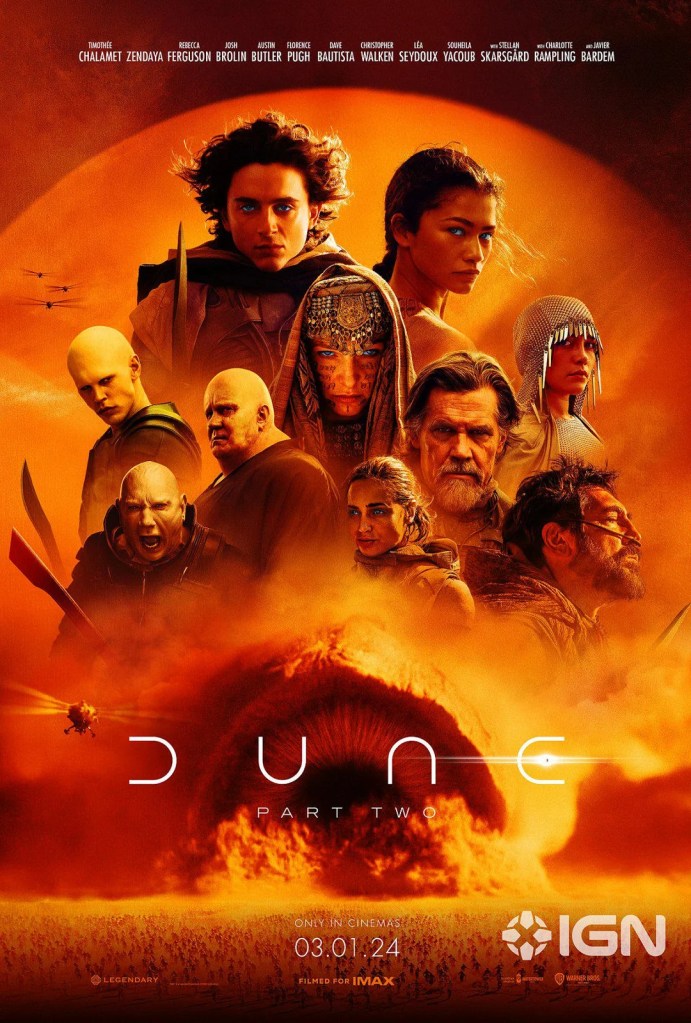
The Harkonnen cannibals: DUNE 2 (Denis Villeneuve, 2024)

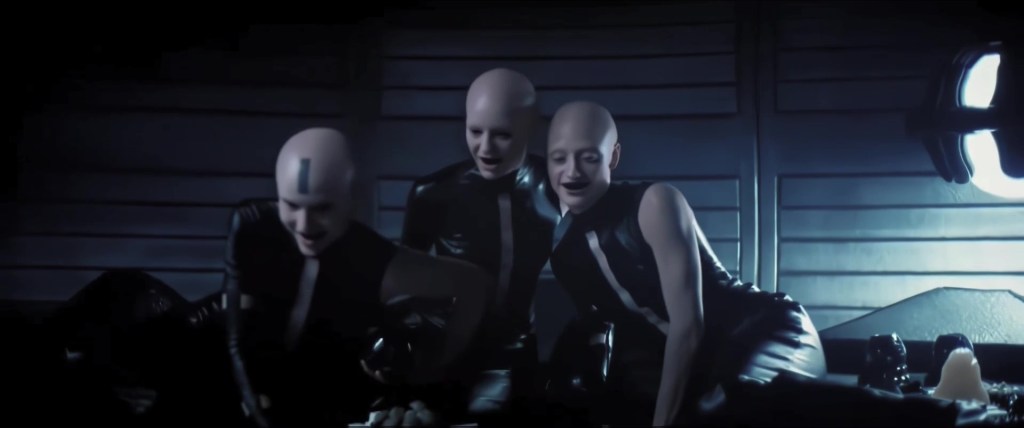
Are the Harkonnens cannibals In Dune 2? Not exactly, but the harem of women maintained by Feyd-Rautha do eat people. Sadly, the film is surprisingly coy about it.

Canadian director Denis Villeneuve’s film Dune: Part Two was the second-biggest earner of (at least the first half of) 2024, taking in $711 million so far worldwide. It is a direct continuation of 2021’s Dune, and if you haven’t seen that yet, I suspect this one will make little sense, unless you’ve read Frank Herbert’s 1965 novel on which both are based.

Dune established a historical mythology set eight thousand years in the future, in which an interstellar alliance is ruled by ‘Great Houses’ who are nominally beholden to the Emperor (played by Christopher Walken), but are often at war with him or each other. Human civilisation has abandoned computers (fear of AI) and must use Melange or “Spice”, a highly addictive hallucinogen, to enable pilots to navigate through “folded space”. The Spice comes from a planet called Arrakis, which is therefore much in demand by imperial powers.

In the first movie, the Atreides were made rulers of the planet, but then were invaded and butchered by the wonderfully evil House of Harkonnen. However, the Atreides heir Paul Atreides (Timothée Chalamet, who is not unacquainted with cannibal movies) and his mother escape the destruction and join the local desert people, the Fremen. These guys are tough nuts, able to bring down even the Emperor’s most vicious special forces, and they ride around the planet on “worms” – huge underground creatures that can swallow anyone and anything they find. The worms are attracted by anything that is making regular sounds. Oh, and they produce the spice as their shit.

Dune 2 delves deeper into the culture of the House of Harkonnen, who believe they have killed off all the Atreides. Like the simplest monsters, they are portrayed as ruthless and devoid of morality, and most are more than a little psychotic.

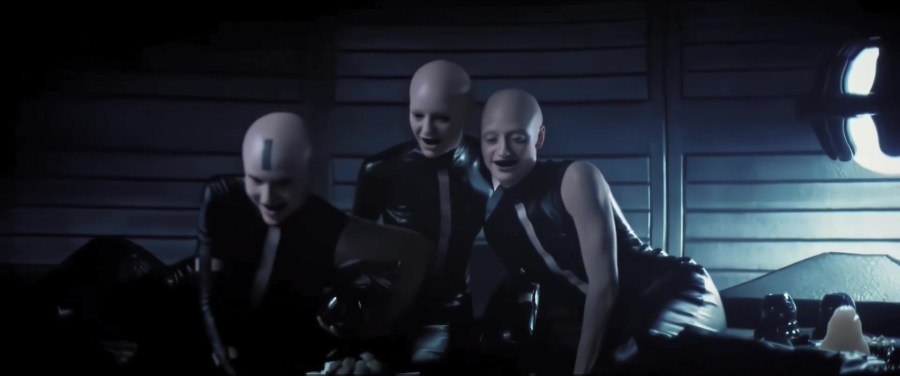
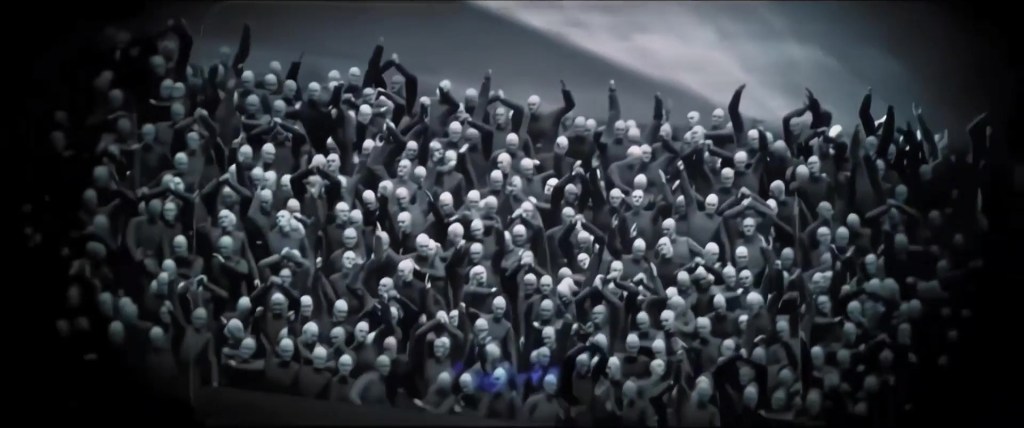
They are all bald for some reason, but their main motivations are cruelty and torture. Particularly the nephew of Baron Harkonnen (Stellan Skarsgård), Feyd-Rautha (Austin Butler, but nothing like Elvis in this movie), who keeps the harem of hungry cannibal women.

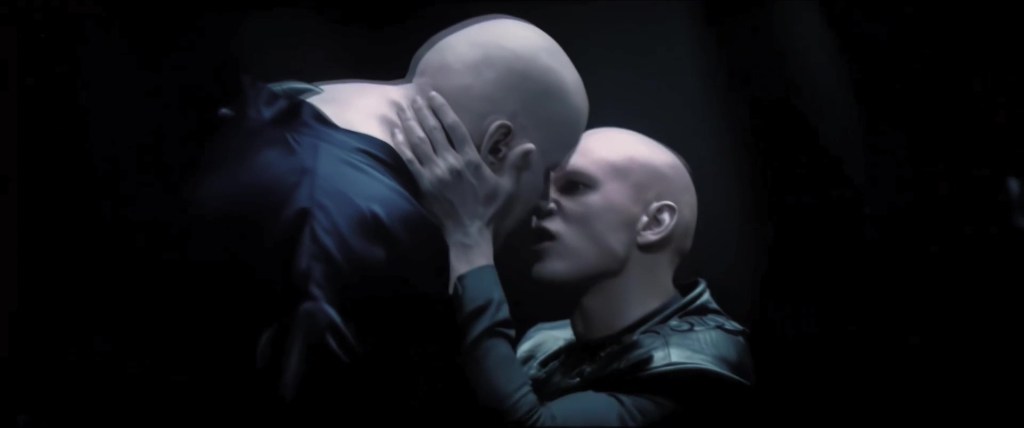
The Harkonnens kill capriciously and indulge in brutal pleasures, like making slaves fight to the death in the arena; they are hundredth century Roman emperors. We learn that Feyd-Rautha murdered his mother and now is the favourite of his uncle, the Baron. The ‘uncle and nephew’ thing is honestly a bit of a worn homophobic trope.

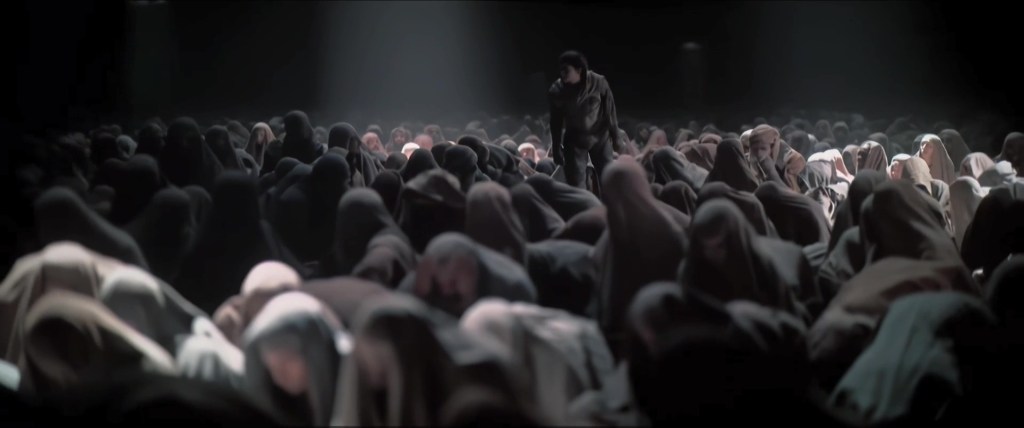
But the bit that interests us about him (in this cannibalism blog) is his harem of cannibalistic women. The film is a critique (intentionally or not) of white colonialism (particularly the evil Harkonnens, but also the Atreides and the Emperor) and the way it controls its subjects through the mythology of religion, in this case, messianic tales spread by an exclusive sisterhood called the Bene Gesserit, who use mind control techniques to persuade the colonised (the fierce, warrior race of Fremen) that their leader is coming, a white saviour from beyond their world. Paul does not believe any of this, but he lets his fundamentalist supporters fall for it.

Cannibalism has long been used as an ideological tool both by colonists (the savages accused of being subhuman cannibals like the Troglodytes in Bone Tomahawk) and the colonised, who see the invaders as predators appropriating the land, resources and bodies of the native peoples. Disappointingly, considering the pains the director goes to paint the Harkonnens as irredeemable psychopaths, we never understand them to be indulging in human flesh themselves, although it would have been an ideal metaphor for the way they rape and pillage the planets they control. Maybe Villeneuve felt the ghost of Frank Herbert would come and haunt him.

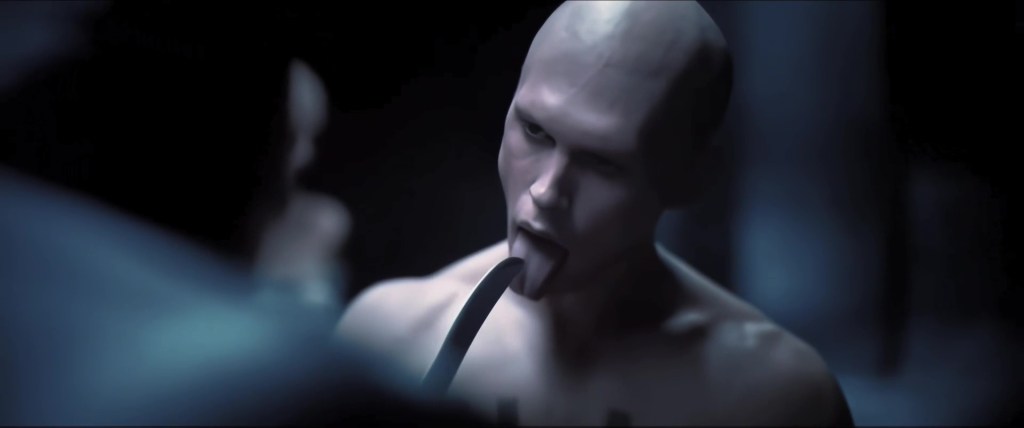
Feyd-Rautha seems to keep his women more like pets than concubines, calling them his “darlings” and killing various unfortunate slaves to feed them, as well as a flunky on the starship because, you know, they hadn’t been fed on the voyage.

Frank Herbert’s treatment of his characters was rather more nuanced in the books, in which he did not include any cannibalism, sadly. The inclusion of Feyd-Rautha’s harem of cannibals in Dune: Part Two seems a bit of an afterthought, or perhaps the script writers had some grand ideas which ended up being cut. They appear in one scene and for a few seconds, with no backstory. The end result is that the cannibals seem to be there just to enhance our perception of the dynasty’s barbarity.

Despite the rather superficial appearance of cannibal women, there is plenty here to entertain students of anthropocentrism; questions about what it is to be human, to be animal, to be civilised. The animal symbolism is everywhere; the worms, for example, are representations of nature—indifferent, insentient predators of immeasurable power who can, however, be tamed by humans, although their exploitation remains perilous. The bad guys with their bald heads and degenerate ways are depicted in animal forms—the Baron is bloated and presented as porcine, bathing in mud for much of the film, while Feyd-Rautha is reptilian—smooth, slimy and lethal.

The cannibal women are somewhere between aliens from X-Files and characters from pre-woke films like Freaks. Are they human? We never find out.

The film scores 92% fresh on the tomatometer, meaning most critics loved it. The visual effects are spectacular and should really be seen on the big screen, the acting ranges from brilliant to adequate, the battles are spectacular, and Hans Zimmer couldn’t write a bad score if he was paid to do so.  But the trivialisation of the cannibalism left me hungry for more.

Auto-cannibalism: EAT (Jimmy Weber, 2014)

Hollywood, they say, will eat you alive, and stories of those who try to succeed (and fail) are often accompanied by metaphors of incorporation. If the city doesn’t eat you, the people will, or if they don’t, you’ll end up eating yourself. That’s what happens to Novella (Meggie Maddock) in this powerful movie about a struggling actress who just can’t get a break.

No wonder she develops some nervous habits. The one revealed here is auto-cannibalism. She eats herself.

Novella has lost control of her life. She hasn’t won a part for three years. Intending to be a famous movie star, she instead finds herself auditioning for porn movies to make ends meet, and then comes home to find an eviction notice on her door. Her life is out of control, and she tries to reclaim it by auto-cannibalism—eating her own flesh. An illness, an addiction or an obsession is often described as “all-consuming” and Eat takes this to its logical conclusion.

The film explores the desperation and isolation that is so much a part of modern cultures, and the extreme reactions to the feeling of failure. What better way to explore the darkness inside us than by opening ourselves up and looking, feeling and tasting it? As the movie reminds us,

This is the debut feature from Jimmy Weber (Incubator), and he demonstrates a rare talent for showing people things that really turn their stomachs. This is what horror should do—while so many entries that once caused people to pass out or vomit in cinemas have become stale and unremarkable, people eating their own flesh still manages to make the gorge rise for many otherwise hardened reviewers of gore movies. It takes us into our deepest fears and lets them out to play in the (relatively) safe world of the cinema.

Andy Warhol made an underground movie called Eat in 1964 which featured a man eating a mushroom for 45 minutes. This Eat is a lot more graphic, although the French got here first with Marina de Van’s extraordinary 2002 film In My Skin. In that film, the protagonist feels the same appetite for her own flesh as so many people seem to feel when they smell bacon.

If you’re not a gore hound, you probably may not like this film. The special effects are excruciatingly realistic, and reinforced by sound effects of biting and slurping that offer a sometimes exaggerated realism. But although it is a disturbing film, it is beautifully made and makes its point about the human tendency to consume, like the ouroboros, the very environment that sustains us.

Cannibalism, or any kind of carnivory, is ultimately about control. Humans seek to control nature by killing and eating others—usually other species, but sometimes, even often, other humans. There is no greater control of another than taking their life and converting their flesh into food and then into faeces. But doing it to ourselves? That is more an enquiry, an interrogation of the usually unquestioned human/animal binary. Reddit reports that a guy who calls himself Incrediblyshinyshart served his friends tacos, made from his own amputated leg, just to see what we taste like. A Spanish influencer ate part of her knee which had been removed surgically, just because it was her property and she could (much the same argument people use to justify eating other animals). Then there’s the vegan who made meringues out of his own blood, because, he said, it is,

the only ethical source of animal products, because I can give my consent to myself in a way that a sheep can’t.”

Once we look inside our skin, that large sensory organ which identifies us to the world and ourselves, we find meat, the same red meat we find inside other mammals. The only difference between the cannibal who consumes his own flesh and the gourmand who eats that of a pig, cow or sheep is one of consent.