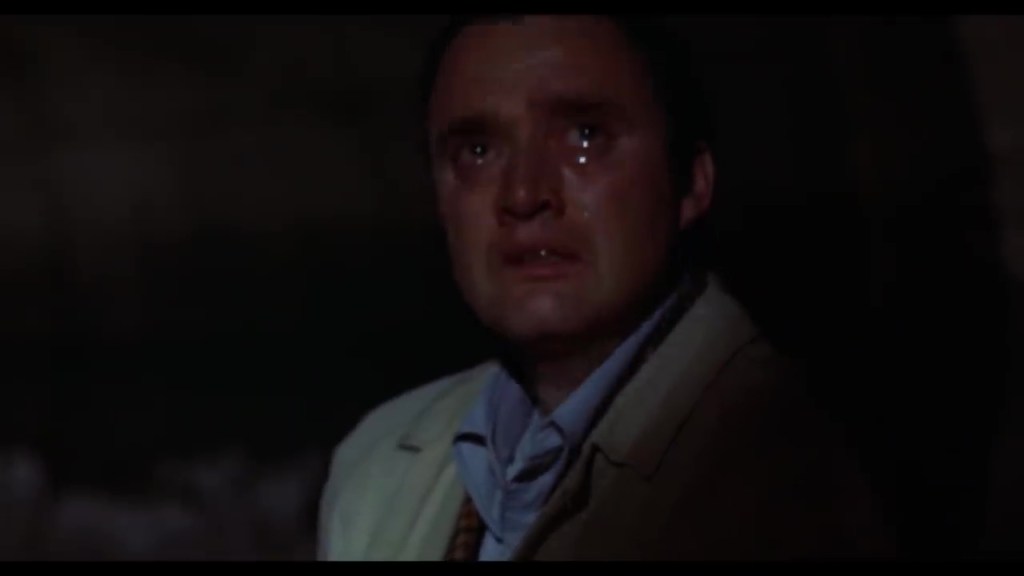
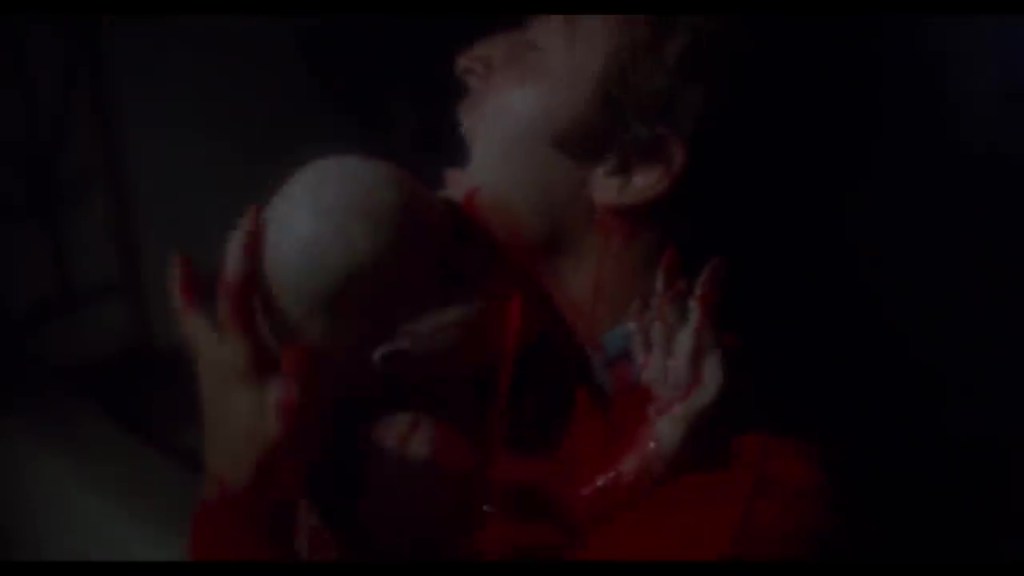
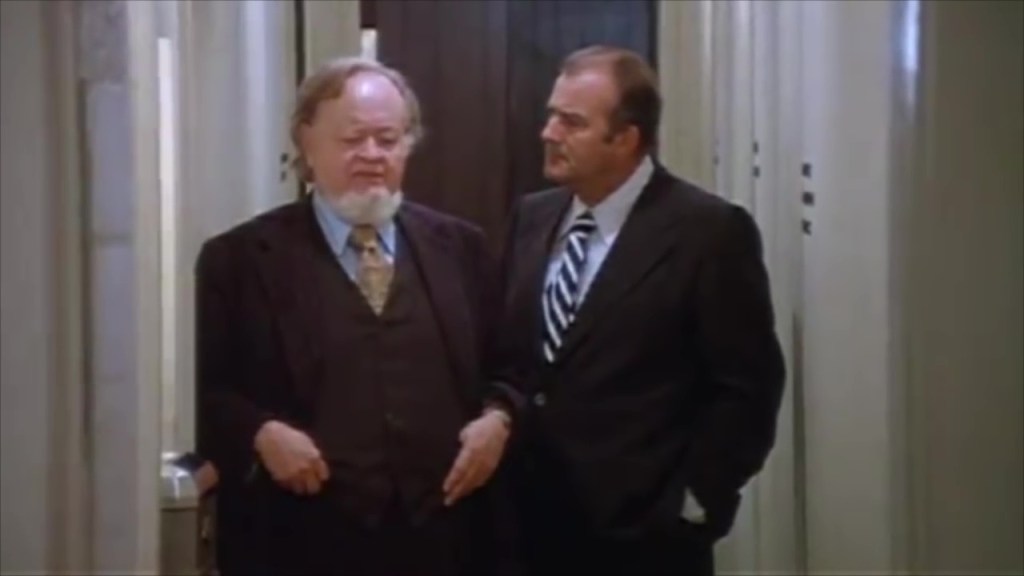
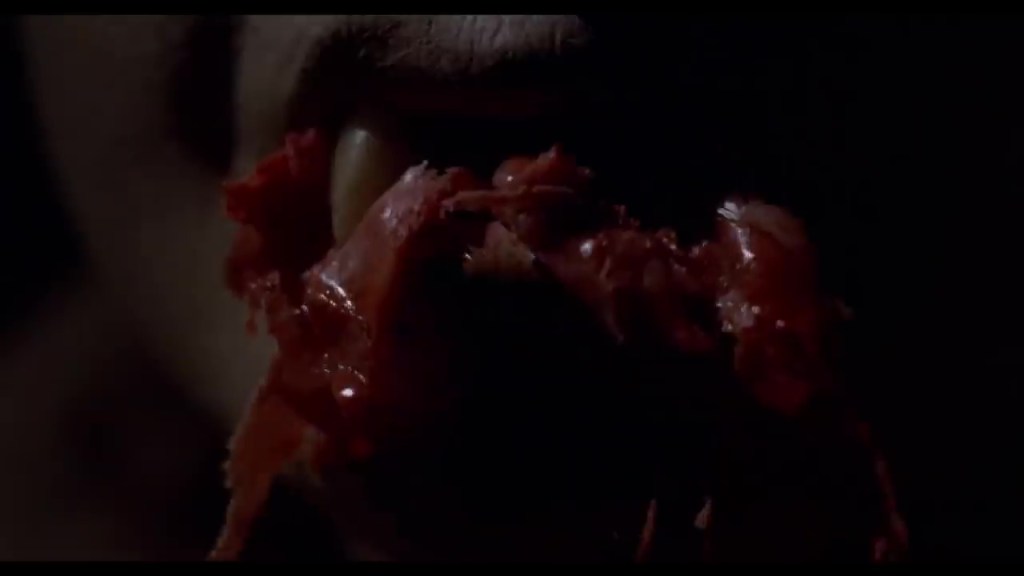
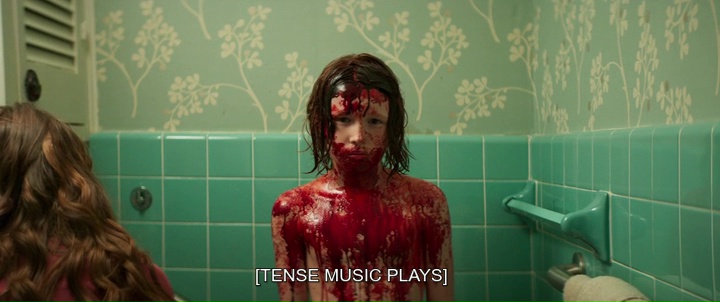
“Drowning in a river of blood”, SON (Ivan Kavanagh, 2021)

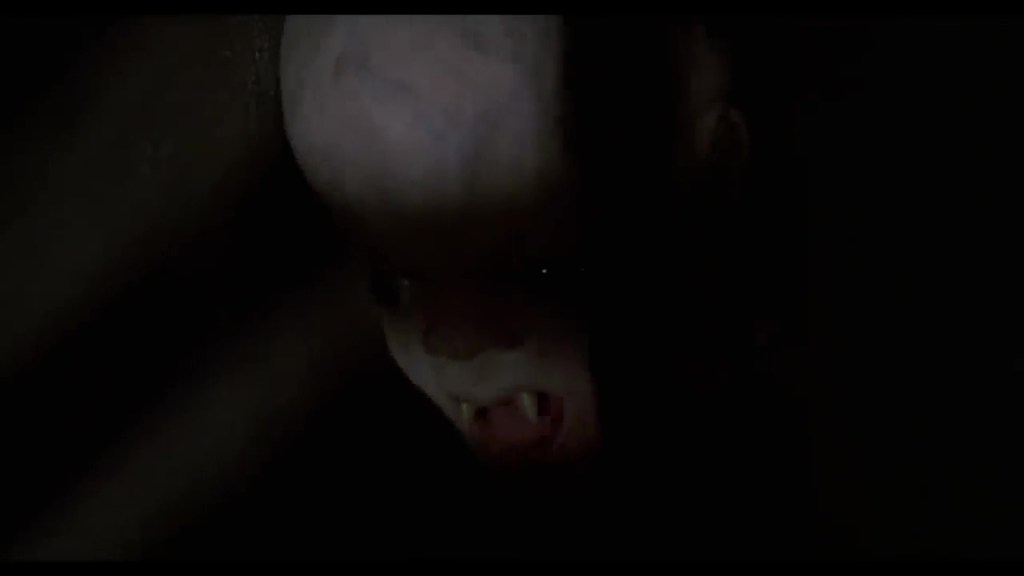
Children as cannibals seems to be the fashion, with fans of Timothée Chalamet waiting impatiently for the new cannibal romance movie Bones and All due towards the end of 2022 (maybe). Chalamet teams up with Taylor Russell, who plays a girl that has been a cannibal since she grew her first teeth. Yeah, I read the book, but no spoilers here. A couple of weeks ago, we looked at the movie It’s Alive, which featured a man- (and woman-) eating newborn baby. Combine that hungry little fella with the cannibal kids in The Girl With All the Gifts and some baffled doctors in Rosemary’s Baby or The Exorcist or The Omen and we get this little boy named David (Luke David Blumm from The Sinner), who is a sweet little boy, except that he kills and eats people.

His mother, Laura (Andi Matichak from Halloween) kicks off the movie as she escapes from a religious cult, hugely pregnant, and gives birth in her car as a King Lear level storm rages outside. Yes, there be some devil work afoot – those demons love a young virgin. Or is she escaping extreme sexual abuse? Or is she chronically delusional?

Eight years later, Laura and David are a happy, well-adjusted family of two, until one night she goes into David’s room and there are a whole bunch of people standing around his bed, which she is not happy about – has the cult come back for David? He seems OK, though, with the normal hopes and dreams of an eight-year-old boy.

The cops think she’s crazy, except for Paul (Emile Hirsch from Into The Wild) who seems to have no police work to do other than sympathise with Laura. David starts having seizures, skin irruptions and internal bleeding, which the doctors are baffled by, as they normally are in this genre. Some of them seem to be in cahoots with the cult members who want not Laura, but David. The cult’s slogan is “HE IS COMING”. It turns up, written in blood, all over the place.

There is only one thing that makes David feel better – a nice dose of human body parts. Not a cure exactly, but it seems to clear up the crusty sores and vomiting of blood very nicely. Laura escapes the hospital with David when she figures the doctors are all involved in the cult, and flees to the home of her friend Susan. She leaves David with Susan while she gets a few essentials from home, but when she comes back, David is feeling much better, and Susan much worse. Yes, some fresh human flesh is a great aid to healing, apparently.

And so it goes. Laura washes David down in the shower and subsequently listens to his entreaties (“It hurts, mom!”) and his threats (“Get me some fuckin’ food, you bitch!”).

But eventually, she does what any good mother would do when faced with a hungry child – she finds him some food. But not just, you know, anyone; like Hannibal who prefers to eat rude people, or Sheila from Santa Clarita Diet who wants to eat “someone bad, who deserves it… the prototype would be a young, single Hitler”, Laura sees a very nasty pimp beating up one of his girls, and decides to invite him around for dinner.

Of course, one of the worst parts of being a parent is cleaning up after dinner.

So it’s a cannibal mystery. Laura is really named Anna and, according to the newspapers of the time, she was repeatedly raped by her father and a whole lot of men to whom he sold her from the age of ten. A paedophile cult!

If you can’t accuse someone of being a cannibal, call them a paedophile. But her childhood friend, who admittedly is now a hopeless junkie, tells her that in reality her father didn’t touch her; she was sacred.

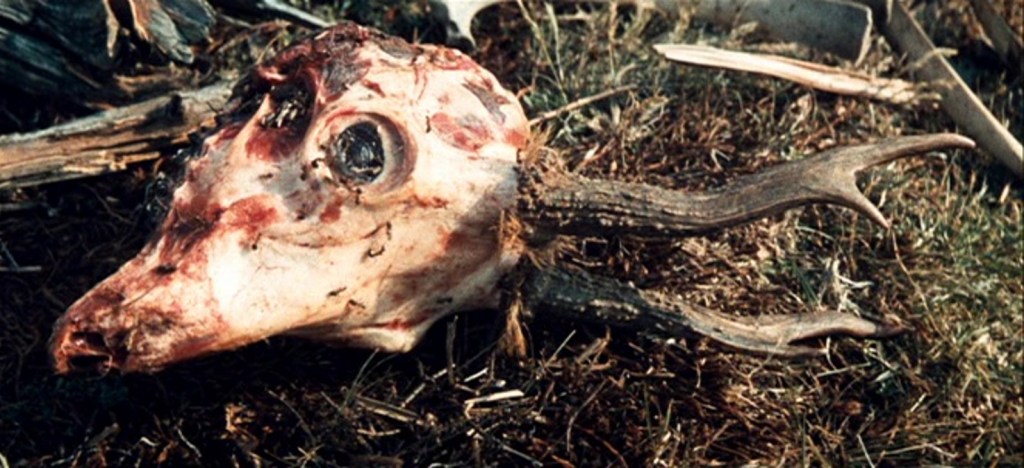
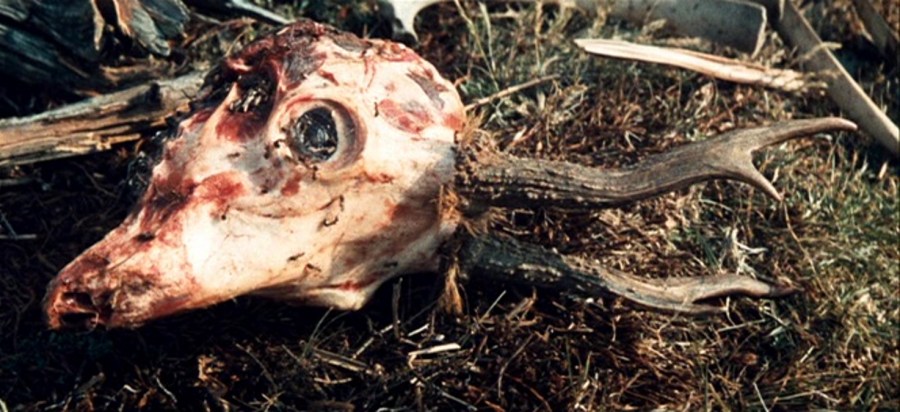
The cult would torture and kill animals in her bedroom then force her to chant a spell to summon a demon named Palystes (fun fact, that is not the name of a demon but of a spider) who would rape her and, yep, get her with child. Rosemary’s Baby and The Omen for a new century, a new, improved version, now with cannibalism. Her shrink (retired) tells the police, who are interested in talking to her about the hollowed out friend Susan, that she is psychotic and imagined the whole cult thing. The cops, even Paul who’s really into her, decide she is having a psychotic episode and is the one killing and dismembering people.
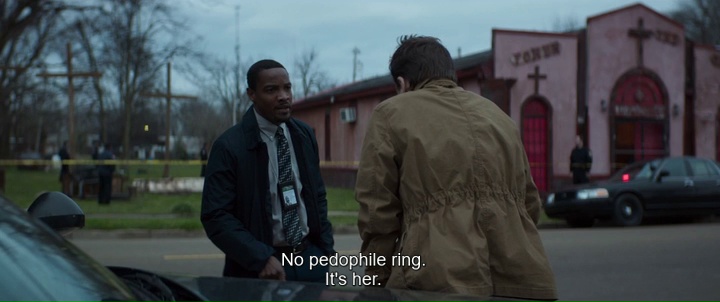
Well, it’s a new movie and you might want to catch it, so no spoilers (although so many reviewers say the ending is obvious). The directing by Irish filmmaker Ivan Kavanagh is sure footed, the Irish certainly know their way around devils and the children of supernatural beings. The actors are great, particularly Andi Matichak as Laura and Luke David Blumm as the junior cannibal, the plot rolls along well and if the continuity is a bit jumpy, well, that’s part of the psychotic story arc. For those who like that sort of thing, there is a LOT of gore, and having a cute little boy doing the killing and eating is a nice touch. Although why no one believes a little boy could be a cannibal killer baffles me. I was a little boy once, and I wouldn’t put anything past the kids I knew.
Son scored a respectable 76% “fresh” on Rotten Tomatoes, with the Los Angeles Times calling it “an amped-up version of everyday parental paranoia” and the San Jose Mercury News saying “it’s engrossing and well-made, but you’ll need a strong stomach to get through it”.

Son asks some interesting questions about trauma, believing victims but also questioning false memories, fear of the past and vengeance. It also reminded me of people who are shocked at cannibalism movies, but even more shocked at vegans who, they complain, are neglecting their children by not feeding them meat. David has no such problems in this movie. As Hannibal would say, “nothing here is vegetarian”.

“Reports of widespread cannibalism” – NO BLADE OF GRASS (Cornell Wilde, 1970)

Cities are locked down, citizens are trying to escape from a deadly virus, food is rationed, rumours abound of dark government plots to kill off sections of the population. No, it’s not a COVID-19 movie but a speculative fiction film from over fifty years ago. From the trailer (above):

“Mankind destroyed what made most of the world liveable. Nature – wounded, diseased, and enraged – took revenge on her murderers. She cut off their food supply, and then waited, while they consumed each other.”

Yes, it’s a cannibal film based on a cannibal book, and its premise is the human war against nature, the way victory inevitably turns into defeat, and then perhaps extinction. The book it was based on, The Death of Grass by John Christopher, came out in 1956, which makes it quite prescient, and a bit of a shame more people didn’t read it back then, when carbon dioxide levels were 314 parts per million, compared to today’s 422ppm. Here’s a quote from that book:

“…he could no longer believe that there would be any last-minute reprieve for mankind. First China, and then the rest of Asia, and now Europe. The others would fall in their turn, incredulous, it might be, to the end. Nature was wiping a cloth across the slate of human history, leaving it empty for the pathetic scrawls of those few who, here and there over the face of the globe, would survive.”

Those who did take it seriously were film-makers like Ray Milland, who made Panic in Year Zero! in 1962 with a very similar plot, and this one, No Blade of Grass, an adaptation of Christopher’s book made by the acclaimed American actor turned director Cornell Wilde, whose 1965 film The Naked Prey was in many ways a forerunner of the Italian “Cannibal Boom” films of the 1970s and 1980s.

The film, set in the UK, starts with scenes of environmental destruction, as did its more famous American rival Soylent Green three years later. Soylent Green specifically nominated global warming as the cause of the collapse of the food system, due to the human population peaking in a way Thomas Malthus might have found terrifying.

In No Blade of Grass, it’s a virus sweeping the globe (right up to date, again); this one is killing all the grasses, including wheat, oats, barley, rye and rice, the food staples, without which the human species (and many other animals) will starve. We’re already getting a taste of this, as discussed in last week’s blog, with the blockade of Ukraine, the grains from which make up a majority of the food supplies for some of the poorer countries.

Of course, that is ‘over there’ and while we can feel sorry for the starving masses, we also have remote controls so we can turn off the sad news and enjoy our dinners. Just so, in this film we get unsubtle examples of starving children, interposed with rich, entitled, white British folks scoffing their roast beef and looking superior as they hear the news from overseas where, we are told, 600 million people have died of starvation, and the Chinese government is using nerve gas to kill 300 million of their own citizens to keep the state from total anarchy. The news continues:

“In the countries which no longer have any form of government, there are reports of widespread cannibalism.”

But even the comfortably bourgeois patriarch John Custance (Nigel Davenport) is making plans, in his light-hearted, Pythonesque way, to take his family up to visit his brother in the country. Do come along, old boy, he tells his daughter’s boyfriend, a scientist who has insider knowledge of what’s going to happen, because:

Anarchy breaks out in London and major cities. Fighting their way out of London, John and his family adopt the savagery of the collapsing society, robbing and killing those who stand in their way.

The car is stopped and John is knocked unconscious, while his wife (Jean Wallace, Cornel Wilde’s wife and frequent collaborator) and daughter (Lynne Frederick, later to be the last of the many wives of Peter Sellers) are raped. This rape scene, not the famine and cannibalism, turned out to be the controversial part of the movie, since Lynne Frederick was only 15 at the time. Nevertheless, Michael never loses his eyepatch or his cool or his alpha masculinity, while the women mostly do what they are told, and their hair remains perfectly coiffed.

A short-wave radio news bulletin reports:

“All the evidence indicates that France, Germany, Italy, in fact all of Western Europe along with a major part of Asia, South America and Africa have ceased to exist as part of the civilised world. In the midst of complete anarchy, and mass starvation, the horrors of cannibalism are already widespread.”

Only America and Canada are left, in the words of the US President, to “survive and preserve… the heritage of man’s greatness.”

When they finally arrive at John’s brother’s farm after a battle with a bikie gang that seems to owe more to the early Western than to science fiction, they have collected a whole lot of salt-of-the-earth farmers, whom the brother is not pleased to see, as he doesn’t want to feed them. The final showdown is therefore a modern iteration of Cain and Abel – the battle of the brothers.

The really odd thing about this cannibal film is that, while we witness the descent of civilised British gentlefolk into savagery, we never see any actual cannibalism. We hear a lot about it occurring in other countries, and speculation about it being about to happen at home, but the British seem to find each other particularly unappetising.

Cornell Wilde was an activist director, intent on convincing his audiences that the world was going pear-shaped in a hurry, and he was not big on subtlety. Unfortunately, the audience expects not just social commentary but also entertainment, and despite a lot of shooting and explosions and murders and rapes, the film suffered from some wooden dialogue and irritating flash-forwards which extinguished any suspense. The film received a desultory score of just 40% on Rotten Tomatoes.

No Blade of Grass is over fifty years old, which doesn’t excuse but partly explains the overt sexism, classism and racism that it addresses while also often seeming to endorse. Yet the film’s environmental theme is even more current today than it was on its release fifty years ago. Pollution is killing off agriculture, the water is contaminated and unfit for drinking, animals are dying out everywhere. The two little boys in the car even mention global warming, years before most of us had heard of it.

When COVID hit in 2020, people queued for food and water and guns and (most urgently) toilet paper, and there was much talk of famine, the breakdown of social order and, inevitably, the rise of cannibalism, just as we see in this film (although being British, they never discuss or seemingly require toilet paper). With no grains and no domesticated animals, people naturally turn to the only available meat, that which grows on the ape called Homo sapiens. But fifty years on, we don’t seem to have learnt anything from such speculations.

The film ends with a narrator announcing:

“This motion picture is not a documentary; but it could be.”

Indeed.

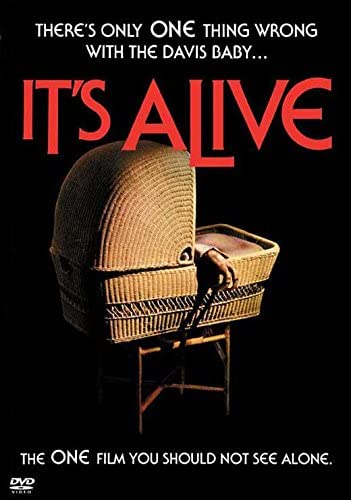
Cannibal baby: “IT’S ALIVE” (Larry Cohen, 1974)

It’s Alive is a 1974 American horror film written, produced, and directed by Larry Cohen. There are lots of movies about kids that grow up bad (e.g. The Omen) or get taken over by something bad (e.g. The Exorcist) but Cohen had the revolutionary idea to make a film about a newborn baby who was bad from birth. Straight from the womb to the killing fields.

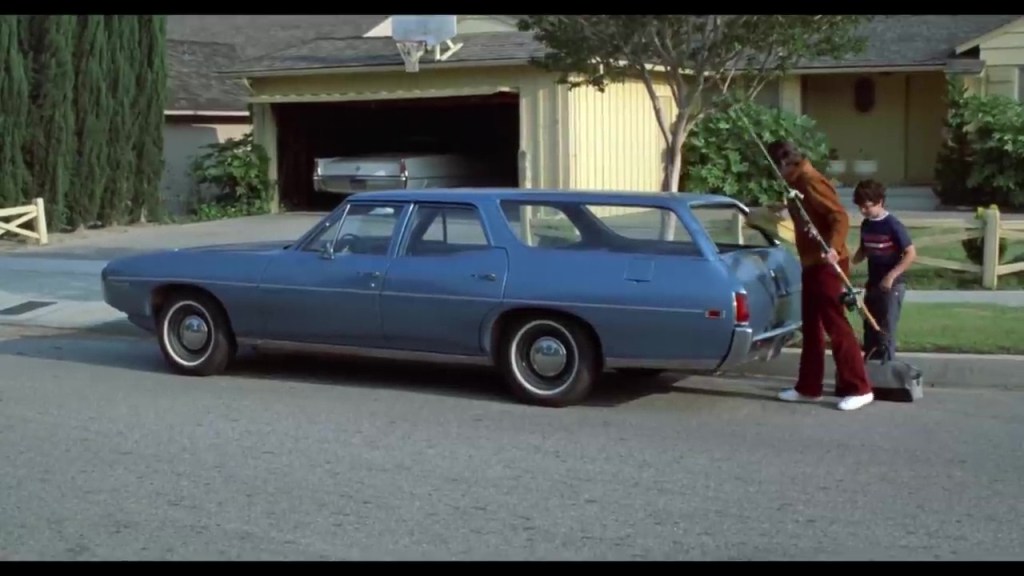
Every expectant parent’s greatest nightmare is that something will be wrong with their child. This baby’s parents are Frank (John P. Ryan from Runaway Train) and Lenore (Sharon Farrell). They have an older child, Chris, totally normal, initiated into the symbolic order, happy to get involved in fishing and other blood sports when the parents head off for labour.

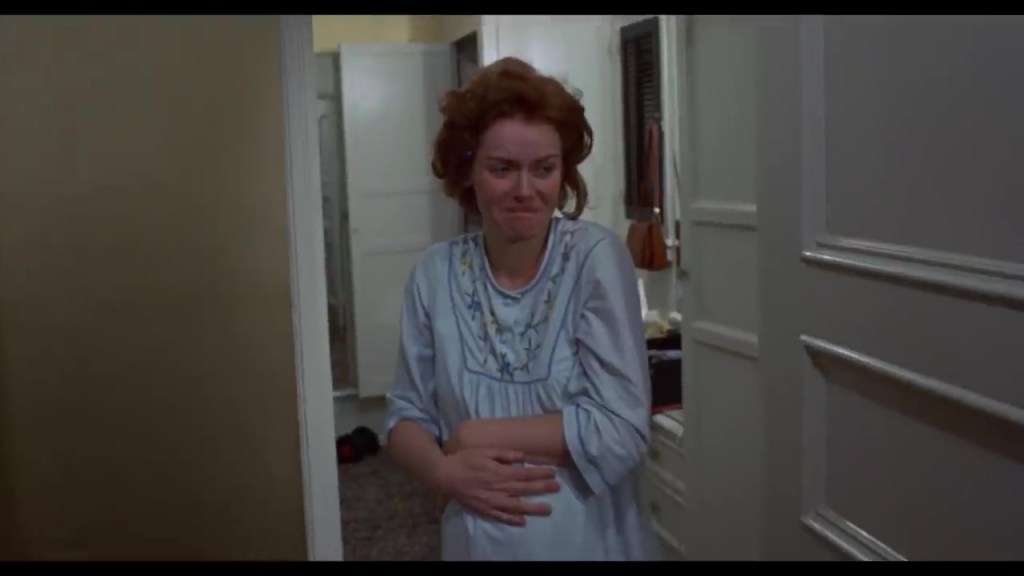
Chris is several years older, because Lenore has been on contraceptives for several years. Yes, there is a message there, but it remains a little muddy as she tells her husband, several times, that things “just don’t feel right.”

In the waiting room for fathers (this is the 1970s), they talk about pollution, toxins in the atmosphere that have led to monster cockroaches. Now the message is starting to get through.

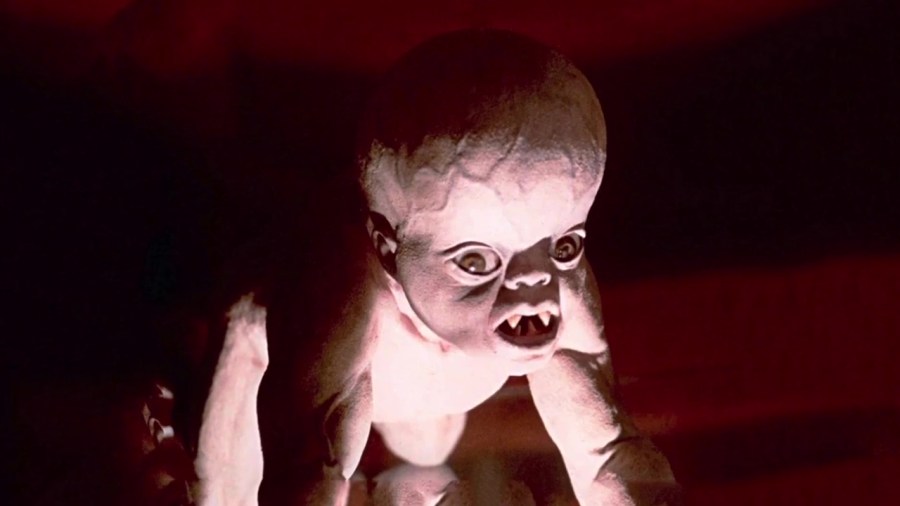
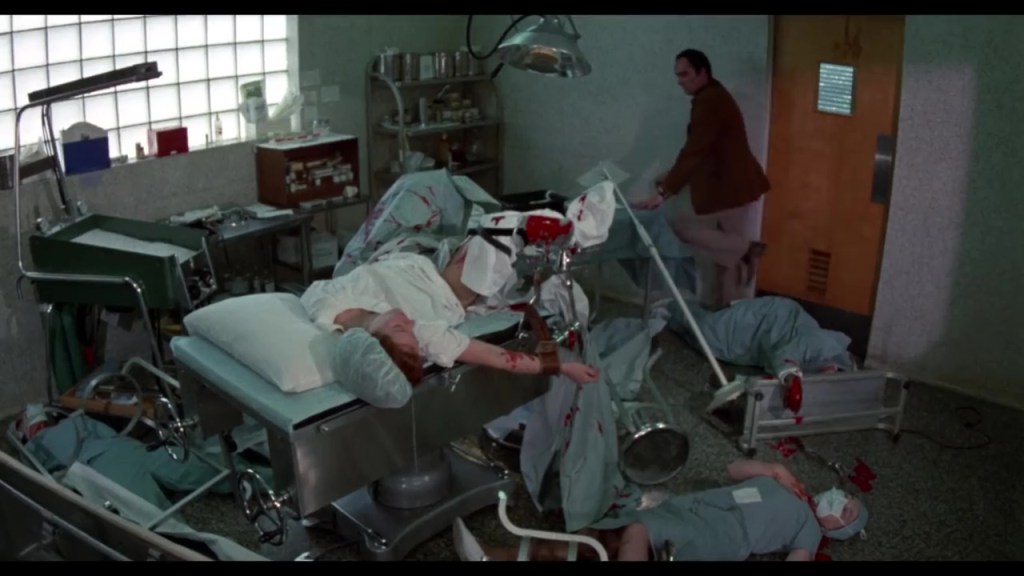
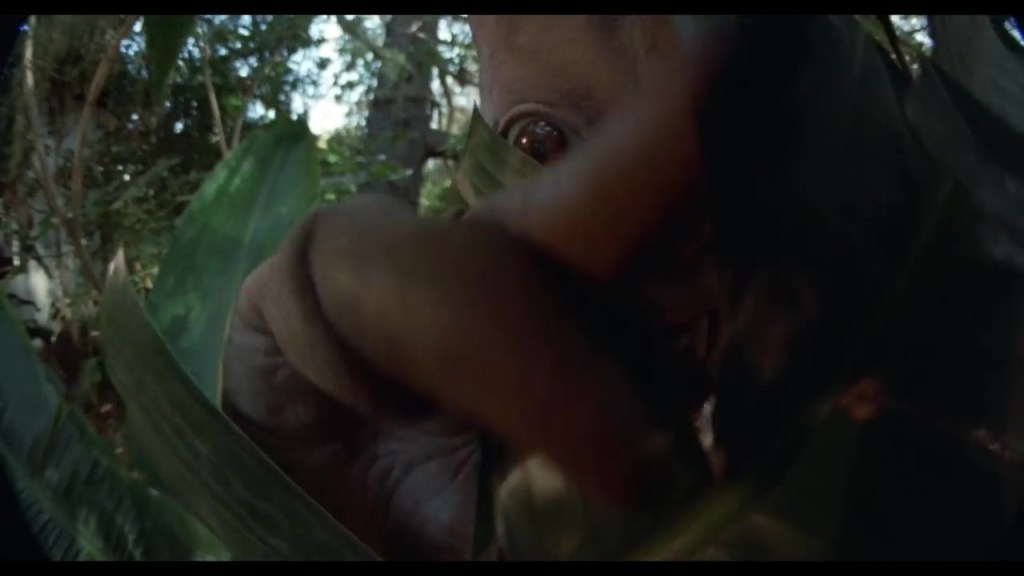
The birth does not go quite as planned, in fact all the doctors and nurses get massacred by, yep, the baby, who has the advantage of sharp fangs and claws. Cohen said he got the idea for the movie watching very young babies and noticing how angry and frustrated they seem. Well, we’ve heard of babies being brought into the world kicking and screaming, but this bub is next level. There are interesting scenes shot from the baby’s point of view, intelligently positing that newborns do not have perfect ocular control yet.

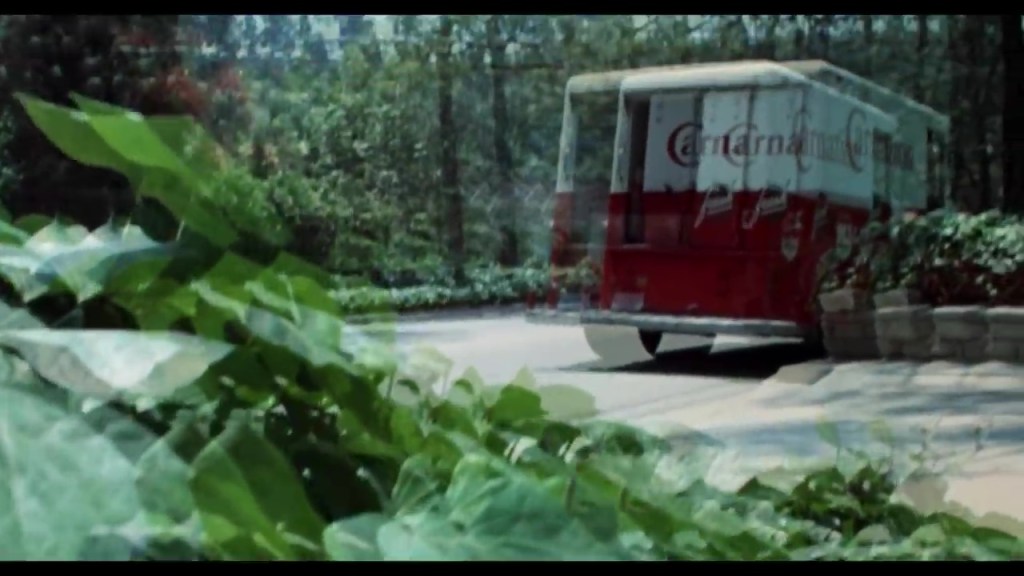
The baby heads off to do what babies do – disrupt sleep patterns, but also to slaughter people, including, comically, a milkman, leading to a flood of blood and milk (another subtle birth reference).

The film shows the baby only very briefly and in fleeting glimpses, instead concentrating on the parents, their guilt over birthing a monster, and their conflict over whether to love him or destroy him.

The title of the film, IT’S ALIVE, is of course a sly wink to James Whale’s classic 1931 monster movie Frankenstein. The father, Frank, tells a doctor that, when he was a kid, he always thought “Frankenstein” was the name of the monster, not the man who created it. In fact, the monster (Boris Karloff) had no name, while “Frankenstein” was the name of the doctor who put him together from spare body parts and brought him to life, famously shouting “it’s alive!” when his experiment worked.

Like a newborn, the monster is innocent and compliant until frightened, after which he attacks, not knowing his own strength, and from then on everyone wants to kill him.

There’s lots of messages in this film, but the main two are the same as Frankenstein: science gone mad and irresponsibility of the ‘parent’. The pharmaceutical corporation that made Lenore’s contraceptive pill and her subsequent fertility treatment contacts her doctor – their meds may have caused the deformity, and they want the baby killed, to hide their legal liability.

Is this a swipe at contraception, interfering with nature, or just the usual condemnation of Big Pharma and insufficient testing? Hard to say. Then there is modern science, surrounding a newborn fresh from the womb with terrifying bright lights and sharp instruments. There is Frank, the father, who cannot accept his child’s variation from the standard model of a baby– helpless, innocent, unlikely to kill people.

He sets off with a gun to help the cops hunt and kill the child, while Lenore bitterly assails him, claiming that the poor little fella is just scared. Their conflict, and Frank’s guilt, are brilliantly acted and help turn what could have been a very silly B-movie into something quite special.

As for the baby, he’s scared and misses his parents, and probably hungry too, because he seems to have a lot of human body parts in his mouth most of the time. Or maybe he’s just teething.

Sigmund Freud described the primal drives which we repress in order to enter the symbolic order of civilised, patriarchal society, and these drives come back as the “return of the repressed”. A lot of horror can be boiled down to our vicarious reliving of the return of our repressions, and often are expressed through our sympathy with the monster. Frankenstein’s monster, like the baby in this film, is a frightened ‘newborn’, seeking unconditional love from his creators, but in vain. Freud described an “oral-sadistic” or “cannibalistic” phase of infancy, in which the child seeks to own the mother’s breast by biting and swallowing, and is conversely terrified of being eaten by the far more powerful parents. This is the earliest stage of orality, and Freud might have been delighted to see this cannibalistic phase come to life in the movies (although he treated the new technology with some scorn). Freud suggested in “Three Essays on Sexuality” that “pregenital” forms of sexual organisation in very young children could be “harking back to early animal forms of life.”

This baby takes the oral-sadistic to extremes and, with his strength and speed as well as his fangs and claws, he might just be superhuman, the prototype of the next stage of human evolution, like the mutant X-Men, who are also misunderstood and condemned. That is, if his dad and the cops don’t kill him first. But let’s not forget that we all have a savage, cannibalistic baby buried in our unconscious. This is why we’re scared of small things – mice, grasshoppers, cockroaches. And Cohen’s genius was to take the smallest, most innocent being we know, a tiny baby, and make him the monster from our id.

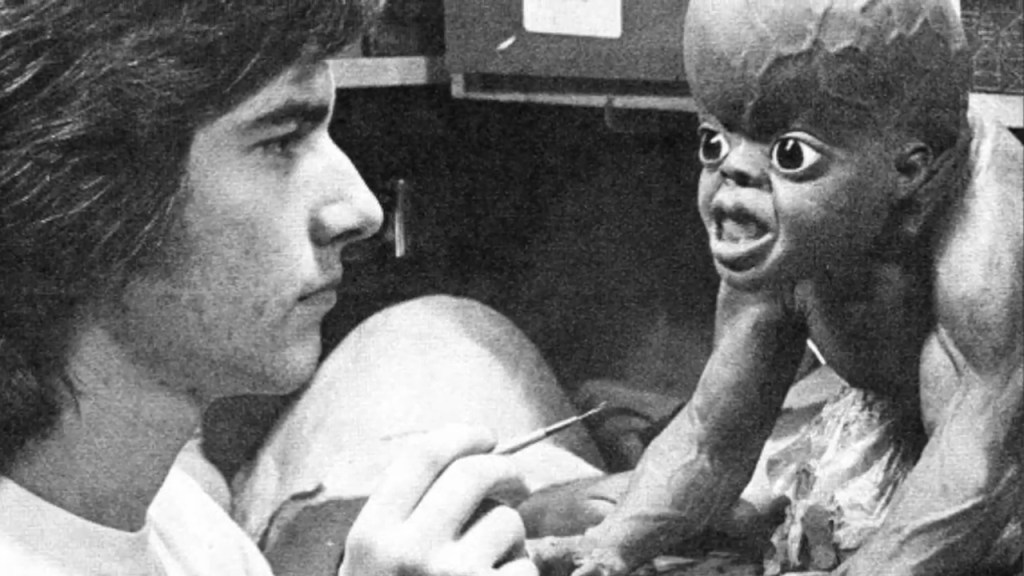
Make-up artist Rick Baker designed and created the murderous baby. This is saying a lot – Rick Baker won seven (count them – 7!) Academy Awards for his work on films including An American Werewolf in London (the first time the Academy had given an award for makeup), Harry and the Hendersons, The Nutty Professor and Men in Black, and was nominated for another four. Before any of that happened, he was working with Dick Smith on the special effects for The Exorcist when he got a call from Larry Cohen asking him to make a killer baby suit that could be worn by, perhaps, Cohen’s cat or a chicken or two.

Baker constructed a model of the baby based on Cohen’s drawings – the model had articulated limbs and moveable eyeballs. But he also made a full size mask, gloves and a partial body suit, which he somehow managed to persuade his girlfriend Elaine Parkyn, later his wife, to wear in the action scenes. However, the idea of a homicidal baby wandering the streets could prove a little risible, so Cohen makes sure in this film to keep us guessing, with just the occasional quick peek, often in dim lights. It is quite effective.

Besides the amazing Rick Baker monster model, the film boasts the music of the brilliant Bernard Hermann, also an Oscar winner, who wrote the score for Citizen Kane as well as several Hitchcock films, including the iconic theme from Psycho.

The film scored a very respectable 70% on Rotten Tomatoes. Slant Magazine called it “one of the finest American horror films of the last 30 years”, while Lessons of Darkness said it’s

A deeply terrifying portrait of child-parent relationships and intolerant fears of “otherness” defined as much by its sociological sharpness as its gore.

 The film ends with a cop getting a message on his radio that:

“Another one was born in Seattle.”

Yes, there are sequels: It’s Alive 2: It Lives Again in 1978 and It’s Alive 3: Island of the Alive in 1987. We’ll get to them, eventually. There was a remake in 2009 which was widely panned, and described by Larry Cohen as “beyond awful”. He advised anybody who liked his film to cross the street and avoid seeing the new one.

This original version, though, is from back in 1974, as America lost its innocence and its President, and kids were growing their hair, smoking pot and protesting, and telling their parents “don’t criticise what you don’t understand.” Larry Cohen commented that parents at that time felt like they had a stranger in their house, and one father actually shot his son because he thought he was a monster. The movie captures this generation war – the fears of the old and anger and fears of the kids.

It’s a corker, and it became a cult classic.

The first splatter film: BLOOD FEAST (Lewis 1963)

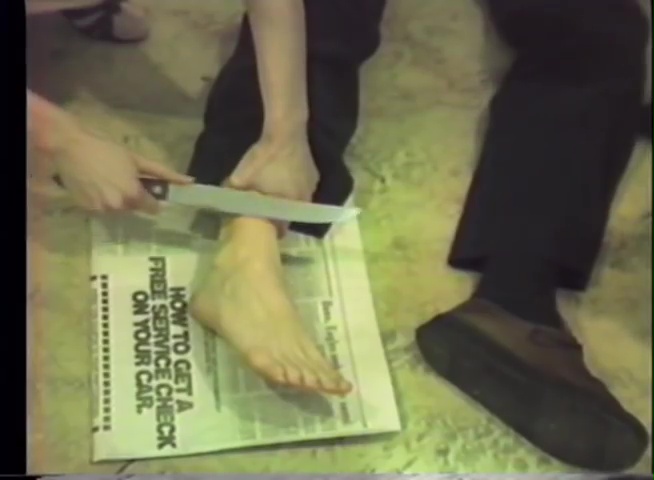
Blood Feast is a very early American horror film, made way back in 1963. It was composed, shot and directed by Herschell Gordon Lewis, and is considered the first “splatter” film, a sub-genre of horror noted for its graphic depictions of on-screen gore. The plot focuses on a food caterer named Fuad Ramses (Mal Arnold) who kills women so that he can include their body parts in his meals, which are ritual sacrifices to resurrect the Egyptian goddess Ishtar (fun fact, Ishtar was actually a Babylonian goddess).

The preview (at the top) advises that the picture

“contains scenes which under no circumstances should be viewed by anyone with a heart condition or anyone who is easily upset. We urgently recommend that if you are such a person, or the parent of a young or impressionable child now in attendance, that you and the child leave the auditorium for the next ninety seconds.”

Well, “leave the auditorium for the next sixty-seven minutes” might have been better advice, but hey, Blood Feast was highly successful, grossing four million dollars against its tiny $24,500 budget, despite receiving terrible reviews calling it amateurish and vulgar. Blood Feast was part of a trilogy, comprising Two Thousand Maniacs! In 1964 and Color Me Blood Red in 1965, although these were not strictly cannibal films.

Lewis had seen Alfred Hitchcock’s Psycho and felt that it cheated (in the shower scene) by showing blood going down the drain but not the actual murder, and he set out to make up that shortcoming, with buckets of gore and actual body parts (e.g. a sheep’s tongue was imported from Tampa Bay for the scene where Ramses cuts out a woman’s tongue).

He also, like Hitchcock, had some gimmicks to promote the film, giving the audience “vomit bags” and taking out an injunction against the film in Sarasota, Florida, purely for the publicity. The film was banned in the UK as a “video nasty” and not released in full for over forty years, which just added to its notoriety.

Blood Feast was followed by a “tribute” movie, Blood Diner, in 1987, although this was written as a comedy and ended up not directly related to the story of Blood Feast. A belated sequel, Blood Feast 2: All U Can Eat, was released in 2002.

The plot is paper thin – Ramses is a wild-eyed killer who chops up several young women, described in the poster as “nubile”, supported by cleavage close-ups wedged into the scenery wherever vaguely possible.

He takes body parts from these “nubile young girl victims”, such as legs, tongues, hearts and brains. These he boils in a cauldron (except for a leg which, for some reason, gets baked in an oven), from which he will prepare the offering that will allow the rebirth of the goddess.

The cop on his trail is played by William Kerwin who had a long and illustrious career in film, TV and on stage, despite being in this movie. The cops are clueless for most of the film because apparently weird guys shuffling around with machetes don’t attract much notice in Miami Beach. The murderer conveniently is asked to cater a dinner for a wealthy socialite’s daughter, who will be his final victim, and who is conveniently in love with the cop in charge, with whom she conveniently goes to lectures on ancient Egyptian religious rituals. Oh dear.

The cop sums up the evidence:

“Lust, murder, food for an ancient goddess who received life through the perverted death of others.”

I suppose there are some ethical issues raised, like how come humans can cut out the tongue of a sheep for an appallingly awful movie, but a goddess can’t have a few nubile girls for her resurrection? But such issues, if raised, are raised purely accidentally.

The film managed to achieve 38% on Rotten Tomatoes which, considering the perhaps deliberate awfulness, is not too bad a score. It does not try to be Hitchcock – there is little to no suspense, or even plot, and the music and acting are far closer to pantomime than horror. Each murder is clearly signalled to the audience, with women getting into baths, smooching boyfriends, moving into motel rooms, each accompanied by ominous strings and a snare drum.

The violence is gratuitous, particularly a scene where he whips a girl to death to collect her blood, and the gore is gloriously overdone, as if satirising its tribute to the restrained murder scene in Psycho (which of course had a far more powerful audience affect). The dialogue wanders in a thin band between wooden and absurd, such as these exchanges:

“Well, the killer must have thought she was dead.”
It’s a miracle she wasn’t.”
Well, she is now.”

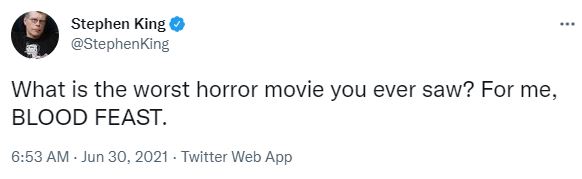
The Los Angeles Times called it “grisly, boring movie trash” and “a blot on the American film industry.” Stephen King tweeted last year:

Variety called the film:

“an insult even to the most puerile and salacious of audiences.”

Yes it was, and they ate it up.

“I like to watch them”: EYE WITHOUT A FACE (Ramin Niami, 2021)

Has there ever been an era when people were more connected and yet more alone? A person I know (no names – you know who you are) subscribes to social media posts but never, ever posts or comments. The ultimate loner, though, is the geek sitting in a darkened room and relating to people on his screen, people who don’t even know he exists.

That is the plot of this quirky movie, which brings Hitchcock’s Rear Window into the twenty-first century. In that film, Jimmy Stewart played a photographer who is confined to his apartment in Manhattan with a broken leg. He watches his neighbours, without their knowledge, even giving them nick-names. A harmless hobby, until it isn’t – one of his neighbours seems to have murdered his wife.

In EYE WITHOUT A FACE, it’s not just a guy with binoculars and a zoom lens. That little hole on the top of your laptop screen? Yeah, it’s a webcam, and it comes on when you Zoom or Skype. What does it do the rest of the time?

Well, the nightmare scenario is that it can be hacked and used to see what is going on in your home, WITHOUT YOUR KNOWLEDGE. Is it true? I’m a blogger, not a hacker, so I can’t say for sure, but I know a couple of programmers who have band-aids over their laptop cameras. So there’s that. Also this article.

Anyway, for the sake of enjoying this movie, assume that it’s not only possible but common. You’re going to get the band-aids now? It’s OK – I’ll wait.

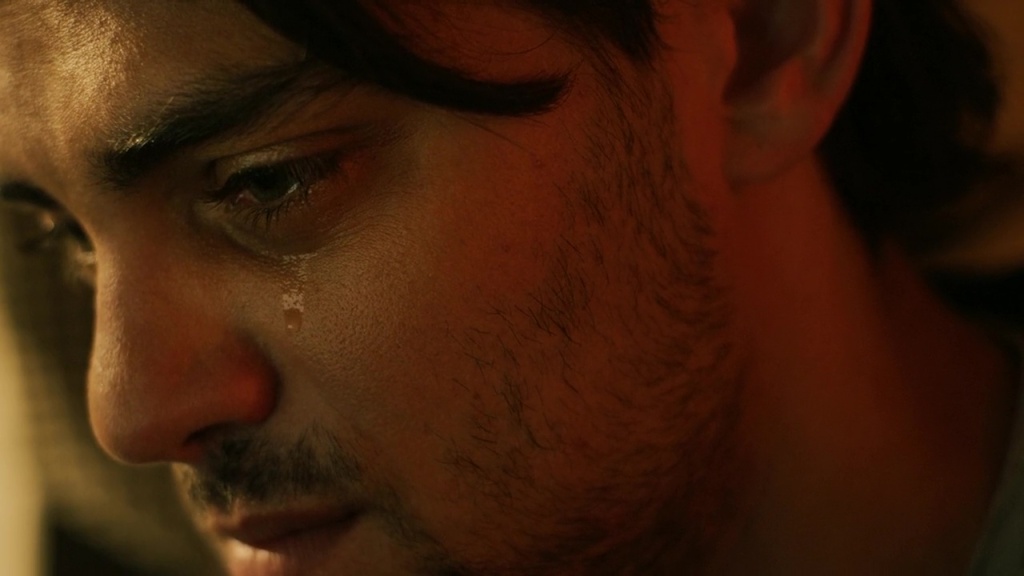
The protagonist (he’s no hero) is Henry (Dakota Shapiro – who, IMDB tells me, comes from Byron Bay!), a hacker, a stalker or perhaps more accurately a voyeur as he likes to watch. Henry wouldn’t have even noticed COVID lockdowns as he almost never leaves his home except to walk the dark, melancholy streets of LA, thinking about his angry, spiteful father, a man he sees in a devil mask.

Henry sees himself as the “guardian angel” of the women whose cameras he has hacked. And yes, not coincidentally, all those over whom he watches are good looking young women, and he chats with them. For the first few minutes of the film, it looks like a dialogue, a Zoom call in which he wishes them a polite good morning and comments on whatever they are doing, but we quickly realise that they don’t answer – they don’t know Henry is watching. They don’t even know he exists. They are so close, yet totally unattainable to a shy introvert like him.

Henry’s flatmate is, Eric (Luke Cook, another Aussie, who played Lucifer in Sabrina) and he is almost Henry’s opposite – more interested in putting his own selfies and vodcasts on the web than seeing what anyone else is up to. He meets women on line, but doesn’t remember their names after one-night stands. Henry reaches for his monitor to stroke their hair, Eric wants to seduce them.

Eric warns Henry that he is staring into the abyss, and if you do that too long, as Nietzsche said:

What does Eric, the struggling Australian actor in LA, mean by quoting Nietzsche? Well, he does do a lot of drugs, but there’s still a point to his warning. Nietzsche is perhaps best known for stating that

“God is dead… and we have killed him… Must we ourselves not become gods simply to appear worthy of it?”

Nietzsche was warning that a world without supernatural judgement could easily descend into nihilism, a feeling of alienation and hopelessness, an abyss that has no meaning or purpose. Darwin had disproved the superstitions about humans being somehow higher than animals, leaving us as just smart apes, and Nietzsche urged a further evolutionary leap: to become the Übermensch, the super-man who will rise above the mob. We need to become gods, or at least angels. Hannibal Lecter has a bit to say on the subject.

But Henry is no god, nor is he, as he thinks, a guardian angel. He stares into the abyss of the empty, depressing lives of the women who unknowingly show him their own forms of despair – one is a singer whose partner sees her purely as sexual relief, another sells tawdry on-line sexual fantasies, another seems to be killing people to make head-soup. He has the eye of a god, his computer and their webcam, but none of the powers. The abyss of their lives and deaths is what Eric is trying to warn him about. It’s a world of alienation and superficial relationships involving intimacy, often remotely, but without love. He laughs and cries at their antics and their awful boyfriends, as if he is watching a series of soap operas. Perhaps he is. The abyss is gazing into him, and seeing only death and darkness.

Eric is intrigued by Henry’s hack and wants to meet these women. Henry swears him to secrecy, so of course we know this is not going to end well.

One of the women Henry watches, Tessa (Ashley Elyse Rogers) does webcam porn – men pay her to fantasise oral sex – with a strawberry or a peach standing in for their cocks. Eric finds her on Instagram and brings her home to meet Henry, who freaks out.

Eric hasn’t mentioned the webcam; he’s told her that Henry is an Instagram follower. But later, Henry calls her on her paid sex-line, hoping just to chat, and this time she freaks out when she realises he knows where she lives. Hanging up the sex line, he watches her on her hacked webcam as, terrified, she loads a gun and puts it under her pillow.

Henry only leaves the house at night when he goes for his creepy walks, clad in hoodie and avoiding eye contact. But on his return that night, he catches Eric watching “his” women. Upset, he turns the screen to Laura (Vlada Verevko, who, fun fact, was in the movie Hacker). Laura seems to have a lot of different boyfriends – she gives them a drink and then takes them up to her room, but Henry never sees them coming down again. This night she puts what looks like a human heart in a bowl in her fridge, then he sees her dragging what looks like a body bag out of the apartment.

Next day, Laura is cooking dinner for friends – kale pache, literally “head and hooves”. It’s usually from a sheep, but whose head is it this time? Is Laura a cannibal serial killer?

The following morning, Henry and Eric watch her prepare a drink for a young man, and are convinced he is going to be drugged and become her next victim.

Henry texts 9-1-1 (apparently you can) and the cops bust in and find – ginseng. But now she knows she’s being watched and she puts tape over her webcam, but not before promising to find Henry and turn him into dog-food. The rest of the film is the chase, with a twist – you’re going to have to watch it to see the denouement.

What is this parable really about? Henry thinks he is a “guardian angel”, yet he does nothing to assist any of the women with their issues – abusive men, drink, failure or sex. He just watches. The theme here is theodicy – a term invented by Gottfried Leibniz in 1710 when attempting to explain why an all-powerful, loving god would allow evil and suffering. It’s one of the favourite questions of believers, particularly when something terrible happens to them. A common view, particularly in Christianity, is that humans are sinners and evil arises from our failure to repent. It points to a time when evil will be abolished by the coming (or second coming) of a messiah, who bears and cleans away our sins. Henry as Isaiah’s suffering servant?

A variant of this discourse says that God gave humans free will, and although he hates to see us suffer, he can only watch, because intervening would revoke that free will and leave us just puppets. This view sees God weeping in the death camps together with his people.

Then there is the devil, whom Henry identifies as his violent father who brought him up with threats and fists. Henry wishes he could save his “friends” from this avenging, fallen angel who seems to stalk them. Then as he watches, someone starts slitting the throats of the women he has been watching.

Henry think he is the silent, suffering, guardian angel. He sees the women invite toxic masculinity into their lives and begs them (from behind his screen where he can’t be heard) to cease their wicked ways, but he “grants” them free will and does not intervene. Plato said that evil exists because of human “intimate indolence” – we can’t be bothered to combat it. Henry doesn’t try to intervene.

Until he does. Once Laura, the eater of heads, knows he is watching, it’s time for the final judgement, the battle between good and evil.

Is Laura killing and eating people? Is Henry’s dad really dead and gone? Why does Henry keep lathering up and wielding his father’s razor, yet still has a week-old stubble in the next scene?

Don’t miss it. It’s one of those films where nothing much happens for most of it, yet I found it impossible to turn away. The direction, the photography, the acting and the music are superb. It’s not a gorefest, nor is there (much) cannibalism involved, but the unravelling of the story is fascinating, and the idea that we are being watched, by a god, a devil or a hacker, makes for a fascinating story that stays in the mind afterwards, raising all sorts of metaphysical issues, including: why is it OK to eat sheep, but not their heads and hooves? Why is it OK to eat sheep, but not humans? And who is watching and judging us, anyway?

“Do you want to eat me?” TEAR ME APART (Alex Lightman, 2015)

This is an English film, unlike most of the reviews in this blog, which overwhelmingly come from the USA or, if we are thinking real video nasties, Italy. It falls into the delightful genre of dystopian cannibalism films, in which some disaster, often unnamed, has stripped the thin veneer of civilisation from the survivors and left them with one option to survive – human flesh. There are lots of films in the survivor genre – The Time Machine is a classic, set thousands of years in the future, but most are set in the very near future or even an alternative present – think Soylent Green (set in 2022), 28 Days Later or Delicatessen.

The closest to Tear Me Apart, though, is the chilling 2009 film version of Cormac McCarthy’s The Road, in which an unnamed man and boy travel through a world stripped of all animals and plants except for a few humans, most of whom have become cannibals to survive. Will they maintain their anthropocentric belief in the sacredness of human life and flesh?

In this film, it’s two brothers, also unnamed, the younger as naïve and clueless as the little boy in The Road. But it’s also a coming-of-age story, because one of the proposed victims who they intend to feast on is a young woman (like us, the older brother says, only different), perhaps the last surviving woman on earth, and do they really want to eat her?

Making the story line more intriguing is the constant presence of the ocean, the source of all life, the original mother, where the young men wait for a father who has long since vanished. The ocean supplies them limited amounts of fish to eat, but in the opening scene, the younger brother smothers a man, cuts and eats pieces of his flesh, only to be admonished by his brother –

“What would father say? I won’t warn you again – NEVER PEOPLE!”

Father may have left them on the beach to “wait it out” but now he is a mythical figure, whose rules override the primal instincts of the unschooled younger boy, who constantly gets in trouble for snacking on his victim. Because, you know, “he’s a man!” But his instinct is to fight, to kill, to eat. He is the carnivorous male, unpolished and uninhibited by social morality; as his brother says “he doesn’t know the difference between eating a fish and eating a human”. This is precisely the point – the young man has no social conditioning – he is not the vicious cannibal of so many horror films; he eats humans because he is hungry, just as a hungry dog or any other animal might.

He is a savage, simian Adam in Eden, following the rules without understanding them, rules passed down by a “father” he scarcely remembers, who may offer a second coming in some indefinable future, and who has bequeathed dietary restrictions that must be followed even though they make little sense.

But then he comes across the young woman, no physical threat but much smarter than both of the brothers. In a piece of blindingly obvious symbolism, she hands the young man an apple, with a smile. She’s also looking for her dad. Aren’t we all?

The boy goes back to his brother, who takes the apple and tells him “don’t eat this stuff, OK? It’ll make you ill”. We’re still referencing Genesis, a fierce version, in which they may eat of anything in the garden (even people) but not of the tree of the knowledge of good and evil. Her fruit actually does make him ill, because he hasn’t eaten fruit for many years. This is the carnivorous virility that Derrida said was the basis of subjectivity, but without community it turns back onto his own gut.

The brothers don’t have names because names don’t mean anything, at least until the “old world” comes back. But she has a name, Molly, and she declares the younger man will be called Joe. Like Adam, she gives names to all the animals. She makes them bury the stiff they have been eating, because, she says, the world can’t survive like this.

She even rigs up a cross for his grave, just as Joe chews the last of the dead man’s flesh.

But she has introduced them to temptation. Also to vegetarianism:

“You can’t eat meat forever. The people you eat – they have people who loved them.”

A beautifully simple argument against eating meat.

She takes his hand and puts it on her breast. Bright eyed and vulnerable, she asks “do you want to eat me?” The double entendre here is far from Biblical.

There may perhaps not be any other women left – Molly says that there was a collective in “the town” – the symbolic civilisation for which both fathers have disappeared while searching for it – but now that is just a myth as well. Well, there is one other woman but she has become “an animal” – growling and threatening. A Lilith reference perhaps? But there are certainly other men, not just the lone men who Joe ambushes and eats, but a more vicious group, with guns. Like The Road, but with a touch of On the Beach.

The trio learn fear, hunger, desire. Molly tells Joe “You don’t have to follow the rules any more.” There’s a menage-a-trois which of course leads to jealousy and we get a serve of Cain and Abel as the brothers brawl. Molly’s father makes a brief appearance, as (spoiler alert) a good meal for their return to the beach, their wild Eden. So now we’re dipping into the New Testament, eating the blood and body of their saviour. Yes, the last humans, like the first humans, have truly eaten from the tree of the knowledge of good and evil.

The film is only 82 minutes, but a lot of reviewers thought that it drags. I didn’t see it that way – the story is low key but the acting is great and the characterisation is quirky and interesting in its peeling back of the sociality we take for granted. I think a lot of critics watched the film expecting a cannibal gore-fest, and that it is not. It’s a low budget film, yet the cinematography is splendid with the scenery of the sea (it’s filmed in Cornwall) quite beautiful. It may be hard to find, but at the time of writing the full film is available on YouTube, with Arabic subtitles. Since the Scottish accents are often impenetrable, that will prove quite useful – if you speak Arabic.

Our own flesh: HONEYDEW (Devereux Milburn, 2021)

This cannibal movie starts with the standard building blocks of so many cannibal/horror films: car breaks down, isolated farmhouse, friendly but weird person answering the door, munching of human flesh. Think Texas Chain Saw Massacre, The Farm, or even The Rocky Horror Show. Going to strange places, meeting weird people, eating unknown things – these are what our mothers warned us against, and so does the horror genre.

This one starts with a biblical quote, from Corinthians 6:19-20:

“do you not know that your body is a temple of the Holy Spirit within you?”

While we listen to this from a cassette tape (younger readers may need to google what that is), a young woman eats meat and eggs, while an older woman grinds peanuts. We finally meet the protagonists – Sam (Sawyer Spielberg – yep, you know his dad) is an aspiring actor, Rylie (Malin Barr) is a botanist, investigating an outbreak of a fungus called sordico (an invented name for ergot), which poisons farm animals who must then be “put down”. It’s a metaphor for what we call “sin”.
We hear another recorded piece, this time about the fungus and its resulting diseases, including images of “ignorant peasants” baking the fungus into their bread and suffering gangrenous wounds requiring amputation, and eventually madness. The disease was considered a punishment for sin. Yes, this is the formula for the movie.

Sam and Rylie’s car GPS loses its signal and Sam asks directions from a weirdo on a bike, who just stares at them. Think the hitchhiker in Texas Chain Saw.

They camp in a field while Rylie photographs plants and Sam practices an elusive script. They have sex in their tent, a sure sign in most slashers that divine punishment is coming. But divine punishment can come from eating the wrong things (fungus) or from other people, who have their own interpretations of sin. Rylie and Sam are judged by Karen (a masterful performance by Barbara Kingsley from Jessica Jones) and Eulis (Stephen D’Ambrose), who have become sort of Gretel and Hansel cannibals due to their crops going bad, and of course eating crops poisoned with sordico.

Karen offers them dinner, red meat, but Sam is off it because of his cholesterol, and Rylie is a vegan. More judgement – Sam can’t resist Karen’s red meat and cakes. His appetite is his undoing. Like the cattle, he’s eaten the wrong stuff.

Karen and Eulis capture random travellers, lobotomise them to keep them compliant, and then eat their body parts. The man Karen claims to be her son, disabled by being kicked in the head by a bull, is actually a hunter gradually being eaten. A brief cameo by Lena Dunham (or at least Lena without arms and legs) as Karen’s daughter Delilah, indicates the fate of Sam and Rylie – they are to be lobotomised, stripped of limbs and Sam is to be bred with Delilah: “we’re aiming for grandbabies. Bring some sunshine into this black world”. The meat is kept Fresh by keeping it alive as long as possible.

Karen explains her thinking:

“We are living in a time of tribulation. We have perverted God’s divine love to abuse his gifts. We were overindulgent in God’s food, and so he took it away, forcing us to seek more sources, so that he may not forsake us… we have been given an opportunity for absolution, a second chance, to sustain life by consumption of what we can access, of our own flesh, so we may be judged in His image.”

The term “rump steak” may never seem the same when you see what they do to Sam.

The film achieved a respectable 67% fresh on Rotten Tomatoes, with some critics loving it and some repulsed. The Guardian critic gave it 3/5, a fresh score (only just), saying it “plays interesting variations on an all-too-familiar plot premise.” The RogerEbert critic on the other hand said “This listless genre exercise mostly plays like a film-school-spun tribute to The Texas Chain Saw Massacre with some Hansel and Gretel clumsily mixed in, but without a political or philosophical foundation to stand on.”

I found the score annoyingly obvious, indulgently raising our tension level (which is its job) but a bit too perceptibly. The plot would have made a good episode of American Horror Stories, but at 107 minutes, I found it dragged. I’m not sure if it is fair to say it has no philosophical foundation – the nature of our food choices and nature’s revenge on human greed through spores, bacteria or viruses is right up to date. Moreover, Karen and Eulis are simply doing to their “guests” what farmers have always done – domesticated them and performed surgeries to make them docile – castrating bulls or destroying the frontal lobe of humans (or removing their tongues as in Motel Hell). It’s what Jeffrey Dahmer wanted to do when he drilled holes in his lovers’ skulls and poured in muriatic acid in an attempt to create living sex zombies. These guys just use a screwdriver through the eye-socket.

Anything for a steak, apparently.

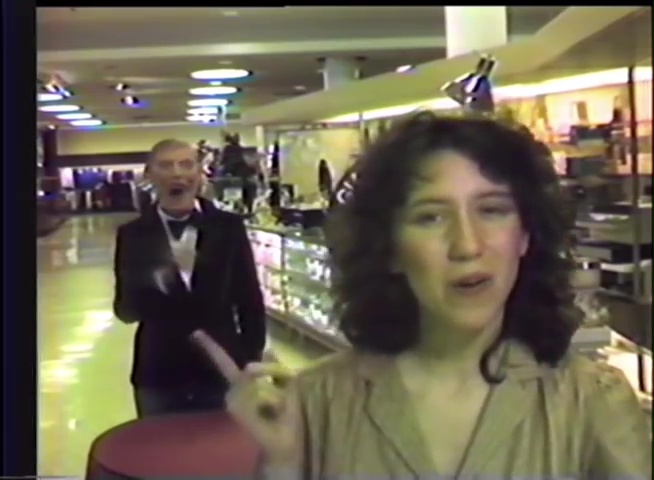
Man-eaters – POSSIBLY IN MICHIGAN (Cecilia Condit, 1983)

I don’t usually review short films in this blog, only because there are so many feature-length films demanding my attention, as well as news stories filling my feeds. But this one caught my eye. It’s the story of two young women who are followed home by a cannibal, and that dynamic of the apparently vulnerable females turning against the aggressive male reminded me inexorably of a movie I reviewed recently – Fresh, in which a young woman meets and dates a charming guy who turns out to be an entrepreneurial cannibal.

This film, Possibly in Michigan, is a 1983 musical horror film by artist Cecilia Condit about two young women, Sharon and Janice, who are stalked through a shopping mall by a cannibal named Arthur. The three protagonists (there is no one else in the mall, adding to the dreamlike mood) have two things in common – violence and perfume. Perfume of course is the distillation of desire, as shown in the film Perfume. Arthur follows them home, and the victims become the attackers. Is violence the only possible response to violence? Perhaps, the film seems to suggest. But the key song line is:

“Love shouldn’t cost an arm and a leg”

All the men in the film are masked as animals – pigs, dogs – and all have an aura of violence. But the actual violence, the offer to eat the women one limb at a time, comes from an unmasked man named as “Prince Charming.” The modern monster is always indistinguishable from the “normal”.

This is not the kind of short film created in the hope of discovery and a career in blockbusters. The artist is a retired professor in her seventies, a video artist who creates feminist fairy tales, and the film itself is in the permanent collection of the New York Museum of Modern Art. The New York Times called it a

“brutal, surreal and darkly funny 1983 art musical”

I loved the comments on YouTube, many of which said that it was “unsettling” rather than scary. Exactly what horror should be – like dreams, horror is really a release of repressed feelings. Some of the scariest dreams don’t involve slashers or monsters, they just touch a nerve; something we have kept buried inside is, for a few unconscious seconds, brought to the surface and examined in the light.

Another comment stated:

“As someone who’s been repeatedly abused by narcissists where it felt like they were eating my very energy and being, this was extremely ‘healing’ in a weird way. Thank you.”

Cannibalism is about power, and power can be transferred, as happens in this film. But the original monster is Arthur, a faceless man wearing an expressionless mask, the very image of impersonal, brutal menace. Cannibalism bothers us because it reminds us we are made of meat like the animals we eat, but meat is, in Western cultures at least, a symbol of male power over nature, which includes and is represented by the female. Carol Adams sums this up by saying meat is “the final stage of male desire” – men eat red meat, which comes from animals, the females of whom have already had their babies, their milk and their eggs taken from them for human consumption, until they are “spent”, at which time they are minced up for ‘pet’ food. What Adams calls “feminised protein” represents the suffering of female animals for the appetite of male humans like Arthur.

The film was rediscovered by Gen Z when a 15-second clip from one of the songs was loaded onto TikTok. I recommend the film to you – the link to the clip is at the top of this blog, where I usually load trailers – this is the whole work.

Leatherface is back (again): TEXAS CHAINSAW MASSACRE (David Blue Garcia, 2022)

Netflix released the latest Texas Chainsaw instalment (the ninth!) on February 28th. It’s beginning to feel a lot like Easter (as in: how many ways can you tart up hot cross buns?) but there are some nice features to this one. For a start, well, it’s on Netflix, so a bit less likely to disappear into the Texan mud without trace, like some of the earlier versions. There have been eight sequels and prequels and unrelated but similar-named movies in this franchise, as well as comics (sorry, graphic novels) and a video game of the original.

The original film, in which “chain” and “saw” were two words, is still widely acknowledged as the best, despite its paltry budget and apparently impossible working conditions for the crew. It was released in 1974 by Tobe Hooper, who made a somewhat light-hearted sequel in 1986. It was a pioneer in “slasher” films and drew cannibalism out of the gothic into the sunlight, showing an alienated workforce in “flyover” states turning their (now unwanted) skills in killing steers toward killing tourists instead. It finished with Sally, the “last girl” escaping from a frustrated Leatherface, who was wearing his mask of human skin (fully biodegradable but not much use against viruses) and wielding his chainsaw in a way that buzzed of potential sequels.

This sequel takes place 48 years after the original (yep, now) and blithely ignores any plot points from the intervening movies, comics, etc. Leatherface is back, older but no wiser and still intent on killing teenagers, and so is Sally, the survivor, who is now a Texas Ranger and set on revenge.

And the cute teens, well, they’re everything that the locals hate – inter-racial, trendy, Gen Z “Influencers”, what the creepy gas-station owner (and there’s always one to set the scene) calls “gentrifuckers”.

They want to gentrify the town and set up a trendy area of gourmet cafes and authentic looking but modernised shops and galleries. Leatherface is in retirement in an abandoned orphanage, and Sally, well, she’s been looking for him for a long time apparently, although when last seen in The Texas Chainsaw Massacre: The Next Generation (not an episode of Star Trek), she was catatonic and strapped to a gurney. But now she’s hardass. When we first see her, she’s gutting a pig, just as Leatherface is slaughtering humans. The special effects are pretty similar for both, as are the body shapes, and, frankly, the characterisations. The original actors who portrayed Leatherface and Sally are both dead; the only original cast member is John Larroquette who does the voiceover, which half-heartedly tries to sound like a true-crime documentary, as he did in the original. The new Sally is Olwen Fouéré, the Irish actor, although this Sally seems to be more based on Jamie Lee Curtis’s Laurie Strode in the 2018 reboot of Halloween.

The class struggle of the original Chain Saw has been lost here. The Texas of the original was filled with pockets of people abandoned by modern capitalism and so falling into degeneracy and violence. The new movie seems to valorise the “ordinary” folks who brook no bullshit from the “me generation” and defy the dehumanising effects of capitalism. It’s hard to feel sympathy for the influencers with their real estate auctions and cutesy town planning, or to feel terror at the thought that people might chop you up, but only if you insist on being a dick.

The terror of Leatherface himself revolved not around his nasty dental problems, badly fitting masks and noisy chainsaw, but around his family, the Sawyers, a group of odd but not obviously psychotic individuals who nonetheless were more than happy to chop up and eat innocents from the outside world, which had forsaken them. It felt like this could be any of us, screaming and dying and becoming the family’s dinner, should we venture into the wrong part of the Badlands. This new version is all Leatherface. Somehow, he now has a “mother” who looks after him in an abandoned orphanage, and she dies of a heart attack when the trendies tell her she has to move out, leading to his much delayed rampage. But Leatherface was always the weapon, not the villain, sometimes killing, and sometimes donning an apron and cooking for his dominant family. He doesn’t really work as a lone psycho, particularly when we sort of sympathise with him – he’s just lost his mum, weeps as he wears her face as a mask and then applies her makeup like Norman Bates in Psycho. Who can stay mad at that?

Tobe Hooper’s classic broke new ground in cannibal films and in horror generally. It encapsulated the early 1970s as the endless war in Vietnam and the demise of the hopes of the flower power generation ran into the chainsaw that was Nixon’s silent majority. The new one seems to reflect our time, where the young and idealistic are capitalistic exploiters and Leatherface and the Texan gun-toters are just being pushed too hard into the chainsaw of QAnon. Politics and war are no longer about truth and justice but just fake news in pursuit of tribalism. The film sums this up sardonically in the climactic scene where the busload of influencers are confronted by Leatherface and his chainsaw and respond by pulling out their phones and live streaming the whole massacre.

As Marx said, great historical entities (like Leatherface) appear in history twice – the first time as tragedy, the second time (or perhaps the ninth) as farce.

But here’s my problem with this film. After 83 minutes (which seemed much longer) I looked up from the screen and screamed (internally) “where’s the cannibalism?” Yes, there was a lot of flesh on display, and broken bones, and the occasional internal organ. But none of it got eaten, which, if I had more time, would have disqualified it from this blog. The thing is, cannibalism is not just one more nasty thing that mean people might do to you and me. It is the ultimate act of dehumanisation. Sally’s friends and family in the original were turned into slaughter-animals, chopped up, eaten, and presumably ended up in the family’s outhouse. That’s what we do to those we objectify: pigs and sheep and cows, and we do it to distinguish ourselves from other animals as somehow non-animal, part-god. The slasher might kill us, but the cannibal converts us into shit. Otherwise, we are all potential wielders of the chainsaw.

Without the cannibalism, this is just another slasher with too much emphasis on special effects rather than characterisation.

Texas Chainsaw Massacre 2022 has a 33% “rotten” rating on Rotten Tomatoes, with one audience critic summing up:

“it isn’t very scary — and it definitely doesn’t help that the story hardly makes any sense.”

Cannibal Romcom: FRESH (Mimi Cave 2022)

If you’ve heard about this new movie, you’ll know it’s a sort of cannibal romcom.

Perhaps the first romcom was Adam and Eve – she was created from his rib, as “an help meet” (Genesis 2:18-21) because he was incapable of looking after Eden on his own. And he was, you know, horny. Ever since, relationships have been tricky – they’re about status, property rights and, above all, appetites. Feudal lords sealed alliances by betrothing their children, often marrying their small child off to a complete stranger. For most of human history, women were property, owned by their fathers until ownership was transferred to their husbands. What happened to them after that was up to the appetites of the man. It often still is.

Modern dating has in many ways returned to the realm of the unknown betrothal. Pictures appear on a phone screen and are assessed in an instant. If a candidate is deemed possibly sponge-worthy, a meeting is arranged and may lead to casual sex, long-term commitment or, in unfortunate cases, cannibalism.

What do we know about the person on the dating scene? Each click, each drink, is a contract, the person being (inter)viewed is already objectified by the algorithm that has decided he or she may be suitable. Relationships are chosen in the same way (and often with less forethought) as an Uber-eats meal. The app reduces us to our basics – appearance, tastes – we’re just meat.

This movie, Fresh, the first film by director Mimi Cave and writer Lauryn Kahn (good interview here but beware of spoilers) and produced by Adam McKay (Don’t Look Up), takes the metaphor to its logical conclusion. Noa (Daisy Edgar-Jones from Normal People), finds herself dating boors who feel entitled to comment on her appearance, are interested exclusively in themselves, and abuse her if she dares to refuse sex. As a woman, her body is their entitlement.

Noa meets Steve (Sebastian Stan from Winter Soldier), not on her dating site, which has been a huge disappointment to her, but in a supermarket. Steve seems charming, clever, and doesn’t press her for sex. When he draws back from sex on their first date, the first time a man has done that in her experience (maybe in history) she asks him if he wants something to drink or eat, and he says “no, just you”. He ruins her enjoyment of her spare ribs by saying “I don’t eat animals.” He means non-human animals, but it’s a common piece of lazy language; he eats humans, and humans are of course animals.

Noa agrees to a weekend getaway with Steve after only a few dates. Bad idea. This starts as a romcom but ends up covered in blood and body parts. Images of other animals waiting to be eaten reinforce the point.

Steve wants to know whom Noa has told. Who knows she is going away with him?

Steve drugs Noa (another common dating strategy) and only then do the credits start, some 33 minutes into the film, as she collapses to the floor.

Steve imprisons her, finally revealing his plan: to keep her alive and slowly sell her meat to his wealthy cannibal clients, keeping the rest of her alive and “fresh” (thus the film title) as long as possible.

Sounds grim? Sure, but also darkly funny. Steve is witty and charming apart from the, you know, kidnapping and cannibalism, and Noa is smart and tough, as she has to be in this dog-eat-dog, or man-eat-woman, world. She has to woo her abuser, as so many women do, in order to escape, even if that means eating human flesh, even perhaps her own.

This is a smart and gripping cannibal film from – wait for it – Disney! Produced by Searchlight, the studio of Nomadland and The Shape of Water, it premiered at Sundance in January this year and was released on Disney+ in the UK but Hulu in the US. It certainly is a long way from Mickey Mouse and Snow White. Yet, like them, it has a moral of sorts. As one reviewer put it:

You will want to become a vegetarian after watching “Fresh.”

Another reviewer (beware of spoilers in this link) wrote:

I don’t know about you, but I, for one, am never eating meat again.

Noa is the protagonist, and the main plot involves her predicament and her attempts to escape (no spoilers!) But Steve is a fascinating character in that he really likes Noa, feels a little bit bad about what he does, but likes the money more. Does that remind us of the farmers who claim to “love” their animals, even as they fatten them up for the abattoir? How many stories have we heard of country kids who befriend a baby lamb or calf or piglet and weep when dad appears with a cleaver, only to get over it and become killers themselves. Steve is the same, but his “livestock” are young women. He likes them, but it’s a business – he packages up their meat, their hair, even their underwear for those who want them. His cold room is full of chilled meat, carefully labelled with the names of the women it came from.

Steve’s wife, who knows exactly what he does, asks him “how was work?” He replies that he is very busy with the “new product”.

He can’t afford to care. Nor can his wife, who is missing a leg. She is a “product” whom he adopted. She knows the answer to the header of my blog “what’s it like to be edible?

It reminded me of an interview with a slaughterhouse worker in Gail Eisnitz’s extraordinary book Slaughterhouse about the workers who kill for a living and the animals who we choose to eat, the ones that are least aggressive, the gentle and friendly species:

If you work in that stick pit for any period of time, you develop an attitude that lets you kill things but doesn’t let you care…. You may want to pet it. Pigs down on the kill floor have come up and nuzzled me like a puppy. Two minutes later I had to kill them – beat them to death with a pipe. I can’t care.

This is not a dystopia, it is our world, now, a world in which the rich can buy anything they want including the labour, homes and bodies of others. Steve describes them as the “one percent of the one percent” – they want what no one else can have.

And it’s women they want to eat, because it’s all about ownership and power.

Think of Jeffrey Epstein who supplied underage girls to the rich and powerful. Gary Heidnik started a church which made him a lot of money and then, like Steve in this film, kidnapped, tortured, and raped six women, killing two of them and allegedly feeding the survivors with the flesh of one of the dead. Patrick Bateman was a (fictional) cannibal in the book (if not the film) of American Psycho, consuming human brains because there were absolutely no limits to his appetites.

Is there really anything to stop the “one percent of the one percent” paying to satisfy their cannibalistic appetites? If they are tired of beef and lamb, what meat is next? Millions of people disappear each year, and many are never found. Could some of them be ending up on the plates of the rich?

What Steve does to the lonely women he kidnaps is shocking. But so is what we pay minimum wage workers to do to other species. As Hannibal said, “It’s only cannibalism if we’re equals”. Eating other mammals such as Bos taurus, Ovis aries or Sus domesticus is only one thin red species line away from eating Homo sapiens.

Fresh is currently showing 81% fresh (has to really) on Rotten Tomatoes.